Baking Finnish Runeberg cakes, cinnamon buns and other sweet treats

Some pastries are strongly connected to a certain holiday or season – Runeberg cakes appear in early February, only to give way to Shrovetide buns a few weeks later.

Other delicacies are associated with a certain region – the dark malt bread that originated in the islands off the southwestern Finnish coast is still known as archipelago bread. You can find additional regional specialities in the other articles in this series, which shows off dishes from the north, south, east and west of Finland – although many of them are now common all over the country.

One universally popular treat, no matter where you travel in Finland, is the korvapuusti, a cinnamon bun that goes great with coffee or tea. It is ever-present in Finnish cafés, on picnics in the park and on the kitchen table when guests come over.

If you’re still hungry for something sweet after reading this article, you can find more recipes for baked goods on our Christmas recipe page and in our May Day brunch post.

By ThisisFINLAND staff
Recipes and descriptions supplied by Timo Lepistö

Runeberg cakes (Runebergin torttu)
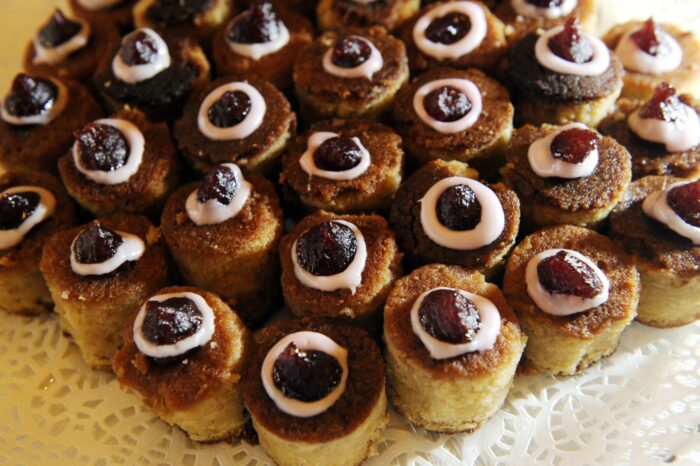
Many rows of small cylindrical cakes topped with frosting and jam are arranged on a table.

Photo: Sari Gustafsson/Lehtikuva

This pastry is named after Finland’s national poet, Johan Ludwig Runeberg. Legend has it that this is his wife Fredrika’s recipe from the 1850s, but some evidence suggests that it could also be an adaptation of a creation by baker Lars Astenius. Both he and the Runebergs lived in Porvoo, about 50 kilometres (30 miles) east of Helsinki.

The Runeberg cake is a torte that includes cookie crumbs or breadcrumbs and a dash of a punch or rum. It was first sold commercially bearing Runeberg’s name at Café Ekberg in Helsinki at Christmastime in 1865. Nowadays it appears in cafés and stores just in time for the poet’s birthday on February 5.

Cake:

  • 150 g butter
  • 75 g gingerbread crumbs or cookie crumbs (if using cookie crumbs, you can add a bit of ground ginger and cinnamon)
  • 2 dl all-purpose flour
  • 1 1/2 dl caster sugar
  • 1 1/2 tsp baking powder
  • 1 dl coarsely ground almond
  • 2 tsp ground cardamom
  • 2 eggs
  • 1 dl cream
  • 1/2 tsp salt
  • bitter almond extract (optional)
  • vanilla (optional)

Syrup:

  • 2 dl water
  • 1/2 dl sugar
  • 1/2 dl punch or rum

Decoration:

  • raspberry jam
  • white icing

Preheat the oven to 200 degrees Celsius. Grease and flour a deep muffin tray, enough for 10–12 cakes (in Finland you can find Runeberg cake forms that yield a perfectly cylindrical shape).

Beat the sugar and butter in a stand mixer with a paddle attachment until light and fluffy. Add the eggs one by one. Add the cream and carefully mix until absorbed. Add the rest of the ingredients and mix until fully combined. Pour the batter into the forms and bake for 15 minutes.

For the syrup, put water and sugar into a pot and heat until the sugar is dissolved. Add the punch or rum. Let the syrup cool a bit.

Let the cakes cool for ten minutes after taking them out of the oven, then turn them out of the forms.

While the cakes are still warm, soak them in the syrup for a minute and then lift them onto a wire rack to finish cooling. Place a heaping teaspoon of raspberry jam neatly on top of each cake and pipe white icing around the jam.

Sweet buns (pulla), including cinnamon buns (korvapuusti)
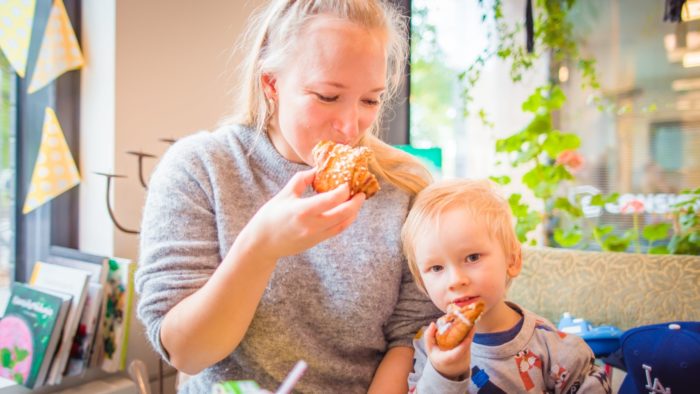
A woman and a small child are eating buns at a café.

Customers enjoy a sweet baked treat at Café Puusti in the central western Finnish city of Tampere.Photo: Laura Vanzo/Visit Tampere

This mainstay can take many different forms if you change the shape and the filling. In addition to basic sweet wheat buns, we list three of the most popular variants: Shrovetide buns, butter-eye buns and cinnamon buns. All of them use the same dough.

Basic sweet wheat buns (pulla)
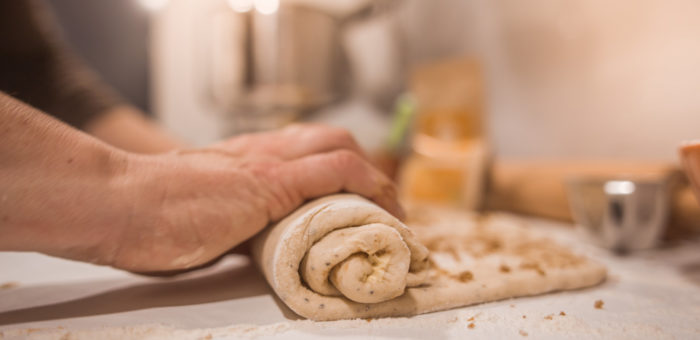
A set of hands is rolling up a sheet of dough on a table.

A baker rolls sugary filling into a batch of dough at Café Puusti in Tampere, getting ready to cut it into pieces that will become cinnamon buns.Photo: Laura Vanzo/Visit Tampere

For a deeper taste, this recipe uses a light sourdough, but you can also make it a bit more quickly skipping the starter dough preparation (but still adding the same ingredients).

Starter dough:

  • 2 dl cold water
  • 3 dl wheat flour
  • 5 g dried yeast
  • 1 tbsp ground cardamom

The starter dough is at its best when made a day before you actually bake it. Mix all the ingredients in a bowl, cover it and store it in the fridge. (If you’re going to make it and bake it on the same day, mix it at least two hours ahead of time, use warm water and keep the dough at room temperature.)

  • 12–14 dl strong wheat flour
  • 3 dl milk
  • 4 eggs
  • 250 g butter
  • 2 1/2 dl caster sugar
  • 1 tbsp salt
  • 11 g dried yeast

(Note: For a vegan version, you can leave out the eggs, use oat milk or water instead of milk, and substitute margarine for the butter. Brush the buns with melted margarine instead of an egg mixture.)

In a stand mixer bowl, blend the starter dough, milk, two eggs and about 12 dl of the flour. With a hook attachment, knead the dough for ten minutes and adjust the thickness of the dough with flour. Add soft butter and continue kneading for about two or three minutes, until the butter is fully absorbed. Cover the dough and leave it to rise for about 40 minutes.

Tip the dough onto a floured work counter and knead it a bit, until it feels a bit firmer. Divide into 25–30 equal portions and shape into round buns, then put the buns onto a baking sheet, cover and let rise for another 30 minutes.

Preheat the oven to 180 degrees Celsius. Whisk two eggs as an egg wash and brush the buns with it. Sprinkle pearl sugar on top (optional). Bake the buns for 13–15 minutes.

Cinnamon buns (korvapuusti)
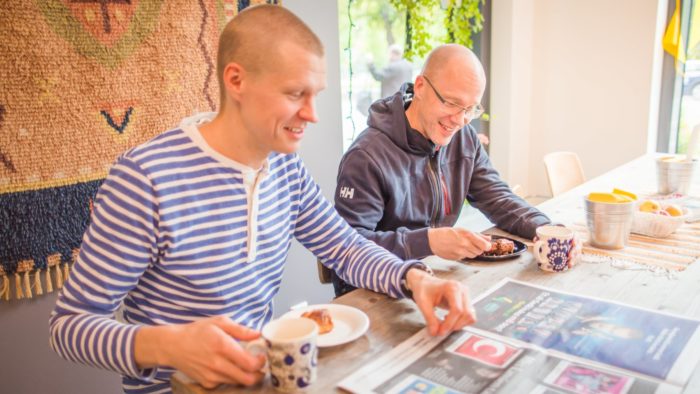
At a café table, two men are reading a newspaper, drinking coffee and eating buns.

Many people in Finland like to top off a walk, hike or bike ride with a cup of coffee and a cinnamon bun, whether out on the trail or in a café.Photo: Laura Vanzo/Visit Tampere/Café Puusti

This classic Finnish staple often accompanies coffee or tea. This website has even gone so far as to call the korvapuusti “part of the fabric of Finnish society.

  • 250 g butter at room temperature
  • 1 1/2 dl light brown sugar
  • 4 tbsp ground cassia cinnamon
  • 2 tbsp all-purpose flour
  • 1/2 tsp salt

Make the same dough as the basic sweet wheat buns (above). After letting it rise once, tip the dough onto a lightly floured work counter and roll it out to a thickness of one centimetre – a rectangle about 40 centimetres wide. Spread the very soft butter onto the dough, leaving a five-centimetre strip at the top with no butter. Mix all the dry ingredients and sprinkle an even layer over the butter.
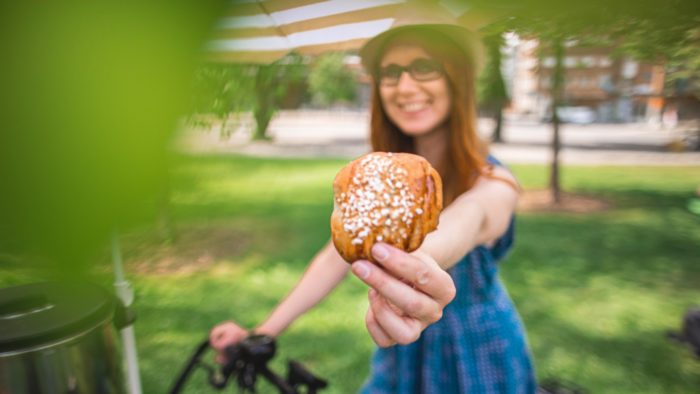
A woman is holding out a cinnamon bun so that it is close to the camera.

The cinnamon bun called korvapuusti is almost as prevalent in Finland as coffee – and that’s saying a lot. (This picture is from Puusti, a Tampere café named after the very same bun.)Photo: Laura Vanzo/Visit Tampere

Roll the dough up into a tight log starting from bottom edge and finishing at the unbuttered top edge. Make sure the seam is facing down. Cut into three-centimetre pieces and press two fingers on top to spread the bun a bit. Cover and leave to rise for 30 minutes.

Preheat the oven to 180 degrees Celsius. Brush with egg wash and sprinkle some pearl sugar on top. Bake 13–15 minutes until golden brown.

Shrovetide buns (laskiaispulla)
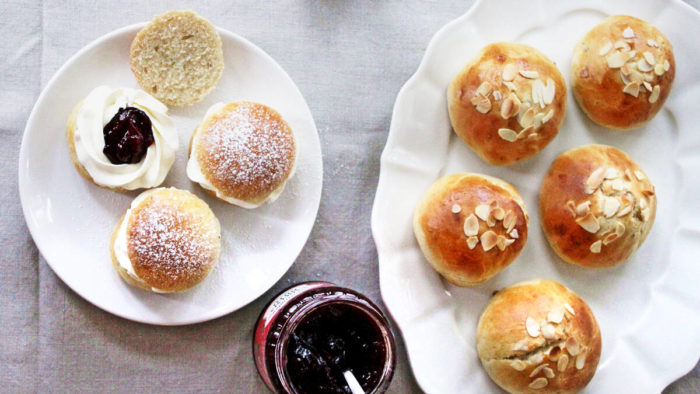
Two plates of buns are visible, one set with jam filling and one set with sliced almonds on top.

There are two traditional fillings for Shrovetide buns: jam or almond paste.Photo: Visit Finland

You can use the recipe for basic sweet wheat buns (above) to make Shrovetide buns, as follows:

After taking the buns out of the oven and letting them cool, slice off the top of each one. Put raspberry jam or almond paste in the middle of the bottom half and top it with whipped cream. Carefully replace the top half of the bun.

Tip: It’s fun to create a buffet with different fillings so everyone can make their own version. Fillings can include various jams and nut spreads, Italian meringue or sweet cream-cheese mousse.

Butter-eye buns (voisilmäpulla)
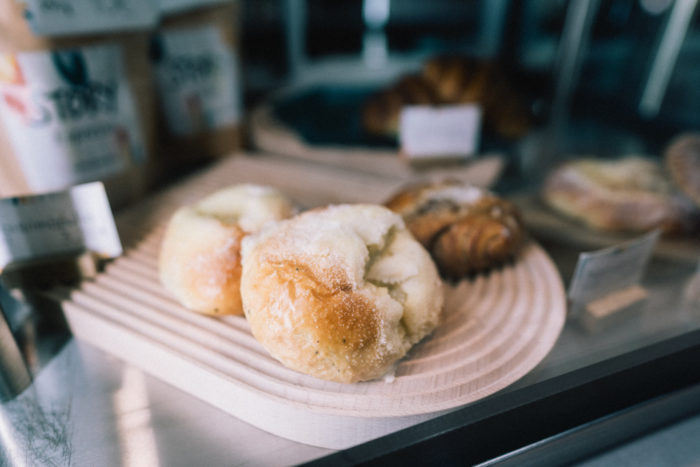
Several buns are on a tray at a café.

Voisilmäpulla, or “butter-eye bun,” is a buttery sweet culinary experience, as the name implies. (This photo is from Story, a restaurant in Helsinki.)Photo: Joonas Ojala/Story Restaurant

This classic exists for the pure enjoyment of sugary, buttery flavours. In Finnish it’s called voisilmäpulla, which translates to “butter-eye bun.”

  • 200 g butter
  • 1 dl caster sugar
  • 1 tbsp all-purpose flour
  • 1/2 tsp salt

Make the same dough as the basic sweet wheat buns (above), all the way through letting it rise a second time. You can replace cardamom with vanilla to boost the dairy flavours.

Cut the cold butter into cubes of approximately two centimetres. Mix the dry ingredients. Brush the buns with egg wash and, using sharp scissors, cut an “X” into the top of each bun. Place a cube of butter on top and carefully push it halfway into the bun. Sprinkle a half tablespoon of sugar over each bun and bake for 13–15 minutes. Let cool completely before eating.

Strawberry brita cake (britakakku)
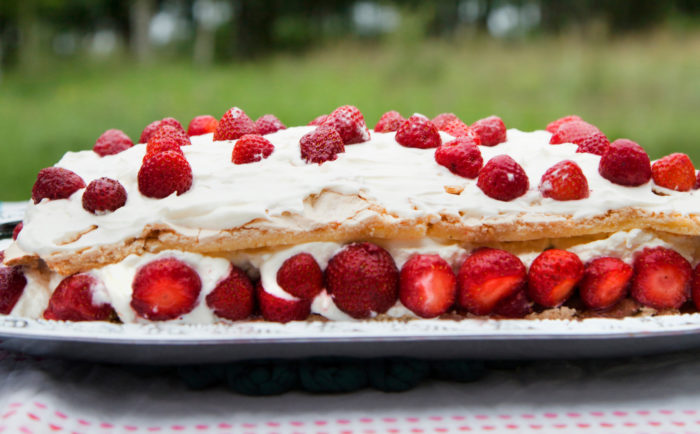
A cake topped with whipped cream and strawberries is on a plate on an outdoor table.

A brita cake is a summery delicacy with layers of meringue and strawberries or fruit.Photo: Katri Lehtola/Keksi/Visit Finland

For Finnish people, this is one of the best-known forms of strawberry cake. It’s popular all over the Nordic countries, but names, recipes and fillings may vary. A meringue cake, it forms an excellent base for a filling of berries or fruit.

Cake:

  • 150 g butter, room temperature
  • 2 1/2 dl all-purpose flour
  • 1 1/2 dl caster sugar
  • 2 tsp baking powder
  • 3 egg yolks
  • 1 dl milk

Meringue:

  • 3 egg whites
  • 1 1/2 dl caster sugar
  • 2 dl flaked almonds (optional)

Filling:

  • 6 dl cream
  • 1/2 dl caster sugar
  • vanilla (optional)
  • strawberries (or other berries or fruit)

Put butter and sugar in a stand mixer bowl and whisk with paddle attachment until creamy. Add egg yolks one by one and mix at lower speed until fully incorporated. Mix the dry ingredients and sift them into the batter, adding the milk at the same time. Mix until smooth.

Put the egg whites in another clean stand mixer bowl, and start to whisk at medium speed. Add 1/3 of the sugar and continue whisking until it dissolves. Increase the speed slightly and add 1/3 of the sugar, whisking until it dissolves. Add the rest of the sugar and whisk until it has dissolved and the meringue is glossy and stiff.

Preheat the oven to 170 degrees Celsius. Spread the cake batter onto a baking sheet lined with baking paper, then spread the meringue on top of the cake batter. Sprinkle the flaked almonds on top (optional). Bake the cake for about 25 minutes and leave it to cool.

Wash, clean and slice the strawberries. Whip the cream together with sugar and some vanilla (optional).

To assemble, cut the cake into two identical pieces. Spread half of the whipped cream on one half of the cake and add half of the strawberries. Carefully lift the other half and place it on top as the next layer. Then repeat the toppings with the remaining whipped cream and strawberries. Serve immediately. You can decorate the cake with edible flowers and with leaves of lemon balm or mint.

Malt bread, also known as archipelago bread (saaristolaisleipä)
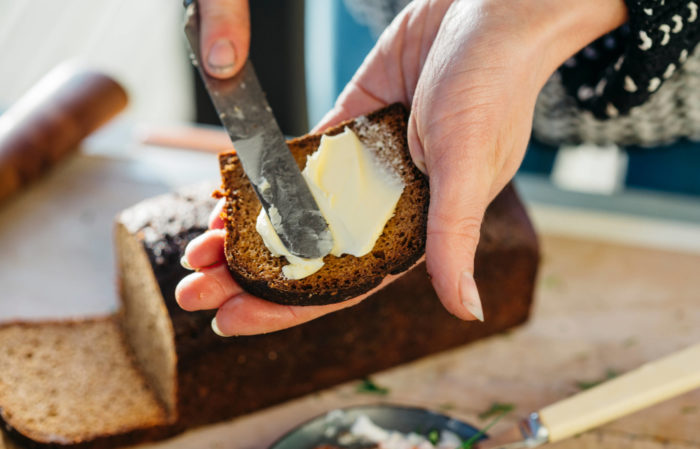
A person’s hands are visible, spreading butter on a piece of dark bread.

You can enjoy the taste of dark, sweet archipelago bread with butter only, or with various other toppings.Photo: Elina Manninen/Keksi/Visit Finland

This dense, malty, flavourful bread is a traditional speciality from the archipelago region off the southwestern coast of Finland. The most amazing thing about it is the richness of its sweet taste. Usually it is served with cold fish dishes such as gravlax (cured salmon) or gubbrörä (a topping made from anchovies and boiled eggs), but you can also enjoy it with nothing but high-quality salted butter.

  • 2 dl crushed rye malt
  • 2 dl hot water
  • 1 1/2 dl dark syrup
  • 2 dl wheat bran
  • 2 dl rye flour
  • 6–8 dl wheat flour (or all-purpose flour)
  • 3 dl water
  • 1 tbsp salt
  • 11 g dry yeast
  • 2 tsp ground anise
  • 2 tsp ground fennel seeds
  • 4 tsp ground liquorice root (optional)

For basting:

  • 1/2 dl dark syrup
  • 1/2 dl water

Mix the hot water (it should be boiling hot) with the crushed rye malt in a mixer bowl. Let it cool to room temperature. Add all the other ingredients, saving the cooler water for last. That way you can adjust the texture (it should be paste-like). Mix slowly for ten minutes. Let the dough rise for an hour. Fill two greased loaf pans with the dough, cover them and let them rise for 90 minutes, until doubled in size.

Bake at 180 degrees Celsius for 80 to 90 minutes. At the 60-minute mark, mix the syrup and water and quickly brush the top of the loaves generously with the mixture. Put the bread back in the oven and bake for 20 to 30 minutes more. Let it cool completely before enjoying the first bite. Malt breads are at their best after being stored for a few days, covered in cling film.
In the northern Finnish wilderness, home is where the hut is

After a strenuous hike upwards along a swirling stream, I have ascended above the treeline, passed the saddle between two peaks, and entered what feels like paradise.

I’m in a grand valley centred around Ailakkajärvi, a lake several kilometres long in Finnish Lapland, the region that covers the northern third of the country. In the distance, on the northern shore, I can make out a small building. On a clear day, you can see any feature in the vast, open landscape from kilometres away.

As I head towards the building, the evening sun blesses me with its rays. Up here, in the northwestern corner of Finland, at a latitude of 69 degrees north and an altitude of about 700 metres, late August can already be very chilly. The good thing about the cold is that the mosquitoes, a midsummer nuisance, are already gone.

After a quarter of an hour, I reach the small hut and see that no one is there. This is my home for tonight: a Finnish autiotupa, or open wilderness hut.

Inside, I find bunks for six people, a sturdy table and a couple of benches. A small stove occupies one corner; a separate storage room contains firewood and an axe. From the window I have a spectacular view of the lake and the surrounding fells. After sunset, a full moon rises over the water.

I get to enjoy all of this in peace and quiet – and free of charge.

A Finnish phenomenon

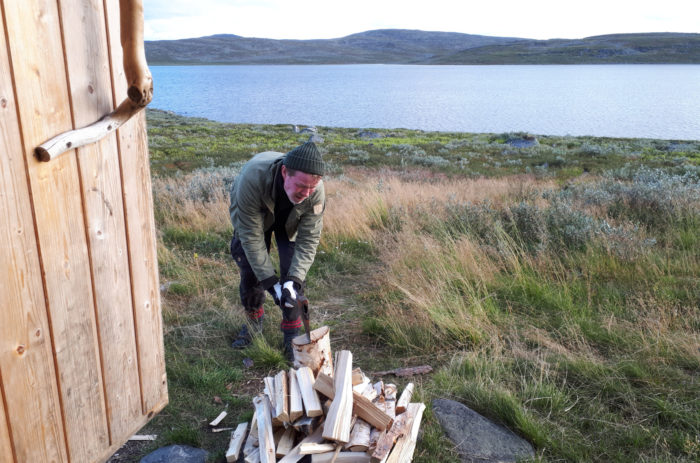
A man chops wood with a lake and mountains in the background.

A hiker chops wood at an open wilderness hut on the shore of Ailakkajärvi, a lake in the northwestern corner of Finland.Photo: Juha Mäkinen

I’m not politically active, but if the Finnish government ever tried to do away with the wilderness hut network, I would be ready for the barricades. The huts are one of the most wonderful services provided by the Finnish state.

Anybody who is not using a motorised means of transport can stay in the open wilderness huts, for free. Needless to say, everyone must clean up after themselves, but there are also other rules – think of them as “wilderness etiquette.” For example, newcomers always have the primary right to stay in the hut, over people who have already had their rest.

The open wilderness hut is a very Finnish phenomenon – Sweden and Norway also have networks of wilderness huts, but they are mostly rentals. In Finland cost-free huts are the norm, although some rental huts also exist. The Swedes and Norwegians also have huts that are more like hostels situated in the backwoods. That doesn’t exist in Finland.

Many people feel that the Finnish open wilderness hut concept is just right: it offers some shelter without making the wilderness too civilised.

There are more than 500 huts, most of which are located in northern Finland’s vast national parks and designated wilderness areas. Some huts are easy to reach, while others are deep in the wilderness. The remoteness of the location tends to be inversely proportionate to the amount of visitors. Along popular routes, some huts get crowded during the two high tides of Finnish Lapland tourism – the late-spring skiing season and the autumn foliage season, known as ruska in Finnish.

From necessity to recreation

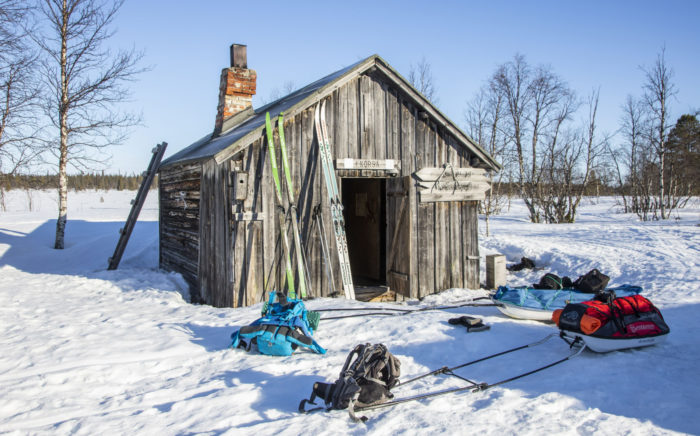
Skis and sleds are placed in front of a small wooden building surrounded by a snowy landscape.

The cross-country skiers staying in this hut in northern Finland’s Pulju Wilderness Area have transported their supplies on a type of sled called an ahkio in Finnish; it has two shafts that attach to a harness worn by the skier.Photo: Markus Sirkka/Lehtikuva

The history of the hut network goes back centuries. In olden times, they were essential for people traversing the long distances between the sparse settlements in the north.

Many were originally built for the use of loggers, raftsmen, reindeer herders or border guards. Quite a few were constructed specifically with hikers in mind, especially in the 1960s and ’70s. Nowadays most huts are maintained by the national forestry administration (Metsähallitus), which means that firewood, gas and other maintenance are provided courtesy of the Finnish taxpayers.

The accommodations vary greatly in size and amenities. The largest can house more than 20 people, while others only have space for two. All have either a wood-burning stove or a fireplace, and a dry toilet can always be found in the vicinity. A few precious locations even offer the luxury of a sauna – great if you’ve had a long day of sweat, rain and mosquitoes.

Typically, the huts are close to a lake or a stream, so water for cooking and washing is available. Some are in extremely pretty locations – one of my favourites is the tiny Porontimajoki hut in Kuusamo, along the popular Bear’s Trail hiking route.

This hut is actually an old mill, and part of it juts out over a river. I will always cherish the soundscape inside: lying in my sleeping bag on an October evening, I heard the gentle crackling of the fire to my right and the steady ripple of the stream to my left – a soothing lullaby.

Hikers should always carry some kind of tent, and never rely solely on the huts, which might happen to be full. More importantly, you can get into major difficulties if you get lost in bad weather and don’t have any kind of shelter.

Guestbook communications

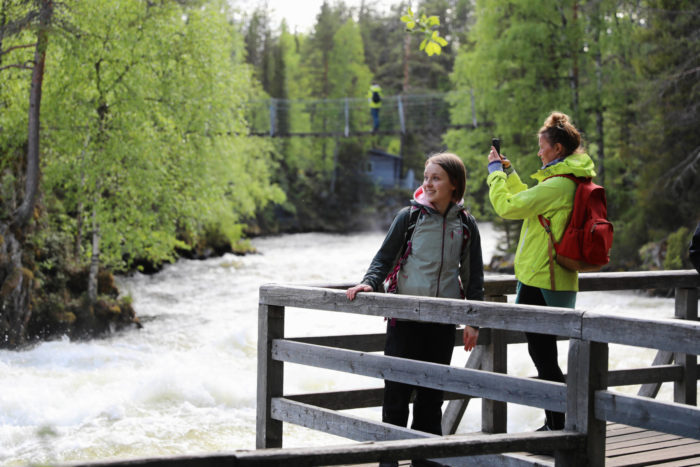
A woman and a child are on a railed terrace overlooking a rapidly flowing river.

There’s a lot of nature to see and explore in Finland, such as this river near the northern town of Kuusamo.Photo: Harri Tarvainen/Visit Finland

One fascinating item found in almost every hut is the guestbook. Hikers usually write at least the date and their destination – this can be vital information for a rescue team in case there’s an accident on the trail or somebody gets lost. The pages make for a rudimentary statistics log: how many people, when, what kind of weather.

Some people are inspired to write lengthy travelogues and share their experiences with other visitors. Having enjoyed a night alone at Ailakkajärvi, I felt so fortunate that after scribbling a short description of my evening in the guestbook, I added a rhetorical question: “What have I done to deserve this?”

In most cases, hikers won’t pass the same hut twice on the same trip, so the guestbook is essentially one-way communication to future visitors. Remarks from previous visitors can provide valuable info about trail conditions.

When less is more

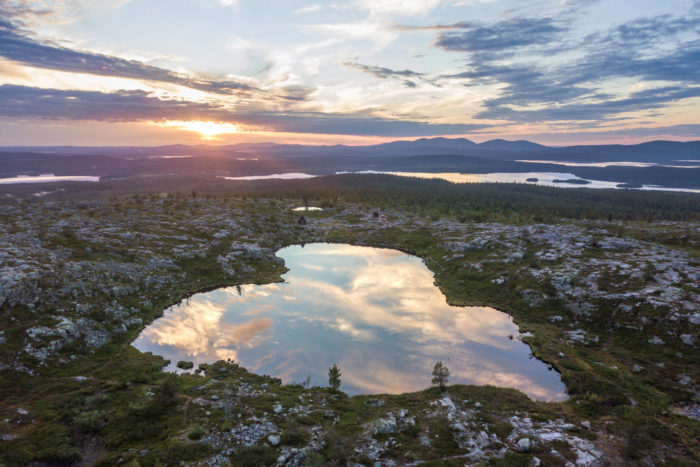
A small lake in the middle of a rocky, mountainous landscape reflects the clouds and sky.

With several lakes reflecting the clouds, it appears that the mountainous landscape is merging with the sky at Särkitunturi in northwestern Finland.Photo: Markus Kiili/Visit Finland

There’s a certain dilemma that comes with having affection for the wild: you hope that people value the remaining wilderness areas enough to preserve them for posterity, yet at the same time you secretly hope that not too many people actually go there – at least not at the very same time and place as you.

After my one-night stay at Ailakkajärvi, I head north. Up and down the fells, through a wetland, and up again. I dine on the shore of a small lake situated in a pass between two peaks. I haven’t seen another soul all day.

By Juha Mäkinen, August 2022

Finnish racecar drivers excel at acceleration

“If you want to win, hire a Finn.”

It’s unclear where that snappy saying originated, but it has become associated with motorsports, a field in which Finland has enjoyed decades of success. Finnish drivers race practically anything with an engine, from cars to speedboats to snowmobiles.

Racers from Finland particularly excel in Formula One (F1). It’s the top tier of single-seater racing, which begins with karts and continues with progressively faster and more powerful cars. A single-seater is the stereotypical racecar, generally consisting of an open cockpit, uncovered wheels and large aerodynamic wings at the front and back.

Three Finnish drivers have won the world championship: Keke Rosberg (in 1982), Mika Häkkinen (1998 and 1999) and Kimi Räikkönen (2007). Keke’s son Nico Rosberg won in 2016, although he did so while racing as a German citizen, not a Finn (his mother is German, making him a dual citizen).

Racing with sisu

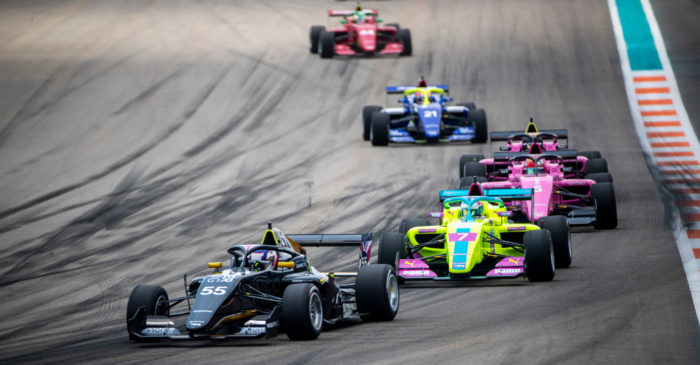
Five racecars drive into a curve on a racetrack.

Emma Kimiläinen (in the yellow car, number 7) fights for position in W Series action at the Miami International Autodrome.Photo: W Series

Based upon the number of mentions in the press, the most famous Finn in the world in 2021 was Valtteri Bottas, who is racing for the Alfa Romeo team at the time of writing, after stints with Williams and Mercedes. Yet there are many other Finnish drivers who race in other open-wheel series. Emma Kimiläinen races in the W Series, an all-female championship.

“My motivation comes from the feeling I get when I am in a car,” Kimiläinen says. “It is as if I become one with the vehicle. I love the speed, the passion, the adrenaline. It isn’t just feelings either – racing is also analytical.”

Kimiläinen started karting at the age of three. After several seasons in various formula racing series, she moved to touring cars, then later joined the W Series. In 2021, she came in third out of 20 drivers, with one win and five podium finishes.

“My favourite tracks have changes in elevation and fast, blind corners. I like tracks where you need sisu,” she says, using the Finnish word that denotes a combination of determination, endurance and courage.

Finnish seasons help drivers learn

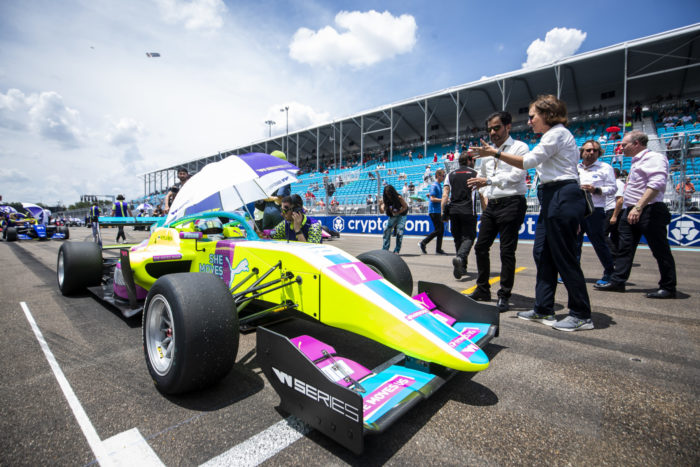
By a stopped car on a racetrack, one person holds an umbrella to keep the sun off the driver, while other people point and discuss.

In the Miami sun, Emma Kimiläinen is in her car, getting ready for a competition.Photo: W Series

Kimiläinen is open to other possible drives in the future, like IndyCar or higher on the F1 ladder, but right now she is completely focused on the current season.

“My goal is to win the championship,” she says. “The W Series is a great opportunity to thrive as a professional racing driver.”

But why are Finns such good racers? It’s a question that pros and fans alike have pondered. Kimiläinen believes the Finnish climate might play a role.

“Finns drive in different conditions,” she says. “Our weather varies, so we race karts in the hot and cold, the wet and dry. Driving in snow is also important, because you learn car handling.”

Icemen

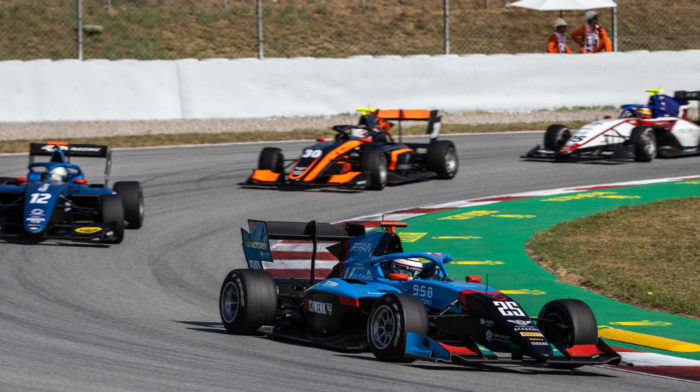
Four racecars round a curve on a racetrack.

William Alatalo (blue car in foreground) competes in the F3 championship.Photo: Dutch Photo Agency

William Alatalo thinks that Finns do well in motorsports because of their disposition. Alatalo currently races in the F3 championship, where his team occasionally calls him Chilly Willy for his cool demeanour, echoing Kimi Räikkönen’s nickname, Iceman.

“Finns are respected in motorsports,” he says. “We are nice and calm, do what we are supposed to do, and perform well under pressure.”

Alatalo holds dual Finnish and Ethiopian citizenship. He began his career in Finnish karting before moving to the cutthroat world of European racing, including F4 and Formula Renault. In 2022 he moved to F3, where he quickly impressed by winning points at his very first feature race.

Recharging at home in Finland

A driver steers a racecar along a track.

The Flying Finn Academy, whose insignia is visible below the number at the front of William Alatalo’s racecar, is an association that supports young Finnish people’s motorsports careers.Photo: Dutch Photo Agency

“The G-forces you get while racing are incredible,” says Alatalo. “It’s like a rollercoaster, but you are in control. It is fun to overtake, but it is also exciting to defend your position. My favourite tracks are Silverstone in the UK, Spa in Belgium and Ferrari’s Mugello Circuit in Italy.”

Alatalo participates in the Flying Finn Academy, an association that supports young Finnish people’s motorsports careers. The domestic support network might be another reason why Finnish people do so well in racing.

“I am surrounded by screaming engines and big cities when I’m racing,” says Alatalo. “It’s nice to come home to Ilmajoki in the Finnish countryside, where I listen to birds instead of engines, and relax with my family. My family has supported me since day one.”

By David J. Cord, July 2022

Annual track event at Olympic Stadium gathers Swedish-speaking kids from all over Finland

The annual Relay Carnival, an interschool sports event, happens near the end of the school year, usually at Helsinki’s Olympic Stadium.

The competition is a tradition among Swedish speakers from all over Finland. (Swedish is one of the country’s official languages, and is currently the first language of about 5.2 percent of Finland’s population.)

Everybody can join in

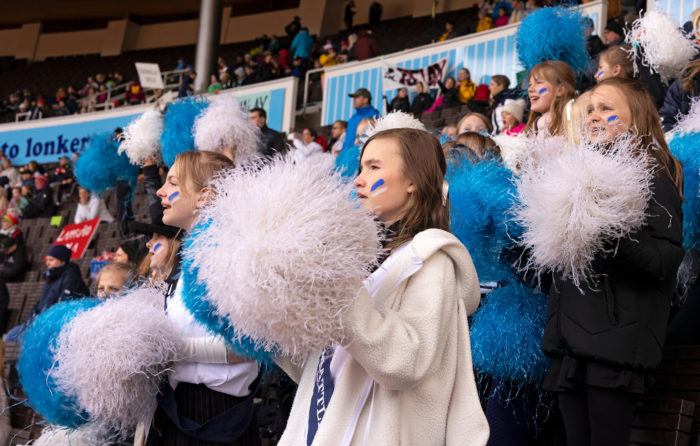
A group of children wave blue and white pom-poms and cheer.

The cheerleading competition is just as important as the races.Photo: Catarina Stewen

About 10,000 runners participate in the two-day carnival, many of them in more than one race. There are dozens of events, with distances ranging from 400 metres to five kilometres and categories for boys, girls and mixed teams, for different ages and for small and large schools.

The cheerleading competition is just as important as the races. The best song and the loudest squad receive awards. Each school also has a mascot – there’s a prize category for them, too.

When they’re not running or cheering for their schools, the kids hang out with old friends and new ones from all over Finland.

Strengthening ties

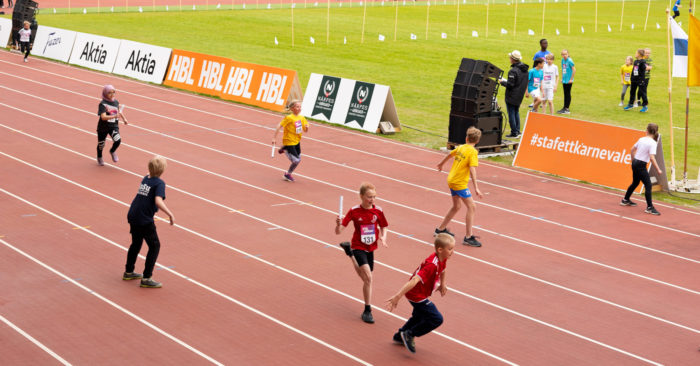
Several teams of children are in the process of passing the baton in a relay race on a running track.

The Relay Carnival encourages a healthy lifestyle in which outdoor activities and sports are part of a happy daily life.Photo: Catarina Stewen

“The Relay Carnival was originally brought to Finland by Carl-Olaf Homén in 1961,” says Jeje Eklöf, the executive manager of Stafettkarnevalen, as the event is called in Swedish.

“While studying at the University of Delaware in the US, Homén had represented his school at the Penn Relays, the world’s oldest and largest relay race, in Philadelphia,” says Eklöf. “After returning to Finland, he initiated the idea of creating an interschool event for all students attending schools where the language of instruction is Swedish.”

Most Swedish speakers live in the areas along the south and west coasts. Gathering pupils from different parts of the country for two days of fun and sports has helped create and uphold a shared identity and strengthen the Swedish-speaking community.

“The aim is to create an affinity among this minority population, and also to promote a healthy lifestyle in which outdoor activities and sports are part of a happy daily life,” Eklöf says.

Making memories

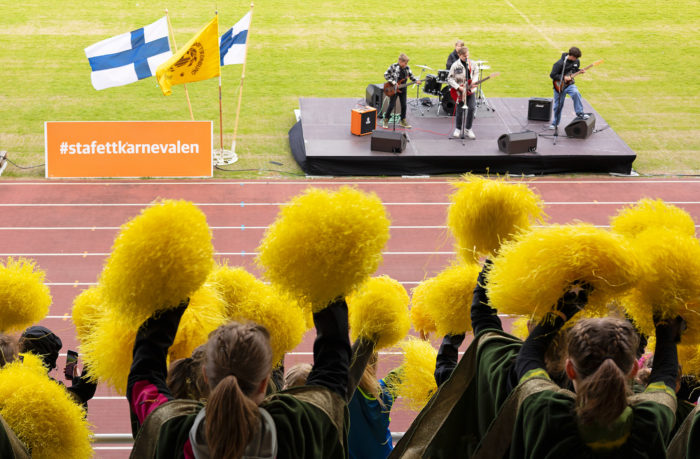
A band plays on a stage beside a running track, and cheerleaders wave yellow pom-poms.

True to its name, the Relay Carnival offers a festive atmosphere.Photo: Catarina Stewen

Nearly every Swedish-speaking Finn has had some connection with the Relay Carnival as a participant, a teacher or a parent. The gigantic party at the Olympic Stadium creates lasting memories.

Eleven-year-olds Sara, Bianca and Ella from Botby Elementary School in Helsinki are at the Relay Carnival for the first time. It’s exciting for them to attend the huge event, and the best part is hanging out with their friends and enjoying the atmosphere. They say that in addition to the racing and cheering, they like the tent area, where various fun activities are on offer.

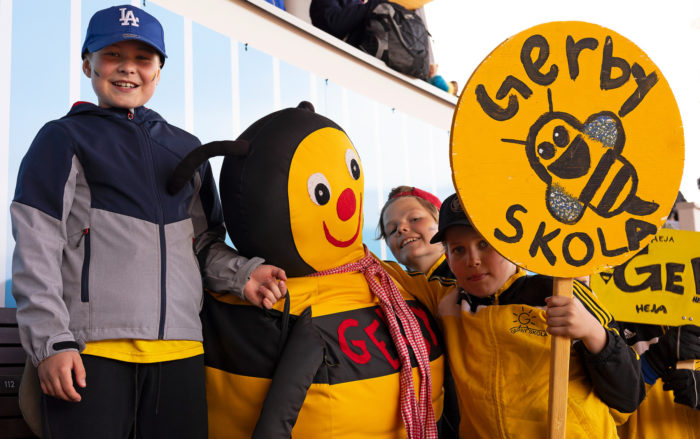
Elton and Alexander, fifth-graders from Gerby School in the west coast town of Vaasa, were on a bus by five in the morning, travelling to Helsinki with their schoolmates. Because of the distance, only kids participating in the races made the trip, so they don’t have their own cheerleading squad. However, they all cheer for each other.

Adrenaline rush

Several children pose with a stuffed bee figure that is almost as big as they are.

Kids from Gerby School show off their mascot, a large stuffed bee.Photo: Catarina Stewen

The team will overnight on mattresses in a classroom at a local school and return home the following day. The boys proudly present their school mascot, a large bee.

Pupils in grades one to six compete on the first day, and the second day is for teenagers in grades seven to nine and upper secondary school (high school). Hundreds of organisers, teachers and parents ensure that everything runs smoothly.

Many participants top off the event with a visit to Linnanmäki Amusement Park, not far from the stadium, enjoying a final adrenaline rush on the breathtaking rides.

By Catarina Stewen, June 2022

Finnish team aims to share European football glory

Elli Pikkujämsä is sizing up the Finnish national team’s chances ahead of Euro 2022, happening in England from July 6 to 31.

In the opening stage of every major international football tournament, one group stands out as tougher than the rest. At the women’s Euro 2022, this “group of death” is Group B, which pits Finland against three top teams: overall favourites Spain, eight-time winner Germany and a formidable Danish side.

Nicknamed Helmarit (meaning “boreal owls”), the Finnish women’s team has qualified for the Euros three times previously.

“Finland is the underdog, but maybe we can use that as our strength,” says Pikkujämsä (born in 1999), who plays professionally for KIF Örebro in Sweden. “Teams like Spain really love the ball, but we’re compact and very good at defending, so maybe we can catch them off guard with some sharp counterattacks.”

Calm before the storm

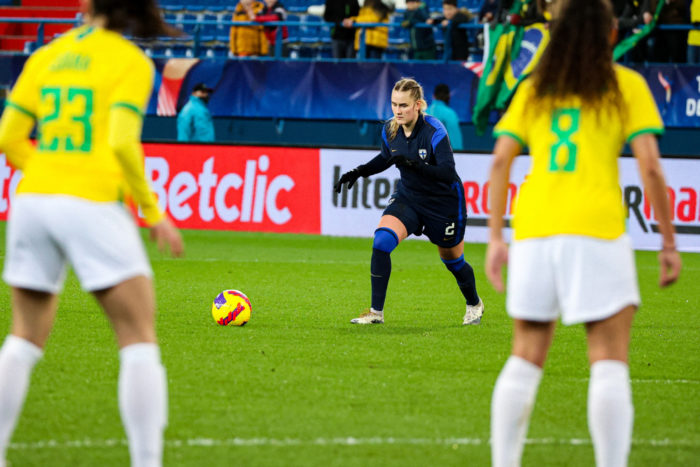
Two Brazilian football players stand as a Finnish player prepares to kick the ball.

Elli Pikkujämsä (middle), a strong defender for the Finnish national team, takes a kick against Brazil at a tournament in France in early 2022.Photo: Jyri Sulander/Football Association of Finland

Watching her intensity on the pitch, you might think Pikkujämsä was born playing football, but she originally hoped to become a professional snowboarder, and won the silver medal in slopestyle in the 2016 Youth Olympics.

“I also have a long background in track and field,” she says. “My diverse experience in sports has helped me both physically and mentally. I think I’m good at reading the game and retaining my focus.”

Pikkujämsä’s mindset both on the field and off brings to mind words such as “focused” and “unflappable.” She is currently one of the names to watch on the Finnish national team, and receives praise from coach Anna Signeul for her calm determination.

“Elli is a talented young player with a great technique,” says Signeul, who has served as Finland’s head coach since 2017. “She can execute long and short passes with both feet, and her mastery with the ball can help her get out of tight situations.

“She has the ability to perform when it really matters. She handles pressure situations very well.”

Intense spotlight

A Finnish soccer player heads the ball as the Irish goalkeeper tries to block it.

Linda Sällström (18) and Eveliina Summanen (20) of Finland pressure Ireland in front of a home crowd at the Olympic Stadium in Helsinki.Photo: Jussi Nukari/Lehtikuva

Signeul knows the lead-up to the finals will be intense, with the media spotlight adding pressure that many players have never experienced before.

“We’re working hard to provide our players with pressure-coping strategies,” she says. “We have a psychologist, a nutritionist and a technical coach giving individual and group support, and we’re increasing the training intensity.”

After preparation matches against the Netherlands and Japan and a final camp from June 20 to 28, the team arrives in England on July 4.

Comradery and solidarity are among the squad’s strongest mental assets, says Pikkujämsä. “Everyone knows their role, and we perform well as a group. We all have different personalities, but we get along really well. We socialise off the pitch, and we’re genuinely keen to help each other improve.”

Finland is among the countries that have worked steadfastly to raise the status and visibility of women’s football. “We’ve come a long way,” says Pikkujämsä. “We’re very proud to have qualified for the finals by beating high-ranking teams like Scotland.”

Inspirational owls

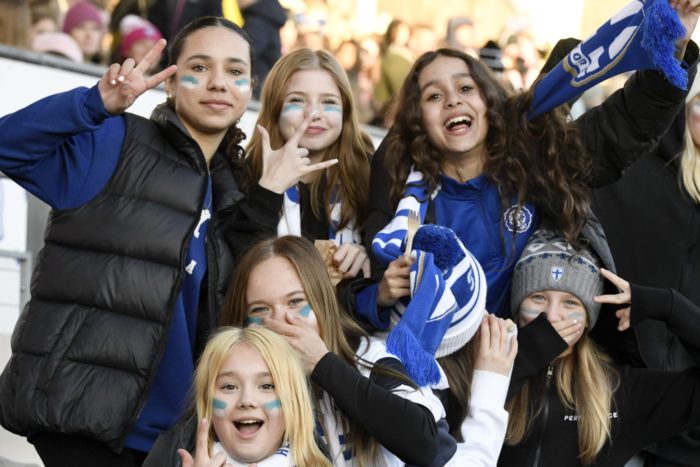
A bunch of girls with blue and white stripes painted on their cheeks are cheering and waving.

Tomorrow’s heroes: Young Finnish fans flocked to watch their role models beat Georgia in Helsinki.Photo: Jussi Nukari/Lehtikuva

Pikkujämsä adds that the Boreal Owls have inspired many young Finnish girls to take up football recently: “There’s even a campaign to encourage it – every girl who starts playing gets a free football.”

Scepticism about the level and value of women’s football unfortunately persists in some quarters, but such outdated attitudes are doomed to fade. The world champion US women’s soccer team recently won a legal settlement against their own national federation about equal pay and conditions compared to the men’s team.

Pikkujämsä urges doubters to keep their minds open. “In terms of game strategy, women’s matches are just as interesting [as men’s games],” she says.

When asked to pick the winner of the upcoming finals, Pikkujämsä gives a cryptic smile. “I want to say Finland,” she answers, “but let’s just say that I’m pretty sure that someone in our group will take home the trophy.”

By Silja Kudel, June 2022

Educated decisions: Finnish media literacy deters disinformation

We learn about the world through a variety of media, such as for-profit news websites, state-funded TV channels and, yes, even internet memes. For decades, the people of Finland have believed that properly understanding how the media world works is crucial for a healthy society.

What if someone said to you, “Cartoon memes influence my voting decisions”? It would sound silly, but there could also be an element of truth to it. We shouldn’t consider a meme a reliable source of information, but memes can affect people’s beliefs and behaviour.

“I would define media literacy as the set of skills you need to analyse, communicate with, collaborate in, and create media,” says Leo Pekkala, deputy director of the Finnish National Audiovisual Institute, a government agency under the Ministry of Education and Culture. The institute’s functions include promoting and developing media education.

From daycare on up, media education in Finland is present throughout the education curriculum, but it doesn’t stop when school ends. Media Literacy Week, which Finland celebrates every year in February, focused on reaching adults in 2022. Lifelong learning is vital because media continues to evolve.

“People need to understand media critically – who creates it and why,” Pekkala says. “In the 1950s, the academic focus was on mass media like television and newspapers. By the 1980s, audiovisual elements were added to media education. Now a lot of attention is on digital media.”

Media education involves everyone

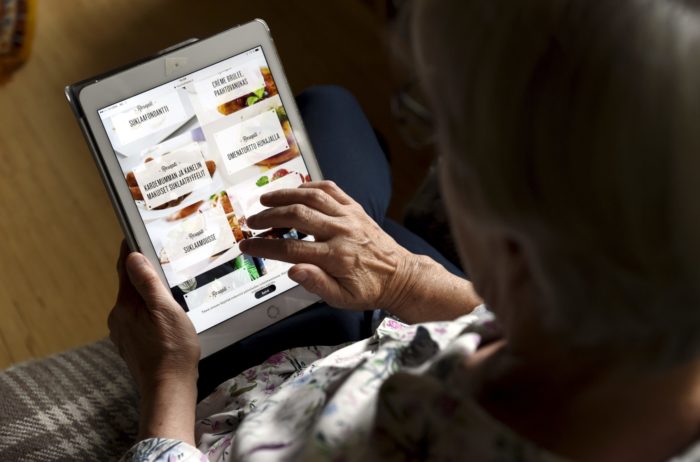
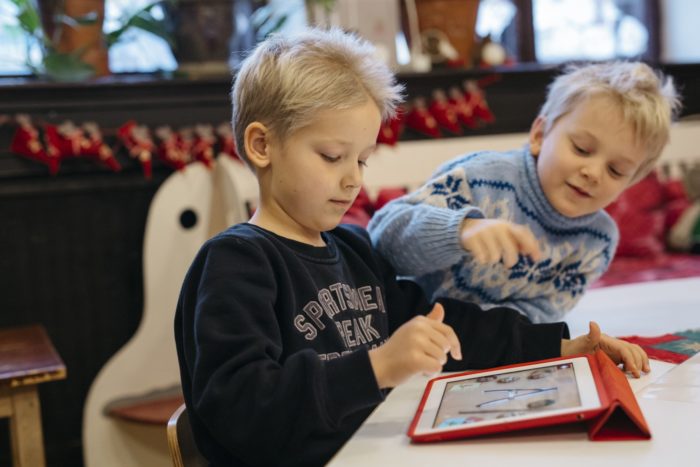
A person who seems to be of retirement age or older is scrolling on a tablet computer.

Media education in Finland reaches out to everyone, not just schoolkids. Lifelong learning is vital because media platforms and media consumption continue to evolve.Photo: Emmi Korhonen/Lehtikuva

Media education in Finland takes an approach that includes the whole of society. Many different civic organisations take part in developing and enacting learning programmes, including schools, libraries, government departments, universities and NGOs. For example, more than 50 groups participated in a recent campaign called Safer Internet Day.

“It is important to have many stakeholders involved because there is no single solution,” says Christa Prusskij, executive director of the Finnish Society on Media Education, an NGO. “It affects all people, so we need a varied approach to reach them.”

When people are media literate, they are more likely to find relevant facts, consider an issue from multiple angles and make informed decisions. They are also more likely to recognise and resist false information. Elections can be targets for domestic and foreign influence operations. Corporations use unconventional methods to impact consumer behaviour. There are attempts to influence our opinions about everything from vaccines to who should host the next Olympics.

Building a resilient society

In a school setting, two young kids are using a tablet computer.

Starting in daycare, media education is present throughout Finland’s education curriculum.Photo: Elina Manninen/Keksi/Finland Image Bank

Media literacy forms an integral part of civics education in Finnish schools. Finnish students study famous propaganda campaigns in history, learn about advertising and see how statistics can be used to mislead people. They learn the difference between disinformation (someone distributing false information knowing that it is false) and misinformation (someone distributing false information without realising that it is false).

Students create their own media, such as websites and videos. They develop messages about different topics and present them to their peers for advice and comments. It is part of learning how to think critically, and it works: Finland is ranked as having “the highest potential to withstand the negative impact of fake news and misinformation,” according to the 2021 Media Literacy Index. Contributing factors include “quality of education, free media and high trust among people.”

“Recognising disinformation is important, but that is only a small part of media education,” Pekkala says. “Media literacy by itself is not the end goal. Media literacy is like learning a language, so you have both the technical skill to use media and the ability to understand it.”

People who are media literate contribute to making society strong, durable and flexible, better able to adapt to and overcome unexpected situations.

Happier individuals

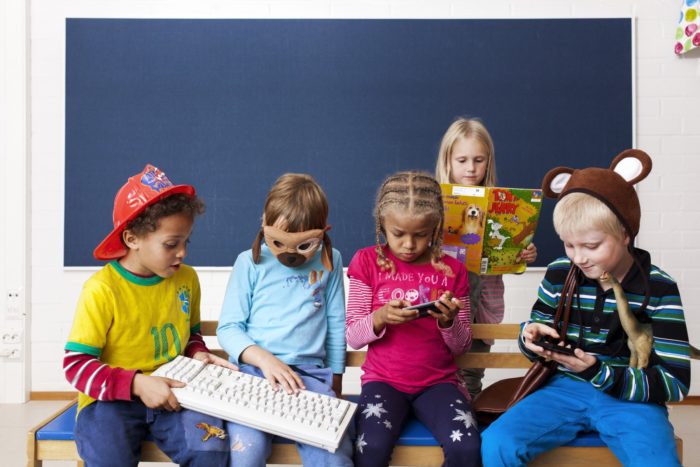
Five kids at a daycare each have a book, a computer keyboard or a mobile device in their hands.

From books to computers to mobile devices, all kinds of media are part of people’s lives from an early age.Photo: Finnish National Audiovisual Institute/KAVI

Prusskij says media literacy brings benefits to the individual as well.

“Trolling and online bullying can negatively impact our mental health and willingness to participate online,” she says. “A person might not express their opinion because they are afraid of being attacked. Women and minorities are often targeted.”

Media literacy can make people more resilient by helping them understand online behaviour and operate in that environment. They can express themselves creatively and civilly as they exercise free speech. In this way, it is important for personal growth. Finland’s aim in encouraging media literacy is a well- functioning, resilient democratic society and happier people.

“This is really our goal,” explains Prusskij. “Media literacy is important for a democracy and stable society.”

By David J. Cord, June 2022

North of the Arctic Circle, Finland’s 41st national park helps preserve wilderness and natural splendour

Salla National Park, which officially opened on June 11, 2022, is Finland’s 41st national park. Located within the Arctic Circle, it covers an area of 100 square kilometres in northeastern Finland.

It takes its name from the surrounding region of Salla, which covers 5,800 square kilometres (2,240 square miles) and has a population of only 3,400. That yields a population density of 0.6 people per square kilometre, making it one of the least populated regions in Europe.

Just west of the park is a ski resort called Sallatunturi. Farther up the road there is also a village called Salla.

Enjoying the great outdoors in all seasons

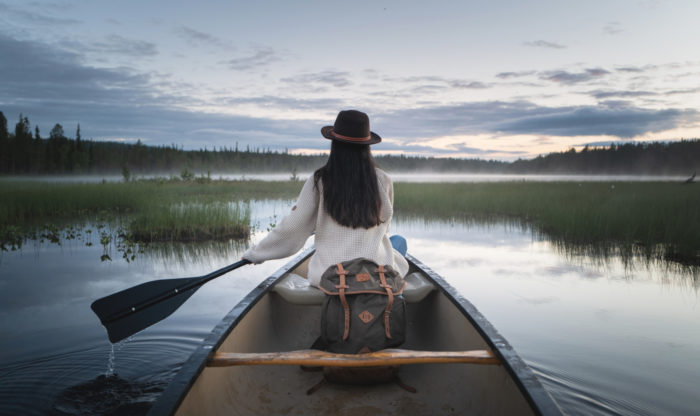
A woman paddles a canoe on a peaceful lake.

In Finnish Lapland, you can find exciting outdoor activities as well as peace and quiet, often at the same time.Photo: Daniel Taipale/Salla

Here in the far north, summer is the season of the Midnight Sun, when the sun doesn’t set at all for about two months. The long daylight hours mean you can fit in a lot of outdoor activities, such as hiking, biking, canoeing and kayaking.

In the winter, Salla transforms into a breathtaking snowy landscape. The Northern Lights may be visible between late August and early April, although it is notoriously difficult to predict exactly when they will appear.

Skiing is a highlight of a winter Salla trip, whether it’s downhill at Sallatunturi or cross-country on the extensive network of trails that weave through the landscape inside and outside the national park’s borders. A bit of skiing-related trivia: The oldest ski ever discovered in Finland, about 5,000 years old, was found in 1938 at Särkiaapa, about 30 kilometres (18 miles) north of the village of Salla.

Cross-country skiing is a great way to take in the forest air and the scenic views. There are also winter walking trails and winter biking trails, not to mention snowshoe trails. Some visitors embark on a reindeer safari, and even try their hand at guiding a reindeer-drawn sled through the snow-covered terrain.

A place for adventurers and thinkers

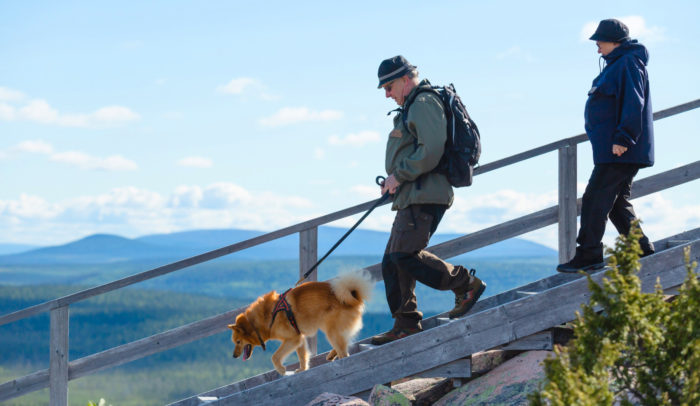
Two people and a dog descend a wooden stairway, with mountain peaks visible in the background.

Certain stretches of hiking trails include stairways, which serve the dual purposes of increasing safety and protecting sensitive terrain from people’s boots.Photo: Maija Savolainen/Salla

The dramatic ridges and gorges that punctuate the region’s landscape were sculpted during the last Ice Age, which ended roughly 11,000 years ago – fairly recently in geological terms. The spruce and pine forests are hundreds of years old and sustain rich ecosystems.

Visitors can venture over the remnants of the Salla Ice Lake, a former glacial lake that began melting at the end of the last Ice Age. In the Puu-Matovaara region of the park, 240 metres (785 feet) above current sea level, the rocky shores of the Salla Ice Lake remain.

The park and the surrounding area offer more than 300 kilometres (185 miles) of hiking trails. From Iso Pyhätunturi, the highest peak in the park, “you can see a wilderness view over the whole national park and across the border to the Russian side,” says Paula Aspholm, Salla’s tourism and marketing manager.

Artists and writers alike have found inspiration in Salla’s serenity. It is still easy for visitors to find peace and quiet in the vast landscape, in addition to all the fast-paced outdoor activities that are available.

A matter of conservation

Watch the Save Salla campaign video, in which Salla makes its point about climate change by announcing its “candidacy” to host the Summer Olympics.
Video: Save Salla

“Salla is one of the last real wilderness regions in Europe,” says Aspholm. It’s crucial to preserve as much as we can of this area. Salla National Park forms an important carbon sink in the Nordic region. Species including the xestia sincera moth and the three-toed woodpecker rely on the venerable trees in Salla’s old-growth forests.

Travellers today want to ensure that they make their trips in a responsible and sustainable manner. As luck would have it, there’s an online guide to responsible tourism in Finnish Lapland. Recommendations include leaving nature as you found it; staying on marked trails; choosing local products and services; respecting local traditions and culture; and obtaining appropriate fishing and hunting permits.

Erkki Parkkinen, the mayor of Salla, helped launch the Save Salla climate campaign. Often using humour to get its messages across, the campaign draws attention to the destructive ways climate change is affecting Salla. One video that gained traction on social media announced Salla’s “candidacy” to host the Olympics – the Summer Olympics – making the point that climate change is shortening Salla’s winters and altering the whole planet. The Save Salla website provides down-to-earth suggestions about what individuals and companies can do to help counteract climate change.

There’s no entrance fee for Salla National Park. Kuusamo Airport and the train station in Kemijärvi are the closest transport options. Visitors can choose from a variety of accommodations, from wooden cabins to hotel rooms.

By Emma De Carvalho, June 2022

Finland offers a treasure trove of summer events

Salmela Art Centre, Mäntyharju, June 11–Aug 14, 2022

Photo: Tero Sivula / Lehtikuva

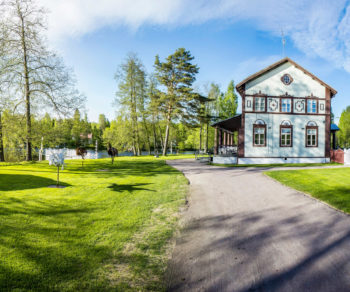
A multi-arts programme is on offer, incorporating concerts and exhibitions of Finnish contemporary art. Salmela is situated in the historical parish village of Mäntyharju by Lake Pyhävesi. An old parish cottage built in the 1850s serves as its oldest exhibition room.

Moomin World, June 11–Aug 21, 2022

Photo: Moomin Characters™

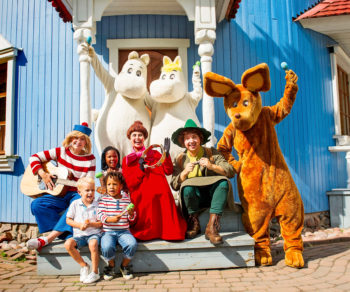
This children’s theme park is based on the Moomin books by Swedish-speaking Finnish author and artist Tove Jansson. The blueberry-coloured Moomin House is the main attraction. Guests can also explore the Hemulen’s house, Moominmamma’s kitchen and the fire station. All over the park, you’ll bump into various Moomin characters.

Mänttä Art Festival, June 12–Aug 31, 2022

Photo: Timo Nieminen

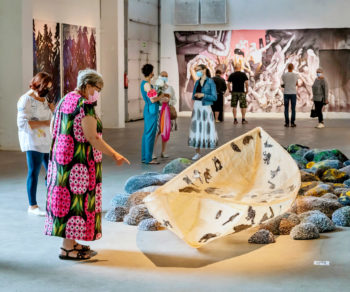
Finland’s largest summer exhibition of contemporary art appoints a new curator every year, ensuring that the exhibition always provides a fresh perspective on the entire field of Finnish contributions.

Midnight Sun Film Festival, June 15–19, 2022

Photo: Venni Ahlberg

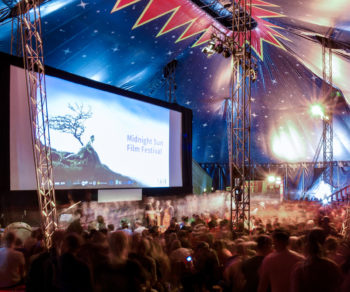
The concept of the Midnight Sun Film Festival is awesome. People from across the country and all over the world come to a small town in Finnish Lapland to watch movies day and night. You won’t even notice if it’s night or day, because the sun doesn’t set at all.

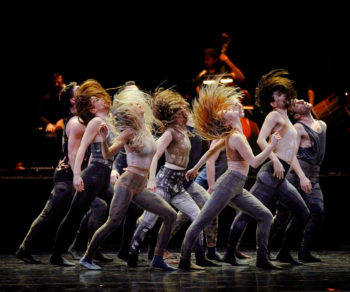
Kuopio Dance Festival, June 15–21, 2022

Photo: Charala

At the largest and widest-ranging dance festival in the Nordic countries, the programme includes performers of the most important Finnish and international dance art of our time.

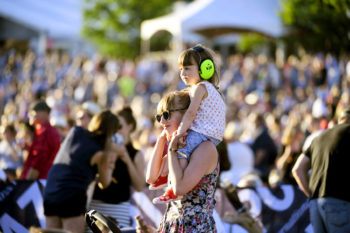
Pori Jazz, July 8–16, 2022

Photo: Martti Kainulainen/Lehtikuva

One of the world’s longest-running major jazz events, Pori Jazz never fails to feature top names from near and far. The unique atmosphere, diverse programme, fine services and delightful surroundings attract about 400,000 visitors every year. Among the highlights of Pori Jazz 2022 are US superstar John Legend and UK recording artist Emeli Sandé.

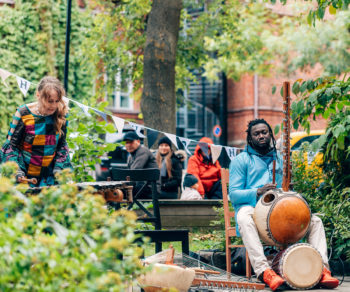
Helsinki Festival, Aug 12–Sept 4, 2022

Photo: Petri Anttila

The capital has the country’s largest arts festival, which is once again providing an extensive programme of events throughout the city. Experiences range from classical to world music to pop, from drama to contemporary dance, and from visual art to film and children’s events. This festival brings the arts to everyone.

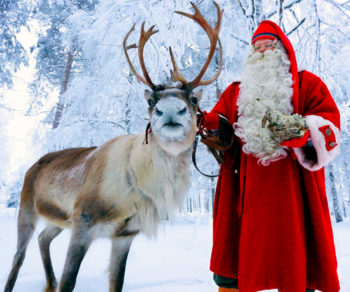
Santa Claus Village, open every day, all year round

Photo: Santa Claus Village

As everyone knows, Santa lives in northern Finland. You can meet him, and step across the magical Arctic Circle, at Santa Claus Village, just outside Rovaniemi, the capital of Finnish Lapland – even during the summer. If you want snow, though, you’ll have to come back in the winter.

By Maria Öfverström, ThisisFINLAND Magazine 2022