Finnish film from East Africa savours international acclaim

Guled’s friend wants to tell him about his problem: Should he buy a goat or a cow? The dilemma is keeping him up at night and he needs advice. Guled shrugs. You call that a problem? Let me tell you about problems.

Guled says his wife is seriously ill and needs an expensive operation to survive, his young son does not respect him, his relatives hate him and, at the age of 45, he stalks Djibouti hospitals like a circling buzzard with a shovel over his shoulder, chasing dead bodies to earn what little money he can.

Out of such misery springs the poignant love story The Gravedigger’s Wife, written and directed by Somali Finnish filmmaker Khadar Ayderus Ahmed. After premiering during International Critics’ Week at the 2021 Cannes Film Festival, the movie proceeded to win an Amplify Voices Award at the Toronto International Film Festival. It received Africa’s most prestigious film prize, the Golden Stallion, at the Pan-African Film and Television Festival of Ouagadougou, and is the first entry from Somalia for Best International Film Feature at the Academy Awards.

Sharing a story with the world

A man and a woman stare into each other’s eyes and smile while other people look on.

Guled (Omar Abdi, left) and Nasra are an affectionate couple with a sense of humour.Photo: Arttu Peltomaa/Bufo

Ahmed, who escaped the Somali Civil War as a child and came to Finland at age 16 with his family from Ethiopia as a refugee, developed Guled’s story from personal tragedy. Following the death of his infant nephew ten years ago, Ahmed says he could not get the image of ambulance-chasing gravediggers out of his head.

“It would not leave me alone until I sat down and wrote about his life,” says Ahmed. “I just had the image of a gravedigger, and nothing else. I had to build everything around that gravedigger. It was like he came to share his story with me and asked me to share that story with the rest of the world.”

Arduous journey
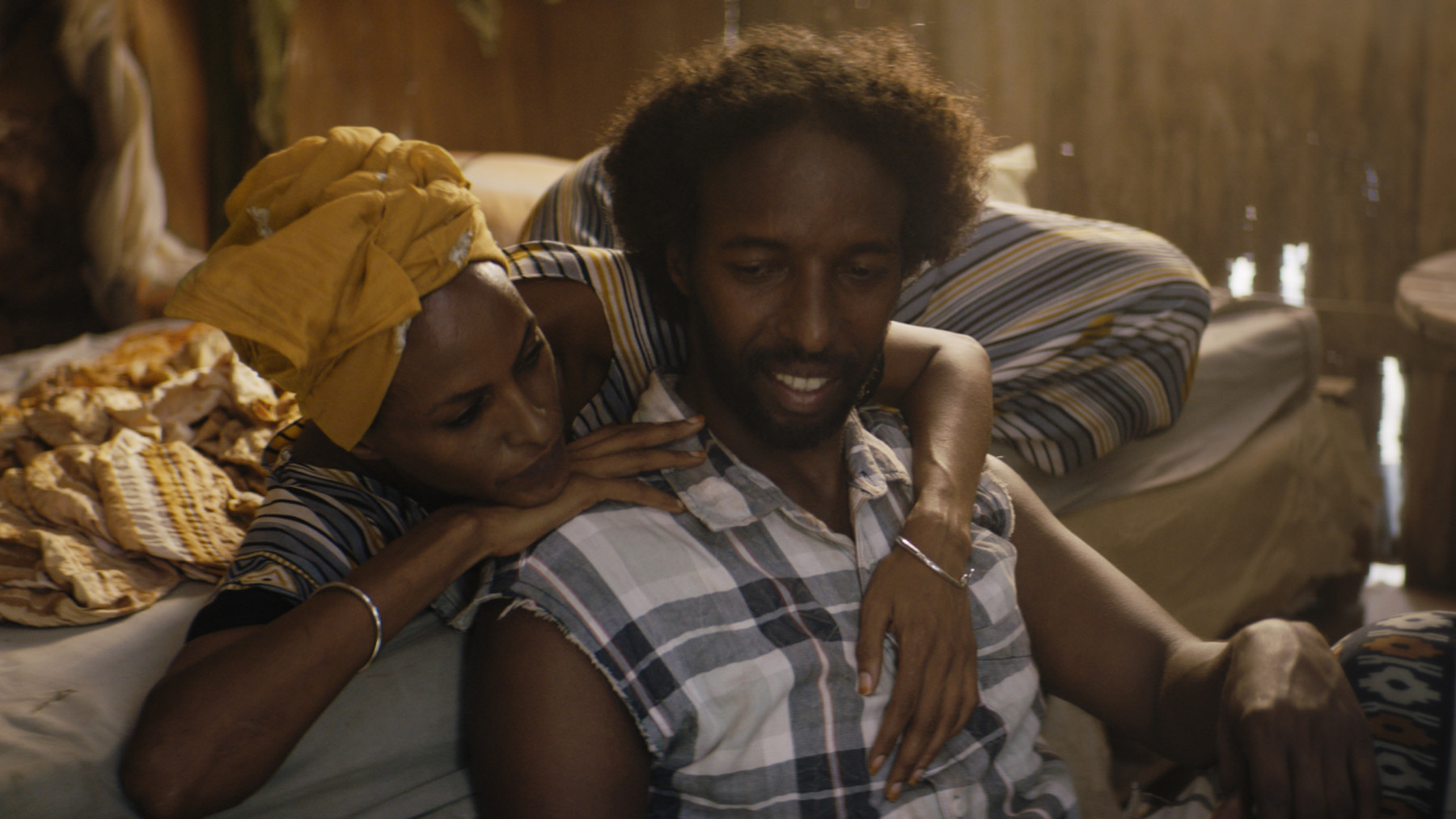
A woman puts her arms around a man’s shoulders.

Nasra and Guled talk about their situation.Photo: Arttu Peltomaa/Bufo

The narrative revolves around Guled (Omar Abdi) and Nasra (Yasmin Warsame), a loving, playful couple who crash weddings for fun. But Nasra has a kidney ailment that will kill her unless Guled can come up with 5,000 US dollars for the surgery. His dilemma takes him on an arduous journey by foot to the small village he left under alienating circumstances as a young man.

“In western culture, the healthcare system takes care of its own citizens,” Ahmed says. “But in Africa you don’t have that privilege. You must pay everything out of your pocket. I really wanted to highlight the healthcare system in Africa through a love story.”

Attaining aspirations
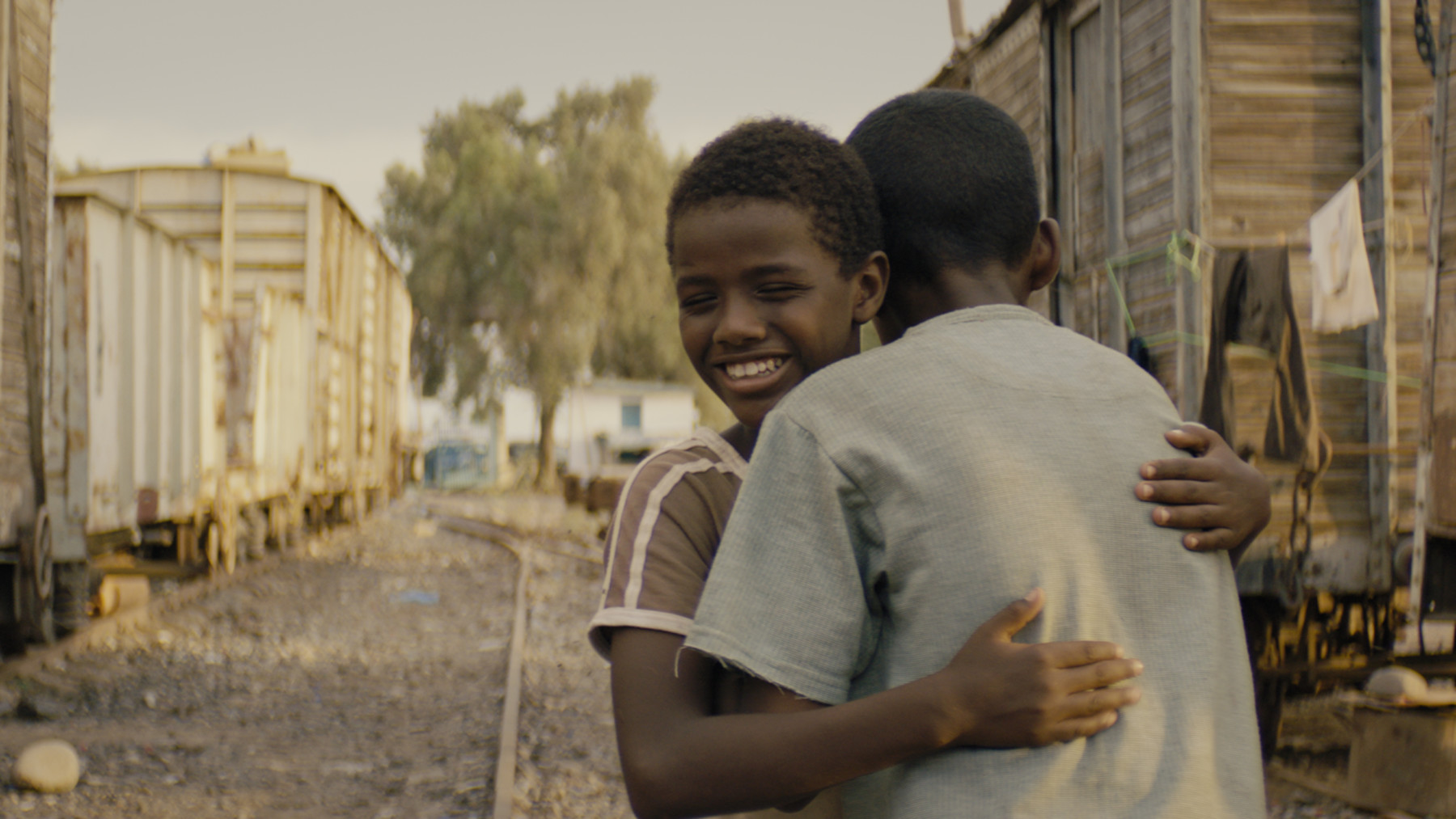
A boy hugs another boy on a gravel street.

Guled’s son Mahad (Kadar Abdoul-Aziz Ibrahim, left) lives on the streets.Photo: Arttu Peltomaa/Bufo

Ahmed, who now lives in Paris, grew up watching Bollywood and Hollywood productions. He aspired to the film industry and wanted to attend film school. “But I wasn’t privileged enough to go,” he says. “I decided I wasn’t going to let anyone define my future, what I can and cannot do.”

He taught himself the craft and made several short films in Helsinki, a path that led him to Gravedigger, his first feature film. Budget constraints only allowed for three weeks of shooting, which was plagued by intense African heat and an outbreak of diarrhea that afflicted the entire crew. They completed filming just before the introduction of Covid-19 restrictions, which postponed the movie’s debut at Cannes by a year.

None of the actors cast by Ahmed were professionals. Abdi is Ahmed’s longtime friend and Warsame is well known in Canada for her work as a model but had not worked in film. He found Kadar Abdoul-Aziz Ibrahim, the boy who plays the couple’s son, Mahad, two weeks before filming began and allowed him to adlib most of his lines.

The future of cinema in Finland

Watch the trailer for The Gravedigger’s Wife.

“The director needs to be confident enough to know exactly what they want and how to get that out of the cast, because you’re dealing with nonprofessional actors who have no experience,” Ahmed says. “I think I really succeeded in that, gathering people from the street and getting the best out of them in 21 days.”

Along with Finnish director Juho Kuosmanen’s Compartment No. 6, which shared the Grand Prix at Cannes and is also up for best foreign film at the 2022 Oscars, Ahmed is further raising the profile of the Finnish film industry. Not since Aki Kaurismäki – who has shot films in the US, France and England – have Finnish directors been so prominent on the international stage.

“It says a lot about the direction Finnish cinema is going,” says Ahmed, who is also in postproduction with Kuosmanen for a Finnish television show. “Now there’s a new generation that is taking the Finnish film scene to an international level. Juho’s film is in Russian and shot outside of Finland. My film is shot in Somalia and in Somalian. But they’re both Finnish productions. It tells that the future of cinema in Finland is going to be more international.”

By Michael Hunt, December 2021
Turkish organisation that combats violence against women receives international award in Finland

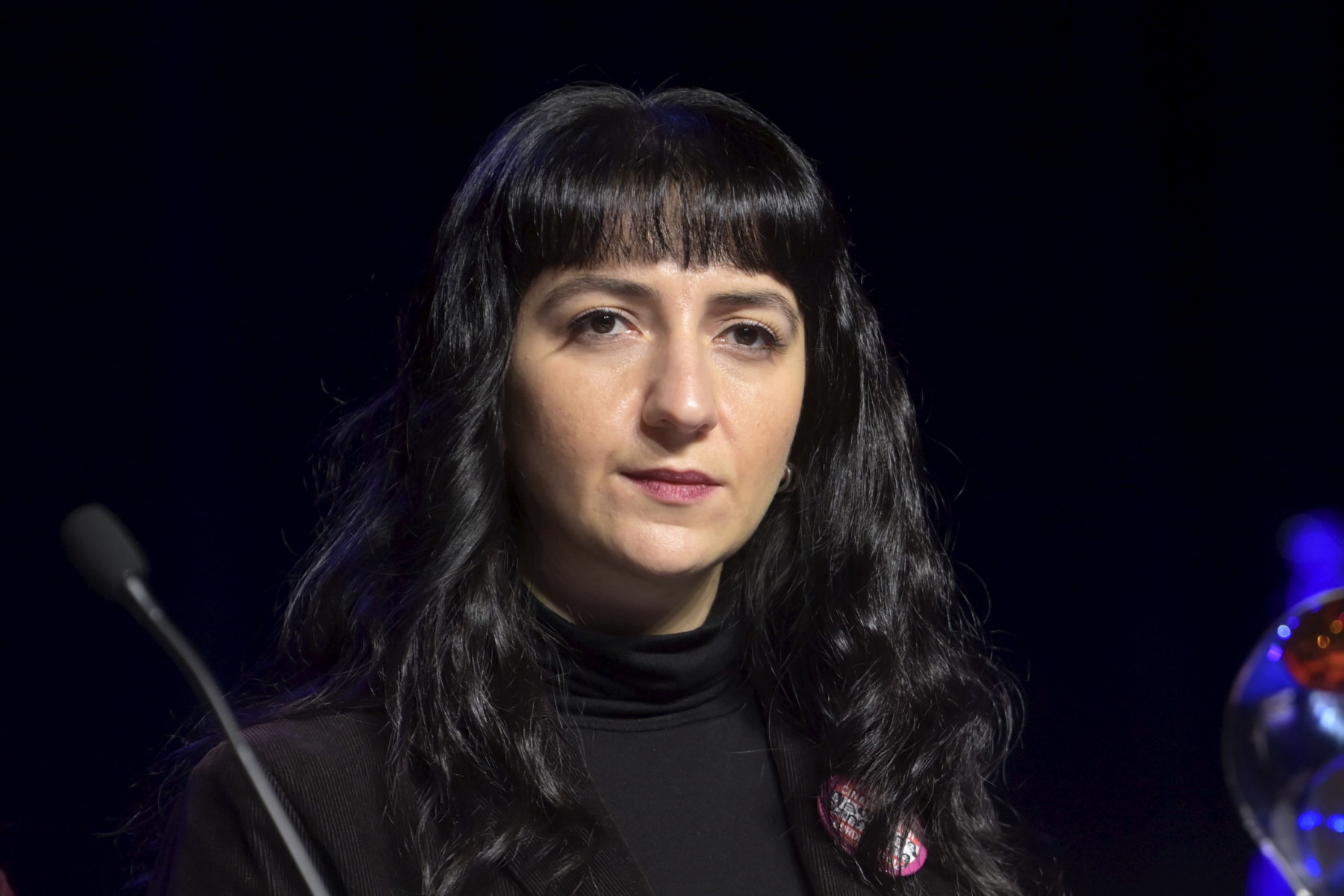
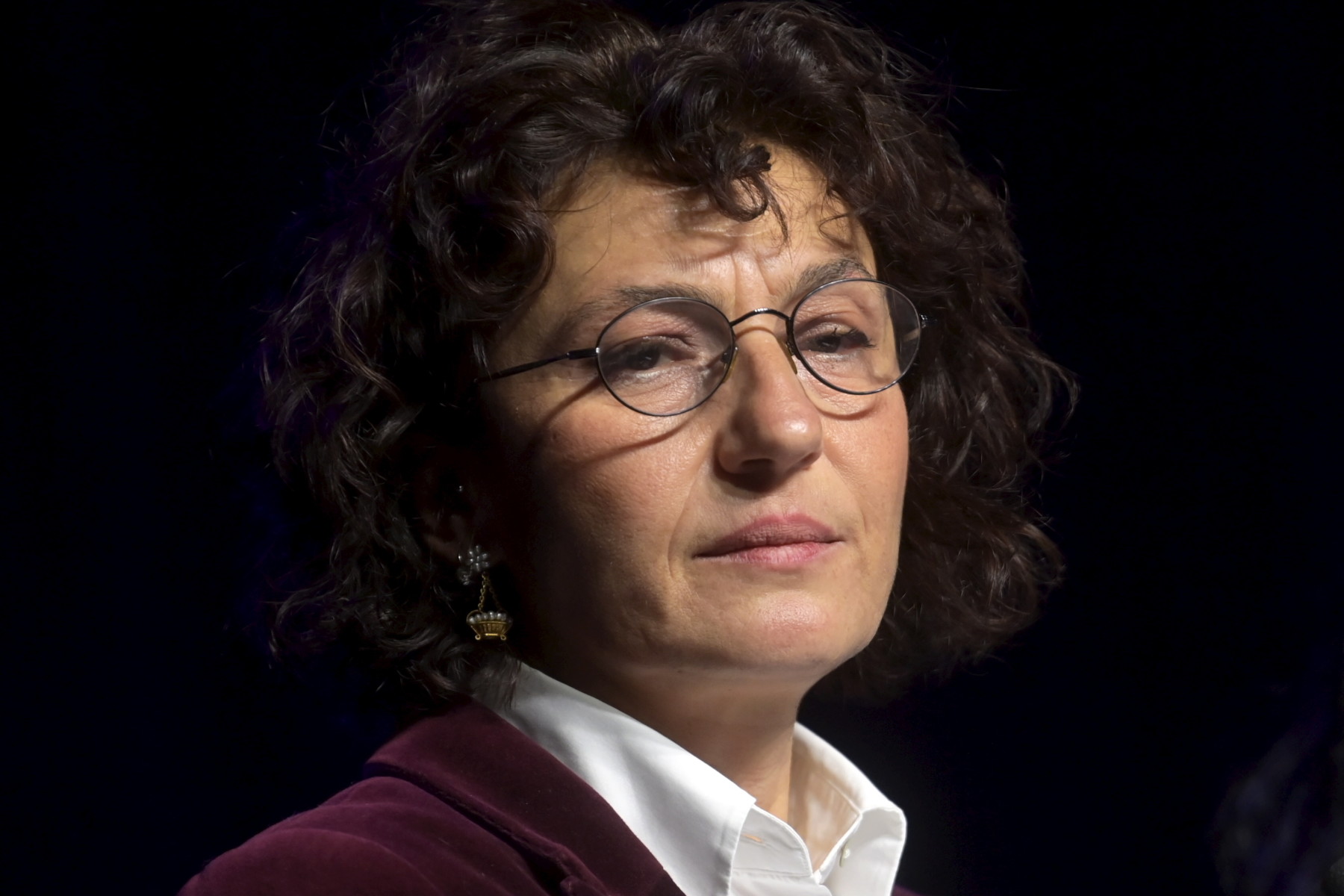
November 2021 marks the third time the International Gender Equality Prize has been awarded. The prize money, which totals 300,000 euros in the 2021 edition, is given to an organisation or project “to promote gender equality and encourage discussion about equality on a global scale.” This year the biennial prize was presented to Gülsüm Önal, founder, president and general representative of the We Will Stop Femicide Platform, and Fidan Ataselim, founder and secretary-general of the same organisation, by Sanna Marin, the prime minister of Finland.

“Promoting gender equality worldwide requires effective actions and determined work. The International Gender Equality Prize recognises and raises awareness about this work, and also contributes to the promotion of gender equality globally,” says Marin.

Pioneer for gender equality

A woman with a dark background.

Gülsüm Önal is a founder, the president and the general representative of the We Will Stop Femicide Platform, a Turkish organisation that combats violence against women.Photo: Vesa Moilanen / Lehtikuva

Gender equality has been on the agenda in Finland for more than a century. In 1906, Finland became the first country in the world to extend full political rights to women by passing a law allowing all women to both vote and run for election. But even earlier, in 1882, women were entitled to complete university degrees, highlighting the country’s role as a leader in gender equality issues and education. Studies show that education has always been the most important means of creating social and economic equality.

Heroes closing the gender gap

A woman with a dark background.

Fidan Ataselim is a founder and the secretary-general of the We Will Stop Femicide Platform. The organisation was awarded the third International Gender Equality Prize “to promote gender equality and encourage discussion about equality on a global scale.”Photo: Vesa Moilanen / Lehtikuva

The International Gender Equality Prize awards organisations for their extraordinary effort, innovation and excellence in closing the gender gap.

The We Will Stop Femicide Platform has been working to stop femicide and ensure women’s protection from violence since 2010. The Platform provides legal assistance to women who need protection from violence, supports the families of murdered women, and advocates for changes to legislation to protect women.

“We have done what has needed to be done and what everyone should do. The fact that the international community has seen the fight in our country gives us great strength and happiness. The award coming from a country like Finland that promotes women’s rights is also a source of pride for us,” say Önal and Ataselim.

In 2017, the Government of Finland’s International Gender Equality Prize was awarded to German Chancellor Angela Merkel, who directed the prize money to a Nigerian organisation that works to stop domestic violence. The organisation has used the funds to build a shelter for women.

In 2019, the prize went to the women’s rights organisation Equality Now, an international nonprofit organisation that documents violence and discrimination against women and mobilises international action to support efforts to stop these abuses.

Over 400 proposals were submitted worldwide for consideration for the award during the open nomination period. The Government of Finland made its decision based on the proposal by an independent international jury.

The jury included Member of Parliament Eva Biaudet (chair), a well-known human rights activist and former minister of health and social services (Finland); Member of Parliament Bella Forsgrén (Finland); Dean Peacock, director of the Women’s International League for Peace and Freedom’s initiative to confront militarised masculinities (South Africa); Matti Vanhanen, former prime minister and speaker of Parliament (Finland); and Ambassador Melanne Verveer, executive director of the Georgetown Institute for Women, Peace and Security at Georgetown University (United States).

By Carina Chela, November 2021

The Northern Lights colour the skies over Finland

After the bright nights of summer, the dark of autumn and winter descends, but the sombre season has its own rewards.

Only in the dark can we admire the celestial pyrotechnics. The aurora borealis is no stranger to the starlit skies of Finnish Lapland, far from the equator.

The Northern Lights can be seen from the end of August right up to the beginning of April. The best time to see them is around midnight when the sky is clear and the land is dark. Street lamps, yard lights and other light pollution from human habitation obscure their glory.

The aurora can be elusive, but various services are available to help visitors find and enjoy it. There are several phone apps that can tell when the aurora is active; just search for “Northern Lights” in your app store. The Finnish Meteorological Institute maintains its own space weather service. Auroras result from disturbances in the magnetosphere caused by solar wind. Many holiday centre hotels in Lapland have their own Northern Lights alarm, which can be set to wake you as soon as the phenomenon starts to spread across the sky.

By Maria Öfverström, ThisisFINLAND Magazine 2021

Serving some of our favourite dishes: southern Finnish recipes

A bit of non-culinary trivia: Despite its southern location within Finland, Helsinki is situated at approximately the same latitude as Anchorage, Alaska or the Shetland Islands.

The Finnish capital sits right on the south coast, part of the country’s most populous region.

For the southern Finnish edition of our recipe series, chef Timo Lepistö has chosen to showcase Finnish standards such as hernekeitto (pea soup) and vispipuuro (whipped lingonberry porridge). These dishes are popular all over Finland.

[This is part of a series of recipe articles that show off dishes from the north, south, east and west of Finland (although many of them are now common all over the country), not to mention an extra piece about cake, bread and buns. We’ll add links to the other articles as they are published.]

By ThisisFINLAND staff, November 2021
Recipes and descriptions supplied by Timo Lepistö

Vegan pea soup (vegaaninen hernekeitto)

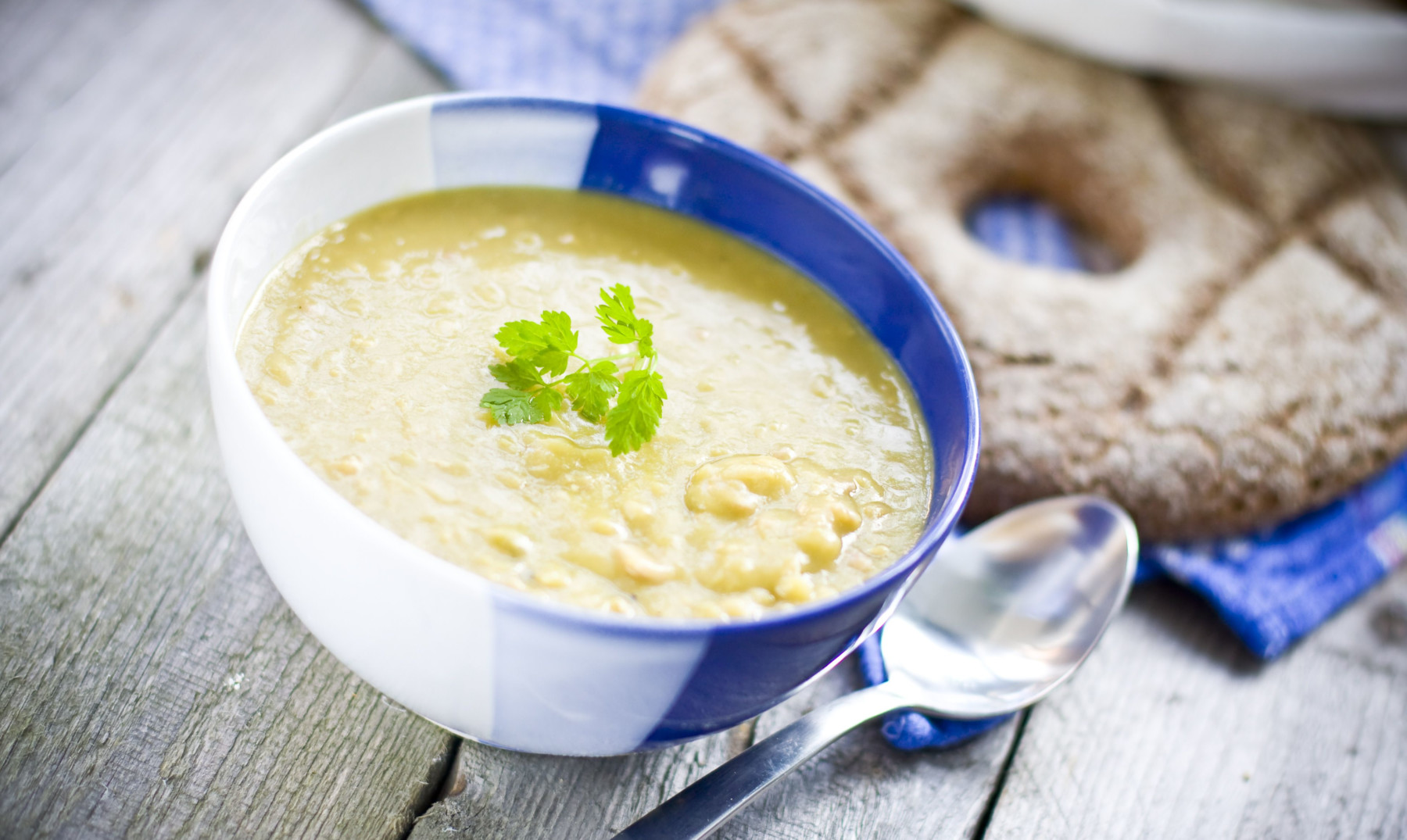
A bowl of pea soup sits on a table next to a round piece of rye bread.

Pea soup traditionally appears on Finnish menus on Thursdays. Dark rye bread, also shown here, is an even more iconic part of Finnish cuisine.Photo: Ossi Lehtonen/Lehtikuva

A tasty soup made from dried split peas is an iconic part of Finnish cuisine. One of the ingredients is typically meat on the bone (usually salted pork), but restaurants may offer a vegan version. In Finland, pea soup is traditionally eaten on Thursdays, with a thick, oven-baked pancake for dessert. (The custom can be traced back centuries, to a time when people ate a heavy meal on Thursdays to prepare for the church-mandated fast on Fridays.)

  • 500 g dried green split peas
  • 2.5 litres of water
  • 3 carrots
  • 1 or 2 parsnips
  • 130 g celeriac
  • 1 onion
  • 1 tbsp salt
  • marjoram, black pepper

Rinse the peas and soak them overnight in water. Drain them and put them in a large pot with new water. (If you do prefer to add meat, now is the time.) Bring to a boil and skim carefully after ten minutes. Simmer for about an hour. Meanwhile, peel and cut the vegetables into bite-size pieces. Add the vegetables and spices to the pot and continue simmering for about 30 minutes. When serving the soup, provide mustard and diced red onion, which each guest can add according to individual taste.

Baked cinnamon apples (uuniomenat)

Sauce pours from a pitcher onto a baked apple on a plate.

Baked apples filled with a cinnamon-sugar mixture are an autumn delicacy.Photo: Jarmo Wright/Otavamedia/Lehtikuva

This simple delicacy fills your home with a wonderful scent in the autumn.

  • 6 apples of a firm and tart variety
  • 50 g butter
  • 1 dl rolled oats
  • 1/2 dl chopped almonds
  • 1/2 dl light muscovado sugar
  • 1 tsp salt
  • 1 tsp cinnamon

Preheat oven to 200 degrees Celsius. Wash the apples and use an apple corer to remove the stems and seeds. Place the apples in a baking dish. For the filling, combine the sugar, butter and cinnamon in a small bowl and mix well. Add oats and almonds. Spoon the mixture evenly into each of the apples. Bake 25–40 minutes, until the apples become tender. Serve warm with a good-quality vanilla ice cream and sauce from the baking dish.

Quark pie with rhubarb or berries (rahkapiirakka)

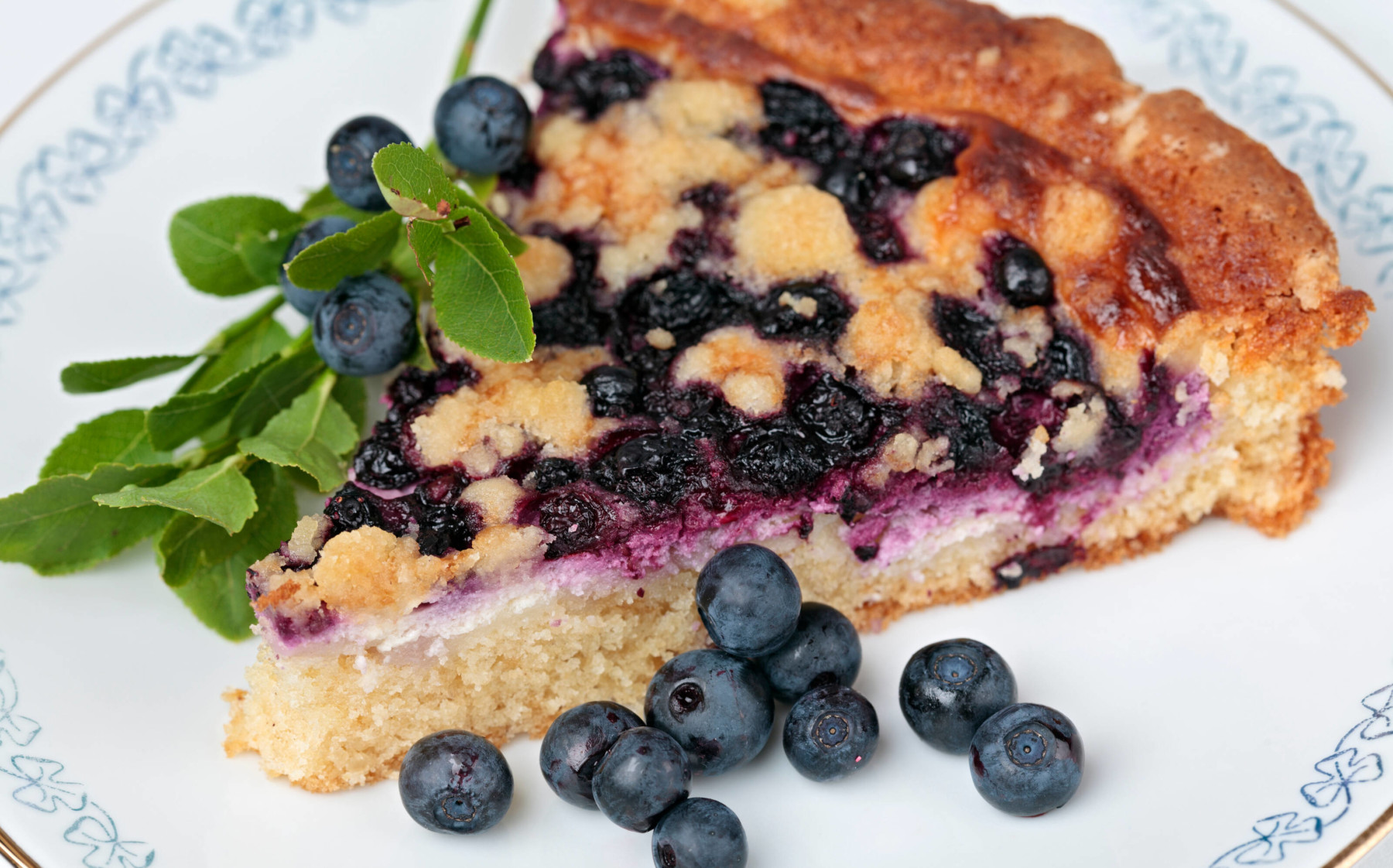
A piece of berry pie on a plate.

You can bake this pie with rhubarb or various kinds of berries, fresh or frozen.Photo: Pirkko Kanervisto/Vastavalo/Visit Finland

This type of pie is a staple at Finnish tables, especially when rhubarb or berries are in season. It goes well with coffee when you have guests. The crust is not precooked – you bake it together with the filling, a simple sour-cream custard. You can make this traditional pie with rhubarb, like in this recipe, but you can also substitute bilberries, blueberries or other berries. If you’re using fresh berries, there’s no need for cornstarch.

Pie crust:

  • 250 g butter, room temperature
  • 160 g caster sugar
  • 2 eggs
  • 260 g all-purpose flour
  • 2 tsp baking powder
  • 1/2 tsp salt

Filling:

  • 400 g quark or sour cream
  • 3 dl rhubarb, thinly sliced (or 3 dl berries)
  • 2 eggs
  • 1 dl caster sugar
  • 1 tbsp cornstarch
  • vanilla (optional)

For the crust, combine the butter, sugar and salt in a stand mixer bowl. Beat until fluffy, then decrease the speed and add the eggs, one by one. In a separate bowl, mix the flour and baking powder, then gradually add them to the butter mixture until thoroughly blended. Press the finished dough into a greased pie pan, covering the sides all the way to the rim.

Preheat oven to 200 degrees Celsius.

Wash the rhubarb stalks and slice into thin pieces (3–5 millimetres), then mix them with the cornstarch. Stir the quark or sour cream, the eggs and the sugar until smooth and pour the mixture into the unbaked crust. Sprinkle the rhubarb over the custard and bake for 30–40 minutes. Let the pie cool for ten minutes before removing it from the pan.

Whipped semolina and lingonberry porridge (vispipuuro)

A bowl of berry porridge on a table.

Usually made with lingonberries, whipped semolina porridge is a tasty dessert.Photo: Kirsi Ilmaranta

A favourite of many children, this dish is usually served as a dessert. You can make it with fresh or frozen red berries or with a strong cordial. It’s traditional to use lingonberries (a wild relative of the cranberry) or red currants. You serve it with milk and sprinkle of sugar, or with vanilla custard. The dish can be garnished with a few fresh berries, some caramel sauce and edible flowers such as violets.

  • 7 dl water
  • 200 g lingonberries
  • 1 dl caster sugar
  • 1 dl fine semolina
  • A pinch of salt

Combine the water, berries, sugar and salt in a pot and bring to a boil. After a few minutes, vigorously mix the semolina in using a whisk, then reduce heat and simmer for 5–7 minutes, whisking continuously until it thickens. Transfer the porridge into a stand mixer bowl and sprinkle caster sugar on top to prevent a skin from forming. Let chill in fridge. Before serving, whisk with the stand mixer until fluffy.

“Plans are just plans”: Prize-winning Finnish film traces train trip to northern Russia

At a Moscow apartment party, a group of intellectuals plays a parlour game that involves matching a quote to its author. The host turns to a young Finnish woman who is clearly in over her head and asks who said, “Only the parts of us will ever touch only the parts of others.”

It’s a trick question, designed to force Laura (Seidi Haarla) to reach awkwardly for a pretentious literary answer for the group’s amusement, when the correct response is Marilyn Monroe.

So begins Compartment No. 6, an acclaimed Finnish road movie about self-discovery through an unlikely companionship.

Reinvention

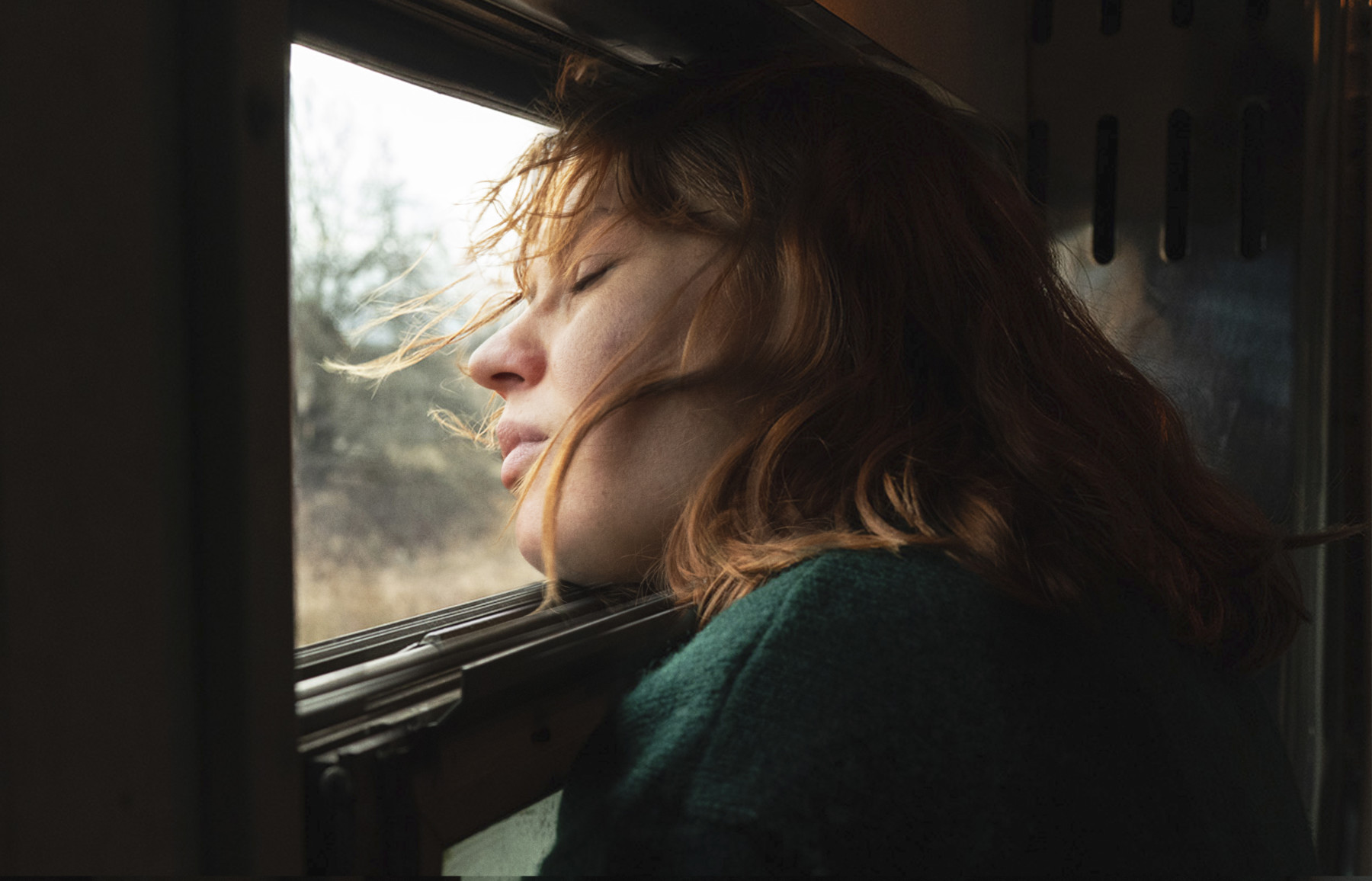
With her eyes closed, a woman lets her hair blow in the breeze at an open train window.

Laura goes through a range of emotions over the course of her journey.Photo: Sami Kuokkanen/Aamu Film Company

Inspired by Rosa Liksom’s 2011 novel of the same name, this is Finland’s most decorated film since Aki Kaurismäki’s The Man without a Past won the Grand Prix at the 2002 Cannes Film Festival. Compartment No. 6 shared the 2021 Grand Prix at Cannes (with A Hero, by Iranian director Asghar Farhadi), and it’s the Finnish entry for Best International Feature Film at the 2022 Academy Awards.

Laura, who has decided to reinvent herself as an archaeology student, boards a long-distance winter train to Murmansk, far above the Arctic Circle, to see the Lake Kanozero petroglyphs, a set of ancient rock carvings. Her loutish compartment mate is Ljoha (Yuri Borisov), a Russian miner whose crude behaviour immediately repels her. Yet she’s confined to the cramped berth with him for more than 1,600 kilometres (1,000 miles) through the bleak, dark Russian countryside.

Human coexistence

A woman and a man are opening the doors of a car.

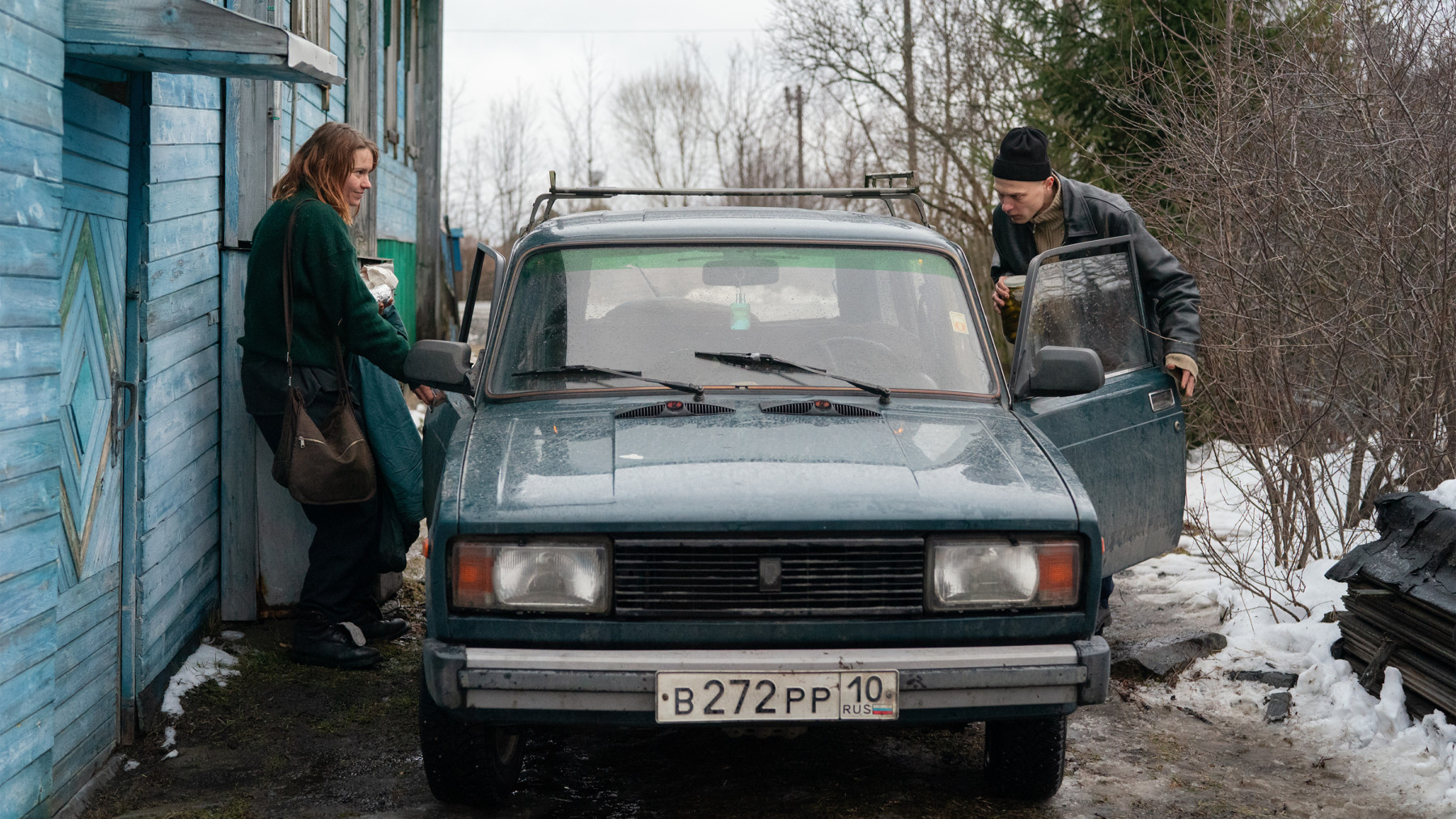
After hotwiring a car, Ljoha asks Laura, “You think I’m a bad guy?”Photo: Sami Kuokkanen/Aamu Film Company

With Liksom’s approval, director Juho Kuosmanen changed the decade, the country and the route for the film. While the novel takes the characters from Moscow to Mongolia through the Soviet Union of the 1980s, Kuosmanen dropped in enough cultural references to make it clear that the setting is Russia in at least the 1990s – not that time and place are necessarily relevant in a film driven by two strong leads engaged in an intense platonic relationship.

To place the viewer inside the claustrophobic train compartment, Kuosmanen says he studied the Oscar-nominated 1981 West German submarine war film Das Boot for technical inspiration. Director Wolfgang Petersen took down no physical barriers inside the U-boat while filming, so Kuosmanen used the same technique on the train he rented from Russian Railways as it rumbled around Saint Petersburg while he filmed with a handheld 35-millimetre camera. The close-up effects are intimate and powerfully human on the most basic levels as Laura and Ljoha learn to coexist in a small space, where comfort and conveniences are scarce.

Authenticity and emotion

An older woman and a younger woman sit at a kitchen table, drinking and smoking and talking.

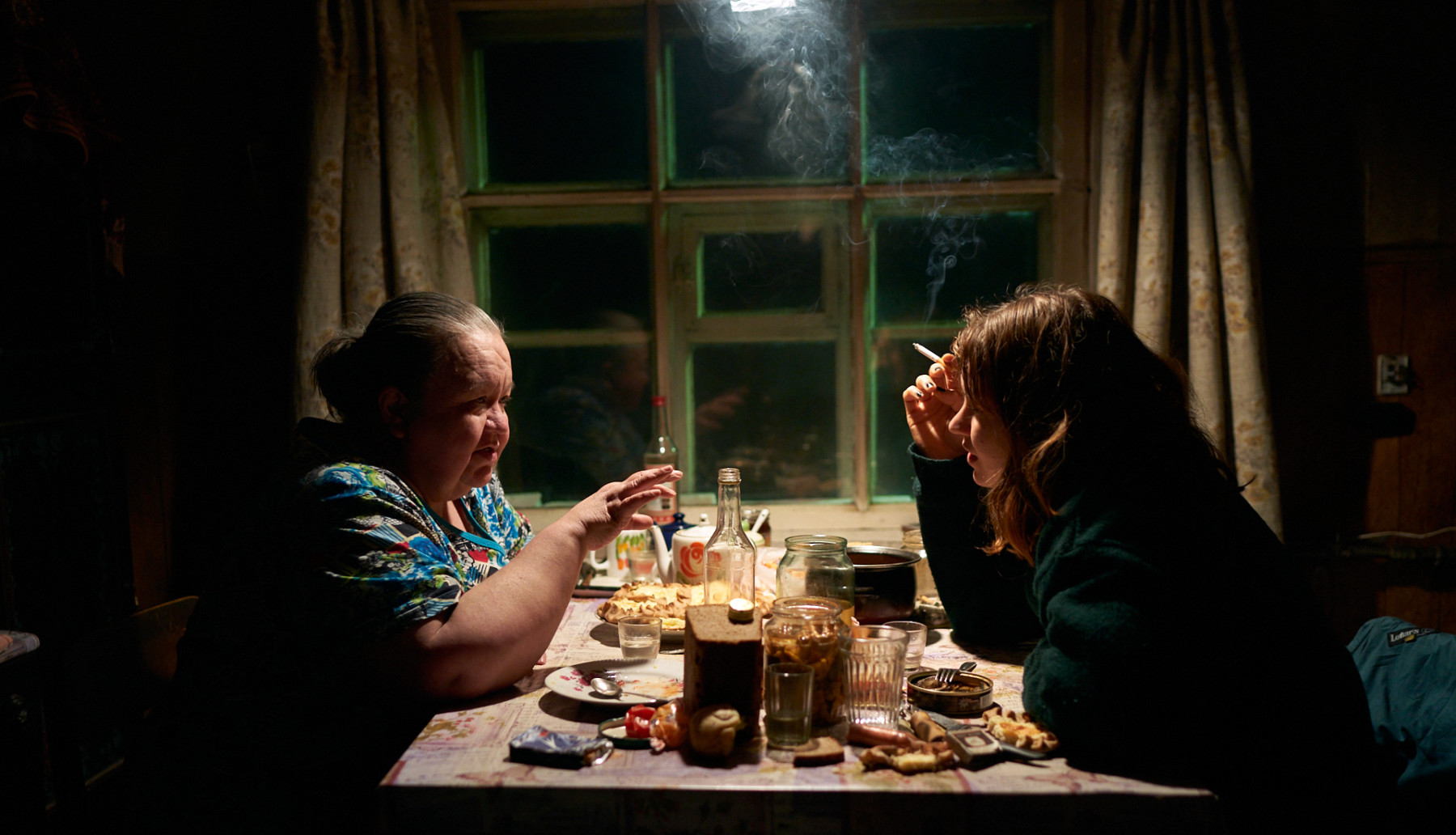
During an overnight stopover, Laura and Ljoha visit an elderly woman who offers life advice and strong drinks.Photo: Sami Kuokkanen/Aamu Film Company

The film’s gritty veneer is evocative of other successful Eastern Europe-based films, including Taxi Blues, Lilya 4-Ever and 4 Months, Three Weeks and 2 Days, but it is not derivative. Kuosmanen keeps it original, adding a touch of authenticity by introducing an elderly female character (Lidia Kostina) while the train is at an overnight stop. She is not a professional actor, and her adlibbed lines not only encourage Laura’s personal growth, but also cast Ljoha in a sympathetic light for the first time.

Kuosmanen says he was inspired by Brazilian director Karim Aïnouz’s 2019 The Invisible Life of Eurídice Gusmão, which won the top prize in the Un Certain Regard category that year at Cannes (Kuosmanen took the same award in 2016 with The Happiest Day in the Life of Olli Mäki). Aïnouz’s narrative about two sisters struggling against patriarchy “blew my mind when I saw it,” Kuosmanen says. “My film is not a love story, but I wanted it to be one of strong emotions. His film pushed me in that direction.”

Challenging conditions

A woman looks out the window of a train.

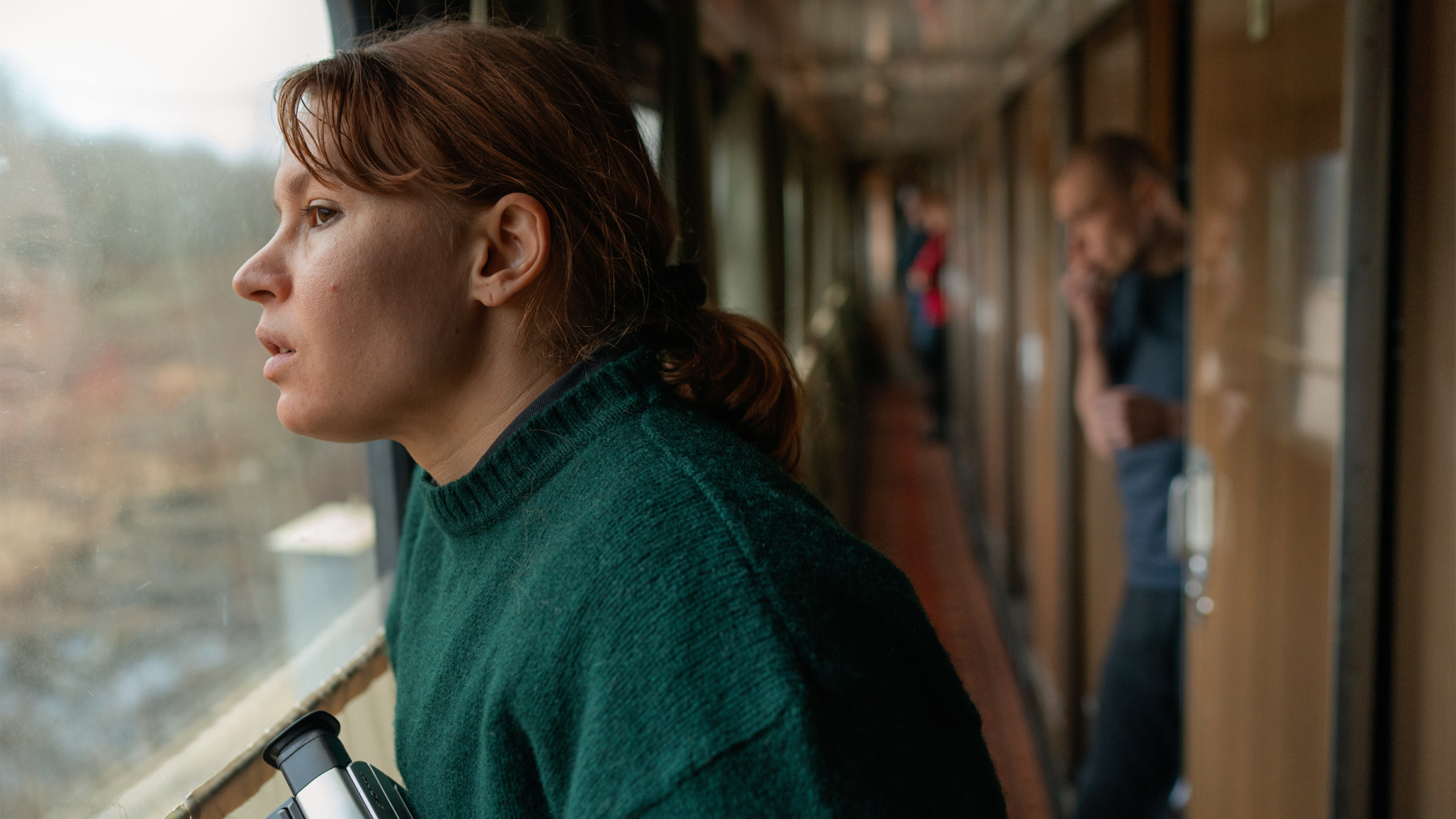
There’s a lot of time to think on the long train ride north.Photo: Sami Kuokkanen/Aamu Film Company

Filming took place just before Covid-19 restrictions commenced in Russia. In fact, Kuosmanen was forced to shift sets to Saint Petersburg for the apartment scene when corona-related restrictions took effect in Moscow.

“Filmmaking is always full of interesting challenges,” Kuosmanen says. “It’s always an adventure, especially this film, because the content is a journey. If we shot this in a controlled environment, it doesn’t support the feeling. We wanted to hop in the train and see what happens.”

Visiting an extreme northern location during winter presents obstacles for Laura. It also affected the filming; the Murmansk winter actually provided an unexpected benefit.

“We had plans, but plans are just plans,” says Kuosmanen. “You’re usually lucky if you stop controlling and let life surprise you. We got this amazing snowstorm at the end that wasn’t part of our plans. It was destroying our plans, but what we got was much better.”

A sign from Kaurismäki

Watch the trailer for Compartment No. 6.

Kaurismäki, who is Finland’s most famous director, was so pleased with Kuosmanen’s latest work that he presented him with a 1962 Volga, a Soviet-made automobile. Kaurismäki also premiered Compartment at his new cinema, Kino Laika, which occupies part of a former enamel factory in Karkkila, about an hour’s drive northwest of Helsinki.

The car is still in Kaurismäki’s garage, waiting to be painted, but Kuosmanen’s film easily outdrew the new James Bond movie during its early run there.

By Michael Hunt, November 2021

Bold prints and sustainability: Finnish design house Marimekko celebrates at 70

Known for its vibrant prints and colours, Marimekko started small and became an international design house.

One of the Nordic countries’ most famous brands, it first gained worldwide attention in 1960 after Jackie Kennedy and other celebrities made public appearances wearing Marimekko garments. The company’s prints are instantly recognisable, and recent collaborations with huge brands such as Adidas and Uniqlo confirm that Marimekko has remained popular and relevant throughout the decades.

Forward-thinking founder

A woman dressed in a striped shirt looks into the camera, hands on her hips.

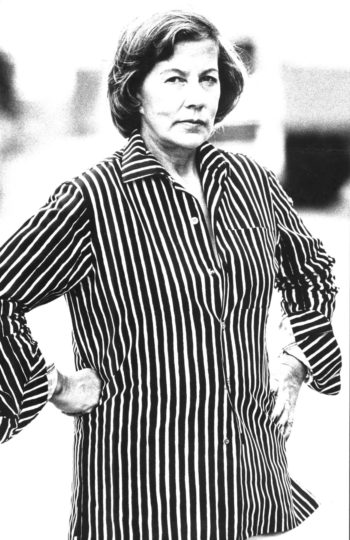
Marimekko founder Armi Ratia wanted to empower women through the brand’s marketing and business practices.Photo: Marimekko

Marimekko, founded in 1951 by textile artist Armi Ratia, combines Mari, a woman’s name, and mekko, the Finnish word for “dress” (as in the item of clothing). The company has always been ahead of its time, according to Mika Ihamuotila. Marimekko’s largest shareholder, he served as CEO for years and now chairs the board of directors.

Ratia was forward thinking, and she wanted to empower women through the brand’s marketing and business practices. Marimekko has always placed women in leading positions, and the current CEO, Tiina Alahuhta-Kasko, took the job when she was just 33 years old.

Sustainable choices sustain the brand

Two people dressed in striped clothes sit under a tree.

Young people are more conscious than ever of the clothes they buy, favouring timelessness and sustainability.Photo: Marimekko

When asked why he thinks Marimekko remains so popular, especially with young people, Ihamuotila guesses that it’s partly because that age group is more conscious of the clothes they buy, and that they appreciate the values the brand represents: empowerment, timelessness and sustainability. From the start, the brand’s design philosophy has never been about following trends, but rather about creating designs that will be beautiful for a long time.

As sustainability is an important value for consumers, timeless designs are also a benefit on the second-hand market. The company piloted its own second-hand shop during its 70th-anniversary summer, offering a curated collection of vintage Marimekko pieces from the 1960s to the 2000s.

Marimekko has also recently worked with Finnish textile industry innovators such as Spinnova and Ioncell to support the development of sustainable alternatives for cotton in clothing. However, Ihamuotila believes that it will take some time before those companies’ alternative fibres, made from wood pulp, used textiles and recycled paper, become widely available on the market.

“The alternative materials are not yet as durable as cotton,” he says. “That requires more development, and the cost needs to come down to make them affordable to more consumers.”

Archipelago viewpoints

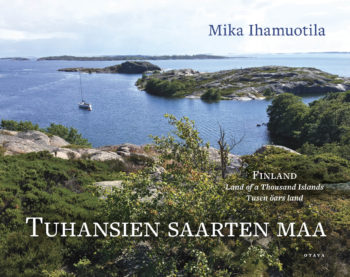
A book cover shows a photo of water and green islands stretching to the horizon.

Mika Ihamuotila, Marimekko’s chair of the board, wrote Finland: Land of a Thousand Islands to share his enthusiasm for the beauty of the Finnish archipelago.Photo: Otava

Ihamuotila is known in Finland for his business background. After a career in the banking sector, he has taken an active role in making Finnish companies known around the world. In addition to Marimekko, he has also chaired Rovio, the gaming company behind Angry Birds. However, his newest project is a change of pace: in 2021, he authored a book about the Finnish archipelago, entitled Finland, Land of a Thousand Islands.

“I think the Finnish archipelago is the most beautiful in the world,” he says. “I wanted to make people aware of it.” According to the Ministry of Agriculture and Forestry, the sea around Finland contains more than 80,000 islands. The archipelago is thickest off the southwestern tip of Finland, where it extends into the Baltic Sea towards Sweden, but islands stretch along the west and south coasts, too.

Imagery inspired by nature

A woman wearing clothes with a floral pattern.

Unikko (poppy) is a classic Marimekko design that has appeared in numerous patterns, sizes and colours and is still popular today.Photo: Marimekko

What do the Finnish archipelago and Marimekko have in common?

“A lot of Marimekko’s imagery is inspired by Finnish nature, and I think the archipelago is one of the most beautiful parts of Finnish nature,” says Ihamuotila. “Many people say that looking at Marimekko’s designs gives them a good feeling, and I think the archipelago evokes a similar emotion. They both represent a unique part of Finnishness to me.”

Part of the motivation for publishing the book was a desire to encourage sustainable travel and tourism in the archipelago and make people aware of the living culture and beautiful nature of the islands. Over the summer, he also invited journalists and influencers to his own island, encouraging them to experience the solitude and simplicity of island living.

On the horizon

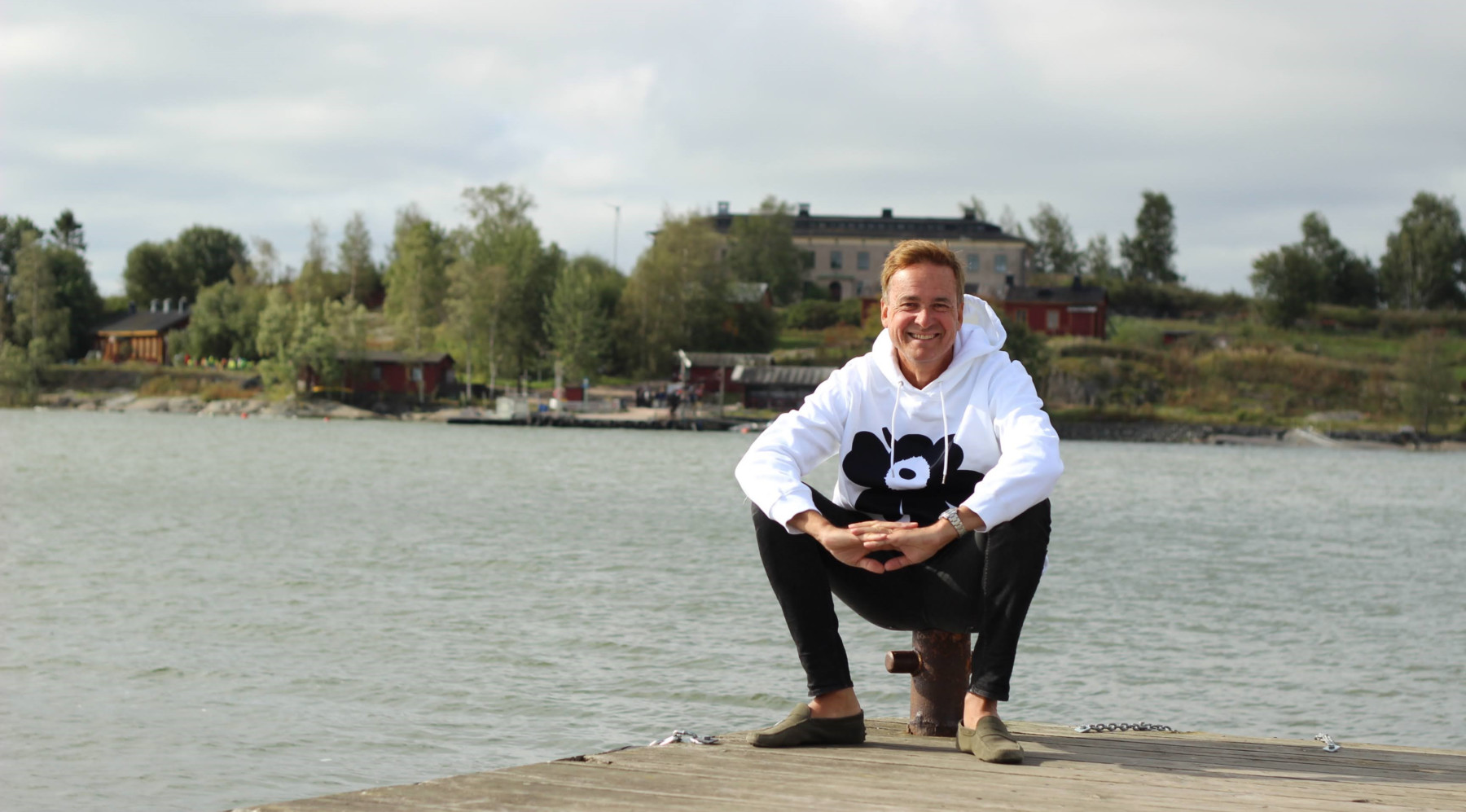
A man sits on a dock, with water and an island behind him.

Mika Ihamuotila sits on a dock on the Helsinki shore, with Harakan saari (Magpie Island) visible in the background.Photo: Kirsi Ilmaranta

“In the following 70 years, Marimekko’s goal is to continue their international growth, as well as to continue bringing joy to people’s world, but to do it in a way that leaves no trace in nature,” Ihamuotila says.

He believes that in the future, people will continue to invest discerningly in their clothing, but they will buy fewer items. The focus will be on sustainable quality clothes that will last a long time, which is where he believes Marimekko’s strengths come in.

Find your way to the islands

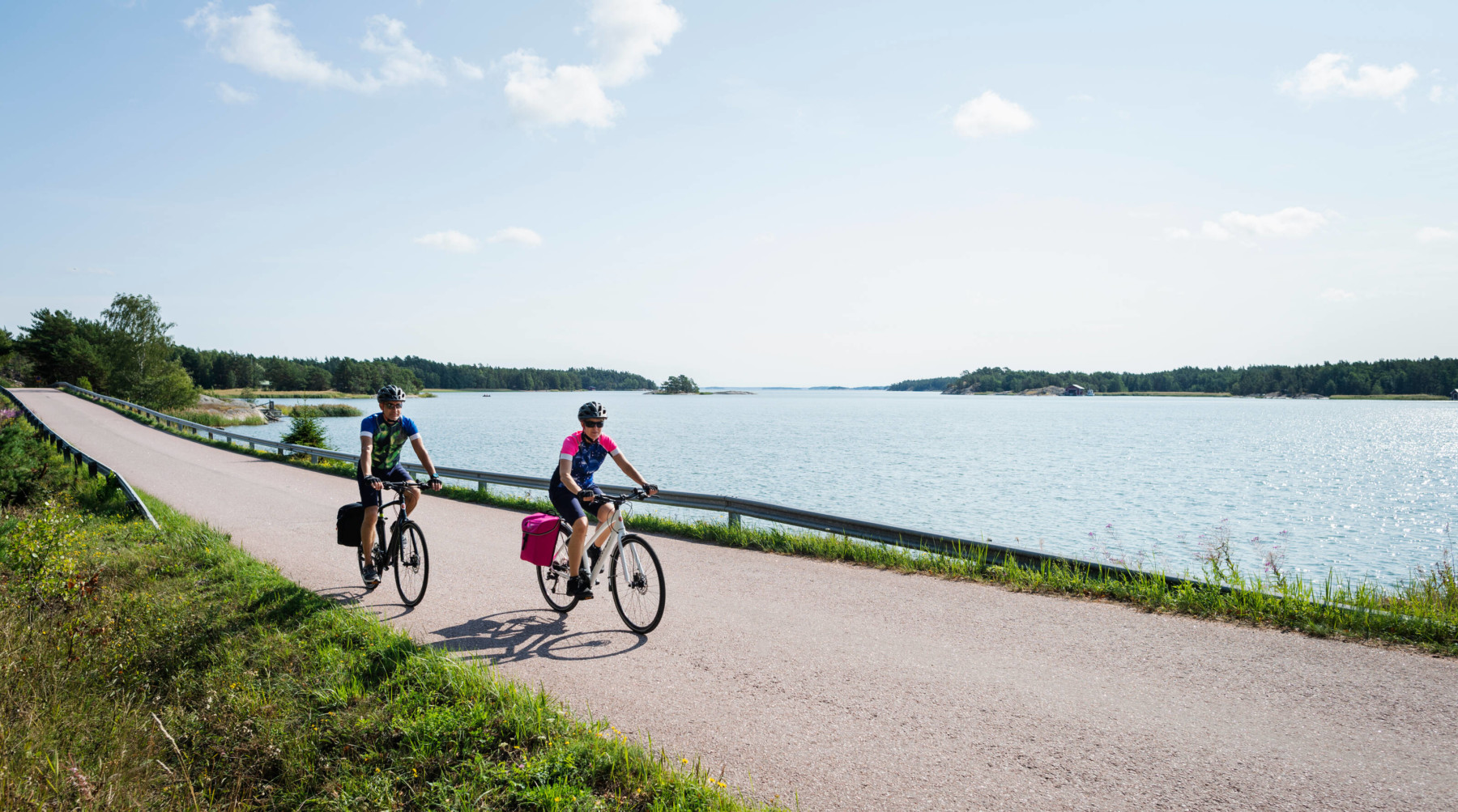
Two people bike along a coastal road.

The Archipelago Trail of southwestern Finland is a ring-shaped route of roads and ferry links including numerous islands, ideal for a scenic journey by car or bike.Photo: Juho Kuva/Visit Finland

For readers living in or visiting Finland, Ihamuotila suggests checking out the Finnish archipelago. There are easy daytrips available just off the coast of Helsinki. The island fortress of Suomenlinna, a Unesco World Heritage Site, is a short ferry ride away, as is its neighbour, Lonna, a historical island with a restaurant and a sauna.

Farther afield, you can traverse the Archipelago Trail of southwestern Finland by car or bike. It’s a ring-shaped route of roads and ferry links including a variety of islands and the mainland city of Turku. It takes several days to explore; you can put it on your list for the summer.

By Kirsi Ilmaranta, November 2021

Finnish company encourages fun science education for kids

Come with me. Hoseli the robot needs help. He’s thirsty. We can help him find the stuff that quenches his thirst. I’ve heard it’s something that isn’t soluble in water.

Children aged three to ten in kindergartens and schools in Europe, Asia, Australia, Africa and Latin America have joined the adventures of Hoseli in a digital fantasy world called Supraland where the small robot lives. They get to try and test things for themselves, like making fake snow or building rockets with vinegar and bicarbonate of soda.

The fun world created by Kide Science combines the main elements that studies have found to enhance scientific thinking: stories, imagination, empathy, visual and tactile learning, cooperation, everyday observations and creative problem-solving. These are also components of vital future skills.

We spoke with the company’s founders, Jenni Vartiainen, Aino Kuronen and Sari Hurme-Mehtälä. Kide Science was born from research Vartiainen did at the University of Helsinki. “International research had shown that children as young as three years benefit from learning scientific thinking, but this finding hadn’t really been put into practice,” says Vartiainen. She took her research to an empirical level by establishing science clubs for young children.

“Some of the parents were surprised at how excited their children got about it all,” Vartiainen says. There was clearly a demand that had not been satisfied. “I was asked to continue running the science clubs.” So began the story of Kide Science.

Children and parents are excited, and so are investors. Between the launch in 2017 and the fourth quarter of 2020, Kide Science raised a combined 2.4 million euros for developing its business. Its education materials are currently available in English, Chinese and Finnish.

Everyone can be a scientist

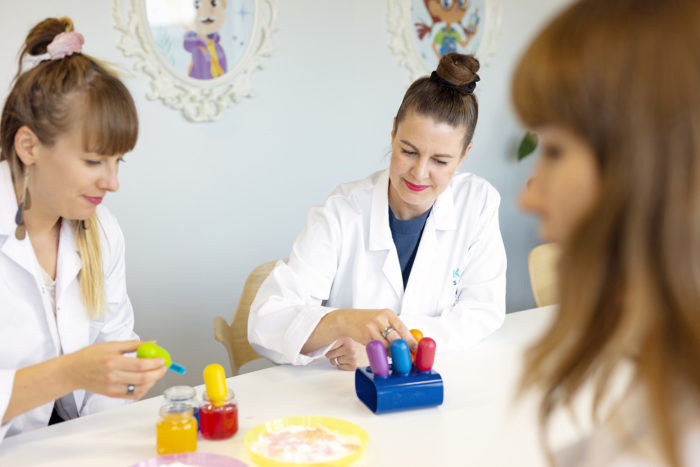
Three women in lab coats sit at a table with educational toys on it.

“It all takes place in the real world,” says Aino Kuronen. “Kids aren’t just staring at screens.” Photo: Samuli Skantsi

Boosting the curiosity and sense of wonder that children already have is the key. “Kids observe and interpret the world around them from the moment they are born,” the second developer of Kide Science, Aino Kuronen says. “They practice everything in life through play.”

“It’s important not to limit what is there already,” Vartiainen adds. Giving children the space and tools to play the role of a scientist in their own individual ways motivates learning. And when positive emotions pop up, the hunger for learning increases even more.

Digital devices and applications provide the framework for unlimited thinking and playing, but the gist of Kide Science education is in tactile activities.

“It all takes place in the real world,” Kuronen says. “Kids aren’t just staring at screens.” Everyday household items such as salt, bicarbonate, sweets, empty toilet rolls, spoons and peas are among the things that the experiments use.

It’s also about dismantling the misunderstandings around science. “There are a bunch of myths,” says Kuronen. “These include the ideas that you need to be highly intelligent or have a calm temperament to be a scientist.”

Space for flexibility and creative collaboration

A digital environment provides flexibility. “Materials are accessible anytime, anywhere,” says the third of the Kide Science developers, Sari Hurme-Mehtälä. “The platform also makes it easy for teachers to learn the pedagogical model. And we are able to scale the contents.”

And here comes an important point: you don’t have to be a science teacher to begin with. The most important role for adults is facilitating and supporting the children’s own thinking. Vartiainen says the most inspiring moment comes when children start helping each other and suggesting ideas for solving the problems.

With growing demand for distance learning, Kide Science are now researching the best ways to build a pedagogical model for families.

How do the developers of Kide Science see the possibilities of digital tools? “Simulating reality with virtual reality glasses is on the increase, and so is visualising things,” says Kuronen. “For instance you could shrink yourself to fit into a water molecule,” suggests Vartiainen. Now that would be cool, wouldn’t it?

By Minna Takkunen, ThisisFINLAND Magazine 2021

How about getting a job in Finland?

Finland has a lot to offer: a high standard of living, a safe and well-functioning society and easy access to nature. The UN’s World Happiness Report named it the happiest country on earth many years in a row.

It also has jobs. As the baby-boom generation retires, Finland needs more people in the workforce.

Living and working in Finland

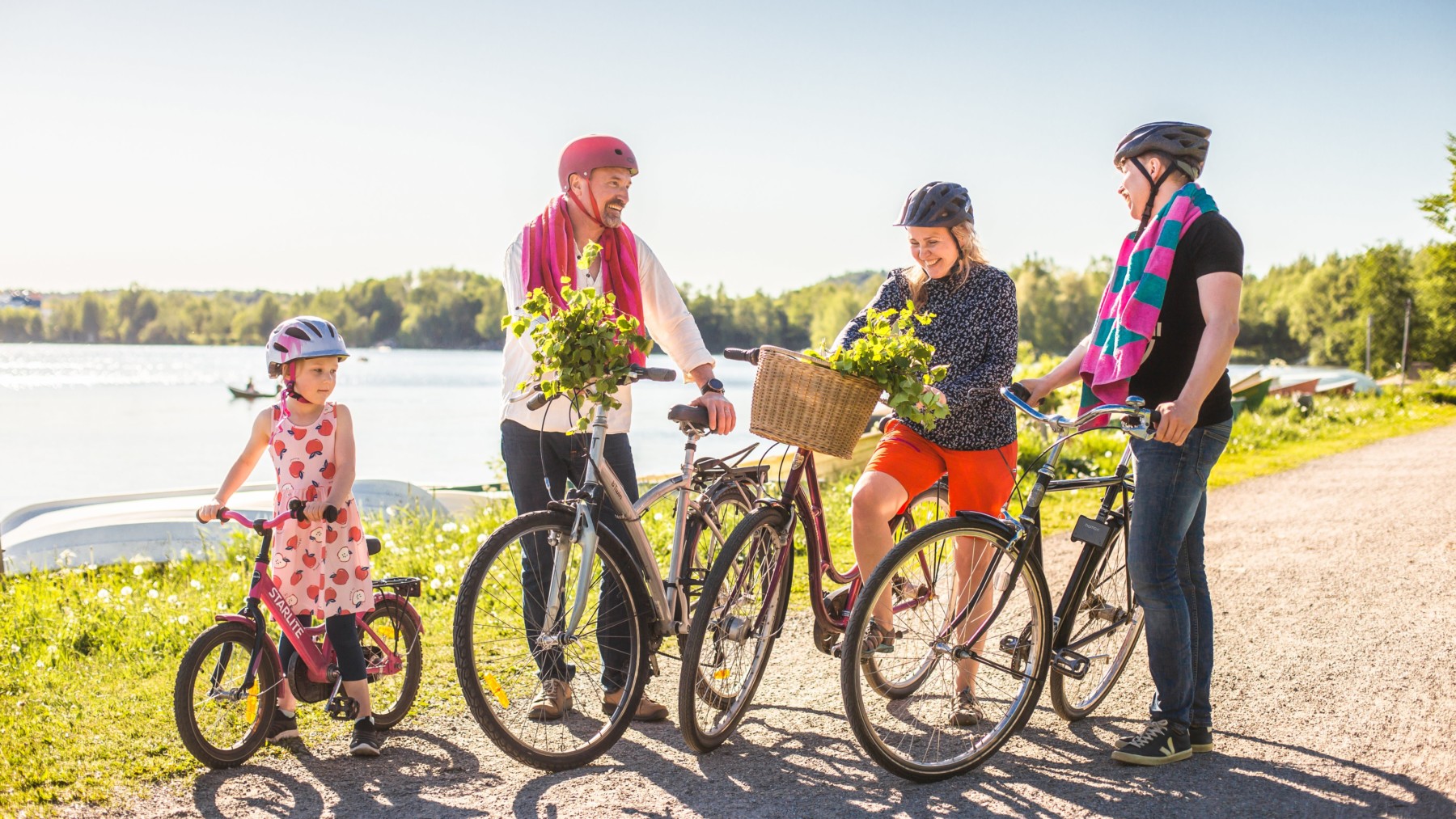
Three adults and one child stand by their bicycles with greenery and a lake in the background.

One attractive aspect of living in Finland is proximity to nature and recreation areas, even in urban areas. These cyclists have visited the beach in Tahmela, a neighbourhood in the southern central Finnish city of Tampere.Photo: Laura Vanzo/Visit Tampere

There are many benefits to working in Finland. Thriving, innovative industries offer plenty of opportunities to advance your career and develop your skills. In addition, Finnish people know that life is more than just work, so a healthy work-life balance is important to them.

Finland is a safe, stable, functioning society where public services such as healthcare and public transportation run smoothly. The country also has thriving sports, recreation and culture scenes. Beautiful nature areas and wilderness are easily accessible, even from the largest cities. All children and adolescents enjoy excellent educational opportunities in one of the world’s best education systems, free of charge.

Looking outward

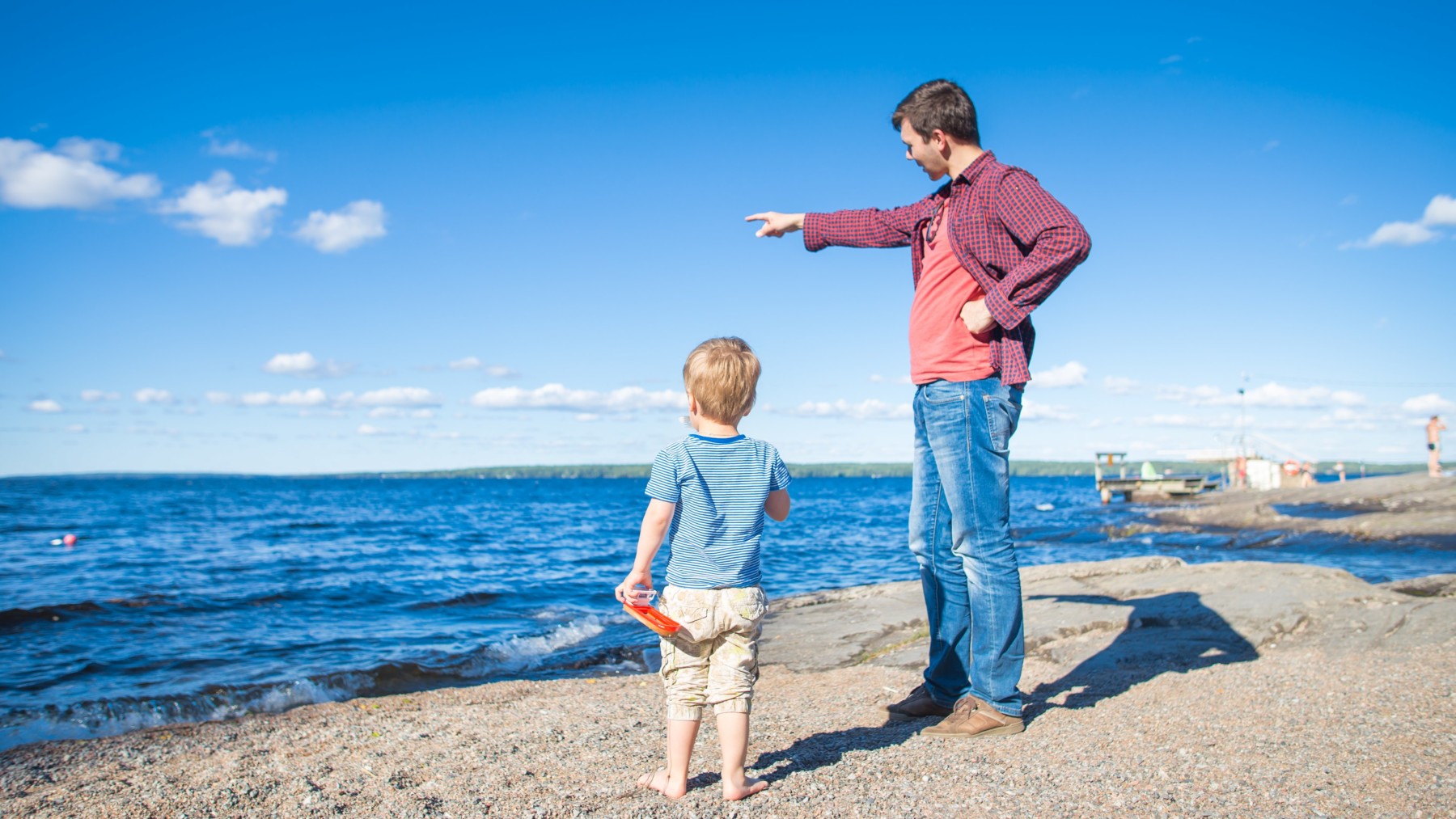
On the shore of a lake, a man points at something on the horizon while a child looks in the same direction.

A dad and his child spend quality family time at Rauhaniemi, a lakeside park not far from downtown Tampere.Photo: Laura Vanzo/Visit Tampere

Many Finnish employers are accustomed to recruiting people from abroad. The high-tech sectors have experienced the largest increase in job openings in recent years. Manufacturing and the service sector are also predicted to need more workers in the coming years.

In the past, it was accurate to some extent to say that Finland was a homogenous country. However, we have always looked outward, and today that is truer than ever. As a company grows, it typically needs to expand internationally because the domestic market has a limited size. Young entrepreneurs go global immediately when they start a new business – their generation was born global.

Labour mobility

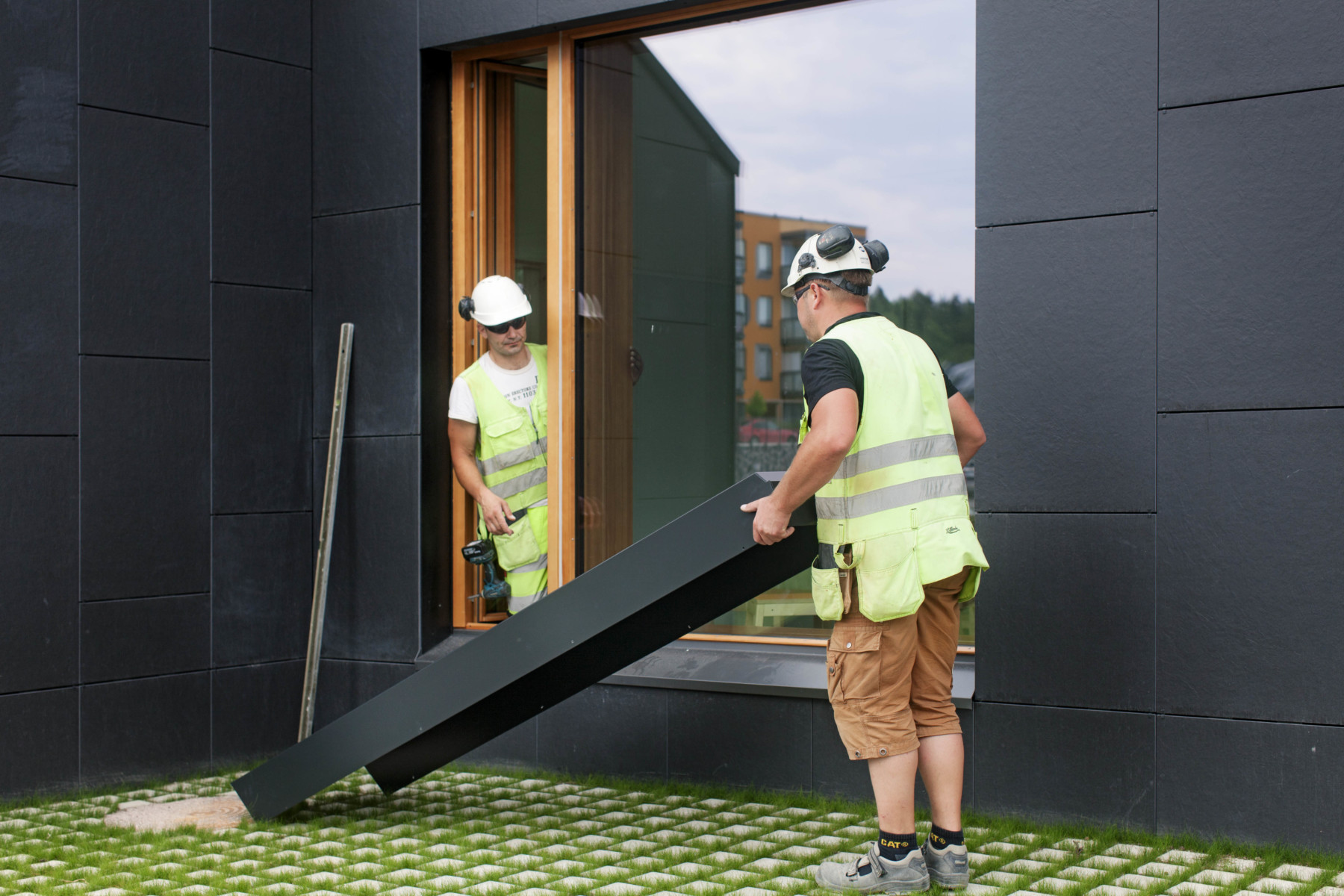
Two men lift boards into place on a building under construction.

These guys are helping build energy-efficient housing in Helsinki.Photo: Jukka Rapo/Keksi/Finland Image Bank

As a member of the EU, we enjoy labour mobility. In 2020, a total of 32,898 people moved to Finland, while 15,084 emigrated from the country. Work-related immigration and social integration form part of the agenda of policymakers.

High-tech and gaming

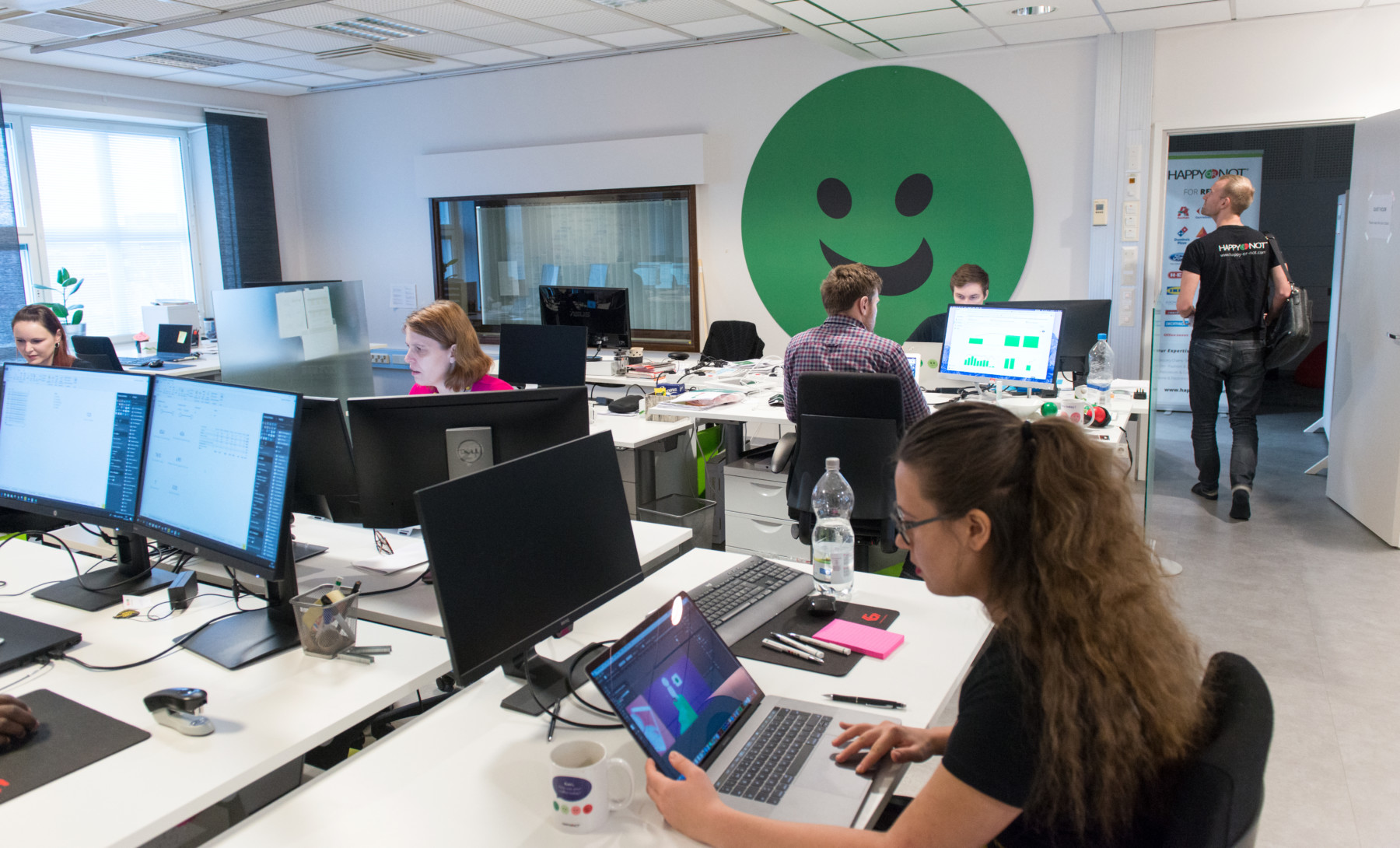
Several women and men sit at their computers in a bright modern office.

Finnish companies in the high-tech and gaming sectors recruit domestically and internationally.Photo: Jarno Mela/Finland Image Bank

Finland has a large and highly developed technology sector. For decades, Finnish companies and Finnish technology have played a major role in sectors such as mobile technology, electronics, cybersecurity, software and gaming. These companies are always looking for talented professionals and often recruit from abroad.

It’s no secret that Finland is great place to progress in a career in ICT, the gaming industry or digitalisation. The country’s innovations enable companies and individuals around the world to enjoy experiences and solutions like never before. Finland was the one to bring 5G, SMS, and the Linux operating system to the world, to mention just a few examples. Finnish ICT companies offer rewarding job opportunities to international talent eager for career advancement.

Explore the industry on Business Finland’s website to see how to join other talented professionals in Finland in creating the ICT and digitalisation innovations of the future.

Finland has thriving ecosystems in bioeconomy and health technology, where leading companies develop new solutions together with universities, research institutions and startups. These fields offer unique career opportunities in projects that are solving worldwide problems. Read more about the bioeconomy and health and wellbeing fields on Business Finland’s website.

The language question

Several smiling people sit and stand around a conference table.

Many employers and municipalities help arrange Finnish language courses.Photo: Jarno Mela/Finland Image Bank

Local authorities – and many employers, too – provide immigrants and their families with language training, either free or at a low cost. Immigrants are entitled by law to integration services; employment and economic development offices and local authorities carry the prime responsibility for organising them.

The level of Finnish language skills necessary depends greatly on the nature of the work. In sectors that deal with the public, a knowledge of Finnish is important and in some cases mandatory.

However, for some jobs you might not need Finnish at all. Many big multinational firms use English as their company language because they have a diverse global workforce and customers. The ICT and gaming sectors are also very international, and even tiny startups in these industries tend to use English.

Learning a language is no small task, but it is by no means impossible. In most cases people find that knowing at least some of the local language is a way to learn more about the culture and participate fully in society. Info Finland offers a great list of online courses and resources for learning Finnish, so you can start before you arrive.

Entrepreneurs and remote workers

Several men work in a room where all the walls are lined with shelves holding various TV screens.

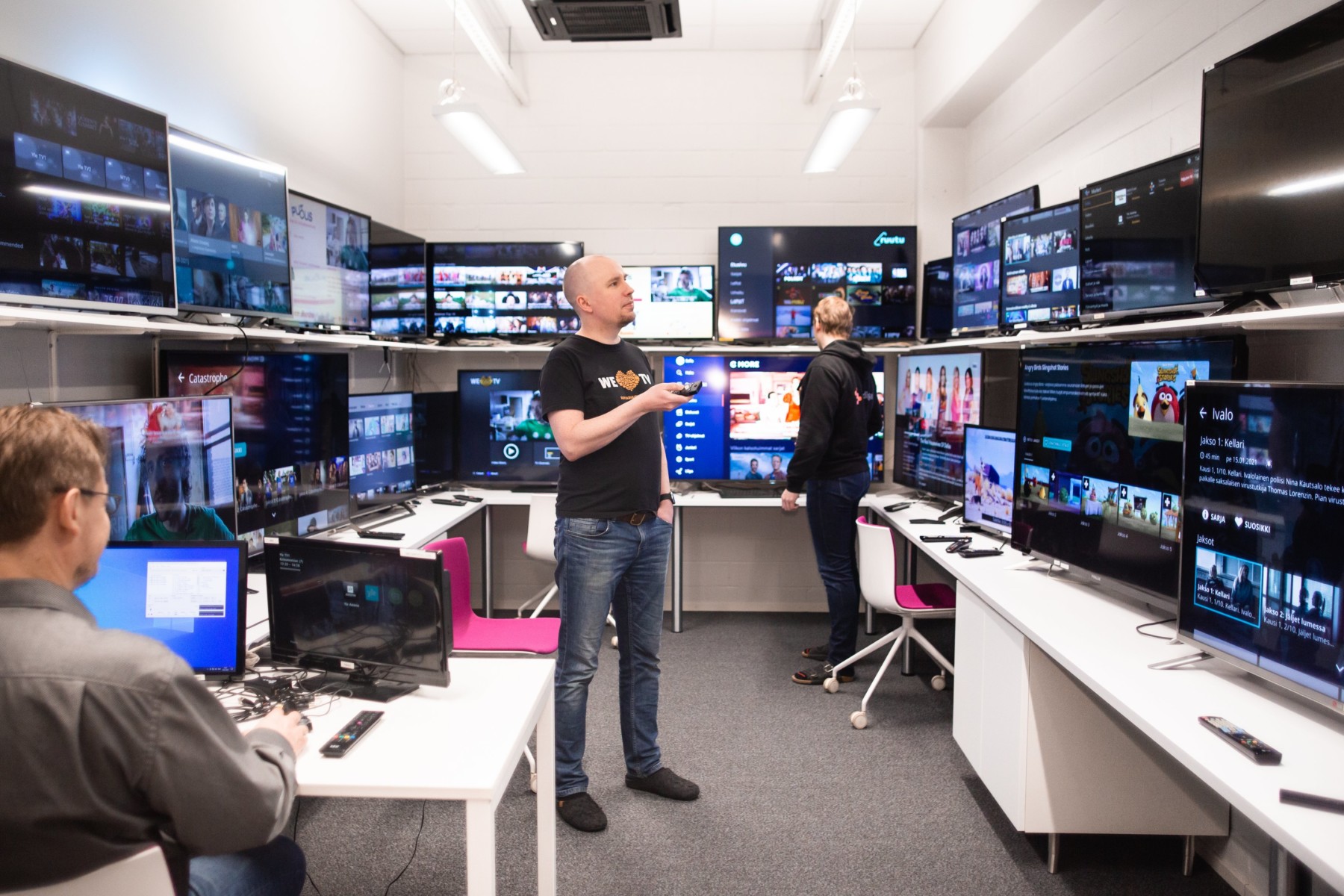
This enterprise in Tampere uses smart technologies to expand TV’s digital content possibilities. ICT companies are among the Finnish businesses searching for international professionals.Photo: Sofia Digital/Laura Vanzo/Visit Tampere

Most of this article has dealt with the traditional employee–employer relationship, but the world of work is evolving in Finland, as it is all over the world. Entrepreneurship continues to grow, and immigrants have founded many startups. Finland has also become a popular home for digital nomads – freelancers and remote workers who can work anywhere in the world.

So if you’re looking for a job in another country, or a home for your new business, or maybe a place to live while working remotely, consider Finland, which has repeatedly received recognition as the happiest country on earth.

10 steps to working and living in Finland

1. You can see Business Finland’s Work in Finland website for information about searching for professional opportunities in Finland. They also have a LinkedIn page for International talents. Also, check open positions on Work in Finland | Open jobs, or the European Employment Services. Finnish newspapers and their websites maintain job advertisement listings (in Finnish).
2. Find out what permits you will need to live and work in Finland at the Finnish Immigration Service website. Business Finland also features a general summary of the rules for entrepreneurs and employees.
3. Do you need recognition of your educational qualifications? In Finland, recognition decisions are made by qualified authorities, educational institutions and employers. For regulated professions you will need a decision issued by the relevant authority. In the healthcare sector applications should be addressed to Valvira, the National Supervisory Authority for Welfare and Health.
4. To find a place to live and to open a bank account, first go to your employer, who will be able to guide you to the local services. Regarding integration and language matters, children’s schooling, healthcare and social security, turn to the local authorities in your new home municipality. The multilingual website Info Finland has a page about this, while more information about municipalities is available from the Association of Finnish Municipalities. Social security is managed by Kela, the Social Insurance Institution.
5. What can you bring with you to Finland? Are you worried about your pet or car? See the Finnish Customs website.
6. Foreigners residing in Finland for one year or more (and in some cases those planning to live here for less than a year) need to register with the Digital and Population Data Services Agency. It has service locations across the country.
7. Is your driving license valid in Finland? Ask the police or the Finnish Vehicle Administration for information.
8. Does an immigrant have to pay taxes? If so, what is the procedure? Find out on the Tax Administration website. Also: Can taxes make people happy?
9. Will you need further education or Finnish language courses? Study the options on the Study Info website for a broad overview of upper secondary and higher education. The Study in Finland website concentrates on higher education. Info Finland offers a great list of online courses and resources for learning Finnish, so you can start before you arrive.
10. What is life like in Finland? ThisisFINLAND offers all kinds of articles about various aspects of life in Finland, but for basic information you might also try Suomi.fi or Info Finland (the latter appears in 12 languages).

By Salla Korpela and David J. Cord, updated September 2024