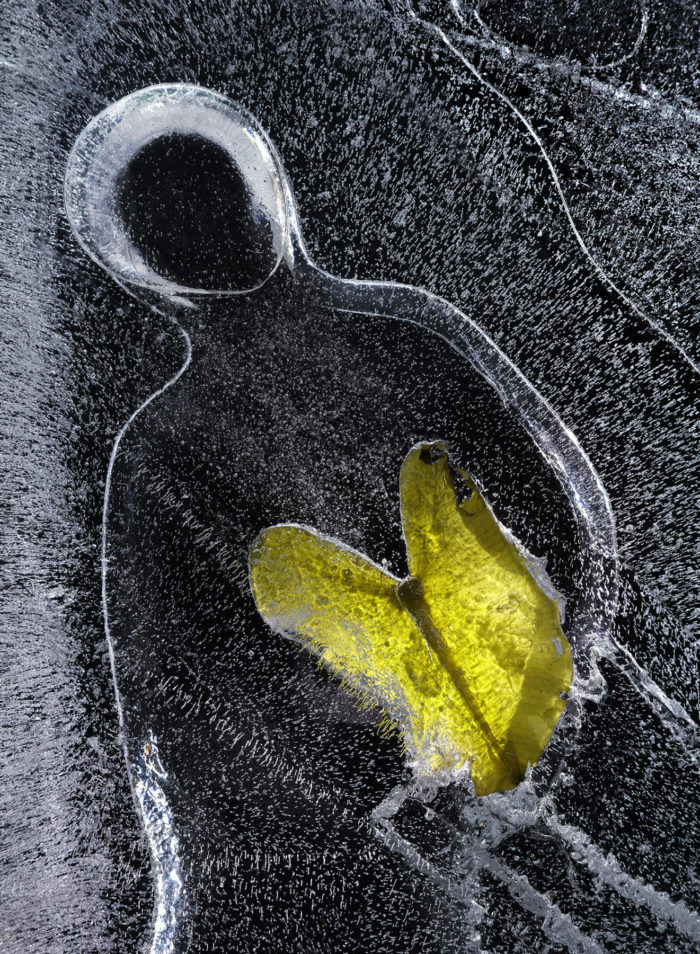
Fiskars village, a stronghold of Finnish design, combines art, artisanry and architecture in a summer biennial

If you own a pair of orange-handled scissors, the name Fiskars probably rings a bell. Iconic, ergonomic Fiskars scissors are the classic symbol of the famous brand, whose birthplace is the town of the same name in southern Finland. A must-see event on the Nordic design calendar takes place there: the Fiskars Village Art & Design Biennale.

The second edition of the summer-long biennial (through September 4, 2022) consists of three exhibitions and other events. They weave together design, architecture and contemporary art, offering the perfect excuse to visit the historic foundry town turned creative hub.

On arrival in the village, visitors see a meadow of minimalistic cabins. The portable ecohomes are part of the House by an Architect exhibition curated by Kari Korkman, the founder and director of the biennial.

Participants had to meet the challenge of designing a sustainable wooden home no larger than 30 square metres (320 square feet). Architectural innovators including Studio Puisto, Ateljee Sotamaa and the Aalto University Wood Studio took on this extreme test of small-space design skill.

Korkman believes demand for space-efficient mini-homes will grow in the future. “Being easy to relocate, they can serve as anything from a nature retreat to a remote office in your backyard,” he says.

Invisible beauty

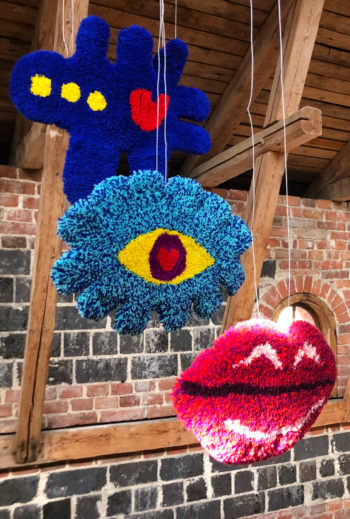
Artworks depicting a pair of lips, an eye and an airplane hang in an exhibition space.

These hand-tufted wall rugs by Matilda Palmu are part of the Knots & Knits exhibition in Fiskars.Photo: Silja Kudel

Installed in the rustic loft of the historic Granary is Knots & Knits, the latest chapter in the U-Joints research initiative spearheaded by curator and teacher Anniina Koivu and architect Andrea Caputo. Their project celebrates the invisible connectors that hold the world together.

“Joints, clamps, glues, springs and ropes – these hidden components rarely receive attention, but they are the essence of great design,” says Koivu. “Excellence resides in crafting, often in the parts you can’t see. In this exhibition, we want to give them visibility.”

From traditional baskets to contemporary pieces by top designers such as Ronan & Erwan Bouroullec and Hella Jongerius, each exhibit tells a story.

For example, did you know that the Adidas logo began with running shoes by the Finnish brand Karhu? Gold medallist runner Paavo Nurmi first wore them at the 1920 Olympics. Adidas founder Adi Dassler spotted Karhu running shoes and their three-striped logo at the 1952 Olympics in Helsinki.

“The world was intrigued by this magical shoe, as it was believed to make athletes run faster,” says Koivu. “The magic comes down to the stitching, which is concealed by three stripes. When Karhu’s salespeople visited Frankfurt, they sold the patent to Adidas – for a pittance and few bottles of schnapps.”

Whispers of excellence

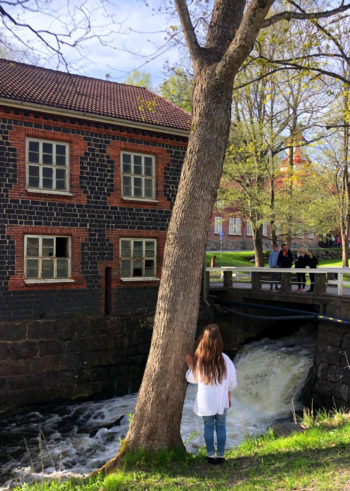
A girl standing by a tree looking at a river.

Once the site of a foundry, the village of Fiskars and its idyllic surroundings are now home to a 600-person community that includes numerous artisans and creatives.Photo: Silja Kudel

Next door in the old Copper Smithy is the exhibition HiddenForms of the Senses, organised by the Onoma Cooperative, whose members are local artists, designers and artisans.

Curator Laura Sarvilinna describes the show as nothing less than a “manifesto for multisensory experience.”

Inviting moments of slow, aesthetic indulgence, the exhibition offers a quiet antidote to the sensory overload of the modern world. The featured exhibits run a wide gamut, from leading Finnish contemporary artists Elina Brotherus and Grönlund-Nisunen (Tommi Grönlund and Petteri Nisunen) to immaculately crafted pieces by glass artist and sculptor Camilla Moberg and ceramicist Riitta Talonpoika.

The biennial’s three exhibitions complement each other beautifully, encouraging visitors to take a meditative moment and appreciate details that whisper rather than scream for attention.

Fiskars is roughly a one-hour drive west of Helsinki. Alternatively, you can catch the bus or train to Karjaa and then take a taxi or local bus the remaining 15 kilometres (nine miles). The scenic Ratavalli cycle route from Karjaa to Fiskars is warmly recommended.

By Silja Kudel, June 2022

Making sweet, sour loaves and blazed fish by the sea: western Finnish recipes

It’s unusual to see a recipe that calls for a wooden plank and pegs.

Those are some of the things you need for loimu, the Finnish word for “blaze,” which refers to cooking a fish slowly next to a fire, not in or over the flames. It creates a unique taste and texture. The technique is in use all over Finland, but we’re placing the recipe here, by the long Baltic Sea coastline.

There’s also a recipe for gravlax, a type of cured salmon that is popular all over the Nordic countries. Our version uses sea buckthorn berries, not lemon slices, to provide a flourish of sourness.

The western Finnish region of Ostrobothnia is well known as potato country, and potato pancakes are a delicacy that goes with the territory. Tasty setsuuri bread, a loaf that derives its name from the Swedish words söt (sweet) and sur (sour), is slightly sweet and a tiny bit sour – try it and you’ll see what we mean.

[This is part of a series of recipe articles that show off dishes from the north, south, east and west of Finland – although many of them are now common all over the country – not to mention an extra piece about cake, bread and buns.]

By ThisisFINLAND staff, May 2022
Recipes and descriptions supplied by Timo Lepistö

Potato pancakes (perunaletut)

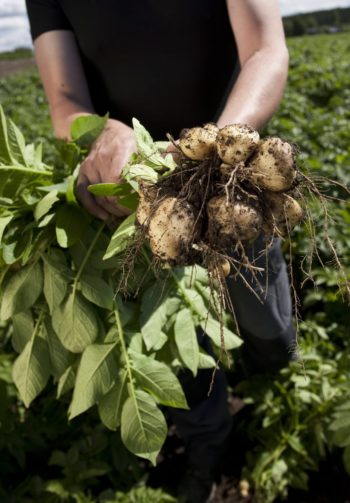
A person holds a whole potato plant, including the leaves and the potatoes.

A farmer in western Finland has just pulled up a potato plant. Well, you didn’t really think that potatoes grew in a grocery store, did you?Photo: Roni Lehti/Lehtikuva

These delicious potato pancakes come from the western coast of Finland and are counterparts to eastern Finnish blinis (see our list of recipes from eastern Finland).

Mashed potatoes:

  • 500 g starchy potatoes
  • 3 dl whole milk
  • 25 g butter

Peel the potatoes and cut each into four pieces. Boil or steam them, drain the water away and mash them. Add hot milk and butter and whisk vigorously until very smooth.

Pancakes:

  • 5 dl mashed potatoes
  • 3 dl whole milk
  • 2 dl all-purpose flour
  • 2 or 3 eggs
  • 2 tsp salt
  • Grated nutmeg and ground pepper

In a bowl add the milk to the warm mashed potatoes and whisk. Add the eggs one by one, add the spices and whisk until smooth. Adjust thickness with all-purpose flour until it resembles thick pancake batter and mix until fully blended.

Place a pancake pan or a blini pan over medium-high heat and heat the pan thoroughly. Add a thin layer of butter or cooking oil at the bottom of the pan and pour the batter, about 1/2 dl for each pancake. Cook for about one minute or until surface is set, then turn. Add a bit of clarified butter or oil and cook for one minute. Serve with a dollop of salmon roe and créme fraiche with chives.

Setsuuri bread

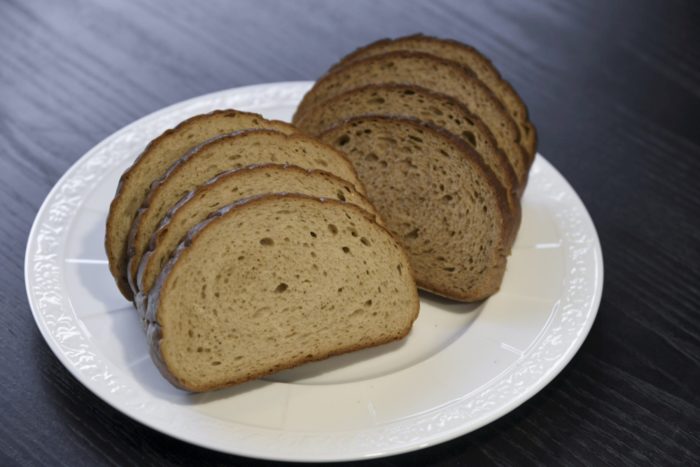
A plate holds rows of dark bread slices.

It looks much like any other bread, but setsuuri has a uniquely delicious taste.Photo: Markku Ulander/Lehtikuva

This recipe comes from the southwestern coastal city of Turku and derives its unusual taste from the seasonings. Its name reflects the Swedish words söt (sweet) and sur (sour). (Finnish and Swedish are both official languages in Finland, and many Swedish-speaking Finns live along the west and south coasts of the country.)

Around holidays, it is customary to add a few handfuls of raisins or other dried fruit to the dough, along with some dried bitter-orange peel.

  • 5 dl buttermilk
  • 50 g fresh yeast
  • 7 dl all-purpose flour
  • 7 dl sifted rye flour
  • 350 g golden syrup
  • 2 tsp ground anise seeds
  • 2 tsp ground caraway seeds
  • 1 tsp dried bitter-orange peel (optional)

Dissolve the yeast in warm buttermilk along with 250 grams of the syrup, and add the spices. Add the both kinds of flour and blend. Work the dough with a hook attachment for 15 minutes in a stand mixer, or by hand for around 20 minutes, until the dough is smooth and shiny. Cover the bowl and let it rise for 45 minutes.

Divide the dough into two pieces and shape into loaves on a flour-dusted counter. Cover again and leave to rise for another 45 minutes or until doubled in size.

Mix the remaining syrup with 1 dl of water to make a wash for brushing the loaves during baking.

Preheat the oven to 175 degrees Celsius.

Bake the loaves in the oven for one hour. After around 20 minutes, brush the loaves with the syrup wash. Brush them every 15 minutes, and one last time after you take the loaves out of the oven. Let cool completely before serving.

Cured salmon (gravlax) with sea buckthorn

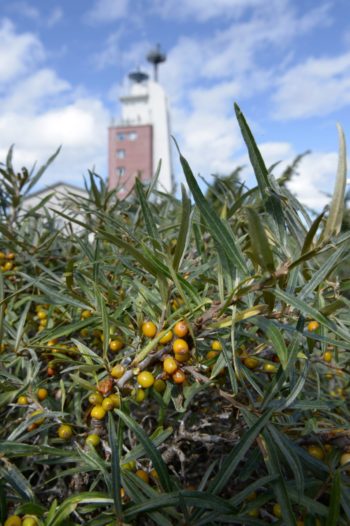
In the foreground is a shrub with orange berries, in the background is a tower.

On an island near the west-coast town of Rauma, sea buckthorn berries turn orange as they ripen on shrubs with pointy leaves and thorns. In the background is Kylmäpihlaja Lighthouse, now a restaurant and hotel.Photo: Martti Kainulainen/Lehtikuva

Salmon prepared as gravlax (this Swedish term is also used in English) or graavilohi (in Finnish) is a staple in Nordic celebrations and one of the region’s best-known delicacies. You can also use other suitable fish, such as whitefish. This version from the southwestern Finnish archipelago uses sea buckthorn berries, so there is no need for lemon wedges.

  • 700 g salmon fillet, deboned
  • 2 tbsp salt
  • 2 tbsp sugar
  • 1 tsp white pepper, crushed (optional)
  • 1/2 dl cold-pressed sea buckthorn juice
  • fresh dill

Cut the salmon fillet into two equal pieces. Mix salt, sugar and pepper. Pat the fillets dry, spread the spice mix on top and put the fillets into a clean plastic bag. Put the bag onto a tray and set a plate or two on top as a weight. Cure for 24 hours in the fridge, wash the salt and sugar mix off and place the fillets into the bag again. Pour the sea buckthorn juice into the bag, seal and cure for another 24 hours. Cut the fish into thin slices and add fresh dill and few sea buckthorn berries.

Blazed whitefish (loimusiika)

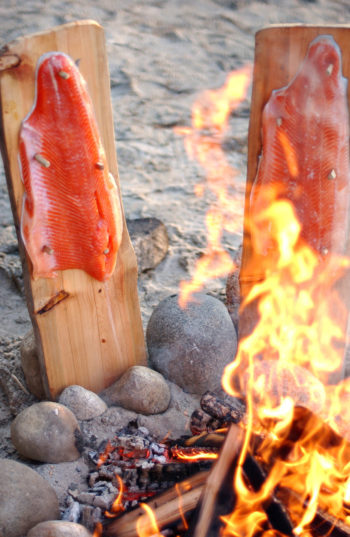
Two boards holding fish filets are next to a campfire.

To “blaze” a fish, you attach a filet to a board using wooden pegs and place it just close enough to the fire. (This picture shows salmon, not whitefish.)Photo: Visit Finland

Loimu, a Finnish word for “blaze” or “flame,” designates a technique for cooking a fillet of fatty fish, rather than a recipe for a plated course. Cooking a fish slowly next to a campfire (or in a fireplace – see note below) creates a unique taste and texture, and contributes to the atmosphere. You need to prepare a few things ahead of time, but otherwise this is a relatively easy process. The recipe calls for whitefish, but people also cook salmon this way.

  • 1 large whitefish fillet, deboned
  • 1 tbsp salt per kg of fish
  • crushed juniper berries or black pepper (optional)
  • a plank of alder or other broad-leaved tree
  • wooden pegs

Drill holes into the plank about 15 centimetres apart, for the pegs that will hold the fish fillet. Remember to add a hole for the tail in the middle of the other end. Season the fish and attach the fillet firmly into the plank using wooden pegs. Don’t use regular nails, because the fish around the nails would cook too quickly.

Estimate the right distance from the fire by using your hand – you should be able to keep your hand in the heat for a moment. Place the plank vertically, tail-side up, at a slight angle, so that the thicker side of the fillet is closer to fire. This way the fillet will cook evenly. Wait until it is cooked but not overdone. Enjoy with archipelago bread (from our list of Finnish baked-goods recipes (coming soon)) and akvavit (distilled spirits, usually flavoured with caraway).

Note: It is possible to cook loimu fish in an indoor fireplace, depending on the size of the fireplace. You have to clear a space for it, usually leaning the plank against one side and making the fire on the other side. You also need to ensure that any smoke from the fish will go up the chimney, and that you have a way to remove the plank from the fireplace when the fish is ready. If in doubt, stick to outdoor venues.

Finland applauds and supports press freedom and its role in democracy

Studies show that people in Finland trust their news media, which is some of the freest in the world. There’s a long history behind this achievement, and it takes vigilance and effort to maintain press freedom.

“Free and independent media is uncontrolled by an external power, such as a government, corporation or advertiser,” says Mervi Pantti, professor in media and communication studies at the University of Helsinki. “They can critically analyse those in power, tell the truth and function as a watchdog.”

Finland ranks high in press freedom

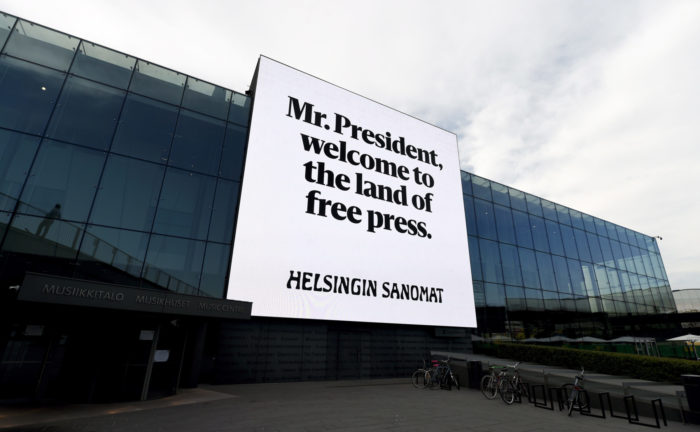
An enormous electronic billboard on the side of a building.

When the presidents of USA and Russia met in Helsinki in 2018, Finland’s largest daily, Helsingin Sanomat, ran prominent ads in English and Russian with the message, “Mr. President, welcome to the land of free press.”Photo: Aleksi Tuomola/Lehtikuva

Reporters Without Borders (known by its French abbreviation, RSF) ranks Finland highly in their World Press Freedom Index, which appears annually in connection with Press Freedom Day. The evaluation system includes five criteria: political context, legal framework, economic context, sociocultural context and safety.

Since the inaugural publication of the index, in 2002, Finland has consistently placed among the top countries in the world for press freedom. It has been number one more than ten times (sometimes sharing the spot with other countries), and has never slipped below number five. In the 2024 edition of the index, Finland is at number five, joined in the top five by three other Nordic countries – Norway at number one, Denmark at number two and Sweden at number three – and Holland at number four.

“Finland is one of the few countries where the media is truly free,” said the Finland fact file that accompanied the 2022 results.

Such scores reflect and reinforce a strong trust in the media in Finland. A 2021 study by the University of Oxford and the Reuters Institute found that 65 percent of Finns trusted their news media, more than any other nation.

The media scene

A screenshot from a phone shows a podcast logo and buttons for play, forward and reverse.

All Points North is a weekly English-language news podcast by national broadcaster Yle.Screenshot from Yle Areena app

A large and varied assortment of media outlets serves readers, listeners and viewers in Finland. It’s important to note that even the taxpayer-funded public broadcaster, Yle, is politically, financially and editorially independent.

“Finns have a lot of media to choose from,” says Salla Nazarenko, international affairs specialist at the Union of Journalists in Finland. “We have public service media, Yle, which has a special mission in society and is governed by law. We also have a viable commercial media sector, including regional newspapers and radio stations. There are also nonprofit associations which support strong journalism.”

Yle’s mission includes being “a provider of services for the entire nation.” It is one of the most popular sources of news. Yle produces TV, radio, streaming, podcasts and online content in languages including Finnish, Swedish, Sámi (all of which have official status in Finland), EnglishRussian and Ukrainian.

Helsingin Sanomat is Finland’s biggest daily, and numerous large and small local newspapers also exist in cities and regions across the country. Two popular tabloids, Ilta-Sanomat and Iltalehti, vie with each other for readers’ attention. MTV3 and Nelonen are major commercial broadcasters, while Radio Nova and Radio Suomipop are a couple of the most popular commercial radio stations. The largest Swedish-language newspaper is Hufvudstadsbladet, which is owned by a nonprofit.

A free press is part of democracy

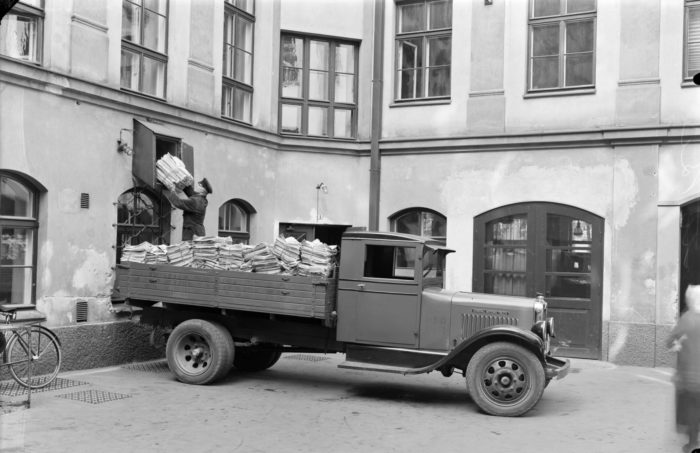
A worker piles bundles of newspapers on the back of a truck.

Workers load a delivery truck with fresh copies of the Swedish-language newspaper Hufvudstadsbladet in Helsinki in 1929.Photo: Eric Sundström/Helsinki City Museum

Highly educated, independent journalists are needed to produce quality content. They can report on what is happening instead of simply repeating what those in power say. Journalists must feel safe challenging politicians, business leaders and even their own bosses. With this power comes responsibility: reporters must be transparent and follow the principles of fair and ethical journalism.

Citizens need a free and independent media to know what is really happening in the world, which is critical for a well-functioning democracy.

“In a democracy, the citizens must have a capacity to make informed decisions,” says Pantti. “We have good media literacy education in Finland. Schools teach how the media works and how news is produced. They study media ownership, the effect of advertising and how propaganda is used. An informed citizenship is the backbone of democracy.”

Freedom of speech for all of society

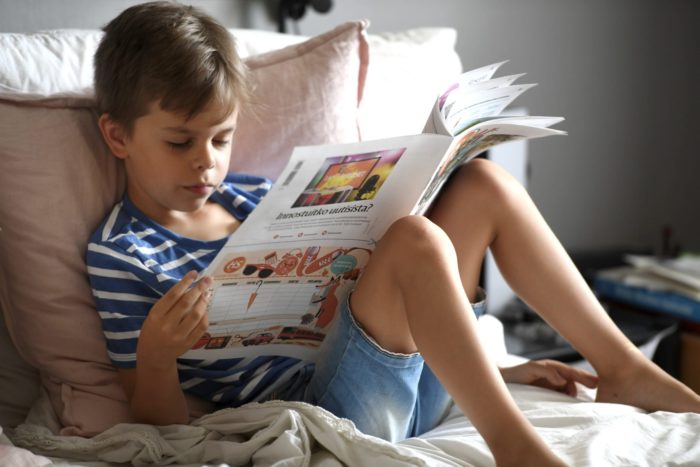
A child reads a newspaper.

Media literacy begins young: Helsingin Sanomat publishes a Children’s News section in its paper and online versions.Photo: Heikki Saukkomaa/Lehtikuva

Finland has a tradition of constitutionally enshrined freedom of speech dating back more than a century, and, especially in recent decades, press freedom has thrived. The modern version of the Constitution states, “Everyone has the freedom of expression,” and specifies that this covers “the right to express, disseminate and receive information.”

The same section of the Constitution also ensures that information is available: “Everyone has the right of access to public documents and recordings.” So it builds transparency at the source and in the media.

“We have it pretty good here,” says Yrsa Grüne-Luoma, president of the RSF branch in Finland at the time of writing. “You can ask critical questions which leaders don’t want to hear. The RSF defends not just press freedom, but also freedom of speech for all of society.”

All three people interviewed for this article worry about the increasing concentration of commercial media and its pursuit of profit over news.

Rights such as press freedom need to be nurtured and protected. All over the world, business and political leaders continue to try to influence the press.

“Over the last decade there has been a growing trend of authoritarianism and populist regimes in the world,” says Pantti. “The risk to a free press is growing, and things can change very quickly.”

In a statement about the 2021 World Press Freedom Index, RSF secretary-general Christophe Deloire said that “journalism is the best vaccine against disinformation” and “provides the most effective means of ensuring that public debate is based on a diverse range of established facts.”

By David J. Cord, May 2022, updated May 2024

22 for April 22, 2022: A Finnish Earth Day list

What are people, companies and governments in Finland doing as awareness of climate change and other environmental challenges continues to grow? For April 22, 2022, we list 22 projects, policies, programs and actions that provide glimmers of hope.

Our selection is in no particular order, and we readily admit that we don’t have space to include everything we’d like to mention. However, we believe there’s something here for everyone: food, nature, clothing, computers, cars, bottles, sustainability, carbon neutrality, circular economy and more.
By ThisisFINLAND staff unless otherwise noted

One Earth Day isn’t enough

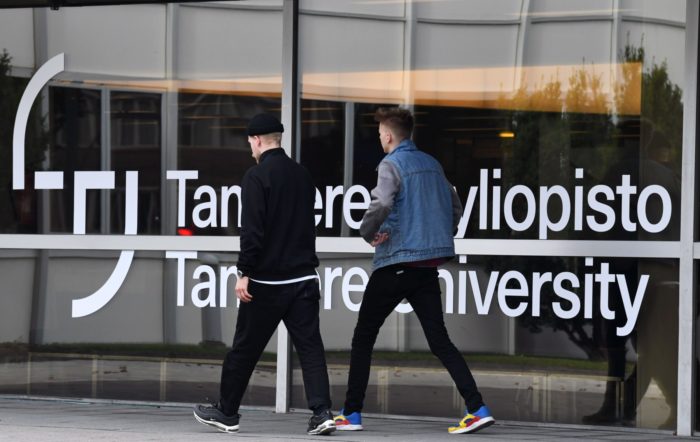
Two people walk past a sign that says Tampere Univeristy.

A Tampere University student association called Complex helped get all of April labelled as Sustainability Month.Photo: Jussi Nukari/Lehtikuva

The student association of the Leadership for Change master’s degree program at Tampere University in central western Finland is called Complex. It’s a leading organisation within the international Climate Students Movement. Not satisfied with just one Earth Day, Complex helped get all of April labelled as Sustainability Month. Throughout the month, they’re campaigning to reorient people’s actions towards climate change and sustainability, within and beyond the university. Events include a session on eco-anxiety, a growing concern in the sustainability field, with multidisciplinary researcher Panu Pihkala.
By Emma De Carvalho

Climate courses of action

The University of Helsinki and more than 15 other universities around the country are active in Climate University, which offers free courses for “everyone who wants to make the sustainability transition in society real.”

Oat-based delicacies

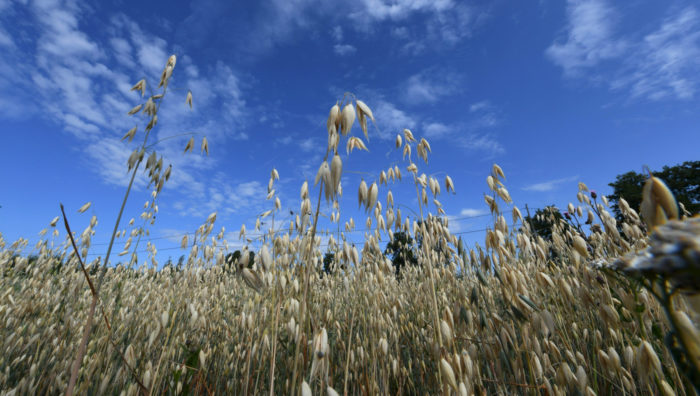
A field of oats.

A field of oats awaits harvest in southern Finland.Photo: Jussi Nukari/Lehtikuva

A recent report by the UN’s Intergovernmental Panel on Climate Change noted that emerging food technologies, such as plant-based alternatives to animal-based food products, can bring substantial reductions in greenhouse gas emissions. In recent years, big Finnish brands such as bakery and confectionary Fazer and dairy producer Valio have gotten into the game, rolling out oat-based beverages and yoghurts.

Carbon neutrality by 2035

Finland has set itself the ambitious goal of becoming carbon neutral by 2035. “Climate change, loss of biodiversity and overconsumption are different aspects of the same sustainability crisis,” according to the Ministry of the Environment. Government and business have coordinated on climate roadmaps in 14 different sectors to achieve faster reductions in emissions.

Don’t be such a chicken!

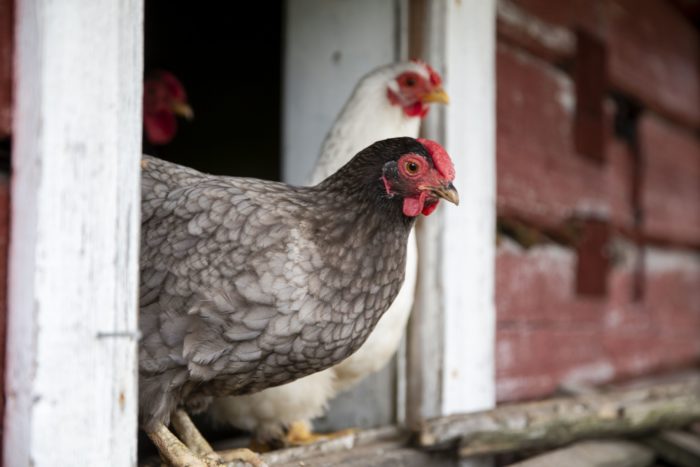
Two chickens sit in the doorway of a henhouse.

Will eggs become obsolete?Photo: Kaisa Siren/Lehtikuva

Who would have guessed that the food industry uses about 1.6 million tons of protein powder from chicken egg whites annually? The University of Helsinki’s Future Sustainable Food Systems group and the VTT Technical Research Centre of Finland have produced ovalbumin – a protein found in chicken eggs – by inserting its genetic blueprint into a fungus, which then secretes the stuff. Compared to its “chicken-based counterpart,” writes VTT, the fungus-based process reduces land use by almost 90 percent and greenhouse gas emissions by 31 to 55 percent. Cellular agriculture also avoids animal welfare concerns. Onego Bio, a startup spun off from VTT, recently secured ten million euros in venture capital funding and is setting up pilot production of the protein in Finland. Meanwhile, Finnish company Solar Foods uses an apparently magical process to create edible protein powder from carbon dioxide.

Circular strategy for 2035

Transitioning to a circular economy is another step in achieving carbon neutrality. Government ministries, research institutions, companies, business sector representatives, local governments and a 50-person citizen jury all participated in preparing a strategy for the transition, also with a target date of 2035. Circular economy means using materials efficiently and sustainably, as well as sharing, leasing, repairing and recycling products.

Putting a lid on waste

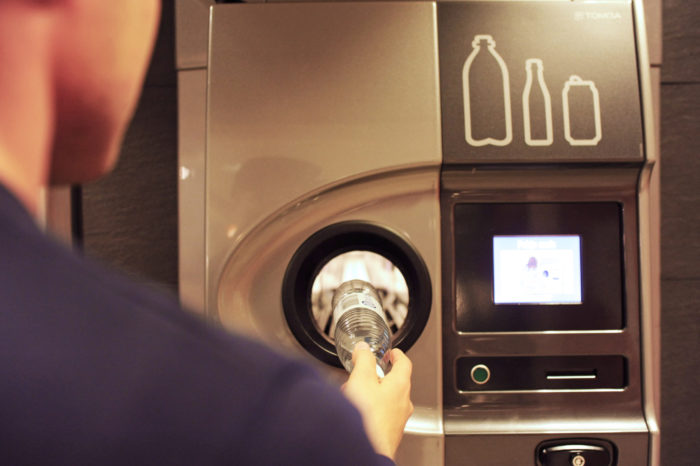
A person feeds a plastic bottle into the opening of a bottle-return machine.

A convenient bottle-return system helps ensure that beverage containers get recycled.Photo: Emilia Kangasluoma

Recycling beverage bottles and cans has been routine for Finnish people since the 1950s; a convenient deposit system helps ensure that more than 90 percent of beverage containers are returned for recycling. This, in turn, enables other progress: Helsingin Sanomat, Finland’s largest daily, reports that by the end of May 2022, major beverage manufacturer Sinebrychoff will have transitioned to using only recycled plastic for all half-litre soft drink bottles filled at its plant. This reduces the need for new plastic by about 300 tons per year. Meanwhile, Kamupak, a Finnish company founded in 2018, is minimising waste from take-away food packaging by offering reusable containers with a return system similar to bottle deposits. Kamupak’s products reduce emissions by an estimated 72 to 95 percent compared to their disposable counterparts.

Sustainability benefits business, too

Kauppapolitiikka (Trade Policy), a magazine published by the Ministry for Foreign Affairs of Finland, cites a survey by Business Finland of more than 500 small- and medium-size businesses, in which 96 percent of respondents found that sustainability benefitted their operations. While it is sometimes challenging to make sustainability part of your business, it shows results in competitiveness, brand value, sales growth and future prospects (link in Finnish).

Data-generated heat

More than a decade ago, Google opened a data centre in a former paper mill in Hamina, southern Finland. Other companies followed, with Microsoft announcing in March 2022 that it will build a data centre near Helsinki with “the world’s largest scheme to recycle waste heat from data centres.” Heat from the site will become district heating for Kauniainen, Espoo and Kirkkonummi, all of them municipalities just west of the Finnish capital.

Superefficient data centre houses supercomputer

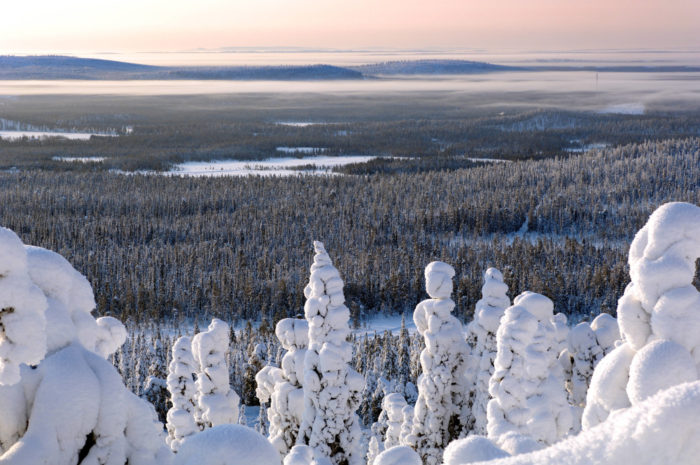
Snow-covered trees stand in a snowy forest landscape.

Is it a coincidence that a data centre in Finland has a supercomputer called LUMI? We think not. (Lumi means “snow” in Finnish).Photo: Visit Finland

The CSC data centre in Kajaani, 475 kilometres (300 miles) north of Helsinki, is one of the world’s most eco-efficient. It is also home to LUMI, one of the newest and most competitive supercomputers, the result of a collaboration between ten European countries. The name stands for Large Unified Modern Infrastructure, but lumi also means “snow” in Finnish.

Low-carbon built environment

Together with Business Finland, the Ministry of the Environment is running the Low-Carbon Built Environment Programme. It will finance climate work to develop low-carbon technologies, services and practices for all parts of the built environment, including buildings, infrastructure and more. Forty million euros in funding will be available to businesses, municipalities and other stakeholders.

Sustaining life

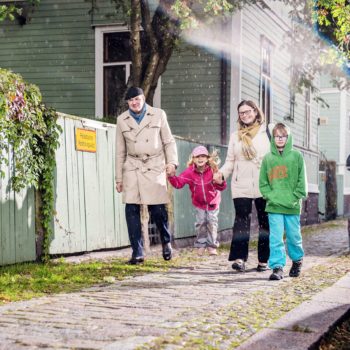
A family with two young children walks past a wooden house.

Many people are looking for ways to make sustainability a part of their daily lives.Photo: Vesa Tyni

How can regular people live a more sustainable lifestyle? If cities and municipalities offer an opportunity to recycle waste, citizens are often happy to do it. Of course, there are also many other things you can do, wherever you live. ThisisFINLAND features reporting on how people in Turku, southwestern Finland, and Kerava, just north of Helsinki, make sustainability a natural part of their everyday lives.

Devising solutions for devices

A hand holds a smartphone.

Comptek has found a way to reduce power consumption in devices, while Swappie has built a business out of refurbishing and reselling used smartphones.Photo: Josh Edelson/AFP/Lehtikuva

Comptek, a company spun off from research at the University of Turku, in southwestern Finland, has found a way to reduce the power consumption of compound semiconductor components such as those in smartphones, displays, wearables and autonomous vehicles. If implemented in billions of devices worldwide, the result would be a huge reduction in CO2 emissions. Meanwhile, another Finnish company, Swappie, found a surprisingly successful niche in buying, refurbishing and selling used smartphones, prolonging the devices’ lifespan. Much of a phone’s environmental burden comes from the manufacturing process, so enabling people to securely sell or purchase a used phone also means fewer emissions and less raw-material consumption.

Environmental handprint

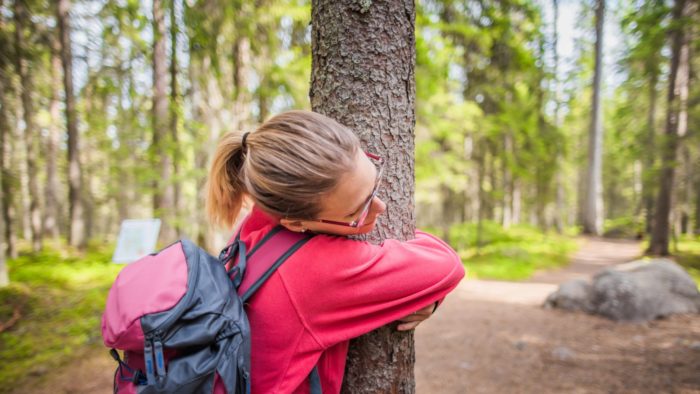
A person hugs a tree in a forest.

Regardless of the modern proliferation of electronic devices, people still depend upon nature in numerous ways. This picture is from Seitseminen National Park, north of Tampere.Photo: Laura Vanzo/Visit Tampere

You’ve heard of the carbon footprint, a measure of negative environmental effect, but do you know about the carbon handprint? Lappeenranta University in southeastern Finland and the VTT Technical Research Centre of Finland developed and defined the term “carbon handprint” to assess the positive environmental impact of a product or service. In fact, the carbon handprint has evolved to become an “environmental handprint.”

Zeroing in on zero emissions

Finnish company Wärtsilä, known for technology solutions in the marine transport and energy sectors, has established Zero Emission Marine, a project cofunded by Business Finland. The goals are to build a zero-emission maritime transport ecosystem and to develop sustainable technology solutions for the energy sector. That will reduce their greenhouse gas emissions by 60 percent by 2030, with all products in the ecosystem becoming carbon neutral or carbon negative by 2050.

Circular world

A logo that says World Circular Economy Forum 2022.

Founded in 2017 by the Finnish Innovation Fund, Sitra, the World Circular Economy Forum is held in Rwanda in 2022.Illustration: Topias Dean/Sitra

The World Circular Economy Forum “brings together business leaders, policymakers and experts to present the world’s best circular economy solutions,” according to the founding organisation, Sitra, a Finnish innovation fund that focuses on future-oriented study and research. First held in 2017 in Helsinki, the event happens in Rwanda in 2022. In “a fair and competitive circular economy,” writes Sitra, “everyone can use, create and benefit financially from services that are based on sharing, renting and recycling.”

Wood you, could you, in a house?

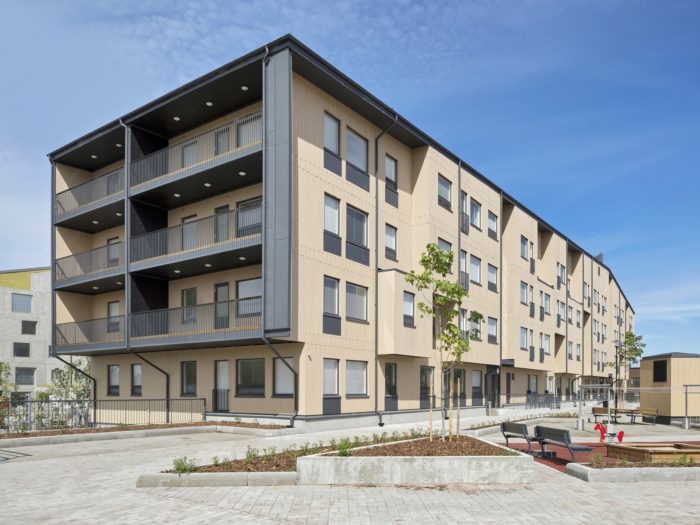
A four-floor apartment building.

Linnanfältti, located in the southwestern Finnish city of Turku, is a new neighbourhood of wooden low-rise apartment buildings.Photo: Wellu Hämäläinen

The UK’s Guardian newspaper cites estimates that concrete accounts for 4 to 8 percent of the world’s total CO2 emissions. Wood is one alternative in architecture. While it has long been used to build houses, new processes also make wood a viable material for multistorey apartment buildings and other large spaces. It’s light, strong and sustainable.

Out of the woods

Just west of Helsinki, Aalto University offers a one-year program about wood in architecture and construction. In the northern Helsinki neighbourhood of Honkasuo, newly built wooden houses exemplify city planning that includes low-carbon construction principles. In a five-house pilot project there by the Ministry of the Environment, the houses’ materials and construction methods were selected to keep the carbon footprint as small as possible.

Enlightening e-vehicles

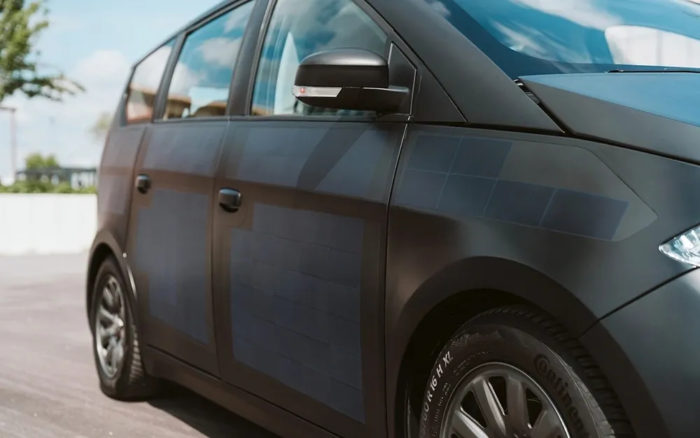
A car with rectangular shapes visible on its surface.

If you look closely, you can see that Finnish company Valoe’s rectangular solar cell assemblies are integrated into the metal surface of this car by Sono Motors of Germany.Photo: Valoe/Sono

Solar cell assemblies by Valoe, a company from the Finnish town of Mikkeli, are in validation tests in self-charging electric vehicles manufactured by Sono Motors in Germany. Valoe is also developing integrated solar systems for electric city ferries built by Eker Design in Norway.

Charging ahead

Kempower, a Finnish provider of electric vehicle charging technology, has launched its products on the North American market. Its chargers enable more rapid charging than the majority of the existing charging points there.

Hard-working textile recyclers

Touchpoint makes workwear – clothes for people with jobs in healthcare, retail, hotels, restaurants and cleaning. The company emphasises sustainability in its materials, using recycled polyester and recycled cotton, as well as fibre made from wood cellulose by another young Finnish company, Spinnova. As for worn-out workwear that is ready to be discarded, Touchpoint’s subsidiary, Rester, has started a textile recycling plant in Paimio, southwestern Finland. It produces recycled fibre that can be made into yarn, fabric, insulation, acoustic panels and more. So Touchpoint can take old workwear off its customers’ hands, as well as selling them new clothing. One of Touchpoint’s investors is Finnish asset management firm Taaleri, which founded the world’s first private equity fund focused on circular economy.

Looking to nature for answers

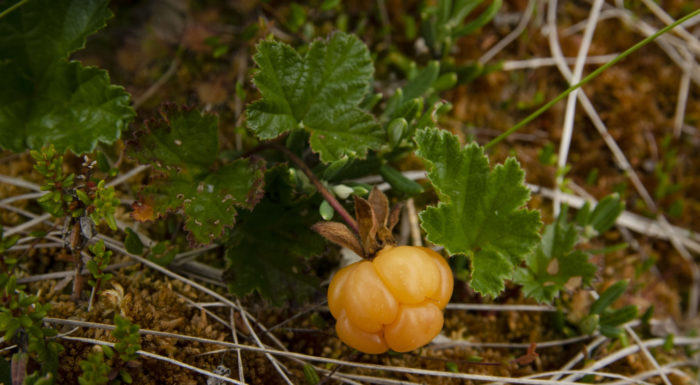
An orange berry in low-growing foliage.

Growing in northern swamps, cloudberries are not always easy to find.Photo: Reijo Haukia/Lehtikuva

The cloudberry is found in far-northern swamps, looks something like an overgrown orange raspberry and is prized for its delicate flavour. Helsinki University Hospital, the VTT Technical Research Centre of Finland, the University of Turku and their partners have found that compounds derived from cloudberry seeds show significant antimicrobial activity against the antibiotic-resistant hospital bacteria MRSA. This could help treat and prevent MRSA infections. Using a patented, environmentally friendly process, researchers extracted the compounds from “sidestreams” – parts of the berries that would otherwise go unused by the berry industry. Other Finnish plants may contain similar compounds that are even more effective, the researchers say.

Rolling out pies, rye bread and other essential eastern Finnish recipes

When people think of eastern Finland, they often think of the country’s largest body of water. Lake Saimaa is an extensive, magnificent labyrinth of interconnected lakes, bays and islands with a water surface area of nearly 4,400 square kilometres (1,700 square miles).

People also know that one of Finland’s favourite foods comes from Karelia, the easternmost region of the country. The Karelian pasty, a small, thin-crusted pie filled with rice, is available in every grocery store across the nation.

There’s a stew named after Karelia, too, and we throw a few other delicacies into the mix, such as a vegan cabbage roll that is a cousin of the Mediterranean dolma.

[This is part of a series of recipe articles that show off dishes from the north, south, east and west of Finland – although many of them are now common all over the country – not to mention an extra piece about cake, bread and buns.]

By ThisisFINLAND staff, March 2022
Recipes and descriptions supplied by Timo Lepistö

Deep-fried pasties (lörtsy) from the Lake Saimaa region
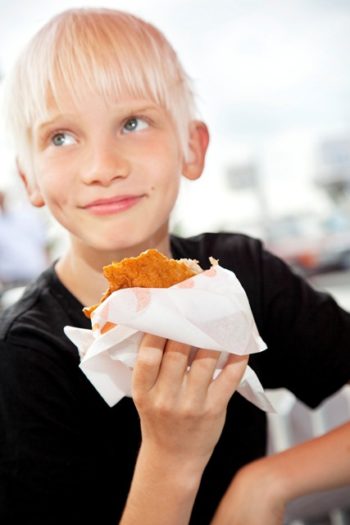
A boy in a T-shirt holds a piece of food in a wrapper.

The lörtsy, a deep-fried pasty from the city of Savonlinna, can be prepared with many different kinds of fillings.Photo: Visit Savonlinna

There are many versions of deep-fried pasties in Finland but this thin one is specifically a speciality of the city of Savonlinna, which is better known for the world-renowned annual Savonlinna Opera Festival. The original lörtsy contained a mixture of ground beef and rice, but nowadays there are versions filled with everything from vegetables and fish to sweet apple jam.

Filling:

  • 400 g of ground beef
  • 1 onion
  • 2 dl long-grain white rice
  • fresh marjoram
  • salt, allspice and white pepper
  • cooking oil

Cook the rice according to the directions on the package and set aside in a bowl. Sweat the chopped onions for approximately ten minutes in a frying pan on low heat, then add to the rice. Fry ground beef on high heat and season with ground allspice, white pepper and salt. Mix all the ingredients, cover the bowl with cling film and refrigerate until needed.

Dough:

  • 5 dl organic whole milk
  • 25 g fresh yeast
  • 1 tbsp sugar
  • 1 tbsp salt
  • 11 dl dark wheat flour (all-purpose flour is also OK)
  • 2 eggs
  • Deep-frying oil

Warm the milk to 37 degrees Celsius, add yeast and sugar, and mix well. Add the flour and salt, mix gradually and knead until shiny and firm. Cover and let rise for 45 minutes. Divide dough into 14 to 16 pieces. With a rolling pin, roll the dough into circles that are 3 to 5 millimetres thick. Brush each with egg wash and divide the filling between them leaving a border of two centimetres at the edges. Fold each one into a half-moon and press the edges together using a fork. Cover the pasties and let rise for 20 minutes. Deep-fry at around 190 to 200 degrees Celsius until medium brown. Drain well.

Karelian hot pot (karjalanpaisti)
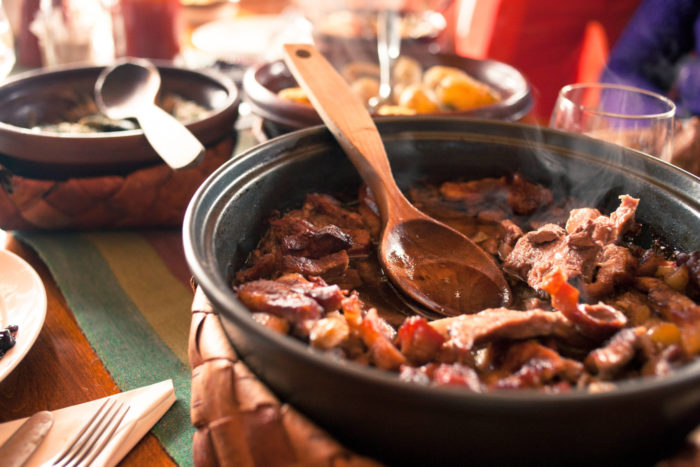
A steaming bowl of meat and vegetables is on a dinner table.

Karelian hot pot is a hearty eastern Finnish dish that is well known throughout Finland.Photo: Elina Sirparanta/Visit Finland

This is a very traditional meat stew from Karelia. Along with Karelian pasties (karjalanpiirakat, see below), it is the most widely recognised Karelian food in Finland. In the eastern part of Finland, the same large oven was traditionally used for baking and for heating the whole house. After the oven had warmed the house, the oven’s residual heat was used to braise the ingredients. Traditionally, Karelian hot pot was a dish for harvest time. This version is a bit more elaborate than the traditional method, yielding a richer taste and a better texture.

  • 500 g pork shoulder
  • 500 g beef cheeks
  • 5 large onions
  • 2 carrots
  • 10 allspice berries
  • 1 sprig rosemary
  • 1 star anise (optional)
  • 2 bay leaf
  • 1 tbsp salt
  • cooking oil

Peel and slice the onions. Place a casserole over a high heat and add thin layer of oil in the bottom. Add the onions and optional star anise to cook until golden brown and lower the heat to medium. Stir the onions frequently to prevent sticking to the bottom of the casserole, approximately 40 minutes. Meanwhile cut the meats into 4-centimetre cubes. Brown the meats in small batches over a high heat with a skillet. Preheat the oven to 120 degree Celsius. Add meat, spices and salt to the casserole when the onions are done. Add water to cover the meat and heat to simmer, then cover with a lid and put it in the oven. Peel and cut the carrots to 2-centimetre cubes. After 2.5 hours of braising, add the carrots and the rosemary, then continue baking for 30 minutes. Serve with potato purée and lacto-fermented pickles.

Karelian pasties (karjalanpiirakat)
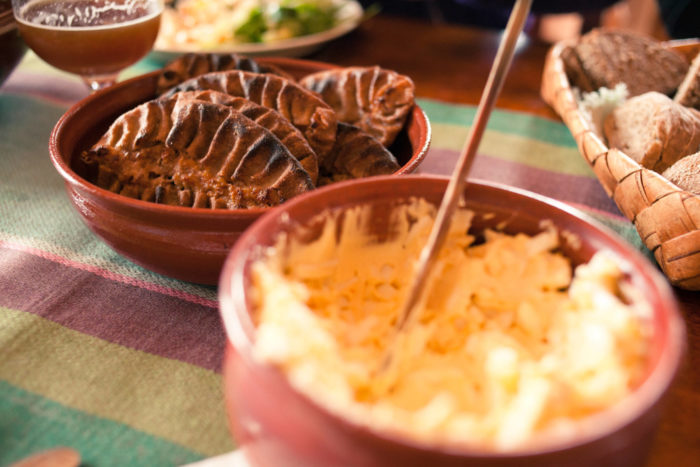
One bowl contains a yellow mixture, and another bowl contains a number of small pies.

Egg butter, in the foreground, is a mixture of butter and soft-boiled eggs traditionally used as a topping for Karelian pies, shown in the other bowl.Photo: Elina Sirparanta/Visit Finland

This delicacy from the Karelia region is an iconic element of Finnish cuisine, popular all over the country. It was traditionally made with a barley filling; rice was used on special occasions such as weddings. There is also a version with a mashed-potato filling, called perunapiirakka, (potato pasty). Karelian pasties (also called Karelian pies in English) and dark rye bread are usually the foods Finnish people miss the most when living abroad.

Rice porridge:

  • 1 litre milk
  • 250 g short-grain rice
  • 40 g butter
  • 1 tsp salt

Put the rice in a large nonstick pan and add enough water to cover it. Bring it to boil, stirring constantly. Add milk and salt and simmer for 30–40 minutes, stirring occasionally. When the rice is cooked, take the pan off the heat source, add butter and mix gently. Add milk if necessary, to modify the consistency if the porridge becomes unworkably thick (this depends on the starch quantity of the rice).

Dough:

  • 300 g rye flour
  • 225 ml cold water
  • 1 tsp salt

Combine the ingredients in a mixing bowl. Knead the dough until smooth and shape it into a log. Cover it with cling film and let it rest for 30 minutes.

Forming the pasties:

  • 200 g butter
  • 1 litre water

Melt the butter in a bowl and add warm water.

Preheat the oven to 250 degrees Celsius. Cut the dough into 24 pieces and roll each into a ball. With a rolling pin, roll each one into an oval shape. Stack them under a damp kitchen towel.

Place two tablespoons of the filling onto a piece of dough and fold the edges in towards the middle. Crimp neat, tight pleats and push the crimps down slightly into the filling to prevent burning. Bake approximately eight minutes. After baking, dip the pasties quickly individually into a butter and water mixture (immerse completely and remove), then let them cool under a clean kitchen towel.

Egg butter:

This is a traditional topping for Karelian pasties and rieska (Finnish flatbread – see our list of northern Finnish recipes). This recipe offers a good way to cook eggs to enjoy them with just a sprinkle of salt. The reason for soft-boiling the eggs is that it lets the yolks mix nicely with the butter.

  • 3 eggs
  • 150 g butter
  • salt

Cut the butter into cubes, put them in a mixing bowl, and allow to warm to room temperature. Put the eggs into a small pot and cover them with water. Bring the water to boil over a high heat. After boiling for one minute, remove from the heat and let stand for nine minutes. Drain and then fill with cold water to cool the eggs. After cooling for ten minutes, peel the eggs and use a fork to crush them into the soft butter. Mix well and season with salt to taste. Cover and store in the fridge.

Vegan cabbage rolls (kaalikääryleet)
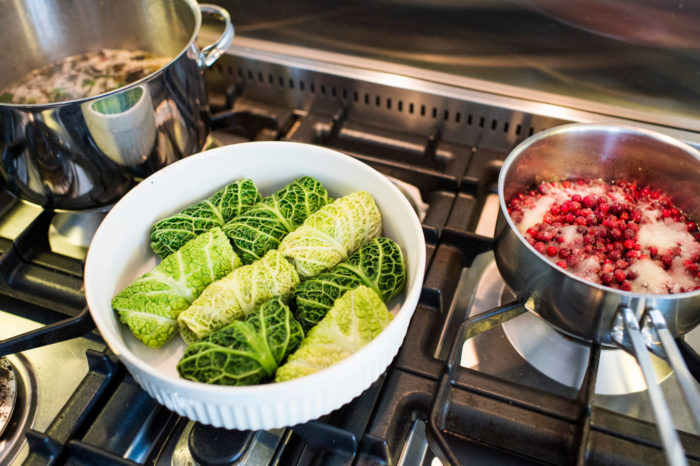
A white ceramic bowl contains a number of neatly rolled green cabbage leaves.

Many people consider stuffed cabbage rolls a delicacy.Photo: Juho Kuva/Visit Finland

The idea of cabbage rolls reached Finland from Turkey via Sweden in the 16th century. Cabbage leaves took the place of grape leaves, but otherwise it is easy to see the similarity between a dolma and a cabbage roll. The traditional stuffing is a mixture of minced meat and rice, but there are veggie versions as well.

  • 1 head of cabbage
  • 3 dl cooked pearl barley
  • 200 g mushrooms
  • 2 carrots
  • 1 leek
  • 2 cloves garlic
  • 1 tsp fennel seeds
  • 1 litre vegetable broth
  • 2 tbsp dark syrup or muscovado sugar
  • juice of half a lemon
  • fresh thyme
  • salt, black pepper
  • cooking oil

Filling:

Thinly slice the mushrooms. Thinly slice the leek, grate the peeled carrots and mince the garlic. Place a sauté pan over a medium-high heat and add a thin layer of cooking oil. Add the mushrooms and stir until they start to brown, add minced garlic, leek and a generous amount of ground black pepper. Continue sautéing until leeks are soft, then remove from heat. Add fennel seeds, grated carrots, fresh thyme, and a bit of grated lemon peel. Season with salt and mix well.

Rolls:

Remove the white core of the cabbage. Bring a large pot of water to boil (large enough to fit the head of cabbage), then submerge the cabbage in the boiling water, until the leaves are tender and you can easily peel them away, one by one. About 12 pieces should be enough. With a knife, make a V-shaped cut on each leaf to remove the thickest part.

Put around 1/2 decilitre of the filling in the centre of a cabbage leaf. Roll the cabbage leaf around the filling and place the roll seam-side-down into a greased oven pan. Repeat with the remaining filling and leaves.

Preheat oven to 175 degrees Celsius. Mix the basting broth. In a bowl, combine vegetable broth, dark sugar syrup, lemon juice, salt and pepper. Bake the cabbage rolls for 90 minutes, basting periodically.

Berry pie with rye crust (mustikkakukko)
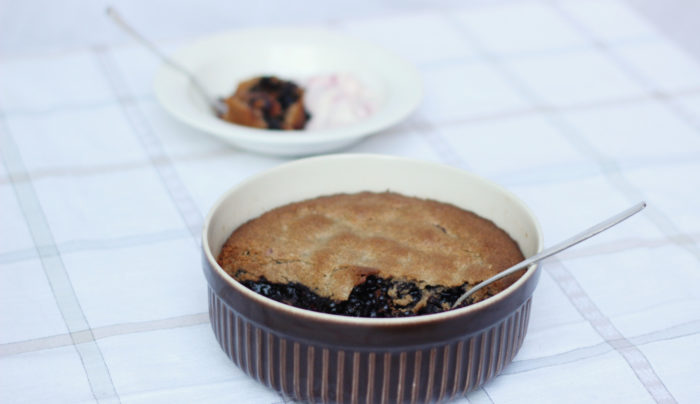
In the foreground is a deep-dish pie with a piece missing, showing the blueberries inside.

This type of pie has a rye crust and can be made with blueberries, as shown here, or with other kinds of berries.Photo: Kirsi Ilmaranta

Rye and berries are a wonderful combination, just add a bit of vanilla custard or vanilla ice cream and you have a perfect Finnish dessert. You can use any kind of berries, but usually people make it with either bilberries or lingonberries (wild relatives of blueberries and cranberries). In the Savo region of eastern Finland, this closed pie with a rye crust is called mustikkakukko or rättänä.

Crust:

  • 250 g butter
  • 5 dl rye flour
  • 1 dl caster sugar
  • 1 tsp baking powder
  • 1/2 tsp salt

Filling:

  • 500 g berries (for example bilberries or lingonberries)
  • 1 tsp fresh thyme leaves (optional)
  • 1–2 dl caster sugar
  • 2 tbsp corn or potato starch

Whip softened butter and sugar until combined and fluffy. Mix the rye flour, baking powder and salt together and, using a sieve, sift the flour mix, then combine with whipped butter. Cover the dough and put it in the fridge for 30 minutes. Preheat oven to 175 degrees Celsius. Grease a pie pan or six smaller soufflé dishes with butter. Divide the dough, using two-thirds for the bottom and sides and one-third for the top. Press the dough evenly with your fingers into the base and sides of your selected dish. On a sheet of baking paper, form the remaining dough into a circle the same size as the dish. Mix the filling (if you are using fresh berries, reduce the starch by half) and pour it into the dish. With the help of the baking paper, place the dough on top. Then remove the baking paper and press the edges of the dough together along the rim of the pan. If using a larger pie pan, bake for 45–60 minutes (frozen berries require more time than fresh berries). For smaller pans, bake approximately 20–25 minutes. Let cool until lukewarm and serve with vanilla custard or vanilla ice cream.

Créme anglaise (Vanilla custard):

  • 2.5 dl milk
  • 2.5 dl heavy cream
  • 1 vanilla pod (or vanilla extract)
  • 1 dl caster sugar
  • 6 egg yolks

Mix milk, cream, and split vanilla pod (remember to scrape the seeds into the milk, too) in a saucepan. Bring to a boil over a medium-high heat, then remove from heat. Put egg yolks and sugar into a mixing bowl and whisk until pale and fluffy. Add approximately 1 decilitre of hot milk to the yolks and whisk well – this helps temper the yolks. Pour the egg mixture back into the saucepan with the rest of the milk, stirring constantly. Place the saucepan on low heat and stir until the mixture thickens a bit. Pour the custard into a clean bowl and cool down with the help of cold-water bain-marie. Strain and put in a fridge to cool.

Finnish blinis (blinit)
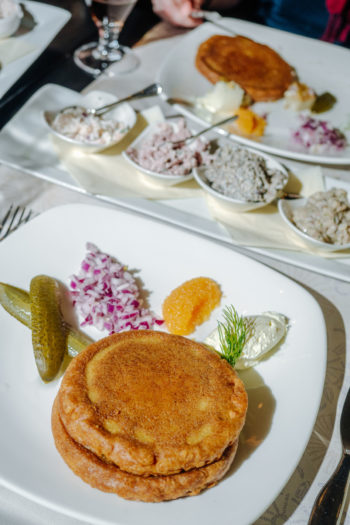
Two plates hold small round pancakes flanked by pickles and other garnishes.

Finnish blinis are somewhat different from their Russian counterparts.Photo: Jussi Hellsten/Helsinki Marketing

These thick sourdough pancakes differ from the thin Russian classics that share their name. They are usually eaten in the wintertime with fish roe, sour cream (smetana) and diced onions, but cold smoked salmon or mushroom salad are also suitable. It takes two days to get the batter ready for frying. On the first day you make the sourdough, and on the second day you finish the batter and fry them.

First day:

  • 5 dl milk
  • 2.5 dl fine buckwheat flour
  • 5 g fresh yeast (or 1/4 tsp dry yeast)

It is very important to keep everything clean. Warm the milk to 37 degrees Celsius. Mix yeast and milk in a large bowl and add flour, whisking vigorously to form a smooth batter. Cover with cling film and, after few hours, place the bowl in the fridge.

Second day:

  • 1–2 dl all-purpose flour
  • 1 1/2 dl lager beer (or créme fraiche)
  • 2 tsp salt
  • 2 tsp caster sugar (optional)
  • 3 eggs (whites and yolks separated)
  • Clarified butter

Put yolks, salt, beer and sugar into the first-day batter and mix. Adjust thickness with all-purpose flour until it resembles thick pancake batter. Add egg whites into a clean mixing bowl and whisk until stiff and shiny. Fold the egg whites into the batter in three batches until fully incorporated.

Place a pancake pan or a blini pan over medium-high heat and heat the pan thoroughly. Add a thin layer of clarified butter at the bottom of the pan and pour the batter, about 1/2 decilitre for each blini. Cook for about one minute or until bubbles form, then turn. Add a bit of clarified butter and cook for one minute. Serve hot with selected supplements.

Finnish traditional rye bread (ruisleipä)
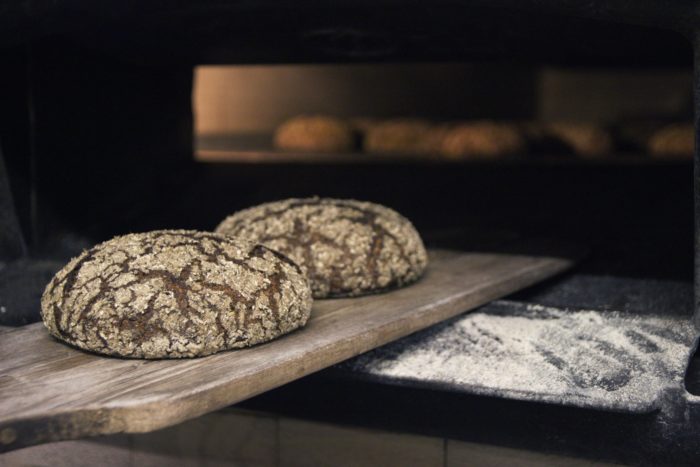
Two fresh round loaves of bread are cooling on a wooden board.

This traditional Finnish rye bread takes time to make – several days, actually – but it’s worth it.Photo: Reijo Haukia/Lehtikuva

To get proper results, use fresh, organic, untreated, unsifted coarse rye flour. The bread’s typical taste and texture take time to form, so this recipe can take three or four days to make, but it is well worth it. Serve with butter, or any topping of your choosing, for example sea buckthorn gravlax (from our list of western Finnish recipes).

First day:

  • 2 dl coarse rye flour
  • 1 2/3 dl water
  • 5 g fresh yeast

In a large bowl, mix yeast and water together. Mix flour into the water and set aside overnight. Do not cover.

Second day:

  • 4 dl coarse rye flour
  • 3 dl water

Mix into the first batch, cover with cling film and leave at room temperature overnight.

Third day:

  • 6 dl coarse rye flour
  • 1 dl water (if necessary)
  • 2–3 tsp salt

Taste the starter dough. If it tastes sour and fresh, you can bake the bread. If not, ferment it an extra day.

Add the salt and the flour. Knead with a stand mixer with a dough hook for 20 minutes, or by hand about 30 minutes, until the dough is shiny. Cover with a clean kitchen towel and let rise until double in size, approximately 2–3 hours.

Divide the dough into two pieces, shape them into round loaves and put them on a baking sheet lined with baking paper. Dust a bit of flour on top, cover with a kitchen towel and let rise for two hours. Preheat the oven to 225 degrees Celsius. Prick the loaves with a fork before baking. Bake at 225 degrees Celsius for 20 minutes, then lower the heat to 180 degrees Celsius and continue baking about 40 minutes (core temperature about 96 degrees Celsius). Wrap the loaves in clean kitchen towels and let cool completely. This bread is at its best the day after baking, served with a good portion of salted farm butter.
Finland tops World Happiness Report for fifth time in a row, highlights trust, wellbeing and freedom – other Nordics in top 8

For five years straight, starting in 2018, the World Happiness Report has singled out Finland as the happiest country on the planet.

The 2022 edition notes that Finland has “a score significantly ahead of the other countries in the top ten.” The other Nordics placed as follows: Denmark is second, Iceland third, Sweden seventh and Norway eighth. The rest of the top ten includes Switzerland (4), the Netherlands (5), Luxembourg (6), Israel (9) and New Zealand (10).

Now in its tenth year, the report “uses global survey data to report on how people evaluate their own lives in more than 150 countries around the world,” according to its publisher, the UN Sustainable Development Solutions Network. It appears just in time for the International Day of Happiness, March 20.

The World Happiness Report compares the answers to one of the more than 100 questions in the Gallup World Poll. The question is: On a scale of zero to ten, where do you place your own life (with zero being the worst possible life and ten being the best possible life)?

In other words, the happiness they’re after is overall contentedness with life. It’s not about who just won a stuffed animal at the amusement park or laughed till they cried at a stand-up comedy show. The report is trying to get at something deeper. It also takes into account data from more than one year.

The keys to happiness

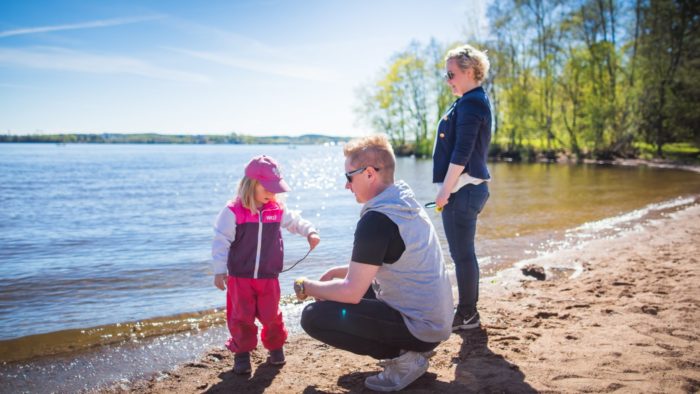
A girl, a man and a woman stand on a sandy lakeside beach with forest in the background.

A family tests the water at Pyynikki Beach, just a short walk from downtown Tampere. Many people in Finland see access to parks and wilderness as an important part of their lives.Photo: Laura Vanzo/Visit Tampere

Three years of data go into the calculations – the 2022 edition uses answers gathered between 2019 and 2021 to calculate the rankings. The report also studies other related matters beyond the Gallup question, trying to explain how happiness works and what societal factors contribute to it.

The creators of the report say that they can “identify key determinants of wellbeing,” and that this information “can help countries to craft policies aimed at achieving happier societies.”

Finland, as well as the other Nordic countries, has worked to create a society that possesses an infrastructure of happiness. Social systems in Finland and the rest of the Nordics support democratic governance and human rights, not to mention education and healthcare that are free or charge only very nominal fees.

“The true measure of progress is the happiness of the people,” says the report. “Happiness can be measured,” it continues, adding, “We know a lot about what causes it.”

People in Finland and elsewhere understand that contentment and satisfaction don’t just occur. You have to construct and maintain the culture and the social institutions that form the basis and framework for individuals and communities to build their happiness. While Finland has a multiparty system with room for numerous different platforms, you can still describe happiness as one of the overall policy goals.

Factoring values into the picture

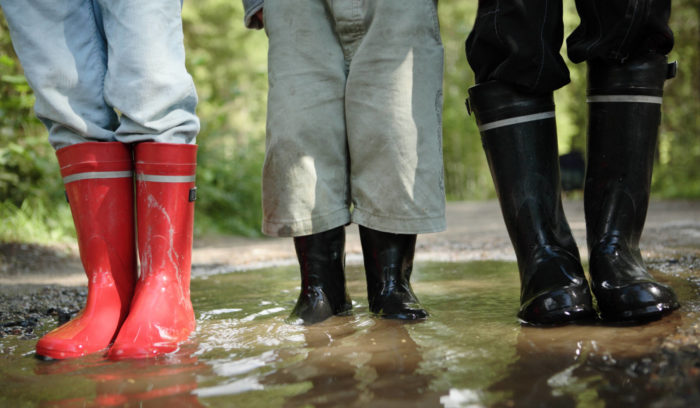
Three different-sized sets of legs with rain boots on, standing in a puddle on a forest path.

Finland has all kinds of weather, but that doesn’t stop people from getting outside and enjoying the great outdoors.Photo: Visit Finland

In terms of values, Finnish happiness and Nordic happiness are connected with trust and freedom. People in Finland tend to trust each other, their public officials and their government. This doesn’t mean they obey authority unthinkingly – there are disagreements and dissent, but debates play out in an environment of openness and transparency.

Finland’s repeated success in the World Happiness Report stems from factors that also show up in other reports, indexes and international comparisons. At the time of writing, according to various organisations and surveys, Finland is the world’s most stable  and least corrupt country, and is first in good governance and in political and civil freedom. It is ranked second in press freedom, second in gender equality, third in children’s rights and fourth in education. It tops the Sustainable Development Index and the Work-Life Balance Index, and places third in the EU Social Justice Index. Finland is also the EU country where people express the most trust in each other.

In one section of the 2022 World Happiness Report, researchers examine data from a separate global survey about balance and harmony, and study how they relate to happiness. In that survey, 90.4 percent of Finnish respondents deemed their lives to be “in balance,” a top result matched only by Malta.

Light and dark

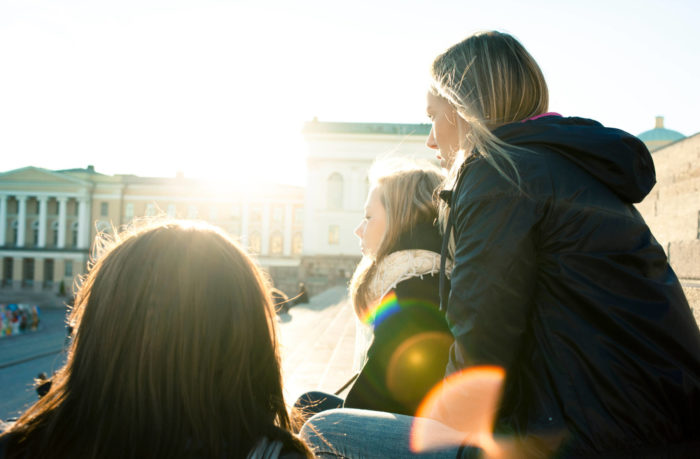
Several women, partially silhouetted by the angle of the sun, look out over a town square.

On the steps overlooking Helsinki’s Senate Square, you can sit and observe life in the Finnish capital.Photo: Elina Sirparanta/Visit Finland

It’s difficult to process happiness when unhappy things are transpiring in the world, but both happiness and unhappiness will continue to occur. Covid-19 knows no national boundaries, nor does climate change, and war hasn’t ceased to exist.

Nevertheless, the World Happiness Report and the International Day of Happiness offer an annual opportunity to talk about where contentedness and happiness originate.

The same values and structures that allow people to experience contentment in their life also form the basis for finding solutions to the challenges that humanity faces, such as pandemics, violence and displaced populations. Good governance, press freedom, trust, equality and education offer a basis for maintaining progress despite difficulties – and to attain some kind of happiness, too, along the way.

By ThisisFINLAND staff, March 2022

Weathering winter in Finnish waters: Wildlife copes with changing Baltic Sea

Over thousands of years, fish species in the Baltic Sea have developed ways of coping when surface ice forms in the winter, but climate change is disrupting the patterns.

The Baltic stretches north as the Gulf of Bothnia between Finland and Sweden, and it reaches east as the Gulf of Finland to Saint Petersburg, Russia. Estonia, Latvia, Lithuania, Poland, Germany and Denmark also have Baltic coasts.

The Baltic Sea is composed of brackish water, saltier than freshwater but less salty than the Atlantic Ocean on the other side of Denmark. This makes for a unique ecosystem that contains both marine and freshwater species.

What happens under the ice?

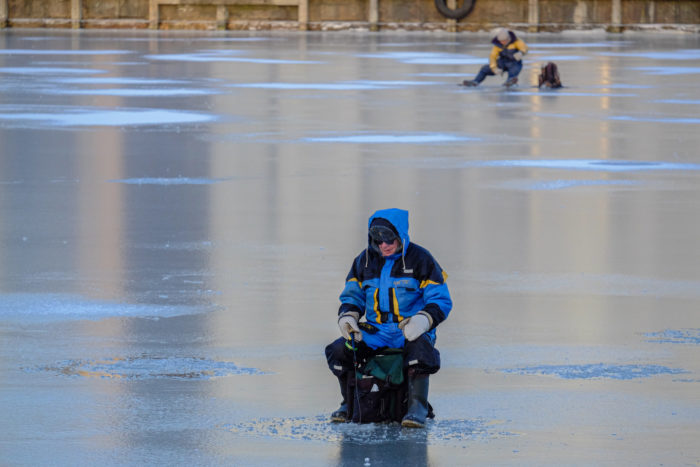
Two people in winter clothes sit on stools on a wide expanse of sea ice.

Wearing an abundance of warm clothing, people sit and fish through small holes they’ve drilled in the Baltic Sea ice.Photo: Tim Bird

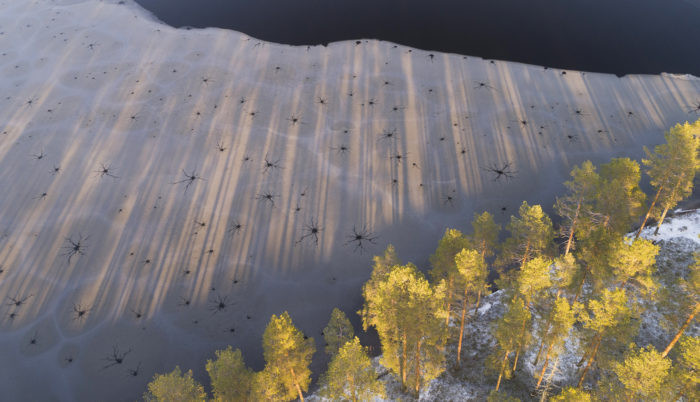
Depending on the weather conditions and the latitude, Baltic Sea ice cover can form as early as October, and can last until April. On average, it tends to span 44 percent of the Baltic Sea.

In order to cope with the ice cover and other winter conditions, Baltic Sea fish may seek out new locations, or their very metabolism may undergo changes.

Jari Raitaniemi, who is a senior scientist at the Natural Resources Institute of Finland, explains that during the winter “the coldest part of the water column is just below the ice,” whereas temperatures along the sea floor are higher, measuring around three to five degrees Celsius (37 to 41 Fahrenheit).

Deep water

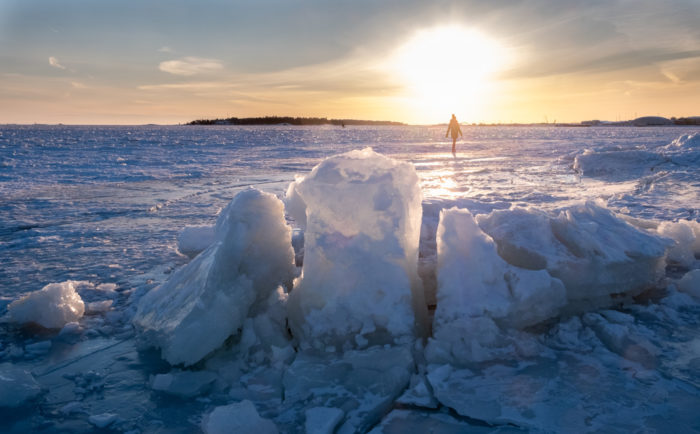
A person walks in front of islands and the setting sun on a wide expanse of sea ice.

A pedestrian walks across the frozen surface of the Baltic in the waning afternoon sun.Photo: Tim Bird

“When the water is cooling in late autumn or early winter, several fish species move from shallow areas to deeper water, where they stay over the coldest and darkest period,” Raitaniemi says.

Species including perch, sprat and zander (pikeperch) move to the deeper, warmer water layers during the winter months. Some cold-water fish, such as the four-horned sculpin, prefer lower temperatures and may move closer to the ice cover.

Another adaptation technique is a lowered metabolism. Fishes’ metabolism drops in the winter. They move around less and are able to survive for longer periods of time without feeding.
Sea change

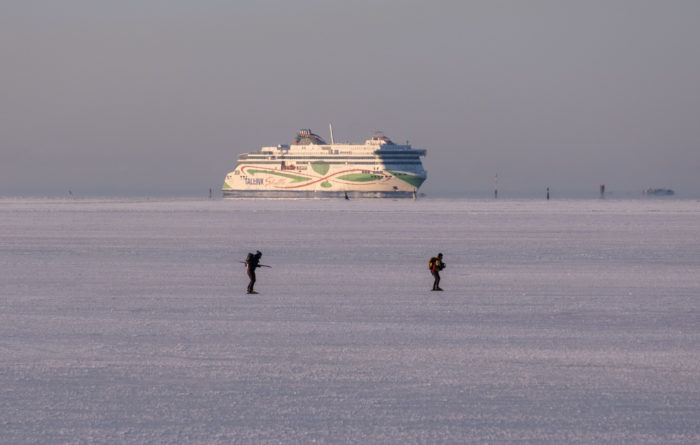
Two small figures are silhouetted in the middle of a wide expanse of sea ice, with a large passenger ship in the background.

With a layer of snow covering the thick sea ice, people ski over the flat surface outside Helsinki. Icebreaker ships keep transport lanes open for ferries such as the one in the background.Photo: Tim Bird

Climate change has caused an increase in average water temperatures, and the surface-water temperature of the Baltic Sea has risen faster than the global oceanic average in recent decades. Certain species adapt well to this changing environment. Because of climate change, we can expect warm-water species to populate the Baltic in larger numbers than before.

“There is a shift of cold-water species being replaced by warm-water species going on in the Baltic coastal areas,” Raitaniemi says.

Changes in the Baltic will have an effect on commercial fisheries as well. “Cod, herring, salmon, whitefish – they would not be favoured,” says Jens Olsson, a researcher in marine ecology and coastal fish dynamics at the Swedish University of Agricultural Sciences. “They would decrease in abundance.”

We can expect marine species to become less common in the Baltic and to be less accessible to consumers in the future. Changing conditions can affect their feeding, reproduction and growth.

Invasive species bob up in the Baltic

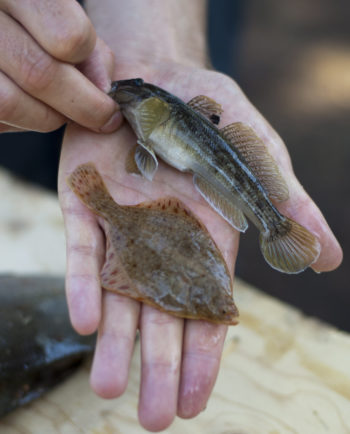
Two small fish lie on an outstretched hand; one of them is a flounder.

The round goby (top), a nonindigenous species, competes with fish native to the Baltic Sea, such as the flounder.Photo: Otto Turunen/Lehtikuva

Alien species (also called invasive or nonindigenous species) are those that people have transported from one location to another, either intentionally or accidentally. They often arrive when ships discharge ballast water. Around ten alien fish species currently live in the Finnish area of the Baltic Sea.
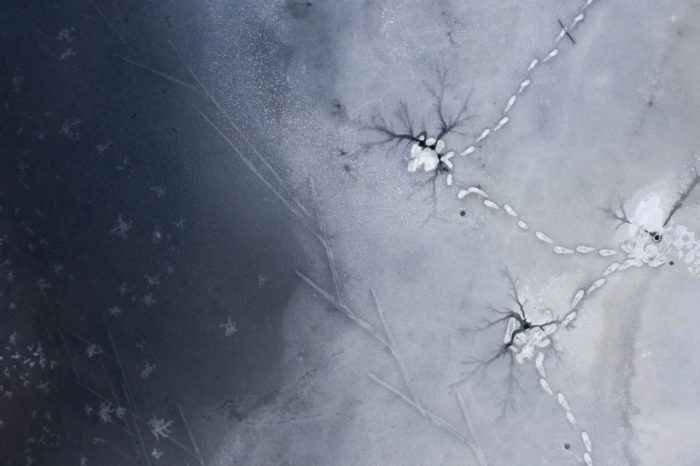
Between 2011 and 2016, a dozen marine species, including algae, crustaceans, snails and worms, were introduced to the Baltic, according to the Helsinki-based Baltic Marine Environment Protection Commission. Invasive species form one aspect of a rapidly changing ecosystem; they’re part of the picture of how climate change is impacting the lifecycles, migration patterns and survival of fish around the world.

Because of milder winters, an increasing number of alien species are able to thrive in the Baltic. This has created disruptions to the indigenous fish species that have populated the Baltic habitat for thousands of years.

The round goby is an example of an invasive species that has benefitted from the warming water. Originally native to the Black Sea and Caspian Sea areas, it has found Baltic conditions favourable and is able to survive through the winter. The round goby was first noticed in the Baltic in 1990 and later multiplied exponentially.

Projecting into the future

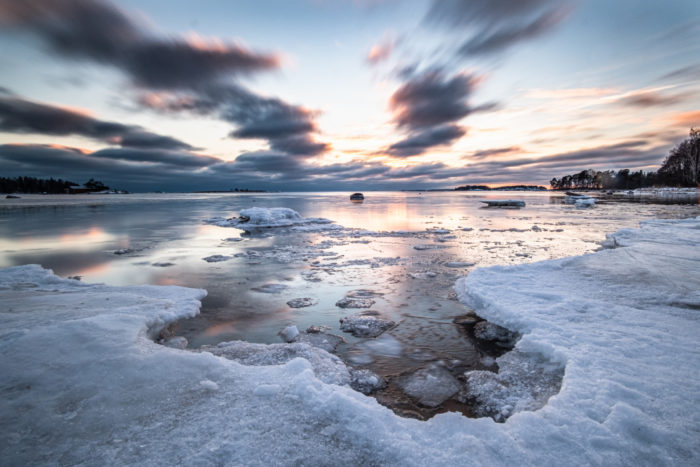
A view of the sea and the sky, with chunks of ice in the water and several clouds in the sky.

As the Baltic Sea ice breaks up in the spring, fragments float and gradually disappear.Photo: Tim Bird

Baltic ice cover reached only 37,000 square kilometres (14,285 square miles) in the winter of 2019–20, which was the lowest on record. Satellite-obtained data started in 1979, and other methods of observation extend back to the 1700s. The average ice cover since 1991 is 141,000 square kilometres (54,440 square miles), while the total surface area of the Baltic is 420,000 square kilometres (162,160 square miles). In the future, we can expect to continue to see a shorter ice season and thinner ice cover.

The changes are also affecting wildlife other than fish. The seasonal ice cover is a central part of the Baltic ringed seal’s lifecycle. “These seals keep holes open in the ice through the winter to be able to breathe”, says Raitaniemi. Seals make dens in snowdrifts on the sea ice. “They need ice and snow to give birth.” (A related freshwater species, the gravely endangered Saimaa ringed seal, lives only in Lake Saimaa in southeastern Finland and is also dependent on ice and snow.)

The aquatic environment and food web are complex. In the long term however, we can expect for the warming of the Baltic to have severely disruptive effects on the animals that live in or rely upon the sea.

In addition to climate change, other stress factors for Baltic Sea fish include eutrophication (excessive nutrient levels, often from agricultural fertiliser runoff), exposure to dangerous chemicals and occasional overfishing.

“In order to avoid seeing substantial changes in the future, we need to continue working on reducing eutrophication, and halt climate change even though it’s very difficult,” says Olsson. “And of course a really important thing is to impact politicians.”

By Emma De Carvalho, March 2022

Finnish wildlife photographers continue to garner international recognition

Outdoor pursuits – skiing, hiking, fishing, picking mushrooms and berries – have always been popular in Finland. The popularity of another pastime – nature and wildlife photography – confirms that Finnish appreciation of the natural environment has never been stronger.

According to Kari Wallgren, chair of the Finnish Association of Nature Photographers, pandemic-related travel restrictions have had an effect. People in Finland have rediscovered the natural riches on their doorstep, or in many cases discovered them for the first time. The fabulous ridgetop lake and forest views of Koli in the east and the seascapes of the Åland Archipelago in the west have been attracting increased numbers of “staycationers” – domestic tourists.

Even so, Wallgren believes an upturn in outdoor interests, including photography, was already under way before the pandemic took hold. “Today everybody has a camera in their mobile phone, which lowers the threshold for starting to take pictures,” he says. “Before long, people will notice they need a better camera, especially if they want to capture fast-moving targets.”

Young success

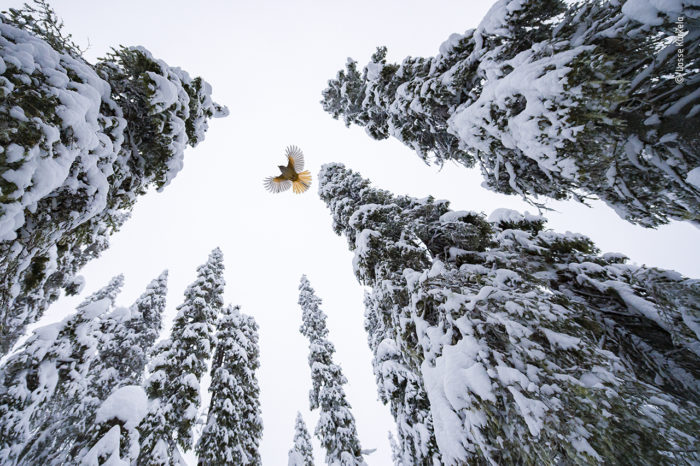
A bird is seen from the ground as it flies between the treetops, wings fully outstretched.

Lasse Kurkela’s photo High-flying jay was the overall winner of the 15–17 age category in the 2021 Wildlife Photographer of the Year competition. Siberian jays hide food high up in the trees.Photo: Lasse Kurkela/Wildlife Photographer of the Year

Finnish brilliance in wildlife photography, especially among younger photographers, recently gained additional recognition, in the 2021 Wildlife Photographer of the Year competition. Developed and produced by the Natural History Museum in London, it is the biggest and most prestigious international contest of its kind. Two young Finns, Onni Rantanen and Lasse Kurkela, placed high in the 15–17 age category. Rantanen’s exquisite portrait of three waxwings in a snowy Finnish garden earned him a Highly Commended prize, while Kurkela’s beautifully timed image of a Siberian jay in flight across snowy treetops won the age group outright.

For Kurkela this is the latest in an impressive catalogue of awards, including a special commendation in the Wildlife Photographer of the Year’s 10-years-and-under category in 2013 for a shot of a wolverine approaching a magpie. However, winning awards is not the be-all and end-all of his wildlife photography.

Awards and inspiration

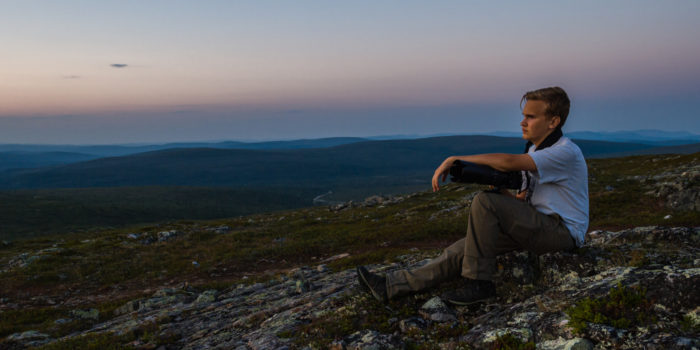
A teenage boy sits on a peak looking at an expansive view of the surrounding landscape.

A wildlife photographer in his natural habitat: Lasse Kurkela surveys the landscape.Photo: Heikki Kurkela

“Looking at nature and creating art inspires me,” he says. “I’m also inspired by other photographers’ photos to some extent. But right now I’m planning to study engineering, so I’m not sure if that or photography or something else will become my profession. Competitions are not the main priority in my photography, but they’re a very nice bonus.”

Kurkela’s winning Siberian jay shot has also been commended in several other awards, including Finland’s own top contest, Nature Photograph of the Year, run by the Finnish Association of Nature Photographers. “Our association is the biggest of its kind in Europe,” says Wallgren. “Membership has been at about 3,000 already for some years. The number of entries in the 2021 competition went over 15,000, but in 2020 we reduced the maximum number per participant from 30 to 24. We still received more than 13,000 photograph entries.”

Wallgren notes that an increase in quality has coincided with developments in equipment and greater degrees of preparation for shots. The available technology has expanded too, and increasing numbers of photographers use drone cameras for aerial landscapes. The overall winner for 2021 was the underwater photography specialist Pekka Tuuri.

New horizons

Watch Olli Teirilä’s Kenyan safari video, which won the Benjamin Mkapa African Wildlife Photography Awards video category in 2021.
Video: Black Grouse Photography

The professional-level video capability of digital cameras opens up other creative horizons for Finnish photographers, and they don’t necessarily limit themselves to Finland’s own natural riches. Outdoor enthusiast and nature videographer Olli Teirilä has been photographing nature in and around Helsinki during the pandemic but can’t wait to get back to shooting videos on safaris in Kenya and elsewhere. A montage of clips entitled Magical Maasai Mara earned him top prize in the Benjamin Mkapa African Wildlife Photography Awards video category in 2021.

Teirilä, who travels and shoots with his partner Alison Buttigieg, sees video as more fulfilling than stills photography. “So much more work goes into making a finished video,” he says. “But a nice still shot of an exciting moment is quite hard to beat.”

Although he has a passion for African wildlife, he has become more appreciative of the photographic options closer to home. “I would love an opportunity to video and photograph the black grouse lek [courting ritual] and the ever-elusive lynx, for sure,” says Teirilä. “So those, at least, are on my bucket list.”

Finland’s Nature Photographs of the Year (2021)

By Tim Bird, February 2022