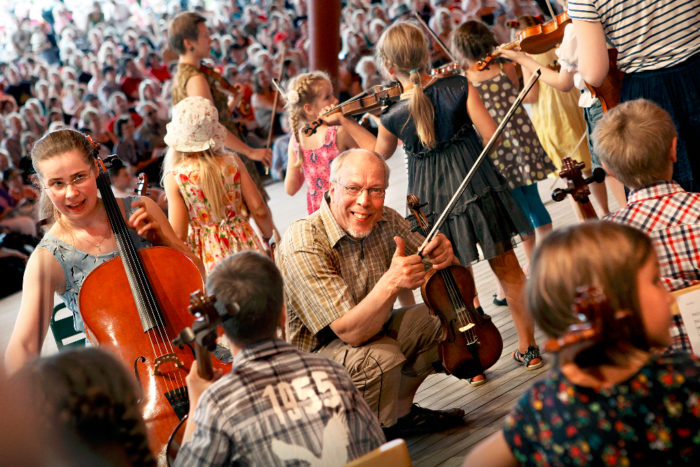
How Finland found a road to reconciliation after the Civil War of 1918

Finland’s Parliament adopted a declaration of independence on December 6, 1917. Prior to that, armed “security” groups, which later became known as the Whites and the Reds, had already formed.

The Whites were politically conservative, while the Reds were associated with the labour movement. The long-established discord between the two camps meant that, even after independence was achieved, the way ahead for the new nation was unclear.

The Civil War lasted from January 27 to May 15, 1918. Out of some 36,600 deaths, approximately 9,700 were executions and 13,400 were due to appalling prison camps. Red casualties outnumbered White by around six to one.

Political reconciliation began almost immediately after the war was over. It would take longer for cultural and social reconciliation to begin.

Moving towards a more inclusive republic
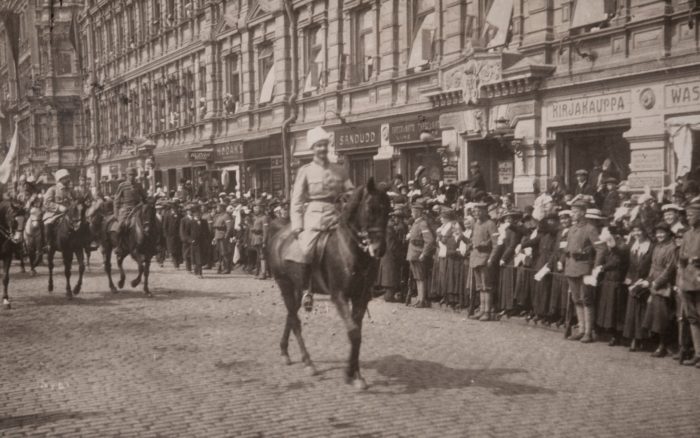
The White general, C.G.E. Mannerheim, leads a parade down the Esplanade in Helsinki on May 16, 1918 in honour of the end of the Civil War.Photo: cc by 4.0/Helsinki City Museum

The White victors had placed their hopes in a monarchy with strong ties to Germany, but that country’s eventual defeat in the First World War put an end to the idea. Finland chose a republican constitution in July 1919.

“It is hard to talk about republicans being more interested in compromise when many of them supported harsh measures against Red soldiers,” says Jason Lavery, permanent adjunct professor at Helsinki University and professor of history at Oklahoma State University. “Yet, those who wanted a republic saw it as a more inclusive form of government for both the moderate left and monarchists.”

Finland’s first president, K.J. Ståhlberg, was a believer in reconciliation, pardoning Red prisoners, allowing trade unions to negotiate and signing a law so tenant farmers could purchase their holdings at advantageous prices.

“Ståhlberg did try to unify the country, but within the parameters set by the anti-Marxist consensus,” says Lavery.

Post-war moderation
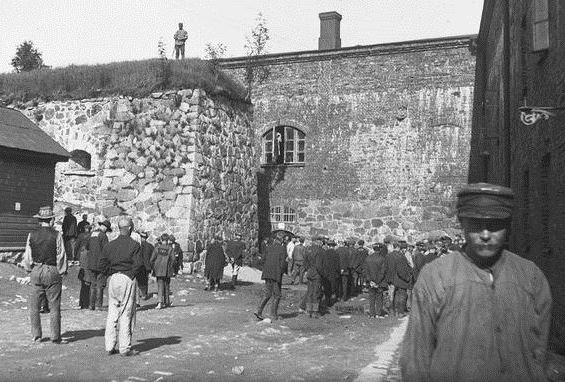
Helsinki’s island fortress of Suomenlinna, now a Unesco World Heritage site and tourist favourite, was the location of a prison camp holding captives from the Red side in early 1918.Photo: Niilo Toivonen/cc by 4.0/ Finnish Heritage Agency

The moderate Progressive Party and the Agrarian Union supported compromises and steps towards reconciliation during the early years of independence. The extreme left was excluded from the political process, but the Social Democrats were welcomed in local politics, and even became the largest party in Parliament under the leadership of Väinö Tanner.

“Tanner did what he could,” Lavery says. “As prime minister in 1927, he accepted the salute of the Civil Guard, the militia that formed much of the White Army, in the annual parade commemorating the end of the war.” The White general, C.G.E. Mannerheim, had begun an annual tradition of a parade on May 16 in honour of the end of the Civil War.

Tanner’s acceptance of the salute was particularly relevant, because the Civil Guard had been called butchers by the left because of their role in summary executions. When elements of the Civil Guard and a group called the Lapua Movement attempted a right-wing coup, in 1932, the majority of Finns rejected them and the uprising failed within days.

The late 1930s was a period of relative economic prosperity and continuing social reforms, which helped to contribute to a strong democracy and parliamentary system.

Bringing people together
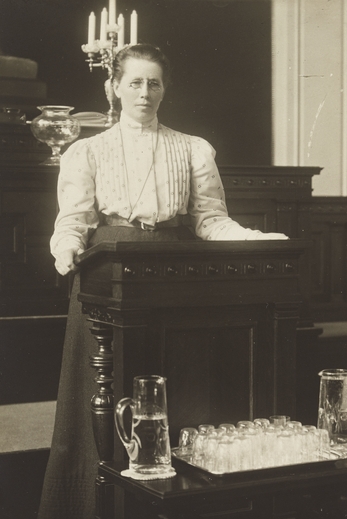
Miina Sillanpää, who would become known for her ability to get parties with opposing viewpoints to converse, gives a speech as a member of Parliament in 1907.Photo: J. Indursky/cc by 4.0/Finnish Heritage Agency

Another politician who was influential in forming the future of the country was Miina Sillanpää, known as a bridge-builder who could bring together parties with opposing viewpoints. She was among the first women, 19 of them, voted into Parliament in 1907 after women gained the right to vote and to run for office, in 1906. During the Civil War she worked to help orphaned children, of whom there were many – 15,000 by some estimates.

In Tanner’s government (December 13, 1926 – December 17, 1927), she held the position of Second Minister of Social Affairs, making her the first female government minister in Finland. She came from a working-class background and helped drive social issues such as better working conditions for maids and other workers, and shelters for orphans and unwed mothers. Tarja Halonen, Finland’s president from 2000 to 2012, has remarked of Sillanpää that she “can be said to be one of the mothers of the welfare state.”

Sporting heroes, most notably distance runner Paavo Nurmi, also helped all Finns to root for a common goal. He won 12 Olympic medals – nine gold and three silver – over three Olympic Games between 1920 and 1928.

Together in the Winter War
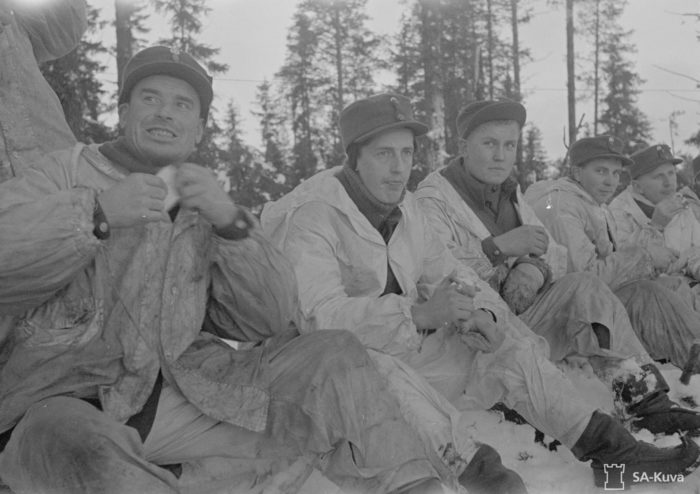
In the Winter War of 1939–40, recruits from Vihanti, a village about 600 kilometres (375 miles) north of Helsinki, sit during a break in the fighting at Suomussalmi, near the eastern border. The Winter War became the unifying, unambiguous war that the Civil War was not.Photo: cc by 4.0/Finnish Wartime Photo Archive

In 1939 the Soviet Union attacked Finland, starting what is known as the Winter War, which lasted from November 30, 1939 to March 13, 1940 and united all elements of Finnish society in the defence of their country.

“The Winter War was the unambiguous and heroic war of national liberation that the Civil War was not,” Lavery says. “It was independent Finland’s first great collective achievement.”

Organisations representing employers and employees agreed to negotiate and cooperate. The Social Democrats encouraged their members to join the Civil Guard. Commander-in-Chief Mannerheim cancelled the annual parade commemorating the White victory, replacing it with a day of remembrance for the fallen. Finns were willing to unify for a common cause.

“One must also consider events after the Second World War,” says Lavery. “These include the legalisation of the Finnish Communist Party, the building of the universal welfare state, and the art and scholarship produced about the events of 1918.”

Reconciliation is never over
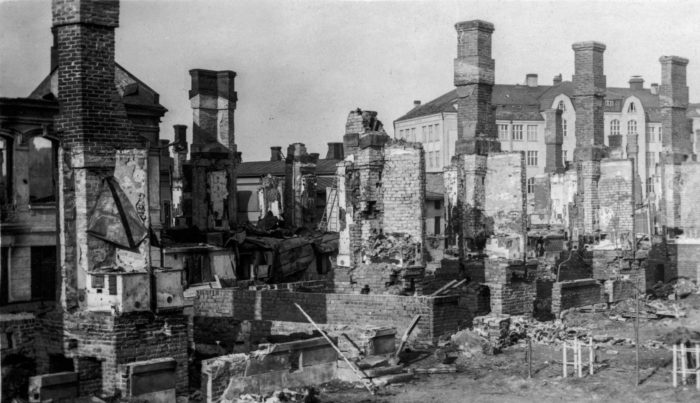
The Civil War brought destruction to many parts of Finland. In April 1918, only chimneys were left standing in Tammela, an area of the central western city of Tampere.Photo: cc by nd 4.0/Vapriikki Photo Archive/Tampere Museum

One of the most important literary works related to the Civil War is Väinö Linna’s trilogy Under the North Star, published in 1959, 1960 and 1962. It sympathetically explores the motivations of the Reds and unflinchingly describes what happened in the war’s aftermath.

It was the cultural reconciliation Finland had long awaited, but the process of reconciliation is never over. “Civil wars often never really end,” says Lavery.

Even today, Mannerheim remains a divisive figure. “Butcher” is sometimes spray-painted on statues of him, while the Mannerheim Museum uses the loaded term “War of Liberation” to refer to the Civil War.

A 2016 survey by Finnish national broadcasting company Yle shows how deeply the war affected people. Even nearly a century after Civil War ended, 22 percent of respondents said that it remained a “highly sensitive” topic in their families.

Yet Finnish society values a process of law, democracy and working together for the common good. This has helped heal, as much as possible, the scars from the Civil War.

“It took decades to gain full trust in democracy,” said Finland’s President Sauli Niinistö in a speech on January 1, 2018. “Participatory patriotism was born.”

One lesson that came out of the Civil War, he said, is that “there is diversity, people have different backgrounds, convictions and goals, and we have a right to disagree. This is something we must be able to respect, however differently we ourselves might think.”

By David J. Cord, May 2018

Partial list of sources consulted

  • Risto Alapuro, “The Legacy of the Civil War of 1918 in Finland”, in After Civil War: Division, Reconstruction, and Reconciliation in Contemporary Europe (University of Pennsylvania Press, 2015)
  • Osmo Jussila, Seppo Hentilä and Jukka Nevakivi; From Grand Duchy to a Modern State: A Political History of Finland since 1809 (Hurst & Company, 1999)
  • Jason Lavery, The History of Finland (Greenwood Press, 2006)
  • J.E.O. Screen, Mannerheim: The Finnish Years (Hurst & Company, 2000)
  • National Archives of Finland, “Causes of war death 1918 according to the political affiliation of the killed persons”
  • Miina Sillapää Society website (in Finnish)
  • Finnish national broadcasting company Yle: “Finns remember Civil War, ‘Red’ and ‘White’ resentment lingers”
  • Speech by President Sauli Niinistö, January 1, 2018

Finnish metropolises vie to win Capital of Metal

Finland is the heavy metal country, with more than 53 metal bands for every 100,000 inhabitants – more than any other nation in the world.

But which Finnish city is the most metal metropolis? A website called Capital of Metal proposes to answer that question, or rather to let the bands and their fans provide the answer, because they’re the ones whose opinions matter. Finland might be the only country where metal music and its creators enjoy such a high level of appreciation, respect and, well, let’s just say it out loud: love.

Bands are going online to add themselves to a map of Finland. They also get to tell the world about themselves and their hometowns, in their own words. The organisers, who include Helsinki’s renowned Tuska Festival (the name can be translated as “agony”), Sony Music Finland and music shops such as Musamaailma and Record Shop X, hope that between May 9 and June 20, 2018, as many as possible of Finland’s thousands of metal bands will check in and put themselves on the map.

Those thousands of groups, and heavy metal music in general, have incalculable hordes of fans throughout the land – and across the globe. Metal enthusiasts from all countries can visit the Capital of Metal website to “like” their favourites. (Full disclosure: Capital of Metal is also supported by the Ministry for Foreign Affairs, which produces ThisisFINLAND.)

And there are prizes. When all is said and sung, winning the Capital of Metal title is about more than just bragging rights: that city gets its own stand at Tuska Festival, a prime opportunity to show the world why they won and cement the reputation of their municipality and its musicians. [Editor’s note: The winner is the southeastern town of Lemi, with a population of 3,076 and 13 metal bands, meaning that there are 42.26 bands per a hypothetical 10,000 people. The runner-up, the eastern city of Joensuu, posted an impressive 177 bands, but with a population of 75,848, the number of bands per 10,000 people only reached 22.34.]

The bands who tagged the map entered a draw for music shop gift certificates, while the fans who frequent the site had a chance to win a trip for two to Tuska, complete with VIP access. (See our interview with the winners here.)

Finnish metal flourishes

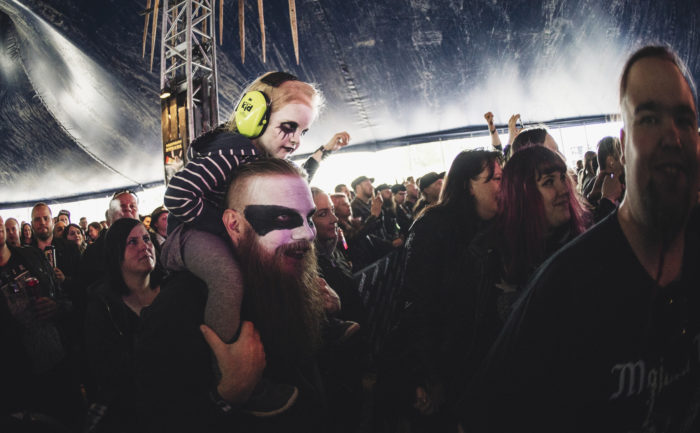
Metal music has officially bridged the generation gap in Finland, where there are more metal bands per capita than any other country in the known universe.Photo: Jesse Kämäräinen

Putting aside the raw stats about how many metal bands Finland has, there does seem to be something in the Finnish mindset – or maybe in Finnish society or in the clean forest air, or even in the education system – that allows heavy metal music to flourish. Or maybe it’s all of the above, and more. We’re not the first to notice – this isn’t even the first article on this website to mention it (see links below).

One Finn who is eminently qualified to explain is Toni-Matti Karjalainen, who currently serves as a research fellow at Aalto University’s School of Business in Helsinki, where his specialties include management of music and culture export. A multidisciplinary academic with degrees in design and economics, he’s also the driving force behind an annual event called the Modern Heavy Metal Conference, which started in 2015 and, by no coincidence, is held in Helsinki the same week as Tuska Festival.

Presentation topics at the conference have included “Why focus on Finnish heavy metal for research in philosophy of music?,” “Exodus to the ‘promised land of heavy metal’: How an international presence has impacted the metal scene in Finland,” “Death/doom metal as part of Yorkshire, England,” “Folk metal as heritage music: An example from Java” and “Finnish mythology in heavy metal.”

Karjalainen has travelled the globe attending metal concerts and interviewing fans, and he’s had a chance to think about what Finnish metal means to the rest of the world, and vice versa.

Appeal and drive

Why is Finland the Capital of Metal? Because of Tuska Festival.
Video: Capital of Metal

“Tonally, the Finnish language fits very well with the metal environment,” says Karjalainen, and makes a rhythmic noise to demonstrate. Finnish is a “consonant-driven” language, he says, and “fits well with the other instruments.” Anyone who has tried to learn Finnish has noticed the proliferation of double consonants.

Many Finnish bands sing in English, of course, but “if a band sings in Finnish, it’s weird, unique and sort of exotic” for foreign listeners. Karjalainen looked at the audience when Mokoma and Stam1na, two bands who sing in Finnish, played their first concerts in Japan, and, surprisingly, “the whole front row was singing the lyrics out loud.”

According to Karjalainen, the lyrics in question “are not very self-explanatory, even to a Finnish speaker.” If Finnish metal music can motivate fans to learn, by heart, lyrics that they can’t comprehend, it speaks volumes about the appeal and pull of the music.

Influences and inspiration

Why is Finland the Capital of Metal? Because Obama says so.
Video: Capital of Metal

Going beyond the rhythm of the language, other factors have allowed Finnish metal to grow, and may have helped shape its sound, although there is no one single Finnish sound. The term “heavy metal” covers a seemingly limitless list of genres and subgenres: black metal, doom metal, folk metal, glam metal, goth metal, melodic death metal, power metal, pagan metal, speed metal, symphonic metal and more.

There’s Finnish nature, referring to the natural environment of Finland, and there’s the nature of the Finns, meaning their personality and society. All of this contributes to Finnish metal music.

“Over and over again, if you talk with the artists,” says Karjalainen, they mention that musicians who grow up in places where winter is marked by long nights and severe weather tend towards “melancholy chords.” If you’re a teenager with a guitar, “you don’t start forming a new salsa band.” While this line of discussion risks running afoul of stereotypes about Finland, “it probably holds true on a general level,” he says.

It’s common to hear Finnish designers and artists mention how they are influenced and inspired by the natural world – Finnish forests and lakes, and materials such as birch wood – and this also comes up when talking about metal music. More than 70 percent of Finland is covered by forest, and a similar proportion of Finnish metal album covers feature bands posing in forests.

Musicians don’t wish to be stereotyped, however, and Finnish groups often gain recognition for their individuality “in terms of concepts or technical know-how,” says Karjalainen. Nightwish and Children of Bodom are two bands that enjoy such acknowledgement and played an important role in paving the way for other groups when Finnish metal really took off during the late 1990s and early 2000s.

Everybody’s happy

Why is Finland the Capital of Metal? Because even our lullabies are metal.
Video: Capital of Metal

Finnish society has also played a part in allowing metal to develop. All types of music have benefitted from the inclusion of music education in Finnish primary schools. “If you talk to people who work in the music industry or play in the bands, they’ll say that this did have an influence on the overall acceptability of music, because most young people have tried an instrument at some point,” says Karjalainen. “You sense a positive atmosphere towards music in our country.”

While metal is “not necessary regarded as mainstream” in Finland, he says, it hasn’t been perceived as anti-establishment, either. Finnish society has greeted the metal scene with a degree of acceptance better than that of many other countries, where heavy metal may be forced into an underground existence. It is still a subculture – not every Finn is a metal music expert – but it’s a large subculture.

Within the metal scene, too, there is far less infighting between subgenres than in many other nations. “Everybody’s happy and we’re friends,” says Karjalainen.

By Peter Marten, May 2018

Check out Capital of Metal’s website, campaign videos, city videos, Facebook page and Instagram account, and the Modern Heavy Metal Conference website.

Emerging jazz generation: Finnish teen duo demands attention

Already two albums into their recording career, guitarist Milo Mäkelä and drummer Mooses Kuloniemi have garnered praise from critics and fans alike (“Mooses” is, of course, the Finnish spelling of “Moses”).

Their own webpage describes them as “groove jazz from Phinland.” They’ve attracted attention from some of Finland’s biggest media outlets and performed on some of the most sought-after stages in the country, such as Helsinki’s influential Flow Festival. The duo’s CV is nothing short of remarkable, especially when you consider that their records are released by a prominent Finnish label, KHY Suomen Musiikki, rather than a large foreign publisher.

Deceptively simple, yet demanding

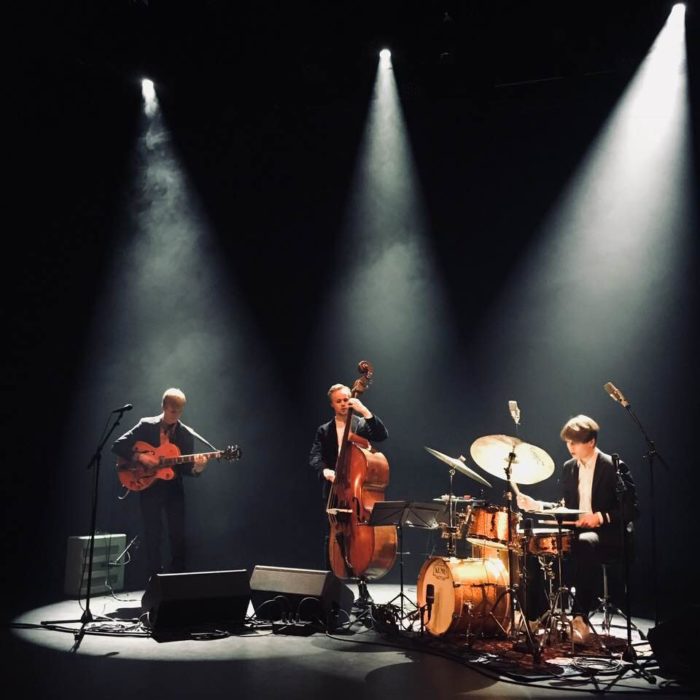
A flood of light and music: Milo Mäkelä (left) and Mooses Kuloniemi (right) team up with bassist Jon Pettersson.Photo: Esa Kuloniemi

They released their debut album, Milo & Moses, in 2015 on vinyl and online only. From the first notes, it’s evident that the music is rooted in the effortlessly flowing jazz of the likes of guitar legend Wes Montgomery – a shared favourite of the two.

Jon Pettersson accompanies them on bass; the trio formation of guitar, drums and bass is deceptively simple, yet extremely demanding musically. The sound is sparse, and the musicians’ interaction and ability to use the space provided is the key. There’s no place to hide; everyone needs to pull their own weight.

Featuring classics by John Coltrane, Weldon Irvine, Wes Montgomery and others, Milo & Moses’s first recording proved that they not only have talent and potential, but also the ability to execute their musical vision. Their music swings, flows and breathes naturally with a maturity beyond their age.

Their second album, 2017’s Among Friends, delighted listeners with original tunes that did not pale in comparison to the cover versions of jazz classics on their debut. In fact, the energy of tracks such as “Je!” and the long-form dynamics of the epic “Headache” showcase yet another level of the band’s capabilities.

No need for genres

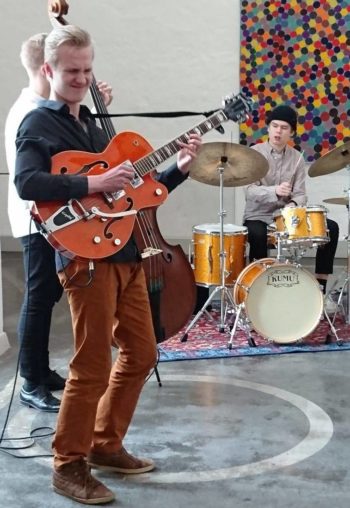
Milo Mäkelä on guitar, Mooses Kuloniemi on drums and Jon Pettersson on bass perform at Kunsthalle Helsinki for the gallery’s 90th anniversary celebration and the opening of “An Everlasting Spring of Colour,” a retrospective of Markku Keränen’s work (one of his paintings is visible behind Kuloniemi).Photo: Esa Kuloniemi

“I met Milo when we were in eighth grade,” Kuloniemi explains. “He had just moved to town and was asking around for anybody interested in playing jazz. It didn’t take long until we were jamming.”

“We started off by playing tracks that we both loved, jazz classics and such,” says Mäkelä. “Actually, at that time I couldn’t play jazz properly yet, but I didn’t want to admit that to Mooses, so I just had to learn. I think we’ve learned to play jazz together, and sometimes when we play, I’m blown away by the fact that we can actually both improvise together in the moment. That’s very rare.”

Given how easy it is to access practically any music in the world online nowadays, it’s no surprise that Mäkelä and Kuloniemi say that they are far from jazz purists.

“My range is wide, from Clean Bandit to Count Basie, and from Tom Waits to Egotrippi,” Mäkelä says. “I also play in a pop group, and I would say that I’m first and foremost a songwriter. In fact, I don’t even like to think in terms of genres.”

Kuloniemi plays together with his mother and father in a blues band called Honey B. Family, and he occasionally sits in with the Jimi Hendrix tribute band Room Full of Hendrix.

Tangible stories

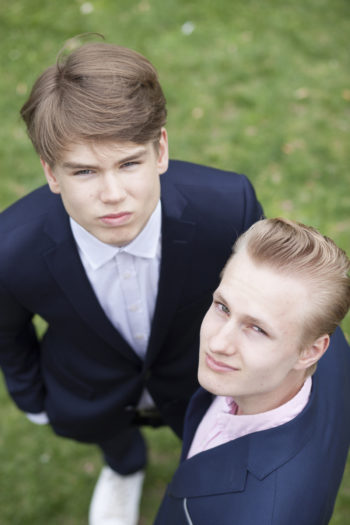
Drummer Mooses Kuloniemi (left) and guitarist Milo Mäkelä are just beginning their jazz journey.Photo: Klaus Elfving

While it’s natural that any jazz musician under 20 is just beginning their journey, Milo & Moses have established themselves as a force to be reckoned with, both on vinyl and on stage.

They successfully hold their own in concert lineups that include prominent jazz veterans, and they can also deliver an entertaining performance when it comes to explaining the background of their compositions to the audience. Their stories have very tangible subjects, and energy usually runs high at a Milo & Moses gig.

“Right now, we just want to play as many gigs as possible and keep practicing a lot,” says Kuloniemi. “The next step is to make new tunes.”

So far, they’ve only played domestic gigs, but at the rate things are developing, don’t be surprised when Milo & Moses start popping up on international festival bills, too.

By Matti Nives, April 2018

Finland’s basic-income experiment stays right on course

An animated video produced by the Social Insurance Institution of Finland (often called by its Finnish abbreviation, Kela) tells you all kinds of interesting stuff about how the country is conducting a basic-income experiment.

Starting on January 1, 2017 and lasting until December 31, 2018, the trial yields results that will be assessed in 2019, after the planned end of the experiment. While it may not continue, the basic-income experiment contributes knowledge and a set of data that will inform future conversations on the topic – and future experiments or other follow-up steps.

The rationale of the basic income experiment
Video: Social Insurance Institution of Finland

By ThisisFINLAND staff, April 2018

Mayday, mayday: Things get crazy in Finland around May 1

Known as Vappu in Finnish and Valborg in Swedish (also an official language in Finland), the May 1 Labour Day holiday actually gets going on April 30. And it can get pretty crazy.

For most people, May Day no longer has much to do with its origins, which are about honouring workers. It’s more like somebody transplanted New Year’s celebrations four months forward, linking them to the spring season so people could party outdoors. The weather might even be warm.

In case you’re wondering why everyone is walking around with a white hat on, those are Finnish high-school graduation caps, and it’s a May Day tradition. Perhaps unsurprisingly, university students lead the charge when it comes to Vappu partying, with those from polytechnic institutes at the vanguard.

Happy First of May! Hauskaa Vappua! Klara Vappen!
Video: Finland 100

By Peter Marten, April 2018

Spring is sweet in Finland: funnel cakes, doughnuts and mead for May Day

Every year on April 30 and May 1, people in Finland gravitate towards holiday-appropriate fried pastries and sparkly drinks.

May Day is known as Vappu in Finnish and Valborg in Swedish, which is also an official language of Finland. May 1 is Labour Day in honour of workers, but for generations Vappu has also been celebrated as a two-day outpouring of festive emotions to mark the arrival of spring. A number of classic foods and drinks are associated with the holiday. [See also: our May Day brunch recipe article.]

The fun of golden funnel cakes

Vappu is a time for traditional pastries, balloons, decorations and bubbly beverages. Photo: Ossi Lehtonen/Lehtikuva

Finnish May Day funnel cakes are called tippaleipä (literally “drip bread”). You make them by pouring batter through a funnel or pastry bag and frying it in hot oil. The result is a fist-sized knot of crunchy, golden brown pastry which is customarily sprinkled with powdered sugar.

Every Finnish grocery store carries funnel cakes beginning in mid-April. Some bakeries are proud of their long history of making them: bakery and chocolatier Fazer boasts about having used the same recipe since the 1960s.

Many Finns prefer to make their own instead of buying the packaged variety. Purists will of course tell you that warm, fresh tippaleipä is the best kind.

Sugar-coated life

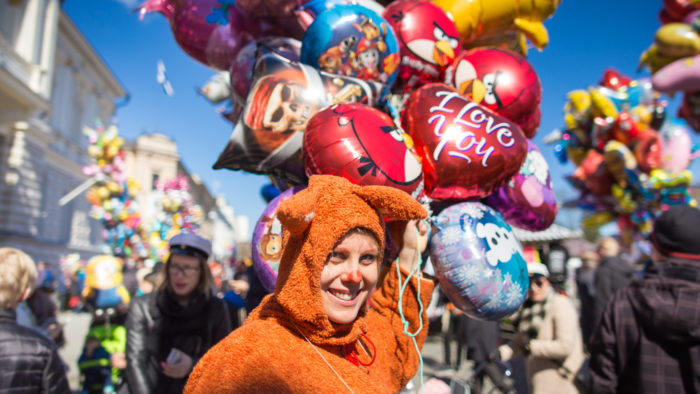
Festive atmosphere: On Vappu, you might meet a bear selling balloons downtown in the southern central Finnish city of Tampere.Photo: Laura Vanzo/Visit Tampere

Doughnuts are another fried food customarily consumed on May Day. The Finnish version is called munkki. The word means “monk,” and legend has it that the name refers to the similarly brown colour of monastic robes or the round shape of the monks themselves, or both. A munkki is slightly more substantial than the product you’d typically find in a North American doughnut shop.

Many varieties exist, both yeast doughnuts and cake doughnuts, sometimes filled with jam or covered in sweet icing. However, the time-honoured May Day munkki is a hearty yeast doughnut rolled in sugar right after frying.

Grocery stores sell doughnuts and smaller doughnut “holes,” but many Finns make them at home. A common practice is to make doughnuts on the morning of May Day so you can bring them with you to an afternoon picnic.

Mead is an ancient alcoholic beverage created by fermenting honey with water. Finland has its own unique May Day variety called sima. The modern Finnish version generally has very low alcohol content and is made with sugar instead of honey.

A dozen commercial varieties appear in shops at the same time as boxes of tippaleipä hit the shelves, but all sima has similar characteristics. It’s always golden or light brown, and bubbly from yeast fermentation. The taste contains a hint of lemon and raisins. Old-school versions are unfiltered and slightly cloudy from the yeast.

Usually a sparkling day for a picnic

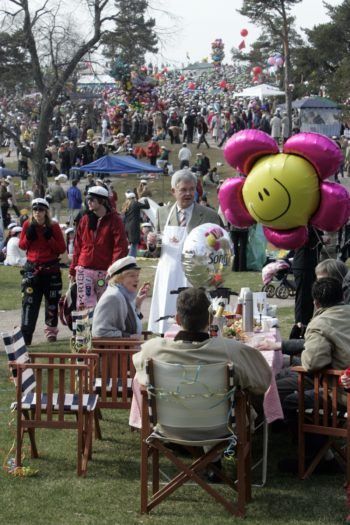
Some May Day picnickers go to great lengths, bringing furniture and white tablecloths to the park.Photo: Jussi Nukari/Lehtikuva

The raisins are particularly important if you make your own sima, because as the yeast ferments, tiny bubbles cling to the raisins in the bottle. When the raisins float to the top, you know the sima is ready to drink.

And lest we be accused of neglecting to mention the obvious: champagne and other sparkling wines also enjoy great popularity on Vappu.

May Day is characterised by picnics as long as it isn’t raining or snowing – although a significant proportion of committed partyers proceeds to picnic no matter what the weather. And yes, some years do witness snow flurries on May 1, although we can remember many sunny May Days, as well.

Finns take typical picnic food: meatballs, hotdogs, potato salad, pickled herring and new potatoes. Sometimes they even cook sausages on portable grills in the park. It is not uncommon for people to go to great lengths to make it a special occasion, such as setting up tarps and tables with white tablecloths in Kaivopuisto, Helsinki’s waterside park.

Despite the variety of food people serve at May Day picnics, from snacks to fine cuisine, the holiday wouldn’t seem complete without the classics: funnel cakes, doughnuts and mead. If you feel adventurous in the kitchen, you can celebrate your own Finnish May Day no matter where you are in the world.

By David J. Cord, April 2018, updated April 2022

Finland’s Isac Elliot: 17-year-old music veteran

“I have to say that the pop scene must be the hardest one out there,” Isac Elliot says.

He is a pop star with more than a million monthly listeners on Spotify. Already a veteran in music business, he’s still only 17 at the time of writing.

“I was 12 and my dad was working as a teacher, and all of a sudden we found ourselves sitting in a car surrounded by fans shouting and banging on the windows,” he says. “Everything was completely new.”

In his own opinion, he has already taken the difficult step from a teen pop star into something more mature.

In Finland, Elliot gained loads of new fame in 2017 when he released an EP with local rap star Mikael Gabriel, sung in Finnish. Two of that EP’s songs are still among Elliot’s most popular songs on Spotify, beating all but one tune from Elliot’s latest album, Faith, released in December 2017.

Finland’s inventory of the intangible: music, circus, cuisine and everything in between

Finland recently compiled a National Inventory of Living Heritage. While sauna, Santa Claus and Finnish tango seem obvious to everyone who has had any contact with Finland, other entries on the list are probably less familiar.

Finnish circus culture and the Kaustinen folk fiddling style are among the heritage elements included (Kaustinen is a town about 450 kilometres (280 miles) north of Helsinki). The Finnish Ministry of Education and Culture selects from the inventory when making nominations for inclusion in Unesco’s Intangible Cultural Heritage listings.

The inventory was compiled in an unusual way that garnered a lot of positive feedback. It kicked off when the Finnish Heritage Agency invited some of the key players from various fields to create informal panels of experts.

“It was fantastic to see the inclusive approach that was adopted for this process,” says Johanna Mäkelä, communications officer at CircusInfo Finland. The Finnish Heritage Agency opened a wiki platform where anyone could make a suggestion for inclusion in the list. The wiki has received more than 130 submissions in five different languages; 52 of them progressed to the National Inventory.

“Like intangible culture itself, which lives in interaction between people, the platform allowed involvement on all levels,” says Mäkelä. “This led to the decision-making happening horizontally, as opposed to the more common top-down scenario.”

All-inclusive in all sorts of ways

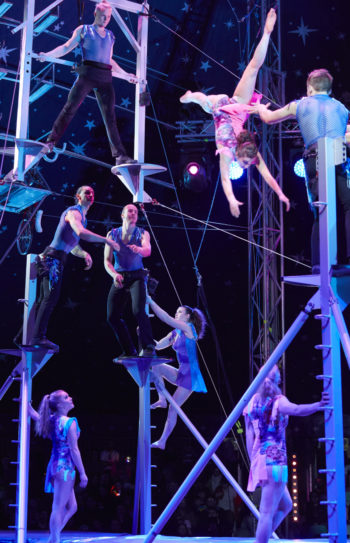
Artic Ensemble performs “Korean Cradle” as part of Sirkus Finlandia in 2018. Photo: Jukka Nuutinen

A strong sense of communality also runs deep in Finnish circus culture. All practitioners, from amateurs to professionals, learn the necessity of trusting and supporting each other; it’s an integral part of circus activities.

“Finland has a strong youth circus culture where social inclusion plays a key role,” says Mäkelä. “Lessons are available for all age groups, and have also been used as a means of social integration with specific groups of people, such as immigrants.”

The whole process of seeking and gaining a place in the inventory has strengthened cooperation between circus groups nationally. “CircusInfo Finland, Sirkus Finlandia and Arts Promotion Centre Finland [known by its Finnish abbreviation, Taike] invited all representatives of the field to join in the talks,” says Mäkelä. “The process has brought the different circus practitioners closer together, which is wonderful, and beneficial to all.”

Similar elements are visible in the culture of the Kaustinen folk fiddling style, in which playing music is a communal event that unites the whole village.

A collective effort is necessary to get a heritage element onto the list, whether it is circus culture, a musical style or any of the other entries that currently make up the inventory, including everything from lace making to glassblowing, and from the Finnish connection with the forest to the unflatteringly expressed “stinginess of the people in Laihia.”

Many of the inventory’s elements receive coverage elsewhere on this website: sauna bathing; the declaration of Christmas Peace; the national poet Runeberg; the tradition of visiting cemeteries on Christmas Eve; the resurgent lawn game known as mölkky; Everyman’s Right, which lets everyone share the land; the Finnishness of Santa Claus; Finnish tango; and wild food foraging, to name a few.

From weddings to festivals

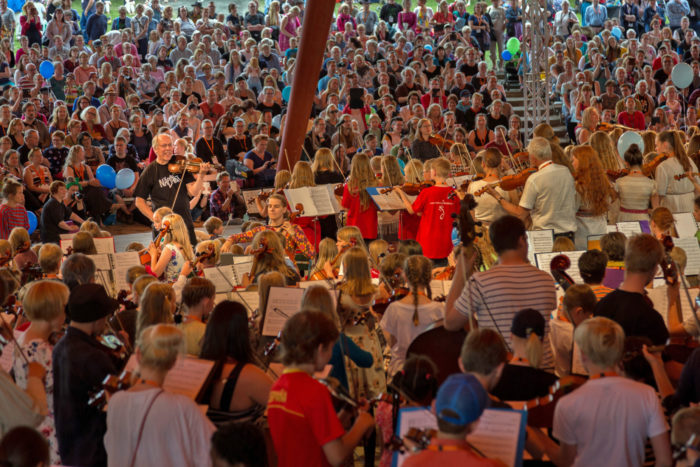
At the Kaustinen Folk Music Festival, fiddler and music educator Mauno Järvelä (middle left) and other teachers lead several hundred children in front of a large audience at the main outdoor stage.Photo: Risto Savolainen/Kaustinen Folk Music Festival

While Finnish circus culture is relatively young, Kaustinen folk fiddling style goes back a long way.

“The tradition stems from the centuries-old pelimanni [folk-musician] culture, so it provides a unique window on the musical culture of 18th-century Finland,” says Matti Hakamäki, director of the Finnish Folk Music Institute, headquartered in Kaustinen.

The local folk fiddling style has successfully managed to balance between history and modernity, and has survived thanks to a number of dedicated individuals. Kaustinen Folk Music Festival, an annual summer event celebrating the local music culture and other folk music and dance, has been running since 1968. According to Hakamäki, it was a great success right from the start, and hosts approximately 5,000 performers from all over the world every year.

“Before the festival, a strong regional tradition existed of pelimanni musicians entertaining guests at weddings that would last for days,” Hakamäki says. “Due to changes in societal structure, the tradition started to wane during the ’60s. In order to preserve the culture, they came up with the idea of building a festival around it. Today, the Kaustinen folk fiddling style is as alive as ever.”

He says that the area’s music is not reserved solely for celebrations. “It is also a fundamental part of local people’s everyday life. They say that there’s a violin in every household in Kaustinen.”

Cultural heritage, live onstage

Mauno Järvelä gives the thumbs-up sign before the Näppärit kids perform at the festival in Kaustinen, showing that a centuries-old musical culture continues in a modern context.Photo: Kaustinen Folk Music Festival

The National Inventory of Living Heritage also includes kalakukko, a traditional fish pasty of the Savo region; the oral tradition of Finnish Roma singing; and the distinctive woollen sweater design that originates in the west coast town of Korsnäs. Many examples of cultural heritage are associated with a particular locality.

“Since Kaustinen was such a remote place in the past, its musical culture has been developing at its own pace, brewing slowly with few influences from outside,” says Mauno Järvelä, an esteemed fiddler and teacher who started Näppärit, a Finnish musical education philosophy based on traditional music. Every year hundreds of children participate in Näppärit workshops and in a concert at the Kaustinen Folk Music Festival, helping ensure the future of the music.

“What makes the Kaustinen folk fiddling style unique is the rhythm, where the latter part of the beat is emphasised,” says Järvelä. “There’s no clear pattern, but the music just swings. As one fiddler described it, ‘Like the whirl of the rapids, it just carries you.’”

The same goes for many of the elements in the National Inventory of Living Heritage.

By Mari Storpellinen, April 2018