Finnish design company Iittala celebrates 140 years of creating a world in glass

The Design Museum in Helsinki commemorates the 140th anniversary of the renowned Finnish glassware brand and its legacy with Iittala Kaleidoscope: From Nature to Culture. The exhibition offers a chance to check out the company’s creative universe and its position in the design world.

“In the early years of modernism, pioneers of Finnish design such as Aino and Alvar Aalto and Kaj Franck set the foundation for Iittala’s design philosophy: to push boundaries and give people beauty and function,” said Carolina Bade, business director at Iittala, at a press event in spring 2021.

The show at the Design Museum continues until September 19, 2021. For Finnish design fans who are reading this after the fact or who are not able to travel to Helsinki, there are links to online material in the box at the end of this article.

Curatorial storytelling

Seven glasses are arranged on a table

In 1932, Aino Aalto (1894–1949) designed a glass that won the gold medal at the 1936 Milan Triennial. With step-like layers reminiscent of water ripples, this quintessential Finnish design item is still in production and bears her name. Photo: Iittala

The title of the exhibition, Iittala Kaleidoscope: From Nature to Culture, refers to the dialogue between Finnish ecosystems and their surrounding social and cultural context. The Design Museum displays glassware objects alongside paintings, raw chunks of glass, original artist sketches and other items that help to tell the Iittala story.

The comprehensive exhibition draws on the museum’s extensive collection of over 10,000 Iittala products. Curators Florencia Colombo and Ville Kokkonen chart the history of Iittala since its debut in 1881, guiding viewers through Iittala’s epochs: its origins in the 19th century; its self-proclaimed “crystal age” in the 1920s and ’30s; its mid-century Nordic functionalism and modernism; and its contemporary creativity.

As a brand, Iittala has come to embody Finnishness, much like Marimekko textiles, Fazer chocolate or the Moomin characters by author and artist Tove Jansson. Minimalism, functionality and proximity to nature give Iittala its legacy within Nordic design.

Classic pieces are on view throughout the exhibition, including works by pioneering 20th-century Finnish glass designers such as Timo Sarpaneva, Kaj Franck, Aino Aalto and Oiva Toikka. Interspersed with these objects are glass colour samples, original product-design sketches and wooden moulds. These behind-the-scenes elements provide a glimpse into the creative and logistical processes, almost as if you were stepping into a designer’s atelier.

A fourth state of matter
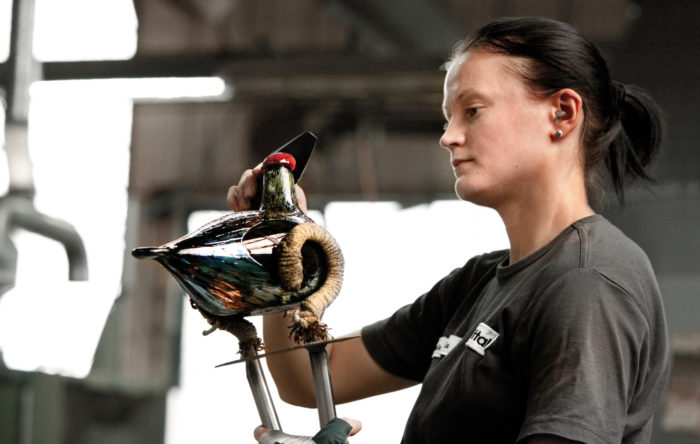
A woman is polishing a glass bird.

At an Iittala workshop, a glassblower puts the finishing touches on a bird that fans will recognise as one of more than 400 designed by Oiva Toikka (1931–2019). Photo: Timo Junttila/Iittala/Fiskars

Art from other genres provides additional context about the Finnish cultural scene and its relationship to the natural world: an 1899–1900 copy of the score to Finlandia by composer Jean Sibelius, for example, and the 1973 Lennart Segerstråle painting The Destruction of the Environment.

The curators say in the exhibition literature that “glassblowing is a form of embodied know-how that cannot be learned by observation or instruction alone.” The artist must have technical mastery over the glass, but must also have a feeling for the medium.

Glass’s fluidity and unique qualities mean that it is sometimes considered a fourth state of matter, and it is challenging to manipulate. Highly controlled movements and a knowledge of the ways that glass interacts with different materials at different temperatures are essential skills. Many artists have a distinguishable style, which may be visible in the thickness of the glass or even the amount of glass in the corner of an item.

While preparing the exhibition, the curators visited the Iittala Glass Factory multiple times. “It is quite sublime to visit the glassblowers in action,” Colombo said at the press event, adding that many of the designers they met shared “personal stories of their relationships with Iittala.” Once you start recognising Iittala’s signature pieces, you may notice them in many Finnish homes – they’re familiar mainstays and are often passed from generation to generation.

A house of glass
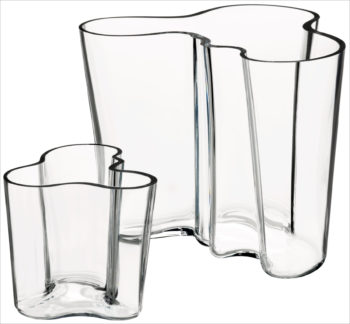
Two similar glass vases, one large and one small.

To make an Aalto vase, one of the signature products of Iittala and of Finnish design, you need half a dozen expert glassblowers and a ten-hour, 12-phase work process. The vase was designed by Alvar Aalto (1898–1976). Photo: Timo Junttila/Iittala/Fiskars

One of the Design Museum displays features other iconic Finnish household items, including orange-handled 1967 Fiskars scissors, a 1956 Marimekko shirt and Hackman’s Savonia cutlery, designed in the 1960s (Hackman and Iittala have been part of the Fiskars Group since the late 2000s). Exhibition visitors see how staple household objects connect to a larger narrative of Finnish cultural history. Iittala forms a part of this picture; Nordic functionalism of the 1930s influenced the company’s subsequent design and production.

Iittala has also been active in training glassblowers, right up to the present day. They launched their most recent course, an industrial glass production programme, in 2021. A collaboration between Iittala Glass Factory and nearby Tavastia Vocational College, the course takes two to three years and aims to introduce the next generation of master glassblowers to the craft.

It’s a highly nuanced profession. Making an Aalto vase, perhaps Iittala’s most famous item, requires a team of six or seven glassblowers, employs a 12-phase work process and lasts ten hours. It takes a glassblower five years of work experience to develop the necessary skills to participate in creating this flagship product.

Finding Iittala in the art world

Homes across Finland and around the globe contain items by Iittala designers, and so do museums all over the world. These include MoMA in New York, the British Museum in London, the Musée des Arts Décoratifs in Paris, Gallery A4 in Tokyo, the Museum of Contemporary Art in Chicago and MOCA in Los Angeles.

Iittala Kaleidoscope: From Nature to Culture at Helsinki’s Design Museum is open for in-person visits until September 19, 2021, with periodic guided online tours via their Facebook account. Maybe you’re reading this after the fact, or maybe you couldn’t visit because of coronavirus-related restrictions. In that case, check out the wealth of material the Design Museum has online, including photos, the curators’ short introduction to the exhibition, and a longer curator-narrated video tour.

For hardcore fans of Finnish glass, Iittala has online tours of its factory and its own collection of classic Iittala items.

By Emma De Carvalho, August 2021
Summer in the city: An open-air pool beckons in the heart of Helsinki

Every year it happens all over again, typically on the second Sunday in May. At 4 am, people are already lining up at the entrance. After more than six months, you can finally use the 50-metre (55-yard) outdoor pool again, not to mention the sauna.

Helsinki Swimming Stadium’s faithful customers are eager to be among the first to jump into the water.

Located near the centre of Helsinki, the pool is open from early May to mid-September. The pool is open every day from early morning to late evening, except for adjusted opening hours on Midsummer Eve and Midsummer Day.

All-weather attraction

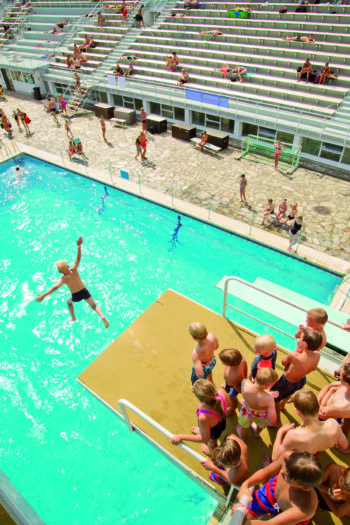
Children wait their turn on the 10-metre diving platform while one child leaps into the pool.

In sunny weather, a line forms for the diving tower. You can jump from platforms or springboards at five different heights. Photo: Lauri Rotko/City of Helsinki

Many people go to the Swimming Stadium to spend a summer day in a beautiful location where the clear water, green lawn and leafy trees create a refreshing haven in the heart of the city. A modest admission fee gives you unlimited access to the swimming pool, gym, sauna, deckchairs and waterslide.

Visitors come even when the weather is cool or rainy – the large pool is heated to 27 degrees Celsius (80 Fahrenheit), and the children’s pool is even warmer. After swimming, you can have a sauna. There are two; one is moderately hot and the other is much hotter.

At 2.5 kilometres (1.5 miles) from Helsinki Central Railway Station, the Swimming Stadium is within easy reach on foot or by tram. You can also opt for a city bike, purchasing a daily, weekly or seasonal pass – there are bike stations all over the city, including one near the pool.

More than just a pool

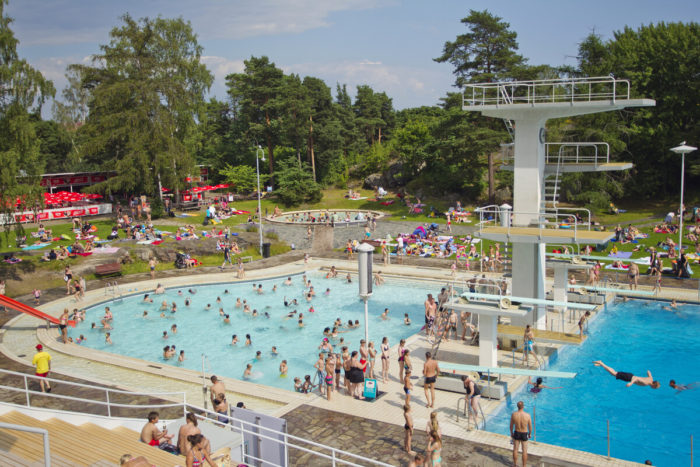
An outdoor pool with a diving area and a children’s area, with trees in the background.

The water in the large pool is kept at 27 degrees Celsius (80 Fahrenheit), so you can come in any weather. There are different pools for adults and children, and even a wading pool for small kids.
Photo: Lauri Rotko/City of Helsinki

The Swimming Stadium forms a venue for aquatic sports and more. There’s a sports field, an indoor gym, a table-tennis table, two beach volleyball courts, a basketball court and a waterslide. Don’t forget the café and the ice cream stand.

The main attraction, of course, is the 50-metre swimming pool, with separate lanes for swimmers of different skill levels and a wide lane for aqua jogging. Facilities also include a children’s pool, a wading pool and a diving pool with springboards at 1 and 3 metres (3 and 10 feet) and platforms at 5, 7.5 and 10 metres (16, 24 and 32 feet). Aqua jogging vests and various other accessories are available free of charge.

The pool also hosts water aerobics and swimming lessons for adults and children, and water polo teams practice there. In the spring and fall, Helsinki schools hold physical education classes in the Swimming Stadium. Now and then, triathlon competitions and theatre performances are held there.

The loudspeakers usually play the radio, sometimes interrupted by service announcements in four languages: Finnish and Swedish, which are official languages in Finland, as well as English and Russian.

Helsinki supports sports

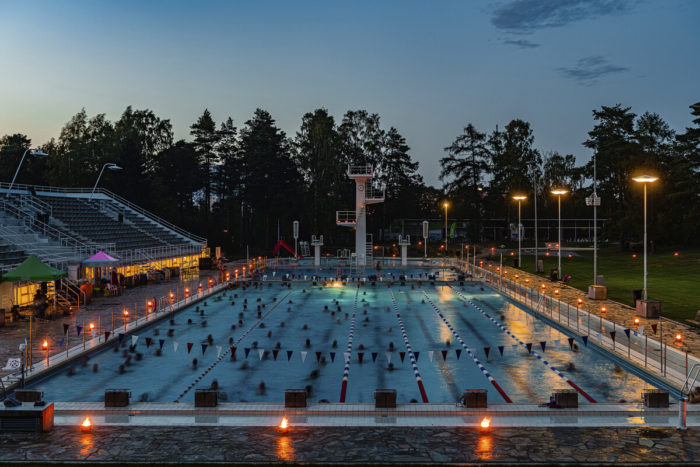
An outdoor pool lit by candles and lanterns at dusk, with trees in the background.

During the last weekend of the swimming season, the Swimming Stadium hosts a moonlight swim with live music and lanterns and stays open until late at night.Photo: City of Helsinki

Admission to the Swimming Stadium costs just a few euros, much less than a private pool or waterpark. For current prices, visit the Swimming Stadium website. Children from 7 to 17 years old, students, unemployed persons, pensioners and people with disabilities receive a discount, and entrance is free for kids under seven.

The entrance fee covers only a small portion of the operating costs. The City of Helsinki covers the rest, seeing it as a way to promote a healthy lifestyle. Other municipal sports organisations, including indoor pools and gyms, are funded in the same way, as is the city bike programme.

Other Finnish cities, such as Espoo, Turku, Tampere and Porvoo, have similar open-air swimming pools. The Olympic-size pool in Lahti, 100 kilometres (60 miles) north of Helsinki, may boast the oddest location – it’s at the bottom of a ski jump.

June and July are the time of white nights in Helsinki, when the sun sets but the sky doesn’t get completely dark. By late summer, dusk falls earlier in the evening, and the outdoor pool season ends in mid-September. On the last Friday of the season, they hold a moonlight swim, keeping the pool open almost until midnight, with lanterns and live music. Visitors say goodbye to their summer oasis until next year and switch to indoor pools.

A jewel of Finnish functionalist architecture

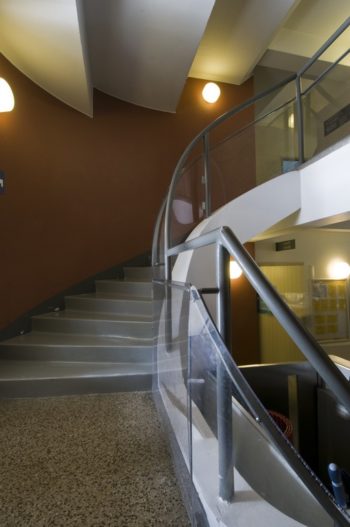
An interior staircase.

Finnish architect Jorma Järvi designed Helsinki Swimming Stadium for the 1940 Olympic Games, which were cancelled because of the war. Functionalism is visible in the details, such as this staircase.Photo: Kari Hakli/Helsinki City Museum

Helsinki is home to many swimming pools, including four outdoor pools in the metropolitan area. The most popular and iconic one is Helsinki Swimming Stadium. Architect Jorma Järvi designed it for the 1940 Olympic Games, which were cancelled because of the Second World War. During the war, people used the pool basins to store root vegetables and herring.

The venue was completed in 1947 and Helsinki hosted the Summer Olympics in 1952. A special set of stands nicknamed the sun stands was built for the Olympics. Today, visitors can spread out their towels there for sunbathing.

The creators of the sports complex paid a lot of attention to detail. The functionalist style of the time is visible in the light fixtures, staircases and loudspeakers. Historical photos decorate the doors of the spacious locker rooms.

Next to the Swimming Stadium is another prominent example of functionalism, Helsinki Olympic Stadium, renovated in 2020. It houses a café, a new sports museum and a tower that offers a view over the entire city.

By Anna Ruohonen, July 2021

Art in the archipelago: Helsinki Biennial reflects global concerns

There’s something foreboding about Finnish artist Jaakko Niemelä’s Quay 6.

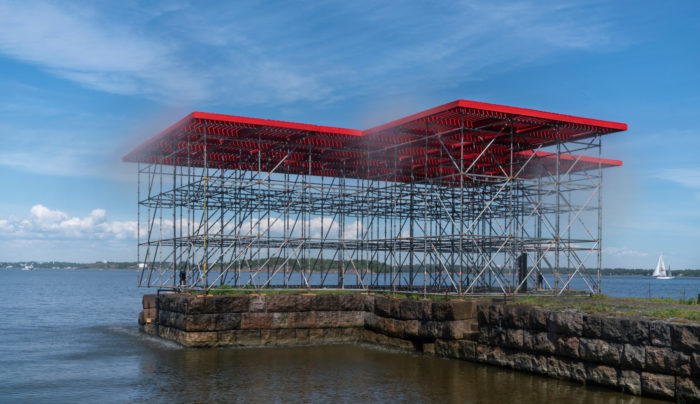
The scaffolding installation greets Helsinki Biennial visitors as they arrive by ferry from the city centre and disembark on the island of Vallisaari. Seen from the sea, with water dripping down its sides, the wooden structure is impressive and disquieting in equal measure.

Quay 6 is one of the works in the first edition of the Helsinki Biennial art festival, subtitled “The Same Sea.” Niemelä has long been interested in the impact of climate change on the archipelago, and Quay 6 offers a striking visual representation of an all-too-possible future: the structure is six metres tall (19 feet 8 inches), roughly the amount by which global sea levels would rise if Greenland’s northern ice sheet were to melt.

An unnatural colour

A structure made of metal scaffolding stands on a quay by the sea.

If Greenland’s northern ice sheet melts, global sea levels are predicted to rise six metres (19 feet 8 inches), to the level marked by the top of Jaakko Niemelä’s installation Quay 6. Photo: Maija Toivanen/Helsinki Art Museum/Helsinki Biennial 2021

“When I heard that one of the biennial’s themes is the sea we share, I was delighted,” says Niemelä. “I’m the son of a sailor, so the sea is very important to me.” Quay 6 would collapse if just one part of the structure were removed – a nod to the festival’s theme of interdependence – but it is also, quite simply, a warning.

“That’s why I chose to paint the top red,” explains Niemelä. “Red is not a natural colour. It shouldn’t be here.”

After a one-year postponement because of the Covid-19 pandemic, the first Helsinki Biennial commenced in June 2021, lasting until September 26. (ThisisFINLAND has covered it from the start).

Outdoor commissions

Multicoloured swatches of bright paint cover a small wooden building.

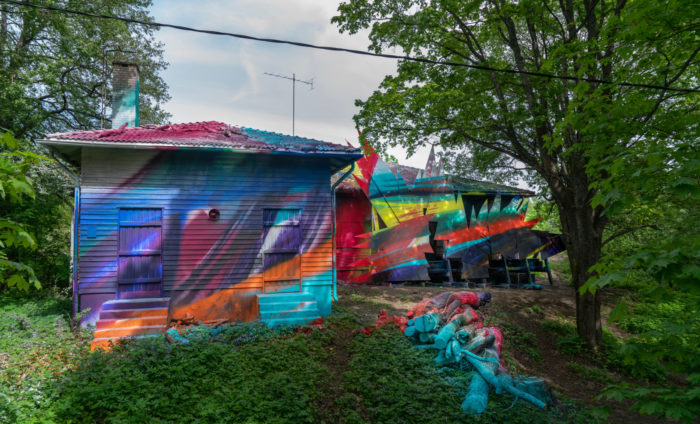
A painting “can land anywhere,” says Katharina Grosse. In this case, her colours have found a disused schoolhouse slated for demolition after the biennial is over. Photo: Maija Toivanen/Helsinki Art Museum/Helsinki Biennial 2021

Vallisaari has a history as a military outpost going back to at least the 1700s; it has been open to the public since 2016. The biennial displays pieces by 41 artists from Finland and around the world. The artworks, 75 percent of which are new commissions, reflect on themes of interconnectedness and mutual dependence whilst also engaging with Vallisaari’s past.

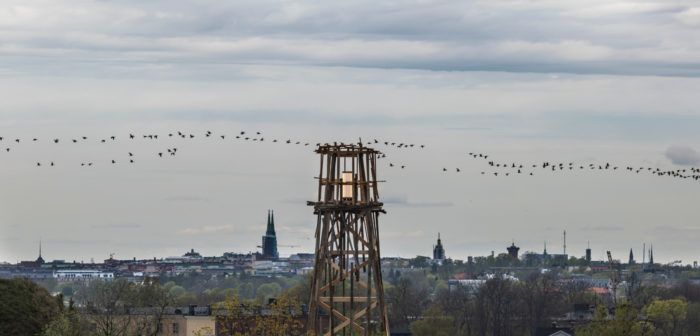
Outdoor commissions incorporate the island’s natural environment. These include an immersive sound installation in the shade of ancient linden trees, by Janet Cardiff and George Bures Miller; Katharina Grosse’s colourful painting that sweeps across an old schoolhouse and its surrounding vegetation; and Tadashi Kawamata’s lighthouse structure, made from waste material found on Vallisaari and visible from Suomenlinna, a nearby island fortress that is one of the Finnish capital’s landmark tourist sites.

The voices of the foremothers

The festival also features a range of artworks inside Vallisaari’s historical buildings and gunpowder storage areas. One is an installation by Sámi artist Outi Pieski – the Sámi are the indigenous people whose homeland is divided into four parts by the borders of Finland, Sweden, Norway and Russia. Her piece Guhte gullá / Here to hear projects video footage onto the walls of a cave-like chamber. In it, Birit and Katja Haarla dance to electronic music and Sámi yoik vocals.

“Young people dance to escape the angst of world destruction, summoning the aid of the forgotten Sámi earth deities Uksáhkká, Juoksáhkká and Sáráhkká,” says the exhibition description. The installation attempts to raise awareness: “Women of different generations listen to the voices of their foremothers through dance and duodji, traditional Sámi handicrafts.”

Camouflage climates

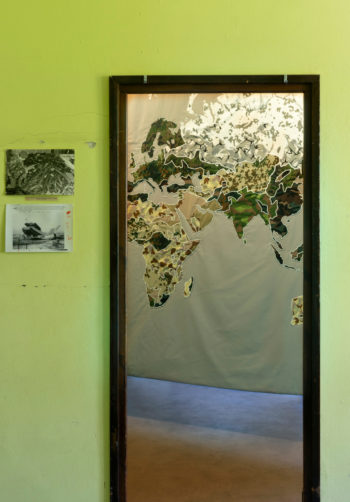
A map made of pieces of fabric hangs in a frame on a wall.

In Carbon as a Political Molecule, Baran Caginli pieces together a map using camouflage patterns from around the world. Photo: Maija Toivanen/Helsinki Art Museum/Helsinki Biennial 2021

Inside Vallisaari’s former military headquarters is Helsinki-based Turkish artist Baran Caginli’s Carbon as a Political Molecule, a world map patched together from camouflage used by armies around the world. “Armies design camouflage patterns to match their local climates,” says Caginli, “so I covered each country in its own military pattern.”

Caginli’s work comments on environmental disasters caused by war, and on the arms industry as an instrument of capitalism. “This is a former military island,” Caginli says. “The top of the island is still closed to the public. In my work, I’m trying to make a point about the extent to which the military plays a role in environmental destruction.” On Vallisaari itself, a series of ammunition-depot explosions in 1937 killed 12 people; this is one reason that land use is still restricted in parts of the island.

Because of the pandemic, many of the biennial’s artworks are also viewable online, including Becoming, a video work by writer Laura Gustafsson and artist Terike Haapoja. Placing three screens side by side, they talk with activists, thinkers, artists, caregivers and children in Finland and the US about “new, healthier ways of interacting with other people and lifeforms.”

New views

A tower built out of boards is in the foreground and Helsinki’s skyline is in the background.

Geese fly past Tadashi Kawamata’s temporary landmark, Vallisaari Lighthouse, made from material found on the island. Helsinki is visible in the distance, including the towers of Saint John’s Church, to the left of the lighthouse. Photo: Maija Toivanen/Helsinki Art Museum/Helsinki Biennial 2021

According to curator Pirkko Siitari, postponing the biennial from 2020 to 2021 only strengthened the relevance of its theme. “Now more than ever, we understand that we have a very problematic relationship with nature,” she says. “It’s clearer than ever before that everything is interconnected.”

The majority of the biennial’s art is on display only until the event closes in autumn 2021, although sculptures by Alicja Kwade and Laura Könönen will be relocated to the Helsinki neighbourhoods of Kalasatama and Jätkäsaari, respectively, for permanent display.

After more time than ever spent at home during Covid-19 lockdowns, the biennial offers visitors a welcome opportunity to get out and reflect on what togetherness really means, all while interacting with contemporary art in Helsinki’s stunning archipelago. If you can’t make it to Helsinki for reasons of geography or corona restrictions, the biennial’s artists and artworks may still inspire you online.

By Tabatha Leggett, July 2021

Finnish volunteers make a dent in Baltic Sea plastic pollution

“The beach is my living room, the sea my television.” This is the informal slogan Inkeri Pekkanen uses to describe her admirable leisure-time pastime of beach cleaning along the shore of her hometown of Hanko, on the southernmost tip of the Finnish mainland.

Located at the tip of a sandy peninsula and graced with magnificent wooden villas, Hanko has some of the prettiest beaches in the country. Pekkanen’s self-proclaimed mission is to maintain the cleanliness of those beaches while spreading the word about the Baltic Sea’s vulnerability and the damage that plastic waste and other litter inflict on the environment.

Raising awareness

Two women kneel behind a group of boxes and containers filled with pieces of plastic trash.

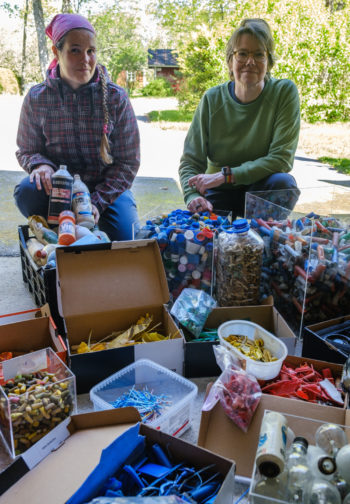
Inkeri Pekkanen (left) and Johanna Sandin display the stunning quantity of plastic trash that they collected on Hanko’s shoreline during just one year. Photo: Tim Bird

Apart from her frequent beach cleaning expeditions on the shores of the mainland and the outlying archipelago, Pekkanen puts her passion into practice by means of a popular Instagram channel, @roskapostia_hangosta, which means “junk mail from Hanko.”

Raising awareness is at the heart of Pekkanen’s approach, and she represents a growing community of beach cleaners around the Baltic and in other maritime regions who are using social media to reveal the variety and quantity of waste that ends up in the world’s waterways.

An unpleasant surprise

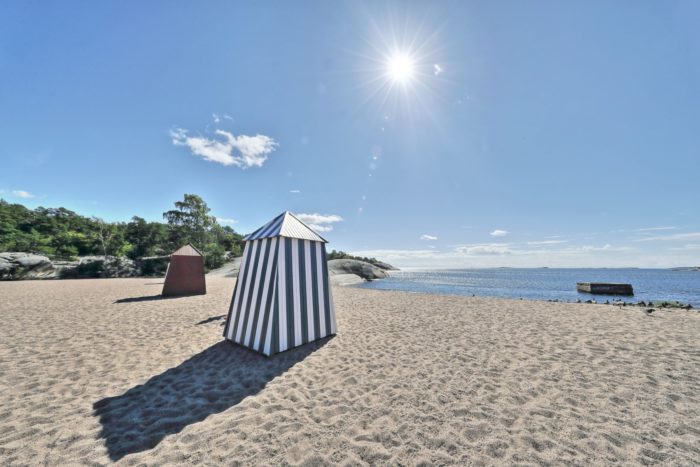
Several decoratively painted wooden huts stand on a sandy beach under a clear, sunny sky.

Hanko’s famous beaches and their old-fashioned changing huts would hardly be idyllic if plastic rubbish covered the sand. Photo: Ismo Pekkarinen/Lehtikuva

Pekkanen’s approach is to inform rather than to preach. “I started doing this when I moved to Hanko in 2014,” she says. “Many people in the town go to the beach almost every day, and I did too. I realised that the sea is bringing trash to the beaches. I also realised there are only a few people cleaning the islands.

“I wanted other people to see what I see. It was such a surprise to me. I wasn’t aware of the issue of plastic waste in the Baltic Sea.”

Her aim of raising awareness has caught the attention of organisations including the WWF and the Finnish Environment Institute. Both are launching cooperation with Pekkanen to inform people about how “nurdles” – the tiny plastic pellets from which plastic items are manufactured – can enter the ecosystem when accidentally or deliberately discarded into the sea. In the water, they also attract and accumulate concentrations of toxic chemicals. Birds and fish can mistake the pellets for food, with dire consequences for themselves, their offspring and other links in the food chain.

Trash stash

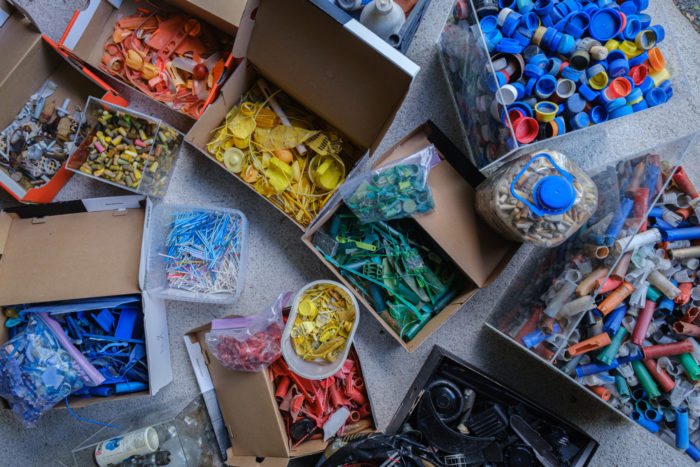
Various boxes hold piles of plastic trash.

Beach cleaners have found everything from bottle tops (upper right) to spent shotgun cartridges (lower right). Photo: Tim Bird

Pekkanen has also been cooperating in her antitrash campaign with her friend, nature photographer Johanna Sandin, whose garage contains piles of boxes of sorted, colour-coded items collected from Hanko’s beaches.

There is a box of 1,700 spent plastic shotgun cartridges, a jar of 536 earplugs, and other containers filled to their brims with cigarette ends, more than 1,000 cotton bud stems, about 11,000 nurdles and 1,000 plastic bottle tops.

A drone and a fragment of someone’s dentures are among the other objects collected. Some of the most alarming are the drugs and medicines, which could otherwise have been found by children or animals.

A sea of images

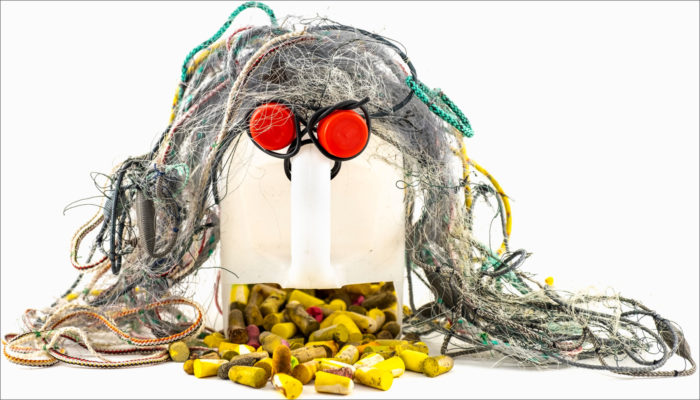
A face made out of plastic trash has grey hair, red eyes and a mouth that is spewing a pile of foam earplugs.

This sculpture by Johanna Sandin is composed of plastic trash collected in Hanko, including fishing net as hair, bottle tops as eyes, and handfuls of foam earplugs as vomit. Photo: Johanna Sandin

“When I was editing my seascape photos I noticed the rubbish on the beaches,” says Sandin, who holds trash awareness workshops for local schoolchildren. “I thought that plastic could be the subject of my next exhibition. I always pick up trash when I’m out, and now I think many people in Hanko do this more than ever. I read about Inkeri in the newspaper and I thought, maybe I don’t have to pick all of it up myself.”

Sandin has made exquisite images with the plastic items found on the beaches, and has produced photographs of that art. She has shown the photos as an exhibition called Washed Ashore at venues that include Sanoma House in Helsinki and the Vellamo Maritime Centre in the southern Finnish city of Kotka. The exhibitions were connected with #OURSEA, a charity campaign run by Moomin Characters Ltd and aimed at helping clean up the Baltic Sea.

Widespread sources

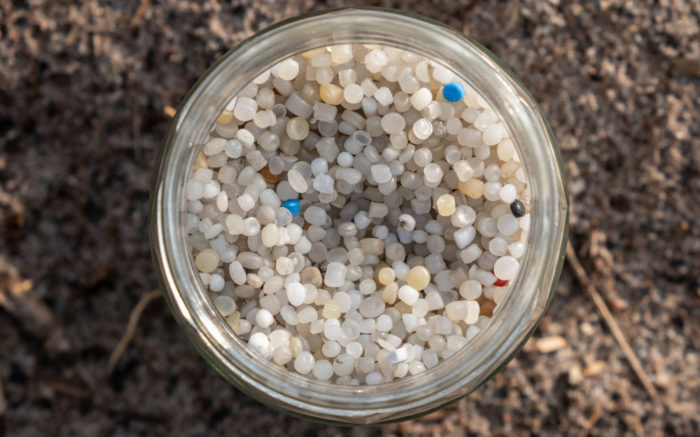
A jar filled with plastic pellets.

“Nurdles” are plastic pellets one to five millimetres (less than 1/4 inch) in diameter, used as material for manufacturing plastic items. They are also a significant form of pollution. Photo: Tim Bird

Pekkanen and Sandin are encouraged by the fact that beach trash is becoming scarcer around Hanko’s shorelines. But they also point out that they would have far more work to do if they were cleaning the shore of a country exposed to a wider ocean, rather than the beaches of the relatively isolated Baltic.

They concede that some trash originates from local sources, such as hunters forgetting to pick up their used cartridges – or choosing not to – or harbour workers discarding their earplugs. However, sources are widespread, due to Hanko’s exposure to prevailing southwest winds, which bring trash from other Baltic regions.

So, apart from disposing of trash properly to begin with, what can we do to contribute to improving the situation? “You don’t have to do what we do,” Pekkanen says. “But just pick up a few items if you are out for a walk. It will give you a good feeling and every little bit helps!”

By Tim Bird, July 2021

Extending your Finnish speech reach: Speaking Finnish like the Finns

I suspect that it was somewhere within the first 20 minutes that I began to lose my grip on the conversation.

I continued to smile politely at appropriate intervals, but I could not comprehend why my partner’s grandfather was speaking about his impending renovations with the type of effusive enthusiasm I usually associate with evangelical ministers.

It was his use of the verb kehua that had me bewildered. It means “to praise” in standard Finnish. Only later did I learn that some speakers in certain corners of Finland use kehua as a colloquial substitute for sanoa (“to say”). So, when I heard, “Se kehui, että remontti alkaa kohta,” I took it to mean, “He praised that the renovation will start soon.” That seemed somewhat overzealous, given the topic, but where the grandfather is from, about halfway up the west coast, it actually just means, “He said that the renovation will start soon.”

Same language, different wardrobe

Two women and two men are playing table football and laughing in a café setting.

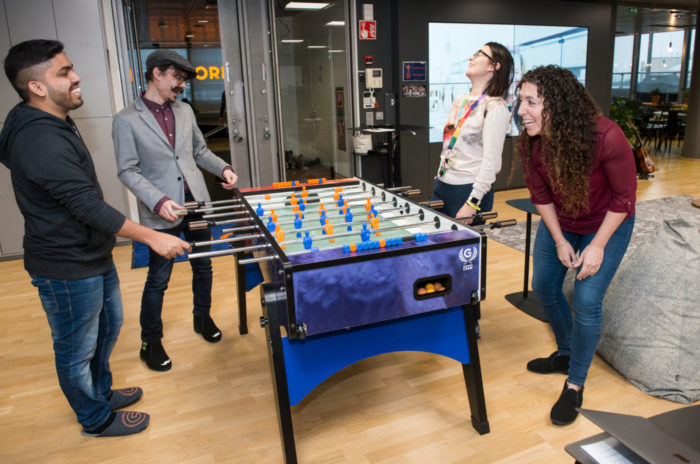
In everyday speech, someone might ask, “Tuutsä mukaan pelaan?” (Would you like to play, too?), instead of the more formal version, “Tuletko sinä mukaan pelaamaan?” The shorter, colloquial forms may seem confusing at first, but you’ll soon get used to them. Photo: Jarno Mela/Finland Image Bank

Coming from Australia, a country whose spoken variety of English will forever be tied to the khaki-clad hero of the movie Crocodile Dundee, I am no stranger to the concept of colloquial language. Even so, I have found puhekieli (colloquial Finnish, literally “speech language”) trickier to master than kirjakieli (standard Finnish, literally “book language”), the more formal standard Finnish that comes neatly presented in my textbook.

Finnish teacher Niina Salmi concedes that some challenges exist, explaining that “words can be totally different” in puhekieli compared to standard Finnish. This is next-level stuff. For example, in casual speech people shorten some of the grammatical forms you worked so hard to learn. Sinulla on (“You have”) becomes sulla on or even sull’ on.

Anni Toikka, who has taught alongside Salmi for the past 11 years, adds that puhekieli is also a living language, meaning that it is in “constant change.” As Toikka says, “new puhekieli words are created every day, whereas older words cease to exist.”

It is little wonder that students have occasionally grumbled to Salmi that kirjakieli and puhekieli “are sometimes like different worlds,” especially once generational differences and a dialect or two or eight are thrown into the mix. Both Salmi and Toikka, however, insist that the underlying structure is the same. As Toikka explains, “if you pay attention to the similarities, you see that they are the same language, just dressed in different clothes. If kirjakieli is Finnish in a suit and tie, then puhekieli is Finnish in sweats.”

Familiar words among friends

Two men and two women sit at a lakeside table and raise their glasses in a toast.

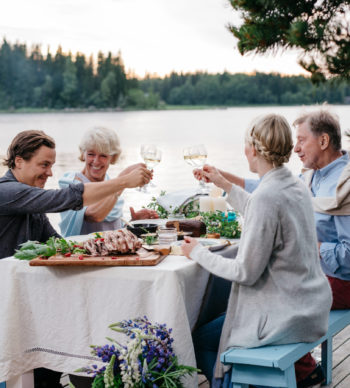
The best way to learn the ins and outs of spoken Finnish is to go beyond your textbook and speak with Finnish people in a relaxed setting. Photo: Elina Manninen/Keksi/Visit Finland

Aside from averting awkward silences with elderly relatives, there is no doubt that learning puhekieli is invaluable. Haruka Ono, who first encountered colloquial Finnish while on a high school exchange from Japan, says, “You’ll notice that people speak puhekieli on the street, in the shops, in restaurants, everywhere. Puhekieli is the language in which daily interaction happens.”

For some language learners, puhekieli makes conversations more natural. Explaining that puhekieli is usually used with friends, Toikka agrees that it “can help create a kind of closeness between people.” Some students also see puhekieli as a mark of achievement. In fact, Liene Bukovska, a student from Latvia, says, “I have been taken more seriously when using puhekieli, because somehow it puts me in the next level of language knowledge.”

So, how do you come to terms with colloquial Finnish? As with anything, motivation is key. But in any case, Toikka suggests that you “jump into puhekieli right away” by listening to music and watching television shows. Kateřina Buchtová of the Czech Republic says she has picked up puhekieli through her favourite TV programme, Pasila, which portrays life at a police station in the Helsinki suburb of the same name (the animated series is called Jefferson Anderson in English).

Active listening

A woman in a colourful blouse holds a microphone and sings.

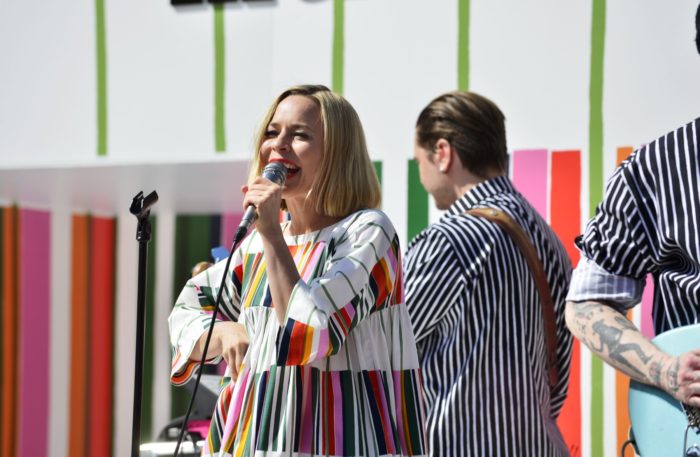
Singer and songwriter Paula Vesala has a song called Muitaki ihmisii, written in colloquial Finnish. The name, which means “other people,” would actually be spelled Muitakin ihmisiä in formal Finnish. Photo: Linda Manner/Lehtikuva

Buchtová also listens to Finnish music, where colloquial words take precedence over their more formal versions. For example, ihmisiä (people) becomes ihmisii. Searching for unfamiliar word forms online can give you a sense of how common they are and how people are using them.

You might also want to check out Oikeeta suomee: Suomen puhekielen sanakirja (Dictionary of Spoken Finnish, published by Gummerus), which includes example sentences in colloquial Finnish and can help bring your Finnish to the next level.

I have become more familiar with puhekieli since switching to my local Yle (Finnish national broadcasting company) radio station and creating playlists from the music I hear. Rodrigo Quintana, from the Basque Country, also points to podcasts and YouTube videos as handy learning tools. Reflecting on his own experience, he says, “Being active in Finnish group chats or forums helped me a lot.”

Be brave

An aerial shot of several buildings surrounded by trees, with a harbour in the background.

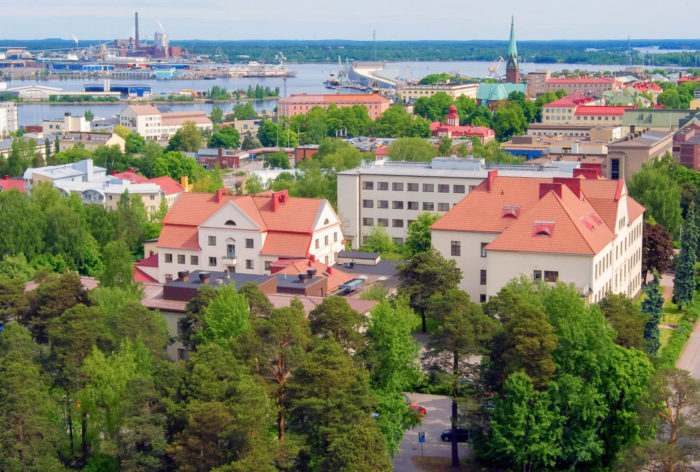
Colloquial Finnish varies across the country. In Helsinki, people shorten the word sinä (you) to , while in the picturesque harbour town of Kotka, just 140 kilometres (85 miles) east of the capital, people say siä. Photo: Pentti Sormunen/Vastavalo/Visit Finland

Both Buchtová and Quintana emphasise, however, that trying to use puhekieli with native Finnish speakers is the best way to learn. So do most language students I have met, in fact. As Rodrigo puts it, “Listen, write and use.”

Toikka agrees, advising learners to “start with the very basics, like turning minä olen [‘I am’] into mä oon, then study some basic spoken language words like telkkari [instead of televisio, ‘television’].” The next thing to do, she says, is “slip them into your speech.”

Like Toikka, Salmi endeavours to introduce her students to puhekieli in the classroom, but says she “can’t highlight enough how important it is to be brave and use the language.” For Salmi, it is always heartening to speak with past students in the same way she would converse with any native Finnish speaker. “That’s kind of a final test of the spoken language: to be able to talk with a Finn and have no problems.”

Spoken Finnish

A random list of expressions compiled by the staff of ThisisFINLAND

Colloquial Finnish (puhekieli) Formal Finnish (kirjakieli) English
En mä tiiä.
(Or even: Emmä tiiä.)
En minä tiedä. I don’t know.
Onks toi sun pyörä? Onko tuo sinun pyöräsi? Is that your bicycle?
Tarviiks kuittii? Tarvitsetko kuittia? Do you need a receipt?
Mitäs kuuluu? Mitä kuuluu? How are you doing?
Paljon se maksaa? Kuinka paljon se maksaa? How much does it cost?
Älä viitti! Älä viitsi! Don’t bother!
(meaning: Cut it out!)
yks, kaks yksi, kaksi one, two
kasi, ysi kahdeksan, yhdeksän eight, nine
kakskytyks kaksikymmentäyksi twenty-one
vähäks aikaa vähäksi aikaa for a little while
hyvii tyyppei hyviä tyyppejä good guys
Mitä oot tehny tänään? Mitä olet tehnyt tänään? What did you do today?
Tuutsä mukaan? Tuletko mukaan? Are you coming along?
Voitsä sanoo mulle, kun oot valmis lähteen? Voitko sinä sanoa minulle, kun olet valmis lähtemään? Can you tell me when you’re ready to go?
Kiitti! Kiitos! Thank you!

By Kathleen Cusack, July 2021

Protein and power out of thin air: Finnish projects capture value in CO2

Humans cause climate change by putting more carbon dioxide into our atmosphere. Some people, organisations and governments are working to stop greenhouse gas emissions. Another parallel and complementary track also exists: the idea of removing excess gases from the air.

Planting trees is one good way to do this. Another way is for people to take CO2 out of the atmosphere and do something useful with it.

“You can do many different things with carbon capture and utilisation,” says Janne Kärki, research team leader at VTT Technical Research Centre of Finland. “Practically anything you can make from oil, you can make from CO2 and hydrogen.”

Putting CO2 to good use

Three wind turbines stand near a shoreline.

Solein and Power-to-X can be carbon neutral processes by using clean energy sources, such as these windmills in Vatunki, northern Finland. Seppo Hyvönen/Lehtikuva

“Here in Finland we have many projects working on capturing and utilising carbon, such as creating fuels and chemicals,” says Kärki. “Luckily Finland has lots of clean water and wind resources, which are good for hydrogen production, as well as industries that are willing to work with other sectors.”

Before describing the seemingly magical creation of food and energy from thin air, it’s worth mentioning a couple other ideas that are also being developed in Finland and could take CO2 out of the atmosphere for a long time.

“Carbon bound into concrete can be sequestered for centuries,” says Kärki. “Another example is the Finnish company Finnfoam. They have developed insulation materials out of captured carbon which could last 70 years.”

However, most ideas are carbon neutral, meaning they neither add nor subtract CO2 from the atmosphere. Carbon neutrality is a major goal in the fight against climate change.

One carbon neutral idea now attracting international attention is that of creating synthetic fuel from CO2; another is that of making food out of CO2.

Two-way currents

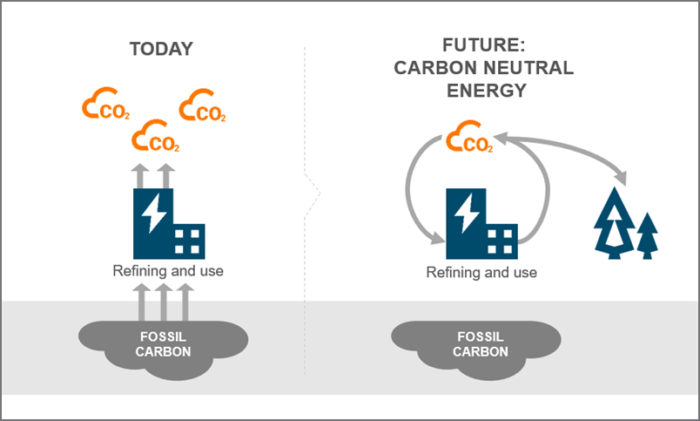
A diagram shows two fuel production scenarios, one of which results in an increase of CO2.

Power-to-X uses CO2 to produce fuel that can take the place of fossil fuels. At left, fossil fuels are extracted and increase CO2 levels. At right is a future scenario in which fossil fuels stay in the ground. Illustration: Wärtsilä

A process known as Power-to-X (also sometimes written “Power2X” or “P2X”) converts power such as excess solar or wind electricity into a form that can be used later – synthetic fuel. You split water – H2O – into hydrogen and oxygen using electrolysis. Next, you combine the hydrogen with carbon dioxide captured from the air or from industrial processes, creating fuel that works in a car, plane or ship. For the fuel to be considered climate friendly, the process uses renewable energy.

Lappeenranta-Lahti University of Technology (LUT), Finnish energy company St1 and Wärtsilä, a Finnish manufacturer of energy-related technologies, published a press release about Power-to-X solutions, noting that they could help Finland achieve its goal of becoming carbon neutral by 2035. The dean of LUT’s school of energy systems, Jarmo Partanen, said, “By recycling atmospheric carbon dioxide, we will reduce the amount of fossil oil pumped out of the ground.”

In this scenario, although fuel is still being burned, it is not fossil fuel. It was produced in a carbon neutral manner, while oil deposits in the ground stay where they are. This is a step in the right direction.

Growing a protein powder

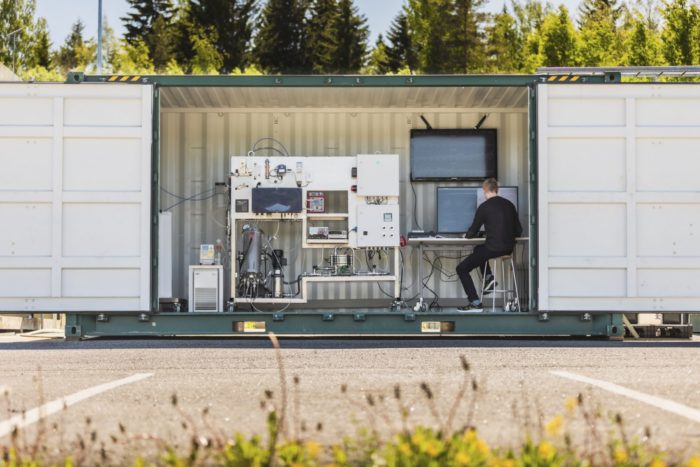
A man sits in front of computers and machinery in an open-sided metal shipping container.

Solar Foods spun off after a VTT and LUT joint research project called Neo-Carbon, where the prototype was housed in a shipping container, demonstrating how little space was required. Photo: Teemu Leinonen/LUT

Solar Foods is a Finnish company spun off from research conducted at VTT and LUT. Originally trying to create synthetic oil, participants soon realised the microbial residue of the process was edible and high in protein.

Microbes are fed CO2 and nutrients such as nitrogen, calcium, phosphorus and potassium. They ferment just like yeast does when you make bread or brew beer. The microorganisms are later dried out and become a powder.

“It doesn’t taste like anything, which is good,” says Pasi Vainikka, CEO of Solar Foods. “Pea protein tastes awful and is used in some meat substitute products. Companies who use pea protein need a huge industrial process to mask the taste. We don’t need to do that.”

Solar Foods estimates that 25 percent of global greenhouse gas emissions are traceable to food production, including agriculture and the food industry. According to Vainikka, this means that, even if the world completely switched to renewable energy, we’d still need to take action to reduce food-related emissions.

Coming soon to a plate near you

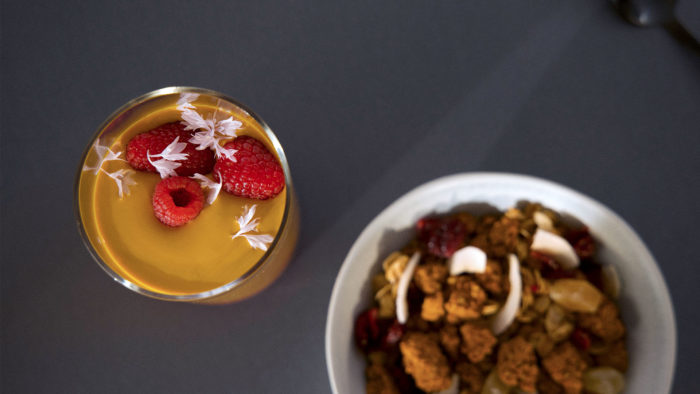
A view of a drinking glass with liquid and berries in it.

“I’ll take a CO2 smoothie with fresh raspberries on top.” Solein, a protein powder made using carbon dioxide, can be included in food products that are already familiar to consumers. Photo: Solar Foods

Solar Foods’ protein product, solein, can be used as an ingredient in existing foods such as beverages, cereals or pasta. It can also be used in the growing meat-substitute and dairy-substitute industries. It might have applications as part of astronauts’ diet on long missions.

“About 25 to 30 kilowatt-hours of renewable electricity and two kilograms (4.4 pounds) of CO2 are needed to make one kilo (2.2 pounds) of cells,” says Vainikka. “These natural organisms are about 65 percent protein, 25 percent carbohydrates and dietary fibre, and 10 percent fat. Solein can replace the nutrition people get from meat. As we grow, the price should be less than animal-based proteins.”

Solein requires a tiny fraction of the space that farms or greenhouses use. A prototype of a predecessor system fit into a shipping container and could produce one kilogram of protein per day.

It also uses no fertilisers, and requires only a small quantity of water, which is then recycled within the production system. If you consider the ratio of protein produced to resources consumed, solein handily beats options such as soy powder. And if it reduces the need for agricultural land, then solein can even be carbon-negative. Taking resource use into account, Solar Foods says that solein’s emission stats are ten times better than plants and 100 times better than meat.

As of the time of writing, Solar Foods has received about 35 million euros in funding. The company is ramping up production, and plans to launch its product in grocery stores in certain leading markets early in 2022. The EU, whose food regulatory process is longer than that of some countries, should see solein products on store shelves in 2023.

“We don’t expect consumers to change,” Vainikka says. “The new products will be almost like what you find today. But tastes will change with each generation. Maybe our grandkids will be used to cultured meat grown in a lab. They might be shocked to think that to get meat our generation had to kill an animal.”

By David J. Cord, June 2021

Expats take part in Finland’s municipal elections, held after two-month delay

During an election year in Finland, there’s a sense of expectation, a feeling that a momentous day is approaching.

When municipal elections are held, as opposed to parliamentary or presidential elections, foreign residents of Finland have the right to vote and to run for office. They can participate and anticipate wholeheartedly along with everyone else.

Usually the big day is the third Sunday in April. There might still be some snow on the ground, but there’s also a vague promise of spring’s arrival, in people’s imaginations if not in the air.

The big day was a long time coming in 2021, as municipal elections originally slated for April 19 were rescheduled when a temporary rise in Covid-19 cases caused officials to reconsider. It was an abundance-of-caution situation.

A new date was set: June 13, 2021. It feels somewhat unusual to have an election when the trees are full of leaves and the parks are full of flowers. Campaign advertisements sprouted up at the appointed time, one month prior to election day. Limiting the advertising period helps keep everyone focused.

Election season

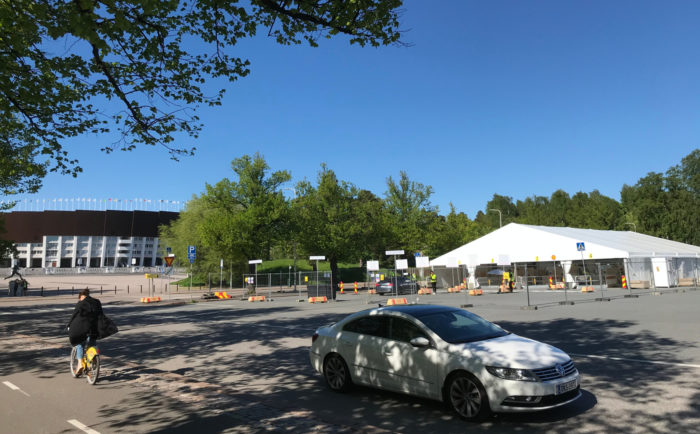
A bicyclist and a car move past a tent-like shelter in the parking lot of a stadium.

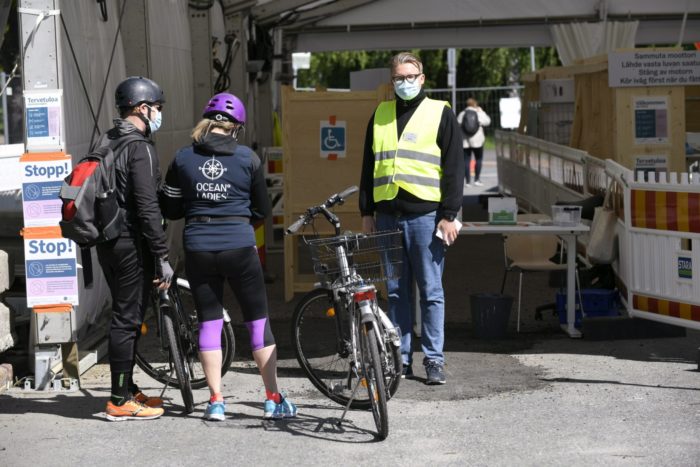
One outdoor location for drive-through, bike-through and walk-through voting occupied a corner of the parking lot beside Helsinki’s Olympic Stadium (visible in the background at left).Photo: Peter Marten

Election season in Finland begins with a notification from the Digital and Population Services Agency. Every eligible voter receives one automatically – either a paper letter or, if you’ve signed up for it, a digital version. Finnish, Nordic and EU citizens are eligible if they are 18 or older and have been living in Finland for at least 51 days prior to the election. For other foreigners, the residency requirement is two years and 51 days. Election info is also available online in 31 different languages.

The letter from the Digital and Population Services Agency shows your local polling place for voting on election day. It also lists multiple locations for early voting, starting three weeks in advance. That’s handy if you have to work on the official election day, or attend your kids’ soccer game, or – now that elections are in June – just want go to the beach. In 2021, there are even covered outdoor pavilions for walk-through, drive-through and bike-through early voting, for people who wish to avoid enclosed spaces or just want to try something new.

As the letter explains, municipal elections serve to choose councillors for the municipal council, the local government. It’s a chance for voters to affect decision-making close to home: schools, parks, local services, local taxes. The size of the council corresponds to the population of the municipality. A town or area of 5,000 people or less will have a council of 13 people, while a city of 500,000 or more will have 79 councillors.

Nationwide in 2021, voters are electing approximately 9,000 councillors in 293 municipalities (the autonomous archipelago of Åland, with 16 municipalities, is not holding municipal elections in 2021). The number of candidates totals 35,627.

Political machinations

Two women stand beside their bikes in front of a desk and talk with a man wearing a reflective vest.

Two voters have pedalled up to the outdoor polling location in the Helsinki neighbourhood of Töölö.Photo: Markku Ulander/Lehtikuva

If you’ve already had the chance to experience an election season in Finland, you’ve probably heard people mention vaalikoneet, “election machines.”

This has nothing to do with actually casting your vote – while Finland is in many ways a trailblazer in digitalisation, the country doesn’t use voting machines. You look up your candidate’s number on a list and write that number on a paper ballot, then put it into a sealed box. Nobody is going to hack that.

An “election machine” is an online interface that lets you compare and contrast your views with those of the parties and candidates. Various media outlets set them up, including Helsingin Sanomat, the country’s largest daily, and the national broadcasting company Yle, which calls it the Election Compass and makes it available in English and Russian as well as Finland’s official languages Finnish, Swedish and Sámi (spoken by the indigenous Sámi people, whose homeland is in the north).

You answer, anonymously, a couple dozen questions about topics such as climate, health, education, money and transport. Should schools have at least one vegetarian lunch day a week? Should the highest earners pay more municipal tax? Should the voting age be lowered from 18 to 16 for municipal elections? Should more parkland be zoned for construction?

When you’re done, the computer gives you a list of the candidates and parties who share your views. You can click on them to find out more about their standpoints and to see how they themselves answered the questions.

Election machines have been a feature of Finnish media for a couple decades, so it would be wrong to compare them to dating apps. The best versions can help you narrow the field as you consider your choices. That’s especially useful in municipal elections; at this grassroots level, there’s a greater number candidates, many of them unfamiliar.

From election to election, candidates, parties and media outlets are increasingly realising that voters would like to see coverage in multiple languages – and the number of candidates capable of conversing about the issues in other languages is also increasing. Yle runs election discussion shows in not only the official languages Finnish, Swedish and Sámi, but also in English and Russian.

Yle’s All Points North podcast can also be an English-language resource if you’re trying to figure out which candidate you support. It publishes a series of interviews with party leaders as elections approach.

And after you vote, don’t forget that an informal but popular Finnish custom says that it’s time for coffee.

By ThisisFINLAND staff, June 2021

Circular economy success: Finland’s recycling programme keeps bottles and cans off the streets

Finland’s system for returning beverage containers started in the 1950s, and today almost every bottle and can is recycled. Convenience is the cornerstone of the system’s success.

Finnish residents returned more than two billion bottles and cans in 2020, 93 percent of the total amount purchased in the country. The factors that make this possible include automated bottle-return machines developed decades ago and the expansion of the system to include plastic bottles in the 2000s.

The EU directive on single-use plastics has focused additional attention on bottle recycling and sustainability. Approved by an overwhelming majority of the European Parliament in 2019, the directive stipulates that, by 2029, 90 percent of plastic beverage bottles should be recycled. Since Finland handily surpassed that mark years ago, its system is attracting notice as a possible solution for use in other countries.

Recycling bottles and cans conserves energy and raw materials, and reduces litter in cities and wilderness areas. Beverage containers become part of the circular economy as their materials are recycled into new containers or reused in other products.

Manufacturing new cans from recycled aluminium requires only 5 percent of the energy that would be used to make cans from scratch, and making new glass from recycled glass consumes 30 percent less energy than manufacturing glass from scratch. (The stats come from the website of Palpa, the nonprofit company that runs Finland’s bottle and can recycling operations.)

How it works

Two young men each carry a skateboard in one hand and a large plastic bag filled with bottles and cans in the other hand.

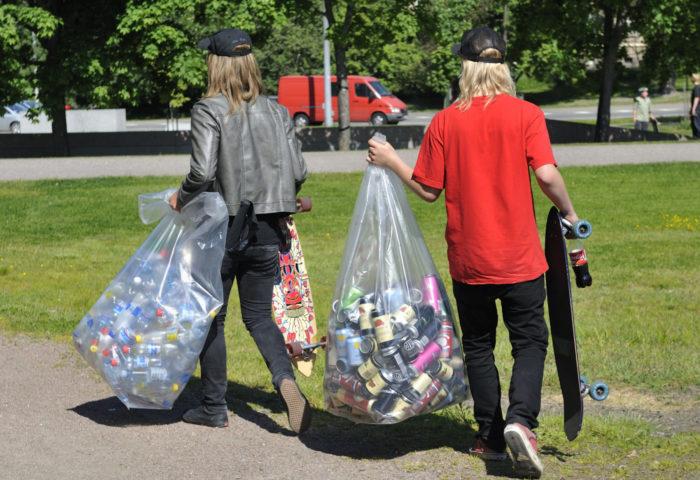
These guys have collected abandoned bottles and cans and are going to return them to get the deposit money. Photo: Pekka Sakki/Lehtikuva

The first bottle recycling programmes began back in the 1950s. Nowadays there are almost 5,000 container-return machines across Finland. Most of them are located in the same shops and kiosks that sell beverages, making returning them a convenient part of people’s routine. Hotels, restaurants, offices, schools and event organisers return containers through their beverage providers.

Every time a person buys a beverage in a bottle or can, they pay a deposit of 15 to 40 cents. The system covers alcoholic beverages, soft drinks and bottled water, in aluminium cans, glass bottles and bottles made from PET plastic.

The return machines are easy to use. You place a bottle or can on a set of miniature conveyor belts at the front of the machine. They carry it past a scanner and out of sight. The machine sorts the bottles and crushes the cans. When you’re done, you press a button and the machine gives you a receipt. Plastic bottles are worth 20 to 40 cents, depending on their size, while glass bottles are worth 10 to 40 cents and aluminium cans are 15 cents. The returned containers are recycled or the materials are reused.

When you present the receipt to the store’s cashier, they give you cash back or deduct the bottle-return money from your purchase. Palpa processes 360 million euros a year in bottle deposit money.

Tons and tons of bottles and cans

Two people look at goods in a store window.

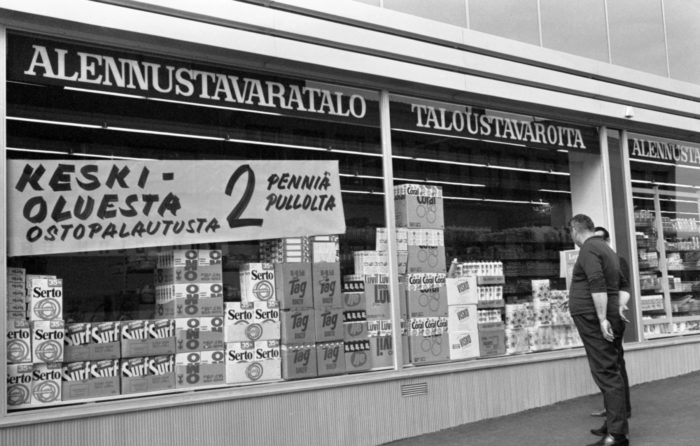
In 1969, this discount store in the southern Finnish city of Kouvola advertised a return payment of two pennies per beer bottle. Photo: Erkki Laitila/Lehtikuva

Across Finland, cans are returned at an average rate of 44 per second, plastic bottles at 17 per second, and glass bottles at four per second. Return rates in 2020 totalled 94 percent for aluminium cans (out of 1.4 billion sold), 92 percent for plastic bottles (out of 530 million) and 87 percent for glass bottles (out of 133 million). On average, every Finn returns 373 items in a year: 251 aluminum cans, 98 plastic bottles and 24 glass bottles.

The government has entrusted this function to the private sector. “Palpa is completely nonprofit and receives no government funding,” says Tommi Vihavainen, Palpa’s director of producer services, ICT and communication. The company’s owners include major beverage producers such as Olvi, Sinebrychoff and Hartwall. Around 200 other companies pay membership fees. These companies and Palpa’s owners are then exempt from paying packaging tax on their beverage products.

Palpa’s turnover amounts to about 80 million euros, generated from material sales, recycling fees and charges for nonreturnable packaging. It uses the money to keep the system running.

Russia, the UK and other countries have shown interest in the Finnish system. “Most visitors want to see how the return system works in Finland,” says Vihavainen. “We don’t act as consultants, but we’re proud to present our system.”

Keeping the city clean

People wearing Finnish high school graduation caps stand near a table stacked with food and drink in a park.

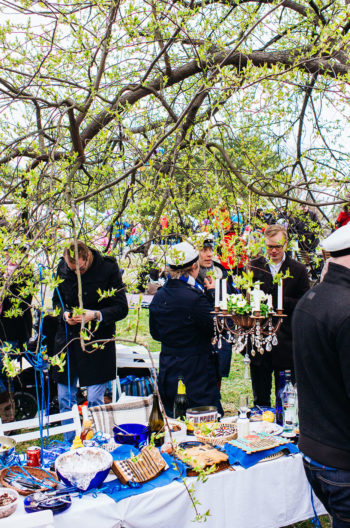
May Day often involves elaborate picnic brunches in public parks, and that means lots of empty bottles. During this and other big celebrations, independent bottle and can collectors make life easier for cities’ sanitation departments by removing the containers. Photo: Jussi Hellsten/Helsinki Marketing

Any bottles that someone happens to leave behind on the street or in a park are snapped up by someone who returns them for the deposit money. The City of Helsinki has noticed that these unofficial collectors greatly facilitate the life of the city during big celebrations such as May Day (April 30 and May 1), which often involves elaborate picnic brunches in public parks.

“We only collect sparkling-wine bottles,” says Elina Nummi, an urban environment project manager with the City of Helsinki. Those are the biggest, heaviest bottles, and they’re also very popular on May Day. “Independent container collectors carry away the rest. In addition, we’ve been offering a free cinema ticket for every 20 wine bottles [that someone brings to our collection points]. One year we issued 1,500 tickets under this scheme.” That’s 30,000 bottles – it must have been quite a party.

Commercial event organisers have also tackled bottle recycling head-on, refusing to let it become a headache. One example is Helsinki’s Flow Festival, Finland’s largest event of its kind, with more than 70,000 visitors attending over the course of three or four days packed with concerts. They use a bottle-deposit system to prompt festivalgoers to make sure the bottles are recycled properly, not abandoned or left in the regular trash bins.

Susanna Hulkkonen, Flow’s press officer, says that they reabsorb all the bottles sold on the premises. “The price of the drink includes a deposit: a bottle of wine or champagne is ten euros, and all the rest are one euro,” she says. You can return the bottle to the point of sale and get your deposit back, or you can donate the deposit money to Finnish Association for Nature Conservation by bringing the bottle to their booth on the festival grounds.

By Evgenie Bogdanov and ThisisFINLAND staff, updated June 2021