Finland’s Moomin stories pop up at multilingual Read Hour event in Reykjavík, Iceland

Started in 2019 by the Children and Youth Foundation, the annual Read Hour Literacy Campaign has spread from Finland to Sweden, Estonia, the UK and Iceland.

The idea is simple: get as many people as possible, especially young people, to read for an hour on UN International Literacy Day, September 8, whether it’s a book, a magazine or even a comic book. Even if people read separately, reading brings them together by introducing them to new thoughts and cultures, encouraging empathy and ultimately showing them that people everywhere have many things in common.

For Read Hour 2021, an exceptional, multilingual Moomin story reading took place in the Icelandic capital at the Reykjavík International Literary Festival.

The Moomins, creatures created by Finnish author and artist Tove Jansson (1914–2001), are as popular in Iceland as they are in numerous other countries around the world. She wrote the books in Swedish starting in the 1940s (Finnish and Swedish are both official languages in Finland), and they have now been translated into at least 50 languages.

At Nordic House, a cultural centre in Reykjavík, Icelandic poet and author Gerður Kristný interviewed Sophia Jansson, Tove’s niece. Then Jansson and a panel of other guests read several pages each from the Moomin story “The Invisible Child” in their own languages: Swedish, Icelandic, English, Danish, Norwegian, Faroese and Finnish.

A good storm
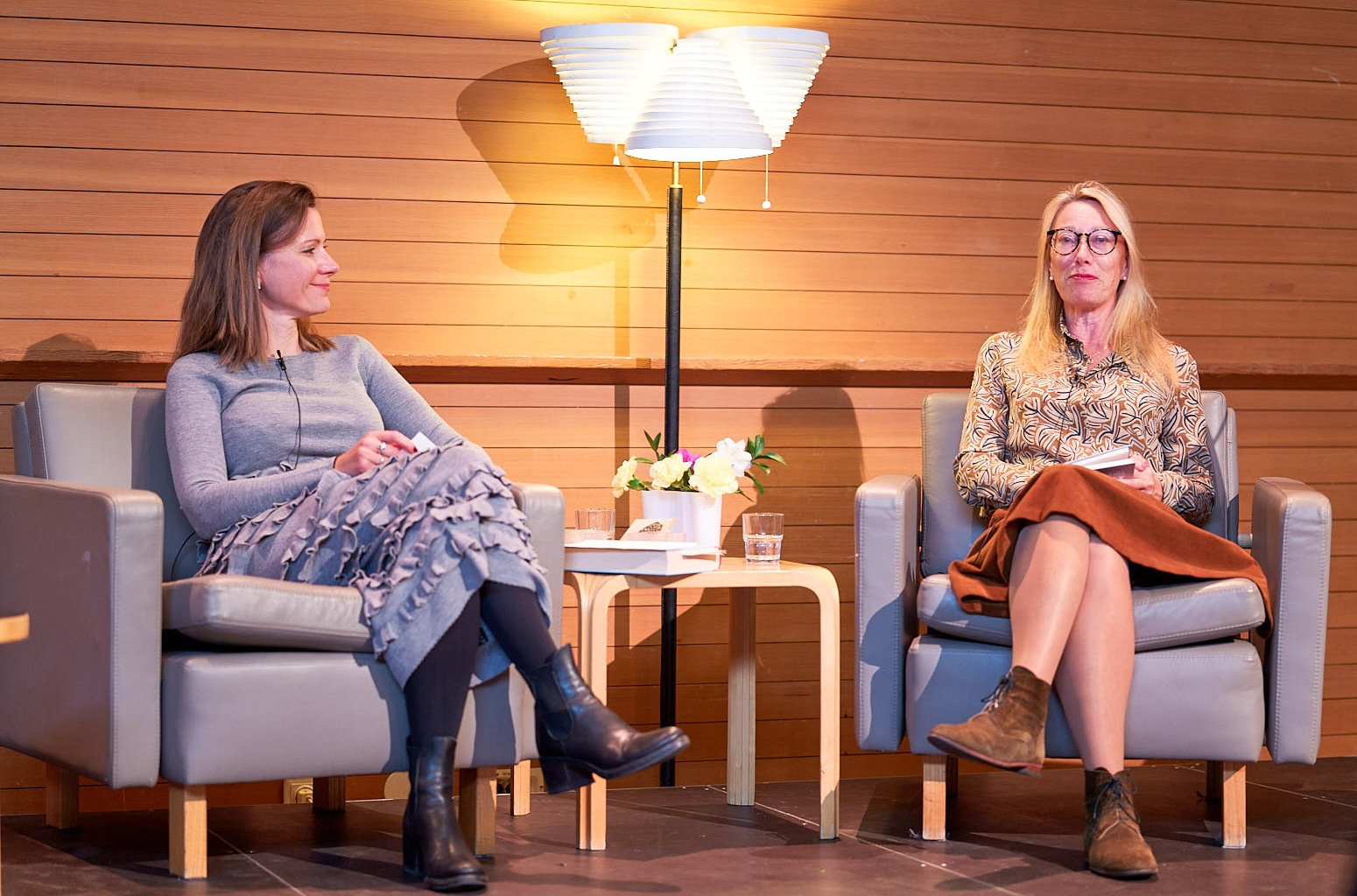
Two women sit in armchairs on a stage.

At Nordic House in the Icelandic capital, Gerður Kristný (left) interviewed Sophia Jansson, Tove Jansson’s niece, before they and a panel of other guests read a Moomin story aloud in seven different languages.Photo: Alexander Schwarz

It is well known that Tove Jansson loved a good storm, and the Moomin adventures include catastrophic forces of nature such as floods, volcanoes and comets. “I think that for Icelandic people the Moomin books must be very real, in a way, because you live in the middle of enormous natural events,” Sophia Jansson told Kristný at Nordic House. Iceland has notoriously variable weather, and a volcano near Reykjavík decided to become active in early 2021, although it hasn’t threatened anyone’s life. (It has actually attracted quite a few curious tourists.)

“Tove used natural phenomena such as volcanic eruptions and floods as a counterweight to the safety of the Moomin House, Moominvalley and the Moomin family,” said Jansson. “Perhaps she felt that the magic is somewhere between those two extremes – danger and safety.”

These and other Moomin themes remain relevant in the modern world. “Many of the things in her books are things that you can still recognise today, if we consider all the refugees that were recently forced to leave Afghanistan, or other war-torn areas earlier,” said Jansson. “That’s a phenomenon that hasn’t disappeared – it was around after the Second World War when Tove was writing her books. The attitude that Tove wanted to convey was that if there are people who are fleeing and need safety and warmth, you have to receive them. You have to be open, tolerant and helpful.”

Individual and equal
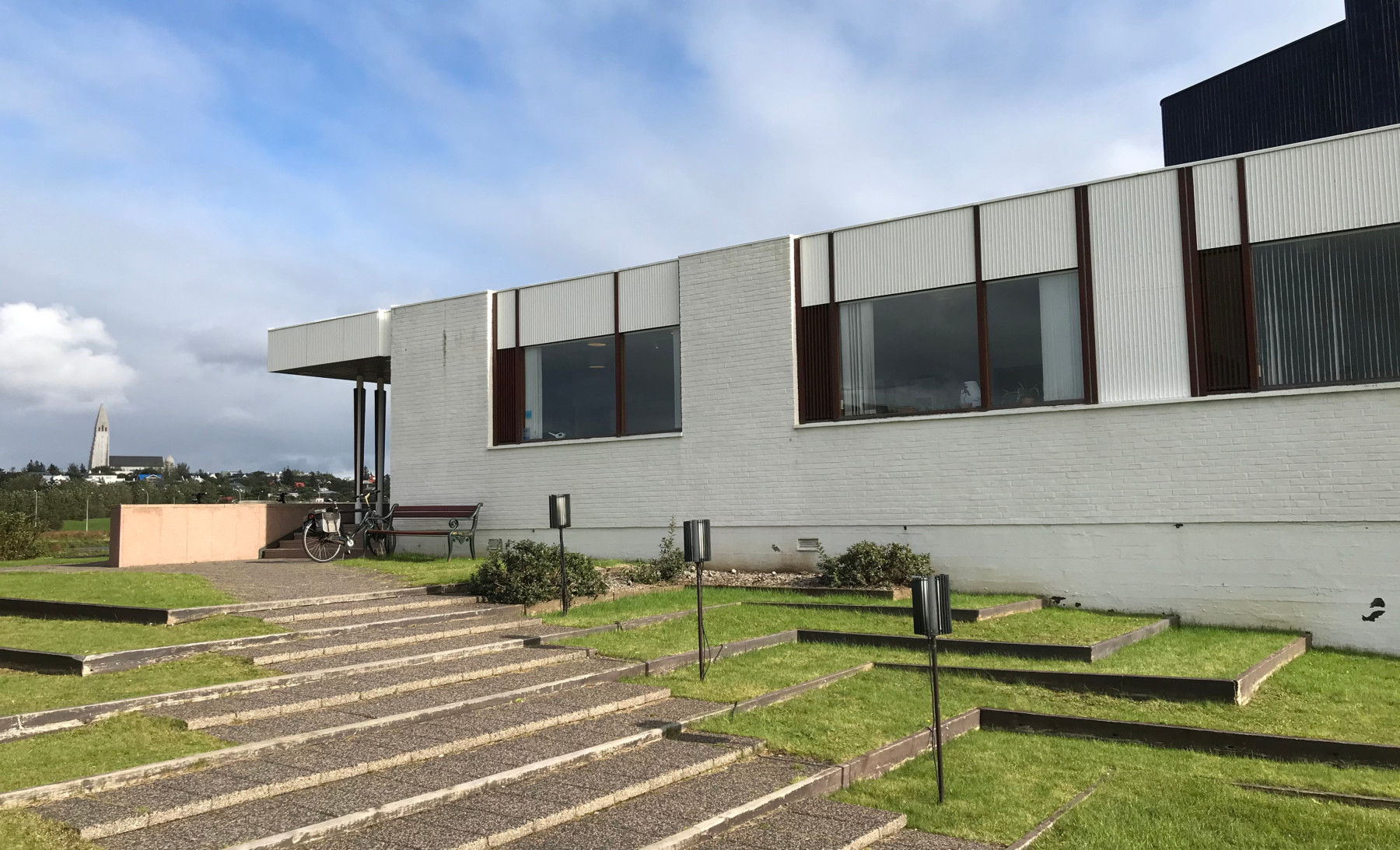
Wide stairs descend beside a low, rectangular building.

If you’ve seen other buildings by Finnish architect and designer Alvar Aalto, you can immediately recognise his style in the shape, the white façade and the wood highlights of Nordic House, which opened in Reykjavík in 1968.Photo: Peter Marten

Sophia Jansson works in Helsinki as artistic director at Moomin Characters Ltd, the company that decides which product manufacturers may use the Moomin figures and artwork. “It’s unbelievable,” she said, “to have been given the gift of this role where I get to speak about an author who still means so much to so many people many years after her death, and who had values that you can support.”

Jansson remembers her aunt as someone who was “unique in many ways” and “amazingly gifted.” Not only did she write and illustrate books, but she was also a painter, a cartoonist, a theatre set designer and a songwriter. She also loved to dance and play the accordion.

“For me, her most beloved quality was the way she encountered other people,” said Jansson. “She possessed quite a rare ability to meet every single person as an individual and an equal. She never put herself above or below anyone else. She always showed that she was enormously interested in you, no matter who you were. That’s something I’ve tried to copy.”

And then what happened?
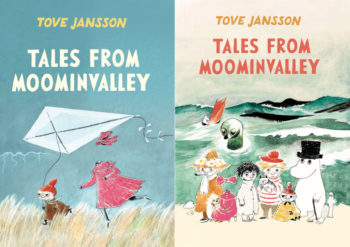
Two book covers with illustrations showing Moomin characters.

Different releases of the Moomin books have had various cover designs. These two recent editions of Tales from Moominvalley use vintage cover art; the one on the left shows Little My and Ninny, the invisible child, whose clothes can be seen.Photos: Sort of Books; cover art: Tove Jansson

After Jansson’s interview, she read several pages of “The Invisible Child,” a short story from the book Tales from Moominvalley, in the original Swedish. Kristný continued in Icelandic, then came segments in English, Danish, Norwegian, Faroese and Finnish, each read by a native speaker of that language.

The story is not as long or famous as the books Comet in Moominland or Moominsummer Madness, but it displays many of the values that Sophia Jansson appreciates in her aunt’s personality and work.

In “The Invisible Child,” a little girl called Ninny arrives at the Moomin family’s house. She had previously been in the care of a disagreeable woman who disparaged and belittled her until Ninny became invisible and stopped speaking.

The Moomins take her in, and gradually Ninny begins to reappear, and starts talking again, too. Her face remains invisible until the surprise ending, but you’ll have to read the story – or listen to Sophia Jansson read it in English – to find out what happens.

Epilogue
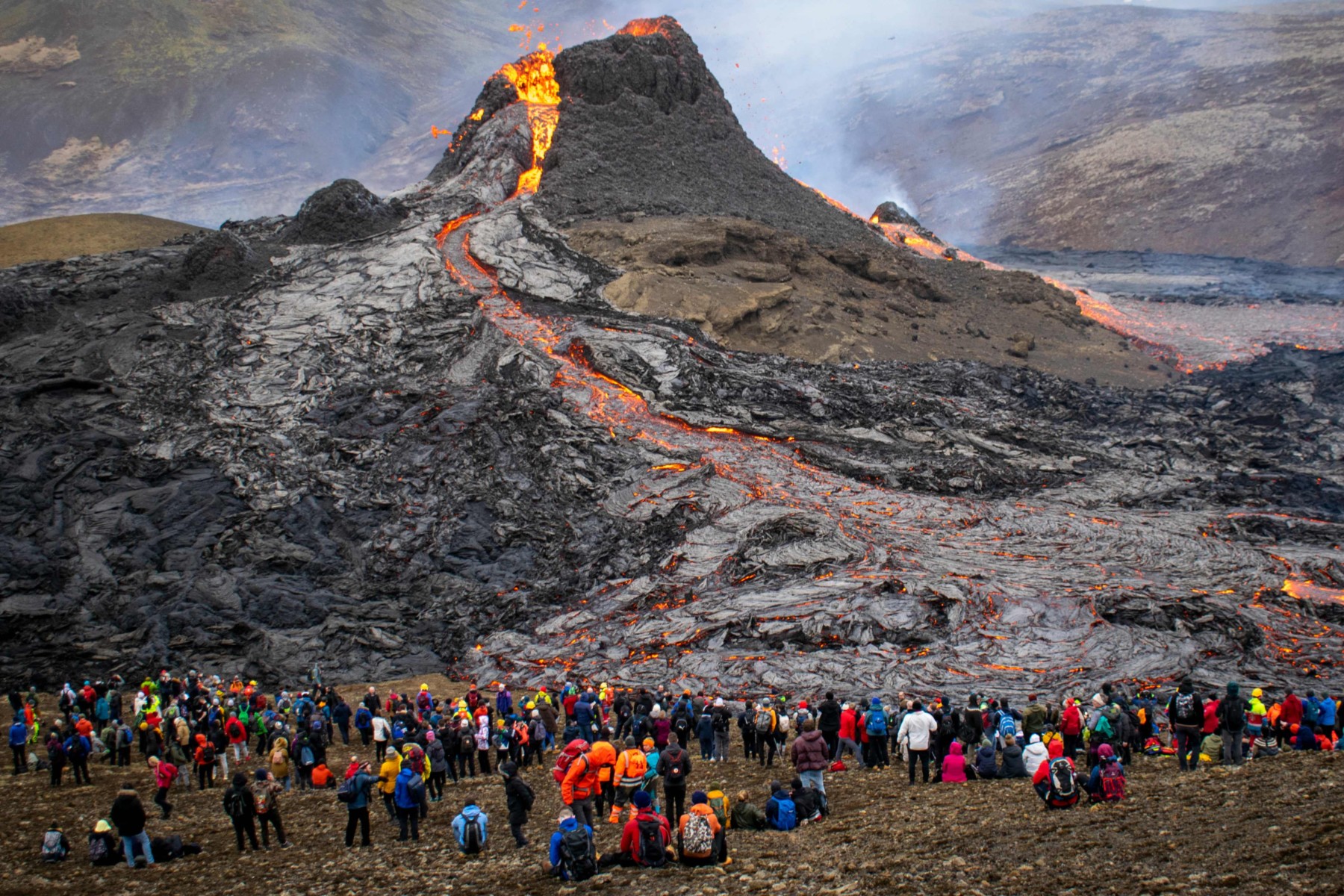
A stream of lava flows down a mountain while a group of people stand and watch from a distance.

In March 2021, a volcano erupted at Fagradalsfjall, about 30 kilometres (20 miles) from Reykjavík as the crow flies. It has continued at irregular intervals, and has even become something of a tourist attraction.Photo: Jeremie Richard/AFP/Lehtikuva

When the reading was over and the audience had dispersed, a few of the participants were standing in the lobby talking with the organisers. After a short while, Sophia Jansson appeared. She had exchanged her skirt and blouse for outdoor clothes and hiking boots. Roleff Kråkström, the managing director of Moomin Characters Ltd, had put on a similar outfit. In a spirit that Tove Jansson surely would have understood, they were hurrying off to have a look at that active volcano, about an hour’s drive plus an hour’s hike away from Reykjavík.

By Peter Marten, October 2021
Finland opens online Museum of Contemporary Emotions to catalogue pandemic experiences

That’s the idea behind the online Museum of Contemporary Emotions, commissioned by the Finnish Prime Minister’s Office. It’s designed to support people in Finland as they reflect upon their emotions and experiences of the Covid-19 pandemic era.

At the time of the museum launch (October 7, 2021), Finland is in the process of dismantling Covid-19 restrictions and society is starting to move on from the newest wave of the pandemic.

The experimental virtual exhibition takes us through 28 events, starting in March 2020, when the WHO declared Covid-19 a global pandemic.

Some behaviours during the pandemic were universal, such as insomnia or hoarding. Others were more characteristic of Finland, such as many people working remotely from their beloved summer cabins, or an internationally exceptional baby boom – very welcome in a country where birth rates had been dropping in recent years.

The museum highlights six universal primary emotions that seem to occur in all cultures: sadness, happiness, fear, anger, surprise and disgust. It encourages self-reflection and offers interactive elements, such as an opportunity to write a message to your future self.

Visitors can go back in time and reflect on their own feelings, and possibly discover that they were not alone, that many people felt the same way. The organisers also believe that this process will make society stronger and more resilient for the next time a crisis arises.

Finland’s European Green Capital and Green Leaf cities aim for lasting legacies

As 2021 Green Capital of Europe, the city of Lahti has earned long-term attention as a progressive trailblazer for innovative environmental solutions and a potential destination for tourists and conference organisers.

In a year with travel restrictions in force because of the Covid-19 pandemic, that’s no mean achievement. At least in terms of media coverage, the whole world has converged on Lahti, which lies 100 kilometres (60 miles) north of Helsinki.

Two green cities

A view of buildings and boats surrounding a bay.

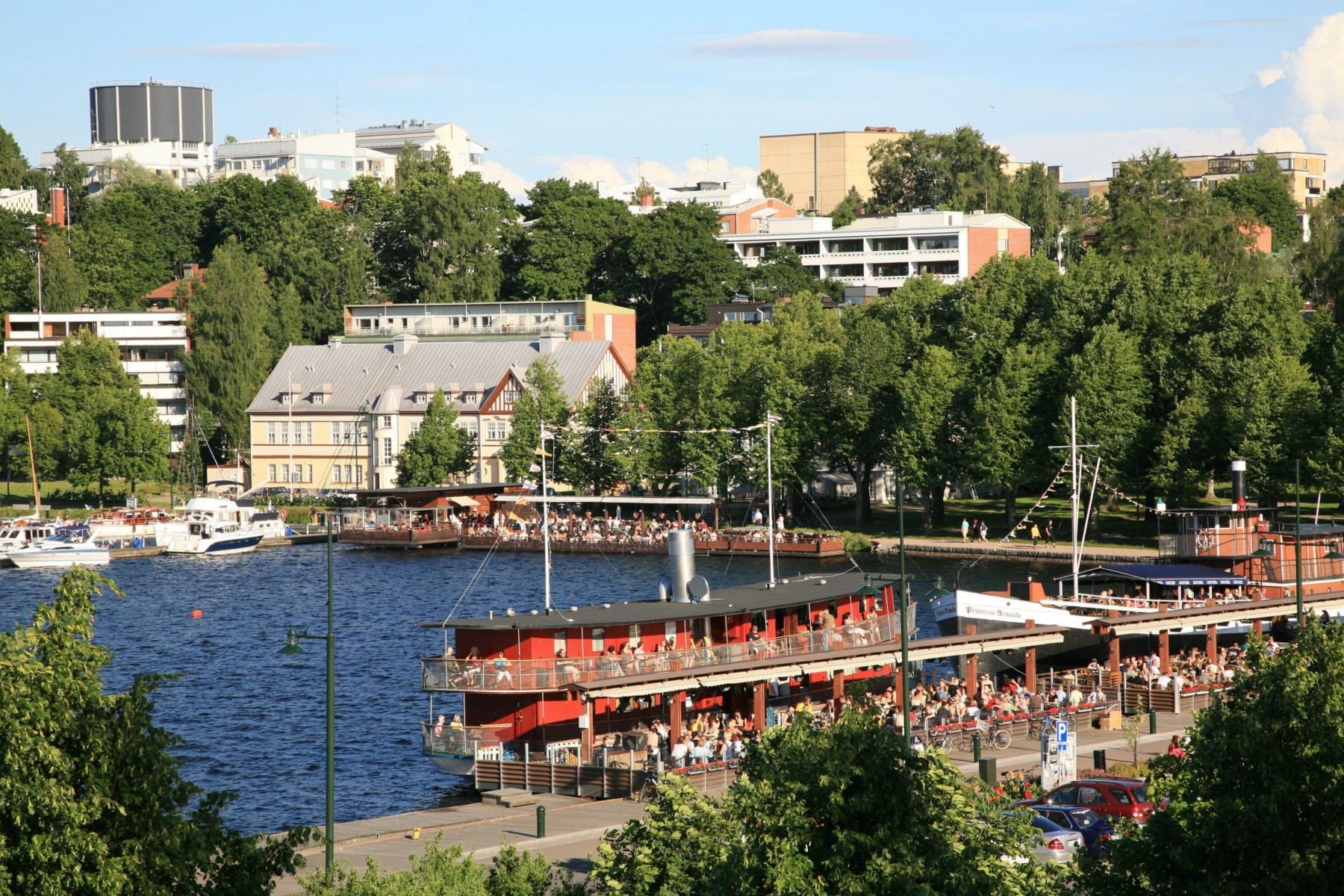
The southeastern Finnish city of Lappeenranta, which received the 2021 Green Leaf award, has a mix of old and new architecture. It is located on the shores of Lake Saimaa, Finland’s largest body of water.Photo: Jonne Räsänen/Otavamedia/Lehtikuva

Also in 2021, the eastern Finnish city of Lappeenranta, which is smaller than Lahti, has a similar award: the European Green Leaf (see box below). Both the Green Capital and the Green Leaf are bestowed by the European Commission.

While the honours serve as excellent yearlong civic showcases for the cities and their communities and indicate appreciation of their environmental records, the idea is to encourage long-lasting effects and share urban environmental solutions.

Lahti is the 12th city to be awarded Green Capital status, enjoyed in previous years by the likes of Bristol, Hamburg, Lisbon and Copenhagen. Cities with a population of at least 100,000 can apply for the award (Lahti has 120,000), which the European Commission grants in recognition of a range of environmental issues, including air quality, ecological innovation, biodiversity and transportation.

A new world

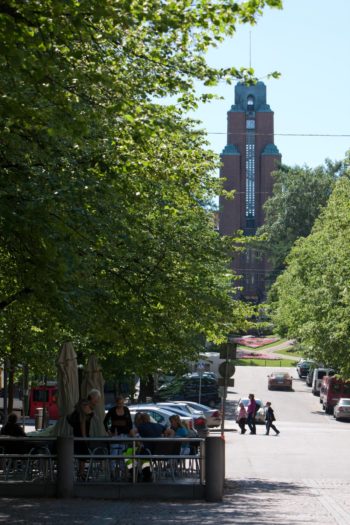
A tower is visible at the end of a tree-lined street.

Lahti City Hall is surrounded by greenery in this summer photo.Photo: Petri Koivisto/Visit Lahti

We hardly need to remind readers that 2021 has been, to say the least, an unusual year for event organisers.

“We have adapted well,” says Milla Bruneau, executive director of the Green Lahti project. “When the pandemic hit we took a very realistic approach, realising that everything needed different scenarios. We haven’t been forced to cancel many of our events altogether, but we have just found new ways of holding them.

“Of course that means we have had to do a lot of things online. That’s the new way in a new world, and it actually helps us to reach a wider audience. Instead of having a seminar behind closed doors for 150 to 200 people, now we have the potential to reach thousands of people online.”

Healthy environment

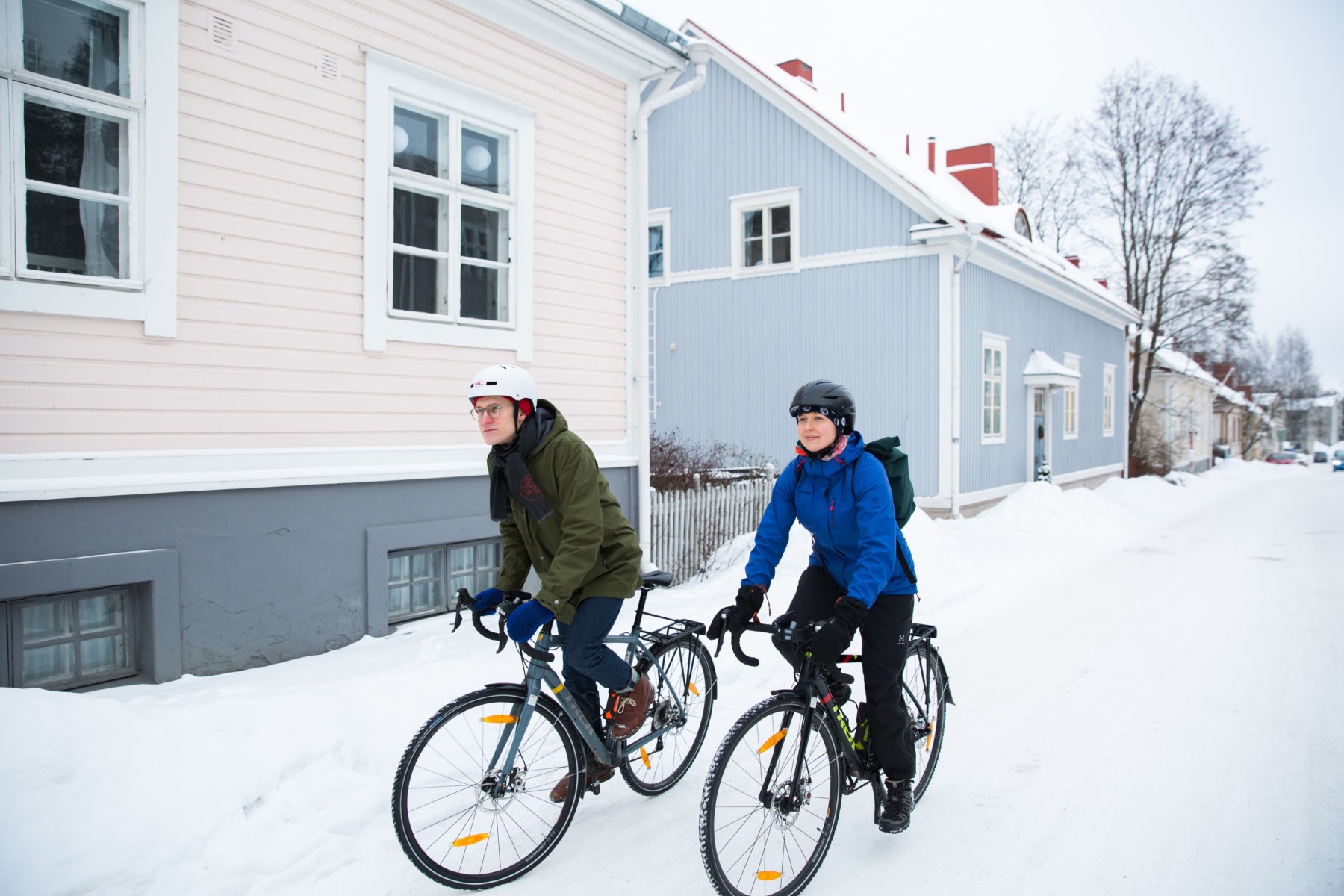
A man and a woman bike down a snowy street.

With well-maintained paths and appropriate tyres, you can keep biking throughout the winter in Lahti and other Finnish cities.Photo: Lassi Häkkinen/City of Lahti/Visit Lahti

Lahti sits on the shores of Vesijärvi (the creative and fittingly descriptive name translates to “water lake,” and lahti itself means “bay”). One of the city’s prime environmental credentials is the impressive transformation of the lake, starting in the 1970s and ’80s, from one of northern Europe’s most polluted waterways to one of its cleanest, through concerted efforts to make regional business and tourism more sustainable.

The lake is now plentifully stocked with fish and acts as the water supply for the Hartwall brewery and for Teerenpeli, a distillery and microbrewery. As Bruneau points out, a healthy natural environment and exemplary sustainability will top the list in the future for tourists as well as industry considering new locations. Lahti scores additional points with its stated aim of achieving carbon neutrality by 2025, a full decade before Finland’s national target date of 2035 and 25 years ahead of the EU target of 2050.

“We have identified several main initiatives that are most important for our legacy,” says Bruneau. “One of these is the development centre for a carbon neutral construction industry, led by the City of Lahti, for which we hope to get government funding.

“Another is urban mobility and development of the Green Electrification of Mobility Ecosystem. This means making sure that public transportation is top-notch and serving the city centre with proper infrastructure for biking, public transportation and private cars. We have a big fleet of electric buses, which we will double next year. I see a lot of opportunities.”

Carbon neutral harmony

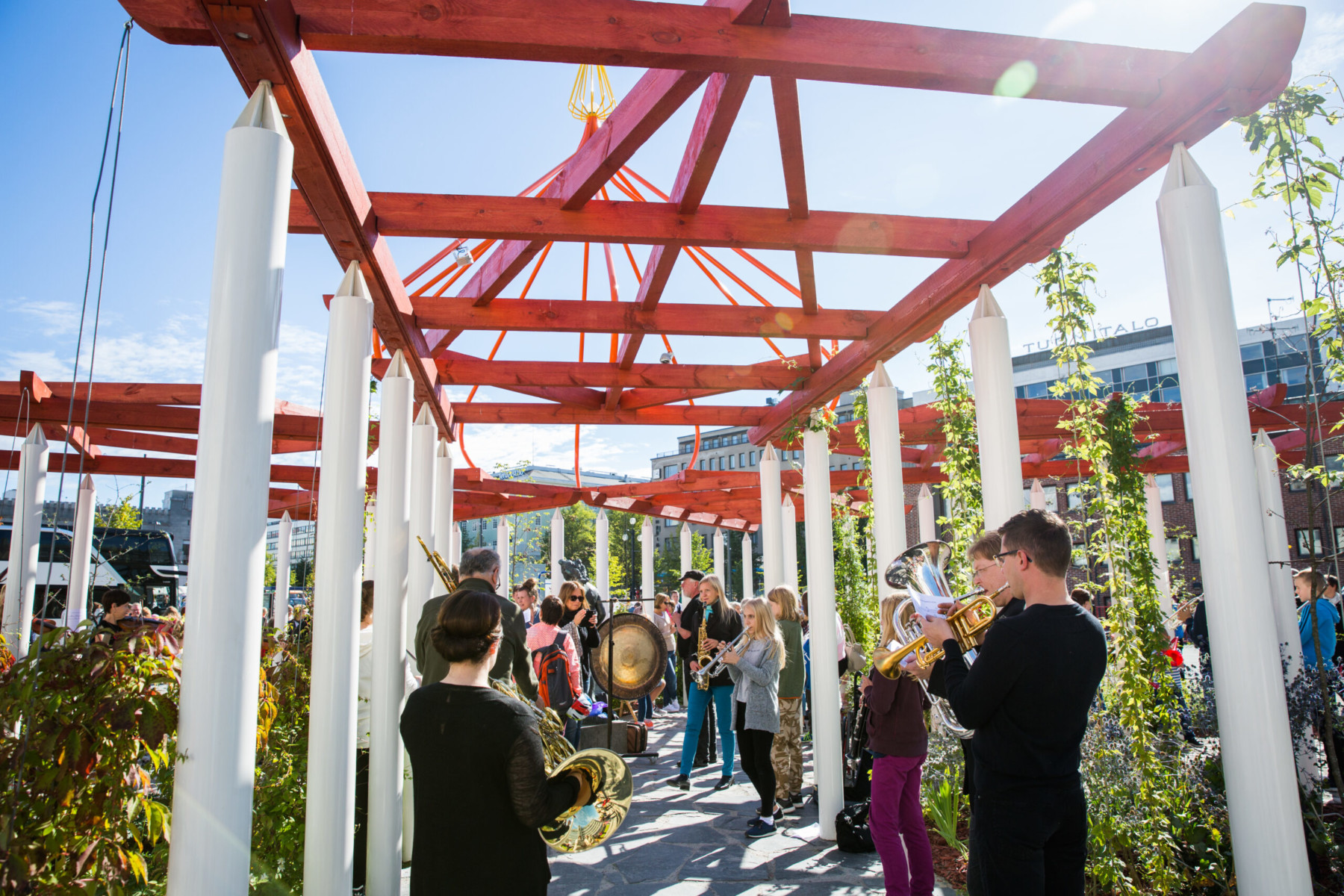
Band members play wind instruments along an outdoor walkway.

On the main square: Because of the pandemic, Lahti has had to curtail or modify its plans for public events during its year as European Green Capital.Photo: Lassi Häkkinen/City of Lahti

Practically all of Lahti’s household waste is separated and recycled, while City eBikes and eScooters will supplement the transport system in the coming months. Even the esteemed Lahti Symphony Orchestra has committed to carbon neutrality, identifying areas for emission reductions: transportation; energy consumption; clean technology in light and sound services; and sustainably produced promotional merchandise.

Lahti’s international tourist numbers tumbled during the pandemic, with the exception of the many media visits. The increase in staycation visitors from other parts of Finland compensated to some degree.

At the time of writing, in autumn 2021, Bruneau’s main regret is that intended interaction with Lahti’s citizens has had to be limited. “Covid has prevented us from putting the footwork into meeting citizens at the more local and smaller events, and I feel a little bit sad about that. So we are trying to focus on that for the rest of the year. But we are proud that we have presented ourselves as a city with solutions that everyone can learn from.”

By Tim Bird, September 2021

How two festivals in Helsinki brought art, music and design to audiences, despite obstacles

On a damp, chilly Saturday in September, four friends gathered for the harvest at an allotment garden in Helsinki. Then came a surprise.

“We’d been working together in Antti and Hanne’s garden,” says Maarit Kytöharju. “Suddenly Markus Hohti appeared with his cello and played us a piece by Andy Akiho. The moment was perfect.”

Forging ahead

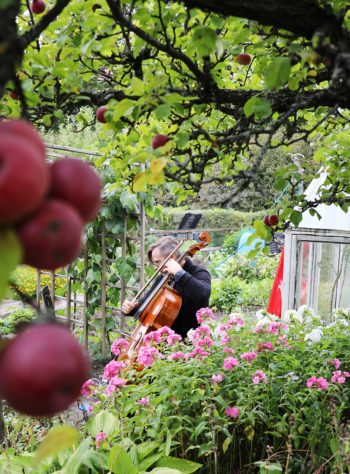
A man plays a cello in a garden among flowers and apple trees.

In an allotment garden, cellist Markus Hohti plays a pop-up concert as a Helsinki Festival Art Gift.Photo: Maarit Kytöharju

She had secretly arranged the visit through the Helsinki Festival’s Art Gifts, which brought intimate, free performances to city residents’ gardens and courtyards at the request of friends or family. The pop-up performances ranged from poetry readings to circus antics, and were a surprise to both donors and recipients.

“It was fabulous that we were given an opportunity to experience a live concert, our first in two years,” says Antti Selkokari.

Hohti is a member of the contemporary music group defunensemble, who were scheduled to play in the Helsinki Festival, Finland’s biggest annual cultural event. Nearly all of the two-week festival’s concerts had to be cancelled on short notice due to new restrictions after a brief wave of new Covid infections in early August (that number receded again in the subsequent weeks).

A resonant bike tour

Two people perform for an audience in a yard in front of apartment buildings.

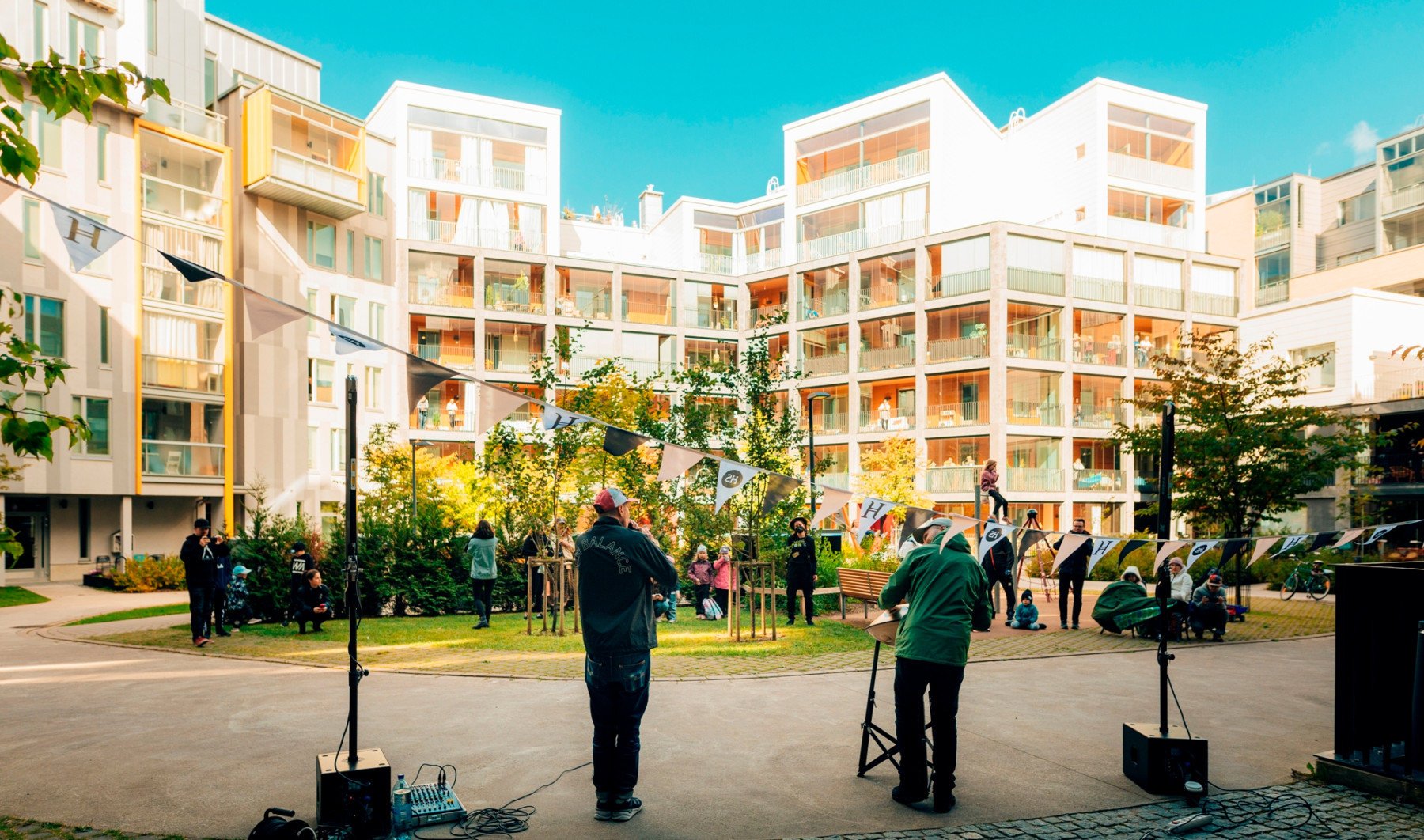
People are in the courtyard and on their balconies listening to Lauri Wuolio (right) play a Helsinki Festival Block Concert together with beatboxer Felix Zenger.Photo: Petri Anttila/Helsinki Festival

The multigenre festival went ahead with those offerings that could be arranged safely – including about 1,000 Art Gifts and 50 Block Concerts for limited groups of neighbours.

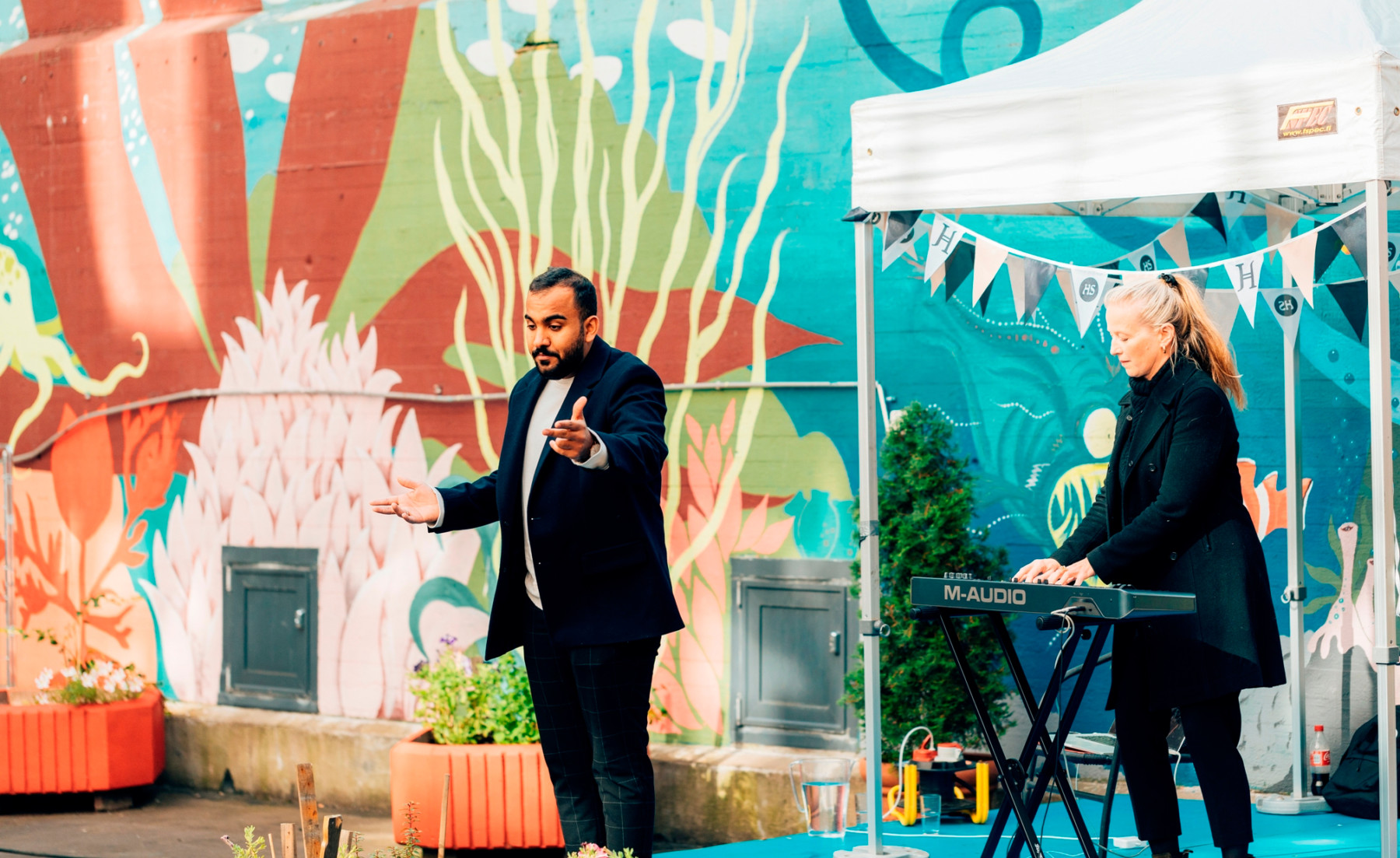
These featured topflight performers ranging from Roma singer Hilja Grönfors to jazz saxophonist Timo Lassy, Iraqi-Finnish duo Ali Saad & Sanna Salmenkallio, string quartet Meta4, kora master Cheikh Cissokho and bassist Lauri Porra, whose great-grandfather, composer Jean Sibelius, was the Helsinki Festival’s original namesake: it started 60 years ago as Sibelius Weeks.

Under the name Kumea Sound, Lauri Wuolio plays a round, melodic, metal instrument known as a cupola or handpan. He calls the Art Gifts “a really rewarding experience.”

Wuolio performed 15 of them, travelling more than 100 kilometres (60 miles) by bike with 15 kilos (30 pounds) of equipment. “It poured rain two out of the three days, so it was a good workout!” he says with a grin.

“After so long, it felt special to be able to play to someone who was actually there in the same space, reacting in real time. I chose the songs on the spot depending on the surroundings.”

Genius ideas

A man sings and a woman plays keyboards outdoors in front a colourfully painted wall.

Ali Saad (left) and Sanna Salmenkallio perform in a Block Concert, part of the Helsinki Festival.Photo: Petri Anttila/Helsinki Festival

Wuolio also played several Block Concerts with beatboxer Felix Zenger and accordionist Niko Kumpuvaara.

“Those were very different, as a lot of kids came to watch,” says Wuolio. “It was beautiful to see people emerge from their homes after a long period without concerts, and suddenly be out on their balconies and courtyards, listening, laughing and dancing.”

Accordionist Viivi Maria Saarenkylä of the duo Vildá also performed both Art Gifts and Block Concerts.

“These were simply genius ideas for the strange times we’re experiencing as artists and cultural consumers,” she says. “It was a unique experience to surprise people and see how such a short moment brought joy and happiness for all of us present.”

Art experiences

A purple octopus swims past a green background.

Kuwaiti artist Monira Al Qadiri’s video Divine Memory was on display at Kunsthalle Helsinki in the show Coming to Our Senses during the Helsinki Festival.Video still photo courtesy of Kunsthalle Helsinki

Other Helsinki Festival offerings that went ahead despite the corona restrictions were Coming to Our Senses, which brought inspiring videos, performance art and sculpture to the galleries of Kunsthalle Helsinki, and a mesmerising sound-and-vision installation by Brian Eno at Helsinki Music Centre.

“Though it was frustrating that our programme couldn’t proceed in full, we were able to bring art closer to Helsinkians with the Art Gifts and courtyard concerts all over the city,” says the festival’s artistic director, Marko Ahtisaari. “It’s essential that audiences can once again experience art together and that artists can do meaningful work.”

Where design is going

A bicycle stands in a store window.

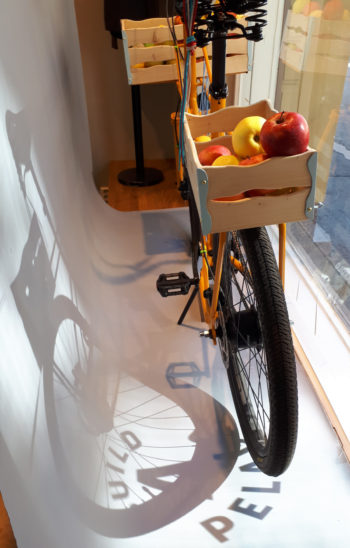
For Helsinki Design Week, Pelago Bicycles solicited new, creative bike designs in Build-A-Pelago and showed off the results in their flagship store.Photo: Wif Stenger

Facing similar challenges in the weeks just after the festival was another urban rite of autumn, Helsinki Design Week, which had to cancel its main venue and many exhibitions.

Those that went ahead included a display of imaginative custom-designed bikes at the Pelago Bicycles shop in the Design District, and a participatory urban art project in Old Church Park called Where are you going to?, where passers-by were invited to create arrows showing the direction they were heading in.

Seemingly ancient images

Wooden panels with designs on them stand in front of leafy trees.

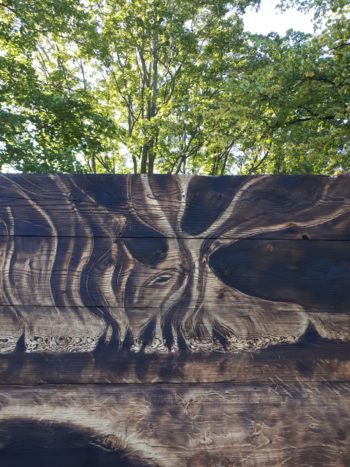
Green trees stretch upward behind the wooden artwork of Time of Miracles, which Antia Sanchez and Hannes Aleksi constructed for Helsinki Design Week.Photo: Wif Stenger

In another park, behind the National Museum, was Time of Miracles by the Finnish-Spanish duo Hannes Aleksi and Antia Sanchez, a large installation inspired by the Kalevala, Finland’s national epic. The wooden structure and its evocative aromas of pine tar invited the young at heart to clamber inside and marvel at seemingly ancient images of hunting and forest spirits.

“Naturally, the pandemic had a huge impact,” says Helsinki Design Week CEO Kari Korkman. “Some of the content could be turned into digital form through our Helsinki Design Weekly media platform. I’m sure the pandemic has accelerated progress towards online interaction, but it still doesn’t match the effectiveness of physical encounters. Let’s hope we’re back up close and personal next year.”

By Wif Stenger, September 2021

Nordic Music Biz 20-under-30 List salutes young talent

In 2021, a jury of representatives of the Nordic music business publishes the fourth annual Nordic Music Biz 20-under-30 List.

The jury and the list include professionals from all over the “Big Five” Nordic countries: Denmark, Finland, Iceland, Norway and Sweden. The recipients participate in a ceremony during the by:Larm Festival in Oslo, Norway on September 30, 2021.

Delicacies from the top of the world go down well: northern Finnish recipes

Almost one-third of the country is located above the Arctic Circle. The rich history, culture and wilderness of northern Finland are reflected in the area’s cuisine.

The wide rivers of Finnish Lapland, Finland’s northernmost region, are famous for their salmon fishing. Cloudberries grow across the north, but only in swamps and bogs, making them a hard-won prize.

Reindeer roam the fells and forests of the far north. Reindeer herding is connected in numerous ways to the culture and traditions of the Sámi, the indigenous people whose homeland is split into four parts by the borders of the nation-states Finland, Sweden, Norway and Russia.

[This is part of a series of recipe articles that show off dishes from the north, south, east and west of Finland (although many of them are now common all over the country), not to mention an extra piece about cake, bread and buns. We’ll add links to the other articles as they are published.]

By ThisisFINLAND staff, September 2021
Recipes and descriptions supplied by Timo Lepistö

Barley flatbread from Finnish Lapland (Lapin ohrarieska)

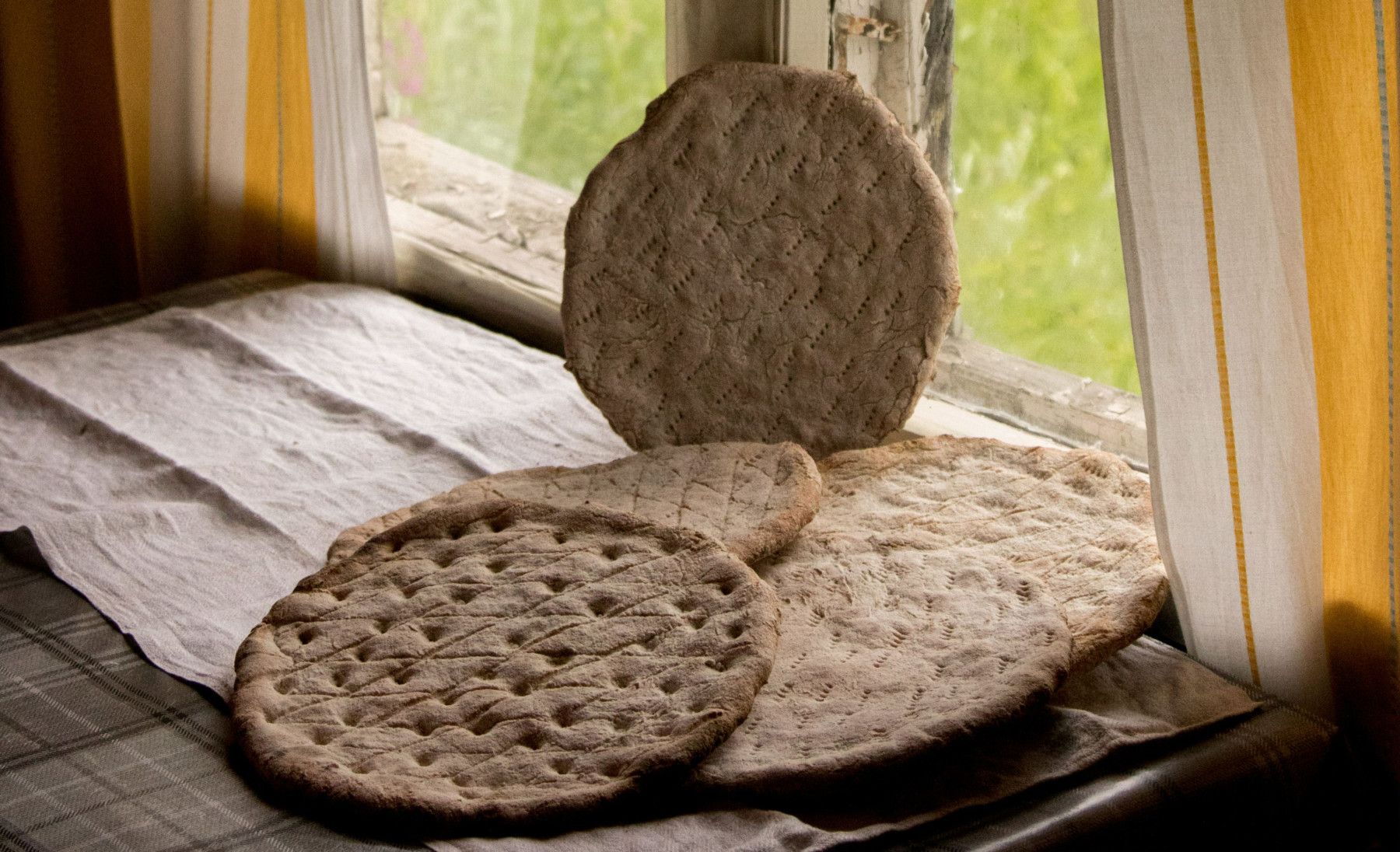
Across Finland there are many local versions of rieska flatbread.Photo: Seppo Hyvönen/Lehtikuva

In Finnish this flatbread is called rieska, which is an old word for bread, and you can find many variations of it in different regions. For the Lapland version, there are two things to keep in mind for the perfect result: cold and hot. The ingredients must be very cold, so it’s better to use ice-cold water and to chill the flour in the fridge in advance. The oven has to be as hot as it can be – 300 degrees Celsius would be perfect, but usually the maximum is around 275 degrees Celsius in home ovens.

  • 1 kg barley flour, plus extra for shaping the dough.
  • 1 litre cold water
  • 1 tsp salt
  • 1 tsp baking powder

Preheat the oven to 300 degrees Celsius or as close as possible, with the baking sheet in the oven, too.

Place all the dry ingredients in a large bowl and mix. Add the cold water in the middle and work it into a dough using your hands. Work quickly to keep the dough cold, and do just enough that the dough holds together.

Scrape the dough onto a work surface and divide it in half. Press each piece with your knuckles and, with the help of extra flour, into an even circle with a diameter of 30 centimetres. Then prick them all over with a fork to keep them flat during baking. Place the flat breads onto the preheated baking sheet and bake for 5–8 minutes until done. There are two ways to cool them. If you want soft version, stack them after baking and cover them with a kitchen towel. The other way is to cool them on the oven rack to get a crispy result.

Salmon soup (lohikeitto)

A bowl of soup and a spoon on a wooden table, viewed from above.

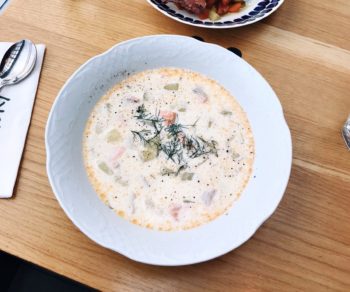
You can make Finnish salmon soup with or without cream in the broth.Photo: Joonas Ojala/Story Restaurant

We include two different versions of this recipe. You can use different types of fish, but in Finland the most common one is salmon. Making your own broth is recommended, but high-quality store-bought broth can also work. Salmon soup is a standard meal that appears on dinner tables and restaurant menus all over the country.

Fish broth:

  • Fish bones
  • 1 onion or part of a leek
  • 1 tsp of whole white peppers
  • 2 bay leaves

Rinse the bones well, put them into a saucepan and fill with just enough cold water to cover the them. Bring it to boil, then lower the heat to simmer. Carefully skim off any white foam, add spices and simmer 20 minutes with the lid on. Strain the broth.

Creamy salmon soup:

  • 400 g salmon, bones removed
  • 500 g potatoes, firm variety
  • 1 onion or the white part of a leek
  • 1 or 2 carrots
  • 20 g butter
  • 1 tsp whole pepper
  • 2 dl heavy cream
  • Fish broth
  • Salt
  • Dill and chives

Dice the fish into bite-size cubes and salt them lightly. Cover and put in the fridge. Peel and cut vegetables. Cut the potatoes into two-centimetre cubes and the carrots into one-centimetre cubes. Melt the butter in a soup pot and sweat the chopped onions for approximately 10 minutes on low heat. When the onions are translucent, add potatoes, pepper and broth. Bring to a boil, then add carrots and reduce to a simmer for 10–15 minutes, until potatoes are tender and add cream. Remove the pot from the heat and add the fish. Mix gently and let stand for ten minutes. Sprinkle plenty of chopped dill and chives on top.

Kainuu salmon soup:

The eastern Finnish region of Kainuu is not as far north as Finnish Lapland, but it’s still about a seven-hour drive northeast of Helsinki. The Kainuu version of salmon soup omits the cream. Instead, the fish broth is thickened with rye flour.

  • 400 g salmon, bones removed
  • 500 g potatoes, firm variety
  • 1 onion or the white part of a leek
  • 1 or 2 carrots
  • 20 g butter
  • 2 heaping tbsp rye flour
  • 1 tsp whole pepper
  • Fish broth
  • Salt
  • Dill and chives

Dice the fish into bite-size cubes and salt them lightly. Cover and put in the fridge. Peel and cut vegetables. Cut the potatoes into two-centimetre cubes and carrot one-centimetre cubes. Melt the butter in a soup pot, add the rye flour and mix for two minutes. Add the chopped onions and continue approximately five minutes, being careful not to burn the flour. Add potatoes, peppers and broth. Bring to a boil, then add carrots and reduce to a simmer for 10–15 minutes, until potatoes are tender. Remove the pot from the heat and add the fish. Mix gently and let stand for ten minutes. Sprinkle plenty of chopped dill and chives on top.

Reindeer osso buco with potato butter purée
(haudutettua poronpotkaa ja pottuvoi)

A hand spoons pieces of reindeer meat onto a plate of mashed potatoes.

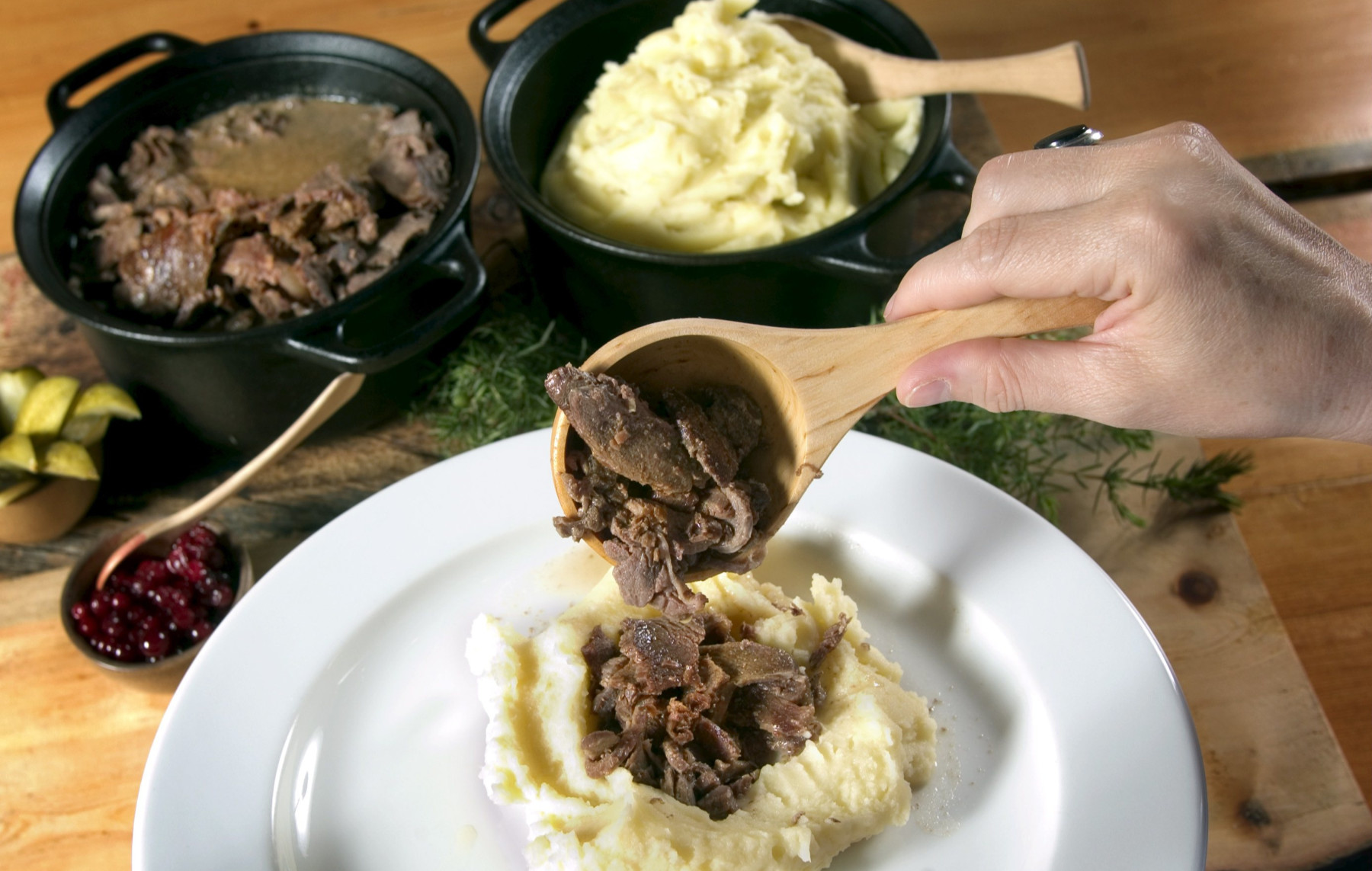
Poronkäristys, the traditional reindeer meat dish shown here, is typically served on top of potato butter purée and garnished with lingonberries. Our recipe reimagines it as reindeer osso buco, and keeps the potatoes and the lingonberries.Photo: Soile Kallio/Str/Lehtikuva

Traditional recipes for reindeer abound in Finnish Lapland, and the most famous one is sautéed reindeer, poronkäristys in Finnish. For this different version, we’ve made changes to the recipe and borrowed a term from Italian, calling it “reindeer osso buco.” You can use other meat, such as venison, if you have no access to reindeer meat.

  • 1 kg cross-cut reindeer shank, in pieces 3 cm thick
  • 50 g butter
  • 1 onion
  • 1 carrot
  • 2 celery stalks
  • 1 whole garlic
  • 150 g mushrooms, preferably wild
  • 1 litre game or beef broth
  • 1 dl lingonberries or cranberries
  • 1 sprig of rosemary or handful of spruce buds
  • 10 allspice berries
  • cooking oil
  • all-purpose flour, salt and black pepper

Peel and cut the vegetables into large pieces. Cut the head of garlic in half. Place a thick-based casserole pan over a high heat and add a splash of oil and half of the butter. Dust the pieces of reindeer in flour and fry until nicely browned on both sides. Remove from pan and set aside. Turn the heat down a bit and add the rest of the butter. Add the garlic to the casserole, sliced side down, and brown it well. Add the vegetables and mushrooms and sauté until soft. Add the broth, spices and rosemary, put the lid on and simmer for 2–3 hours until the meat is tender. Pick up the meat and set aside. Strain the broth into another saucepan, bring it to a boil and reduce by half. Season with salt and black pepper and add the lingonberries and meat. Serve with potato butter purée.

Potato butter purée (pottuvoi)

A pile of raw potatoes.

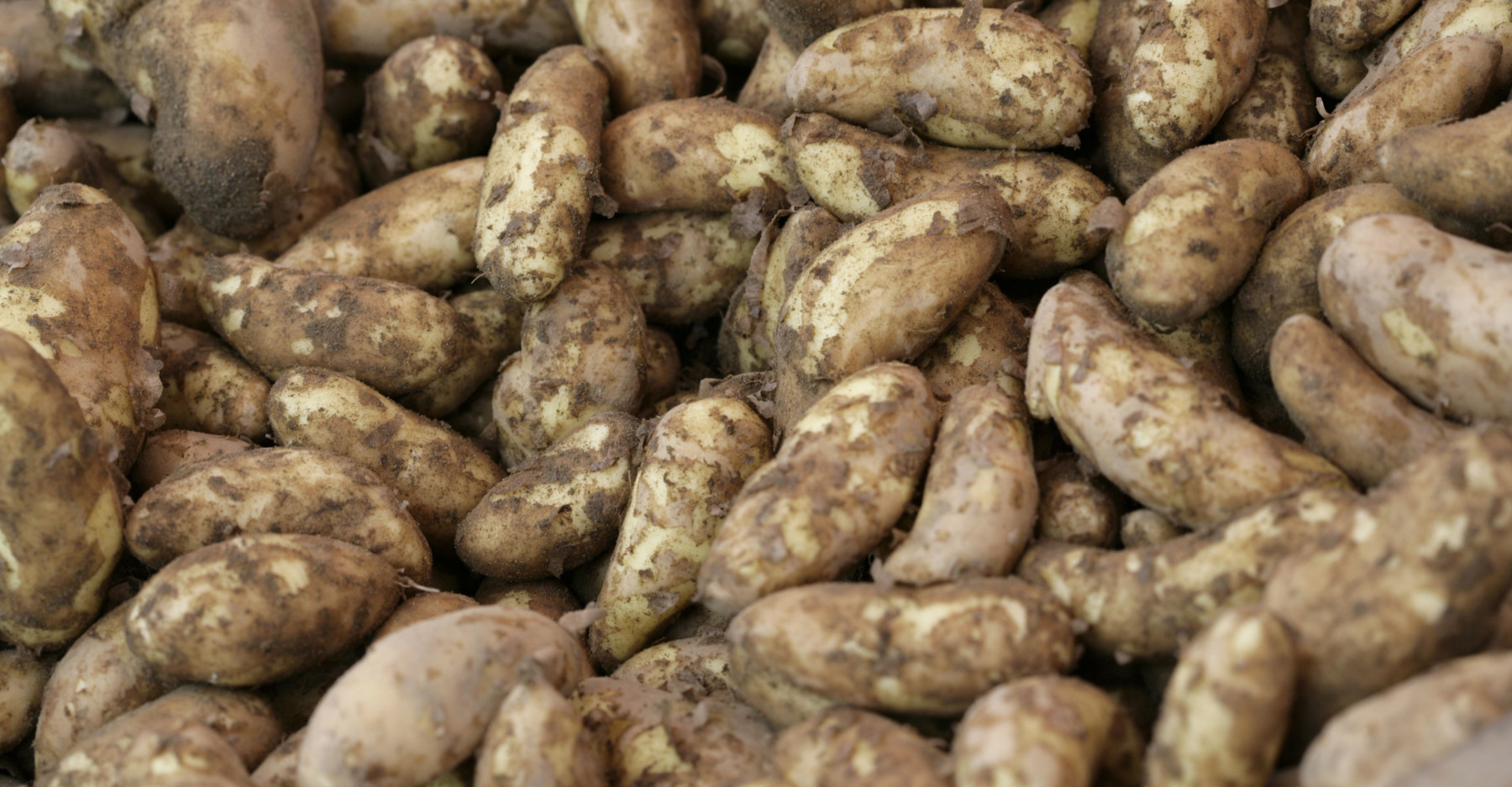
Puikula potatoes from Finnish Lapland are long and thin rather than round.Photo: Kaisa Sirén/Lehtikuva

This dish is similar to regular mashed potatoes, but the only ingredients are potatoes, butter and salt, so the result is a richer, thicker purée. Traditionally it uses puikula potatoes, a special variety from Finnish Lapland with a super-high starch content. However, you can substitute it with any high-quality starchy variety. For more flavour, use browned butter. You can cook the potatoes using different methods, for example by steaming, but roasting them in the oven yields more flavour.

  • 1 kg potatoes
  • 200 g butter
  • salt

Preheat the oven to 185 degrees Celsius. Wash the potatoes and cook them in the oven for approximately one hour, depending on the size of the potato. Let the potatoes cool for a few minutes, cut them in half and spoon out the flesh, leaving the skins behind. Put the hot potatoes and butter cubes in a mixing bowl and mash until smooth. Season with salt.

Baked fresh cheese (leipäjuusto)

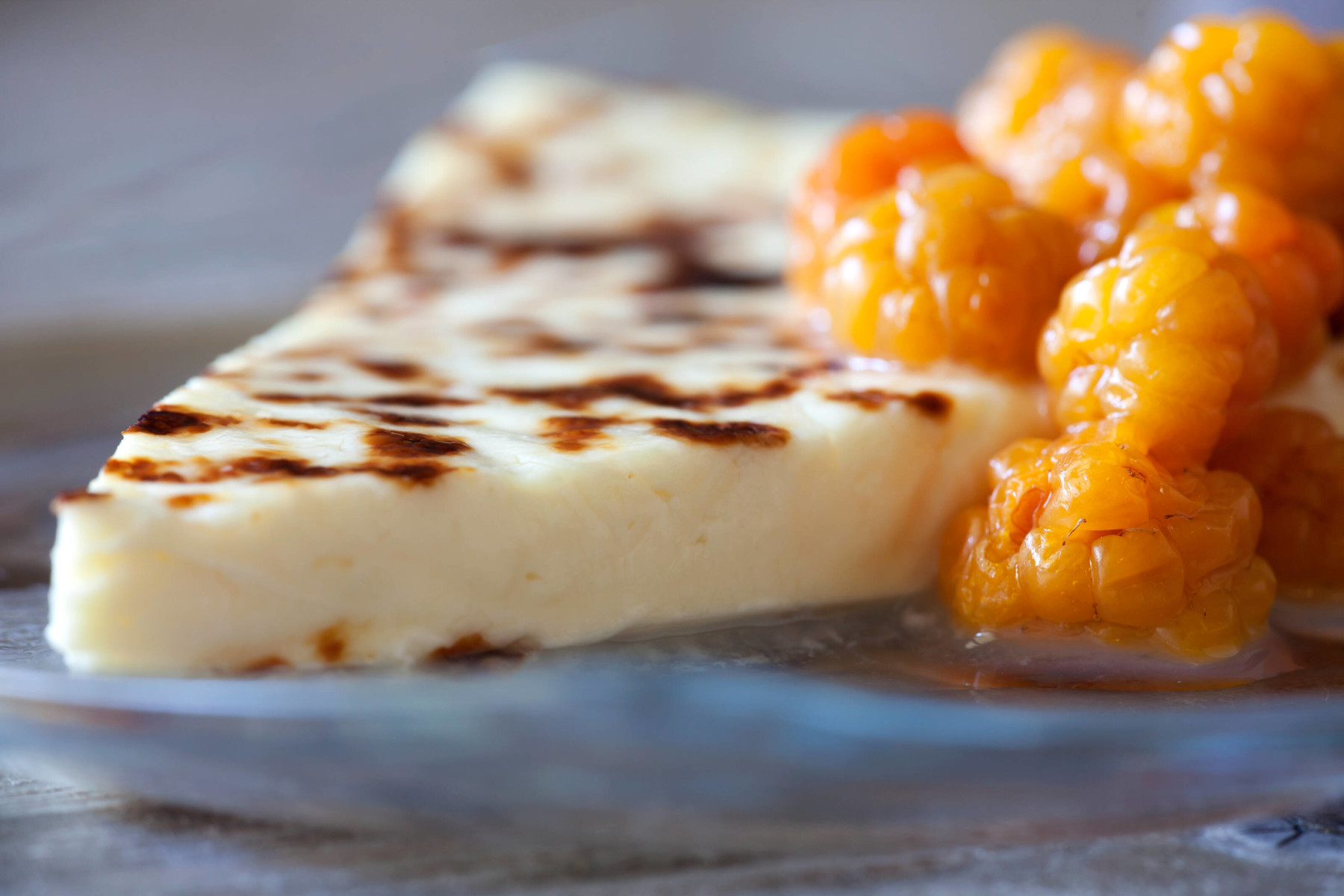
A piece of cheese on a plate with large orange berries.

Baked fresh cheese, known as “bread cheese” in Finnish, is often served with orange cloudberries, a sweet northern treat.Photo: Soili Jussila/Vastavalo/Visit Finland

Baked cheese comes from the northern part of Finland. The name varies in different regions, but the Finnish word leipäjuusto actually translates to “bread cheese.” It also has a nickname, “squeaky cheese,” because it squeaks while munching. Traditionally it´s made with colostrum (first milk) and cooked on an open fire. For example, in a wood-heated sauna, the cheese is baked in a skillet in front of the open fire hatch of the stove. You can bake it in a regular oven as well.

  • 4 litres organic whole milk
  • 1 tbsp salt
  • 1 tbsp sugar
  • 1 tbsp cornstarch (optional)
  • 1 tbsp rennet

Heat the milk to 37 degrees Celsius. Mix the dry ingredients and rennet (use the amount indicated on the bottle) and stir briskly for one minute to mix everything evenly. Remove it from the heat and let it sit for 30 minutes. Gently cut the curd into cubes a few centimetres wide and let it sit for another 15–30 minutes. Line a colander or sieve with muslin cloth. Using a slotted spoon, spoon the curds into the muslin. Fold the muslin over the top and let the liquid drain from the cheese for at least 20 minutes. Transfer cheese onto a baking tray or into a skillet and broil at 250 degrees Celsius for about ten minutes, until the cheese is has brown spots on it. For a more full-bodied taste, turn the cheese and bake it on the other side, too. Serve with jam, preferably made from cloudberries, a species native to Arctic region.

Everything matters: Volunteering time and talent to help Finland’s environment

Although 70 percent of Finland’s population lives in cities and towns, Finns feel connected to nature, and many feel personally responsible for its preservation.

For instance, more than 80 percent of Finnish people say the forest is important to them. Forests cover 70 percent of the country, which also contains 188,000 lakes.

Nature volunteerism is one manifestation of Finnish people’s connection with nature.

A tradition exists in Finland of communal work for a common goal, called talkoot in Finnish. When applied to environmental concerns, these activities often involve clean-up, maintenance or protection of nature. A group of neighbours might volunteer to collect trash in a local park. Or a public authority might call for volunteer birdwatchers to count golden eagle nests in Lapland (the bird is classified as “vulnerable” within Finland, although it is not endangered globally).

An unusual seal

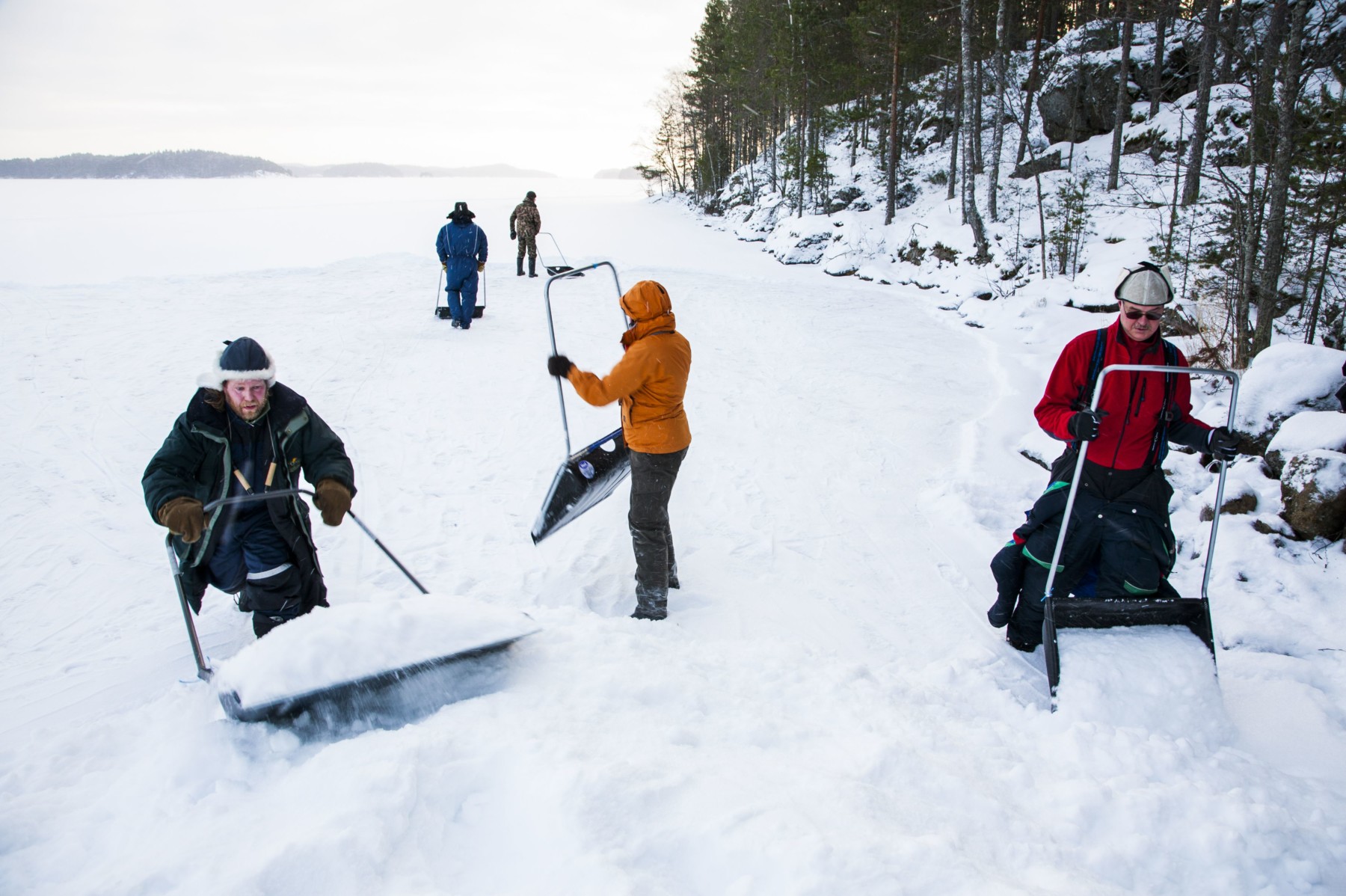
On the shore of an ice-covered lake, people shovel snow into a pile.

Volunteers help make piles of snow where seals can build their lairs when natural snowdrifts are lacking.Photo: Markus Sirkka/Lehtikuva

Lake Saimaa, an extensive system of interconnected lakes, inlets and islands in eastern Finland, is the largest body of water in the country, with a water surface area of nearly 4,400 square kilometres (1,700 square miles).

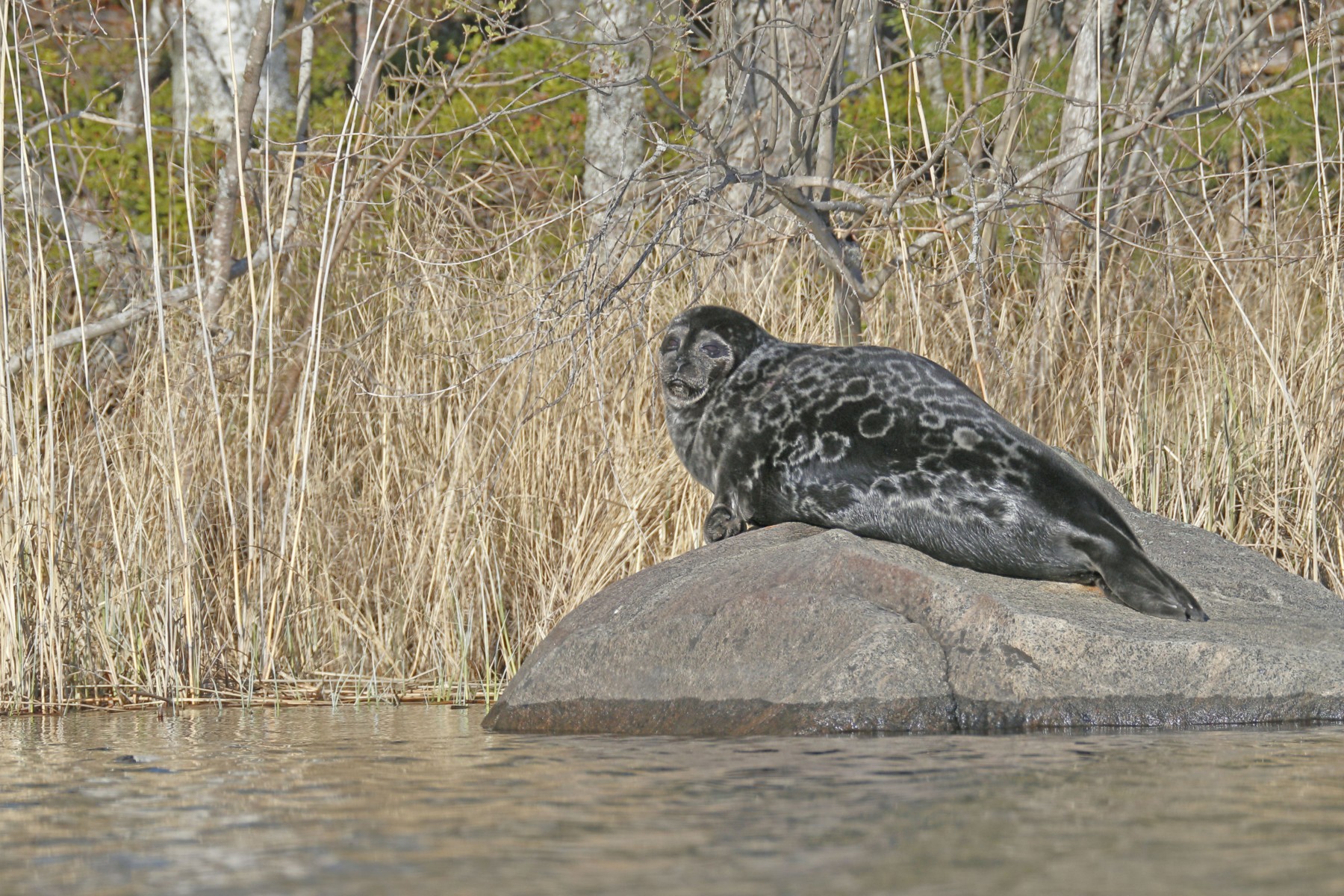
It is also home to Finland’s most famous animal, the gravely endangered Saimaa ringed seal, which numbers about 410 individuals. The survival of the seals relies heavily on the involvement of volunteers.

“The Saimaa ringed seal is weird,” says Miina Auttila, a conservation biologist who studies the seals. “It is a relic of the Ice Age and is landlocked in Lake Saimaa, cut off from other ringed seal populations in the Arctic.” Auttila works for Metsähallitus, the organisation which manages Finland’s state-owned land and water.

These seals have become the unofficial face of the Finnish nature conservation movement. “My main project is called Our Saimaa Seal LIFE, which includes both research and protection of the seals,” Auttila says. “Volunteers are critical to this work. In a similar previous project we had 300 volunteers.” 

Local level

A seal lies on a large rock near the shore of a lake.

When local people volunteer their time and energy to help nature, they become more invested. They start to regard the endangered Saimaa ringed seal as “our seal.”Photo: Ismo Pekkarinen/Lehtikuva

One of the oldest tasks volunteers have undertaken is the annual seal lair count. For more than 20 winters, they have gone out on the frozen surface of the lake to count dens in order to estimate the population. More recently, volunteers have also been constructing snowbanks so the seals have a place to build lairs and nurse their pups.

During the warmer average winter temperatures experienced in recent years, ice takes longer to form on the lake and is thinner, and snowdrifts are often shallower or even nonexistent.

“In a good winter, pup mortality is about 10 percent,” says Auttila. “In a mild winter, mortality is about 30 percent. It is critical that we have people make these snowdrifts for the seals.”

While the work itself is important, the people doing the work are also significant. Metsähallitus wants volunteers from the local area around the lake where the seals live. They know the local conditions and are best suited for the tasks, but there is also an added benefit.

“It helps improve local attitudes,” Auttila says. “[After] they volunteer, they know more about seals and understand conservation. They know that this is ‘our seal’ and they take care of it.”

Experts donate energy and skills

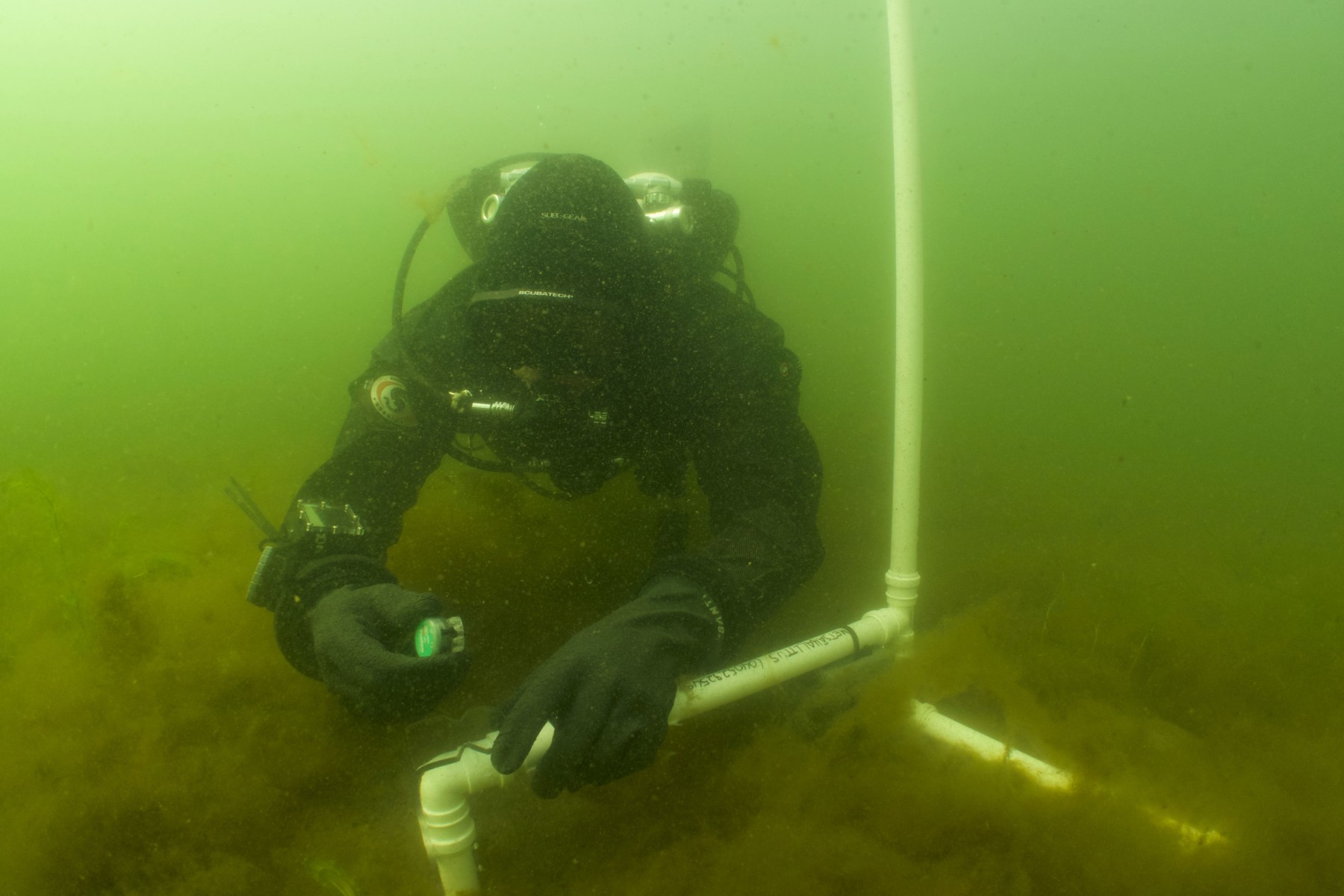
A diver handles equipment on the sea floor.

Divers from the group Badewanne have helped build and deploy sensors to monitor eelgrass growing conditions.Photo: Mauro Sacchi

Any volunteer help is valuable, but some people contribute specialised skills. Mauro Sacchi is one of several divers who volunteer their expertise for nature conservation. The idea began with the diving group Badewanne, which documents war shipwrecks in the Baltic Sea. Finnish environmental authorities are interested in their work because a rusting wreck could release oil.

“We began working and training with Badewanne and the Finnish Environmental Institute to develop sensors to place on the wrecks,” Sacchi explains. “If there is a leak, the authorities can remove the oil so it doesn’t contaminate the marine environment.”

The divers designed rigs to hold the sensors and were delighted with the results. Metsähallitus heard about the project and asked if they could build and deploy similar sensors for an eelgrass experiment. Eelgrass is an important marine species, and scientists wanted to research if it could be transplanted. They needed precise data about marine conditions, such as light and salinity.

“Government agencies might not have a staff diver available who has experience building and deploying sensors like this,” says Sacchi. “To help out, we offer our skills and work under their direction.”

Volunteering provides a sense of purpose

Green plants sway on the sea floor.

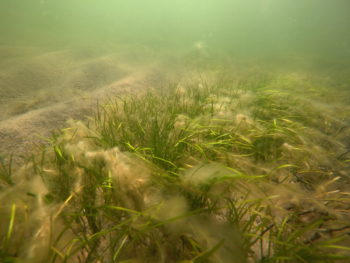
Off the coast near the southwestern Finnish town of Hanko, scientists have been investigating how to transplant eelgrass, an important marine species.Photo: Aija Nieminen/Metsähallitus

The volunteer work has already yielded positive results. In the summer of 2020, oil was removed from two sunken ships near the Åland Islands, and two plots of eelgrass were transplanted west of Helsinki. The divers also plan to remove “ghost nets” snagged on sunken ships. When a fishing boat loses a net, it becomes a ghost net that can entangle and kill sea life.

“This volunteer work gives us a sense of purpose,” Sacchi says. “It is something we believe in, and I love it.

“We need to do all we can so future generations can continue to enjoy the natural world. Every positive action matters.”

By David J. Cord, September 2021

Ambition and big hearts guide Finnish women’s football to Euro 2022 and beyond

A dream come true: That’s how footballer Linda Sällström describes the qualification of the Finnish national team for the UEFA Women’s Euro 2022 tournament in England.

Considering that she has suffered a string of injuries over her long career, it’s all the more remarkable that (at the time of writing in summer 2021) she is all-time top scorer for Finland’s women, with 48 goals in 107 international appearances. She’s chasing the national women’s record of 131 caps, held by Anna Westerlund. This will be Sällström’s second Euros tournament and she can’t wait.

A very even team

A Finnish player kicks the ball as a Portuguese player runs after her.

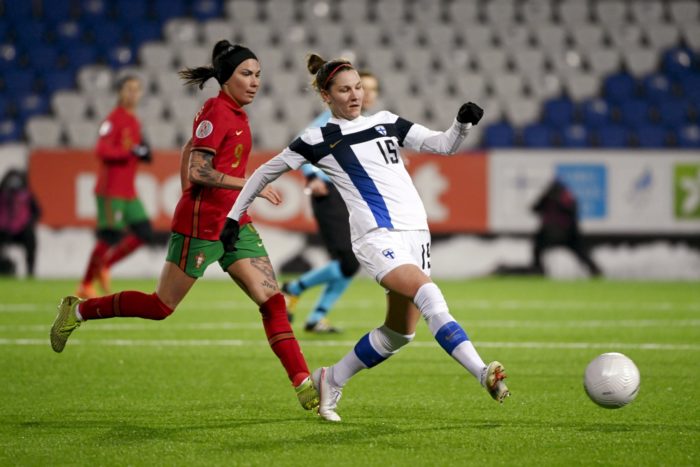
Natalia Kuikka (right) of Finland moves the ball past Ana Borges of Portugal during a Euro qualifier in Helsinki in February 2021. Photo: Emmi Korhonen/Lehtikuva

“I’m so happy that we qualified,” says Sällström. “It was our goal and ambition, and I’ve dreamed about it for a long time. It’s been fun to see the interest in the media in Finland, with the men’s team qualifying for this summer’s Euros for the first time and now with the women’s team in the tournament next year.”

The women’s national squad has qualified for the Euros three times previously, while the men’s national team had never qualified for a Euro tournament prior to the one held in 2021.

Sällström’s late winning goal in the penultimate qualifying game in Helsinki against Portugal guaranteed first place for Finland in the qualifying group. The 2020–21 season was her third with Paris FC in the highly competitive French women’s league, and she’s one of the most experienced members of the Finnish team. She namechecks Natalia Kuikka, a centre-back recently acquired by Portland in the National Women’s Soccer League in the US, and goalkeeper Tinja-Riikka Korpela, who plays for Everton in the English league, as important players, but Sällström is keen to emphasise Finland’s team spirit.

“Our strength is that we have a very even team, not just a few good individuals, and that we perform well as a group,” she says. “That makes it harder for the coach to pick a first-choice starting eleven.”

Proud achievement

A Finnish player slide tackles a Scottish player.

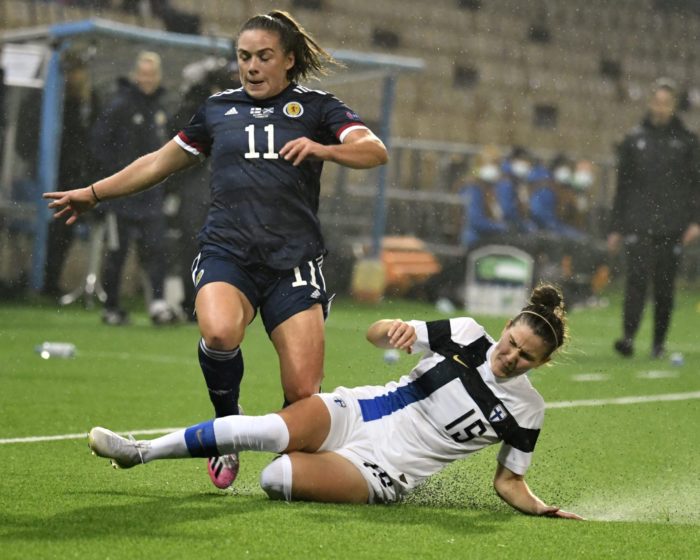
Finland’s Natalia Kuikka tackles Scotland’s Kirsty Hanson during Euro qualifier action in Helsinki in October 2020. Photo: Heikki Saukkomaa/Lehtikuva

That coach is Swedish one-time player and former coach of the Scottish national team Anna Signeul, and she is similarly excited at Finland’s success. “It feels fantastic on a couple of fronts for me,” she says.

“I’m so pleased for the players, the staff and the Football Association. The hard work, effort and commitment which have gone into qualifying have been tremendous. This has been an extraordinarily tough year. Many of the players who play abroad were unable to travel to see their families and loved ones, so I’m so pleased that there has been such a positive outcome to our campaign.

“This team have been amazing to work with – I’m so proud of what we have achieved together.”

Signeul’s recruitment had the specific aim of qualifying and can be viewed as one part of the Finnish Football Association’s renewed strategy to advance men’s and women’s football at all levels. The confidence of the women’s national team reflects that push for improvement.

“The players in Finland have a very big heart,” says the coach. “They work so hard for success. Every day they strive to be better than they were the previous day. They are so ambitious. That spirit of never giving up was very evident in our qualification campaign, where we scored goals on almost the last kick of the ball to win games.”

Ensuring the future

A Finnish player kicks the ball as a Portuguese player runs after her.

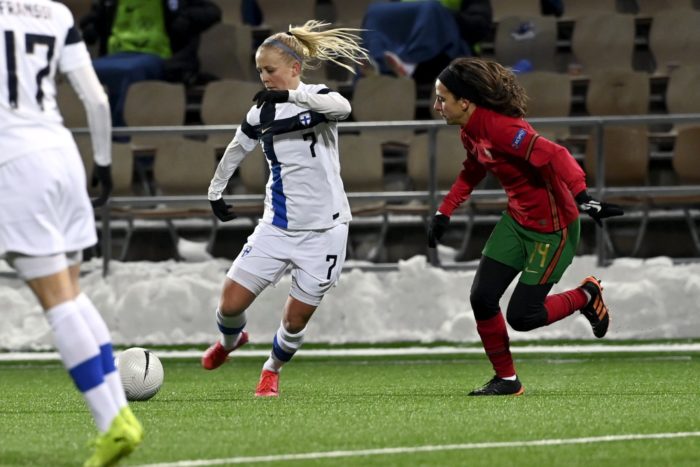
Adelina Engman controls the ball for Finland against Portugal in Helsinki in February 2021. Photo: Emmi Korhonen/Lehtikuva

However, there is always work to be done. “Finnish women’s football would compare favourably in relation to other nations in Europe and the world,” says Signeul. “But there are some areas where we need to focus to ensure a continuous pipeline of talented players.

“We need to continue to ensure quality opportunities for our most talented female players, and we need to ensure a joined-up approach between what is happening in the club game and the national teams. Strong competition at club level is the key for the game in Finland if we are going to make qualification for major finals tournaments part of our DNA in the future.”

In summer 2021, the men’s team and their own Euro adventure occupied the spotlight. Both men’s and women’s Euro championships are happening a year later than originally planned, as a consequence of the Covid-19 pandemic.

The men’s team has had the nickname Huuhkajat (meaning “eagle-owls”) since 2007, when an eagle-owl buzzed the pitch at Helsinki’s Olympic Stadium during a match against Belgium. As the men’s Euro tournament progressed in June and July 2021, the women’s team continued to prepare for summer 2022. They have their own nickname, too: Helmarit (“boreal owls”). Autumn 2021 also brings the first qualifier matches for the 2023 Women’s World Cup.

“The draw for the [Euro 2022] finals takes place in England in autumn, and when we know the teams in our group, we will sit down and create the goals for ourselves as a team,” says Signeul. “We’re looking forward to that.”

By Tim Bird, August 2021