For Finland and China, hockey is a contact sport

It was never a contest inside Malmi Ice Hall, an arena just outside the Finnish capital. In two periods of play the Finns won, 9–0, with virtually all of the action occurring in front of the Chinese goal.

The Finnish team was a youth squad from Helsinki club Jokerit; their opponents came from the Beijing Ice Hockey Association (BHA).

The outcome wasn’t the point, not with Finland being a world power in the sport and China just recently catching on to the nuances of hockey. The game formed part of a much broader partnership between the two countries, designed to make the Chinese national hockey teams more competitive in advance of the 2022 Beijing Winter Olympics while also offering possibilities for Finnish businesses.

Hockey-based brainstorming

Hockey players fighting for the puck.

The chase is on: The Chinese players travelled to Finland to gain experience in a country where ice hockey is a national obsession.Photo: Hernan Patiño

The idea began in 2015, when Jokerit executives began hearing rumours that a team from Beijing wanted to join the Kontinental Hockey League (KHL). At the time, Jokerit’s men’s team was itself a relatively new addition to the Russian-based KHL, which now includes clubs in seven countries. Beyond the novelty of a professional ice hockey team located in China, Jokerit’s management team saw the potential of a Finland–China cooperative that could benefit both countries.

As Finland lends its vast know-how and experience in the sport to a hockey novice like China, Finnish companies such as those that specialise in building hockey rinks are looking at the possibility of market inroads in China in the lead-up to the Olympics. (A Finnish firm built the rinks for the 2014 Winter Olympics in Sochi, Russia.)

Beijing-based Kunlun Red Star entered the KHL in the 2016–17 season; at the time of writing, the club has five Finns on the roster and a Finnish head coach. Before Beijing joined the league, Jokerit management had already made a number of goodwill trips to China. The ongoing partnership is even creating growth opportunities for the Finnish tourism industry.

“This has a huge impact for the winter-sport market here in Finland, with all the Chinese tourists coming to Finland,” says Jussi Rapo, general manager of facility operations for Jokerit, after returning from his 25th trip to China since 2015. “And this is just the beginning. About 100 million Chinese people have a passport. They estimate that 350 million will have a passport in the next five years.”

Looking for overnight results
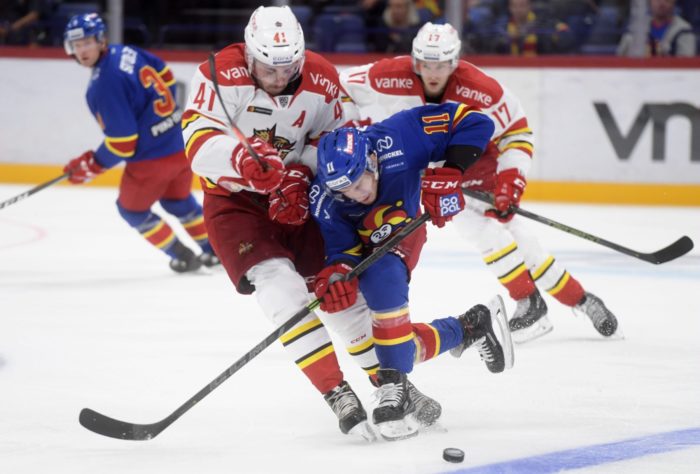
Hockey players of Jokerit and Kunlun Red Star fighting for the puck.

The big boys: Steve Moses (11, in blue) of Jokerit and Taylor Beck (41) of Beijing’s Kunlun Red Star fight for the puck during KHL action in Helsinki.Photo: Vesa Moilanen/Lehtikuva

In the long term, the benefits of attracting tourists from a massive country that is just beginning to appreciate winter sports could pay off for Finland. Meanwhile, Finnish expertise in providing hockey rink technology to China could enhance Finland’s industrial base.

For now, Rapo says the sports-first goal of the partnership is to help China develop viable national hockey teams. The coach of the Chinese men’s national hockey team is a Finn, Jyrki Aho. China wants its men’s and women’s teams to be competitive in time for the Olympics, but that is a herculean challenge, given that there are only 15,000 hockey players in a country of 1.4 billion. Finland, by comparison, has five times as many players among its 5.5 million inhabitants.

With a series of ongoing games in both countries, Finnish hockey ambassadors are teaching skills and coaching philosophies to their peers, but Rapo says that cultural differences sometimes impede progress. Whereas Finland became a dominant power in hockey partly by adopting knowledge from other countries and modifying it to suit the Finnish culture in a process that took many years, China wants to go straight to the competitive stage.

“They want it to happen overnight,” Rapo said.

Inspiration from Finland
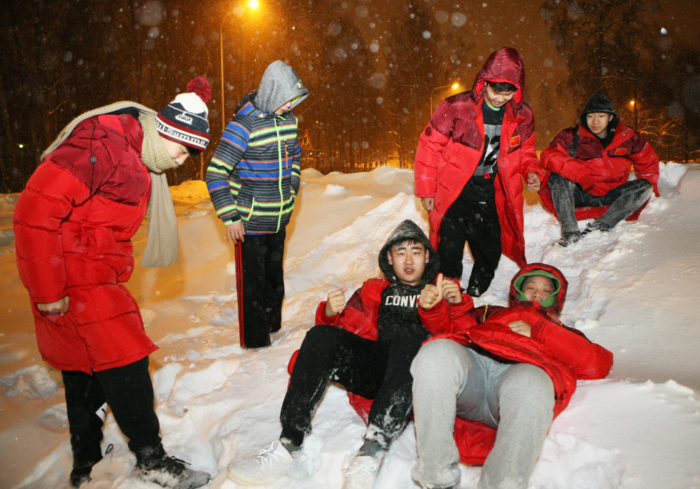
Young Chinese boys lying and playing in a big pile of snow.

The boys from Beijing had fun playing in the mounds of snow outside the arena, too.Photo: Hernan Patiño

In a recent game in China, Finland’s ten-year-old boys’ team was soundly beaten. While the Chinese are quick learners, Rapo said many players quit before they are 12 to concentrate on academics.

Jiří Novák, the Czech coach in charge of the BHA under-16 team that failed to score in the game in Malmi, says life is difficult for aspiring Chinese hockey players. On top of hours of school study, these guys face long trips across Beijing to reach the few available ice rinks.

However, Novák believes the humbling experience in Helsinki can only help his players.

“These boys were in the Chinese championships and they won games by a big margin,” he says of his team. “They think, ‘We are good.’ But when they compare with a good hockey-culture team, they see a big problem.

“It’s good for us, because the boys can see what the Finnish boys can do. I hope that when we get back to Beijing they train harder.”

By Michael Hunt, February 2019
Finnish specialist helps make artificial intelligence human-centric

Data is being collected, analysed and utilised everywhere. Artificial intelligence algorithms process data to produce automated decisions, recommendations and services. New artificial intelligence applications are springing up at an accelerating pace.

“Our positive expectations regarding the data economy won’t come true if citizens and consumers do not trust that artificial intelligence is used to drive human wellbeing,” Haataja says.

In the future, the competitiveness of companies and countries will depend to a great extent on their ability to utilise data and artificial intelligence. One key issue is who possesses expertise in this sector.

At the same time, a growing amount of attention is focusing on the ethical basis of AI activities.

Large-scale changes, fast pace

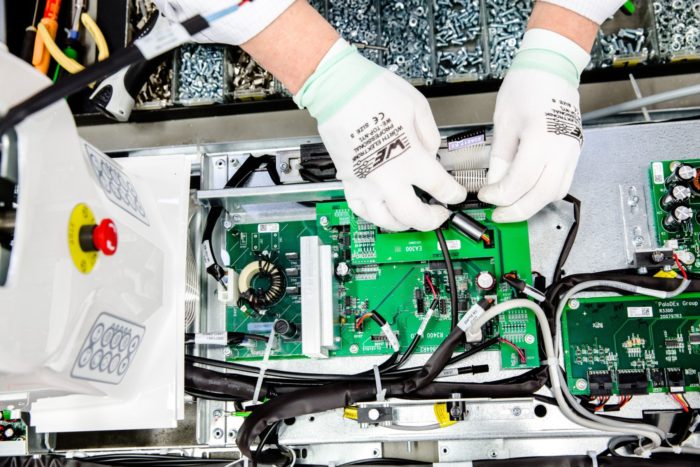
A pair of hands constructing a complicated piece of machinery.

Nuts and bolts: Constructing a piece of healthcare technology that may provide data that leads to better decisions.Photo: Sakari Piippo

Earlier in her career, Haataja worked as director of artificial intelligence at OP Financial Group, one of the largest and oldest financial companies in Finland. At that time, she says, it really hit home for her that power and responsibility must go hand in hand.

“I began to wonder what it would take for me to convince our owner-customers that the data we collected about them was always truly to benefit them,” she says.

She subsequently moved on to developing principles and practices for the sector in Europe and globally.

“This is exceptionally meaningful work, and therefore it’s also rewarding,” she says. “It’s fantastic to have the opportunity to collaborate with other experts from around the world to formulate new guidelines that will shape the world our children live in.”

The tremendous pace of progress in AI adds its own dimension to the work: “Large-scale changes have to be implemented at a relatively fast pace.”

Human-centric tech

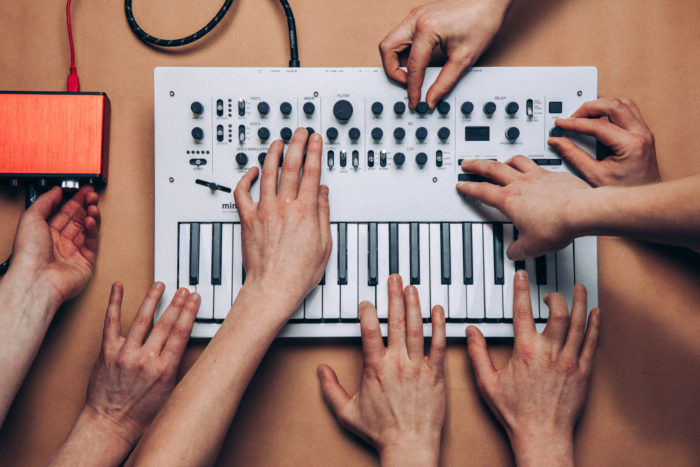
Eight hands playing a small keyboard and adjusting the settings of the keyboard and a speaker.

This photo, showing many different influences and inputs on a piece of music, symbolically plays on the fact that artificial intelligence technology is even being utilised in the arts.Photo: Aleksi Poutanen/Aalto University

The Institute of Electrical and Electronics Engineers (IEEE) is one of the places where Haataja is currently contributing to promoting AI ethics. An independent global organisation with 400,000 members in more than 60 countries, it develops technology sector standards.

“Above all, the organisation wants to promote human-centric technology that serves people,” says Haataja. “For example, the current WiFi standard was developed by the IEEE.”

She is also the chair for Finland’s AI Programme’s Ethics working group. In addition, she has her own company, Saidot.ai, which develops technologies in order to enable ecosystem transparency, accountability and agreements in artificial intelligence.

In May 2018, the EU’s General Data Protection Resolution (GDPR) entered into force. It guarantees every EU citizen the right to check what data has been collected about them and receive information on how the data will be used and who will have access to it. Additionally, citizens have the right to correct their data or delete it from a register.

“The GDPR marks an exceptionally significant step in the direction of responsible use of data,” says Haataja. “It will provide the foundation for creating good shared ethical practices.”

How will AI influence our lives?

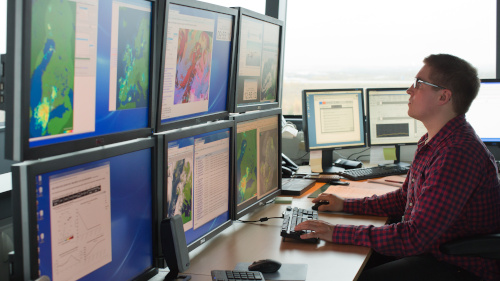
A man looking at radar displays on six screens.

Studying radar displays at Helsinki Airport: Air traffic control is one of numerous fields in which use of artificial intelligence is set to increase.Photo: Riitta Supperi/Keksi

“Nowadays artificial intelligence is largely being developed to solve or automate specific narrow use cases and problems, but it’s also crucial to consider the impact of the technology from a broader, long-term perspective,” Haataja says. “How will it influence our lives and our society?”

She mentions that there is a need for ethical standards and certifications, for example on how AI is used in recruitment:

“When artificial intelligence makes assessments on how well a person is suited to a position, for instance by analysing microexpressions on the person’s face, then there’s reason to consider whether it will lead to discrimination, and how that could be avoided.”

She adds, “The EU has an important role as a pioneer. However, the IEEE’s standards and certificates are intended for global use.”

By Matti Välimäki, January 2019
From good to “goodest”: Finland tops the Good Country Index

So many international rankings and reports exist. What sets the Good Country Index apart from the Global Competitiveness Index, the Prosperity Index, the World Happiness Report, the Environmental Performance Index and all the others?

The Good Country Index takes stock of 35 measurements that show countries’ contributions in seven different categories: science and technology; culture; peace and security; world order; planet and climate; prosperity and equality; and health and wellbeing.

In addition, and perhaps most importantly, the Good Country Index is all about what nations do for the rest of the world, not about what happens within their own borders.

A toe in the water

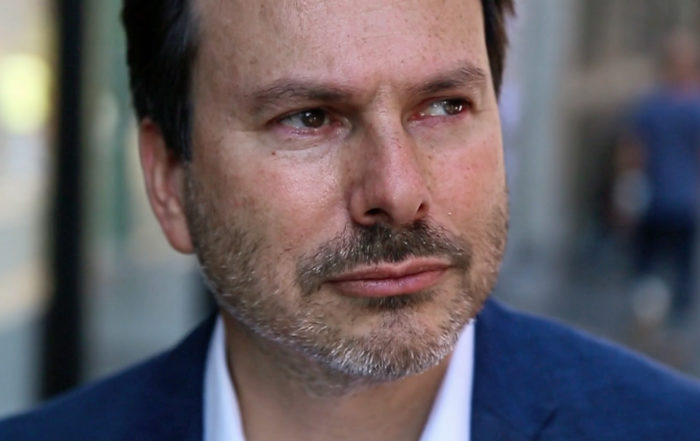
A close-up of a serious-looking Simon Anholt.

Simon Anholt founded the Anholt Nation Brands Index in 2005 and the Good Country Index in 2014.Photo: Sara Gibbings/Troy TV

“Pretty much every single one of [the other indexes] looks at countries’ internal performance in one way or another,” says Anholt. “Consequently, [they] treat the world as if it were made of entirely separate independent islands of humanity that have nothing to do with each other.”

Since the 1990s, London-based Anholt has advised the leaders of more than 50 countries in what became known as nation branding. In 2005 he founded the Anholt Nation Brands Index. Gradually perceiving a need for a new kind of study, he inaugurated the Good Country Index in 2014. (Finland was second that year.)

“Because we live in a massively interconnected, interdependent age, an age of advanced globalisation, it also made a lot of sense to look at how countries affect each other and affect the whole system,” he says.

While the Good Country Index gathers an immense amount of data, he characterises it as “a toe in the water;” it has limitations. “Reducing a country’s impact on the world to 35 data sets is obviously just a hint.”

Conversation and cooperation beat competition

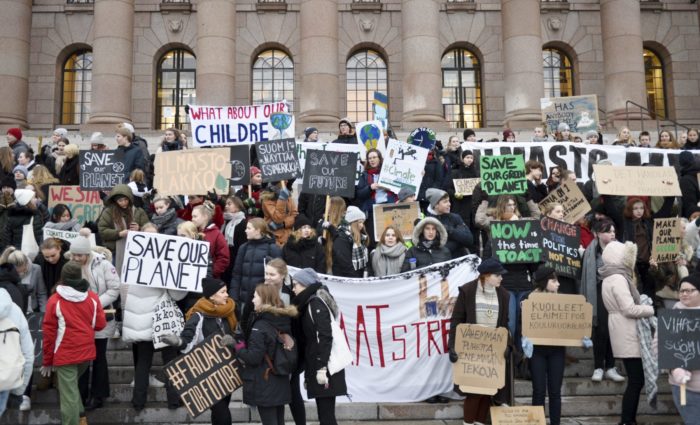
A crowd of students gathered for a climate demonstration and holding signs.

Teenage students gathered in January 2019 outside Parliament in Helsinki to demand action on climate change. Simon Anholt believes that people can use the Good Country Index to help hold politicians to account, for example by focusing on key topics during election season.Photo: Mesut Turan/Lehtikuva
The index also offers opportunities: “It is supposed to be the start of a new kind of conversation. The reason for it is to get people to start asking new questions about countries.”

This holds true no matter where your country ranks. In fact, the word “ranking” is misleading. The Good Country Index aims to encourage conversation, collaboration and cooperation, rather than competition to see who “wins” the rankings race.

“I’m not judging,” says Anholt. For this reason, the various categories of data aren’t weighted in the overall results. “I publish it in the form of a ranking because that’s the easiest way to crunch all of that data and present people with an overall picture.” A comparative listing gets people discussing the results.

After the release of the first edition of the index, Australian political activists told him they used the data matrix of the Good Country Index to focus questions for election candidates about how they would address certain categories in which the country was underperforming. “It’s a tool,” says Anholt. “If people do choose to use it to hold their governments to account, then that’s great. That means it’s working.” Finland is holding parliamentary elections in April 2019, and European Parliament elections happen in May 2019.

Sharing inspiration and experience

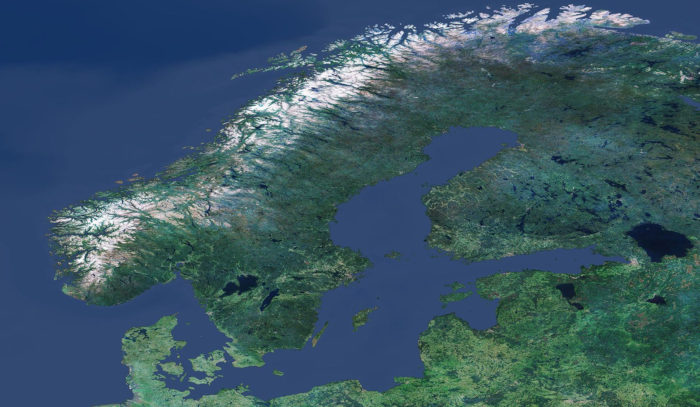
A satellite image of Finland, Sweden, Norway and Denmark.

Finland, Sweden, Norway and Denmark possess a long history of regional cooperation and often find themselves at the top of the Good Country Index.Photo: ESA/eyevine/Lehtikuva

While the Good Country Index aims to encourage discussion and cooperation, it’s not against the idea of competition. If countries vie to be the “goodest,” that’s healthy.

“Competition is fine,” says Anholt. “It’s a very effective driver, but it only becomes a problem when it’s the only altar at which we worship, and that’s the case for most countries most of the time.” He believes that “the culture of governance worldwide” can shift from fundamentally competitive to fundamentally collaborative.

Work together a little more, compete against each other a little less; this is his straightforward suggestion. The Nordic countries, who possess a long history of regional cooperation, often find themselves at the top of the index (the newest results put Sweden, Denmark and Norway in third, fifth and seventh place).

What’s good for your neighbours and the rest of the world is frequently good for you, too. “You often end up doing better work domestically because you’re drawing inspiration and experience from other countries,” Anholt says. “You’re sharing good ideas.”

Finland’s strengths

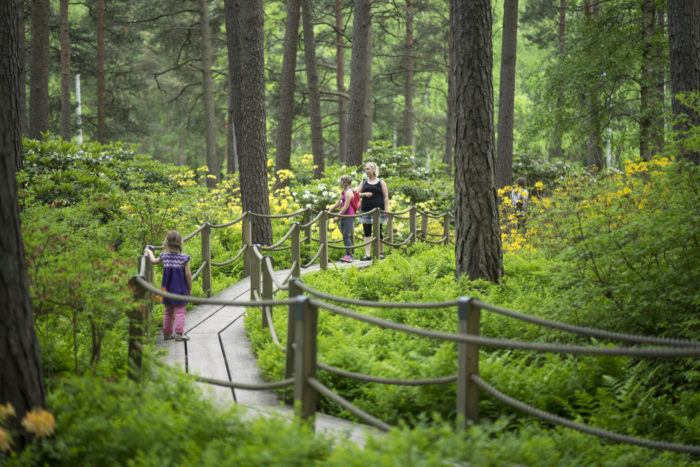
People walking on a wooden walkway in a lush green forest.

A walk in the park: One of the subcategories in which Finland does well is compliance with environmental agreements.Photo: Pasi Markkanen

Out of the seven categories in the Good Country Index, Finland places highest in prosperity and equality, in which it is second. The 35 subcategories include birth rate; ecological footprint; renewable energy; giving to charity; accumulated Noble Prizes; creative goods exports; humanitarian aid donations; and number of UN volunteers sent abroad.

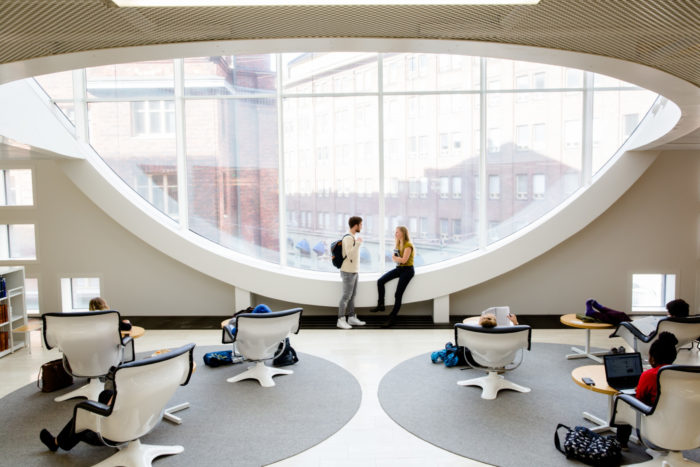
Finland’s strong suits are freedom of movement; press freedom; number of patents; number of international publications; foreign direct investment outflow; food aid funding; compliance with environmental agreements; and cybersecurity. One area for improvement is international students: Finland is famous for its education system, but figures indicate it should do more to attract foreign students.

“My message to Finland is the same message I would give to any country that comes top of the index,” says Anholt. “This is not a reward. Who am I to reward a country for its behaviour? This is a message about your obligations.”

Doing well in the Good Country Index indicates that a nation is good at collaborating and has “figured out a few things” that some of the others haven’t, says Anholt. It should “continue to demonstrate the benefit – domestic and international – of enhanced cooperation and collaboration.”

It’s about countries “making [themselves] willing and available to work with other countries,” says Anholt. “So it’s an opportunity for Finland to start working with other countries in a new way.”

The most obvious case

Two students hanging by a big oval-shaped window, other students studying in chairs nearby.

Light shines into Helsinki University’s main library: The Good Country Index suggests that Finland should do more to attract foreign students.Photo: Sakari Piippo

“Countries working together” has hardly been a common rallying cry among politicians in recent years. We constantly hear the word “polarisation” in the news.

“If this isn’t the most obvious case for more cooperation and more collaboration, then what is?” asks Anholt. He’s talking about cooperation between people who are concerned about the world as a whole and those who focus more on their own countries. Both have validity, he says. “It’s very important that the Good Country Index doesn’t become another piece of tribalism.”

The measurements in the index point to difficult questions about climate change, human migration, healthcare, poverty and more. How do you stay positive when your work involves delving into these stats?

You create a country. In Anholt’s newest project, he and American Madeline Hung have cofounded the Good Country, most easily described as a virtual country, “to prove that if countries learn to work together, then we will start to make real progress.” Anyone who wants to participate in solving global challenges can sign up online and become a citizen.

In real life, Finland will continue to consider how its actions can contribute to humanity. At the moment, that’s the “goodest” thing to do.

By Peter Marten, January 2019
Lux Helsinki fends off the winter darkness

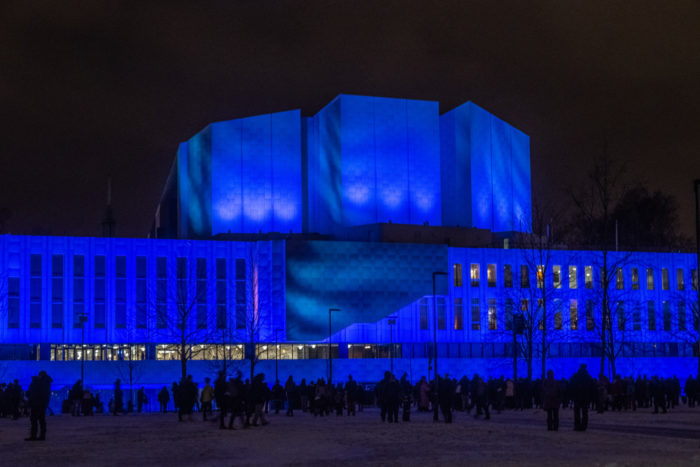
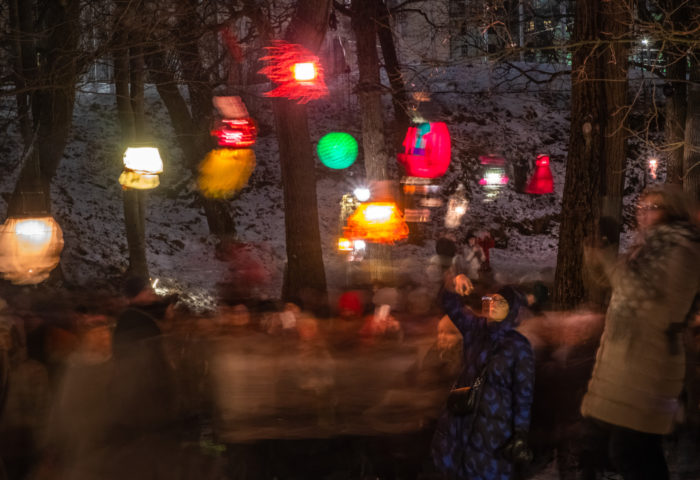
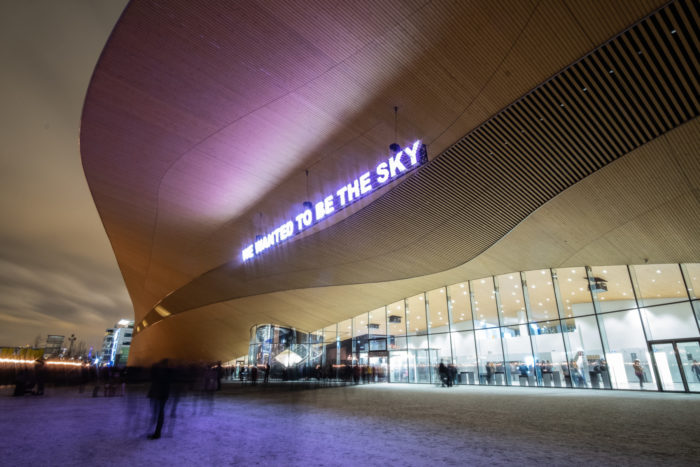
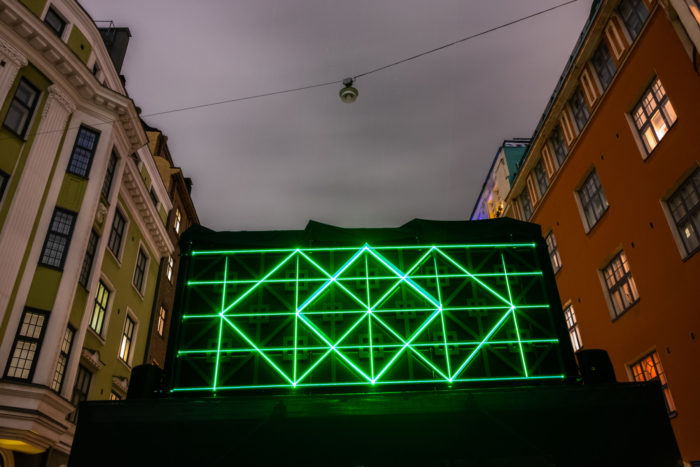
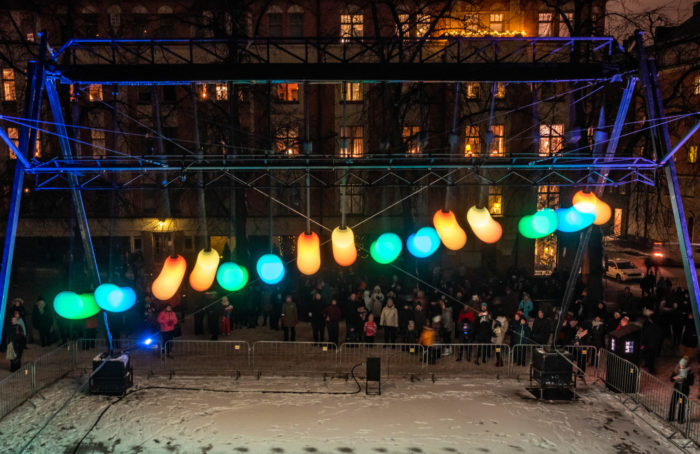
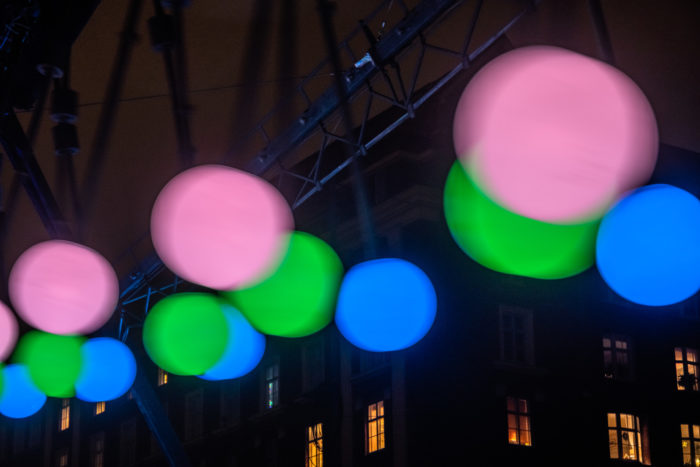
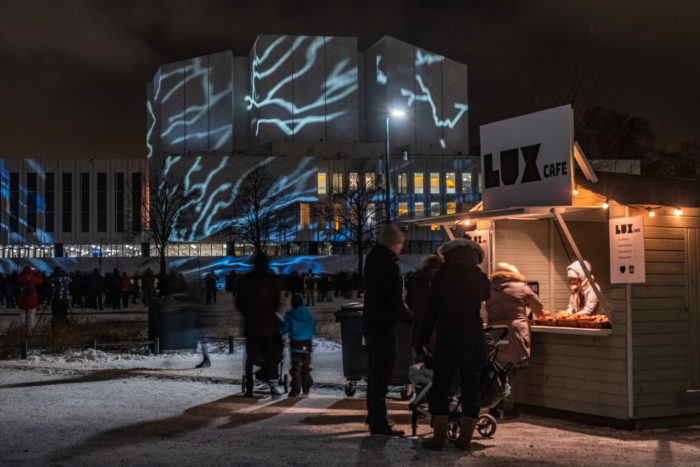
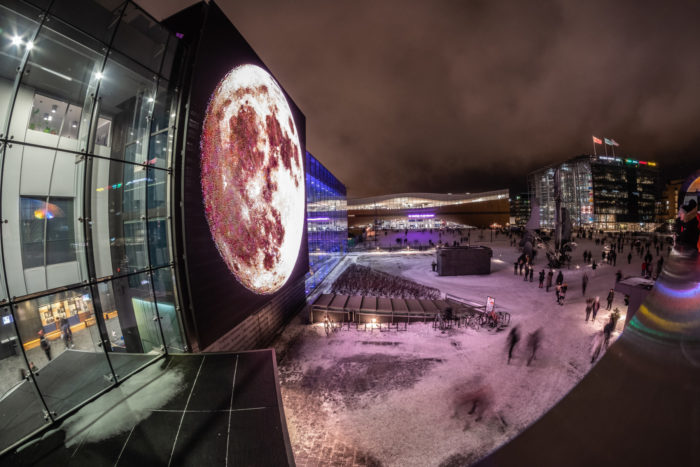
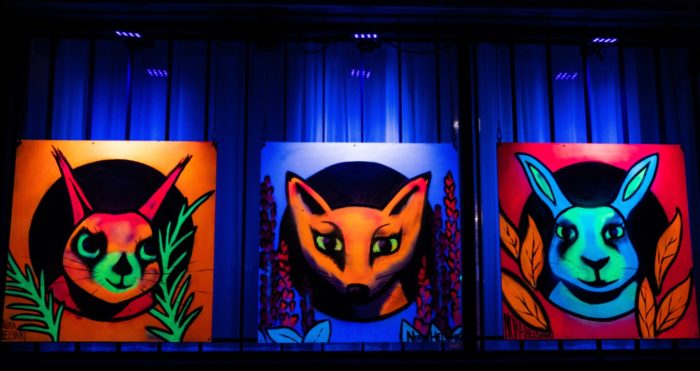
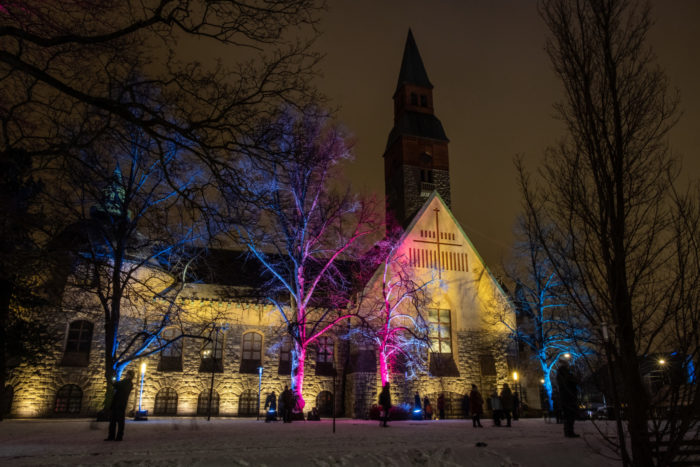
Lux Helsinki sheds some light on the Finnish capital in its darkest winter hour with comforting annual regularity (January 8–12 in 2025). Artists from Finland and all over the world create a glowing urban gallery of colour, warming the city’s soul in the void that remains when Christmas and New Year’s Eve have come and gone.

The free festival offers a recommended trail complete with official guide and map, and combines established works and specially commissioned installations.

Exact weather conditions are hard to predict in early January, but they’re always likely to be chilly. Over the years Lux Helsinki visitors have braved everything from sleety blizzards to bone-freezing Arctic blasts.

By Tim Bird, January 2019, updated October 2024

6 + 3 New Year’s resolutions from ThisisFINLAND

Are you tired of the same old New Year’s resolutions? Lose weight, get more exercise, save money, take up a new hobby, get a new job, save the world from climate change! We thought up a list of small steps you can take – and get to know Finnish culture and lifestyle while you’re at it.

Learn Finnish

A smiling woman looking at Finnish language books at a bookstore.

Photo: Peter Marten

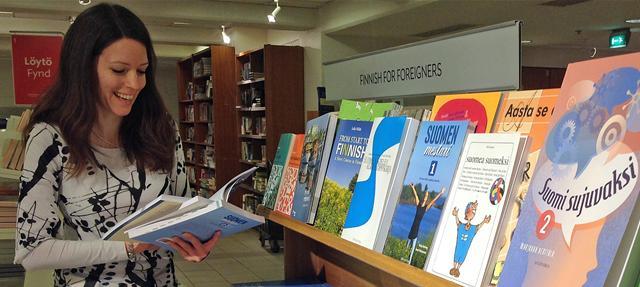
They say language is the key to a new culture, and challenging yourself is good for your brain. Why not start by learning some simple phrases in Finnish?

If that’s not challenging enough, we have plenty more material about learning Finnish. How about this, this or this?

Learn about Finnish culture

The cover of Mika Waltari's 'The Egyptian'.

Photo: Courtesy of WSOY

Want to learn more about Finnish culture? What better way than to read a book? Yes, a book! Here are ten great options to start with – why not read at least one of them this year? They’re ThisisFINLAND’s readers’ favourites, so you should be able to find some of them in your language.

Try hobbyhorsing

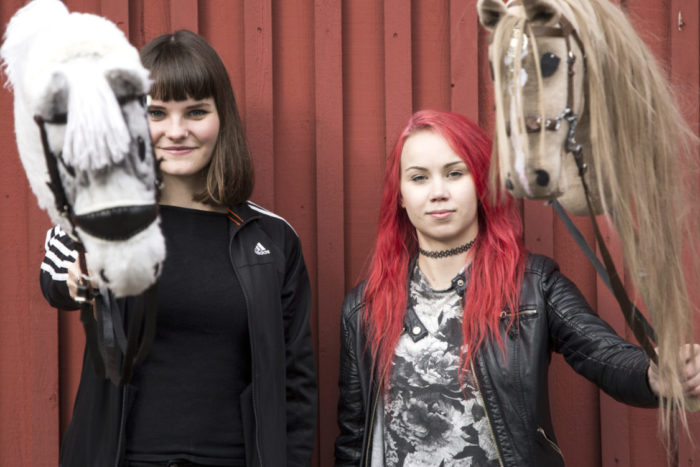
Two smiling girls holding their hobbyhorses.

Photo © ThisisFINLAND

If you really want to give your brain something new and challenging to work with, try hobbyhorsing for fun and exercise! You can learn the basics with our online tutorial, and proceed to arrange your own hobbyhorsing competitions. You will also find instructions on how to make your own hobbyhorse.

Enjoy winter

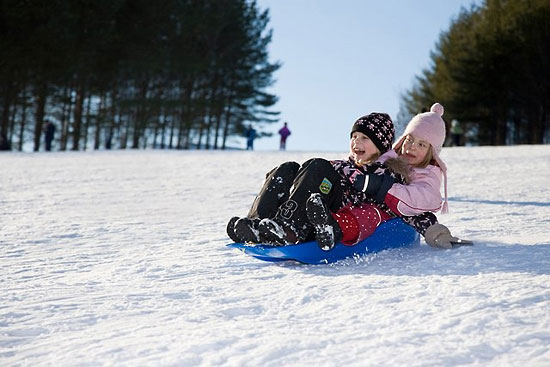
Two smiling children riding their sled.

Photo: Rodeo.fi/Juha Tuomi

Don’t like cold weather too much? This is something we sure can help you with: Learn how to not only survive winter but even enjoy it! A hint: coffee, warm clothes and snow are the keys.

Consume coffee like a Finnish person

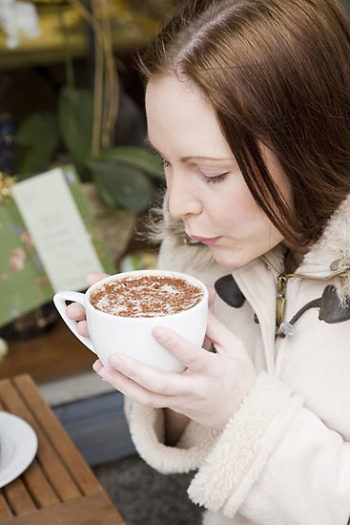
A woman blowing at her cappuccino cup.

Photo: Rodeo.fi/Juha Tuomi

Since we already mentioned coffee, why not drink coffee the Finnish way? That is, 12 kilograms of coffee per year. We start our day with coffee, drink it at work with colleagues, and every time we visit a friend. Besides, moderate consumption of coffee has been linked with a longer lifespan, and it may reduce the risk of cardiovascular disease, type-2 diabetes and Parkinson’s disease, among others.

Get some sisu

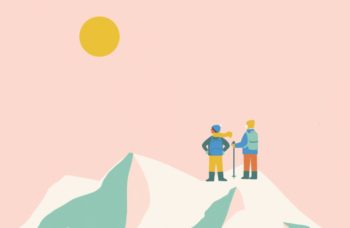
An illustration of two people standing on a mountain peak.

Illustration: Naomi Wilkinson

Feel like learning Finnish, drinking lots of coffee or mastering the art of hobbyhorsing is too much for you? Don’t give up! Try to be more like the Finns and build some sisu in yourself! Don’t know what sisu is? Well, there’s no simple translation for it, but reading our article will give you some idea.

Come to Finland

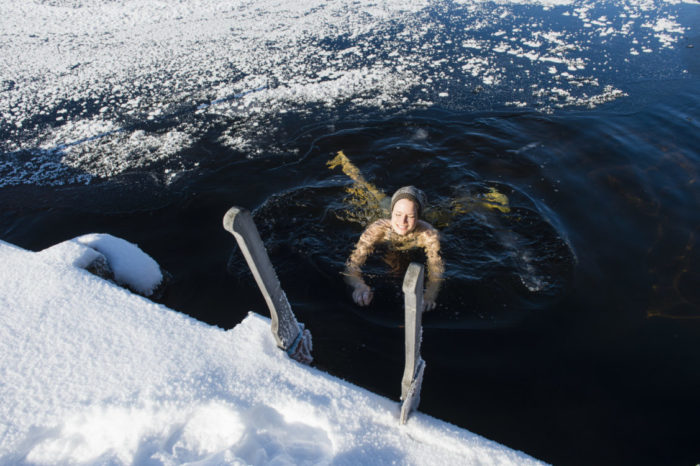
A smiling person ice swimming.

Photo: Juho Kuva/Visit Finland

Want to see and experience all this for yourself? Take a trip to Finland! Get inspired and plan your vacation, check out what our colleagues at Visit Finland recommend.

ThisisFINLAND’s bonus resolutions: While in Finland, why not try these?

Take an ice-cold dip

Ice swimming: We mean swimming in freezing water, in a hole cut in the ice. Sounds horrible? Well, it gives you a great feeling afterwards, calms and relaxes, and reduces stress. Some say it also gives you better sleep and keeps colds away.

Glide across the landscape

Cross-country skiing: It’s great exercise and gives you an opportunity to admire the Finnish landscape. And what’s more, you don’t need to go to the countryside to try it (unless you want to): you can go skiing in a city park as well! But just to be sure: bring a map or a smartphone!

Simmer in a sauna

After those truly Finnish winter activities, here’s your reward: Warm up in a Finnish sauna! It’s especially rewarding after ice swimming, but equally relaxing in the summer after a dip in one of the hundreds of thousands of Finnish lakes. By the way, sauna can keep people healthier, and frequent sauna bathing has been proven to reduce risks of cardiac arrest. But remember: drink lots of water!

By Anna Ruohonen, January 2019
Finland’s heavy-metal stars reveal their lighter side at Christmas

In fact, Finnish heavy metal music has found inspiration in Christmas festivities for many years and in multiple ways.

When you peek behind the doom-laden metal-head personas and ask musicians to reflect on the season of goodwill, they happily admit to how much they enjoy it.

Tarja Turunen: Metallic moods with softer hues

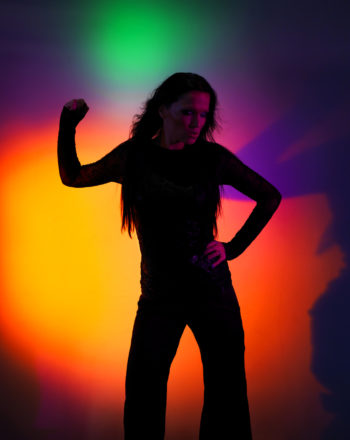
Tarja Turunen dancing with a background of colourful lights.

When you’re on the road as often as Tarja Turunen is, the best possible Christmas present is to spend time at home.Photo: Eugenio Mazzinghi

“For me the real Christmas feeling comes from the snow, quietness and peaceful environment that you get in Finland,” says Tarja Turunen, singer, songwriter and former lead vocalist of symphonic metal band Nightwish. “Fireworks and such don’t really suit my Christmas mood.”

Nevertheless, Turunen’s Christmas also has a metallic hue, because she is part of the band Raskasta Joulua (Heavy Christmas). It is a supergroup collective with regular and occasional members who create heavified versions of well-known Finnish Christmas carols.

However, when it comes to Christmas music at home Turunen prefers the traditional carols. “I like classical Christmas songs, also orchestral works, because you can truly relax as they play in the background. My favourite Finnish Christmas song is ‘Varpunen Jouluaamuna’ (Sparrow on Christmas Morning) and ‘I Love Walking in the Air’ from the Snowman cartoon [a British creation that also became popular in Finland].”

When you’re on tour almost until Santa’s big day, as Turunen is with Raskasta Joulua, the best possible Christmas present is to spend time at home. She says she loves to bake and prepare holiday food together with her daughter.

Noora Louhimo: Snowflakes soothe the pain

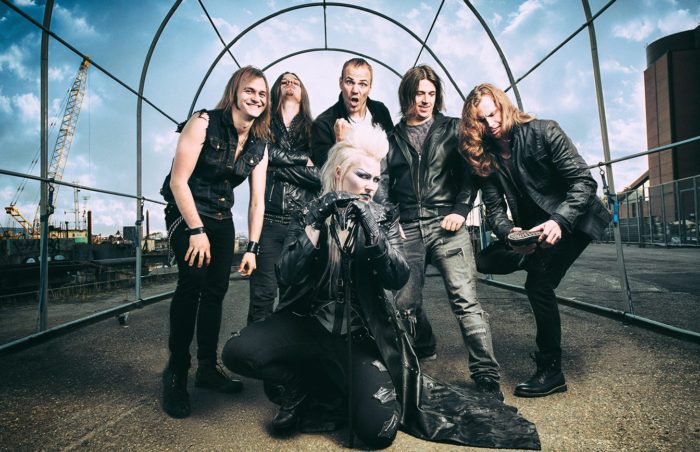
The band Battle Beast pictured outside with cranes and a worksite in the background.

Noora Louhimo (front) sings about pain, death and hell with Battle Beast, but appreciates the peaceful Christmas season so much that she starts decorating in November, to make it last longer.Photo: Battle Beast

For Noora Louhimo, lead singer of the heavy metal band Battle Beast, the earlier the festive season starts, the better. “I start decorating in November, because that way I can make Christmas last longer,” she says.

The antithesis of what Santa symbolises, Battle Beast has released four albums since 2005. But the global touring and heavy workload have turned the imposing frontwoman into one big Christmas softie: “Now more than ever before, I just want to be with my loved ones during Christmas. My work is so hectic that I like to keep it very simple and minimalistic during the Christmas season. I just like to stay at home.”

Singing about pain, death and hell for most of the year would take a toll on anyone, so it’s no surprise that Louhimo uses the festive season to destress and recharge her batteries. “I also like walking in nature, but it’s not the same if there’s no snow at Christmas.”

Let’s hope that snowflakes drift down to deliver the soothing visuals that this metal singer longs for.

Timo Kotipelto: Gingerbread memories

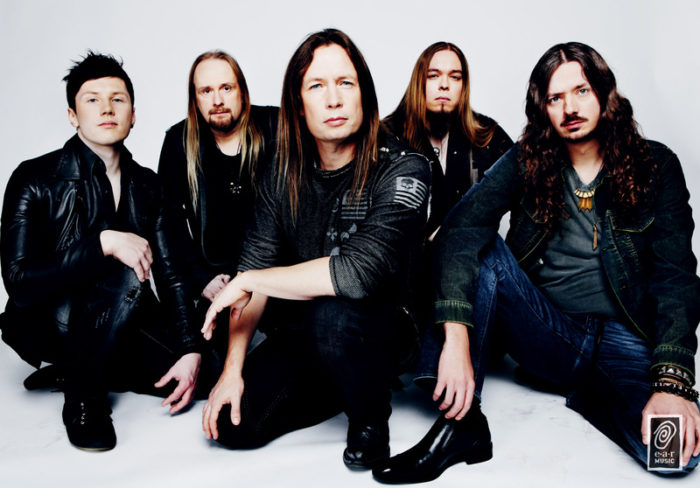
The band Stratovarius pictured sitting down against a white background.

Timo Kotipelto (centre), shown here with the other members of power metal band Stratovarius, visits with family and friends during the Christmas season for traditional food, quality time and board games.Photo: Stratovarius

Traditional food, quality time and board games sum up Timo Kotipelto’s Christmas. The lead vocalist of the power metal band Stratovarius usually visits his parents for Christmas, along with the other family members. “We don’t really buy gifts for each other, except for the children,” says Kotipelto. “I try to help out with the preparations or make people smile with my stupid sense of humour.”

Stratovarius is one of Finland’s oldest metal bands and among the most influential in the power metal genre, with 15 studio albums and 5 live albums. Kotipelto wrote several of Stratovarius’s songs in his hometown, Lappajärvi, in western central Finland. The place brings back fond memories. “When I was younger, I made a gingerbread house with my brother,” he says. “As far as I remember, it wasn’t the most beautiful of houses, but it tasted good!”

Jyrki Linnankivi: Haunting Christmas

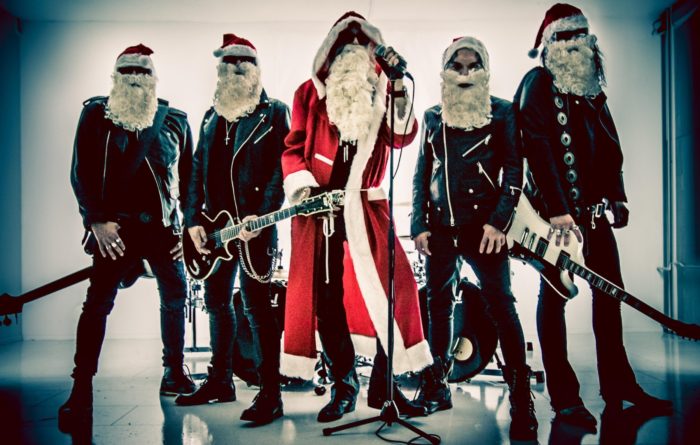
The band 69 Eyes wearing Santa Claus hats and beards.

Jyrki Linnankivi, better known as Jyrki69, is lead singer of gothic rock band The 69 Eyes. We think he’s the one dressed in red in this band photo.Photo: Ville Juurikkala

Better known as Jyrki69, Jyrki Linnankivi is the lead singer of Finnish gothic rock band The 69 Eyes. He has gingerbread memories of his own.

“Once our band took part in a celebrity gingerbread house competition,” says Linnankivi. “We made a haunted house with bats in it.” He says he loves to listen to Christmas carols in the sauna. The 69 Eyes have been playing together since the summer of 1989, and at the time of writing are working on their 12th album.

By Carina Chela, December 2018

Timo Rautiainen sits in with Frigg

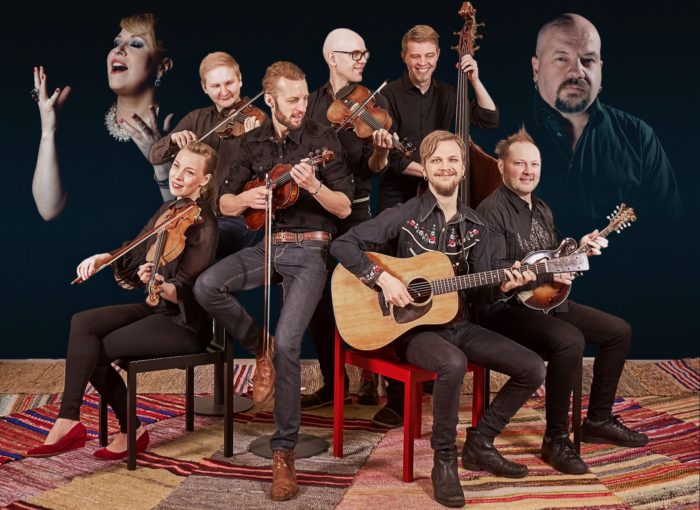
Fiddle band Frigg posing with their instruments, guest singers Johanna Försti and Timo Rautiainen pictured in the bakcground.

Timo Rautiainen of Trio Niskalaukaus heavy-metal fame (right) and Johanna Försti (left) are the guest singers on a Christmas album by the fabulous Finnish fiddle band Frigg.Photo: Antti Vuorenmaa

Strangely enough, one of the newest recordings of a metal star singing Christmas music is found on an album by Frigg, a world-famous Finnish group of folk fiddlers. Named after a Norse goddess, the band is putting out an album of seasonal tunes appropriately entitled Joululaulut (Christmas Songs).

Timo Rautiainen, who first gained fame on the heavy metal scene with the band Trio Niskalaukaus, is one of the guest singers on the recording. “I do some folk music myself, and I’m a big Frigg fan,” says Rautiainen in the Joululaulut press release, “so it’s an honour to participate in this project. The album is an intriguing blend of new and old, performed in an unusual manner.”

– Box text by Peter Marten, December 2018

Helsinki invests in its people with a library that reinvents the genre

Everyone knows Finnish people love outdoor sports and hiking in the forest. They also enjoy hard-hitting games such as ice hockey. But do you know how much they like libraries?

Finland takes libraries seriously, as the magnificent new Helsinki Central Library Oodi demonstrates (the name means “ode” in Finnish). It’s a 98-million-euro investment in the people of Helsinki. Organisers strategically picked December 5, 2018 for the grand opening, tying it to December 6, Finland’s Independence Day.

Finnish people love their books. The Finns are ranked as some of the most literate people in the world, as well as some of the most prolific users of libraries. On average, every resident of Finland borrows 16 items from a library each year.

“Libraries have historically been important to Finns,” says Katri Vänttinen, the City of Helsinki’s director of library services. “Beginning in the 1800s, every village had a school and a library, and that created equal access to literacy and basic education.”

A platform for the future

A woman sitting on a wooden bench with a book in hand.

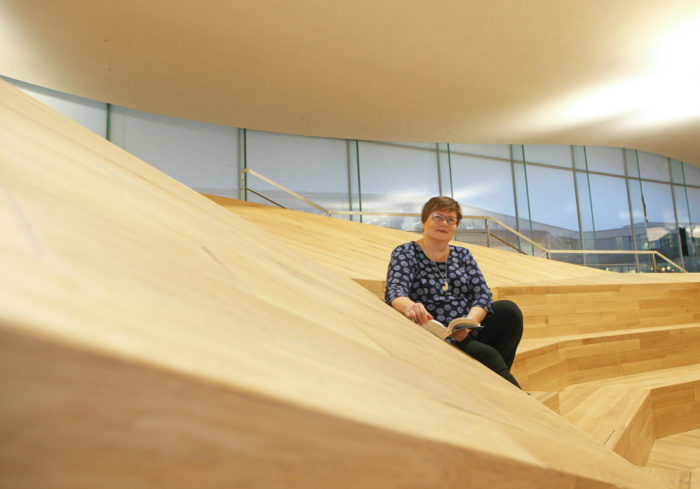
Katri Vänttinen, the City of Helsinki’s director of library services, sits with a book at one end of Oodi’s third floor.Photo: Hernan Patiño

“It used to be the library was about equal access to knowledge, but now most of that knowledge is accessible via your smartphone,” Vänttinen says. “Libraries today need to be thought of as a physical space, a platform for activities such as reading, learning and public discussion. They also provide access to equipment, data networks or expertise. We even have reading coaches who act like personal trainers, but for your reading.”

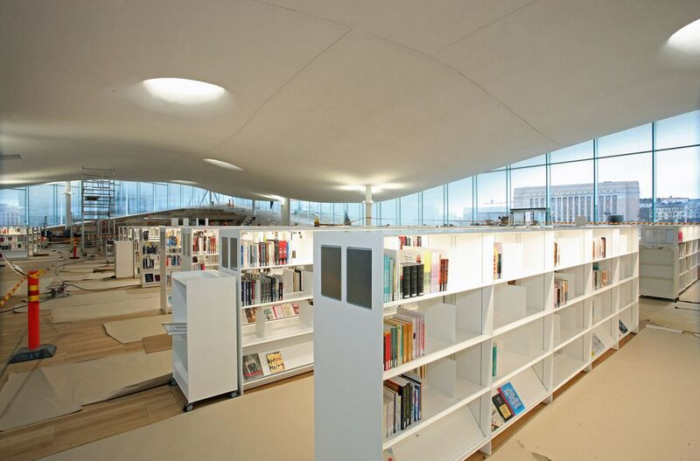
Oodi’s layout reflects the new roles of the library. The third floor can be considered the traditional library, with reading areas called “oases” and 100,000 books. The second floor is about creativity, and includes studios, music rooms, media rooms and a makerspace with 3D printers, sewing machines and other equipment. The first floor is for interactions. It has a café, restaurant, cinema, information points and a space curated by the EU.

“The biggest technical innovation by far is the ‘Cube,’ a room with smart walls,” says Vänttinen. “A person can use huge touch screens to transform the room into almost anything through 3D virtual reality. Artists are already planning to use the Cube for digital immersive art exhibitions, and medical students would like to study surgery there, using it as a virtual operating room.”

Even the book logistics are highly innovative. When a borrower returns a book, the system scans it, then a self-guided vehicle transports it through the library, placing it by the correct bookcase for the librarians to reshelve.

A unique part of the system

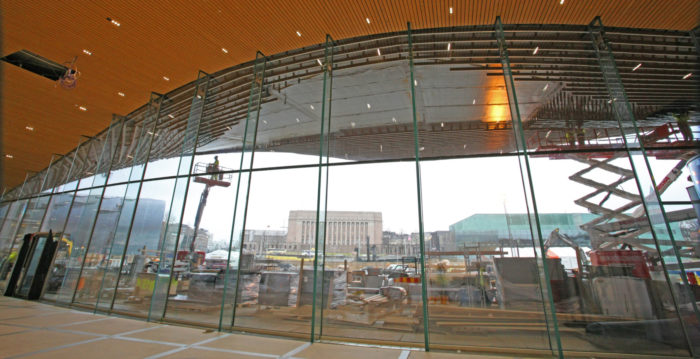
Tall curved windows of Oodi, a worksite outside.

On one side of Oodi, the curved perimeter of the windows frames the nearby buildings of Kiasma Museum of Contemporary Art (left), Parliament (centre) and the Music Centre (right).Photo: Hernan Patiño

Oodi is part of HelMet (short for Helsinki Metropolitan Area Libraries), a library platform covering the capital-region cities of Helsinki, Espoo, Vantaa and Kaunianen. Each one owns its own assets and data, but they are shared in HelMet. A resident of one city can request a book from a library in one of the other municipalities and receive delivery at her nearest branch.

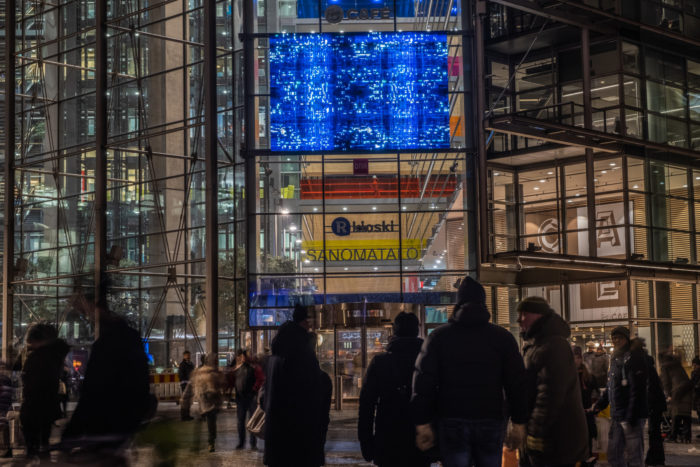
In a way, Oodi is simply one of the 37 libraries in Helsinki. Yet it is also unique. Oodi possesses its own branding and website, and is considered a separate administrative division within the system. Its dramatic location also sets it apart: in the heart of Helsinki, it forms part of a constellation that includes Finlandia Hall, Kiasma Museum of Contemporary Art, Parliament, the Music Centre, the Central Railway Station and Sanoma House, home of Finland’s largest daily paper.

Vänttinen says Oodi is already receiving enormous international visibility thanks to its location and size. At the time of writing, the Helsinki library system gets 6.3 million visitors annually; for Oodi’s first year the projected total for Helsinki is eight million, with Oodi itself reaching about 2.5 million.

See you there

White bookshelves inside Oodi.

The third floor of Oodi, here in the process of being stocked with books before the grand opening, is the part that most resembles a traditional library.Photo: Hernan Patiño

“Oodi does have a special role as a flagship library,” says Vänttinen. “It is a huge architectural phenomenon in a symbolic location. It also has a special duty to interact with society – not just residents, but also tourists. People might come from far away to experience this building, and it will be their starting point for getting to know libraries in Finland.”

A patron can borrow books, movies, audio files, musical instruments or specialised machinery at Oodi. However, it can also play an important role in modern society by bringing people together, creating interactions and making things happen.

“I’m confident that Oodi will be the most popular meeting place because of its nature as a free space, open seven days a week, centrally located and convenient in all kinds of Finnish weather conditions,” Vänttinen says. “It is simply easiest to say ‘Let’s meet at Oodi.’”

By David J. Cord, December 2018

The Finland emojis take off on Christmas adventures

They show the adventures of the Finland emojis, especially Baby in a Box and the legendary phone called Unbreakable.

And while these films are for kids, we bet grown-ups will enjoy them, too!

About our heroes

Baby in a Box” refers to the maternity package, a box of baby clothes, care items and accessories sent to every new family in Finland to give the child a good start and help parents grow into their role. The box itself is designed to serve as a crib during the early months.

Unbreakable” is an old-school Nokia 3310 phone, famously sturdy and now surrounded by an aura of nostalgia. You don’t have to be very old to remember playing games such as Snake on that tiny green screen.

A swan is dazzled by the Northern Lights

Baby in a Box and Unbreakable help a swan who gets distracted by the Northern Lights and crashes into the bell tower of Helsinki Cathedral.

Who’s in this video: The swan is Finland’s national bird, so of course it has its own emoji (and swans just might be cuter than cats). And Finland is *the* place to experience the spectacular dance of Aurora Borealis, the Northern Lights. You usually get the best views up north, but you can sometimes catch them in southern Finland, too.

A long winter’s nap

Hey, bear! You can’t take your long winter’s nap in the middle of the road! That could be dangerous!

Who’s in this video: Bears hibernate, sleeping the winter away – sometimes when it’s cold and dark outside, you feel they might be right!

Playing pond hockey: Who’s got the puck?

What happens when two Finnish horses are playing ice hockey on a frozen lake and lose the puck? How will they get it back? And how does an ermine become involved?

Who’s in this video: Strong and stubborn, the Finnish horse is a trusted friend that has been a reliable companion in work and play for centuries. Of course Finnish horses know how to play ice hockey!

Helping Santa deliver the presents

How can Santa Claus take off from northern Finland to deliver presents to everyone, if Rudolph’s bright red nose has a short-circuit?

Who’s in this video: The original Santa Claus, the one and only, comes from Finland, and makes his home in Korvatunturi, up north in Finnish Lapland, where there are lots of reindeer.

By ThisisFINLAND staff, November 2018