Helsinki Energy Challenge helps create the future of heating

Helsinki, with its goal of becoming carbon neutral by 2035, is one of the world’s leading cities in the fight against climate change. At the heart of the battle is the heating system, as its emissions account for more than half of the city’s total emissions.

The City of Helsinki arranged the year-long international Helsinki Energy Challenge to find future-proof solutions to heat the city during decades to come. The organisers intend to share the solutions so that cities everywhere can benefit, and declared, “Together, we will create the future of heating, to fight global warming.”

An international jury chose four winners from ten finalists. The winning proposals, announced in March 2021, illustrate how complex and diverse the challenge is. Diverse approaches are necessary to achieve a flexible, resilient system.

The winners are:

HIVE (Helsinki Innovative and Versatile Energies), a flexible plan based on proven technologies and solutions, such as seawater heat pumps, electrical boilers, solar thermal fields and demand-side management measures; the plan is capable of integrating new technologies if and when they emerge.

Beyond Fossils, an energy transition model based on open and technology neutral clean heating auctions, paving the way to a carbon-neutral Helsinki in a flexible way that enables innovation.

Smart Salt City, a solution that melds novel thermochemical energy storage and artificial intelligence with commercially available energy technologies.

Helsinki’s Hot Heart, a flexible system made of ten floating reservoirs filled with ten million cubic metres of hot seawater that can receive different energy sources as input. Four of the cylindrical tanks that make up Helsinki’s Hot Heart would be enclosed with inflatable roof structures to create a new leisure attraction.

Helsinki show spotlights the continual renewal of an age-old Finnish art form

A ryijy is a Finnish wall tapestry, traditionally made out of wool, sometimes also used as a blanket. Since the mid-20th century, the ryijy has seen a revival in art, fashion and interior design. It continues to grow in popularity amongst young artists.

Kunsthalle Helsinki’s exhibition Woven Beauty (until May 23, 2021) presents 130 magnificently designed Finnish ryijy artworks, the oldest made in 1707. If the exhibition is out of reach for reasons of geography or coronavirus-related restrictions, or if you’re reading this after the fact, our article and its photos can provide insight into an age-old Finnish art form that is constantly renewing itself.

History and modernity

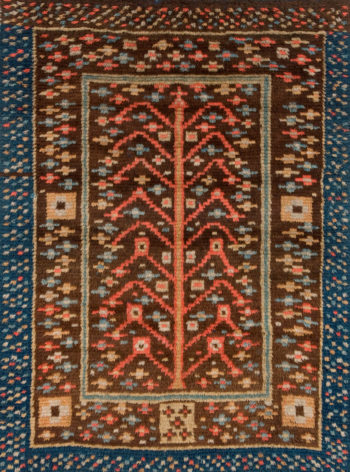
A tapestry shows a stylised tree made out of simple lines, surrounded by a border with several repeating patterns.

Ryijy with a single tree dates back to about 1800.Photo: Kunsthalle Helsinki

The Kunsthalle Helsinki selection draws on the collection of Tuomas Sopanen, who owns nearly 600 ryijy tapestries, making his the largest private ryijy collection in Finland. Sopanen and curators Juha-Heikki Tihinen and Eeva Holkeri combined their personal expertise to put together the exhibition, which showcases both historical and contemporary pieces, as well as a rich variety of techniques and materials.

Many of the works and designs are by prominent Finnish textile artists, including Uhra-Beata Simberg-Ehrström, Irma Kukkasjärvi and Armi Ratia. Ratia went on to found the internationally successful textile design company Marimekko. There’s even a ryijy by Akseli Gallen-Kallela, who is better known as one of Finland’s most famous painters.

With their faded colours and fabrics, some of the older ryijy works bring a sense of history to the exhibition. This is “part of their charm,” Tihinen says. Holkeri adds, “I am very fascinated and impressed by the technical virtuosity of older ryijys.”

Original art

This short guided tour of the Kunsthalle Helsinki exhibition provides a glimpse of many of the works on display.Video: Kunsthalle Helsinki

Although linked to Swedish rya and Norwegian rye techniques, ryijy holds a place in Finnish art and textile history. The first Finnish ryijy tapestries were used by Vikings in the ninth century. The thick wool coating provided warmth, and water did not damage it, making the ryijy an ideal boat cover. In the following centuries, the ryijy was used as a bed cover and even as a sleigh blanket. A bride or one of her relatives would often create a bridal ryijy to commemorate the wedding.

Since the 19th century, both artists and scientists have studied the origins of art and aesthetics by examining textiles and other alternative art forms, including ryijy. It occupies a significant place in Finnish art history, connected to international artistic currents as well as time-honoured traditions. In the post-war era, contemporary movements such as Finnish modernism and abstraction found their way into the ryijy world. During this period, ryijy tapestries also became widely regarded as an art object suitable for display in people’s homes.

Many pieces in the exhibition include symbols such as a rose, a tree of life or an hourglass. These symbols can reveal the origin of the ryijy as well as its intended purpose. For instance, the tree of life motif from central Finland includes branches and fruit, and was said to bring good luck to the family that received it as a gift.

Tihinen shares one of his preferred works from the collection, Simberg-Ehrström’s Oras (The New Crop, 1972). The piece features the artist’s own initials, indicating that it is a first edition. Simberg-Ehrström played with colour, creating the impression that the centre of the ryijy is lighting up. “This is one of the finest things which has been done” in ryijy art, says Tihinen. (Oras is also included in the video above.)

New directions

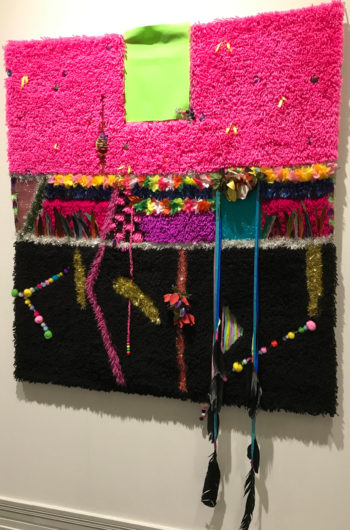
A wall tapestry with pink and other bright colours, along with rows of beads and several feathers hanging from strings attached to the tapestry.

Jonna Karanka’s Every Season’s Ry or Ru (2016) incorporates feathers and beads, showing how modern-day artists are continuing to develop the ryijy medium.Photo: ThisisFINLAND

The exhibition also features modern, eye-catching, experimental pieces, including Jonna Karanka’s Every Season’s Ry or Ru and Tenka Issakainen’s Rosanvärinen ryijy (Ryijy the Colour of Rosa). Both Karanka and Issakainen are prominent contemporary ryijy artists. Their works may combine colourful fabrics with decorative objects including feathers, a bra strap, a toy guitar, beads, tinsel or flowers.

Many of the newer pieces can be considered part of a new wave of postmodern ryijy art. This budding genre is characterised by experimentation with form and materials, challenging the foundational concept of what a ryijy is. Nonetheless, contemporary artists continue to reflect upon the traditional elements of the art form. They “play with the tradition, and the limits of the ryijy tradition, in various ways,” says Tihinen.

The ryijy is finding its place in various cultural and artistic spaces. “It is interesting to see that craftsmanship and making crafts are valued,” says Holkeri. “Weaving ryijys can be seen as a counterweight to the fast pace of life.”

The traditions and art of Finnish ryijy will continue to inspire art enthusiasts and upcoming young artists. As I walked through the gallery, I heard one museumgoer say to another, while admiring the artworks, “Maybe you should dig out that ryijy you have at home.”

By Emma De Carvalho, April 2021

Finnish grannies act to counteract climate change

“Why didn’t you do anything to save the planet, Grandma?”

This question – or the desire never to have to hear it – inspired 12 grandmothers to found a group called Activist Grannies (Aktivistimummot in Finnish).

What began in 2019 as a dozen grandmothers getting together for coffee is now a Facebook community of nearly 6,000 and a transgenerational movement trying to help solve the greatest emergency facing humanity: climate change.

Knowledge and networks

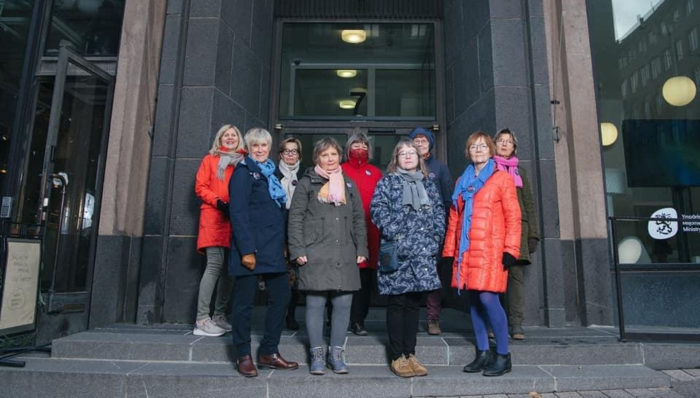
Nine women stand in front of a stone building in cold weather in Helsinki.

Members of the Activist Grannies stand in front of the premises of the Ministry of the Environment in Helsinki.Photo courtesy of Aktivistimummot

The original idea came from Seija Kurunmäki. A couple years past 60, she had recently become a grandmother and retired from a 40-year career as a communications executive.

“Becoming a granny made me worry about the future,” she says. “I wanted to use my knowledge and networks for the benefit of our grandchildren. It’s time for our generation to give back.”

The twelve founding grannies represent many different fields of expertise, including environmental science, medicine, finance and engineering. Drawing on their vast experience, they use their website and social media platforms to share science-based facts about climate change and provide advice on how to lead a sustainable life.

Both Kurunmäki and fellow founder Eeva-Riitta Piispanen harness their communications background to spread the granny manifesto.

“We want our grandchildren and all the kids in the world to have a viable globe to live on,” says Piispanen, a busy entrepreneur in her mid-60s with seven grandchildren. “It’s not their job to fix our mistakes – our generation must face up to our responsibility.”

Messengers of hope

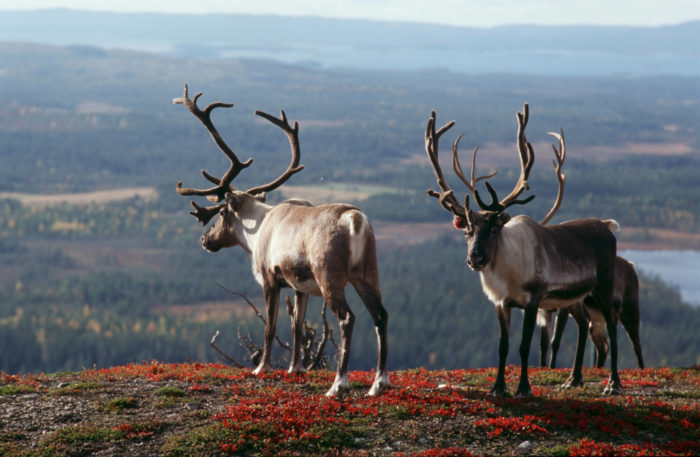
Several reindeer stand on top of a mountain in northern Finland.

Arctic ecosystems such as that of Finland’s far north feel the effects of climate change even more severely than many other regions. The Activist Grannies are trying to ensure that the natural world will still be there for future generations.Photo: Visit Finland

While it makes sense to worry about the planet, it is counterproductive to become overwhelmed by climate anxiety. As an antidote to doomsday headlines, the grannies communicate a “we can do it” attitude.

“We’re grannies, for heaven’s sake!” says Piispanen. “We want to be messengers of hope.” One of their goals is to help people realise that an ecofriendly life is not only easy to achieve, but is also a better, happier life.

“Idiotic consumption doesn’t make anyone happy,” says Helena Kääriäinen. A genetics specialist with four grandchildren, she is in her early 70s. “We know from experience that a simple life of moderation is rewarding. Plus, all the things we do for the climate are good for our health too, like eating less meat and driving less.”

Boomers for biodiversity

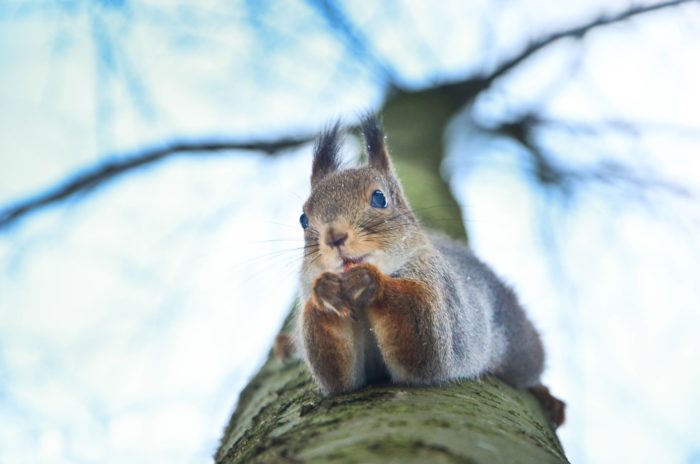
A squirrel perches on a tree trunk.

Even the smallest creatures can feel the effects of climate change.Photo: Visit Finland

Before Covid-19, the grandmothers hosted various events and presentations about environmental issues. They have continued in the form of online webinars.

Lobbying, too, is a key part of their activism. At the time of writing, municipal elections are approaching in Finland, and the grannies are busy sending letters to candidates.

“Politicians are beginning to understand that we boomers are a huge group of voters,” says Kääriäinen. “We want to emphasise to them that the climate movement isn’t just for schoolkids. Greta Thunberg isn’t the only one who cares.”

The grandmothers often collaborate with activists decades younger than themselves. The Activist Grannies participated in a campaign with the Finnish 4H network to plant 10,000 trees, and in the Best Enough Christmas campaign with Climate Move. Best Enough Christmas is a play-on-words suggesting that you don’t need to go overboard – a Christmas that is simply “good enough” can also be the best Christmas ever. The campaign featured Mrs Claus sharing tips for a sustainable festive season.

“It was a privilege working with the grannies,” says Climate Move’s Wilhelm Blomberg, a 30-year-old who is training to be a sustainability educator. “Thanks to their massive expertise and resources, they are among the best climate campaigners in Finland. They have this warm, feminist approach that resonates with people because of what they represent – granny-hood.”

Granny upgrade

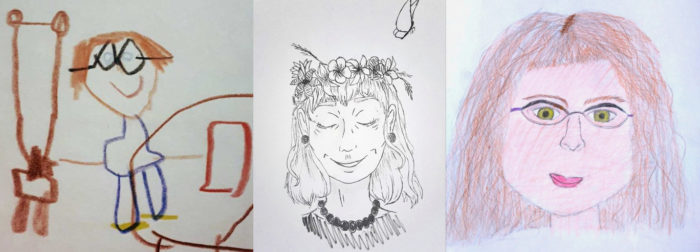
Three different portraits are in a row, in each one a woman drawn by a child’s hand.

Many different artistic styles are on display in the portraits on the Activist Grannies website.Pictures courtesy of Aktivistimummot

The grannies cannot disguise their delight in how their movement is challenging ageist stereotypes. “We’re upgrading the word ‘granny,’” says Piispanen. “We are active and wise, and our wisdom is a valuable resource in the push for environmental change. A granny isn’t just a frail old lady knitting socks in a rocking chair.”

The most heartening feedback she has received so far came from her ten-year-old granddaughter. “She told me that when she grows up, she wants to be an Activist Granny just like me. That makes me proud, although [by that time] fighting global warming shouldn’t be her responsibility anymore.”

If the Activist Grannies and many others have anything to say about it, people will have found solutions to the problems of climate change by the time today’s kids have grown up.

By Silja Kudel, March 2021

Åland Islands to commence celebration of 100 years of peaceful autonomy

It’s almost impossible to imagine now, but conflict between Nordic friends and neighbours Finland and Sweden was considered a very real possibility a century ago.

At the centre of the dispute were the Åland Islands, a Baltic archipelago extending from the southwest corner of Finland towards the eastern coast of Sweden. Thanks to an agreement created in the 1920s, people know Åland as a very peaceful place, not only because of its rugged natural beauty, but also because of its demilitarised status.

Strong ties to the Swedish language

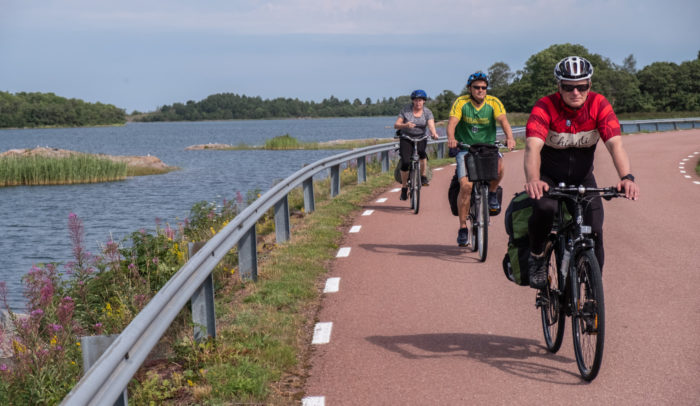
Three people bike along a coastal road.

Touring the archipelago by bike is a classic Åland summer activity that allows you to take in the fresh sea air and the verdant island landscapes.Photo: Tim Bird/Finland Image Bank

The name “Åland” is a Swedish-language word. While the islands also have a Finnish-language name (Ahvenanmaa), Åland’s culture is closely linked with the Swedish language, and the archipelago is Swedish-speaking. (Many people in mainland Finland speak Swedish as their first language, and it is one of Finland’s official languages.)

Åland’s Swedish-language culture is preserved by autonomy within Finnish sovereignty, under an arrangement originally supervised by the League of Nations. Signed in 1921 and implemented in 1922, the agreement is recognised as a significant success of that organisation, whose ideals took a more substantial platform with the foundation of the United Nations more than two decades later.

The “Åland question” was an item of unfinished business dating back to the 1809 Treaty of Fredrikshamn, which transferred the islands from Sweden to the Grand Duchy of Finland, part of the Russian empire. Åland’s fate came into sharper focus when Finland gained independence from Russia in 1917.

Centenary celebration in view

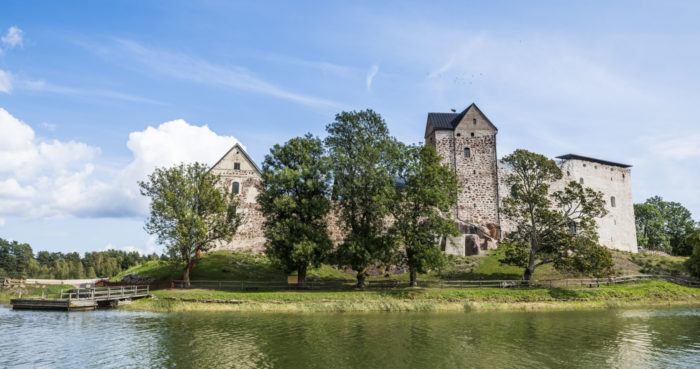
A cluster of medieval stone buildings stand by a body of water.

The annual Kastelholm Talks on Peace normally take place at the 14th-century fortress of Kastelholm in Åland, but moved online in 2021 in keeping with coronavirus-related restrictions.Photo: Michael Runkel/Westend61/Lehtikuva

Centenary celebrations culminate in 2022 on Åland’s annual Autonomy Day (June 9). A programme of events stretches over the whole year preceding that date; the highlight is the opening of a visitor centre at the historic fortress of Bomarsund. It was the scene of a Crimean War bombardment by an Anglo-French fleet of the Russian garrison in 1854.

The Åland Islands Peace Institute holds its Kastelholm Talks on Peace every year on or near March 30, which is Åland Demilitarisation Day. The event normally happens at the eponymous castle in Åland, but it moved online in 2021, and has an additional poignancy because the archipelago’s centenary year is coming into view.

“The Institute was set up at the end of the Cold War in 1992 as a nonpolitical charity, funded by contributions from various sources, to focus on conflict resolution, self-governance, minority issues and demilitarisation,” says Sia Spiliopoulou Åkermark, director of the Åland Islands Peace Institute.

Lawyers and political scientists sometimes refer to Åland’s special status and history as the Åland Example. The success of the Åland Example in terms of peaceful conflict resolution is a starting point, says Spiliopoulou Åkermark, serving as just that – an example, rather than a fixed model for others to follow. Historical and political circumstances are never set in stone, and there is no one-size-fits-all solution or template for widely varying instances of conflict resolution. (ThisisFINLAND has also written about the Åland Example.)

Unique combination

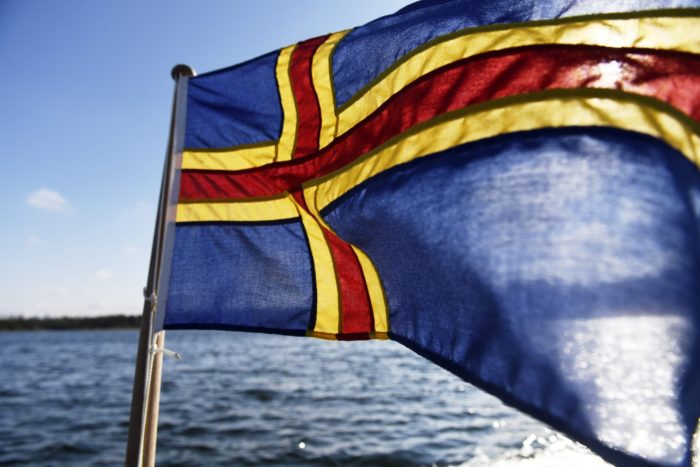
A flag showing a red and yellow cross pattern on a blue background billows in the wind.

Åland’s flag, shown here flying from the back of a boat, is a variation on the cross pattern seen across the Nordic countries.Photo: Vesa Moilanen/Lehtikuva

“Åland’s combination of autonomy, the protection of language rights and minority culture, democratisation and demilitarisation is unique and can’t be found anywhere else, as far as I know,” says researcher Susann Simolin, head of information at the institute. “The Åland Example has proved to be of interest to others looking for ways to manage disputes and to see if there is anything they can learn.”

Discussions at the 2021 Kastelholm Talks on March 29, with former Finnish President Tarja Halonen acting as patron, follow the theme “Making Peace – Meetings, Mediators and Peace.” Taking place online increases the reach of the event, giving it a much wider potential audience than usual.

In addition to Halonen and Spiliopoulou Åkermark, the panel includes Jan Eliasson, who formerly served as Sweden’s ambassador to the US and to the UN, and as deputy secretary-general of the UN; and Björn Vikström, a former bishop who is professor of theology at Åbo Akademi in the southwestern Finnish city of Turku.

By Tim Bird, March 2021

In a year marked by Covid-19, World Happiness Report emphasises trust and points to Finland

The International Day of Happiness happens every year on March 20, and the UN Sustainable Development Solutions Network publishes its World Happiness Report to mark the occasion.

The report evaluates happiness based on answers to one main question from the Gallup World Poll: On a scale of zero to ten, how do you rate your own life (with ten being the best possible life)? Three years of data go into the calculations – the 2021 report uses answers gathered from 2018 to 2020. It also separately shows the data from 2020 alone. Finland tops both listings.

The publication also includes other considerations in its research behind the rankings. Unsurprisingly, the coronavirus is at the forefront of the 2021 edition, which appears almost exactly a year after pandemic-related restrictions and regulations started in Finland.

It concentrates on “the effects of Covid-19 on happiness and how countries have differed in their success in reducing the deaths and maintaining connected and healthy societies,” say the authors. Covid-19 has affected happiness, mental health, social connections and workplaces, and the report contains chapters on all of them.

The Nordics have something in common: Trust

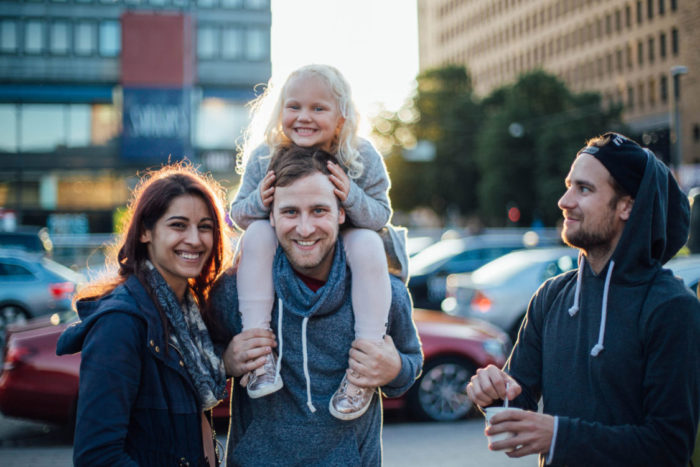
Three adults and one girl smile at the camera in front of some buildings in central Helsinki.

It is safe to say that people in Finland are hoping that they will be able to enjoy time outside with friends in warm weather, like the Helsinkians in this picture from a couple years ago.Photo: Julia Kivelä/Visit Finland

What do Finland and the Nordic nations have that allows them to reappear at the top of the table year after year – even despite some significant differences between the countries in corona strategy? The report attempts to explain the factors behind happiness by studying data about life expectancy, confidence in government, average income, social support, generosity and freedom to make life decisions.

Other reports concentrate on more specific societal factors and can also shed light on the areas where Finland is successful: the Legatum Prosperity Index has listed Finland as having the best governance in the world; Transparency International measures lack of corruption and says Finland is the third-most transparent country in the world; Freedom House puts Finland at number one in political and civil freedom; and the Bertelsmann Foundation lists Finland as the third-most socially just country.

Although the World Happiness Report has put Finland in the spotlight several years in a row, there is still work to be done. More than ever before, we need to find ways to look after ourselves and each other. Finnish young people talk about their visions of the future of happiness. Video: ThisisFINLAND

The World Happiness Report authors focus in on a key indicator: trust. Finland and the other Nordic countries are known for displaying a high level of trust. People generally trust each other and the government to a large degree.

The report notes, “Trust was shown to be the key factor linking happiness and Covid-19.” What? What do they mean by a link between happiness and the coronavirus?

Trust played a “strong role in helping countries to find and implement successful Covid-19 strategies,” says the report. “It was shown to be as important as ever in supporting happiness during the pandemic, and was found to be even more important when Covid-19 required the whole structure of private and public lives to be refocused on fighting the pandemic.”

Whether you look at the three-year perspective of 2018 to 2020 or simply the 2020 results, the top ten are almost identical. Finland is in the number-one slot, and the other Nordic countries – Denmark, Iceland, Norway and Sweden – are not far behind. Joining them are Switzerland, the Netherlands, New Zealand and Austria, plus Luxembourg for 2018–2020 and Germany for 2020 alone. Anyone who has followed the World Happiness Report will recognise these nations from previous years.

As the authors note, between the 2017–2019 listings (in the 2020 report) and the 2018–2020 listings (in the 2021 report), “Covid-19 has led to only modest changes in the overall rankings, reflecting both the global nature of the pandemic and a widely shared resilience in the face of it.”

Many definitions of happiness

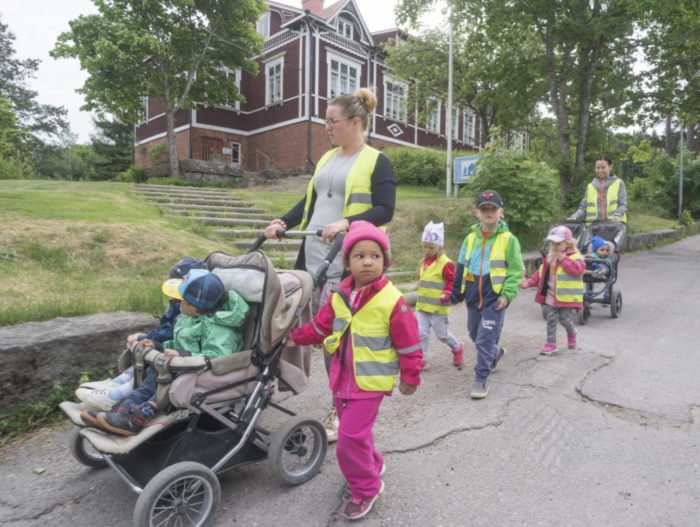
A group of daycare kids walk down the street in reflective vests with their caretakers.

High-quality, affordable daycare takes some pressure off parents, allowing them to arrange their careers and family life in a way that encourages happiness. It also helps build children’s social skills.Photo: Pasi Markkanen/Finland Image Bank

Over the past several years, international lifestyle magazines and their readers have cycled through life philosophies expressed by a number of almost untranslatable Nordic words. We’ve seen Danish hygge (cosiness), Swedish lagom (just right) and Finnish sisu (a unique blend of courage and perseverance).

Perhaps it’s time to add another Finnish word to that list: onni, which means “luck” or “good fortune” and forms the root of onnellinen, “happy,” and onnellisuus, “happiness.” After four years in a row, maybe we can say that Finnish happiness has a certain intangible element.

It’s more likely that Finnish people experience happiness the same way as folks all over the world. When people can maintain certain conditions and prerequisites, they are likely to feel contentedness, and that is also a kind of happiness.

It is worth noting that the definition of happiness doesn’t have to include a picture of someone jumping for joy, especially in a year defined by the tragic effects of a pandemic. However, you can try to pinpoint factors that encourage happiness, and that is what the creators of the World Happiness Report attempt to do.

Anywhere, any year

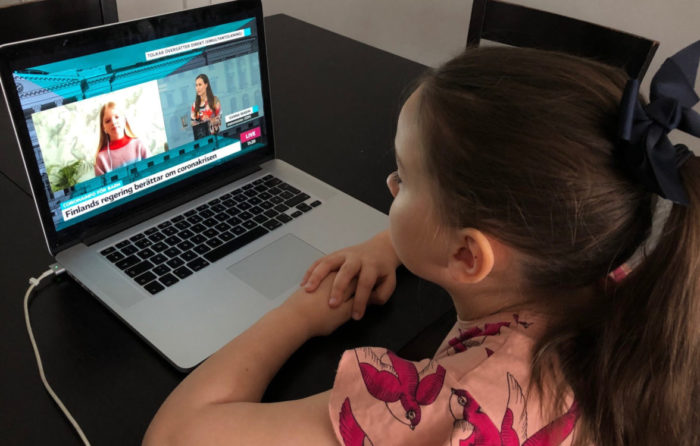
A girl watches a live broadcast of Finnish Prime Minister Sanna Marin on a laptop screen.

During a live broadcast, Finnish Prime Minister Sanna Marin answers the questions of a girl named Iiris as another schoolchild watches at home. The onscreen headline says, “The Finnish government speaks about the corona crisis.” Photo: ThisisFINLAND.fi

The 2020 edition of the report went live just as Finland and many other countries were wrestling with how to approach the pandemic – how strong should restrictions be, how fast should they take effect, and how should they be enforced? How could medical staff remain healthy and effective when placed under enormous pressure?

The 2021 World Happiness Report appears at a time when Finland’s health authorities and government have just implemented an additional array of restrictions, for instance closing restaurants for several weeks (with the exception of take-out orders), and are considering whether further measures will be necessary.

Finland has been far from untouched by the pandemic, but by any measure it has managed comparatively well.

The report notes, “Societies with higher trust in public institutions and greater income equality were shown to be more successful in fighting Covid-19, as measured by 2020 rates of Covid-19 deaths.”

It also says, “Countries with experience from the SARS epidemic seemed to have absorbed the relevant lessons, as did countries with female leaders.” Finland doesn’t belong to the former category, but it does have a female prime minister, Sanna Marin, and the leaders of the other four parties in the government coalition are also women.

There will be naysayers – there always are when the World Happiness Report or anything of its kind is released. And it is strange to talk about happiness or attempt to measure it when the world is dealing with a pandemic.

On the other hand, the report shows that it is possible to take stock of the factors behind happiness or contentedness, and that certain aspects of them can be repeated or improved. That is something worth pursuing, anywhere, in any year.

By Peter Marten, March 2021

Helsinki Freedom video series tells stories about life in the Finnish capital

The Helsinki Freedom minidocumentary series tells real stories of Helsinki freedoms as experienced by the real people of Helsinki. The concept of Helsinki Freedom is founded on the bold claim that Helsinki is the new city of the free, providing its citizens with the kind of freedoms possible only in the Nordic model.

The Helsinki freedoms were chosen through a questionnaire conducted with expats living in the Finnish capital. According to the questionnaire, the cornerstones of a good life in Helsinki are work-life balance, safety, equality, free education and free access to nature.

Each minidocumentary sheds light on some of the many freedoms Helsinki offers, from the opportunity to live a secure and balanced life to the chance to make the most of Finland’s world-class education system.

Get Helsinki delivered to you

At a time when prevailing circumstances in the world make it challenging for tech talent to travel to the Finnish capital, Helsinki wants you to be able to test the freedoms the city offers from the comfort of your own sofa. You can join the Helsinki talent pool and apply for the home-delivered Helsinki in a box experience, which includes classics and new hit items that reflect the freedoms of Helsinki.

Some extraordinary Finnish people you should know about (yes, they’re all women)

Gender equality remains a crucial issue all over the world. For people in Finland, it has been an important guiding principle for a long time.

In 1906, Finland became the first country in the world to grant full political rights to women – both the right to vote (a first in Europe) and the right to run for office. As of March 2024, 12 out of 19 government ministers are women, as are 92 out of 200 members of Parliament (46 percent).

Our list shows some of the women who paved the way for others, as well as some who benefited from those earlier efforts and continue to make progress today. They, in turn, serve as inspiring examples for the next generation.

The list below is admittedly incomplete – if we included everyone who deserves it, there would be millions of women in this article.

Tove Jansson (and Little My)
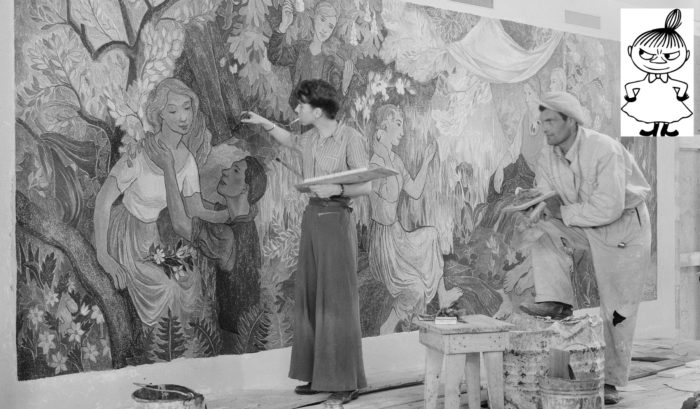
A woman is painting part of a large painting showing people at a picnic, while a man looks on. To one side of the photo, there is an ink drawing of a small female character with her hands on her hips.

Tove Jansson works on Party in the Country (1947), a fresco now on display at Helsinki Art Museum, while Niilo Suihko, who was assisting her, looks on. Inset: Little My is a Moomin character who is tiny but fears nothing.Photo: Foto Roos/Helsinki Art Museum; illustration: Tove Jansson/Moomin Characters Ltd

Author and artist Tove Jansson (1914–2001) is best known as the creator of the Moomins, the fun and philosophical characters who inhabit nine novels and numerous picture books, comic strips and animated films. Having written and illustrated the Moomin books, which now appear in more than 50 languages, Jansson is probably Finland’s most famous artist and its most famous author. She also wrote other novels and short stories and had a prolific career as an illustrator and painter. Jansson wrote in Swedish, which is one of Finland’s official languages.

Part of the Moomins’ popularity stems from the way they reflect human characteristics, often humorously, sometimes reminding readers of people they know in real life. One female Moomin character who belongs on this list is Little My. Although tiny, she fears nothing. In one book she dares to go ice-skating on the frozen sea; in another, she bites a lion on the leg. She always speaks her mind, assessing situations with brutal honesty, and while that makes her seem cross, it has also made her a favourite among Moomin fans.

In many ways, Jansson herself chose a bold way of life. For a time, she lived with a man without being married, against the social norms of the day. She had relationships with women, a punishable offence in mid-20th-century Finland. In recent years, the queer and feminist communities have drawn deserved attention to this part of Jansson’s legacy.

Sanna Marin
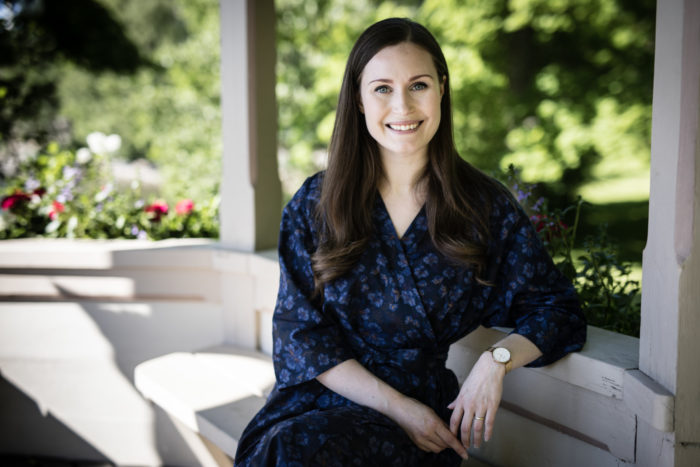
A woman is sitting on a porch, green trees visible behind her.

Sanna Marin took office shortly after her 34th birthday, becoming Finland’s youngest prime minister ever.Photo: Laura Kotila/Prime Minister’s Office

Sanna Marin (born in 1985) attracted attention when she took office as prime minister in December 2019, less than a month after her 34th birthday. At the time, she was the world’s youngest serving prime minister, and she was the youngest one in Finnish history. She was the country’s third female prime minister. It didn’t escape the media’s notice that the other four parties in the government coalition had women leaders. Her term in office lasted until June 20, 2023.

In an article about Marin in April 2020, Vogue’s American edition wrote that Finland “punches above its weight in terms of soft power – the egalitarianism, family benefits, and forward-thinking environmentalism that Marin embodies.” At that point, Finland’s experience in counteracting the coronavirus was just beginning.

In February 2021, TIME magazine featured Marin in its TIME100 Next list of “emerging leaders from around the world who are shaping the future.”

Armi Ratia
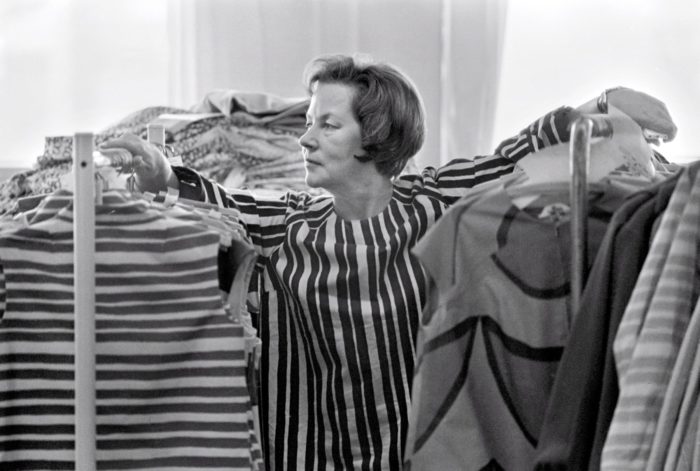
A woman in a striped blouse stands between two racks of similarly striped clothing.

Armi Ratia founded the textile design company Marimekko and succeeded in making its patterns internationally famous.Photo: Gustav Wahlsten/Lehtikuva

In a 1976 documentary, an interviewer asks Armi Ratia, “Where did you get the idea and the courage to go abroad?” She answers, “You can be born with courage, or you can become courageous out of necessity.” She doesn’t specify which option applies to her.

Ratia (1912–1979) founded Marimekko, a textile design company whose prints and clothes became famous all over the world. “I’m interested in things that are new and unexpected,” she says in the documentary. “Impossible things, especially, and difficult things.”

As it turns out, it wasn’t impossible for Ratia and Marimekko to succeed internationally. Jacqueline Kennedy famously wore Marimekko dresses, and many of the company’s classic patterned textiles have become iconic and are still in production today.

Tarja Halonen
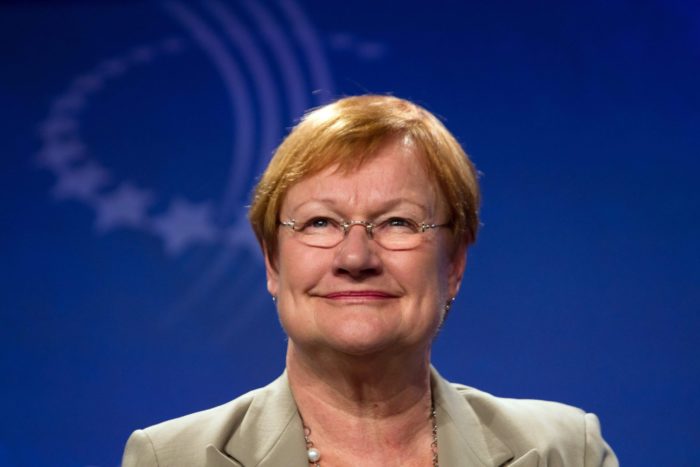
A woman smiles at the camera.

President Tarja Halonen of Finland attends a meeting of the Clinton Global Initiative in New York in 2011.Photo: Daniel Berehulak/Getty Images/AFP/Lehtikuva

Finland’s first female president, Tarja Halonen (born in 1943) held the position for two six-year terms, from 2000 to 2012. Prior to that, she was a member of Parliament for 21 years and served in several ministerial posts. Earlier she had worked as a lawyer at the Central Organisation of Finnish Trade Unions.

At one point in her first presidential term, polling showed an 88 percent approval rating. She had good ratings across geographic regions and demographic groups. Throughout her career, Halonen has sought to strengthen workers’ rights and the rights of many different minorities. Sustainable development has been another focus. She has served in a number of nongovernmental organisations for causes she believes in.

In 2015 Halonen had a fellowship at the Harvard Kennedy School. She’s a member of the Council of Women World Leaders, serves on the UN Secretary-General’s High-Level Advisory Board on Mediation and cochairs the UN High-Level Task Force for the International Conference on Population and Development.

Linda Liukas
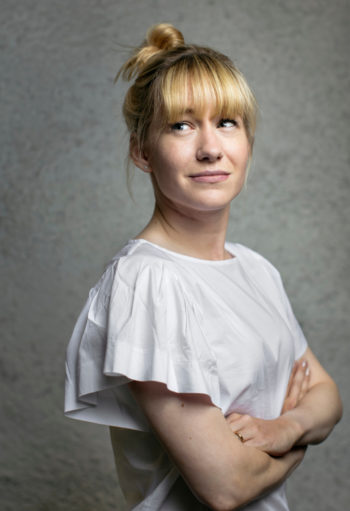
A woman with her arms crossed over her chest looks past the camera at something outside the frame.

Author and educator Linda Liukas demystifies coding, technology and the internet for children – and for grown-ups, too.Photo: Maija Tammi

With her series of children’s books, Hello Ruby, Linda Liukas (born in 1986) encourages kids to learn about coding, technology and the internet. The books, which she wrote and illustrated, appear in more than 20 languages. She is also the cofounder of Rails Girls, which arranges events that get girls interested in technology and coding.

She participates as a consultant in scholastic programmes all over the world, and has appeared at numerous tech companies and conferences, talking to audiences about demystifying and navigating the world of computers. You can catch her TED talks and some of her other speaking gigs on YouTube.

Alma
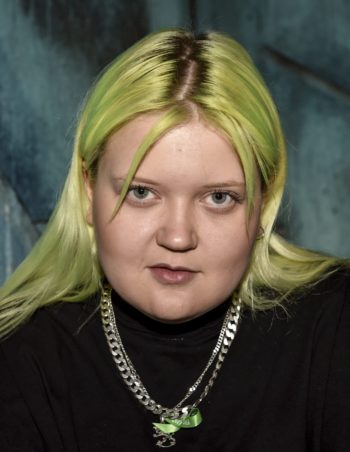
A young woman with her hair dyed green stares into the camera.

Alma’s performance on Finnish Idols in 2013 set the stage for her breakthrough as a singer.Photo: Emmi Korhonen/Lehtikuva

Singer Alma-Sofia Miettinen (born in 1996) goes by the stage name Alma and first gained prominence as a contestant on Finnish Idols in 2013. Recording deals and collaborations with other artists followed, as did a solo album entitled Have U Seen Her? in 2020. She cowrote the song “Don’t Call Me Angel,” the theme of the 2019 movie Charlie’s Angels, and sings on another of the film’s songs, “How It’s Done.”

In 2020, when the annual Helsinki Day (June 12) celebrations moved online because of coronavirus-related restrictions, Alma gave a concert in a virtual reality version of the Finnish capital. Audience members could participate as avatars in the VR world.

Susanna Mälkki
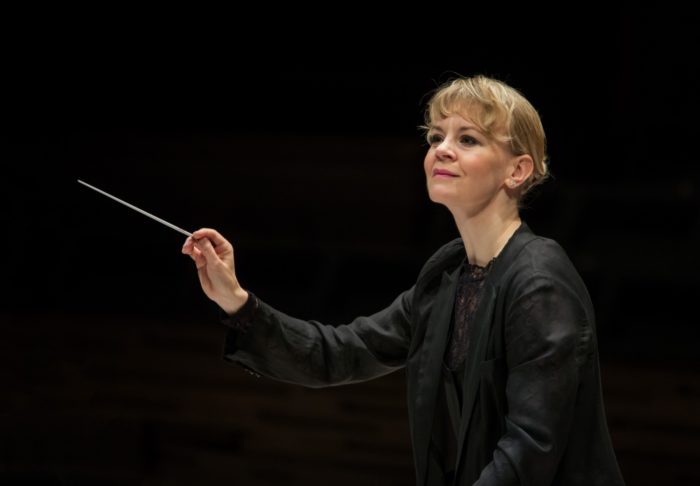
A woman with a conductor’s baton is leading an orchestra that is not shown in the photo.

World-renowned conductor Susanna Mälkki has pointed out that, as recently as the 1990s, conducting was not considered a serious option for women. She did not let that stop her.Photo: Sakari Viika/Helsinki Philharmonic Orchestra

Conductor Susanna Mälkki (born in 1969) became the first-ever female chief conductor of the Helsinki Philharmonic Orchestra in 2016. She has conducted the London Philharmonic, the BBC Symphony and the New York Philharmonic.

Earlier in her career, she concentrated mainly on playing the cello. In an interview with the New York Times in 2016, she pointed out that things were very different as recently as the early 1990s. Conducting was not seen as an option for women. “I was always interested in conducting,” she told the Times. “But of course there are historical reasons why I was hesitant at the beginning.”

The situation changed. In the late 1990s, Mälkki pivoted from the cello to conducting. Music Finland’s website calls her “a champion of bold contemporary composers.” In the same article, she says, “It’s true that twentieth-century and contemporary music is what I’m best known for. But I’d like to think of myself as someone who can do both, as I always have.”

Awak Kuier
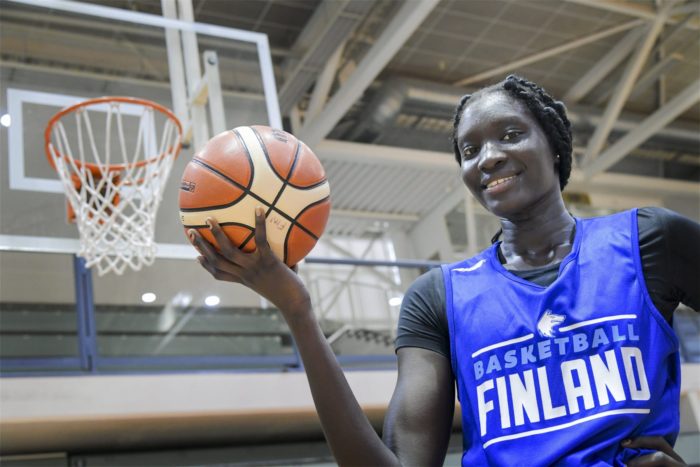
A smiling young woman in a shirt with the word “Finland” on it holds a basketball in her upturned palm.

Basketball star Awak Kuier takes a break between drills during a Finnish national team practice in summer 2020.Photo: Markku Ulander/Lehtikuva

Basketball player Awak Kuier (born in 2001) grew up in the southern Finnish town of Kotka. In her late teens, her family relocated to the Helsinki area so she could attend Mäkelänrinne Sports High School, where the schedule helps players keep up in both academics and sports.

Kuier debuted on the Finnish national team at the age of 16. She played for Virtus Eirene Ragusa, a leading team in Italy’s top division, before being drafted by the Dallas Wings of the WNBA in the US. She was the second pick overall in the 2021 draft, and was the first Finnish player to play in the WNBA when she stepped onto the court in May 2021.

She exceeded her own expectations: After signing the Italian contract in the summer of 2020, Kuier had told Finnish national broadcaster Yle, “I believe I can develop there and go very far.” As far as North America is concerned, she said at the time, “My personal goal is to be ready for the WNBA in two years.”

Enni Rukajärvi
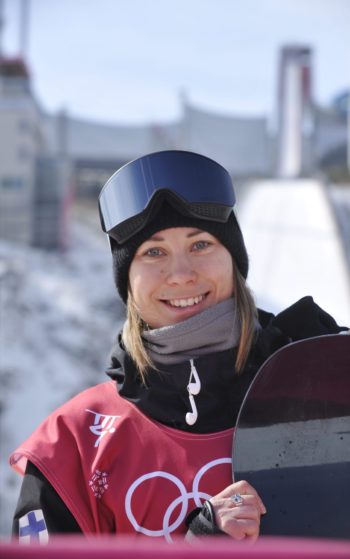
A woman dressed in sporty winter clothing holds a snowboard and smiles at the camera.

Enni Rukajärvi would like to use the publicity she gets as a world champion snowboarder to highlight environmental protection and other causes. She has become an ambassador for the Protect Our Winters organisation.Photo: Timo Jaakonaho/Lehtikuva

Finnish people are wild about winter sports, and snowboarder Enni Rukajärvi (born in 1990) has given fans many reasons to cheer. Specialising in the slopestyle event, in which the ski hill includes built-in obstacles such as jumps and rails, Rukajärvi has medalled at the Winter X Games four times (one gold, one silver and two bronzes). She took silver in slopestyle at the 2014 Winter Olympics and bronze in 2018. At the world championships, she has won gold in slopestyle and silver in big air, an event that involves performing airborne tricks after going off a jump.

Rukajärvi has said that she tries to use the publicity she gets as an athlete to draw attention to worthy causes such as safeguarding the environment. She’s an ambassador for Protect Our Winters, an organisation that campaigns and raises awareness in order to save winter – and winter sports – from climate change.

In a December 2020 article in Helsingin Sanomat, Finland’s largest daily, Rukajärvi expressed admiration for the younger generation in her sport. She said that the new kids are doing jumps and tricks in their mid-teens that she didn’t do until she was 19 or 20. We believe that she must have been at least partly responsible for inspiring those kids.

Helene Schjerfbeck
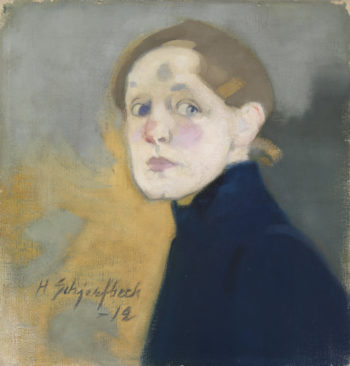
In a painting, a woman’s head and gaze are turned towards the viewer.

Helene Schjerfbeck is famous for her self-portraits, including this one from 1912, which appeared in an exhibition in late 2019 and early 2020 that broke attendance records at the Ateneum Art Museum in Helsinki.Photo: Hannu Aaltonen/Ateneum Art Museum/Finnish National Gallery

Artist Helene Schjerfbeck (1862–1946) has at times been overshadowed by her male contemporaries. She shouldn’t be, and in recent years new audiences have discovered the appeal of her work.

Anna-Maria von Bonsdorff curated a pre-corona exhibition of Schjerfbeck’s paintings at Helsinki’s Ateneum Art Museum. It attained the highest average daily visitor count of any show in the museum’s history. “She seems somehow contemporary,” von Bonsdorff tells ThisisFINLAND. “Her use of popular materials appeals to younger audiences.” Von Bonsdorff says that Schjerfbeck is considered Finland’s number one painter.

By the way, the “schj” at the beginning of her name is pronounced like “sh” in English. (It’s not a Finnish-language name; Schjerfbeck’s first language was Swedish, which is still one of Finland’s official languages.)

Minna Canth
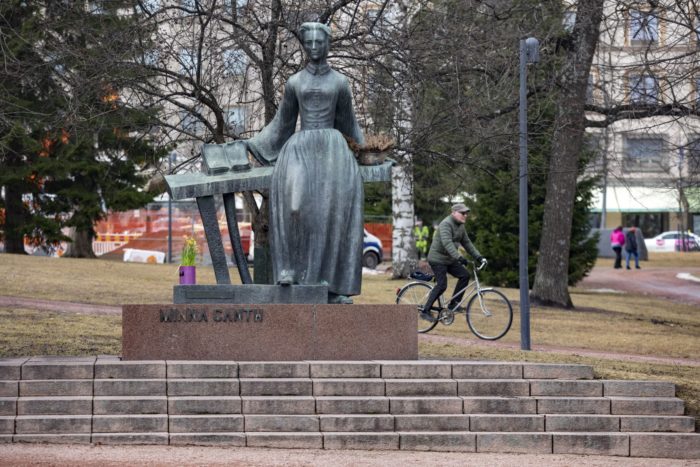
A statue of a woman holding an open book stands in a park while a man bikes past in the background.

Many consider author Minna Canth (1844–97) Finland’s first feminist. This statue in her honour stands in the central Finnish city of Jyväskylä.Photo: Tommi Anttonen/Comida Communications/Lehtikuva

Widely acknowledged as Finland’s first significant female author, Minna Canth (1844–97) wrote short stories, novellas, plays and articles. She received admiration for representing women realistically and questioning the patriarchal norms that limited their opportunities. Canth championed women’s rights, feminism and social causes.

“In a way, she was Finland’s first feminist,” says Minna Rytisalo, a teacher and the author of a biographical novel about Canth. “She believed that girls should have the right to an education…to learn about things like science, nature and the economy.”

While Finland has taken huge steps towards achieving gender equality since Canth’s time, she remains relevant. “Rights are never written in stone,” Rytisalo says. “Establishing a right doesn’t guarantee [it] forever.”

Canth’s legacy has inspired generations of feminist writing in Finland. Rytisalo says that we can all learn from Canth’s attitude: “She believed in doing your own thing and knowing in your heart that it is the right thing to do, even when the world says it’s not.”

Maryan Adbulkarim
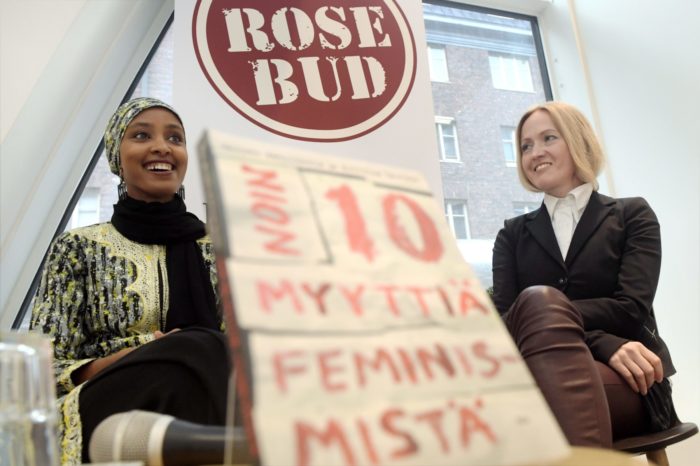
Two women are visible, one on each side of a book that is on a table very close to the camera.

Coauthors Maryan Abdulkarim (left) and Eveliina Talvitie at the release of their book Noin 10 myyttiä feminismistä (Approximately Ten Myths about Feminism) in 2018.Photo: Vesa Moilanen/Lehtikuva

Born in 1982, Maryan Abdulkarim is an award-winning writer, journalist and feminist who grew up in the central western Finnish city of Tampere. In 2019, she received the Minna Canth Award, presented by the Finnish Fair Foundation to a person who “shakes up our society.”

The jury called her “courageous in writing and conversing about society,” and said she “tirelessly sticks up for women and minorities and shines light on inequality.” In 2021, she received the Helsinki Medal for work that has helped the capital become more aware of the changes a diversifying city requires. (Abdulkarim has also written for ThisisFINLAND.)

Miina Sillanpää
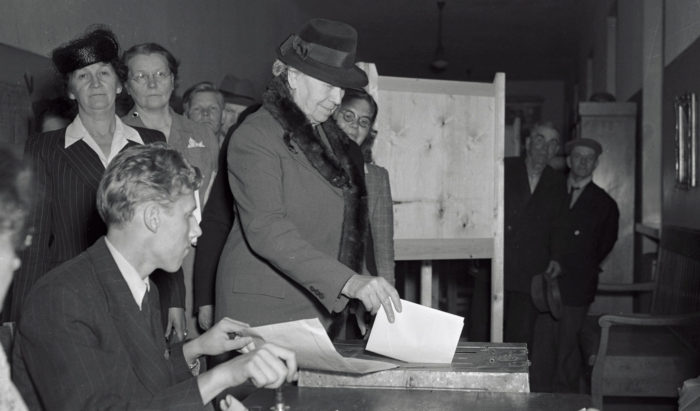
A woman puts a piece of paper through a slot in a box while other people look on.

Member of Parliament Miina Sillanpää, who was also Finland’s first female government minister, casts her vote at a polling station during parliamentary elections in 1948, the year she retired from Parliament.Photo: Osvald Hedenström/Hede-Foto/Lehtikuva

Born into poverty, Miina Sillanpää (1866–1952) grew up to become a member of Parliament and Finland’s first female government minister. She spent much of her life engaged in civil activism and social advocacy, helping the cause of women, the elderly and the disadvantaged, motivated by her values of fairness and equality.

She was active in the drive for women’s suffrage in the early 1900s, and after women in Finland gained the right to vote and to stand for election, in 1906, she was among the first 19 women elected to Parliament, in 1907. She was an MP for 38 years; from 1926 to 1927 she served as minister of social affairs.

In 1898 she helped found the Servants’ Association, taking over as director in 1901. In the 1930s, she took part in starting an organisation of shelters for single women and their children, overcoming longtime cultural resistance to the idea.

Meeri Koutaniemi
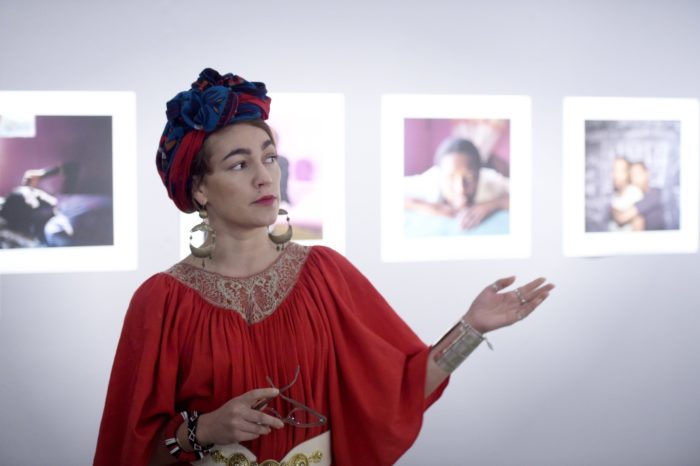
A woman gestures with her hand in front of a museum wall on which large framed photos are visible.

In 2015, Meeri Koutaniemi took part in the exhibition To the Third Generation, part of the Festival of Political Photography, at the Finnish Museum of Photography.Photo Martti Kainulainen/Lehtikuva

Photographer and journalist Meeri Koutaniemi (born in 1987), has travelled to dozens of countries to document “compelling stories of struggle and resilience,” as she says on her website. She has been named Press Photographer of the Year twice in Finland and has received numerous other awards there and abroad. Her work focuses on the “humanitarian side of conflicts, displacement and discrimination,” she says.

Koutaniemi’s subjects have included Syrian refugees who have escaped across the border; Rohingya refugees from Myanmar; Chechen refugees in Finland; the unique dress style of the Herero people of southern Africa; HIV-positive transsexuals in Mexico; girls’ fate in a rural Kenyan culture that practices female genital mutilation; and Uganda’s progress in stopping the practice.

Kaija Saariaho
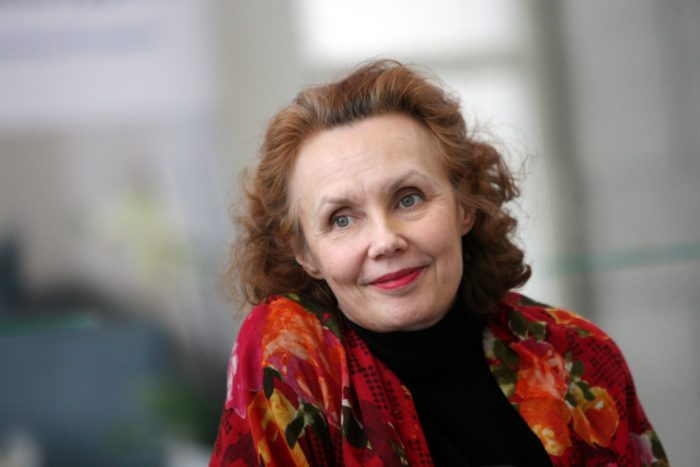
A woman with a slight smile on her face gazes past the camera.

Kaija Saariaho is Finland’s most famous modern composer of classical music. In 2019, BBC Music magazine called her the greatest living composer in the world.Photo: Jussi Nukari/Lehtikuva

A composer of classical music, Kaija Saariaho (1952–2023) created pieces on commission for numerous ensembles, including the Kronos Quartet, the New York Philharmonic and the Finnish National Opera. Her composition L’amour de loin won a Grammy for Best Opera Recording in 2011. She has also received the Wihuri Foundation’s Sibelius Prize, the Polar Music Prize, the Nordic Council Music Prize, the Prix Ars Electronica, the BBVA Foundation Frontiers of Knowledge Award and many others.

So how do you describe Saariaho’s music? She has used computer analysis in creating musical structures, has included electronic music in her pieces and merges the visual world with the musical world. Writing about her opera Adriana Mater, in the New Yorker, in 2006, Alex Ross put it like this: “Instruments cry out at high or low extremes; pitches are bent or broken apart; violins are bowed with such intensity that they groan…It’s the kind of sound that boxes the ears and maxes out the brain; information pours in on all frequencies.”

However, in the following sentence, he added that “her pieces often bring apparitions of rare, pure beauty.”

By ThisisFINLAND staff, March 2021, updated March 2024
Unesco highlights the intangible but very real spirit of Finnish sauna culture

The Representative List of the Intangible Cultural Heritage of Humanity, to use its full name, includes “sauna culture in Finland.” Unesco announced the status in December 2020.

“I feel that young people today have really embraced the culture, and are happy to share it forward,” says a Finnish woman, contemplating what the sauna means to her family and to Finnish society. She appears in a video Finland submitted to Unesco when applying for the recognition. “We all have fond memories of going to the sauna and want to teach our children about it, too,” she says.

“You can just forget everything, all of the day’s problems,” says a boy in the video, telling the camera why he likes saunas. “You can just live in the moment,” he says, smiling, as he cools off outside the sauna.

Intangible essence

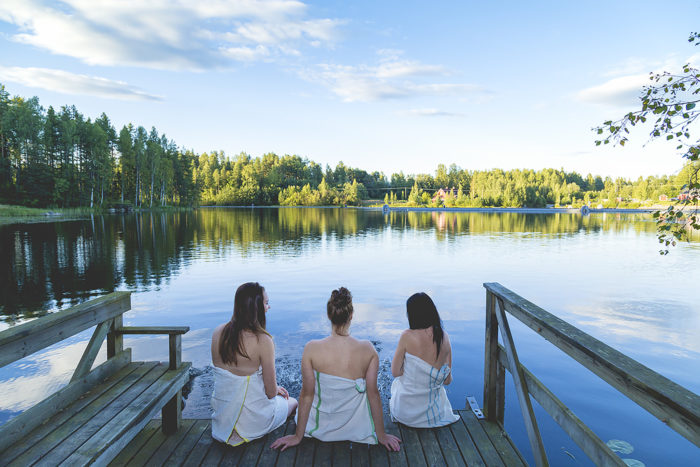
Three women wrapped in towels sit on a dock overlooking a tree-lined lake.

Finnish people associate the sauna with relaxation, conversation, health and connecting with nature.Photo: Hanna Söderström/Sauna from Finland

Intangible cultural heritage refers to traditions and processes that we inherit and then pass on, which include all the knowledge, skills and experiences that aren’t embodied in a physical form.

Finnish sauna culture is more than the sauna building or room. It is the heating of the stove; the löyly (the Finnish term for the steam and heat that rise and spread when you pour water onto the hot rocks on top of the stove); the chatter among friends and family; and, for some brave souls, the euphoric feeling that results from plunging into icy water and scampering back into the steamy heat. All of this, and more, forms the intangible heritage of Finnish sauna culture.

The sauna in everyday life

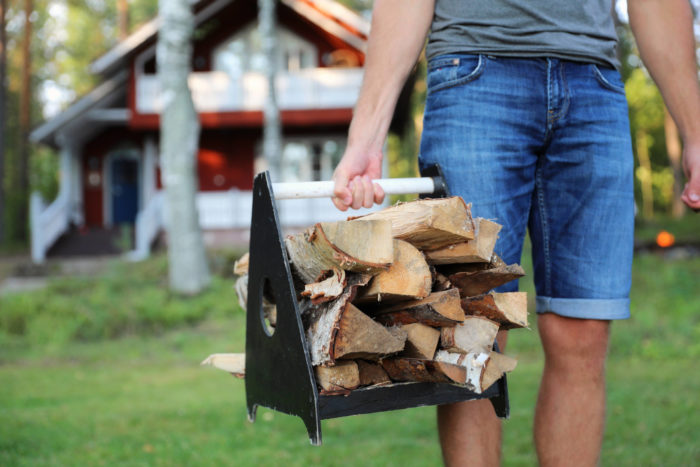
A person is carrying a load of chopped wood across a yard in the summer.

Part of Finnish sauna culture is the ritual of chopping and carrying the wood to heat the stove, as in this scene from eastern Finland.Photo: Harri Tarvainen/Business Finland

Leena Marsio, a senior advisor at the Finnish Heritage Agency, worked on the Unesco application. “Sauna is such a big part of Finnish people’s lives, both in everyday life and at festive moments,” she says.

Many people in Finland consider saunas more essential to life than folks in other countries would probably imagine. “A Finn sleeps, drinks, eats, and goes to the sauna,” says Marsio. “There are saunas elsewhere in the world, but nowhere is there such a sauna-crazy people as the Finns.”

Depending on the source of your stats, between 60 and 90 percent of Finnish people have a sauna at least once a week. The accessibility of saunas in Finns’ everyday lives is visible in the sheer number of saunas: there are 3.3 million of them in Finland, which has a population of 5.6 million.

More than just bathing

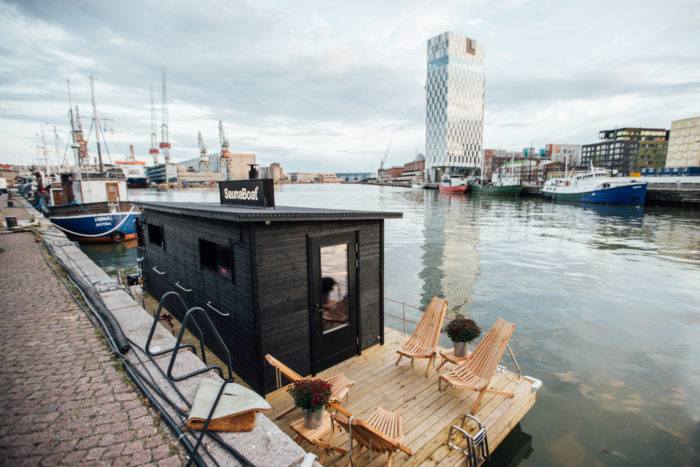
A raft with a small wooden sauna building and sundeck is docked in a Helsinki harbour.

Finnish sauna enthusiasts have invented all sorts of tent saunas, car saunas, popup saunas, ice saunas, portable saunas, backyard saunas, rooftop saunas, camper-van saunas and, yes, even boat saunas such as the one in this picture.Photo: Julia Kivelä/Helsinki Marketing

Ritva Ohmeroluoma, a member of the Finnish Sauna Society board of directors, was also involved in the Unesco application. She explains how sauna culture has historically meant more than heat and washing.

“Up through the 1950s, Finns were born in the sauna because it is hygienic,” she says. “You can keep it warm and have plenty of warm water on hand. The bodies of the deceased were washed there before their final journey. Meat was cured in the sauna. My grandmother taught me to make home-brewed beer [sahti], which we made in the sauna.”

“When establishing a family, you’d first build the sauna and live there; it provided a place to cook and clean yourself, and warmth. It was also quick to make. Then you’d progress to building the house.”

A recently published 15-year research project on the health effects of sauna, led by professor Jari Laukkanen, a cardiologist, showed that frequent visits to the sauna (four to seven times a week) cut the risk of having a stroke by more than 50 percent compared to one weekly visit. Habitual sauna use also significantly reduces the risk of cardiovascular disease. For the heart, taking a sauna is the equivalent of going out for a brisk walk.

Foundational experience

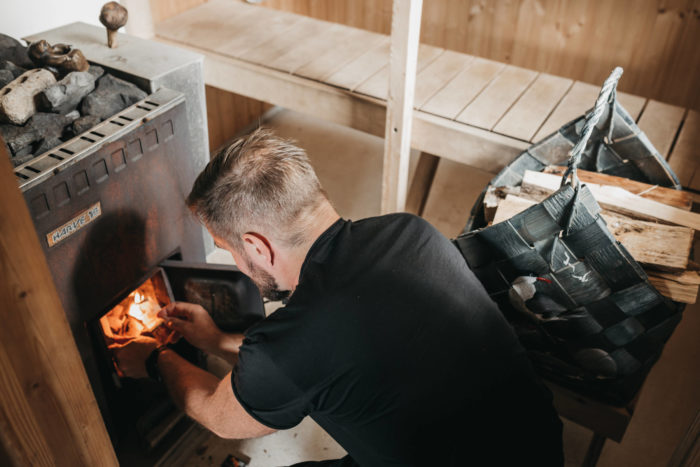
In a sauna with wooden benches, a man is lighting a fire in a box-like metal stove with a tray of stones on top of it.

Wood-heated stoves, especially common in saunas at summer cottages, must be lit several hours before you want to use the sauna.Photo: Emilia Hoisko/Visit Finland

The best sauna, Finns say, is the one at your grandparents’ summer cottage. It’s where your memories were made, the archetypal foundation by which you measure all other saunas.

My own experience as a Finnish American was my grandmother’s sauna in Ilomantsi, in North Karelia, near the Russian border. I would arrive after many days of travel by plane, train, bus and taxi. I carried the load of birch wood into the barn after a tractor delivered it in the winter, and from there to the sauna.

As we heated the sauna stove, it also warmed a large cauldron of water. We bathed by ladling water over our soapy heads from a small tub. The sauna was large and lit by the glow of the flickering fire.

At home in the world

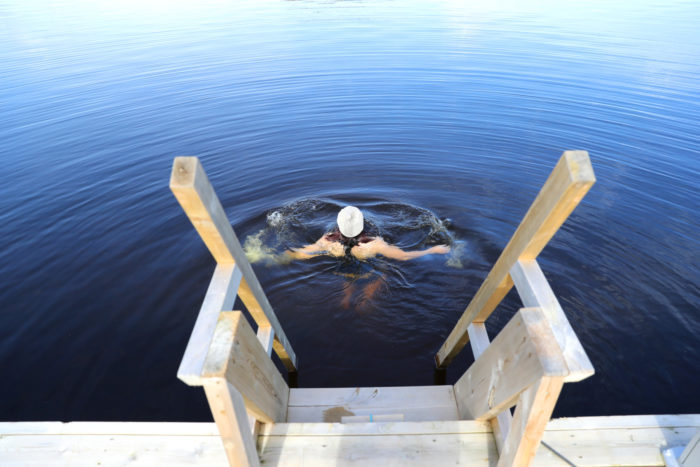
A woman is swimming in front of a wooden dock.

Brave souls get to experience the euphoric feeling of plunging into icy water between turns in the sauna.Photo: Harri Tarvainen/Sauna from Finland

I’ve diagnosed myself as sauna-crazy, and am always searching for saunas wherever I am in the world.

Last summer, my family and I moved to Zagreb, Croatia. In a spa adjoining a public pool, I found an entire sauna – wooden room, wooden benches, stove – by Harvia, a Finnish sauna company. I was alone, so I turned the sauna up to 100 degrees Celsius (212 Fahrenheit) and threw löyly on the stones until the rising steam made my back feel scorched. It thrilled me to find this piece of Finland in another country.

Perhaps this is the key to the sauna culture of Finland: Once you’ve tried it, all subsequent visits are a return to a familiar space, physically and emotionally. In some cases, you may be going back to your childhood, or even the childhoods of your parents and grandparents, or to other experiences of Finnish culture, people and landscapes.

The sauna is a place where all Finns, and indeed the whole world, are welcome. As the Unesco recognition indicates, Finland’s sauna culture is an invaluable heritage. And it’s alive and thriving.

For the application for Unesco’s Intangible Cultural Heritage status, several organisations joined forces to create videos that show the significance of sauna culture in Finland.Video: Finnish Sauna Society/Ministry of Education and Culture/Finnish Heritage Agency

By Eric Bergman, February 2021