Finland offers excellent challenges for runners

There are many great reasons to run in Finland: Clean air, exceptionally long summer days, beautiful natural surroundings and high-quality running events. Finland offers wonderful challenges for runners with various interests: road races, marathons, trail runs, ultra-distance events, fun runs – you name it.

Finland has an extensive tradition in long-distance running, and a wide range of high-quality running events exists. Long-distance running is a popular hobby, and the biggest running events in Finland draw well over 10,000 participants. Thousands of foreign runners participate annually in Finnish running events, and interest from abroad continues to grow. Once they’ve been here, they tend to keep coming back, year after year.

For people who love to run, Helsinki and the surrounding areas offer high-quality events. Helsinki is within easy reach, with good travel connections from all over the world. International running events are held in the capital region from April to October.

One of the largest, Helsinki City Running Day, takes place in May and has been known to attract about 15,000 participants. It offers an array of events, including marathon, half-marathon, marathon relay and 5K – or “challenge yourself,” as the organisers say, and run a double: the marathon and the half-marathon on the same day. For the kids, there’s a one-kilometre minimarathon fun run.

Another event, Kainuu Trail Run, takes place in Hossa National Park. Founded in 2017 to celebrate the 100th anniversary of Finland’s independence, Hossa is famous for ancient rock paintings and a lake flanked by spectacular cliffs.

Set your sights on a suitable event, take a few of your friends with you, and experience what it’s like to run in Finland.

Finnish organisation gets women into coding and opens career paths

Men probably wrote most of the computer programs you use.

People in Finland have good reason to be proud of gender equality in their country, which ranked second in the World Economic Forum’s 2021 Global Gender Gap Report, but much work remains to be done. For example, only 25 percent of ICT employees in Finland are women. While that is a greater percentage than in many European countries, there is an urgent need to increase women in the software industry.

That’s why the Mimmit koodaa organisation exists.

“This is an equality issue which is important for our society to address,” says Milja Köpsi, program director at Mimmit koodaa. “Also, this is a problem for businesses.” There is a need for additional workers in the industry, “which can be solved by bringing more experts into the field,” she says.

Unravelling stereotypes

Women of various ages are in a classroom setting, looking at their computer screens.

Participants get deeper into coding at a Mimmit koodaa event held in cooperation with Microsoft.Photo: Mimmit koodaa

Mimmit koodaa, which means “Women code” in Finnish slang, is one of the initiatives established by the Finnish Software and E-Business Association, a group founded in 1989 for corporate leaders and consisting of about 600 companies. After Mimmit koodaa was created in 2018, it began by offering coding workshops for women. It was a pleasant surprise when 800 people signed up for the first workshop; they had been hoping for at least 100.

Over the years, the movement has continued to evolve. Today they provide workshops, training, networking, webinars and encouraging career support from peers.

Their events cover a wide variety of topics and themes. For example, a beginner could attend an event to decide which programming language to learn or how to build an app. Major international companies also work with Mimmit koodaa; they have held a webinar with Amazon Web Services about their cloud solutions and a class with TietoEVRY about DevOps in healthtech. Mimmit koodaa events are held in Finnish and English, as English is widely spoken in the software industry and is used in many Finnish companies.

“We unravel the stereotype that you need to be a man to work in science, technology, engineering and mathematics – it is simply not true,” Köpsi says. “We like to tell the stories of women who changed their lives and careers.”

“Girls didn’t code”

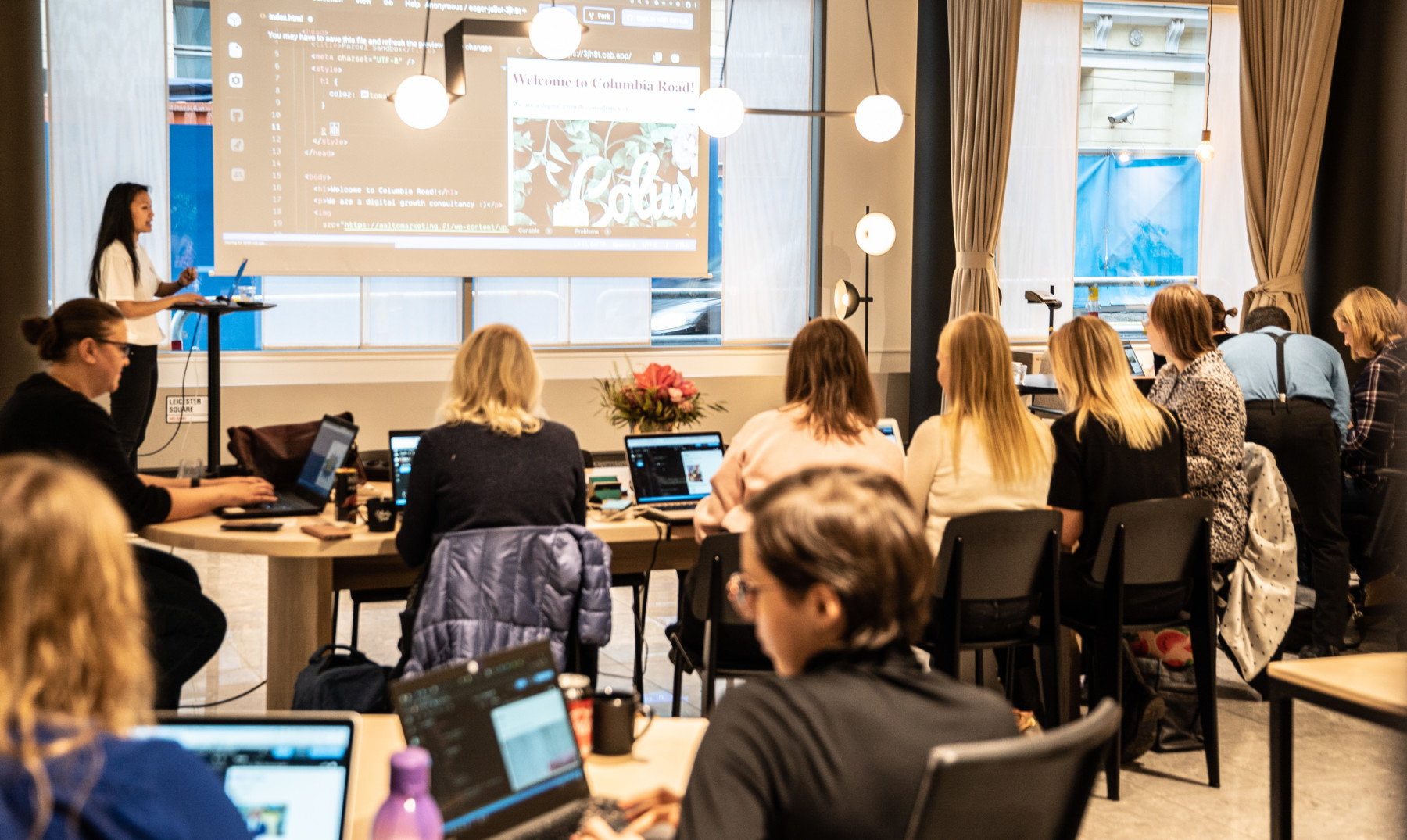
With their computers open, a group of women are watching another women make a presentation.

At a Mimmit koodaa workshop, attendees learn how digital sales consultancy Columbia Road sees the world.Photo: Mimmit koodaa

One such example is Eeva-Jonna Panula, a Mimmit koodaa regular and senior software developer at the Finnish smart-ring company Oura.

“When I was growing up I didn’t know any women coders,” Panula says. “I had one magical summer learning code when I was 15, but then I forgot about it because girls didn’t code where I grew up.”

It wasn’t until ten years later that Panula returned to coding as a break from the stress of writing her master’s thesis. She enjoyed it so much she moved into the software industry, and a happy accident got her involved with Mimmit koodaa.

“I signed up to a Mimmit koodaa workshop to learn more about the React JavaScript library,” she says. “I thought it was an advanced course, but it turned out to be more introductory. In fact, I could help teach it.”

Panula soon became deeply immersed in Mimmit koodaa, organising workshops, live coding in webinars, writing blog posts and taking over the group’s Instagram account for a week. She is also active in similar groups, such as LevelUP koodarit, a community for women and nonbinary people interested in programming.

Diversity improves profits

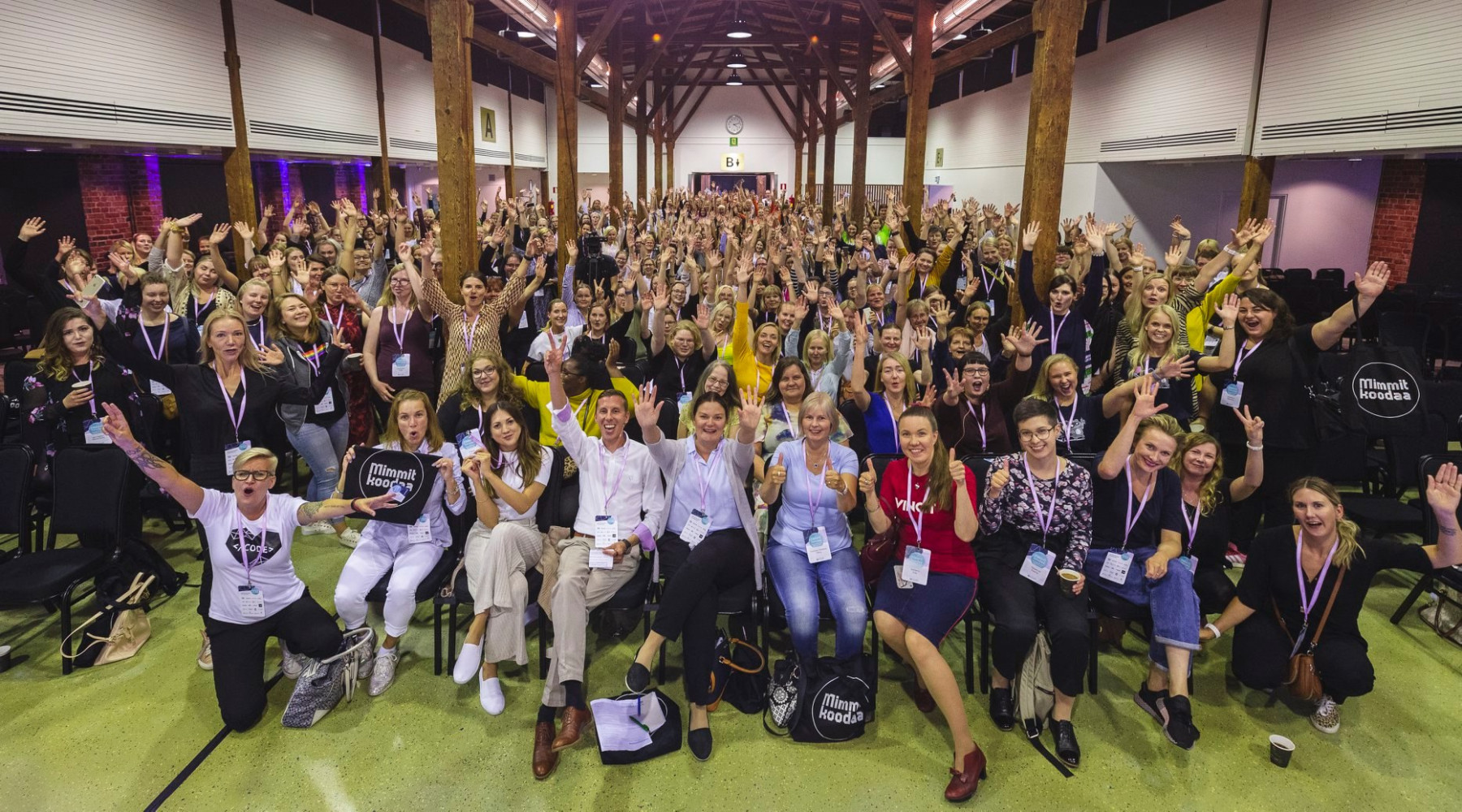
A couple hundred people, almost all women, pose for a group photo in a hall at a workshop event.

Mimmit koodaa has helped thousands of women find their way in the world of coding.Photo: Mimmit koodaa

“It is important that we see women in technology,” Köpsi says. “We see superstars like Linda Liukas, but we also need to see women from our circles – our friends and family – who are working in technology.”

The work done by Mimmit koodaa is important for narrowing the gender pay gap, enhancing the economic security of women and nonbinary people, ensuring a diverse and talented workforce and preventing biases in the software developed by the industry.

It also makes good business sense. A major study from the International Labour Organisation found that a diverse workforce improves creativity, innovation, reputation and profits.

“I’ve worked for five years in the industry and I love the change I am seeing,” Panula says. “More women are entering the field and you may have women colleagues on your IT team. Mimmit koodaa has contributed to our improved diversity.”

By David J. Cord, February 2022

February 11 is the UN International Day of Women and Girls in Science.

Finland is a member of the UN Human Rights Council from 2022 to 2024. The country’s stated commitments as a member include working for women’s full and meaningful participation in all sectors of society, and working for LGBTIQ+ persons to be able to enjoy a life without discrimination and harassment.

Feast your eyes on these Finnish chocolate creations

Along with dark Finnish rye bread, the food that usually inspires pangs of homesickness in Finns living abroad is Fazer chocolate in its blue wrapper.

However, the venerable Fazer, founded in 1891, is far from the only Finnish player in the chocolate game. We visit a few small-scale producers who have been around for much less than 130 years.

To find delicious artisanal incarnations of Finnish chocolate, we take the ferry to the picturesque Åland Islands off the southwestern coast. We also hop on the train to magnificently scenic Finnish Lapland in the far north.

Åland’s queen of chocolate
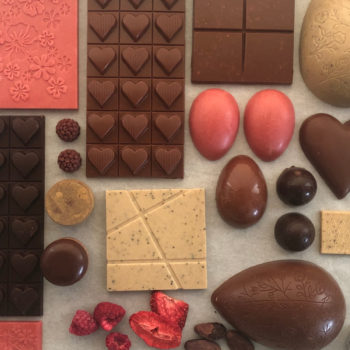
A multicoloured assortment of chocolate bars, chocolate eggs, cocoa beans and berries is arranged on a table.

Mercedes Winquist creates vegan chocolate in Mercedes Studio, her home workshop in the Åland Islands.Photo: Mercedes Studio

Like all sweet things, it started with love. Finland’s Åland archipelago owes much of its chocolate heritage to Mercedes Winquist, a Venezuelan who moved to Åland to be with her husband. When he gave her a book about cocoa, she discovered her calling.

“I grew up with great chocolate,” she says. “But at first, I didn’t know much about it, except that my home country produced internationally renowned chocolate.” She created a thriving business, Mercedes Chocolaterie, which she later sold after many successful years. Winquist still follows her passion for making chocolate, now under the name Mercedes Studio (website in Swedish).

“When I realised people were enjoying my chocolate, there was no way back for me,” she says. She is affectionately known as Åland’s queen of chocolate.

Different challenges
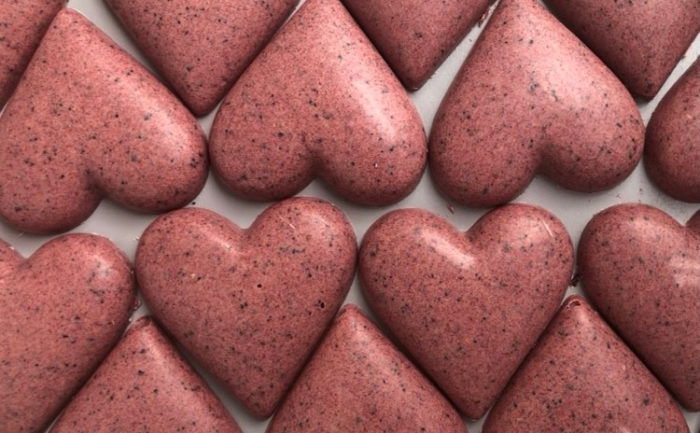
Rows of pink heart-shaped chocolates.

We <3 chocolate: These vegan hearts by Mercedes Studio are seasoned with freeze-dried raspberries and liquorice.Photo: Mercedes Studio

At Mercedes Studio, Winquist focuses on vegan and gluten-free products.

“I needed a challenge, wanted something different,” she says. “My production is on a smaller scale now. I have my Mercedes Studio at home and produce everything there.”

She includes as many organic ingredients as possible. Many of the berries used in her chocolate come from her own garden. “The most important thing is that it should taste good,” she says.

Passion for new recipes
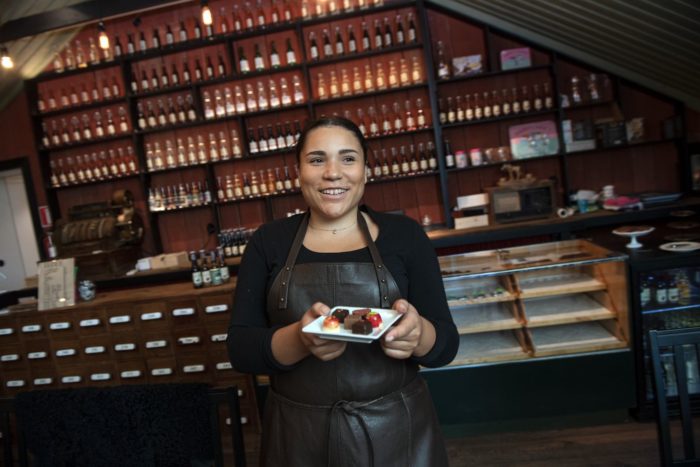
A woman stands in front of the counter in a shop, holding a plate full of chocolates.

Channa Öhman “jumped at the opportunity” to work at Mercedes Chocolaterie when she returned to Åland after finishing her culinary education abroad.Photo: Mercedes Chocolaterie

Channa Öhman, an Ålander educated as a pastry chef at Le Cordon Bleu in London, returned home after her studies and heard that that Mercedes Chocolaterie was looking for someone to manage the factory (website in Swedish). “I jumped at the opportunity to start working as a chocolatier,” she says. “I always wanted to have my own chocolate factory.”

From start to finish, Öhman does everything by hand: mixing the cocoa mass, filling the moulds and decorating the final product. Handmade chocolate “takes a lot of passion, but it’s also lots of fun,” she says.

A continuing story
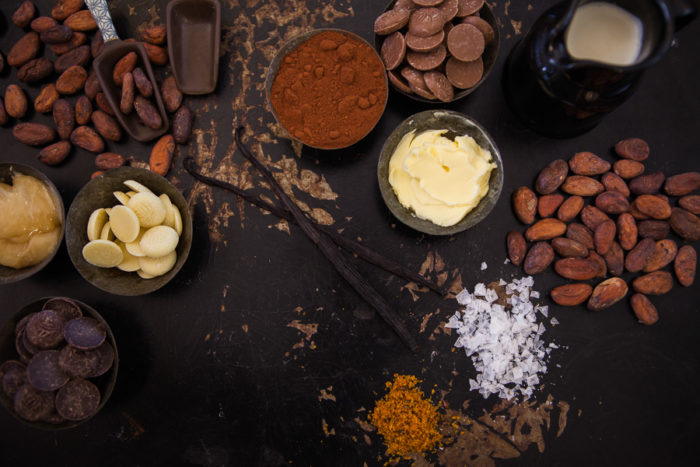
An array of ingredients for chocolate making is arranged on a table, including butter, honey, cream, salt, vanilla beans, cocoa powder and cocoa beans.

Local products such as butter, honey, cream and berries join cocoa beans in the chocolate recipes of Mercedes Chocolaterie in the Åland Islands.Photo: Mercedes Chocolaterie

She considers herself lucky to continue the Mercedes Chocolaterie story while also introducing her own recipes, which often feature seasonal, locally sourced ingredients such as honey, butter, cream and sea buckthorn (a delicate-tasting orange berry that grows on coastal shrubs). “My absolute favourite combination is sea salt and any kind of chocolate,” says Öhman. “I just love the salty-and-sweet combo.”

Öhman also offers less conventional fare, such as a praline flavoured with raspberry and yuzu (a citrus fruit) – an edgy taste that leaves you wanting more. Another recipe involves rye crispbread covered in chocolate and seeds.

Mercedes Chocolaterie’s little café and factory are located in the countryside about a 20-minute drive from Åland’s capital, Mariehamn.

Artistic Arctic chocolate
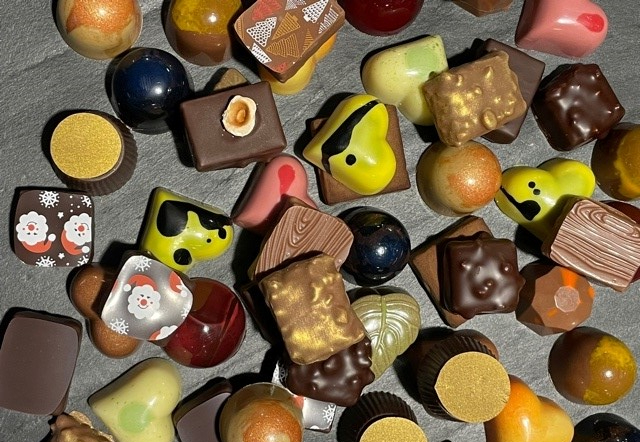
An array of chocolates with different colours and shapes.

Jouko Rajanen honed his chocolate-making skills for years before opening Choco Deli in the arctic city of Rovaniemi in northern Finland.Photo: Choco Deli

Like many creative people, Jouko Rajanen found time to pursue his own dreams during spare hours when he wasn’t at his day job.

“I built a small chocolate factory in my garage, where I used to make small amounts late at night,” says Rajanen. “Back then, I was working as head chef at the Santa Claus Hotel in Rovaniemi, so I had time to practice after work.”

After developing his chocolatier skills for five years, Rajanen opened Choco Deli, one of the northernmost chocolate factories in the world (website in Finnish). Located on a pedestrian street in Rovaniemi, a city just below the Arctic Circle in Finnish Lapland, Choco Deli serves locals and tourists.

Combining colours and flavours
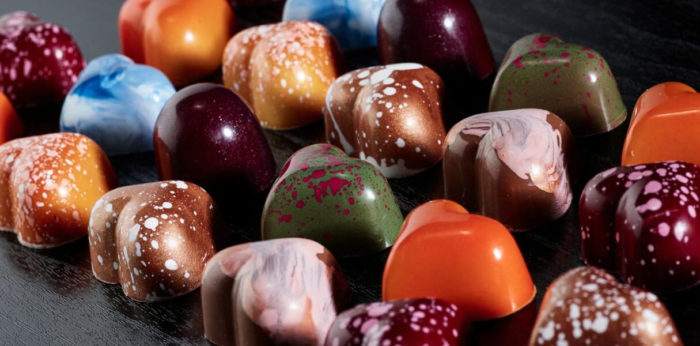
Rows of heart-shaped chocolates in many different colours.

Rajanen’s chocolates are visually impressive.Photo: Choco Deli

Rajanen’s shop specialises in artisanal chocolate and cakes. Products flavoured with local berries are especially popular, as visitors are often interested in trying regional ingredients.

Choco Deli’s creations are visually stunning as well as tasty. Rajanen loves colours and has studied with prestigious chocolate makers such as Valrhona and Michel Cluizel.

“If you know how to combine colours and flavours and you have the technique, then the sky is the limit,” says Rajanen. “I think everybody can cook, but not everybody can make chocolate. Every step has to be correct before achieving a perfect result.”

From bean to bar in southern Finland
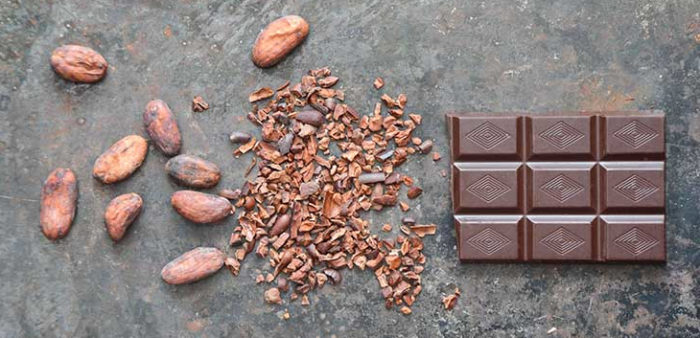
Several whole cocoa beans are arranged next to a pile of crushed cocoa beans and a bar of chocolate.

Pieni Suklaatehdas (Little Chocolate Factory) buys its cocoa beans directly from the farmers in an effort to maintain ethics and sustainability.Photo: Pieni Suklaatehdas

Located in the southern town of Porvoo, Pieni Suklaatehdas (Little Chocolate Factory) forms part of the growing bean-to-bar chocolate movement. Bean-to-bar chocolatiers make products directly from cocoa beans rather than using chocolate or cocoa paste supplied by other manufacturers.

Control over the whole process, from sourcing and processing to flavouring and decoration, enables them to offer a more ethical, sustainable product.

Cocoa bean characteristics
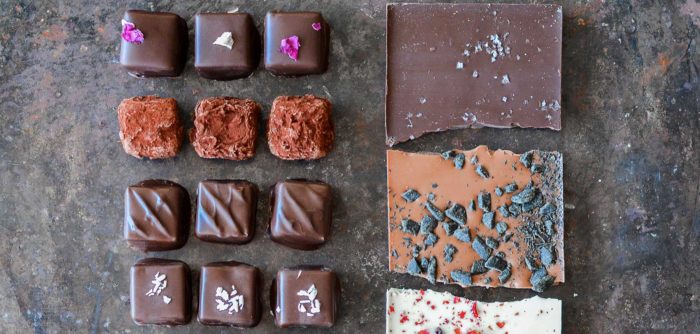
Rows of different chocolates including small truffles and pieces of chocolate bars.

The shop’s selection of truffles, chocolate bars and other products varies depending on the season.Photo: Pieni Suklaatehdas

“We use Direct Trade organic cocoa beans,” says chocolatier Peter Westerlund, owner of the Little Chocolate Factory. “I know the farmers and buy directly from them.”

Founded in 2005, the factory has a clientele that values high quality and seasonal products.

“Personally, I like dark chocolate,” says Westerlund, “because that’s where you can best taste the cocoa bean’s characteristics.”

By Carina Chela, February 2022
Good chance of gold as Finnish Olympic and Paralympic athletes head for Beijing

Finland ranks sixth among existing nations in total Winter Olympic medals, with 167 since the Games began in 1924.

A certain generation of Olympic fans all over the world remembers the glory of ski jumper Matti “The Flying Finn” Nykänen in the 1980s. Cross-country skiing is another sport in which Finland has had notable periods of success and is always a contender.

At the 2022 Winter Games, Team Finland is expected to do well in men’s and women’s ice hockey, not to mention snowboarding. [Editor’s note: The men’s hockey team won gold and the women’s hockey team won bronze. Finland also came home with half a dozen medals in cross-country skiing.]

The Paralympic Games follow, with Finland’s best hopes in snowboarding and alpine skiing. [Editor’s note: Santeri Kiiveri won silver in alpine skiing (men’s super combined, standing) and Matti Suur-Hamari won gold in men’s snowboard cross, category SB-LL2.]

Assessing the odds

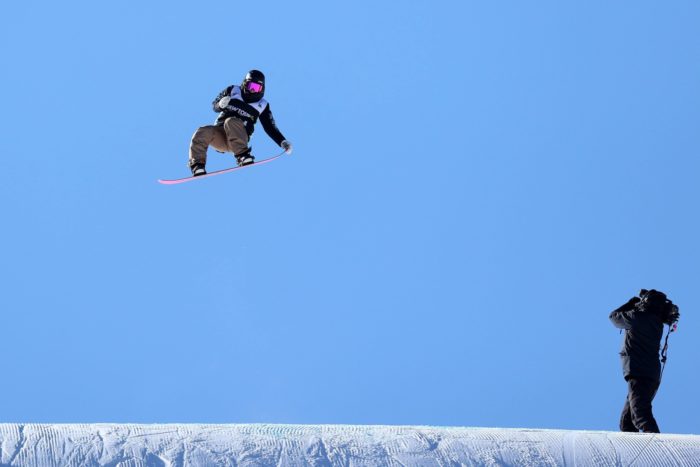
A snowboarder is high in the air over a snowy mountain slope.

Finnish snowboarder Enni Rukajärvi launches over the final jump in a slopestyle competition in Colorado, USA in December 2021.Photo: Ezra Shaw/AFP/Lehtikuva

Team Finland expects to send about 90 Olympians to China, including 48 hockey players.

The National Hockey League’s recent decision to prevent its players from participating in the Olympic competition because of Covid-19 concerns could actually enhance the odds of the Finnish men’s team winning its first Olympic gold medal.

Although Finnish players have a strong presence in the NHL, the Lions won gold at the 2019 World Championship and silver in 2021, essentially without NHL players.

High hopes for hockey

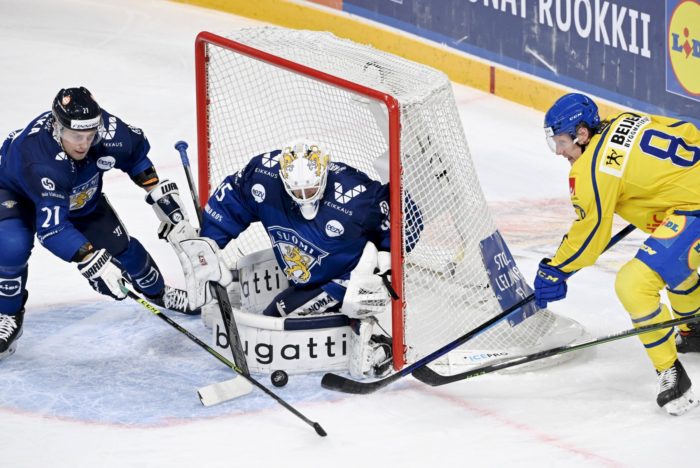
The Finnish goaltender blocks a Swedish player from putting the puck in the net.

Jarkko Parikka (left) and goalie Juho Olkinuora of Finland fend off an attack from Sweden’s Fredrik Olofsson in a Euro Hockey Tour match in Helsinki in November 2021.Photo: Markku Ulander/Lehtikuva

Hockey coach Jukka Jalonen’s recent successes at the international level with an experienced roster that has remained intact bodes well for matches against teams that have depended on NHL talent.

“Finland has been able to produce those top achievements with basically no players from the NHL, even though the main opponents have had plenty of NHL participants,” says Mika Lehtimäki, director of the Finnish Olympic Committee’s Elite Sport Unit. “So, obviously the NHL’s decision could be of great benefit to Finland.”

Although it is a world power in men’s hockey, Finland failed to reach the medal stand in Pyeongchang in 2018 after winning silver in Turin in 2006, as well as bronze in Vancouver in 2010 and in Sochi in 2014. Finland is fourth overall among currently competing nations, with a total of two silvers and four bronze medals.

Women’s hockey looks for breakthrough

A Finnish hockey player moves past two Canadian players.

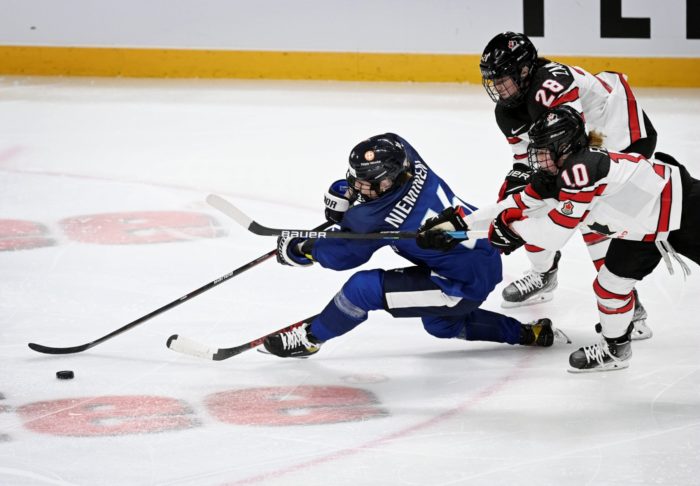
Finland’s Petra Nieminen (left) keeps the puck away from Canada’s Sarah Fillier (right) and Micah Zandee-Hart in a friendly match in Helsinki in November 2021.Photo: Antti Aimo-Koivisto/Lehtikuva

In women’s hockey, coach Pasi Mustonen’s team has been at the top of European play in recent years. However, it has yet to break the stranglehold that Canada (four golds and two silvers) and the US (two golds, three silvers and a bronze) have maintained since women’s hockey was introduced to the Olympics in 1998.

With three Olympic bronze medals, Finland is close to a breakthrough. It beat Canada in the 2019 World Championship semifinals in Espoo, located just west of Helsinki. Then it fell just short of a win against the US in a controversial final that saw a Finnish goal annulled in overtime, to the stunned disbelief of the home crowd; the game ended in a shootout.

That is actually reason for hope. “Finland has shown it’s possible,” says Lehtimäki, “so why not in Beijing?”

Snowboard lift-off

An airborne snowboarder is silhouetted against the sky.

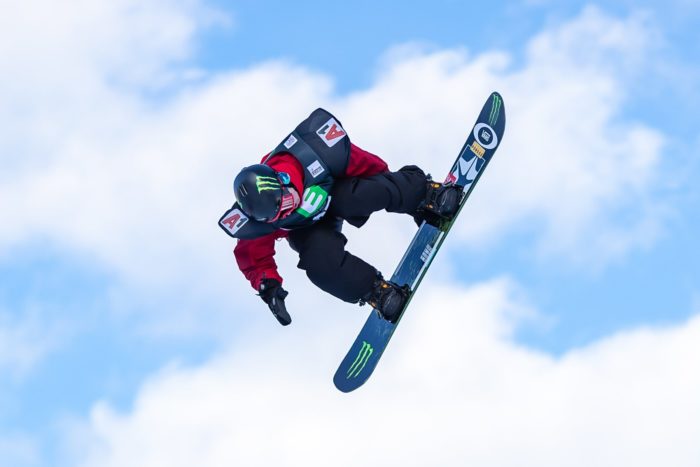
That feeling when you glance down and notice that down is now up: Finnish snowboarder Rene Rinnekangas in mid-jump at a competition in Austria in January 2021.Photo: Lukas Huter/AFP/Lehtikuva

With snowboarding medals in the last four Winter Games, Finland is again expected to do well in Beijing. Here are two athletes to look out for:

Enni Rukajärvi (born in 1990) of Kuusamo in northern Finland is one of the world’s top female snowboarders of the past decade. She won silver in slopestyle at the 2014 Winter Olympics and bronze in 2018. She also won gold at the 2011 World Championships and the 2011 Winter X Games in the same event, and in subsequent years added a silver and two bronzes at the latter competition.

Rene Rinnekangas (born in 1999) of Iisalmi in north-central Finland won bronze at the 2021 World Championship in slopestyle. He also took silver and bronze in the same event in 2019 and 2021 at the Winter X Games.

History of success in Paralympics

A slalom skier cuts a curve on his way past a gate.

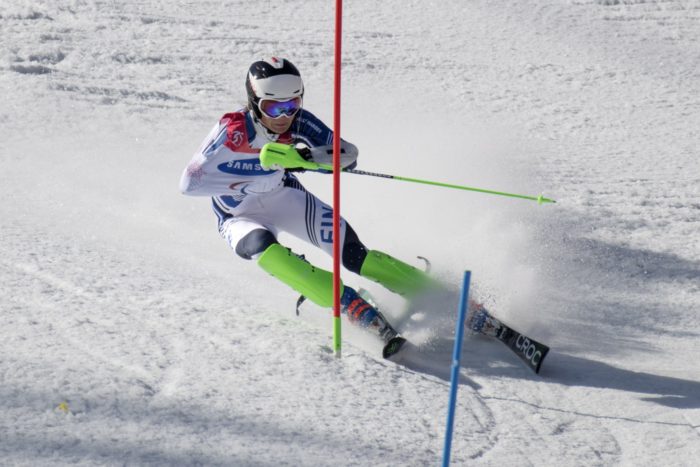
Santeri Kiiveri competes in slalom, giant slalom and super combined for the Finnish Paralympic team.Photo: Riku Valleala/Lehtikuva

With an overall history of Paralympic success but just one gold medal since 2006, Finland is expected to send between six and eight athletes to Beijing to compete in three to four events.

“If we get three medals, as we did in Pyeongchang [in 2018], I think the team will have achieved our goal,” says Kimmo Mustonen, sports director at the Finnish Paralympic Committee.

Finland has competed in every Winter Paralympics since their inception in 1976 at Örnsköldsvik, Sweden. Its best showing was in 1984 at Innsbruck, Austria, where it finished second with 34 medals, including 19 gold. Finland has 188 total medals, sixth among participating nations.

Names to watch

A snowboarder passes a gate.

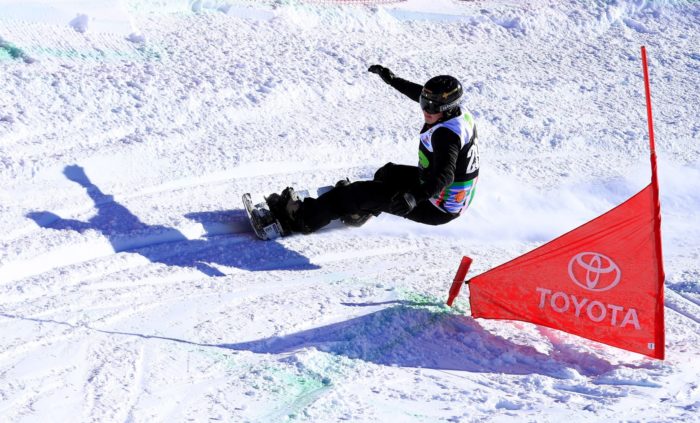
Snowboarder Matti Suur-Hamari rounds a curve; he competes in snowboard cross and banked slalom for Finland in the Paralympics.Photo: Tom Pennington/AFP/Lehtikuva

Mustonen says he expects Finland to medal in snowboarding and alpine skiing.

Matti Suur-Hamari (born in 1986), competing in snowboarding in the LL2 classification (limited coordination impairment), is Team Finland’s top hope for medals in snowboard cross and banked slalom. He received gold and bronze medals in those events, respectively, in 2018 in South Korea.

Finland’s best hope for Paralympic medals in alpine skiing is Santeri Kiiveri (born in 2000), who competes in the standing classification and whose best event is slalom. He is also expected to perform favourably in giant slalom and super combined. Inkki Inola (born in 1999), a young cross-country skier in the visually impaired classification, is also attracting attention.

By Michael Hunt, January 2022, updated March 2022

New kind of election in Finland selects decision-makers for wellbeing services

Previously Finland’s selection of different elections included parliamentary, presidential, municipal and European elections. The newest addition is called county elections.

“County” is the term officials are using to describe 21 newly defined areas. Their full official name in English is a mouthful: they are wellbeing services counties. In the new county elections, voters will choose county councillors to oversee the area’s social welfare services, healthcare services and rescue services. By contrast, municipal elections deal with smaller geographical units; there are approximately 300 municipalities.

The municipalities will hand over responsibility for organising social, health and rescue services to the new wellbeing services county councils at the beginning of 2023. Helsinki is not participating in the county elections – its wellbeing services will remain in the hands of the city council. Finland’s autonomous Åland Islands are not affected by the reform, so they are not holding county elections, either.

Foreign residents can vote

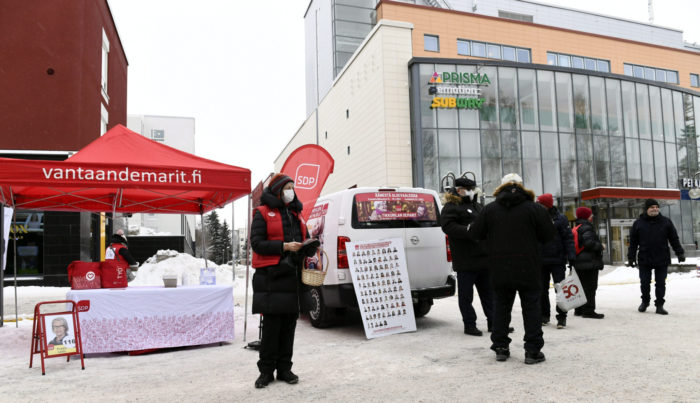
On snow-covered ground in front of a shopping centre, political campaign workers talk with passers-by.

Political parties campaign outside shopping centres and on town squares across Finland despite the icy temperatures.Photo: Emmi Korhonen/Lehtikuva

Foreigners from Nordic and EU countries can vote in county elections if they have resided in the county for at least 51 days prior to election day. Other foreign nationals must have lived in the county for 51 days and resided in Finland for at least two years.

Following the same criteria, foreign nationals may also run for election to the county councils.

Having held municipal elections in June 2021, Finland already has experience of organising elections during the corona pandemic with health security measures in place. Also, vaccination rates are far higher in January 2022 than they were in the summer of 2021. (At the time of writing in mid-January, 88 percent of people over the age of 11 have received at least one vaccination, 84 percent have had two shots, and 32 percent have had three.)

Finnish elections always include a period of early voting at an array of locations (January 12–18 this time), which helps prevent long queues from forming on election day itself. It was also possible to register for at-home voting in cases of coronavirus-related quarantine or isolation. Additionally, drive-through voting is available in many areas and numerous polling locations can accommodate outdoor voting (for some of them you need to call ahead). Speaking of driving and voting, some rural areas feature voting buses that travel from town to town making scheduled stops like bookmobiles (library buses).

Important to make your voice heard

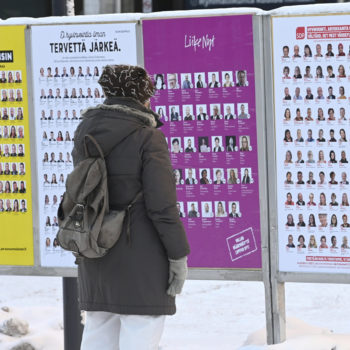
A person stands on snow-covered ground in front of a row of election posters.

Outdoor posters list the candidates for the various parties, but you can also turn to online sources such as the national broadcasting company Yle’s Election Compass for more information.Photo: Heikki Saukkomaa/Lehtikuva

“Wellbeing services county elections” doesn’t exactly roll off your tongue and may not carry the perceived glory of parliamentary or presidential elections. However, this is a chance to have a say about who makes decisions regarding local health, social and rescue services – “important matters that concern everyone’s daily lives,” as the Ministry of Justice’s election info website puts it.

Finland’s national broadcasting company, Yle, publishes an Election Compass that readers can use to orient themselves about the issues at stake and the stances of the parties and candidates. You answer questions about your own views, and the computer compares them to how the parties and candidates responded, showing you who shares your values. Info boxes about each issue, candidate and party are a tap away.

In a contest that includes many practically unknown candidates in addition to a number of big-name politicians, the Election Compass helps you parse the large field of prospective county councillors.

By ThisisFINLAND staff, January 2022

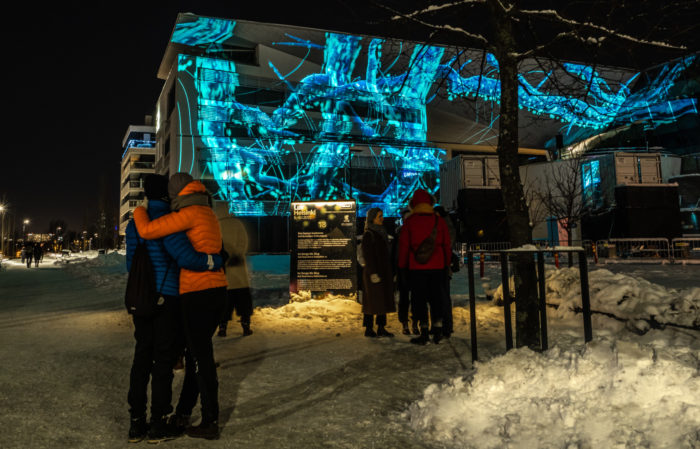
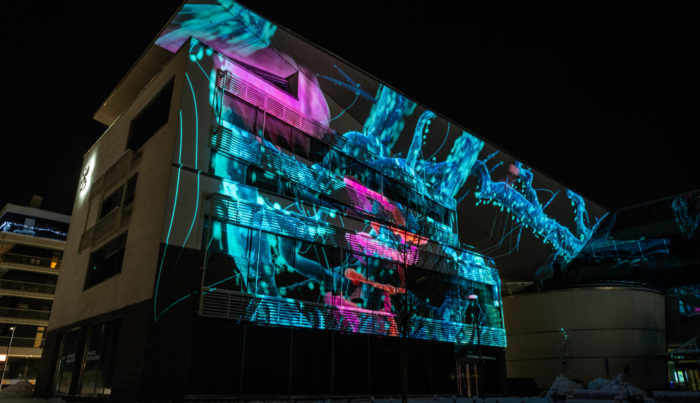
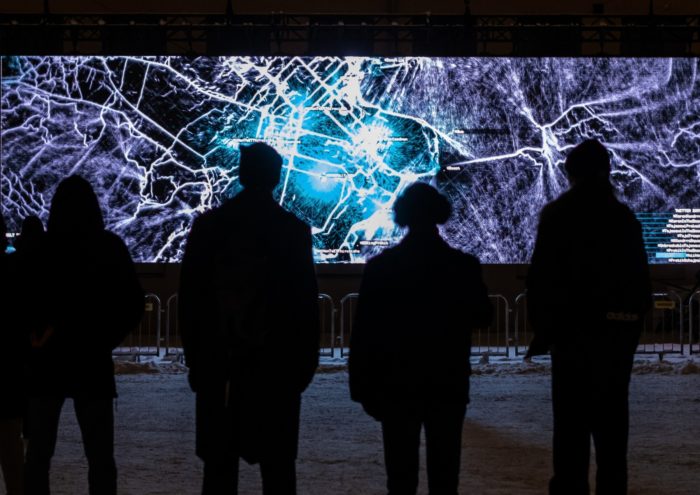
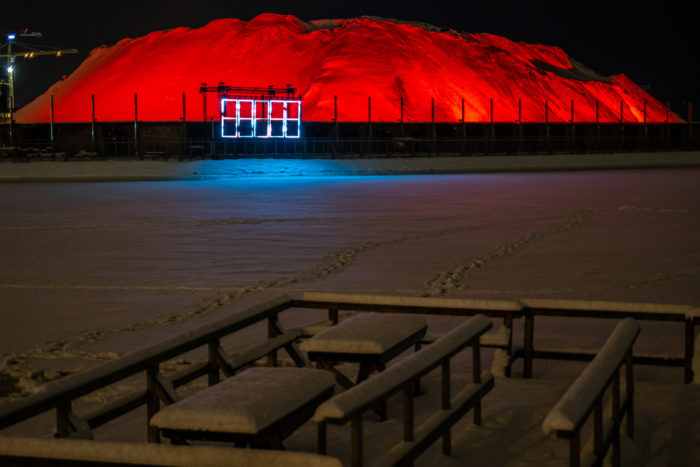
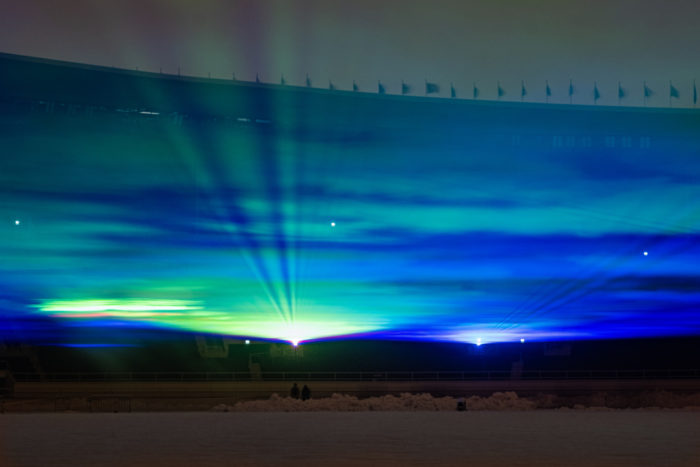
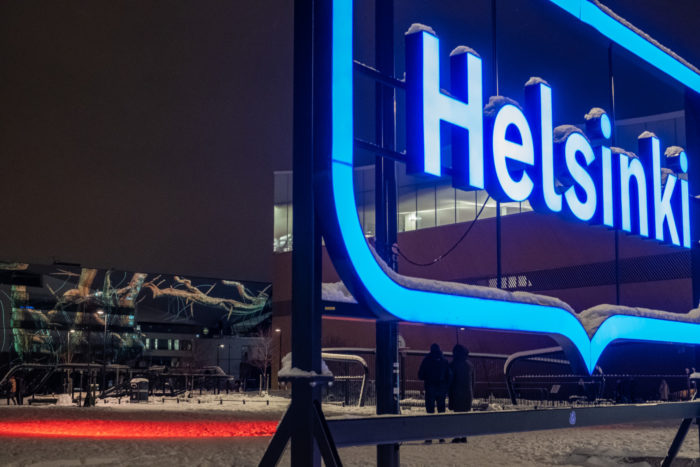
The return of Lux Helsinki reminds viewers of brighter days ahead

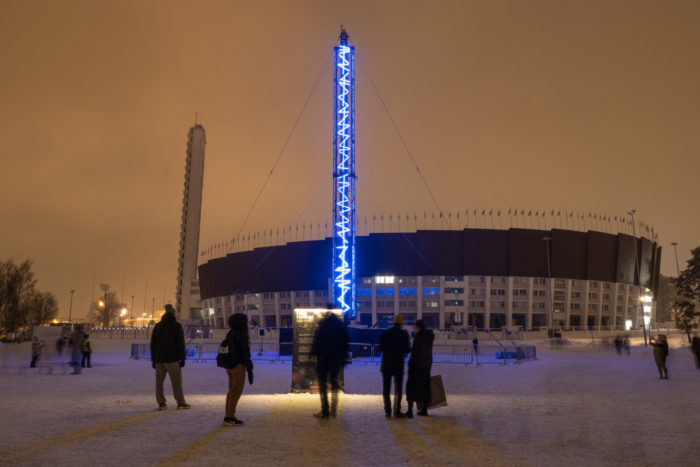
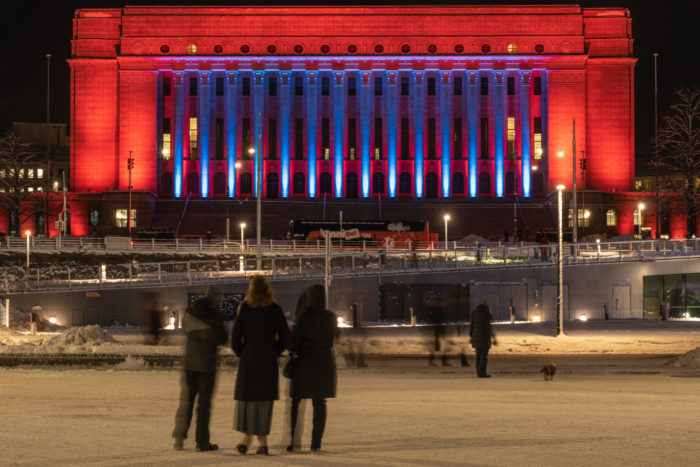
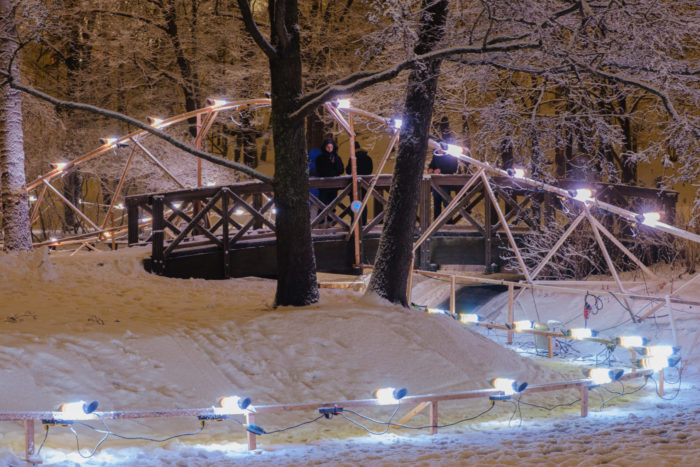
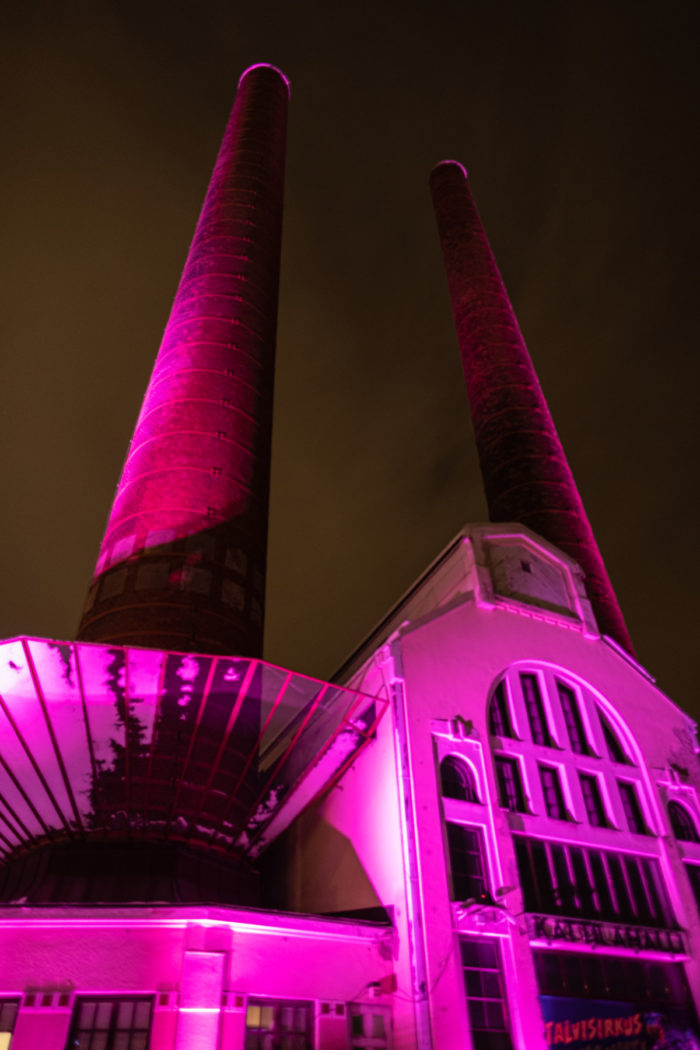
Just a few days into the new year and only a couple weeks after the winter solstice, daylight hours are still at a minimum. Lux Helsinki pierces the January night with light installations and luminous outdoor artworks across the city.

For Lux Helsinki 2022, organisers spread installations across the city, providing many entry points to the festival in order to avoid the formation of crowds, so that viewers could maintain social distancing. Light-seekers bundled up to stay warm in bracing temperatures that hovered around minus eight degrees Celsius (17 degrees Fahrenheit) for much of the week.

Most of the installations revved up for five hours each evening starting at five o’clock, for five nights in a row beginning January 5. Several of them also lit up for Lux Morning one day a couple hours before sunrise, which happens at about 9:20 in Helsinki at this time of year (sunset is at about 3:30 pm).

The festival of illumination reminds Helsinkians that they have emerged on the other side of the solstice and the days are already getting longer. Moving through February, day will continue to gain on night, and by late March the light will have a clear upper hand. While the weather often remains chilly throughout April, the already long hours of daylight reassure people that summer is on its way.

Photos by Tim Bird, January 2022
Text by Peter Marten

Finnish American helps Finland lead in cheerleading

Kayleigh Karinen has won the world championship not once but twice. Considering she’s American and cheerleading originated there, you would expect her to have won her gold medals under the US flag. But no. She competed in the US for most of her career, but won the ultimate title as a member of the Finnish national team.

“I am very proud of my Finnish roots,” says Karinen, 24 at the time of writing, “and very fortunate to be able to compete and win as a Finn.”

Her great-great-grandparents migrated from Finland to America in 1902 in search of a better, more prosperous life. Others in the family had already moved there in the 1880s and 1890s. About 400,000 Finns moved to America around the turn of the 20th century to escape poverty and political unrest surrounding the time of Finnish independence, which was achieved in 1917.

The amount of direct contact between Karinen’s family and Finland had slowly dwindled. She decided to renew the connection by living here for a while.

“I had spent time at a grandparent’s summer cottage in Michigan, so wooden houses, lakes and nature were not entirely unfamiliar,” she says.

Now she has met relatives in Vaasa, on Finland’s west coast, and visited her great-great-grandparents’ former house in nearby Jalasjärvi.

“My father and brother had never been to Finland, either,” she says. “They came to visit me here and we went to Jalasjärvi and Vaasa together. It was a very meaningful experience.”

Sisu in her heart

Kayleigh came to Finland for a five-month exchange programme in January 2017. She had already lived, studied and cheered in Chile and Spain.

“I had never been to Finland, but I’d dreamt about it,” she says. “Roots and relatives are a big thing in my family.”

At first, almost the only word she knew in Finnish was sisu, meaning guts and perseverance. Now she speaks almost fluent Finnish, and sisu is her spirit word – it is even tattooed on her finger.

“Sisu is how things are done here – being feisty and determined and pushing through difficulties,” she says. “I feel that I have gotten this far with the help of it. Now knowledge of the word has spread to other countries.”

She extended her exchange programme to a full year and then applied for a master’s programme at Helsinki University. She has been studying for a degree in Linguistic Diversity and Digital Humanities, with graduation slated for November 2021.

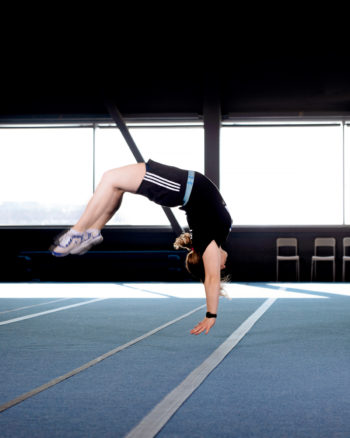
A woman does gymnastics moves in a sports hall.

Karinen teaches tumbling at a gym in Helsinki. Photo: Samuli Skantsi

Planning to stay in Finland

“I want to stay in Finland for good,” says Karinen. “I admire that everything here is open and progressive. It gives me the opportunity to flourish, not in just cheerleading, but in everything I want to do.”

She is head coach and coordinator for Funky Team, one of the biggest cheerleading clubs in Finland. She also teaches tumbling at a gym in Helsinki. A tumbler does standing and running floor acrobatics, such as back tucks and flips with twists. The national team is still a big part of her life.

“The team, the cheerleading environment and the families I have met have been a huge help,” she says. “And without cheerleading I wouldn’t have been able to stay here or travel the world the way I have.”

Practise the Finnish way: smarter

Finland is well known in the world of cheerleading. The US held the top title until 2018, when Finland won the World Championship. Finland won again in 2019. In 2020 the championship was cancelled because of Covid-19.

Karinen knows one main reason why Finland reached the top.

“The motto for the national team is to train smarter, not harder,” she says. “That means that we have enough rest days and get enough sleep and of course eat wisely. Here they understand the importance of rest days at every level of cheerleading. In some other countries, sports can easily become overwhelming, with too many practices and competitions.

“Practicing smarter and safer means that athletes can have a longer career. You warm up and cool down well at every practice, and maintain overall balance in your life. You don’t get as many injuries and you don’t burn out.”

The national team practices together just seven weekends a year. In addition, stunt groups – smaller parts of the team – practice individually in their hometowns two or three times a week.

Winning the World Championship had been a dream for Finnish cheerleading for a very long time. Karinen feels fortunate to have helped make it come true.

“I have dreamt about winning since I was very young, but I never thought that it would happen with ‘Suomi Finland’ written on my chest,” she says. (Suomi is the Finnish word for “Finland.”) “It is an indescribable feeling to hear the national anthem on the podium.”

By Riitta Alakoski, ThisisFINLAND Magazine 2021–22

Explore Finland online: Sit back and enjoy the show

From the Presidential Palace to arts of all sorts, more places and performances than ever are viewable online.

Virtual Amos Rex

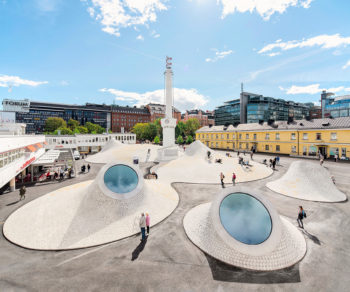
Amos Rex Photo: Amos Rex

Amos Rex, a privately funded art museum with unique architecture, opened in central Helsinki in August 2018. Virtual Amos Rex is just like the real one, but online. It presents art from the exhibitions as well as works created specifically for the virtual museum.

National Museums: Open Museum

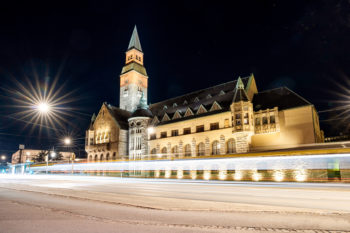
National Museum of FinlandPhoto: Topi Leikas

No matter where you are or what time it is, you can experience the National Museum of Finland digitally on a site that invites you to enjoy and learn. Finland’s shared cultural heritage, from prehistory and medieval times up to the turning points of independent Finland, is available for everyone to experience. The castles, museums, collections and research of the National Museum of Finland offer educational content for teachers and anyone interested in history and cultural heritage.

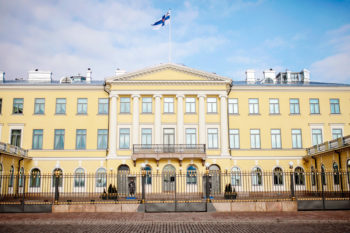
Presidential Palace

Presidential Palace Photo: Matti Porre

Explore the glory of the Republic of Finland.

The Fortress of Lappeenranta

Fortress of LappeenrantaPhoto: Ismo Pekkarinen/Lehtikuva

A mobile walking tour of an old fortress in what is now eastern Finland. It used to be on the border between the Kingdom of Sweden and the Russian Empire.

Alvar Aalto

Villa MaireaPhoto: Norman Ojanen/Lehtikuva

Renowned Finnish architect Alvar Aalto (1898–1976) was a major figure in modern architecture and a pioneer of design. Get to know his sophisticated work and plan a future physical tour of his buildings around the country.

Turku Philharmonic Orchestra’s online concerts

Turku Philharmonic OrchestraPhoto: Seilo Ristimäki

Turku Philharmonic Orchestra publishes livestream HD-quality web concerts for online listeners to enjoy.

Stage24

Finnish National Opera and BalletPhoto: Mirka Kleemola/Imagenary Ltd

The virtual stage of the Finnish National Opera and Ballet: Set the stage in your living room and you can watch and listen to performances whenever you like.

By Ida Ijäs and Maria Öfverström, ThisisFINLAND Magazine 2021