50 Finnish summer music festivals to go to in 2023

Here are just a few of them – for the full list and descriptions, see the link below.

In June, check out Finnish and foreign indie music at the Sideways Festival in Helsinki, or head to the far north for music, artworks and modern circus at the Silence Festival in Finnish Lapland.

During the first weekend in July, you could catch heavy metal greats at Tuska in Helsinki and jump over to eastern Finland for the renowned Savonlinna Opera Festival.

In August, there’s hip hop at Blockfest in the southern central city of Tampere. In the far-northern town of Inari, Ijahis idja (Nightless Night) celebrates the music of indigenous peoples including the Sámi, whose homeland is split into four parts by the borders of Finland, Sweden, Norway and Russia.

Natural attraction: Finland’s national parks draw people to popular peaks and hidden gems

The popularity of the great outdoors has increased during the past decade.

Finland’s 41 national parks get more than 3.5 million visits each year. That level is higher than ever, except for the Covid-19 pandemic years 2020 and 2021, when, despite restrictions on international travel, annual visitor totals reached four million.

The parks serve a dual purpose of conservation and recreation – they are nature conservation areas, but they are also open for everyone to experience and enjoy. There is a fine balance: nature thrives better without too much human interference.

The world’s cleanest air

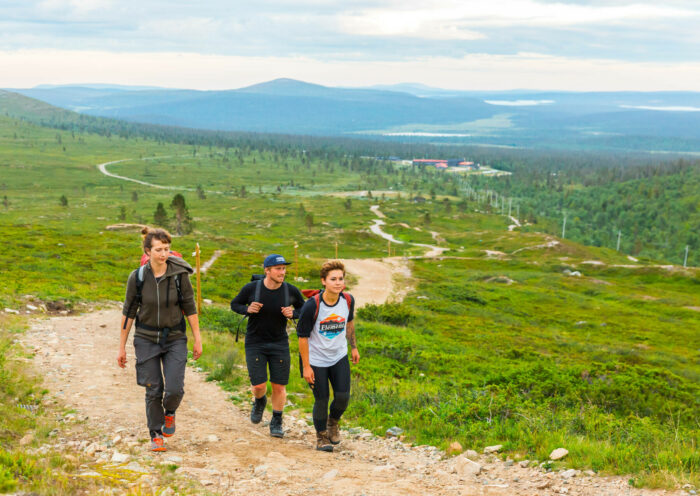
Three young people with backpacks are hiking up a hill with mountain peaks visible in the background.

People who visit Pallas-Yllästunturi, Finland’s most popular national park, say that they come for the landscape, nature experiences, relaxation and mental wellbeing.Photo: Julia Kivelä/Kuru Resort/Visit Finland

The most popular of Finland’s national parks, by far, is Pallas-Yllästunturi, which received almost 600,000 visitors in 2022. Situated in northwestern Finland, it covers an area of more than 1,000 square kilometres (385 square miles). The region prides itself on having the cleanest air in the world according to World Health Organisation statistics.

A visitor survey found that the main reasons for visiting Pallas-Yllästunturi National Park were the landscape, nature experiences, relaxation and mental wellbeing.

The most popular activities in the park are cross-country skiing during the winter and walking during the summer. Bordering the national park are several ski resorts, where thousands of Finns spend their winter holidays.

Popular yet hidden

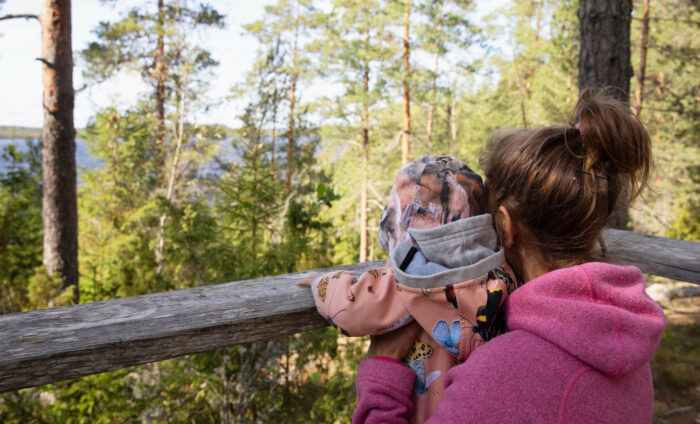
A parent holds a small child up to look out over a sunny forest landscape.

Kurjenrahka National Park, near the city of Turku in southwestern Finland, is known as the summer home of migratory birds such as cranes.Photo: Katri Lehtola/Visit Finland

Despite the visitor numbers, Pallas-Yllästunturi National Park seems to be a relatively hidden gem for foreign tourists. A 2016 survey found only 4 percent of visitors came from outside of Finland. During the pandemic, that category dropped to just 1 percent.

By comparison, in 2019, 6.6 percent of all national park visitors were foreign tourists. The share at the other top-five parks ranges from 6 to 11 percent.

Famous landscapes

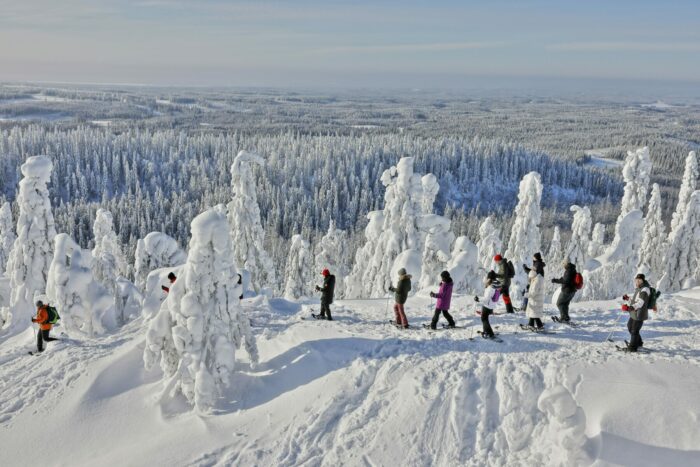
A group of ten people walks along a snowy hillside where the trees are also completely covered with snow.

Snowshoers make their way past snow-covered trees in Koli National Park in eastern Finland.Photo: Ismo Pekkarinen/Lehtikuva

Of the other parks in the top five, Urho Kekkonen and Pyhä-Luosto (numbers two and five) are also situated in Lapland, in the Finnish far north, while Koli (number four) lies in eastern Finland. All offer extensive possibilities for hiking and skiing. Koli is also famous for its landscapes, which were inspiring Finnish artists as far back as the late 1800s, including painters Venny Soldan-Brofeldt, Pekka Halonen and Eero Järnefelt; photographer I.K. Inha; and composer Jean Sibelius.

Nuuksio, the third most visited park, is located almost next door to Helsinki. Its forests are an easy choice for the million-plus people living in the capital region when they want to go on an outdoor excursion.

A variety of parks

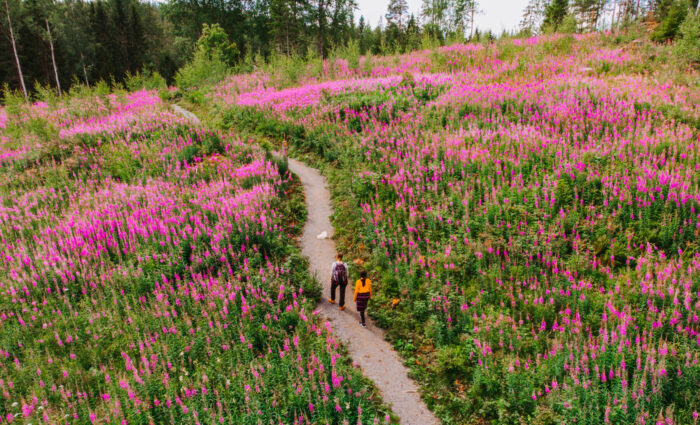
Two people walk along a path through a meadow filled with pink flowers.

Flowers fill a meadow with summer colour in Etelä-Konnevesi National Park, located between the cities of Jyväskylä and Kuopio in central Finland.Photo: Julia Kivelä/Visit Finland

Henrik Jansson is director of Parks & Wildlife Finland, which manages the national parks. It is part of Metsähallitus (which simply means “forest administration”), the state enterprise that manages state-owned land and water across the country.

“Our task is to make nature visits available,” he says. “The problem is that we have some hotspots that draw lots of people, while some are quieter. We wish that some of these people would decide to go to the less-visited places instead, but it’s difficult to control that.”

Jansson says that social media can have an unpredictable effect on visitor numbers. A few nice photos from an influencer with a large audience may bring a sudden surge to a given location.

Exploring the wilderness

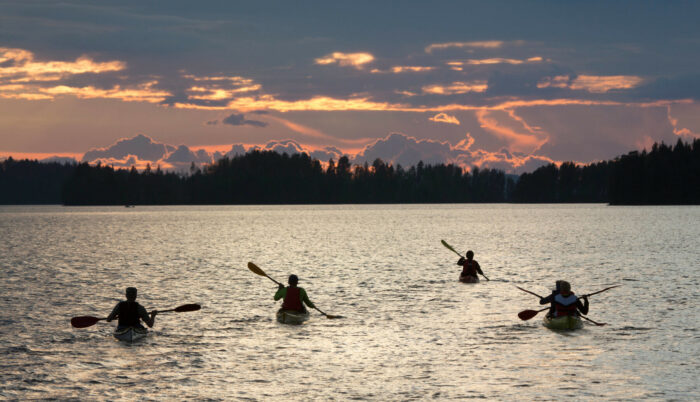
Four kayaks make their way across a lake in the dusky light of evening.

The magical northern summer days, when the sun hardly sets at all, mean you can continue paddling long into the evening, as this expedition is doing in Etelä-Konnevesi National Park in central Finland.Photo: Tea Karvinen/Visit Finland

In many countries, you need to pay an entrance fee for national parks, or access may be limited by daily quotas. Jansson says that these ideas pop up in discussions now and then, but they would not really suit Finland, with its strong tradition of every person’s right.

Every person’s right is a legal tradition unique to the Nordic countries. It allows Finns and foreigners alike to explore Finland’s wilderness and pick tasty wild berries and mushrooms, even on privately owned land.

“Our aim is to increase equal access for everyone,” says Jansson. “We do restrict movement in certain sensitive areas, such as birds’ nesting areas.”

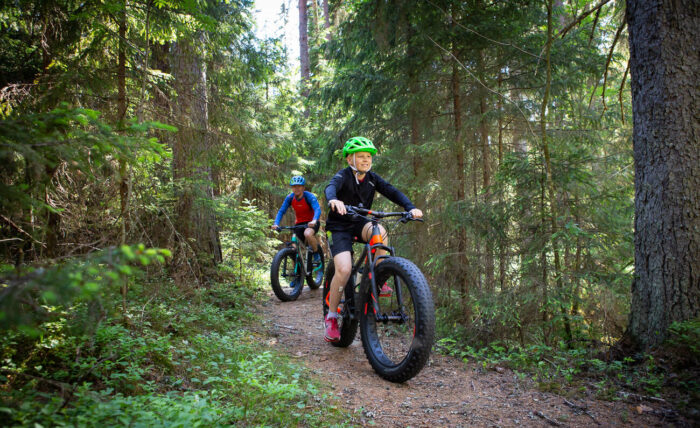
National park staff maintains trail networks in the parks. While it is permitted to walk off-trail (with some exceptions), most visitors do keep to the indicated paths, which helps minimise disturbance to the surrounding wilderness. Some parks feature designated trails for mountain biking, too.

Quiet beauty

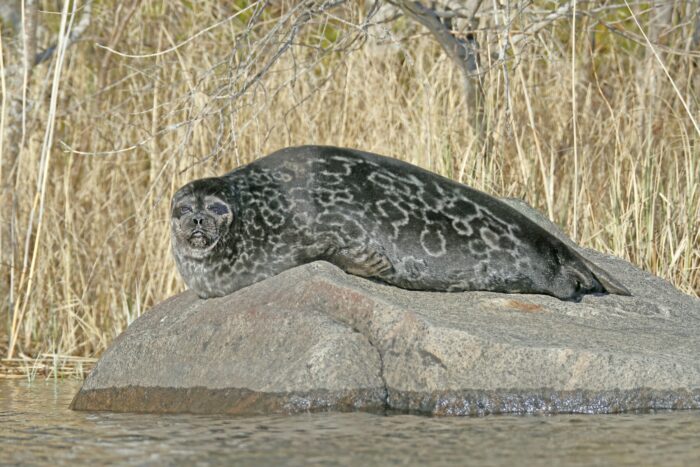
A seal is looking at the camera while resting on a large rock sticking up out of a lake.

In Kolovesi National Park in eastern Finland, you may be lucky enough to glimpse the reclusive and gravely endangered Saimaa ringed seal.Photo: Ismo Pekkarinen/Lehtikuva

Even the most popular parks contain plentiful pockets of peace and quiet. However, those looking for more tranquillity might prefer to check the other end of the visitor statistics. The wilderness in the last five parks on the list is still beautiful.

For example, Kolovesi National Park, in eastern Finland between the cities of Varkaus and Joensuu, is one of the prime locations for seeing the gravely endangered Saimaa ringed seal, a freshwater species endemic to Finland.

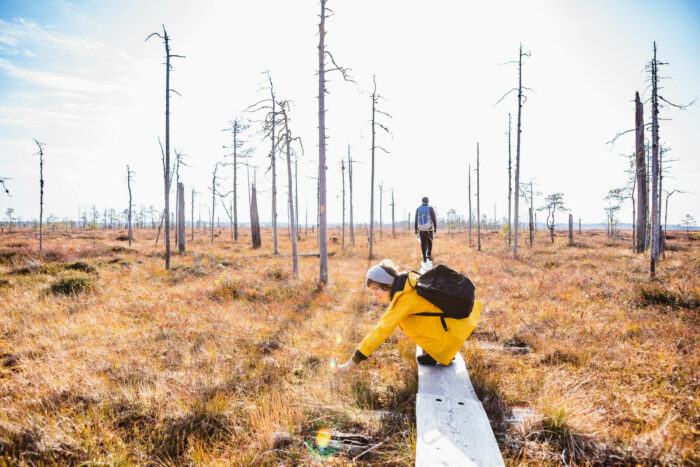
The vast mires of Patvinsuo, on the other hand, offer a very different experience. Swamps and bogs are carbon sinks and unsung heroes of biodiversity, providing habitat for birds, butterflies, plants and mosses, as well as large mammals.

Visiting remote locations

On a duckboard surrounded by low brush, a hiker leans down to look at the vegetation.

Duckboards form a path through Patvinsuo National Park, which features a fascinating and ecologically vital landscape of mires and bogs.Photo: Ulla Keituri/Visit Finland

The least visited of them all is Bothnian Bay National Park, which consists of a group of islands and the surrounding waters in the northernmost part of the Baltic Sea.

Getting there can be a challenge. There are no scheduled ferries to the park’s islands. Taxi boats are available, but rather costly. In the winter, it is possible to ski across the frozen sea, but that is definitely not for beginners.

Similar issues are characteristic of some of the other less visited national parks. They are in relatively remote locations, beyond most public transport.

Increasing possibilities

Two young people on fat-tyre bikes ride along a path through a forest.

By designating certain trails for bicycle use, such as this one at Seitseminen National Park, north of the city of Tampere, organisers ensure that everyone can enjoy the outdoors while minimising environmental impact.Photo: Salla Penttilä/Visit Tampere

Jansson says that Parks & Wildlife Finland is looking for ways to increase public transport possibilities.

In one successful example, they cooperated with VR, the national railway company: In the summer of 2022, two daily trains started servicing Hillosensalmi, an old station that had been dormant for 20 years. It is located near Repovesi National Park in southeastern Finland.

The trial proved so popular that VR expanded the season the following year, to a whole six months starting in late April.

By Juha Mäkinen, May 2023, updated March 2026

Teens in Finland learn life skills in home economics class

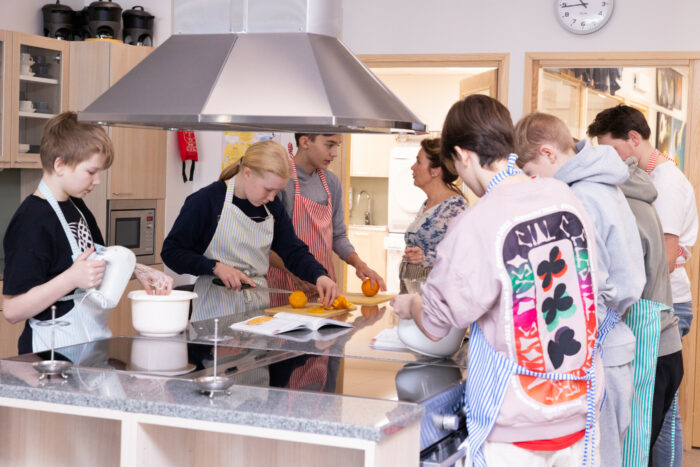
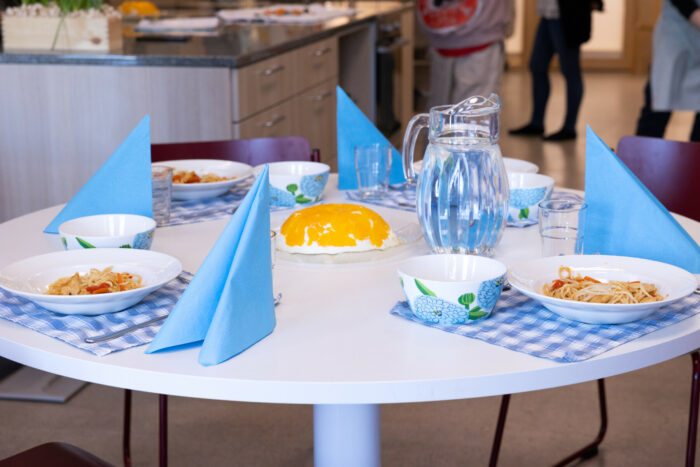
The menu consists of chicken and vegetable stir-fry with noodles followed by an orange charlotte for dessert. But before they start slicing ginger, garlic and peppers, they have to attend to a few other things.

This Monday morning begins with a quiz about vitamins on a game-based online learning platform. Then there’s a review of the homework assignment: cleaning a pair of shoes, rearranging a wardrobe at home and preparing a healthy meal.

On another online platform, everyone has submitted photos and descriptions of how they fulfilled the assignment.

Before getting to the highlight of today’s lesson, the cooking, the children watch a video about protein, learning why it’s important to the body and what kinds of foods provide it.

Integrated into the national curriculum

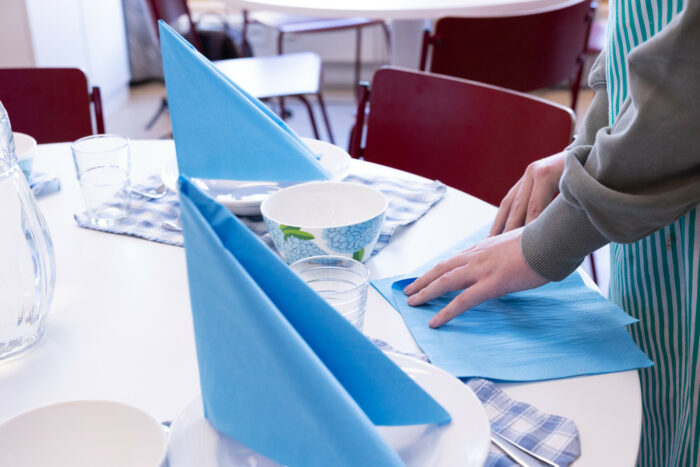
A pair of hands is folding napkins at a table.

Fine dining: Setting the table is part of the fun.
Photo: Catarina Stewen

Home economics is part of the Finnish national core curriculum for all seventh-graders, most of whom are 13 years old. It’s also available as an elective for eighth- and ninth-graders.

The aim is to teach every teenage pupil in Finland basic skills in cooking, washing, cleaning, health, nutrition, hygiene, consumer rights, economics and sustainability.

“Every lesson consists of a theoretical part and a practical part,” says Eva Green, a teacher at Strömborgska School in Porvoo, a town about 50 kilometres (30 miles) east of Helsinki. “For instance, pupils learn about using local food ingredients that are in season, about recycling and about using leftovers in meals.”

Although teachers plan their own lessons and approaches, the national core curriculum provides a uniform foundation and framework, ensuring that education is equal throughout Finland.

Teamwork

Half a dozen teenagers are gathered around a food preparation surface, chopping and mixing ingredients.

The pupils prepare the food in small groups.
Photo: Catarina Stewen

Once Green has presented the day’s recipes and cooking methods, the students begin working in small groups. First they prepare the dessert, which needs to be refrigerated for a while before serving.

Alexander cuts oranges into thin slices while Liam soaks the gelatin. Nicholas and Jens whip the cream and mix the other ingredients. The team works efficiently, and in no time, the orange charlotte is ready for the fridge. Then the boys wash the dishes and clean up.

“We learn the basics of cooking and how to clean, wash dishes, lay the table and eat healthily,” says Alexander. “The class prepares us for an independent life, so that when we move away from home someday, we’ll know how to manage.”

The special classroom contains four fully equipped kitchens.

Each one has two electric stoves, two ovens, a sink, a dishwasher, kitchen utensils, and granite-covered work surfaces that are hygienic and easy to maintain. There are also cupboards full of plates and glasses, and there are even a washer and a dryer for clothes.

The garbage bins make it easy to pre-sort the waste, with six separate containers: plastic, metal, paper and cardboard recyclables; compost; and other garbage.

Hands-on lessons and digital content

Students are chopping ingredients on cutting boards.

The main course: Chopping chicken and vegetables for the stir-fry.
Photo: Catarina Stewen

Stella, Jonathan and Jeremias point out that the hands-on lessons are a welcome contrast to other classes that are more theoretical.

“Apart from the cooking, textile care seemed useful,” says Stella. “We learned to interpret the washing instructions on clothes and used the washing machine in the classroom.”

While the classwork is mostly practical and uses a physical book, the teacher relies on digital tools for revision, educational games, homework and presentations.

“We follow a digital path in the local curriculum, preparing pupils for a digital future,” Green says.

Every week for a year

Students sitting at round tables in a classroom look at mobile devices they are holding.

Today’s lesson began with a quiz about vitamins on a game-based online learning platform.
Photo: Catarina Stewen

After a break, it’s time to cook the main course.

“Do you remember what was special about handling raw chicken?” Green asks the class.

“Separate cutting board, wash hands before and after, clean utensils directly,” says Emil.

The teams get going, cutting chicken, vegetables, ginger and garlic and boiling noodles while chatting at the same time. One from each group sets the table, including colourful napkins. The atmosphere is warm and calm, with Green circulating to give instructions where needed.

“They are all getting independent after having a weekly class for almost one year,” she says. “When the autumn term began, I needed to offer more guidance in the basics, but now they know what to do.”

Best part of the lesson

Four places are set at a round table, with a plate full of food at each one.

Dinner is served: Part of learning how to cook is sitting down to enjoy a meal with your friends.
Photo: Catarina Stewen

The chicken noodle stir-fry is ready, and the dessert looks delicious, too. The pupils sit down together to enjoy their meal.

“This is the best part,” says Emil. “Eating what we have prepared.”

Before class is dismissed, the teenagers clean the kitchen, fill the dishwashers and ensure that everything is spotless and ready for the next group.

By Catarina Stewen, May 2023

Recipes courtesy of Eva Green

Dance House Helsinki provides an inspiring haven for performers and audiences

Financial Times architecture and design critic Edwin Heathcote has called Dance House Helsinki “a series of spaces as full of power and potential as you could hope for.”

The Dance House resides in a new extension attached to one end of Cable Factory, in the neighbourhood of Ruoholahti, west of downtown. Though it retains its original, industrial name, the location has functioned as a cultural centre for decades, and houses several museums and a host of other cultural organisations.

Construction of the new building included enclosing an area between two wings of Cable Factory in glass, creating an airy foyer that now serves as an entrance hall and meeting place.

New chances for viewers and artists
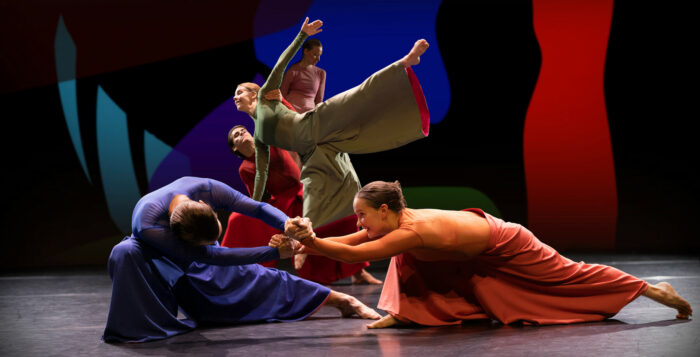
Half a dozen dancers dressed in bright colours balance in various poses.

Choreographer Tuomo Railo of Dance Theatre Glims & Gloms says his Bach Project originally developed out of improvisation and displays the “freshly squeezed juice of dance.”Photo: Ari Kauppila/Dance House Helsinki

The crown jewel of the new Dance House is Erkko Hall (named after the Jane and Aatos Erkko Foundation, a major donor). Designed specifically for dance performances, the space has a ground-level stage and can seat up to 700 people.

“I love the steep seating arrangement, because it allows every performer to be seen,” says Finnish dancer and choreographer Tero Saarinen. “Intimacy is maintained even if you sit in the last row.” He’s the artistic director of Tero Saarinen Company, one of Europe’s leading dance groups.

The company is a programme partner of Dance House Helsinki. “Both our artists and our audiences have been inspired by the new perspective and the boost the new space has brought,” says Saarinen, looking back on the venue’s first year.

Dance House Helsinki’s partners also include Cirko (Centre for New Circus), Dance Theatre Hurjaruuth (“dance and circus performances for children and adults”) and Zodiak (Centre for New Dance). A broad range of other groups and festivals hold events there, too. They’ve all been experimenting with the possibilities that the new space offers. In addition to Erkko Hall, the complex also features the 235-seat Pannu Hall.

Living the dream
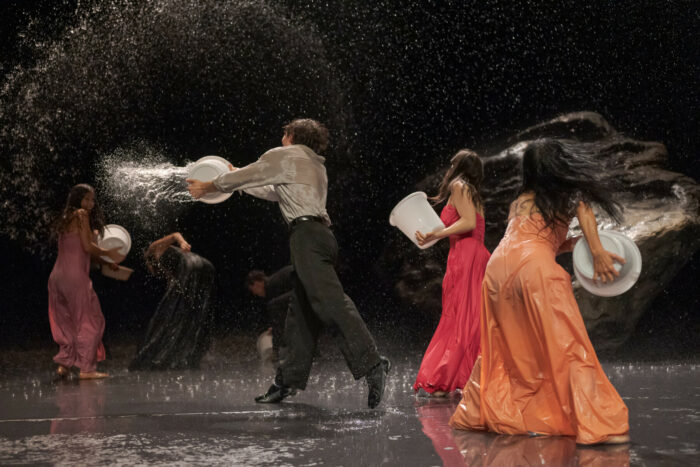
Half a dozen dancers dressed in various colours hurl cascades of water at each other from plastic buckets.

When Tanztheater Wuppertal Pina Bausch visited Dance House Helsinki, their Full Moon included dancers dousing each other with buckets of water.Photo: Martin Argyroglo/Dance House Helsinki

“A space dedicated to dance is a dream that lived for decades among dancers,” says Dance House Helsinki programme manager Mikael Aaltonen. While the idea of a Finnish dance centre isn’t new – you can trace it back as far as the 1930s – it coalesced and reached a tipping point in the late 2000s. An association was founded in 2010 “to promote the creation of a proper space for dance art and culture in Helsinki,” Aaltonen says.

World-class performance spaces exist across Finland, including the Opera House in Helsinki, home to the Finnish National Ballet. However, not all venues have proved ideal for dance and contemporary circus productions.

“It is unique to have a new building designed and built for dance,” says Aaltonen. Perhaps the timing wasn’t entirely coincidental: In the late 2000s, Helsinkians were watching as construction progressed on the grand new Music Centre, which opened in 2011. That may have provided additional inspiration.

It’s your house, too
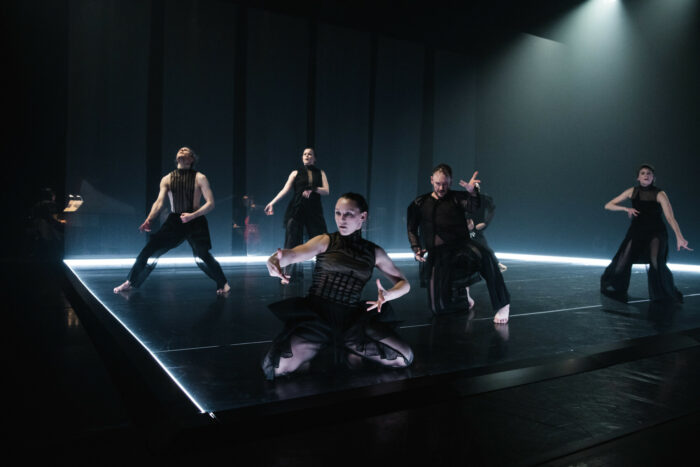
Five dancers dressed in black dance on a stage with a row of lighting at floor level.

Natasha Lommi (front) dances in Tero Saarinen Company’s Third Practice at Dance House Helsinki.Photo: Kai Kuusisto/Tero Saarinen Company

“Finland has invested a lot in facilities for music, sports and literature – and rightfully so – but it was time to build one for dance as well,” says Saarinen. “I can only imagine what kind of identity booster it will be for the next generations of dance makers here in Finland.”

One member of Tero Saarinen Company is Natasha Lommi, who has a wide-ranging career as a dancer, choreographer and teacher. She also mentions the future of dance.

She views Dance House Helsinki as “a space where young people and young dancers, and people that are dreaming of becoming dancers, can see that this is a place that is for everyone,” she says. “I told my students, ‘This is your house as well.’”

Action-packed schedule

Two people lean in the same direction as if in motion; one has in her hand a pear with a bite out of it.

One Drop, conceptualised and choreographed by Sonya Lindfors and coproduced by Zodiak, is one of a series of works dealing with power, representation and Black body politics. It is in the Dance House Helsinki programme for May 2023.Photo: Tuukka Ervasti/Dance House Helsinki

The first year of performances showed what a customised, central dance venue contributes to Finland and its capital city. Attendance numbers totalled 56,000, even with two months of the schedule cancelled during Covid-19 restrictions. Dance House Helsinki has featured numerous Finnish and foreign choreographers and enabled new connections with international performers.

Tanztheater Wuppertal Pina Bausch visited from Germany with the monumental Full Moon, and Belgian choreographer Anne Teresa De Keersmaeker’s Mystery Sonatas / for Rosa combined contemporary choreography and baroque music. The National Dance Company of Korea came to Helsinki to perform the Finnish premiere of Vortex, which Tero Saarinen had choreographed for them back in 2014.

Matriarchy, a performance directed by Pauliina Feodoroff, delved into issues that are important to the indigenous Sámi people – and to everyone else, as well. (The far-northern homeland of the Sámi is split into four parts by the borders of Finland, Sweden, Norway and Russia.)

Also during the Dance House’s initial year, Hurjaruuth held its classic winter circus. Zodiak has produced numerous performances, including the ten-day Side Step Festival.

No barriers
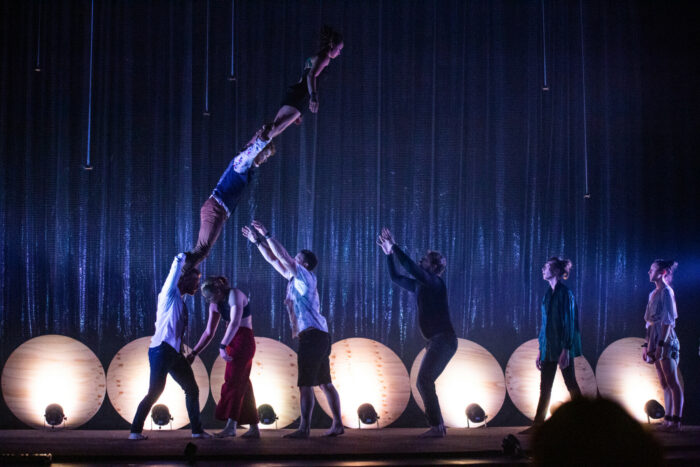
A tower of three acrobats standing on each other’s shoulders is leaning and falling, as other people wait to catch them.

The Australian circus company Gravity and Other Myths wowed Dance House audiences with innovative acrobatics.Photo: Carnival Cinema/Dance House Helsinki

For many of the productions, such as those by Zodiak and Tero Saarinen Company, a number of pay-what-you-can tickets are available. Anybody can afford to attend a performance.

At the time of writing, Dance House Helsinki is early in its second year, with a programme that includes the innovative acrobatics of Australian circus company Gravity and Other Myths; flamenco superstar Rocío Molina; the spring gala of the Finnish National Ballet’s school; a visit by the Lyon Opera Ballet; and several Tero Saarinen Company productions.

Silentopia, a Finnish interdisciplinary performance by Sivuun Ensemble, deals with the ecocrisis and features not only musicians and dancers, but scientists, too.

Dance scene dialogue

In a close-up that seems to be bathed in pink light, two people rest their foreheads against each other.

The piece down below things shudder, choreographed by Kaisa Nieminen and Marika Peura, “fantasises about the potentiality of dancing.”Photo: Venla Helenius/Dance House Helsinki

Also on the calendar are two productions from Sparks, an artistic development project at Dance House Helsinki supported by the Finnish Cultural Foundation. It supplies Finnish dance artists with resources for research, artist residency and production.

Elina Pirinen premieres Mortal Tropical Dances, which “connects intensively with the audience by dancing, playing, singing and praying out energy, sex, hope, madness, deep joy, suffering, humour, imagination, warmth and comfort,” according to the online description. Kaisa Nieminen and Marika Peura premiere down below things shudder, which “fantasises about the potentiality of dancing – rolling waves, tenacious bodies, the desire to dance overflowingly.”

Aaltonen calls Sparks “a great opportunity to introduce interesting Finnish artists to the public.” He refers to it as “establishing a dialogue with the Finnish dance scene.”

Vibrant dance community
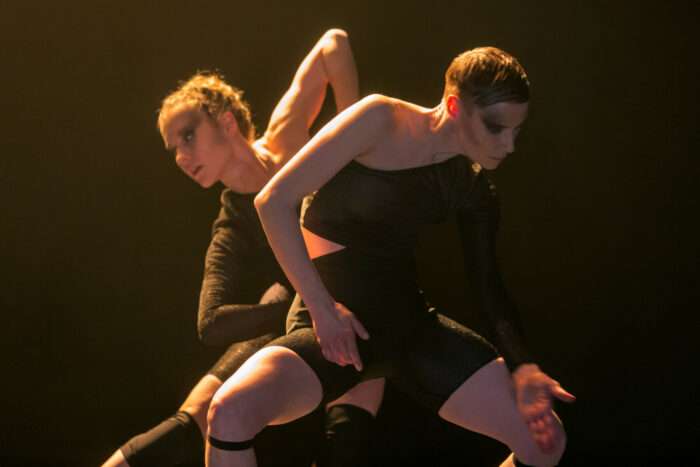
In costumes made of bands of black fabric, two dancers stand together while bending in opposite directions.

Finnish choreographer Ismo-Pekka Heikinheimo’s Cycle studies “how circular movement repeats itself” in life and nature.Photo: Sakari Viika/Dance House Helsinki

Saarinen says he’s “proud of [Finland’s] vibrant dance community” and excited about all the groups visiting from abroad. “Helsinki is already one of the most exciting dance cities in Northern Europe, and, thanks to the Dance House, an even more important hub in the future,” he says.

“I hope that many different dance makers of different generations will enter these spaces, and surprise and enhance our understanding of what dance can be.”

By Emma De Carvalho, April 2023
Filming in photogenic Finland

Finnish landscapes offer boundless snowy forests in the winter and endless midnight sun shining on 188,000 lakes in the summer. Since about 70 percent of Finland is forest, there is plenty of wild, natural scenery.

Surprisingly often, even the most remote places in Finland are accessible to heavy vehicles, since roads are already in place for forest maintenance. Internet and telephone network coverage reaches just about everywhere, and cybersecurity is up to date. The country is very safe and the infrastructure works well in all seasons. These factors figure in companies’ decisions to situate movie and TV series productions in Finland in recent years.

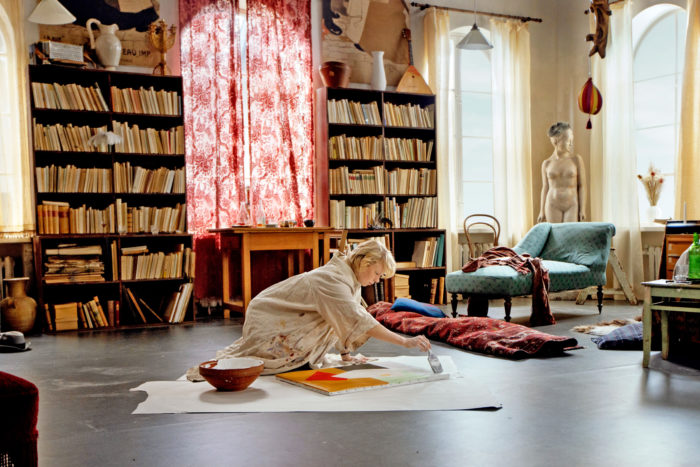
In some movies Finnish cities have played the roles of other towns. The American sci-fi thriller Dual (2022) was filmed in the western central city of Tampere, pretending to be Seattle. The southwestern city of Turku, with its beautiful 19th-century buildings, stood in for 1950s Paris in Tove (2020), which portrays a decisive period in the life of the Finnish author and artist Tove Jansson. In other movies, Turku has also acted the roles of Stockholm and Venice.

A woman paints on a canvas on the floor of a large room with bookshelves in the background.

From the movie Tove: Writer and artist Tove Jansson (played by Alma Pöysti) paints a canvas in her Helsinki apartment.Photo: Tommi Hynynen

Setting an unusual film in Finnish Lapland

Sometimes the Finnish landscape takes a leading role in a movie or a TV series. The French movie Aïlo, (2018, English title: A Reindeer’s Journey) is a movie about a newborn reindeer overcoming many challenges during his first year of life in the scenic landscapes of Finnish Lapland.

“Obviously, nature and Finnish landscapes were a definite reason to choose Finland as the location for Aïlo,” director Guillaume Maidatchevsky says. “Also, I chose Rovaniemi, as I wanted Aïlo to be a Christmas tale.”

A key point for him was meeting with producer Marko Röhr of MRP Matila Röhr Productions.

“Marko Röhr is an amazing producer of fiction and documentaries and also a nature lover,” says Maidatchevsky. “He and his director of photography Teemu Liakka know many wild places and are in contact with the local Sámi [the indigenous people of northern Europe]. So, it was great to have Marko and Teemu with us. Filming wildlife with the use of documentary material in a fiction style is not an easy task. Marko also knew exactly how I wanted to direct Aïlo. Adaptability was a key word for me and he understood it really well.”

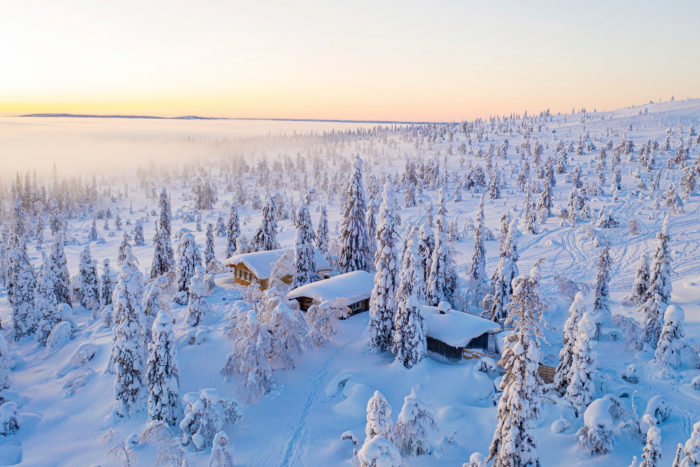
An aerial shot of several wooden cabins in a snowy forest landscape.

In the Japanese movie Snow Flower (2019), a trip to Helsinki and Finnish Lapland is a dream come true for a dying young woman. Arctic nature is a main feature of the movie.Photo: Jari Romppainen/Film Lapland

Positive feedback for Finnish professionals

Finnish people working for the audiovisual industry get mainly positive feedback after working in international productions.

“Finnish professionals in all stages of production are often considered very trustworthy, amazingly cost-effective and good at staying on schedule,” says product manager Merja Salonen from Business Finland. She is in charge of production incentives for the audiovisual industry. “Finns tend to get straight to the point. They also know how to work in winter conditions.”

The movie or TV series does not need to be filmed in Finland in order to employ these cost-effective and punctual Finnish professionals. It’s possible to do just post-production with them – including editing, sound engineering, colour correcting, and more.

A man stands by a truck where equipment is being unloaded onto the snowy ground.

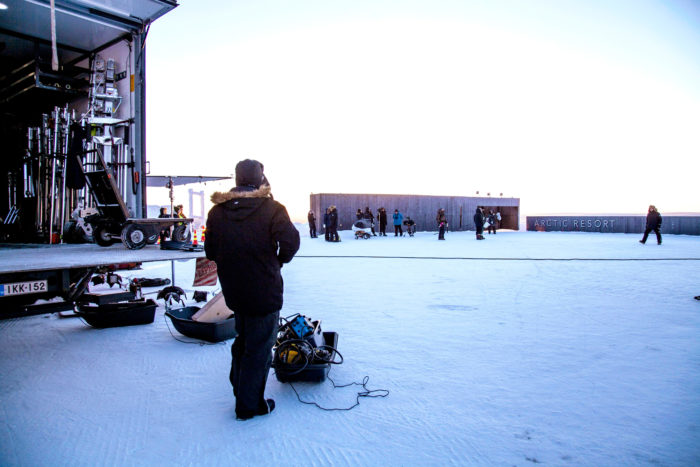
A scene for the TV series Ivalo is being filmed on top of Kaunispää, a small mountain that is part of the Saariselkä range in the Inari region. Photo: Tarmo Lehtisalo/Lehtikuva

Deadwind makes international waves

Deadwind is a crime series starring Pihla Viitala as detective Sofia Karppi and Lauri Tilkanen as her new partner, Sakari Nurmi. Karppi is a strong, independent young widow, a caring mother and a capable detective appreciated by her colleagues, but she is also reserved and feisty. Deadwind is directed by Rike Jokela and is set in Helsinki. The first season was released in 2018 and the third season was filmed in autumn 2020.

Deadwind and another crime series called Bordertown, set in the southeastern Finnish city of Lappeenranta, were the first Finnish TV series distributed internationally by Netflix. They have opened doors for other Finnish productions on various streaming platforms.

“The company in charge of our international sales got Netflix interested when we only had the script and some video clips ready,” says Deadwind producer Pauliina Ståhlberg of Dionysos Films.

“Deadwind is a good example of Nordic noir, which has been very popular internationally for some time. After the success of the first season of Deadwind, it was easier to get the next seasons distributed internationally. The series has been popular all over the world, including France, the UK, Japan, South Korea and Brazil. The script is very good, which also attracts interest for remakes in other languages.”

The series is set in Helsinki, but it does not look like a travel ad. “Deadwind’s Helsinki is quite rough and melancholic: quiet, grey, cold and wet,” says Ståhlberg.

“The scenes are often set on the edge of the town, not in the centre. But it is very recognisably Finland and Helsinki.”

By Päivi Brink, ThisisFINLAND Magazine

Kaurismäki in Karkkila: How Finland’s most famous film director and a writer started a small-town cinema

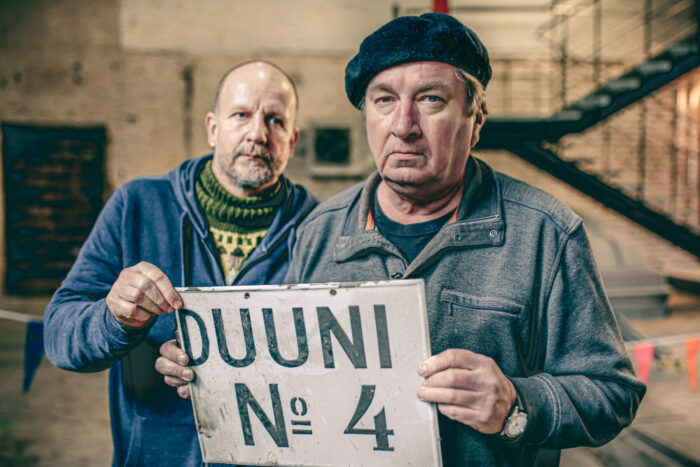
In the spring of 2021, Aki Kaurismäki met with local writer Mika Lätti to look at an abandoned factory hall in Karkkila, about an hour northwest of Helsinki.

While shops and businesses were slowly breathing new life into other parts of the old Ala-Emali enamelling plant next to the Karjaa River, the large space that interested Lätti and Kaurismäki had been neglected over time. Birds flew in and out of broken windows in brick walls still coated with thick soot from the days when the factory produced bathtubs, pans and engine parts.

Kaurismäki, internationally known for his sparse-dialogue approach to filmmaking, turned to his soon-to-be business partner and said, “An optimal place for a cinema. Let’s build one.”

Down-to-earth arthouse

Tables and chairs are grouped in a room with a high ceiling and a bar counter.

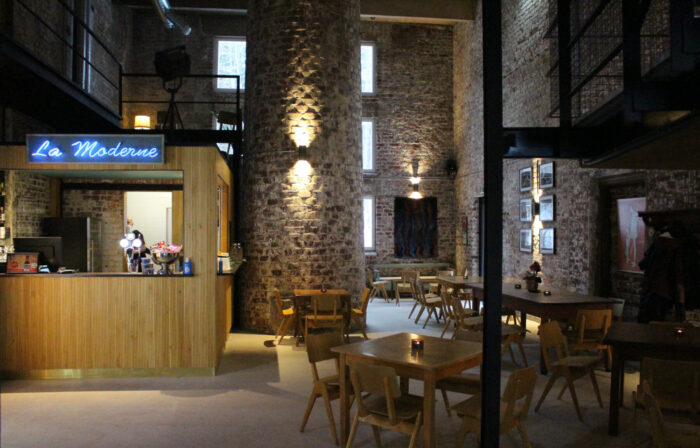
The bar at Kino Laika boasts exposed brick walls and the La Moderne sign from the café in Aki Kaurismäki’s film Le Havre.Photo: Camilla Bloom

The following autumn, Kino Laika opened for business. Artfully remodelled, the industrial-chic space features some of the high-ceilinged factory’s original architectural details, including a massive brick chimney.

It has a bar, a conference room, and a movie theatre that seats about 100. The airy décor features cinema memorabilia and classic movie posters. Kaurismäki fans might recognise the bar counter, which appeared in two of his films, Take Care of Your Scarf, Tatiana (1994) and Juha (1999).

“We built Kino Laika with the intention of honouring the sense of history in the area,” says Lätti, who has written six books and now spends most of his professional time managing the theatre and bar.

“This industrial feel is combined with Aki’s decades of experience in cinematic set design. The walls are adorned in familiar blues and yellows, and the cinema space is filled with references to other movies and creators.”

Hometown feel

A woman, two men and a dog sit around an outdoor table with several beers on it.

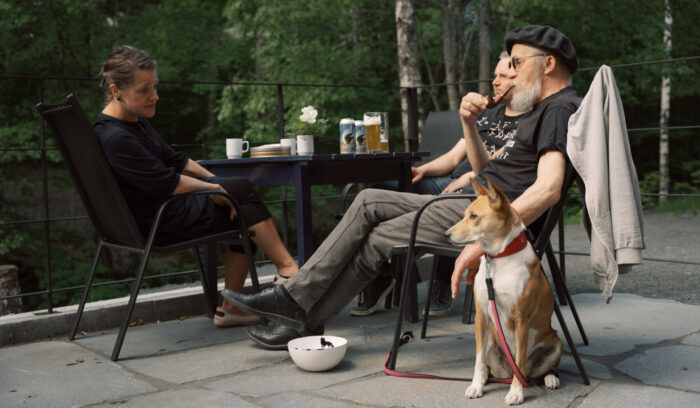
In the summer, visitors can sit on a patio overlooking the river.Photo: Camilla Bloom

The name of the theatre also has connections to Kaurismäki’s film career. The late Finnish director and film historian Peter von Bagh once insisted to Kaurismäki that he someday open a cinema called Laika. Von Bagh cofounded the Midnight Sun Film Festival, held every June in the far-northern town of Sodankylä, together with Aki Kaurismäki, his brother Mika Kaurismäki and another director and producer, Anssi Mänttäri.

The name is famous because of the Soviet space dog that became the first creature to orbit Earth in 1957, but Laika is also the name Kaurismäki gave to two family dogs that appeared in his films Le Havre (2011) and The Bohemian Life (1992). Photos of both dogs feature prominently on the cinema’s walls.

Kaurismäki (born in 1957), who grew up in the southern Finnish town of Orimattila and filmed many of his movies in Helsinki, chose Karkkila as the home of the cinema primarily because he now lives part-time in the village of 8,700. Kino Laika, which also offers live music, has become a cultural centre in an area known as an artist enclave. Lätti estimates that 30 percent of his customers travel from capital region.

“We wanted to give something back to our home in Karkkila for all the grace it has given us,” Kaurismäki says. “This is a new checkmark on the list of things that could make a town into a city.”

A man with a past

Sunlight shines through the windows into a room where a painting of a summer scene hangs on the wall above a table and a couple chairs.

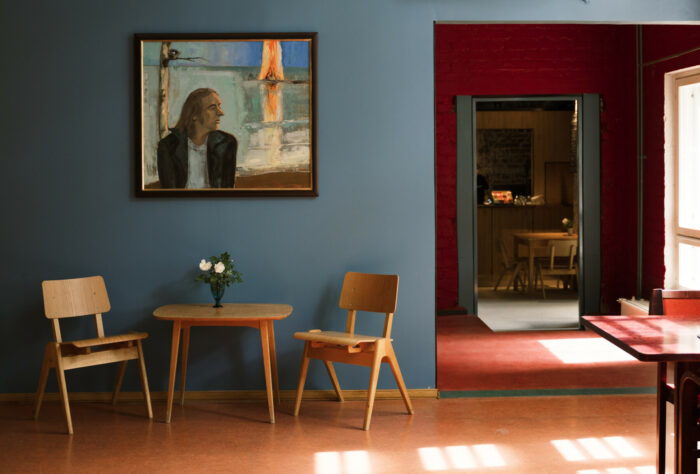
Sunlight streams into a meeting room at Kino Laika.Photo: Camilla Bloom

Years ago, Kaurismäki opened a movie theatre called Andorra as part of a complex in Helsinki that included two bars, Corona Bar and Kafe Moskva. Losing the lease on those premises in 2019 contributed to his inspiration to try it again.

“There is no doubt that these events played a part in the birth of Kino Laika,” Lätti says. “Karkkila had never had a proper cinema, so we decided the time was right to build one.” Kaurismäki, a self-taught auteur and the first Finnish director to win the Grand Prix at the Cannes Film Festival (in 2002, for The Man without a Past), is apparently a hands-on owner.

“He also leads the charge in clearing tables and washing dishes in the hectic summer season,” Lätti says. “No wonder – one of Aki’s first jobs was as a dishwasher in a restaurant in Stockholm.”

The other Finnish director to win the Grand Prix at Cannes was Juho Kuosmanen, in 2021 for Compartment No. 6. That movie was also the first film screened at Kino Laika when the cinema opened in October 2021.

Broad cinematic selection

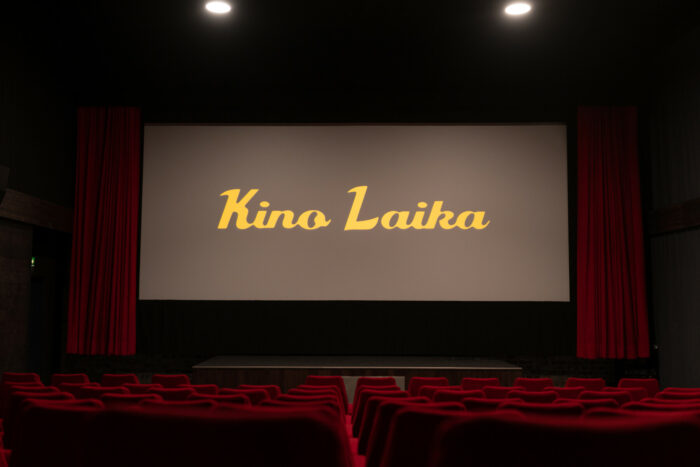
The interior of a cinema contains rows of plush red seats and a large screen flanked by red curtains.

Kino Laika’s cosy movie theatre seats about 100 people.Photo: Camilla Bloom

Kino Laika offers a wide range of movies, from Hollywood blockbusters to arthouse cinema, and features works by local directors such as Mikko Myllylahti and Aleksi Salmenperä. Patrons may also visit a restaurant, a sauna and boutique shops in the complex, as well as an outdoor deck overlooking the river.

At the time of writing, Kaurismäki’s newest movie, Dead Leaves (2023), is scheduled for a preview screening at Kino Laika, together with a live performance by indie pop duo Maustetytöt, which appears in the film.

“We are overjoyed to see that the people of Karkkila have taken to visiting the cinema with such enthusiasm,” says Lätti.

By Michael Hunt, April 2023

Oodi Library acts as Helsinki’s urban living room

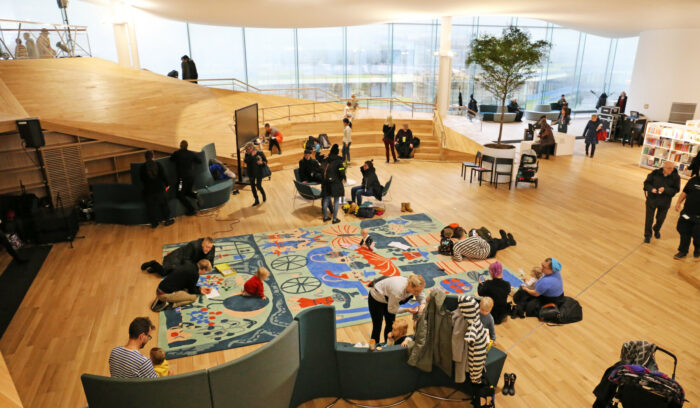
Once inside the light-filled, atmospheric entrance hall of Oodi, the Helsinki Central Library, the visitor is spoiled for choice.

“Borrow outdoor games,” suggests a sign on the wall. Or how about browsing magazines and books, playing video games or boardgames, hanging out with your kids in the play area, experimenting with arts and crafts, recording music in one of the studios or finding a quiet nook where you can work or just relax?

Kuutio (Cube), a glass-walled space of 90 square metres (960 square feet), can be reserved for meetings of up to 50 people or for displaying media art. There is also a National Audiovisual Institute cinema, Kino Regina, in the building.

Inclusive approach

In a large room with a high ceiling, parents and small children lounge and play on sofas and rugs.

The children’s area provides space for kids and parents to play.Photo: Risto Rimppi/Oodi

Finland is home to 280 main public libraries and more than 430 branch libraries. Providing equal opportunities for reading activities, learning new things and active citizenship is a national mission with a long history. An inclusive approach is the key.

“The strong role of the Finnish National Library is based on the Library Law, first enacted in 1928,” says Ulla Leinikka, information specialist at Oodi. “Libraries are non-commercial and open for everyone. You can even pop in just to warm up if you like.”

Oodi has received a number of international architecture awards. In 2019 the International Federation of Library Associations and Institutions named it Public Library of the Year.

By Minna Takkunen, ThisisFINLAND Magazine

We asked people in Finland what makes them happy

Our crew set out to interview people asking one simple question: What makes you happy?

It’s somehow appropriate that the weather outside was rainy that day. It shows that happiness isn’t dependent on the amount of cloud cover.

Many different aspects of Finland contribute to its long-running position as number one in the annual World Happiness Report, published by the UN Sustainable Development Solutions Network.

Since 2018, Finland has occupied the number-one slot – the happiest country in the world.

Trust and freedom

When we asked people in Finland what makes them happy, they gave a wide range of answers. Check the video to find out what they said.Video: ThisisFINLAND

Happiness can mean many things. The World Happiness Report is about how contented people are with their lives. People in Finland are happy because their society has developed what they call an infrastructure of happiness. It includes healthcare, education, the economy, human rights, democratic governance and a culture of volunteerism.

High levels of trust and freedom also help explain Finnish happiness. Finland consistently ranks among the best in the world for transparency and for political, civil and press freedom.

Finland and its infrastructure of happiness

  • Trust plays a vital role, and in Finland, trust extends beyond personal relationships to public institutions, governance and even strangers.
  • Good governance and a political system that is transparent, accountable and committed to the rule of law.
  • A societal framework combining stability and safety nets, so individuals can make life choices without fear of failure.
  • A strong sense of shared responsibility promotes a fair and just society, central to happiness. Over 90 percent consider paying taxes an important civic duty.
  • Participation and dialogue: active participation and open dialogue between the public and the authorities foster inclusion and empowerment. Freedom of expression promotes transparency and a thriving democracy.
  • Equality and social justice: Finland’s commitment to equality, including gender equality and strong protections for minorities, fosters a socially inclusive environment that contributes to overall happiness.
  • Education and information: Finland’s world-class education system ensures equal access to high-quality learning, empowering individuals to succeed. Strong press freedom and media literacy enable citizens to navigate information critically, creating an informed and engaged society.
  • Connection with nature is a valued part of daily life and wellbeing. The Finns’ access to and immersion in nature promotes calmness and contentment and reduces stress.
  • Simplicity and sauna: Finnish culture is deeply rooted in an appreciation for simplicity, functionality and the significance of life’s small moments. At the heart of this is the sauna, a space where Finns unwind, disconnect from daily pressures and reconnect with themselves and others in a meaningful way.
  • Finnish society is built to support a balanced life, prioritising personal wellbeing alongside professional commitments. Work policies and social structures enable a lifestyle of productivity and personal fulfillment.

By ThisisFINLAND staff, March 2023, updated November 2025