Tom of Finland and IDAHOTB both continue to contribute to pride and acceptance

New York’s Museum of Modern Art owns a number of Tom of Finland’s works, and the museums that have shown his drawings range from the Museum of Contemporary Art in Los Angeles to the Institute of Contemporary Art in London.

Born Touko Laaksonen near the southwestern Finnish city of Turku, he received the nickname Tom of Finland in the late 1950s from Bob Mizer, the editor of the magazine Physique Pictoral, which published Laaksonen’s homoerotic drawings.

Advocating for tolerance

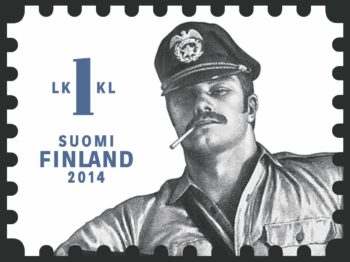
A stamp featuring a black and white illustration of a man in a military type hat smoking a cigarette.

This Tom of Finland stamp is one of a 2014 set of three that became the best-selling set ever released by the Finnish Postal Service.Photo: Finnish Postal Service/Lehtikuva

His hypermasculine characters became a significant part of gay culture, affecting the way homosexuals were perceived and how they perceived themselves. His work remains relevant, and still has a significant role in the way sexual minorities perceive themselves.

Through his art, he contributed to advancing human rights and advocating for tolerance, respect and freedom. This continues to be his legacy, and it lives on in the Tom of Finland Foundation, which maintains his former house in Los Angeles as a museum, library, event centre and artist residence. One of the foundation’s goals is “preserving erotic art and educating the general public as to its importance,” says founder Durk Dehner on the organisation’s website.

Tom of Finland grew up and lived much of his time in an environment where homosexuality was illegal (in Finland, it did not become decriminalised until 1971). His life has been the subject of a movie and a musical; both premiered in 2017. There’s even a Tom of Finland emoji.

The Finnish Postal Service’s most popular set of stamps ever is the one featuring Tom of Finland’s drawings, and Finnish textile manufacturer Finlayson has had great success with sheets, pillowcases, bags, socks, reflectors, towels and potholders based on Tom of Finland’s art.

Read more about the artist in an earlier ThisisFINLAND article. The Suomi-Finland Podcast released a special edition in 2020 for Tom of Finland’s 100th birthday:

Acceptance on the agenda

The International Day against Homophobia, Transphobia and Biphobia, founded in 2004, is held annually on May 17. It aims to raise awareness about the discrimination and repression that affects LGBTQI+ communities all over the world.

The organisers hope that it will attract “the attention of decision-makers, the media, the public, corporations, opinion leaders and local authorities” so that progress can be made. Different organisations mark the day in different ways. “Everyone is free to communicate as they wish.”

Thousands of May 17 events, initiatives and celebrations take place in more than 130 countries, including 37 countries where same-sex acts are still illegal.

By ThisisFINLAND staff, May 2020, updated May 2022

Finnish advice: Keep calm and Vappu on, safely

Imagine the Fourth of July in the US, or Canada Day in Canada, or Bastille Day in France, or the Seventeenth of May in Norway – almost every country has a national holiday or two on which people congregate for picnics, cookouts, celebrations and fun.

Now imagine that same day in the time of Covid-19. It doesn’t seem quite so fun anymore, given the danger of contagion. Medical experts rightly worry that such a situation could cause a new wave of coronavirus cases, even in areas where the situation seems to have settled down.

In Finland, the day for picnicking and joyously (even raucously) greeting the spring is May 1, which is Labour Day in Finland and many other countries. The Finnish version long ago also became a sort of spring carnival, beginning on the evening of April 30 and continuing through the following day. It’s known as Vappu in Finnish and Valborg in Swedish, which is also an official language in Finland.

An exceptional party

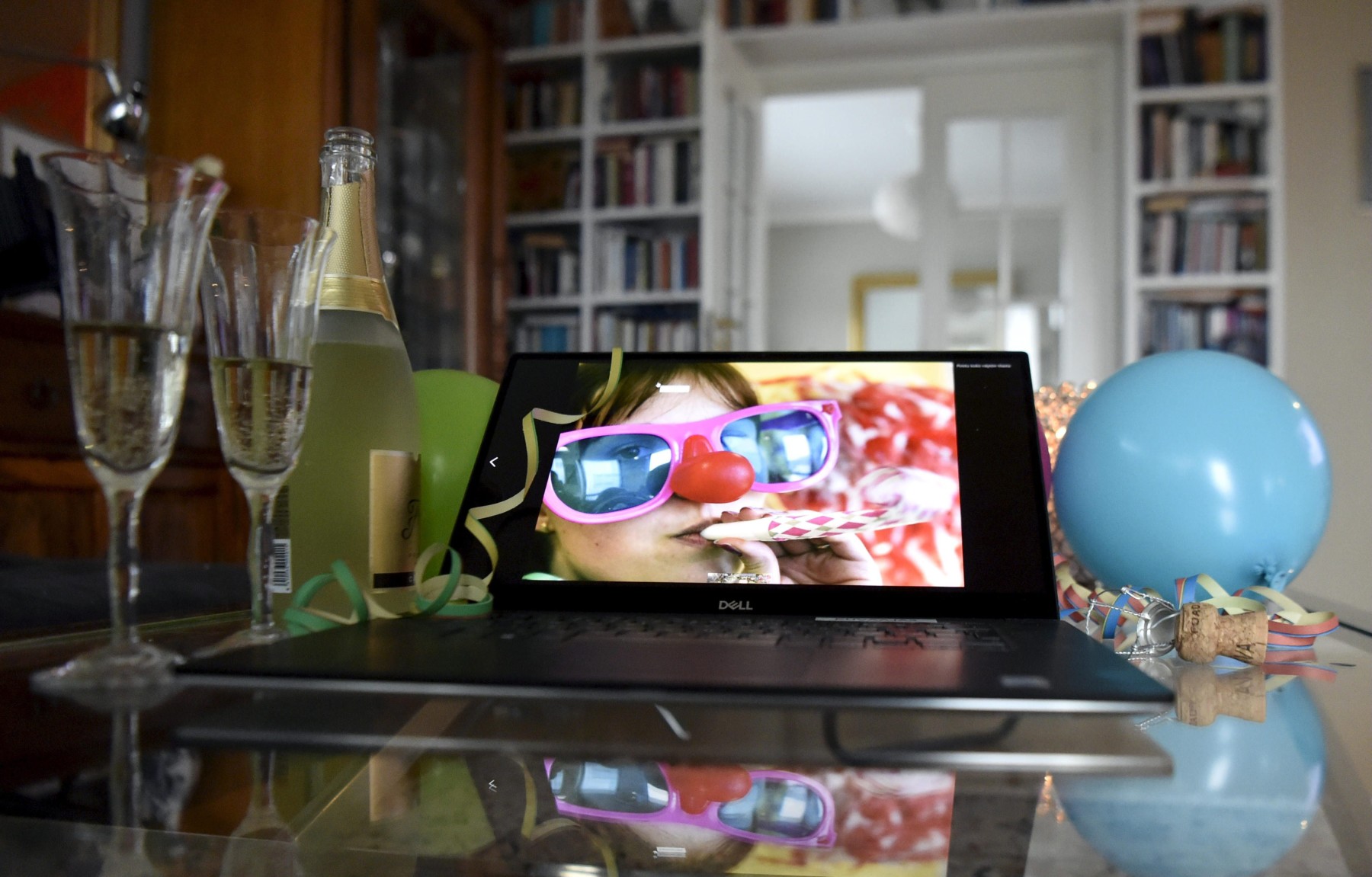
In a home, an open laptop computer screen shows a fun event. Beside it on the table are a balloon, a bottle of champagne and two glasses.

A cosy virtual Vappu could look like this: Balloons, bubbly beverages and participation in online celebrations.Photo: Jussi Nukari/Lehtikuva

If you’ve never been in Finland on May Day, it’s difficult to explain how crazy it is – usually. But 2020 is not a typical year. The authorities, including government ministers, doctors and police, are advising people to avoid their usual picnic spots and celebrate Vappu virtually instead.

The parks and monuments where revellers would normally gather are either blocked off or designated as off-limits. Gatherings of more than ten people are prohibited, as they have been for the previous many weeks, but the Virtual Vappu website, published by the Ministry of the Interior and the police, reminds everyone that smaller groups of people can also cause the virus to spread.

Instead, they recommend that people enjoy their traditional sima (a slightly alcoholic mead) and tippaleipä pastries at home. Tie balloons to your balcony and have a picnic on the living room rug or in your own yard, all in the name of thwarting the coronavirus.

To safely go where no Vappu has gone before

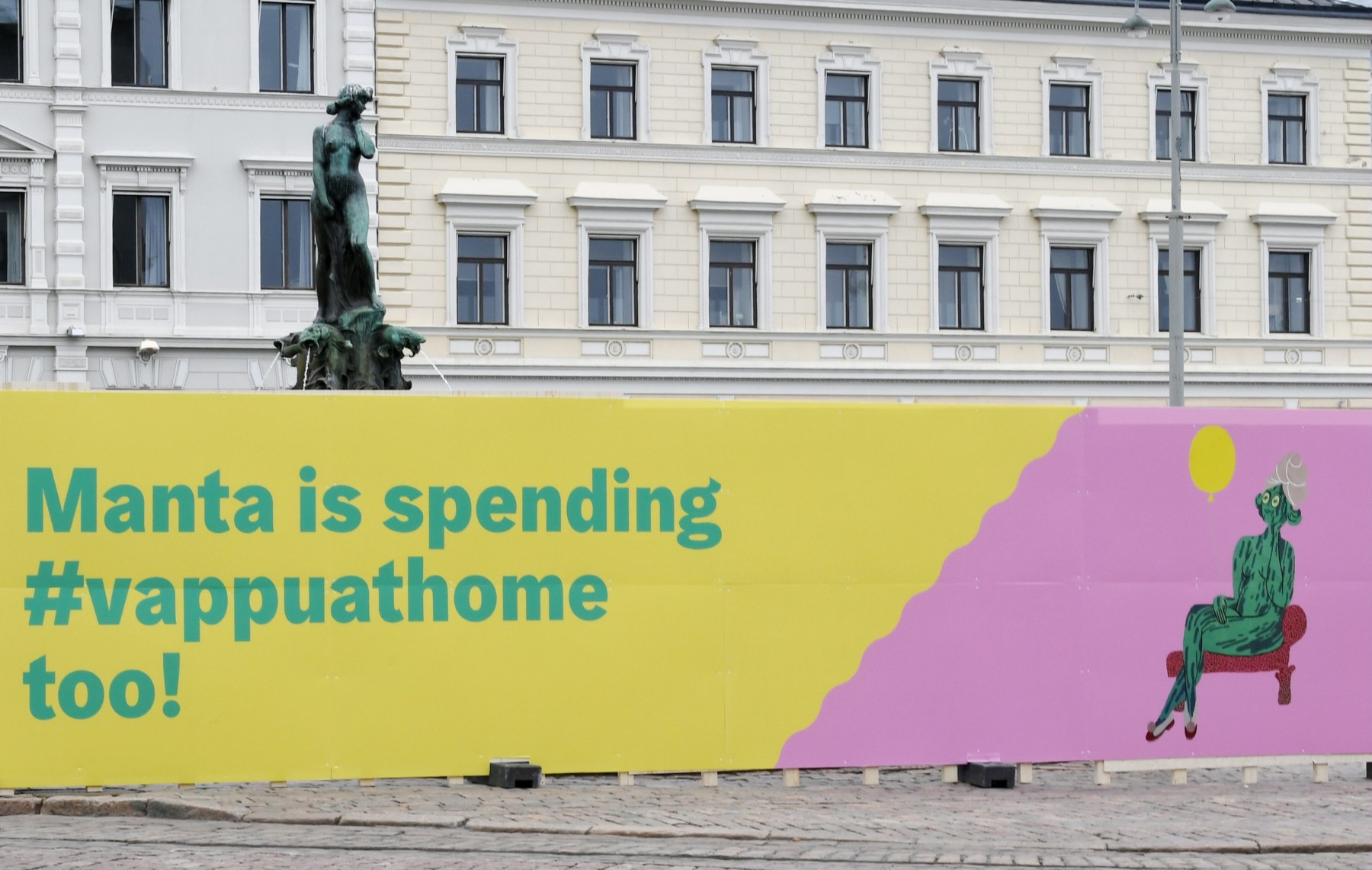
On Helsinki’s Market Square, the Havis Amanda statue is surrounding by a temporary wall. A sign says that she is spending May Day at home.

In the last week of April 2020, a wall went up around the iconic Havis Amanda statue on Helsinki’s Market Square. “Manta is spending #vappuathome too!” the sign reads (“Manta” is a nickname for Amanda).Photo: Jussi Nukari/Lehtikuva

What does virtual Vappu mean, though, apart from not gathering in groups? Various celebrities and social media influencers are livestreaming activities, quizzes, performances and cooking demonstrations. There’s also a long list of events streaming from all over Finland. Everyone is getting in on the online action, from symphonies and choruses to police stations and balcony musicians, not to mention Santa Claus himself (who, as everyone knows, lives in Finnish Lapland). “Vappu is not cancelled,” says Minister of the Interior Maria Ohisalo on the Virtual Vappu website. “We are now celebrating it at home…in our yards and virtually.”

There are “quarantine concerts.” The City of Helsinki tells readers “How to spend May Day remotely,” calling it “the remotest Vappu of all time.” Audiences can join rap duo JVG’s concert on April 30 via computer, smartphone or VR headset. Listeners’ avatars can dance, clap and send emojis into the virtual Vappusphere – a sign of appreciation, but also a symbolic nod to the ornate, helium-filled balloons that Finnish people associate with the May 1 holiday.

Helsinki’s website also lists several other virtual concerts, but what about one of the most quintessential Vappu traditions, the crowning of Havis Amanda, a downtown Helsinki statue, with a graduation cap? The April 30 event usually attracts tens of thousands of people and serves to kick off the holiday celebrations, but in 2020 this, too, takes place virtually, “allowing everyone to follow it safely from their homes,” organisers say.

It’s clear that this Vappu is going where no Vappu has gone before, entering uncharted territory. Zoan, a Finnish company specialising in virtual technology, promises “a new and unique manner” in the crowning of Havis Amanda, giving the audience the chance to experience a sense of community and to interact.

The phrase “Hauskaa vappua!” (Have a fun Vappu!) has taken on a whole new meaning.

By ThisisFINLAND staff, April 2020

Kids ask the Finnish government questions in corona info session

Since mid-March 2020, almost all of Finland’s schoolchildren have been distance learning, logging on to online lessons at home, because of measures designed to slow the spread of Covid-19. At the time of writing, the earliest estimated possible return to normal, brick-and-mortar schools would be in mid-May.

Most children are now used to attending class video conferences and handing in essays online. Many teachers gave their students a unique assignment on April 24, 2020, telling them to tune in to a press conference and listen to Prime Minister Sanna Marin, Minister of Education Li Andersson and Minister of Science and Culture Hanna Kosonen.

This wasn’t just any media event – the reporters asking questions via videolink were kids.

This was the Finnish government’s first press conference for children. Kids could hear reporters their own age voice the concerns that are on the minds of Finland’s more than half a million schoolchildren.

And the ministers looked straight into the camera and answered.

Questions on our minds

The screen of an open laptop computer shows two children sitting in a TV studio talking into microphones.

In the Yle studio after the press conference was over, Emma and Aaron admitted that they’d been a little nervous about asking the prime minister questions on national TV. The onscreen headline says, “Ministers answer children’s questions.”Photo: ThisisFINLAND.fi

The press conference took place in Finnish and Swedish, Finland’s two main official languages, and was also simultaneously interpreted in Finnish sign language.

Seven kids asked the questions, with different media outlets represented. Emma and Aaron were sitting in the Galaxi studio at Yle, the national broadcasting company, while Valdemar and Nuutti asked questions from their homes on behalf of Lasten uutiset (Children’s news), a department of the daily Helsingin Sanomat.

The issues ranged from, “When can we go back to school?” and “Will we be able to go to the amusement park this summer?” to “When can we visit our grandparents and other somewhat older relatives?” and “What can we do if we’re feeling stressed or scared because of the situation?”

No doubt many parents and grandparents were also watching with interest. After all, they have been fielding their children’s questions, too, and some of the questions are universal, regardless of age.

“How long do you think it will be until corona is over and everything is back to normal?” asked a girl named Ia.

Andersson answered, “That’s a very good question that Ia asked, but it’s also very difficult to answer…We in the government believe that we will probably have to be mindful of corona for quite a long time. And the rules that we’ve decided upon together, about how important it is to wash your hands and keep your distance from other people and not visit your grandparents in person…we believe that we will have to follow these rules for quite a long time in Finland, even in the autumn.”

Reaching out to each other

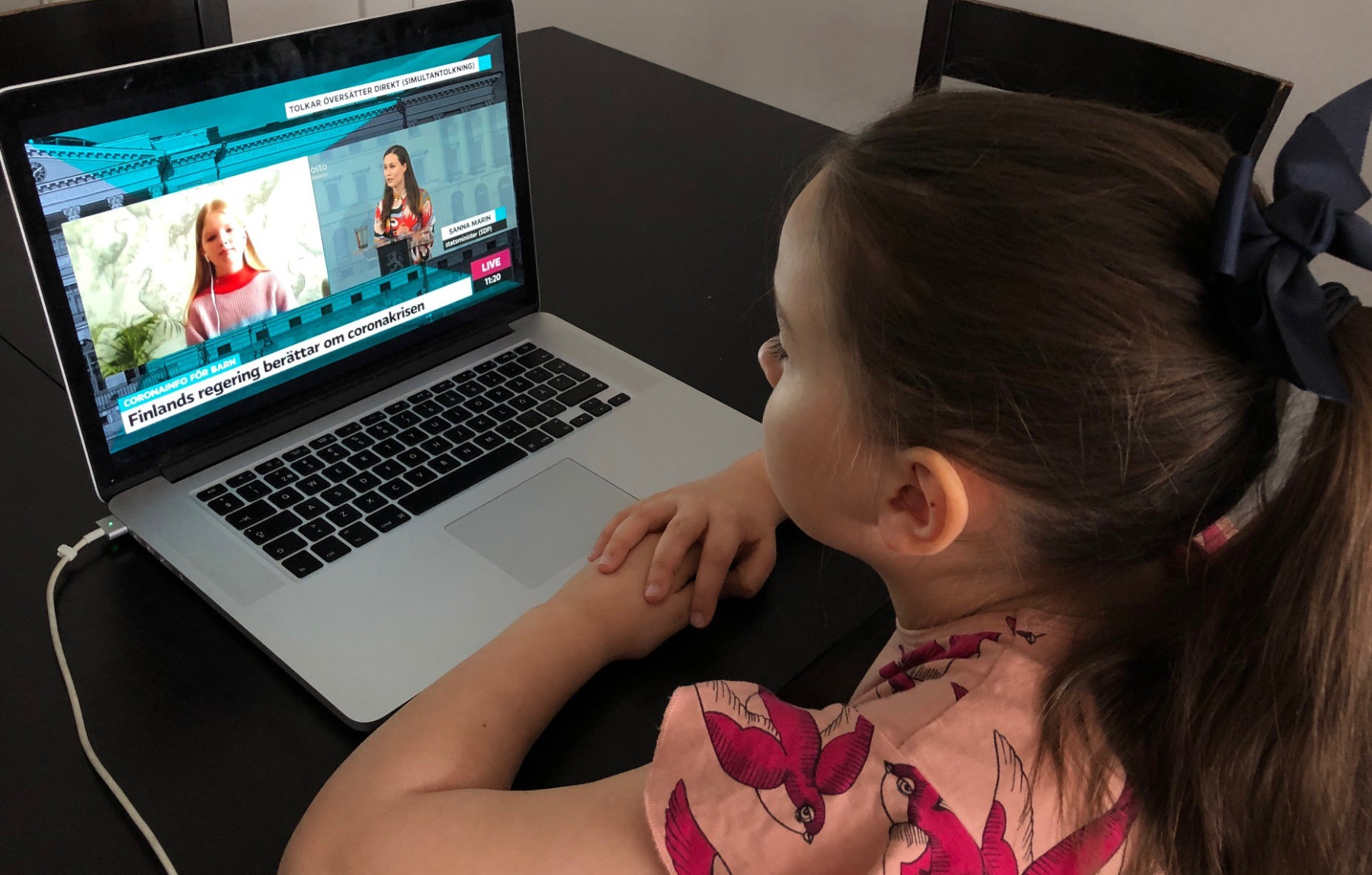
The screen of an open laptop computer shows Finnish Prime Minister Sanna Marin answering the questions of a girl named Iiris, as another schoolchild watches at home.

During a live broadcast, Finnish Prime Minister Sanna Marin answers the questions of a girl named Iiris as another schoolchild watches at home. The onscreen headline says, “The Finnish government speaks about the corona crisis.” Photo: ThisisFINLAND.fi

The last question came from Aaron at Yle: “What can I do for Finland?”

Prime Minister Marin answered, “Of course, children’s most important job right now is to keep up with their distance learning, to make sure they keep learning even though this school isn’t like what we’re used to. And of course it’s very important to stay in touch with relatives and friends and other people. I think that many grandparents are very happy when somebody calls up and asks how it’s going and tells them what’s been going on.”

Andersson said, “You’re doing a great deal already. We know that distance learning isn’t the easiest thing in the world…Another thing that you can do, and that I think is very important, is that you take care of not only your grandparents, but also your friends. If you notice that you haven’t spoken with one of your classmates for a long time, or if someone seems a bit down, or hasn’t been participating in distance learning like usual, then it’s absolutely a good idea to reach out and ask if everything is OK and if you can help.”

“We can cheer each other up,” Kosonen added. “That’s quite important, just like Sanna and Li said. A little message or call to a friend or grandparent…That was a great question.”

Back in Yle’s studio after the press conference, Emma and Aaron discussed how it had gone. “What did you think of the ministers’ answers?” asked Galaxi reporter Jasmin Beloued.

“I understood things pretty well,” said Emma. “They were very direct about how things are, and what you are allowed to do, and what you’re not allowed to do…I was disappointed that we won’t be able to visit our grandparents for a while.”

By Peter Marten, April 2020

Finnish museums step up their online game to meet demand

Finland is a museum-going nation, and 21st-century museums are exciting places where people share experiences and a sense of community.

Prior to barring visitors to help curtail the coronavirus from spreading, Finnish museums had seen a long period of strong, steady growth in visitor numbers, from a total of 4.9 million visits in 2010 to 7.1 million in 2018 (the most recent statistics available at the time of writing).

In 2019 the Museum Card, which for a single price grants unlimited entry to 300 museums across Finland for 12 months, saw a 20 percent sales increase, to 185,000 cardholders, and a 43 percent jump in the number of cardholder museum visits, to 1.4 million.

Museums, similarly to people, have had to retreat behind closed doors during the coronavirus pandemic. And, like many people, museums are increasingly reaching out online. They’re posting photo galleries, video artworks, guided tours, behind-the-scenes glimpses and artist interviews on their websites and social media accounts.

Here are some online experiences at museums around Finland, from Rovaniemi and Oulu in the north to Helsinki and Turku in the south. (We also have a similar article about online concerts.) As it says on the website of Amos Rex, a Helsinki art museum, “You don’t need to stop enjoying art.”

Colourful and essential

Located in the city of Rovaniemi, just a few kilometres from the Arctic Circle, Korundi House of Culture is home to Rovaniemi Art Museum and the Lapland Chamber Orchestra. A couple musicians have wandered out of the auditorium and into the gallery to play Mozart.

The Lapland Chamber Orchestra’s Heli Haapala (flute) and Jonna Staas (oboe) play a piece from The Magic Flute by Mozart beside a painting by Raili Tang.
Video: Rovaniemi Art Museum

The colourful painting forms part of an exhibition called Merry Things – one of its goals is “to promote positive thoughts,” according to the organisers. In this sense, we’d say art is an essential service.

Rovaniemi Art Museum is also posting animated how-to videos of miniature art projects, good for kids or grown-ups.

Two Snow Whites and seven pickpockets
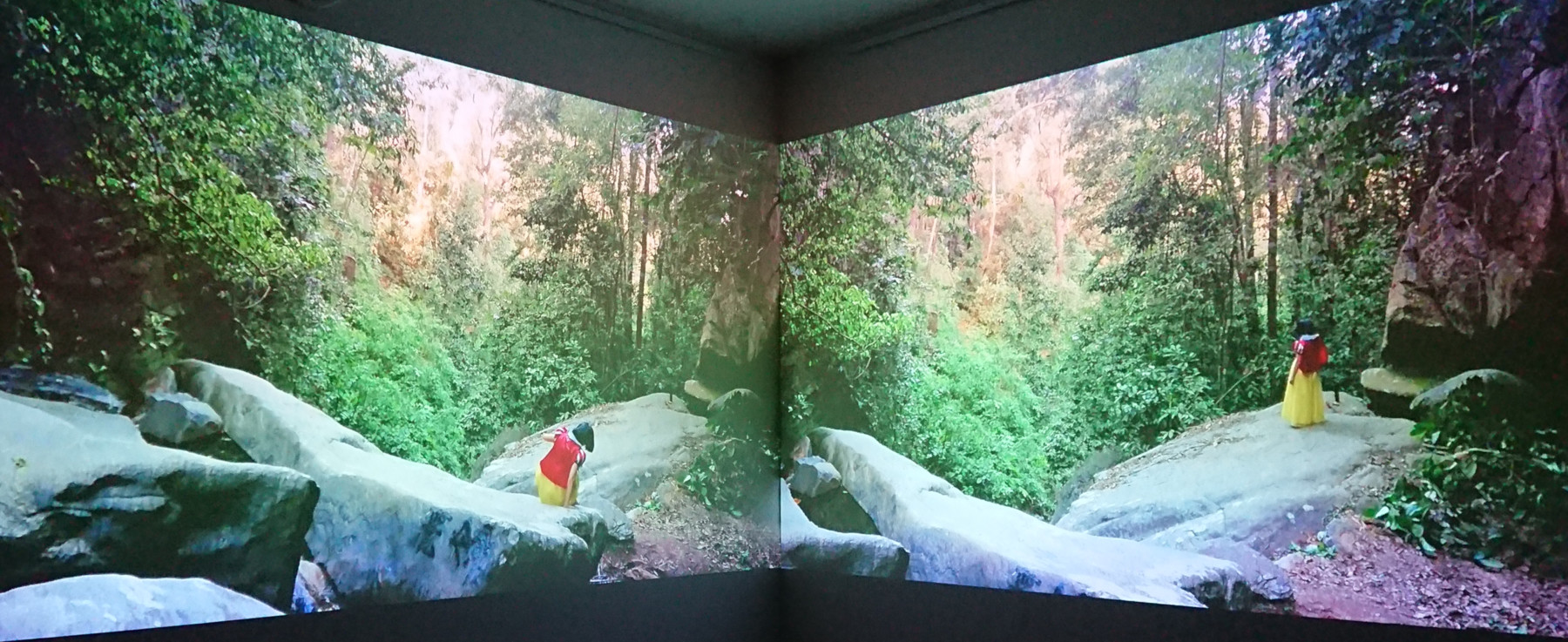
Two screens on a gallery wall showing Ninni Korkalo as Snow White climbing over cliffs in a forest.

Black, Red, White Diaries is screened as a two-channel installation when shown in a gallery.Photo: Ninni Korkalo

Ninni Korkalo is artist of the month at Korundi in April 2020. It has become an online honour, and includes Instagram posts, video art and a questionnaire that will form the basis for an episode of her newest work, The Best Lover.

In Black, Red, White Diaries, Korkalo’s zany, irreverent take on Snow White, two different Snow Whites tell the story behind the fairy tale. One talks with an eastern Finnish accent and the other speaks Brazilian Portuguese (with English subtitles).

They “rewrite, reinterpret and mess up the messed up story,” says Korkalo in the video description. One Snow White looks directly into the camera and says, “Come on! Dwarfs? They were seven pickpockets.”

Arktikum, a science centre and museum on the other side of Rovaniemi, offers experiences of Arctic nature, culture and history. You can get a taste of one of their permanent exhibitions, Polar Opposites, in the trailer below.

Polar Opposites, at Arktikum in Rovaniemi, is a scenic journey through northern nature.
Video: Arktikum

Almost like being there
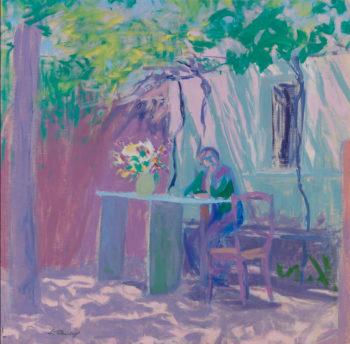
Ellen Thesleff’s painting Arbour, in which a person sits at a table under a tree in front of a building.

Ellen Thesleff’s Arbour (1908) shows a person at the Café de Roma in Forte dei Marmi, Italy, with ribbons of sun shining through the leaves. Thesleff liked to sit there and gaze out at the Mediterranean Sea.Photo: Hanna Kukorelli/Helsinki Art Museum

About 200 kilometres (125 miles) south of Rovaniemi, but still 600 kilometres (375 miles) north of Helsinki, the Oulu Museum of Art is hosting Kiss of the Sun, an Ellen Thesleff exhibition. She was “a headstrong, independent artist,” writes curator Hanna-Reetta Schreck.

Thesleff (1869–1954) spent a great deal of time in Paris and Florence, and was one of the first to import movements such as symbolism and expressionism to Finland from the Continent. You can move through the museum on a virtual tour of the exhibition, either on the screen of your choice or using a VR headset.

Fictional and factual calamities
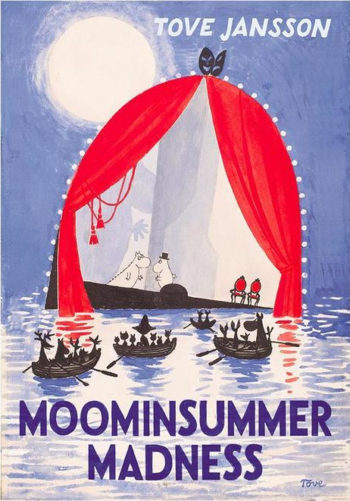
The cover of the book Moominsummer Madness, showing Moomins standing on a floating theatre stage while small creatures in boats watch them.

Until the Moomin Museum opens again, why not rediscover Moominsummer Madness and the rest of the original Moomin books?Illustration: Tove Jansson; photo: Sort Of Books

If you’re a fan of the Moomins, those adventuresome and endearing characters invented by Swedish-language Finnish artist and writer Tove Jansson (1914–2001), then you know that the central Finnish city of Tampere is home to the Moomin Museum.

And if you’re not a fan, maybe now is the time to discover what you’ve been missing. While the museum is closed, we recommend returning to the original Moomin books. Kids and grown-ups alike find meaning in the stories and drawings, and may derive encouragement from the fact that the Moomins repeatedly overcome floods, comets, monsters and assorted other calamities. Two of our favourites are Moominsummer Madness and Comet in Moominland.

What happens when Moomintroll waves a magic wand?
Video: Moomin Museum

In the southwestern city of Turku, the Wäinö Aaltonen Museum, named after a sculptor who lived from 1894 to 1966, has published Wounded Ground II online. The video slideshow is part of the Sencer Vardarman exhibition Under the Mother Earth’s Skin. Each shot in the Turkish and German artist’s video slideshow is a collage of more than 1,000 satellite photos of an open-pit mine. The patterns are beautiful and fascinating, but they’re also signs of pollution, destruction and extinction.

Landscapes and cityscapes
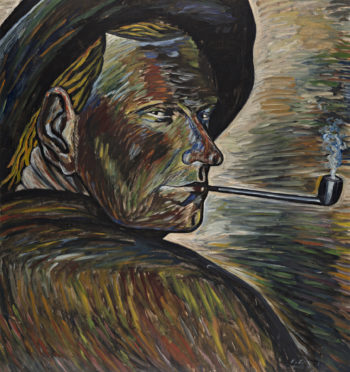
Self-portrait of Vilho Lampi; a silhouette of a man smoking a pipe painted mostly with brown and yellow colours.

Vilho Lampi, seen here in a 1929 self-portrait, often painted at night because he was busy with farm work during the day.Photo: Mika Friman/Oulu Art Museum

Helsinki Art Museum features a sculpture bank, a map of 500 public artworks across the centre and suburbs of the Finnish capital, each with a photo and a description link. It offers an opportunity to travel to Helsinki and have a look around without leaving your home. How about Nose, Mouth and Footprint of a Giant, or Three Moments in the Life of Chewing Gum? You can also view Monument to Ordinary People and the soft-sounding Pillow Stone.

There’s also a video guided tour of Helsinki Art Museum’s Vilho Lampi exhibition. Lampi (1898–1936) came from Liminka, not far from Oulu, and painted his portraits and landscapes mostly during the evening, after he was done with his farm work. (Once on the page, scroll to find the video, and select English subtitles by pressing the “CC” button.)

Nastja Säde Rönkkö’s for those yet to be is on the schedule at the Espoo Museum of Modern Art (EMMA) just outside Helsinki. In one of the 27 videos in the project, she stands on duckboards in Viiankiaapa, a bog area in the Finnish far north. A rainbow descends from the sky in the background as she holds up a sign that reads, “Something about karma.” EMMA has posted a photo and a description for each video.

“I visited some of the most ecologically fragile sites of our planet,” says Rönkkö on her website. “I went to places and spaces that are already, or are about to be, permanently changed by humans.” Her video artworks aim “to reflect these changes through personal experience: exploring our fragile environment through emotions, presence and vulnerability.”

At locations around the world, “I performed a one-person action with a cardboard sign,” says Nastja Säde Rönkkö.
Video: Nastja Säde Rönkkö

Online regeneration

Two rams fighting each other. The rest of the frame is filled with the text Generation 2020, repeated over and over.

Parts of Generation 2020, an exhibition of 15-to-23-year-old artists at Amos Rex in Helsinki, are viewable online.Photo: Amos Rex

Amos Rex in Helsinki has various material online, including guided tours in a number of languages. Video works also appear from the Generation 2020 young artists’ exhibition – ThisisFINLAND has previously written about the show.

In Intelligence, a video by Delilah Sykes, monotonic text-to-speech voices read the comically confusing results of using predictive text to write about attitudes towards nature: “Rock and stuff is coming soon so you get the money back in time for us.” “I’m so stressed about my anxiety.” She intercuts the phrases with shots of people observing, petting, licking or otherwise trying to relate to a stone.

Across the street from Amos Rex at Kiasma Museum of Contemporary Art, Shadow Zone features the work of Liisa Lounila. “What all the works in this exhibition have in common is that they expose something in the shadows, something skewed or unexpected,” says Lounila on the Kiasma website. She may gather all the twist-ties from a year’s worth of bread bags and display them like butterfly specimens, or silver-coat disposable coffee cups, or film a meadow at night while lightning strikes in the distance.

In this excerpt from Garden, by Liisa Lounila, the seasons gradually change as the camera pans around a garden allotment.
Video: Liisa Lounila

Avant-garde, vitality and a new beginning
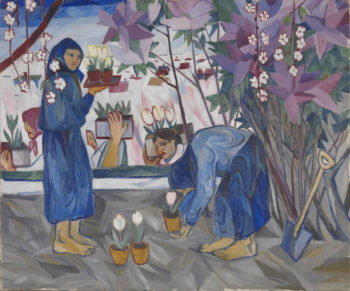
Natalia Goncharova’s painting Gardening; Five women carrying flower pots in a garden.

Natalia Goncharova painted Gardening in 1908, the same year Ellen Thesleff painted Arbour.Photo: Ateneum Art Museum/Tate Images

Ateneum Art Museum in Helsinki has an overview of Russian artist Natalia Goncharova (1881–1962), including paintings, illustrations, clothing designs and even ballet costumes. It was open for just a couple weeks before museums had to close their doors. Goncharova, a major influence on the Russian avant-garde scene, was interested simultaneously in contemporary art and Russian folk art. She saw parallels between the two, and incorporated them into her work.

Ateneum curator Timo Huusko packs a lot of stories into this video as he walks us through the Natalia Goncharova exhibition.
Video: Ateneum Art Museum

The Ateneum website also features a page that directs you to collections available online, including 13 short films in a series entitled Stories of Finnish Art. Each one focuses on one classic work by a famous artist. If you’ve ever visited Ateneum, you’ve probably stood for a long moment in front of The Convalescent, an 1888 painting by Helene Schjerfbeck (1862–1946), one of Finland’s foremost artists. It’s the subject of one of the Stories of Finnish Art videos. In the painting, a child recovering from an illness sits at a table, holding a twig that is sprouting leaves, a sign of new life.

Just down the street from Ateneum at the time of writing, a colourful banner draped over several floors of a building reads, “We will get through this,” “Stay safe,” and “Stay positive.” In Ateneum’s video, the narrator says of The Convalescent, “Schjerfbeck’s painting…mainly tells us about the recovery from illness, about the return of vitality and a new beginning.”

A banner on the façade of the museum itself shows part of the same painting, along with the message “Art awaits until we meet again.”

This video details one of Ateneum’s best-known paintings, The Convalescent, by Helene Schjerfbeck. Completed in 1888, it strikes a chord of relevance today.
Video: Ateneum Art Museum

By ThisisFINLAND staff, April 2020
Bridging the social distance, Finnish musicians realign online

With most people obliged to stay at home and large public gatherings prohibited, musicians have traded the concert hall stage for online concert platforms. They’re continuing to do what they do best, and they’re also trying to keep their livelihood alive.

Here are a few glimpses of the many shows that are out there.

In some cases you can buy a ticket to a “sofa concert” and enjoy it in your own living room, for less than the price of an album. Other performances are free and provide website links for audience members who would like to purchase recordings or merch. Some events stream live, with musicians taking the stage at an appointed time, while others – including several by the National Opera and the National Ballet – are posted online and can be watched when you choose.

It’s no exaggeration to say that there’s something for everyone.

Finlandia by phone

Since the coronavirus started keeping people at home, one kind of video has become a genre unto itself: We’re talking about those composite videos where the socially distanced members of an orchestra or choir all play or sing at home, and then an invisible tech genie merges the individual recordings into a full performance.

At the time of writing, the chamber choir of Vaskivuori Upper Secondary School in Vantaa, just north of Helsinki, has gathered more than 118,000 views with its video “Song of the Fearless.”

Vaskivuori Upper Secondary School Chamber Choir sings “Song of the Fearless,” by Jussi Chydenius, lyrics by Julia Junttila.
Video: Vaskivuori Upper Secondary School Chamber Choir

They recorded it to console themselves when they had to cancel their trip to the Cork International Choral Festival in Ireland. They subsequently added a version with English subtitles. If you keep watching, you’ll get to see some of the kids’ pets, too.

“Faith in what’s to come,” says the last line of the song. You can read more about the origins of the “Song of the Fearless” video on Music Finland’s website.

Jumping a bit further north, to the city of Lahti, 100 kilometres (60 miles) from Helsinki, you’ll find another, similar video.

The Lahti Symphony Orchestra is right at home with “Finlandia” by Jean Sibelius.
Video: Lahti Symphony Orchestra

Using their mobile phones, the members of the Lahti Symphony Orchestra recorded themselves at home performing “Finlandia,” written by Jean Sibelius, Finland’s most famous composer, in 1899 and 1900. The most widely recognised section, which many know as the “Finlandia Hymn,” starts just after the five-minute mark.

Providing a platform

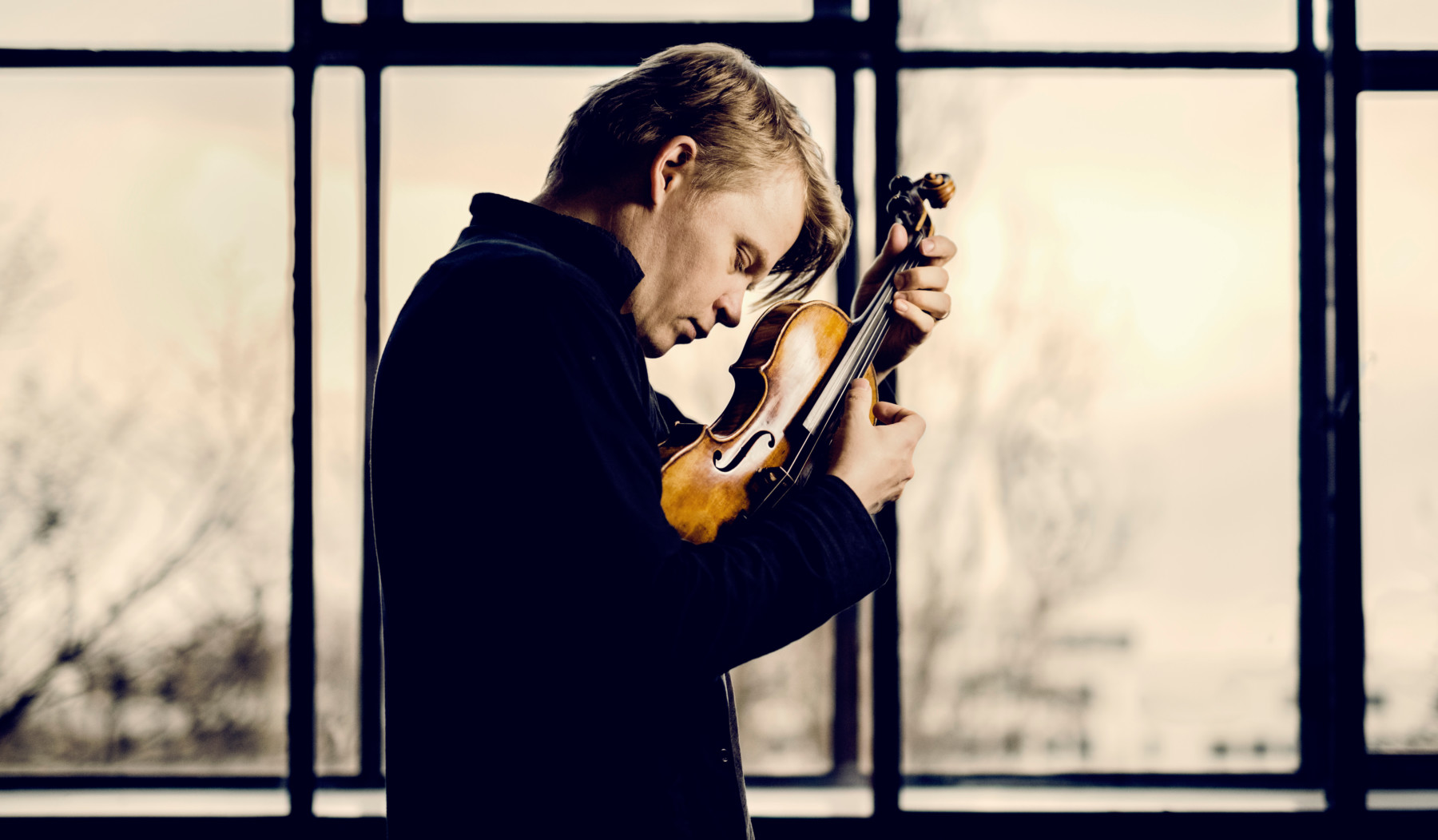
Violinist Pekka Kuusisto strums his violin without a bow in front of a window.

Violinist Pekka Kuusisto is appearing at Quarantine Club, a streamed concert series in an empty theatre in Loviisa, a town 90 kilometres (55 miles) east of Helsinki.Photo: Felix Broede

If you want to find out about online concerts, several sites offer listings and links.

One is Keikalla; the word means “at the gig” but can also mean “on the job.” It advertises singer Sami Saari and Jazzpojat (jazz boys), who play “unabashedly entertaining jazz,” according to Helsingin Sanomat, Finland’s largest daily. Or perhaps you’d prefer Lordi, the monster-metal band that won the Eurovision Song Contest in 2006; their concert is called Scream Stream.

Another platform, Semilive, lets you tune in for a livestream or watch some concerts later. Artists include hard rock band Shiraz Lane, rapper Kube, singer-songwriter Tommi Läntinen and pop singer Petra.

The aptly named Koronakonsertit (Corona Concerts) provides a general listing of upcoming concerts and past shows at any and all “venues.” Among the diverse listings are a programme of music by Joseph Haydn, at Helsinki’s Lutheran Cathedral, and a Quarantine Club with violinist Pekka Kuusisto, in an empty theatre in Loviisa, a town 90 kilometres (55 miles) east of the capital. Koronakonsertit even has a list of similar websites in other countries.

Playing for the people

Here are some more performers who have been keeping active while keeping their social distance.

The title of Teija Niku’s newest album, Hetkessä (In the moment), sounds appropriate for this unusual time.
Video: Teija Niku

In a Facebook Live concert, accordionist Teija Niku plays her own exciting Nordic- and Balkan-inspired compositions from her third solo album, Hetkessä (In the moment). “I was hoping that I would get out of this place this year a lot to play for the people,” she says during the concert in her rehearsal studio, “but right now it’s not possible, so I have to play for you from my own little cave.”

Brú in Bruges: This lively dance tune comes from Lappfjärd, a village in western Finland.
Video: Brú

Brú, a Finnish-French-Indian-Italian-Norwegian baroque music ensemble, has its own take on traditional music from the Nordic countries and elsewhere. They’ve posted pieces from a concert held in Belgium shortly before Covid-19 stopped musicians from playing for live audiences.

https://youtu.be/mg5PIzBbr68

Yes, the violin that Sara Pajunen is playing has ten strings (look how many tuning pegs there are). Five of them are for bowing and the other five resonate sympathetically.
Video: Sara Pajunen

Finnish American violinist Sara Pajunen, who has appeared on ThisisFINLAND once before, recorded this mesmerising piece in northern Minnesota, USA on a Norwegian fiddle with ten strings. By the way, check out the forest in the background – you might say the landscape looks a lot like Finland.

Opera and ballet at the same address

It’s epic: Kullervo comprises choreography and a chorus.
Video: Finnish National Ballet

The Finnish National Opera and National Ballet, both housed in the same building on the shore of Helsinki’s Töölö Bay, had to cancel their whole spring seasons. However, on their Stage24 page they encourage you to “set the stage in your living room” with various full-length video performances. The most Finnish selection may be the ballet Kullervo, based on a story from the national epic Kalevala, with choral and orchestral music by Sibelius and choreography by Tero Saarinen.

Whatever you choose to watch, have a great and truly unique concert experience!

By ThisisFINLAND staff, April 2020
As Finnish teachers move classes online, family routines change

To slow the spread of the Covid-19 virus, the Finnish government decided that schools and universities should shut their doors in mid-March 2020. But the academic year didn’t end. And months later, when the following school year began, kids, parents, teachers and administrators were prepared for a situation that could change quickly.

In March 2020, Finnish teachers accomplished the incredible task of moving their classrooms online, many within just a few days. This situation continued until mid-May, and for some schools and certain age groups until the school year finished at the end of May. Whether in physical or digital classrooms, school remains an important part of life.

As we are updating this article, in mid-August 2020, the 2020–21 academic year is getting under way, and the Ministry of Education has stated that schooling will principally take place in physical classrooms, although schools of all levels will maintain flexibility to switch to solutions such as distance learning if the situation changes. Regional variations in the coronavirus situation may mean that different municipalities enact different measures to follow the guidelines of the ministry and of the Finnish Institute for Health and Welfare.

In April 2020, we visited a family and talked with teachers to see how distance learning was taking place in Finland. (All ages and school years mentioned here are correct as of that time.)

Third-grader Isabel, 10, continues to follow her usual lesson plan. School begins at 9 am sharp and ends at 1 pm, just like it normally would. Her teacher keeps to the lesson plan, uploading daily instructions on an app called Qridi, which Isabel accesses on her phone. She reads the instructions and gets to work.

First up today is geography: “Read pages 118–121 about Denmark and complete the questions in your workbook. Take a picture of your answers and upload it to your diary.”

Online classroom

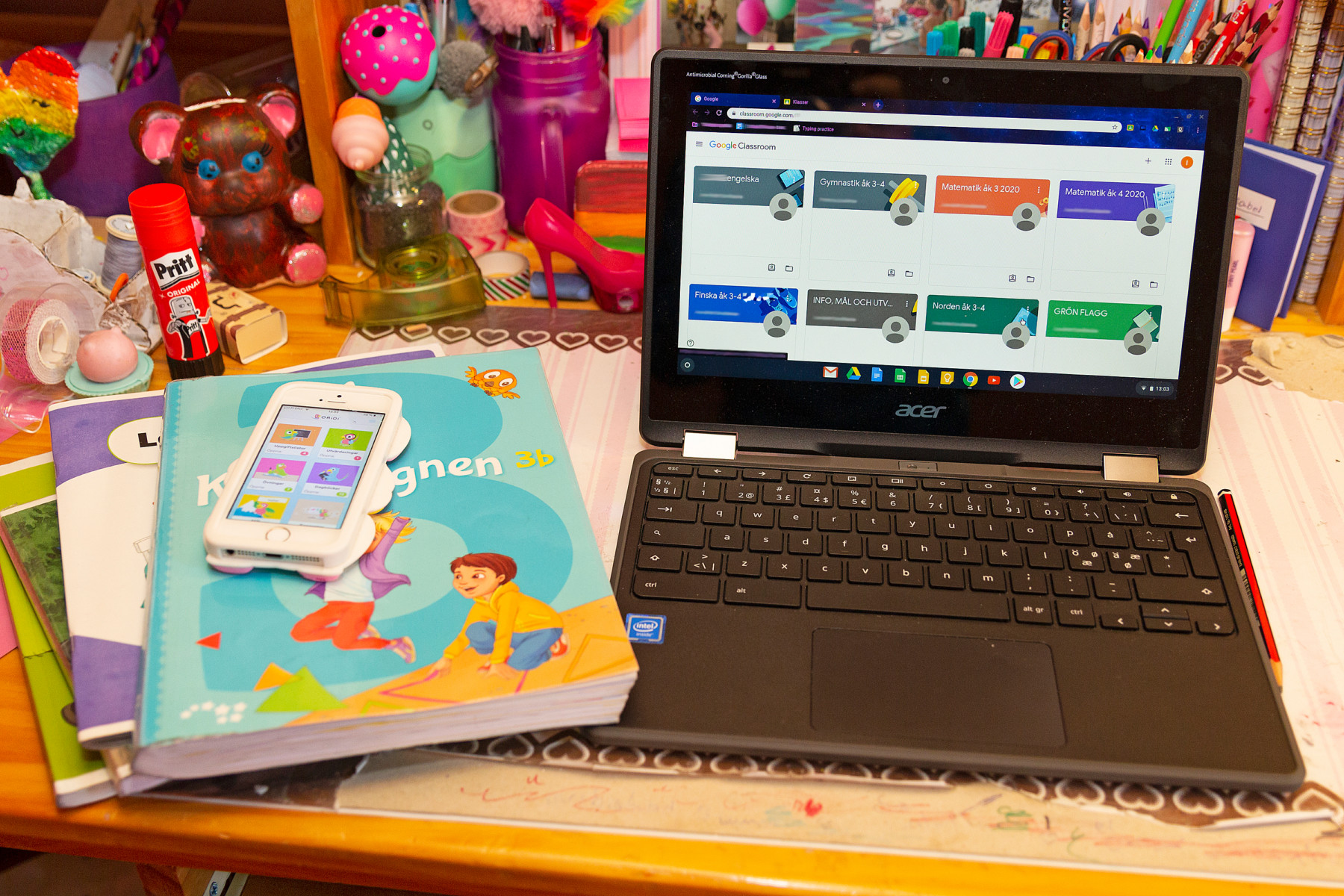
A pile of schoolbooks, a phone and a laptop are lying on a desk.

Between phone, laptop and actual, in-real-life schoolbooks, students are able to communicate with their teachers and keep up with their lessons. Photo: Catarina Stewen

At 9:30, it’s time for the day’s online meeting using Google Meet. Isabel logs on to Google Classroom on a tablet borrowed from her school. The screen lights up with the faces of all her friends.

The teacher asks them to mute their microphones and listen to her instructions. A “thumbs up” sign takes the place of a raised hand when a student wants to ask a question. They need to take turns, exactly as they would in a conventional class situation.

Teachers in Finland know that without breaks for exercise and movement, kids won’t be able to concentrate on their schoolwork. Usually this happens during 15-minute outdoor recesses at regular intervals throughout the day. Many experts believe that this plays a part in the Finnish education system’s success.

Today Isabel’s teacher includes a link to a dance-along video in the daily instructions, for the students to watch on their own. In addition to getting them moving and having fun, the song helps them practise English vocabulary and the maths concept of patterns.

Listening to lectures from a distance

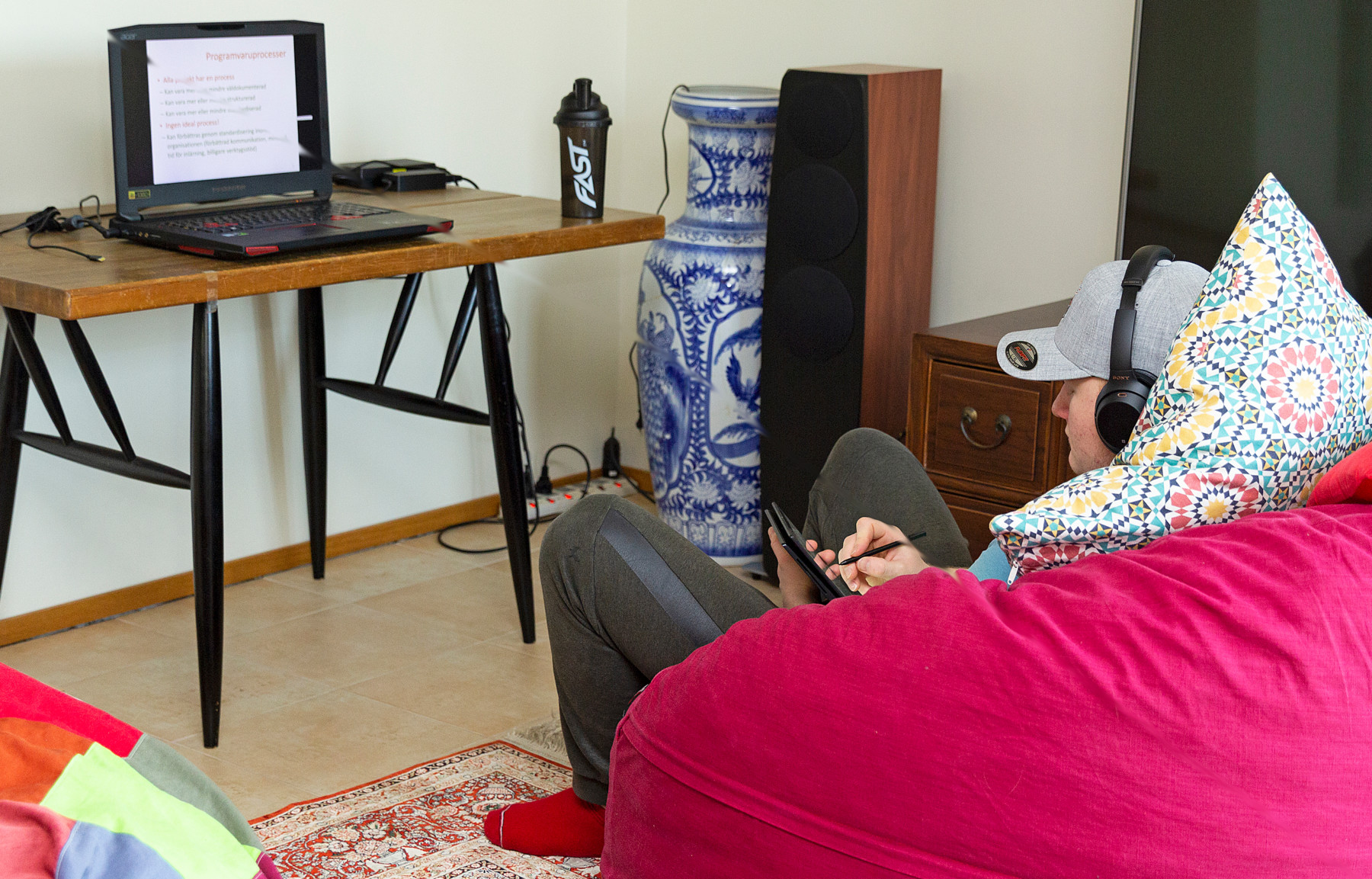
A young man sits on a beanbag chair, writing on a tablet.

We’re willing to bet that you won’t find a chair like this in any university lecture hall in any country.Photo: Catarina Stewen

Meanwhile, Isabel’s older brother Joakim logs on to his university’s online channel, tuning in for a lecture about software development. Åbo Akademi University, located in the southwestern Finnish city of Turku, has used web-based lectures regularly during the year, so the change is not that huge.

“Language classes have not been virtual until now,” he says. “The teacher uses Zoom to divide us into smaller groups for discussions, and visits each group to follow what we’re talking about, which works really well.”

Tech-savvy teachers

And now for a brief intermission: Get up and move around! Teachers in Finland know that kids need recess and exercise, even during distance learning. One teacher recommended this American-produced video as a study break; it also helps with English and maths.
Video: GoNoodle

Transferring classes to an online environment overnight is not a simple task. Teachers have been working tirelessly to familiarise themselves with digital tools, learn new features and set them up.

“Luckily technology is widely used in normal teaching, which means that many programs and platforms are familiar to both students and teachers,” says one upper secondary school teacher in the eastern Finnish city of Joensuu.

“There are also many fun scholastic exercises you can find online, free of charge,” says Anders Johansson, who teaches math and science at Källhagen School in Lohja, a town about 50 kilometres (30 miles) west of Helsinki.

Many schools have IT support, and teachers compare notes and share experiences. For younger students, schools have called upon parents to assist in getting things up and running. Teachers are using various apps and tools for online teaching, including Qridi; Classroom, Meet and Duo by Google; Teams by Microsoft; Zoom; and WhatsApp.

The question of internet access

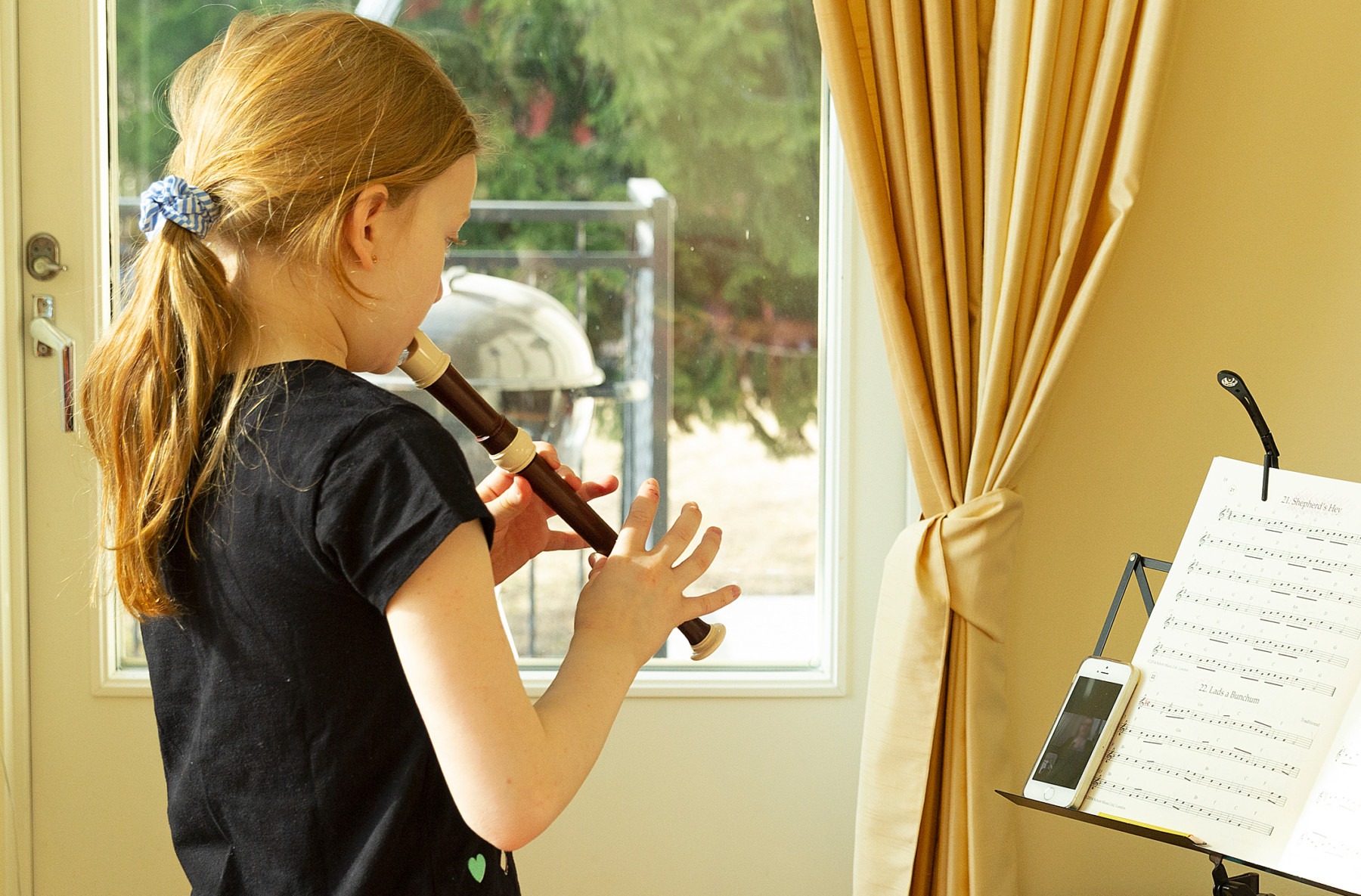
A young girl playing recorder, her phone and sheet music are on a music stand in front of her.

With a phone balanced on the music stand, instrument lessons have also moved online.Photo: Catarina Stewen

According to Statistics Finland, most Finnish homes have access to the internet and nearly all school-age children have mobile phones.

Younger students without their own smartphones have been able to borrow one or receive instructions on their parents’ phones.

Students still need paper and pencil: Schoolbooks, distributed earlier in the year, are used for daily schoolwork, even though instructions arrive by phone or are available online.

However, there are families without internet access, or those who speak other languages at home than the official languages Finnish and Swedish. This can complicate the process of accessing online solutions. “In some cases we have invited the family to school for practical instruction,” says Johanna Järvinen, principal of Ilpoinen School in Turku.

Schools can lend tablets or laptops normally reserved for classroom work to students for distance learning. The Finnish National Agency for Education, in cooperation with the business community, is also gathering used laptops for students who lack access to a computer.

Extended hours

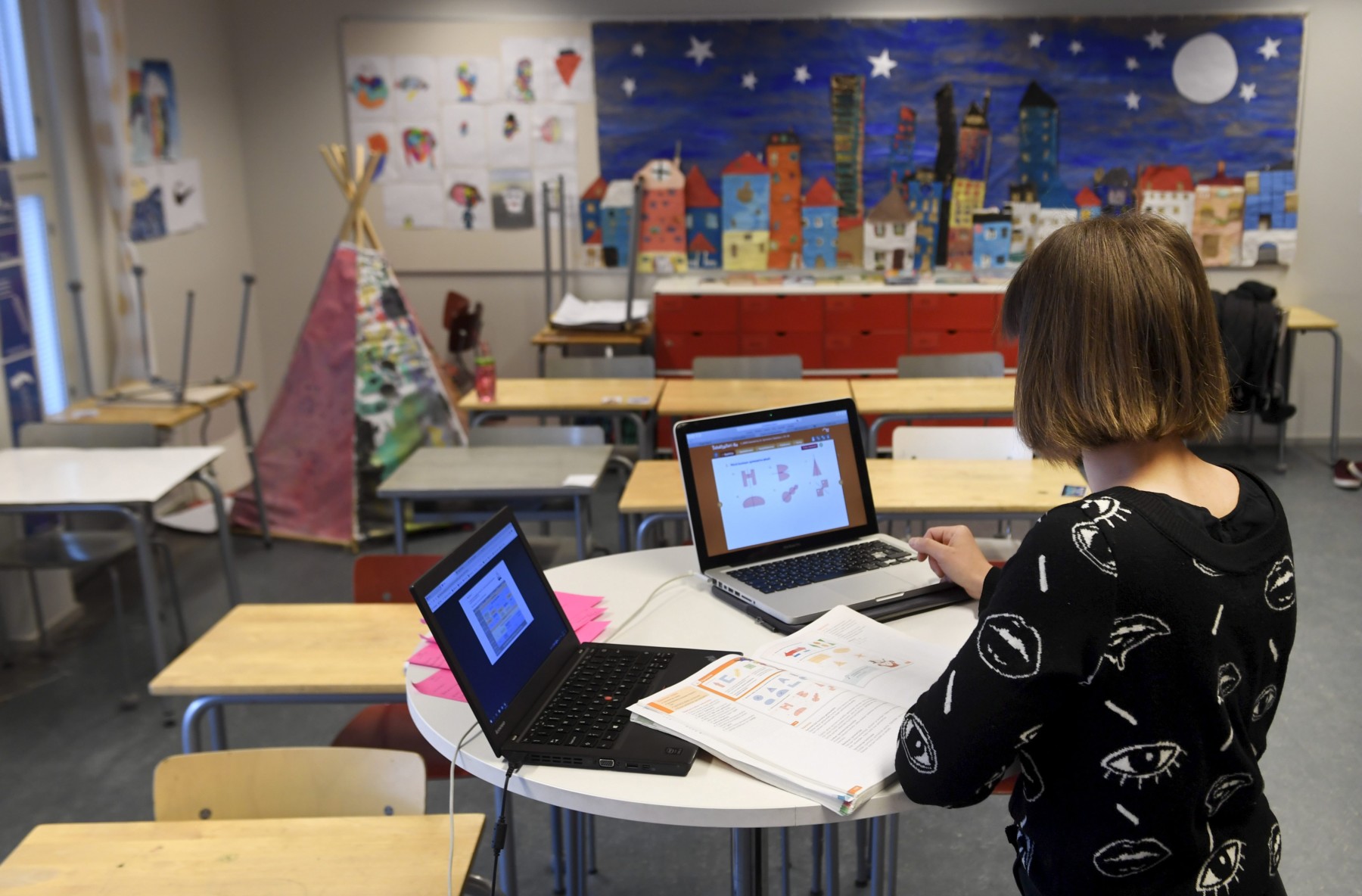
A teacher standing in an empty classroom with two laptops and a schoolbook in front of her.

In an otherwise empty classroom in Helsinki, fourth-grade teacher Elina Heinonen teaches her students in distance learning sessions.Photo: Vesa Moilanen/Lehtikuva

Under the exceptional circumstances, normal working hours have not been sufficient for teachers.

“Planning, giving instructions and evaluating each student’s work takes much more time than in a normal class setting,” says Maria Kotilainen of Kyrkoby School in Vantaa, just north of Helsinki.

“Teachers have had to learn many new things in a very short period of time,” says Marica Strömberg, who works at Solbrinken School in Lohja. Another area of concern for teachers is the subset of students who, even under normal conditions, need extra learning support.

Keeping learning flowing

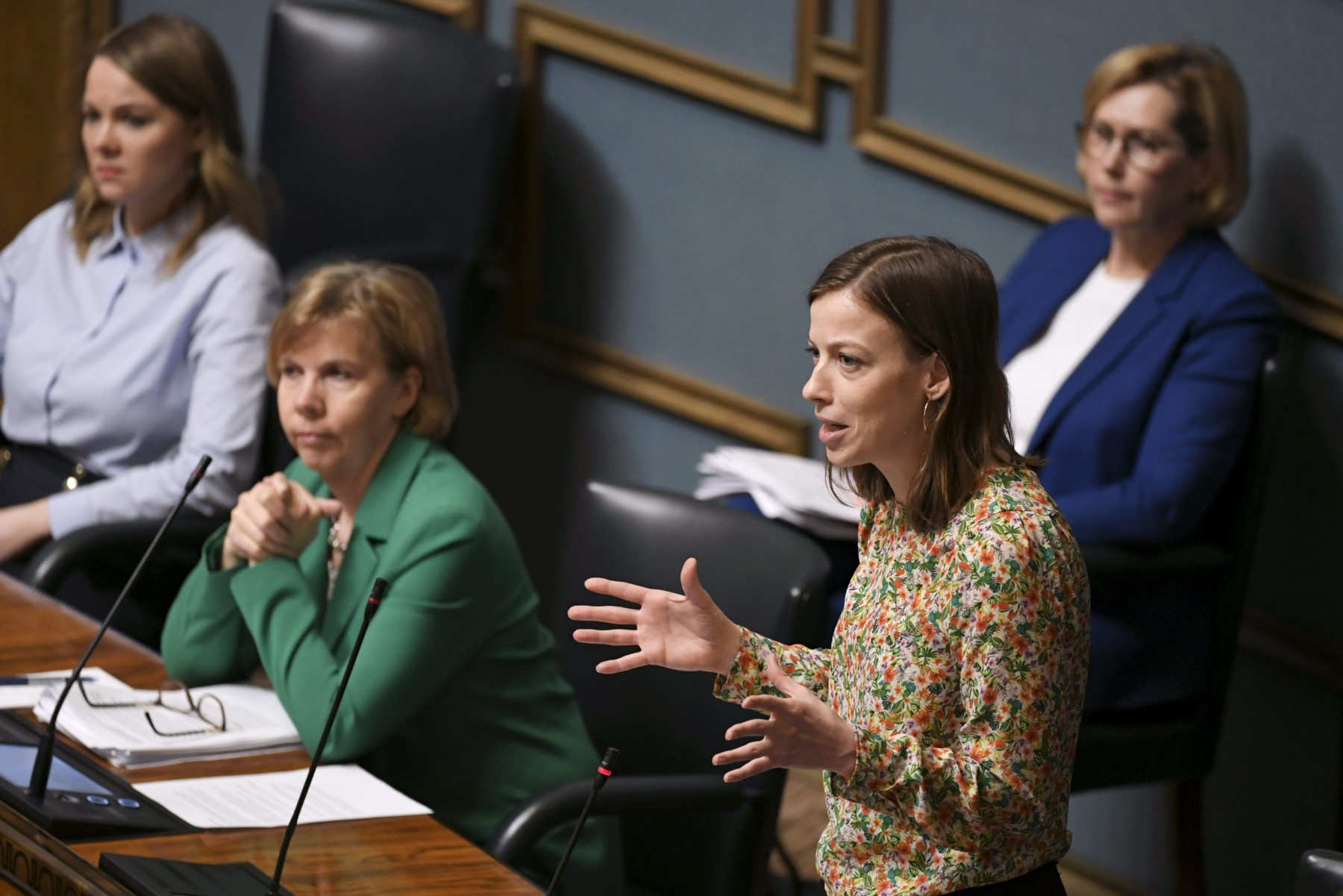
Three women are sitting and listening as a fourth woman delivers a speech before Parliament.

In Parliament on April 2, 2020, Minister of Education Li Andersson (second from right) answers a question about distance learning. Also shown are Katri Kulmuni (left, Minister of Finance at the time), Minister of Justice Anna-Maja Henriksson, and Minister of Employment Tuula Haatainen (right).Photo: Markku Ulander/Lehtikuva

Classes continue to follow the Finnish national curriculum, although the government has advised that teachers may lower the bar for achievement during this unusual time. Teachers, students and parents should not demand perfection of themselves, especially under these circumstances.

Minister of Education Li Andersson clarified in a press conference in early April that teachers are still responsible for verifying that kids are participating in their lessons, just as they would take attendance in a normal classroom. Andersson said that teachers should maintain channels of communication with the students and their homes.

The guarantee of high-quality education for all schoolchildren remains in effect. Whether online or brick-and-mortar, school attendance plays an important role in daily routines and in giving students a sense of security.

“Our target is to keep up with the schoolwork and continue to learn, just as usual,” says Ann-Britt Sandbacka, an elementary school teacher at Kyrkoby School.

By Catarina Stewen, April 2020, updated August 2020

Finnish Prime Minister Sanna Marin grants rare interview to Vogue

Marin became prime minister in December 2019, less than a month after her 34th birthday, and presides over a five-party coalition government together with four other female leaders, three of whom are also 35 or younger.

At the time of Vogue’s interview, in late January 2020, Marin’s attention was focusing on fulfilling the government programme: “We have to make sure we’re building society in a way that is not only socially and economically sustainable, but also environmentally sustainable,” she told British Vogue’s reporter.

Since mid-March, of course, she and her cabinet have directed all their attention to measures designed to slow the progress of the coronavirus, holding press conferences almost every day to keep citizens informed and answer questions.

You can tap the link button below to see Vogue’s UK piece, released online on March 31, 2020. Spoiler alert: The magazine discovered that Marin possesses sisu, that difficult-to-translate, uniquely Finnish combination of courage, perseverance and willpower.

The American edition of Vogue also published its own article about Sanna Marin and Finland, with the online version dated the day after the British piece. You can find the US article here, and read about how Finland “punches above its weight in terms of soft power—the egalitarianism, family benefits, and forward-thinking environmentalism that Marin embodies.”

By ThisisFINLAND staff, April 2020
Happiness report elevates Finland and other Nordics, shows that people should look after each other

The 2020 World Happiness Report is released during a difficult time, with the coronavirus causing great uncertainty all over the world. Nevertheless, it contains information and implications that can be useful now and in the future, about how people can look out for each other and promote wellbeing.

Published on the International Day of Happiness, March 20, by the UN Sustainable Development Solutions Network, the report uses data from one question in the Gallup World Poll: On a scale of zero to ten, where do you place your own life (with zero being the worst possible life and ten being the best possible life)?

That doesn’t measure general joviality or smile frequency, but rather people’s satisfaction with their lives – how content they are.

The other Nordic nations are all together in the top seven: Denmark (2), Iceland (4), Norway (5) and Sweden (7). The top ten also include Switzerland, the Netherlands, New Zealand, Austria and Luxembourg. However, the list of countries in order of happiness only occupies three pages of the 202-page report, so what else is in there?

It is full of data, charts and attempts to explain what makes happiness tick. The main purpose is, as the introduction states, “to review the science of measuring and understanding subjective wellbeing.” In 2020, the World Happiness Report focuses especially on the environment, in three senses: social environment, urban environment and natural environment.

One chapter of the report, entitled “The Nordic exceptionalism: What Explains why the Nordic countries are constantly among the happiest in the world,” is coauthored by Frank Martela of Aalto University in Finland, Bent Greve of Roskilde University in Denmark, Bo Rothstein of the University of Gothenburg in Sweden and Juho Saari of the University of Tampere in Finland. Their piece finds that higher personal and institutional trust are key factors in explaining why life evaluations are so high in the Nordic countries.

“There are, of course, many ways to measure happiness, but in this study, happiness means people’s satisfaction with their lives,” says Martela in the video below. “If we measure satisfaction, research shows that it correlates with well-functioning democracy, free elections, free press, a low corruption index, and inclusive social security services, helping those who need assistance.”

Frank Martela, researcher and philosopher at Aalto University, discusses why Finland and the other Nordic countries have repeatedly done well in the annual World Happiness Report.
Video: ThisisFINLAND.fi

By ThisisFINLAND staff, March 2020