Finnish Prime Minister Sanna Marin featured on TIME100 Next list

The magazine’s annual TIME100 Next list names Finnish Prime Minister Sanna Marin as one of the “emerging leaders from around the world who are shaping the future.”

The Next list has been published since 2019 as an expansion of the magazine’s flagship TIME100 list of the world’s most influential people.

This year’s list includes people from multiple fields, such as “doctors and scientists fighting the COVID-19, advocates pushing for equality and justice, journalists standing up for truth, and artists sharing their visions of present and future.”

The TIME article is written by Norwegian Prime Minister Erna Solberg, who comments that Sanna Marin is “an important part of a strong team of women political leaders in the Nordic-Baltic region.”

Peatland restoration strengthens Finland’s biodiversity

In Finnish, as you might know, Finland isn’t called “Finland” or anything that sounds remotely similar. The Finnish word for “Finland” is Suomi.

According to the Institute for the Languages of Finland, a number of competing theories exist about the origins of the word Suomi. Whether by coincidence or by design, it contains suo, which by itself means “mire” or “swamp” – a dominant natural habitat in many parts of Finland. Boggy terrain accounts for about a third of the country’s area, some 8.9 million hectares. It’s composed of peatland, the product of decomposing sedges and mosses building up since the end of the last Ice Age, around 12,000 years ago.

It may not sound like the most glamorous component for a national ecosystem, but the restoration and management of Finland’s peatlands represents a crucial contribution to the country’s environmental health and famed natural beauty.

The significance of swamps

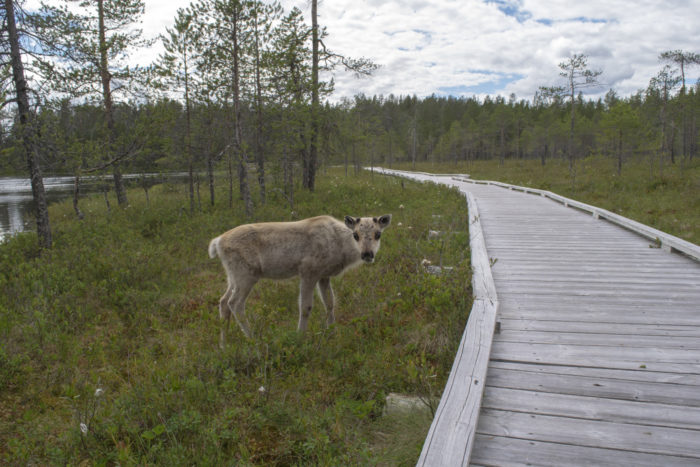
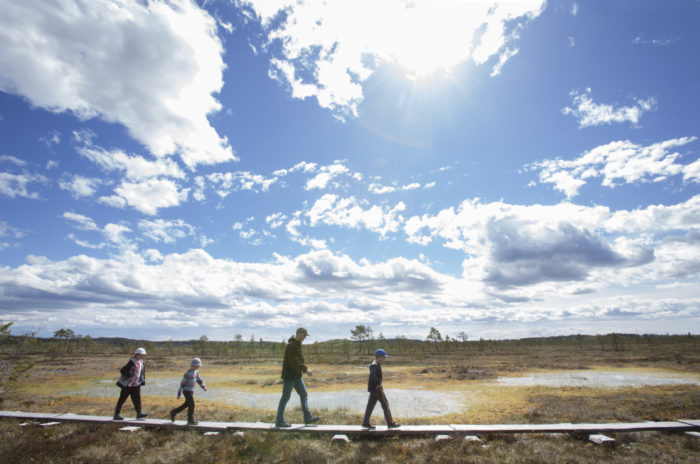
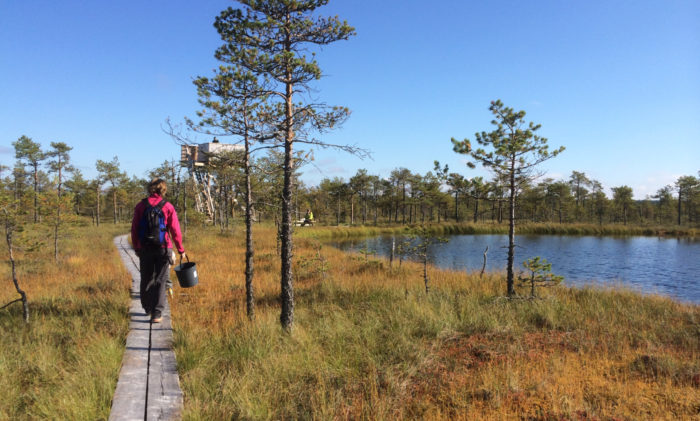
A hiker walks along boards that form a walkway beside a lake.

Swamps, mires and bogs are ecologically important natural habitats, and in places such as Leivonmäki National Park, in central Finland, they offer a place for people to connect with nature (note the birdwatching tower in the background).Photo: Tuomas Haapalehto/Metsähallitus

Swamps are so significant that they are included in the Helmi habitats programme, which, led by the Ministry of the Environment, aims “to strengthen biodiversity and safeguard vital ecosystem services” provided by nature and to help combat climate change. The Finnish Parliament allocated an additional 100 million euros to nature conservation in 2020, of which 42 million went to the Helmi programme. Helmi means “pearl” in Finnish.

“More than half of Finland’s peatland has been drained for forestry purposes, leaving about four million hectares undrained,” says Kaija Eisto of Parks and Wildlife Finland, the agency tasked with state-owned protected areas. It is part of Metsähallitus (which means “forest administration”), the state enterprise that manages state-owned land and water across the country.

“Peatland has been drained by digging ditches in order to improve the conditions for cultivating trees,” says Eisto. “My work includes protection, restoration and management of habitats in protected areas.”

Stepping up restoration

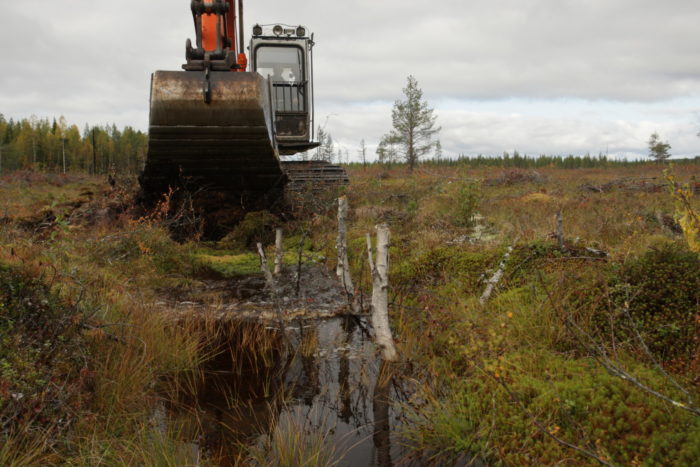
An excavator is perched beside a water-filled ditch in a landscape with few trees.

One part of peatland restoration is filling in human-made ditches to help return the land to its natural state.Photo: Philippe Fayt/Metsähallitus

Protected areas across Finland, including its 41 national parks, contain about 50,000 hectares of peatland drained before they were designated as protected areas. Of this area, about 28,000 hectares have been restored in work carried out over the last three decades.

“It was very small-scale management when it began,” Eisto recalls. “But now we have several hundred hectares being restored each year. In state-owned areas that are not protected, there has also been peatland restoration for game habitat improvement.”

The main challenge in peatland restoration is to return water to where it naturally belonged before draining.

The work proceeds in various ways, says Eisto: “When we start the planning of peatland restoration, we want to have an idea of what that peatland looked like before the drainage. We have good aerial photos with which we can compare the peatland, before and after. Most commonly, we fill the ditches using peat from the ditch banks to stop the water flow. We can also block the ditches by building dams using wood, or with the peat that was removed when digging the ditch.”

Stop draining the swamp

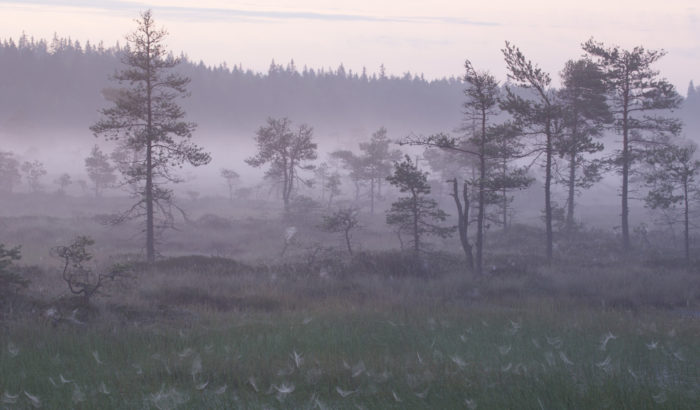
Evergreen trees are shrouded in mist.

On a summer evening, mist descends on a forest and swamp in Torronsuo National Park, in southern Finland.Photo: Hannu Mäkelä/Vastavalo/Metsähallitus

The primary goal is to reestablish the right quality and quantity of water, returning the water table to its original level. “We are also aiming to improve biodiversity,” says Eisto. “In peatland that has been drained, the biodiversity is usually very low because of the lack of water. Habitat quality improves when many species – birds, butterflies, plants, mosses and natural communities – start to thrive again after restoration. And flood mitigation improves, since water is retained. Peatlands are important for game species, too.”

Climate regulation is another very important aspect, because peat in its natural habitat serves as a carbon sink, containing carbon dioxide rather than releasing it into the atmosphere. Conservationists are calling for disincentives to the burning of peat as an energy source in Finland.

Meanwhile, Eisto welcomes the funding from the Helmi programme. “We will continue the programme work until 2030,” she says, “and the first target is to restore 12,000 hectares of ditched mires by 2023, after which we will identify further targets. For so many years a lack of funding has held us back, but now we have a good budget.”

Nurturing swamp nature

By Tim Bird, February 2021, updated April 2023

Finnish film industry features carbon-neutral production

Producers are increasingly looking to boost their green filmmaking credentials. Finland’s first carbon-neutral film is The Wait (Odotus), inspired by the writings of renowned Finnish author Juhani Aho (1861–1921).

Shot in 2020 and premiering in 2021, the movie transports its timeless themes – love and the search for happiness and passion – to contemporary times. Actor Inka Kallén and director Aku Louhimies cowrote the script; Kallén also stars in the film. At the time of writing, the exact release date has not been confirmed.

Pandemic context

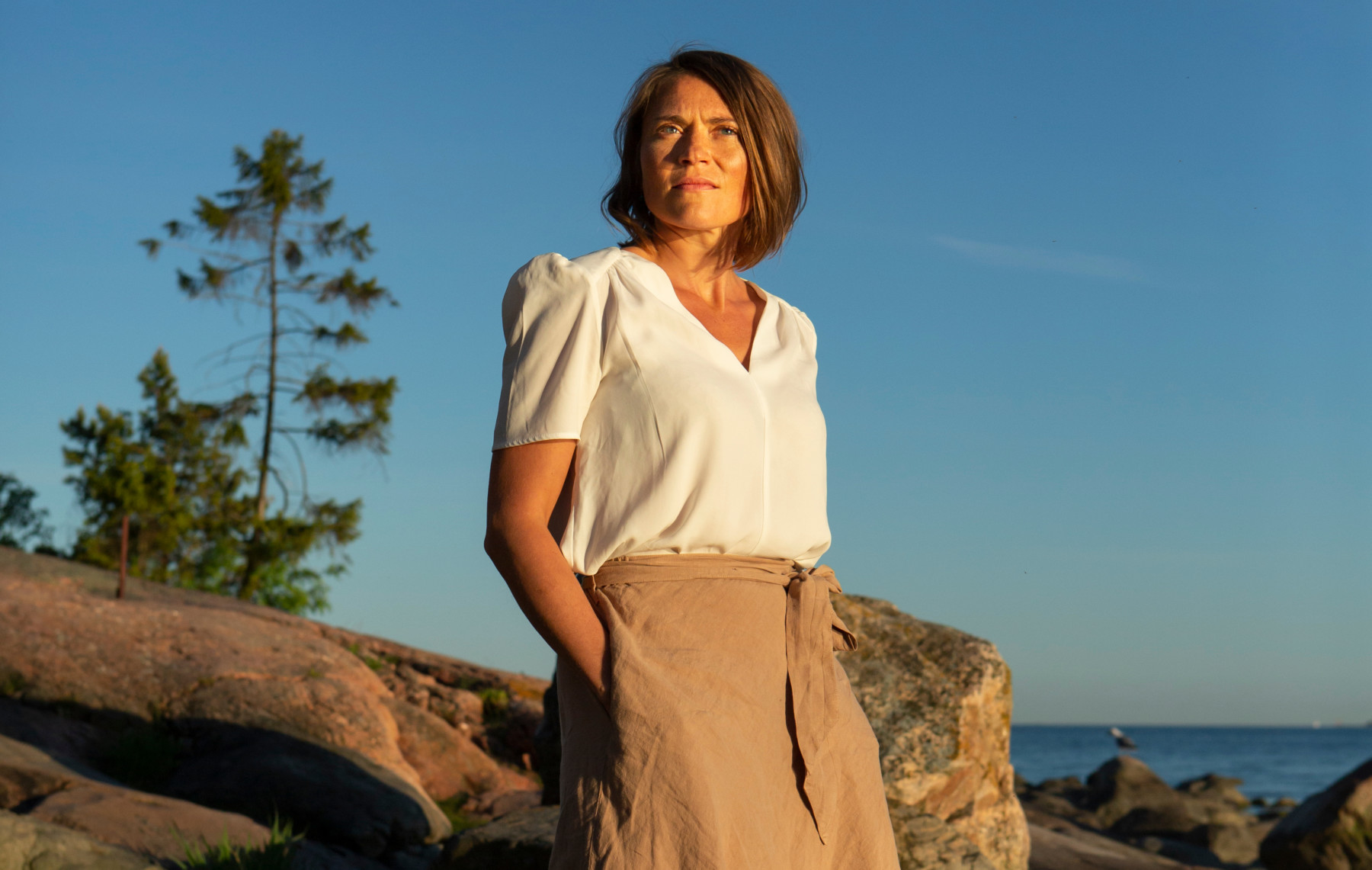
A woman stands in front of a rocky seacoast.

Inka Kallén cowrote the script for The Wait and stars in the movie.Photo: Laura Malmivaara

The Wait happens in southwestern Finland’s idyllic, secluded archipelago. Filming took place in late summer 2020 on a historical island called Seili in Finnish and Själö in Swedish, which is also an official language in Finland.

The island was the site of a leper hospital in the 17th and 18th centuries, and later an asylum for the mentally ill. The former asylum building now uses solar energy for power, and houses the Archipelago Research Institute of the University of Turku’s Centre for Environmental Research.

The production plan for The Wait took Finland’s Covid-19 measures and restrictions into account. Coincidentally, the film’s storyline includes a pandemic, and the characters support an environmentally friendly way of life.

“In a way, it was easy to be safe on an isolated island, so the location was perfect,” says Kaarina Gould, who coproduced the film with Louhimies and Andrei Alén. “The whole crew was also very committed and motivated about carbon-neutral choices.”

Love veggies, relove clothes, offset carbon

Two men and two women sit on a bench in front of a wooden house.

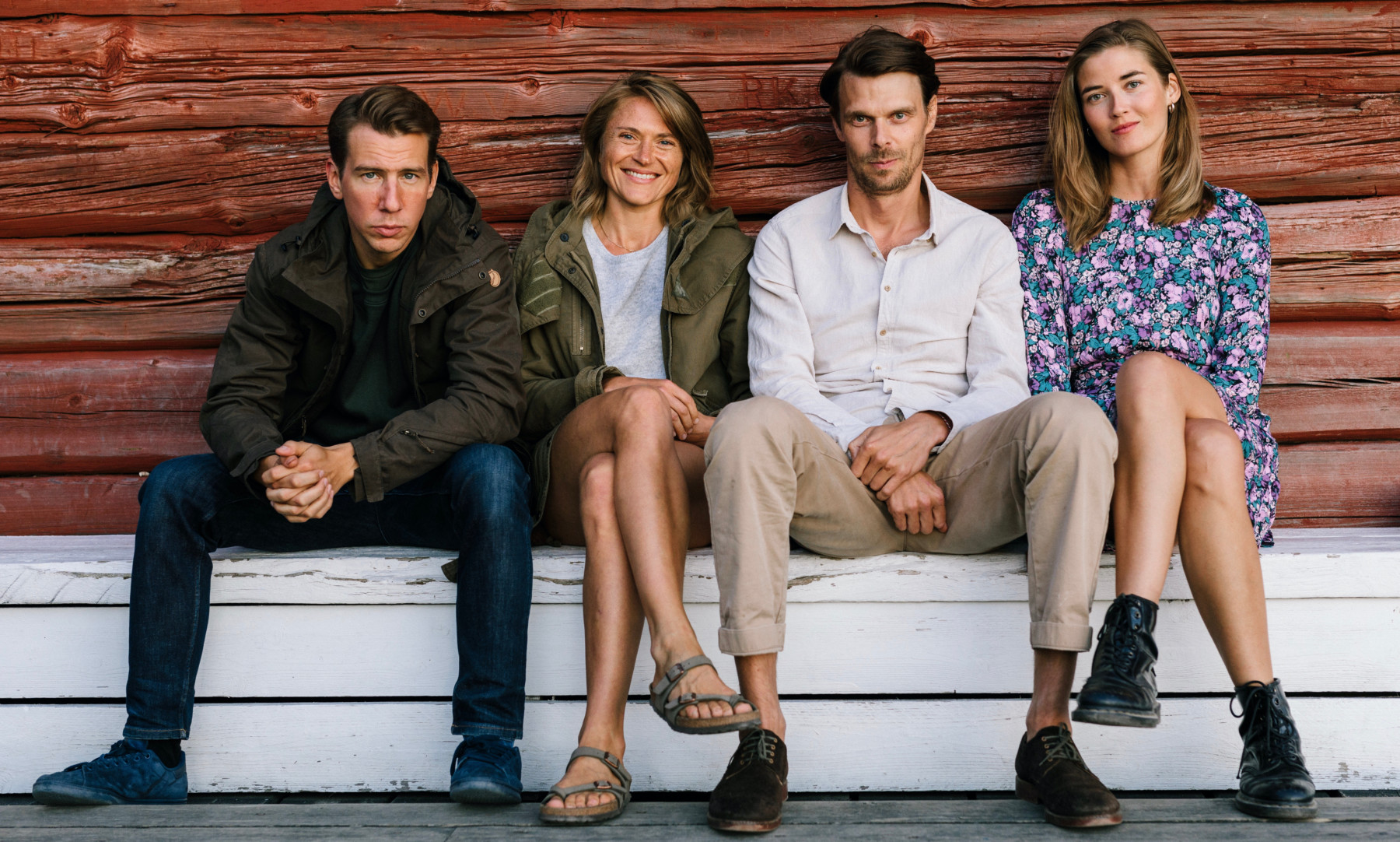
From left: Actors Aku Hirvineimi, Inka Kallén, Andrei Alén and Adeliina Arajuuri appear in The Wait. The cast and crew read an Aalto University guidebook about sustainable film production.Photo: Markus Kontiainen

The carbon footprint of the film was calculated based on the numerous products, services and activities necessary to make it, including transportation, food and electricity. To monitor and report their carbon footprints, all crewmembers read Ekosetti, a sustainable-production guidebook funded by Aalto University together with Audiovisual Producers Finland (APFI) and the Promotion Centre for Audiovisual Culture.

“It was fun and interesting because it brought the team together,” says Gould. “Once you work with offsetting your emissions, there’s no way back.”

The production team used a local partner that catered vegetarian food. They documented all food data and minimised waste. The Wait’s wardrobe staff worked with Helsinki second-hand shop Relove, a pioneer in the circular fashion economy.

“Our values were perfectly aligned with this project, so it was easy and fun,” says Iines Alavuo, marketing manager at Relove. “There is truly something special when people choose purpose over profit – the magic just happens!”

The film’s producers arranged for the purchase of carbon offsets through a Finnish organisation that specialises in such efforts. They calculated the total based on how much food, transport and other goods and services the whole filmmaking process consumed. The offsets cost a grand total of less than 700 euros.

Nordic neutral

A man motions to a man and a woman.

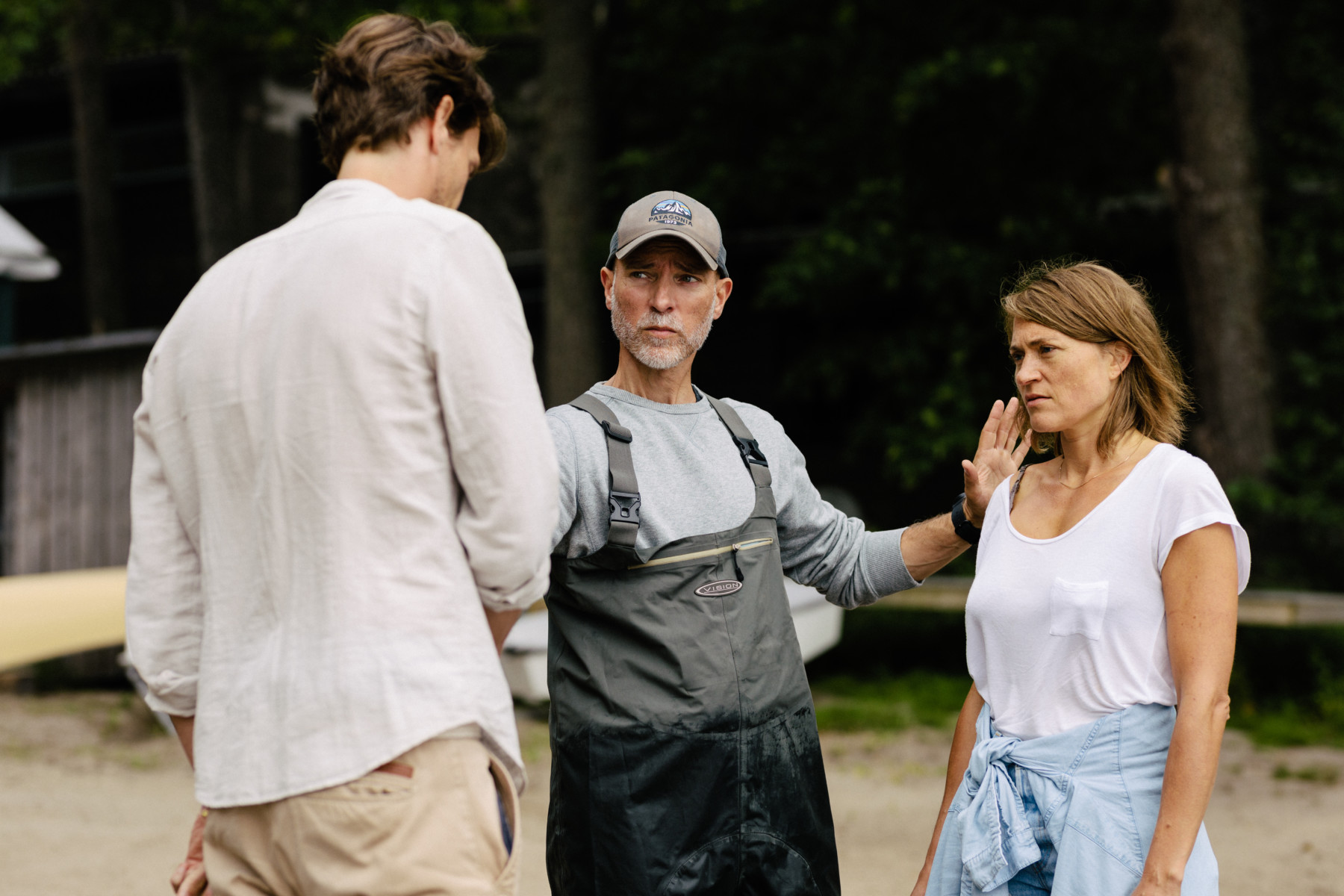
Aku Louhimies (middle) directs Andrei Alén (left) and Inka Kallén on location in the Finnish archipelago.Photo: Markus Kontiainen

The Nordic countries have long sought to lead by example in international climate policy, including green innovations in homes, businesses and government. Finland has declared that it will become carbon neutral by 2035, and aims to go carbon negative soon after that. Denmark, Iceland, Norway and Sweden are all committed to becoming carbon neutral over the next two to three decades.

Perhaps we won’t have to wait so long until all films produced in Finland have a target of zero net carbon emissions. Investing in carbon reduction projects, such as reforestation or wind farms, is a logical next step for the global film industry. “We hope that in the future offsetting emissions won’t be news, but the standard,” says Gould.

By Carina Chela, February 2021

Snow brings light and life to Helsinki

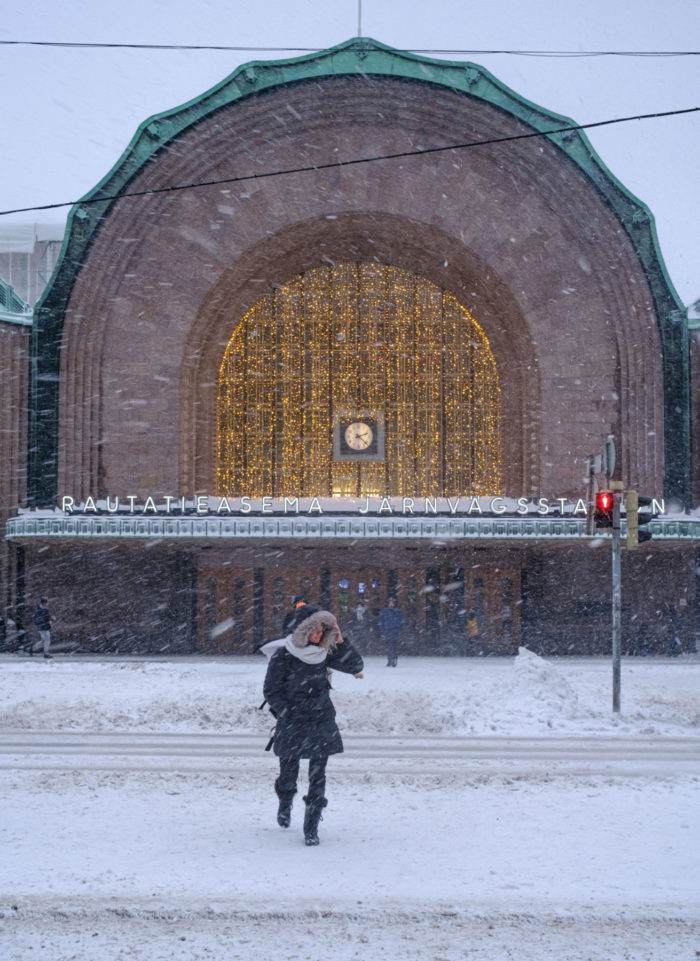
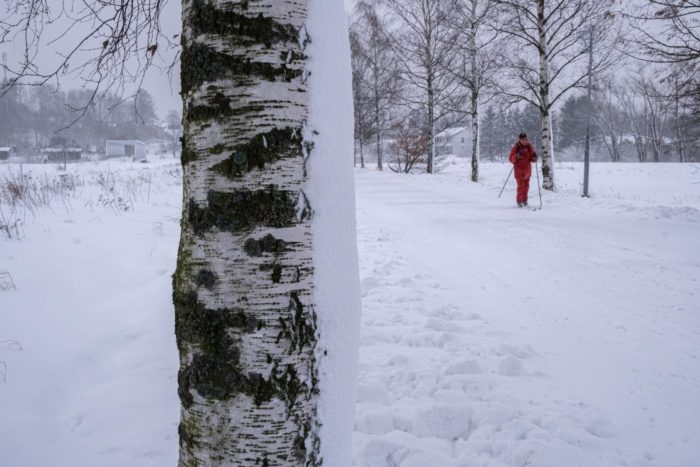
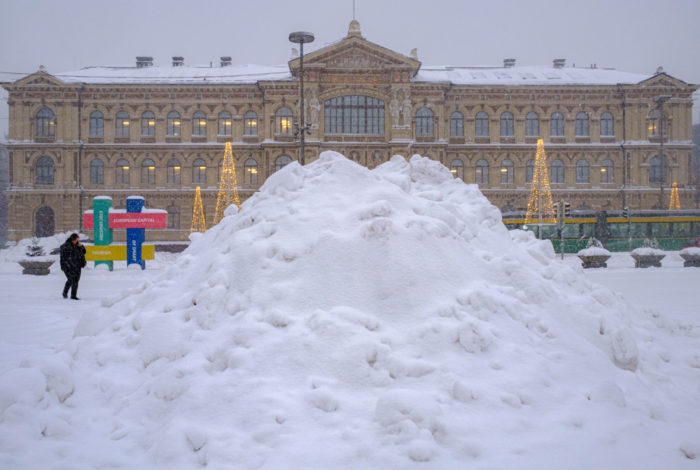
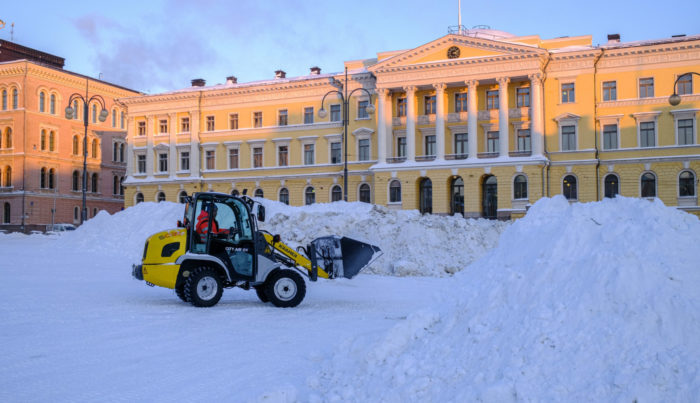
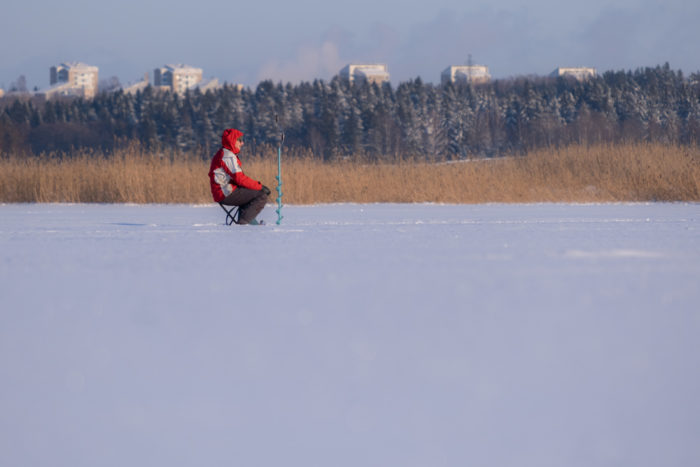
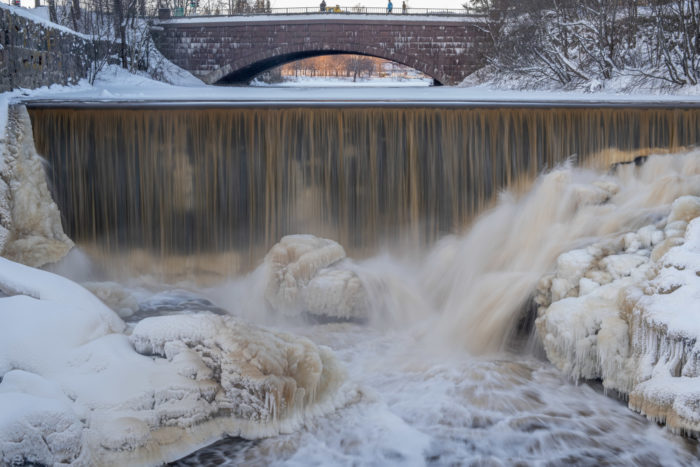
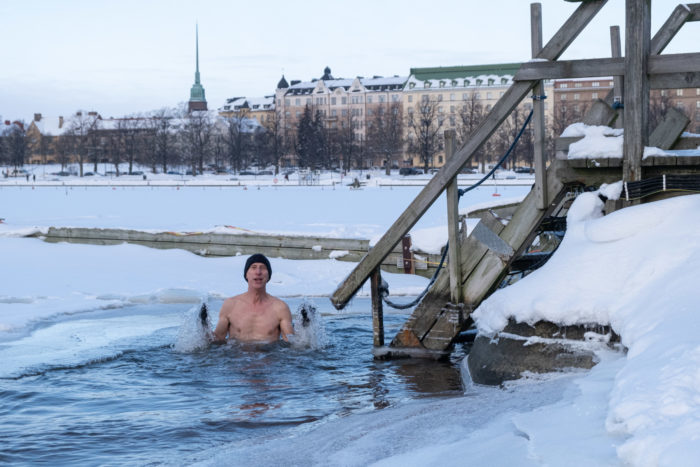
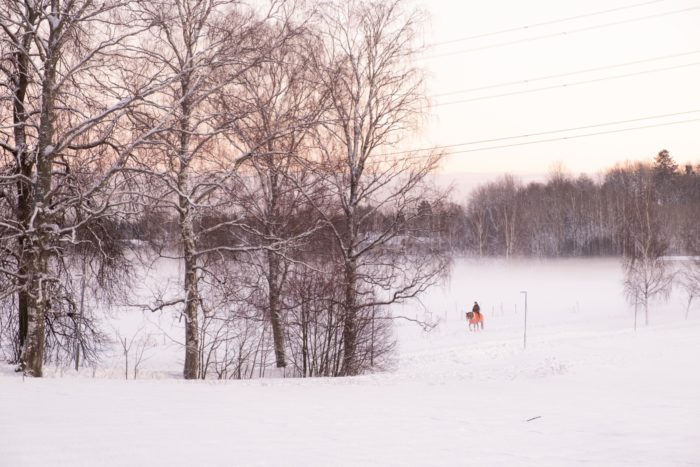
The prolonged cold snap and plentiful snow that followed Christmas 2020 and continued into the first months of 2021 almost felt like something of a novelty in the Helsinki area.

In typically resourceful fashion, the Finns find ways to make the most of the wintry conditions, even while still observing social distancing and other guidelines that the Covid-19 pandemic necessitates. Extreme cold, with temperatures plummeting below minus 20 degrees Celsius (minus 4 Fahrenheit) at times, has accompanied heavy snow to a depth of more than half a metre (20 inches).

Helsinki remains prepared for these conditions and the challenges they present. A multitude of snow-clearing vehicles takes to the streets after each blizzard, while trams and buses continue to operate, undeterred.

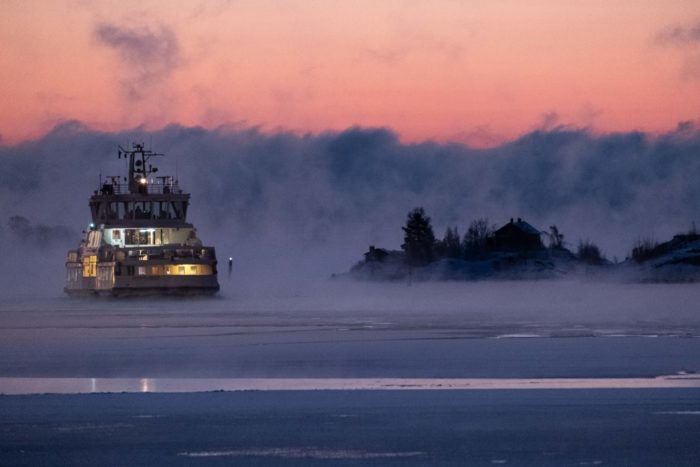
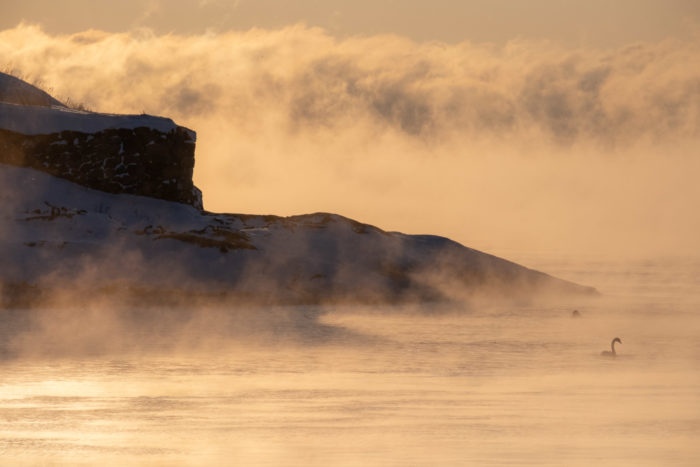
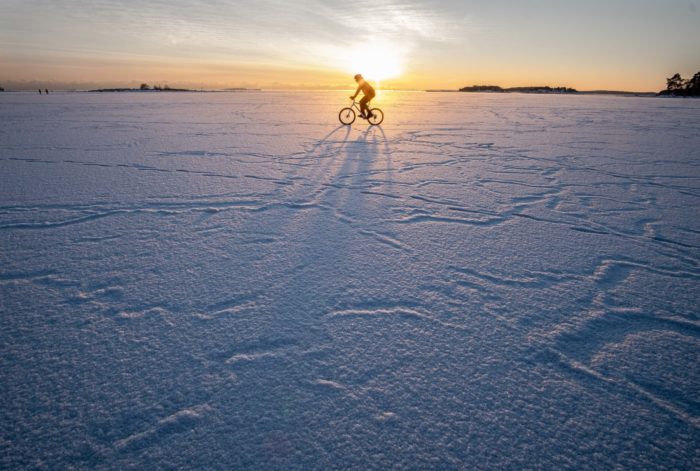
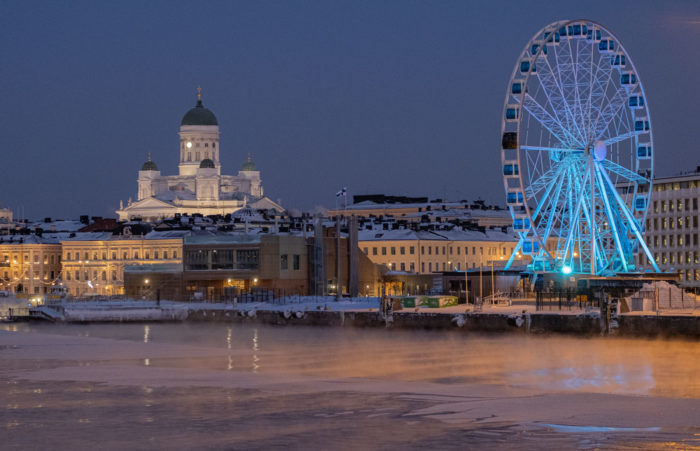
One morning, citizens of Helsinki and the rest of the metropolitan area woke up to pink mists and floats of ice forming in the bays of the Baltic Sea. Our photo feature looks at full-blown, good old-fashioned Finnish winter making a welcome return to the Helsinki area.

Winter casts its spell in the Finnish capital

Official disclaimer

Always take care when venturing onto a frozen sea or lake! Conditions can change quickly. Consult with the locals, and if the ice looks too thin or you’re otherwise in doubt, stay on dry land. Our slideshow is completely safe.

By Tim Bird, February 2021

Climate change doesn’t erase the need for Finnish icebreaker innovations

Geographical location and technological innovation have contributed to Finland becoming a leader in the field of icebreaking ships. Climate change is obvious in the Arctic region, but that doesn’t mean icebreakers are disappearing from the scene.

Research professor Jari Haapala, an expert on sea ice, serves as head of marine research at the Finnish Meteorological Institute. He says the Arctic is the place that is suffering most from climate change, with temperatures rising at twice the rate observed in other regions.

“There are no doubts that climate change is happening in the Arctic,” he says. “Every indicator is pointing in the same direction. Ice extent [the size of the ice-covered area], ice thickness, multiyear ice, etcetera, all show that there is less ice than before.”

Changing temperatures and a relative decrease in ice haven’t made transportation easy, however. “Regardless of climate change, it is important to remember that conditions in the Arctic are extremely difficult,” says Haapala.
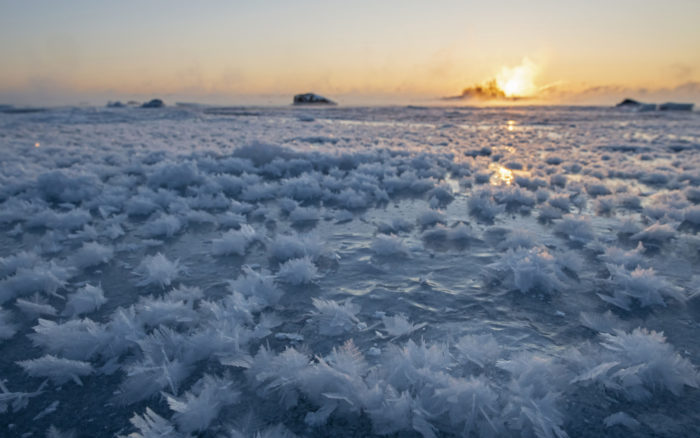
Geometric ice crystals poke up from the ice-covered sea that stretches to a sunset on the horizon.

Not only is the Baltic Sea overlaid with ice, but clusters of beautiful ice crystals have formed on top of the ice cover, in this photo from near Helsinki in January 2021.Photo: Reima Flyktman/Lehtikuva

“When discussing icebreaking and climate change, it is essential to distinguish between Arctic areas and subarctic areas, such as the Baltic Sea, Sakhalin and the Great Lakes area,” says managing director Reko-Antti Suojanen of Railotech (formerly Aker Arctic Technology). The company is known the world over for its icebreaking expertise, high-quality ship designs and innovative solutions.

In the Baltic Sea, even when the sea ice is thin, strong winds push the ice towards the shores and ports. In northern parts of the Bay of Bothnia, between Finland and Sweden, the ice breaks up and refreezes countless times during winter. This gives rise to thick layers of brash ice, defined as chunks of up to two metres (6.5 feet) in diameter. The same type of ice can also be found in Arctic waters.

Brash ice lives up to the adjective in its name. “It is particularly challenging for vessels to move in [brash ice],” Suojanen says.

Weather patterns in the Baltic Sea are becoming more challenging, straining the schedules that ships must follow to keep transport flowing. At the same time, in response to environmental regulations, the engine power of merchant vessels is decreasing, even as their size is growing. Diminished winter capabilities are the result.

“Therefore, more icebreaker assistance will be needed in the future,” says Suojanen.

How do they really break the ice?
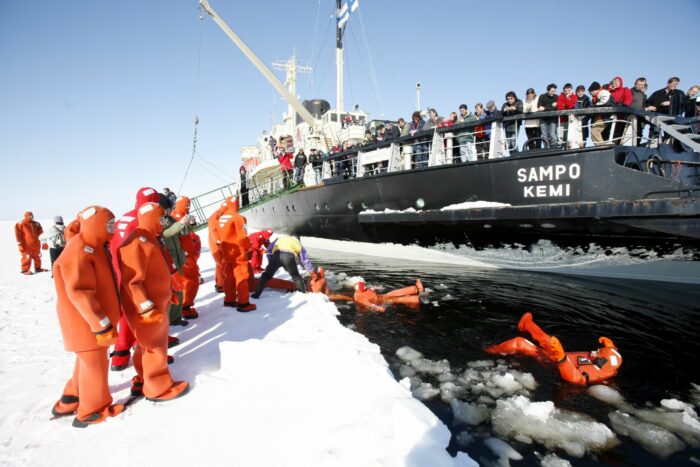
People in orange bodysuits are swimming beside a large boat in water where chunks of ice are floating.

The icebreaker Sampo offers winter tourists the chance to swim in the sea off the coast of the northern Finnish port of Kemi.Photo: Martti Kainulainen/Lehtikuva

Special vessels and icebreakers are necessary to ensure safe, reliable passage in the icy Arctic waters. Technical and economic factors mean that transportation routes can traverse only areas with single-year ice.

To enable large-scale commercial transports in the Arctic, Railotech developed and trademarked a solution called Double-Acting Ship (DAS) technology. To understand its components, we have to dive below the ice and explain two other terms: “azimuth propulsion” and “breaking ice.” As we’ll see, the latter is not as obvious as it might seem.

“Azimuth” is a term used in angle measurements in navigation. Azimuth propulsion refers to a thruster or set of propellers that can turn to point in any horizontal direction, making a ship much more manoeuvrable.

Then we need to understand how an icebreaker breaks ice. Unlike the way it might appear, an icebreaker does not really break the ice, but bends it downwards. Bending the ice requires much less energy than crushing it. This is the reason the icebreaking ship’s strong steel hull is not vertical – instead it is flat and almost horizontal. This type of shape is natural for the stern of the ship (that’s the back of the ship, to us non-sailors). Therefore, if the ships sails astern (in a backwards direction), it can break ice with less energy. The problem is that a vessel cannot be steered while sailing astern, unless the propeller is replaced by an azimuthing thruster, which can be turned 180 degrees when the ship sails astern.

Combining these two things resulted in a DAS-type vessel that can sail in two directions, ahead and astern. Sailing astern can be used for icebreaking, and normal ahead mode for sailing in open water. Astern mode is so efficient that these ships can break almost any ice, due to the flat shape and even propellers crushing the rest of the ice blocks.

Railotech’s DAS-type vessels with high ice classifications are ships that brave the most demanding ice conditions. In addition to icebreakers, this can mean ships designed to operate without icebreaker escorts. Such innovations make commercial transport viable in the Arctic. At the same time, DAS also reduced, by half, the vessel power required, with a corresponding decrease in emissions.

LNG and hybrid tech
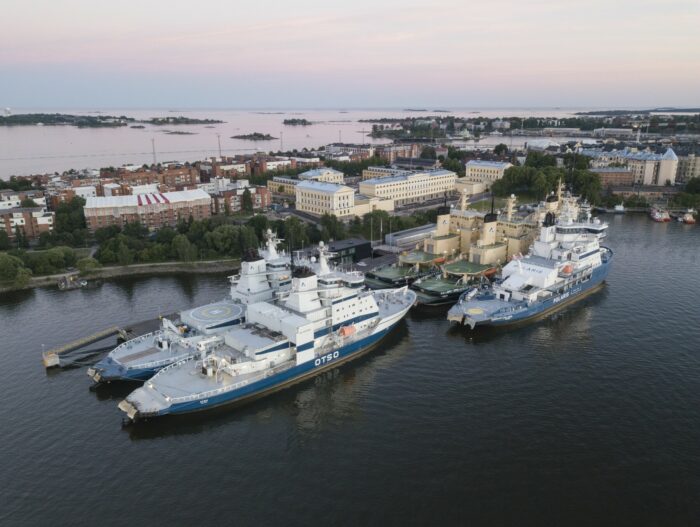
In an aerial photo, five large ships are docked along a shore where city buildings are visible.

The Polaris (right) and four other Finnish icebreakers dock for the summer beside the Helsinki neighbourhood of Katajanokka.Photo: Julius Jansson/Lehtikuva

Using liquefied natural gas (LNG) instead of heavy fuel oil has additionally lowered pollution. LNG produces smaller amounts of carbon dioxide and nitrogen oxide emissions, and no sulphur oxide. LNG also does not emit black carbon, soot particles that are especially damaging to the Arctic and contribute to climate change.

Railotech has designed large carriers for transporting LNG from Arctic locations. The LNG is stored onboard in large tanks that keep the gas at a temperature of minus 163 degrees Celsius (that’s minus 261 degrees Fahrenheit for anyone who’s keeping track). LNG is also playing an increasingly significant role as fuel for ships. The first icebreaker ever to use LNG is the Finnish icebreaker Polaris, designed by Railotech.

The next step in reducing emissions is hybrid technology and alternative fuels.

“Icebreaking requires high power, which cannot be achieved with batteries,” says Suojanen. “However, they can be used to balance rapid power variations, improving fuel efficiency. Other fuels, such as methanol, are also being explored.”

Fossil-free future
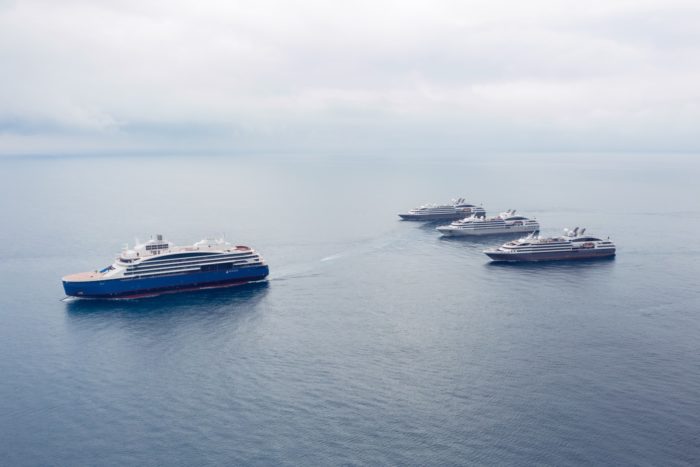
One large cruise ship and three slightly smaller ones sail across smooth water.

The polar-class luxury cruise vessel Le Commandant Charcot (left) boasts Finnish-designed icebreaking capacity that allows it venture into the polar regions. Photo: Sacha Lalane/Ponant

Recent examples of Railotech’s steady flow of innovations include the polar exploration vessel and luxury cruise ship Le Commandant Charcot, an LNG-electric hybrid, for the French company Ponant; a next-generation Baltic assistance icebreaker with unrivalled energy efficiency and the first methanol-ready icebreaker for Sweden; and a year-round service operation vessel (SOV) for offshore wind farms in seasonally freezing seas.

Railotech has also recently completed the hull form and contributed to the concept design for Canada’s sixteen new Multi-Purpose Vessels and is part of the design team for the upcoming Canadian Polar Icebreaker, which will be one of the most capable icebreakers in the world, operating in the Arctic’s ice-covered waters.

The company conducts comparisons on the suitability and sustainability of different fuels for use in various icebreaking ships or icebreakers. The comparison is based on the operating area and its environmental conditions, the type of ship, and the ship’s operating profile. Naturally, the availability of different fuels in the ship’s operating area influences the choice.

As a result of their research on renewable fuel options for the Baltic assistance icebreaker, methanol was chosen as the most favourable alternative from a technological point of view, providing the longest autonomy time which is crucial in icebreaking activities.

“Ice-strengthened vessels and icebreakers will still be needed in the future,” says Suojanen. “A vessel designed and built for its task and the conditions it will face is the best for both safety and the environment.”

By Catarina Stewen, February 2021, content updated March 2026
“I’m a wizard,” and other thoughts about learning Finnish online

Terve! Minä olen velho. That’s one of the first things you can learn to say in Finnish on Duolingo, an online language instruction platform that uses gamification to encourage students.

For those of you who haven’t started learning Finnish yet, Terve! Minä olen velho. means, “Hello! I am a wizard.” It’s a beautiful way to begin.

I’m not sure how useful velho, the word for “wizard,” will be, but I’m glad Duolingo has included it in one of the early lessons. Fans of the platform have been begging it for years to create a version for Finnish; the Finnish course finally launched in mid-2020.

Compared to other methods of learning, I enjoy Duolingo’s more playful approach. In the tips section for each lesson, you’ll find tongue-in-cheek descriptions of Finnish staples like sauna, sisu (the special Finnish combination of guts and perseverance), and Väinämöinen (the demigod hero of the Kalevala, Finland’s national epic).

Remember to have fun

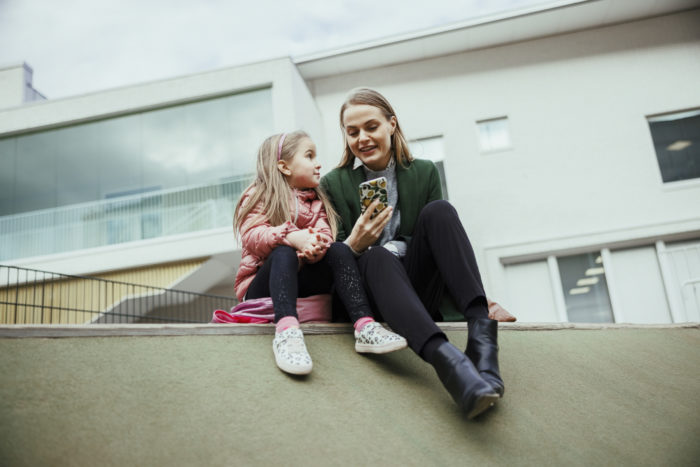
A woman and a girl sit outside in front of a school building, looking at a phone the woman is holding.

A mother and daughter in Helsinki check a smartphone. Learning a language can and should be fun, and some people find an app more accessible than a textbook.Photo: Jussi Hellstén/City of Helsinki

They also do a good job of explaining Finnish grammar without getting lost in the weeds, and of making language learning more approachable. Here’s one line that made me chuckle: “Its spelling rules are so simple that Finnish children never have to worry about participating in spelling bee competitions. There, quite simply, is no need for them.”

I’ve often heard Finnish compared to a pyramid: lots of grammar and rules to learn at the bottom, but easy once you’ve mastered the basics – like building a pyramid. By contrast, learning English would be more like an inverted pyramid, with fewer rules to keep you from speaking at a basic level but much more complexity the further you advance.

You can forget about all that. Learning a language can and should be fun!

I like the examples Duolingo gives for pronouncing long consonants. These can be tricky, but we actually do something similar in English without even realising it. One example I remember from another Finnish course was the English word “penknife” to express the long “n” sound. I found these examples really interesting.

Finnish has long and short versions of both vowels and consonants. Luckily it’s not difficult to know when a letter is long or short, at least on paper. To make a short letter long, they just double the letter. So one “n” is short, but “nn” is long. Doubling a letter can and does completely change the meaning of the word. A classic example is the difference between tuuli (wind) and tuli (fire).

Participatory learning

A man sits in an apartment in front of a laptop at a desk with books and papers.

Learning from home: Online language learning apps are in a good position to reach users during a time when many people are working and studying remotely.Photo: Valentina Barreto/Westend61/Lehtikuva

The audio recordings are a bit robotic and sometimes difficult to understand. I’ve noticed the same problem with the French course, but I’m getting more used to the choppy Finnish recordings.

Another thing, something that I think will improve over time, is the way the course sometimes marks answers as wrong when they’re basically correct. There’s nothing more infuriating than having to redo a translation exercise simply because I put my adverb before the verb, rather than after, when translating from Finnish to English (“I rarely cry” versus “I cry rarely”).

The great thing about Duolingo is that, when such a problem arises, I can report the issue to the forum, where the developers can see it and possibly implement changes to improve the course.

Skip the formalities

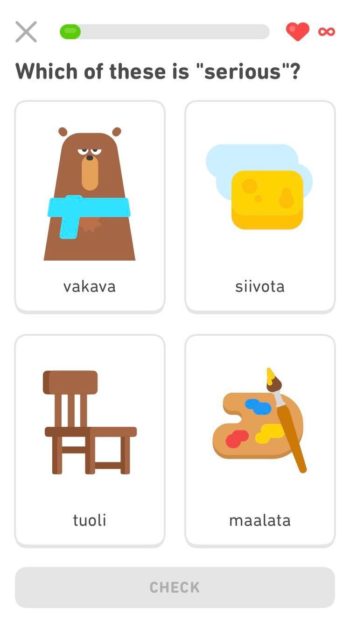
In a phone screenshot, four pictures are visible, each with a Finnish word under it.

The Duolingo app wants to know which word is the Finnish translation of “serious.” (Hint: Look at the expression on that bear’s face.)Screenshot: Duolingo

I think it’s unfortunate that Duolingo includes herra and rouva (Mr and Mrs) in the first few lessons. These are two words that you will probably never hear or need to worry about in Finland, which is an egalitarian, relatively non-hierarchical society. In the workplace, colleagues address each other and even their bosses by their first names, and in school, children and teachers likewise call each other by their first names.

So it frustrates me to see herra and rouva in every Finnish language course. It’s like Finnish linguists can’t keep themselves from including these formalities, despite the fact that those words take up valuable brain space that could be used to learn more useful or entertaining words, such as velho.

Let’s say you do end up in a situation that demands formality – meeting the president, for example. I would say that addressing Sauli Niinistö as a velho is definitely a more interesting option than calling him herra.

By Tyler “Velho” Walton, January 2021

Finnish innovations for overcoming plastic waste

Thanks, in part, to its education system and its curriculum, Finland as a nation is very aware of the challenges posed by plastic, and ahead of the game when it comes to devising solutions, says Riitta Silvennoinen of Sitra – the Finnish Innovation Fund.

However, as things stand Finland recycles about 25 percent of its plastic waste, but is strongly committed to complying with EU Waste Directive objectives: 50 percent of plastic packaging recycled by 2025 and 55 percent by 2030.

“In Finland, as in the rest of the world, we need to separate two challenges related to plastic: trash, and climate change ,” says Silvennoinen.

“They are often confused, which makes it even more difficult to decide what to do about plastic. The problem is not necessarily with plastic as a material in itself, but that it is not recycled sufficiently and properly, and that we are not getting value from it. The Ellen MacArthur Foundation, which supports innovations for the circular economy, has reported that we are losing 95 percent of plastic’s value because we are not recycling it but burning it or disposing of it in landfills.”

Road map for plastic

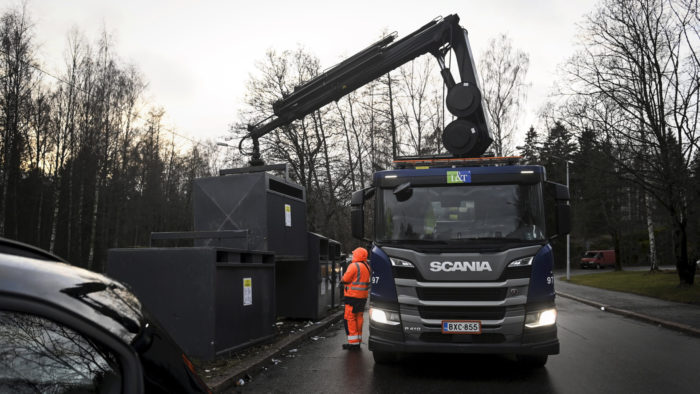
A worker stands beside a truck that is using a large mechanical arm to lift a metal container.

A worker in Helsinki guides a recycling container back into place by remote control after dumping a load of plastic in a truck on its way to a recycling facility.Photo: Emmi Korhonen/Lehtikuva

Finland is a high performer in terms of innovations. Silvennoinen mentions energy company Fortum’s efficient mechanical recycling plant, while Fenergy has developed a chemical recycling plant. In terms of products, Jospak won the WorldStar 2019 Gold Sustainability Award for its food packaging solution, combining recyclable plastic film with cardboard.

VTT, the Technical Research Centre of Finland, has carried out extensive research into chemical recycling. Sitra itself was involved in drawing up a Plastic Road Map in 2018, giving the issues a higher priority, covering every angle of plastic recycling, and involving stakeholders in discussions about how to improve, collaborate in, finance and develop solutions. The Ministry of Environment is promoting voluntary Green Deal initiatives. One example could be encouraging cafés and restaurants to introduce incentives for using less plastic.

“We should be recycling and reusing plastic as much as we can,” Silvennoinen says. “It can be recycled mechanically or chemically, returning it to its molecular level. Single-use plastic is a huge issue, but it is not simply a matter of replacing one material with another.”

Plastic world

From the Arctic to the Antarctic and from the Pacific to the Atlantic, plastic waste is polluting the world’s marine environment. In the Baltic Sea, on Finland’s doorstep, about 70 percent of marine litter is plastic. Globally, up to 13 million tonnes enter the seas every year, leaking from landfills or deposited directly from ships or beaches.

Why does this matter? Apart from spoiling beautiful beaches and deterring tourists, plastic waste degrades slowly, contaminates the ecosystem and degrades habitats. It also enters the food chain in the form of microplastic particles, to toxic effect.

In the Arctic Ocean, the occurrence of plastic is even higher than in open oceans, because the floating particles are bonded in sea ice. In addition, the production of plastic requires oil, contributing to CO2 emissions, which in turn fuel climate change.

By Tim Bird, ThisisFINLAND Magazine 2020

Finnish wood works

Wood has always been used to build individual homes in Finland. In recent years, its use in multistory and public buildings has also increased, thanks to the development of versatile, cost-effective timber and board elements. Consumers also appreciate wood as a traditional and ecological material that gives rooms a warm atmosphere.

A landmark with contrast

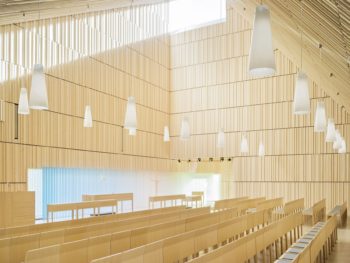
Suvela Chapel, EspooPhoto: Marc Goodwin

Suvela Chapel, Espoo; designed by OOPEAA; completed in 2016
The sculpted silhouette of Suvela Chapel is a new landmark in its district, presenting an intriguing face from each new vantage point. The copper façade contrasts strongly with the wooden surfaces within. Its inner courtyard is intimate and inviting.

The view

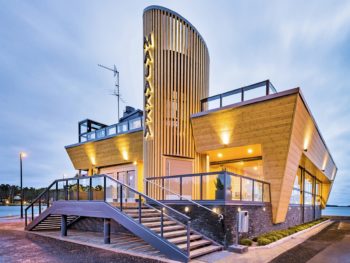
Café Nokkala Lighthouse, EspooPhoto: Honkarakenne

Café Nokkala Lighthouse, Espoo; designed by Tapartia; completed in 2016
Presenting modern wood construction in maritime surroundings, this popular café offers tasty treats and unobstructed sea views. The frame of the building employs non-settling logs, which facilitate large panoramic windows with modern, light joints.

Space for play

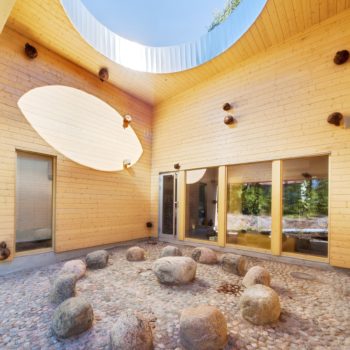
Omenapuisto daycare centre, HelsinkiPhoto: Jussi Tiainen

Omenapuisto daycare centre, Helsinki; designed by Häkli Architects; completed in 2013
There is a playfulness about the details of this creche, both inside and out. Natural slopes are utilised for slides and climbing areas. The wooden cladding has been left in its natural state, so it will turn grey in the course of time, except for the white-painted patterns. The paved internal courtyard opening onto the foyer has a ceiling with a large circular opening.

Inspiration from the forest

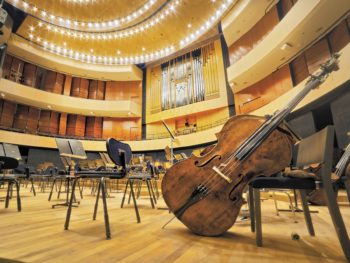
Sibelius Hall, LahtiPhoto: Loma Graphics Ltd

Sibelius Hall, Lahti; designed by Hannu Tikka and Kimmo Lintula; completed in 2000
The impressive wooden concert and congress centre is located on the lake waterfront. This was the biggest public wooden building created in Finland in more than 100 years. According to the architects, the shape was chiefly inspired by the forests of Finland.

A modern wooden town

Linnanfältti district, TurkuPhoto: Wellu Hämäläinen

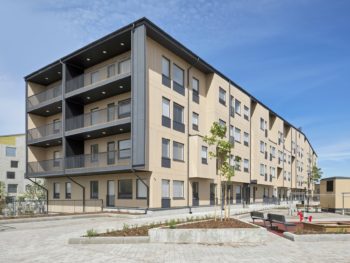
Linnanfältti district, Turku; designed by Schauman Architects; completed in 2019
Construction on this new low-rise district of wooden buildings began in 2016. Several firms of architects were involved. Its modern design contrasts with the ancient castle of Turku, from which the area takes its name. Wooden room elements give multidimensionality to the façade at 8 Fleming Street.

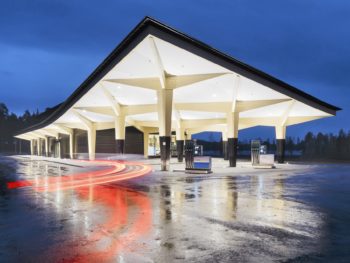
The world’s most beautiful filling station

Niemenharju Rest Area, PihtipudasPhoto: Marc Goodwin

Niemenharju Rest Area, Pihtipudas; designed by Studio Puisto Architects; completed in 2016
The rest area at Niemenharju is located on the E75 highway at a beautiful spot next to a large pond and a ridge. The main structure is comprised of 24 treelike columns supporting a huge canopy that curves upwards towards the road. The buildings here include a restaurant, a convenience store, sleeping areas and even a sauna. The filling station was ranked the world’s most beautiful by London-based architecture website DesignCurial.

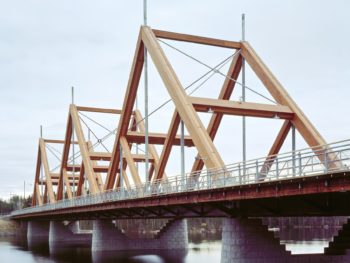
Open structure

Vihantasalmi Bridge, MäntyharjuPhoto: Mikko Auerniitty

Vihantasalmi Bridge, Mäntyharju; designed by Rantakokko & Co; completed in 1999
The bridge crossing the Vihantasalmi Straits on Highway 5 replaced an old run-down steel bridge. The design successfully combines clean structural lines and practicality, but at the same time is respectful of the traditions of wood construction.

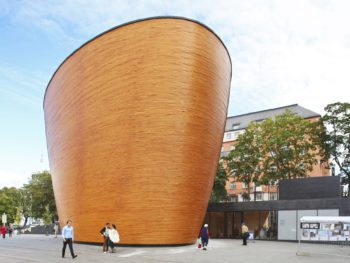
A quiet spot in the midst of city

Chapel of Silence, Kamppi, HelsinkiPhoto: Katri Saarela

Chapel of Silence, Kamppi, Helsinki; designed by K2S Architects; completed in 2012
The Chapel of Silence is located in the neighbourhood of Kamppi, in the heart of the city. It provides a quiet space in the midst of urban hustle and bustle. The warmth of the enclosing wood is a strong element in the tranquillity of the bowl-shaped building.

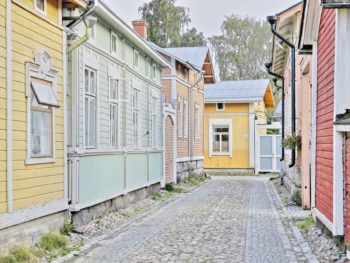
Picturesque streets

Old RaumaPhoto: Ismo Pekkarinen / Lehtikuva

Old Rauma
The town of Rauma, in western Finland, was founded in 1442, making it the third-oldest in the country. Old Rauma is a Unesco World Heritage Site and the largest unified wooden town in the Nordic countries. Approximately 700 people live in the 70-acre area, which contains 600 buildings.

Beloved church

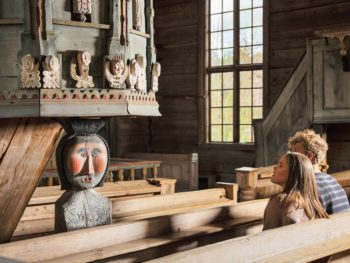
Petäjävesi Old Church, PetäjävesiPhoto: Petäjävesi Old Church

Petäjävesi Old Church, Petäjävesi; designed by church builder Jaakko Klemetinpoika Leppänen; completed in 1765

A Unesco World Heritage Site, the Old Church at Petäjävesi, central Finland, was built by land-owning peasants between 1763 and 1765, and displays their masterful carving skills. It is beloved by the residents of Petäjävesi, and thousands of enchanted tourists visit it every year.

By Päivi Leinonen, ThisisFINLAND Magazine 2020