Western Finnish town of Pori hosts jazz and big ideas every summer

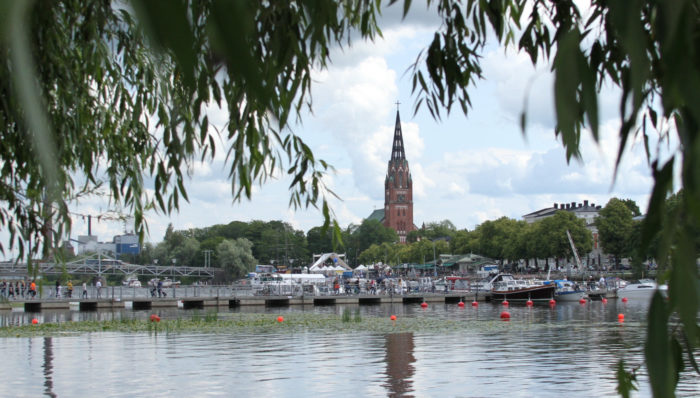
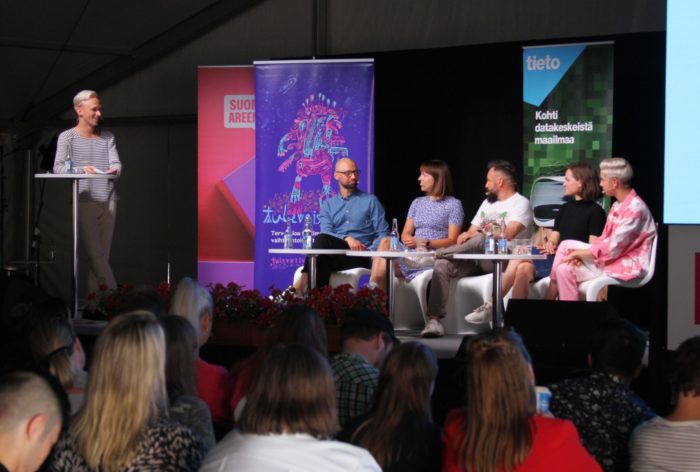
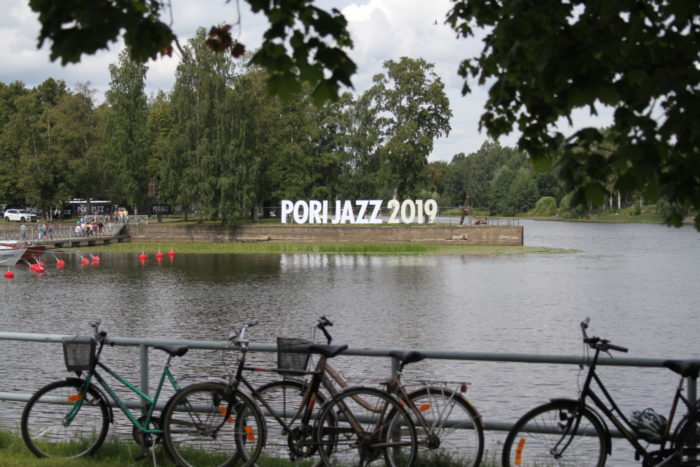
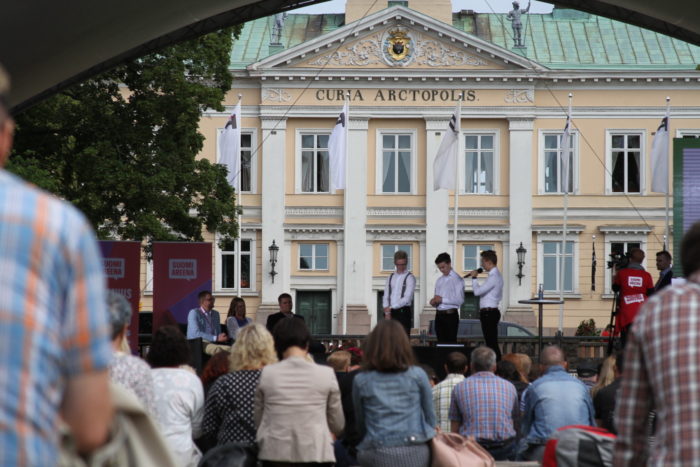
For one week every July, Pori is packed with people from near and far. They show up to enjoy jazz music and to take part in a diverse range of discussions as the city hosts two large events: Pori Jazz Festival and Suomi Areena (Finland Arena).

First held in 1966, Pori Jazz is the oldest jazz fest in Europe and one of the most beloved summer festivals in Finland. The event lasts a whopping nine days, and around two-thirds of the concerts are free-admission.

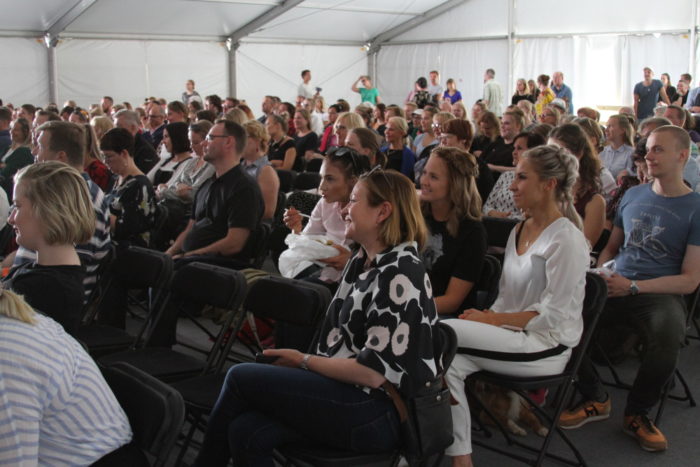
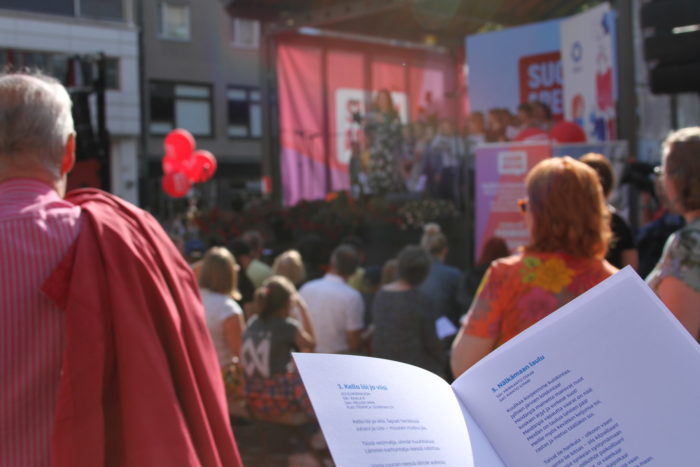
Suomi Areena, on the other hand, began in 2006 and is the biggest public debate forum in Finland. Its stages and venues are set up in the streets, squares and parks of Pori city centre. The events are free of charge, and the topics of discussion include society, culture and politics. The theme for 2019 is future innovations and know-how. Most sessions are in Finnish, but there are some in Swedish and English as well.

In 2018, Pori Jazz counted 58,000 festival-goers and Suomi Areena gathered 67,000 participants. That’s not bad for a city with a population of 84,000, which, by the way, makes Pori the tenth-largest city in Finland.

Summertime in Pori
By Iiris Nelimarkka, July 2019
Let your Finnish-language animal run free

Former journalist Veli Holopainen, a self-confessed meanderer of the dark alleys of the Finnish language, recently entertained his Twitter followers by highlighting Finnish verbs based on animal nouns (his handle is @VeliHolopainen).

His guiding idea was that the animal’s name “would appear in the infinitive form of the verb.” Jänistää (to lose courage, to get cold feet) contains the word jänis (hare); pyytää (to ask, to hunt) contains pyy (hazel grouse), which is a popular game bird in Finland; and pukata (to head something, such as a football) derives from the word pukki (goat).

Incidentally, there’s a Finnish soccer star called Teemu Pukki. So you could say, Teemu Pukki pukkasi palloa (Teemu Pukki headed the ball).

Complex derivatives

Footballer Teemu Pukki jumping to head the ball.

Finnish footballer Teemu Pukki (yellow shirt) heads the ball into the goal for Norwich City against Stoke City. The Finnish verb pukata, meaning “to head” (a football, for example), is derived from pukki, the word for “goat,” which also happens to be Teemu’s surname.Photo: Carl Recine/Reuters/Lehtikuva

Inevitably, the animal side of Finnish also has its complexities. “Because of the presence of nature in Finland’s everyday life, it’s tempting to say that Finnish verbs and animal names share the same etymology, but this is not always the case,” says professor Ulla-Maija Forsberg, director of the Institute for the Languages of Finland.

Compared to other languages, she thinks, Finnish might have more homonyms – words that have the same stem or spelling but different meanings – than words that have a similar spelling and meaning.

“In the Finnish language there are many derivative words, so from one stem we get plenty of words, but with different meanings,” says Forsberg. “That’s why it seems as if these animal words are related.”

Don’t be fooled

Tall-legged reindeer sculptures in front of Oodi library.

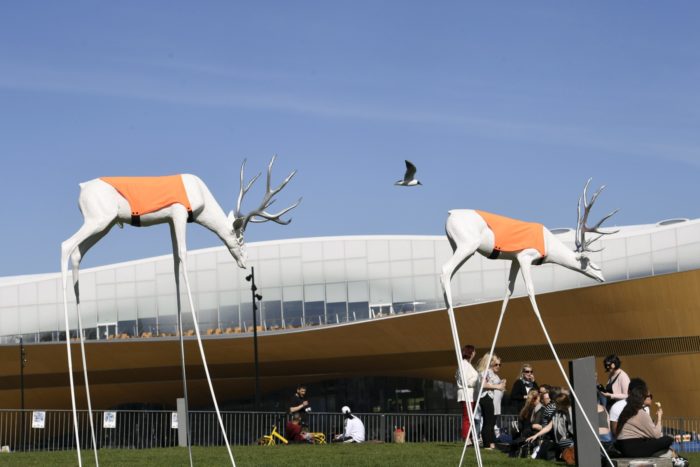
The Finnish words poro (reindeer) and porottaa (to shine) are not actually related, although the sun is shining on these reindeer sculptures by Timo Heino outside Helsinki’s grand Oodi Library.Photo: Martti Kainulainen/Lehtikuva

The harsh truth is that varistaa (to drop, to lose) doesn’t come from varis (a crow); the source of the verb hirvittää (to horrify) is not hirvi (moose); and porottaa (to shine) is not related to poro (reindeer). Still, don’t let that stop you from saying, Aurinko porottaa (The sun is beating down).

Also, don’t be fooled by verbs such as kanavoida or emuloida, even though they include the words kana (chicken) and emu (yes, an emu). They actually mean “to channel” and “to emulate.” These are loanwords. Kanavoida comes from kanava (canal, channel) and emuloida emulates the English word “emulate.”

(Article continues after table.)

Animal verbs

Finnish animal name English Finnish verb English Origin
ahma wolverine ahmaista to eat quickly the verb comes from the animal’s name
hirvi moose hirvittää to be frightened homonym, just happens to sound similar
hukka wolf hukata to lose the animal’s name comes from the verb
jänis hare jänistää to lose courage verb from animal’s name
karhu bear karhuta to demand payment verb from animal’s name, loanword
katka crustacean katkaista to cut animal’s name from verb
kettu fox kettuilla to bully, to annoy euphemism
kotka eagle kotkata to clinch animal’s name from verb
kurki crane kurkistaa to take a peek homonym
kyy adder, snake kyyditä to drive, to offer a lift homonym
poro reindeer porottaa to shine homonym
pukki buck, goat pukata to head, to headbutt verb from animal’s name
pyy hazel grouse pyytää to ask or to hunt verb from animal’s name
repo fox repostella to criticise homonym
saivare louse saivarrella to nitpick verb from animal’s name
varis crow varistaa to drop homonym

Plenty of other words and idioms can take your Finnish to new heights of animalistic self-expression. Ketunhäntä kainalossa, which literally translates to “a fox’s tail in the armpit,” describes someone who is dishonest. When you are jäniksen selässä, it means you are “on a rabbit’s back” – in a hurry.

Finnish Lapland, the northern third of the country, is reindeer territory. They say that any distance can be expressed in terms of poronkusema, the distance a reindeer can pull a toboggan without stopping to urinate. It needs a break after about 7.5 kilometres (4.6 miles) at the most – which is good to know in case you are advised that the nearest bar, shop or phone charging station is ten poronkusemaa away.

And while you’re up north, if you’re lucky, you may see revontulet (fox fires) – the Northern Lights.

By Carina Chela, July 2019

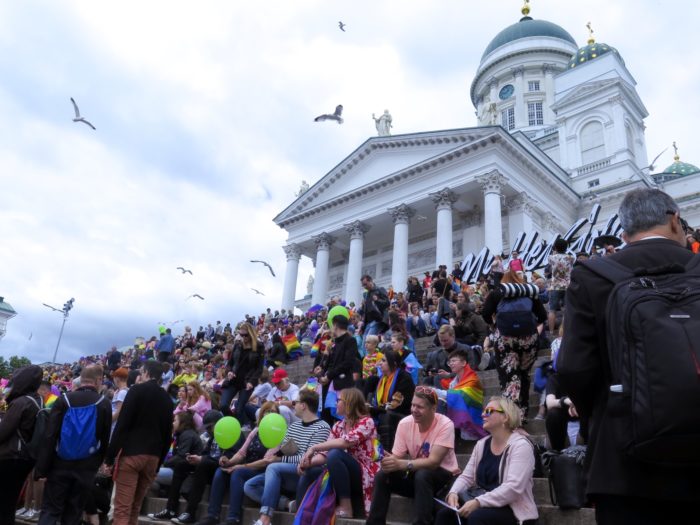
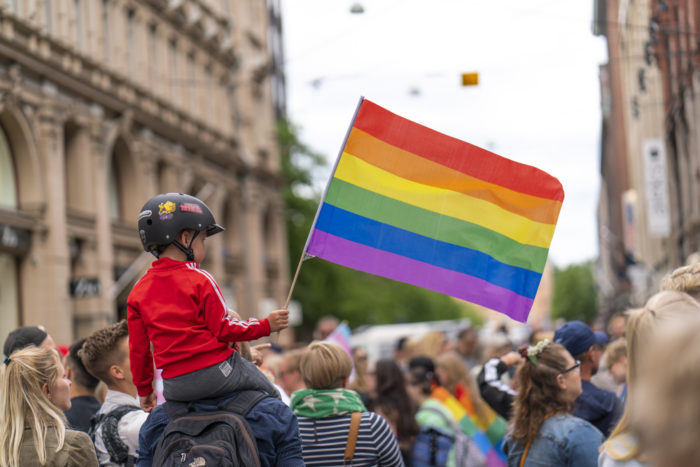
Helsinki Pride Parade – a party for all

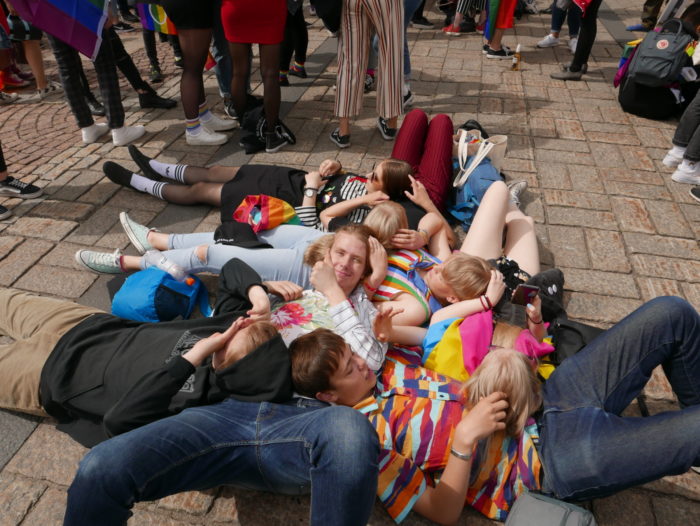
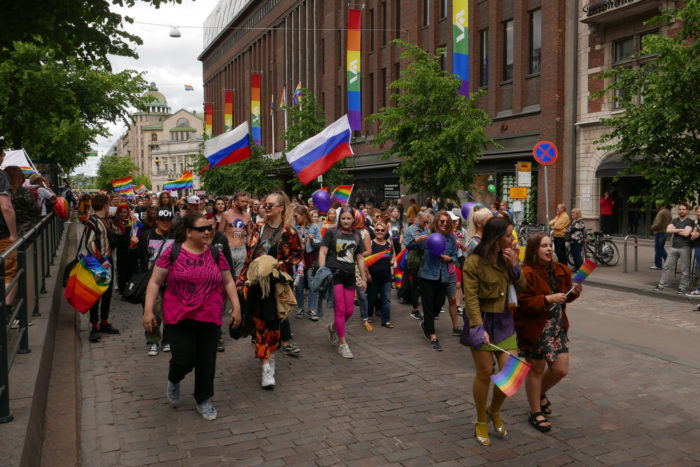
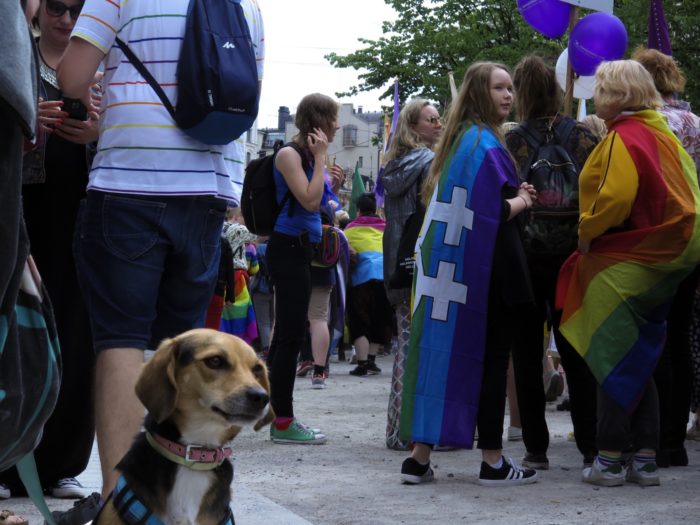
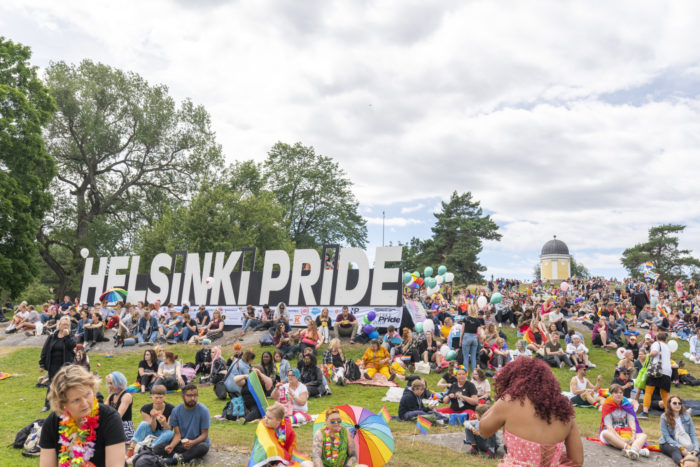
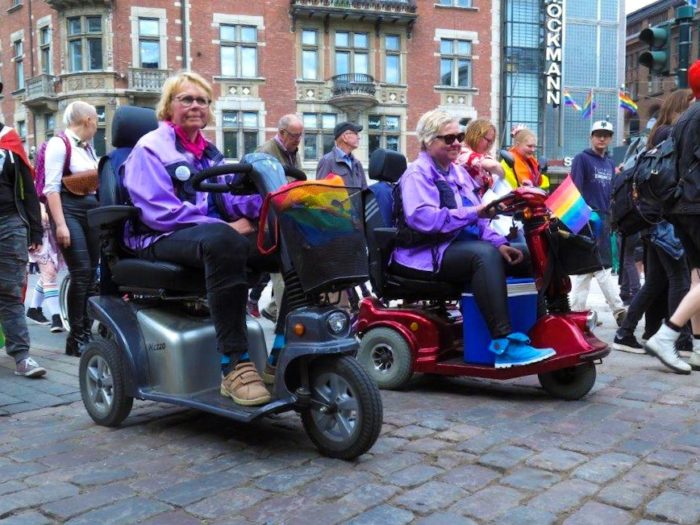
The colourful parade is the culmination of the annual Helsinki Pride Week, which features lots of different events: exhibitions, lectures, workshops and concerts. There’s also a separate program for people aged 13–29: Youth Pride Week.

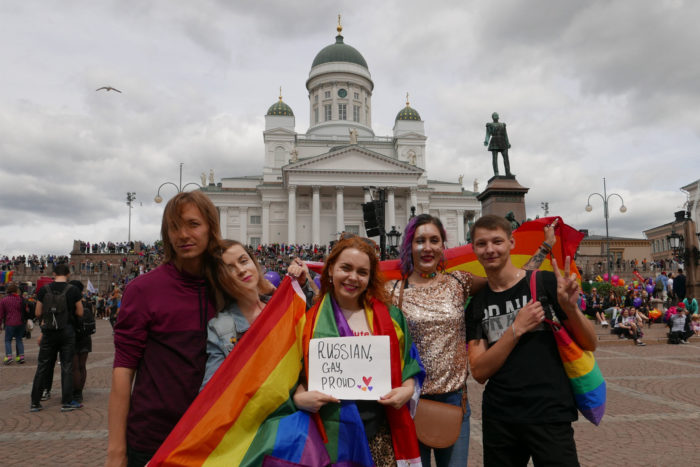
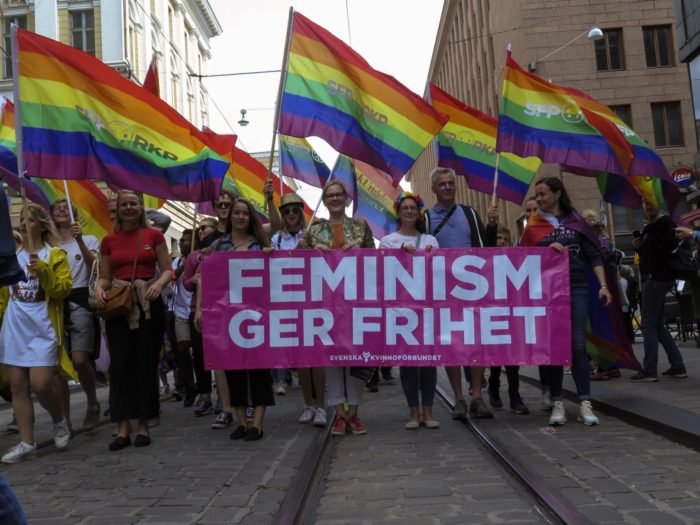
The procession starts at the Senate Square and marches through the city center of Helsinki towards Kaivopuisto park, located in the southern part of the city. Here the party goes on with concerts, dancing and picnics.

More than 80,000 people participated in the parade in 2019. Everyone who stands for equality and human rights is welcome. Besides private individuals, many organisations and NGOs participate, as well as political parties and city and government institutions. Many private businesses also support and some even sponsor the Helsinki Pride.

In 2019, Antti Rinne was the first Finnish prime minister who participated in the parade. This was also the first year when bishops of the Finnish Evangelical-Lutheran Church officially joined it. The church was also one of the official media sponsors of the event.

Majority at the minority party

By Anna Ruohonen, July 2019

Outdoor drama forms a vital part of Finnish summer

The tradition of the outdoor summer theatre is a typically resourceful Finnish amalgam of an instinctive love for culture and a determination to exploit every second of finer weather. Who wants to sit in a darkened theatre with no windows when there is almost 24-hour daylight outside? But why should this mean that you can’t enjoy a good play?

The whole summer theatre subculture can be described as a delightful mix of Finnish weirdness, sisu (the idiosyncratic national quality of doggedness), self-made grassroots culture, and collective nostalgia. Everyone has been involved in a summer theatre project, had a friend or relative volunteering in one, or at least gone to see a “show.” And regardless of the weather, the memories are warm and happy.

According to a 2017 estimate, Finland stages around 400 summer theatres across the country. A couple of dozen of these are in Swedish, including the Teaterbåten (Theatre Boat), which tours between harbours, and the performances at Raseborg Castle near the southern coast. Many summer theatres are 100-percent amateur. A significant number are performed by an egalitarian blend of amateurs and professionals, making the whole endeavor an authentic community effort.

The projects are often eccentric, and profits tend to decline in proportion to their distance from the capital and other cities. Dozens of people are willing to invest their free time, and often hundreds of hours, in summer theatre productions. And then there is the Finnish mindset that, although the weather is in fact rarely optimal, people buy tickets for the open-air shows and turn up in either high heels or rubber boots. The whole process of preparation is an art in itself, similar to that made for elaborate Vappu (May Day) picnics.

Dramatic venues

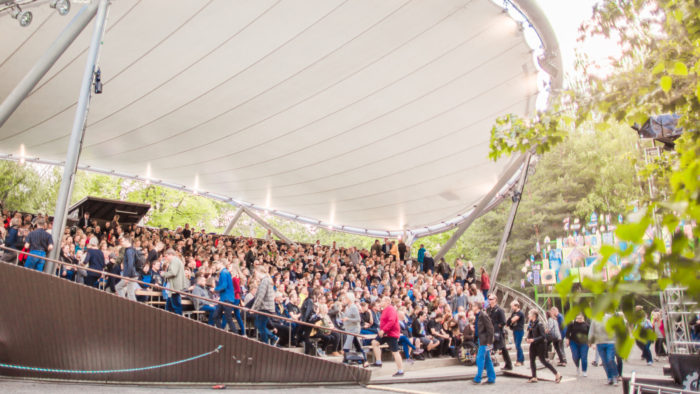
A large crowd sitting on outdoor theatre stands under a big canopy.

The whole summer theatre subculture can be described as a delightful mix of Finnish weirdness, self-made grassroots culture and collective nostalgia. Although the weather is in fact rarely optimal, Finns have the mindset to buy tickets for open-air shows and turn up in either high heels or rubber boots. Or in sandals, as in this picture from Pyynikki Summer Theatre in Tampere.Photo: Laura Vanzo / Visit Tampere

The venue is often an important aspect of the summer theatre (kesäteatteri in Finnish) experience. Probably the best known in Finland is in the atmospheric and historic setting of the Suomenlinna sea fortress in the entrance to Helsinki’s South Harbour.

“It’s a summer tradition for myself, my two daughters and one of their godfathers to go to the opening night of the Suomenlinna summer theatre,” says journalist Anna Ekholm. “They’ve built a roof on it now, but we have always gone whatever the weather, rain, wind or shine. And it’s always when I have my first grilled sausage of the summer!” Ekholm grew up in the small central Finnish town of Hämeenkyrö, and visits to the unique rotating theatre under the pine-covered Pyynikki ridge in the city of Tampere are cherished childhood memories – not least the hotdogs in the interval.

Popular with actors and audiences

An embarrassed-looking man and an a stern-looking woman standing on a theatre stage with a bed behind them.

Juha-Matti Koskela (left) and Irina Vartia from the Pyynikki Summer Theatre rehearsing a Finnish comedy, Nuotin vierestä (Out of tune). Finland stages around 400 summer theatres across the country. A significant number of those are performed by an egalitarian mixture of amateurs and professionals, making the whole endeavor an authentic community effort.Photo: Joonas Järventie / Pyynikki Summer Theatre

“The programme in summer theatre tends to be light and entertaining, often farces, although sometimes there are classics or historical plays,” says Eva Buchwald, dramaturge at the Finnish National Theatre. “Actors enjoy working in the summer theatre.”

Summer theatre is popular with both actors and audience. “It’s part of people’s summer programme,” says Juha Kukkonen, director of Helsinki’s Ryhmäteatteri, which puts on the Suomenlinna show. “And most of the theatres are in really beautiful locations. It doesn’t feel like a job at all. You can enjoy the summer while you are doing something interesting in the open air.”

The pressure is still on for Kukkonen and his colleagues to put on a good performance. “At Suomenlinna the standard is really high. It differs from normal summer theatre in that you can stage any drama there. People are expecting something special and interesting.”

By Tim Bird, July 2019, updated May 2022

Getting an international education in Finland

Encircling a large open area at the International School of Helsinki is a forest of flags.

“We have over fifty flags here, one flag for every nationality in our student body,” says Kathleen Naglee, head of the school. “We joke that we have everyone from Saudis to Swedes studying here.”

Founded in 1963, the International School of Helsinki (ISH) has 88 staff members and 424 students. The students range from three to 18 years of age and follow the International Baccalaureate’s primary, middle years and diploma programmes. (For links to the schools mentioned in this article, see below.)

“Many of our students have a parent working at a business in Finland for only a few years,” Naglee says. “Others are the children of diplomats. We also have students from local families who want their kids in an international school.”

For a businessperson moving to Finland, it is a relatively smooth process to sign up at the Register Office and Tax Office, as needed. It might seem a more formidable task to find a school for expat children, but there are many primary and secondary schools which use English and offer international programmes. English is widely spoken in Finland: about 90 percent of adults speak some English.

A diversity of international schools

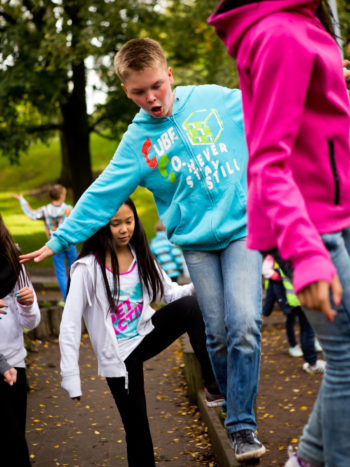
A focused-looking schoolboy balancing on narrow beam at a schoolyard.

Recess is part of the fun of going to school. Photo: Riitta Supperi/Keksi

An international school provides an international education in an international environment. They are found in practically every large and mid-sized Finnish city, from the Turku International School in the southwest to Etelä-Karjalan IB-Lukio (Southern Karelia IB High School), which operates in the eastern cities of Imatra and Lappeenranta. There is even an international school at Lyseonpuiston IB-Lukio (Lyseonpuisto IB High School) in Rovaniemi, just 6 kilometres (3.7 miles) south of the Arctic Circle.

English is the language of instruction at most international schools in Finland, but some use French, German, Spanish or Russian. There are also schools that offer international programmes in Finnish and Swedish, both of which are official languages in Finland.

International schools in Finland follow a variety of international, national or unique curriculums. The International Baccalaureate (IB), one of the most popular, is offered in private international schools as well as some regular Finnish schools. There are other options as well. For example, École Areva MLF in Rauma follows the French curriculum, while Deutsche Schule Helsinki offers a modified German curriculum.

Two schools in Helsinki offer instruction in Russian. Suomalais-venäläinen koulu (the Finnish-Russian School) has both Finnish- and Russian-speaking students, while Myllypuro Primary and Middle School offers a bilingual Russian and Finnish programme of instruction for children from 7 to 16 years old.

At the Finnish-Russian School of Eastern Finland, with locations in the towns of Imatra, Joensuu and Lappeenranta, instruction is in Finnish and Russian – 25 percent of the students speak Russian as their first language.

An education you can take anywhere

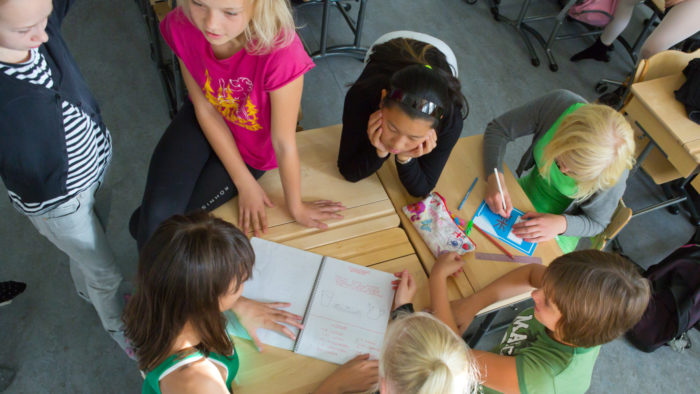
A group of schoolchildren gathered around their desks studying a notebook.

International schools or international programmes within Finnish schools exist in practically every large or mid-size city in Finland.Photo: Riitta Supperi/Keksi

Naglee explains that an international school can be accredited by a variety of institutions. ISH is overseen by Finland’s Ministry of Education as well as three other accreditation bodies.

“We’re accredited by the International Baccalaureate Organisation and the Council of International Schools,” she says. “ISH is also accredited by the New England Association of Schools and Colleges. This allows us to offer American-style high school diplomas. It is also supported by the US State Department and gives us access to more resources.”

These accreditations help students gain a recognised education that can be continued elsewhere around the world, such as at a university level. The European School of Helsinki is accredited by the EU-supported European Schools Institution, which is recognised by all EU member states. The Agency for French Teaching Abroad has accredited two schools in Finland, École Areva MLF in Rauma and École Française Jules Verne in Helsinki.

A reassuring environment

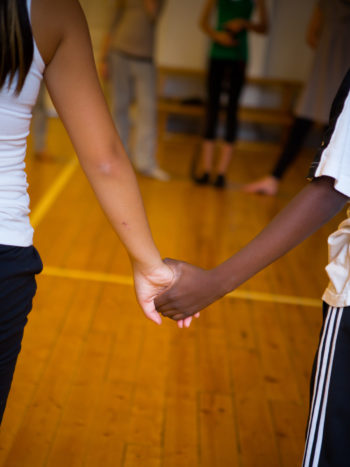
Two schoolchildren holding hands in a gymnasium.

An international school can provide a stable atmosphere after the sometimes disorienting experience of moving to another country. Photo: Riitta Supperi/Keksi

No single official register exists of international schools in Finland, because local municipalities are responsible for listing the schools in their area. A city’s official webpage is a good place to start your search.

Naglee says that Finnish cities are eager to expand international schools. Cities want to attract the best people from around the world to work in Finland, and having a great education for their children can be a deciding factor.

“Our students are a highly mobile group,” Naglee says. The experience of moving between countries can be unsettling. “We try to create a cosy, comfortable atmosphere for them.”

By David J. Cord, June 2019

What to consider when researching international schools 

  • Curriculum
  • Accreditation
  • Tuition
  • Languages of instruction
  • Application process
  • Waiting period
  • Placement exams
  • Administrators and teachers
  • Facilities
  • Extracurricular activities
  • Special-needs facilities

“I have to get me some of this”: Finnish films and TV series you should watch

An unconventional rom com set in Finnish Lapland, a Nordic noir series based in the southeastern city of Lappeenranta, a suburban drama set in the outskirts of Helsinki: Contemporary Finnish filmmakers are telling stories unlimited by language, genre or geography.

Recent works include authentic explorations of the feelings of instability, uncertainty and isolation that young people face today. The films and TV series below have all enjoyed acclaim at home and abroad. While subjects and approaches may vary, each tells a distinctly Finnish, but universally powerful, story about the state of the world.

Aurora

Directed by Miia Tervo, 2019

In this rom com, Aurora (Mimosa Willamo), a nail technician from Finnish Lapland, agrees to help Darian (Amir Escandari), an Iranian refugee seeking asylum for himself and his daughter. Recently profiled in Variety, the film is packed with relatable humour and sharp one-liners, but it also tells honest stories about alcoholism, poverty in the Arctic region, and the prejudices that refugees encounter on a daily basis. Aurora tackles global themes and universal struggles, viewing them through a Finnish lens.

Baby Jane

Katja Gauriloff, 2019

Baby Jane is an arthouse adaptation of Sofi Oksanen’s novel of the same name. Oksanen is Finland’s best-selling living author, best known internationally for Purge (Finnish title: Puhdistus, 2008). The haunting film tells the tragic love story of two young women, Piki (Maria Ylipää) and Jonna (Roosa Söderholm), who meet in Helsinki. Jonna’s patience is tested by Piki’s ex, Bossa (Nelly Kärkkäinen), who is still an important part of her life. The film’s exploration of Piki’s mental health struggles and the impact on those closest to her is as affecting as it is compelling.

Bordertown

Miikko Oikkonen, Jyri Kähönen and Juuso Syrjä (original title: Sorjonen), 2016–

Bordertown is perhaps Finland’s best-known crime drama. At the time of writing, the first two seasons are on Netflix, with the Finnish premiere of the third season expected in October 2019. Upon reading that filming for season three was under way, Stephen King tweeted, “I have to get me some of this.” A Nordic noir television series, Bordertown shows what happens when detective inspector Kari Sorjonen (Ville Virtanen) gets a job as head of the Serious Crime Unit in Lappeenranta, 25 kilometres (15 miles) from the Russian border, and moves there with his family to lead a quiet life. Needless to say, more drama ensues than he could have ever anticipated.

Deadwind

Rike Jokela (original title: Karppi), 2018–

Recently renewed for a second season, Deadwind tells the story of Sofia Karppi (Pihla Viitala), a forty-something homicide detective who returns to work too soon after becoming widowed. The 12-part series follows Pihla and her colleague Sakari Nurmi (Lauri Tilkanen) as they investigate a mysterious murder. The series has received international praise from the likes of Bustle and The Verge, and has amassed a cult following in Finland.

Stupid Young Heart

Selma Vilhunen (original title: Hölmö nuori sydän), 2018

This is a heart-wrenching drama about a suburban teenage couple who discover that they’re expecting a baby before graduating from high school. As the audience follows the unconventional love story of Kiira (Rosa Honkonen) and Lenni (Jere Ristseppä), the journey leads them to consider issues including teenage pregnancy, class structure, multicultural society and far-right ideologies. Stupid Young Heart premiered at Toronto International Film Festival in 2018 and received the prestigious Crystal Bear award for the Best Film in Generation 14plus at the 2019 Berlinale Film Festival.

Cold Courage

Agneta Fagerström-Olsson, premiere spring 2020

A crowd at a demonstration waving Union Jacks.

Pihla Viitala plays Mari in Cold Courage, which takes place in Helsinki, Dublin, London, Antwerp and the eastern Finnish region of Kainuu, and is based on Finnish author Pekka Hiltunen’s bestselling book of the same name.Photo: Luminoir

Cold Courage is an English-language crime drama that is set to premiere on Nordic streaming service Viaplay in 2020. The series takes place in Helsinki, Dublin, London, Antwerp and the eastern Finnish region of Kainuu, and tells the story of two young Finnish women, Lia (Sofia Pekkari) and Mari (Pihla Viitala), who live in London and belong to Studio, a secret agency that seeks to challenge the legal system and bring justice to those the law cannot help. The eight-part series is based on Finnish author Pekka Hiltunen’s bestselling book of the same name (Finnish original: Vilpittömästi sinun, 2013 – the literal translation of the Finnish title is actually “Yours truly”). The series’ international cast includes British actors John Simm and Caroline Goodall.

By Tabatha Leggett, June 2019

Spreading the word about equality, with the Finnish pronoun “hän”

To encourage international discussion about equality and inclusivity, and to support everyone who is working to promote them, Finland is using the hän pronoun as a conversation starter.

Hän (the ä is pronounced like the a in “at”) has always existed in Finnish, predating the first Finnish-language book, which appeared in 1543. Finnish isn’t the only language that has a gender-neutral third-person pronoun, but if you come from a Germanic, Romance or Slavic language, it’s something you probably notice right away.

The vocabulary of equality

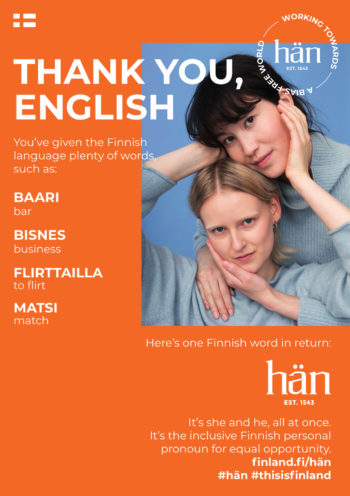
A poster with a photo of two smiling women and the text 'Thank you English. You've given the Finnish language plenty of words such as: bar, business, to flirt and match.

Residents of Berlin, Brussels and London may have noticed outdoor advertising thanking German, French and English for the loanwords.Materials copyright: ThisisFINLAND

Residents of Berlin, Brussels and London may have noticed outdoor advertising thanking German, French and English for the words. Like many languages, Finnish is full of loanwords – words that were, at some point, borrowed from other languages and incorporated into Finnish.

There’s even an online word generator, part of the Hän website, showing lists of words that Finnish has borrowed from other languages. Since they couldn’t make a generator for every language, they have chosen five widely spoken languages.

For example, the English word “team” became tiimi in Finnish, while the sports term “tackle” became taklata. The German Mettwurst (salami) is meetvursti in Finnish, and Flügel (grand piano) is flyygeli. Bailar (to party) in Spanish became bailata in Finnish, while caramelo (caramel) is karamelli.

The French word boulevard became bulevardi in Finnish, while boutique became putiikki. Lääkäri (doctor) in Finnish obviously comes from the Swedish läkare, and the Finnish sänky (bed) is from the Swedish säng.

Maintaining and improving equality in any country requires constant vigilance and continuous action. Although equality is built right into the Finnish language with a gender-neutral pronoun, Finnish, like any language, still contains words and expressions that carry gendered meanings.

By publicising hän, Finland is expressing its gratitude for the loanwords, and humbly offering the rest of the world a word, an idea that emphasises the significance of equality and its power to shape society, in Finland and elsewhere, no matter what language people speak.

Places where equality works

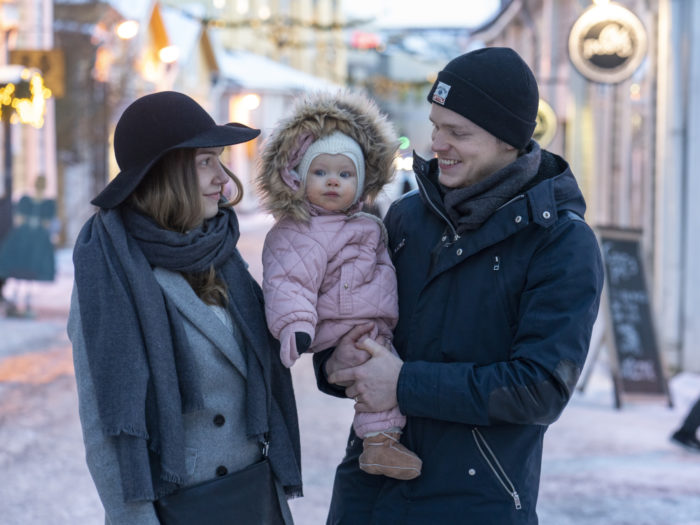
A woman and a man holding a toddler standing on a wintry street.

Hän can mean anyone, regardless of gender, social status or age.Photo: Pasi Markkanen

The quality of the Finnish education system has become widely known as the country’s students have repeatedly placed at or near the top of global comparisons such as the Programme for International Student Assessment (PISA). One of the factors driving the education system is long-term work to ensure equality.

Going back all the way to 1866, Finland ensured that education would be available to everyone, and thereby avoided the social inequality that comes from having an educated elite and an uneducated lower class. In 1921, the government made six years of primary school compulsory for all children. In the 1970s, the country increased mandatory school attendance to nine years and took additional steps to guarantee equal and free education for all children, regardless of socio-economic status.

By the same token, Finland has a network of prenatal clinics that provide healthcare and advice to all expecting mothers equally, regardless of background. The system originated in the 1930s, and is one reason that Finland’s rates of infant mortality and maternal mortality are among the lowest in the world. Sometimes people are surprised to hear that Jenni Haukio, the wife of Finnish President Sauli Niinistö, gave birth to their son in a public hospital, just like everyone else.

Recognising achievements in equality

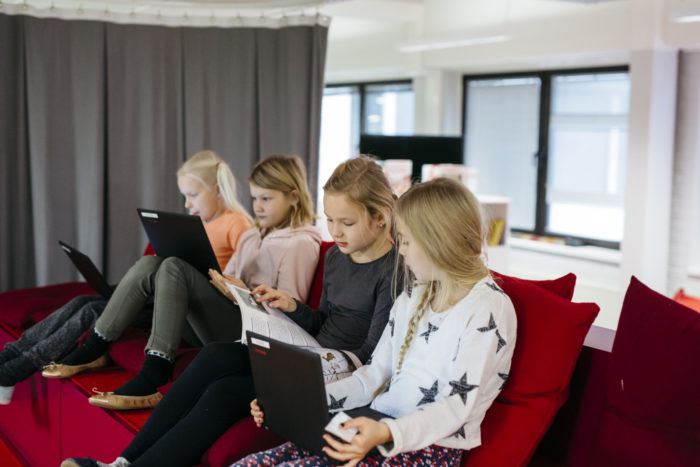
Four schoolchildren sitting on a red couch studying on tablets.

Hän, a gender-neutral Finnish pronoun that can mean “he,” “she” or anyone else, was first printed in a book in an ABC book in 1543 and is still going strong today.Photo: Elina Manninen/Keksi

Finland’s embassies around the world are selecting local individuals, projects and groups for official recognition. The goal is to thank them for promoting equality and inclusivity in various sectors of society.

The first 16 recipients of this recognition, nicknamed the Hän Honour, come from Belgium, Croatia, France, Germany, Hungary, Indonesia, Italy, Japan, Namibia, Norway, Poland, Singapore, Spain, Thailand, the UK and the US. They’re active in a range of fields, including education, minority rights and gender equality.

In Poland, Kampania Przeciw Homofobii (KPH) supports equal rights and opportunities for all people regardless of sexual orientation or gender identity. In Norway, Jenter og teknologi (Girls and tech) aims to increase the amount of girls who choose technical education, ensuring future diversity in the tech field.

In Indonesia, the Rumah Kita Bersama Foundation aims to empower women, children and marginalised groups through advocacy, education and awareness building. In Japan, Ms Chizuko Ueno is a pioneer in feminism and gender studies who has tirelessly and fearlessly addressed controversial issues.

The full list of the first Hän Honour recipients and more info about why they deserve recognition are available here.

Everybody is welcome to participate in the conversation to which Finland is contributing by bringing the word hän and its significance to the attention of the world.

By ThisisFINLAND staff, June 2019

Finnish footballer Teemu Pukki scores a big season

He’s got his own song – sort of – and in spring 2020 you can expect babies in the English county of Norfolk to be named after him.

If he hasn’t got a game on December 6 (Finland’s independence day), he may well find himself among the celebrities and dignitaries lining up to shake hands with the presidential couple at the Independence Day Gala in Helsinki.

Finnish football has a new hero. His name is Teemu Pukki.

Cost-effective football

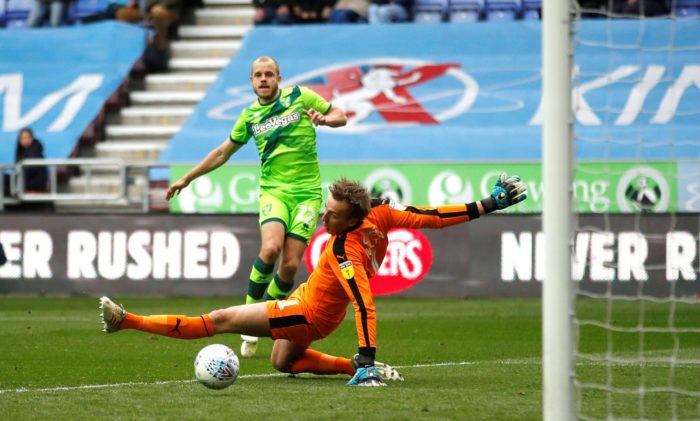
Teemu Pukki shooting the ball towards the goal, a goalkeeper trying to stretch to a save.

Finland’s Teemu Pukki puts one past Wigan Athletic goalkeeper Christian Walton during a game in April 2019.Photo: Carl Recine/Reuters/Lehtikuva

One meaning of his surname is “goat” in his native language. But there is nothing goat-like about his performances for his club Norwich City, winners of the second-tier Sky Bet English Championship. He scored 29 goals for them over the 2018–19 season.

Norwich sealed the Championship even before the last game in the series, thus confirming automatic promotion to the Premier League. In the 2019–20 season Pukki, Norwich City’s and the Championship’s Player of the Season in 2018–19 and the Finnish Football Association’s 2018–19 Player of the Year, will be matching himself against household-name stars such as Liverpool’s Mo Salah, Manchester City’s Sergio Aguero and Tottenham’s Harry Kane.

Lucky Norwich City. Effective strikers like Pukki, capable of knocking in the goals week after week, usually come at a high price, rarely less than tens of millions of euros. Pukki didn’t cost anything. His move from Danish club Brøndby, where he had scored 55 goals over a four-year stint, was an end-of-contract free transfer, following previous spells for Sevilla in Spain; Helsinki’s own HJK; Schalke 04 in Germany; and Glasgow Celtic in Scotland.

It’s fair to say that he didn’t set the world on fire at any of these clubs, so his phenomenal success at Norwich has been slightly startling. With a goal for each of his 29 years, he fell one short of the club record for goals scored in League games in a season, set by Grant Holt in 2010.

Right time, right place

Teemu Pukki running with the ball past another player.

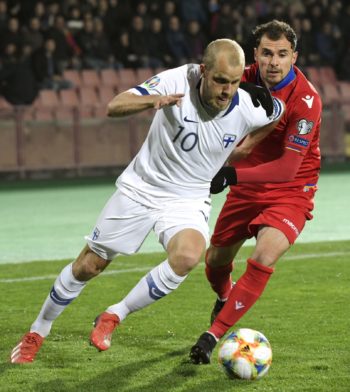
Playing for the Finnish national team in a Euro 2020 qualifying match, Teemu Pukki (left) takes the ball past Gagik Daghbashyan of Armenia.Photo: Markku Ulander/Lehtikuva

This sharpened prowess in front of the goal has coincided happily with an upturn in the fortunes of the Finnish national team, which has languished somewhat since the “golden era” of top-league stars such as Jari Litmanen and Sami Hyypiä.

Even so, Pukki’s international goal tally of 25 in 80 appearances (as of late November 2019) over the decade since his debut in 2009 is modest. Now Finland will be hopeful that Pukki can replicate his success for Norwich with the Finnish national team to achieve qualification for Euro 2020. For the first time, the tournament is taking place in 12 different cities in 12 different countries across Europe, from Baku, Azerbaijan to Dublin, Ireland.

Right time, right place, right player: This is almost a mantra of Norwich supporters when asked to explain Pukki’s success. Their Finnish acquisition adapted quickly to the team’s pacey style of play, directed by their German coach Daniel Farke.

Pukki took supporters by surprise. “People who claim to have known Teemu Pukki before he joined Norwich are either very sound on their football knowledge, or are simply telling porkies,” wrote Jamie Woodhouse on the Football365 fan site back in November 2018, and most observers would still agree with him.

Next stop: Premier League

Teemu Pukki holding a Finnish flag and celebrating among excited-looking crowd of fans.

At Carrow Road in Norwich, Teemu Pukki (centre, holding Finnish flag) and fans celebrate the club’s promotion to the Premiere League.Photo: Adam Holt/Reuters/Lehtikuva

The Canaries – the club nickname derives from Norwich’s historic reputation for breeding that species of bird, which features on the yellow-and-green team badge – were founded in 1905 and last won promotion to the Premier League in 2015. They were relegated again the following year.

The club’s board is famously joint-owned by celebrity TV chef Delia Smith and her husband. She has been known to grab the stadium PA microphone and urge supporters to make more noise. Her vociferous support will continue in the new season that kicks off in August, the Premier League being widely recognised as one of the toughest, if not the toughest, in the world.

In 2018–19, Pukki did more than anyone to get the punters singing at Carrow Road, Norwich’s home stadium. The words of what the Finnish media have called the “Teemu Pukki Song” aren’t too hard to learn either.

Try it at home: “Teemu Pukki baby, Teemu Pukki ohhh,” to the tune of The Human League’s “Don’t you want me.”

By Tim Bird, June 2019, updated November 2019