Finding the fruits of the Finnish forest

My eyes scanned the forest floor, looking over the moss, pine needles and yellow birch leaves. It didn’t take long before I spotted something.

“Over here!” I called. “Chanterelles.”

“Very good,” said my friend Richard. “You’re getting better at finding them.”

I was beginning to feel proud of my newfound ability to locate mushrooms, but I was soon brought back to earth. Richard’s daughter Sophie, three years old at the time of writing, trotted up to me with her hands full. She had found twice as many mushrooms as I had.

A family affair
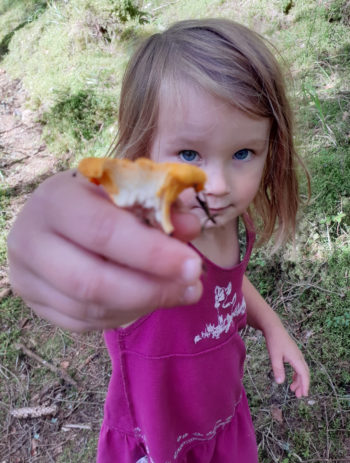
A girl holds up a mushroom she has picked in the forest.

Learning to love the forest from an early age: Sophie displays a mushroom she has found.
Photo: From the family’s own collection

Finns love their forests. According to a 2017 survey, 46 percent of Finns pick berries and 32 percent collect mushrooms. They exercise “every person’s right,” the Finnish concept that formally states that you can hike and gather mushrooms and berries anywhere, even on private property, as long as you don’t disturb the environment or other people.

For several years, Richard and his family have been teaching me how to collect mushrooms safely. “Safely” is the key word, because Finland does have poisonous mushrooms.

“Identify every mushroom three times,” Richard says. “First when you pick it. Next when you clean it. Finally when you prepare it. If at any stage you are not 100 percent certain that it is an edible variety, throw it away.”

Richard, half British and half Finnish, learned how to find mushrooms from his Finnish grandfather. Bia, his wife, acquired mushrooming skills from her family in her native Estonia. Now their daughter Sophie is learning about the bounties of the Finnish forest.

“It’s a hobby we do together,” Richard says. “It’s a lot of fun when you find mushrooms. Also, we love to eat them.”

Stocking up for the winter
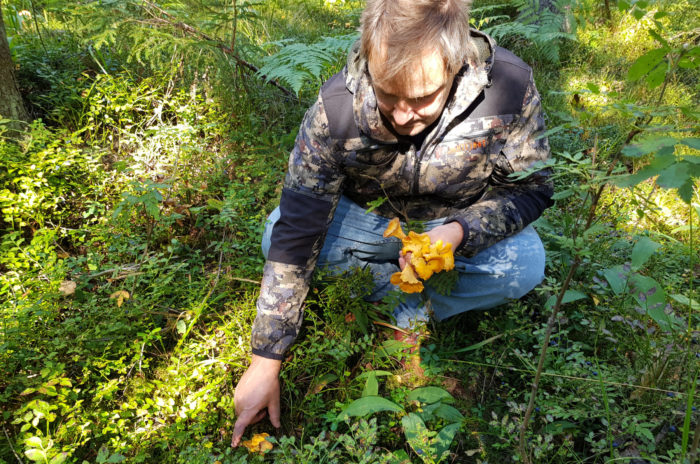
A man picks mushrooms in the forest.

You have to know where to look, as Richard demonstrates.Photo: David J. Cord

Mushrooming season depends upon the weather, but early varieties typically appear soon after midsummer in southern Finland. Mushrooming usually ends with the first frost, but funnel chanterelles are one of the season’s last types of mushrooms and can even survive a mild freeze. There are many edible varieties of mushrooms in Finland, but I stick to ones that are simple to identify.

“We look for chanterelles in mixed birch and fir forests, with sandy soil and lots of moss,” Bia says. “You are more likely to find brown cap boletus in thick fir forests with dark soil. Orange cap boletus can be found in birch forests. This is how we search for them, but everyone has their own strategy.”

The family often eats the mushrooms immediately after collecting them, by frying them in butter and mixing them into pasta, rice, eggs or sauces. They also preserve them by freezing, drying or pickling. Their storage methods are a mix of modern and ancient, including gleaming stainless steel freezers and a stone-lined potato cellar.

“Pickled mushrooms are good for salads,” Bia says. “Dried mushrooms make good soups. I prefer freezing mushrooms, because you can do anything with them.”

Heavenly berries
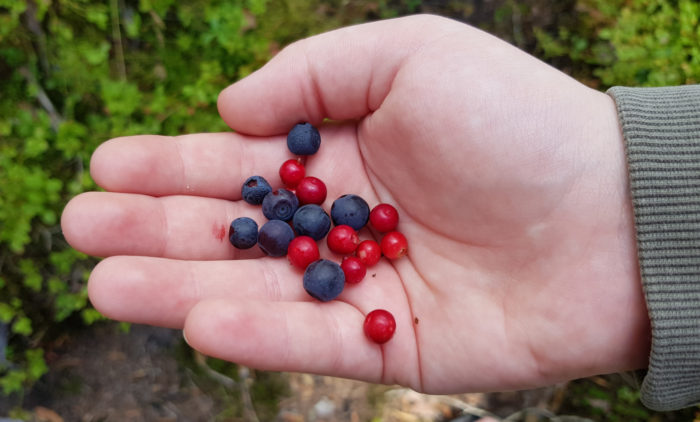
An outstretched hand holds blue and red berries.

For a time during late summer and early autumn, the seasons for sweet blueberries and tart lingonberries overlap, and you can find both during the same visit to the forest.
Photo: David J. Cord

Richard is an avid hunter and fisher, and the family’s huge freezers are packed full of fish and wild game. He makes chaga mushroom tea and pine needle syrup. He sprinkles dried fireweed on steaks.

“We also make raspberry and lingonberry jam,” Richard says. “Cloudberries are good, but you need to go into swamps to find them. Sophie loves berries. She eats every wild strawberry she sees.”

“What’s your favourite berry?” I ask Sophie.

“Blueberries!” she announces decisively, and displays her hands, stained blue with juice. The blueberries that grow wild in the Nordic countries are smaller than their North American cousins and are also known as bilberries. In the autumn, you’re more likely to find tart, red lingonberries.

I also love blueberries, but I’m happy to get out into the forest even when they aren’t in season. Spending time in nature is good for you – that’s a philosophy that Bia and Richard’s family also follows.

“Once my employer had Japanese colleagues visit, but they spent all their time working,” Richard says. “Finally I said they worked too much and we were going out in the forest. We left the office, still wearing our suits, to hunt for mushrooms. It was fantastic fun.

“That is something they will always remember about their trip to Finland.”

By David J. Cord, September 2020
Filming the unusual story of Moomin creator Tove Jansson in Helsinki

The movie Tove (premiere October 2, 2020 in Finland), takes place in post-war Helsinki during a formative period in Jansson’s life.

Tove Jansson (1914–2001, played by Alma Pöysti) became internationally famous as the inventor of the Moomins, characters that appeal to children and grown-ups alike. In addition to writing and illustrating the Moomin books, the Swedish-speaking Finn also received acclaim for her paintings, comic strips, novels and short stories. (Swedish is one of the official languages of Finland, and Tove was filmed in Swedish.)

Both of Jansson’s parents were artists – her mother worked as an illustrator and her father as a sculptor. Born in Helsinki, she studied at leading art academies in Stockholm, Helsinki and Paris.

She first published a storybook while she was still a teenager, and proceeded to work as an illustrator and political cartoonist for periodicals. Jansson also made a career as a painter. The first Moomin book, The Moomins and the Great Flood, appeared in 1945, at the beginning of the period covered by the film Tove.

Freedom and independence

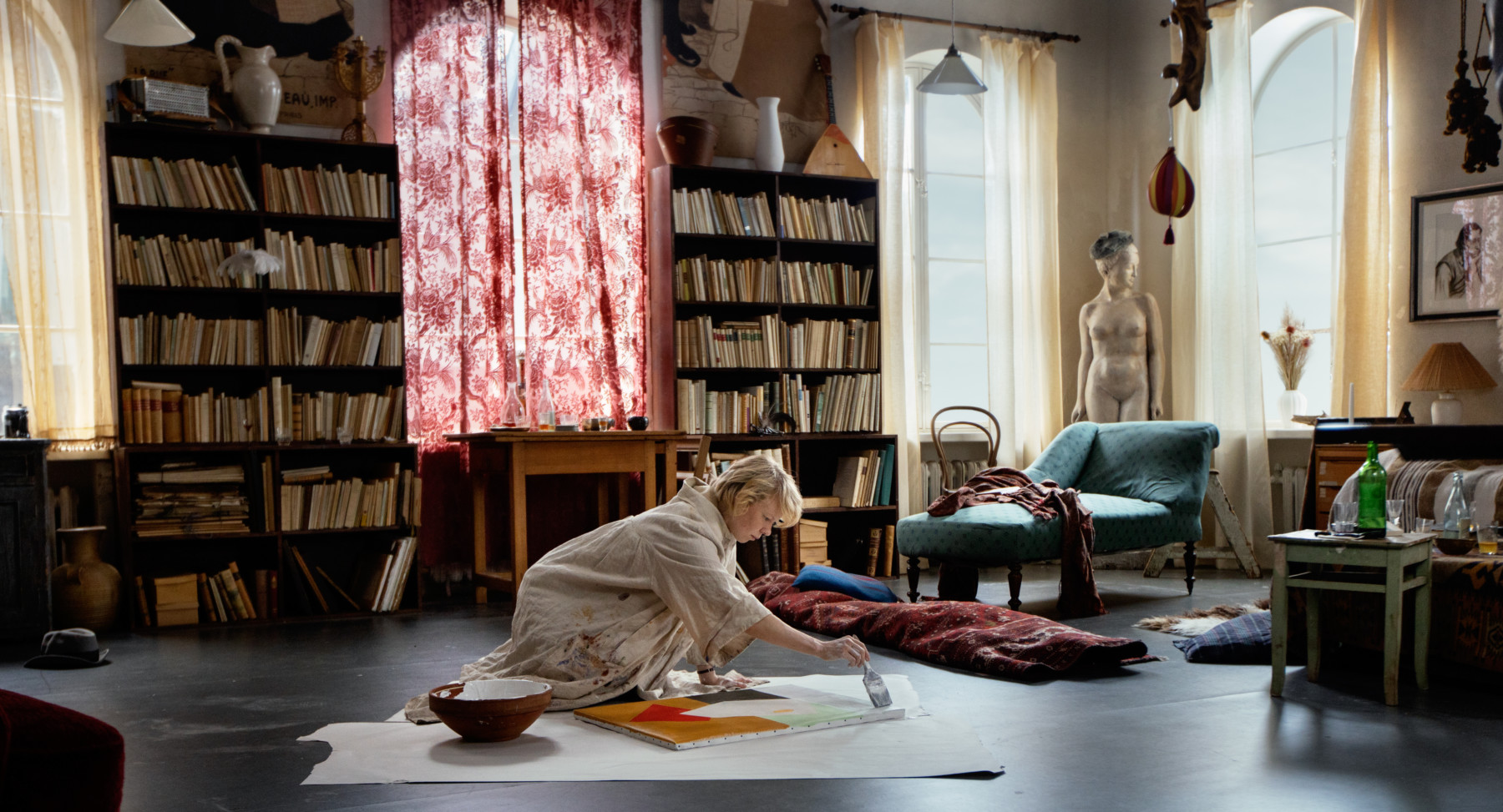
A woman paints on a canvas on the floor of a large room with bookshelves in the background.

Tove Jansson (Alma Pöysti) works on a painting. This scene was filmed in Jansson’s actual studio, which still stands much as she left it, in central Helsinki.Photo: Tommi Hynynen/Nordisk Film

In the 1940s, Jansson was briefly engaged to politician and philosopher Atos Wirtanen (played by Shanti Roney), who is said to have been the inspiration for the Moomin character Snufkin. She also had an affair with Vivica Bandler (played by Krista Kosonen), a married theatre director. Jansson symbolised herself and Bandler in the Moomin stories as the tiny, identical creatures Thingumy and Bob. Later Jansson met Tuulikki Pietilä (played by Joanna Haartti), the graphic artist who would become her life partner, and who formed the basis for the character Too-Ticky.

Screenwriters Eeva Putro and Jarno Elonen decided to set Tove, the first feature film about Jansson, during the decade following the war. (Putro also appears in the film, as Jansson’s friend Maya Vanni.) The focus on a lesser-known period of the artist’s life is one of the things that drew director Zaida Bergroth to the project.

“It felt important to focus on a part of Tove’s life about which people might not necessarily have had any prior knowledge,” Bergroth says. “Tove’s relationship with…Atos Wirtanen, her falling in love with a woman for the first time, and the cross-draught between her painting career and the Moomins were of great interest to me.”

Bergroth says she “felt a connection” to the movie’s themes, which deal with Jansson’s “efforts to control her own emotional life and to be free and independent both in love and as an artist.”

Artistic lives

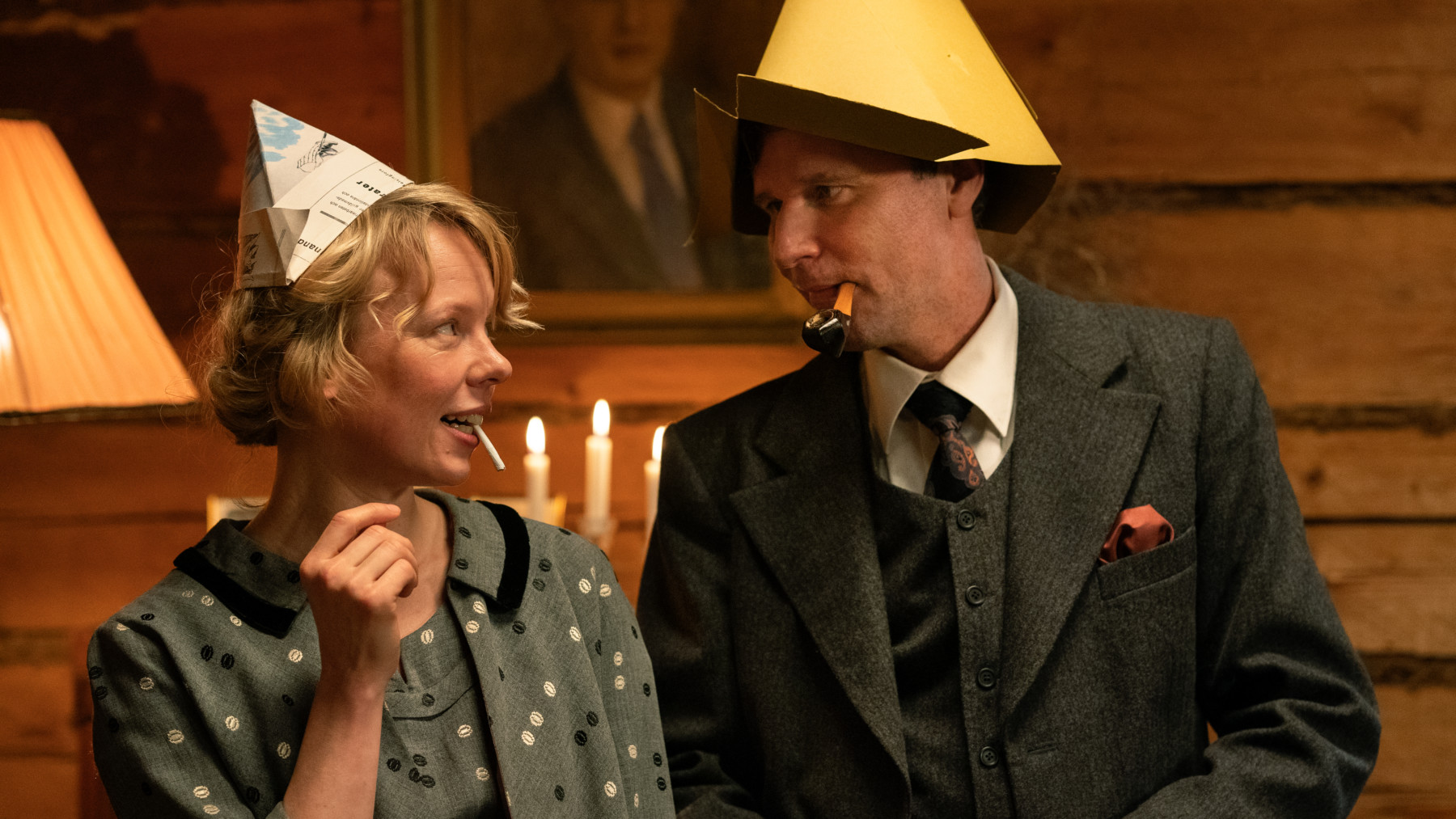
A woman and a man wearing pointed party hats look at each other.

Intellectual and member of Parliament Atos Wirtanen (right, played by Shanti Roney) became a significant figure in Jansson’s life.Photo: Sami Kuokkanen/Nordisk Film

“In terms of Tove’s paintings, the era we depict in the film is interesting,” says Bergroth. “I think the time we focus on, the decade after the war, was probably not her strongest as a painter. This intrigued me, prompting me to examine what the reason could have been.”

Bergroth, born in the central Finnish village of Kivijärvi, is herself from an artistic family. Her mother is a painter, and Bergroth has moved in artistic circles from a young age.

“Our lives followed the rhythm of my mother’s exhibitions: an intense painting phase followed by the culmination of opening-night excitement,” she says. “Receptions, sales, time to recuperate and then another intensive painting phase.”

They often held parties. “In addition to visual artists, her circle of friends included writers, musicians, directors, and actors,” says Bergroth. “In fact, Vivica Bandler once joined us for a party.”

Finding out about Tove

In an advertisement for the film, a woman dances.

Director Zaida Bergroth says of Tove Jansson, “She really appreciated dancing and loved to do it a lot. So remember to dance!” The shadow behind Jansson on this cinema poster shows the shape of a Moomin.Photo: Nordisk Film

Taking on the challenge of directing the biopic about a national treasure such as Jansson is no mean feat. When producer Aleksi Bardy initially approached Bergroth about the project she was “quite pleased to be offered such a fantastic opportunity,” she says. “But I was also unsure about it.”

She launched into an intensive research process: “It was important to me to be able to establish a strong personal connection to Tove’s world and the themes that the movie addresses.” She visited Jansson’s high-ceilinged, tall-windowed Helsinki studio along with producer Andrea Reuter, photographer Linda Wassberg and scenographer Catharina Nyqvist-Ehrnrooth.

“I read the biographies by Boel Westin and Tuula Karjalainen,” says Bergroth. “I read Tove’s letters to her friends, loved ones and family members, and spent time in the archives of the national broadcasting company, Yle, watching video material about Tove, Vivica Bandler, Atos Wirtanen and the Helsinki art scene in the 1940s and ’50s.”

Lightness, humour and gravity

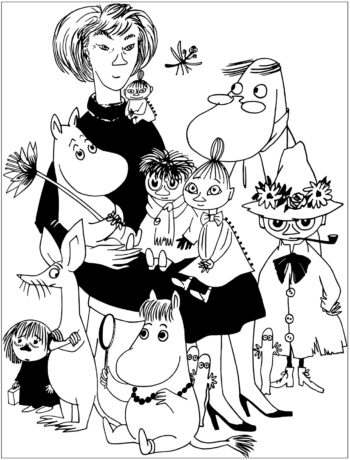
A woman sits in the middle, surrounded by Moomin characters.

Tove Jansson drew this picture of herself surrounded by various Moomin characters, including Snufkin (at right, with hat), who is said to have been inspired by Jansson’s friend Atos Wirtanen.Illustration copyright Moomin Characters Ltd

Bergroth also got to know Jansson better by studying her paintings, frescoes and books. “I watched various documentaries,” she says. “I listened to the music Tove herself loved to listen to. We received feedback on the script from Tove’s niece, Sophia Jansson.”

Reflecting on the success of the Moomins, Bergroth draws on Jansson’s philosophical musings. “I think that this combination of lightness, humour, and surprising gravity appeals to adults and children in a special way,” she says.

On the basis of the background research, “I felt that we were free to be playful and to create our own story,” says Bergroth. “Playfulness and joyfulness were important to Tove when it came to any kind of creativity. I took that as my own guideline, too.”

By Tabatha Leggett, September 2020
Helsinki proudly displays the colours of the rainbow

The parade and its accompanying park festival are being held as hybrid online and outdoor events this year to create a safe and inclusive environment for everyone in spite of the coronavirus.

Helsinki Pride Week has a diverse programme all week, including panel discussions, movie nights and celebrations. Finnish Prime Minister Sanna Marin is acting as the official patron of the event.

The following events take place on Saturday, September 12:

  • Pride Parade, both outdoors and online: Instead of having one big parade, organisers are encouraging people to gather with their friends, rainbow banners and signs and walk their own routes, because of coronavirus concerns. Join the virtual parade and colour Helsinki all the colours of the rainbow.
  • The Park Festival: this time it takes place in public spaces and at home. Helsinki Pride’s PrideCam will travel the city all day, photographing and streaming groups in parks and on the street, so you can take part in person or online.
  • Livestream: Helsinki Pride 2020 Concert, from 4 to 6 pm.

For more info, see the Helsinki Pride 2020 webpage.

For pride parade pictures from previous years, see ThisisFINLAND’s articles here and here. For more about the Tom of Finland emoji and Finland’s other official national emojis, see our emoji page.

Three Finnish companies at the forefront of reducing and reusing waste

Paptic, Zenrobotics and Fortum Recycling&Waste are three Finnish companies involved in processing waste to make it much less wasteful.

Read on to find out what they’re doing, and see the box at the end of this article for more real-life applications.

Flexibility in packaging

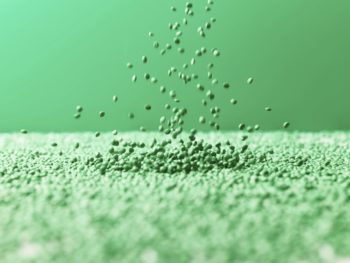
Small, round, green pellets are falling from above into a sea of similar pellets.

Fortum Circo is a plastic recyclate produced from post-consumer plastic waste.Photo: Fortum

Fortum Recycling&Waste is a Finnish trailblazer for sustainable circular economy innovations. The company’s granulated post-consumer recyclate product, Fortum Circo, has been developed to completely or partly replace “virgin” plastic for a wide variety of purposes.

Fortum Circo’s three different granulate grades can be adapted and customised to different uses, for example robust and durable high-density polyethylene (HDPE) pipes and bottles, petrochemical containers and cleaning-media bottles. Low-density polyethylene (LDPE) product applications include flexible packaging, film and plastic bags. Polypropylene suits various applications, from pots and brushes to kitchenware and household items.

Biobased alternative

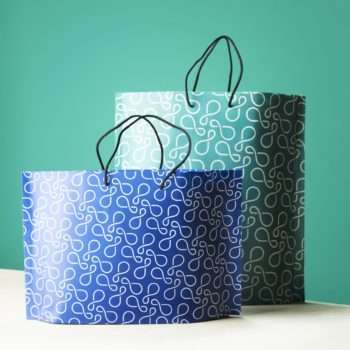
Two shopping bags with string handles.

Paptic is replacing plastic in packaging.Photo: Paptic

With a whole string of sustainable industry awards to its credit, Paptic makes credible claims to be “the best alternative for plastics in packaging.” It is a biobased, recyclable and renewable next-generation packaging material made with wood fibre sourced from sustainably managed forests and produced by the Finnish startup of the same name.

Products made of Paptic can and should be used more than once, and even more than ten times. The material is strong, easily foldable, resistant to ripping and can be made using existing paper converting lines, saving the cost of new infrastructure or machinery. Paptic can be used for carrier bags, envelopes and other one-time use applications; it has print quality on a par with regular paper, as well as the durability of non-wovens and the versatility of textiles.

Redefining recycling

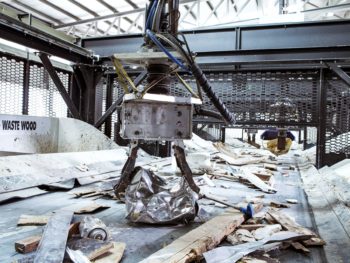
An enormous mechanical claw is picking up a hunk of metal from a conveyor belt carrying scraps of used wood and metal through a factory setting.

Zenrobotics’ robotic waste-sorting system increases recycling efficiency and the purity of recycled materials.Photo: Zenrobotics/Studio Kylänpää

Harnessing the power of artificial intelligence to improve the quality of waste sorting, Zenrobotics’ robots are billed as being able to sort waste just as well as humans – only faster and more safely. Building on the scientific work of the neurorobotics research group at Finland’s Aalto University, the company has revolutionised recycling processes that relied on inefficient manual labour.

Zenrobotics’ robots have been delivered to waste management companies worldwide, from Australia to Japan and from Switzerland to the US. Designed to lower costs, reduce manual labour, increase recycling efficiency and increase the purity of recycled materials, the solutions are claimed to redefine ‘Next Generation Recycling’.

Recycling, reusing and replacing plastic

  • Recycling plastic: Most Finnish kitchens are equipped with bins for different wastes, including plastic packaging. All household plastic waste collected throughout the country is delivered to Fortum’s recycling plant. Plastic waste is turned into new raw material.
  • Reusing plastic: Recycled plastic is used as raw material for many items: Carrier bags, household products like storage boxes, buckets, watering cans, flowerpots, watering cans, sledges and cleaning brushes.
  • Replacing plastic: Finnish innovations for replacing plastic in an ecofriendly way: Biodegradable plastic solutions for medical and technical industries; cardboard trays for food packaging; toys made of bioplastic produced from sugar cane; lamps, packaging and hangers made of wood pulp; casts made of wood and biodegradable plastic; wash basins of wood composite consisting of wood chips.
  • Finland will comply with EU Waste Directive objectives: 50% of plastic packaging recycled by 2025 and 55% by 2030.

By Tim Bird, ThisisFINLAND Magazine 2020

How Finland’s Moomins moved from beloved books to coveted mugs

The first Moomin book, The Moomins and the Great Flood, appeared in 1945. The eccentric characters proceeded to win the hearts of people around the world and became a treasured part of Finland’s culture.

The inventor of the Moomins was author and artist Tove Jansson (1914–2001), a Swedish-speaking Finn (Swedish is one of Finland’s official languages). She subsequently wrote and illustrated eight additional books about the characters, as well as several picture books and numerous comic strips.

Over the decades a wide variety of Moomin-related products and spinoffs have appeared, including toys, comic books, TV series, and collectables. The southwestern Finnish town of Naantali boasts a theme park called Moominworld, and the central-western city of Tampere is home to the Moomin Museum.

One of the biggest Moomin-product success stories in Finland takes the form of ceramic mugs. Their popularity was initially something of a surprise, but they became sought-after collectables.

Finnish ceramics company Arabia has been producing Moomin-themed mugs and dishes since 1990. Whenever a new Moomin mug comes out, people queue up outside designated shops to get their hands on the brand-new cups. But why exactly are the mugs so popular?

How it all began

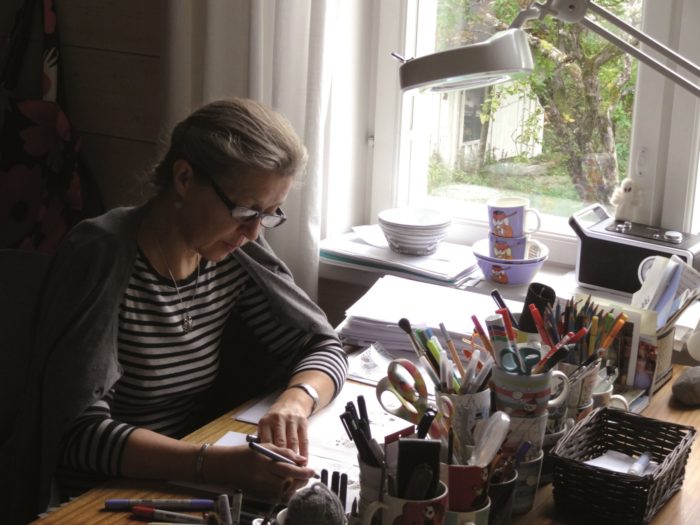
Designer Tove Slotte sits by a desk next to a window, and is drawing on a piece of paper. On the desk, there are Moomin cups filled with scissors and pencils.

It takes Tove Slotte three months to design the artwork for a new set of products. Photo: Markku Toikkanen

Tove Slotte has been the designing artwork for Moomin mugs ever since the first ones appeared in 1990. She was working for Arabia as a designer when the product manager came up with the idea of Moomin-themed dishes. It was only natural that she asked Slotte to design the artwork, since the two had previously talked about their mutual love of the Moomin books.

The first few enjoyed a positive reception. While the Moomins already had a following in Finland and numerous other countries, a Japanese-produced animated series fuelled a new Moomin boom in Finland in the 1990s and further extended their global fame. The mugs started gaining popularity, too, and by the time the third set was released, they were becoming a standard feature in Finnish homes. Arabia has now produced more than 100 different Moomin mugs, and Slotte has designed the majority.

More than decorations

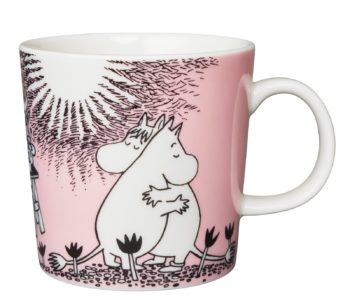
A pink mug that has a picture of two Moomin characters hugging each other while the sun is shining.

The most popular Moomin mug is the pink one entitled “Love.” It has been in continuous production since 1996.Photo: Tosikuva/Fiskars Finland

“When we first started producing the dish sets, we met with Tove Jansson to get her approval,” Slotte says. “She was an idol of mine, so I was quite nervous about meeting her, but she turned out to be a very warm person.” Jansson was promised that her own illustrations would be the basis for the mugs, but Slotte does the rest of the work: she combines elements from multiple pictures and designs the background and colour themes. The inspiration and ideas come directly from the Moomin books, which she regularly scrolls through – so often that she pretty much knows them by heart.

To Slotte, the mugs represent her life’s work. Moomins have always been important to her, and even as a child, she loved drawing the Moomin characters. She has a guess about why the Moomins and the mugs resonate so closely with Finns: “Finns feel a connection with the Moomin family, because they value similar things, such as family and nature. Moomins often do things that Finns also enjoy: they go on adventures, camp in the archipelago, or head out to the woods.”

Moominvalley is a home to a variety of eccentric characters, and everyone can find a character they can relate to. “My personal favourite character has varied over the years,” says Slotte, “but currently I’m quite fond of Misabel, a melancholic housemaid, who has a strong side that comes out when she lives with the Moomin family. Last year I finally got to design a mug featuring her.”

It is important to Slotte that the mugs bring people joy. She occasionally follows online groups where people discuss, buy and sell Moomin mugs. “Most people say that the mugs are something they really like owning, and that they use them all the time. They’re not just decorations.”

Mugs with a meaning

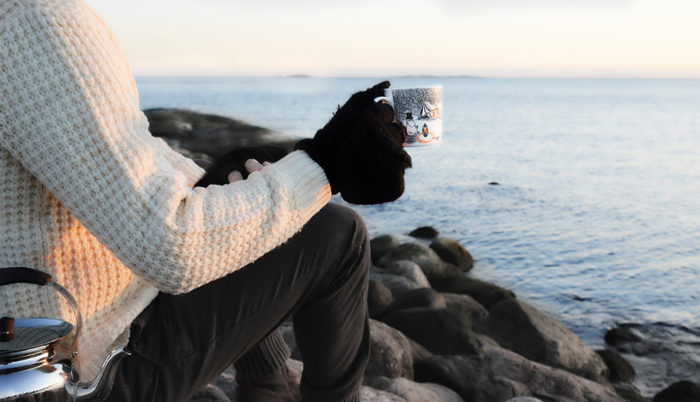
A man wearing a white jumper is sitting on a rock by the sea while holding a Moomin mug in his hand.

Finnish people feel a connection to the Moomin characters. Both Finns and Moomins like to spend time outdoors enjoying nature. Photo: Mindre.fi/Fiskars Finland

Salla Korvanen wrote her master’s thesis about the meanings attached to the Moomin mugs, and we asked her about the reason behind their popularity. Korvanen herself collects Moomin mugs, and the idea for her thesis came one night when she had friends over and offered them coffee.

She told them to choose a mug, and they all began discussing the Moomin mugs, paying no attention to any of the other cups. “I started to wonder why that was,” she says. “I wanted to find out what types of cultural meanings are attached to the mugs by the people who collect them.”

Korvanen interviewed nine Moomin mug collectors and found that the meaning they attached to the mugs always had to do with emotions. “People aren’t buying the mugs out of necessity,” says Korvanen. “They’re buying them because the mugs evoke feelings.”

Stories beneath the surface

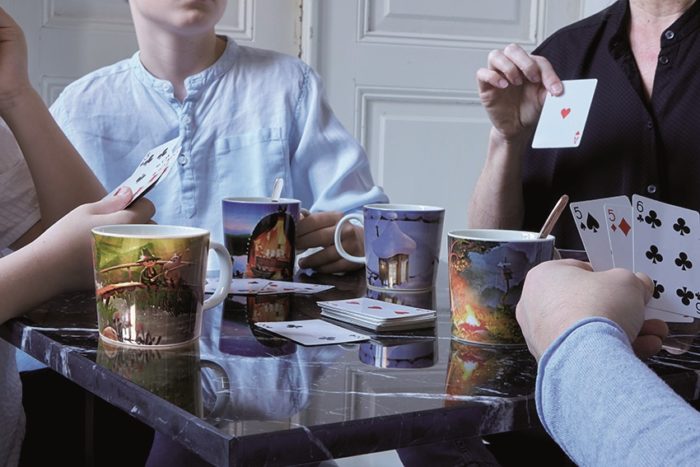
Four people are sitting at a table playing cards, and each has a different Moomin mug in front of them.

The mugs also have a social side to them: you can let your friends choose their own mugs when you serve them coffee. Photo: Mindre.fi/Fiskars Finland

In her interviews, Korvanen discerned three major reasons why people felt so strongly about the mugs. Firstly, people felt that the mugs related to their own lives and histories, and brought back nostalgic memories. Secondly, people mentioned that the notions and values that are commonly associated with Moomins were important to them. Thirdly, there’s a social side to owning Moomin mugs. “You don’t just collect mugs and hide them away,” Korvanen says. “You drink coffee with friends and let them choose a mug, and you can also talk about the mugs with your friends.”

Korvanen believes that the popularity of the Moomin mugs is due to successful branding from Arabia: when people buy the mugs, they feel like they are buying the meanings and values that Moomins represent, as well as a reliable product. “You’re not just buying a mug, you’re buying the whole story”, she says.

Slotte agrees: “The importance of the mug comes from the story. I often think it would be nice if people would read the story behind the mug. The illustrations on the mugs are not just a surface; they have deeper meanings, which is why people are attracted to them.”

By Sanni Honkavaara, August 2020

The Finnish summer ice hockey article you didn’t even know you were waiting for

First and foremost, Finland is crazy about hockey. All through the summer, we can guarantee you that certain Finnish people are looking at green fields and blue lakes and imagining them covered with smooth ice, perfect for skating.

Second, North America’s National Hockey League (NHL) – the best in the world, where several dozen Finnish players make their living – usually holds its Stanley Cup Finals in June, but the 2020 edition was delayed when the regular season was cut short in March because of the coronavirus. The league finally announced that the playoffs will start on August 1 and may stretch into early October. So it’s actually the perfect time for a hockey article.

Third, but not least, several Finnish guys and one Canadian – no hockey story would be complete without at least one Canadian – have had great success running Save Pond Hockey tournaments, which combine outdoor hockey with environmental activism. They’ve expanded the event from Helsinki to other Finnish cities, and in future seasons they plan to hold it in Sweden and Canada, as well.

Out on the pond

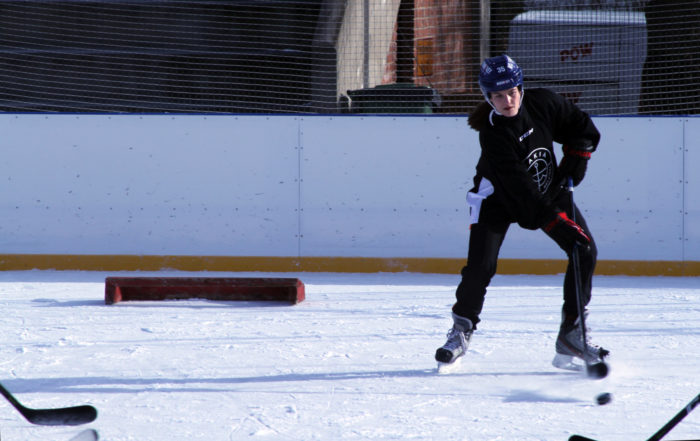
A woman ice hockey player dribbles the puck on an outdoor ice rink while the hockey sticks of several opponents are visible in the corners of the picture.

Emily, an American from Minnesota, flew to Finland to be with her fiancé. The day after she landed, she was on the ice at the Save Pond Hockey tournament in Tampere, playing as if jetlag didn’t exist. Photo: Peter Marten

Save Pond Hockey is exactly what the name says. “Pond hockey” refers to any outdoor rink where friends meet and play informal games. The tournament raises awareness and money among members of the hockey community, or hockey family, as they often call it, to help counteract climate change.

Because without proper winter, there won’t be any outdoor ice rinks.

Perhaps more than any other place, rinks in parks and backyards, and on frozen ponds, capture the spirit of hockey. Kids can hang out there and get as much ice time as they like, and dream about playing in the top leagues. Parents can bring their families and teach the kids to skate.

Tampere, a city whose location could be described as the central-western part of southern central Finland, is the only town with two teams in the nation’s principal hockey league, the SM Liiga. It’s also the home of the Finnish Ice Hockey Museum, the biggest hockey museum in Europe. Tampere’s reputation as a hockey-mad town in a hockey-crazy country makes it the perfect place to check out a Save Pond Hockey tournament.

Change within your lifetime

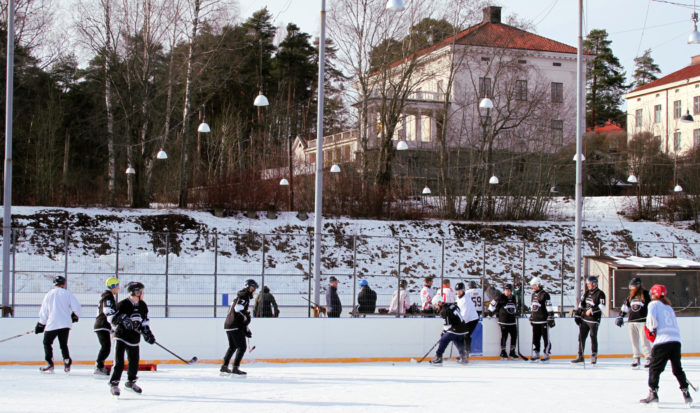
An ice hockey game takes place on an outdoor ice rink in front of a hillside where there are trees and buildings.

The 2020 Save Pond Hockey tournament in Tampere took place in a park on Koulukatu (School Street), a location where people have played ice hockey since before the Second World War. Photo: Peter Marten

On March 7, 2020, the day of the Tampere event, the weather was still cold, and folks in Finland could not yet truly imagine having to stay away from workplaces, schools, restaurants and other people. Two weeks later, the Save Pond Hockey tournament scheduled for the northern city of Oulu had to be cancelled because of measures aimed at slowing the spread of the coronavirus.

In Tampere, I met Steve Baynes – the Canadian of this story – who arrived in 2010 in the central Finnish city of Jyväskylä. He studied corporate sustainability there, and later moved to Helsinki.

“We got the idea for Save Pond Hockey because we were, of course, reading and learning a lot about climate change,” says Baynes, who grew up in Vancouver. “A lot of the Finnish guys in our hockey club were seeing changes in their own lifetime also, from when they were kids to now. A couple of those things put together made us feel like we just needed to do something – we didn’t really know what.”

Save Pond Hockey first saw the light of a Finnish winter day in 2015. “We’re a bunch of hockey guys,” says Baynes, “so we started organising hockey tournaments.” [Article continues after video.]

In the short documentary Saving Pond Hockey, you can meet several players and hear them talk about why they love the game.
Video: Jonas Julian Köck; embedded with permission of Save Pond Hockey

An appetite for hockey

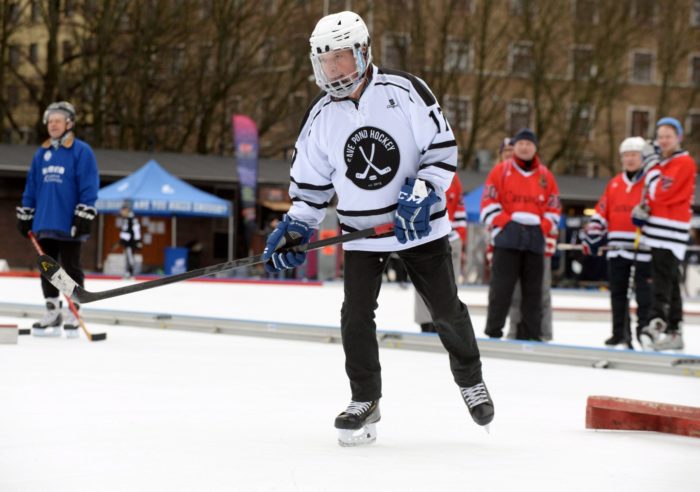
Finnish President Sauli Niinistö, in a helmet and a jersey that says Save Pond Hockey, skates with a hockey stick on an outdoor ice rink while other players are visible in the background.

Finnish President Sauli Niinistö is a hockey enthusiast and has taken part in Save Pond Hockey in Helsinki several years in a row (picture from February 2020). Photo: Mikko Stig/Lehtikuva

That’s how we came to be standing beside two outdoor rinks in Tampere, watching a one-day tournament with 12 teams competing in a series of 18-minute, four-versus-four games. Each playing area took up a third of a rink. The goals were small and low, and there were no goalies.

Looking over the schedule, you could see team names such as the Pajusalmi Maple Leafs (inspired by the NHL’s Toronto Maple Leafs), Lakikiekko (Law Puck) and Lihaa ja perunaa (Meat and Potatoes, inspired by somebody’s favourite dish). One squad called itself Hattrick Swayze.

Koulukatu Rink, the site of the event, is also the location where Finland’s first artificially cooled rink opened in 1956, although there had been naturally frozen ice rinks on the spot since 1934.

Helsinki experienced a rainy, relatively warm winter in 2019–20, with the average temperature each month staying above zero degrees Celsius (32 degrees Fahrenheit). During such a mild winter, artificially cooled rinks are the only outdoor ice available. Only a few exist, so the contrast is stark compared to a truly cold winter, during which cities maintain rinks in numerous parks for months on end. Indoor arenas don’t offer the same kind of informal gathering place and neighbourhood spirit.

Attracting attention

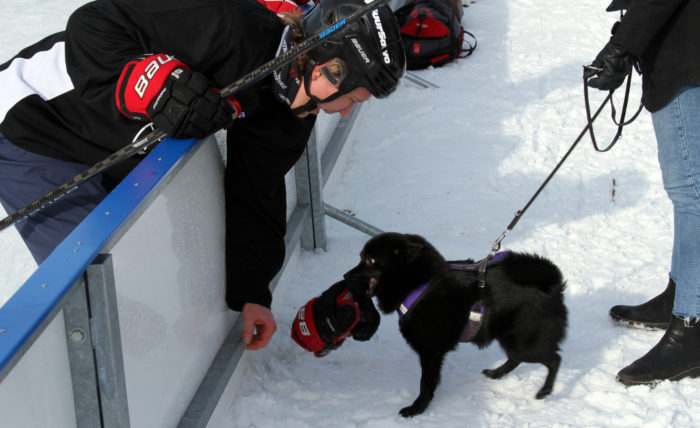
A small dog holds an ice hockey glove in its mouth while a hockey player reaches out to the dog at the side of an outdoor ice rink.

Kerttu the dog showed up to bark in support of the players in Tampere, and to help keep track of their gloves. Photo: Peter Marten

Save Pond Hockey has expanded gradually since its start in 2015 in Helsinki, adding more cities. In 2020 the list included the eastern Finnish cities of Joensuu and Lappeenranta, as well as Turku in the southwest, and Tampere and Oulu.

“Next year we want to expand outside Finland’s borders,” says Baynes. “This [warmer winters brought on by climate change] is obviously something that threatens hockey players around the world.”

That was in early March 2020. In the interim, the coronavirus has affected people’s lives across the globe, and the situation is continuously changing. In June, the Finnish government raised the amount of people permissible at a public gathering to 500. Baynes confirms that, as of summer 2020, they are still planning to head for Stockholm next season, and hope to get to Canada, too.

Save Pond Hockey’s own brand of climate activism has attracted attention. Finnish President Sauli Niinistö has laced up his skates for the Helsinki tournament more than once, including 2020, and local hockey greats have been known to show up, too. Former NHL star Saku Koivu played in the Turku edition of Save Pond Hockey in February 2020.

“That’s exactly part of it, bringing the whole hockey community together,” says Baynes. “We’ve been able to reach out to some of these legends like Koivu and thankfully get their support behind what we’re trying to do.”

Where the money goes

What does Save Pond Hockey do with the team registration fees and sponsorship money it raises? Here are a few examples:

The Tampere event brought in 1,500 euros, which Save Pond Hockey donated to the Reconstruction Club. It aims to help local people take positive action on climate change. Turku’s total of 1,750 euros went to an organisation called Power Shift, which runs “an annual weekend workshop to give climate campaigners tools to be more effective,” says Baynes.

In Joensuu, 3,000 euros were contributed to cofinancing the ecological restoration of a local wetland that had been used as a peat production area. After the Lappeenranta tournament, Save Pond Hockey divided 2,600 euros between the Finnish Association for Nature Conservation and the Saimaa Environment and Science Education Organisation.

The 10,000 euros from the Helsinki event went to CO2Esto, a company that buys emissions allowances from the EU Emissions Trading System, thereby removing them from the market. “It’s not exactly carbon compensation,” says Baynes. “It’s carbon prevention. So we prevented 250 tonnes of CO2 equivalent with the profits from the Helsinki tournament.” Another 4,200 euros from a jersey auction at the event prevented an additional 113 tonnes.

By Peter Marten, July 2020

New audiences continue to find Finland’s number one painter, Helene Schjerfbeck

You could say that Helene Schjerfbeck (1862–1946) became an artist at the age of four, after falling down the stairs and breaking her hip. During her recovery, her father Svante gave her a pencil, and she started to draw.

When Helene was just 13, Svante died. Her mother Olga was left to raise two children alone.

Helene Schjerfbeck won a scholarship to the drawing school of the Finnish Art Society at just 11, making her the school’s youngest student ever.

Looking outward

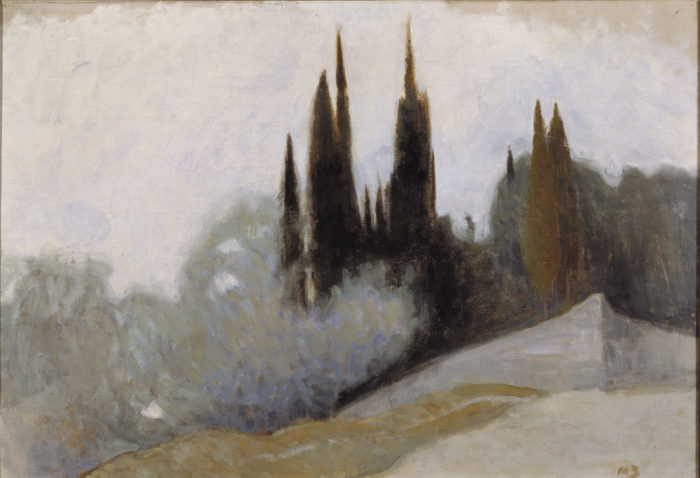
A painting shows tall trees silhouetted on a hillside.

Schjerbeck painted Cypresses, Fiesole in 1894. Fiesole is a location near Florence, Italy.
Photo: Hannu Aaltonen/Ateneum Art Museum/Finnish National Gallery

Upon graduating, she desperately wanted to go to Paris, but was too young to travel alone. Instead, she stayed in Helsinki, studying French plein-air realism under Adolf von Becker.

At 18 years old, Schjerfbeck finally made it to Paris, on a travel grant from Finland’s Senate. She spent much of the next decade travelling, connecting with artistic communities in Brittany, Florence and Saint Ives in Cornwall.

Unlike many of her contemporaries, Schjerfbeck was not a national romanticist. Instead, she took inspiration from the visual culture of her time, including fashion, magazines and catalogues, and became an important figure in the early modernist movement.

Exhibitions get wide coverage

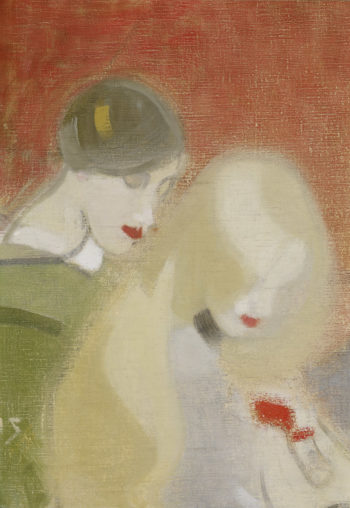
A painting portrays two fashionably dressed women from the early 1900s, one with a hat on.

The Family Heirloom (1915–16) shows that Schjerfbeck took inspiration from the visual culture and fashions of her time.Photo: Yehia Eweis/Ateneum Art Museum/Finnish National Gallery

In 2019 and early 2020, London’s Royal Academy of Arts and Helsinki’s Ateneum Art Museum collaboratively organised back-to-back Schjerfbeck exhibitions. The Royal Academy put on a retrospective entitled simply Helene Schjerfbeck, introducing her to a wide British audience and prompting The Economist to write, “Unless you’re Finnish, you probably won’t have heard of this enigmatic artist. Here’s why she matters.”

Ateneum’s exhibition, called Through my travels I found myself, focused on Schjerfbeck’s time in Saint Ives and the inspiration she drew from contemporary fashion. “Finnish audiences already know Schjerfbeck, so we had to do something different,” says exhibition curator Anna-Maria von Bonsdorff.

“It had been seven years since we put on a Schjerfbeck exhibition,” she says. “Since so many of her works are abroad, in places like Japan and Germany, we only had [relatively] few of her paintings here. We were receiving feedback almost weekly that we should be displaying more of her work.”

Record visitor numbers

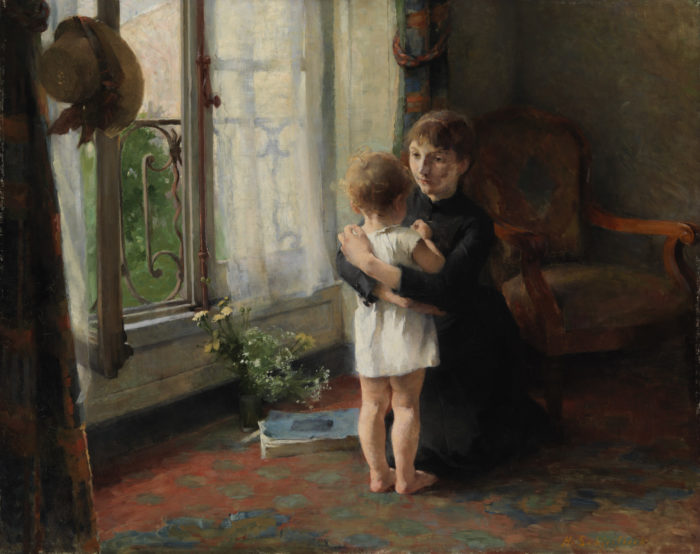
A painting shows a woman embracing a small child on the floor of a room with one window open.

Mother and child (1886), by Helene Schjerfbeck, formed part of Through my travels I found myself, an Ateneum exhibition that broke the museum’s record for average daily attendance. Photo: Hannu Pakarinen/Ateneum Art Museum/Finnish National Gallery

The Ateneum exhibition averaged 3,102 daily visits, the highest daily visitor count in the museum’s history, for a total of 186,112 people between November 15, 2019 and January 26, 2020. By comparison, their 2009–10 Picasso exhibition averaged 2,835 people per day, although it lasted two months longer and amounted a greater total visitor tally.

The Royal Academy exhibition was popular, too. The catalogue became the third-best seller in the museum’s history, which von Bonsdorff hopes may help curators find three missing Schjerfbecks that are thought to be somewhere in the UK.

Bold and talented

A woman with a paintbrush in hand looks at a man, who in turn is looking at the picture she is painting.

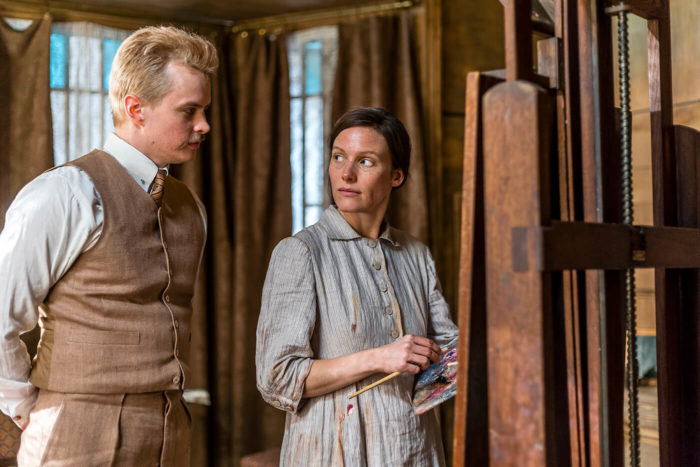
The film Helene, starring Laura Birn and Johannes Holopainen, covers a period of Schjerfbeck’s life when she spent time with Einar Reuter. Photo: Nordisk Film

Schjerfbeck is believed to have fallen in love twice: once with an artist whose identity remains unconfirmed, and once with Einar Reuter, who later became her biographer. The second love story is the focus of Antti J. Jokinen’s 2020 film Helene, based on Rakel Liehu’s 2003 novel of the same name.

Jokinen’s artistic license includes filming the drama in Finnish, despite Schjerfbeck having been a Swedish-speaking Finn. (Swedish and Finnish are both official languages in modern Finland.)

The movie paints a picture of a bold, talented and fiercely determined woman. Laura Birn, who plays Schjerfbeck, spent many months studying under artist Anna Retulainen to prepare for the role.

Art, love and friendship

A woman sitting at a table rests her arms and head on the table.

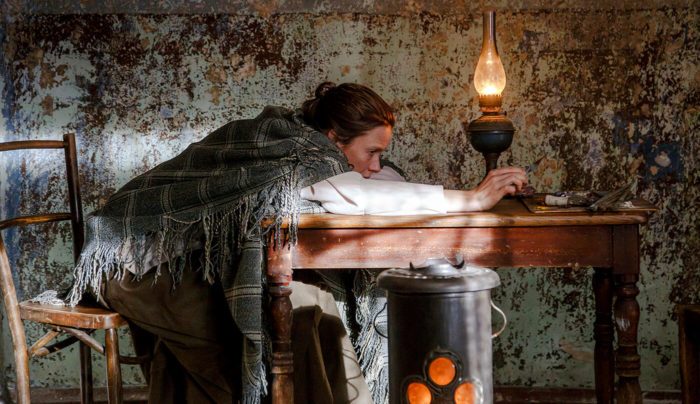
Helene Schjerfbeck (Laura Birn) goes through moments of joy and despair in the film Helene. Photo: Nordisk Film

“I watched her paint, and she taught me how to hold a brush and work with colours,” Birn says. “We painted together and talked about art, Schjerfbeck, being a female artist, movies, acting and life. It was one of the most interesting preparation processes I’ve been through.”

Helene tells the story of Schjerfbeck’s ill-fated love affair with Reuter (Johannes Holopainen). He is 19 years younger than she is, and they eventually part ways. Though heartbroken, Schjerfbeck finds support in her friendship with artist Helena Westermarck (Krista Kosonen) and distracts herself with art, ultimately remaining friends with Reuter. She corresponded with him for the rest of her life.

“Before studying her, I had this image of a fragile artist in my head,” says Birn. “But instead, I found her to be a passionate, obsessive, curious, ambitious, dramatic person with a dry sense of humour.”

A renewed following

Four paintings in a row show how one woman becomes older, and the painting style also becomes more sparse in line and colour.

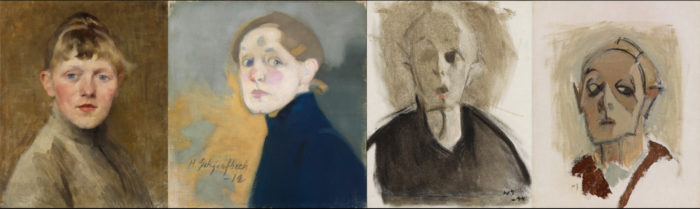
Curators often show Schjerfbeck’s self-portraits together if possible. These four and others appeared at Ateneum’s exhibition Through my travels I found myself. Photos: Self-portrait (1884–85), Henri Tuomi; Self-portrait (1912), Hannu Aaltonen; Self-portrait with Red Spot (1944), Henri Tuomi; Self-portrait, en face I (1945), Hannu Pakarinen; all from Ateneum Art Museum/Finnish National Gallery.

Active as an artist for almost seven decades, Schjerfbeck is perhaps best known for her self-portraits. She painted around 40 of them, covering her life from youth to old age. “It is globally exceptional that she painted so many,” says von Bonsdorff.

Schjerfbeck has often been overshadowed by her male counterparts, such as Akseli Gallen-Kallela. But recently something has changed. “She has something to offer new audiences,” says von Bonsdorff. “She seems somehow contemporary. Her use of popular materials appeals to younger audiences.”

She has gained a renewed following. “Ten years ago, Schjerfbeck wasn’t really considered [Finland’s] number one painter,” says von Bonsdorff, “but now she really is.”

By Tabatha Leggett, July 2020

Helene Schjerfbeck paintings form part of the permanent collections of the Ateneum Art Museum and Villa Gyllenberg in Helsinki; the Gösta Serlachius Museum in Mänttä, central Finland; and the Turku Art Museum in southwestern Finland.

Life on the edge: Living on the western and eastern borders of Finland

If you start in Helsinki and drive almost 550 kilometres (340 miles) to the northeast, you’ll reach Virmajärvi, a lake in the municipality of Ilomantsi. The easternmost point in Finland, it is actually located 70 kilometres (43 miles) farther east than the Russian city of Saint Petersburg.

The border cuts right through the middle of the lake. No one lives on the shores of Virmajärvi, though. The easternmost inhabited place in Finland is the village of Möhkö, situated some 30 kilometres (18 miles) south of Virmajärvi, still just a couple kilometres from the Russian border.

Matti Laakso from Möhkö knows this region like the back of his hand. He has lived all his life in Ilomantsi, and the past 25 years in Möhkö.

The border with Russia has defined Laakso’s life. He retired from the Finnish Border Guard in late 2019 after 33 years of service. That’s not all: he’s a second-generation border guard, having followed his father into the profession. Laakso spent his childhood living at various border stations where his father was posted.

[Editor’s note: Be sure to check out our article about life in Finland’s northernmost and southernmost villages and about the country’s centre of population, too.]

Life on the borderline

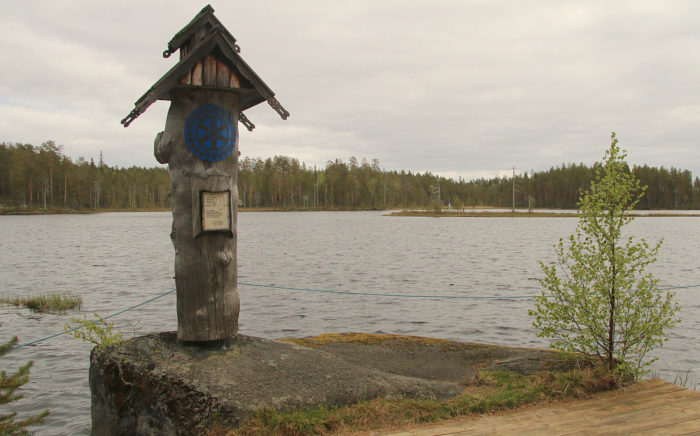
A wooden post stands at the edge of a rural lake.

On the shore of Virmajärvi, a lake on the Finnish-Russian border, a post shows the easternmost point in Finland and the EU. (The actual border goes through the middle of the lake.) “May this be a sign of friendship, cooperation and peace,” reads the inscription. Photo: Jukka Vaittinen/Lehtikuva

Border-guard work underwent major changes during Laakso’s career.

“When I started, we would spend several days at a time patrolling along the border by foot or on skis, sleeping in huts along the way,” he says. “We had to carry our food with us, although we could also go fishing and gather mushrooms.”

Nowadays, the work is more similar to an ordinary office job. Border guards still go out on patrol, but they usually return home for the night. Electronic surveillance has become more significant.

The border between Finland and Russia is also an external border of the EU and the Schengen Area, so it is closely monitored. However, in the Northern Karelia region where Laakso lives, the border is rather uneventful. In 2019, all of five people were caught crossing the border without authorisation.

“We’ve had a pretty calm time here,” says Laakso. “There have been some cases where berry-pickers, seasonal workers from Thailand, have accidentally strayed into the border zone, and unfortunately there’s the occasional tourist who wants to take a border sign as a souvenir. But the Russian side of the border in these parts is pretty much wilderness, so there aren’t many people around over there.”

Peace prevails

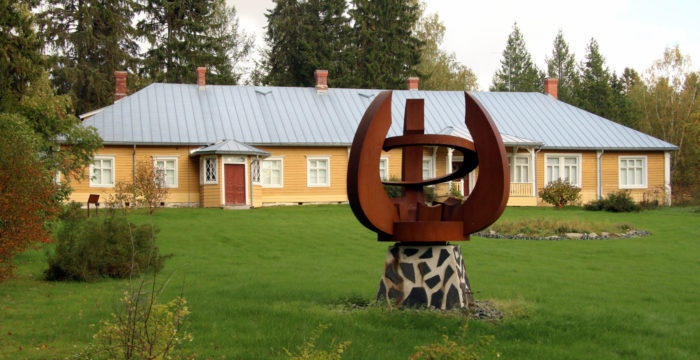
A wooden building stands in a rural setting. An angular metal sculpture stands in front of the building.

The buildings of the ironworks in Möhkö, near Finland’s border with Russia, still stand as a museum. Photo: Jukka Vaittinen/Lehtikuva

There have also been periods of greater turbulence. During the Second World War, Finland fought heavy battles against Soviet forces in the Ilomantsi region. There’s also a certain historical irony in the fact that the war is precisely the reason that Finland’s easternmost point is now situated here. As part of the peace treaty, Finland had to cede large areas of its Karelian territory to the Soviet Union, regions that lie east of the modern border.

Laakso says that life in Möhkö is very peaceful. Most of the people who live in the village are pensioners. Laakso’s children, like those of many families, moved to urban areas when they grew up.

“In the wintertime we have about 100 people living in Möhkö,” he says. “In the summer, the population doubles, when people come to spend time in their summer cottages. During the 25 years we’ve lived here, the local post office, grocery store and school have all closed down.”

Nonetheless, the village is still home to an ironworks museum, an arboretum, a couple of tourism entrepreneurs and a summer theatre. Laakso himself is also involved in theatre, not in Möhkö, but in another amateur group in Ilomantsi.

He has kept himself busy since he retired. Besides theatre, he sings in a choir. He also plays in a band that performs old-fashioned Finnish dance music called humppa in retirement homes. He remains an active outdoorsman, as befits a lifelong border guard.

Making a home in the west

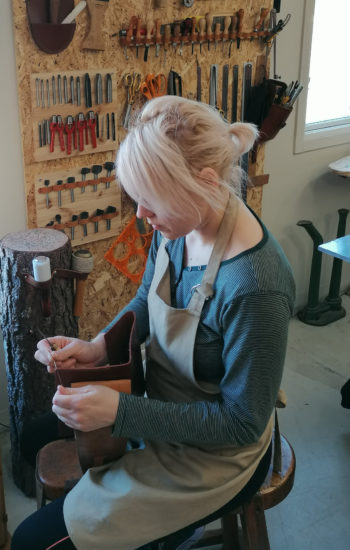
A woman sits on a chair and works on a piece of leather in a workshop with tools hanging on the wall.

Saija Saarela, a leather upholsterer by trade, has a workshop in Eckerö, the westernmost municipality in the Åland Islands and in Finland. Photo courtesy of Saija Saarela

Approximately 400 kilometres (250 miles) west of Helsinki, the municipality of Eckerö, in Finland’s autonomous Åland Islands, is also situated adjacent to an international boundary. However, this border traverses the Baltic Sea, and Sweden lies on the opposite coast.

“If I go for a walk along the shore, all I can see is open water,” says Saija Saarela, “but the coast of Sweden is somewhere on the other side.”

Saarela was born in Kajaani, a town about 550 kilometres (340 miles) north of Helsinki, but her family moved to Åland when she was just three years old. Åland is an archipelago of 6,500 islands, most of them tiny and uninhabited, in the Baltic Sea between Sweden and the Finnish mainland. About 29,000 people live there. The population is Swedish speaking (Swedish is one of Finland’s official languages).

After finishing high school, Saarela went to Sweden to study, as many young Ålanders do. She spent roughly ten years there, but then she started feeling homesick. She began looking for a place in Åland, and in 2016 she settled in Eckerö. Her brother had already made his home there, as well. As a newcomer, Saarela attracted the curiosity of the locals.

Local customs and culture

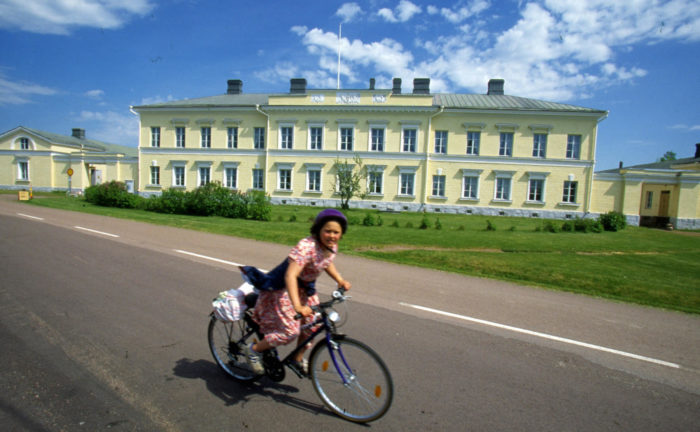
A girl bikes past a long, stately, two-storey building on a summer’s day.

The old Post and Customs House in Eckerö dates back to 1828 and was built to be larger and more pompous than strictly necessary. At the time, it served to remind Sweden that the Russian empire reached all the way to its doorstep. Photo: Tor Wennström/Lehtikuva

“While living in Sweden, I could be more anonymous, but that’s not really possible here,” she says. “Especially since I moved my workshop to Storby [Eckerö’s municipal centre], it seems like everyone else knows everything about what I do, but I don’t know that much about them.”

Saarela is a leather upholsterer by trade. She makes most of her living doing upholstery for cars and boats, but she also fashions traditional handicrafts and artworks out of leather. She has taken part in several summer exhibitions in Eckerö.

The shows take place in Eckerö’s best-known attraction, the old Mail and Customs House. The fancy building looks slightly out of place. It was built in 1828, almost 20 years after Finland had become a grand duchy of the Russian empire. Among other purposes, the pompous, highly visible construction served as a reminder of the Russian empire’s border. It rubbed salt in the wounds of neighbouring Sweden, which had recently lost to Russia the territory that is now Finland, in the Finnish War of 1808–09.

Today, the Mail and Customs House greets many visitors who arrive in Åland from Sweden. Saarela says that some Swedish tourists are not even aware that Åland is a part of Finland.

That misconception might stem from the Åland Islands’ special status. After Finland gained independence in 1917, a dispute arose between Finland and Sweden over which country should own Åland. Many islanders wanted to join Sweden, citing strong cultural and linguistic connections.

Surrounded by water and nature

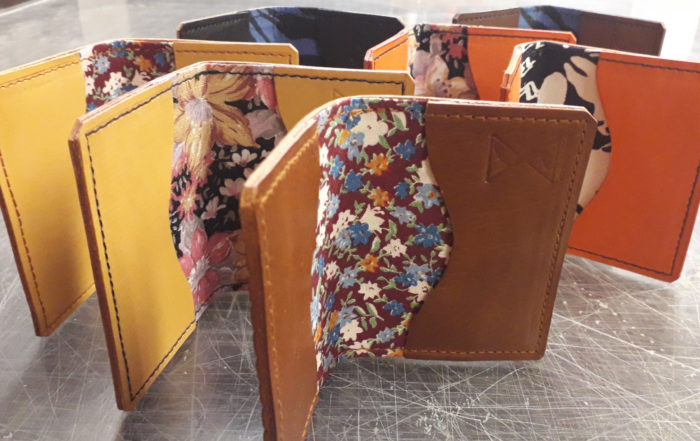
Half a dozen leather wallets are spread out, balanced like open books. Each wallet has a different colour pattern showing inside.

In addition to upholstering seats for cars and boats, Saija Saarela also makes wallets and other items and artworks out of leather. Photo courtesy of Saija Saarela

In the end, the League of Nations settled the dispute in Finland’s favour, but stipulated that Finland had to guarantee extensive autonomy to Åland.

Saarela says she enjoys living in Eckerö. The main reason she returned from Sweden is the different rhythm of life.

“Work culture in Sweden is rather stressful, but in Åland, people follow a different tempo,” she says. “Another good side is that everything is within easy reach here. I have nature and the sea surrounding me, and if I wish, it is easy to take a trip to Sweden. The harbour is five minutes from where I live, and the ferry to Sweden’s Grisslehamn only takes two hours.”

By Juha Mäkinen, July 2020