Samuji’s Finnish clothing tells a story

We visit the studio of Finnish clothing designer Samu-Jussi Koski, the man behind the Samuji label. Known for its attention to quality and timelessness, Samuji seeks to counterbalance the prevalence of cheap, throwaway fashion.

The name “Samuji” comes from designer Samu-Jussi Koski’s own name, and though people often mistake it for a Japanese word, his clothes and accessories are very Finnish. It’s not a surprising mistake, given that the aesthetics of Finnish and Japanese design overlap. The clothes are simple, elegant and well constructed. Nonetheless, Samuji is distinctly Nordic.

Koski claims Finnish designer Alvar Aalto as the inspiration in his use of natural materials and simple shapes drawn from nature. His palette is the Finnish landscape with forest greens, deep blue lakes, yellow fields and pink sunsets; the colours are organic and soothing. The collections emphasise quality and timeless design.

When Koski first came up with the idea for Samuji, he wanted to create a perfect and complete wardrobe for women – a wardrobe that contained only ten pieces. These ten pieces formed the starting point for the Samuji Classic Collection in 2011. He later added the Seasonal Collection, which reflected a more bohemian spirit.

Telling a story with beautiful clothing
Every piece of clothing has a story.

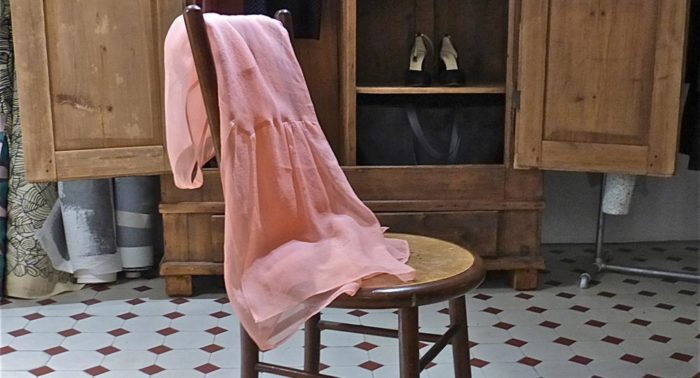
Every piece of clothing has a story.Photo: Karen MacKenna

Koski also wanted each piece to tell a story, and beautiful clothing does tell a story. A beloved dress has a history, while a new dress is full of promise. Samuji designs include an element of whimsy and mystery, and this, along with their everyday usefulness, has made it such an appealing brand in Finland and abroad.

I pay a visit to the Samuji studio on Korkeavuorenkatu next to Café Succès, which serves some of the best cinnamon buns in town. The studio is located upstairs in a former public sauna and still has the feel of a bathhouse. A stylish lounge area fits into the cool, open space. No need to renovate – the tile-covered floors and water faucets hidden behind the clothing racks give this unique atelier an inimitable Finnish authenticity.

The Samuji team is young and happy, and their inspiration is evident in the array of drawings, fabric swatches and found art that surround them where they work. I get a look at current and upcoming collections, from beautiful woollen coats to lightweight summer shifts. The Classic signature pieces are designed to be those essential items in a wardrobe. The boho designs are playful, yet unlikely to go out of fashion anytime soon. Before I leave I spy a pair of flat sandals and a dress that I wouldn’t mind taking home but they belong to next season. I will have to wait.

Know where you’re coming from
Samuji’s clothing is ethically produced in Europe, so they can “know their producers.”

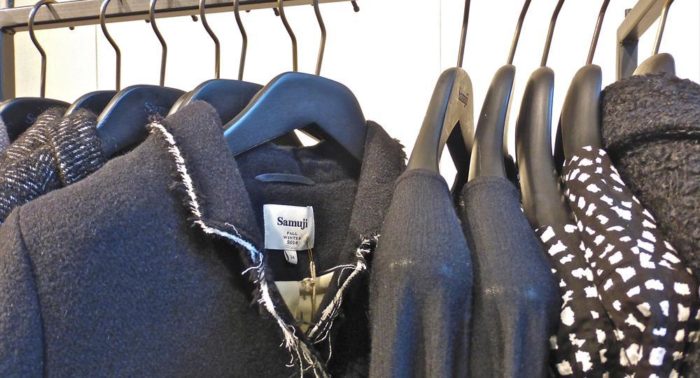
Samuji’s clothing is ethically produced in Europe, so they can “know their producers.”Photo: Karen MacKenna

Prior to launching Samuji, Koski served as creative director for the famous Finnish textile brand Marimekko. Samuji textiles now come from the UK, Italy and Japan, although the spring 2015 collection includes some of their own textiles.

Sustainable design forms a priority for Samuji. The clothing is ethically produced in Europe so they can “know their producers,” Koski says, and it’s made from natural fibres such as wool, cotton, silk and linen.

When asked who the Samuji woman is, Koski says he hopes she is someone who appreciates quality over quantity. At a time when mass-produced clothing is littering the planet, this comes as a welcome alternative. Perhaps we do only need ten timeless pieces instead of cheap, throwaway fashion that only lasts one season.

From the heart
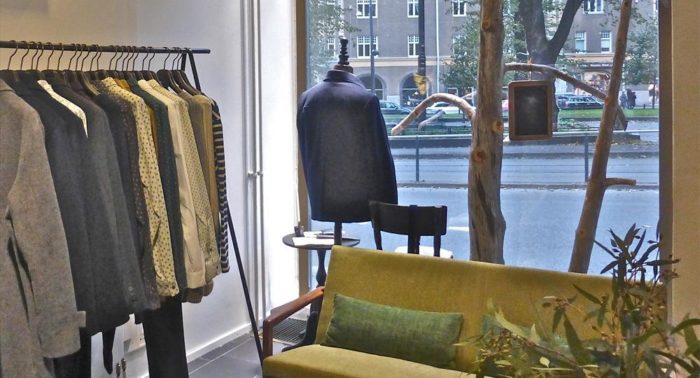
Not a lot of items: Samuji’s stores stay true to the label’s minimalistic philosophy.

Not a lot of items: Samuji’s stores stay true to the label’s minimalistic philosophy.Photo: Karen MacKenna

Helsinki contains two Samuji storefronts: Samuji Espa and Samuji Erottaja. What you will notice when you visit them is that there are not a lot of items in the store. Nor should there be, if Samuji stays true to its philosophy of minimalism and a pared-down but solid wardrobe.

The women’s collection is presented along with the men’s line, which has been hitting the right notes since its start in the autumn of 2013. There are accessories too: hats, scarves and shoes – everything you need to feel well dressed, stylish and original.

“We aim to create everything from the heart at Samuji,” says Koski. “Hopefully that is something that translates into the Samuji designs.”

By Karen MacKenna, February 2015
Finnish skiers go with the snow flow

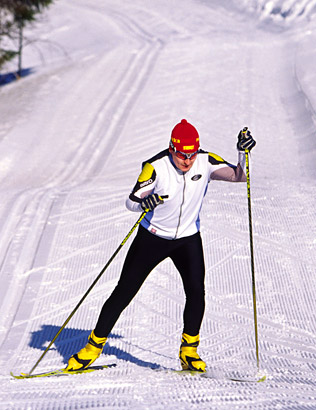
Not only is Finland the land of 188,000 thousand lakes, but every winter thousands of kilometres of ski tracks criss-cross the country. The age-old tradition of cross-country skiing remains dynamic, in part because of the young urbanites who are increasingly turning to the sport for its convenience and low budget threshold.

Cross-country skiing was invented in Scandinavia and can be traced back 5,000 years, according to the International Ski Federation. The sport offers great exercise and countless vistas of untouched nature, just like it says in all the guidebooks about Finland.

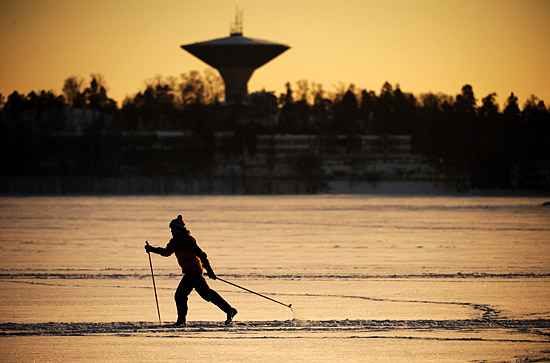
4232-jaalla_hiihtaja_550px-jpg

The sun sets slowly as a skier moves across the frozen water with city buildings in the background.Photo: Antti Aimo-Koivisto/Lehtikuva

Skis used to be made of solid wood and weigh more, but that gave way to various synthetic materials that gained popularity in the 1970s. Skiing technique has also developed: Finnish skier Pauli Siitonen, who won the Swedish long-distance race Vasaloppet in 1973, is credited with acting as one of the original pioneers of a “skating” style, in which the skier stepped out of the machine-prepared tracks in the snow and pushed off at an angle, instead of keeping both skis in the parallel grooves.

American Bill Koch popularised the style when he won the 1982 World Cup season. The arrival of the new technique gave rise to furore in the skiing world, but it soon became recognised as the fastest non-motorised way for humans to propel themselves across snow.

For serious skiers, this change of style demanded a new set of equipment as well as a considerable learning curve. The skating posture means that your skis angle outwards in a “V” shape, with your arms working in tandem to help propel you. Many young skiers find this a simple method to start with, especially in a country like Finland where ice skating is also popular.

Urban skiers

With the growth of Finland’s urban areas apparently undiminished by the economic slowdown, the population of Finns and foreigners migrating to the capital area is quite significant. For young urbanites cross-country skiing offers a cheap solution to the problem of outdoor activity in winter.

4232-sporttihiihtaja_316px-jpg

It could be argued that this skier resembles some sort of bug – but once you try cross-country skiing through the wintery Finnish landscape, you won’t look back.Photo: Visit Finland

University of Helsinki student Antony Starr grew up in a family where everyone skied, and now sees it as a good winter substitute for jogging. “Helsinki is an excellent place to ski,” he says. “There are three or four options near where I live in the neighbourhood of Viikki [on the outskirts of the city]. I try to cover 10 to 12 kilometres when I go out, but it depends on the weather as well as my schedule.

“Minus ten degrees Celsius [14 degrees Fahrenheit] is my limit – although once you’re warmed up, even that is not too chilly.”

Finlandia Ski, the most prestigious of the country’s mass participation ski events, attracts thousands of participants. The race has a long history as a venue in the calendar of serious skiers. Held in the southern Finnish town of Lahti, it forms part of the international long-distance ski race circuit and draws hundreds of foreign participants. The majority of the contestants skate-ski their way along Finlandia Ski’s 50-kilometre route.

Once mastered, the skating technique gives a modestly healthy skier the means to travel at 10 to 12 kilometres per hour for sustained periods, while the pros are, as you’d expect, quite a bit faster. The winners of Finlandia Ski finish the course in about two hours and 20 minutes. Nowadays it’s the norm for the traditionalists in their tracks to be overtaken by athletic young bodies wrapped in skin-tight bespoke ski clothing, scything across the terrain.

They don’t care that their bulging goggles and long, flailing poles make them resemble a species of high-tech arachnid. They are flowing with the snow.

By Anthony Shaw, February 2013, updated 2015

Learn by association at Finnish universities

In a previous article about student life (link below), we dealt with the basic facts of student life in Finland and the most common student traditions. Now we delve into student culture with a look at the important role of student associations.

The Latin phrase pro bono publico translates to “for the common good.” That is the main principle of the people active in associations and clubs. The Finnish Patent and Registration Office lists a total of 130,000 associations in Finland with a legal minimum of three members per association. On top of it all, there are also thousands of unregistered associations. Hundreds of thousands of Finns take part, and one of the most visible groups are students.

Associating with associations

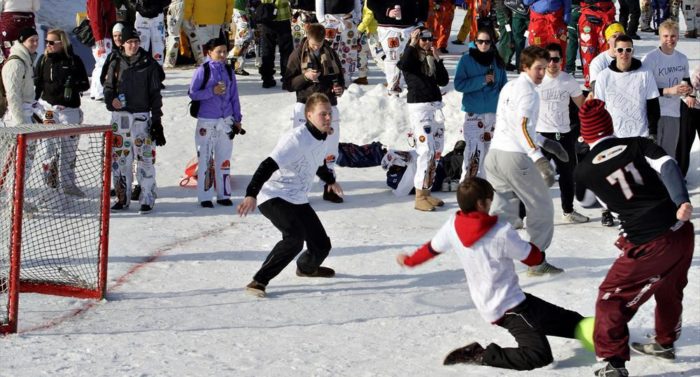
Outdoor fun: This game of snow soccer is brought to you by student associations at Jyväskylä University.

Outdoor fun: This game of snow soccer is brought to you by student associations at Jyväskylä University.Photo: Petteri Kivimäki/Jyväskylä University

Student associations at universities take various forms. Some have a niche in a certain hobby or activity, whether it is camping, sports, music, theatre or dancing – and the list goes on.  Any subject that you study is likely to have its own association.

Most student associations concentrate on creating a counterbalance to studying by organising small-scale social events for their members. They might visit organisations, companies or museums, attend conventions, take trips abroad or hold gatherings and parties. Small associations often form part of a larger association encompassing a whole department, which in turn organises events for everyone in the department.

The next level is the interdisciplinary associations, most of them called “nations,” which organise events for students who come from a certain geographic area of Finland. These larger associations are often independent, but usually receive some sort of support from their umbrella organisations, the student unions.

In the students’ best interests

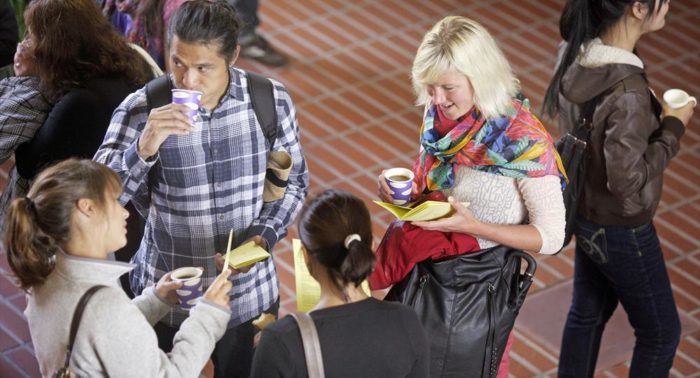
Students chat over a cup of coffee at a start-of-the-year mixer event.

Students chat over a cup of coffee at a start-of-the-year mixer event.Photo: Petteri Kivimäki/Jyväskylä University

Student unions in Finland have a legislative role to act in the best interests of their members and conduct student guardianship.  The issues can include higher education, social politics and international affairs. This is why they are financially independent from the universities.

Membership is mandatory in Finnish universities and costs 50 to 150 euros depending on the institution. However, the universities of applied sciences are exempt and need to recruit members in order to fund their operations.

Student unions are in turn part of the national umbrella corporations National Union of University Students in Finland (known by its Finnish abbreviation, SYL) and the Union of Students in Finnish Universities of Applied Sciences (SAMOK). These organisations work for students’ common interests nationwide and also towards the European Union through the European Students’ Union (ESU).

A career in student life

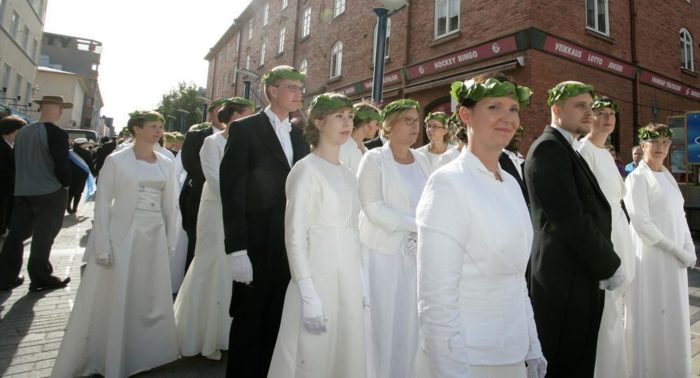
You have to graduate sometime: Students don wreaths and fancy clothing for the traditional graduation procession.

You have to graduate sometime: Students don wreaths and fancy clothing for the traditional graduation procession.Photo: Petteri Kivimäki/Jyväskylä University

Becoming a member of a single committee or workgroup in an association or student union is one of the first steps to becoming active.

After some experience, you can become an executive board member for an association, which teaches various important skills such as taking responsibility, organisation, teamwork, budgets, planning meeting agendas, running meetings and taking meeting notes. In short: the basic skills you should know for almost any type of career.

This offers a very interesting way to participate in student life. You’ll have the opportunity to plan what, when, where and how an event will take place. You’ll get to know a lot of people from your own and other organisations. That is ultimately the best thing about being active in student associations: meeting and building life-long relationships with like-minded people that love to have fun.

By Lasse Mäki-Hokkonen, February 2015

Finland’s pop-up carnival of good taste

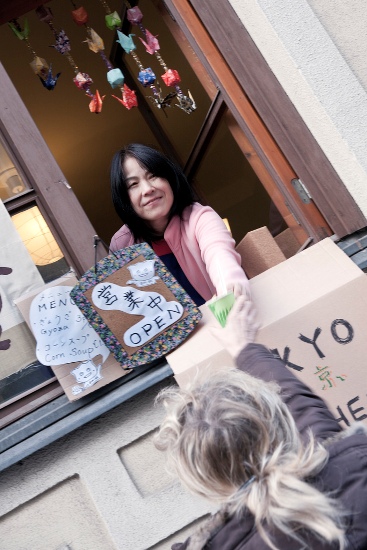
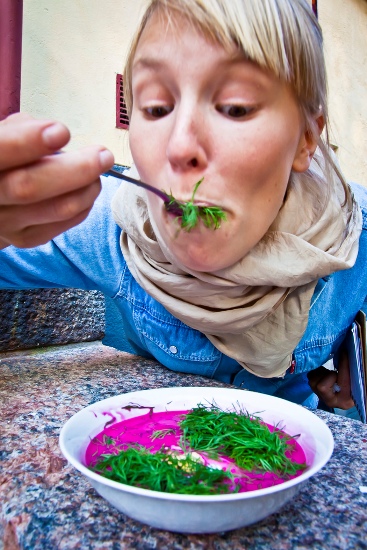
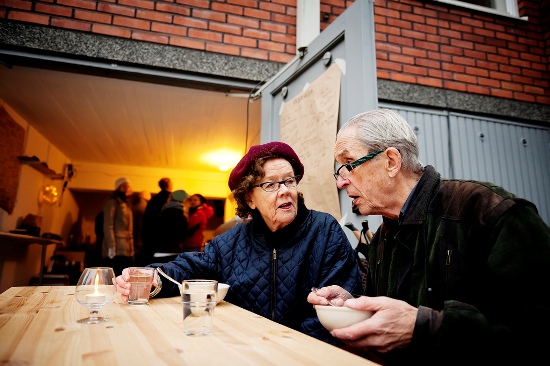
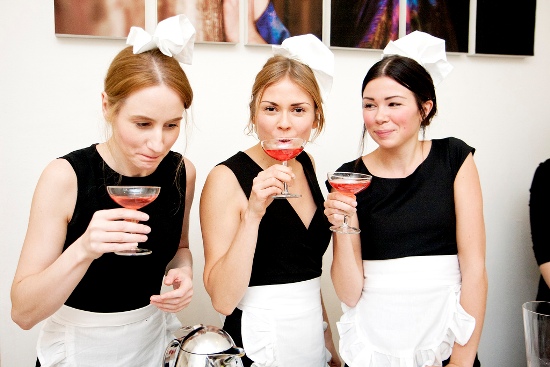
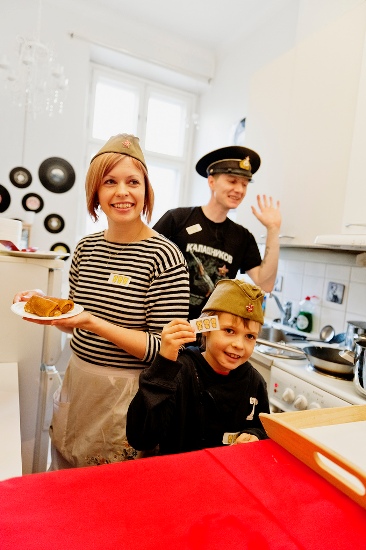
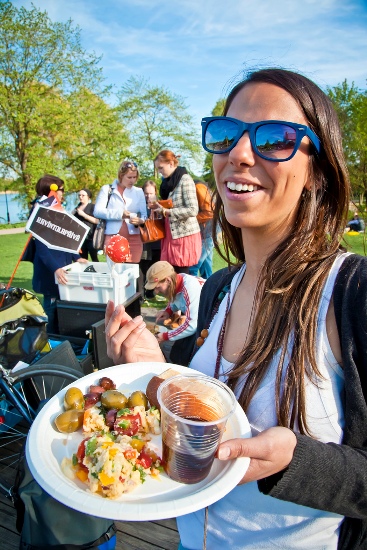
Invented in Helsinki and first held in May 2011, Restaurant Day allows anyone to set up their own café, resto or bar for one day. It has quickly spread to other cities and become a Finnish tradition, also gaining popularity abroad (see slideshow below). It happens four times a year: February, May, August and November.

Exotic aromas, bright colours and African flair greet Guests in Paloni, a downtown Helsinki design shop that is acting as the Picnic in Ghana Restaurant for Restaurant Day. Chef Kojo Owusu has prepared specialities from his homeland Ghana. Together with Johannes Wienss, a cook from Düsseldorf, Germany, he has created a menu consisting of bean salsa, couscous and fried bananas, as well as a refreshing ginger drink to wash it down.

Picnic in Ghana was one of the numerous restaurants that appeared in Helsinki on one Restaurant Day. The event takes place every three months, and the number of participants – and the number of active countries – has increased impressively over time. Restaurant Day now bills itself as “the world’s largest food carnival.” In its first five years, it included a total of more than 22,000 pop-up restaurants in 75 different countries from Argentina to Uzbekistan, serving an estimated three million people. May 17, 2014 set a record with 2,724 restaurants in 35 countries.

The concept is extravagant yet simple. On Restaurant Day anyone at all can open a restaurant, café or bar for one day. Anybody who would like to invite guests to their own restaurant can sign up on the Restaurant Day website. The name and nature of the pop-up restaurants, as well as the menu and prices, are completely up to the participants.

Opening hours: Today only

Creativity knows no bounds. This becomes apparent each time Restaurant Day is held: the selection is enormous. Whatever the weather, crowds of culinary adventurers turn up to sample the cuisine.

You may discover American cupcakes, French bouillabaisse, Iranian nan bread or German curry sausages, not to mention Finnish specialities such as lihapullia (meatballs) and korvapuusteja (cinnamon buns). Nothing is lacking.

Although Restaurant Day originated in Helsinki, eateries also pop up in many other Finnish cities on the big day, and the event is attracting numerous participants abroad. In dozens of countries, back gardens, living rooms, boutiques and galleries are temporarily transformed into restaurants.

“It’s a great concept,” says Wienss. “Too bad it has been slow to catch on in Germany so far.” But things change fast, and there’s always the next Restaurant Day.

Chef for a day: A gallery of Restaurant Days

By Ansgar Frankenberg, May 2012, updated August 2017

Travel bloggers discover wintry Finland

A hand-picked group of leading travel bloggers from around the world have been touring and networking in Finland, helping audiences discover the country’s most exciting activities and cuisine.

Australian travel blogger Shane Dallas, who has visited over 90 countries and written about many of them for his Travel Camel blog, visited Finland in winter on his first trip to the Nordic region. “My blog has the theme of adventure and ‘the road less travelled,’” he says. “For Aussies like me Finland really qualifies as an exotic country to visit.”

“It was great to find lots of snow as I expected, but what surprised me, especially in Lapland, was that I was strangely reminded of the outback of Australia, since in both places you can enjoy a wonderful feeling of space, solitude and silence,” he says. Both regions are also home to traditionally nomadic indigenous people, and Dallas was fascinated by the history of Lapland’s Sámi people.

“Another unforgettable highlight for me was seeing the Northern Lights. I’ve already posted some aurora photos, and many friends have responded that this is such an exciting thing to experience they’ve immediately added it to their ‘to do’ lists.”

Globetrotting bloggers meet

Watch what happens when the Vagabrothers visit Porvoo.

Dallas was invited to Finland for the Nordic Bloggers’ Experience (NBE) programme as one of nearly 50 leading global travel bloggers whose blogs in a multitude of languages reach an amazing 2.5 million followers every month. The bloggers sampled travel experiences around Finland and networked with numerous Finnish host bloggers and tourism industry professionals at Helsinki’s Matka Nordic Travel Fair – the largest such event in Northern Europe.

NBE organiser Inna-Pirjetta Lahti explains that this annual scheme recognises the rapidly increasing importance of travel blogs and social media as channels for marketing tourism services and destinations. “Bringing these top bloggers here helps to promote Helsinki and Finland – and also gives the hundreds of Finnish and foreign exhibitors at the Matka Fair a chance to get their stories told internationally,” she says.

Memorable voyages

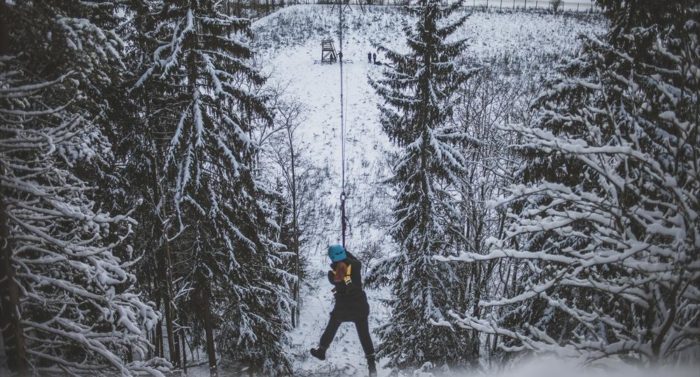
“Yoiks and away!” A blogger sails down a zipline in the forest outside of Porvoo.

“Yoiks and away!” A blogger sails down a zipline in the forest outside of Porvoo.Photo: Helena Gunnare/Nordic Bloggers Experience

Janne Zhu from China publishes a popular blog focusing on food and travel. In Finland the visiting bloggers have savoured local dishes including reindeer steak and baked salmon in mushroom sauce.

“Northern Europe isn’t the first option for Chinese travellers, but in my blog I’ll definitely highlight the great opportunities for adventure here,” she says. “Seeing the Northern Lights in the beautiful scenery of Lapland was very exciting, and I also loved driving the dogs on our husky safari.”

Zhu adds that her Chinese readers are also sure to be interested in Nordic design with its graceful simplicity.

The Grown-up Travel Guide, produced by British-born blogging globetrotter Andy Higgs, targets ‘post-backpacking’ mature travellers who seek both adventure and comfort. “Finland is a good destination in this way,” he says. “I’ve especially been surprised to find such excellent food here – Helsinki should be rated right up there with Copenhagen and Stockholm as a culinary centre.”

Rapid transit

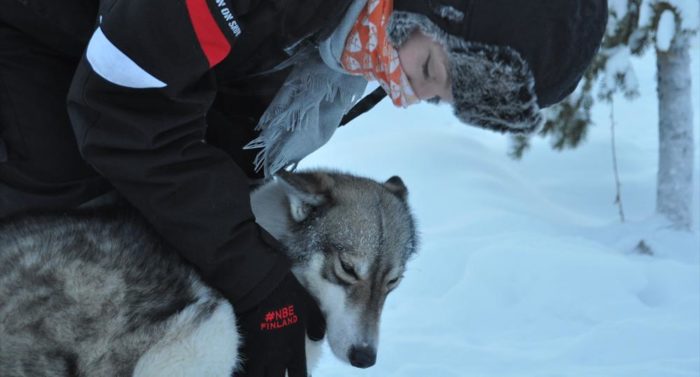
At Enontekiö in northern Finnish Lapland, the bloggers got to take part in a husky safari.

At Enontekiö in northern Finnish Lapland, the bloggers got to take part in a husky safari.Photo: Nordic Bloggers Experience/Matka Nordic Travel Fair

Other Finnish experiences Higgs plans to feature for his blog followers include a sauna at the Finnish Sauna Society followed by a dip in a hole in the ice. “Another pleasant surprise has been finding Finnish people who [are] warm and open once you break the ice – just like you need to break the ice to go swimming or fishing here,” he says with a laugh.

Janicke Hansen from Norske Reiseblogger (Norwegian Travel Blogs) feels that her fellow Norwegians have not fully realised nearby Finland’s potential as a holiday destination. “My blog is for Norwegian travellers who typically like to get out and enjoy active pursuits, and there’s really lots to do here,” she says.

Finland’s wintry highlights for Hansen have included a scenic snowshoeing trek and a helicopter ride, as well as a real Finnish sauna. Her blog already features images from a recent ‘rapids floating’ trip, where she drifted on her back in a watertight dry suit through the icy waters of the raging Pajakka Rapids in eastern Finland.

By Fran Weaver, February 2015

A Finnish poet and his pastry

It’s not easy for a Finn living in the US to explain that her national poet’s birthday is celebrated with a jam-topped, muffin-like pastry. Our New York correspondent and her friends take to the kitchen to re-create a taste of culture.

Whenever I mention Finland to Americans, the conversation tends to turn to our famously dark winters. The bright, breezy summers of my childhood must have been wonderful, my friends say, but how did I manage the winter months in Helsinki?

Finns pay a lot of attention to winter sports, the comforting glow of candles and even therapeutic lamps, but to me, our seasonal pastries offer the greatest degree of psychological warmth. While ice cream stands and sun-ripened berries mark Finnish summers, our winters are punctuated by holidays that each include a sweet, culturally distinctive pastry.

In December we twist dough into Christmas stars (joulutorttu) with plum jam in the middle, around Shrovetide we fill sweet buns with almond paste and whipped cream (laskiaispulla), and we feast on funnel cakes (tippaleipä) to celebrate May Day. On the birthday of our national poet Johan Ludvig Runeberg (1804–1877), February 5, we serve small crumb cakes topped with raspberry jam. (There are recipes for Runeberg cakes, Shrovetide buns and many other sweet treats on our baked-goods recipe page.)

Despite its celebratory context, the Runeberg cake was in fact born as an exercise in frugality. Money was often tight in the Runeberg household, and faced with the added challenge of J.L.’s picky eating habits, his wife Fredrika (1807–1879) took creative license with her recipes. As the poet demanded, she flavoured his daily breakfast cakes with punch and topped them with homegrown fruit, but incorporated crumbs from leftover bread and cakes into the dough itself.

Experimental baking

2570-runebca2_b-jpg

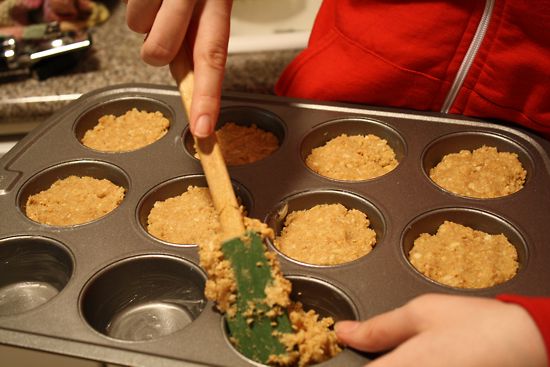
An American muffin mould does the trick, though it’s not as deep as a real Finnish Runeberg cake form. Photo: Laura Palotie

To this day, the recipe allows for flexibility, from the variety of alcohol to the kinds of crumbs used, and invites a casual baker to experiment – even if he or she lives on the other side of the globe. I thus decided to use this year’s Runeberg Day as an opportunity to introduce my friends to Finland’s legacy of holiday pastries.

I picked up eggs, wheat flour, sugar, butter, cream, almonds, cardamom and raspberry jam from my local grocery store, and opted for crushed butter cookies as my crumb of choice. I used all-American muffin moulds to give shape to the cakes.

The concept of smashing crumbs to make a fresh pastry encountered approving nods from my three friends who had joined me for an afternoon of baking, but it was the use of cardamom that triggered the strongest reactions. “This is like something you’d find at an Indian restaurant,” one of my guests commented as he helped me mix a spoonful of cardamom into the dough.

Start the morning right

2570-runebca3_b-jpg

Ready to eat: This stack of American-made Runeberg cakes is fresh out of the oven. Photo: Laura Palotie

“It tastes like an almond cookie, except it’s more cakey,” one guest noted. Another suggested that I vary the recipe, perhaps by substituting cinnamon for cardamom or replacing plain cookie crumbs with crushed chocolate chip cookies.

As we poured cups of tea and discussed the origin of Runeberg Day, we were hard-pressed to find a similar tradition in the US. Not much time is devoted to celebrating American poets, especially outside of the classroom, and short of pumpkin pie on Thanksgiving, few holidays are associated with a traditional pastry. It’s even more difficult to find a popular pastry named after a historical figure.

In Fredrika Runeberg’s fashion, I’ve tried starting off each morning with a homemade pastry, and I’ve been thankful that I’m not asked to share them with a grouchy poet-husband. And, as during my childhood in Finland, their mixture of crunchy almond bits, dry crumbs and tangy raspberry reminds me of early February, the coldest time of the year, when the frosty sunlight shines just a bit brighter than the month before.

By Laura Palotie

[There are many variations on the Runeberg cake recipe. One of the tastiest can be found on Desserts for Breakfast.]

Bringing unique views to Finnish film

Director Dome Karukoski’s unique perspective is reaching a rapidly growing audience. Skilfully balancing both European and US sensibilities, he has been named one of the Top 10 Directors to Watch by US industry bible Variety.

It’s September 2014 and Dome Karukoski is attending the premiere of his sixth feature-length film, The Grump, at the Toronto Film Festival. Surrounded by film fans and industry types, he regularly looks over his shoulder to gauge their reaction. Soon he doesn’t need to, with their regular bursts of laughter reflecting yet another positive response to the Finnish director’s work.

Watch the trailer for Karukoski’s acclaimed film “The Grump.”

Based on the acclaimed series by Finnish author Tuomas Kyrö, The Grump offers a touching look at the generational divide. Here, an 80-year-old countrysider brings his peculiar opinions in tow when circumstances force him to move to the city under the care of his daughter-in-law.

“I read the books and thought they were very intelligent and perceptive,” Karukoski says. “At the same time they were very funny.”

Similar words have been used to describe his adaptation. Screen praised the “poignant exploration of loneliness, old age and the pitfalls and pleasures of remaining resolutely stuck in your ways,” and The Grump was Finland’s most-watched movie in 2014. But for a director still in his 30s, why make a film whose protagonist is well into the twilight of life?

“I made the film for my father,” Karukoski says with a smile. “He is kind of a grump: he complains about things and he’s agitated. Actually, it was his idea that the film should be called ‘The Grump.’ He has self-irony.”

Swift success

Karukoski achieved critical and commercial success when his first films burst onto the scene.

Karukoski achieved critical and commercial success when his first films burst onto the scene.Photo: Pekka Mustonen/Helsinki-filmi Ltd

Son of American actor, writer and poet George Dickerson, Karukoski was born in Cyprus and moved to Finland when he was four-and-a-half. He grew up his mother’s country; his multicultural background would go on to inform his cinematic style.

Critical and commercial success was immediate when he burst onto the scene with the comedy-drama Beauty and the Bastard in 2006. Industry recognition was also swift: he won Best Director at the Finnish National Film Awards for his sophomore effort, The Home of Dark Butterflies, two years later.

Karukoski traversed the country in search of interesting stories, not interested in confining himself to any one genre or particular approach. His fourth full-length, Lapland Odyssey, saw him head far north in 2010 with hilarious results. The year’s biggest draw at the domestic box office, Karukoski’s film “showed the stubbornness of the Finnish mentality,” with a warm-hearted take on life in Finnish Lapland.

In 2013, Heart of a Lion cemented Karukoski’s reputation as a filmmaker. “The film finds a way to mix hatred with humour,” observed the Los Angeles Times. In the movie, a neo-Nazi is forced to confront his ideology when he falls in love with a woman whose son is biracial.

The resultant wave of critical acclaim saw him join Variety’s list of ten directors to watch.

Local ambitions

Karukoski (centre, light shirt) takes a seat during the shooting of “The Home of Dark Butterflies.”

Karukoski (centre, light shirt) takes a seat during the shooting of “The Home of Dark Butterflies.”Photo: Solar Films

However, even with the seductive charms of Hollywood beckoning, Karukoski’s attitude has remained pragmatically Finnish when looking for future projects.

“It’s not about the country, it’s about finding a good story that you relate to. I always like to make emotional films about real people. I am half-American, so it wouldn’t be a problem to go overseas, but it’s not an obsession. If there’s a good script or a good book, then why not?”

For the time being, Karukoski is focused on what promises to be his most ambitious project yet: a film about the iconic Finnish gay artist Tom of Finland. [Editor’s update: The film Tom of Finland, released in early 2017, gets some space in our Tom of Finland article; link below.]

“After I read a couple of biographies, I was totally startled by the character and his history. It is difficult to put a person’s life into two hours, but we want to make a good script before we shoot it.”

When it is eventually released, the film will be greeted by Finnish cinemagoers hungry for local stories. With the film industry here in its strongest position in years, Karukoski feels that it’s high time to utilise the support of the public. Given the bold subject matter of his forthcoming work, Karukoski will be leading by example.

“I think Finnish filmmakers should be courageous,” he says. “Now that we have the audience, we shouldn’t be afraid of losing them. We should offer them something more and different and unique.”

Karukoski’s film picks

New to Finnish cinema? Here are some recommendations from director Dome Karukoski:

Aki Kaurismäki Everybody should see the films of this famous director – it’s obvious. It’s film history.
Frozen Land (2005) This film by Aku Louhimies is a very good portrayal of Finns.
Year of the Hare (1976) Another really good film that has the same actor as The Grump is this one by Risto Jarva. It was also remade in France.
Unknown Soldier (1955 and 1985) Either version. It’s a portrayal of our fight against the Russians, which is a big part of our history. There are so many war films out there, but this is unique as it’s about us Finns.
The first three Detective Palmu films (1960, 1961, 1962) by Matti Kassila With the world now hungry for Nordic crime, these unique detective stories could define how we look at the genre.

By James O’Sullivan, January 2015

Active winter Helsinki

The Finnish capital hosts a wide variety of outdoor activities during the cooler months, ranging from cycling and ice skating to more exotic pastimes such as Nordic walking and ice-swimming.

I bicycle to work – year round. People are often surprised to hear this, as Finland’s winter is not among the world’s mildest. But it’s actually much easier than it sounds. Helsinki’s extensive network of bicycle and pedestrian paths are well maintained (ploughed and sanded) throughout the snowy season. Add to that a bike with studded tires and bright lights, reflective gear, and I’m set to go.

My six-kilometre route runs through parks and along the waterfront, so in addition to getting some exercise and fresh air first thing in the morning, I can enjoy some natural scenery along the way. By cycling to work, I’m also practicing the quintessentially Finnish concept of hyötyliikunta, which means getting the “benefit of exercise” from a daily task, for example, walking to the store instead of driving, skiing to school instead of taking the bus, etc.

I would love to say that, like a hearty Finn, I also stop for a quick dip in the sea, followed by a trip to the sauna. Unfortunately that’s not the case, but I can tell you that no discussion of winter activities here in the North would be complete without mentioning ice-swimming.

Refreshing dip

|||Photo: Päivi Parikka

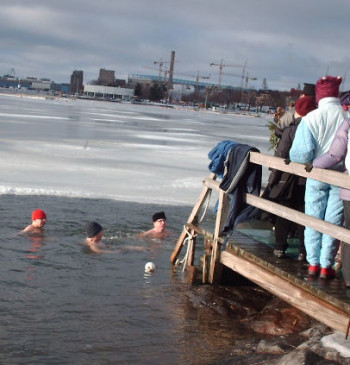
Whatever the weather: Ice-swimmers claim to have found the secret to a long life. Photo: Päivi Parikka

Ice-swimming (avantouinti in Finnish) is enjoyed at lakes or seasides during the winter months from October to April. Participants walk out onto a dock or along a mat to the swimming area, which consists of a large hole drilled into the ice, and go for a quick, invigorating dip, followed by a hot steamy sauna afterwards (though some diehards skip the sauna).

Many Finns claim that avantouinti is the secret to health and longevity, as the cold and hot extremes increase the circulation and the heart rate, which causes a rush of endorphins that are said to have an anti-depressant effect. Foreigners and Finns alike get hooked. The only downside to the popularity of ice-swimming is that many Helsinki sauna and avantouinti societies have long waiting lists, a bit of a challenge if you want to become a member and use their facilities.

Stars on ice

Ice skating is always popular. Helsinki’s Ice Park skating rink is located next to the Railway Station, right in the heart of the city.

This is the Finnish capital’s version of New York’s Rockefeller Center ice rink. Here you can rent skates or bring your own, have a hot chocolate at the onsite café and enjoy a variety of activities, such as skating with friends, curling or listening to a live concert by a local band. As the rink is open until 9 pm every evening (Sundays until 6 pm) you can skate under the moonlight or the stars if it’s a clear night. Skating costs six euros for adults; children under 18, students and seniors pay four euros. Skate rental is six euros; helmets are recommended for children and can be borrowed at no extra cost.

The city also maintains dozens of other rinks throughout the city. Another popular one, also with skate rental available, is located in the Kallio neighbourhood and known as Brahe Rink. Although its opening hours are less predictable, it is much larger and reserves half its space for ice hockey players.

Walk this way

Nordic walking was initially developed in Finland and grew out of the need to provide off-season training for the Finnish cross-country ski team. Essentially, Nordic walking is walking with poles that resemble ski poles. Because of the larger stride that you can take and the added exercise that your arms and body receive, you get more of a workout.

Nordic walking can be done year round; the poles are especially handy for extra balance and agility when terrain is uneven or icy, as it often is in the wintertime.

Indoor oasis

If you prefer to swim and sauna indoors, there’s an excellent network of well-maintained modern public swimming pools in the greater Helsinki area. For something different, try Yrjönkatu Swimming Hall, which is reminiscent of an ancient Roman bath. The city’s oldest indoor pool, it was built in 1928. Restored several years ago, the pool is surrounded by several levels where the changing rooms, steam rooms and saunas are located. Some of the regulars have been swimming here since the mid-1900s. Men and women swim on different days, and bathing suits are optional, so it’s essential to check the schedule before you go.

By Katja Pantzar, updated January 2014