On safari to see rare Finnish lake seals

Finland’s largest lake, Saimaa, is home to the world’s rarest seal. Our reporter embarks on a seal safari to catch a glimpse of an animal that seems to be returning from the brink of extinction.

The Saimaa ringed seal forms the icon of Finland’s nature conservation movement, and has become an attraction for visitors to Finnish Lakeland. It has even inspired an opera at the famous Savonlinna Opera Festival (see box below).

As the 12-berth wooden cruise-boat Kaesa leaves Savonlinna in eastern Finland for an overnight seal-spotting voyage, Lake Saimaa’s forest-fringed waters are as calm as a millpond. Though conditions are good, sightings are far from certain, since only about 310 seals live in the 4,400 square kilometres of this vast, labyrinthine lake system. But just before sunset someone shouts “Seal!” and we rush to the railings to spy a dark, whiskered head bobbing in the water. We watch as the seal repeatedly dives for fish and returns to the surface.

Our guide, nature photographer and filmmaker Juha Taskinen, explains that Saimaa’s seals are a distinct inland variety of the ringed seal, a species found in arctic seas. They adapted to their freshwater habitat after the lake and its inhabitants became cut off from the Baltic Sea some 9,000 years ago.

Becoming more seal-friendly
2970-markku_tissarinen_norpparisteily-05-550-jpg

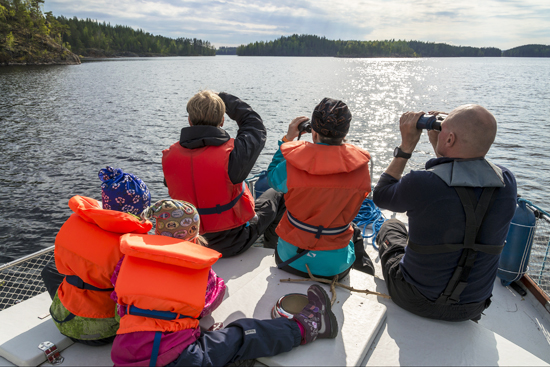
Seal seeking: Guests on a Lake Saimaa seal safari search the surface of the water for signs of seals.Photo: Markku Tissarinen

Taskinen is a dedicated conservationist, but back in the 1940s his grandfather used to hunt lake seals, since fishermen saw them as competitors. “By the 1950s, when they first received protected status, there were probably fewer than 100 left,” he says. “Industrial pollution also affected the seals, but today the lake water is practically clean enough to drink.”

In recent years the seals’ numbers have risen, but they are still listed as critically endangered. “The greatest threat they face today is fishing nets, since their pups can easily get entangled in nets and drown,” says Taskinen. In recent years about 50 to 60 pups have been born each winter, but every year several perish in nets. A recent ban on the use of nets in some of Saimaa’s waters in springtime has helped, but Taskinen would like to see nets prohibited all year round in all of the seals’ waters.

Most of Saimaa’s commercial fishers use equipment that does not endanger the seals, but many local residents and holiday-home owners still put out nets. Taskinen explains that seal-friendly fish traps designed and distributed by conservationists can work just as well as nets, but some local fishers remain reluctant to change their tackle.

Stepping up conservation
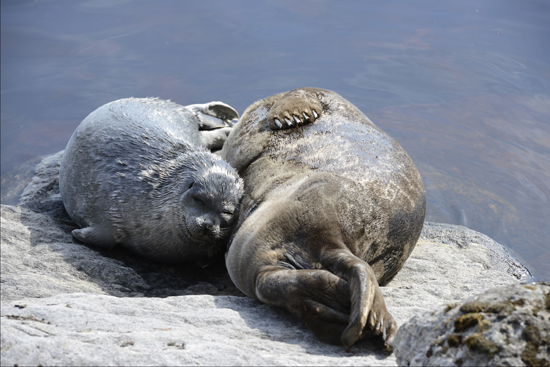
2970-kimmo-mamman-vierella-kuva-juha-taskinen-550-jpg

A seal pup (left), whom researchers have given the name “Kimmo,” basks in the sun beside its mother.Photo: Juha Taskinen

Climate change represents another potential threat. “Mother seals raise their pups in snow dens on the frozen lake. In winters in the early 2000s there was too little snow and many pups died. But researchers and volunteers have sometimes helped the seals by piling up man-made snowdrifts along the shores where they breed. The seals have happily used these snowdrifts to make breeding dens,” explains Taskinen.

A five-year, EU-funded programme called Safeguarding the Saimaa Ringed Seal launching in August 2013 intensifies such successful conservation actions, promotes research into seal behaviour and runs awareness-raising campaigns. Research findings will be used to plan further measures such as the protection of lakeshores against holiday home developments. Studies of radio-tagged seals have already proven that they range over surprisingly long distances searching for fish.

Conservationists hope the seals’ numbers will keep rising steadily to about 400 by 2025. “That should be enough to remove the imminent threat of extinction, though with such a small total population they will remain vulnerable to disease outbreaks,” says Taskinen.

“Since they are the only animal found only in Finland, the loss of Saimaa’s seals would be a national shame. Since it is the actions of people that have endangered them, we surely have a moral obligation to save them,” he adds. “I’m quite optimistic overall though, since people clearly want to see them survive, and a lot of good things have been done in recent years to help them.”

By Fran Weaver, July 2013

Finnish event gets women into programming

See how a single event, held in Finland to encourage women to try app building and programming, has evolved into a worldwide movement.

Maria Boychenko was curious. Everyone around her was talking about rather interesting things, and she wanted to learn more. “Helsinki is so saturated with technology and startups making applications,” she says. “I study and spend spare time among entrepreneurs – information technology is just in the air. I wanted to learn the basics of how websites and apps are made, whether it is difficult or everybody can actually do it.” Boychenko decided to go to a Rails Girls event, a free workshop that encourages women to learn about building web applications and software. Taking its name from Ruby on Rails, an open source web application framework, Rails Girls has evolved from a single event to a worldwide movement.

Consumers to creators in two days

Linda Liukas cofounded Rails Girls to help more women go from online consumers to web creators.Photo: Codeacademy

“Rails Girls is an attempt to give young women a fun and approachable first experience in software craftsmanship,” says Linda Liukas, who founded the movement along with Karri Saarinen. “I was really solving my own itch – I wanted to learn to code in a supportive environment.” Over two days, participants listen to volunteers talk about diverse topics ranging from designing an app to the social culture around software development. They hear female programmers describe their careers. They get an introduction to programming and put technical jargon into context. They mingle, eat snacks and have fun. But the main part of the event is creation: before the event is completed, all participating women code and deploy a simple web app. “In sum, the workshop sets the girls on a path from users to makers, from online consumers to web creators, by teaching the first steps in understanding the languages and layouts of the web,” Liukas explains. Since that first event in October 2010, Rails Girls has spread around the world, from Beijing to Paris and from Lisbon to Kiev. Guides for local organisers are now available in a variety of languages, such as Japanese and Russian. They are now rapidly approaching their 100th event.

Web built in Finland

3240-rails-girls_02_flickr_lynnwallewnstein_cc-by-nc-sa-2-0_550px-jpg

At Rails Girls workshops, participants learn from women and men who are already established in the technology field.Photo: lynnwallewnstein/flickr cc by-nc-sa 2.0

“Rails Girls applies an open-sourced, nonprofit model which has enabled us to spread quickly,” says Liukas. “It is a movement because the internet is all about sharing. The backbone of the whole web was built in Finland with open-source technologies like MySQL, Git, Linux and SSH. It was only natural for us to make something that was intended for everyone. Combine that with the Scandinavian ethos of equality and world-class education system and Rails Girls being born here in Helsinki makes total sense.” The organisation receives support from the Aalto Center for Entrepreneurship and all events are funded by local sponsors and staffed by local volunteer experts. Henrietta Kekäläinen helps European organisers, and says it is important for the local community to be engaged. “What we saw is that the more the local technology and programming community was involved, the better the results,” she says. “Rails Girls does not have a commercial or national agenda. It’s really for the good of the community and bringing more women and beginners into the technical side of things.” And they have definitely seen results. Kekäläinen gives an example from Krakow: “Last year we went to the European rails conference Railsberry and Linda gave her speech to show the Rails Girls materials to everyone,” she says. “There were five women at a 350-person conference, excluding the amazing organisers. This year at the 400-person conference, 10 percent were women. I almost had to queue for the bathroom.”

By David J. Cord, July 2013

Finnish motorsport drivers have speed in their genes

Brilliant role models and a fascination with technology have made Finland a front-runner in motorsports.

In 2022, Kalle Rovanperä of Finland became the youngest-ever World Rally Champion, at the age of 22. He was the first Finn to win the title since Marcus Grönholm in 2002, but Rovanperä (whose father, Harri, also had a successful rally career) joined a long line of Finnish athletes who have ascended the winners’ podium in motorsports championships.

Let’s take a look at a few famous Finnish drivers over the years and some of the factors that led to their success. (See also: Finnish racecar drivers excel at acceleration.)

“Finn” rhymes with “win”

Kimi Räikkönen

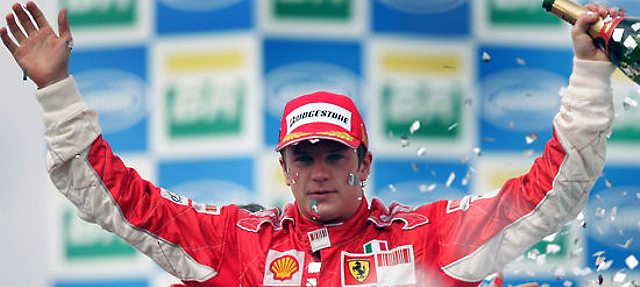
Kimi Räikkönen clinched the 2007 Formula One World Championship by winning the last race of the season, the Brazilian Grand Prix in Sao Paulo.Photo: Lehtikuva

Back in 2007, the way Kimi Räikkönen won the Formula One world championship came as a surprise to many. But the fact that Räikkönen became champion after several years of trying probably did not surprise anyone who follows the sport.

Räikkönen’s exceptional talents became known as early as 2001 when he debuted in F1 after skipping over two formula racing series that drivers normally compete in before advancing to the pinnacle of car racing.

There may have been more confidence in Räikkönen because he’s a Finn. Over the decades, Finnish drivers had snapped up Formula One and World Rally Championship titles, as well as winning championships in Grand Prix motorcycle racing, Motocross, Trial, Enduro, Ice Speedway and Snowcross.

For years, the directors of rally teams have known the sure-fire recipe for success: “If you want to win, you need a Finn.”

Reasons behind the success

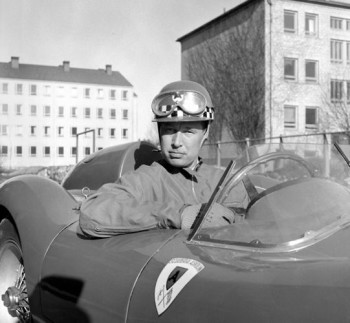
In the 1950s, Curt Lincoln (1918-2005) was Finland's leading racing driver and is regarded as the forefather of the present champions. The photo was taken at the Eläintarha street race in Helsinki, which he won altogether 14 times.

In the 1950s, Curt Lincoln (1918–2005) was Finland’s leading racing driver and is regarded as the forefather of the present champions. The photo was taken at the Eläintarha street race in Helsinki, which he won a total of 14 times.Photo: Lehtikuva

Relative to its population, Finland has been the number one country in the world in motorsports, measured by international success.

But what is it that makes Finns so successful?

Kari O. Sohlberg, formerly chairman of AKK Motorsport and board member of FIA (International Automobile Association), has said that he believes car racing became ingrained in the Finnish psyche back in the days of the Eläintarha Race, which was held in Helsinki from 1932 to 1963.

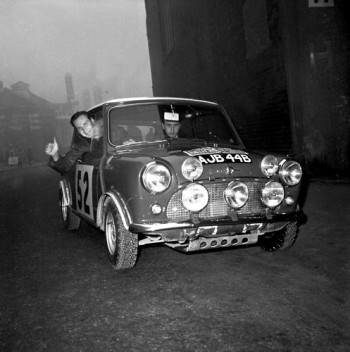
Timo Mäkinen, born 1938, is one of the greats of rally driving. The picture is from the Monte Carlo rally of 1965, which Mäkinen won in a Mini Cooper.

Timo Mäkinen, (1938–2017), was one of the greats of rally driving. The picture is from the Monte Carlo rally of 1965, which Mäkinen won in a Mini Cooper.Photo: Lehtikuva

“After that, we got a few role models,” says Sohlberg “Rauno Aaltonen and Timo Mäkinen were successful in rally racing back in the 1960s, while in Formula One Keke Rosberg blazed the trail by winning the title in 1982.”

The success stories have a varied background in different motorsports. Rally drivers have sped over backcountry dirt roads in Finland since their teenage years, while Finnish F1 drivers have started their racing careers in the karting series.

Professor Matti Urrila, who specialises in the psychological coaching of athletes, believes that Rosberg gave Finland an important cultural legacy.

“At first, people made fun of him but, in the end, he proved that anything is possible,” says Urrila, who also cooperated with drivers such as Mika Häkkinen in Formula One and Marcus Grönholm in rally. “The victory boosted the confidence of our increasingly motorising nation. No one’s chances were doubted anymore.”

Finnish know-how

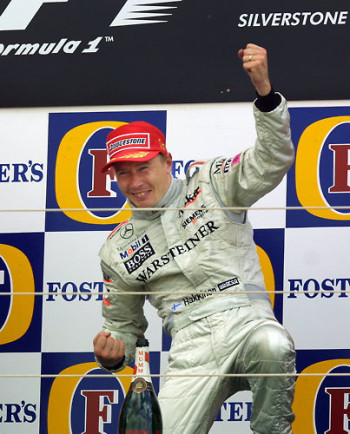
Mika Häkkinen celebrates on the podium after winning the 2001 British Grand Prix at Silverstone in 2001.

Mika Häkkinen celebrates on the podium after winning the 2001 British Grand Prix at Silverstone in 2001.Photo: Lehtikuva

Matti Urrila stresses that in rally and Formula One circles, personal connections are also important.

“As a result of our drivers’ success, Finland has an abundance of expertise in how to become a world champion in Formula One,” he says. “Beginning with sponsorship and connections, there is a very realistic understanding of what it takes. And that puts Finland in quite a unique situation.”

For example, in Formula One, Keke Rosberg managed Mika Häkkinen and Jyrki Järvilehto (J. J. Lehto), while in rally racing, businessman Timo Jouhki worked as the manager for Juha Kankkunen, Tommi Mäkinen and Mikko Hirvonen.

Special character

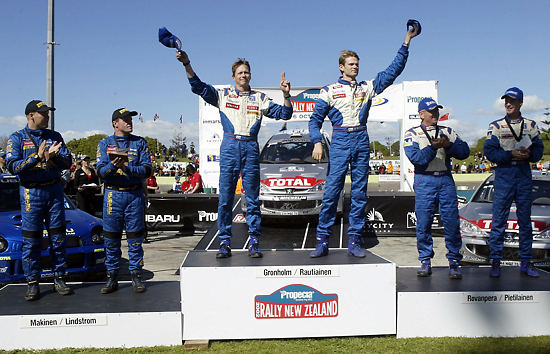
Finnish drivers took the first three places at the Rally of New Zealand in October 2002. At centre-left is winner and World Champion Marcus Grönholm with co-driver Timo Rautiainen. On their left are Harri Rovanperä and co-driver Risto Pietiläinen, and on their right third-placed Tommi Mäkinen with co-driver Kaj Lindström.

Finnish drivers swept the top three places at the Rally of New Zealand in October 2002. At centre-left is winner and World Champion Marcus Grönholm with co-driver Timo Rautiainen. On their left are Harri Rovanperä and co-driver Risto Pietiläinen, and on their right third-placed Tommi Mäkinen with co-driver Kaj Lindström.Photo: Lehtikuva

All of this would not be possible without what some might call the special character of the Finnish nation.

“Finns are fascinated by technology, by the collaboration of man and machine,” Urrila says. “War reparations that had to be paid to the Soviet Union after the Second World War could not have been fulfilled with agriculture alone, so we started developing our engineering industry. As a result, our society became mechanised.”

It is hardly a coincidence that Kimi Räikkönen studied car repair at a vocational college, Mika Häkkinen studied plating and welding and Mika Salo was an electrical fitter. The job of a mechanic was also familiar to drivers such as Juha Kankkunen, Tommi Mäkinen and Marcus Grönholm, who wrestled with tractors while working as farmers in their spare time.

But the final truth about Finland’s success may be summed up by this:

“Finns are crazy,” as world rally champion Sébastian Loeb said one summer at a rally competition in Jyväskylä, Finland after losing to Marcus Grönholm.

By Pekka Anttila, November 2007, last updated August 2023; a version of this article originally appeared in the magazine Suomen Kuvalehti.

Finnish World Champions

F1:
1982 Keke Rosberg
1998, 1999 Mika Häkkinen
2007 Kimi Räikkönen
World Sportscar Championship:
1970 Leo Kinnunen (together with Pedro Rodrigues)
Rally:
1981 Ari Vatanen
1983 Hannu Mikkola
1985 Timo Salonen
1986, 1987, 1991, 1993 Juha Kankkunen
1996-1999 Tommi Mäkinen
2000, 2002 Marcus Grönholm
2022 Kalle Rovanperä
Road Racing:
1972 Jarno Saarinen
Trial:
1976-1978 Yrjö Vesterinen
1992 Tommi Ahvala
Enduro (various classes):
1990-1992, 1994-1995, 1997, 2000 Kari Tiainen
1995, 1999, 2001-2002 Petteri Silvan
1999 Vesa Kytönen
2002, 2004-2006, 2008 Samuli Aro
2003 Petri Pohjamo
1999-2004, 2007 Juha Salminen
2007-2011 Mika Ahola
2005-2006, 2008 Eero Remes
2018 Sanna Kärkkäinen
Motocross (various classes):
1974, 1976 -1978 Heikki Mikkola
1985, 1990 Pekka Vehkonen
2007 Jussi-Pekka Vehviläinen
2009 Antti Pyrhönen
Ice Speedway:
1990 Jarmo Hirvasoja
Snowcross:
2002-2003, 2004-2005 Janne Tapio
Table updated in August 2023.

Finns bike toward greener city in style

Urban biking is gaining momentum in Helsinki as more people choose to leave their cars at home and hop onto two wheels.

Cycling has long held a special place in the Finns’ hearts, and ranks as the second most popular form of exercise in the country in national surveys, outstripped only by walking. A number of domestic bike manufacturers, new and old, are stoking the trend and producing bikes that appeal to today’s urban riders.

In Helsinki, cycling remains the quickest alternative for short journeys – bikes offer a perfect way to get around the capital. Helsinkians are increasingly choosing pedal power over cars in the search for greener, healthier and more economic means of transportation.

The city is creating bold plans to make things even more bike-friendly in order to accommodate the amount of cyclists, which is anticipated to double in coming years. The capital’s far-reaching network of bike paths is constantly being extended, and the city’s most recent proposal aims to make two of Helsinki’s most heavily trafficked streets more suitable for cyclists.

Timeless design meets modern needs

4274-pyoraily_narinkkatori2ihmista_emiliakangasluoma550-jpg

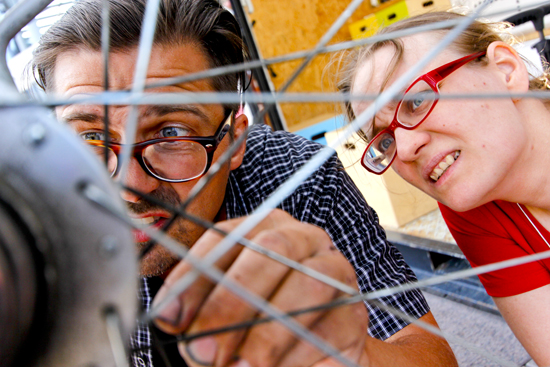
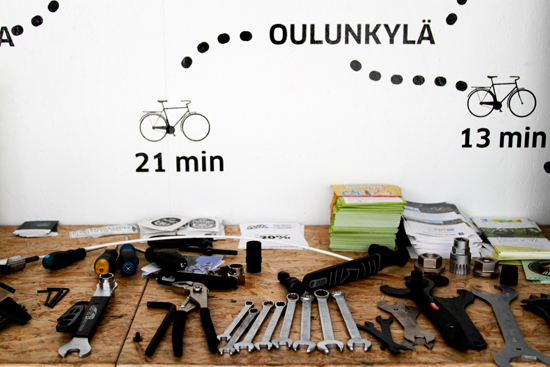
Marko Kokkonen helps Anni Pullinen fix her bike outside Helsinki’s Cyclecenter, which offers bike repair advice and services.Photo: Emilia Kangasluoma

With urban biking gaining momentum, new Finnish bike manufacturers are appearing in order to meet the growing demand for good quality bikes for comfortable city cycling. Pelago Bicycles, a frontrunner on Helsinki’s urban cycling scene, makes simple, sturdy, practical bikes that have quickly found a steady foothold on the Finnish and European markets.

Founded in Helsinki in 2009, Pelago developed as the brainchild of two graphic-designer brothers, Mikko and Timo Hyppönen, long-term bike enthusiasts who had dreamed of building their own bicycle brand for many years.

Their aim, as they say on their website, is to “make bicycles that you can be as proud of as we are – bikes that you’ll still be riding in 2050.”

Pelago frames come in sleek shades of black and brown, often with classic leather saddles and sporting hip names such as “Bristol,” “Brooklyn” and “San Sebastian.” The bikes are designed with a very practical approach. The tyres are thick enough to traverse cobbled streets and the upright riding posture makes for perfect urban biking.

In 2012 Pelago won the international sporting goods industry’s largest startup competition, the Ispo Brandnew Award, for their “functional, aesthetic and strong products.”

Finland’s most popular bike

4274-pyoraily_merenrannassa_emiliakangasluoma550-jpg

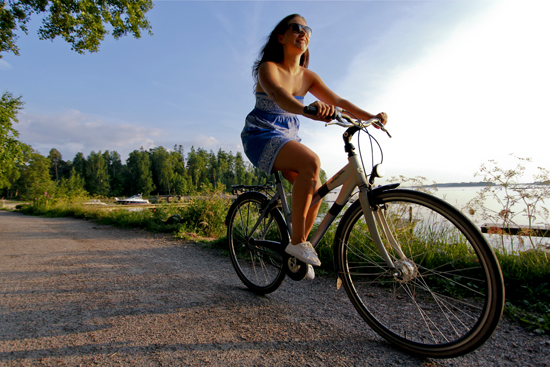
Bike over bus: Anna-Henriikka Lahti, who usually chooses to ride her bicycle rather than the bus, enjoys the beautiful island of Lauttasaari.Photo: Emilia Kangasluoma

The single most popular bike model in Finland is Jopo, a favourite from the 1960s and ’70s. This retro favourite experienced a rebirth in the 2000s with the introduction of a new model. It’s designed as a bike for everybody, regardless of age or size, with easily adjustable handlebars and saddle. With its variety of colours, stylishly simple design and upright riding position, the Jopo has come to be seen as the ultimate urban bicycle.

Helkama, the Jopo’s manufacturer, has a history extending back to 1905 and remains one of the few brands that assembles bikes in Finland and uses domestically manufactured frames. It’s known for bikes that stand the tests of time, weather and – it has become clear – rapidly changing trends.

Another household name in Finnish bicycle design is Tunturi, which started in the 1920s as a bike repair shop in Turku and later expanded to become one of the largest bike manufacturers in the country. In addition to its modern trail bikes, Tunturi also has a variety of retro bikes, gearless classics that remain comfortable, stylish and popular decade after decade.

Bike repair and rental with a twist

Customers can borrow bike-repair tools at Cyclecenter. Photo: Emilia Kangasluoma 

An innovative new Bicycle Centre offers rentals and repairs for Helsinki’s growing urban cycling population. Located alongside Narinkkatori, a main plaza in the downtown neighbourhood Kamppi, you’ll find entrepreneurs in storefronts created out of shipping containers by design students from Metropolia University of Applied Sciences.

The Bicycle Centre shop itself, which offers bike repair advice and services, enjoys steady demand. “Our customers are active cyclists and bike commuters who need help taking care of their bikes, usually just small glitches such as patching a broken tyre,” says Pauliina Soilu, who works there with Marko Kokkonen.

Next door, Greenbike has a 20-year history of renting out quality bikes. “Our concept is quite unique,” says Greenbike owner Kimmo Suontakanen. “We stand out because all our bikes are very high quality, and our selection is renewed every year.” When autumn arrives and the Greenbike rental storefront closes for the winter, all the rental units go on sale at their shop on Bulevardi.

By Amanda Soila, July 2013

Finnish ship showcases clean technology

The cruise ship Viking Grace, which entered service in January 2013, is the most efficient ship in the thriving Baltic Sea cruise industry. We find out why.

The engines are huge, the size of buses, and give off a volcanic roar that is only partially muffled by ear plugs. Deep in the belly of the ship, it is as noisy and hot as you might imagine an engine room to be. But there is no smell of fuel oil, no grease, no grime. It is very clean.

Without words, chief engineer Henrik Fröberg points at huge yellow pipes. Here is where the fuel comes in, he is explaining. Here is where it goes into the engines. He’s showing what makes the Viking Grace cruise ship so innovative. Currently it is the only ship in the Baltic to be fuelled entirely by liquefied natural gas (LNG).

Fewer emissions

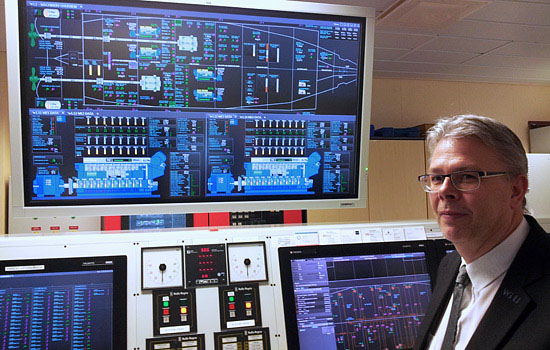
Chief engineer Henrik Fröberg explains the ship’s energy management system in the control room.

Chief engineer Henrik Fröberg explains the ship’s energy management system in the control room.Photo: David J. Cord

“LNG has only 85 percent of the carbon dioxide emissions of heavy fuel oil,” Fröberg explains in the quiet of his office. “Nitrogen oxide emissions are 12 percent. Particulate emissions are only about 10 percent; sulphur dioxide is practically nothing. This is the future.”

The Viking Grace is part of the thriving Baltic Sea cruise industry and plies the route between the southwestern Finnish city of Turku and Stockholm, Sweden, with an intermediate stop at Mariehamn in the picturesque Åland Islands. The passengers are going to visit friends, or want to take advantage of tax-free shopping, or are simply enjoying the entertainment on board, but all seem to know about the LNG fuel. Viking Line makes sure every crew member can answer questions – even a bartender says he has received training about LNG.

In 2015 strict regulations will come into force to limit emissions on the Baltic Sea. Viking Grace is the vanguard of a new generation of ships built specifically to meet these rules. The entire vessel was created to be efficient, from LED lighting to a hull that cuts more smoothly through the water.

“We have a sophisticated energy management system,” says Fröberg. “We have high-efficiency electric motors and pumps. Waste heat is recovered, stored, and re-used. We have motion detectors so lights aren’t on unnecessarily. There are speed control fans for the ventilation system. Even the chef can’t forget to turn the ovens off in the kitchen, because they are on timers.”

Finnish engines

3242-ft_degerby_gasthamn__lis_karlsson_2011_aland_550px-jpg

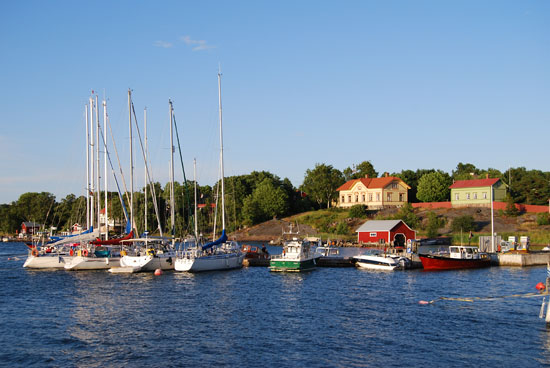
Passengers on cruise ships between Finland and Sweden pass idyllic archipelago scenes like this in the Åland Islands, an autonomous area of Finland located halfway between Turku and Stockholm. Photo: Lis Karlsson/Visit Åland

The crown jewel of the Viking Grace is the propulsion system. Although the ship has only used LNG so far, the engines are actually dual-fuel, and can use regular diesel if necessary. These special engines were developed by the Finnish company Wärtsilä, a global leader in the field.

Tomas Aminoff, director of Wärtsilä Ship Power, says they have received orders for these engines to power a wide diversity of ships in regions around the globe.

“We see more and more interest for LNG as fuel for cruise vessels, and we find it to be natural that the Baltic region, with its sensitive environmental balance and populated areas surrounding it, will be a forerunner in LNG-powered vessels,” he says. “It’s one of the most economical, environmentally sound solutions available today, and with a dual-fuel engine, fuel flexibility is secured.”

Wärtsilä also helps with the entire natural gas infrastructure and the gas handling system, both on the ship and on shore. Viking Grace is bunkered, or refuelled, during a one-hour process in Stockholm while 2,500 passengers and 800 cars are unloaded and new ones come aboard.

“This vessel proved, once for all, that LNG as fuel is a totally viable option, even for the most demanding vessel with the highest safety standards,” says Aminoff.

By David J. Cord, June 2013

Nordic superfoods: from forest to table

Helsinki’s Johan & Nyström café serves up Finnish berries and raw food in a delicious array of sweet and savoury treats that are good for you.

A gorgeous row of cakes lines the glass display case. Beside a black currant and chocolate cake are creations made from Finnish berries such sea buckthorn, cranberry and cloudberry, and other ingredients including black liquorice root.

As a well-travelled café goer, there are two immediate surprises in store for me. The first is that all of the delicious cakes here are good for you. The second is that I can eat them, as they are gluten-free. This makes me ecstatic. More often than not, very few gluten-free options exist on café menus in a world where the majority of baked goods contain wheat.

“That’s a common reaction,” says owner and barista Pasi Kokko, with a laugh. “Not only are the cakes healthy, they’re gluten-free, and that amazes people who are used to not having much choice when it comes to gluten-free options.”

Superfoods, natural alternatives to processed foods, are on the rise in Finland. It’s a growing trend to choose nutrient-rich ingredients such as vitamin-loaded local berries, and to eat raw food that is not only uncooked but also unprocessed and often organic.

Finland’s abundance of forests and fields, as well as Everyman’s Right – under which every man, woman and child is allowed to pick wild berries and mushrooms anywhere in the land so long as they are not too close to someone’s home or farm – mean that it’s easy to eat well.

Quality over quantity

2594-johan_nystrom_pasi-kokko_sareda-kouki01_susanna-alatalo_550px-jpg

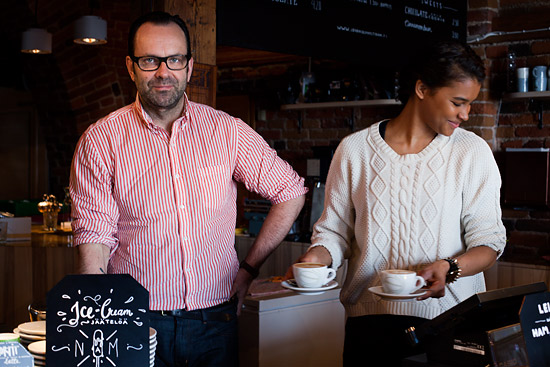
Pasi Kokko and Sareda Kouki work behind the counter at Helsinki’s Johan & Nyström café.Photo: Susanna Alatalo

“I’d rather have one cup of good coffee or tea than seven bad ones,” says Kokko, summing up his café philosophy for the high-quality coffees and teas he serves. Eighty-five percent of the coffee is direct trade, which means that it’s purchased directly from the bean farmers.

Located near Uspensky Cathedral in the Helsinki neighbourhood of Katajanokka, Johan & Nyström is housed in a 19th-century brick warehouse that was once home to the Russian tsar’s stables. These days the renovated space is full of light and colour and the aroma of freshly brewed coffee.

Johan & Nyström’s popular raw food brunches, held every second Sunday, sell out well in advance. “We have all been surprised by the positive raw reception,” says Kokko, who credits his yoga instructor Magnus Appelberg with introducing him to the world of raw food.

Zucchini pasta, avocado tahini, hummus, coleslaw, vegetable-and-herb salad, seed crackers, raw blueberry pie and chocolate brownies are some of the items on the brunch menu.

Harbourfront design

2594-johan_nystrom_04_susanna-alatalo_550px-jpg

Johan & Nyström is housed in a 19th-century brick warehouse that is now full of light, colour and the aroma of freshly brewed coffee.Photo: Susanna Alatalo

In summer, an outdoor waterfront patio overlooks the boats moored in the Baltic, with chairs and tables in bright pinks, yellows and greens. The patio furniture, like much of the interior, has been locally sourced. Kokko is a believer in working with independent local firms, whether he’s ordering interior design elements or desserts. The latter come from gourmet cake maker Suvi Tikamo.

“Small things become big things when people choose what they consume and where or whom they purchase it from,” says Kokko.

He officially took over as the café’s owner in December 2012. Previously, the establishment was the Swedish roastery firm’s Helsinki office and occasionally open on Saturdays as a café. The roastery still provides coffee for many other Finnish cafés and restaurants.

Formerly a professional photographer, Kokko is enjoying his second career as a barista and entrepreneur. The café has also become a family business as Kokko’s wife, Liisa, a stylist and journalist, helps out on the weekends, and the couple’s grown-up children also work there.

Their clientele is a mix of regulars, both locals and tourists, many of whom request something distinctively Finnish. This factor has helped shape the Scandi-inspired menu. One Spanish couple was so impressed by the black liquorice root cake that they came back to thank Kokko personally.

By Katja Pantzar, June 2013

No night tonight: Finnish Midsummer days last forever

The Finnish word for Midsummer is juhannus, actually a form of “John,” as in Saint John, whose feast day falls on or near the summer solstice. In Swedish, which is also an official language in Finland, the holiday is known simply as midsommar.

Finnish cities tend to empty out at Midsummer as people make for the countryside, seeking out summer cottages, lakes and Midsummer bonfires.
Video: Finland 100

Midsummer is very much a secular holiday, officially held on the Saturday between June 20 and 26, with roots that predate Christianity. Finnish cities tend to empty out as people make for the countryside, where there are summer cottages, lakes and Midsummer bonfires. (You can read more about Midsummer traditions and celebrations in our article.)

In the middle of the summer, the midnight sun circles the sky in the far north without setting for weeks on end, and even southern Finland doesn’t experience complete darkness. It can be a disorienting experience for those spending their first summer in Finland, but also an enchanting one. The magic of Finnish summer light always seems to have the same effect, no matter how many times you see it.

By Peter Marten, June 2018

Aalto’s Stool 60 has legs

While the name Alvar Aalto is synonymous worldwide with innovative architecture, it is also closely associated with exceptional furniture design. Chief among these is the quintessential functionalism of his Stool 60.

With sales of around eight million units over the years, Alvar Aalto’s Stool 60 celebrated its 80th anniversary in 2013.

Aalto helped pioneer the groundbreaking process of bending wood, and applied it in creating the legs of his three-legged stool. The design allowed the seats to be stacked easily on top of one another, taking up far less storage space. Utilising birch wood, one of the most common broad-leafed trees in Finland, first saw cuts were made into the L-leg planks of wood, before a process that bent them to a 90-degree angle using heat and steam.

A piece of history

2661-jakkarat_9780_550px-jpg

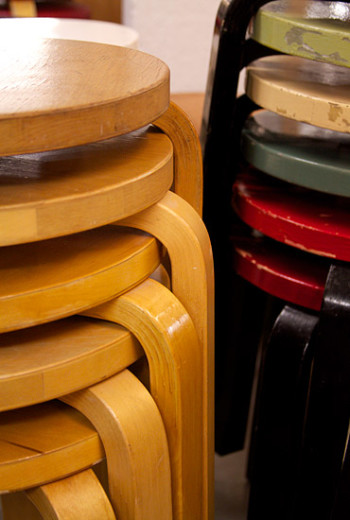
Stackable stools, and enduring, too: When a Stool 60 outlives its coat of paint, the wear and tear just seem to add to its charm.Photo: Leena Karppinen

Stool 60 was officially unveiled to an enthusiastic public in London at a Finnish furniture review in November 1933.

“Back then it was a surprise to the English audience and press that such a good design came from a little, unknown corner of Europe called Finland,” explains Mari Murtoniemi, educational curator at the Alvar Aalto Museum. “Aalto has been the flagship of Finnish design ever since.”

Situated in his former hometown of Jyväskylä, central Finland, the museum marked the stool’s 80th birthday with a special exhibition to tell its story.

“Aalto was one of the designers who created the image of quality and functionality that Finnish design is still appreciated for today,” Murtoniemi says. “He was a gate opener.”

Aalto’s designs were created for all to enjoy, and many of them appear in Finnish homes. Helping facilitate this is Artek, the furniture company that Aalto established in 1935 with his wife Aino, visual arts promoter Maire Gullichsen and art historian Nils-Gustav Hahl. Also commemorating its 80th anniversary, the company introduced a series of special edition Stool 60s produced by various well-known architects and designers, and brought back a range with vintage coloured tops.

Enduring design

2661-timo_alvar__leena_karppinen_550px-jpg

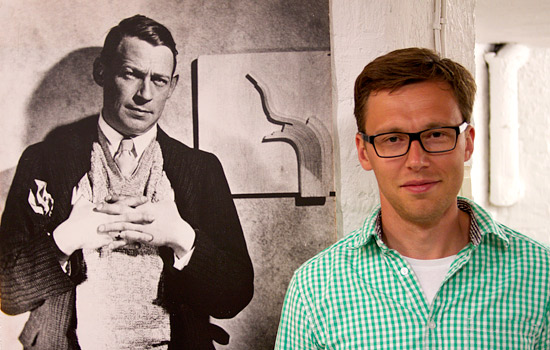
Timo Penttilä of Artek 2nd Cycle, which deals in recycled and vintage Artek furniture, faces the camera along with a portrait of designer and architect Alvar Aalto.Photo: Leena Karppinen

All things considered, 80 years is a long time in the design world. Just why has this simple stool endured?

“It was just genius,” says Timo Penttilä, from Artek 2nd Cycle, a branch that deals in recycled and vintage Artek furniture. “It was revolutionary back then and it has stood the test of time. There are many words to describe it: simple, beautiful, functional.”

Seeking to preserve the sustainable design of Artek furniture, the 2nd Cycle retail and exhibition space in Helsinki collects pieces from flea markets, schools, nursing homes and garages. While the company offers to restore each item to its original condition, each piece of furniture’s unique condition is greatly respected.

“We leave most of the items as we find them,” Penttilä says. “Each piece develops its own character over the years. Personally, I like stools whose paint has worn off from heavy use.”

And, given their ease of storage, Penttilä isn’t alone in having numerous Stool 60s stacked away at home.

“If we have a party at home, we have a seat for everybody,” he smiles. “Some people who work here buy one stool every year. My colleague Antti has around 15. Or maybe he has more, but he isn’t telling how many.”

By James O’Sullivan, June 2013