One of Helsinki’s newest and oldest islands

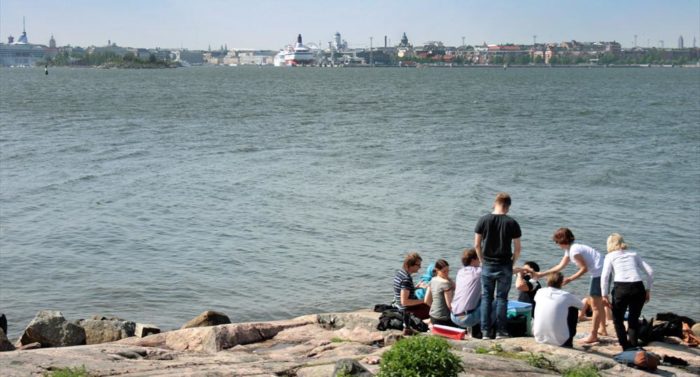
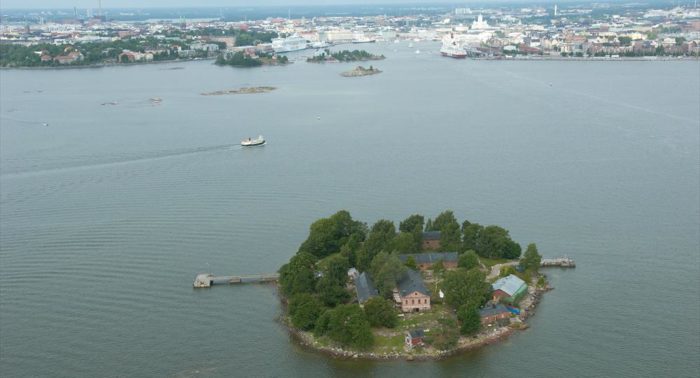
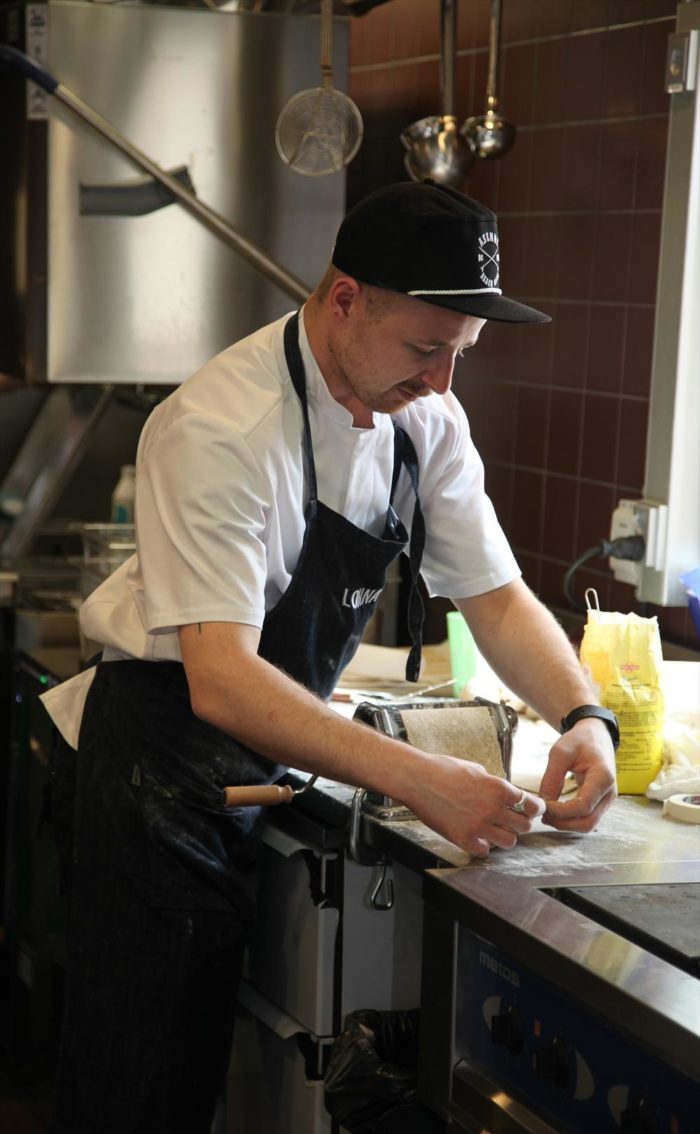
Lonna Island has always been there, just outside the Finnish capital’s South Harbour. You just haven’t noticed it, even though Lonna is visible from downtown Helsinki and located near the island fortress of Suomenlinna, a popular tourist site. (See our slideshow below.)

“We figured that a million people used to pass this island every year without stopping,” says Ville Wäänänen, whose family business, Fregatti Ltd, is in charge of operating Lonna Island and its buildings for the public.

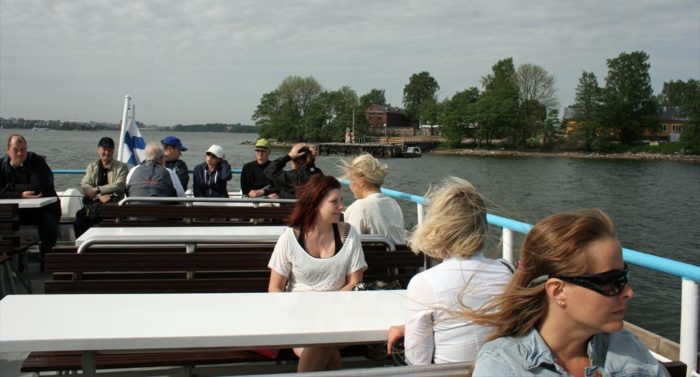
Until summer 2014, regular people had no access to the island, although crowds of visitors sailed past Lonna on their way to Suomenlinna. That has changed. Nowadays certain ferries to Suomenlinna also stop at Lonna.

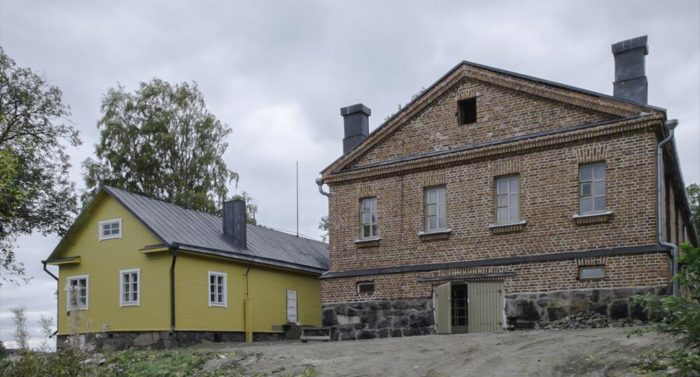
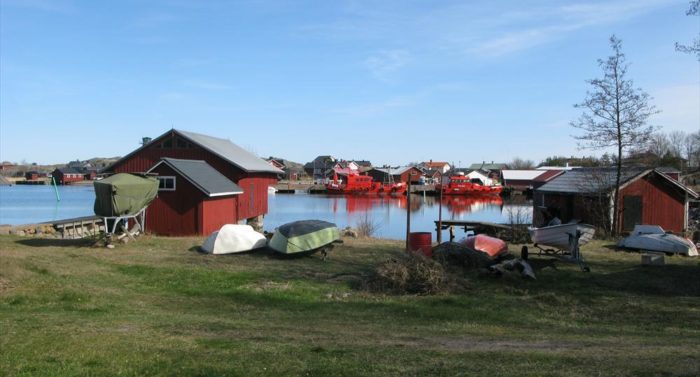
The former military island is refurbished and open to the general public. The half-dozen buildings, red brick and red or yellow wood, are renovated. It takes less than ten minutes to walk the perimeter of the island. When Wäänänen and his colleagues looked at Lonna, “we saw at once that this was something unique,” he says.

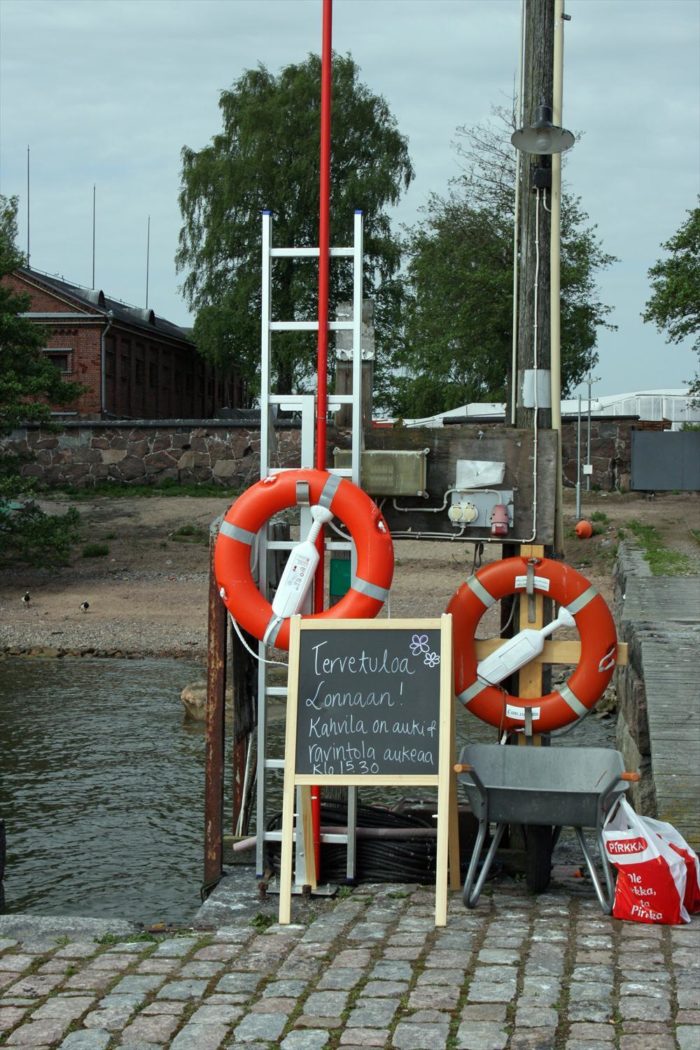
With a café, a restaurant and a sauna, Lonna is attracts picnickers, sunbathers and event planners. The island’s unique history includes momentous occasions – it formed the site of negotiations between Swedish and Russian powers in 1808.

In the mid- and late 1800s, Lonna housed production and storage facilities for gunpowder and then for mines. It functioned as a centre for mine clean-up in the early 1900s, and switched to demagnetising ships (a process that allowed metal-hulled vessels to avoid setting off mines) during and after the Second World War.

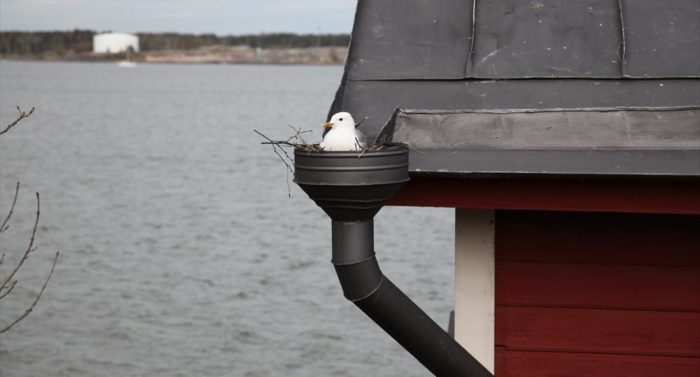
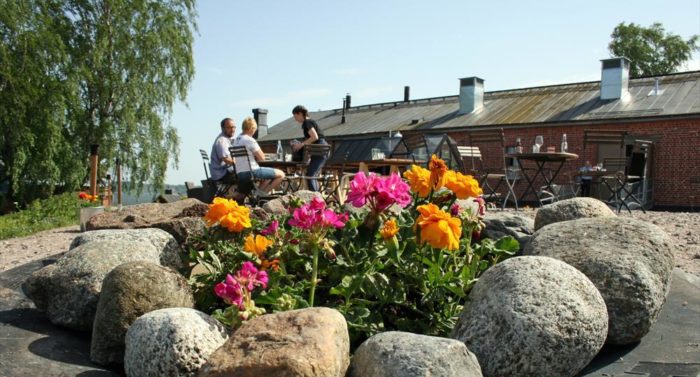
Now visitors can bask in the sun at café tables beside a former mine storage building. Meanwhile swans, geese and seabirds nest in the undergrowth and on the shore. The ocean and the fresh air of the archipelago form a key recreation area for the Finnish capital. Lonna offers an authentic experience for Helsinkians and visitors alike.

Looking at Lonna

By Peter Marten, June 2014, updated July 2019

Gulf of Finland Year brings new progress

Finland, Russia and Estonia are intensifying collaborative efforts to monitor and clean up the ecologically sensitive waters of the Gulf of Finland.

The shallow Gulf of Finland, the easternmost portion of the Baltic Sea, has long suffered due to pollution from shipping, industries, farms and cities in the three coastal countries. The consequent environmental problems can only be effectively understood and solved through international cooperation.

Finland is coordinating the three countries’ jointly declared Gulf of Finland Year 2014 as part of the year-long Finnish presidency of the Council of the Baltic Sea States, which aims to utilise science and technology to make the Baltic Sea “clean, safe and smart”, bringing both economic and environmental benefits.

The Finnish Environment Institute is leading the tri-national Gulf of Finland Year. “Our main scientific goals are to intensify collaborative monitoring of the state of the sea and facilitate the free exchange of data collected by researchers in Finland, Russia and Estonia,” says project manager Kai Myrberg. “It’s vital to collect data using carefully intercalibrated methods to ensure we get a single, comparable dataset covering the whole gulf.”

The year’s coordinated research focuses on themes including biodiversity, pollution, fisheries, marine planning and maritime safety, in waters which are among Europe’s busiest for shipping. Many studies will also examine the impacts of climate change and eutrophication problems caused by excessive nutrient levels.

 A better picture of the marine environment

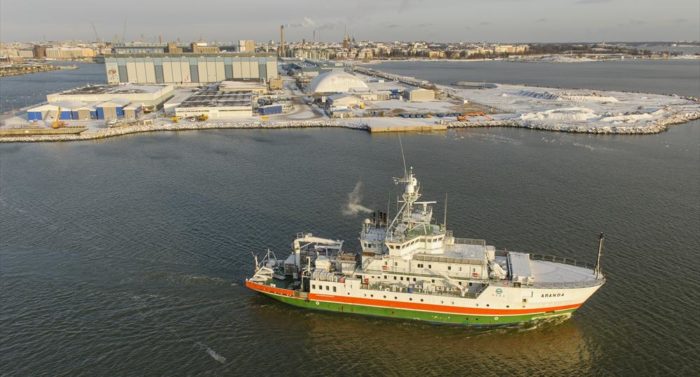
The Finnish marine research vessel “Aranda” collects data on the Gulf of Finland, including oxygen levels, salinity, sediments and concentrations of pollutants.

The Finnish marine research vessel “Aranda” collects data on the Gulf of Finland, including oxygen levels, salinity, sediments and concentrations of pollutants.Photo: Panu Nikkola/Lentokuva Vallas

During 2014 the Finnish marine research vessel Aranda will be collecting data from more sampling stations in the gulf than ever before, on environmental factors including oxygen levels, salinity, sediments and concentrations of pollutants from excess nutrients to heavy metals. “For the first time we’re also studying noise levels and the amounts of garbage in the sea,” adds Myrberg.

“This year’s coordinated studies will give us a more complete picture than ever of the state of the gulf,” says Myrberg. After findings are assessed, politicians from Finland, Estonia and Russia will issue a joint declaration including actions to improve the state of the gulf. “We also hope these intense studies of this marine subregion will serve as a pilot for improved research covering the whole of the Baltic Sea.”

Cutting-edge marine research station

A day of calm weather settles on Utö, Finland’s remotest inhabited island, where data is collected above and beneath the waves all year round.

A day of calm weather settles on Utö, Finland’s remotest inhabited island, where data is collected above and beneath the waves all year round.Photo: Eija Vallinheimo

This spring a new marine and atmospheric research station has also been established in the mouth of the Gulf of Finland on Utö, Finland’s remotest inhabited island, four hours by ferry from the mainland.

Project manager Lauri Laakso from the Finnish Meteorological Institute explains that the station will use state-of-the-art devices to collect real-time data all year round on physical, chemical and biological parameters both above and beneath the waves.

These findings should give scientists a better understanding of problems facing the Baltic Sea, including excessive nutrient levels, oxygen depletion and airborne pollution from shipping. The station’s fine atmospheric particle detector shows a clear increase in pollutant concentrations whenever large ships pass the island, for instance.

Environmental education and events

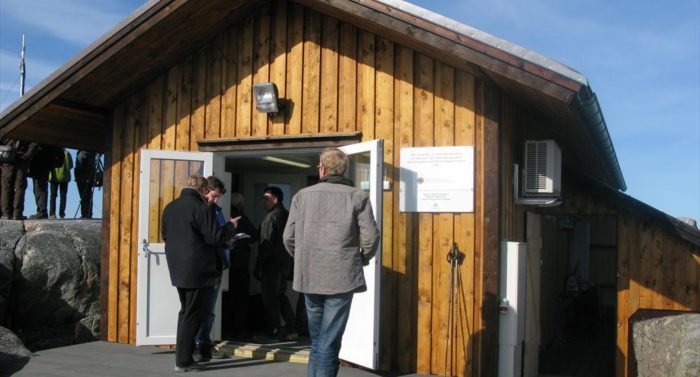
A group tours Utö’s new marine and atmospheric research station.

A group tours Utö’s new marine and atmospheric research station.Photo: Eija Vallinheimo

“It’s especially important to get a holistic picture of what’s happening in the atmosphere and the sea to help us understand carbon cycles and the impacts of climate change,” says Laakso. The Utö station also forms a vital link in the new Integrated Carbon Observation System (ICOS), a trans-European research network based at Helsinki University’s Kumpula Campus.

The Gulf of Finland Year is also promoting environmental education. New teaching materials have been produced in all three countries, and marine-themed camps and youth forums have been scheduled through 2014.

The sorry state of the gulf, and what everyone can do to improve it, will also be highlighted at exhibitions and events in seaside cities including Helsinki, Hanko and Kotka. The well-publicised nationwide Siisti Biitsi (Clean Beach) campaign is meanwhile enlisting volunteers to get together on designated days to clean litter from seashores all around Finland.

By Fran Weaver, May 2014

Celebrating the Finnish name of the day

In Finland, people not only celebrate their birthdays each year, but their name days as well. The tradition of assigning names to specific dates stretches back to medieval times.

Finns are renowned for their efficiency and organisational skills, so perhaps it may not come as a surprise to discover that a combined press run of around 14 million calendars is published in Finland each year. The practice of name days, whereby a name or set of names is assigned to each day in the calendar, has deep roots in Finnish culture.

“When you look at the Finnish name day calendar, you can see the history of Finland in a nutshell,” explains Minna Saarelma-Paukkala, head of the Almanac Office of Helsinki University, which is responsible for coordinating name days.

“This custom goes back to the Middle Ages. We also have some names on the calendar from the pre-Christian era, such as Väinö; then we have Catholic names, then Swedish names and some Russian names. Following this we have the Finnish names from the time of our national awakening, and then all kinds of newer names related to recent international influences.”

Checking the calendar

A football-themed cake with the name Ronja on it.

Nowadays name days are often celebrated with pastries, like this football-themed cake for Ronja.Photo: Sabrina Salzano

As the importance of name days changed over the centuries, so did the various traditions associated with it. Finns no longer put a name day tree on the table in the hope of having presents placed under it, nor do they raise a decorated pole in the backyard, yet the tradition still holds special significance for many people.

“Nowadays, it’s mainly coffee-and-cake celebrations,” Saarelma-Paukkala says. “It is good because some people don’t want to celebrate their birthdays, as growing old is not always so nice for everybody. But they can always celebrate their name day.”

The Finnish name day calendar presently contains 834 names; the list is updated every fifth year. The main criterion for inclusion is quantity – at least 500 children must have the name.

The list for 2015 contains a number of new names, yet none are being removed from the calendar. Due to fluctuating popularity over the years, Saarelma-Paukkala explains, many names will eventually return to favour. In addition, certain evergreen names, such as Matti, Juhani, Anna and Maria, continue to enjoy popularity among parents.

All kinds of name days

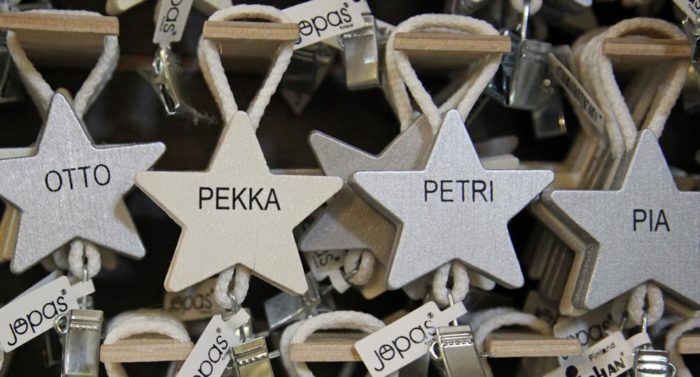
Star-shaped towel holders with Finnish names on them.

With these towel holders, everyone with a Finnish name can be a star.Photo: Sabrina Salzano

While some Finns have up to three names, Emma and Onni [the latter means “happiness”] topped the list of first names given to children born in Finland in 2013.

Meanwhile, the most popular first names among Swedish-speaking Finns that year were Ellen and Emil. (Finland is officially bilingual and 5.5 percent of the population considers Swedish its mother tongue.) In fact, Finland-Swedes also have a name day calendar of their own for celebrating Swedish-language names.

“Fifty registered Swedish speakers have to share the same name before it is considered for the name day calendar,” explains Leila Mattfolk, who is responsible for the Swedish name day calendar. “They have to be born 1965 or later, which also applies to the Finnish speakers.”

Finland’s indigenous Sámi people also have their own name day calendar. Furthermore, an Orthodox name day calendar recognises the days of saints that are observed by the 1 percent of the population that is Orthodox Christian.

Finnish name day celebrations don’t end there: “We Finns also have official name day calendars for cats and dogs,” Mattfolk says. “You can buy them in pet stores. They exist for horses as well.”

Nameless for two months

Did you know that Finnish children usually spend the first two months of their lives without an official name? Parents have two months to register their child’s name in the Population Information System, so many choose to wait until well after the child is born before settling on a moniker that fits the new addition to the family. Minna Saarelma-Paukkala of the Almanac Office of Helsinki University points out that this tradition may have to do with people in an earlier era living in isolated parts of the forest and needing sufficient time to make the long trek into town where the child could be christened.

By James O’Sullivan, June 2014

Enjoying Midsummer the Finnish way

Rich in tradition, Midsummer occupies a special place in the Finnish calendar, representing the high point of summer and the most popular time to start your annual vacation.

It takes place on the Saturday between the 20th and 26th of June. Originally a pagan celebration, it was a tribute to Ukko, the god of thunder. Since he controlled the rain, you had to be nice to him in order to get a good harvest.

Bonfires were burned on the occasion, a ritual that continues today. However, in the Swedish-speaking areas of the country – both Finnish and Swedish are official languages in Finland – people have been happy just to put up a well-decorated maypole.

In the old days, unmarried women would use special charms and bend over a well, naked, in order to see their future husband’s reflection. In another, considerably more modest tradition, one that continues today, a young lady can collect seven different sorts of flowers and place them under her pillow. She will see her future husband in a dream.

Nowadays, Midsummer is also a celebration of Saint John (hence the Finnish name for the holiday: Juhannus), a time for some people to consume quantities of alcohol and a popular weekend for weddings and confirmations.

My first Midsummer

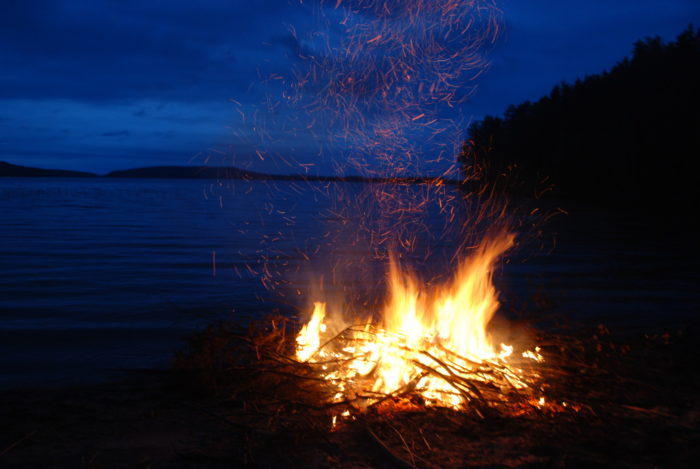
A bonfire against a blue lake view.

Bonfires form an age-old Finnish Midsummer Eve ritual that continues today. Photo: Visit Finland

My first Midsummer in Finland took place on an island in the middle of the Turku Archipelago in southwestern Finland. It was a weekend of barbequing, swimming, drinking, storytelling, singing and relaxing on the smooth rocks. We were having such a fine time that we didn’t notice the mosquito bites until Monday.

In Helsinki, I’ve observed several Midsummers on Seurasaari, a forested island with an outdoor museum of historic buildings. Here you find old-fashioned craftsmen, customary games, musicians playing the kantele (the harp-like national instrument), pancakes and burnt sausages. For the finale, they light a huge bonfire and a newlywed couple is rowed around in an old wooden boat. Then I do some folk dancing that I can only fake on Midsummer.

On another island, I once attended a heavy metal Midsummer, which was fun, but I couldn’t hear anything for the next two days. Additionally, I’ve visited a restaurant with a large, outdoor terrace that features live music and is always absolutely packed. That may be a good thing if you want to bump into your future spouse.

On the subject of bonfires: At one Midsummer party near Porvoo, 50 kilometres (30 miles) east of Helsinki, we enjoyed a sumptuous buffet and then our host led a caravan of cars. We drove past as many bonfires as we could find. They came in all sizes, and there were a surprising number of them. It was better than bird watching.

And many happy returns of the day

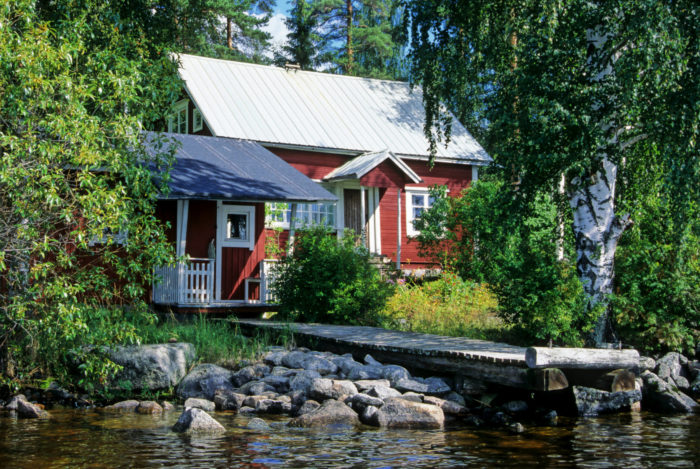
A red summer cottage by a lake with a pier leading up to a sauna building.

Many Finns spend Midsummer at a waterside cottage where they can swim, relax and visit the sauna. Photo: Keijo Penttinen/Visit Finland

One year I took a fantastic lake cruise in the central Finnish city of Jyväskylä on a boat covered with so many decorative tree branches that you’d think the whole boat was growing. Onboard, people were grinning so intensely that I’m sure they had sore smile muscles the next day.

One of my friends has an old farmhouse in central Finland, and I’ve enjoyed a couple of Midsummers there. We don’t do anything special except sit around a campfire, chat and sing along to guitar music. If the visitors get bored, everyone goes skinny dipping.

Other enjoyable memories come from visiting a couple at their beachside cabin near Varkaus, a town in eastern central Finland. We’d have a grand barbeque and play mölkky, a type of Finnish lawn bowling. We’d take a boat to the restaurant across the water and dance until two, then go to a snack stand in town and chat with the rest of the village population until morning, returning to the couple’s house for a sauna. Usually some new friends would come along with us.

Overall, I’ve had my share of good Midsummer experiences in Finland. But I’m looking forward to more. Perhaps the best Midsummers are yet to come.

By Russell Snyder

Specialising in fierce Finnish liquorice

A Helsinki kiosk is devoted entirely to salmiakki, selling 91 varieties of the salty liquorice candy that holds a special place in Finnish hearts. Warning: Salmiakki can be addictive.

The Finnish speciality salmiakki has been known to divide opinions – many love it, but others can’t stand the taste. Salmiakki consists of black liquorice spiced with ammonium chloride – not the same stuff used in cleaning solutions, of course, but a kind of salt that gives the candy its pungent signature taste.

Besides Finland, the other Nordic countries and the Netherlands are also known to relish salmiakki. People from other parts of the world may experience culture shock when they taste the especially strong Finnish version.

Vintage kiosk for a vintage taste

2595-dsc_0054-550-jpg

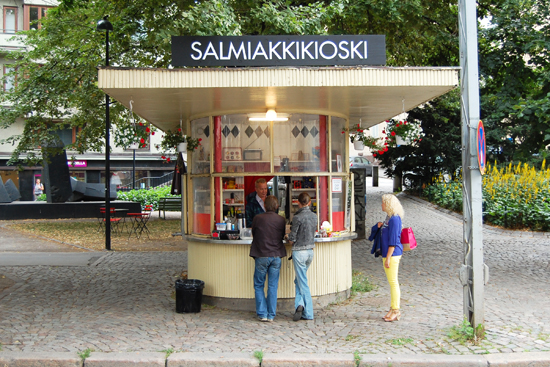
Housed in an old-fashioned kiosk with a visor-shaped roof, Salmiakkikioski draws a steady stream of customers. Photo: Emilia Kangasluoma

Salmiakki used to be known mostly as a type of sweet sold in soft or hard drops and lozenges, or as a powder. Lately the magic ingredient has found its way into other sorts of goodies, as a tasty addition to chocolate, ice cream and even barbecue sauce. However, the popularity of traditional salmiakki sweets has not decreased – on the contrary. Helsinki’s Salmiakkikioski, a kiosk specialising in the stuff, forms a good example of salmiakki’s perpetual popularity.

Erkki Korhonen, who runs the kiosk, says that he wanted to specialise in something in order to make it stand out, and salmiakki represented an easy choice because of its vast fan base in Finland and status as a Finnish speciality for tourists –Finnish and foreign travellers alike. “People from northern Finland have called us and made arrangements to visit our kiosk as part of their Helsinki sightseeing tour,” says Korhonen.

Many locals have also thanked him for maintaining the vintage kiosk. It’s a lippakioski, a kiosk with a roof that juts out in front, making it look a little bit like a baseball cap (lippa means “visor”). These kiosks date back to the mid-1900s, and fewer than 20 of them survive in Helsinki.

Korhonen stocks all the best-known brands of salmiakki, and then some. “Many people ask for ‘salmiakki that you can’t get anywhere else’ or want the strongest kind available,” he says.

Popular present and special ingredient

2595-dsc_7519-550-jpg

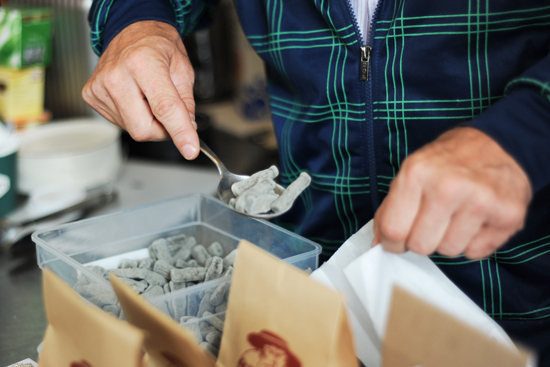
Out of the kiosk’s 91 kinds of salmiakki, 31 must be bagged and weighed by hand.Photo: Emilia Kangasluoma

Just when Korhonen is explaining that many people buy salmiakki to take it abroad, a lady comes in to pick up a present for an upcoming trip to visit relatives in Italy. Many Finns living abroad miss salmiakki. Luckily many online stores sell it nowadays, although their selection is unlikely to be as large as Korhonen’s Salmiakkikioski.

Many tourists are brought to the kiosk by their Finnish hosts and according to Korhonen they often are amazed by how many types of salmiakki are available: “Many tourists have heard the name ‘salmiakki’ before but have not tasted it before – and when they do, the most common word to describe it seems to be ‘interesting.’” Korhonen’s business partner Pete Neuvonen tells of a group of around twenty Chinese tourists who bought salmiakki and sat down at the tables to taste it – about half of them spat it out, while the other half became instant salmiakki converts. Korhonen adds that many Finns serve salmiakki to their unsuspecting foreign friends just to see what will happen.

Neuvonen prefers his salmiakki straight, but knows various ways salmiakki can be mixed. “People put salmiakki powder in espresso coffee, yoghurt and all sorts of pastries – and we’ve even heard of someone making salmiakki-strawberry jam.” However you use it, and whether you love it or hate it, salmiakki offers an unforgettable taste.

By Kasperi Teittinen, August 2013

Seven plus one: Finnish apps for summer

When summer arrives, we think of holidays and the chance to catch up on reading, playing, exercising, sleeping, picture taking, language learning and general wellbeing.

To help you along, we present seven Finnish apps – plus one element that you may see in other apps. (We excluded those that we’ve already covered on thisisFINLAND. You’ll find links to them at the end of the page.)

Reunite the Moomins with their belongings

|||Screenshot: Spinfy

The famed Finland-Swedish writer and artist Tove Jansson wrote books for both kids and grown-ups, and many people love to read and reread them during the summer. Spinfy has created several apps based on the Moomin adventures. While the Moomin books appeal to all ages, these apps are for kids.

One of them, Moomin and the Lost Belongings, forms an interactive storybook featuring a fun lost-and-found game as Moomintroll helps his friends reclaim their lost belongings in Moominvalley.

Even if you’re not familiar with Jansson’s characters, you can still enjoy the chase. As Moominpappa chills out in a hammock, sneaky Little My hides his top hat. In another scene, a bird snatches Snorkmaiden’s gold anklet. Moominmamma seems to have misplaced her handbag.

Find the top hat tucked behind the bushes, or the anklet floating in thin air. Drag the items back to their owners. Finally, the family is happy once again. And yes, everyone does say thank you.

–Nadja Sayej

Tracking your tram
3179-photo-14-5-2014-16-18-48-png

iPad screenshot

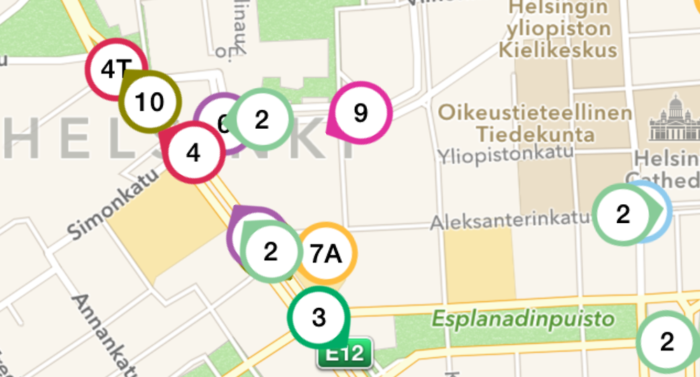
Few things are more irritating than wondering when your ride will arrive. In terms of efficiency and service, public transport in Helsinki ranks among the best in the world, but thanks to a simple smartphone app, the experience has become even better.

No longer do you have to speculate about when your tram will arrive, because with Sporat (the name means “trams”), you can see your tram moving towards you in real time on a map. The app checks where you are, shows you the nearest tram stops, and, tapping into the city’s GPS vehicle tracking system, shows you where the trams are. Watching them move around the city can even become addictive. Sporat may not make you any more punctual, but it may give you some peace of mind.

–Mark B. Odom

Sporat in iTunes store

Sporat for Android

Snooze your way to wellness
3179-devices-and-sensorsyes-jpg

Photo: Beddit

The lack of sleep has been called a global epidemic by the World Association of Sleep Medicine, with up to 45 percent of the world’s population not getting a good night’s rest owing to issues ranging from snoring to insomnia.

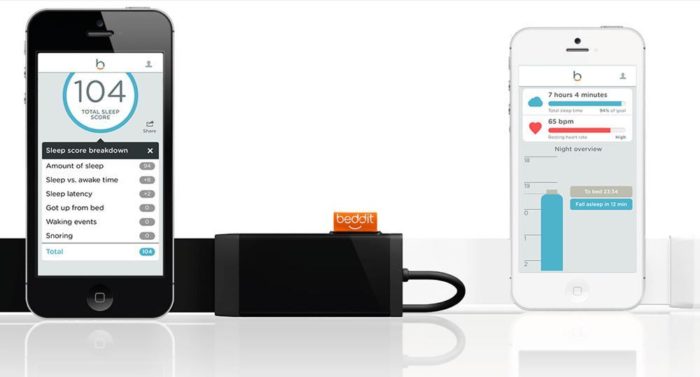
How can you improve the quality of your zzzz’s? Enter Beddit, a thin sensor placed under your sheet to track your sleeping patterns – including movements, heart rate and breathing. It sends the data via Bluetooth to a smartphone (iOS or Android).

When you wake up, you can view information on the quality of your slumber and read customised coaching tips on how improve it.

Founded in 2006, Beddit had been making tracers for the medical industry before deciding to approach the consumer market. In late 2013 they raised an impressive 500,000 dollars (about 363,200 euros) through the crowd-funding platform IndieGogo.

Though the Finnish company is still in the process of navigating its expansion to the consumer market, Beddit is one to watch: along with diet and exercise, sleep is one of the wellness cornerstones.

–Katja Pantzar

Re-imagine your pictures

|||Photo: Repix

Sumoing’s Repix enables users to dabble in a spot of painting to embellish their photography. Instead of merely offering the usual cropping and brightness control, Repix includes brush effects that can be utilised on specific areas of your happy snaps.

After taking a pic, or loading one from your camera roll or Facebook, unlock the frustrated artist within you by adding details of light flare, paint, dots or charcoal strokes. A few seconds later, photos have become works of art – the quality of which depends on the expressiveness of your thumb.And just in case you get too carried away, an eraser is easily accessed for reversing any over-the-top artistic flourishes.

Standard editing techniques such as cropping, contrast and preset tones are included, while a range of purchasable extra brushes further enhances your creativity.

James O’Sullivan

Learn languages live online

3179-header_img_groups_0-copy-jpg

Photo: Skilltize

With Skilltize you can learn languages online. In contrast to other services, learning with Skilltize is live. This means there is a teacher, maybe located on the other side of the globe, with whom you connect all. I found the ones I had to be very good at what they do. Most of them, though not all, are native speakers.

Also, you can do everything on one platform: selecting your lesson, booking, payment and taking the lesson in their virtual classroom. The classroom features a white board; screen and presentation sharing; and of course text and video chat, which makes it fun and interactive to learn.

You can learn either one-on-one or together with others in small groups. At the moment they provide lessons for eleven different languages, as well as maths and physics tutoring.

–Ansgar Frankenberg (full disclosure: A thisisFINLAND freelancer, Ansgar has also done work for Skilltize.)

Skilltize

Progress in training

3179-omegawave_teamyes-jpg

Photo: Omegawave

While Finland might be well known for mobile communications or gaming, it is also carving out a niche in sports technology. Lionel Messi’s FC Barcelona, the Russian national triathalon team and the Kentucky Wildcats have all turned to the Finnish company Omegawave to help their athletes.

Omegawave offers a mobile application and ECG sensor so teams or individuals can monitor their cardiac and metabolic systems in order to measure and progress. It defines training zones for workouts based upon the person’s cardiac state and delivers training guidance based upon physical and mental stress, recovery patterns and reserve levels. The system also tracks the body’s ability to recover from activity, in order to identify personalised recovery techniques.

–David J. Cord

Omegawave

Yoga as a wellbeing app
3179-yoga_retreat_shot_02_notextyes-jpg

Screenshot: Gajatri Studios

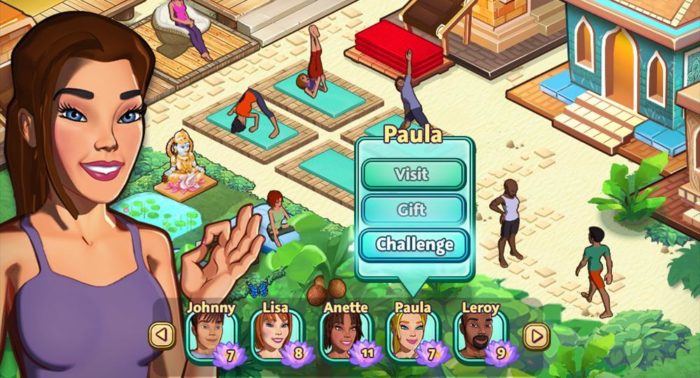
Tiina Zilliacus has been practicing yoga for more than ten years. She’s also a successful entrepreneur. In 2011, she found Gajatri Studios, allowing her to unite her two passions and create an app called Yoga Retreat.

This smartphone game is simple: Players run a yoga retreat located on an idyllic virtual beach. They have customers, who request drinks and food or, more importantly, ask to learn new yoga poses. While teaching the moves to their digital customers, players can try the positions in real life, thanks to detailed descriptions.

Yoga Retreat’s smart mix of yoga practice and mobile gaming helps users improve their health and wellbeing while learning some useful management tricks.

–Pauline Curtet

Gajatri Studioa

Plus one: Summertime, and the shopping is easy

3179-mirror-laptop-tablet-mobileyes-copy-jpg

Photo: Kiosked

Kiosked is not actually an app, at least not yet, which is why we’re tacking it on as “plus one.” However, it can appear in all sorts of apps and websites.

Imagine that you find a picture on Facebook of your favourite tennis star Roger Federer clenching his fist in triumph. When your mouse hovers over the image a modest corporate logo appears. If you follow the link you can complete your summer wardrobe by buying the exact same brand and model of shorts that your hero Federer is wearing. This brilliantly simple shopping operation is the work of Kiosked, a Finnish startup founded in 2010.

Its technology turns pictures and videos into interactive storefronts, where the images can be shared across virtually any platform or device and still work seamlessly. The company has focused heavily on mobile technology to ensure that its clients can use their solutions in that environment.

–David J. Cord

Kiosked

Intro by Peter Marten, May 2014
Helsinki as you’ve never seen it before

An instant hit on social media, an amazing video takes you on a bird’s-eye tour of Helsinki, swooping over rooftops and forests, all thanks to the ingenious use of a camera mounted on a quadcopter. We talk to the video’s creator.

The video, entitled My Helsinki, begins unremarkably enough. It seems to show the point of view of someone walking along a scenic path overhung with leafy tree branches. But when you emerge from the forest, something extraordinary happens: suddenly you begin to ascend, going higher and higher, until you are soaring in the bright sunshine over Helsinki.

In an era when images are ubiquitous in social media, Lare Lekman has created an entirely new way of looking at the Finnish capital by using a small, camera-equipped quadcoptor.

“I filmed for about six months, from May to November 2013, including dozens of flights.” Lekman says. “I started filming underwater videos about ten years ago. Gradually, I crawled onto land and then flew into the sky. Air is very similar to water in filming, as they both offer three dimensions.”

The video takes the viewer on an aerial tour of the city, from the downtown streets at night to a packed football game in Olympic Stadium, from cruise ships docked in the harbour to swans calmly swimming along the rocky shore. It shows the Finnish capital’s urbanity while also emphasising Helsinki’s surprising proximity to wild forests and the open ocean.

“Perhaps I most enjoyed my flights in Lauttasaari [an island just west of Helsinki] and by the Helsinki Cathedral,” he continues. “Torni [a hotel with a bar located at the top of a tower] was also nice, as people on the roof terrace were waving at my quadcopter.”

All of these landmarks are familiar to anyone who has visited Helsinki, but until now no one has been able to gracefully and effortlessly float up above the Ursa Observatory in Kaivopuisto, the seaside park at the southern end of the city. Lekman says he chose his subjects by simply looking out his window and thinking about what locations worked best at a particular time of the day and year.

Submersible robot might be next

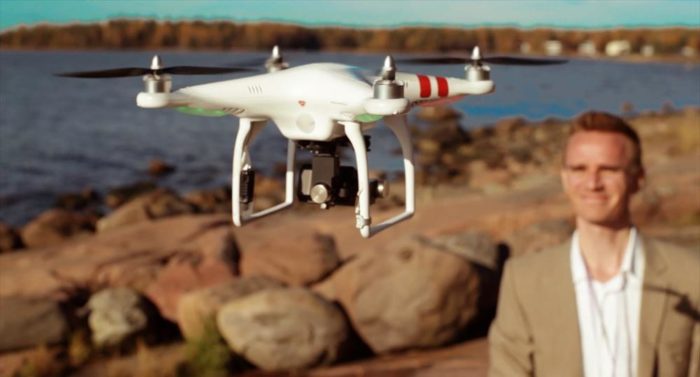
Lare Lekman poses with the camera-carrying quadcopter that allows him to film bird’s-eye views of the Finnish capital.

Lare Lekman poses with the camera-carrying quadcopter that allows him to film bird’s-eye views of the Finnish capital.Photo: Lekman Consulting

“My quadcopter, a DJI Phantom, always flew consistently and reliably,” Lekman says. “To make sure it does, there are several things you should do, such as updating the quadcopter firmware, checking the flight unit calibration and handling the copter well. It’s all pretty simple once you get the hang of it.

“Modern multicopters are quite easy to fly compared to traditional radio-controlled helicopters. However, it does take some practice to handle the copter well, especially when flying towards yourself, taking off and landing.”

Lekman owns his own consulting company where he helps his clients in software development. In his spare time he combines his love of technology with outdoor activities.

“During my leisure time I enjoy diving, video productions, various sports and lately kiteboarding,” he says.

In fact, he might combine his skills in diving, videography and remote-controlled vehicles in the future for a new project.

“I was recently asked to work as an advisor in a Tampere University research project to build a submersible robot for studying underwater caves and wrecks,” Lekman says. “I would love to participate, so hopefully they will get the funding.”

By David J. Cord, May 2014

Finland’s fine dining under the stars

Finland’s culinary scene continues to expand in exciting directions, with chefs bringing out innovative, exhilarating flavours. Helsinki now offers more Michelin-starred restaurants than ever, despite the exit of the capital’s most renowned fine dining establishment.

In early 2014 two more Helsinki restaurants gained Michelin-star recognition: Chef & Sommelier and Ask. They join Demo, Luomo, Olo and Postres, bringing the total to an all-time high of six.

The country’s most famous Michelin-starred restaurant during the noughties was Chez Dominique. Serving Finnish-French cuisine, it received its first star in 2001, and earned a second in 2003. It held on to both stars until closing its doors, despite its fame, in 2013.

Its success gave rise to a true trickledown effect in the local industry, with Chez Dominique employees soaking up knowledge and experience while working there and incorporating that expertise into their own endeavours later.

One menu for all

Filip Langhoff is co-owner and head chef of the Michelin-starred Ask in the Helsinki neighbourhood of Kruununhaka.

Filip Langhoff is co-owner and head chef of the Michelin-starred Ask in the Helsinki neighbourhood of Kruununhaka.Photo: Linda Stenman-Langhoff

“Chez Dominique was like a little college,” explains Jouni Toivanen, owner and chef of the Michelin-starred Luomo. “So many chefs from there have since opened their own restaurants.”

Offering local cuisine with a hint of international flavours and techniques, Luomo is situated next to Market Square in the heart of the city. The restaurant opened in 2009, with the idea of serving only one menu, for all people at a reasonable price. The people duly responded, and Luomo was awarded a Michelin star nine months later.

“You’re not after it, but it’s a reward,” Toivanen says. “It has not affected the way I run the restaurant. We have changed a little bit over the past five years: now we have à la carte and serve mainly Finnish food.”

Luomo forms one of six Michelin-starred restaurants in Finland – all located in the capital city.

“They are all small and privately owned,” says Filip Langhoff, co-owner and head chef of Ask, which recently joined the elite list. The other newcomer is Chef & Sommelier, on the other side of town. “All have a really strong chef, either as a co-owner or working actively in the restaurant.”

Like we do at home

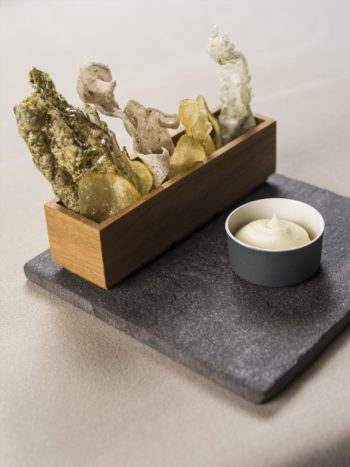
Vegetable crisps serve as hors-d’oeuvres and sculpture at Ask.

Vegetable crisps serve as hors-d’oeuvres and sculpture at Ask.Photo: Linda Stenman-Langhoff

An intimately small establishment serving Nordic cuisine in the Kruununhaka neighbourhood, Ask quickly gained favour after opening its doors in 2012.

“The restaurant follows our own philosophy by using only organic food – like we do at home,” Langhoff says. “We don’t want to serve our guests something we wouldn’t eat ourselves. If guests leave here feeling they have had dinner in our living room, then we have succeeded.”

Unsurprisingly, Langhoff and his wife Linda also used to work at Chez Dominique. “The local scene here is evolving really fast,” Langhoff says. “From high-end restaurants to an interesting street food segment, Helsinki is starting to have a broad food scene. There is a good variety, which is great for a city this size.”

Meanwhile, you might ask, what’s going on in the building that Chez Dominique used to occupy? Its chef, Hans Välimäki, opened two new restaurants there: Rikhards, a gastropub, and Välimäki, which seats only eight people – at one round table.

Group of six: Finland’s Michelin-starred restaurants

Ask Tucked away in the Kruununhaka neighbourhood, Ask serves organic Nordic cuisine made of locally sourced ingredients in a cosy dining area.
Chef & Sommelier Hidden in a residential area, organic and wild ingredients create modern, original Finnish cuisine.
Demo French and Finnish influences merge to create dishes with a subtle modern edge. The menu changes daily, offering four to seven courses.
Luomo Three-, five- and seven-course menus follow the seasons, served with a sterling view over the harbour area, as global influences sway flavours towards new culinary frontiers.
Olo Take the Path for lunch, or the Journey for dinner, as six or nine courses traverse a variety of modern tastes.
Postres Classic Scandinavian cooking employs traditional techniques with subtle modern and innovative touches.

By James O’Sullivan, May 2014