Films project Finnish view of Christmas

Movies can make a significant contribution to the holiday atmosphere, and Finland has produced its fair share of classic Christmas flicks over the years. Santa Claus, who lives in Finnish Lapland (as everyone knows), forms a focal point in these films.

The Flight before Christmas (original title: Niko – lentäjän poika, 2008)

Niko is a young reindeer whose mother told him that his father is one of Santa’s elite flying reindeer. However, Niko is afraid of flying, and his dreams of flight are ridiculed by the other youngsters. Niko leaves the comfort of his home valley to learn to overcome his fear and find Santa’s secret hideout. He faces wolves and many other dangers, but in the end Niko saves the day and finds his father. Also known as Niko and the Way to the Stars, The Flight before Christmas is a classic, warm-hearted, uplifting Christmas animation for the whole family. A sequel appeared in 2012, called Niko 2: Little Brother, Big Trouble – A Christmas Adventure (original title: Niko 2: Lentäjäveljekset).

Christmas Story (orig. Joulutarina, 2007)
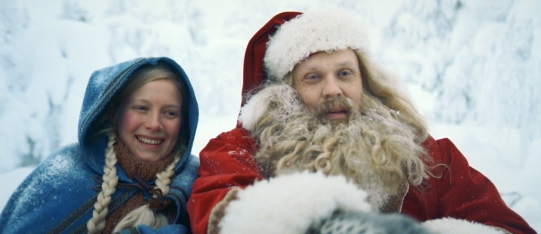
“Christmas Story” reveals details of the life and background of Santa Claus.

“Christmas Story” reveals details of the life and background of Santa Claus.Courtesy of Snapper Films

If you’ve ever wondered how Santa Claus became what he is, this movie is for you. It tells the story of Nikolas, a young boy who lives in Finnish Lapland. His family is killed in an accident and the village decides to care for him communally. In gratitude, Nikolas whittles toys for the children of the families that care for him. Eventually he ends up an apprentice for a grumpy carpenter and continues to make gifts for the children of the village. A tradition is born and it occupies more and more of his life every year, until as an old man he embodies the tradition and becomes Santa Claus. Something beautiful and joyful is born out of a great tragedy.

Santa Claus and the Magic Drum (orig. Joulupukki ja noitarumpu, 1996)
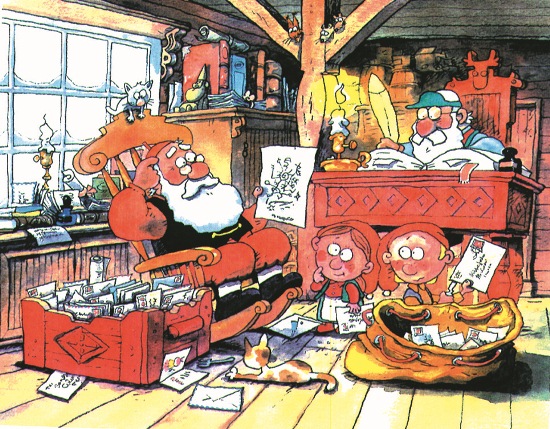
The big mystery: Who is interfering with Santa’s work?

The big mystery: Who is interfering with Santa’s work?Illustration: Mauri Kunnas/Otava/Yle

Based on a book by Finnish author and illustrator Mauri Kunnas (published by Otava), Santa Claus and the Magic Drum takes place at Santa’s workshop. It’s almost Christmas Eve and Santa’s busy compound is beset by a series of mysterious mishaps that jeopardise Christmas. The culprit turns out to be a shaman and his magic drum, bent on making trouble due to an unfortunate delay of several decades in the processing of a letter he sent to Santa Claus as a child. This energetic animated movie offers something for everyone, from toddlers to senior citizens. It combines the kind of hijinks that children love with sly references only adults will get. In other words, it’s a perfect animated movie.

Rare Exports: A Christmas Tale (orig. Rare Exports, 2010)
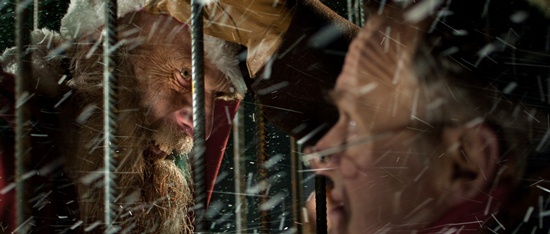
Behind bars: “Rare Exports” features Santa as you’ve never seen him before.

Behind bars: “Rare Exports” features Santa as you’ve never seen him before.Courtesy of SF Film Finland

Rare Exports puts Christmas myths in the blender with some classic horror movies and comes out with a cocktail for the discerning Christmas film connoisseur, featuring Santa Claus as you’ve never seen him before. Roger Ebert, the legendary movie critic for the Chicago Sun-Times, said, “Rare Exports: A Christmas Tale is a rather brilliant lump of coal for your stocking hung by the fireside with care.” He’s right. It’s a holiday movie with an edge, so watch one of our other suggestions during the day and break out Rare Exports after the kids are in bed.

By Arttu Tolonen, updated December 2014

Christmas - Ylaornamentti

Pitching tips from Finnish stage stars

In honour of Finnish startup events, we look at the amazing and somewhat comical story of a Finnish entrepreneur who, seeking to improve his business pitching and presentation skills, asks dancers, singers and actors for advice. Does it work?

Vesa Tornberg, from a startup called Laturi, tried this approach: Over a four-week period he sought pitching help from dancing, singing and acting professionals, as well as a few business investors. Here’s what he discovered to help him transform himself from a mild-mannered, monotonous presenter into a more expressive, confident star on the stage.

“Overall, I learned that it is not just about the content of your presentation,” says Tornberg. “It’s about performance. It’s about posture, facial expressions, enthusiasm and feeling.”

The dance instructor

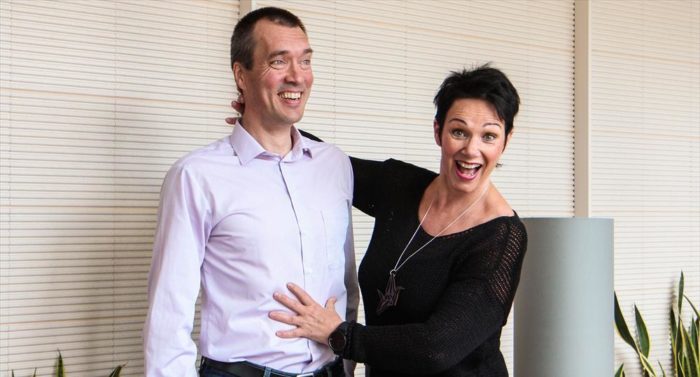
Dance instructor Merja Satulehto presses Vesa Tornberg’s posture into shape.

Dance instructor Merja Satulehto presses Vesa Tornberg’s posture into shape.Photo: Henna Majuri

Dance instructor Merja Satulehto has been a judge on the Finnish TV series Dance and Dancing with the Stars. She advises Tornberg how to use his body to show excitement for his product and business: “Body language and tone of voice are definitely things to practice,” she says. “Vesa is used to talking business and it shows. His performance feels too serious.” Her advice? “Push your chest out and hold your head high. Show emotion and confidence.”

The singing teacher

Singer, voice teacher and breathing therapist Maija Lauri teaches performing arts at the Oulu University of Applied Sciences. She challenges entrepreneurs like Tornberg to become a rock star in front of their audience. “Proper abdominal breathing will improve the quality of your voice and help relax both the body and mind,” she says. “Don’t speak like a doctor using a dictation machine – monotonously and all in one breath. Leave pauses to give meaning to what you have just said.” She also offers advice on how to raise voice volume: “Focus on the back row of the audience when you are speaking to a crowd.”

The actor

Elina Korhonen is a successful young actor with experience in movies, TV and theatre. Her pitching advice? “To help you relax, you should warm up your body before your presentation. Also, to help bring energy into your presentation, move around the stage a little.”

The English teacher

Riitta Annala, English teacher and CEO of English language game company Hawina, has advice for people who have difficulty pronouncing some English words. “Don’t get rid of your accent,” she says. “Just find other, easier words that say the same thing. So instead of saying ‘strategy,’ for example, say ‘approach’ or ‘plan.’”

The investor

Juho Risku, cofounder of Finnish venture capitalist firm Butterfly, offers this advice: “Focus less on the abstract and more on the concrete. In other words, don’t use elaborate, fluffy terms like ‘unique product offering.’ Finns tend to use too many abstract words. Instead, talk about your product, company or professional performance, like ‘30 years of experience in the fitness industry.’”

By Mark Badham, November 2014

Finns celebrate freedom every December

Finland became independent on December 6, 1917. Our American reporter recounts his experiences of the holiday.

What I find interesting about Independence Day is the combination of solemnity and enjoyment. For example, on the serious side, you have patriotic speeches, visits to cemeteries, tributes at war memorials and special church services. Wearing their traditional white caps and carrying torches, students in Helsinki start at Hietaniemi Cemetery and walk to Senate Square, where they listen to speeches and music. The President awards medals and decorations to several thousand people for outstanding achievements.

On a lighter note, people place blue and white candles in their windows, bakeries sell blue and white pastries, shops are adorned with blue and white decorations and there are blue and white flags on display everywhere. On TV, you can hear patriotic music, listen to lively discussions and watch the legendary film The Unknown Soldier (the vintage version), an emotional story based on Väinö Linna’s eponymous novel about the Second World War.

Everyone’s in a good mood

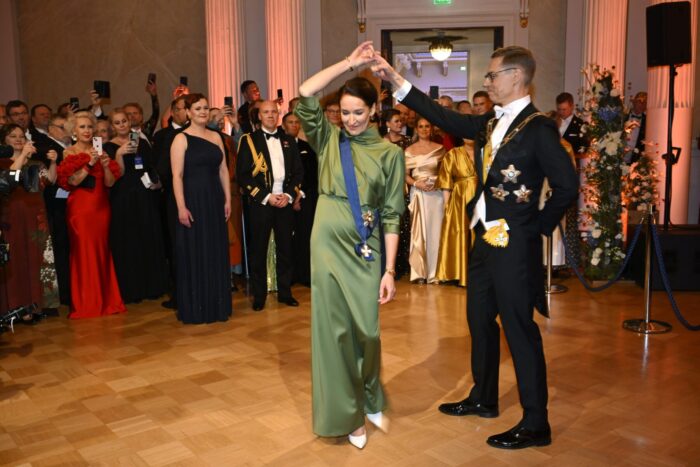
In a ballroom, a man and woman dance in front of spectators, everyone dressed in fancy formalwear.

Presidentti Alexander Stubb and First Lady Suzanne Innes-Stubb dance at the President’s Independence Day Reception in 2024.Photo: Markku Ulander/Lehtikuva

Finns are generally in a good mood on this day, and like to eat a festive meal with family or friends. On my first Finnish Independence Day, I went to a nice restaurant with some fellow students and ate delicious Finnish cuisine.

During the meal we talked about the meaning of freedom and about Finnish history. Prior to independence, Finland formed an autonomous Grand Duchy in the Russian empire for 108 years, and before that it belonged to the Swedish kingdom. During the Second World War the Finns had to defend their freedom.

We also discussed lighter subjects, enjoyed the food and savoured some wine. I found this get-together a very uplifting and elegant experience – one that should be repeated.

On Independence Day, numerous formal and informal social events happen throughout the country. However, the highlight happens in the evening, when the President holds the Independence Day Reception, a gala event for VIPs and specially selected guests. The invitees include high-ranking military officers, politicians, police officials and diplomats, as well as prominent athletes, entertainers and activists. This event is broadcast on national TV, and it seems like half the population watches it.

The TV reporters make comments about the 2,000 guests as they line up and shake hands with the President and his or her spouse on the way in. At home, people supplement the commentary with their own observations: “What a fantastic dress she has!” or “He’s not even wearing a tie!” or “She’s lost a lot of weight!” or “Who is that lady with him?”

Fascination and speculation

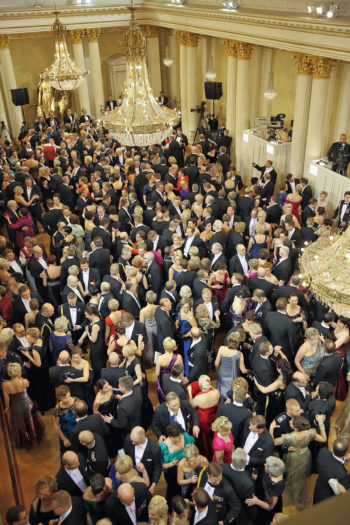
A large crowd of people gathered at the Presidential Palace during the annual Independence Day Reception.

A couple thousand guests chat, drink, dance and pose for the media at the Presidential Palace during the annual Independence Day Reception.Photo: Office of the President of Finland

Later the band starts playing and viewers can watch the guests dance, eat and drink. Reporters circulate, interviewing famous people and asking them about their ideas on independence. They usually provide good answers, although nothing earth-shaking.

After a certain point the cameras must be switched off, and the press has to stop reporting. What goes on then is of great speculation for the country, and the evening papers spend the next week treating readers to gossip from the ball – usually very tasteful gossip.

The wife of a friend of mine is fascinated by the President’s Independence Day Reception, and once insisted that they get as close to the Presidential Palace as possible so they could see the famous people getting out of their taxis.

“Isn’t this exciting!?” she asked. “Well, it might be if it wasn’t so cold and snowing so hard,” he answered, to which she replied, “Oh, stop complaining! Wow, just look at who’s getting out of that car!” And so the evening progressed.

Alternative celebrations

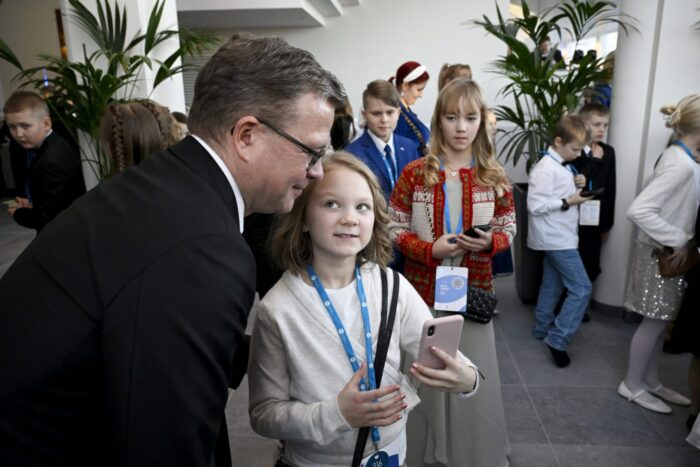
A man in a suit bends down so that a schoolchild can take a selfie with a mobile phone.

Ahead of Independence Day, the Prime Minister (shown here is Petteri Orpo) traditionally holds a version of the Indepence Day Reception for schoolchildren in fourth grade.Photo: Markku Ulander/Lehtikuva

On the other hand, some people are not pleased about the reception. They gather across from the palace, carrying signs and shouting about the inequality of the society or other current political topics. The protesters’ numbers are usually very small.

Then there are those who organise alternative receptions and dances. Some even hold Independence Day dinners in their homes, where the guests dress up, eat a sumptuous meal and drink sparkling wine, with the President’s reception on TV in the background.

Finnish schoolchildren get an opportunity to have their own Independence Day Gala. In Helsinki, the mayor invites the city’s fourth-graders to Finlandia Hall, the landmark building designed by Alvar Aalto. My daughters wore elegant dresses and got their hair done for the occasion. The girls were accompanied by their “dates” – some of the boys were probably wearing a necktie for the first time in their lives. Quite an event for kids who are ten or eleven years old!

Everyone has her or his own way of celebrating Finland’s independence. The main point is that country worked hard to gain its freedom, and fought hard to keep it. Finns learn at a young age that self-determination should never be taken for granted. They are reminded of this every year on December 6.

By Russell Snyder

Educated, then employed, in Finland

In any country it can be tough for a foreigner to find work, but many foreign students who graduate from Finnish universities do find jobs in Finland. Several of them tell us their stories.

Giang Hong Pham, 24 (Vietnam)

Giang Hong Pham got a job at an accounting firm, beating 400 other applicants.

Giang Hong Pham got a job at an accounting firm, beating 400 other applicants.Photo: Sabrina Salzano

I always knew that a good education would help me get a good job in the future. I chose Finland to complete my studies because you can get an international-standard education in a peaceful environment. Also, Finns have a reputation as honest, decent people. And that’s exactly what my fellow students and workmates have proved to be.

I got my secondary education at home, graduating from the Tran Phu High School. In Finland I was accepted to Kymenlaakso University of Applied Sciences, where I studied in the international business department for four years. During the course I learned Finnish and did an internship at a Finnish company.

The teaching was a good mix of theoretical and practical. I enjoyed everything, except that there wasn’t a full course on Finnish legislation. I have happy memories of my time studying. We worked together in groups a lot and became really good friends.

After I graduated, it wasn’t easy to find work, but I succeeded in the end. Right now I’m working as an assistant accountant at a Helsinki accounting firm. Over 400 people applied for the job. I speak Finnish with my workmates, and I’m not planning to leave Finland any time soon.

Polina Noeva, 25 (Russia)

“Education in Finland is more like real life,” Polina Noeva says.

“Education in Finland is more like real life,” Polina Noeva says.Photo: Anna Liukko

When I was still a student at the applied maths department of Petrozavodsk State University, I applied to do a two-year master’s degree in machine learning and data mining at Aalto University. To get in, I had to pass the TOEFL (Test of English as a Foreign Language) exam and translate my bachelor’s degree certificate into English.

In my view, students in Russia learn more theory. In Finland education is more practical – more like real life, you could say. For example, we attended lectures by scientists who’d been given grants for their research.

A few months before I finished my course, I started actively looking for work. At the start of January I sent my resume to a software development company. I got through three levels of interviews, and in April I started a full-time job with the company.

There’s a really nice, friendly atmosphere in the team. You can ask anyone for help and advice at any time. Over the years I’ve become used to the calm and measured way of life in Finland.

Natalia Vyslovska, 29 (Ukraine)

“I really love my work, because it’s never routine,” says Natalia Vyslovska.

“I really love my work, because it’s never routine,” says Natalia Vyslovska.Photo: Sabrina Salzano

I decided early on that I wanted to get my higher education in a European country. I was always interested in the Scandinavian countries because of their stable economics, close relationship with nature, healthy outlook on life and standard of living.

TOEFL certificate in hand, I passed exams in maths and written and spoken English to get into the international business programme at Kymenlaakso University of Applied Sciences. At first I studied Finnish at Kymenlaakso, then carried on taking courses at Helsinki University.

I’ve now been working as a marketing assistant in Vantaa for more than a year at a company that specialises in industrial technology solutions for measuring the concentration of liquids. I really love my work because it’s never routine. I go on business trips, organise sales conferences and work with more than 100 of our reps around the world.

I speak English and Finnish with my colleagues. A few times a year we get together to things, like play football or run a triathlon. I feel totally at home in a team of Finnish people.

By Anna Liukko, October 2014

Finnish startup ecosystem goes international

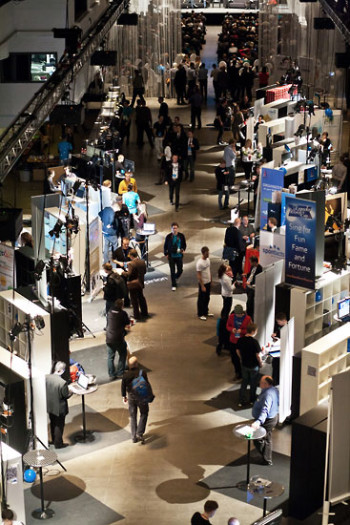
Just a few years ago the Finnish startup ecosystem was relatively small and inward-looking, but now it is drawing in the brightest high-tech minds and most innovative companies from around the world. In 2014, Slush Helsinki took place on November 18 and 19.

Jerome Chang is on his way to Finland. He is the CEO of iCubis, a small, high-tech company headquartered in Anyang, South Korea. For thousands of companies like his around the globe, Finland is the place to be every autumn. They are drawn to Slush Helsinki, one of the leading tech and startup events in the world.

3168-ene_stillcut_4-jpg

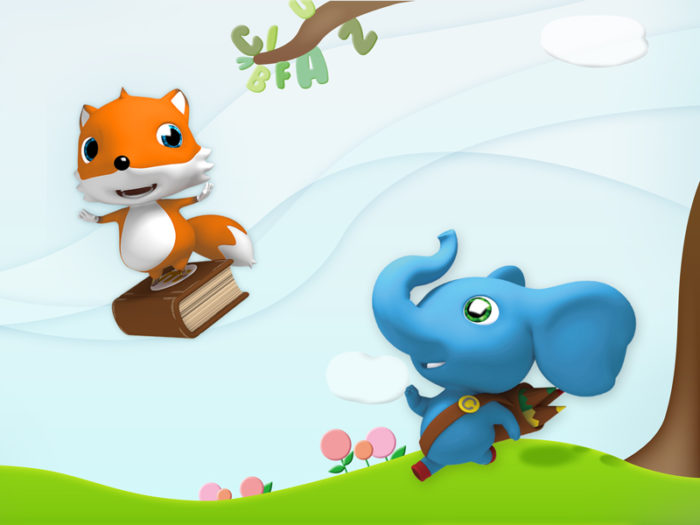
In a smartphone app by iCubis, kids learn English from a fox and an elephant.Screenshot: iCubis

Slush brings together entrepreneurs, investors and high-tech executives for two days of business and pleasure. Participants hope to find funding for their companies, or partners for projects, or just to meet others in the industry. In 2013, 7,000 people from 68 different countries attended Slush, and the projected total for 2014 is 10,000 people.

For Chang, Slush is a perfect fit. iCubis has already created a smartphone app to help kids learn English by following the adventures of a fox and an elephant named Easy and Elly. Yet Chang has more plans for the future and hopes to find partners at Slush.

“We provide meaningful content,” he explains. “After awareness is raised by the education app, we want to move into the production of animation.”

The coolest tech event

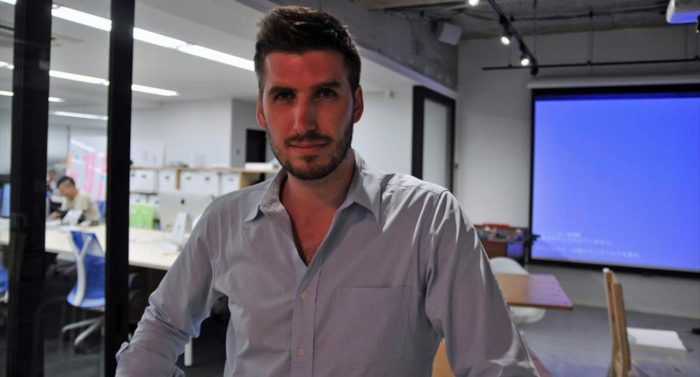
“Finland and Japan are actually very close in many ways,” says Boris Milkowski of Goodpatch.

“Finland and Japan are actually very close in many ways,” says Boris Milkowski of Goodpatch.Photo: Goodpatch

Boris Milkowski works for the Tokyo-based software company Goodpatch. As head of business development and overseas expansion, Milkowski visited Slush in 2013. He liked it so much that he put in his calendar for 2014.

“I’m really proud of such a cool event Helsinki was able to pull off,” he says. “It is very different from other events. The atmosphere was very casual but professional and focussed on business. The organisers thought of everything to make it the coolest tech event out there: parties, catering, sauna, you name it.”

Goodpatch helps create user interfaces and dashboards for applications. The company also serves entrepreneurs in other ways, such as their rapid prototyping tool Prott for mobile apps.

“Japan has a large market, but it is not growing,” Milkowski continues. “So many startups fail in Japan because they think too small. They need to re-succeed on the global stage. Many are interested in Silicon Valley but culturally Europe is a better fit. Finland and Japan are actually very close in many ways, from the culture to how we value trust.”

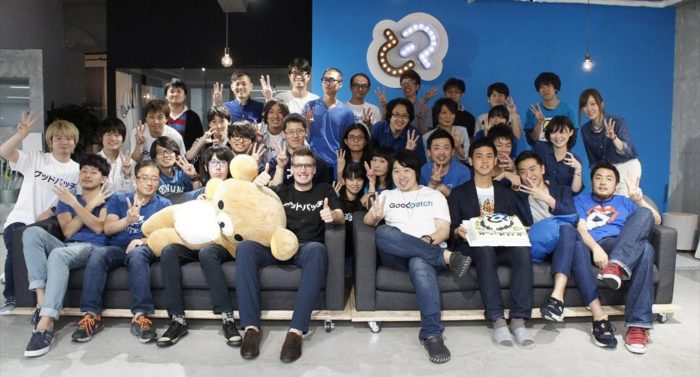
Goodpatch has come to Helsinki for Slush, but the company has also taken Slush home with it to Tokyo. The concept has proven to be so compelling that organisers are creating satellite events around the world.

“We had eight teams pitching their companies and ideas,” says Milkowski. “The winner of the pitching competition received a flight to Helsinki.”

Startup Sauna abroad

Goodpatch, which helps create user interfaces and dashboards for apps, has come to Helsinki for Slush, but the company has also taken Slush home with it to Tokyo.

Goodpatch, which helps create user interfaces and dashboards for apps, has come to Helsinki for Slush, but the company has also taken Slush home with it to Tokyo.Photo: Goodpatch

“We want to make Finland one of the best places to found and build companies,” says Juuso Koskinen of Startup Sauna, a nonprofit foundation dedicated to improving the startup ecosystem in the region. “That’s why it is great to show other countries what we have in Finland and lift its international appearance among other countries.”

In addition to acting as the organising force behind the Slush conference, Startup Sauna runs an accelerator program and helps students get internships at high-tech companies.

“Startup Sauna’s international operations mostly consist of holding one-day coaching events in various cities in our core region of the Nordics, Eastern Europe and Russia,” says Koskinen. “However, this year we have also done events in Nairobi, Kenya and Seoul, South Korea. These events are aimed at meeting and helping local startups and understanding how the local ecosystem is doing.”

Finland’s vibrant and innovative startup ecosystem has bred numerous success stories, and Koskinen explains that many of these entrepreneurs want to help others.

“During the last five years the culture in Finland has shifted to what we like to call a pay-it-forward culture,” he says. “This means that serial entrepreneurs and investors are today helping out new companies. The ecosystem in general is very tight, so you can actually meet someone and get help quite easily.”

By David J. Cord, November 2014

Incubating talent

Innovative programs such as Startup Sauna and New Factory encourage and groom young, high-tech startups for competition on the global market.

The Finnish sauna is an almost mystical place, where participants undergo a period of intense heat and humidity and emerge clean, refreshed and – if legends are true – healed. At Startup Sauna in Otaniemi, just west of Helsinki, young companies undergo their own extreme trial and reappear ready to compete in the global marketplace.

“Startup Sauna was created to solve a problem,” explains Antti Ylimutka, the second-in-command on the project. “We have great researchers and technology, but not many globally successful companies. Our purpose is to increase the number and the quality of startups in the region.”

Organisers travel across Northern Europe and Russia holding one-day sessions with local companies. Those that pass muster are invited to the full six-week session at Aalto Venture Garage. Some are even flown to Silicon Valley to meet their American counterparts.

“We want to open participants’ minds to all the activities necessary to be an entrepreneur,” says Will Cardwell, one of the program’s coaches. “At the end, they should have a prototype, an introductory business model.”

Coaches for the young businesspeople include academics, investors and especially other entrepreneurs. The coaches donate their time and expertise to help entrepreneurs prepare for the real business world. They aim to create a more viable product and hone their pitch to investors.

“Participants get one-on-one feedback,” continues Ylimutka. “They learn from the coaches, but they also learn from their peers, the international competition.”

New Factory

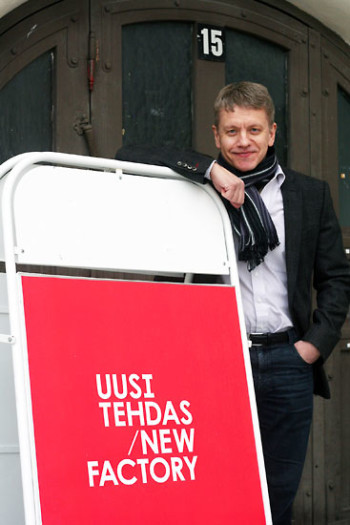
Jukka Matikainen boosts startup spirit with New Factory in the southern central city of Tampere.

Jukka Matikainen boosts startup spirit with New Factory in the southern central city of Tampere.Photo: New Factory

The capital region is not the only place where such projects exist. In the southern central city of Tampere, New Factory is the innovation and business incubation centre of choice.

“We need to boost the entrepreneurial spirit and culture in Finland,” says director Jukka Matikainen. “There are not enough growth companies now. To have those companies we need people who are passionate, ready and able to take the risk and do what it takes to start a business. So we concentrate on people. Our approach is open, agile and community-based.”

Matikainen says that New Factory has helped to create dozens of startups and hundreds of jobs and projects so far. Their offering has proven to be important on the national level as Finland undergoes industrial structural change.

View from a participant

“I suppose we could be called Startup Sauna veterans,” says Jani Hursti, founder of Asema Electronics. “We were in the first batch of companies in spring 2010. We needed to learn, and this was the place to be.”

Asema, founded in late 2009, specialises in energy management. It uses consumer terminals for the smart electricity grid, so customers know exactly how much energy they use, when they use it and how much it costs. While the company had a fine idea, they needed help in bringing that idea to market.

As with almost any new program, Hursti says that there were some hiccups in Startup Sauna in the beginning. But organisers learned from their mistakes, realised what companies needed and modified their approach.

“It’s never easy, and there’s never a perfect package, but they really gained in professionalism,” Hursti says. “We had access to the things we needed: industry contacts, financiers and the media.”

When asked about the best outcome of the program, Hursti gives an unexpected answer: cardboard boxes.

“I’ll explain,” he says, smiling. “We wanted to go to an expo, but we needed to pack our stuff. We needed tools and hardware. Here we were able to get all these things we needed. It provides the infrastructure companies need to operate efficiently.”

By David J. Cord, March 2012, updated November 2014

Finns add new dimensions to 3D printing

A Finnish company has developed an innovative way to engage people with three-dimensional printing. If a Finn doesn’t have a 3D printer, he or she can use one for free at Aalto University.

Kari Voutila thinks that we are in the midst of the next industrial revolution. If he has his way, his company will be at the centre of it.

“I believe 3D printing is the next step in digitalisation,” says Voutila, CEO of the Kuopio-based 3D Online Factory. “What has happened in the music industry with Spotify, and in television with YouTube and Netflix, is also going to happen with physical things.”

He says that industry will change from mass production to local, personalised fabrication. Consumers will manufacture their own products with their own 3D printing devices or at printing hubs. People have been predicting this for some time, but 3D Online Factory already has a plan in place. The beginning of their idea is called Launzer.

“The basic idea is engagement,” continues Voutila. “We see 3D printing as a tool, not a reason to exist. What we offer when we talk about ‘social media of things’ is a platform for interaction between companies and consumers, brands and fans.”

Printable marketplace

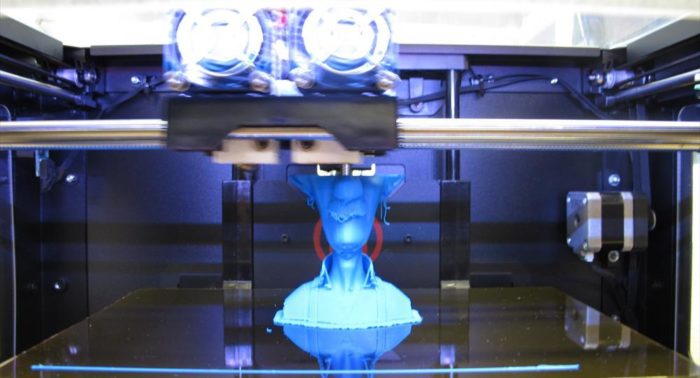
Building a bust: A statuesque form takes shape in a 3D printer at FabLab.

Building a bust: A statuesque form takes shape in a 3D printer at FabLab.Photo: flickr/AaltoFabLab cc by 2.0

Building a bust: A statuesque form takes shape in a 3D printer at FabLab.Launzer will be a 3D printable marketplace where consumers interact with each other as well as the brands. A person could print out characters from their favourite games, for instance. Early participants include the gaming company Legendary Games and the entertainment business Eyeworks.

“For fans, the innovative part will be the social media elements,” Voutila explains. “Fans can share all that they have printed out, follow other users and be part of the design and marketing of their favourite brands. It’s easy and fun. It is a new platform for brands in entertainment, gaming, media and design to do merchandising in a totally different way.”

For people who would like the idea of 3D printing but don’t know where to start, Aalto University’s Fabrication Laboratory is there to help. Inside FabLab, people can find the equipment, materials and expertise for their own projects.

“I first came here just as a member of the public,” says Charlie Banthorpe. “I designed my own coffee table and came to have the top fabricated. Now I work here.”

Banthorpe, who has the vague but intriguing job description “helping you make stuff out of things,” shows off Aalto’s FabLab along with his fellow studio master Ali Neissi.

Paying it back with impressive output

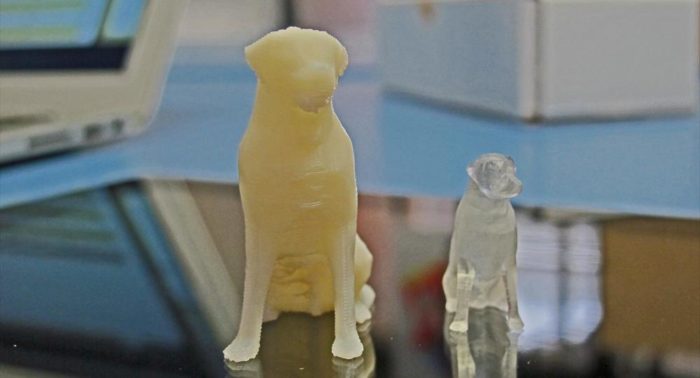
FabLab Labradors: Two newly created miniature dogs gaze out at the world.

FabLab Labradors: Two newly created miniature dogs gaze out at the world.Photo: flickr/AaltoFabLab cc by 2.0

Banthorpe and Neissi show off elaborate bracelets and sculptures as the 3D printers slowly print out two miniature Labrador dogs. The quality of FabLab’s output is impressive: an observer would probably never know that the signage and much of the furniture was designed and created in-house.

“The oldest person we’ve had was a 75-year-old who made a bridge prototype,” says Neissi, who specialises in electronics. “The youngest was a baby who came in with his parents. We get entrepreneurs building prototypes; hobbyists; artists; and all sorts of people. Many people don’t want some mass-manufactured item. Instead they want something personalised.”

Although the equipment is normally reserved for students, anyone can wander into FabLab during its weekly open days. A person can use the machines and get help or advice for free. The only fees are for the materials, and even those costs are minimal.

FabLab has scanners, cutters, milling machines and a variety of 3D printers. Some of the printers are commercial models, but others are open source machines built by the community. The idea of open source – universal access and open collaboration – is at the heart of the project.

“This is the philosophy of FabLab,” Banthorpe explains. “It is paying it back and building on what others have done. You share your knowledge and you share your experiences.”

By David J. Cord, November 2014

How to be Finnish in Swedish

Every November 6, Finland celebrates Finnish Swedish Heritage Day, marking the significance of Swedish, which is one of the country’s official languages. Swedish-speaking Finnish journalist Anna-Lena Laurén gives us an inside angle on what the Swedish language means to Finland.

Finland-Swedish poet Henry Parland (1908–30) once wrote in a letter, “I am a foreigner wherever I go.” The writer had the sort of multifaceted background that is typical of many Finland-Swedes (Swedish-speaking Finns):

Born in Vyborg (then part of Finland and now part of Russia) to a family with Scottish roots, Parland attended school in German. Although he also knew Russian and Finnish, Swedish was his language of choice for his writing career.

Finland has had a Swedish-speaking population since the 1100s, when Swedish crusaders arrived, but Finland-Swedes possess a much broader cultural and genetic heritage. Russian, German, Scottish and Baltic blood runs in the veins of many Finland-Swedes.

Finns or Swedes?

A crowd waving Finnish flags.

Finnish flags flying: Finland-Swedes definitely don’t support Sweden at sporting events.Photo: Heikki Saukkomaa/Lehtikuva

When Parland wrote about being a foreigner wherever he went, he was not only referring to his multicultural background. He probably also meant that it can be extremely difficult to explain your identity to people who believe that nationality and language are one and the same. A Finn who speaks Swedish? How did that happen?

The fact is that Finland-Swedes adamantly consider themselves Finnish. That means we’re not Swedes who live in Finland, but rather Finns whose mother tongue is Swedish. Multilingual countries are not unique – Europe also contains Belgium and Switzerland – but the misconception that a country can only have one language is still quite common.

So, never ask Finland-Swedes if they root for Finland or Sweden in ice hockey. They’ll find it downright insulting.

One of Finland’s official languages

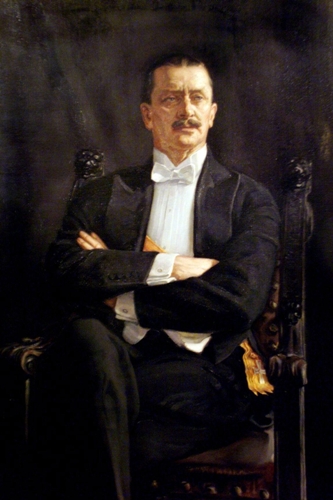
Painting of Mannerheim in a dark suit, sitting with his arms crossed.

Marshal C.G. Mannerheim as painted by Akseli Gallen-Kallela, one of Finland’s most famous artists – and also a Swedish speaker.Photo: Jussi Nukari/Lehtikuva

Foreign guests often ask why Swedish is an official language in Finland, seeing that Swedish speakers make up only about 5.2 percent of the population.

The answer is that the Swedish language has a cultural and historical significance in Finland that can’t be measured by percentage. For 700 years, Finland was part of Sweden, a period that brought Finland a western European social structure. Rather than becoming a feudal society it became a society made up of free farmers, in contrast to Russia and the Baltics.

When Finnish started to gain ground as a language of administration and creative arts in the 1800s, Swedish-speaking intellectuals spearheaded the process. They looked upon themselves as Finnish patriots. At the same time, Swedish maintained its cultural significance.

A very large portion of Finland’s most important literature was written in Swedish – the national anthem, for example, by national poet Johan Ludvig Runeberg. Finland’s best-known composer, Jean Sibelius, was a Swedish speaker, as was Marshal C.G. Mannerheim, who led Finland through the World Wars. In addition to his mother tongue, Mannerheim spoke Russian, German, French and English – and Finnish was actually his weakest language. Note that this didn’t make him any less of a Finn.

Finland-Swedish strength in the arts

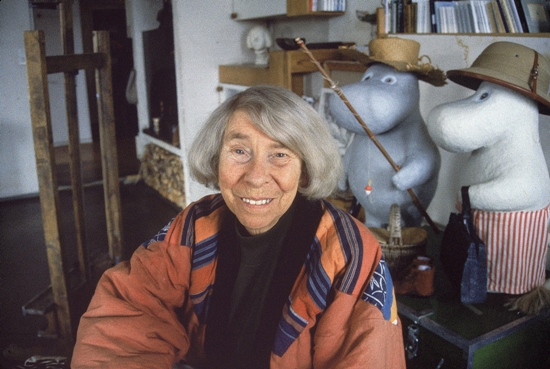
An elderly Tove Jansson pictured in front of two big Moomin plushies.

Finland-Swedish artist and author Tove Jansson created the beloved Moomintrolls, a couple of whom are shown here in statue versions.Photo: C.G. Hagström

To this day, Finland-Swedes produce a much larger proportion of literature than you’d expect from 5.2 percent of the population. The Moomins, Finland’s biggest export, were created by Finland-Swedish author and artist Tove Jansson.

Three Swedish-language theatres in the capital, 15 newspapers around the nation, several radio channels and a TV channel: A whole world of culture and arts exists in Swedish in Finland, parallel to and in dialogue with the Finnish-speaking one.

That’s one of the reasons why the Swedish language is so solidly rooted in Finland. It’s not a foreign language – it’s part of the whole nation’s cultural heritage.

By Anna-Lena Laurén, updated March 2025