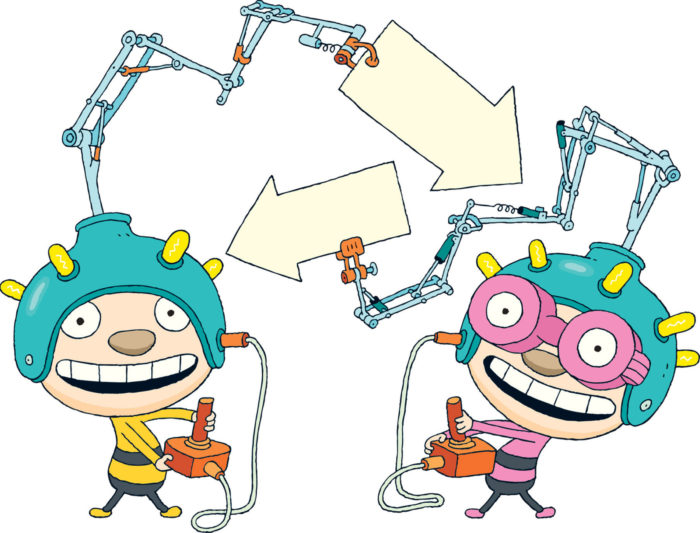
Combining Finnish educational expertise and artificial intelligence

“Personalised learning is the next level of learning globally,” says Claned Group founder Vesa Perälä.

“Students have different ways to learn, and varying preferences,” Perälä says. “Online learning platforms based on a one-size-fits-all approach usually have a high drop-out rate, but we have included individual learning paths and social interaction with other students. It keeps the students motivated, which makes all the difference.”

The name Claned comes from the way the company clusters students to different clans based on their learning orientation, skills and preferences.

Understanding students’ choices

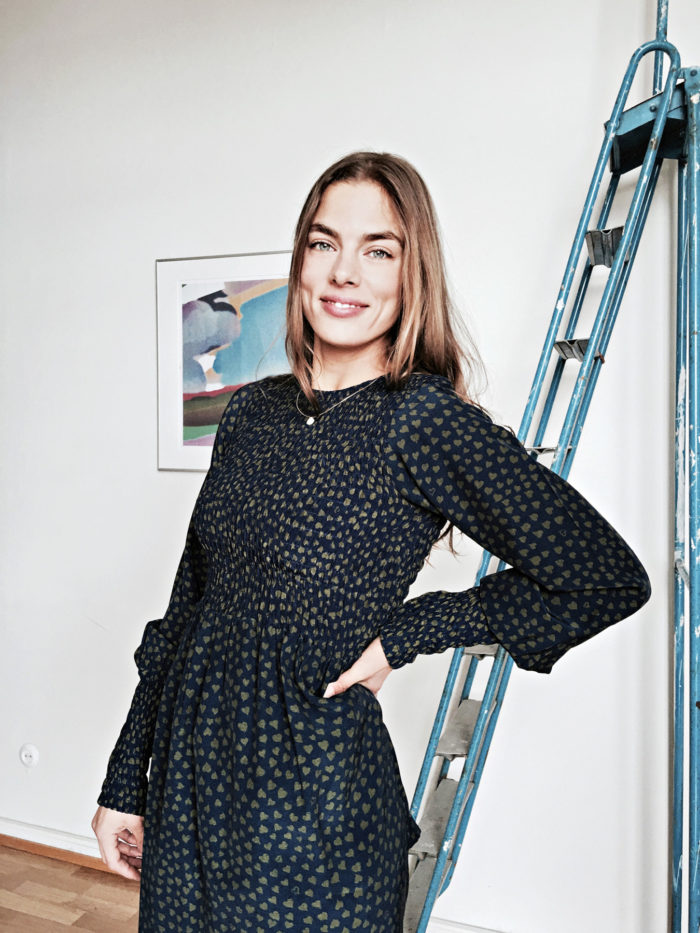
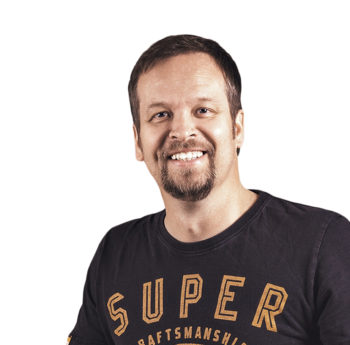
Portrait of Vesa Perälä of Claned, smiling widely.

“A learning tracker shows how much studying is still left, and can suggest next steps,” says Vesa Perälä of Claned.Photo: Ville Rinne

“Bit by bit, the machine learning system learns to understand each student’s learning behaviour and the choices they make,” Perälä says. “Based on the accrued data, it gives the students recommendations for suitable study material and alternative learning paths. A learning tracker shows how much studying is still left, and can suggest next steps.”

The system measures and analyses learning results, allowing the teacher to follow each student’s progress and intervene if necessary.

The global education market is growing rapidly. Claned Group, founded in 2013, sells its licence-based learning platform to universities, organisations and corporations worldwide. Its spearhead project consists of delivering continuing education in 21st-century skills for all Finnish teachers and headmasters, in cooperation with the Finnish National Agency for Education (EDUFI).

By Leena Koskenlaakso, ThisisFINLAND Magazine 2018

Versatile Finnish accordionist Maria Kalaniemi puts her soul into her music

“Gifted” is a word that truly applies to Maria Kalaniemi. Her professional career started in 1983, when she won the first-ever Golden Accordion competition and began studying folk music at the renowned Sibelius Academy in Helsinki.

Kalaniemi has become a revered musician not only because of her versatility, but because of her original playing style. Her playing is highly distinctive, flowing like a gentle creek or a breeze in the trees. It has been compared to the passionate Portuguese vocal style called fado.

Kalaniemi herself calls her compositions “bellow songs” that she creates by “painting landscapes of feeling.”

“It’s something I understood as a child,” she says. “I saw the emotional reaction my family had when listening to Finnish schlager [a type of pop music] and accordion tunes, and that made a magical impression. That’s when I realised that this was my soul music, the kind of tradition I would carry in my heart for the rest of my life.”

The accordion has a peculiar history in Finland. The instrument arrived in Finland in the mid-1800s, and in the beginning of the 1900s, the common people embraced it as a primary accompaniment instrument for different festivities. On the other hand, the accordion’s sound was considered too rough for highbrow society, and it was even banned from churches for a while.

Despite this reputation, you can almost consider the accordion the founding instrument of Finnish popular culture. It was featured in countless popular recordings and films up until the 1960s, when its position was challenged by rock and roll.

Delivering Finnish design on demand

Helsinki Design Week, which was first held in 2001, now comprises more than 200 events, exhibitions, workshops and open studios, all helping show what’s new in the design world. The 2018 edition lasts from September 6 to 16, and revolves around the theme Trust.

New services in the digital sector are based on trust between the provider and the user, say the organisers of Helsinki Design Week. For physical design items, trust exists between the designer and the customer.

Design IRL

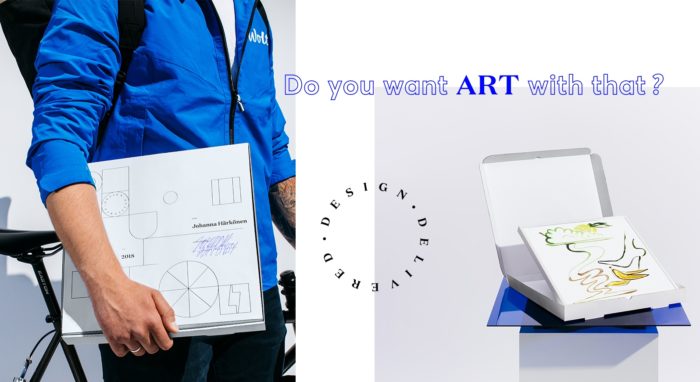
A food delivery person carrying a pizza box and the box open on a blue glass table, showing a painting inside.

It might look like a pizza box, but it contains a painting by Johanna Härkönen.Photo: Kimmo Metsäranta; design item: Johanna Härkönen

Physical and digital design are combined in Design Delivered, which allows customers to order art and design items from Wolt, a Finnish food order and delivery service with operations across Scandinavia, the Baltics and a number of other countries. For the duration of Design Week, Wolt offers Helsinkians a selection of design items in addition to food menus.

The pieces (600 of them, by 60 different designers and artists) are selected by a jury of two creative chefs and two creative directors, and one whole day is devoted completely to items created by students in Aalto University’s department of arts and design.

Elsewhere in Helsinki during Design Week, 13 ambassadors’ residences in the Finnish capital open their doors to the public, and 11 architectural offices and creative agencies participate in Open Studios. The Design Market at Cable Factory now includes the Vinyl Market, with music, DJs and discussion, and of course records. Families can head for Children’s Design Week, with events at Helsinki City Museum, City Hall and elsewhere.

By ThisisFINLAND staff, September 2018

Finnish author Linda Liukas teaches kids the poetry of coding

Linda Liukas is a 21st-century Ada Lovelace; she uses fairy tales to teach the poetry of coding.

With her ginger ponytail, freckles and disarming laugh, it’s easy to see why Liukas (born in 1986) has sometimes been described as a “geeky Pippi Longstocking.” Just like that feisty, red-headed heroine in the children’s books of Astrid Lindgren, Liukas is fearless, inspiring and fiercely intelligent. When it comes to empowering kids, she does the equivalent of lifting horses one-handed (one of Pippi’s trademark tricks).

Liukas breezes into Löyly, a seaside sauna bar in Helsinki. She’s excited, arriving from the launch of her latest book, Hello Ruby: Expedition to the Internet (2017), which she pulls out of her bag.

It’s the third book in her award-winning Hello Ruby series, which demystifies coding and teaches children the basics of computational thinking. Written and illustrated by Liukas, the series recently won China’s top design prize, the Design Intelligence Gold Award, worth 130,000 euros.

21st-century literacy
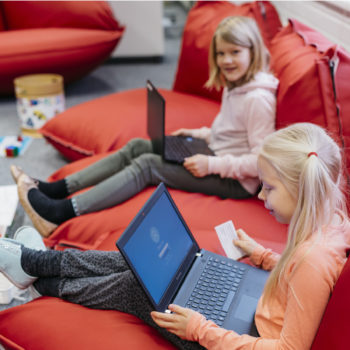
Two young girls sitting on a red couch with laptops in their laps.

“We need diverse input from all sorts of people, starting with kids,” says Linda Liukas.Photo: Elina Manninen/Keksi

However, describing Liukas as a “successful children’s author” is like saying Steve Jobs “sold computers.” She is a multitalented pioneer on a mission to inspire children to express themselves through technology.

“I wish there had been a book like Hello Ruby when I was growing up,” says Liukas. “Code is 21st-century literacy, and a growing number of world problems are starting to look like software problems – but software designers alone can’t solve them. We need diverse input from all sorts of people, starting with kids.

“Back in my childhood you had to choose between arts and maths. But why not choose both? Computers are meant for solving all sorts of problems. I see myself as equipping kids with creative thinking tools, not just teaching them to code.”

A passion for teaching kids tech
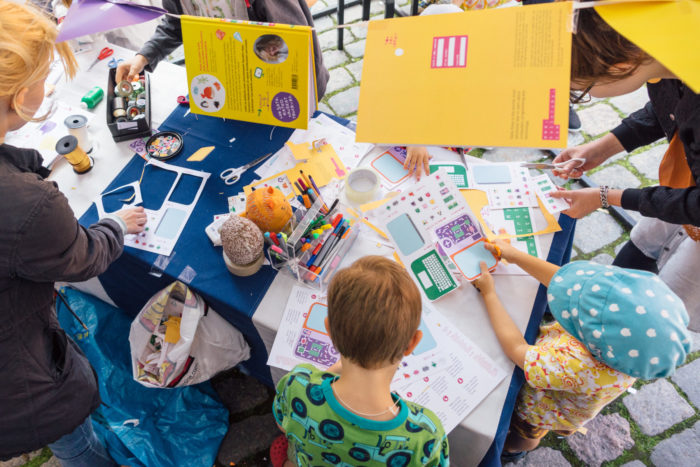
Children gathered around a table filled with stickers, pens, strings and other crafting materials.

“Hello Ruby” uses all kinds of methods to teach kids about coding, including old-fashioned paper-and-scissors activities.Photo: Otso Kaijaluoto

Her journey from geek to world-famous writer has been “a serendipitous adventure” fuelled by a childhood passion for reading, drawing, and computing.

“In hindsight it seems obvious how these strands came together in my current work,” she says.

While other girls were pinning up posters of rock stars, Liukas had a “safe crush” on Al Gore.

“I was a little eccentric,” she says. “I taught myself coding so that I could create Gore’s Finnish fan site when I was only 13.”

Her passion for technology became a full-blown love affair after she and her brothers took apart the family laptop in the early 1990s.

“By fiddling with computers I learned that coding can be a creative tool for building worlds. My fearless curiosity about technology came from home.”

Rails Girls go global

Excerpts from our interview with Linda Liukas, recorded on the patio of Helsinki seaside sauna bar Löyly.Video: ThisisFINLAND Magazine

With her voracious appetite for learning, Liukas pursued a diverse course of studies including philosophy, business, French and visual journalism. After studying at Stanford, she experienced a moment of revelation.

“In the United States I saw how people were truly using technology to change the world,” she says. She became inspired to launch Rails Girls, an initiative with the goal of “getting more women involved in IT.”

Rails Girls is now global, teaching women all over the world the basics of coding. A nonprofit community, it organises workshops and provides women with access to technology as a platform for unleashing their creativity.

Ruby explains all
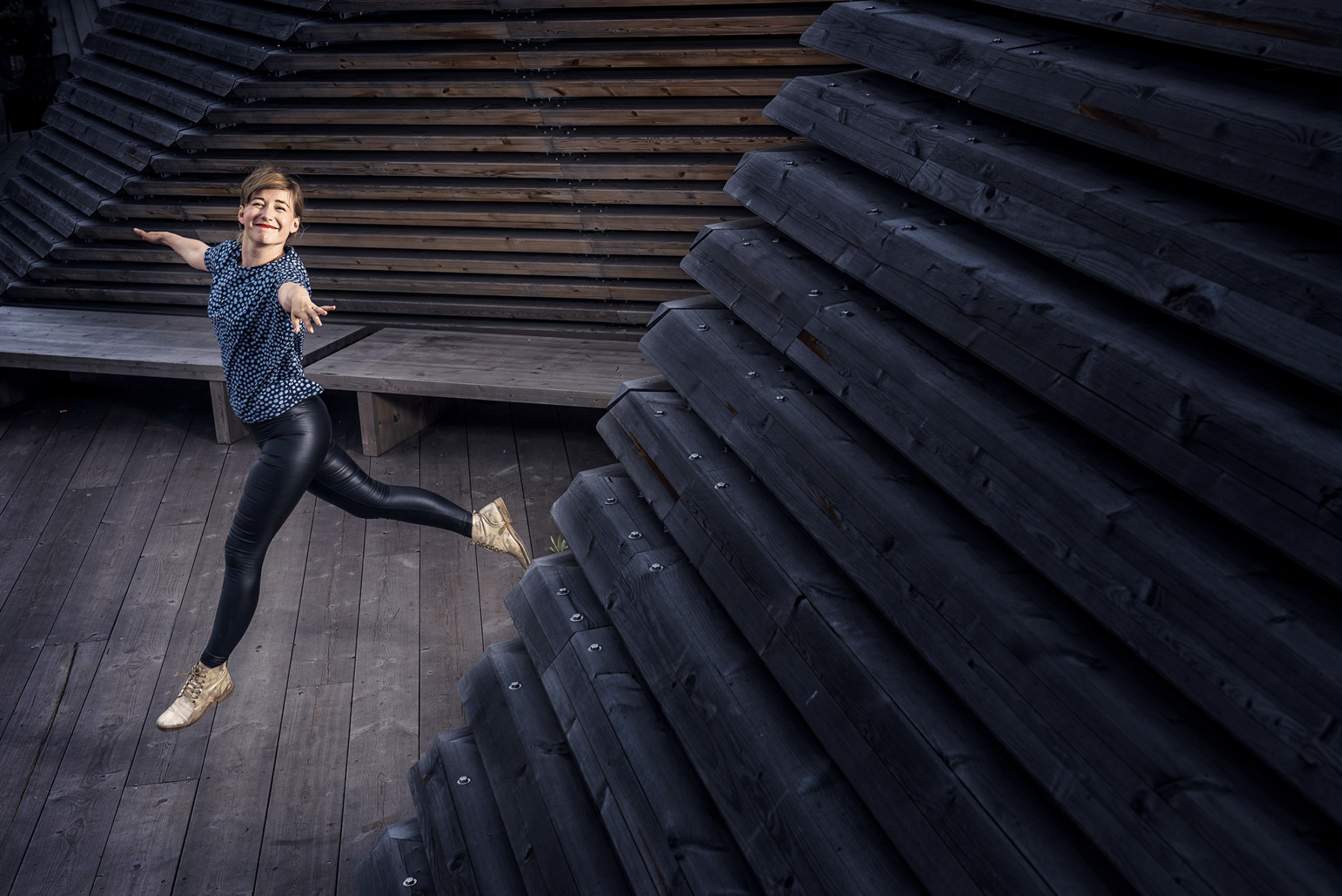
Linda Liukas jumping ballerina-like amidst dark wooden walls and floor.

“It’s simply about communication,” says Linda Liukas.Photo: Vesa Tyni

After Rails Girls came Hello Ruby, a concept Liukas hit upon while learning the open-source Ruby programming language. Whenever she had difficulty understanding a principle, she drew pictures of a red-haired girl called Ruby and asked herself, How would Ruby explain this?

The first book raised 380,000 dollars on Kickstarter, becoming the platform’s most highly funded children’s book. Hello Ruby: Adventures in Coding (2015) has now been published in at least 22 languages.

The third book in the series, Hello Ruby: Expedition to the Internet, is a pioneering attempt to make the web approachable to kids.

“The pessimistic way the internet is presented makes it seem like a dark, scary place,” Liukas explains. “My book shows that it’s simply about communication.

“I portray it as a snow castle – a metaphor that makes it more relatable. I never outgrew fairy tales, so I teach kids through storytelling.”

Ada Lovelace meets Little My
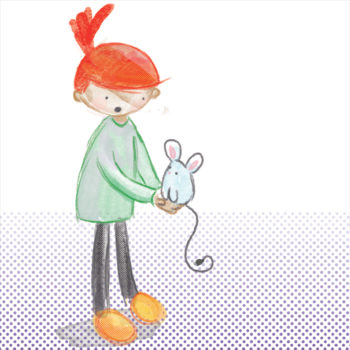
An illustration of an awed-looking red-haired person holding a mouse.

Ruby shows her readers a mouse.Illustration: Linda Liukas

When asked what personal qualities have made her such an inspiration to kids around the world, Liukas fires off a spirited reply.

“I’m curious,” she says with broad smile, “and when I stumble upon something interesting, I get very enthusiastic.

“My third strength is confidence. I have a strong sense of ‘Yes, I can.’ It’s the legacy of my childhood. I grew up reading books by Tove Jansson and Astrid Lindgren. Little My [one of Jansson’s plucky Moomin characters] and Pippi Longstocking are my mentors. We’ve always had a great diversity of role models in Scandinavia.”

Liukas is often described as a champion of female empowerment, but she insists that her core message is not just about feminism, but diversity.

“I love it when little boys in Japan tell me that their favourite character is Ruby, not the male character, Django,” she says. “It’s great that boys accept a girl as their hero. I want to bring girls into the world of technology, but by the same token I want to help boys accept different identities – to become nurses if they want to.”

Yoga and unicorns
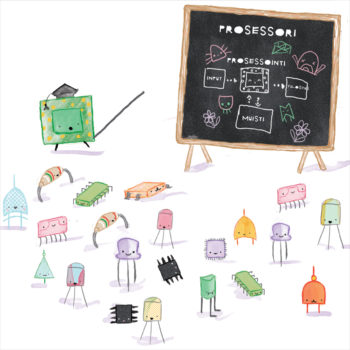
An illustration of colourful computer chips in front of a blackboard, a bigger chip pointing at the board with a pointer.

Coding is like teaching computer chips how to behave, this picture seems to imply.Illustration: Linda Liukas

An incurable bookworm, Liukas reads at least one book a week, devouring everything from Harry Potter to Hemingway. Her sources of inspiration are eclectic, from yoga and Friday-night pizza to sparkling decorative unicorns.

“I spend so much time at the computer, so I like to connect with simple, earthy activities that ground me,” she says. “Otherwise my work life and personal life are very much intermixed. I try to emulate Tove Jansson, who saw art and life as one and the same thing.”

Edutech ambassador

Liukas’s TEDx talk on children and computing has received almost two million views on the TED website alone.Video: TED

Liukas played an instrumental role in making coding part of the Finnish school curriculum. She now provides consultancy services around the world, collaborating actively with US educators in a New York City education program and with teachers in Japan.

Other projects in the pipeline include the forthcoming Chinese launch of Hello Ruby. Work on the fourth instalment – which tackles the theme of artificial intelligence – is also in full swing.

One thing, at least, seems certain: nothing will keep Liukas from her quest to make the world better through technology, whether as an author, illustrator, coder or educator.

“My professional identity is very flexible,” she says. “We humans aren’t binary like computers. As Walt Whitman said, we all contain multitudes.”

Linda-spirational quotes

An illustration of three children; one on a swing, one on a bicycle and one on a T-Rex. They are watching internet memes such as Doge, Nyan Cat and Gangnam Style.

In the third “Hello Ruby” book by Linda Liukas, the characters take off on an expedition to the internet.Illustration: Linda Liukas

  • “Imagine a world where the Ada Lovelaces of tomorrow grow up to be optimistic and brave about technology and use it to create a new world that is wonderful, whimsical, and a tiny bit weird.”
  • “We all ought to get used to falling forward. Everyone takes a tumble – everyone trips sooner or later. Coding teaches you to tolerate mistakes.”
  • “The most scalable change happens in childhood. The world changes when children change it.”
  • “If coding is the new lingua franca, then instead of taking grammar classes, we should all be learning poetry.”

More Finnish tech superwomen

By Silja Kudel, ThisisFINLAND Magazine 2018
Finnish families get into the Flow Festival spirit

The sun is shining as trendy parents push prams past a former power station on the grounds of Flow Festival, a multigenre, three-day event with almost 150 music acts appearing on eight different stages.

Children are running around, laughing, dancing and listening to music. They look like miniature versions of the adult festivalgoers, except that many of them are wearing noise-cancelling earmuffs and holding balloons. More kids than adults are wearing rubber boots and caps. Some kids even sport outfits that match those of their parents.

Family Sunday at Flow Festival in Helsinki is in full swing. Kids and their parents are hanging out and enjoying the events.

Adults with festival tickets can bring children who are ten years old or younger to Flow on Sunday from 1 pm to 5 pm. Aimed at preschoolers, the offerings include a disco, a textile art workshop, enormous soap bubbles, hair braiding, skateboard lessons, glittery makeup, kids’ yoga, movies and DJs.

Raising new generations of festivalgoers

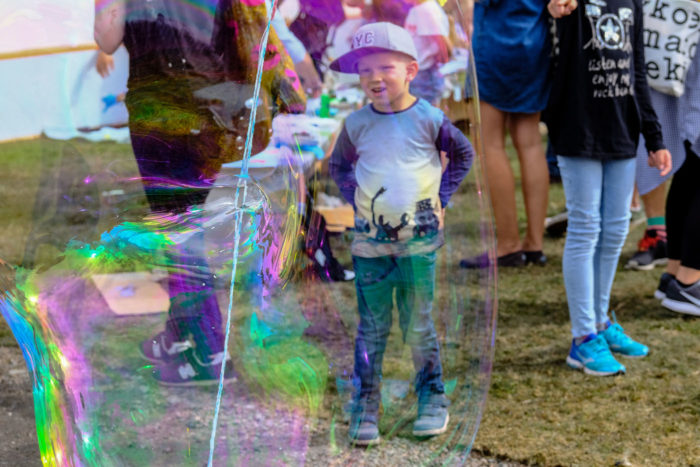
An awed-looking young boy seen through a gigantic soap bubble.

Flow Festival Family Sunday began in 2009 with children’s concerts and DJs, and the programme has expanded over the years to include workshops like this one, where children could make gigantic soap bubbles.Photo: Tim Bird

The Flow family programme started in 2009, when the organisers themselves and their friends started having kids. “We wanted to give festival regulars an opportunity to bring their kids here on Sunday,” Flow Festival managing director Suvi Kallio says. “It was only a small addition to the programme. And when you bring the kids with you [for the afternoon], you only need to find a babysitter for the evening.”

At first Family Sunday just included bands and DJs playing children’s music at the outside venue Backyard, but it has expanded over the years, with approximately 500 children attending (Flow’s total attendance for the whole weekend was 84,000 in 2018). According to Kallio, the Skidit Mega Disko [skidit means “kids” in Finnish], which debuted in 2017, is one of the children’s favourites.

Afternoon disco for kids and adults

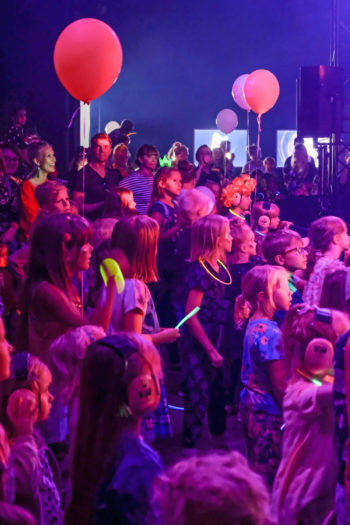
A big crowd of kids in ultraviolet lighting wearing earmuffs and watching something intently.

Skidit Mega Disko is popular with kids and parents. The disco takes place in a former boiler hall.Photo: Tim Bird

The renowned Finnish DJ Orkidea is playing cheerful tunes in a 1,000-square-metre former boiler hall. Spotlights illuminate entertainers dressed up as characters from children’s stories. Parking space for strollers is located in one corner, and couches for children – and their tired parents – in another.

There seem to be almost as many adults as kids on the dancefloor. The Skidit Mega Disko really is popular, as is the other dance event at Backyard, where DJs are playing more traditional children’s music.

Oliver and Verner, three and five years old at the time of writing, are at Flow Family Sunday with their dad and mom, Visa and Johanna, for the second time. “Festivals are a part of Finnish summer culture, and we thought it would be nice for the kids to experience this atmosphere, especially since there is a special programme for them,” says Visa.

The boys’ favourite isn’t actually part of the kids’ programme, though. It’s the concert of the Finnish R&B artist Stig Dogg. After the Skidit Mega Disko the boys head home with their grandmother, while the parents stay to enjoy the rest of the festival.

Fun, educational workshops

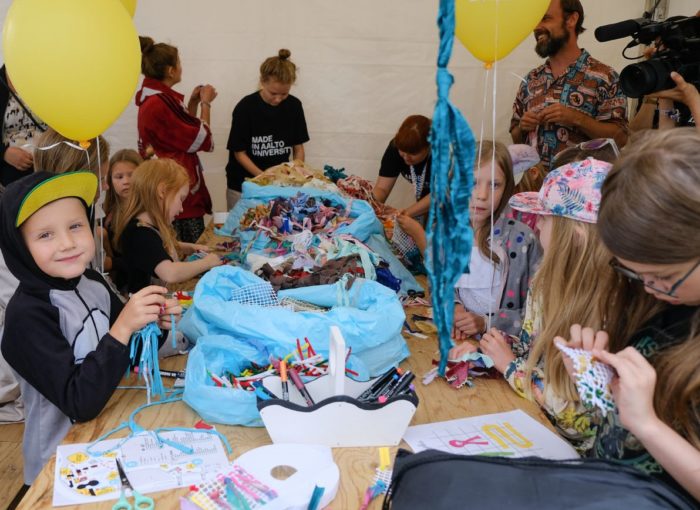
Kids gathered around a table filled with small pieces of textile, pens and other crafting materials.

Kids at Flow Festival take part in a textile art workshop organised by Aalto University. The separate patches from the workshop were later combined into a large communal artwork.Photo: Tim Bird

Ksenia came to Family Sunday with her kids Sofia, 8, and Tigran, 6, and one of their friends. They took part in a textile art workshop organised by Aalto University. Ksenia says she’s been coming to Flow Festival for years, but this is her first time there with the kids. “Our kids have always been curious about it, and they’ve seen the festival grounds from outside, so it was nice to finally show them what it’s about,” she says.

Family Sunday takes place before the evening influx of festivalgoers. “Of course music is the most interesting thing at Flow, but it’s also fun to wander around the festival grounds when it’s not so crowded, says Ksenia. “And there are lots of interesting workshops here, so the kids can actually learn something new.”

Sofia adds her opinion to the mix: “I liked blowing soap bubbles and doing the patchwork art, but I also want to get something to eat.”

Music, dancing, ice cream and the skatepark seemed to be the kids’ favourites. Skateboard lessons had to be discontinued after a brief rain shower passed over the festival, because the ground was too slippery, but the children didn’t seem to mind too much. They enjoyed running around the area, even without skateboards.

It’s also worth noting that, while Flow welcomes children on Family Sunday, at least three Finnish festivals provide free entrance for music fans on the other end of the age spectrum: Ilosaarirock in the eastern city of Joensuu and Tuska Open Air Heavy Metal in Helsinki (for those over 65 years old), and Ruisrock in the southwestern city of Turku (over 70).

By Anna Ruohonen, August 2018

Helsinki’s Amos Rex reaches new heights and new audiences

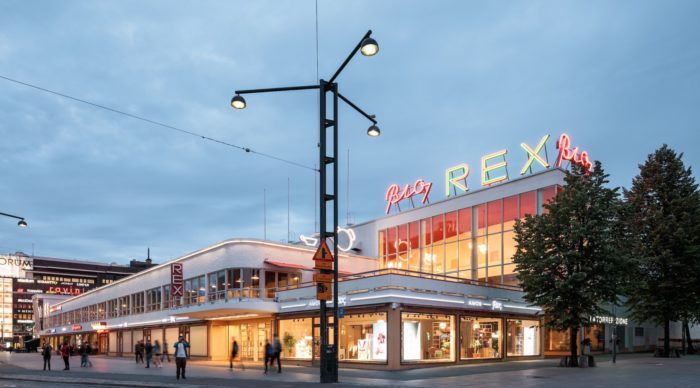
Amos Rex is an art museum chosen by the BBC as one of Europe’s most innovative new architectural spaces for 2018. It’s located in Lasipalatsi (Glass Palace), an iconic 1936 functionalist-style building lined with tall windows.

Lasipalatsi also houses offices, shops, restaurants and the renovated Bio Rex movie theatre. Amos Rex helps the edifice reach new heights.

Or actually, new lows: something is going on below the surface.

Designed by Helsinki’s JKMM Architects, Amos Rex’s 2,170-square-metre (23,350-square-foot) exhibition hall is underground. Because Lasipalatsi has protected status, they couldn’t construct a new building behind it on Lasipalatsi Plaza, which served as a bus terminus until the early 2000s.

Art corridor

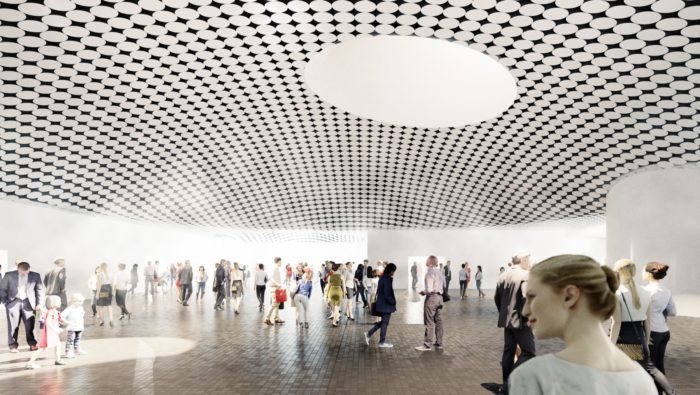
Conception art of a large exhibition hall with a black-and-white-tiled curved ceiling.

Amos Rex has a subterranean, versatile exhibition space.Artist’s conception: JKMM Architects

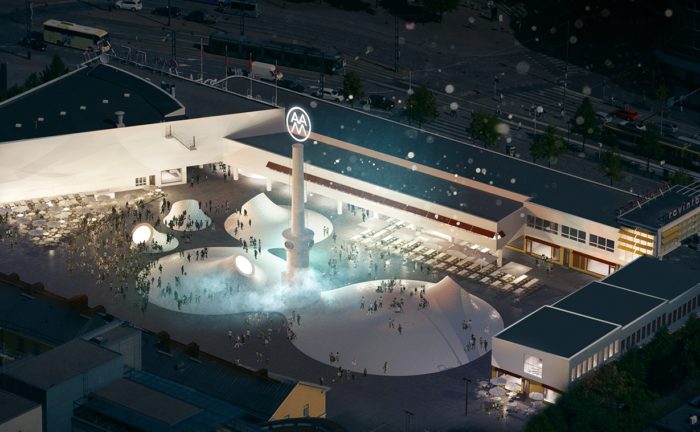
Instead, several domes of various sizes now adorn the plaza – the public is free to walk and climb on them. Each dome includes a conical appendage topped by a round window that lets daylight into the room below.

The architects preserved a clock tower in the middle of the plaza. A smokestack in a previous life, it now helps tie the outdoor space together and houses part of Amos Rex’s air ventilation system.

On budget and on schedule for its August 30, 2018 opening, the privately funded 50-million-euro project helps create a new museum district for Helsinki. Amos Rex is located on the capital city’s main thoroughfare, Mannerheim Road, across the street from the silvery grey hull of Kiasma, Finland’s leading museum of contemporary art. Also nearby is the neoclassical Ateneum, the country’s premier museum for fine art.

Palatial new premises

Lasipalatsi on a cloudy evening.

Lasipalatsi occupies a prominent place on Mannerheim Road. Amos Rex’s main entrance is the same as that of the cinema, Bio Rex.Photo: Tuomas Uusheimo

Kai Kartio, CEO and director of Amos Rex, says the adjacent museums will not compete with each other, but instead will work collaboratively to accentuate their geographical proximity as a means to attract patrons. He projects 200,000 visitors for Amos Rex in its first full year.

Helsinki Art Museum (HAM) and Kunsthalle Helsinki are also both within a few hundred metres of Lasipalatsi – the former in another renovated, late-1930s functionalist building, Tennispalatsi (Tennis Palace).

Since 1965, Amos Rex had, as the Amos Anderson Art Museum, occupied the stately home of Amos Anderson (1878–1961), a Swedish-language newspaper publisher, art collector and member of Finland’s parliament. Known for its 19th- and 20th-century collection of Finnish art, the museum was no longer viable in the 105-year-old structure.

“It is a very charming old house, but not practical at all,” Kartio says. “It was not possible going forward.”

Absolutely central

Lasipalatsi lobby; red couches and a white spiral staircase.

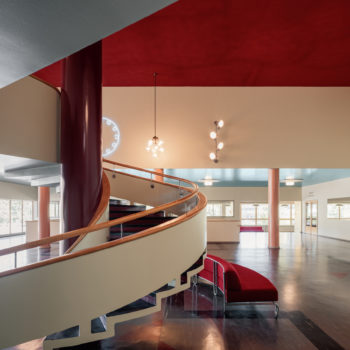
In the museum and cinema lobby: It’s a good thing they never got around to demolishing Lasipalatsi.Photo: Tuomas Uusheimo

In the early 2010s, when the search began for a new home, nearby municipally owned Lasipalatsi stood out for its availability, central location and appeal as a city treasure.

Purpose-built for the 1940 Helsinki Summer Olympics (delayed by the Second World War until 1952), the low-slung, block-long Lasipalatsi was meant to be torn down after a few years and replaced by a taller building. As a result, three young architects were given carte blanche to design the structure as they wished in the popular functionalist style of the times.

Its demolition delayed for many years, Lasipalatsi fell on hard times in the 1980s, eventually becoming protected and gaining modernist masterpiece status from the preservationist organisation Docomomo International. Yet despite its aesthetic appeal, Lasipalatsi had become a financial burden for the city of Helsinki, which was eager to work with the art museum’s deep-pocketed foundation. The city kept some of the commercial space housing restaurants and shops, while Amos Rex now controls most of the building.

“We like it because it is absolutely central,” Kartio says. “We wanted to make it as accessible as possible, as easy to visit as possible, and everybody knows where it is.”

Up and running

Conception art showing an aerial view of Lasipalatsi Plaza in the evening.

An aerial evening view shows Lasipalatsi Plaza casting beacons of light into the darkness.Artist’s conception: JKMM Architects

At one point the Bio Rex movie theatre had stopped operating for a few years, but Amos Rex has restored it to its original splendour, reupholstering the 590 seats within the art-deco cinema. Visitors go through the theatre lobby to reach the museum’s main entrance. Movies, mostly independent and art-house, are scheduled largely on weekends. The theatre can accommodate film festivals and seminars, and is available to the public as a rental hall.

Excavation beneath the public square began in 2015 to create a domed hall that will give Amos Rex flexibility to display forms of experimental and interactive art, Kartio says. With skylights atop the domes bringing in natural light, the space mimics the modernist lines of Lasipalatsi.

Amos Rex features rotating exhibitions of contemporary and experimental art, as well as classical and 20th-century modernism. From time to time the Amos Rex will also exhibit ancient art, says Kartio.

By Michael Hunt, August 2018

Reconfiguring reality

A person standing in front of a light art installation showing birds and white waves of light.

Using interactive art, teamLab investigates human behaviour in the information era.Photo: teamLab

Amos Rex’s grand opening exhibition is created by the Tokyo-based teamLab, a 500-person art collective that includes not only artists, but also coders, animators, mathematicians, architects, graphic designers and writers.

They say they’re out to “reconfigure reality” by investigating human behaviour in the information era. Viewers interact with teamLab’s art, or even cocreate it on the spot.

It’s an ambitious and technically challenging first exhibition that sets the bar high for Amos Rex’s future shows.

–Box text by ThisisFINLAND staff

Leaves grow green all summer in Helsinki, before burst of autumn colour

Summer in Helsinki is a season of magical nightless nights, also called white nights, when the sun hardly sets at all and the sky never gets completely dark. It’s also a time when parks, forests and meadows display foliage in every possible shade of green.

Lights in Helsinki: summer and autumn actually begins in the spring. You’ll see a group of students “crowning” the downtown statue Havis Amanda with a graduation cap to kick off the wild May Day celebrations. Aerial shots show just how green Helsinki is in the summer, and the camera wanders along flower- and tree-lined paths until the autumn leaves change colour.

Lights in Helsinki: summer and autumn
Video: Seppo Saarinen/MoviesKy

By ThisisFINLAND staff, August 2018

Who’s who in Finland?

1–4 correct answers: Close, but not quite. Take a trip to Finland to brush up your knowledge!

5–7 correct answers: Good effort. Keep it up and you’ll soon be calling yourself a pro Finn.

8–10 correct answers: OK, are you sure you’re not a Finn in disguise? You’re a true Finland fan. Onnea!