Finnish AI for the real world

Artificial intelligence gets a lot of press, but much of the attention is on applications that are either hypothetical or not very useful. While programmes that play chess are interesting enough, there are also AI applications that solve real-world problems.

Here we look at a few of the many Finnish AI projects that are working to make the world a better place.

Now boarding at Optimal Airport
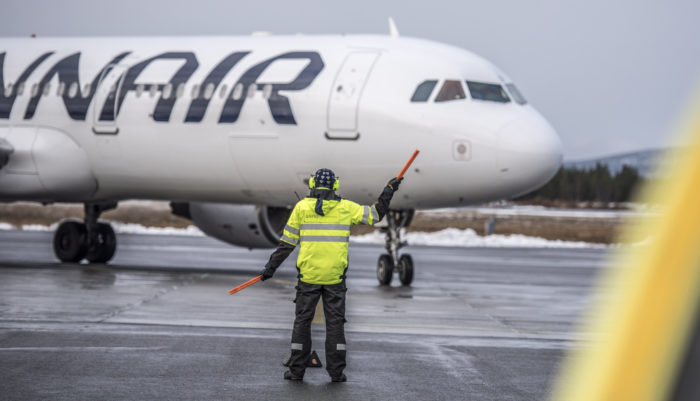
A ground service worker guides a plane to its parking space.

A ground service worker guides a Finnair plane to its designated parking space at Kittilä Airport in northern Finland.Photo: Otto Ponto/Lehtikuva

Finnish airport operator Finavia and advisory firm Fourkind teamed up to solve a problem at Kittilä Airport in Lapland. A small airport, Kittilä has only 12 parking places for planes, but in the winter as many as 58 flights arrive every day, filled with tourists eager to see the one and only Santa Claus, who lives in Finnish Lapland. One delayed plane could cause a snowball effect, affecting dozens of other flights.

In a unique solution, Finavia and Fourkind used AI to determine the optimal place to park each plane. The system devised the best place to put each aircraft using all available data, such as number of passengers, arrival time, and buses that might be necessary to get passengers from the tarmac to the gates. As the situation developed over the course of the day, the AI could revise its plan in real time to reflect the changes.

Kittilä saw a 61 percent reduction in airport-related delays, producing estimated savings of half a million euros in costs in one month alone. In addition, it caused a drop in emissions, because planes were less likely to have to circle the airport waiting for a space to become available.

All the colours of the rainbow – and more

A half of an avocado and a whole avocado on a table.

Avocado art: Spexel.ai has an add-on device for smartphones that allows you to take pictures with a much wider colour spectrum. AI analyses the data – and it might even be able to tell you when an avocado is ripe.Photo: Marjo Tynkkynen/Otavamedia/Lehtikuva

Is that avocado ripe or not? It’s hard to tell because the human eye only sees a limited amount of colours. If you have a spare 20,000 euros, you could buy a hyperspectral imaging system to tell you if your avocados are the right shade of green.

Or, you could turn to Spexel.ai, a project being developed at the University of Helsinki. “We use a simple add-on device which can be attached to a mobile phone,” says assistant professor Arto Klami. “The processing is done by AI in the cloud.”

Researchers can analyse a wide spectrum of light instead of only red, green and blue, which are typically used in imaging. The images taken by your modified phone are analysed by AI to determine a huge range of colours you otherwise couldn’t see.

“Agriculture is one major potential application,” says Klami. “For instance, it can be used to spot plant diseases or soil fertility, or to monitor what types of crops are being grown It can also be used by consumers, if you want to make sure your fruits and veggies are perfect to eat.”

Finding cancer without a knife

The doctors at Helsinki Central University Hospital wanted to minimise invasive biopsies, and asked for help finding prostate cancer using MRIs. They turned to Top Data Science, a young startup that provides AI technologies to solve specific problems. The algorithm used examples of previous MRIs and biopsies and was able to learn how to spot cancer from MRIs alone.

Right fuel, right place

The buildings of a harbour terminal stand in a snowy landscape.

North European Oil Trade’s harbour terminal in Oulu (the cluster of structures at the upper right) has liquid fuel tanks that store up to 67,000 cubic metres.Photo: Hannu Vallas/Lehtikuva

The northern Finnish city of Oulu has a major fuel terminal that handles a variety of North European Oil Trade’s products. The challenge they have is making sure their complicated system of loading and unloading doesn’t result in the mixing of fuels, such as biodiesel accidently being added to gasoline.

Telecom company Telia Finland teamed up with video specialists Finwe and FinCloud to develop an AI-based solution. AI analyses videos of the loading arms to make sure the right fuel is going to the right place, with 99 percent reliability.

Salvation for office workers

Today many organisations still process documents by hand. This is time-consuming and expensive – and boring for the people who have to shuffle forms, invoices and orders. Curious AI came up with an AI solution to not only process documents automatically but to turn the information into structured data.

The Finnish company sees two methods of thinking: fast and automatic to recognise patterns, and deliberate and methodical to find structure. Curious AI makes use of the second method by combining deep neural networks and Bayesian inference, which updates statistical probabilities as more information becomes available.

By David J. Cord, December 2019
Sanna Marin, 34, Finland’s new prime minister, heads a government coalition with four other female leaders

The other four parties in the government coalition all have women leaders: Katri Kulmuni of the Centre Party, Maria Ohisalo of the Greens, Li Andersson of the Left Alliance and Anna-Maja Henriksson of the Swedish People’s Party. The first three are also less than 35 years old.

Out of the 19 government ministers in the new cabinet, 12 are women. Marin is the youngest prime minister currently in office in the world and the youngest one in Finnish history.

Rinne remains leader of the Social Democratic Party for the time being, but had to relinquish the post of prime minister after an uproar about who knew what and when they knew it during a recent labour dispute involving postal workers.

In 1906, Finland became the first country in the world to grant full political rights to women – they gained the right to vote (a first in Europe) and also the right to run for office.

A record number of women won seats in the April 2019 parliamentary elections: 94, equaling 47 percent of the 200-person Parliament. The previous high was 85, in 2011. Women hold 17 of the Green Party’s 20 seats and 22 of the SDP’s 40 seats.

By ThisisFINLAND staff, December 2019

Finland remains among top nations in PISA education survey

Conducted every three years by the Organisation for Economic Cooperation and Development (OECD), PISA tests the skills and knowledge of 15-year-old students in dozens of countries in order to evaluate education systems worldwide. It assesses reading, mathematics and science.

The results released in December 2019 are compiled from the 2018 PISA. In Finland, the 2018 survey comprised 214 schools from all areas of the country, with 42 students at each school selected randomly to participate. The test group included Finnish-speaking and Swedish-speaking schools – both are official languages in Finland.

Finland’s results in the reading literacy section have it sharing second place with Canada among OECD countries and sixth place out of all participating nations and regions. In mathematical literacy Finland also performed well, placing between seven and 13 among OECD countries and between 12 and 18 overall (the countries are grouped this way because their scores are extremely close together). In science literacy, which concentrated on natural sciences this time, Finland ranked third among OECD countries and sixth overall despite gathering fewer points than it did in the previous PISA.

Life satisfaction

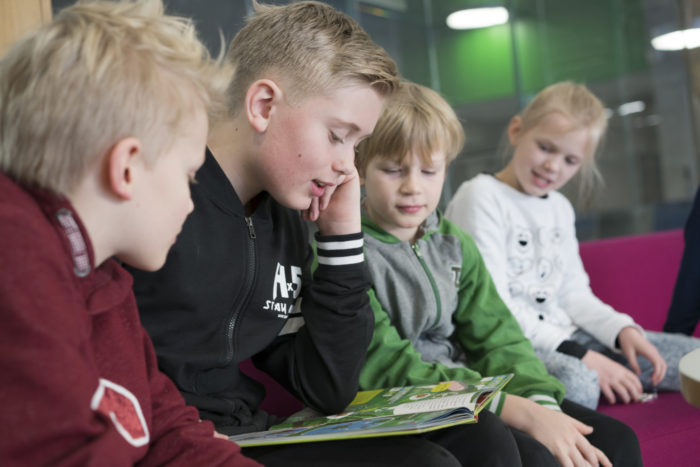
Four kids sit together on a couch to read a book.

Reading, whether from a screen or from paper, forms the basis for much of the learning kids do at school.Photo: Riku Isohella/Finland Promotion Board

PISA 2018 also asked students to assess their own life satisfaction; Finnish 15-year-olds gave this a mean score of 7.61 on a scale of one to ten. If you chart the scores for life satisfaction against those for reading proficiency, it becomes clear that Finland is the only country where both categories are at a high level. This may indicate a positive balance between school and other aspects of life, just as Finnish adults, according to international comparisons, enjoy an admirable level of work-life balance.

The graph of kids’ interest in reading shows a decline in Finland, as it does in many places all over the world. Surprisingly many children answered that they read only when necessary – the question included digital and paper platforms. This issue seems sure to demand attention from parents, educators and politicians to encourage reading, which forms the basis for so much other learning.

One open secret about the success of the Finnish education system is that the same high standard of education is available to children all over the country, regardless of geographic location or socioeconomic background. Minister of Education Li Andersson remarked upon this in a press conference in Helsinki, pointing out that the PISA results show that there are minimal differences between the many participating schools.

This means, she said, that everyone in Finland “can trust that their own local school is among the best schools in the world.”

By ThisisFINLAND staff, December 2019

“Equality Now” receives International Gender Equality Prize in Tampere, Finland

In 1906, Finland became the first country in the world to grant full political rights to women – they gained the right to vote (a first in Europe) and also the right to run for election. Finnish people have considered gender equality a guiding principle ever since.

December 2019 marks the second time the International Gender Equality Prize is awarded. The prize money does not go directly to the award recipient; instead, the award recipient directs the funds to a project that “advances gender quality in a globally significant way” and whose “progress can be monitored,” say the organisers.

In 2019, the International Gender Equality Prize is 300,000 euros, double the amount of the inaugural 2017 award. The ceremony takes place in the central western Finnish city of Tampere.

Using the power of the law

This video clip, Whenever you’re ready, introduces the work of Equality Now, the winner of the 2019 International Gender Equality Prize.

The 2019 winner is Equality Now, a global organisation that has been able to change more than 50 discriminatory laws during its more than 25 years in existence. It works locally based on each country’s needs, but it also achieves an international effect on legislation and human trafficking. For example, Equality Now has had success in altering attitudes towards female genital mutilation and child marriages.

“We use the power of the law to create enduring equality for women and girls around the world,” says Equality Now global executive director Yasmeen Hassan in a press release. The organisation works “to bring about systemic change addressing violence and discrimination against women and girls.”

She says that “a country’s laws set the tone for how it treats its people, and how its people treat each other. When women and girls have fewer rights than men and boys, discrimination is legitimised and ignored.”

Gender on the agenda

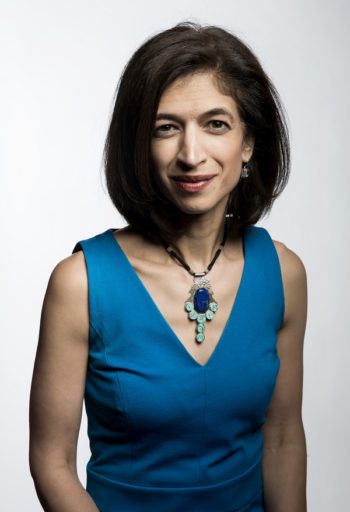
Portrait of a woman, Yasmeen Hassan, dressed in blue.

Yasmeen Hassan is global executive director of Equality Now, an organisation that works “to bring about systemic change addressing violence and discrimination against women and girls.”Photo courtesy of International Gender Equality Prize

Equality Now was chosen from more than 300 nominees suggested from all over the world. The independent jury included Pekka Haavisto, Finland’s minister for foreign affairs; Eva Biaudet, president of the National Council of Women of Finland and member of Parliament; Katja Iversen, president and CEO of Women Deliver; Anneli Jäätteenmäki, who was Finland’s first female prime minister; and Dean Peacock, senior advisor for global advocacy at Promundo, which describes itself as “a global leader in engaging men and boys in promoting gender equality and preventing violence.”

“Gender equality demands that men and women enjoy the same rights in the classroom, in the boardroom and in the bedroom,” says Iversen. “Evidence shows that when you invest in girls and women, there is a ripple effect that goes way beyond the individual, and everybody wins.”

Biaudet says, “To achieve a gender-equal world, we need an equal number of men and women in decision-making bodies.”

Gender equality is a natural fit with other areas in which Finland is known as an expert and an exporter, such as education and crisis management.

By ThisisFINLAND staff, December 2019

The 2017 International Gender Equality Prize went to Angela Merkel, the chancellor of Germany. She chose to direct the money to the nongovernmental organisation SOS Femmes et Enfants Victimes de Violence Familiale (SOS Women and Children Victims of Domestic Violence) in Niger, which is currently using it to build a residential shelter for victims of gender-based violence.

Artificial intelligence helps Santa in Finnish Christmas videos

As everybody knows, the one and only Santa Claus makes his home at Korvatunturi, a mountain in Finnish Lapland, in the far north.

ThisisFINLAND proudly presents several short animations that celebrate the Finnish Christmas season. As an added bonus, we’re also releasing two videos filmed at Santa’s workshop on the Arctic Circle, near the city of Rovaniemi, also part of Finnish Lapland (scroll down a little farther).

Fairytale package

What is one small gift that contains a large amount of adventures, costumes and action?

Window to another world

Santa knows how to keep up with the times.

Understanding all languages

Did you ever hear that sometimes the simplest solution is also the best solution?

Finding your way

How do you chart a path to deliver presents to kids all over the world?

Santa’s “heavy” sentiments

Christmas is a season associated with music, and everyone has a favourite tune!

Santa’s ice hockey vision

Wouldn’t everyone like to experience playing in the big leagues?

By ThisisFINLAND staff, December 2019

Equality in sports catches attention in Finland

In the Paralympics, athletes with physical disabilities have achieved a relatively high level of visibility. Athletes with intellectual disabilities haven’t received as many headlines, although the Special Olympics offer an international forum.

In Finland, a country where equality is highly valued, PuHu Juniorit became the first basketball club to start a team for people with intellectual disabilities, in 2005. A little boy had been watching his cousins’ games and was wondering why he could not play, too.

“And we started thinking why not?” says coach Pirjo Pellikka. “The activity was definitely sparked by a real need for this kind of team.”

They call it unified basketball, and Pellikka has become one of its proponents. In unified sports, athletes with disabilities exercise together with non-disabled partner players. According to the Finnish Sports Association of Persons with Disabilities, unified activities are offered in basketball, sailing, volleyball, bowling, floorball (indoor ball hockey) and horseback riding.

Hobbies for everyone

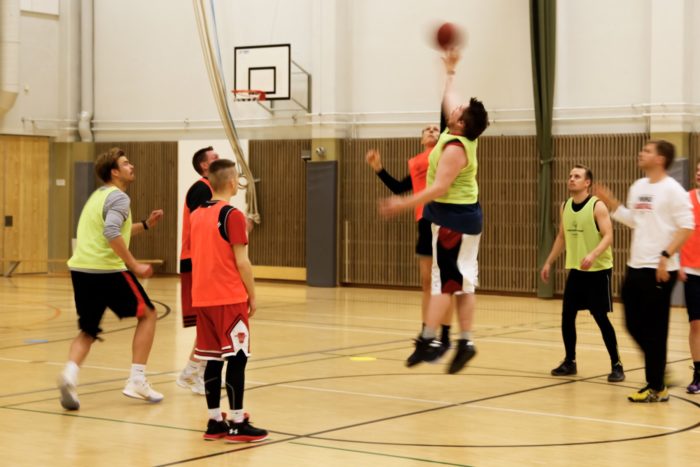
Two basketball players jump to reach the ball while other players wait around them.

Players spring into action at a PuHu Juniorit Red unified team practice.Photo: ThisisFINLAND

Today 15 different basketball clubs across Finland have unified teams, with a total of close to 400 participants. How does it work? For each team, three athletes and two partners are on the court at the same time. The partners cannot actively try to score, but are allowed to do so if a teammate sets them up with a great pass.

At a recent PuHu Juniorit unified team practice at the club’s home base in Vantaa, just north of Helsinki, players shared their thoughts on basketball, equality and what it means to be a part of a team.

“We don’t act as assistants on the court,” says Lotta Aaltonen, a partner player and team captain on PuHu Juniorit Red, a unified team. “We are equal members of the team, like anyone else.”

Aaltonen’s own basketball career spans almost three decades. She has played on various teams in Finland’s first division and represented her country on the national team.

As for unified basketball, Aaltonen says it was “love at first sight.” She feels that the team has an extremely positive and supportive atmosphere. “Unified brings people with different backgrounds together,” she says. “It has expanded my view of basketball, and of life.”

Team spirit and good humour

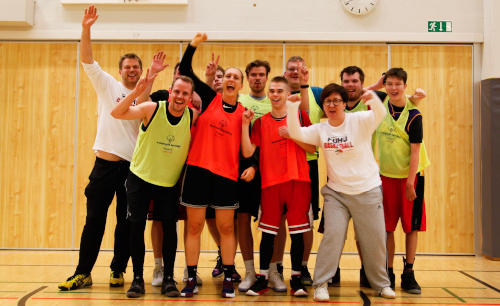
An excited-looking basketball team gathers for a group picture.

The practices are also an opportunity to have fun with friends, and team spirit is abundant.Photo: ThisisFINLAND

The other captain of the team, athlete Teemu Salmenaho, is also a veteran basketball player. With about 15 years of experience, he is highly committed to the sport and his team. He drives for almost an hour in each direction three times a week to attend practice.

“I think the best part of having basketball as a hobby is the good spirit and sense of humour that the team has,” says Salmenaho.

When asked about his favourite basketball memory, he does not have to think twice: “Special Olympics World Cup in Los Angeles, in 2015. We played in the second division and got fourth place.”

Finland’s unified teams are no strangers to international experiences and success. At the 2019 Special Olympics in Abu Dhabi, the women’s team won the tournament without losing a single game.

It’s not about winning, it’s about how you play the game

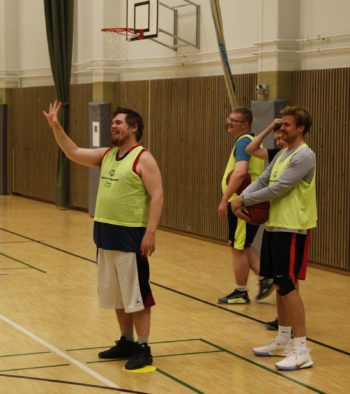
Smiling players wait for the ball to be passed to them.

The main point in unified basketball is that everyone enjoys playing together. Photo: ThisisFINLAND

Although winning is always nice, fame and glory aren’t the deciding factors in unified sports. “Even though we take the games seriously, we don’t have a win-at-any-cost attitude,” says Aaltonen. “The main point is that everyone has fun and enjoys playing together.”

In addition to basketball, they go over skills such as how to be a part of a team and how an athlete should maintain good eating and sleeping habits. “I don’t mind brushing up on those skills myself every now and then,” Aaltonen says, and smiles.

Pellikka, who has had a long career working with people with disabilities, also sees the manifold value unified basketball brings to the athletes.

“Through my work I have seen that, unfortunately, not that many people with disabilities have true friendships,” says Pellikka. “It has been great to see our guys hanging out in their free time as well as at practice. The team’s mentality is that we really care for each other and want to support each other.”

By Alissa Juote, November 2019

Thumbs up for startups in Finland

“Establishing a company in Finland is easy and affordable, and if you do it online, it only takes one hour. Getting your company registered may take a while though,” says Ville Heikkinen, cofounder and partner at Butterfly Ventures, a Finnish venture capital firm.

“Butterfly Ventures invests in early stage startups with a technology and science focus. We are looking for fast-growing and scalable startups that have a strong team and good market potential.”

In his work, Heikkinen meets hundreds of new startups and listens to them pitching. He says the industries where Finnish startups have outstanding expertise are medical technology, gaming, artificial intelligence, wireless communication and the Internet of Things.

Strength in technology, modesty in marketing

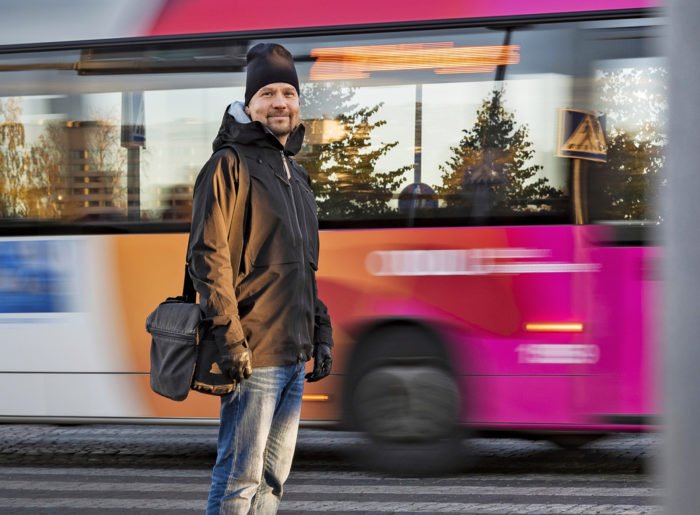
Portrait of a man standing by a crosswalk, with a moving bus in the background.

Ville Heikkinen of Finnish venture capital firm Butterfly Ventures looks for fast-growing, scalable startups with strong teams and good market potential.Photo Juuso Haarala

Typically, Finnish startups have excellent skills in their own technology, but are less skilled in marketing and sales. Modesty is a Finnish virtue, and praising our own pond does not come naturally to us.

“But the recent years’ efforts to build strong and supportive ecosystems are starting to bear fruit, and occasionally I meet young entrepreneurs who show amazing courage and maturity. The startup mindset is moving from secretive non-disclosure thinking to a more Silicon Valley type of pay it forward attitude where companies help one another,” Heikkinen notes.

Counselling and funding

To get started, you can get counselling from ELY Centres (Centres for Economic Development, Transport and the Environ­ment). If you come from a country outside the EU you can apply for a Finnish Startup Permit via Business Finland. Once established, you can apply for e.g. Tempo-funding from Business Finland.

“If you have an innovation-driven startup with no revenue stream but potential for fast scalability, you can seek venture capital, whereas SME-driven startups with slower scalability but existing customer revenue can apply for a bank loan,” Heikkinen explains.

Universities and budding entrepreneurs

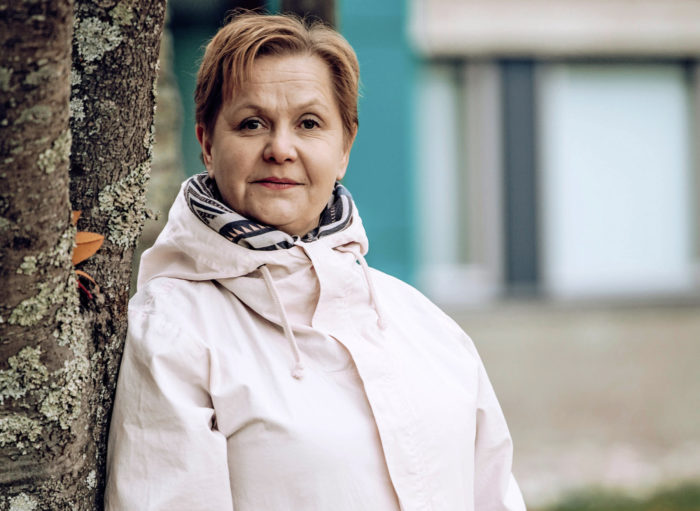
Portrait of a woman leaning on a tree.

Senior lecturer and project manager Anne Määttä of Kajaani University of Applied Sciences says that foreign students are very welcome in Finland. Her school offers degrees, taught in English, in esports and other subjects.Photo Anu Kovalainen

“The Finnish government is endorsing entrepreneurial education in universities. Innovations and enterprises are fundamental to the success of a sparsely populated country,” says senior lecturer and project manager Anne Määttä of Kajaani University of Applied Sciences (KAMK). Her duties include advising students who want to become entrepreneurs.

“All our students have a mandatory basic business skills study module, on top of which you can opt for a longer business course. Our Young Entrepreneurship Startup studies involve a trial year when you can develop business ideas with mentors. If you decide to set up a business, you can use the services of our Business Accelerator unit, which assists you with funding applications, commercialisation and internationalisation,” Määttä explains.

Määttä says foreign students are most welcome to Finland. “There is a wide choice of academic studies available for them. At KAMK alone, we offer five English-taught degrees, the newest one being esports.”

KAMK has given rise to many gaming spinoffs. The startups in the Kajaani gaming cluster employ a lot of local talent, making them a source of much pride for the region.

By Leena Koskenlaakso, ThisisFINLAND Magazine 2019

Dogs, bedbugs, games: Helsinki’s Maria 01 houses more than 100 startups

Maria Hospital, the oldest hospital in Helsinki, dated back to the 1886. After it closed in 2014, the site underwent renovations and become Maria 01, a hub for startups.

Now they are expanding the campus, making it one of Europe’s largest startup centres.

The nonprofit group houses startups, investors and business accelerators. Currently it has over 100 young companies in residence, but this should balloon to over 650 when the expansion is complete in 2023. Here are three that are already there at the time of writing.

A specific target audience

A picture from the game Trendy Stylist shows seven differently styled female characters on a street.

In Polka Dot’s first game, Trendy Stylist, players design looks and attract followers, combining aspects of fashion and social media. Photo: OneMindDogs

Olesja Marjalaakso couldn’t help but notice something during her career in the gaming industry.

“Games studios are filled with men who make games for men,” she says. “I wanted to make games for women.”

Polka Dot Studio had a good idea and attracted impressive investors, such as Angry Birds veteran Peter Vesterbacka. Polka Dot’s first game, Trendy Stylist, combines fashion with social media. Players design looks and attract followers, much like an influencer.

Their next game, Idle Kitty, is an idle game – a game in which players focus on building virtual revenue streams. The player runs a boutique and tries to gain customers, who happen to be animals.

“We have gamers all over the world, but our biggest markets are the US and Russia,” Marjalaakso says. “Our aim is to build new and unique gaming experiences for women.”

Canine commands: Mind the app

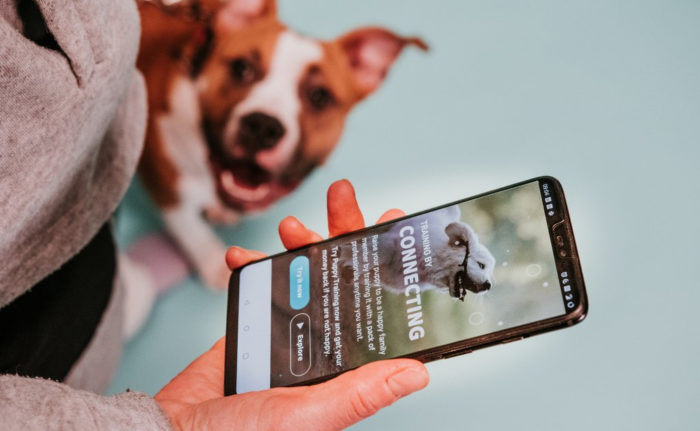
A person views the One Mind Dogs app on a phone, with a happy-looking dog in the background. The screen of the phone says Training by connecting.

“It’s about how dogs learn and how they view you, including your body language,” says OneMindDogs CEO Noora Keskievari.Photo: OneMindDogs

Janita Leinonen, one of the cofounders of OneMind Dogs, had a champion agility dog who went deaf. Leinonen needed to either retire her border collie Tekla or develop a new way to communicate with it. She chose the latter, and her new method worked so well that she decided to use it with other dogs.

“Our training philosophy starts from the dog’s point of view,” says Noora Keskievari, CEO of OneMind Dogs. “It’s about how dogs learn and how they view you, including your body language. A common mistake is canine training from the human point of view. This is not logical for dogs, so it doesn’t work well, people give up training, and the dogs have behavioural issues.”

OneMind Dogs offers dog agility training and puppy training via an online service. About 70 percent of their customers come from North America, but the company is happy to have Maria 01 in Helsinki as its base.

“We’ve been at Maria 01 since we were founded,” Keskievari says. “Maria has developed a great format for startups and I’m proud of what the City of Helsinki and Maria have accomplished. I’ve visited many similar places around the world and Maria is among the top. By the way, if you are ever in the neighbourhood you should try out the restaurant. It is supergood!”

Don’t let the bedbugs even get close to biting

A person makes a heart sign with their hands around the face of a chihuahua sitting on the floor.

Correct: This is not a picture of a bedbug. Nobody wants to see a bedbug, even in a photo. This heart sign frames another cute, well-behaved canine posing for OneMindDogs.Photo: OneMindDogs

Martim Gois was on the trip of a lifetime in Southeast Asia – until he crossed paths with some bedbugs at an Indonesian hotel.

“That experience made me frustrated with pest control,” he says. “When hotel staff spot bed bugs, it is already too late. The traditional way to treat bedbugs is pesticides, but they have developed resistance. These are reactive measures, and I wanted something preventative.”

He cofounded Valpas Hotels and designed a solution: bed legs that contain an environmentally friendly pitfall trap for bedbugs. Hotels replace the legs on their beds with the Valpas device.

When a bedbug falls into the trap, wireless technology notifies hotel staff. The idea is to immediately deal with the first appearance of bedbugs and prevent them from becoming established.

Valpas is a Finnish word that means “vigilant” or “alert.” “We are now in over 40 hotels across 11 European cities,” says Gois. “We want to provide real value to travellers and keep hotels and their guests safe. Our goal is to leave people and places better than we found them.”

By David J. Cord, November 2019