Facts and feelings: Do taxes make Finnish people happy?

Politicians in other countries, across the ideological spectrum, present Finland and the other Nordic countries as shining examples of either what to do or what not to do.

Such politicians have been known to mention taxes. The audiences listening to those speeches have probably not had the chance to visit Finland or talk to a real Finnish person about taxation.

The numbers are a good place to start. Let’s say that a 30-year-old Helsinki resident – we’ll call her Annika – earns a fairly typical monthly salary of 3,000 euros. She pays 17 percent of that in income tax, 7.15 percent towards the pension system and 1.25 percent towards unemployment insurance. This leaves her 2,238 euros in hand. [Finland’s Tax Administration reviewed these figures at the time of writing. You can find links to our data sources at the end of the article.]

It’s a progressive system, so your income level determines your tax rate. If Annika made 66 percent more – 5,000 euros a month – her income tax would rise 8.5 percentage points to 25.5 percent. Other factors, such as your home municipality or your commuting expenses, may affect your tax rate or entitle you to deductions.

Attitudes towards taxes
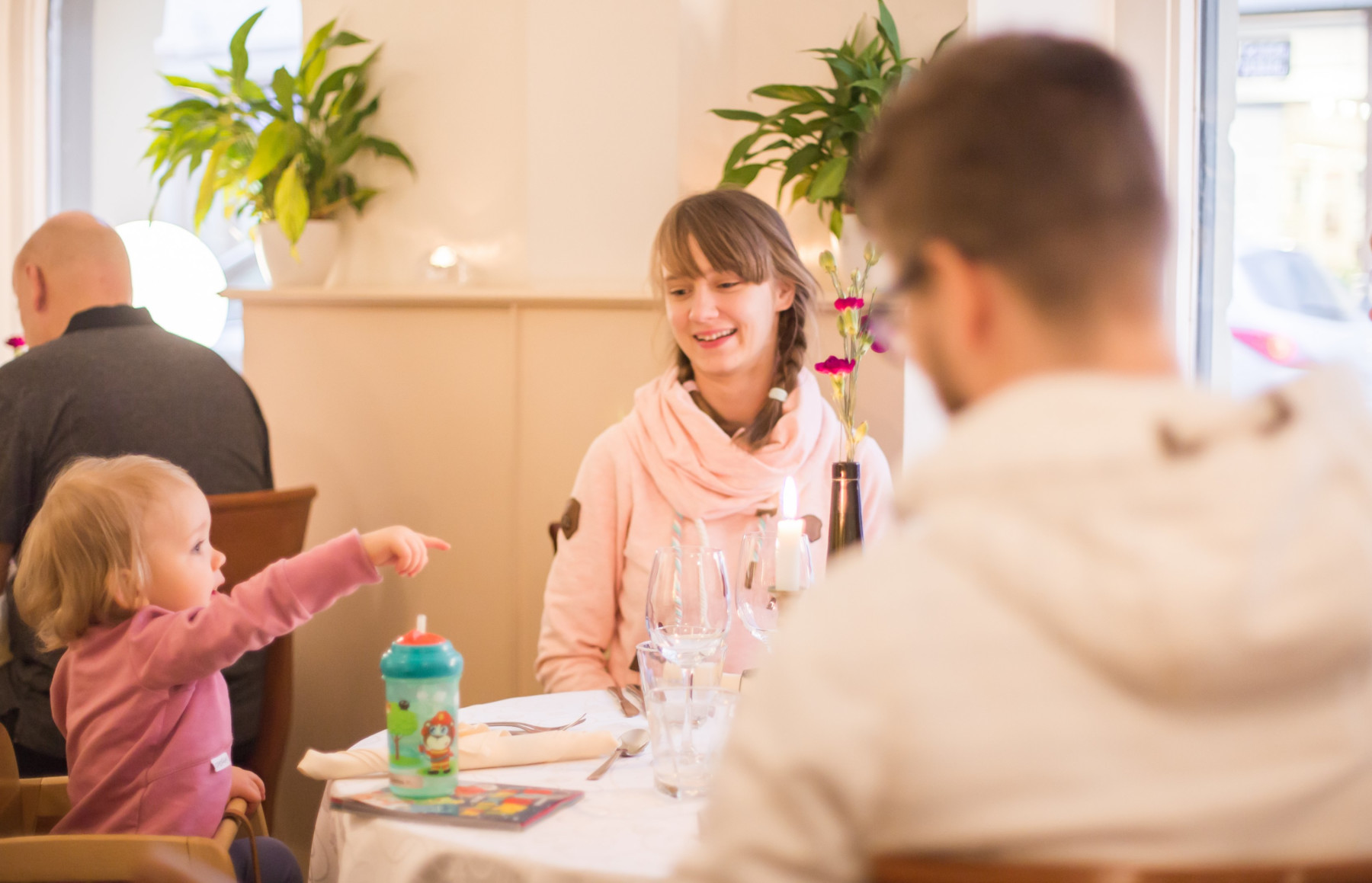
A happy family of three waiting for their food in a restaurant

A family visits a restaurant in the Finnish city of Tampere; the bill will include a 14 percent sales tax.Photo: Laura Vanzo/Visit Tampere

Annika’s employer also pays some 600 euros in social insurance contributions on her salary of 3,000 euros a month, including contributions to the pension system, the healthcare system and the unemployment insurance system, as well as job-specific accident insurance.

A sales tax, or value-added tax (VAT), of 10, 14 or 24 percent is included in the price of many of the things Annika buys. In this way, she supplies her share of Finland’s total tax revenue, which reached about 70 billion euros in 2019 (Finland has a population of 5.5 million).

How do Annika and other Finns feel about all this?

Don’t assume Finnish people are thrilled about paying taxes – they are human, after all – but very often they will philosophically point your attention to the wide array of public services that taxation makes possible.

Healthcare, for example, covers everyone and is ranked among the best and most egalitarian in the world by the Global Burden of Disease study. In 2017, healthcare cost the Finnish government 20.6 billion euros and the annual cost per capita was 3,742 euros. (At the time of writing, that is the most recent year for which the Finnish Institute for Health and Welfare has released an official report.) By comparison, the UK spent the equivalent of 3,366 euros per capita that year, while Japan spent 3,486 euros, Canada 4,136 euros, Germany 4,459 euros, Sweden 5,096 euros and the US 8,519 euros.

Taxes also support all levels of education, benefits for people who become unemployed or have disabilities, and a wide array of cultural institutions, from the opera and the ballet to the library system. Finland spent about 58 euros per inhabitant on libraries alone in 2018.

Family friendly
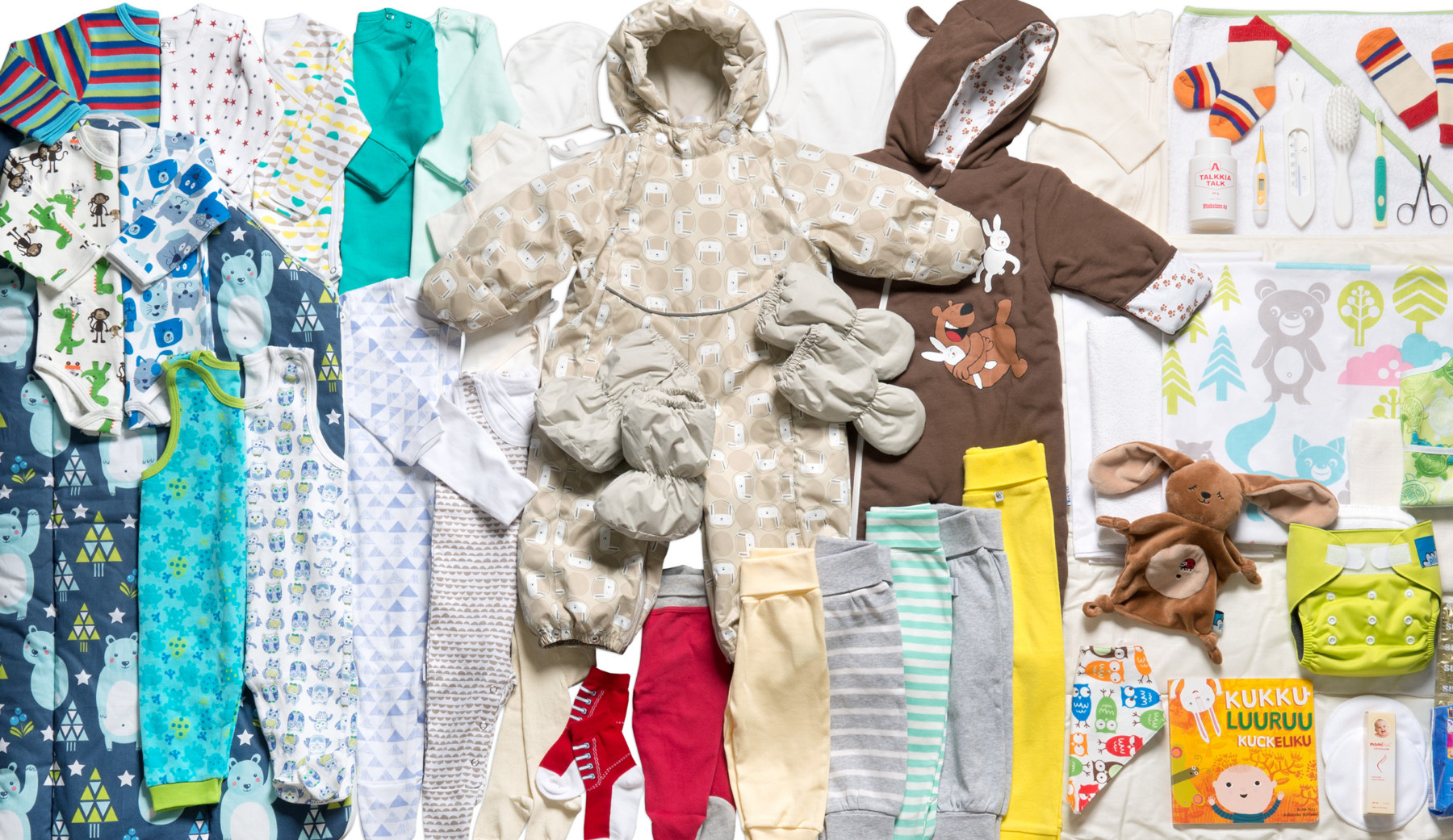
Contents of the Finnish maternity package, for example baby clothes and toys.,

The maternity package, available to all expecting mothers in Finland, is a box containing items parents need for their new baby: bedding, tiny nail scissors, and miniature clothing for all kinds of temperatures, including subzero outings during winter.Photo: Annika Söderblom/Kela

You could also regard the Finnish system as a nationwide insurance policy that kicks into hyperdrive during life’s most vulnerable periods. Childbirth and childrearing are in sharp focus.

If she decides to start a family, Annika will visit a maternity clinic regularly all through her pregnancy, usually 12 to 15 times in total, at no charge. The first maternity clinics were founded in 1922, and the system was enshrined in national law in the 1940s.

After the baby is born, the family visits a child health clinic (usually at the same place as the maternity clinic) at scheduled intervals to check on the child’s health and growth – eight times during the first year, four times each during the second and third years, and then once a year until the child starts school.

Comprehensive coverage for mothers and babies is a major factor in Finland’s low infant mortality statistics. In 2018 the rate was 2.1 deaths (of children less than one year old) per 1,000 live births.

All expecting mothers receive a maternity package in good time before the due date. It’s a large box containing numerous items the family will need to help start its new daily routine with a baby, such as bedding, tiny nail scissors, and miniature clothing for all kinds of temperatures, including subzero outings during winter.

Mostly happy taxpayers
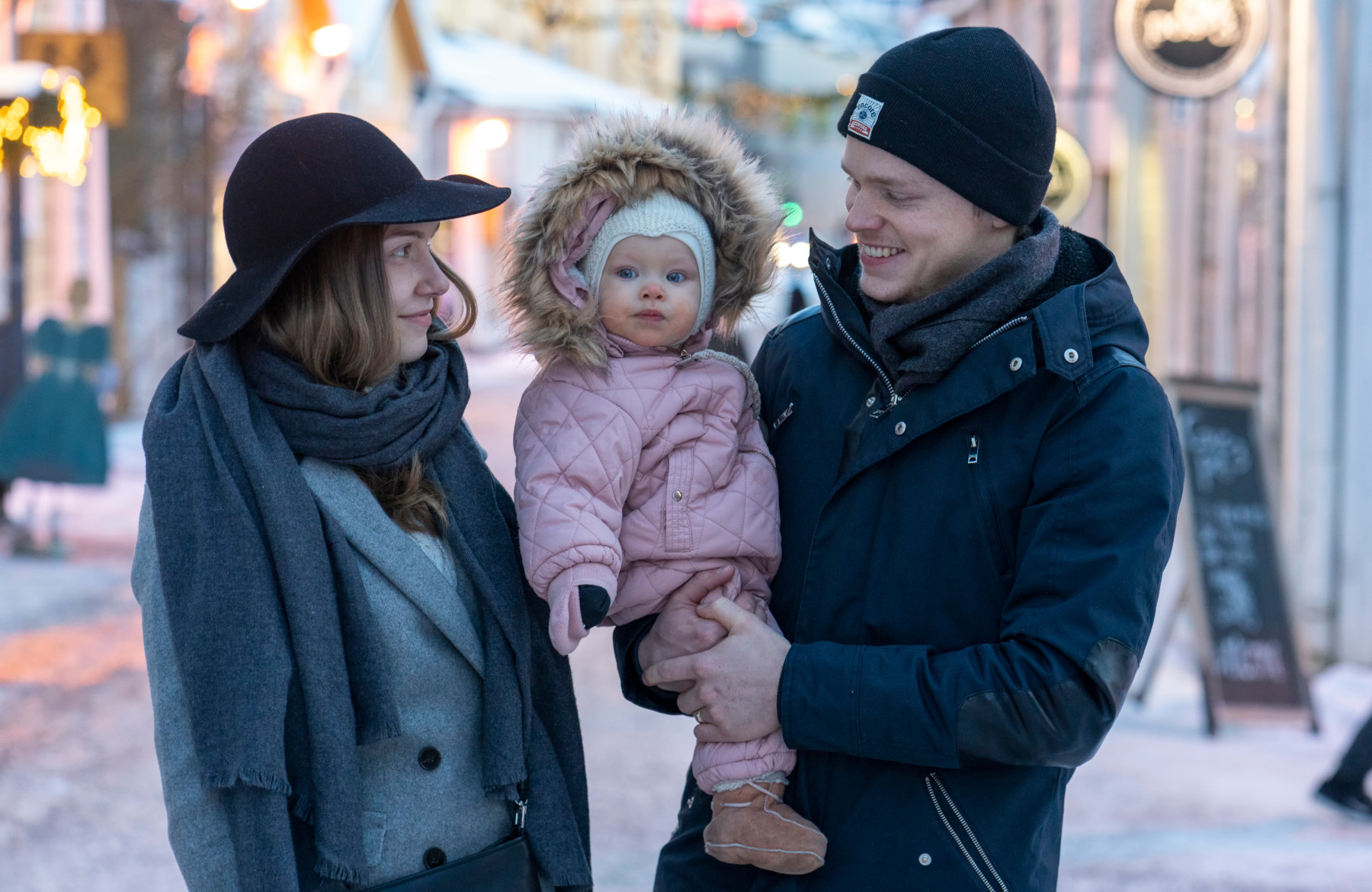
A happy family of three standing outside on the street in wintertime

Many Finnish people, such as the family shown here, “appreciate what they get from society and acknowledge that taxes are the way to fund that society,” says scholar Frank Martela.Photo: Pasi Markkanen/Finland Image Bank

As strange as it might sound, taxes may form part of the reason that Finland ranked number one in the World Happiness Report in 2018 and 2019. The index defines happiness in terms of general life satisfaction, which is affected by security and social cohesion.

Frank Martela is an expert on wellbeing research at Aalto University. “I would say that Finns are actually quite happy taxpayers,” he tells me.

According to a survey commissioned by the Tax Administration in 2019, fully 80 percent of Finns are happy to pay their taxes, 96 percent believe paying taxes is an important civic duty and 98 percent believe taxes are important for maintaining Finland’s welfare state.

“Finns appreciate what they get from society and acknowledge that taxes are the way to fund that society,” says Martela. “Accordingly, most people are surprisingly happy to pay taxes.” He adds, “Taxes, instead of being a source of frustration, can be a source of pride for many.”

Only 31 percent of survey respondents said they were frustrated with the amount of taxes they had to pay. In a similar survey of corporate taxpayers, 86 percent said their companies had a positive attitude towards taxation, and 95 percent believed that “doing the right thing is worth it.”

Flexibility in life
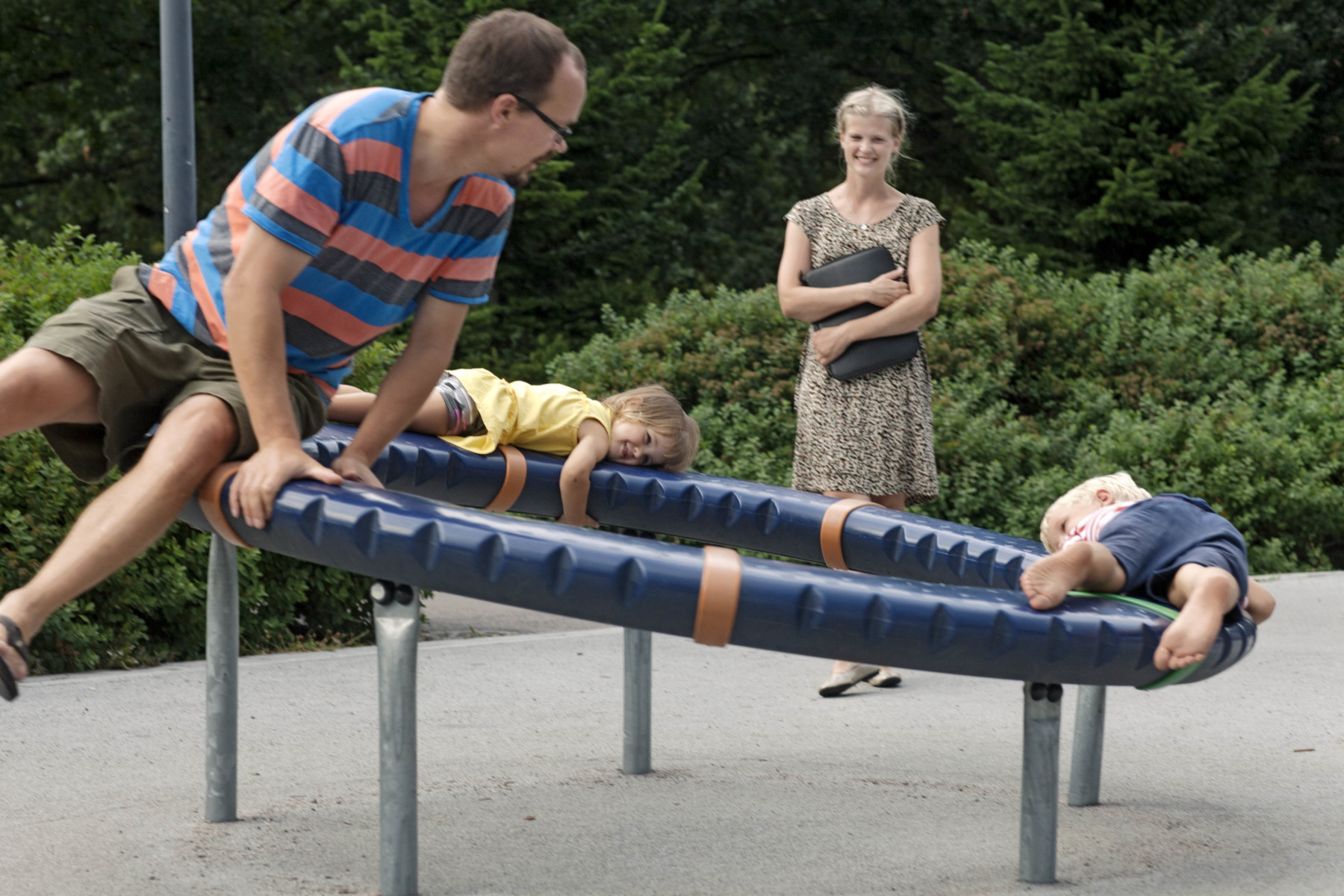
A family of four at the playground. The father plays with the two children

Mothers and fathers alike get paid parental leave; this is one factor that encourages both parents to share the joys and responsibilities of child rearing.Photo: Jukka Rapo/Keksi/Finland Image Bank

Even the logistics of paying your taxes in are less frustrating in Finland than in many countries. In the spring you receive a precompleted tax return – if you agree with it and have nothing to add, then you’re already done. You don’t have to mail or submit anything else. If you do have to modify something, you can do it conveniently online.

Every four years, Finland goes to the polls to elect a new parliament, and one of the issues voters always have in mind is the relationship between taxes and public services. Regardless of the government’s agenda, it works within a Nordic tradition of egalitarianism and highly organised pragmatism, which means the appetite for many of these public services will continue in the future as well.

Back to Annika and her family: At the hospital after the birth, Annika, her partner and their baby will enjoy nearly hotel-like conditions. Mothers and fathers alike enjoy paid parental leave; certain amounts of time are reserved for the mother or the father, while either parent may use the remainder.

She’ll have the option of staying at home with her child, while receiving a stipend, until the baby is three years old. Alternatively, the baby’s father can be the one who stays home for much of that time. If Annika’s relationship ever comes under stress, counselling is available for her and her partner.

Looking after each other
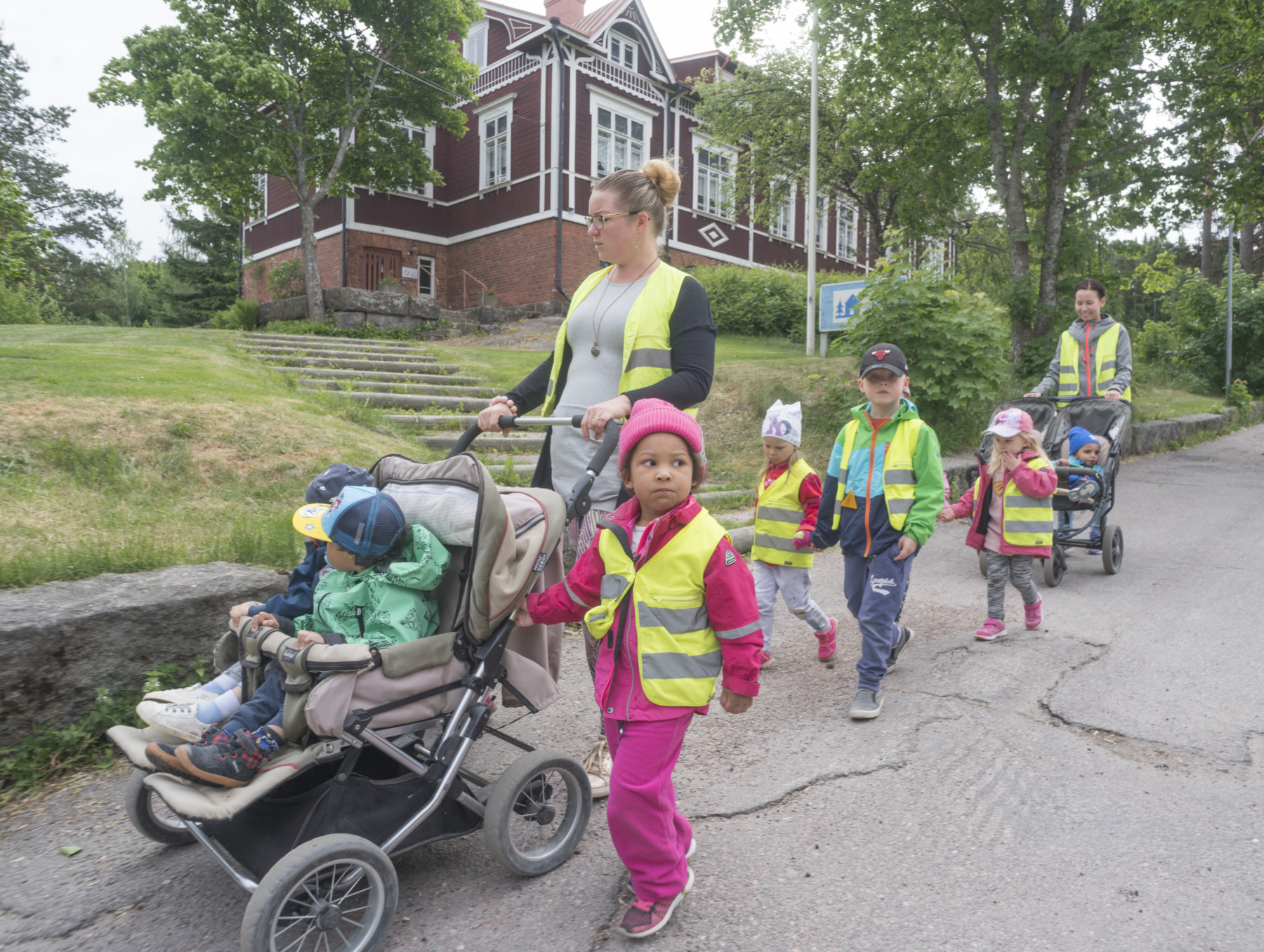
A group of daycare kids walking down the street in reflective vests with their caretaker

Very affordable daycare allows parents in Finland flexibility when trying to balance family life and their careers; these kids are returning from an outing in the forest.Photo: Pasi Markkanen/Finland Image Bank

Later, the child will attend daycare and then school; both provide home-style meals. School is free; for daycare, parents pay a very modest monthly fee calibrated to the family’s income level and number of kids in daycare. (For example, at the time of writing the maximum monthly fee in Helsinki, for families in the highest income bracket, is 289 euros for the youngest child and 145 euros for the next-youngest child. For families in the lowest income bracket, daycare is free of charge.)

Finnish schools are a point of national pride and mirror the country’s ethos: classes are mixed-level, which means higher-achieving students will help struggling students along, rather than being separated. This increases equality in learning.

Universities and other educational institutions, such as technical schools, are also free-of-charge, and students receive a monthly living allowance. If Annika wishes to change careers later in life, there is support and education to allow her such flexibility.

By the same token, Annika also knows that by paying her taxes she’s helping take care of others; everyone benefits when a society looks after all of its citizens.

These mechanisms are visible in everyday life, so taxes take on tangible meaning – no matter what your opinion of them.

By Eric Bergman, March 2020
Sources

Warm winter makes rescuing Finland’s Saimaa seal many degrees more difficult

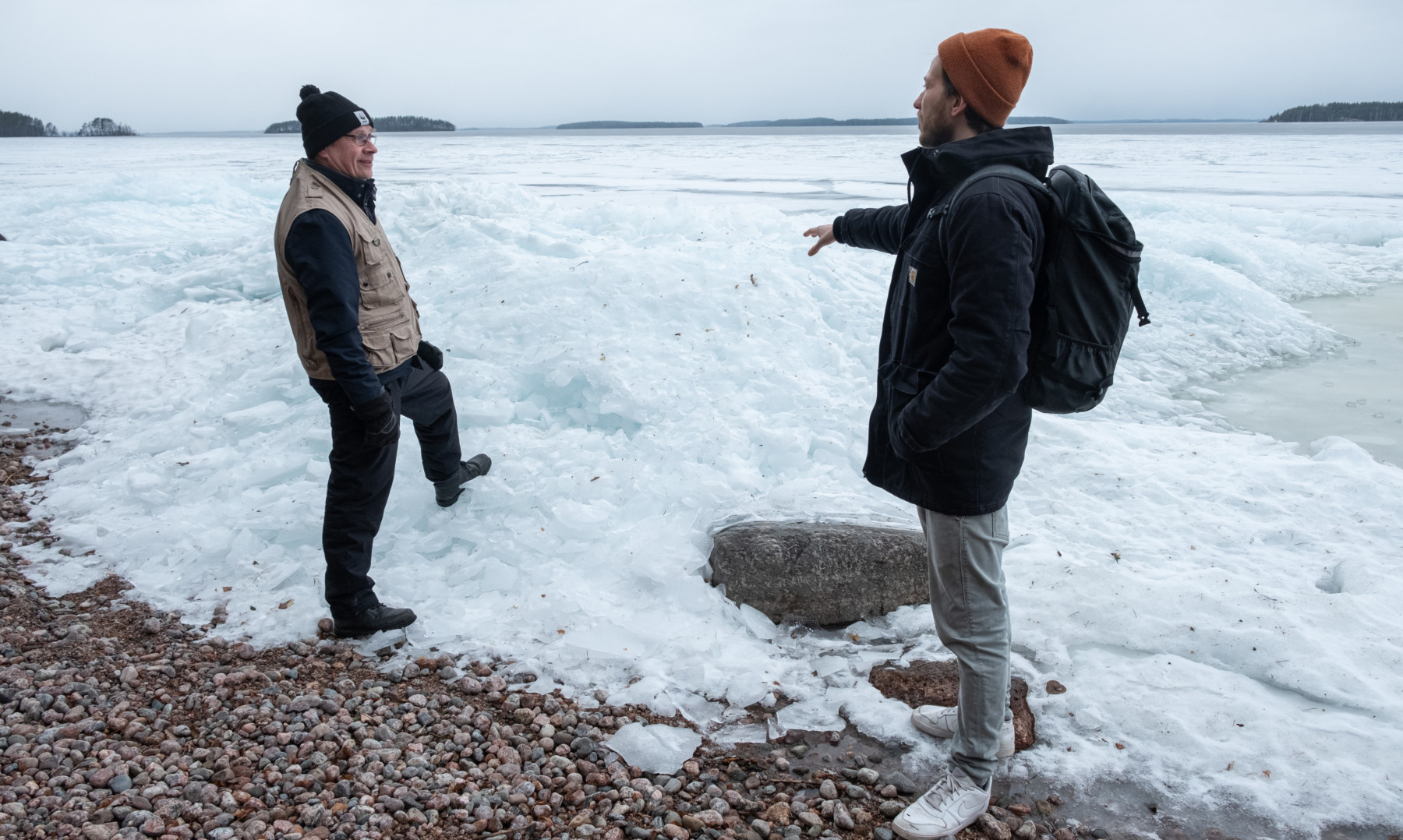
A bitter February wind is sweeping wet sleet across Lake Saimaa near Lappeenranta in southeastern Finland. The temperature is hovering just above zero degrees Celsius (32 degrees Fahrenheit). There is a total absence of snow, and the lake ice, what there is of it, is just a few centimetres thick, making it so brittle that the wind has broken much of it and pushed it into jagged ridges near the shoreline.

These conditions are bad news for the endangered Saimaa ringed seal, Finland’s only endemic mammal and one of the very few freshwater seal species in the world. It’s the start of the nesting season for this sensitive and vulnerable creature.

Under “normal” circumstances, during a properly cold winter, the ice freezes thick and level on the lake, and a deep layer of snowdrifts accumulates on the surface. The female burrows up into the snow from beneath and gives birth, usually to a single pup.

Exposed to the elements

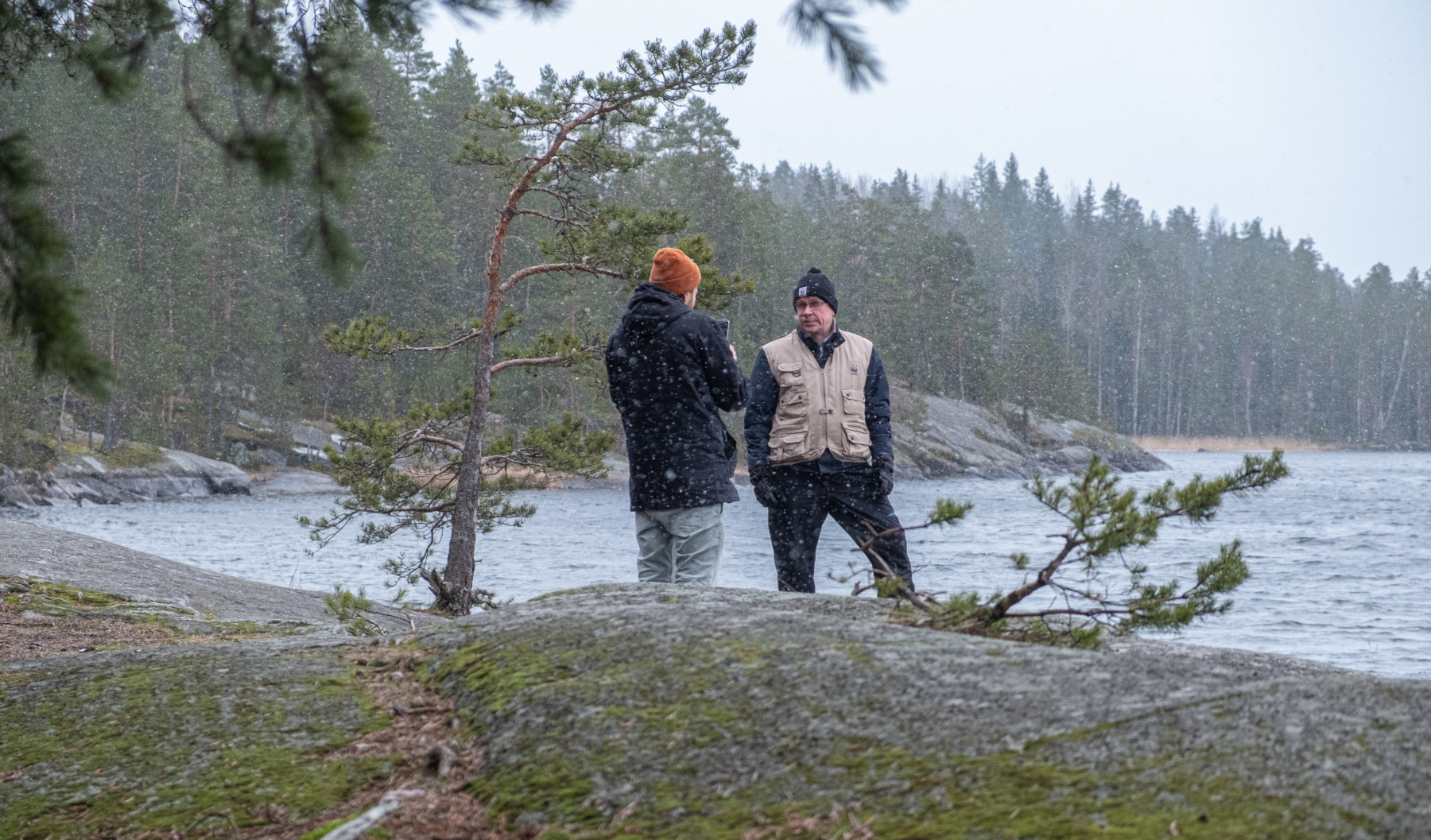
Two men stand beside a lake.

Undeterred by a February sleet storm, WWF Finland communications specialist Joonas Fritze (left) and volunteer Ismo Marttinen contemplate a green lakeshore landscape that is usually covered in a thick layer of white snow during winter.Photo: Tim Bird

Ismo Marttinen, a locally based volunteer for WWF (World Wildlife Fund) Finland, worries that, as a consequence of climate change, the warmer conditions will become the new normal, expanding the already significant threats to the Saimaa seal. “This could be the future,” he says, standing on the snow-free shoreline of this enormous lake system.

According to the most recent figures on the WWF Finland website, there are only 410 Saimaa ringed seals left.

He hopes that no further deep plunges in temperature will occur in the current winter. If pups are born on open ice or shorelines, they’ll be exposed and vulnerable. Parks and Wildlife Finland and researchers at the University of Eastern Finland have piloted the use of pontoon shelters and other types of artificial nests, but to date only two pups are known to have been delivered in these settings.

Volunteers to the rescue

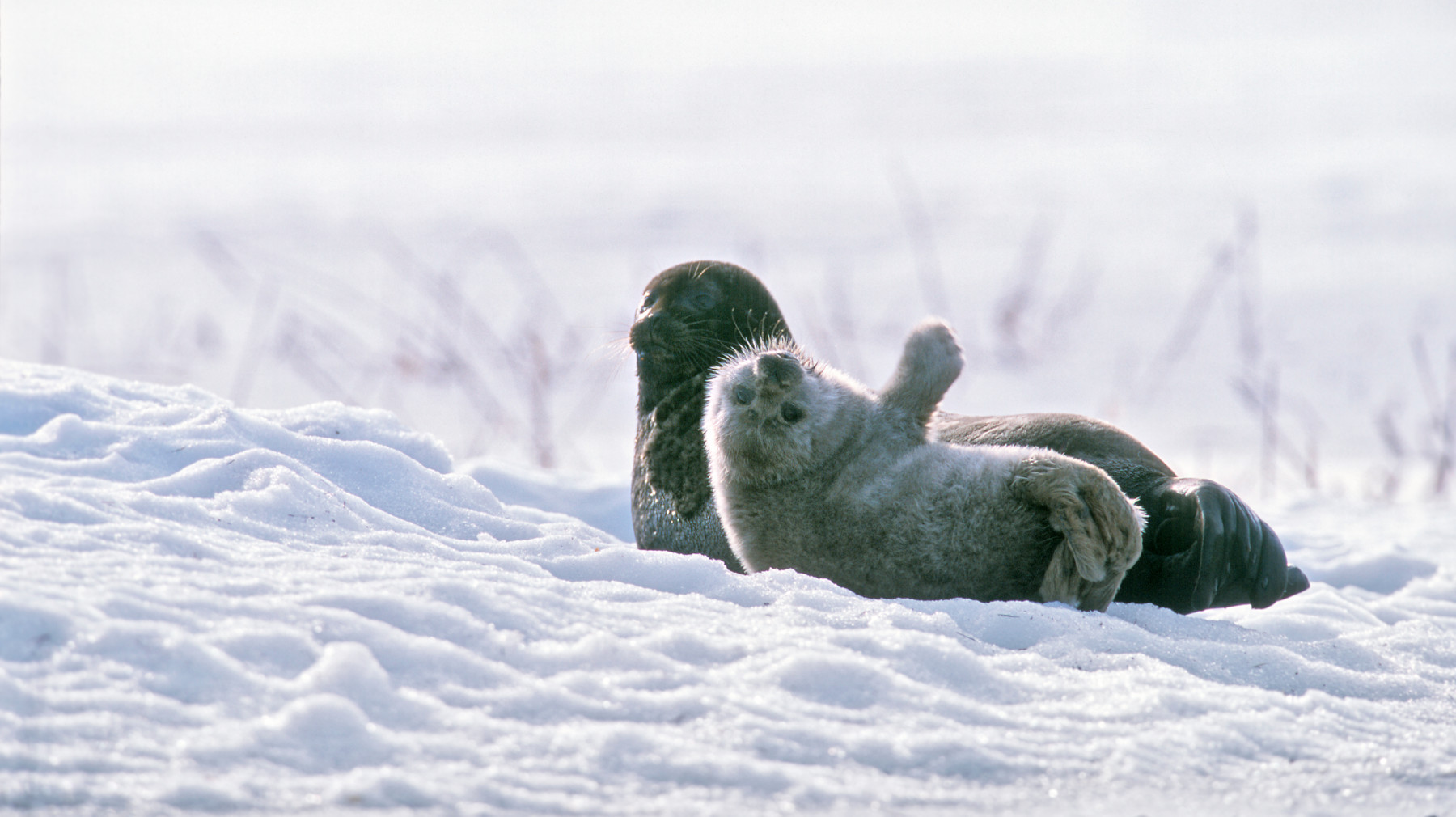
A mother Saimaa ringed seal and her pup lie on the snow-covered ground.

A mother Saimaa ringed seal and her pup take some winter sun.Photo: Juha Taskinen/WWF

A more successful substitute for natural snowdrifts are snowbanks constructed on the ice by volunteers. WWF Finland organises this work in the southern stretch of Saimaa, while Parks and Wildlife Finland takes care of it further north in the Savonlinna area. The entire project is the responsibility of Parks and Wildlife Finland (which is, in turn, part of Metsähallitus, which administers and manages state-owned land and water areas).

This winter the conditions are more favourable in the north, where volunteers have built 150 snowbanks. Snow shortages in the southern Lappeenranta region have restricted snowbank activity and the brittle ice is too thin to take the weight of the volunteers.

The seals, which can weigh well over 60 kilos (130 pounds) and measure around 150 centimetres (five feet) in length, are no longer threatened by their Ice Age predator the polar bear (there have never been polar bears in Finland in modern times). Commercial fishermen have diminished their threat by using “seal-friendly” fishing equipment. However, although leisure fishermen based in the many cabins and cottages on Saimaa shorelines mean well, their fishing methods and presence can disturb the animals, during nesting and at other times.

Becoming a Saimaa seal godparent

Two men survey piles of ice on a lakeshore.

Joonas Fritze (right) of WWF Finland and Ismo Marttinen, a volunteer, survey the Saimaa lakeshore near Lappeenranta in southeastern Finland. The wind has broken the unusually thin lake ice and pushed it into jagged piles on the shore of a bay.Photo: Tim Bird

Ultimately the seals’ survival depends on the climate. “From 1952 to 1966, the mean date of ice forming on the southern parts of the lake was December 15,” says Marttinen. “From 2005 to 2016, the date was January 6. This year, the date was February 5 – a new record.”  As Joonas Fritze of WWF Finland points out, there is no other ringed seal population anywhere that exists where the sea does not freeze.

None of the obstacles dilutes the determination of those who are fighting hard to conserve the seals. As an active and concerned volunteer, Marttinen, the CEO of a printing company, has taken up a baton handed to him by his father, who was monitoring seal populations way back in the 1960s. As well as assessing the nesting conditions, supervising the building of snowbanks and drawing on his local knowledge and familiarity with nesting sites, Ismo photographs and observes the social behaviour of the animals.

Marttinen’s contribution is a vital aspect of cooperation between WWF Finland, Parks and Wildlife Finland, researchers at the University of Eastern Finland, and a legion of volunteers, including people who sign up to make monthly donations as Saimaa seal “godparents.”

Ismo Marttinen concludes his inspection visit with the filming of an annual WWF Finland Declaration of Nesting Peace on the Saimaa shoreline. This is a plea to skiers, hikers, cottage owners and anyone else to keep the noise down and, should they chance upon the seals, to keep their distance. Distributed to media, it’s an especially urgent plea in view of the current conditions, since a disturbed and nervous mother will take refuge with its offspring in the water – where the pup may perish from the cold.

By Tim Bird, March 2020

Finnish science sheds light on aurora borealis dune effect

The aurora borealis, more commonly known as the Northern Lights, is one of the most spectacular natural phenomena on – or rather near – the planet. It occurs when a flow of charged particles released from the sun reaches the earth’s ionosphere, exciting oxygen and nitrogen atoms.

Depending on the season, clear skies and solar activity, northern Finland, situated in the “oval” of potential aurora circling the polar region, is an excellent place to view it.

In the more populated south of the country, the aurora might be visible a couple of times a month, again subject to the same conditions. But a growing army of aurora hunters, responding to smartphone app alerts and equipped with good cameras, are ready to dash out and capture the show.

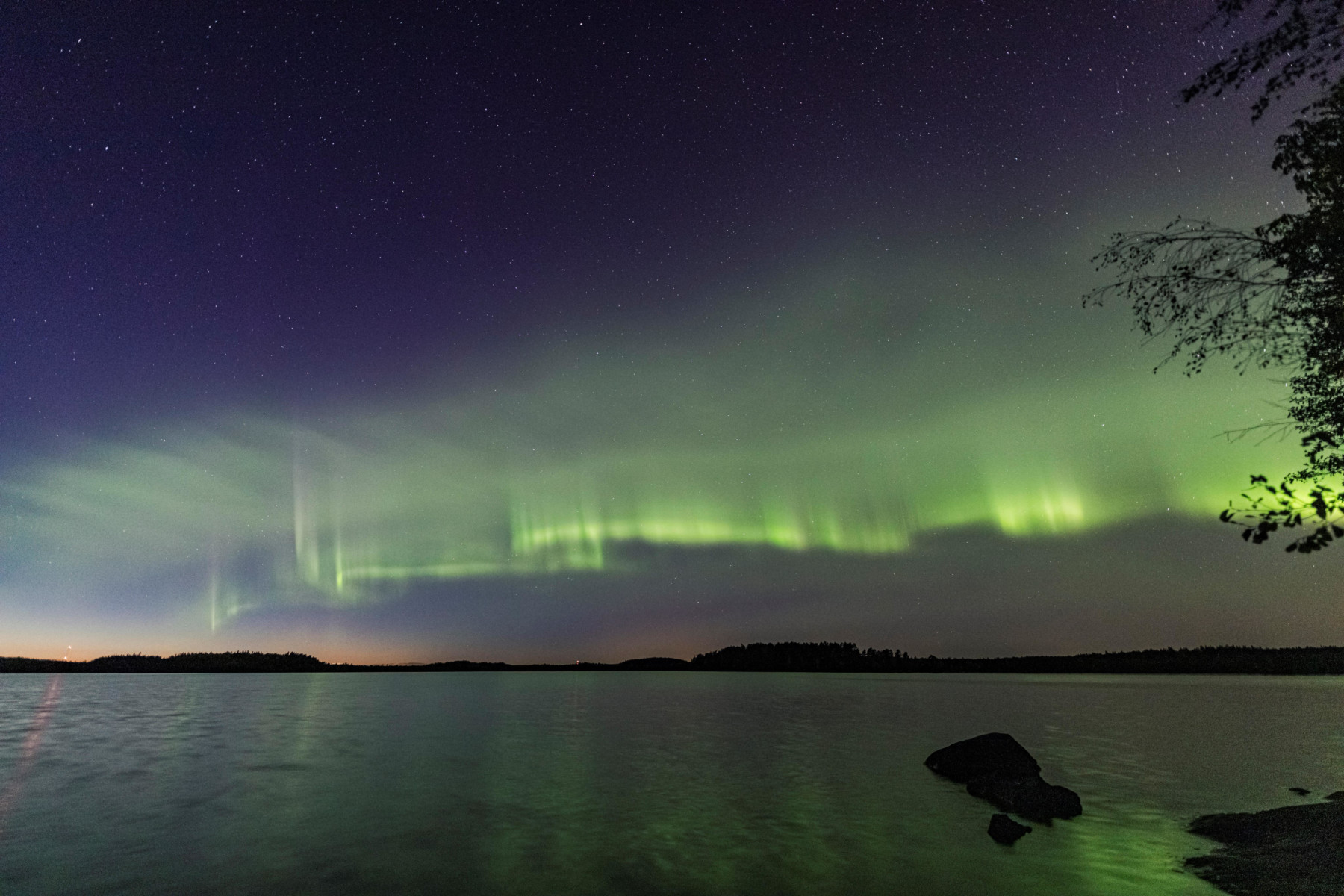
Largely thanks to them, a previously unexplained aurora variety has been identified at the University of Helsinki. The “new” aurora form presents itself in horizontal bands or stripes of green colour, as opposed to the more familiar vertical shafts and curtains.

Citizen scientists

View of the Northern Lights in Finnish Lapland, showing dune-like formations.

Space physicist Minna Palmroth believes that “dunes” were noticed only recently because these days there are more people watching, with better cameras and better skills in photographing the Northern Lights.Photo: Kari Saari/University of Helsinki

The participation of these “citizen scientists” was encouraged by Minna Palmroth, professor of computational space physics at the University of Helsinki, who refers to the variation as aurora “dunes.”

“I was asked to join a Finnish Facebook group to explain the science of the aurora to members,” she says. “Eventually I coauthored a Finnish-language book, Revontulibongarin opas (A guide for aurora borealis watchers) for aurora spotters in Finland, the only one in the world to identify in pictures the 40 or so different types of aurora and to categorise them with a star rating according to commonality.”

The photos in the book were among thousands provided in response to a campaign launched by Palmroth on the Facebook page. After the book was published, she started to receive enquiries as to how to categorise an aurora effect not included in the book. This was the “dune” variety, which she believes is caused by the effect of solar winds on oxygen atoms.

“At this point, we think it’s a sub-auroral phenomenon, mainly visible further south and some way from the main aurora zone,” she says.  “I am sure it’s not new as such, but that the effect has been there as long as we have had the aurora.”

Down-to-earth about celestial phenomena

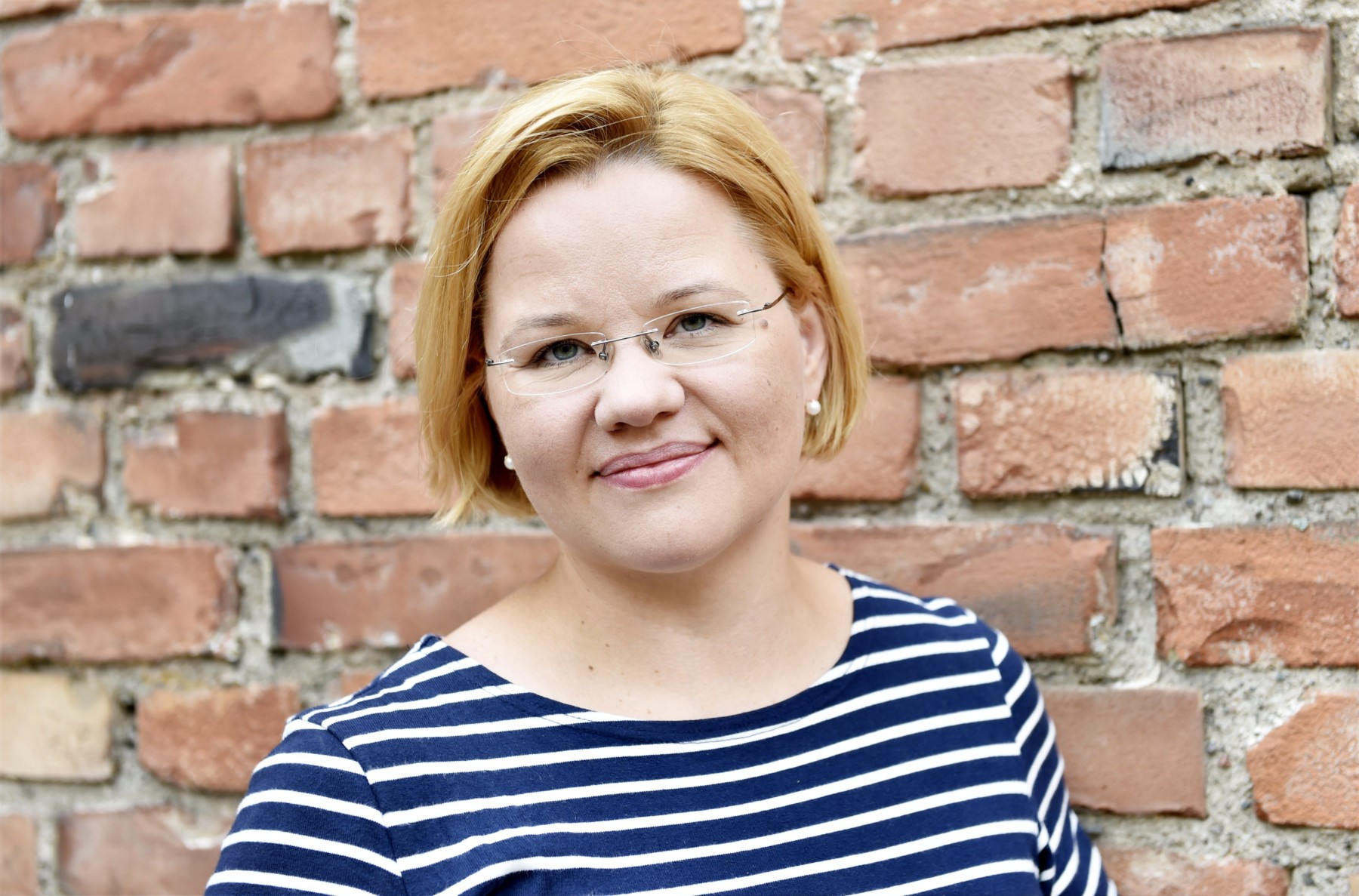
Portrait of professor Minna Palmroth in front of a red brick wall.

Minna Palmroth, professor of computational space physics at the University of Helsinki, co-authored a Finnish book about watching the Northern Lights, with photographs submitted by “citizen scientists.”Photo: Emmi Korhonen/Lehtikuva

Why has it only just been identified? “I think it’s because there are more ‘citizen scientists’ with much better digital cameras, and more people skilled in photographing the aurora,” says Palmroth. “Most scientific observations and instruments have been in the north where the aurora is seen often in the season. But it’s the ‘citizen scientists’ who populate the sub-auroral latitudes.”

The University of Helsinki website post announcing the discovery attracted a viral global audience of over 2.5 billion, with interest from countries as far-flung as Vietnam, Nigeria and Mozambique, casting a media spotlight on Palmroth.

Her reaction is down-to-earth: “I’m a space physicist. I’m a modeller: it’s important to see what I study. The aurora is tangible evidence that the work I do is real! Each form of the aurora is like a fingerprint linking to a specific process in far away in space.”

Viewing the aurora in Finnish Lapland

“First you need to get yourself away from manmade lights,” says Paul Swallow, who, with his wife Agnieszka, runs the Levi Foxfires Arctic experience company in northern Finland. “The darker the better. Find a spot where you can see lots of sky to the north with a big horizon. Then, be patient!

“You just don’t know when the aurora will come, if it will come at all, and for how long or how strong.  Keep in mind that smartphone forecast apps are just a guide. Often they get it wrong. Go out with an aurora hunter as they know good locations and they know what to look for in the sky.”

For photography, he says, you’ll need a tripod, a DSLR camera and, ideally, a wide-angle lens with a low F-stop number. Set everything to manual. You might need to experiment with exposure times and ISO. But don’t forget to enjoy the show!

By Tim Bird, February 2020

In Helsinki, Amos Rex showcases the new generation of artists

Generation takes place in 2020 for the second time (until August 23). Previously held in 2017 at the Amos Anderson Museum, the exhibition reaches a much larger scale in its present incarnation.

The museum itself moved into extensive new premises in 2018 and became Amos Rex. Several of its shows have caused queues that stretched down the street and around the corner. The artists featured in Generation 2020 come from a variety of backgrounds and delve into current issues using an assortment of techniques. The jury received and reviewed a total of more than 1,600 applications; slightly more than 80 artists made the cut.

The decade begins

Riku Koponen’s video is entitled About no one in particular.Photo: Still picture from video/Amos Rex

“We now have a very extensive overview of what young artists in Finland are currently doing,” says curator Anastasia Isakova. “Youngsters make up Amos Rex’s main target audience. Generation is a great example of also providing them with a great opportunity to get their voice across and even be included in the exhibition programme.”

Generation 2020 forms a meeting place for artists as well as their works, which touch upon a range of similar subjects from entirely different angles.

Several discernible themes run throughout the exhibition: climate change, shifting identities and people’s relation to technology. “These are some of the central themes of our millennium and the new decade,” says Isakova.

One last party for plastic

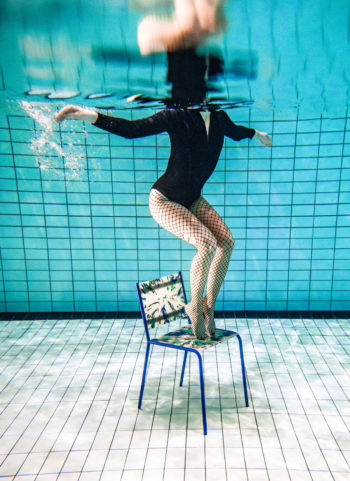
With a chair and other furniture made from recycled plastic cups, Venla Huhtinen’s Baltic Sea Afterparty is a comment on plastic making its way into the ocean.Photo: Daniel Ahola

Furniture designer Venla Huhtinen, one of the artists in Generation 2020, creates unique furnishings that navigate between art and design. Her work, The Baltic Sea Afterparty, forms an experimental statement about the Baltic Sea and its uninvited plastic burden.

The art consists of three pieces of furniture made from plastic cups that Huhtinen gathered at parties and festivals she attended.

The idea behind the work is to approach something negative from a positive angle, Huhtinen says. “I personally feel that preaching is not a good path to take during our time of climate anxiety,” Huhtinen says. She would rather “turn it around into something positive.” Her work throws a final party for the plastic cups. “I’ve sort of given them a nice new life, so to speak.”

Tech depicts time

A preliminary sketch of Timeline, by Emil Fihlman, attempts to compress the universe into a single line.Photo: Emil Fihlman/Amos Rex

Emil Fihlman, an IT student at Aalto University, plays upon the connections people can make with technology, and the possibilities yet to be realised. Art is both a by-product and a deliberate result of Fihlman’s work with technology.

Fihlman wants his piece to encourage everyone to make art, especially the kind that involves technology. This is far from difficult, he believes. “Light art, sound art, kinetic art, art that plays with the senses, both together and separately – technology enables so much that it is difficult to conceive of all the ways it can be used for creating art,” he says.

Fihlman’s technological artwork Timeline is a small story on the passing of time. In it, the universe is compressed into a single line, creating something that he hopes the viewer will find interesting. “It is a one-dimensional piece with a beginning and end,” Fihlman says. “Yet by remembering the past, you can also see a wider view of systems from a narrow space.”

Traditional methods, modern message

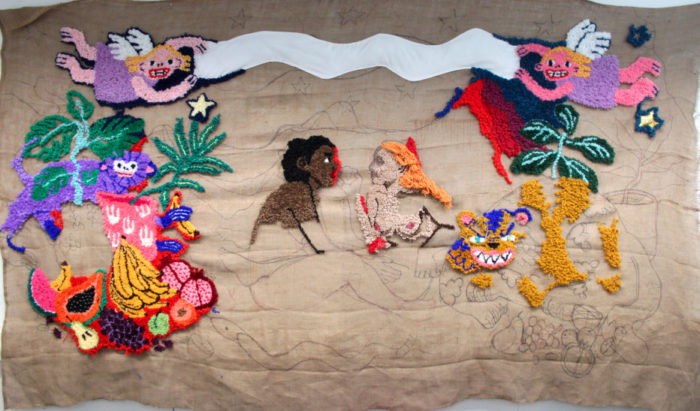
Love is both Honey and Venom: Anna-Karoliina Vainio’s ryijy rug, shown here while work was still in progress, depicts a colourful, peaceful paradise. Photo: Anna-Karoliina Vainio/Amos Rex

Time is ever-present in Generation 2020. Many of the works examine the traditions of art history and collective memory through current meanings. Gender identity is also a prominent theme.

Anna-Karoliina Vainio’s piece is a world of its own. In a three-metre tapestry-like artwork made using a traditional Finnish weaving method called ryijy, Vainio combines venerable handicraft techniques with today’s imagery. The piece, called Love is both Honey and Venom, captures a colourful world where two lovers can exist without judgement, surrounded by protection and love.

“It’s wonderful to feel like I’m part of a centuries-old female tradition, whilst entirely owning what I want to express through this technique,” says Vainio. “So often the media, especially films and TV shows, depict LGBTQ+ subjects in a sad or tragic light. I wanted to provide my characters with their own, peaceful paradise.”

By Annika Rautakoura, February 2020

We’re all in this together: First Helsinki Biennial highlights ties between nature and humans

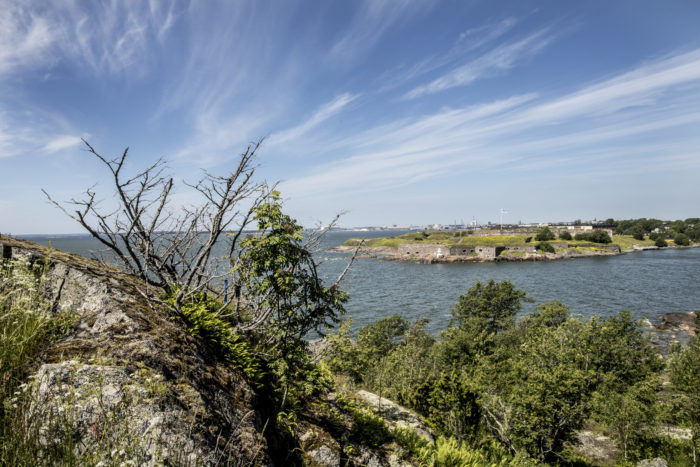
One of 330 islands that comprise the Helsinki Archipelago, Vallisaari was geopolitically important enough that Swedes and Russians fought over it more than 200 years ago, and strategic enough that it was later used by Finnish forces to defend the city.

Valli means “embankment” or “rampart,” and saari means “island.” Today, Vallisaari’s flora and fauna and preserved fortifications make it an attractive destination for nature seekers in the capital region. The setting is also picturesque: you have a view of the sea, the neighbouring islands and the towers of Helsinki.

The opportunity to blend nature and art is why organisers chose Vallisaari as the site for the first Helsinki Biennial, a free-admission international art event featuring contemporary works, from June 12 to September 26, 2021.

Art in the archipelago

Two elderly people marvelling at an installation of crocheted sculptures that resemble coral reefs.

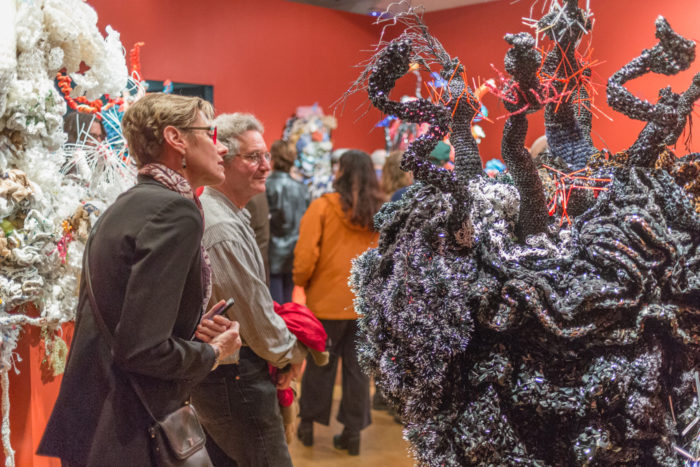
Leading up to the Biennial, at home and in workshops at Helsinki Art Museum, people crocheted “coral reefs” using yarn and recycled plastic, as part of the Crochet Coral Reef project led by Margaret and Christine Wertheim and their Institute for Figuring (photo from Mary Porter Sesnon Gallery, University of California Santa Cruz).Photo: Institute for Arts and Sciences, UCSC

“Vallisaari has an exceptional atmosphere,” says Finnish visual artist Maaria Wirkkala, whose work will be on display. “It’s like a zone touched by some unknown force, yet there is something there that reveals part of our collective memory, a part which we no longer have words to describe.”

The island has only been open to the public since 2016. Military fortifications were built there in the 1800s, and in 1937 an armoury full of explosives famously blew up, killing a dozen people. Vallisaari was home to a small village in the 1950s, but it gradually emptied out, and the island has been uninhabited since the 1990s.

“The combination of its built environment and closed history, and of untamed wildlife and environment on a small scale, makes it a special place for an artist,” says Wirkkala.

Displays from around the world

Portrait of two women, artists Laura Gustafsson and Terike Haapoja.

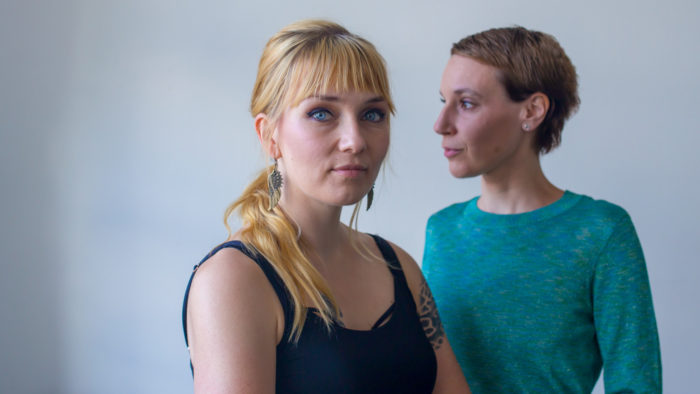
Gustafsson&Haapoja (writer Laura Gustafsson (left) and artist Terike Haapoja), known for installations that combine text, visual art and performance, are participants in the first Helsinki Biennial.Photo: Terike Haapoja

Some 35 artists from Finland and around the world will display their works outdoors and in historical buildings and gunpowder cellars on Vallisaari. Exhibitions will also be staged at Helsinki Art Museum downtown and at satellite events around the capital.

A wooden pop-up pavilion – a waterside construction between Old Market Hall and two new docks – will serve as a departure point for ferries to the island. Patrons may also catch ferries on the circular island route between Vallisaari, Lonna and the island fortress of Suomenlinna, a Unesco World Heritage site.

Blending with the island environment

Cliffs and green foliage, the sea, and another green island in the background.

From Vallisaari you can see part of the archipelago and the towers of downtown Helsinki in the background.Photo: Helsinki Biennial

The artists include Paweł Althamer, Katharina Grosse, Gustafsson & Haapoja (a duo composed of writer Laura Gustafsson and artist Terike Haapoja), Hanna Tuulikki, IC-98 (another duo, Visa Suonpää and Patrik Söderlund), Marja Kanervo, Tadashi Kawamata, Alicja Kwade, Laura Könönen, Tuomas A. Laitinen, Jaakko Niemelä and Mario Rizzi. Other participants will be announced as opening day approaches.

All have been invited to create exhibits that blend with the island’s environment. To that end, organisers of the first Helsinki Biennial chose a subtitle: The Same Sea, emphasising interdependence between nature and humans.

Pirkko Siitari and Taru Tappola are the lead curators. In a press release they explain, “The ecological crisis means we are now on the cusp of enormous changes, and this is defining our common future everywhere. ‘The Same Sea’ refers to this situation. Like the sea, it is a complex, inconstant entirety that bypasses all boundaries and appears different, depending on the perspective.”

Understanding how to act sustainably

A yellow wood plank wall with a white-paned window, green foliage and yellow flowers in front of the wall.

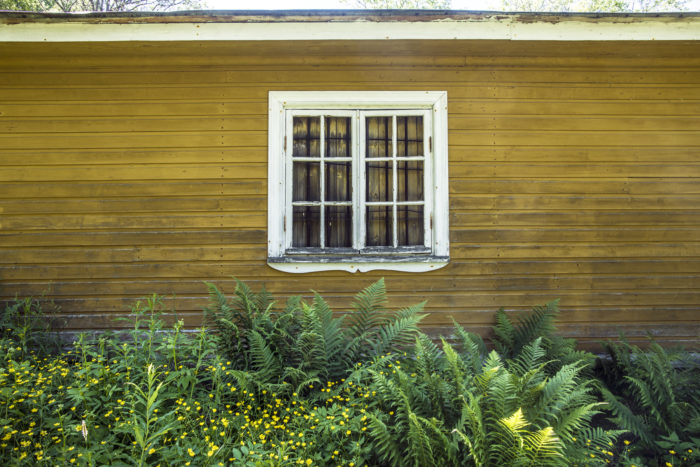
The venerable buildings of Vallisaari, rarely open to the public, form the setting for some of the Helsinki Biennial exhibits, while other pieces will remain in the open air.Photo: Helsinki Biennial

The Helsinki Biennial is teaming up with BIOS Research – a Finnish organisation that studies the relationship between the environment and economy, politics and culture – to ensure sustainability for the event.

“Many of the works will reflect on nature, biological processes and technologies, but also on human interaction and empathy, as well as notions of time and history,” says event director Maija Tanninen-Mattila.

“‘The Same Sea’ is a metaphor for interconnectedness. To survive and perhaps solve the ecological crisis, it is crucial to understand our mutual dependency on each other, our environment and all living things – and to act on this understanding.”

Conversation with the island

Portrait of a woman, artist Hanna Tuulikki, standing in a forest wearing a black hooded jacket.

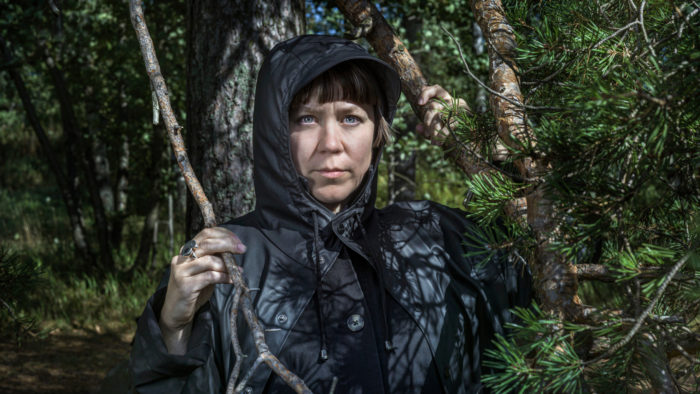
The art of Finnish-British Hanna Tuulikki, a Helsinki Biennial participant, contains elements of performance, music, dance, costume and drawing.Photo: Perttu Saksa

Tanninen-Mattila says the challenges of creating an exhibit on an environmentally sensitive island are many. “We have worked closely with nature conservation biologists and heritage authorities in placing the artworks,” she said. “We have also chosen artworks that can survive under non-museum conditions, and most works are temporary.” Many of the participants are creating their pieces on site, right on the island.

“The artists have found Vallisaari an inspiring place and have created their artworks in dialogue with it. This setting creates powerful encounters between place, art, nature and visitors. We also hope to reach new audiences who visit the island but would not go to see contemporary art as such.”

By Michael Hunt, February 2020, updated April 2021

Three Finnish companies with solutions that make a cleaner planet

Durat, Woodly and Sulapac are three Finnish companies that are responding to the global demand for ways to cut plastic use.

Woodly and Sulapac replace plastic packaging with wood-based materials, while Durat mixes a sizeable percentage of post-industrial recycled plastic into its product. Keep reading to see how they do it.

Sulapac aims for top brand profile

Two women in smart business attire stand with their arms crossed. In the background is a park with blossoming cherry trees.

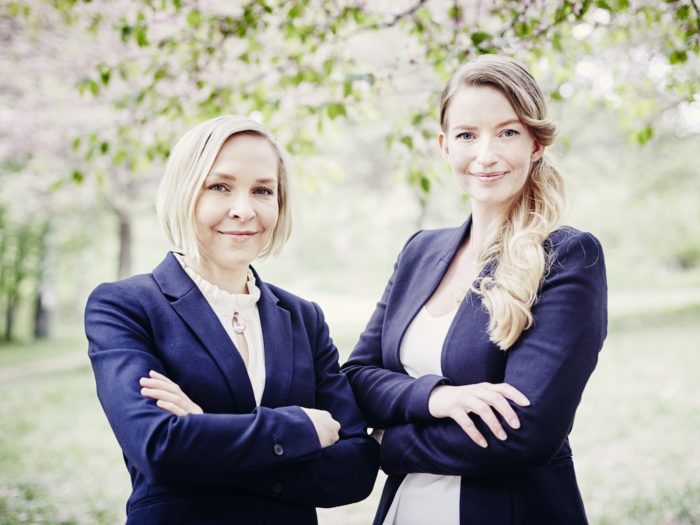
“Many Finnish companies are pioneers for sustainability,” says Suvi Haimi (left), who cofounded Sulapac together with Laura Tirkkonen-Rajasalo.Photo: Sulapac

Biochemists Laura Tirkkonen-Rajasalo and Suvi Haimi founded Sulapac in response to a startling revelation: if the tide of plastic waste in the world’s oceans cannot be turned, there will be more plastic than fish in the sea by 2050.

“We wanted to use our biomaterial expertise and start solving the global plastic waste problem,” says Haimi. “We set out to develop a new material made of wood and natural binders to replace traditional plastics.”

Rather than producing it in granule form, they launched it as a finished product. The aesthetic appeal of the Sulapac jar, now part of the company’s Nordic Collection, drew the attention of established cosmetic and luxury brands. That appeal derives from the strength, versatility and pleasing finish of the material, which is recyclable by industrial composting.

“Our products and material have gained a lot of recognition in terms of awards and media coverage, and we have been fortunate to collaborate with leading global brands such as Chanel and Stora Enso, which adds to our credibility,” says Haimi.

“Many Finnish companies are on the right track for sustainability, and there are true pioneers among them. We are proud to collaborate with some of the leading Finnish brands including Fazer, Berner, and Lumene to introduce new, sustainable solutions. Our vision is to make Sulapac the number one sustainable material that is a substitute for plastic.”

Woodly builds on carbon-neutral versatility

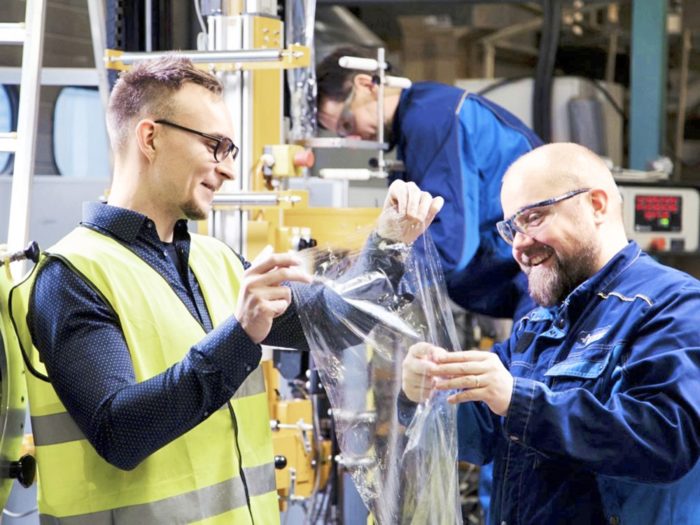
In a workshop setting, two men wearing work outfits and glasses hold up a sheet of what looks like plastic wrap.

Woodly is a unique wood-based, transparent packaging material. Photo: Woodly

Here’s a simple ecological paradox: food waste is a growing global problem. One solution is to prolong the shelf life of the food with packaging made from oil-derived plastics, but this generates more CO2 emissions. Motivated by this dilemma, Woodly was created in 2011 to develop carbon neutral, recyclable film packaging solutions, under the umbrella of Finnish solutions agency Seedi. The signing in 2019 of a strategic agreement with Wipak, one of the world’s biggest flexible packaging companies, was a significant milestone in Woodly’s progress.

“Woodly is a very versatile and unique wood-based, transparent packaging material which can be used in various applications, in products or in packaging,” says CEO Jaakko Kaminen.

The prime aim is carbon neutrality, and Woodly’s recyclability is part of that, he says. Similar products are under development elsewhere, but Woodly’s scalability and versatility for combatting climate change are key assets that can set it apart.

“We are confident that we can successfully enter the market,” he says. “Our strategy is to communicate the material directly to the consumer. When the consumer recognises the Woodly brand, that will be the game changer.”

Durat’s solid solution for waste

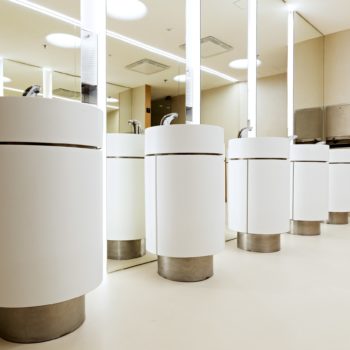
Five white cylindrical structures, each with a sink and faucet on top, stand in a row in front of mirrors in a washroom.

Durat’s Torni washbasins are made partly from waste.Photo: Durat

Durat’s solid surface product is partly made from waste − and totally recyclable.

The durability, strength and solidity of Durat set it apart from other plastic innovations.

“Durat was developed in the 1990s,” says CEO Heikki Karppinen. “The founders developed the material from scratch and used waste materials from local suppliers.”

He says it is the only solid surface product made with recycled plastic content.

“The waste material is post-industrial waste from local sources,” he explains.

“We process the waste, granulate and mix it with the Durat material. Using waste material not only gives a new life to waste plastic but reduces the need for virgin raw materials. We use about 30% of recycled content in the material and the product is itself 100% recyclable.”

Custom tabletops and vanity units are the main finished products, which can be found in restaurants, retail spaces, hotels and public bathrooms.

“We also supply sheets and sinks to be fabricated locally. The interest for recycled content materials has gone up dramatically in the last two or three years. We believe that in the next ten years or so, the whole construction and design industry will transform to a circular economy model.”

By Tim Bird, ThisisFINLAND Magazine 2020

Hometown Helsinki holds special place in choreographer’s heart

Ima Iduozee started his career as breakdancer, winning the Finnish national championship three times. In 2016 he graduated from the Theatre Academy of Helsinki’s University of the Arts.

“Helsinki is my home,” he says. “I grew up here and forged my career here. My love for Helsinki stems from the feeling that it’s always nice to come back here.”

Iduozee spent his youth in the neighbourhoods of Maunula and Pitäjänmäki in the north end of Helsinki. Both districts had residents from all over the world. “It now feels like the whole city has gone through a cycle of change in a very short time,” says Iduozee. “There are many things to immerse yourself in, in terms of culture, arts and music.”

Ima Iduozee toured 15 countries with his debut work, This is the Title.

Finnish innovation fund Sitra lists the most important trends of the 2020s

Sitra, a Finnish fund focused on future-oriented study and research, provides the Megatrends 2020 list, an overview of the issues we should focus on in the coming years.

A megatrend is a general direction of development consisting of various phenomena and entailing widespread change. They often occur at the global level, and their development is often expected to continue in the same direction.

Sitra’s Megatrends 2020 update highlights five trends and the links and tensions between them:
  • Ecological reconstruction is a matter of urgency
  • Relational power is strengthening
  • The population is ageing and becoming increasingly diverse
  • The economy is seeking direction
  • Technology is becoming embedded in everything