Nordic and international photographers’ exhibitions on the streets of Helsinki

The curated exhibitions will take place at historic landmarks, warehouses, art centres, galleries, parks and waterfront areas in Helsinki. Most outdoor exhibitions can be enjoyed at any time of the day, free of charge.

The Nordic Village is an exhibition format supporting emerging and groundbreaking Nordic photographers. Since 2018 this project has selected, nominated and showcased artists from all five Nordic countries and arranged artist talks, Nordic exhibitions and seminars with the support of the Nordic embassies. The artists are selected through a jury of curators, who are responsible for the festival’s open call contest. In 2020, the Nordic Village exhibition, with the theme of Trust, is set up outdoors on the grounds of the National Museum of Finland.

A solo exhibition by artist and photographer Florence Montmare entitled Scenes from an Island will be shown outside the National Museum and on digital billboards at bus and tram stops and in metro stations. The exhibition is the culmination of five years of experimentation exploring metaphors of transience and elemental conditions of nature by staging different scenarios; images of landscapes and figures transition through them. “I see it as ritual and a meditation to connect to nature as the true source of our existence,” Montmare says.

An indoor exhibition called Galleria Futura will be set up in the Tram Museum at Korjaamo Culture Factory, from July 16  to August 16. The gallery will showcase both emerging talents and established photographers who won an open competition to be exhibited in Helsinki and whose images were selected out of 2,784 submitted photographs.

How a Finnish fish market stays afloat when Russian customers must stay home

When you drive out of Lappeenranta, an eastern Finnish city less than 25 kilometres (15 miles) from the Russian border, you see a few of the typical big-box stores. They look the same as they do everywhere in Finland, but one detail sticks out.

Many of the stores’ Finnish advertisements and signs appear side by side with Russian translations. Clothing, ice hockey equipment, shoes, garden supplies – all kinds of merchants are trying to attract Russian shoppers as well as Finnish ones.

An empty feeling

An empty fish counter in a grocery store

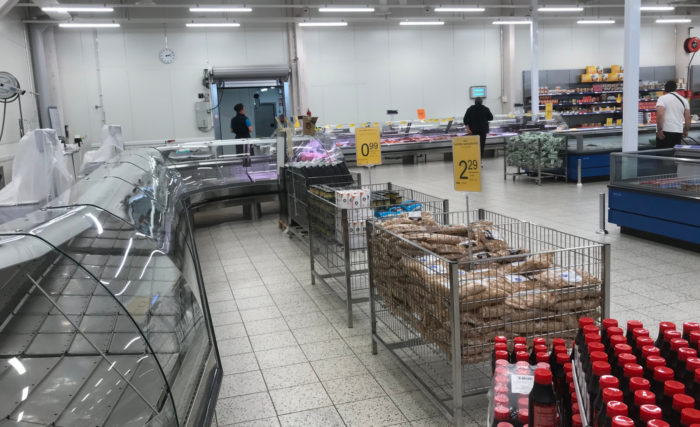
Although business hasn’t dried up, it has decreased to the degree that part of the long, curved fish counter at the Disas store in Mustola is not in use.Photo: ThisisFINLAND.fi

At Disas, a fish market with four outlets, Russians made up 70 percent of the customers prior to March 19, 2020, when authorities closed the border.

(At the time of writing, in late June 2020, the border remains sealed to nonessential travel. This means nearly everything except essential healthcare workers, goods transport, returning citizens, diplomats and a small number of other exceptions. It is unknown when the border will reopen.)

The Disas branch in Mustola, outside Lappeenranta, has seemed very empty since then. The store brags of having the longest fish counter of any market in Finland, and on many days business was so brisk that quite a queue would form as employees fileted and wrapped orders.

“When the border was open, the parking lot was full of Russian cars,” says Tuija, a regular customer. She is a Finn and a longtime Lappeenranta resident, recently retired from a career in social work and education.

She says that on a good day, there might be multiple buses parked outside, all bringing in cross-border shoppers. “The fish counter is shaped like a large letter S, and there could 20 or 30 people lined up, with a bunch of people serving them.” The operation went smoothly; it took just a couple minutes to fill each order.

Since the border closure, things have been different. “It feels deserted recently – a huge parking lot and just three or four cars,” says Tuija. “The whole Southern Karelia area relies greatly on Russian tourists, although these stores serve both Finns and Russians. It goes to show how vulnerable a society can be.”

Weathering the situation

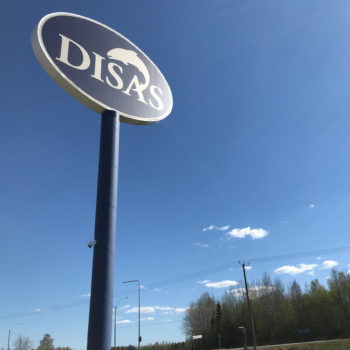
A signpost that says “Disas” in front of a blue sky

Looking for blue skies: One Disas store is located in the eastern Finnish countryside outside Lappeenranta.Photo: ThisisFINLAND.fi

ThisisFINLAND visited Disas in Mustola several times during the spring and early summer. Each time, only a handful of customers were wandering the aisles of the 3,000-square-metre (32,000-square-foot) store, which stocks daily goods and groceries in addition to fresh fish.

A glaringly empty parking lot is not a welcome sight for any merchant, but if Disas owner and CEO Martti Tepponen is discouraged, he’s doing his best not to admit it.

“The situation is not a total catastrophe,” he says. “We’re still doing business continuously, but significantly less than before, of course. In any case, we know that this is a temporary phase. It’s just that nobody knows when it will be over.”

The border closing has forced the company to adjust its operations. “We’re able to stay open with a certain amount of staff and maintain basic operations,” says Tepponen. “At the end of the summer we’ll take another look at things. Hopefully by then the situation will have changed.”

To weather the crisis, Disas has reduced its opening hours and is keeping one of its locations closed. Its in-store cafés are also shut, and the company has temporarily laid off a number of the 150 workers who staff its markets. The employees include Finns, Russians and Estonians; all of them reside in Finland.

Expanding while staying at home

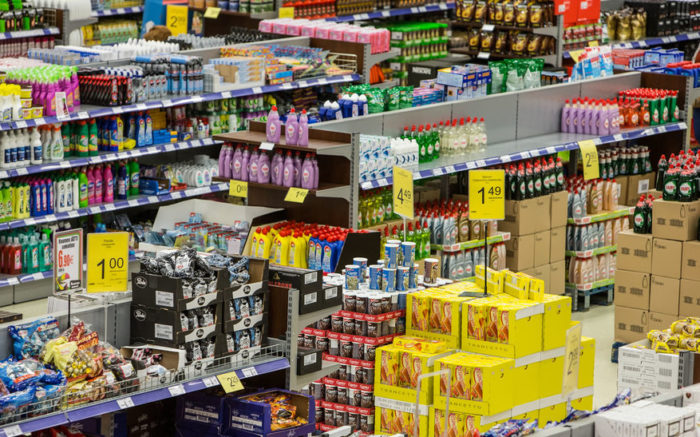
Shelves and stacks full of products in a grocery store

Among other strategies for attracting customers, Disas is adding to its product range.Photo: Disas

In another effort to deal with the challenging circumstances, Disas is looking to expand its customer base to include more Finnish people. It is adding to an assortment that previously catered mainly to cross-border shoppers: coffee, tea, candy, cooking oil, specialty meats and household goods, as well as Finnish and imported fish.

“We’ve increased our marketing within Finland and revised our product range to include more goods that the locals are looking for,” says Tepponen. Disas also has a separate facility in the southern Finnish town of Loviisa, where it smokes fish and packs fish products and caviar for its own outlets and for wholesale.

While the company is known as a fish market, Tepponen envisions it making the jump to a “full-blooded supermarket,” as he puts it, by adding fruits, vegetables and alcoholic beverages to its selection. “We already stock everything else,” he says.

Although Disas is taking this chance to make itself better known to domestic consumers and pursue new ideas, Tepponen, like many people all over the world, nonetheless also hopes for the day when “things can return to normal.”

By Anna Ruohonen and Peter Marten, July 2020

Finnish actor Jasper Pääkkönen is raising awareness

Finnish actor Jasper Pääkkönen rose suddenly to Hollywood fame in 2018. His breakthrough role was the white supremacist character of Felix Kendrickson in Spike Lee’s Oscar-winning BlacKkKlansman. Next, Pääkkönen appears in Spike Lee’s Vietnam-based Da 5 Bloods. Pääkkönen muses that Lee, whose films have always been popular in Finland, has an approach to justice and equality that resonates with Finnish values.

Acting entered his life when he was 18. Pääkkönen’s career started in a popular TV series, bringing him national fame. From the beginning, he has utilized publicity to raise awareness on his huge passion – migratory fish. Landing international roles has brought him even more solid media attention helping him with the nature conservation work. In addition to his acting career, he has been working full time for years for healthier waters.

Pääkkönen was only two years old when he got his first fishing rod. What was it that made the little boy so enthusiastic about fishing?

“It must be a primal hunter-gatherer instinct,” he says.

Watching the fly line curve through the air mesmerized the young boy. Apart from aesthetics and the emotional highs and lows, fly-fishing is about spending time in nature, emptying your mind, hanging out with friends and happily letting the rest of the world vanish for a while.

“A day out fly fishing can be perfect even if you don’t catch anything.”

As an example, he mentions a recent day spent fishing up North, made unforgettable by a very muscular salmon. For a while it was his biggest catch ever. Then it got away.

“At that very moment, it felt like the biggest loss of my life,” he says, and laughs. “Only time will tell if it’s going to be a trauma or a positive experience.”

He compares the incident to winning a gold medal in the Olympics, to something you’ve been building your whole life towards – only to lose it in a blink of an eye.

“Fly-fishing is sometimes also about experiencing extreme emotions.”

The salmon was landed but wrestled to freedom before he could take its measurements or a proper photo. “It probably weighed something between 17 and 20 kilos” (38–45 pounds).

Rivers are getting restored

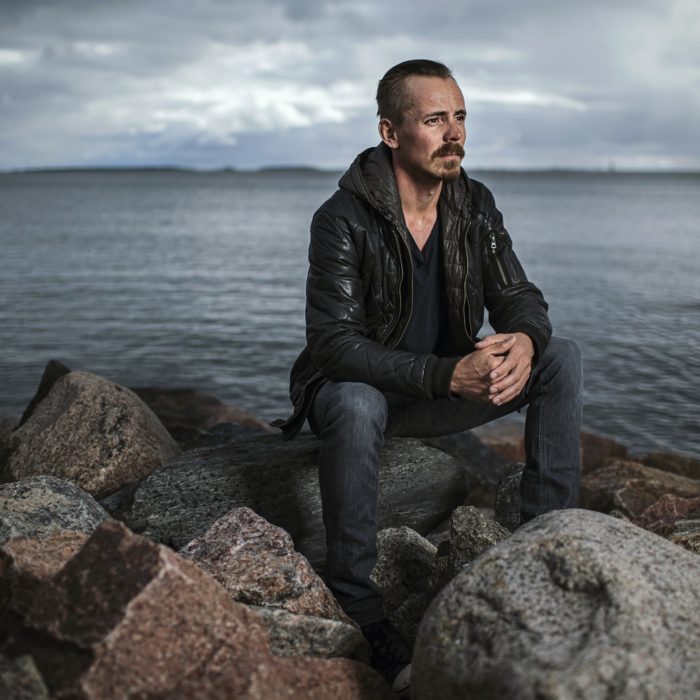
Finnish actor Jasper Pääkkönen sits on a rock in front of the Baltic Sea.

“I want my children and grandchildren to be able to enjoy healthy rivers and fisheries,” says Jasper Pääkkönen.Photo: Roope Permanto

While Pääkkönen admits to indulging his passion for fishing, it has also opened his eyes to endangered fish species and the poor state of rivers.

“All over the world, hydropower has destroyed rivers and their surroundings.”

Migratory fish are amongst the greatest sufferers. “Fish have a low status in the scale of nature conservation, perhaps because they aren’t cute and cuddly,” says Pääkkönen, his gaze and voice getting more intense. Thanks to him and other relentless campaigners around the world, signs of positive change are on the horizon.

“I want my children and grandchildren to be able to enjoy clean nature and healthy rivers and fisheries.”

Recently he played a crucial role in the decision to remove the three dams from the River Hiitolanjoki in South Karelia, Finland.

“I believe this decision will lead to a chain reaction in Finland. Restoring rivers by removing dams is already an international movement.”

Integrity, honesty, safety

Spending time outside Finland has made Pääkkönen appreciate some of the features of his national culture even more than before.

“On many scales, Finland tops the world,” he says. “Our remote location hasn’t stopped us doing right. In addition to the fresh air, clean water and vast areas of wild nature, literacy is high and we take care of those who are less fortunate. That’s how it should be everywhere, but there are very few places where it actually is.”

As well as social welfare, Jasper Pääkkönen is proud of the integrity and honesty of Finland. People keep their promises. “Actions speak louder than words” is a principle deeply ingrained in the Finnish soil.

“My American agent says visiting Finland calibrates his moral compass every time.”

The same agent was amazed to see a baby sleeping outside in winter.

“It was a cold, snowy day and he couldn’t get his head around how letting a baby sleep outside like that was possible,” Pääkkönen says. “It’s a Finnish tradition. Babies sleep really well outside in cool, crisp air, snuggled up in warm clothes in their strollers.” It was just another case of fresh air and safety beautifully combined together.

Sweating it all out in the sauna

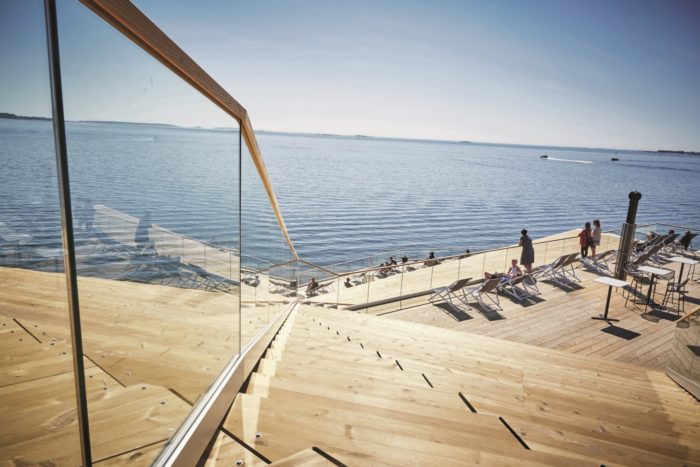
The wooden terrace of Löyly sauna in front of the Baltic Sea on a sunny day.

Jasper Pääkkönen is founder and owner of Löyly, a Helsinki sauna that shows off Finnish wood architecture on the Baltic Sea shore.Photo: Pekka Keränen/VisitFinland

Another field Jasper Pääkkönen says Finland should be pioneering is nature travel. Now working on a premium resort to be built in Lapland, he is keen to invest in sustainable architecture. Warm, inviting – and good for the environment.

Founder and owner of Löyly, an ecologically built and run seaside sauna in Helsinki, Pääkkönen thinks entrepreneurs should do more for the environment than simply what is required by law. And indeed, carbon-neutral economy is high on the agenda of many companies.

“I think it’s our duty to act as responsibly as we can. The combination of a sauna and a restaurant alone wouldn’t have earned Löyly a ranking on TIME magazine’s 100 Greatest Places list.”

When he is in Finland, sauna is part of the daily schedule: “For us Finns, sauna isn’t really a luxury, but a unique, normal part of our daily lives. We have a special emotional connection to it. Sauna helps to sweat out all the worldly worries and stress. You haven’t really visited Finland if you haven’t enjoyed a sauna.” And a traditional wood-burning one, at that.

By Minna Takkunen, ThisisFINLAND Magazine 2020

Two Finnish universities place near the top of the Young University Rankings

Aalto University, located in the Finnish capital area, and Tampere University, newly formed in 2019 in a merger of two universities, are both in the top 35 out of more than 400 universities worldwide.

The Young University Rankings make use of data from the same 13 performance indicators as the Times Higher Education World University Rankings.

State of the artificial: Finland expanding free online AI course to all EU languages

I know enough about artificial intelligence (AI) to realise that I don’t know very much. I understand how AI is applied – enough to write about it occasionally – but I don’t understand how it really works or what it could mean for our societies.

To find out more I enrolled in the free online course Elements of AI, created by the University of Helsinki and the technology company Reaktor.

“Most people know that everything they do online is recorded, because data has huge value to the modern business,” says Ella Peltonen, research scientist at the University of Oulu. “The data needs to be refined and analysed so we can take action based upon it. This process is called AI.”

Whirring beneath the surface

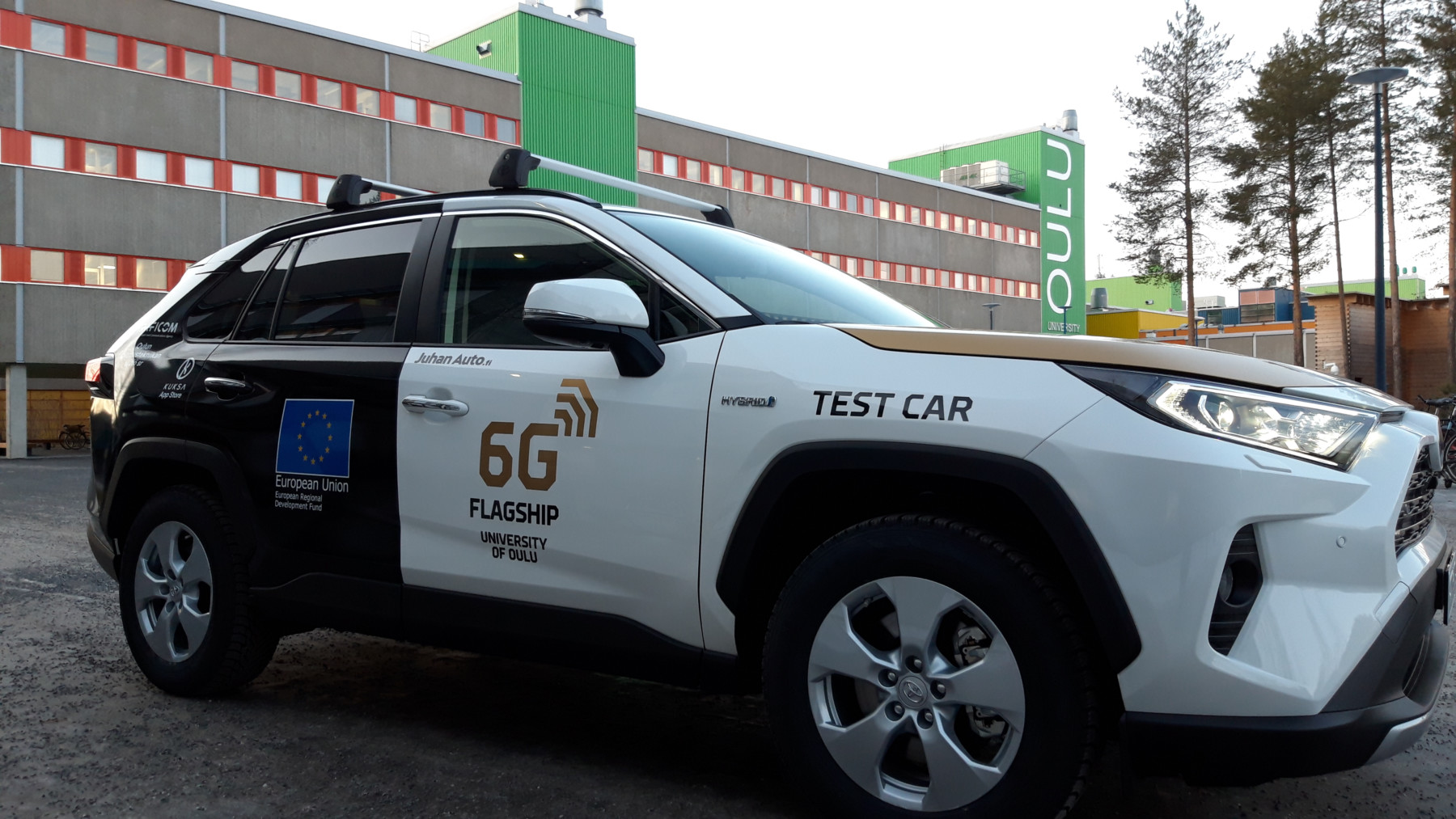
A car with the words 6G Flagship and Test Car on its side is parked outside a building at the University of Oulu.

This self-driving car belongs to the University of Oulu, where Ella Peltonen works. It is being used to study human-machine interaction and other topics as part of the 6G Flagship research programme, one of whose aims is to speed up digitalisation in society.Photo: 6G Flagship/University of Oulu

One of Peltonen’s focus areas is “everyday artificial intelligence.” She explains that AI is becoming ubiquitous today, from our phones to our homes, from our cars to our factories. AI is also being used quietly behind the scenes, helping to decide if we get a job offer, receive a loan, or get audited by the tax authority.

Recommendation engines are a common AI tool that you don’t necessarily notice as they whir and hum beneath the surface of the internet. They analyse data to find something you might be interested in, such as another article to read, a book to buy, or a movie to watch.

A challenge with these engines is that they tend to recommend similar things. For example, since you are reading an article about AI, a recommendation engine might direct you to more technology stories. If you only read these recommended stories, you might think of Finland only in terms of high tech, without discovering anything about Finnish cuisine, literature or nature. You would find yourself in a “filter bubble” or “echo chamber,” separated from dissimilar information.

“We use AI dozens of times daily, but in my opinion recommendation engines are the most impactful,” says Teemu Roos of the University of Helsinki. He’s the leader of the Elements of AI project. “They provide the social media posts and news stories we see. They can be used for political manipulation. People must understand the implication of AI to our political and democratic systems.”

Rolling out languages

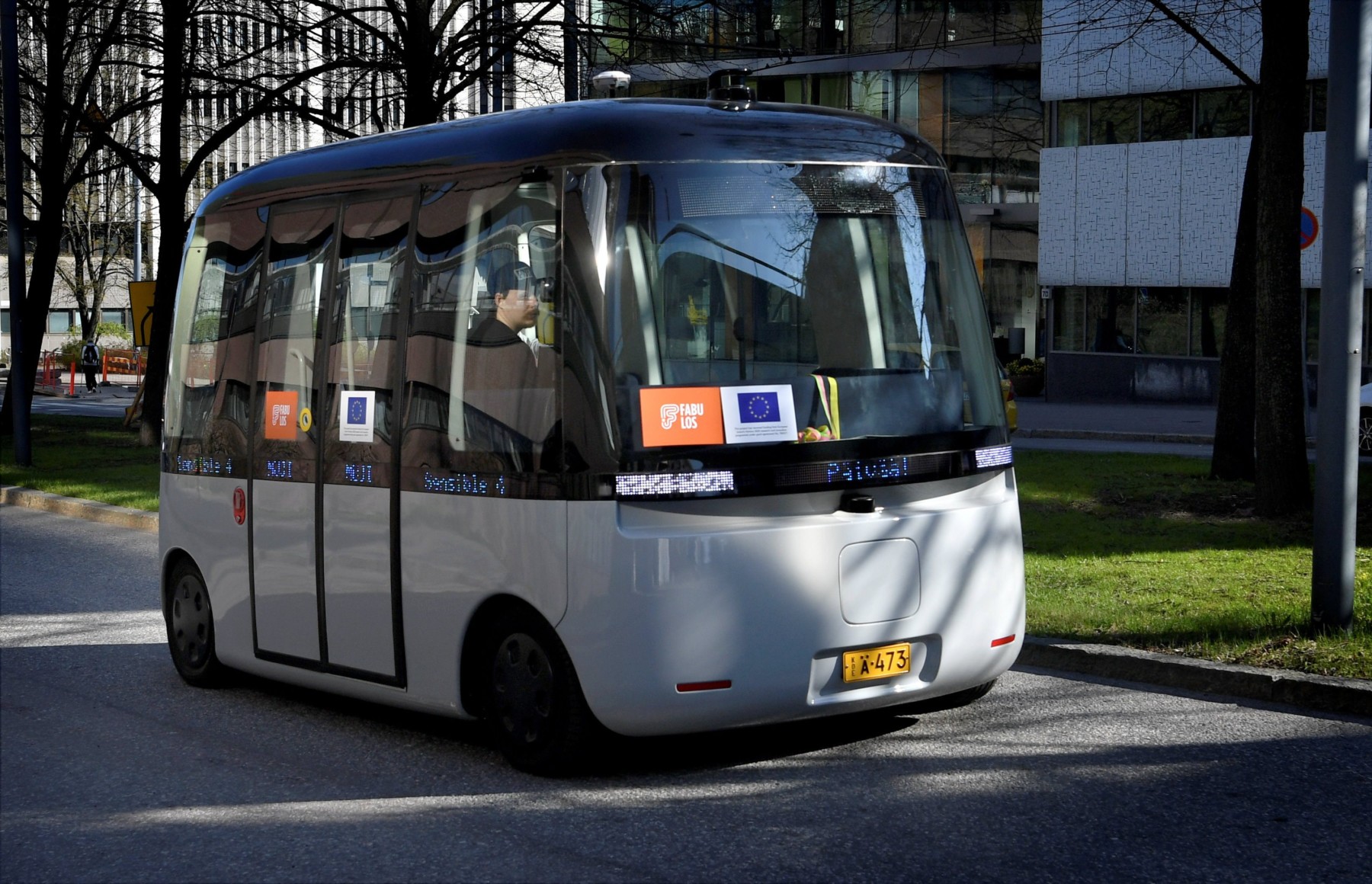
A shuttle bus drives along a tree-lined street in good weather.

Japanese company Muji’s Gacha autonomous shuttle bus drives through Espoo, just outside Helsinki, in May 2020. Finnish company Sensible4’s software integrates AI and sensor fusion to let the driverless vehicle operate in all weather conditions.Photo: Antti Aimo-Koivisto/Lehtikuva

Understanding how AI can affect our society is the reason for making the Elements of AI course free and open to the public. Finland is a good host for such a course because of the country’s long focus on technology and education. Finland and the EU have provided funding to make it available in all 24 EU languages.

More than a million people have completed the course. “We had a goal that one per cent of Finns would take the course, which we accomplished,” says Roos. “Our current goal is to reach one per cent of Europeans and then one per cent of the global population.”

Free knowledge for everyone

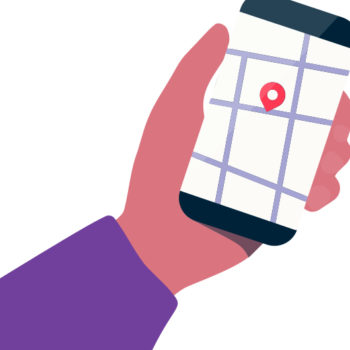
In a cartoonish illustration, a hand holds a mobile phone with a map showing on the screen.

AI is about everyday applications that you’re already using, not just about the technology of the future. Your own Instagram feed or Google search are examples of recommendation engines that use AI. Illustration: Elements of AI

The Elements of AI course is filled with real-world examples, such as how AI can play a game of chess, determine which email is spam or recognise objects in photos. It also discusses the implications of AI, both the good and the bad. AI in a self-driving car might safely and quickly take me to work, for example, but it might also take the job of my bus driver.

Simple math exercises are included, but no coding. For that, there’s another course, Building AI. It promises to teach participants “more about the actual algorithms that make creating AI methods possible.”

After taking Elements of AI, I feel I better understand how AI works and what is at stake. As the course literature explains at the end, AI must be democratically regulated, and this means knowledge about the technology has to be freely available to everyone.

By David J. Cord, June 2020, updated June 2023

In Finland’s far north and far south, life revolves around nature

“No website or Wikipedia page could express what life up here is really like,” says Essi Kohtanen.

She lives in Finland’s northernmost town, Nuorgam, at just over 70 degrees north latitude. (It’s also the northernmost town in the EU.) She and her husband moved there in the autumn of 2016.

At the time of writing, Kohtanen has been working for two years as a teacher in the local school, with two colleagues. One of them teaches in Northern Sámi, one of the languages of the indigenous Sámi people, whose homeland is divided into four parts by the borders of Finland, Sweden, Norway and Russia.

Kohtanen has been teaching the Finnish-language grades four to six (ages ten to 13), a class with only two pupils at the moment. “You don’t do a lot of group work in a class that size,” she says. “A teacher needs quite an imagination in these circumstances.”

[Editor’s note: Be sure to check out our article about life in Finland’s easternmost and westernmost villages and about the country’s centre of population, too.]

Arriving in town
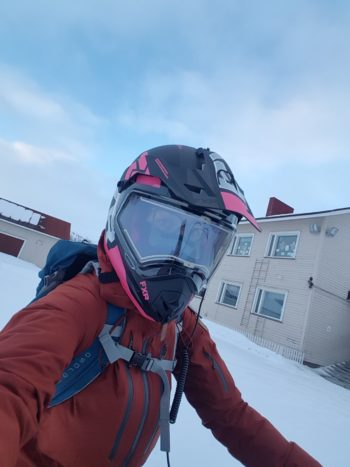
A woman with a helmet, goggles and a backpack takes a self-portrait in front of a school building and a snowy schoolyard.

In this winter selfie, Essi Kohtanen has just commuted to her job at the local school (visible in the background) by snowmobile on the frozen Teno River.Photo: Essi Kohtanen

Nuorgam is located in the municipality of Utsjoki, where almost half the residents have registered Sámi as their first language. (The Sámi languages have official-language status in northern Finland; ThisisFINLAND has an article about them here.)

The town has a population of less than 200 and is situated on the southern bank of the Teno River. Norway lies on the northern shore, and the Arctic Ocean is only a few dozen kilometres away as the crow flies. A lot of Norwegians come to Nuorgam to do cross-border shopping, making Norway an important factor in the local economy. In light of Norway’s high prices, Finland is a nicely affordable country.

Kohtanen says that when she moved to Nuorgam, she had butterflies in her stomach.

“I remember driving up the road towards Nuorgam through the autumn landscape,” she says. “I felt really nervous. Everybody in the village knew that a young couple from the south would be arriving in town.”

A transformational experience
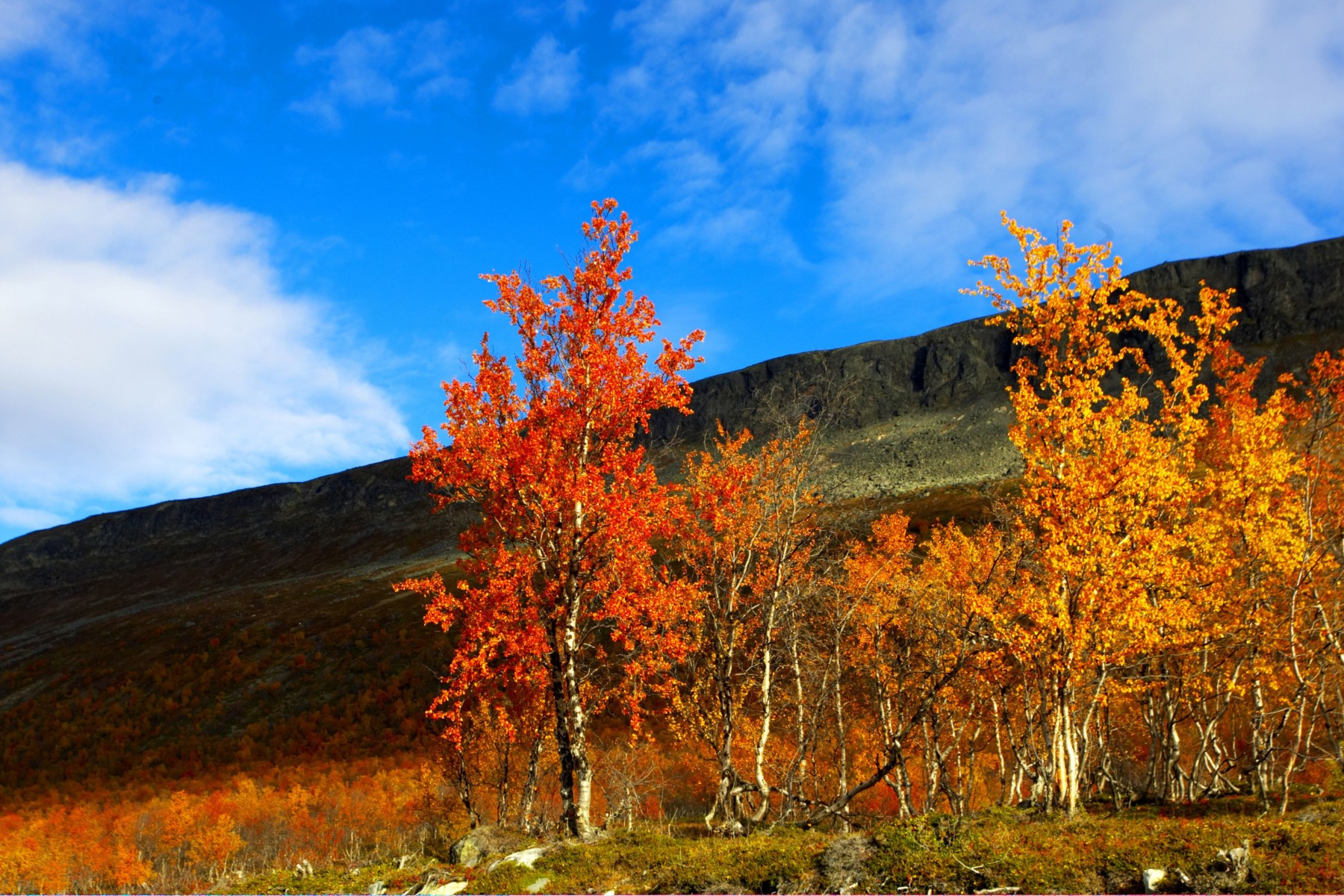
Several trees with red and orange autumn leaves are in the foreground, and a green hill and a blue sky are in the background.

Northern Finland is famous partly for its brilliantly coloured autumn foliage (ruska in Finnish), as in this picture taken near Nuorgam.Photo: Tero Sivula/Lehtikuva

She soon found out that the locals welcomed her and her partner with open arms. People came over to have a chat and asked the newcomers to join in various events. They were even asked to lend a hand in the reindeer roundup, in which herders brand the calves and separate the animals destined for meat production.

“The fact that both of us have open, outgoing personalities helped,” says Kohtanen. “Whenever anybody asked us along, we said, ‘Of course!’”

According to Kohtanen, “tranquil” is the best description of life in Nuorgam. Needless haste is absent from people’s lives.

“When we went south for our summer holiday after our first year here, I noticed how busy people down there seemed,” she says. “I’ve undergone a transformation while living here. I’m more peaceful, and I sleep much better.”

Although her contract at the school is temporary and is drawing to a close at the time of this article’s publication, Kohtanen and her husband have decided to stay up north.

Polar night and midnight sun
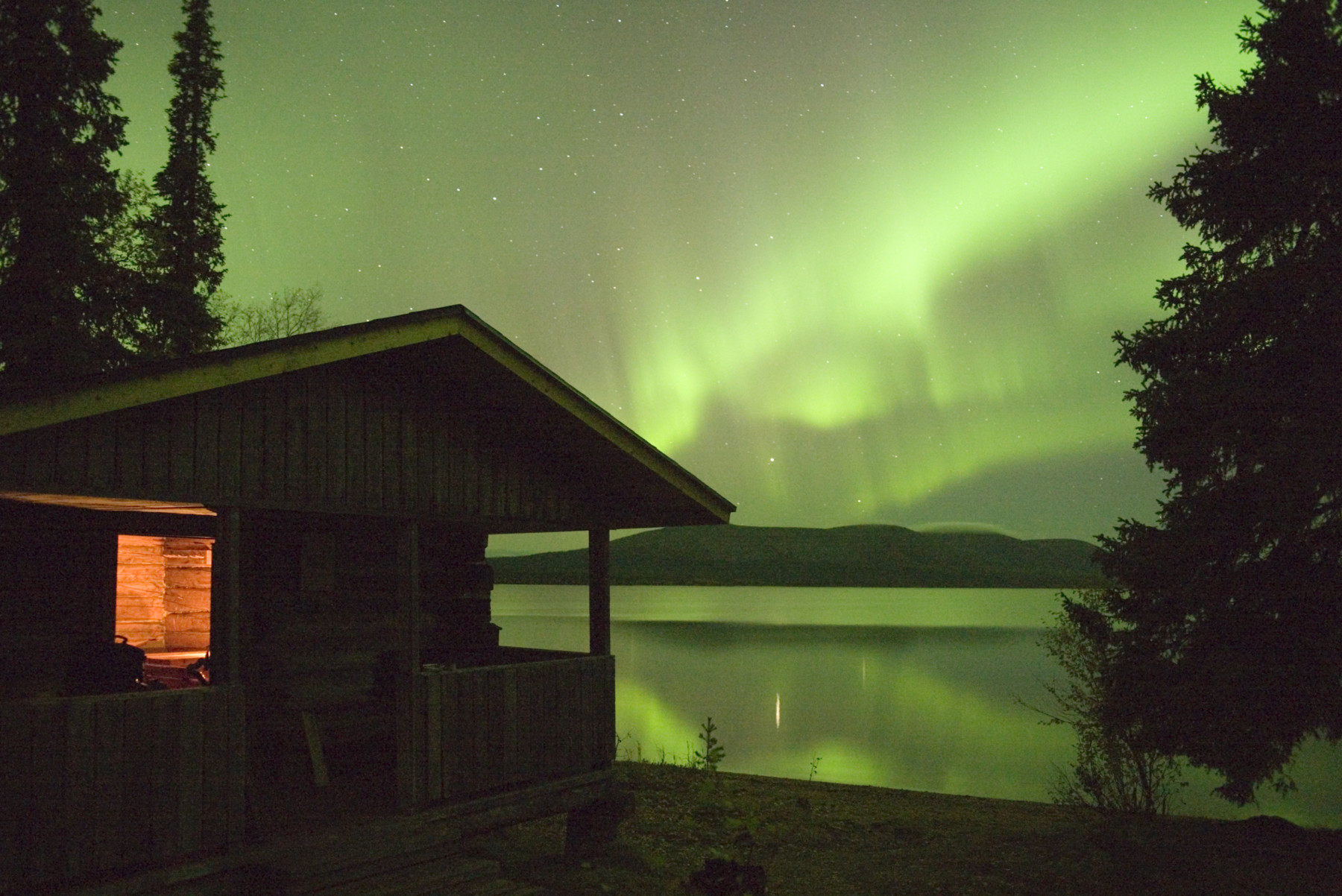
A cabin by a lake at night, with the sky full of wavy green patterns from the Northern Lights.

Living in the Finnish far north means numerous chances to see the Northern Lights.Photo: Visit Finland

The most challenging thing for Kohtanen has been getting used to the long period of polar night, which lasts for almost two months in Nuorgam. During that time, the sun does not rise above the horizon at all. However, it’s not quite as dark as you might think. The white snow reflects what little light there is, and when the full moon is out, you can go skiing without a headlamp.

“If you just keep active and enjoy the outdoors, the polar night is not a real problem,” says Kohtanen. “We have lots of pure white snow, and you can see the Northern Lights practically every night.”

By the same token, you can enjoy the midnight sun in the summer. The period of nightless nights, when the sun doesn’t set at all, lasts from mid-May until late July.

All in all, life in Nuorgam is strongly defined by nature. If a severe snowstorm strikes, the roads may be closed all day and you won’t be able to get anywhere by car.

“Up here, nature comes first, before humans,” says Kohtanen.

A certain attitude
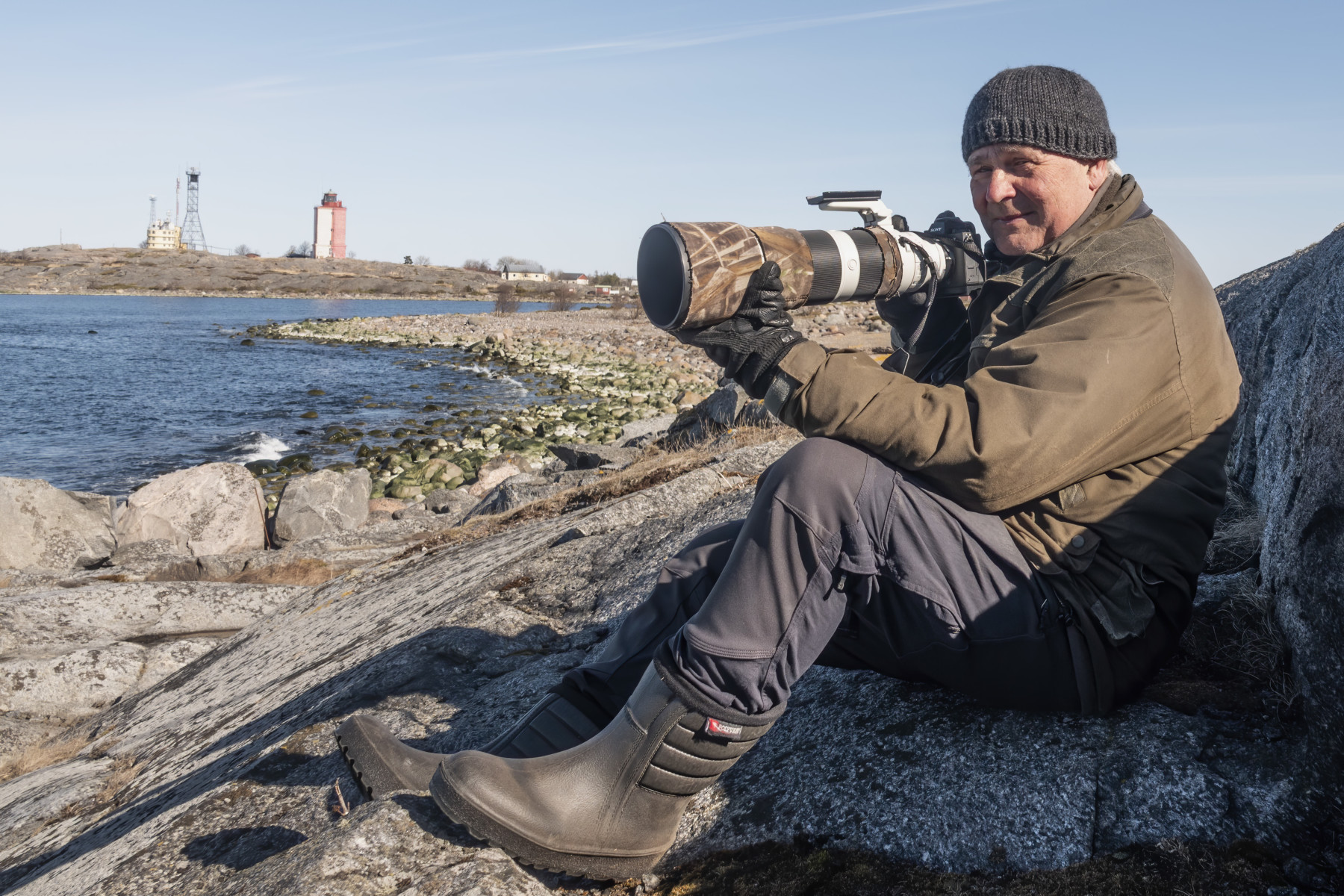
A man sits on a rocky ocean shoreline and adjusts a camera with a long lens.

Jorma Tenovuo gets out early in the morning to go birdwatching with his binoculars and his camera.Photo courtesy of Jorma Tenovuo

Approximately 1,200 kilometres (745 miles) south of Nuorgam lies the island of Utö, Finland’s southernmost location with year-round inhabitants. Just like Nuorgam, Utö is a place where people are rarely in a hurry.

“We only have two important schedules here: the opening hours of the local shop, and the ferry timetable,” says Jorma Tenovuo, a retired professor of dentistry.

Tenovuo is one of roughly 40 people who live all year round on Utö. He moved there with his partner in 2006. But Tenovuo was already well versed in island life: his father was a zoology professor who researched the birds of Finland’s archipelago. The rest of the family joined him for these summer excursions to the outlying islands.

“It takes a certain attitude to enjoy a place like this,” says Tenovuo. “Utö measures less than one square kilometre, and in a tiny village everybody has to get along with everyone. You need to be social, but we do respect each other’s privacy, as well.”

Something meaningful
Four duck-like birds float on a wave.

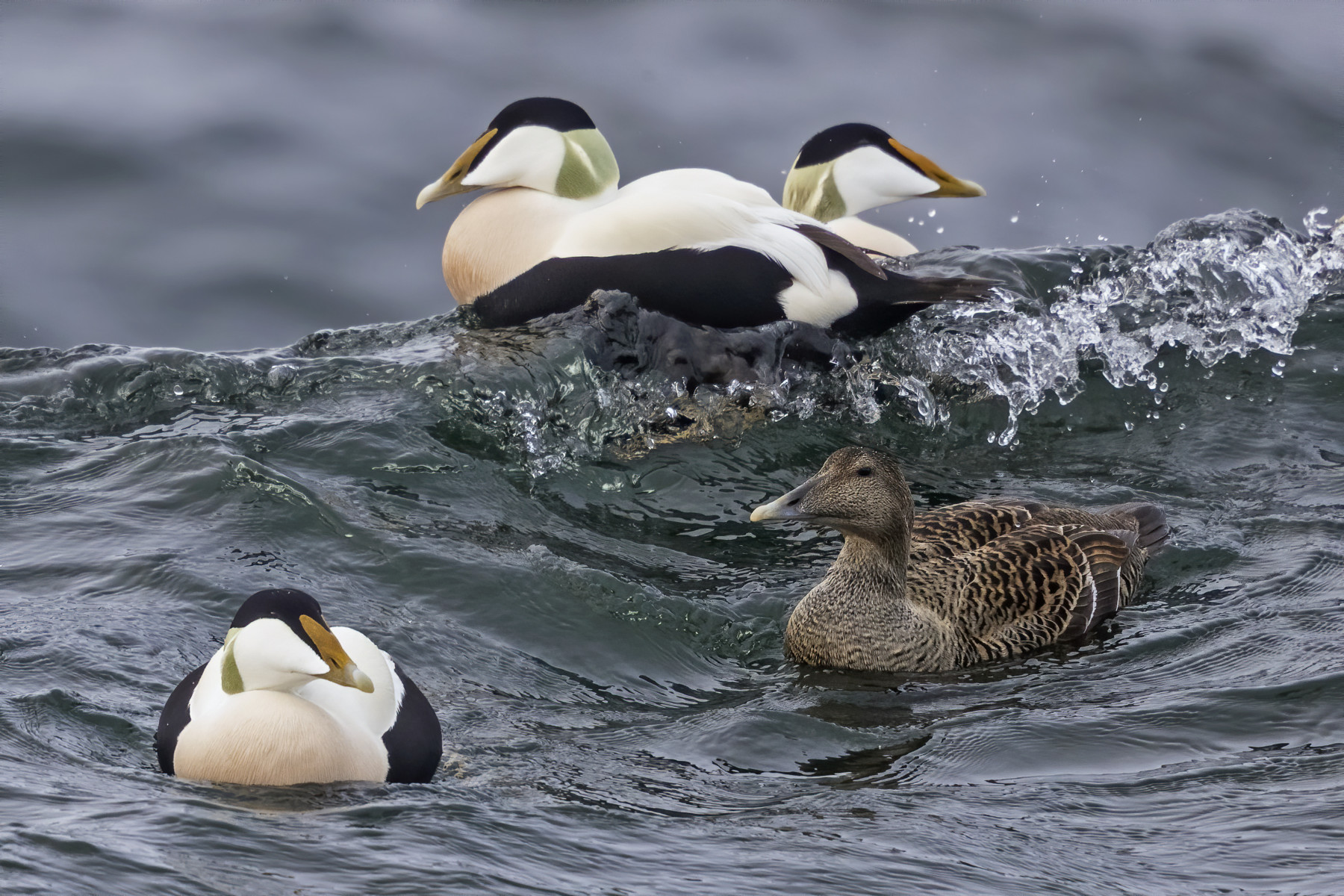
Utö is known as one of the best places in Finland for birdwatching. The common eider is one of many species you can find there (shown here are three males and one female).Photo: Jorma Tenovuo

“This isn’t the place for everyone,” he says. “If you move here, you need to be at peace with yourself, and you need to have something meaningful to keep yourself busy. Some people work remotely. You might have one person who is writing a book, another person who likes photography and someone else who spends their time fishing.”

Tenovuo has enough to do. Every morning around sunrise, he goes out with his binoculars and his camera. He is a passionate birdwatcher, and Utö is one of the best birding locations in Finland.

“A huge amount of birds migrate to continental Europe and Africa via Utö. We had a remarkable case in December 2012, when a fox sparrow appeared here. The bird is native to Northern America, and more than 800 birdwatchers from a number of different countries travelled here to observe it.”

Tenovuo and his spouse also have a “summer cottage” – a flat in the southwestern Finnish city of Turku, which they visit once or twice a month. A ferry connects Utö to the mainland; it’s free of charge and operates all year round, but it does take time. The boat takes four to five hours to make the trip from Utö to the port in Pärnäinen, and from there it’s another two hours by car to Turku.

A lively island
A white-tailed eagle is shown in flight, with wings fully spread.

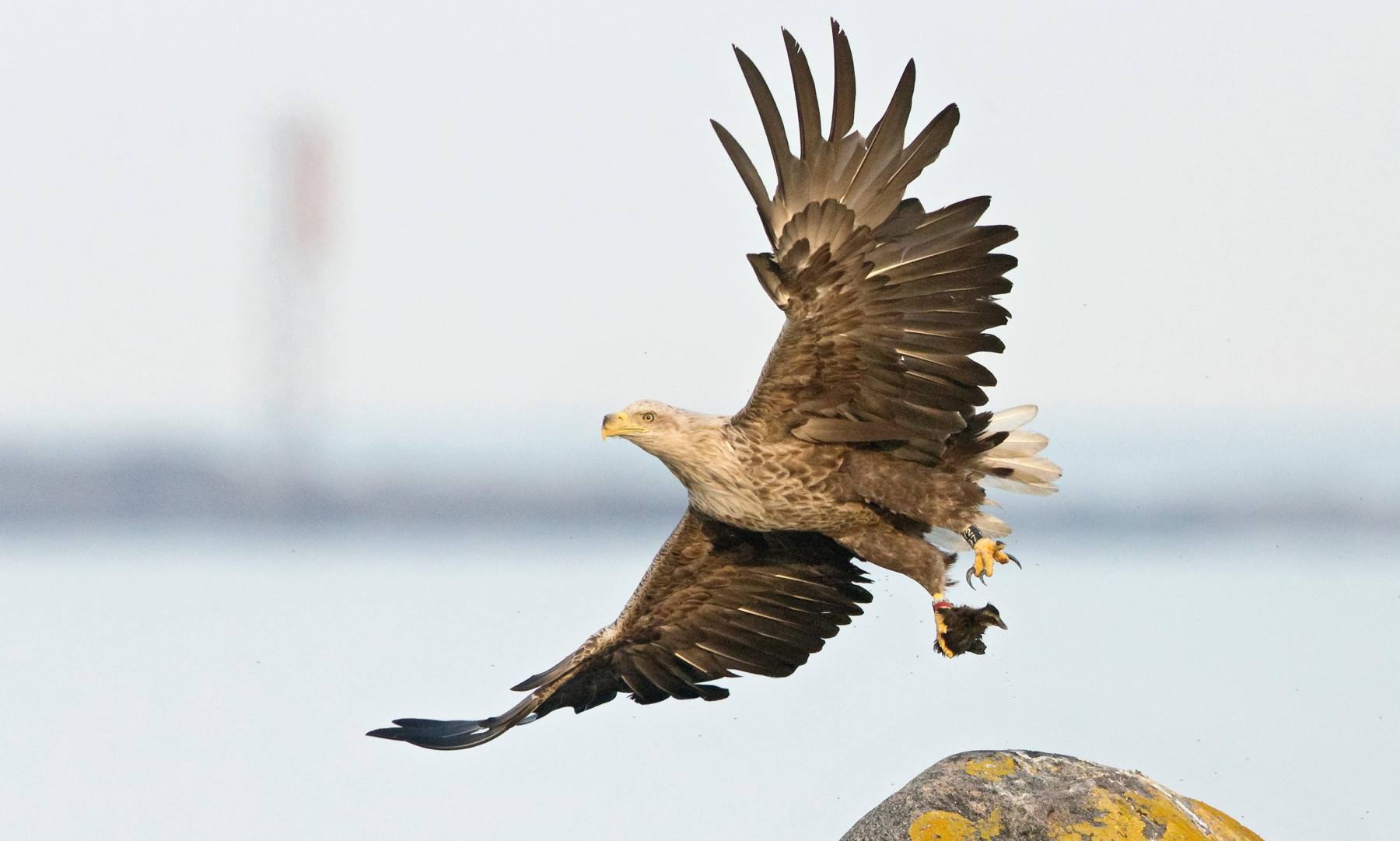
In the archipelago of southwestern Finland, where Utö is located, it’s possible to spot a white-tailed eagle, whose broad wingspan can reach as much as 2.45 metres (eight feet). This one has caught a duckling in its right claw.Photo: Jorma Tenovuo

Tenovuo is delighted by the excellent work that the local community has done to ensure that Utö remains lively and active. People are renovating old buildings, and great value is placed upon the traditional island culture.

“In many parts of Finland, remote rural areas are withering and losing population, but there are more people who would like to move to Utö than the island can hold,” he says.

Despite its remote location, Utö also attracts tourists, especially in the summer. The island even has a hotel, housed in a former military barracks. Tourism brings income to Utö, but as a nature lover, Tenovuo is also concerned about managing the island’s visitor capacity in relation to conserving nature and the environment.

By Juha Mäkinen, June 2020
Operatic Finnish police officer’s performance resonates online

Petrus Schroderus works as a police officer in Oulu, a city of more than 200,000 people about 600 kilometres (375 miles) north of Helsinki, on Finland’s west coast.

He started his police career in the late 1990s, but during an interlude from 2004 to 2012 he sang at the Finnish National Opera and on other prominent stages. Wait, what? Yup, that’s right, as unusual as it might seem.

How did that happen?

Schroderus has said in interviews that he has always liked to sing, ever since he was a kid. He went to a high school with a special music programme. When he grew up, he joined the police, but at one point, with encouragement from a friend, he began taking private lessons in operatic singing.

After three and a half years of tutelage, he won the Timo Mustakallio Singing Competition at the world-famous Savonlinna Opera Festival in eastern Finland. That caught the attention of the Finnish National Opera’s then-director Erkki Korhonen, who took Schroderus under his wing.

That’s a shortened version of his story as he told it to Viestit Karjala, a TV programme in Russia that serves the area along the Finnish border. The region is still home to speakers of Finnish and the related languages Karelian and Vepsian, and Viestit Karjala broadcasts and posts in those languages.

Why did a Karelian TV programme interview Schroderus? The answer has to do with a Youtube video.

Looking forward to a new day

In a popular video entitled “Love life – a new day will dawn,” tenor and police officer Petrus Schroderus walks through the streets of Oulu, Finland singing “Rakastan sinua, elämä” (I love you, life).
Video: Oulu Police Department

As a police siren sounds faintly in the background, we see a drone’s-eye view of the stately Oulu City Hall, built in 1886. A police car is parked in front of the building, and a figure is standing on the stairs.

The video cuts to a closer angle and we see that the person is Schroderus in his police uniform. He proceeds to walk down the stairs and along the banks of a nearby waterway while singing “Rakastan sinua, elämä” (I love you, life), a song first released in Finland in 1962.

Many Russians know the tune, too. Written by Konstantin Vanshenkin in Russian in 1956, the song became well known in the Soviet Union. Estonian singer Georg Ots was the first one to record it in Finnish, six years later, with lyrics by Pauli Salonen.

The Oulu Police Department has produced videos of Schroderus previously, including one where he sings Jean Sibelius’s “Finlandia Hymn” (see below). It gathered hundreds of thousands of views when it was released, in 2017, in honour of the 100th anniversary of Finland’s independence. However, the “I love you, life” video, published on April 17, 2020, received nearly two million views in less than a month, propelled by audiences in Russia and elsewhere.

Teardrops and storms

Petrus Schroderus plays Prince Tamino in Mozart’s Magic Flute, singing onstage with four other costumed opera singers.

Petrus Schroderus (second from right) played Prince Tamino in a Finnish National Opera production of Mozart’s Magic Flute in 2006.Photo: Antti Aimo-Koivisto/Lehtikuva

While the song is familiar to many Finnish and Russian viewers, its message is attractive no matter where you live. The title of the video, in English “Love life – a new day will dawn,” is relevant in a world struck by a pandemic. The name of the song makes its theme immediately clear, and the lyrics contain hope.

The Finnish words are not always a direct translation of the Russian original, but the sentiment is similar. “Päättyy yö, aamu saa,” sings Schroderus as the song begins, “uusi päivä kun kirkkaana koittaa.” (Night is ending, morning is arriving, as a new day dawns brightly.)

One verse in the middle of the song speaks about loving life despite pain and obstacles: “I love life, even as it glistens in teardrops. I love life, even as it leads me into storms.”

The song “is an invitation to love life,” Schroderus told Viestit Karjala. “Life is so precious.” He said the reaction to the video showed that making it was worthwhile: “People have sent feedback that they’ve had a great setback at home, like a death or accident or sickness, and that the song has given them energy.”

In 2017, in honour of the 100th anniversary of Finland’s independence, Petrus Schroderus donned his police uniform and sang the “Finlandia Hymn,” by Jean Sibelius. The tune never fails to cause emotions to well up in Finnish people’s hearts.
Video: Oulu Police Department

By ThisisFINLAND staff, May 2020

Up close and online: View the Finnish wilderness with webcams

Residents and visitors alike love to experience Finnish landscapes and catch a glimpse of the country’s wildlife.

For anyone who can’t get to the Finnish outback, for whatever reason, luckily webcams exist. Strategically placed cameras show the rich variety of the natural world, which you can enjoy in real time from the comfort of your own home. Many of them are live only during particular seasons, but they often also feature recordings that you can watch at any time of year.

Birdlife, seal-life and snake-life

https://www.youtube.com/watch?v=2JuPc0Tuxjg&feature=emb_logo

Nest with a view: The University of Turku in southwestern Finland maintains a webcam beside an osprey nest in the archipelago.
Video: University of Turku

The osprey is one of the most popular Finnish webcam subjects. The annual arrival of the giant fish-eating birds at their nests is even mentioned in the news. People eagerly await the first egg, and count down to when the chick is expected to hatch. The University of Turku maintains a webcam beside an osprey nest (background info here) overlooking the gorgeous Turku Archipelago in southwestern Finland.

WWF Finland also features an osprey webcam, at a location on the shore of Saimaa, a lake system in southeastern Finland.
Video: WWF Finland

Lake Saimaa in southeastern Finland is the home of the Saimaa ringed seal, where WWF (World Wildlife Fund) Finland has set up a webcam to catch them basking on a favourite rock. One of Finland’s most beloved animals, the freshwater seal is also gravely endangered because of disturbances caused by commercial and leisure fishing activities and equipment, and because of warmer winters that have made it difficult for the seals to find proper nesting sites. (Normally the seals would burrow into deep snowdrifts on top of a thick layer of ice on the lake surface.)

In season, this WWF Finland camera keeps watch on a favourite rock where Saimaa ringed seals sometimes come to sun themselves. If nothing is happening at the moment, we’ve included a replay video below.
Video: WWF Finland

Whenever a Saimaa ringed seal shows up on camera, Twitter explodes with the hashtag #norppalive, letting you know you need to tune in. (Norppa is the Finnish name for the seal.) WWF Finland has a whole playlist of seal webcam videos.

A Saimaa ringed seal called Moona stretches out on a rock in one of the best moments recorded by WWF Finland’s webcam.
Video: WWF Finland

If birds and seals aren’t your thing, how about cute reptiles? WWF Finland also has an adder cam featuring Finland’s only venomous snake. If you’re lucky you might see one exploring dead leaves or warming up in the morning sunlight. In fact, WWF Finland maintains a page called WWF Wildlive with live webcams and recorded footage of all sorts of animals, from reindeer to wolverines.

At the time of writing, WWF Finland’s live adder webcam isn’t on, but this recorded highlight captures some slithering movement.
Video: WWF Finland

Fantastic landscapes and seascapes

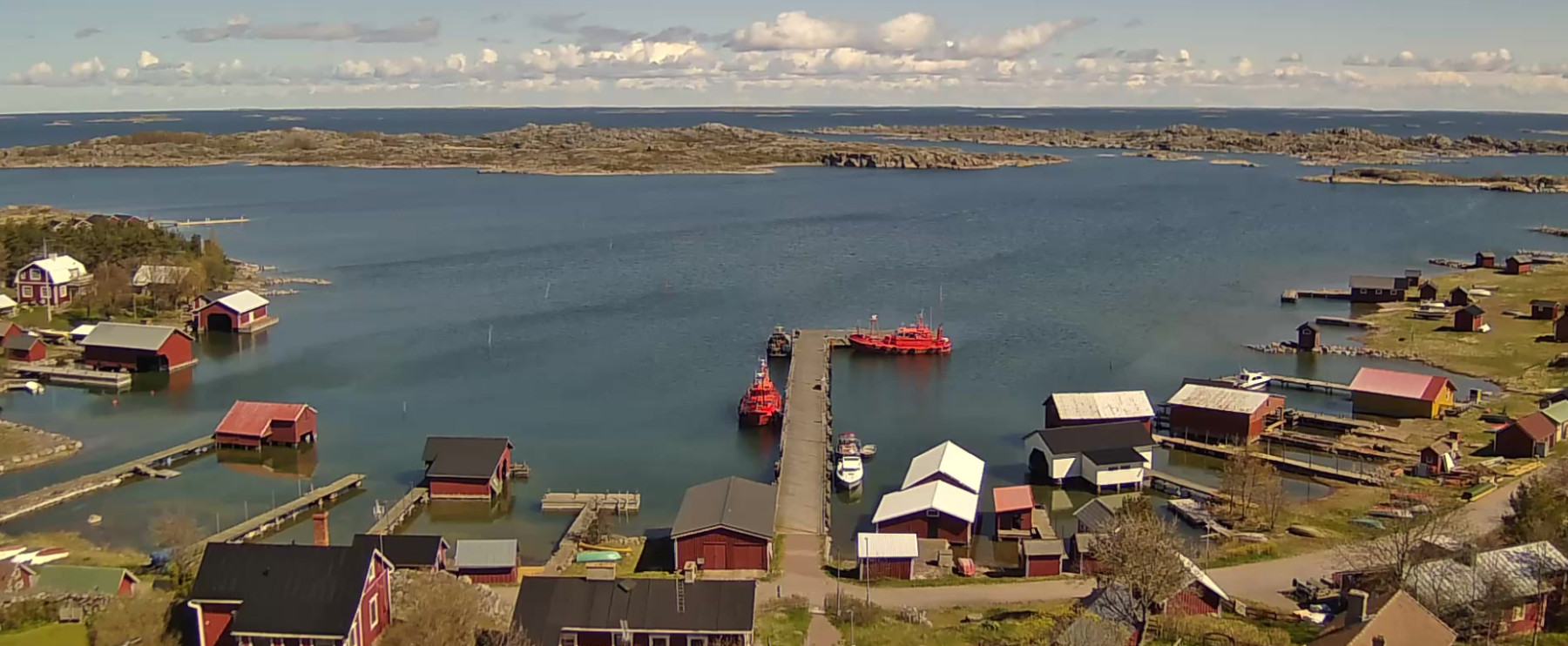
A screenshot of a webcam image showing the ocean harbour of Utö Island with small cabins and boats.

A camera atop a lighthouse shows the harbour of the remote island of Utö. (The webcam link is included in the article text below.)Photo: Screenshot, uto.fi

Utö is a small island far out in the Archipelago Sea between Finland and Sweden. The rocky isle only has a few dozen year-round residents, but it is popular with tourists thanks to its picturesque landscape and 200-year-old, 24-metre-high lighthouse. The lighthouse also boasts a webcam, so you can look out over the sea, the harbour and the little red cottages on the shore.

Oulanka National Park is next to Finland’s eastern border and close to the Arctic Circle. It features several webcams focused on a spectacular creek in a gorge surrounded by stately trees. In the spring the creek roars with water from melting ice and snow.

In the spring you can watch the snow melt into the rushing rapids in Oulanka National Park, near the Russian border.
Video: Oulanka Live Webcam

If you want something quieter, how about a beach, such as Yyteri, just outside Pori on Finland’s west coast? The city was founded in 1558 and is home to the world-famous Pori Jazz Festival, which has been held annually since 1966 but, like many other events, had to cancel its 2020 edition.

This camera pans back and forth at a leisurely pace on Yyteri Beach outside of Pori on the west coast.
Video: Pori Webcam

Finnish urban jungle – and the real Santa

https://youtu.be/UwSJ26G9hns

Various views of Helsinki city life show up on the webcams of the Confederation of Finnish Industries.
Video: Confederation of Finnish Industries

While it’s fascinating to watch ospreys and rushing streams, many people also like to watch city life. The Confederation of Finnish Industries, an organisation that represents the business community, maintains several webcams in downtown Helsinki (two of them are also shown on ThisisFINLAND’s webcam page). You can see everything from ships in the harbour to people sitting on the steps of the cathedral.

Of course, we can’t forget Finland’s most famous resident: Santa Claus. The city of Rovaniemi keeps a webcam at Santa Claus Village, where he has a workshop and a post office. You can watch people come and go on official Santa business, as well as keep an eye on the thermometer on the Arctic Circle. If you’re lucky you might even catch a glimpse of Santa himself, at home in his natural environment.

Right on the Arctic Circle, just north of Rovaniemi in Finnish Lapland, you may see tourists, reindeer or even Santa Claus himself saunter past.
Video: City of Rovaniemi

By David J. Cord, May 2020