Fleeting fame: Finland’s “centre of population” exists in the middle of nowhere

Spruce trees reach for the sky overhead, offering welcome shade from the sun on a warm day. “These trees are about my age,” says Jouko Sipilä, who is 70 years old at the time of writing.

We’re standing in a forest on Sipilä’s land near the village of Eteläinen. The name means “southern,” and the place is technically within the municipal borders of the southern Finnish city of Hämeenlinna. The location is what you’d justifiably describe as “in the middle of nowhere.” Yet in one sense, we are at the centre of Finland – or more precisely, at Finland’s centre of population.

In April 2020, Jouko and his daughter Hanna, 45, were enjoying an outdoor lunch nearby when they received an email from Statistics Finland: the Weber point was now in their territory.

Named after German economist and geographer Alfred Weber (1868–1958), the Weber point is the geometric median, the point where the sum of distances is minimised. Does that sound complicated? Well it is somewhat complex. It means that the Sipilä family land contains the place where the average distance from every Finnish resident’s home is at its shortest.

[Editor’s note: Be sure to check out our articles about life in Finland’s northernmost and southernmost villages and easternmost and westernmost villages, too.]

A hay pole marks the spot
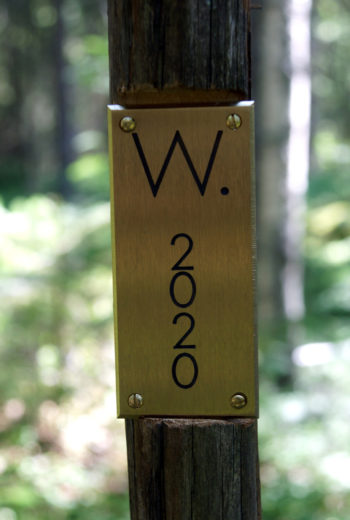
A metal plaque attached to a wooden pole in a forest shows the text W 2020.

The plaque on the hay pole at the Weber point near Eteläinen carries the inscription “W. 2020.”Photo: Juha Mäkinen

It’s an intriguing idea: If all 5.5 million Finns wanted to gather together, this would be the fairest choice of location – in theory, at least. In real life, transportation considerations would weigh heavily in the decision – not to mention space considerations and other factors.

Since Finland’s population is concentrated in the southern part of the country, people from Helsinki would need to travel a little more than 100 kilometres (60 miles), but folks from Utsjoki, in the far north on the Norwegian border, would have to journey more than ten times that distance.

As for Mr Sipilä, he can simply walk about 1.5 kilometres (almost one mile) and enjoy being in the middle of his 5.5 million fellow citizens.

The Sipiläs don’t make a big fuss about having the Weber point on their land.

“We were going to host a small party for the people in the village, but that was postponed because of the coronavirus,” says Hanna. She lives in Helsinki, but due to the pandemic she was furloughed and spent the spring and early summer of 2020 with her father.

Nevertheless, they have put up small signs indicating the location. A minimalistic plaque attached to a hay pole marks the spot, but Jouko and Hanna have discussed the idea of installing a more permanent marker.

Here today, gone tomorrow
An aerial view shows a medieval fortress with several stone buildings overlooking a lake.

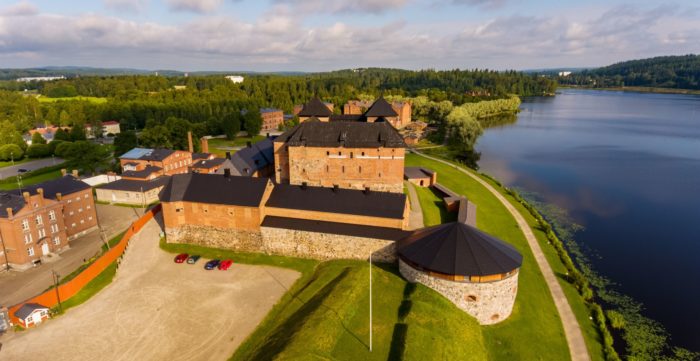
Certain criteria linked to population distribution suggest that Hämeenlinna, named after its lakeside medieval fortress, would be an ideal spot for companies to set up logistics centres.Photo: Tero Sivula/Lehtikuva

In accordance with the Finnish legal concept of every person’s right, everyone has the right to roam the countryside freely, no matter who owns the land. So anyone can visit the Weber point near Eteläinen – while it is still there, that is.

“Now it’s here, and next year it’ll be gone,” says Jouko.

Indeed, the Weber point is constantly on the move. As Finland’s population has steadily become increasingly concentrated in the southern cities, the point has quietly crept south at a speed of approximately one kilometre per year. This trend is likely to continue, so one year may suffice for the point to move beyond Jouko Sipilä’s land.

Actually, since the place where we are standing is based on a measurement from April 2020, several months before I visited the Sipiläs, the Weber point may have already moved by the time you read this. But Statistics Finland provides an update just once a year, so let us be content with this location for the moment.

The changes in population are also apparent in local life. Jouko remembers that when he was a child, the village school had some 50 pupils. These days, the same area has fewer than ten school-age children.

“A lot of people of my generation have moved to Helsinki, just as I have”, says Hanna. “But I do know a few who live here and commute to Helsinki for work.” While the capital exerts the strongest pull, other cities in Finland, most of them also in the southern end of the country, are attracting their share of the long-standing tendency toward urbanisation.

More than a mere curiosity
Several stone pillars connected by metal bars stand beside a tree stump and a country road with trees in the background.

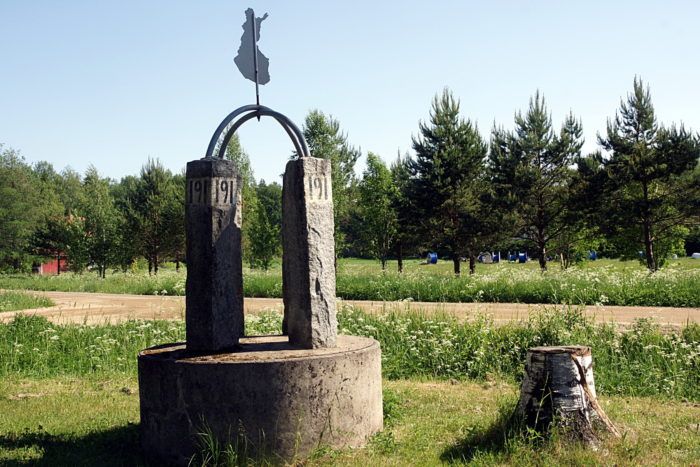
Mortal coil: A strangely poignant monument made out of concrete, stone and metal marks the spot that was Finland’s centre of population in the mid-1970s, located about 35 kilometres (22 miles) north of Eteläinen.Photo: Juha Mäkinen

The centre of population is a statistical curiosity, but it can be of serious interest to companies deciding where to set up their logistics centres. A research project at the University of Vaasa calculated the optimal locations for such centres in the Nordic countries. The project confirmed that, with certain variables, Hämeenlinna would indeed be the best spot in Finland.

In one famous example from the other side of the globe, the Weber point actually affected a major political decision. Brazil used it to determine the location of its brand new capital, Brasília, where the federal government moved in 1960.

If a similar decision were made in Finland, Hämeenlinna would be a good candidate for a new capital. It already boasts the medieval Tavastia Castle, which would provide a picturesque seat of government.

Meanwhile, a visit to the Sipilä family’s forest offers a unique experience for the discerning traveller. You could start there and continue north on a route through Finland’s earlier Weber points. A few previous locations have created modest monuments honouring their fleeting moments of fame as Finland’s centre of population.

A very humble plaque attached to a rock can be found by the northern shore of Lake Särkemä. It reads simply, “Weber point 2016,” without further explanation. Another one, from 1995, slightly larger and somewhat more informative, stands at a crossroads in the village of Sappee.

Yet another stands in Rautajärvi, which lies roughly 35 kilometres (22 miles) north of the current location. It was the centre of population in the mid-1970s, and the monument was unveiled in 1979.

By Juha Mäkinen, October 2020
Circular fashion finds a good fit in Finland

Old is gold – just ask the shoppers who are rifling through racks of vintage gems at Relove in Helsinki while other customers sip coffee at nearby tables indoors or on the sidewalk.

Nothing about this hipster hangout evokes the image of an old-fashioned flea market, of which there are several flourishing examples in the Finnish capital. Then again, Relove isn’t your average thrift shop.

Offering sustainable alternatives

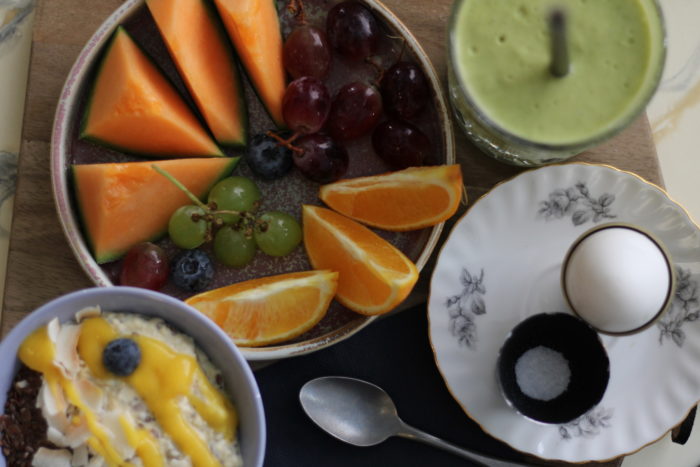
A view from above a table shows bowls with porridge, pieces of melon, grapes, an egg and a green smoothie.

Some people come to boutique thrift stores for the clothes, but Relove also attracts customers with café brunches.Photo: Piritta Kaartio

“It’s a flea market, café and lifestyle store for people concerned about the ecological footprint of their consumption,” says the founder, Noora Hautakangas.

“Everyone is welcome to grab a coffee, listen to good music, and just hang out without buying anything.”

She talks about her store as an “experience,” not just a place to shop. “This place has been my dream for 15 years. I came up with the concept when I realised that second-hand needs to be treated better. Recycling must be made beautiful.”

Creative setting

Clothes hang on a rack in front of a colourfully painted storefront window.

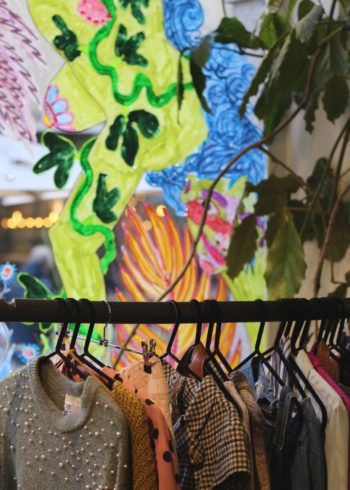
A painted window and a houseplant contribute to the atmosphere behind a Relove clothes rack.Photo: Piritta Kaartio

The beauty of the Relove concept lies not only in the clothes or the setting, but also in offering a sustainable alternative to the mountains of discarded textiles that are continuously being incinerated or dumped in landfills.

“The fashion industry is a massive carbon emitter and source of waste,” says Kirsi Niinimäki, professor of fashion research at Aalto University, just outside Helsinki.

“One of the best ways to reduce its environmental impact is to extend the use of garments. Creative second-hand stores like Relove offer a promising solution.”

Preloved luxury

Two women pose for the camera in front of racks of clothes in a boutique.

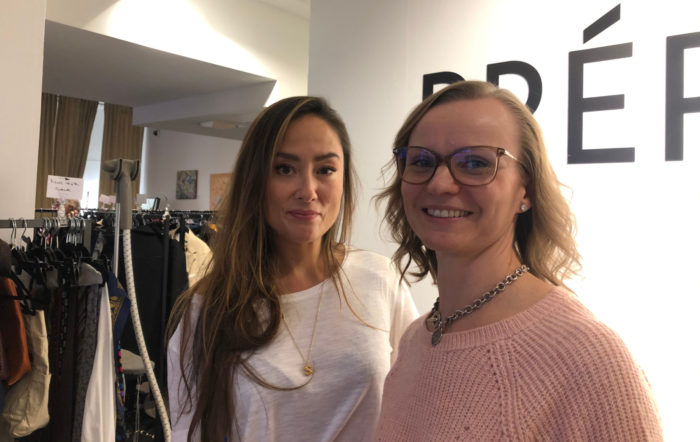
Stina Kurikka (left) and Eneli Kukk are the founders of PréPorté, a second-hand store focusing on quality Nordic brands.Photo: Silja Kudel

Several blocks north of Relove is another treasure trove of preowned designer apparel, PréPorté, which looks like any other indie boutique on Fredrikinkatu, or “Freda,” as the locals call the street. The immaculately arranged racks are a far cry from the merry chaos of traditional flea markets.

“We specialise in premium Nordic brands such as Marimekko,” says Eneli Kukk, one of the store’s cofounders. “Quality is our key differentiator, so we also attract shoppers who have never bought second-hand before.”

While flea-market boutiques are trending in Helsinki, traditional thrift shops also offer a wide variety of preowned fashion. Charities such as Fida, the Finnish Red Cross, and the Salvation Army also collect used clothing, as do smaller enterprises such as Recci.

The latter closed its brick-and-mortar shop in Helsinki, citing difficulties keeping it open during the coronavirus pandemic. However, Recci still maintains a network of collection points, and is notable for accepting not only useable items, but also unresaleable clothes, shoes and even luggage. It funnels them to plants where they are shredded for reuse as insulation and filler in cars, washing machines and dishwashers, or as filler included in asphalt roads.

Trendsetters in preowned clothing

A smiling woman wearing a leather jacket and jewellery poses with one hand on her hip and one hand on her stomach.

“Trashionista” Outi Pyy is a sustainability influencer whose wardrobe includes an eclectic mix of customised flea market finds.Photo: Nadi Hammouda

Circular fashion fits Finland well. Aalto University’s description of its master’s programme in fashion, clothing and textile design states, “Sustainability is the grounding for all studies.” A study by Finnish innovation fund Sitra indicates that the circular economy can increase the value of Finland’s economy by three billion euros by 2030.

Sustainability influencer Outi Pyy, whose love of vintage garments began when she was a girl, contributes her own point of view. She muses that Finland is becoming a circular fashion trendsetter because recycling comes naturally to the thrifty Finns.

“Finland has always been a second-hand nation,” says the flea market connoisseur. “We’ve been recycling clothes since the 1970s. Now we’re just doing it for different reasons.”

Pyy estimates that her wardrobe is 90 percent preowned. “Finland offers an excellent variety of second-hand,” she says. “Thrift shops carry a wide selection of affordable clothing for young consumers on a budget. For design hunters, the best place to find gems is online. Digitisation has made it so much easier to find great vintage pieces.”

Popular Finnish online marketplaces for preowned brand apparel include Curated and Emmy, with new apps such as Zadaa and Gem offering effortless mobile platforms for vintage hunting.

New lease on life

Not everyone loves to shop, and some hard-core minimalists prefer not to own anything. For this growing tribe, rental services such as Vaatepuu (clothing tree), Vaaterekki (clothing rack) and Clozeta offer a sustainable way of fulfilling the desire for something “new.”

“Fashion leasing is popular especially among 20-to-30-somethings who prefer to rent rather than own clothing because they value space over clutter,” says Pyy.

Kirsi Niinimäki of Aalto University predicts that, with the fashion industry having received so much negative attention in recent years for its pollution impact, the rental and second-hand boom is bound to continue gaining momentum.

“Second-hand clothing is a way of moving beyond fashion’s linear ‘take, make, waste’ model of consumption,” she says. “In the future, all climate-positive ways of consuming fashion are bound to gain popularity and acceptance.”

Second-hand selection

(Note: Many of the companies’ websites are in Finnish.)

Around Helsinki

Relove: Second-hand lifestyle boutique and café, two locations (downtown and Töölö)
PréPorté: Preloved Nordic brands with a focus on quality
Frida Marina: Colourful vintage treasures in the Kallio district

Online finds

Zadaa: Finnish mobile app for buying and selling used items, recently expanded to Germany
Emmy: Leading Nordic marketplace for preloved premium clothing
Curated: Helsinki-based online store with a carefully selected collection of vintage and second-hand
Gem: Vintage clothing app created by Liisa Jokinen, founder of the Hel Looks street style blog

By Silja Kudel, October 2020
For many in Finland, sustainability is the obvious choice

Making ecologically sound choices is a no-brainer for this family of six.

“Hi! … And bye!”

A tall young man walks into the family kitchen and walks straight out again. Viljo Kivistö (19 at the time of writing) is heading for the gym with a rucksack on one shoulder. A few moments later his brother Touko (17) does the same thing.

The cosy kitchen is the heart of everyday life for the Kivistö family. Mother Terhi (47), father Markus (53), four children and a cat lead a life that is fairly typical for families with kids. Terhi and Markus, who are historians and publishers by profession, work busy days and are just as busy in their free time, keeping track of the kids and cooking and cleaning.

The kitchen is also the centre of many ecological decisions that the family makes every day, such as waste sorting.

“Recycling is made pretty easy here in the city,” Markus says. They live in the southwestern Finnish city of Turku. Building owners are required by law to facilitate waste sorting. How much sorting depends on the number of apartments.

“In a kitchen cupboard, we’ve got separate bins for paper, cardboard, plastic, glass, metal, compost and mixed waste. We then empty them into larger containers just a few steps from our front door. People are so good at recycling that the container for plastic often fills up quickly.”

For the children, too, recycling is the obvious thing to do. Environmental education forms an integral part of the school curriculum. Ecological choices are taught from kindergarten onward. Some school canteens have also installed scales to measure the amount of food that is binned during lunch. It’s an efficient way to make an important point.

“We hardly waste any food,” says Terhi. “We plan our groceries carefully, and the kids know to take only as much food as they will eat. I’ll have our dinner leftovers for lunch the following day.”

Besides optimising the amount of food they need, the Kivistös actively rescue food from going to waste.

“We use a waste food app that allows us to buy leftover food and groceries that are approaching their sell-by date from restaurants, bakeries and supermarkets,” says Terhi. “We pay half the price and reduce overall food wastage at the same time.”

The family tries to avoid excess consumption. Clothes and toys are bought from flea markets or recycled from siblings and cousins. When they buy something new, the parents invest in quality and durability.

What is no longer usable finds its way to collection sites for textiles, electronics, and so on.

“The things we no longer need can become useful for others,” Terhi says.

Finns recycle their bottles

In Finland, an impressive 95 percent of cans, 90 percent of PET plastic bottles and 88 percent of glass bottles are recovered. Returning bottles and cans is engrained in every Finn, encouraged by a nationwide deposit-refund system. With reverse vending machines (bottle-return machines) at filling stations and in even the smallest supermarkets, it is also very easy.

The beverage industry is an integral part of the cycle. Becoming a member of an approved deposit-refund scheme gives manufacturers and importers exemption from the beverage packaging tax of €0.51 per litre. More info is available on the website of Palpa, the nonprofit organisation that runs the return system.

By Terhi Rauhala, ThisisFINLAND Magazine 2020

Rethinking Finnish sauna

Sompasauna welcomes young and old, Finns and foreigners alike, to enjoy a sauna and a dip in the sea in pleasant and relaxing company. It is completely self-service.

It’s open around the clock every day of the year, free of charge.

“The secret of our popularity is the communal, open atmosphere,” says Wilhelm Björkqvist, one of the active members. “Having a sauna is simple and easy, and so is chatting with new people. I reckon that this is the easiest place to get to know a Finn.”

Finns are known for their love of the sauna – a hot, tranquil room where they relax and gather their thoughts. It is also a place for deep conversations and thinking big. Sauna can be seen as an innovative space where people can create something new. Many business ideas have started in the sauna.

City saunas bring people together

Ready for the sauna: A whisk made from a bouquet of birch branches lies beside a wooden bucket with a ladle in it.Photo: Jorma Marstio/SKOY

“At Sompasauna we’re seeing a new wave of sauna culture,” Björkqvist says. “You can have a serene cottage sauna but you can also enjoy a collective sauna experience in the middle of the city. Sauna can be a social Friday night hangout.”

Whatever the sauna experience, the common denominator is that there is no hierarchy. Everyone is on the same level.

“I’ve been going here for years, and I still don’t know what some of the people do for a living,” says Björkqvist. “We discuss everything, just not work.”

Helsinki has several public saunas,
each with its own unique profile:

By Taru Virtanen, ThisisFINLAND Magazine 2020

Two Finnish musicians describe their country of crazy ideas

Dalia Stasevska is an accomplished conductor whose career is climbing to new heights. Lauri Porra is a bassist who has toured the world as a member of the power metal band Stratovarius and other assemblages.

He’s also a composer who flexibly combines the stylistic devices of the classical symphony orchestra with other musical styles. He is equally at home with jazz, film and concert music.

Stasevska is the first musical professional of her family. Porra is a fourth-generation musician.

“I admire Finland’s enthusiasm for wacky ideas,” he says. “It expresses itself in original artistic concepts and provides the world with entirely new genre combinations, whether it’s an opera singer in a heavy band or a cellist playing heavy music.”

“Finns are always inventing something strange, a crazy twist that is really exciting,” Stasevska adds.

Strong musical roots

In front of a floral wallpaper pattern, a woman in a white shirt looks into the camera.

Dalia Stasevska continues in the tradition of top Finnish conductors such as Paavo Berglund, Leif Segerstam, Osmo Vänskä, Jukka-Pekka Saraste, Esa-Pekka Salonen, Hannu Lintu, Susanna Mälkki, Sakari Oramo, Mikko Franck, Pietari Inkinen, Santtu-Matias Rouvali and Klaus Mäkelä.Photo: Jarmo Katila

Stasevska arrived in Finland as a five-year-old. Her family roots are in Ukraine and Lithuania. She began as a violinist but during her studies at the Sibelius Academy she changed to the viola and finally ended up as a conductor.

“My grandfather was a famous sculptor in Ukraine and my parents are visual artists but the family appreciates other cultural disciplines,” she says. “Father even studied piano alongside the visual arts. It was perfectly logical for them to put a violin in my hand and say this will be your profession.

“They were spot on. I loved playing from the very first moment. It was a new world for me, of which my parents knew nothing.”

Stasevska studied conducting under two legendary Finnish conductors, Jorma Panula and Leif Segerstam. She graduated with the highest distinction from the Sibelius Academy in 2012.

She has been busy conducting in the Nordic countries and elsewhere in Europe. At the start of 2019 she became principal guest conductor of the BBC Symphony Orchestra, one of the world’s most prestigious.

Porra’s mother is a retired oboist, his father an amateur jazz musician. His grandfather was a conductor. His grandmother’s father was the famous Finnish composer Jean Sibelius, perhaps the most significant symphonist of the 20th century.

“For me it was constructive to be born into a family in the orbit of a major composer,” says Porra. “Above all, it meant growing up in an environment that revered art and music, and where people understood that music can be a profession. I set off to seek my identity through instruments and different genres. Eventually I found my own place in it.”

Over the past ten years he has composed more for the traditional orchestra. He has written music for eight films and countless TV series. On his album Entropia, issued in 2018, the symphony orchestra soloists are Porra himself, on the electric bass, and the Finnish rapper Paperi-T.

The major event of autumn 2019 was the first public performance of Flyover Symphony, composed for symphony orchestra and Porra’s Flyover band.

“I’m disciplined in my approach to work and most of my composition follows the principle of learning by earning,” he says. “Fortunately I’ve had good colleagues around me to explain how to do the things I want to do.

“Of course at home we have a constant dialogue going on. We listen to the music that one or the other of us finds interesting and then we talk about it.”

Genre borders are pointless

A man with a black shirt and a black jacket looks into the camera, with one hand on his chest and one hand on his stomach.

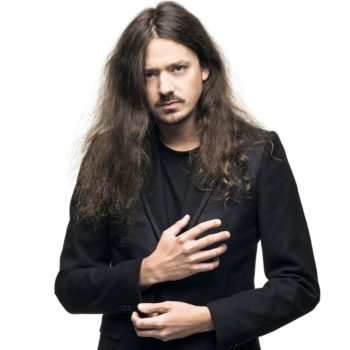
Lauri Porra’s most recent major composition is the “Entropia” concerto for orchestra and electric bass (2018). The composition brings together two very different elements: a symphony orchestra and a bass guitar.Photo: Jarmo Katila

Porra has nothing against modern concert music derived from theoretical origins. At the same time, he thinks it is refreshing that there are also works that draw on everything else that has happened in music over the last century.

“They are really not mutually exclusive. It’s fantastic to live at a time when you can dream up wonderful things that someone will agree to play and others will be interested to come and hear.”

Stasevska also rejects the need to categorise herself as a maker of “serious” classical music only.

“I want to make interesting music and projects,” she says. “I want to broaden the boundaries of good music. Film music can coexist with symphonies and so can game music or folk music. And there’s no need for confrontation with artists who specifically want to conduct, say, Brahms or Bruckner. That is fantastic music, too.

“Art is an enormous playground containing a vast amount of talent. Why restrict yourself? The main thing is that there are interesting productions, ideas and people with whom we can try to create common narratives and experiences.”

A nation of music schools

Finland has almost 100 colleges of music, a network that provides 60,000 students, from preschool to young adults, with the opportunity for normative musical education under trained instructors. Their goal is to facilitate lifelong musical recreation, but a few percent of students apply each year for professional studies.

Music colleges are generally maintained by municipalities or associations with local and central government support. Their work is complemented at various levels by private and public educational institutions.

Musical professionals are educated at a comprehensive network of conservatories. The highest level is provided by the renowned Sibelius Academy, established in 1882 and now part of the University of Arts Helsinki.

By Jussi-Pekka Aukia, ThisisFINLAND Magazine 2020

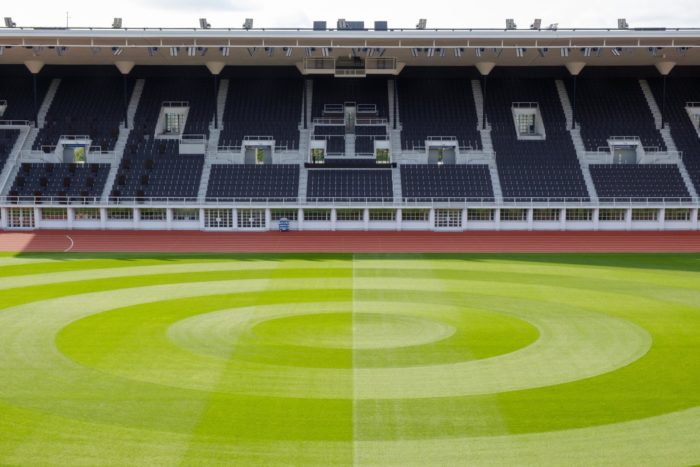
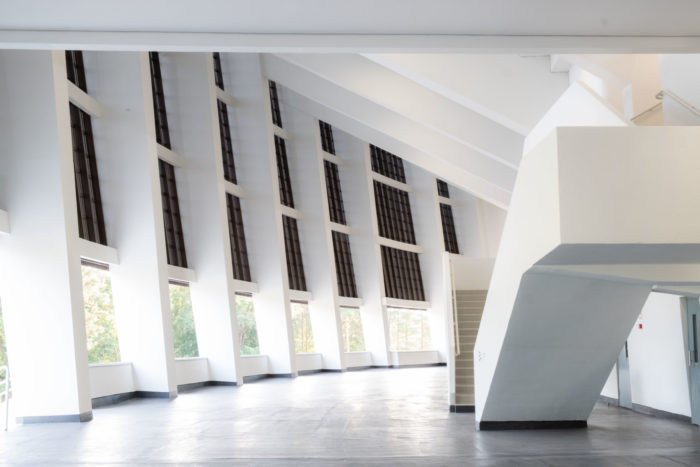
Helsinki’s renovated Olympic Stadium launches into a new era

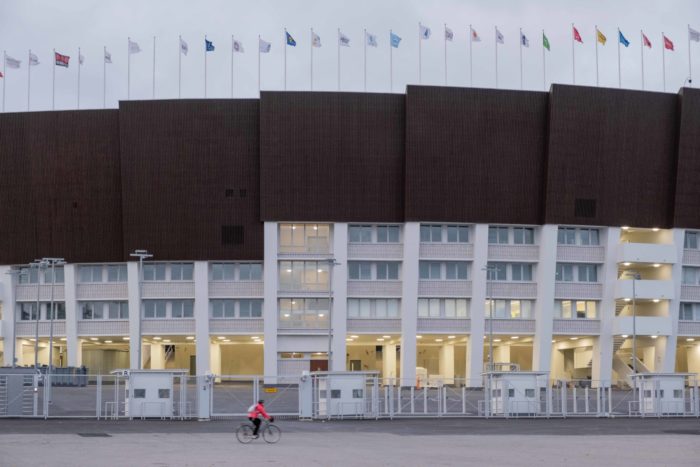
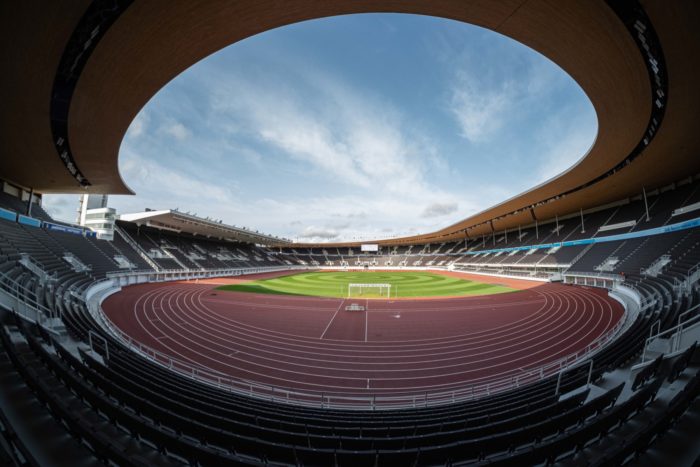
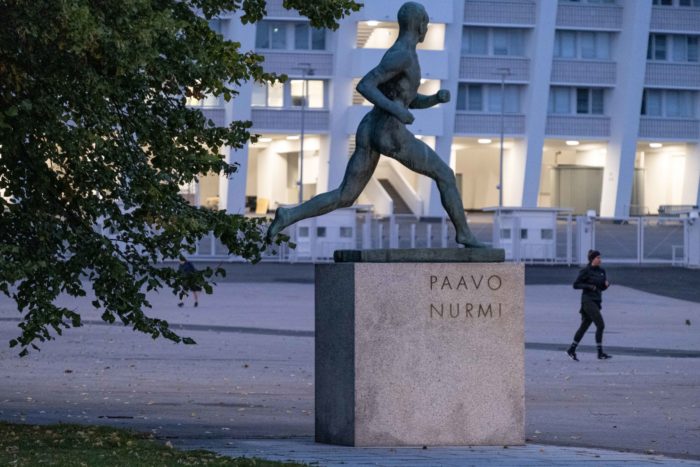
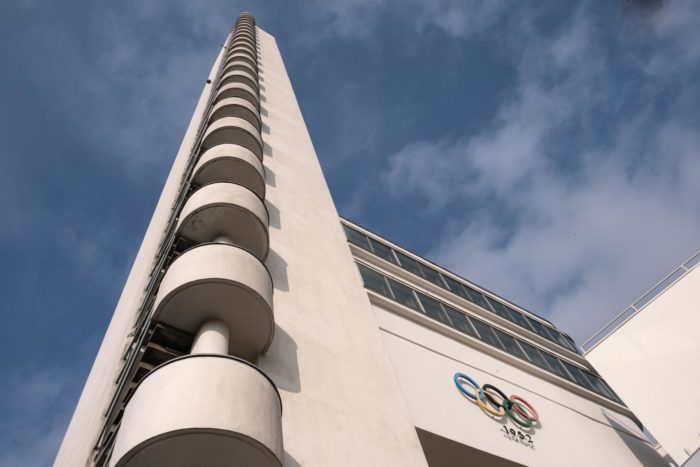
Completed in 1938 according to the plans of architects Yrjö Lindegren and Toivo Jäntti, Finland’s biggest and finest stadium was to host the Olympics scheduled for 1940. The Second World War meant that the country had to wait until 1952 before it could actually hold the competition.

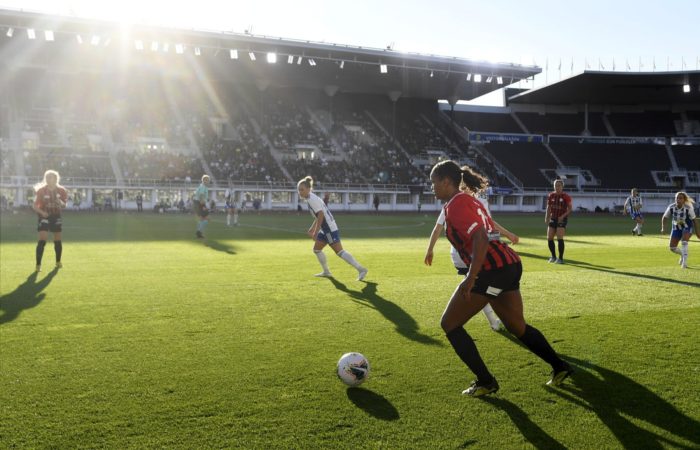
After the comprehensive renovations were revealed in August 2020, a global pandemic meant that only 1,400 tickets were allowed to be sold to the reopened venue’s very first game. Capital-region teams HJK and PK-35 faced each other on August 19 in the National League, the country’s top women’s football series. On September 3, Finland and Wales played an international men’s match in the Olympic Stadium with no spectators at all.

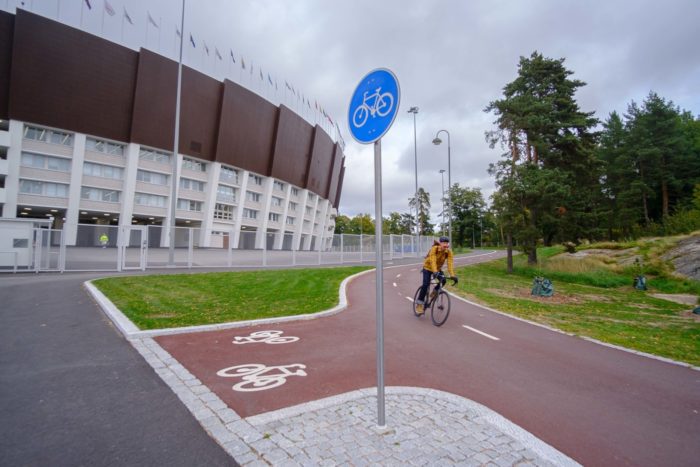
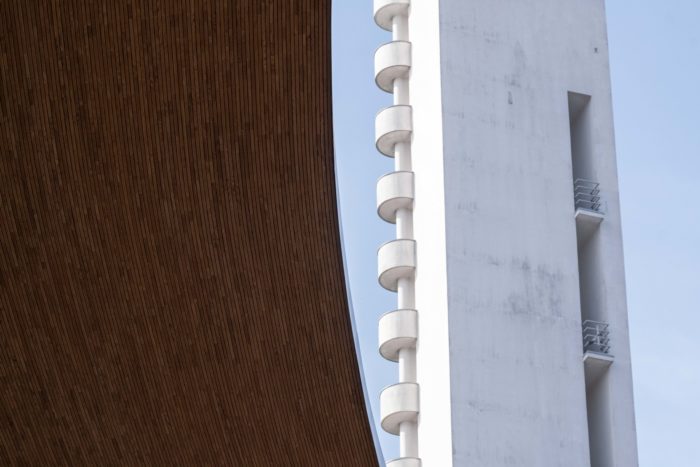
“The events planned for 2020 are just postponed, not cancelled,” says Olympic Stadium events specialist Essi Puistonen. “And we can still use the facilities for smaller events. The 2020 Helsinki Design Week chose the stadium as its main exhibition venue, for example.” After almost half a decade wrapped in scaffolding and occupied by digging machinery, the handsome, historic Helsinki landmark, with its 72-metre observation tower, stands ready again to hold major sporting and entertainment events.

Finland is intensely proud of its architectural heritage, and the renovations were carried out in accordance with the Finnish Heritage Agency’s rules for preserving the essential character of buildings with special historic significance. Particularly in terms of safety and technology standards, the stadium was in need of wide-ranging improvements, and these have been achieved without compromising its unique character. The stadium complex also houses the Sports Museum of Finland, open again in October 2020, and a bistro restaurant.

By Tim Bird, September 2020
View the stadium, inside and out

Canines contribute to Covid-19 testing at Helsinki-Vantaa Airport

Passengers arriving in Finland can take advantage of a test that uses sniffer dogs at Helsinki-Vantaa Airport. As use of the method expands, it might offer a fast and reliable solution for ensuring safe and healthy aviation during the pandemic.

The tests, which started a trial phase in September 2020, are supervised by Anna Hielm-Björkman, a docent at the University of Helsinki’s Faculty of Veterinary Medicine. They form an extension of research into the ability of dogs to identify diseases. There have already been studies of how dogs can be helpful in monitoring or diagnoses by detecting cancer, Alzheimer’s disease and malaria, as well as by discerning E. coli in newborn babies.

Completely voluntary

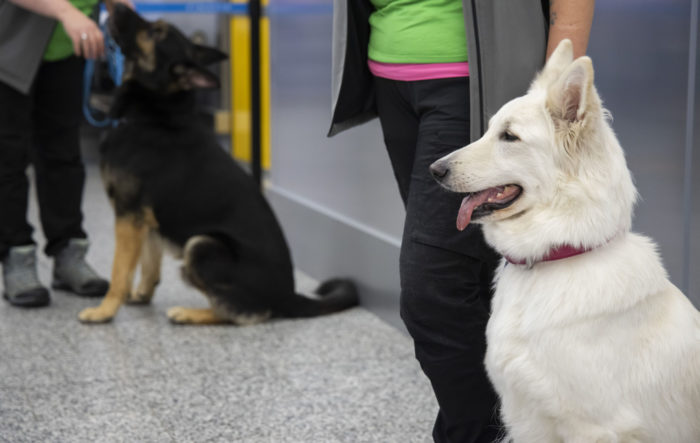
A large white dog sits beside its handler in the foreground, while a black and brown dog sits in the background.

Part of the training for sniffer dogs such as E.T. (right) and Valo (left) includes becoming accustomed to the sights and sounds of Helsinki-Vantaa Airport.Photo: Matti Matikainen/Eyevine/Lehtikuva

Finland is not the only country where “Covidog” trials and research are taking place. Similar interest has been expressed in France, Germany, Iran and the UK, and Dubai was the first airport to employ dogs to help detect the virus.

The Helsinki-Vantaa Airport procedure, which is completely voluntary, takes place on the land side of the arrival hall and involves wiping a sweat sample from the subject’s neck, throat and wrists. If the dog signals that the sample is positive, the subject is then directed to the airport’s PCR (polymerase chain reaction) testing station to have the result confirmed. Nobody with an allergic or religious aversion to dogs needs to be in the same room as the animal. The testing success rate, says Hielm-Björkman, is more than 94 percent, exceeding even PCR test success.

Four dogs trained in biodetection are involved in the trials at Helsinki Airport. Two of them are already prepared for the task in hand, while another two are in environmental training to familiarise them with the airport’s smells, noise and activity.

The nose knows

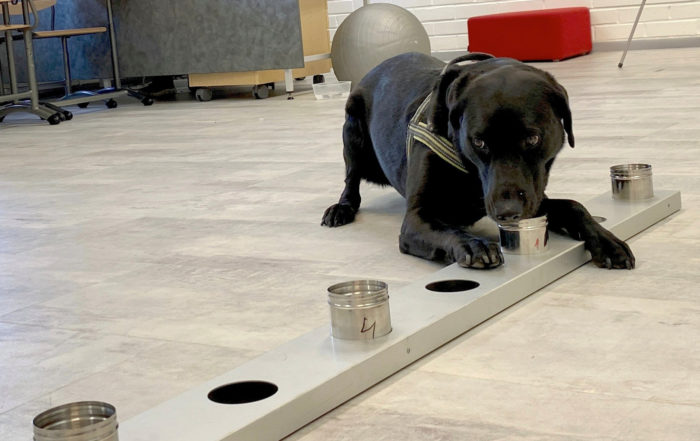
A black dog sniffs at tin cans placed in a row on the floor.

This sniffer dog called Miina is being trained to detect Covid-19.Photo: Attila Cser/Reuters/Lehtikuva

“When we started the Covidog project, we decided to use only dogs that already had some history of sense detection,” says Hielm-Björkman. “This makes their training time relatively short. Our dogs have been trained for many other purposes, including sniffing cancers at our lab, drugs and money at airports and mould in houses. It’s part of a bigger research project, also validating dogs that sniff cancer or [sound the] alarm about chronic pain or hypoglycemia.”

Hielm-Björkman has had inquiries from other airports about the availability of canine resources, including one from Nepal looking for five dogs. “It would be good to have more resources, in terms of dogs and people,” she says. “I would be happy to get dogs to help counteract the decline [brought on by the world coronavirus situation] in tourism in Lapland, for example, and for care homes for the elderly.”

She acknowledges the financial support provided by the City of Vantaa, where the airport is situated, just north of Helsinki, and by the Ministry of Social Affairs and Health. “The responsibility for airport-related health security with respect to infectious diseases rests with the City of Vantaa,” says Timo Aronkytö, deputy mayor responsible for social affairs and health. “The Covidogs are one of several testing measures we have in place. We are supporting the project for four months and will continue it if it is successful.”

Health security check

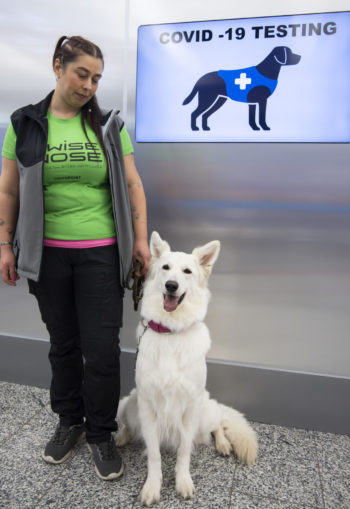
A woman stands beside a sitting white dog in front of a screen that shows a drawing of a dog and the words Covid-19 testing.

Trainer Anette Kare and sniffer dog E.T. pose in front of the canine-assisted Covid-19 testing station at Helsinki-Vantaa Airport.Photo: Matti Matikainen/Eyevine/Lehtikuva

The response from arriving passengers has been good, says Aronkytö. “Most people like dogs, and we are in the middle of a crisis – so it’s something positive. There is definitely potential for extending the tests to harbours and other situations, where the dogs can patrol the passenger areas, as they do for sniffing out drugs, for example. Then health safety would be taken to another level.”

Hielm-Björkman also finds that travellers at Helsinki-Vantaa Airport seem to like the concept: “Many people have said that it’s so nice that human’s best friend is helping us again. On the first day 84 people had the dog test and all were negative. On the second day they detected one positive case out of 71 tests. If you test positive in the dog test, you only have to walk 40 metres to have it confirmed with a PCR test.

“So it’s a perfect situation for research, showing that you get the same result twice in the same location at the same time with the same people. It’s going to be a really nice research paper.”

By Tim Bird, September 2020
A next-level Finnish language experience: Discovering dialects

Language is a funny thing. Let’s take, for instance, my own mother tongue: I simply consider myself an English speaker, but it is probably not English in the way that the creators of the Oxford English Dictionary envisioned.

Raised in rural Australia, I use words like “arvo” (a shortened version of “afternoon”) without batting an eyelid. Even now, I inflect the end of my sentences as though I am constantly asking a question. In other words, I speak a dialect, a variation, of the English language.

University of Turku adjunct professor Tommi Kurki, an expert in language variation and change, explains that Finnish operates in a similar way. While standard Finnish is an official language of the EU and is taught in schools and in Finnish-as-a-second-language courses, most Finns speak some sort of dialect.

That is not to say, however, that standard Finnish and dialects are unrelated to each other. In fact, according to Kurki, standard Finnish as we know it today has its roots in the nation-building project of the 1800s and is “a mix of dialects.” It includes elements taken from different areas of Finland.

Dialects in all directions

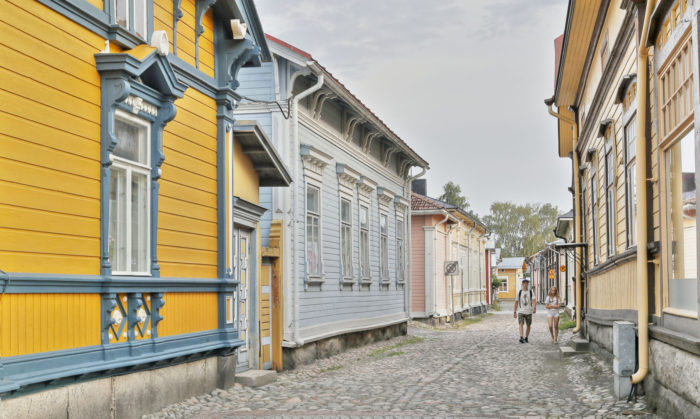
Two people walk down a cobblestone street between old-fashioned wooden houses.

People in the western town of Rauma, famous for the colourful wooden buildings of its old town, speak a Finnish dialect that has remained distinct from that of nearby Pori.Photo: Ismo Pekkarinen/Lehtikuva

Early linguistic researchers categorised Finnish dialects by region. Finns who lived in the city of Turku, for instance, spoke a southwestern dialect, while those from the eastern town of Joensuu used a variation of the Savo dialect, named after an area of the country rather than simply a compass point.

As Kurki explains, it was understandable that, wherever you happened to be, “most people in the village spoke the same way,” since until the mid-20th century the majority of people didn’t venture far from home.

Renowned academics travelled far and wide starting in the late 19th century, recording regional variations. Most often, the researchers noted only “small shifts from village to village,” says Kurki, but there were some exceptions. He points out that the dialects spoken in the western towns of Rauma and Pori have remained sharply distinct despite their geographical proximity – a legacy, in part, of their medieval history.

Language is forever changing

Three people lie in hammocks that are strung one above the other between two trees.

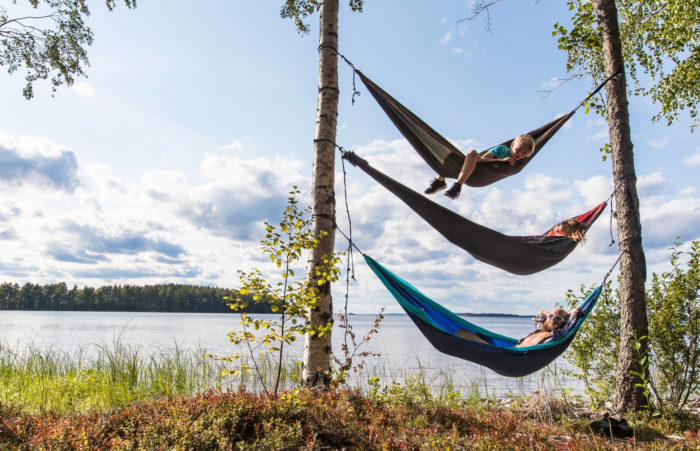
These three hammock connoisseurs relaxing beside a lake in eastern Finland very probably use the local words mie and sie instead of the standard Finnish minä and sinä for the pronouns “I” and “you.” Photo: Mikko Nikkinen/Visit Finland

Finnish dialects are commonly divided into eight major regional groups, each influenced by Finland’s complex history. The dialect groups include: Southwestern; Häme (roughly central southern Finland); transitional between Southwestern and Häme; Southern Ostrobothnia (Ostrobothnia is western Finland); Central and Northern Ostrobothnia; the Far North; Savo (roughly eastern central Finland); and Southeastern. (If you want to delve deeper into dialect divisions, the Institute for the Languages of Finland has a map.)

Kurki emphasises, however, that a dialect isn’t a snapshot, frozen in time. Modernisation, urbanisation and migration have meant that spoken variations have continued to evolve over time, stretching far beyond any rigid geographical or linguistic boundaries.

According to Kurki, these later variations are sometimes called puhekieli (colloquial Finnish, literally “speech language”) rather than dialects. For linguists, it is a way to set apart the “old dialects,” which stem from the time “when variation was more clearly governed by a speaker’s region,” he says. But he notes that the division is “somewhat unnatural,” as language is, in any case, forever changing.

The people we meet

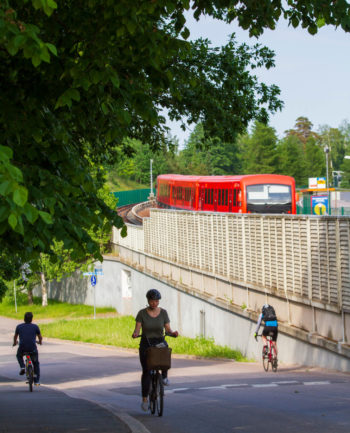
Three bicyclists are pedalling on a road while a metro train passes by in the background.

In Helsinki especially, many people use the word fillari instead of the standard Finnish polkupyörä to mean “bicycle.”Photo: Susanna Lehto/Visit Finland

As well as regional variation, Kurki says that it is also possible to look at dialects through a social or situational lens. Here, it gets a little theoretical: the social angle considers the way age, gender and other factors shape the way we speak, while “situational” refers to how we adapt our language to the circumstances. Technicalities aside, Kurki says that, ultimately, “the way that we speak is influenced by the people we meet.”

So, what makes a dialect distinct from standard Finnish? Vocabulary, of course, is a key part. For example, some Finns living in and around Helsinki use hima instead of the standard Finnish koti (home) and fillari instead of the standard polkupyörä (bicycle). But Kurki says that it’s also possible to detect a dialect in more subtle ways, like rhythm and intonation. In the southwest, for instance, there is a noticeable tonal peak on the second syllable of many words.

Even to my untrained ear, pronunciation is the most obvious point of difference. Rather than the standard pronouns minä (I) and sinä (you), for example, you might hear people say mää and sää around the central western city of Tampere, mie and sie in eastern Finland, and even mnää and snää in the west-coast Rauma region. The letter “d” is also changeable, sometimes pronounced as an “r” or even “l” in the west and often omitted altogether in the east. And those are just a few examples.

Totally possible

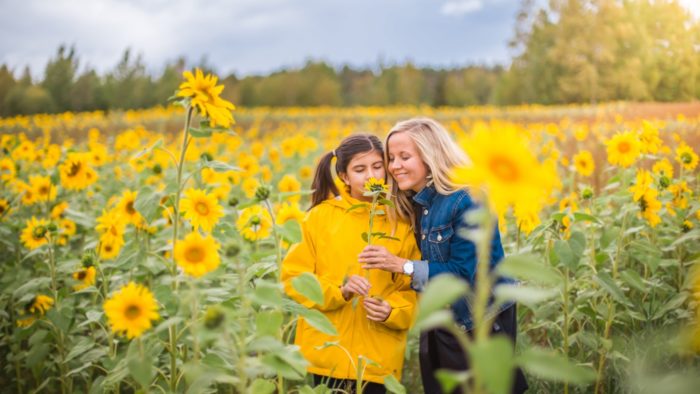
In the middle of a field full of sunflowers, two women hold a sunflower in their hands.

In late summer you can pick sunflowers in a field just outside of the central western city of Tampere, where one attribute of the local dialect is the change of a double “l,” as in täällä (meaning “here”), to a single “l”: täälä.Photo: Laura Vanzo/Visit Tampere

As a student still wrestling with kirjakieli (standard Finnish, literally “book language”), it is daunting to consider contending with a dialect, and Kurki doesn’t mince words. “The first steps are heavy and hard,” he says. At the same time, however, he regales me with story after story of language learners who have mastered a dialect, sometimes entirely by accident.

Kurki says that success depends, in part, on your own language background. It is encouraging to hear him say, “It is possible to understand Finnish, and it is totally possible to learn dialects.”

By Kathleen Cusack, September 2020