“The world was very large in those days”: A brief guide to Finland’s Moomin books

Swedish-speaking Finnish artist and author Tove Jansson (1914–2001) wrote and illustrated nine Moomin novels (one is actually a short-story collection), in addition to various picture books and comic strips. She also wrote other novels and short stories and had a prolific career as an illustrator and painter.

The first translated Moomin books appeared in English, and the stories gained a British audience before Finnish-language publishers caught on to how exceptional the Moomins are (Finnish and Swedish are both official languages in Finland). The characters attract readers, young and old, with their adventuresome spirit, wisdom, quirkiness, insight and sometimes irreverent attitudes.

The Moomins and the Great Flood, published in Swedish in 1945, was not the first to be translated. The English-speaking world became acquainted with Moomintroll and the others in 1950 with Finn Family Moomintroll, while Finnish speakers got their first Moomin picture book in 1952 and their first novel in 1955.

We present the books in chronological order of release of the original Swedish-language versions (some of the titles were later revised), and include a quotation from each to make you smile and think.

The Moomins and the Great Flood

(published in 1945 in Swedish in Helsinki, as Småtrollen och den stora översvämningen)
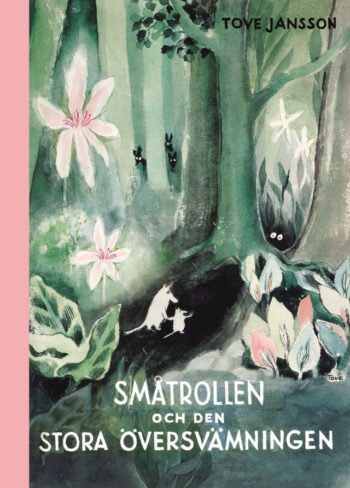
A Moomin book cover with a title in Swedish.

Photo: Förlaget; cover art: Tove Jansson

In the introduction, Jansson recounts how her other work was at a standstill in 1939, during the Second World War, and felt “completely pointless.” She started the book to distract herself, then forgot about it until 1945.

The Great Flood introduces many of the characters who are now so familiar. Sniff is in the story, but his name is simply “the little creature,” and the Moomins look thinner than their later incarnations. It also gives us a taste of the adventures to come – a flood hits Moominvalley again in Moominsummer Madness.

Quotation: “I think this is the most wonderful thing we’ve been through so far,” said Moominmamma. “Why, flying is not nearly as frightening as I thought.”

Comet in Moominland

(1946, Kometjakten)
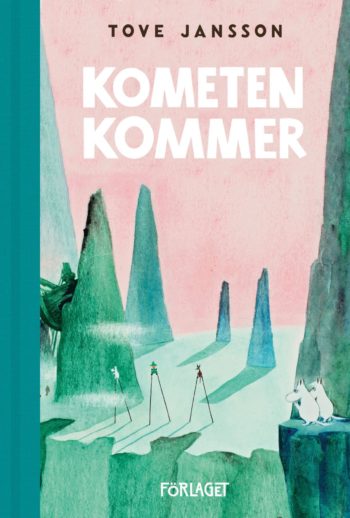
A Moomin book cover with a title in Swedish.

Photo: Förlaget; cover art: Tove Jansson

A comet is hurtling through space, coming closer and closer to earth. Moominmamma packs Moomintroll a backpack full of sandwiches and woolly socks, and he leaves with his friend Sniff to seek advice from the professors at the observatory in the far-off Lonely Mountains. Along the way, Snufkin and others join their quest.

The book contains encounters with a dragon, an eagle, an octopus and a poisonous bush that tries to grab passers-by. In one epic scene, the group traverses the empty sea floor on stilts (the comet has made the water recede).

Quotation: “It would be a terrible thing if a comet hit the earth…Everything would explode,” said Moomintroll, gloomily. There was a long silence. Then Snufkin said slowly: “It would be awful if the world exploded. It’s so beautiful.”

Finn Family Moomintroll

(1948, Trollkarlens hatt)
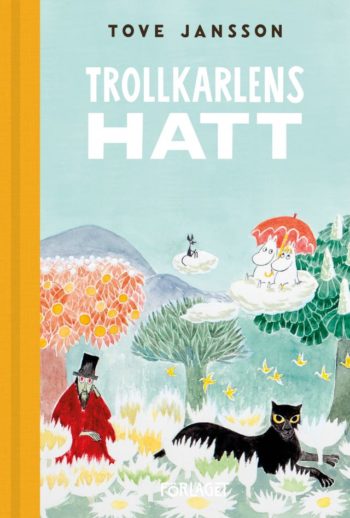
A Moomin book cover with a title in Swedish.

Photo: Förlaget; cover art: Tove Jansson

Moomintroll, Sniff and Snufkin find a black top hat on a mountain summit. They soon figure out that it has magical powers. Could it belong to an intimidating magician who flies around the universe on an enormous black panther? Could that magician be looking for the world’s biggest ruby, which someone has stolen from him? Objects with magical powers lead to perilous adventures.

Quotation: Outside the storm redoubled its fury. The voice of the waves was now mixed with strange sounds: laughter, running feet and the clanging of great bells far out to sea. Snufkin lay still and listened, dreaming and remembering his trip round the world.

The Memoirs of Moominpappa

(1950, Muminpappans bravader)
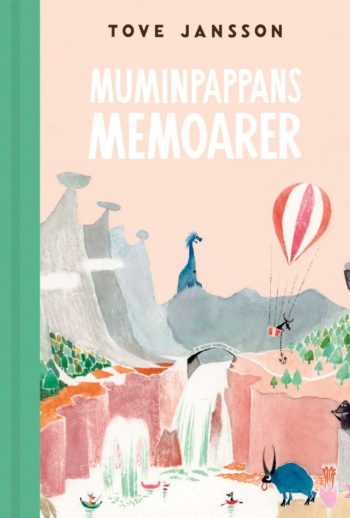
A Moomin book cover with a title in Swedish.

Photo: Förlaget; cover art: Tove Jansson

One day Moominpappa sits down to write his memoirs, yielding, he says, “to the temptation of talking about myself.” Hardcore fans love this book because it fills in so many background details: Moominpappa reveals stories about his wild youth. We find out how he met Moominmamma, and who Sniff’s and Snufkin’s parents are.

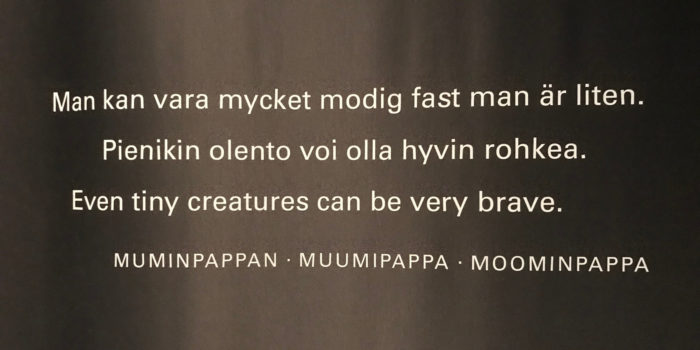
Quotation: The world was very large in those days, and small things were small in a much nicer way than now, and suited me very much better. If you see what I mean. (Moominpappa)

Moominsummer Madness

(1954, Farlig midsommar)
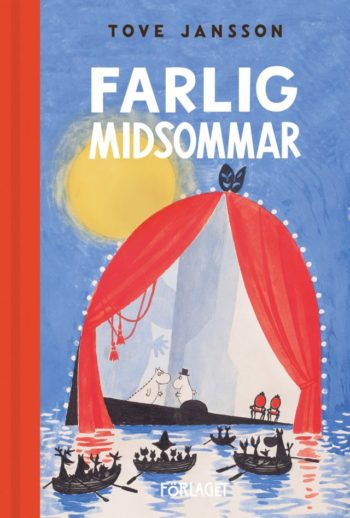
A Moomin book cover with a title in Swedish.

Photo: Förlaget; cover art: Tove Jansson

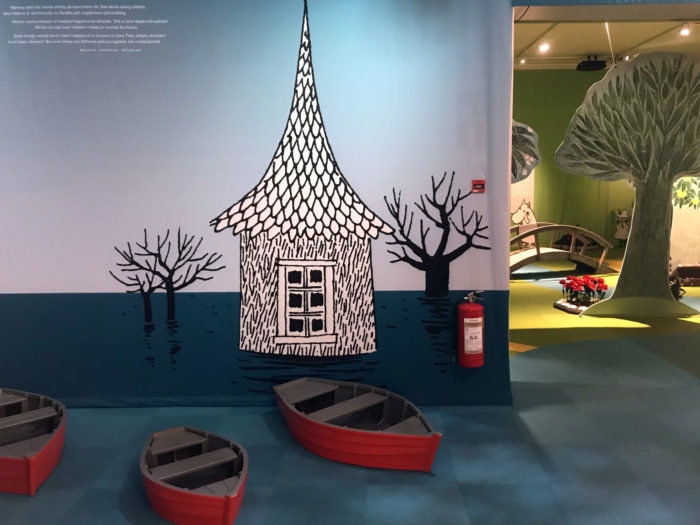
When a flood submerges Moominvalley, the family takes refuge in the top floor of their home, then manages to climb onboard a mysterious floating house. It turns out to be a theatre – but none of them knows what a theatre is.

Gradually they develop a play, and the forest creatures show up in boats to watch them perform on the floating stage – but the audience thinks that the onstage events are real. In a subplot, Snufkin takes steps to outwit the Park Keeper, who puts up signs prohibiting laughing, whistling, hopping, skipping, jumping and anything else that is fun.

Quotation: Suddenly Little My took a desperate leap upon the stage, rushed at the lion and sank her small sharp teeth in its right hind leg. The lion uttered an exclamation and broke in the middle.

Moominland Midwinter

(1957, Trollvinter)
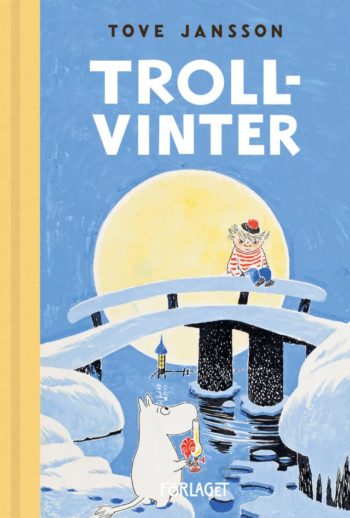
A Moomin book cover with a title in Swedish.

Photo: Förlaget; cover art: Tove Jansson

Usually, the Moomins hibernate through the winter, with their stomachs full of nutritious pine needles. This time, Moomintroll wakes up in the middle of winter and can’t get back to sleep. He discovers a much darker, colder world, experiences snow for the first time, and makes some new acquaintances. One of them is Too-ticky, a character based on Jansson’s life partner, artist Tuulikki Pietilä. Little My is also awake, and turns out to be pretty good at ice skating.

Quotation: I’m thinking about the aurora borealis. You can’t tell if it really does exist or if it just looks like existing. All things are so very uncertain, and that’s exactly what makes me feel reassured. (Too-ticky)

Tales from Moominvalley

(1962, Det osynliga barnet)
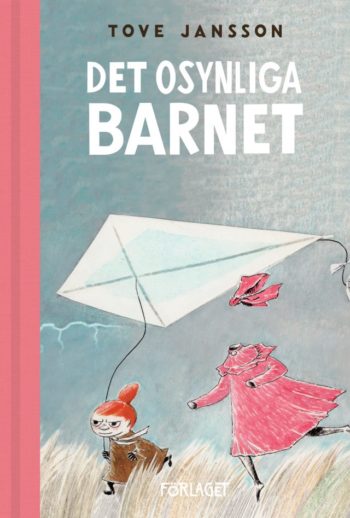
A Moomin book cover with a title in Swedish.

Photo: Förlaget; cover art: Tove Jansson

In this book of short stories, we encounter old friends as well as lesser-known characters. The name of the collection in Swedish is the same as that of one of the stories, “The Invisible Child.” Others include “The Hemulen who loved Silence” and “The Fillyjonk who believed in Disasters.”

In “The Spring Tune,” Snufkin changes the life of an anonymous forest creature by giving it a name. There’s even “A Tale of Horror,” about people telling stories that are lies, and “The Last Dragon in the World,” in which Moomintroll accidentally catches a tiny dragon in a jar.

Quotation: When the coast had disappeared a full moon rose, round and yellow over the sea. Never before had Moominpappa seen such a large and lonely moon. And never before had he grasped that the sea could be as absolute and enormous as he saw it now.

Moominpappa at Sea

(1965, Pappan och havet)
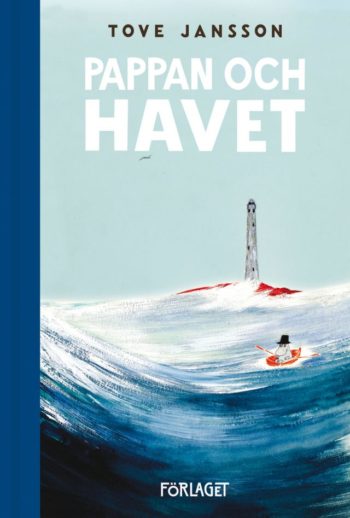
A Moomin book cover with a title in Swedish.

Photo: Förlaget; cover art: Tove Jansson

Having determined that an island with a lighthouse is calling them, Moominpappa decides that he and his family will sail away and live there. When they finally get there, the lighthouse is empty, and the island and its hardy trees and bushes seem to be alive. Moomintroll finds out that the monstrous Groke, who is so cold that her presence freezes water and land, has followed them, yet he resolves not to tell anyone.

A mysterious fisherman lives in a shack on the point. Storms wash over the island. Moominmamma becomes homesick and paints a garden on the walls, then escapes into it. They only have a limited amount of lamp paraffin. Eventually Jansson weaves the story threads together and approaches a sort of resolution.

Quotation: The air was warm and full of the scent of heather. Everything was completely still. And then out of the night loomed an enormous shadow: the island itself was towering over them, looking at them carefully.

Moominvalley in November

(1970, Sent i november)
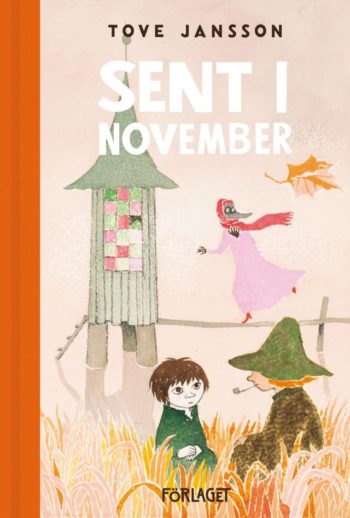
A Moomin book cover with a title in Swedish.

Photo: Förlaget; cover art: Tove Jansson

One by one, an array of characters converges on Moominvalley and the Moomin family’s house, only to realise that the Moomins are nowhere to be found. Everyone moves in anyway, but somehow it’s just not the same. As they cook, clean, converse, argue and play music, they try to remember how it was when the Moomins were at home.

The situation forces those assembled at the house to take on new roles, since no one is there to arrange their lives for them. All the while, the days are getting shorter and the weather is getting colder. Eventually, most of the characters depart, without knowing whether the Moomins are ever coming back.

Quotation: Hour after hour, Fillyjonk sat at the kitchen table playing the mouth-organ, tentatively but with great devotion. The notes began to resemble tunes and the tunes became music…She couldn’t be got at, nothing could make her feel unsafe now.

Moomins show courage, freedom and love

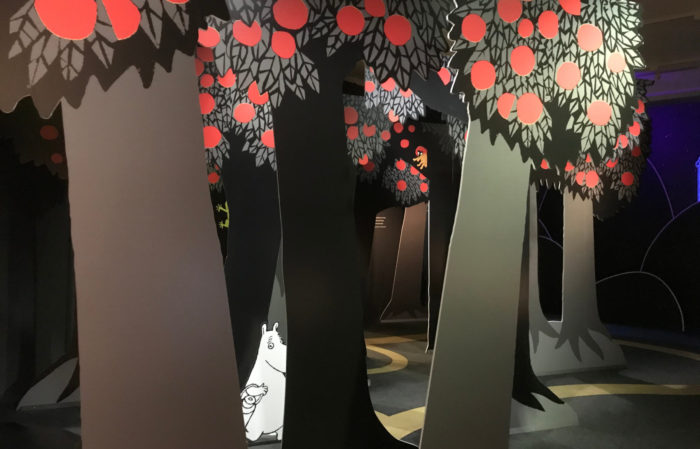
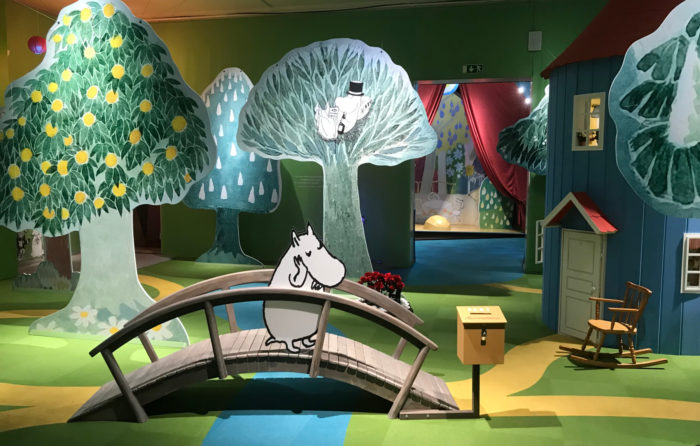
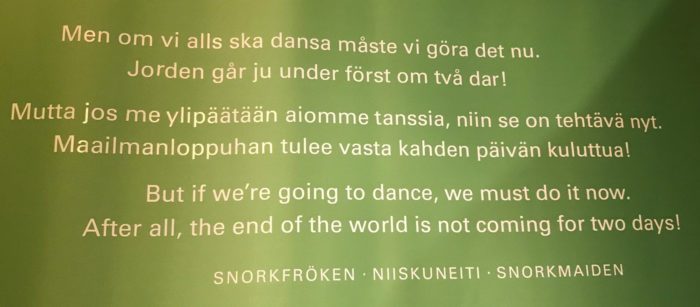
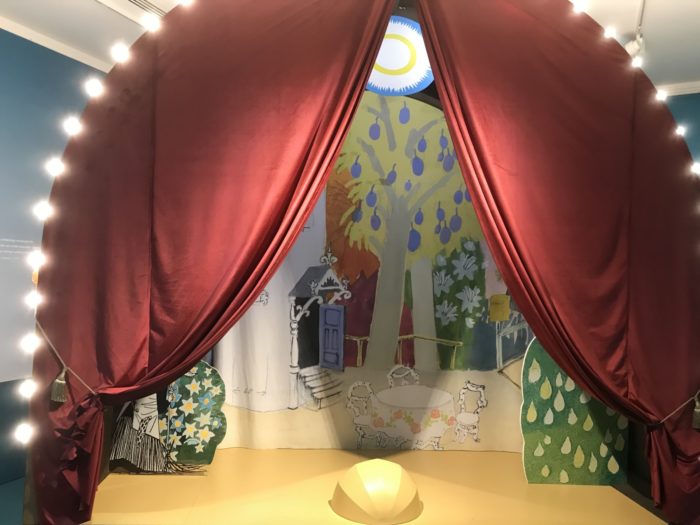
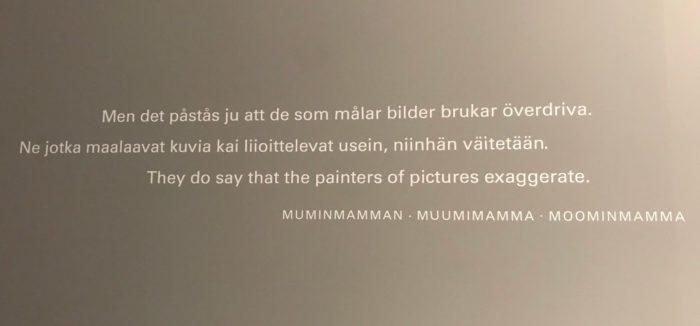
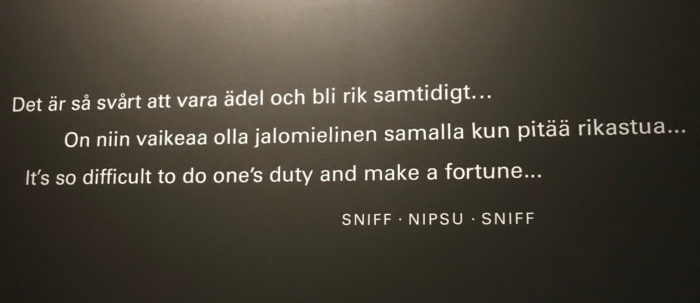
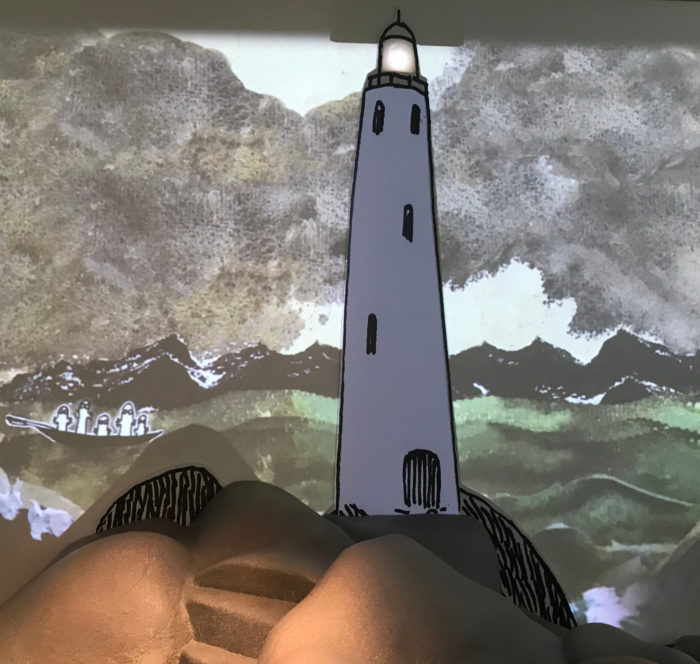
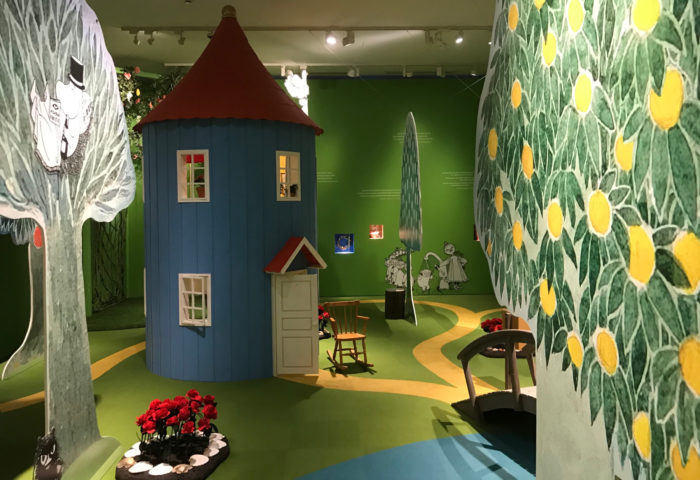
Courage, Freedom, Love! The Moomins at 75 is the name the National Museum in Helsinki chose for their “magical journey into the values and philosophy of the Moomins,” in late 2020 and early 2021. Maybe you couldn’t visit because of coronavirus-related restrictions, or maybe you’re reading this after the fact. Our slideshow gives you an inkling of the exhibition’s scope and its enchanting atmosphere.
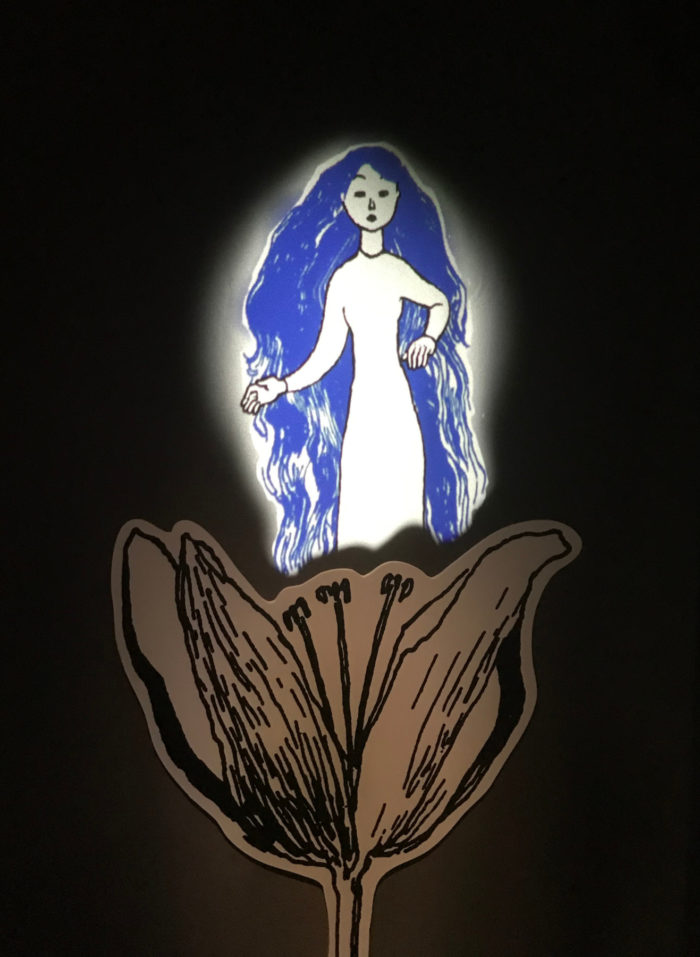
By Peter Marten, January 2021
Celebrating a different kind of New Year’s Eve in the Finnish capital

Coronavirus-related restrictions and recommendations mean that Helsinki is celebrating on December 31, 2020 with a concert broadcast, an online kids’ countdown show and a laser installation projected into the night sky from the tower of the Olympic Stadium.

After a virtual Vappu (Mayday holiday) and a socially distanced Independence Day (December 6), celebrating together but remotely is familiar to people in Finland.

The New Year’s concert takes place in the ballroom at Helsinki City Hall and features the Helsinki Philharmonic Orchestra and many of Finland’s favourite musical artists in EDM, hip-hop and other genres, including Darude, Chisu, Nelli Matula, Redrama, Olavi Uusivirta, MARiANNA, Paleface, Pete Parkkonen, Robin Packalen, Jesse Markin and Tapani Rinne.

The children’s show, Sleepyhead’s New Year’s Eve Countdown, promises fun for the whole family. The website advises partiers to prepare by downloading bingo forms, learning dance moves, getting ready to limbo and popping some popcorn.

In the laser installation, Telegraph of Time, the tower of the Olympic Stadium beams light into the sky for 18 hours during the transition from the last night of the old year to the first day of the new one. The patterns form Morse code messages from the public. You can participate by filling in a form online.

Helsinki Mayor Jan Vapaavuori has encouraged everyone to stay home and enjoy the show while welcoming “a better year ahead.” We’re hopeful that at this time next year we’ll be celebrating in a more familiar fashion.

A Finnish chef puts a fresh spin on Christmas recipes

During his career, Lepistö has had to think about the significance of Finnish Christmas cuisine more than most chefs in his country. Sometimes you have to go abroad to gain perspective.

After a decade at top Helsinki restaurants, he spent time as head chef at Finland’s permanent mission in Geneva, Switzerland and then its embassy in Moscow, Russia. After moving back to Helsinki with his wife and two children, Lepistö also worked as executive chef at the landmark concert and conference centre Finlandia Hall for four years, and as the head of quality and sustainability at a local restaurant company in the Finnish capital.

Distinctive approach

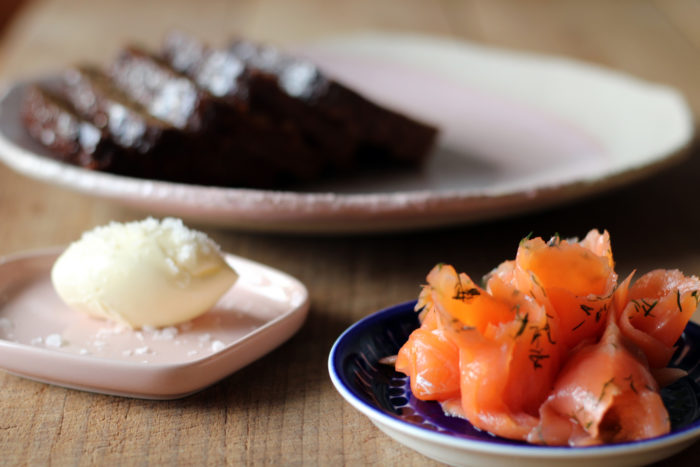
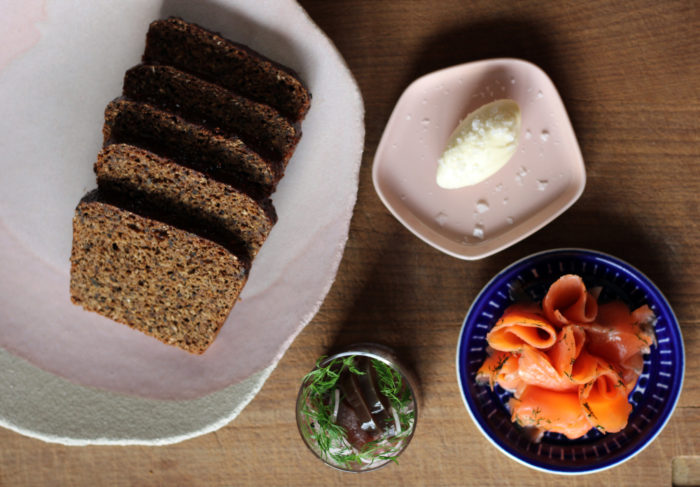
A plate of sliced bread, a plate of butter and a plate of sliced salmon are arranged on a table.

Lepistö’s malt bread builds on traditional archipelago bread, and, similarly, it tastes good topped with butter or salmon.Photo: Piritta Kaartio

“Usually the Finnish Christmas table is full of traditional food, which is normally quite rich and full-flavoured simple dishes,” says Lepistö. “For many generations, Christmas has been one of the biggest celebrations of the year, so families have put lot of effort into the feast.

“Because the festivities take place in the middle of winter, Finnish people have used ingredients that are available then, such as root vegetables and pickled and other conserved goods like mushrooms. The dishes are usually enriched with cream and butter. A traditional Finnish Christmas feast includes comfort food items that most Finns recognise from childhood, for example root-vegetable casseroles, fish dishes and rosolli beetroot salad.”

For ThisisFINLAND, Lepistö has chosen “recipes that maintain the spirit of the traditional Christmas dishes, but with my own kind of approach,” he says. “I wanted to keep the spirit, but make them more interesting and modern.”

Enjoying the holidays

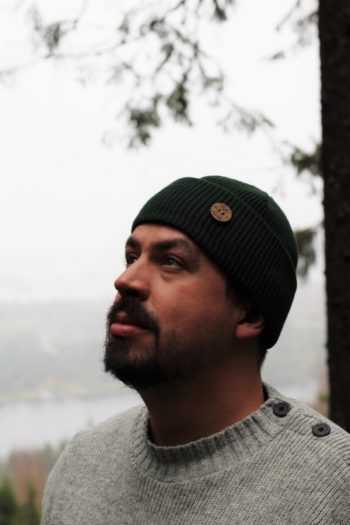
A man with a wool cap and sweater looks towards the sky.

Part of what makes Christmas special is “enjoying the memories of previous Christmases,” says chef Timo Lepistö.Photo: Piritta Kaartio

At the time of writing, the coronavirus situation does not necessarily allow families to celebrate together. “These recipes can also work wonderfully as gifts for friends and family,” says Lepistö. Or you can coordinate and “enjoy them together online during the holiday season, sharing the culinary experience even if you can’t physically eat at the same table.”

He says that the greatest thing about Christmas is “spending time with family and relatives, and enjoying delicious food and other treats. I love to cook for the whole family and see their happy faces when we are enjoying dinner. Moreover, of course, seeing the excitement of the kids and enjoying the memories of previous Christmases.”

By ThisisFINLAND staff

New angles on Christmas cuisine

(Recipes and descriptions supplied by Timo Lepistö)

Malt bread (also known as archipelago bread) seasoned with liquorice

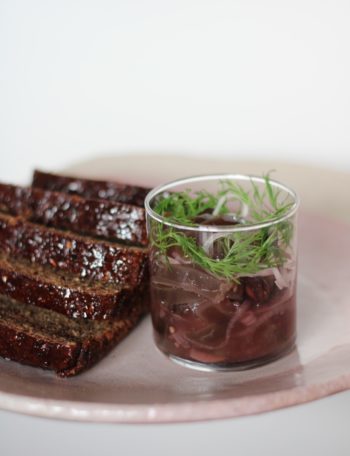
A plate of sliced bread, a plate of butter, a plate of sliced salmon and a cup of eggplant slices are arranged on a table.

Dark malt bread can be enjoyed with butter or with fish toppings (or eggplant slices pickled as vegan “herring,” centre).Photo: Piritta Kaartio

This dense, malty, flavourful bread is a traditional specialty from the archipelago region. While working in Switzerland, I wondered if I could enhance its flavour, which I already loved. After a lot of testing, I realised that liquorice root worked sublimely with the traditional spices and enhanced the taste even more. Since then I have a tradition of baking the bread every holiday season.

The most amazing thing about it is the richness of its sweet dark syrupy taste. You can eat it throughout the year, but you’ll find it at most Christmas dinners. Usually it is eaten with cold fish dishes such as gravlax (cured salmon) or gubbröra (a topping made from anchovies and boiled eggs) but you can enjoy it simply with good quality salted butter, or with the leftover Christmas ham.

You can season this bread with salt only, or add fennel seeds and anise. I love anise flavours, which you can also find in fennel, dill and liquorice root. It tastes excellent with Finnish fish dishes. I wanted to enhance this taste to the maximum, so I use ground liquorice root for the recipe, as well as fennel seeds and anise.

  • 2 dl crushed rye malt
  • 2 dl hot water
  • 1 1/2 dl dark syrup
  • 2 dl wheat bran
  • 2 dl rye flour
  • 6–8 dl wheat flour (or all-purpose flour)
  • 3 dl water
  • 1 tbsp salt
  • 11 g dry yeast
  • 2 tsp ground anise
  • 2 tsp ground fennel seeds
  • 4 tsp ground liquorice root

For basting:

  • 1/2 dl dark syrup
  • 1/2 dl water

Mix the hot water (it should be boiling hot) with the crushed rye malt in a mixing bowl. Let it cool to room temperature. Add all the other ingredients, saving the cooler water for last. That way you can adjust the texture (it should be paste-like). Mix slowly for ten minutes. Let the dough rise for an hour. Fill two greased loaf pans with the dough, cover them and let them rise for an hour and half, until doubled in size.

Bake at 180 degrees Celsius. After one hour, mix the syrup and water and quickly brush the top generously with the mixture, then put the bread back in the oven and bake for 20–30 minutes more. Let it cool completely before enjoying the first bite. Malt breads are at their best after being stored for a few days, covered in cling film.

Vegan “herring”

A plate holds several slices of bread and a cup with slices of eggplant in it.

The slices of eggplant in the cup are inspired by traditional pickled herring.Photo: Piritta Kaartio

My good friend, Michelin-starred chef Jouni Toivanen, developed a vegan version of pickled herring, and I thought it would fit this article perfectly, so here it is. You can enjoy these with other starters, or in a sandwich on malt bread with boiled egg.

  • 500 g eggplant cut into 2 x 2 x 5-cm pieces
  • 3 dl water
  • 120 g sugar
  • 100 g 10–12% vinegar
  • 5 tsp black pepper
  • 1 star anise pod
  • 1 tsp mustard seeds
  • 1 bay leaf
  • 1/2 red onion, thinly sliced
  • 2 tsp salt
  • 1 garlic clove, sliced
  • 4 g grated horseradish

Put all ingredients except eggplant into saucepan and bring to a boil. Once boiled, let it steep for one hour. Add eggplant pieces and gently boil for eight minutes. Cool in jars. These keep refrigerated for months if the glass jars are sterilised before use.

Warm, foresty holiday drink (glögg)

A drinking cup and a spruce branch sit on a layer of snow.

Mulled wine is most often red, but other varieties do exist.Photo: Piritta Kaartio

Traditionally Finnish glögg is made with currant juice and spices with spirit or wine. This recipe is white glögg, something like North American hot apple cider. This recipe is alcohol-free, but you can add a dash of rum or other spirits if preferred. Spices can be varied, but cinnamon, cloves and ginger are generally associated with the holiday season. I wanted this drink to have a Finnish forest feel, so alongside the usual spices I’m using tastes from the forest.

Our five-year-old son loves to collect spruce buds at the summer cottage by the sea in southern Finland. I pick them up and freeze them for later use. In this particular recipe, we love the evergreen taste of spruce buds, which reminds us of the woods and summer. You can also enjoy an iced version of glögg in warmer climates, and you can substitute rosemary or thyme for the spruce buds.

  • 1 litre cold-pressed apple juice
  • 3 cinnamon sticks
  • 1 tsp cloves
  • 1 tsp juniper berry
  • 1 star anise
  • 5 cm fresh ginger
  • 4 tbsp honey
  • Handful of spruce buds or 2 springs of rosemary and/or thyme

Peel the ginger and slice it thinly, add spices and apple juice, and cook over medium heat for five minutes. Add honey and spruce buds and let it steep for ten minutes. If you want a more flavourful result, the glögg can be chilled with spices overnight and then heated up again. Strain the glögg, pour into mugs and enjoy.

Chocolate-dipped gingerbread cookies

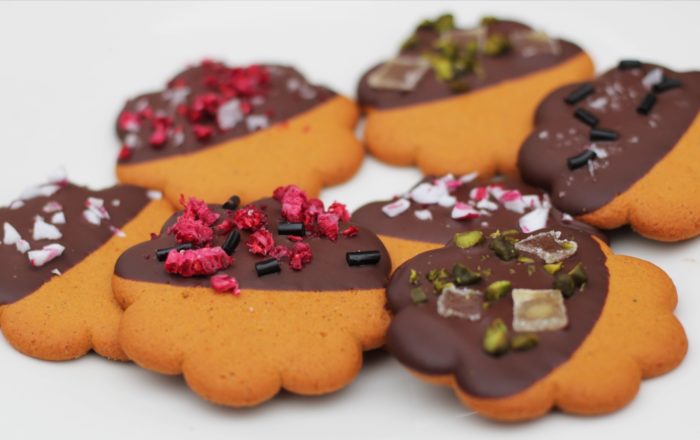
Several chocolate-dipped gingerbread cookies lie on a white background.

Gingerbread and chocolate form a perfect combination.Photo: Piritta Kaartio

Gingerbread is a fun way to bake with the kids. We all love gingerbread, but with this recipe you can add more taste and different textures and have fun decorating the cookies.

You can buy gingerbread from the store or, better yet, make it yourself [see ThisisFINLAND’s Finnish Christmas cookbook page]. I chose to dip the cookies into dark chocolate, but you can use any kind of chocolate you like. This is like taking your cookies to the next level. I prefer to use high quality chocolate because you can really tell the difference in flavour. As a garnish, you can choose your favourites. Good matches are candied orange peels or white chocolate chips. Chocolate can be melted in a bain-marie, or gently in a microwave.”

  • 20 gingerbread cookies
  • 200 g good-quality dark chocolate
  • Candied ginger and pistachios
  • Crushed candy canes and soft liquorice
  • Freeze-dried raspberries and salt flakes
  • Baking paper

If necessary, cut the garnishes into smaller pieces. Coarsely chop chocolate and place it in a bowl that can be used on top of a saucepan. Add a small amount of water into the saucepan and place the bowl of chocolate on top. Gently heat up the water, but do not boil. Let the chocolate melt gently without stirring too much. Once the chocolate has melted completely, take the pan off the stove.

Dip gingerbread cookies halfway into the melted chocolate and place them on the baking paper. Sprinkle desired garnishes over the chocolate parts and let cool completely.

Cinnamon-roll cake

A cake in a glass plan sits on a table with a spruce branch.

A cinnamon-roll cake is exactly what it sounds like: The same dough as cinnamon buns, only baked into a cake, instead.Photo: Piritta Kaartio

In Finland we call this a Boston cake, but the origin of the name is unknown, and apparently has nothing to do with the US city. It is a cake made of cinnamon rolls (korvapuusti in Finnish). It is great to share, and guests can cut the amount that they want rather eating a whole roll. For this recipe, I replaced the usual cinnamon in the filling with a spice mix that is usually used when baking gingerbread cookies. On top of that, a tangy ginger frosting gives the cake a little extra kick.

  • 100 g of butter
  • 2 1/2 dl whole milk
  • 11 g dry yeast
  • 1 dl sugar
  • 1–2 tbsp ground cardamom
  • 2 tsp salt
  • 8 dl all-purpose flour

Filling:

  • 1 dl demerara sugar
  • 100 g soft butter
  • 2 tbsp gingerbread seasoning
  • (or a mix of ground cinnamon, ginger, cloves, and dried peel of bitter orange)

Frosting:

  • 2 dl icing sugar
  • 1 tsp ginger
  • juice of half a lemon
  • water

Heat milk and butter gently to 42 degrees Celsius and add yeast. Put all other ingredients, except flour, in a mixing bowl. Add flour while mixing with a dough hook, mix for 15 minutes. Let the dough stand for 45 minutes.

Mix the ingredients for the filling.

Roll out the dough with a rolling pin, approximately 30 x 50 cm. Spread the filling onto the dough and roll the dough into a cylinder. Cut the cylinder into 4-cm pieces and put them into a greased cake tin. Leave some room for the dough to proof. Leave it to proof for 45 minutes.

Bake at 200 degrees Celsius for 30 minutes. Meanwhile mix the frosting: Put the dry ingredients into a mixing bowl. Add lemon juice and start to stir. Add water carefully, one teaspoon at a time, and mix. When the frosting’s consistency is like toothpaste, it is ready.

After baking the cake, take it out of the cake tin and let cool completely. Add frosting and enjoy!

Living everyday life sustainably in Finland

When cities make it easy to live an ecological lifestyle, people are usually keen to do it.

Anna Evilä (39 at the time of writing) used to be a scout, so she knows that there’s an answer to every problem. A few years ago, the question occupying her mind was how to build a spirit of community and commitment to sustainability among the people of Kerava, her hometown of 36,000, located 30 kilometres (18 miles) north of Helsinki.

“As an individual, you want to act in an ecological way, but it’s not always easy,” says Anna Evilä.  “You need information and you need to make comparisons. In an already busy life, this is tricky.

“That’s when I came up with the idea of establishing a single place in the town where all the necessary information would be available. It wouldn’t be a recycling centre, but rather a place where ideas are shared, and where things could be upcycled before they were discarded.”

As a former councillor, Evilä knows how town decisions are made. She has studied environmental technology and sustainable development, holds a degree in hospitality management and has also taken courses in business development and community education.

“In Finland, if you can make a good argument for a project, the authorities will give you the opportunity to try it out, and see what comes of it,” she says. “I drafted a project plan for the leaders of Kerava and they liked it.” She also obtained support from Sitra, the Finnish Innovation Fund.

Using her network of contacts, she put together a good team. An old country house, owned by Kerava but standing empty, was repurposed for the centre. They named it Jalotus.

“In talks with Kerava, we decided what services could be transferred to Jalotus,” says Evilä. “At present our activities consist of repairs, lending, exchange of goods and ways of improving self-sufficiency. We are also reviving the master-apprentice tradition.”

Sustainable choices

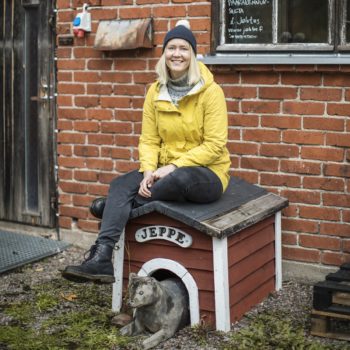
A woman wearing a jacket and a hat sits on top of a doghouse that has a statue of a dog in its doorway.

“In Finland, if you can make a good argument for a project, the authorities will give you the opportunity to try it out,” says Anna Evilä.Photo: Kreetta Järvenpää

Evilä believes that small things can make a difference to climate change, but that even more can be achieved with major choices about how we live and travel. She has reorganised her own lifestyle to improve sustainability.

“Why would I need enormous amounts of personal space?” she says. “I live together with more than just core family members. Under the same roof, but with their own rooms, are me and my two children, Hemmo (5) and Menni (7), my mother Marja-Liisa (73) and a subtenant, Mira (33).

“I have plenty of space in the yard, so I’ve let my friends come and grow a garden there. This has taught me about plants at the same time.”

The family doesn’t have a car, and they use bicycles to get around. They try to buy only what they need and what will last. They rarely eat red meat. Evilä says she is currently reorganising her wardrobe:

“What I wear all the time, underwear and tops, is long-lasting and ecologically produced. When I need clothes for special occasions, I rent them.”

Her children have always had a close relationship with nature. Sheep, chickens and rabbits are familiar sights from the yard at Jalotus. Recycling and composting are a natural part of their everyday lives.

“A few years ago I was looking after my father, who was terminally ill,” says Evilä. “It gave me time to think over what is important to me. I want to live with the people who are dear to me, and I want to be able to tell my children that I have played my part in curbing climate change.”

By Marina Ahlberg, ThisisFINLAND Magazine 2020

Search engine giants find innovative energy for data centres in Finland

What if this is such a great article that you send a link to your friends? When they read that message, they might be using the very services this story mentions: data centres in Finland.

Data centres are facilities that house large quantities of computing, networking and data storage equipment. They can power websites, run email, provide cloud storage or enable ecommerce. They could be as simple as a room full of servers, but often when people speak of data centres they mean big, industrial-scale buildings dedicated solely to the job.

Finland, it turns out, is an excellent place for data centres.

Cool weather makes for good computing

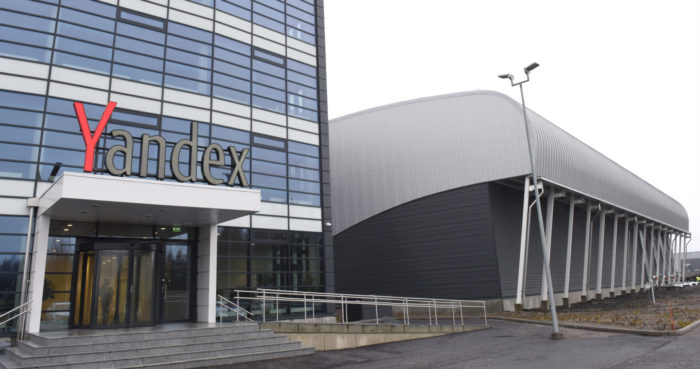
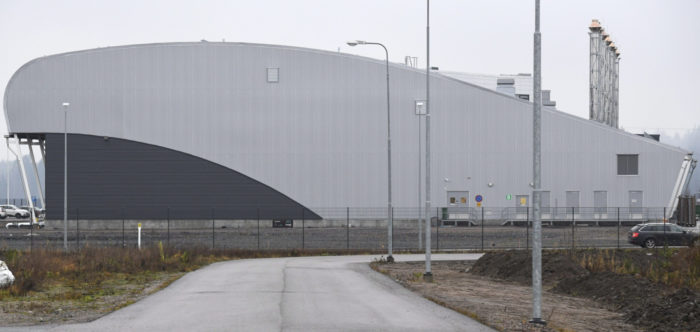
An office building stands beside a lower building with a curved roof.

A data centre building full of servers (right) flanks Yandex’s office near Mäntsälä.Photo: Heikki Saukkomaa/Lehtikuva

Ari Kurvi is the manager of the Yandex data centre in Mäntsälä, about 60 kilometres (35 miles) north of Helsinki. Often called the Google of Russia, Yandex is a Russian multinational company that specialises in online services for consumers. It has six data centres in Russia and one in Finland. The latter has been running since 2015.

“Finland is a good place to put a data centre because we have socioeconomic and government stability,” Kurvi says. “Energy costs and reliability are extremely good. Finland has an educated workforce, and there are good communication channels to the authorities.”

There’s also another benefit: Finland’s weather. Computers generate a lot of heat, as every gamer knows. Finnish air temperatures, which are cold for much of the year, help cool data centres so they can use less money and energy on air conditioners.

Yandex’s data centre has a roof with a slope and a rounded edge that, viewed in profile, make it resemble a cross-section of an airplane wing. The design helps funnel cool air into the ventilation system.

Reducing emissions by recovering heat

A road leads up to a low building with a curved roof.

Viewed from the side, Yandex’s Mäntsälä data centre building resembles a cross-section of an airplane wing.Photo: Heikki Saukkomaa/Lehtikuva

The data centre still generates a great deal of heat, but it doesn’t go to waste. Yandex captures it and directs it into Mäntsälä’s district heating system.

“Heat is a by-product of a data centre,” Kurvi says. “We sell the heat to the local community so they don’t need to generate power and release more CO2 to heat homes. We were the first large data centre to use excess heat like this, but now others are doing it, too.”

Waste heat from the data centre fulfils more than half of Mäntsälä’s heating needs, according to the Finnish innovation fund Sitra. If all new data centres opened or scheduled to open between 2018 and 2025 in all the Nordic countries recovered their heat this way, Sitra estimates that the resulting emissions reductions would be the same as taking 500,000 cars off the road.

Major data, major energy

A man dressed in work clothes tightens a bolt on a large orange pipe attached to an even larger black pipe.

A worker in a Google cap tightens a valve on part of the cooling system at the Hamina data centre.Photo: Google

Finland has about 20 major data centres. Local telecom companies Telia and Elisa maintain some, as do data centre specialist Equinix and cloud service provider Ficolo. Google has 21 data centres around the world, including one in Hamina, on Finland’s southern coast, some 150 kilometres (95 miles) east of the capital. It has been operational since 2011 and later became the home of the company’s Northern Europe cloud region.

Google’s Hamina facility is the largest in the country. While Yandex’s data centre uses about 20 megawatts of power, and Telia’s centre is similar, Google’s is four times as large.

“In selecting sites to host our infrastructure, we look for supportive communities with the necessary resources, including buildings, land, workforce, a choice of power and other utilities including renewable energy supplies,” says Heidi Jern of Google Finland. “In Hamina we found a great community in a great location with existing infrastructure that meets our needs.”

Wind power and seawater

A system of interlocking grey, yellow and blue pipes stretches the whole length of an industrial hall.

These colourful pipes carry water and form part of the cooling system at Google’s data centre in Hamina.Photo: Google

Google’s location takes a different approach to cooling than Yandex’s Mäntsälä site. The Hamina data centre occupies a former paper mill on the coast and uses seawater for cooling.

“We have been able to reduce energy use through our technologically advanced cooling system, which was the first of its kind anywhere in the world,” Jern says. “Our Hamina data centre serves as a model of sustainability and energy efficiency for all of our data centres.”

Data centres are energy hungry, and Google buys much of the power for Hamina from windfarms. The company’s long-term wind-energy purchase agreements total 440 megawatts and include the total production of several windfarms that are in operation or under development. Google has reportedly signed up for 60 percent of the power from what will be the largest windfarm in Finland. Partially complete at the time of writing, it will comprise a 211-megawatt spread of 41 turbines near Kajaani, about 500 kilometres (310 miles) north of Helsinki.

Demand for data

Rows of stacked computer equipment show yellow, blue and orange lights in a dimly lit industrial hall.

The servers seem right at home in the former paper mill that houses Google’s Hamina data centre.Photo: Google

As the world becomes increasingly digital, the demand for data grows. Over time, many of the companies in Finland have expanded their data centres to keep up with demand: Yandex recently doubled its capacity, while Google says its cumulative Hamina-related investments have reached two billion euros.

“I see the world through Finnish blue-and-white glasses [the colours of the Finnish flag], so I am very happy to have our data centre here,” says Yandex’s Kurvi. “We have more space for expansion. I hope that the demand is such that we build more buildings here in the coming years.”

And of course, if and when you share a link to this article, your action may become part of that data centre demand.

By David J. Cord, November 2020

Magical ice-skating video from northern Finland wows viewers

The conditions have to be just right. About 1,000 kilometres (620 miles) north of Helsinki, November temperatures had been low enough for long enough for Lake Ylläs to freeze solid, but it hadn’t snowed yet.

The ice was still smooth and transparent, and that day the air was just warm enough that some passing clouds dropped a sprinkling of rain instead of covering the ice with a blanket of white snow.

Figure skater Tiina Pakkanen seems to glide across the water of Lake Ylläs in northern Finland.Video: Esko Liukas

[Tap here if video fails to load.]

Photographer Esko Liukas – his surname, which means “slippery,” is a nom de plume, or actually a nom de patin – had been out previously to check the ice, as he told numerous Finnish media outlets. He put out a call on Instagram for a figure skater to record a video, and Tiina Pakkanen responded. Her last name fittingly means “frost,” and it’s her true name.

When they went to film the segment, a rain shower left a thin layer of water on the clear ice. Together with the transparency of the ice, the reflection and ripples created the illusion that Pakkanen was cutting turns on unfrozen liquid rather than solid ice.

Official disclaimer

Kids of all ages, don’t try this at home (grown-ups, you should already know better). Esko Liukas and Tiina Pakkanen have the right surnames for this kind of thing, and they also bored holes in the ice to test its thickness and performed multiple other checks before heading out. It takes many days of super-low temperatures before the ice forms and becomes strong enough. Esko is a professional with many years of experience in the northern Finnish outdoors as a photographer, ski instructor and guide.

By ThisisFINLAND staff, November 2020

In Finland and abroad, Slush and its startup community bravely adapt to a new world

Slush Helsinki, one of Europe’s leading startup and technology events, normally attracts 25,000 people annually to the Finnish capital for several days in late November or early December. But these aren’t normal times.

Billing itself as a “student-driven, not-for-profit movement,” Slush counts among its participants thousands of startups, investors, journalists and students. Its name is related to the early-winter weather in Helsinki: sometimes it snows, sometimes it rains, sometimes the temperature is just above freezing, and sometimes far below.

With the coronavirus pandemic affecting the world, however, Slush organisers couldn’t invite everyone to Helsinki. They wondered what else they could do to fulfil their mission of helping entrepreneurs and acting as “a vehicle for change,” as Slush’s website puts it.

“We were the first big event in Finland to cancel when Covid-19 was beginning to spread,” says Slush CEO Miika Huttunen. “It was a difficult decision, because at that time many people expected the pandemic would end quickly.”

Helping startups at a distance

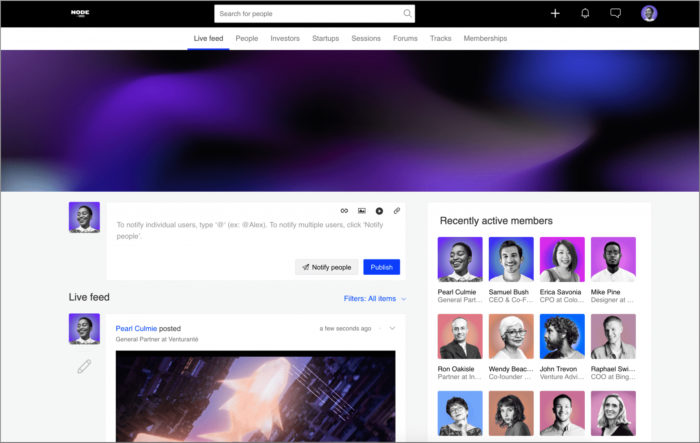
A computer screenshot shows a number of profile pictures, each with a name, beside a column where one of them has started an online conversation.

Slush CEO Miika Huttunen says that Node by Slush provides the answer to “how we could best help company founders move forward” in the coronavirus era.Screenshot: Slush

It turns out cancelling was a good decision, because, as we know, the pandemic didn’t end quickly. Yet there remains a great need for Slush, which assists startups in finding investors, partners and mentors. This hugely valuable service became even more important during the economic downturn caused by Covid-19.

“We wondered how we could best help company founders move forward,” Huttunen says. “We thought about how founders were hurting and what we are good at doing. The idea we came up with is Node.”

Node by Slush is a curated community of entrepreneurs, mentors and investors. A founder can connect with other entrepreneurs, get advice from experienced businesspeople and raise money from investors. Dynamic startups like the food delivery firm Wolt quickly signed up, joining major investors like Atomico. Node became front-page news overnight when Daniel Ek, the founder of Spotify, announced on the platform that he would invest one billion euros in European startups.

“Yeah, that got some attention,” Huttunen says with a smile. “Many startups need capital now. Slush is here to help, no matter the situation.”

Node looks like a social media tool for entrepreneurs, a place where they can find and develop contacts. It is a versatile platform designed to fit exactly what a founder needs. For example, if you want to expand into Spain, you can search for Spanish partners or investors. If you want help with your AI research, you can find an AI expert to mentor you.

If you want to pitch your solution to other companies, you can find relevant groups in your industry. These activities are what Slush was designed for.

Encouraging constructiveness at home

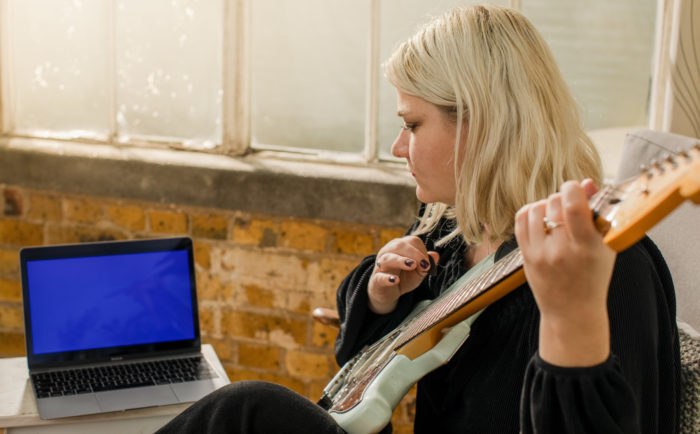
A woman plays the guitar while looking at a laptop computer on the table beside her.

Coronavirus-related lockdowns in many places have led to an increase in people who have the time and inclination to teach themselves to play instruments, and that trend has had an effect on related businesses.Photo: Yousician

The economic situation is tough, particularly for companies in industries like transportation and tourism. Yet the strangeness of the pandemic situation also represents an opportunity for some young companies.

One of them is Yousician, a music education company founded in Helsinki in 2010. They use audio signal processing technology that can recognise notes and chords via a mobile app. People can learn how to sing or play the piano, guitar, bass or ukulele using the platform. Sometimes they have guest teachers, like when Def Leppard guitarist Phil Collen dropped by for an online class.

“We have actually been extremely fortunate,” says Yousician cofounder and CEO Chris Thür. “People are stuck at home under lockdown, but they want to use their time constructively on education and self-learning. Because of Covid-19, I think there are several hundred thousand people who have begun using our service.” This makes sense, since major guitar manufacturers have experienced a record-breaking wave of sales growth during the pandemic, as the New York Times and others have reported.

On your couch at the beach

A person plays the piano while looking at a smartphone that is lying on the piano.

Yousician is an online platform for learning how to sing or play the piano, guitar, bass or even ukulele.Photo: Yousician

Yousician’s sales may be increasing, but the pandemic impacted the running of the company, just like it did in millions of other small businesses around the world.

“We closed the office and told everyone to work from home,” Thür continues. “Some people were happy to work from home, but others didn’t like it. We have a close employee community, which is particularly important for the half of us who are international. We had one guy who moved to Finland to work with us and immediately went into lockdown. He had no opportunity to make friends in the country except through work.”

Thür knows the challenges of immigrating to another country. He was born in Switzerland, and moved to Finland in 2007. Yousician set up a buddy system and encouraged the individual teams to do nice things for each other and have fun.

“One day we had a beach theme,” says Thür. “We had an online meeting and everyone was dressed up as if we were at the beach. It was a lot of fun.”

Don’t forget the human element

A smiling man sits on a sofa and plays the guitar, while another man listens.

Yousician’s platform was well positioned for a world in which many jobs, courses and hobbies have moved online.Photo: Yousician

Thür says he is a fan of technology, but stresses how important the human element is in music making. He doesn’t want Yousician to become a fully virtual company, with people only communicating online. This is critical for all levels of education.

“Many schools closed because of Covid-19, but people don’t think about music education in such a big disruption,” says Thür. “We decided to give educators and students free access to our platform because we wanted music learning to continue, even during a lockdown.”

By David J. Cord, November 2020

Fresh air and quiet: App finds best Helsinki routes for bikers and hikers

At times, cyclists in Helsinki can hardly believe their luck. New cycle lanes both on and off roads, as well as indoor and outdoor racks for bike parking, seem to be materialising every week across the capital area.

It was already relatively easy to avoid road traffic on routes across town, but it feels like two-wheeled mobility has risen to a different level. This is good news for pedestrians, too, since the demarcation between footpaths and bike trails is clearer.

If the terrible circumstances of the coronavirus pandemic have any positive sides, one of them is the renewed enthusiasm for biking. Bike paths – and indeed any other facilities for public outdoor activity – have found even more eager users.

In line with the City of Helsinki’s strategy and recent slogan of building “the most functional city in the world,” the number of citizens opting for alternatives to private car transport has been increasing over the years.

People are keen to identify the greenest and quietest ways to get from A to B. The University of Helsinki has responded with its Green Paths journey planner for the Helsinki metropolitan area.

From A to B

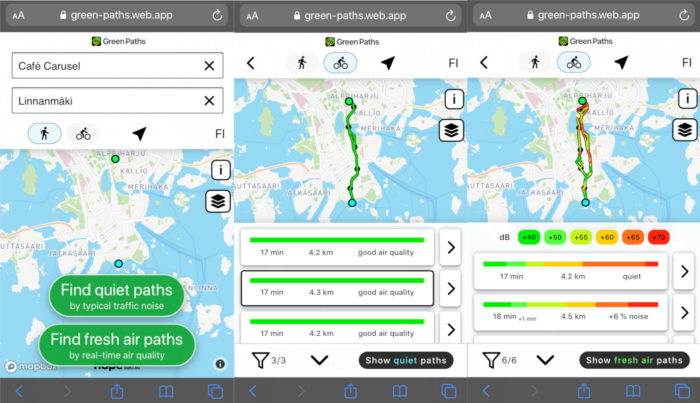
Three screenshots from a smartphone show maps of Helsinki with coloured lines and dots depicting cycling routes.

The Green Paths app start screen (left) lets you select from a number of routes based on air quality (middle) and noise levels (right).Photo: Screenshots from Green Paths app

The prototype comes in the form of a browser-based application that charts routes for pedestrians and cyclists according to two criteria: quietness and fresh air. Users simply key in the starting and ending points of their intended journey.

Green Paths uses data about average noise levels to find the quietest routes, and it accesses real-time air-quality values to show the routes with the freshest air. Colour-coded sections for each suggested route show variations in noise level and air quality.

The app is part of Healthy Outdoor Premises for Everyone (HOPE), a project instigated by the City of Helsinki and funded by the European Regional Development Fund. Unlike other journey planning apps, Green Paths is for active travelling such as cycling and walking, not for public transport or car travel. It is optimised according to noise, environment and distance.

It calculates routes on the basis of real-time air-quality data provided by the Finnish Meteorological Institute and open data on noise levels from the municipalities of Helsinki, Espoo, Vantaa and Kauniainen, which comprise the capital metropolis.

Healthy green infrastructure

A stencil picture of a bicycle decorates the pavement of a bridge made out of girders.

A bridge in the neighbourhood of Jätkäsaari on the west side of Helsinki casts geometric shadows across its blue bike path.Photo: Tim Bird

“Urban greenery and sustainability have been on the recent agenda of our department,” says Age Poom, a researcher on the team of the Digital Geography Lab at the University of Helsinki, “and this was a logical progression from earlier work on accessibility and mobility on one side and healthy green infrastructures in urban environment on the other. Master’s student and software developer Joose Helle had been working on exposure to noise, one of the biggest annoyances in the urban environment, and how to minimise it.”

Poom also mentions colleagues and team members Tuomas Väisänen and Tuuli Toivonen for their contributions to the project. Jussi Kulonpalo acted as project manager for the HOPE project at the City of Helsinki Economic Development Division with the aim of leveraging the app “to make Helsinki a better place to live for everyone.”

The path is open

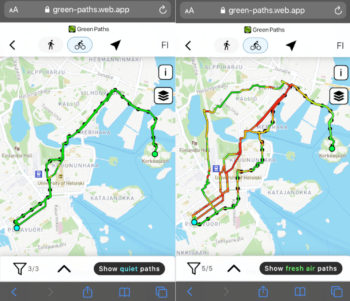
Two screenshots from a smartphone show maps of Helsinki with coloured lines and dots depicting cycling routes.

The app shows clean air (left) all the way from Sinebrychoff Park to Korkeasaari Zoo, but offers several options (right) for avoiding the sometimes noisy route through Kaisaniemi and Merihaka.Photo: Screenshots from Green Paths app

Green Paths is an example of the solutions and prototypes developed in the Lab. “Others can hop in and advance them,” says Poom. The code and client are open source, meaning they are freely available, even to other cities beyond Finland’s borders. The only constraint is the extent of environmental and street-map data available locally.

“We have received a lot of interest in the app, both within the context of the HOPE project and in the form of feedback from friends, colleagues and the Helsinki cycling community,” says Poom. “Our press release reached eight million readers globally. There is a feedback form in the app, and the next step is to gather street-level greenery data to develop functionality to support planning healthy and pleasant journeys.”

At the time of writing, Green Paths is available in Finnish and English, with a Swedish-language version in the works. It is suitable for browsers on mobile and desktop devices.

By Tim Bird, November 2020