Finnish folk musicians lead listeners in exciting new directions

Vilma Jää features virtuosic vocals and sizzling fiddle over pop and hip-hop beats. Pekko Käppi plays the jouhikko, an ancient bowed lyre; his rock sound has touches of heavy metal, psychedelia and distorted blues.

Both grew up as urban kids with roots in the Karelia region of eastern Finland. Despite little early exposure to folk, both have deeply researched Finnish roots music: Jää earned a master’s degree in folk music and Käppi has one in ethnomusicology.

While Käppi has reinvented the three-stringed jouhikko as a powerful solo instrument using electric guitar amps and effects, Jää digitally processes her fiddle and voice to create tantalising soundscapes.

Urban sounds and folklore

A row of four women whose arms and faces are covered with splotches of colourful paint are singing with their mouths wide open.

Tuuletar is a quartet that mixes traditional Finnish group singing with beatboxing and influences from Bulgaria to Bollywood.Photo: Katariina Salmi

The current wave of Finnish artists is gaining attention abroad with savvy blends of urban sounds and folklore.

The four-woman a cappella ensemble Tuuletar performs “vocal folk hop,” mixing traditional Finnish group singing with beatboxing and influences from Bulgaria to Bollywood. The quartet has toured four continents over the past decade and sung for a Game of Thrones trailer.

Essi Muikku plays the kantele, a traditional zither that is Finland’s national instrument. Okra Playground, a group that she founded, released its third album in October 2022. Two of the vocalists, fiddler and jouhikko player Päivi Hirvonen and kantelist Maija Kauhanen, also published acclaimed solo albums in 2022.

Other innovative groups in Finland’s folk space include Suistamon Sähkö, Pauanne and Akkajee.

Sámi sounds
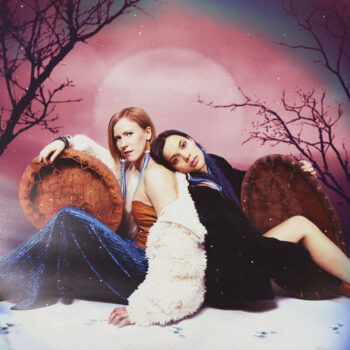
Two women pose each holding a traditional drum.

Sámi vocalist Hildá Länsman (right) and Finnish accordionist Viivi Saarenkylä perform together as Vildá, combining traditional and pop influences.Photo: Joanna Suomalainen/Jimmy Träskelin

The music of the indigenous Sámi people centres on yoik singing, one of Europe’s oldest musical traditions. The Sámi homeland in the far north is split into four parts by the borders of Finland, Sweden, Norway and Russia.

Musicians Hildá Länsman and Ánnámáret each combine the otherworldly yoik sound with other genres, from contemporary classical to ambient and techno. Länsman also sings in folk duo Vildá, prog-rock band Gájanas and, with her mother, Ulla Pirttijärvi, in Solju.

Discovering traditions
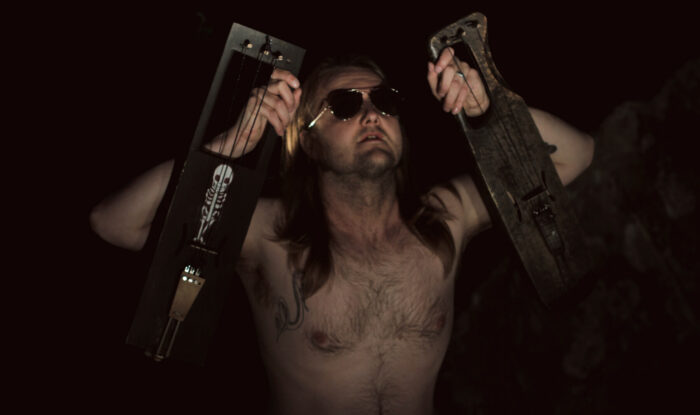
A shirtless man wearing sunglasses holds a wooden, stringed instrument in each hand.

Pekko Käppi, shown here with a jouhikko in each hand, is actually much jollier than he lets on. Don’t you think this photo shows it?Photo: Ninni Luhtasaari

Pekko Käppi grew up listening to Jimi Hendrix and Led Zeppelin, and discovered the Grateful Dead while an exchange student in the US.

“They played a curious mix of psychedelic rock, improvisation, as well as folk ballads and murder ballads,” he says. “When I got back home, I started thinking there must be folk music in Finland, but I’d never heard any. I got really into Värttinä, a super-energetic live band.”

After joining folk circles in the southwestern Finnish city of Turku, he studied in Kaustinen, Finland’s folk music capital, more than 400 kilometres (250 miles) to the north. There he discovered the little-known jouhikko.

Scowling and jovial
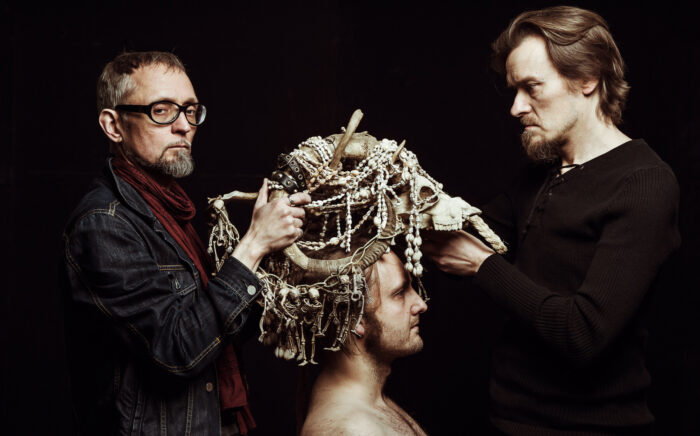
Two men are placing a hat made out of bones and beads upon the head of a third man.

Guitarist Tommi Laine (left) and bassist Nuutti Vapaavuori (right) of the band K:H:H:L place a mystifying and elaborate crown upon the head of Pekko Käppi.Photo: Konsta Leppänen

“Later I was playing on the streets with a bagpiper, so I bought a small Marshall amp,” he says. “I had to turn it up as loud as possible to be heard, so it became distorted, but it sounded really cool.”

Although he’s quite jovial in person, he has a scowling image, macabre videos, metal-style album covers and a black jouhikko adorned with a skull. Along with his own raucous band K:H:H:L, Käppi has played with metal and indie bands such as Amorphis, Death Hawks and K-X-P, and even a psychedelic Beatles tune with the Tapiola Sinfonietta.

Käppi has also worked with Tuuletar and Hirvonen, who he says “has found a good way of combining stuff and making it her own.” He also recommends accordionist Leija Lautamaja; at the time of writing, she is working on a forthcoming solo project.

Operatic tones
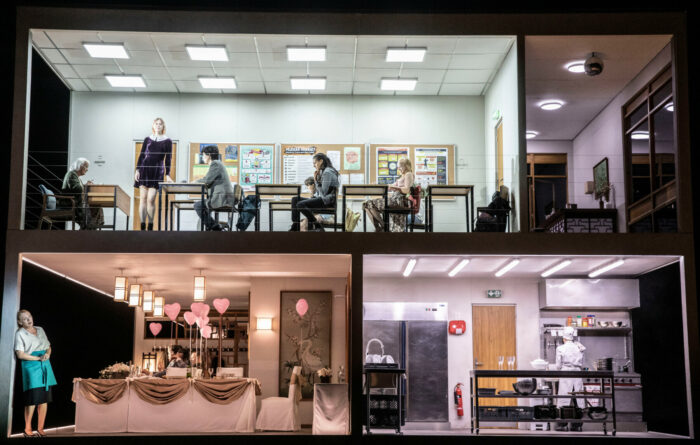
On a multilevel stage set, singers stand and sit in spaces designed to look like the rooms of a school and a restaurant.

Vilma Jää (standing at upper left) performs in Finnish composer Kaija Saariaho’s wildly acclaimed opera Innocence.Photo: Jean-Louis Fernandez/Aix-en-Provence Festival/Finnish National Opera

Vilma Jää (jää means “ice”), honoured as the 2022 Finnish Folk Artist of the Year, has several singles but says she’s “not in a rush” to release an album.

Besides her own gigs and research into Finnish and Karelian cattle calls, she appears in composer Kaija Saariaho’s opera Innocence (at the Finnish National Opera in autumn 2022). Chosen by Saariaho for the folk-singing role, Jää earned rave reviews when the work had its world premiere in France in 2021.

“Kaija’s attention to detail in tones and sounds has definitely influenced me,” she says. “For instance on my latest single, ‘Jäinen neiti’ [Icy Maiden], we recorded the amazing kantele player Hanna Ryynänen using six different techniques, like putting Blu Tack on the strings and bouncing knitting needles off them. The best moments are when you imagine something in your head and then you actually hear it. It’s magical.”

Putting out fires
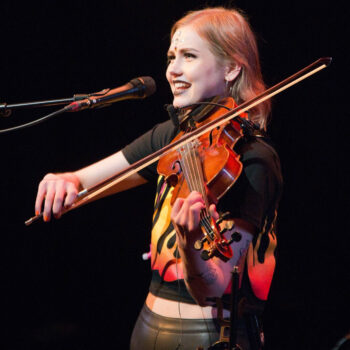
A woman plays a violin while singing into a microphone.

In her music, Vilma Jää may digitally modify the sound of her voice and her five-string violin to achieve the soundscape she desires.Photo: Jari Flinck

“Jäinen neiti” is written in Kalevala meter – the Kalevala is Finland’s national epic. The song title refers to a figure in Finno-Ugric folklore.

“She was summoned to help if there was a fire or someone had suffered a burn,” says Jää. “I brought her into the 21st century, asking for her help to stop climate change. Now the world is on fire!”

An earlier song, “Saatanan saalistaja” (Damn Predator) tackles sexual harassment, which also lurks behind Kauhanen’s recent single “Käärme” (Snake) and Käppi’s “Aino,” named after a young female figure from the Kalevala.

Besides these artists, Jää’s folk music playlists feature colleagues such as Vilma Talvitie (whose surname, meaning “winter road,” is as shivery as Jää’s) and Ritva Nero, a group that plays “dizzying party metal folk.”

“I think we all aim to bring tradition and folklore back to people so they can be inspired by their roots and history – and I think it’s a great export product,” says Jää.

By Wif Stenger, October 2022
Starting over out in the country, Finnish farmer believes cricket cuisine could help heal the climate

Practically everyone has entertained the idea of a new start at some time or another. For a long time, Roope Päivänen and his wife had wanted to turn their backs on their hectic city lives.

In 2018, Päivänen saw a colleague editing a film about crickets. Then an opportunity arose to start a cricket farm in the southern Finnish town of Karjaa, halfway between Helsinki and Turku. He took it without hesitation.

“Growing crickets is a good idea,” says Päivänen. “It’s a future food and a future industry.”

He raises as many as several million insects at a time in rows of plastic boxes in a climate-controlled room. An array of shelves holds 300 boxes; the crickets’ lifecycle lasts 35 to 45 days. He feeds them a special fermented mixture of spent grain from a local brewery and leftover vegetables from supermarkets.

Cricket-based cuisine as climate action

Watch the video to see Roope’s cricket dishes and find out how his life in the countryside is going.Video: Erika Benke/ThisisFINLAND.fi

Naturally, Roope is on a mission to win people over and introduce them to eating crickets. He believes that cutting back on red meat and putting insects on our plates in its place is an important part of fighting climate change.

He readily admits that it’s challenging to convince consumers to choose cricket-based food. However, he says there’s a solution: dishes with no visible insects.

“We need to be more creative and prepare real meals out of them, rather than just frying them whole and serving them as a snack,” he says.

“I’ve been doing kebabs and lasagne and cricket burgers. All my friends’ kids loved it.” This bodes well – children are, of course, notoriously picky eaters.

By Erika Benke, October 2022

A breath of fresh Finnish air

The beautiful island of Pihlajasaari, for instance, is a ten-minute ferry ride from the mainland. It features forest hiking trails, seaside cliffs, long sandy beaches and two saunas.

Finland has over 188,000 lakes, and forests cover about 75 percent of the country. Wherever you are in Finland, a wild nature destination is nearby and easy to access.

To read more about travel in Finland, see additional articles by ThisisFINLAND below, or go to Visit Finland’s website.

By Päivi Brink, ThisisFINLAND Magazine

Finnish futurist sees new ways of looking at people’s career paths and skills

At the time of our interview, Perttu Pölönen had just returned from the Eurasian Media Forum in Kazakhstan, where he had taken part in a panel discussion about the future of the labour and education markets. He gives hundreds of speeches every year to audiences at home and abroad.

“Tomorrow I am travelling to Austria to give a keynote about future skills in the EuroSkills competition,” he says. “It is wonderful, since I believe in cooperation and networking.”

Technology helps us stay globally connected, but it also has changed the way we look at our own skills and our children’s education. Pölönen’s vision and insights can help us understand the technologically driven working life of the future.

Skills more important than job titles

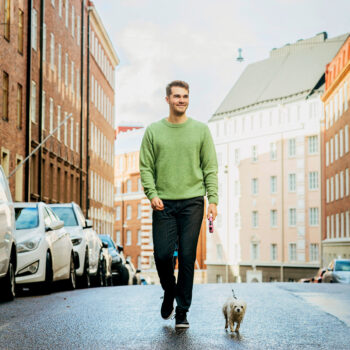
A smiling man is walking a small dog on a Helsinki street on a sunny day.

“To counterbalance digital development, humanity must not be forgotten,” says Perttu Pölönen. “In the future, human skills will be appreciated even more than today.”Photo: Vilja Harala

Pölönen encourages us to build our professional identity around the skills we have, instead of a named profession.

“Instead of telling others your job title, tell them what you can bring to the community,” he says. “Describe your identity: Who are you? An educator, perhaps, or a mediator, campaigner, problem solver, unifier or collaborator? Think about the needs of the community and the feelings you bring to it. This way you are not limited to one profession, but start seeing many professional options as the world around us keeps changing fast. Skills are more important than job titles.”

He has built a remarkable career for someone who is only in his late 20s. How would he describe his own skills?

“I see myself as someone who brings colour, adds spice and clarifies the topic at hand,” he says. “I seek information and recognise ideas that I can expand together with others. I can clarify connections between issues. I also hope I can help others by working according to my values.”

Work life in the near future

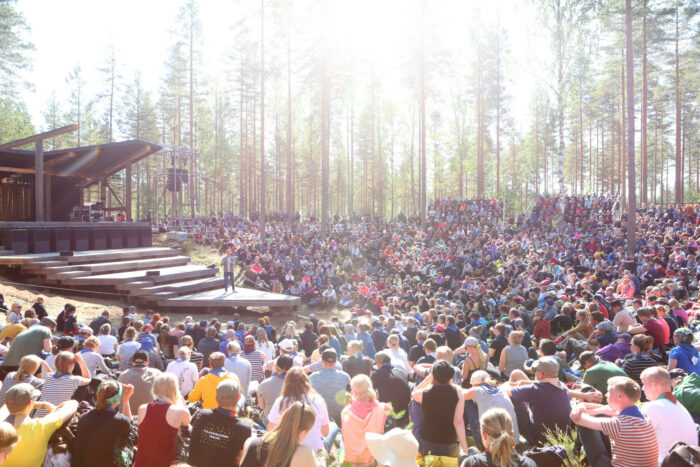
On an outdoor stage with a forest in the background, a man speaks to an audience of hundreds of young people.

Perttu Pölönen spoke to young people at a Campfire Summit about leadership, organised by the Scouts of Finland.Photo: Mari Lehtisalo

If we continue along the path we are on now, working life will become increasingly polarised.

“In the future, there will be more low- and high-wage sectors than today,” says Pölönen. “The employment market will become more global. There will be more microentrepreneurs, and one person will have multiple work identities. I believe that, in the future, everyone will have to take more responsibility for their own work and presenting their skills.”

What about salary? Surely it will still be important?

“It will, but the growth of general wealth and the acute need for sustainable lifestyles will reduce the importance of money in wellbeing states,” he says. “There is less need for continuous growth when it does not meet real needs. I believe people will also come to see the value of their leisure time.”

The human factor in the digital age

In this TEDx Talk video, Perttu Pölönen asks, “What can I get from you that I cannot get from Google?”Video: TEDx Talks

Technology will have a huge impact on working life in the future.

“The internet will support equality when everyone in the world has access to it, but we are not there yet,” says Pölönen. “It is vital to get versatile teams to develop technology, so that everyone can use it and it meets everybody’s needs. Technological development is too important to be left to a small and homogenous group of engineers.”

While artificial intelligence and robotics are changing the way we look at work, there are still some core skills that only humans possess.

“To counterbalance digital development, humanity must not be forgotten. On the contrary, in the future human skills will be appreciated even more than today.”

Amidst the third industrial revolution, it is time to think about what we humans can bring to the workplace.

“Can AI replace teachers?” he asks. “Technology can help the teacher realise, for example, what is difficult for children and what they already understand. However, a teacher can take the needs of a child into account in a way that a robot cannot. Teachers can read the child’s body language and show emotions like interest and caring. Humans can recognise an optimal moment to teach something. Humans have sensitivity and emotional intelligence that technology lacks.”

The importance of education

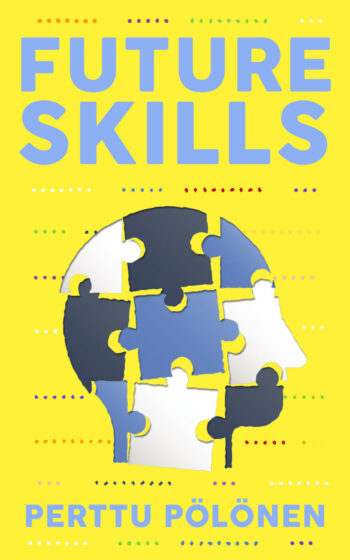
The cover illustration of the book Future Skills, with a drawing of a human head that is made up of jigsaw puzzle pieces of various colours.

The book Future Skills asks, “Which skills should we be cultivating in an age of ceaseless technological progress?”Photo: Viva Editions

In the future, the most valuable skills may not be easily discernible based on the applicant’s qualifications.

“How do you prove you are good at creative problem-solving, or that you have a great sense of humour?” Pölönen says. “These human qualities are difficult features to measure, but they are features that only humans can bring to working life.”

He himself studied music composition at the esteemed Sibelius Academy in Helsinki, but after graduating he realised that he wanted to do many other things as well. He studied future technologies with the Singularity Education Group in Silicon Valley. From there he went to Myanmar and started an edtech company.

“Education remains very important, but the focus should be on skills, not on diplomas,” he says.

“Studying gives you skills you can use in many professions, like project management, communication and critical thinking. I am a strong supporter of interdisciplinary teams, because the issues we need to solve today are very complex. We cannot afford to look at them from a limited perspective.”

Instead of focusing on degrees, Pölönen emphasises constant, lifelong learning.

“The internet is full of learning material that is easily accessible, often free, and constantly updated.”

Currently the world needs people who have the skills to imagine our future.

“Futurology helps us remain conscious of our choices and the direction we are going,” says Pölönen. “It helps us make the world a better place, since the future is the product of our concrete actions. Instead of proceeding as fast as possible, we must see what is relevant for the future.”

By Päivi Brink and Susanna Bell, ThisisFINLAND Magazine 2022

Treasure hunting in the Finnish forest

“It’s like saying hello to old friends,” says Anna-Kaisa Asuja when she bends down to look at some mushrooms that have popped up in her familiar mushroom hunting grounds in Espoo.

In the autumn, the woodlands are rich with mushrooms, available free for anyone to pick (see the box below for more info about “every person’s right” in Finland). Just weeks earlier, people were gathering bilberries here, and although that time has passed, lingonberries (a relative of the cranberry) are still in season.

Mushroom mindfulness

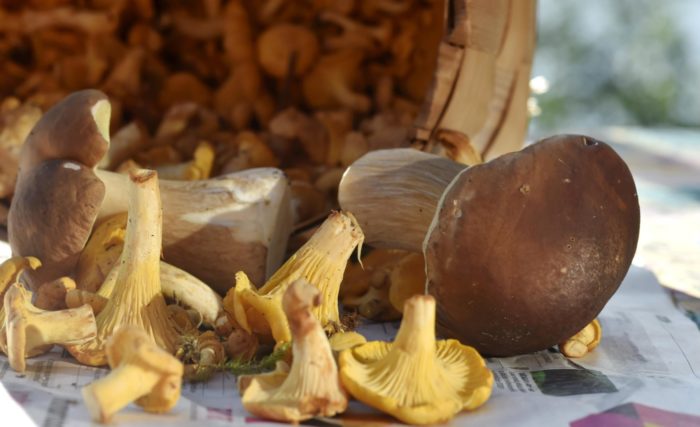
Various mushrooms are on a table in front of a basket.

Two of the most common and tastiest mushrooms are golden chanterelles (the smaller ones in this picture) and porcini.Photo: Jussi Nukari/Lehtikuva

The nearest forest is only 300 metres from her door, even though her home is also just a 20-minute drive from central Helsinki. Nearby, people are walking, jogging and cycling along well-maintained forest paths. Asuja also likes to jog here, and to ski when there’s snow, but during August and September, she focuses on a hobby that she likes to call “mushroom mindfulness.”

For her, picking wild mushrooms amounts to much more than gathering fresh ingredients for her kitchen. It’s a multisensory pleasure packed with shapes, colours, textures and aromas. For a busy mother of three, a 90-minute walk in the forest also provides some time to think her own thoughts.

“Above all, it’s the joy of exploring, a bit like treasure hunting,” Asuja says. “I scan the ground for the types of mushroom that are appearing. And it doesn’t matter if I return home with an empty basket.”

Photogenic fungi

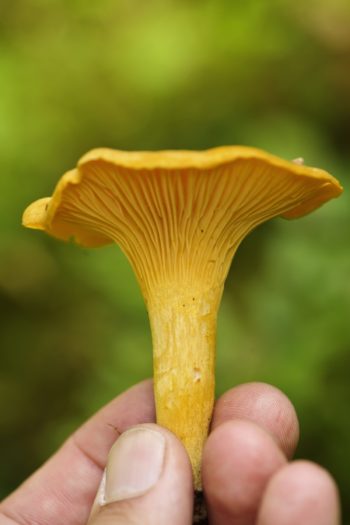
Fingers are holding a single chanterelle mushroom.

If you look closely, there are patterns and textures on mushrooms such as this golden chanterelle.Photo: Roni Rekomaa/Lehtikuva

To appreciate what she finds and to learn about different types of mushrooms, she takes photos of them and compares them with pictures others have posted on the internet. Online groups have taken her passion for mushrooms to another level.

She gently pushes the soft beds of moss to one side, to reveal groups of funnel chanterelles. “These are still babies.”

She will enjoy them in a soup, or on some crunchy toast, fried with onions and butter, seasoned with salt and pepper. Other mushroom delicacies in her kitchen are bruschetta, pasta and risotto.

Eager to explore

Two people walk along a forest path.

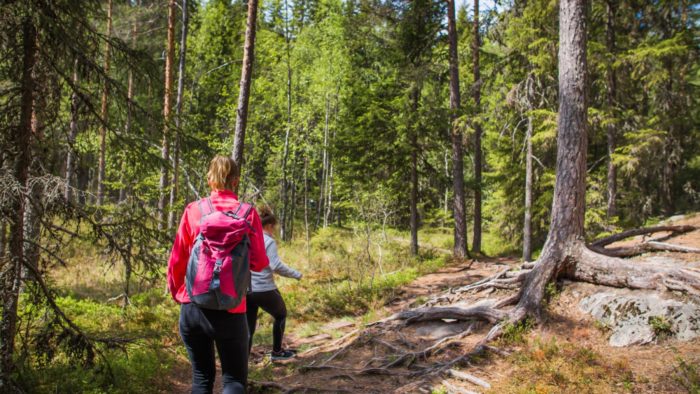
Picking mushrooms or berries is partly about fresh air and a walk in the woods, regardless of how much you harvest. These hikers are discovering Seitseminen National Park, about 75 kilometres (45 miles) north of the city of Tampere.Photo: Laura Vanzo/Visit Tampere

Asuja is relaxed, but also excited to greet the first funnel chanterelles of the season: “I’m filled with gratitude for all the things the forest offers us.”

She recounts how she was recently roaming the woods with a couple of friends, one of them 80 years old.

“There were some rocky hills to climb,” she says. “I was thinking that I want to be that fit and eager to explore when I’m 80.”

By Minna Takkunen, ThisisFINLAND Magazine 2022

In Finnish culture, hobbies get pride of place

Available to everyone. Easy to get to. No previous skills required. Learn something new. Those are features of many popular leisure activities that can also perform an important social function. For decades, Finland has encouraged hobbies as a way of nurturing an active sense of community.

According to various surveys, about 90 percent of all Finnish people – and 96 percent of those under ten years old – say they have a hobby. About 60 percent of nine-to-fifteen-year-olds take part in sports clubs. Adults more commonly exercise on their own, for example running, biking, swimming or cross-country skiing.

Social skills, too

Rows of people do stretching exercises in a park on a sunny day.

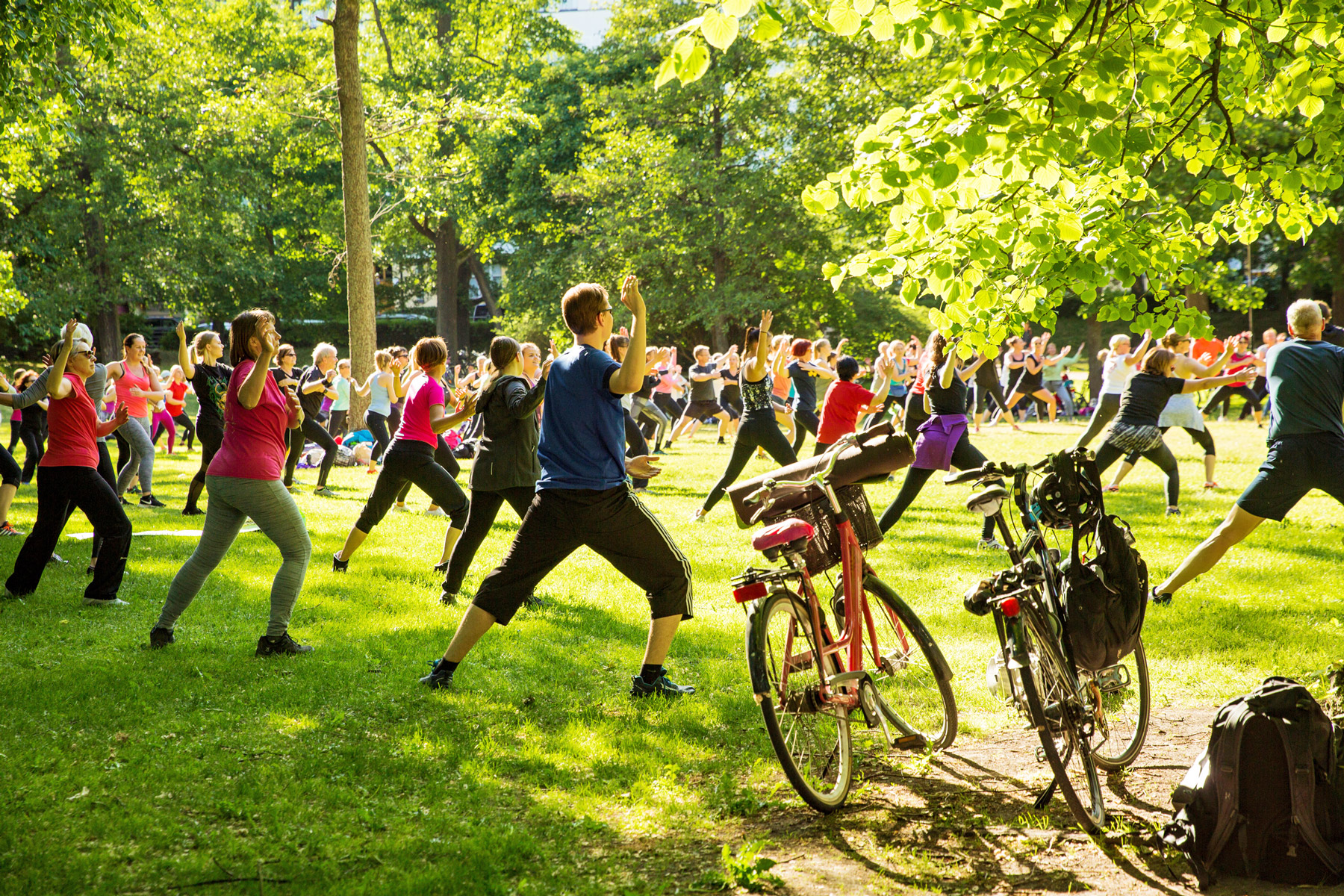
Droves of Helsinkians showed up for this summer exercise class in a city park.Photo: iStock

“Compared to other European countries, our transformation from a rural society into a modern one happened exceptionally fast,” says Mikko Salasuo, senior researcher at the Youth Research Society.

“In the traditional agrarian community, the whole village took part in raising children into responsible adults. After the Second World War, there was growing concern about the social involvement of the younger generation. Using hobbies to foster citizenship and improve the social skills of young people was a decision made on a national level.”

Sports, music and more

A woman climbs high up on a climbing wall while another woman holds the safety rope for her.

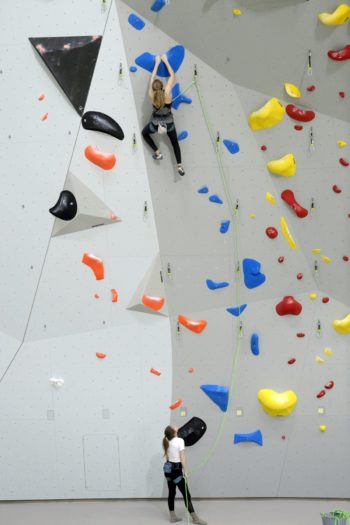
Northern Europe’s largest climbing arena happens to be located in a shopping centre in Konala, just outside Helsinki.Photo: Vesa Moilanen/Lehtikuva

After the war, the government and an array of nongovernmental organisations worked together to create a nationwide civic education project, and the state supported it financially. This civic education ethos is still visible around the country, in hobbies organised for all ages by NGOs and associations.

National and municipal governments support leisure activities with substantial investments every year. Various sports clubs, youth organisations such as the Scouts, and organisations offering basic arts education, such as music schools, benefit from direct and indirect subsidies and from use of premises, amounting to hundreds of millions of euros every year.

Equality and wellbeing go together

A girl outruns several other girls while dribbling a soccer ball.

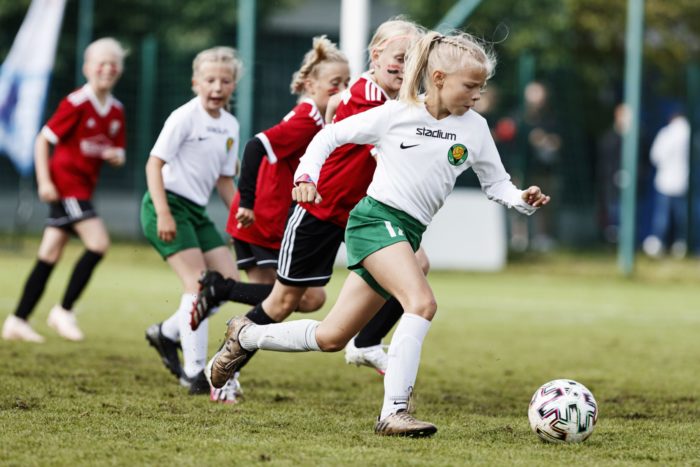
Soccer is one of the most popular sports in Finland, with more than 130,000 registered players. While organised football is not free, players don’t need to acquire much equipment in order to participate.Photo: Roni Rekomaa/Lehtikuva

At the time of publication, the national system is undergoing an update to ensure equal opportunities for all. Certain leisure activities have become expensive, to the point where they are beyond the reach of some people.

“In many cases, the ethos of excellence has overtaken the initial priorities of social interaction, civic education and equal possibilities,” says Salasuo.

There are doubts about whether expensive and often very competitive hobbies improve wellbeing or promote social participation among younger generations and families. Demand exists for some hobbies to be offered at school, where they would be inclusive for everyone.

Rain or shine

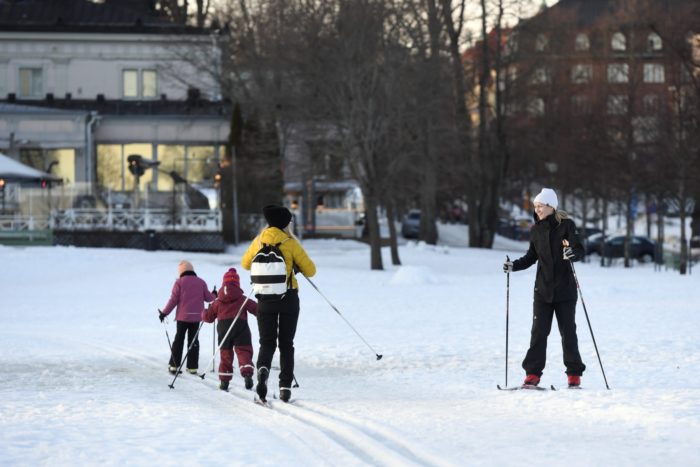
Two adults and two children are cross-country skiing across a park with city buildings visible in the background.

Hobbies get you out of the house and contribute to your wellbeing. These kids and grown-ups are going cross-country skiing in a Helsinki park during a snowy winter.Photo: Heikki Saukkomaa/Lehtikuva

Salasuo is on the working committee of a new hobby system seeking to incorporate leisure activities into the schooldays of all children and teenagers, free of charge. The Ministry of Education and Culture is heading the project, which has been dubbed the Finnish Model of Leisure Activities. It prioritises wellbeing and children’s rights.

Children and young people have been able to contribute their own suggestions: the top of their list includes parkour, climbing, cooking, animals and the visual arts. During the pilot phase in the spring of 2021, more than 200,000 kids were involved.

In a wider sense, hobbies are an essential way to increase wellbeing at all ages. Rather than staying late at work in the evening, people are more likely to be active outdoors – rain or shine – and learn new things. Reading, gaming, music and various arts and crafts such as knitting and woodwork are also popular. And if you want to meet new Finnish friends, one good bet is to pick an activity from the large variety of courses organised by adult education centres.

By Minna Takkunen, ThisisFINLAND Magazine 2022

Self-sufficient organic Finnish farm grows its own fuel and a greener future

Strolling through fields of hemp, oats and peas on a gorgeous summer day, farmer Markus Eerola wears shorts, trainers and a contented smile. In an era when agricultural producers have been hit by rising prices for fuel and fertiliser, he’s not worried about either one.

His organic Knehtilä Farm provides its own nutrients and energy, thanks to careful long-term planning and a small onsite biogas plant operated by energy utility Nivos. It is located near the southern Finnish town of Hyvinkää, about 60 kilometres (35 miles) north of Helsinki.

Clean domestic energy

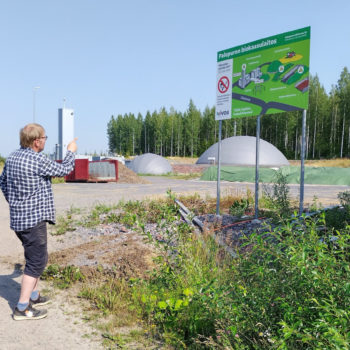
A man points at several low dome-like buildings.

Markus Eerola shows visitors the biogas plant that helps make his farm an energy producer rather than an energy consumer.Photo: Wif Stenger

The biogas powers his tractor, pickup truck and cars, and is available to others at a commercial filling station on the edge of the farm, although vehicles that can use biogas are still relatively rare. It offers a valuable alternative to meet the growing need for affordable, clean domestic energy.

“Driving with biogas is 100 percent domestic and zero-emission, or even carbon-negative,” he says. “It’s clean, odourless and better in cold conditions than regular petrol.”

Demand for organic food continues to grow. “The price gap between organic and standard production is narrowing, partly because we don’t need fertiliser. Our farm has its own product line of oat and buckwheat products, which are produced here using a proven cultivation method known as agroecological symbiosis, where nutrients and energy are efficiently recycled.”

The sprawling 380-hectare farm’s carefully balanced circular economy has developed over a decade and a half, earning a WWF award in 2015 as a model of nature-friendly agriculture. In 2021, the Finnish Organic Association chose Knehtilä for the honour of Organic Business of the Year.

Eighth generation – and still improving

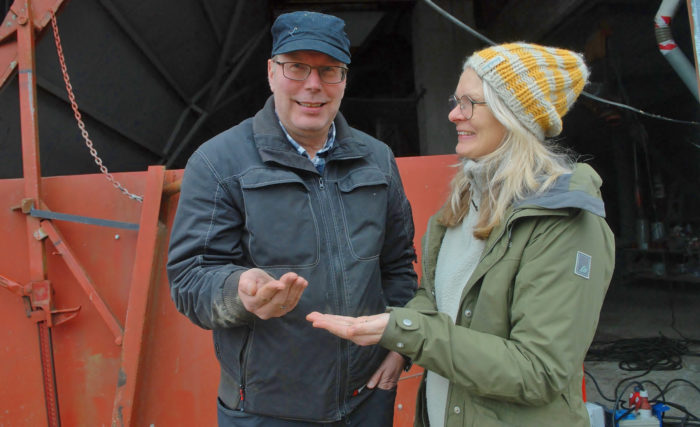
A man and a woman, each with one hand outstretched, stand in front of some farm machinery.

Markus Eerola and his wife, Minna Sakki-Eerola, hold handfuls of recently harvested grain. Markus used to be a freelance glassmaker for the design company Iittala, and Minna had established a career as a textile designer before joining him on the farm.Photo: Sinimaaria Kangas

“I’m the eighth generation of my family to work this land,” says Eerola, who used to be a freelance glassmaker for the design company Iittala. “In my father’s time, we could only use a few fields for growing winter seed grains on several parcels, because the clay soil had deteriorated into quite poor condition.” Since the late 2000s, Eerola has overseen the careful reconstruction of the soil through regenerative agriculture.

The key to this crucial soil improvement, which boosts resilience in the face of the changing climate, is a meticulously planned rotation of crops. “It takes long-range thinking,” Eerola says. “If the soil is better, it can withstand weather extremes.”

Each field progresses over a five-year period, starting with clover, alfalfa and peas, which are effective at binding nitrogen from the air into the soil, making fertiliser unnecessary.

From there Eerola shifts fields through successive crops like rapeseed, oats, barley, buckwheat, wheat, rye and oil hemp – a Finnish strain known as Finola, which yields oil that is in high demand as an export product.

No competition between food and fuel

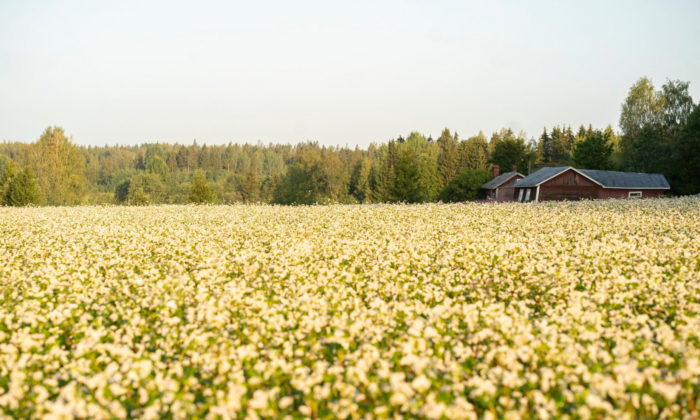
A farm field with a farmhouse in the background.

Meticulously planned crop rotation improves the soil, boosting its resilience in the face of climate change.Photo: Helena Eslon

Organic farming depends on leaving fields fallow – devoid of food crops – in certain years to allow the soil to recover naturally. That’s where biogas production comes in, because the cover crops in those off years are ideal for producing fuel, when spiked with a bit of manure from horses or livestock.

The clover or other plants used to make fuel don’t remove arable land from food production, explains Kari Koppelmäki, a doctoral researcher at the University of Helsinki’s Ruralia Institute. He has worked with Eerola for years to fine-tune the circular system.

“Our model uses biomasses that aren’t competing with food production,” says Koppelmäki. “For example, in Finland there are over 200,000 hectares of grassland that are not harvested. Together with manure, these could provide a substantial energy source. In more intensive farming systems, such as in central Europe, straw or cover crops, which are grown after the cash crop, provide potential feedstock for energy production.”

Other organic crop farms could easily apply the Knehtilä model, Koppelmäki says. “It’s important to design the system so that biogas production is integrated with food production to enhance the supply of other ecosystem services, such as nutrient cycling and erosion control.”

He adds, “Biogas production can convert farms from being energy consumers to energy producers, and play an important role in the transition away from fossil fuels. When it’s done in a smart way, it’s also possible to increase biodiversity in farming systems.”

Vibrant cycle of life

Thin green stalks are sprouting out of the ground.

Cover crops such as clover increase the soil’s nitrogen content, making fertiliser unnecessary, and are also ideal for use in producing biogas.Photo: Helena Eslon

“Any unused fields could be converted to this,” says Eerola. “There could be hundreds of biogas plants like this around Finland.” Manure from livestock also represents a huge potential source of biogas. In addition, according to WWF, removing manure from the environment and using it to make biogas prevents it from contributing to nitrogen pollution and methane emissions.

Knehtilä forms part of the Global Network of Lighthouse Farms, a project led by Wageningen University in the Netherlands, involving commercially viable farms that offer “radical solutions to address sustainability challenges.” International visitors frequently come to Knehtilä to learn about unique system.

The rich, vibrant cycle of life at Knehtilä is visible in not only the lush fields, but also in the insects and frogs that frequent them, and in a few animals such as horses, sheep, goats, chickens and rabbits. The farm is also a lively event venue; a high-ceilinged, 80-year-old barn has been converted to a space for up to 100 people for weddings, theatre performances and concerts.

By Wif Stenger, September 2022

Sustainable sustenance: As Helsinki’s Flow Fest returns, food venders feature menus without meat

The annual Flow Festival, a fixture on Europe’s summer music calendar for almost 20 years, continues its long-standing practice of pushing for greater sustainability and a smaller environmental impact.

That means attention to detail: For many years, the festival had required that all food venders offer at least one vegan dish and one sustainable meal. In 2022, the organisers revised the policy, allowing only vegan, vegetarian and seafood options – no red meat or poultry at all. This included the catering for staff and musicians.

During Flow’s much-anticipated grand return, we dropped by to see people enjoying the festival atmosphere and cuisine. The sold-out three-day event gathered 90,000 attendees for concerts by 150 different acts, including Nick Cave & The Bad Seeds, MØ, Florence + The Machine, Princess Nokia, Jesse Markin, Gorillaz, Burna Boy, Bikini Kill, Sigrid, Erika Vikman, Michael Kiwanuka, Jamie xx and Fred Again, to name a few.

Trying something new

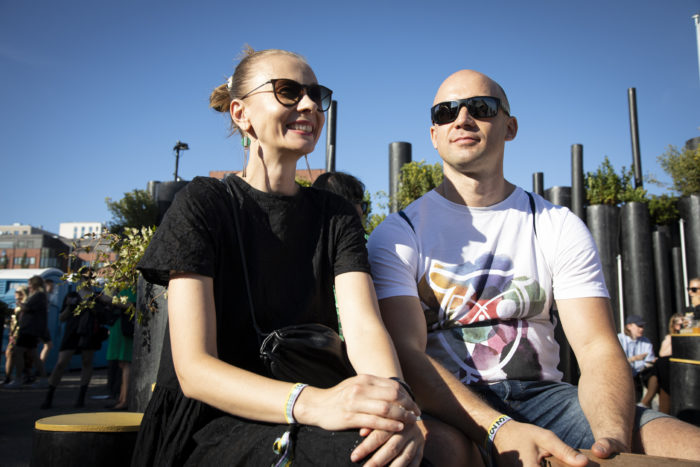
A woman and a man smile, both wearing sunglasses.

For Sanna (left) and Mika Borg, Flow is a place to discover not only new bands, but also new restaurants.Photo: Susanna Alatalo

Festivalgoers Sanna and Mika Borg were basking in the sunlight on Sunday afternoon as the 2022 edition of Flow headed towards its final evening. They had attended on Saturday, too.

“We decided to start our second day with a khachapuri,” Sanna said. “We wanted to try something new, and I wasn’t familiar with Georgian cuisine.”

“They have so many different food venders here,” said Mika. “It’s a great way to get to know new restaurants you haven’t had the chance to visit yet.”

Neither of them is a vegetarian, and they had perused some of the menus online in advance. “Still, I didn’t even realise that they weren’t serving any meat,” Sanna said. “I’m totally cool with it.”

Sustainability is about more than just food

As night approaches, a large crowd watches a concert that is happening on a stage in the distance.

It’s still summer: Dusk falls slowly on Flow’s main stage.Photo: Petri Anttila/Flow Festival

Flow Festival has always made a point of emphasising that food is more than just fuel to keep you going. Concentrating exclusively on vegan, vegetarian and seafood offerings takes things to the next level.

Sustainable Flow, the festival’s responsibility programme, keeps the event on track across the environmental and social aspects of sustainability. In additional to sustainable cuisine, it includes carbon neutrality, green electricity, 100 percent reused materials, smart transportation, equality, safety, accessibility and, last but not least, facilitating attendee donations to a fund to protect the Baltic Sea.

As Flow CEO Suvi Kallio put it in the festival’s press material, “Food production is one of the largest emitters of greenhouse gases worldwide, and, on average, animal-based nutrition is particularly burdensome for the environment. Therefore, the next natural step was to stop offering red meat and poultry in our restaurants.”

Paying attention

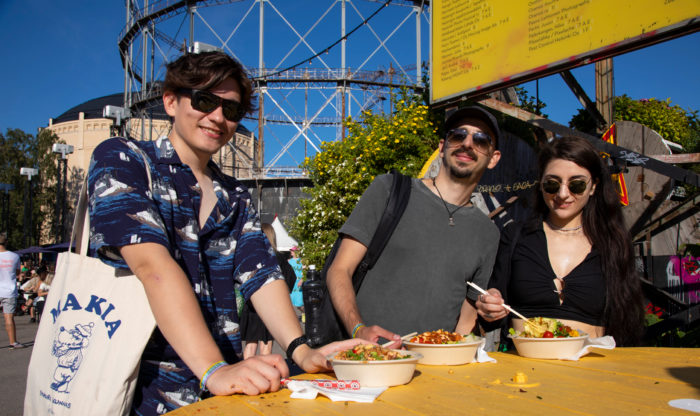
Two men and one woman, all wearing sunglasses, are eating lunch at an outdoor table.

Keijo Korhonen (left) and his friends Walter Talarico and Laura Folilo from Italy enjoyed their poke bowls at Flow Festival.Photo: Susanna Alatalo

Out of the couple dozen festivalgoers we talked with, none of them minded Flow’s vegetarian and seafood focus. While some people hadn’t even noticed, others seemed pleased – even those who weren’t vegetarians themselves.

“This is a big event, and it’s good that they pay attention to environmental issues,” said Sanna Borg. “Plus, they serve really delicious vegetarian food.”

Caterers follow sustainable meal guidelines. The festival area also features free taps for refilling water bottles, a measure that reduces plastic waste.

Flow-goer Keijo Korhonen was eating a double salmon poke bowl, with baked salmon, raw salmon, vegetables and rice. His criteria are taste and portion size.

“I knew this dish is delicious, and the portions are big,” he said. Korhonen, who isn’t a vegetarian, had heard that the festival wouldn’t be serving any red meat or poultry.

“I guess it’s a good choice, since it’s good for the environment,” he said. “The most important thing is not to be left hungry.”

People are ready for it

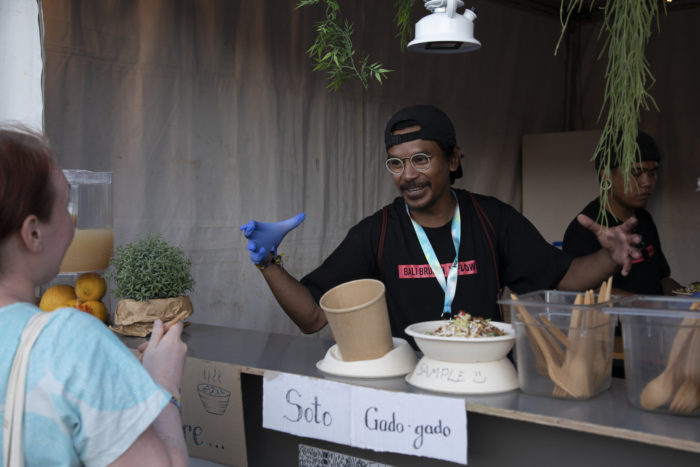
A food vender talks with a customer at a festival restaurant booth.

Vegan dishes normally make up a third of sales at Bali Brunch, an Indonesian restaurant with four branches in Finland, so it wasn’t a big deal to leave meat off the menu for their booth at Flow Festival.Photo: Susanna Alatalo

For Indonesian restaurant Bali Brunch, concentrating on vegan food wasn’t a problem, since vegan dishes already make up 30 to 35 percent of their restaurant sales. “That’s actually pretty high, because vegan dishes are competing with beef, chicken and pork,” said restaurateur Galih Bulgamin. Their Flow menu was totally vegan, including a fresh salad and a wok dish.

“I think a venue can decide whatever they like,” Bulgamin said. “For us it doesn’t really matter, because we want to be a part of it. It’s the same thing as taxes: You know you want to enjoy free schooling, for example, so you follow the rules.”

What are their customers saying? “We have had only a couple of questions about serving meat, but no complaints,” said Bulgamin. “We explain it’s a Flow policy, and people understand it. I think they’re ready for it.”

Bali Brunch has three restaurants in the capital region and another in the city of Tampere. They are also opening one in Amsterdam, Netherlands. This was their second time as a Flow vender, and the only festival they worked in 2022. According to Bulgamin, selling food at festivals requires a lot of work and is not necessarily always very profitable. “We are very picky about which festival we want to support,” he said. “I mean, all festivals are cool, but maybe not every festival fits us. Flow was the best bet for us”.

By Anna Ruohonen, August 2022