Finnish phrases to put in your pocket

Why fiddle with a phrasebook when you can access Finnish sentences on your mobile phone? Find and listen to basic expressions on the free service Hei Finland, which covers everything from business to dating.

The opening message on Hei Finland reads: “If Kaunis ilma tänään means nothing to you, you need Hei Finland in your pocket.” Hei means “hello”, and the service makes it easy to find conversation openers.

Accessible in English and French versions, Hei Finland is designed with mobile devices in mind, and an iPhone app is available. You can also use it on your computer. A couple of quick menus bring you to various lists of sentences for social, business and emergency situations. Then just listen and repeat, and hei, you’re talking Finnish.

Beautiful weather

The great advantage of having a service like this in your pocket is that you can pull up a phrase on the spur of the moment, although on the other hand there’s nothing to stop you practicing them ahead of time. How about these: “Quality has its price.” “To the airport, please.” “May I meet the chef?” “Where is the tram stop?” And don’t forget: “Can we meet again? How about tomorrow?”

So what does Kaunis ilma tänään mean, anyway? The answer can be found on Hei Finland, of course, but we’ll tell you now. It’s something you can always use in Finland: “Beautiful weather today.” As for one of the other Hei Finland phrases, “It’s raining cats and dogs,” we really can’t figure out why you’d ever need to say that in Finnish.

By Peter Marten, January 2010

Travel broadens the Kalevala

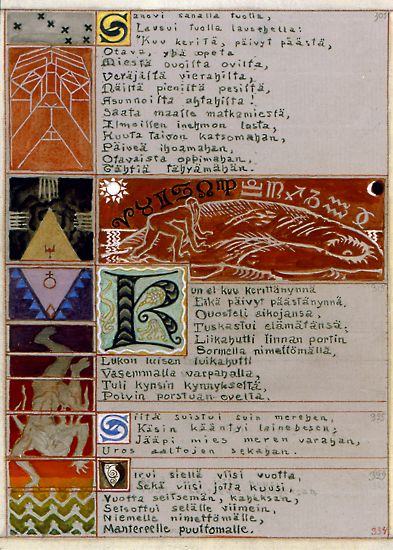
This year marks the 160th anniversary of the publication of Finland’s national epic, the Kalevala. A new exhibition shows how artist Akseli Gallen-Kallela planned a richly illustrated Great Kalevala volume, and how influences from as far away as New Mexico found their way into his depiction of Finnishness.

You could interpret the tried-but-true proverb “Travel broadens the mind” as meaning that you need to go abroad to gain perspective on your own country. Maybe that’s how Askeli Gallen-Kallela came to find himself creating illustrations for the Kalevala, the Finnish national epic, while in New Mexico in the mid-1920s.

Gallen-Kallela (1865–1931), a prominent artist in the Golden Age of Finnish art, travelled around Europe, East Africa and the US. The sketches he made in New Mexico formed part of his Great Kalevala project. Their bright colours and decorative style show influences from Native American art. “I’ve made four full-blown Kalevala pictures here like newly baked bread,” he wrote at the time.

How’s that for a new perspective on Finland? One of the country’s most famous artists was absorbing influences on another continent while interpreting the verses that are considered the very core of Finnishness.

All my life

The Great Kalevala forms the subject of the Gallen-Kallela Museum’s spring exhibition, which marks the 160th anniversary of the Kalevala epic’s publication as we know it today. Author Elias Lönnrot (1802–1884) wrote down the verses from ballads and poetry that had previously belonged to a solely oral tradition. The Kalevala holds important significance in the Finnish cultural identity.

Gallen-Kallela planned a grand version of the Kalevala as his gift to the Finnish people, a gold- and silver-decorated volume with 700 parchment pages including 150 paintings. The leather covers would be adorned with Finnish stones and freshwater pearls.

“All my life, though at first unaware of it, I have prepared for this task,” he wrote in 1925. “The Kalevala with its world of images [has always] spurred my pen….and this work has continued throughout my life wherever I have been on the globe.”

Floor-to-ceiling Kalevala

In the end, Gallen-Kallela completed illustrations for five of the 50 Kalevala “runes” before passing away. The Gallen-Kallela Museum complements these with other Kalevala-themed works by the artist.

The museum is located just northwest of Helsinki in Gallen-Kallela’s waterside studio and home, a miniature castle well worth a visit in itself for anyone interested in his life and work. Some of his most famous paintings of Kalevala motifs can be found downtown, such as the four scenes that decorate the ceiling of the main hall at the National Museum.

The Ateneum Art Museum is home to Gallen-Kallela’s famous triptych The Aino Myth. This spring and summer Ateneum also presents the most extensive show of Kalevala art in decades. It includes more than 200 works by almost 60 artists, all inspired by the Finnish national epic. In addition to bringing together many venerated, famous pieces, the exhibition displays the work of ten artists and ten composers commissioned by the Kalevala Society to express how the Kalevala looks and sounds in 2009.

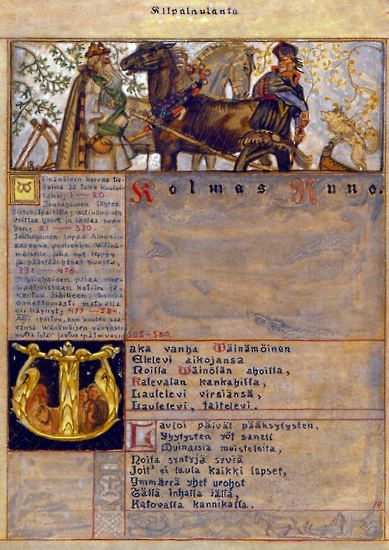
Akseli Gallen-Kallela: Illustration sketch for the Great Kalevala, Rune III: "Väinämöinen, old and steadfast…" The Meeting of Väinämöinen and Joukahainen.

Akseli Gallen-Kallela: Illustration sketch for the Great Kalevala, Rune III: “Väinämöinen, old and steadfast…” The Meeting of Väinämöinen and Joukahainen.Photo: Gallen-Kallela Museum/Douglas Sivén

Akseli Gallen-Kallela: Illustration sketch for the Great Kalevala, Rune I: "Then he spake the words which follow…"

Akseli Gallen-Kallela: Illustration sketch for the Great Kalevala, Rune I: “Then he spake the words which follow…”Photo: Gallen-Kallela Museum/Douglas Sivén

Akseli Gallen-Kallela: Illustration sketch for the Great Kalevala, Rune IV: "Then the little maiden Aino…"

Akseli Gallen-Kallela: Illustration sketch for the Great Kalevala, Rune IV: “Then the little maiden Aino…”Photo: Gallen-Kallela Museum/Douglas Sivén

By Peter Marten, February 2009

Northern twist in Argentinean tango

The subtly surreal titles that As2wrists Dance Company gives its choreographies – how about Tango for the Emotionally Famous or Tango for No Body – hint at the way they find fascinating new angles for exploring the favourite genre of both Finland and Argentina.

Choreographers and dancers Minna Tuovinen and Martin Heslop of Finnish dance company As2wrists (pronounced “as tourists”) export Finnish dance to faraway countries. They have lived, performed and taught in Buenos Aires, Argentina several times for periods of three months to more than a year.

They took Tango for the Emotionally Famous, a dance piece for four contemporary dancers, to Argentina several years ago. A theatrical performance with a twist of tango, it got a lot of space in Argentinean media, with articles in the five biggest newspapers. Tuovinen says it’s only natural that they took the performance to the birthplace of tango.

“We wanted to see what Argentineans made of our thoughts about where tango could be heading,” she says. “Because we’re outsiders to the tradition, it’s easier for us to look for new paths.” Both critics and audiences loved the piece.

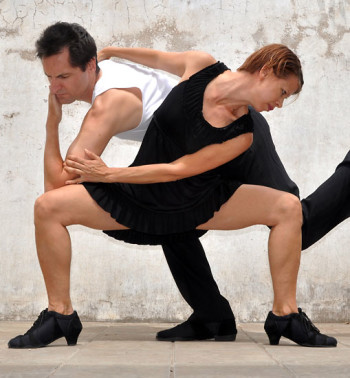
Tuovinen and English-born Heslop continue to explore possibilities for combining contemporary dance and tango in their own work. “We see tango as a pure way of communicating through two or more bodies,” says Heslop.

Body of improv work

3570-tango2_b-jpg

Heslop and Tuovinen “see tango as a pure way of communicating through two or more bodies.”Photo: Martin Heslop

Performances and workshops have taken them all over South America. One typical workshop was held in Bahia Blanca, south of Buenos Aires, for a professional dance company called Cuatroycuarto. It aimed to widen the dancers’ professional skills and enlarge their possibilities to work within their community.

During the workshop, all nine company members composed short solo pieces for themselves, to be performed in workshop demonstrations. Topping it off was an evening of dance entitled Tango for No Body, choreographed by Tuovinen and Heslop. “We think we’ve been successful in incorporating tango and contemporary dance in an interesting way,” notes Tuovinen.

In their teaching, Tuovinen and Heslop utilise a method called Improtango, which they themselves devised. Improtango takes the best parts of contemporary, improvisational and tango techniques. “We are trying to make tango more accessible to contemporary people,” explains Heslop. “The problem at the moment is that the tango is generally taught as a set of fixed steps, whereas we teach it as ideas for improvisation.”

As2wrists takes the clichés, cultural baggage and blatant sexism that are inherent in Argentine tango and create something new. This proves both easy and difficult. “In its essence,” says Heslop, “tango is a few beautifully simple ideas that, when combined in improvisation, become a fascinatingly rich and complex dance that takes years to master.”

As2wrists on the road

Minna Tuovinen and English-born Martin Heslop have been working together since the 1990s, when the couple met as students at the Laban Centre in London. They formed As2wrists Dance Company in 1999. Together, they’ve created and staged more than 30 dance performances all over the world. When in Finland they’ve worked as lecturers at the Theatre Academy in Helsinki.

By Sara Nyberg, December 2009, updated October 2013

Hands in the clay

When Anu Pentik tells the story of how her brand grew from a homemaker’s hobby into a hugely successful design company, it’s difficult to avoid thinking of Cinderella.

Anu Pentik, born Eeva Anneli Pasi in 1942, has travelled an eventful journey from daughter of a working-class family in the southeastern town of Kuusankoski to artistic director of the Pentik design company. Many of her dreams have come true. Today she can concentrate on creating ceramic art, as the family company has delegated management duties to the younger generation.

“I still have the same burning urge to create things as in the early 1970s,” Pentik says. “However, the difference is that over the course of about 40 years, a homemaker’s hobby has evolved into a very healthy business.”

Pentik made its breakthrough soon after it started as a little workshop in the early 1970s. The national press created a Cinderella story about a crafts designer who moved up north to Posio, Lapland, from southern Finland and created ceramics inspired by the northern wilderness.

Her knobbly candle holders were considered fascinatingly different. Anu recalls that the department store Stockmann ordered as many of them as she managed to make.

Wild visions

As a mother of young children, she made ceramics at night in the sauna of the family home. Her husband, Topi Pentikäinen, a physical education teacher, dipped candles in the yard during the summers.

“We were poor and lived in the middle of nowhere,” she remembers. “We didn’t know anything about making ceramics, but were immensely enthusiastic.”

The couple had ambition and wild visions to spare. They created their own applied arts company from nothing, producing ceramics, leather accessories and, for a while, even furniture.

“We’ve needed lots of creative craziness, endurance and people skills,” Anu says. “In addition to managing the company over all these years, I’ve always wanted to keep designing myself and sinking my hands into the clay. We’ve done a lot of hard work, and have spent pretty much our whole lives on it.”

Cosiness over trendiness
2746-pentik2_b-jpg

© Pentik

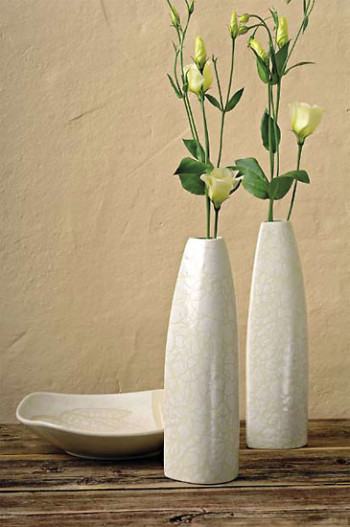
The 1970s formed an opportune period for a ceramics company. The only real competitor was the giant Arabia corporation, and imports were negligible compared to today. At first the couple created a limited partnership company called Anu Pentikäinen, but soon shortened the name to the catchier Pentik. The fact that Pentik took off in Posio was a decisive factor. Northern Finland brought a positive image to the company and the location guaranteed peace and quiet to concentrate on work.

The ceramics factory on “Pentik Hill” was inaugurated in 1974. The era was marked by intense growth. The company’s designers included Peter Winqist, Marja Mykkänen, Irja Leimu and the Korean-born Suku Park. One of Pentik’s secrets of success has been that Anu Pentik has wanted to make crockery for regular Finnish consumers. Cosiness has been more important than being trendy.

Anu emphasises that the company would not exist at all without her husband.

“Topi has always been able to think grand thoughts. When I was running around in the world, he took care of the home and the children. He also served as managing director for decades. I’m grateful that our marriage has lasted.”

She is also happy that the couple’s children have joined the company and manage it with skill.

Ever upward

The successful company has seen hard times, too. In the early 1990s, Pentik was on the verge of bankruptcy. Everything except ceramics was trimmed away.

“Even in the difficult times, we saw that our only alternative was to go forward. We didn’t want to let our employees down. During those years, we learnt that a company must be managed through careful accounting.”

The staff members have been happy at Pentik, with most working there for many years. Anu underlines that the company has made its goals clear to everybody; it has trusted its employees and taken care of them.

“We’ve always been open with the staff about the company’s profits and debt,” she says.

For about a decade, the Pentik range has included glass and wooden objects as well as textiles made in Asia. Keeping the ceramics production in Posio has been a matter of honour for the family.

“In Posio, we produce limited series that show the handiwork. I believe strongly that other companies can keep a part of their production in Finland in the future, too.”
 
Originally published in “Breakthroughs – 90 Success Stories from Finland”, 2007

By Essi Salonen, December 2009
The lightness of night in Helsinki

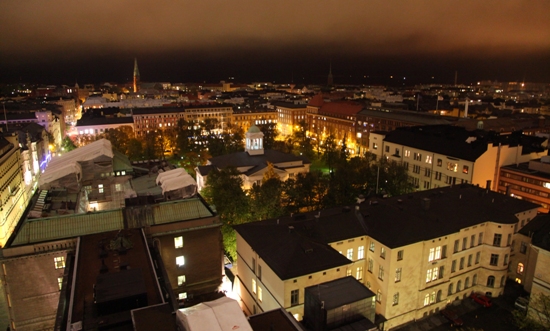
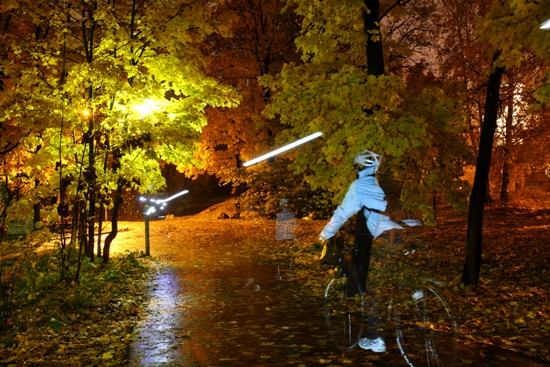
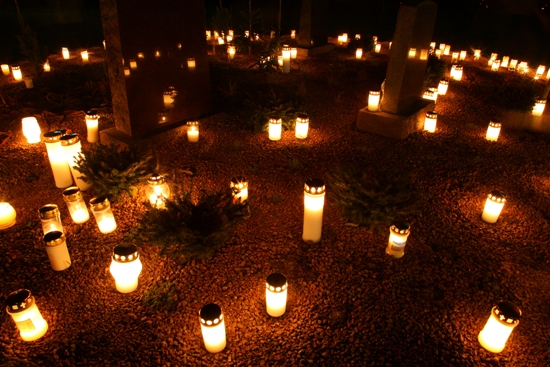
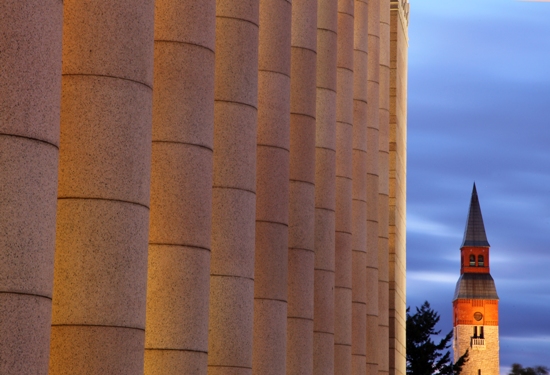
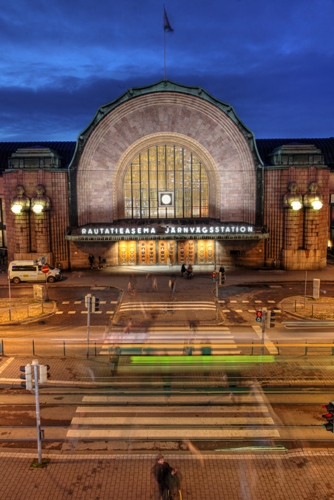
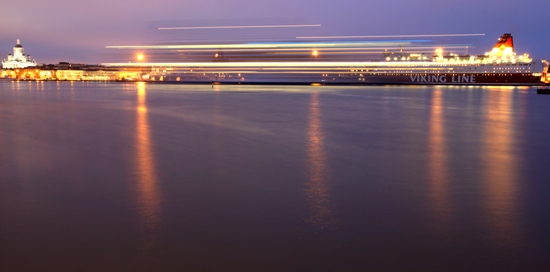
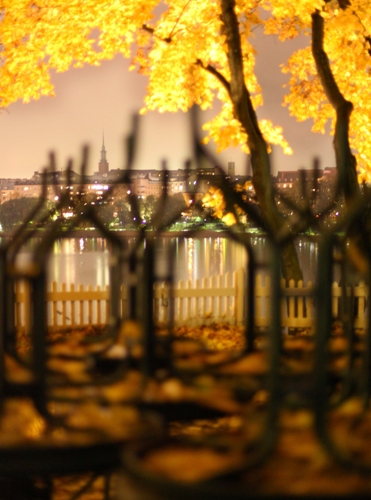
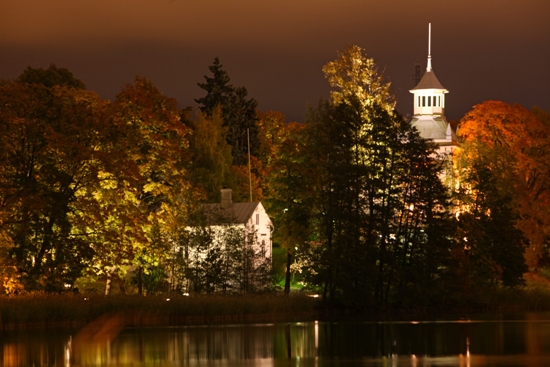
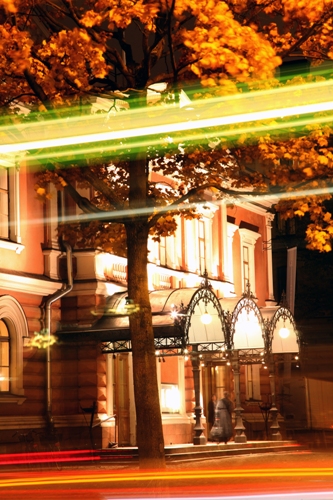
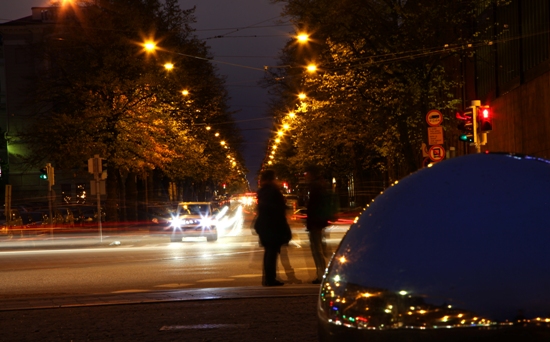
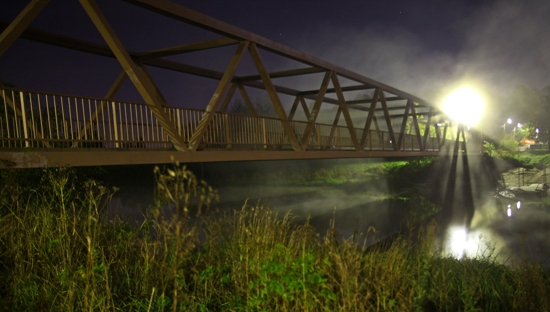
For photographers, handling short days and darkness is a question of attitude. We look at the Helsinki night in a new light.

Waiting for the light to fade is part of the package for photographers in summer, when the enemy is the harsh, unsubtle glare of the midday summer sun. Autumn brings new challenges.

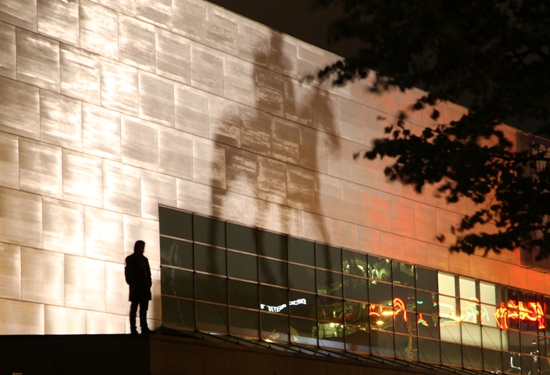
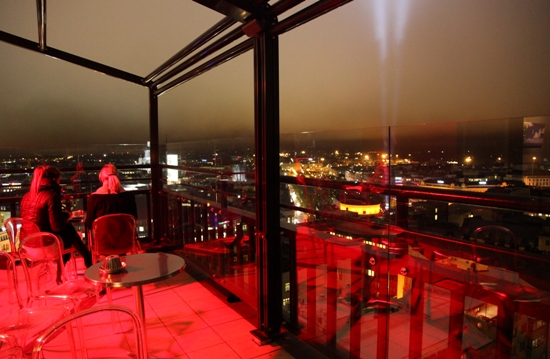
Handling the short days and abundance of darkness that accompany autumn and early winter in Finland is a question of attitude. If you’re prepared to keep your eyes open, city lights reflected in the rain, glistening autumn leaves and shadows on the sides of buildings have their own attraction.

Being a photographer is an advantage at this time of the year: It forces you to see things in a different light. Hopefully these shots will help those of you who put your cameras away for the winter to see Helsinki’s long nights in a new light.

Photos and text by Tim Bird
Captions by Peter Marten

Progressive prison keeps doors open

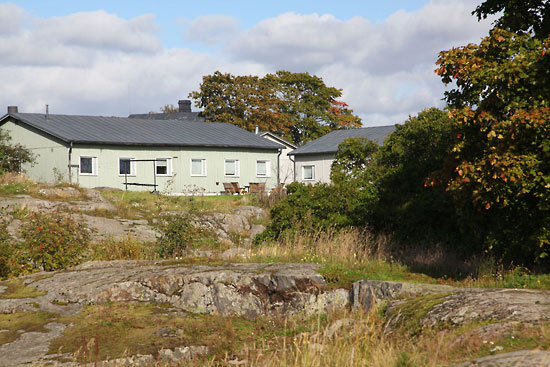
On the main island of the Suomenlinna fortress in Helsinki’s harbour entrance, tucked away behind the 19th-century fortifications close to the rocky shore, you might stumble across some basic but comfortable temporary accommodation.

The well-made wooden huts, reminiscent of a youth hostel, are located in one of Helsinki’s most idyllic spots, so it will come as a surprise to learn that most of the residents are looking forward to leaving. That’s because this is Helsinki’s open prison, one of 13 across the country.

The sign on the conspicuously unlocked gate calls it a “labour colony”, but this is a relic from the prison’s previous incarnation. It has been a prison since 1973 and can house 95 male inmates.

Preparing for real life

4225-prison2_b-jpg

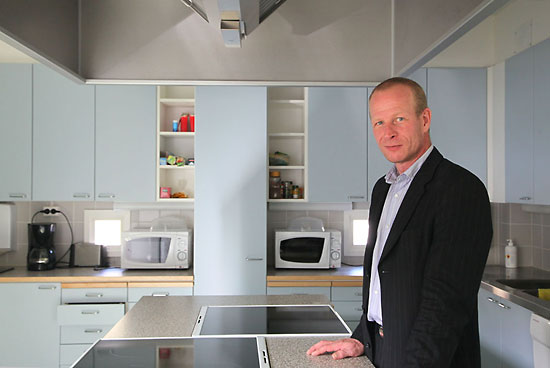
Suomenlinna prison director Tapio Iinatti in a communal kitchen: In some respects the accommodations are reminiscent of a youth hostel.Photo: Tim Bird

“There are all kinds of criminals here except sexual offenders, including four with life sentences who are approaching the end of their terms,” explains Tapio Iinatti, the genial ex-policeman who now directs the prison and heads a 12-strong team of guards. “Prisoners stay with us from six months to two years. The youngest inmates are about 20, the oldest is 79.”

The single-room, single-storey accommodation includes shared kitchens, toilets, showers and saunas. Giant flatscreen TVs dominate the lounge area, and a barbecue shelter stands near a quiet pond. There is nothing draconian or even severe about this place, but to dwell on its comforts, insists Inatti, is to miss the point of the prison’s philosophy.

“The main idea here is to prepare the inmates for release into the community. It doesn’t make sense for an inmate to be in a closed prison for, say, six years and to suddenly enter civilian life. We also offer rehabilitation for people who have had problems related to alcohol, drugs or mental illness. And in any case, it’s not so easy to be here.”

A far cry from Alcatraz

4225-prison3_b-jpg

The property is favourably located close to the sea, but those who live here look forward to leaving.Photo: Tim Bird

In fact, they cannot just be here. Prisoners have paid jobs that help them to meet basic living costs, including those for food. Permits for visits to the mainland – even those that include family overnights – are granted on a regular basis, and attempts to escape are limited to a few dozen a year. The public ferry is a ten-minute walk from the prison entrance and this is not exactly Alcatraz, but the incentive to flee is cancelled out by the motivation to stay.

Some inmates – of whom about a dozen are non-Finnish – are immersed in studies and others even have jobs in the city. Many are employed in renovating the UNESCO-listed fortress buildings and structures of Suomenlinna, Helsinki’s prime tourist attraction. The stonemason skills acquired give them good employment prospects back in the ever-renovating capital.

Fifty-eight-year-old Pertti, convicted for his involvement in sports doping, has a job as a store man that earns him seven euros an hour. “It’s a good system,” he says. “In any case it has worked well for me. When my sentence is served, it will be better to go back to a normal situation from here than it would be from a closed prison.”

Widespread fame

Iinatti is aware that not everyone approves of the enlightened policy of the Finnish prison system, but his relaxed demeanour does not seem to diminish the respect shown to him by the inmates. He also points out that serious offenders do not start their sentences on Suomenlinna, although he regards his charges as equal and professes not to be interested in their individual offences.

No objections are raised by the local community, who are more likely to be disturbed by drunken summer picnickers than prison inmates. In any event, the system has attracted attention from authorities as far afield as China and Italy.

Thirty-eight-year-old Janne, who has just three weeks left of his ten-month sentence for felonious assault, is similarly approving. He has been able to continue his carpentering skills and will get his old job back when he is released. “It’s still a prison,” he says. “Your freedoms are still limited. It’s not as easy as it looks.”

By Tim Bird, December 2009
Santa’s new gift to Lapland’s economy

He looks like Santa’s brother, so it’s appropriate that Jussi Eiramo is completing a new tourist project in Finnish Lapland that will charm the world’s children – and generate some economic magic.

“In this hectic and harsh world, we need fairy tales. In some of us it may be deep down, in others it’s not as deep, but we all have the Christmas spirit.” These may sound like the words of an innocent, but when they’re spoken by a jovial, white-bearded gentleman in the middle of Lapland they seem to carry more weight.

The white-bearded gentleman in question is not who you think it is, although you suspect that Father Christmas and Lapland entrepreneur Jussi Eiramo might well be twins. Eiramo comes across as part Santa-in-overalls, part veteran hippy and part shrewd businessman as he puts the finishing touches on his new Santa’s Resort, just a 20-minute drive from Ivalo Airport in northern Lapland.

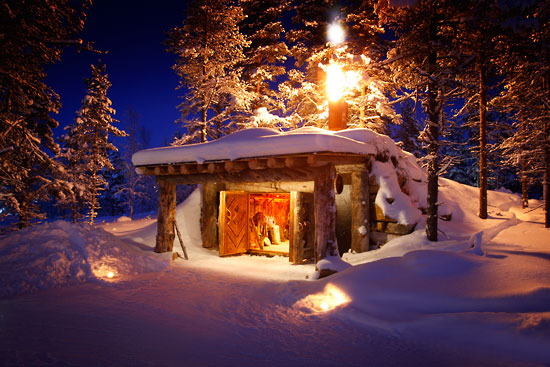
The new resort realises Jussi’s latest business dream, adding to the nearby Kakslauttanen Hotel and Igloo complex. At Kakslauttanen you can choose between sumptuously furnished log cabins and snow igloos for your Arctic accommodation, or lie back in luxuriously heated glass igloos with a clear view of the sparkling starlit heavens or awe-inspiring Northern Lights.

In search of snow and reindeer

|||Photo: Santa's Resort

The fruit of a multimillion-euro investment, Santa’s Resort is not the first business attempt in Finnish Lapland based on the Christmas legend. For decades, dozens of charter flights packed with families in search of snow and reindeer have been packing the runway at Rovaniemi Airport, right on the Arctic Circle.

The shops, tours and services at the well-established Santa Claus Village and underground Santa Park in Rovaniemi are important sources of local employment. Kakslauttanen may be 200 kilometres further north, but Eiramo envisions similar year-round popularity for his venture.

“I don’t think we will be competing with the Rovaniemi Santa Claus Village,” says Jari Virtanen, who heads Kakslauttanen’s marketing. “I think we’re going to complement each other.”

Eiramo’s vision took more than a decade to become reality, and he hopes planning and building bureaucracy for any similar future projects might be expedited for the sake of the local economy. “The project has provided employment for about 30 people, from builders and contractors to artists and designers,” says Virtanen. “We used local labour as much as possible, so the financial gains remain in this area.

“When it’s fully open the resort will offer work to up to 15 people, and more during the high season.” This figure does not include the jobs generated for bus drivers, tour guides and other tourist service providers. Onsite accommodation is not included in the resort plans – not yet – but the cabins and igloos of Kakslauttanen and the hotels of the Saariselkä holiday village are handily placed.

Peaceful celebration

|||Photo: Santa's Resort

“The Celebration House at the heart of the resort offers a long-awaited and sufficiently large space where it’s possible to arrange big meetings and conferences as well as other events, such as concerts,” Eiramo says. “There was a great need for this kind of space in this part of Lapland.”

“We strongly believe that the project will benefit Ivalo Airport, as well as the rest of the area,” says Virtanen. “It looks like there are tour operators new to our area who are planning to start charter flights to Ivalo, and there could be a wider effect on neighbouring areas of Norway and Russia.”

Eiramo concludes on a charmingly, but convincingly authentic, idealistic note, offering up the resort as a neutral venue at which to iron out the difficult issues of the day:

“The Finnish government wants to make Finland a superpower in brokering world peace. Now Father Christmas can provide a calm and neutral place for this purpose, in the Celebration House in the middle of the peaceful Lapland natural environment. This is where you are going to find the real spirit that’s going to help you solve the conflicts of the world!”

By Tim Bird, November 2010

Even the modern Christmas season is a time of tradition in Finland

No matter how modern it may become, Christmas will also always be synonymous with age-old traditions. We take a look at the high points of the Finnish Christmas season.

In addition to the first weekend of Advent and the unveiling of outdoor Christmas decorations downtown, there are usually a multitude of pre-Christmas parties with friends and colleagues. Independence Day, December 6, isn’t technically related to Christmas, but it happens to be held during the same season.

The next milestone in the lead-up to Christmas is December 13, Santa Lucia’s day. It’s celebrated with a beautiful, singing procession led by a girl or woman dressed in white and wearing a crown of candles. This observance originally came to Finland from Sweden, where it became linked with Christmas because it happens to fall in mid-December.

Lucia was originally a Sicilian maid who defied her father by refusing to marry the man he had chosen for her. She suffered a martyr’s death.

Christmas Eve and Christmas Day

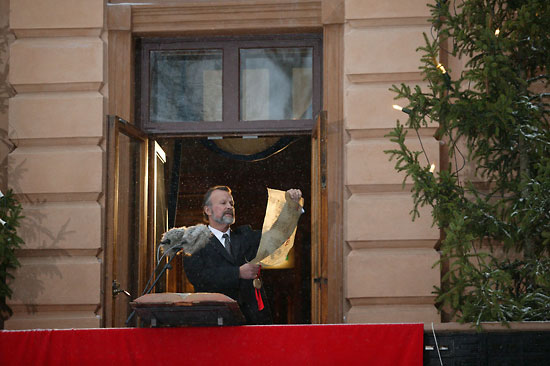
A man standing in a window, reading from an old-looking scroll.

In a tradition that has roots in the 1300s, “Christmas Peace” is declared in Turku on December 24.Photo: Esko Keski-Oja/City of Turku

In the Nordic countries, the most important Christmas celebration takes place on Christmas Eve. Finnish traditions include the Christmas sauna and the preparation of Christmas dinner. The highlight of the evening comes when Santa knocks on the door and asks, “Are there any well-behaved children here?” Naturally, every home contains only good children, and they all receive presents.

Since Christmas Eve forms the most important day of the Christmas season in Finland, it is fitting that at noon on the Eve, “Christmas Peace” is proclaimed in Turku, the oldest city in the country. The tradition dates back to the 1300s.

The bells of the 14th-century Turku Cathedral sound in many a Finnish home as people view the age-old ceremony on television. Then the festivities begin.

Christmas Day is a time for rest and relaxation, like reading books that Santa Claus brought and eating food left over from Christmas Eve.

Don’t forget the tree

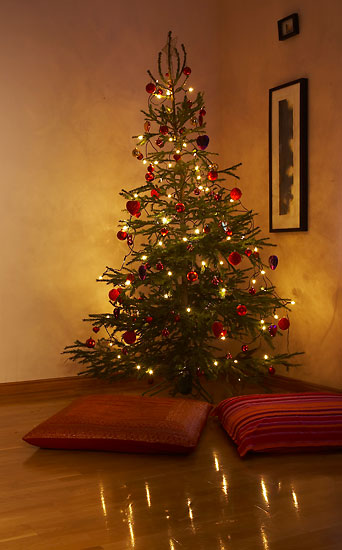
The Christmas tree is brought home on December 24 at the latest. A star is placed at the top of the tree and the branches are adorned with ornaments. The rural gentry and wealthy townsfolk began to adopt Christmas trees in the 1820s. The earliest account of a Christmas tree inside a Finnish home dates from the year 1829, when Helsinki dignitary Baron Klinckowström placed eight of them in his reception rooms.

A decorated Christmas tree in a dimly-lit room.

The Finnish Christmas tree tradition got its start in the 1820s and became widespread in the late 1800s.Photo: Miemo Penttinen/Plugi

The population at large started adopting the tradition in the 1870s, first in the southwest and later in other regions. By the early 20th century, the Christmas tree was becoming a familiar sight in almost all Finnish homes.

There was a public outdoor Christmas tree in the town of Tampere in 1894. Helsinki authorities have placed a Christmas tree on Senate Square every year since 1930.

Helsinki has also donated a Christmas tree to Brussels every year since 1954, just as Oslo, Norway, sends one for Trafalgar Square in London.

By Sinikka Salokorpi