Highly valued Helsinki

It’s official: For the third year in a row, Helsinki makes the top five in Monocle’s list of the world’s most liveable cities.

When the esteemed Monocle magazine, edited by guru of cool Tyler Brûlé, recently released its annual Most Liveable Cities Index, it again heaped compliments upon the Finnish capital. The magazine’s researchers spend months compiling their top 25, putting the world’s leading cities through a rigorous evaluation process. They rank the cities based on a range of criteria including education, public transport, crime rates and hours of sunshine.

Helsinki, a region of 1.3 million inhabitants, has been strong at fifth place in the Monocle index for three years in a row. It scores praise for its high level of state-funded education. Medical care is almost entirely financed by tax revenue, the city is unveiling several new institutions to boost small businesses and, as of 2014, residents will enjoy the convenience of a new Ring Rail Line around the metropolitan area.

This northern capital has truly come out of its shell. Gone are the days when Helsinki could be referred to as the “little brother of Stockholm”. (By the way, the Swedish capital placed sixth.) The Finnish capital is in the midst of the greatest infrastructure upgrade it has seen in a century, and it is gearing up for its year as World Design Capital in 2012.

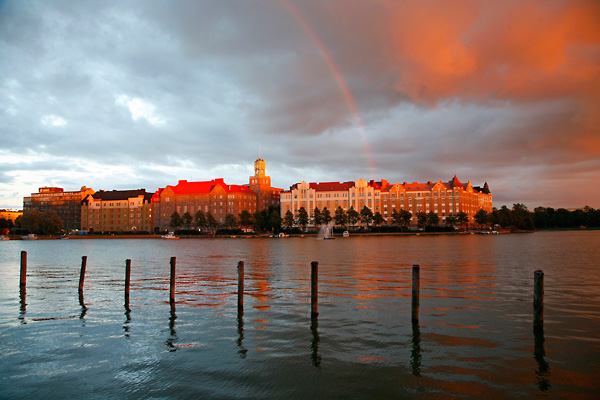
In front of the curve: Monocle gives Helsinki top marks.

In front of the curve: Monocle gives Helsinki top marks.Photo: Pekka Saksala

On the international level, Monocle mentions that Helsinki-Vantaa Airport forms a major base for Asia-bound Europeans, and that a high-speed rail connection will soon cut several hours off the train trip to St Petersburg in neighbouring Russia. At this rate, Helsinki is slated to become one of Europe’s most visited capitals, and will likely enjoy its ranking at the top of the charts for quite some time.
 

By Vauldi Carelse and Justin Bromberg, updated August 2010

The nature of Helsinki

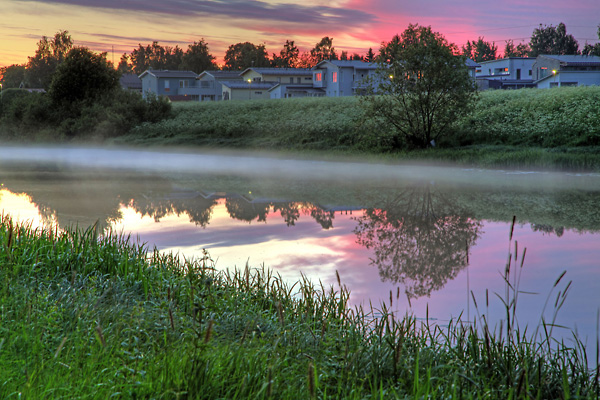
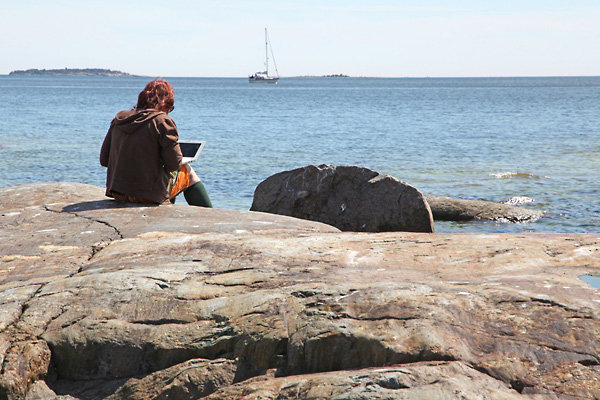
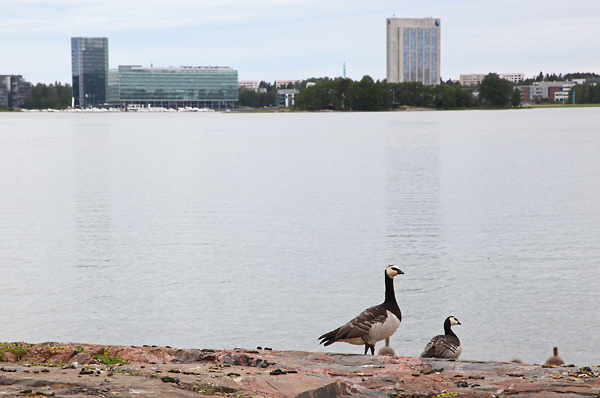
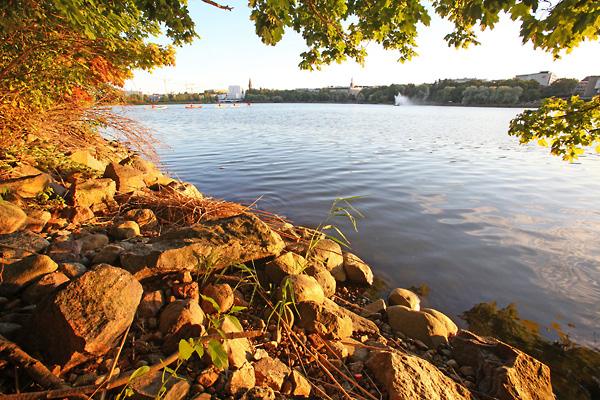
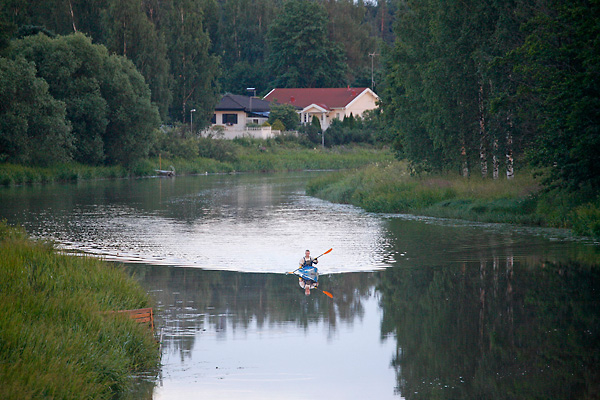
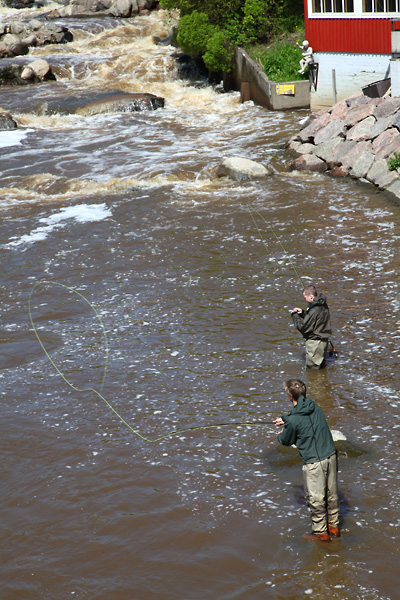
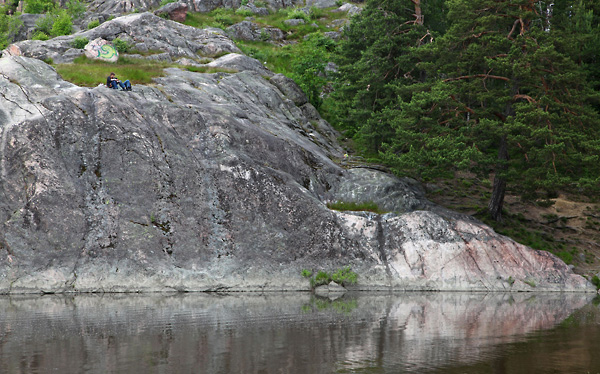
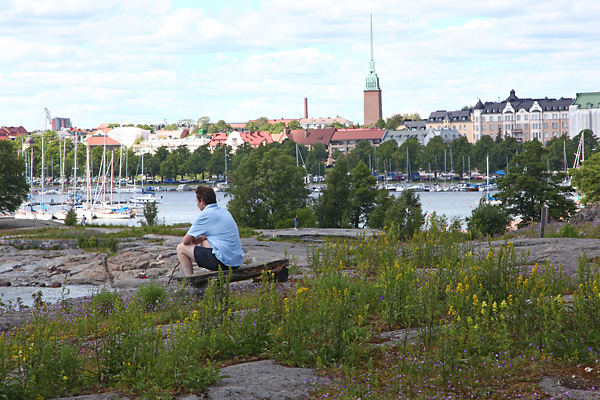
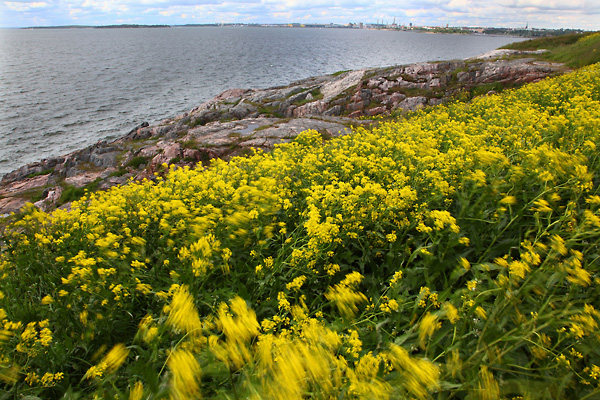
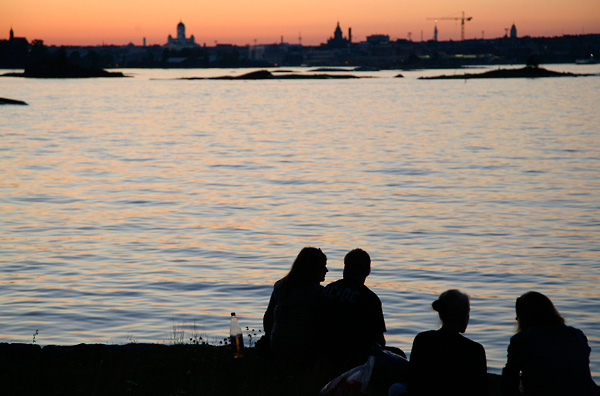
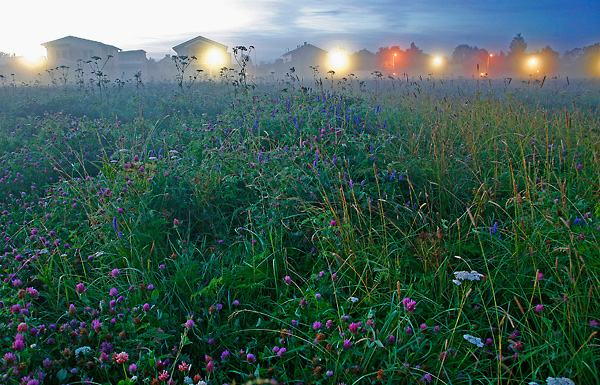
We could go on and on about how close Helsinki is to woods, water and wildlife, and how you don’t even have to leave the capital to find greenery and peaceful, relaxing scenery.

However, a picture is worth something like 999 words and this article has already used up 49, so without further ado, we direct you to the 12 great shots in the slideshow below. After you view them, you’ll come out almost 12,000 words ahead.

Photos by Tim Bird, July 2010
Text by Peter Marten

Inspiring children to play music in Finland

Kaustinen, a village 450 kilometres (280 miles) north of Helsinki, has hosted the world-renowned Kaustinen Folk Music Festival each July for more than 50 years. If you hang around the festival any year, you’ll see Mauno Järvelä walking by the main arena, carrying a violin case. Along the way he stops to chat with acquaintances and friends.

Mauno Järvelä, cofounder of the internationally acclaimed folk group JPP, is in his element in the midst of the festival atmosphere.

“When the first real folk festival was held in 1968 I was still a youngster, but I started playing as soon as my arms reached the length of a violin,” says Järvelä. “In the 1950s, there were no small violins available in Kaustinen, so you didn’t get to play as a kid. When there were weddings in the summertime, I always sat on the edge of the stage carefully listening as the master musicians played.”

In a way, Järvelä’s memories reveal the basis of his life’s work. One of his greatest accomplishments of his life has been inspiring large groups of children to play music and sing together as part of the Näppärit (“pluckers”) groups. The esteemed Sibelius Academy in Helsinki awarded Mauno Järvelä a rare honorary doctorate in June 2012 in recognition of his contribution to music education.

Deep folk traditions

There have been folk musicians in Kaustinen for more than 200 years. Over the past decade, the area has sent an exceptional number of professional musicians out into the world, at first wind instrument players and church cantors, and more recently string players.

“The Folk Music Festival was preceded by many other festivals that featured Kaustinen folk musicians and professionals who got their start here,” says Järvelä. “At these events, the folk players got a new place to show off their skills. Alongside the old musicians, a generation of new players began to appear. They began to be called näppärit or ‘string pluckers’. So the Näppärit were never formally established.”

To Helsinki and back again
3603-jarvela2_b-jpg

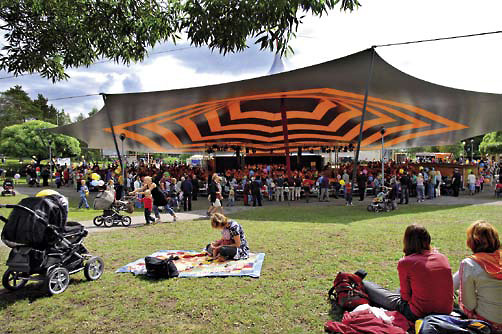
Kaustinen’s main tent forms the venue when 200 to 300 children, Mauno Järvelä’s students, take the stage as Näppärit (“string pluckers”) each summer.© Breakthroughs

But before Järvelä’s big idea came to fruition, he toured the Helsinki region with his fiddle. “I was the youngest of eight children, and the only one to graduate from high school. I took the shorter course of mathematics and then got into the Sibelius Academy in Helsinki.”

Inspired by his alma mater, Järvelä began playing in orchestras, first at the Finnish National Opera Orchestra and then the Finnish Radio Symphony Orchestra. In 1978, he returned to his roots in Kaustinen. First he was offered work with an orchestra in Kokkola, with teaching making up half of his work.

Soon Järvelä also started to teach at Perhonjokilaakso Folk College. That became his full-time job in 1985. “For a long time, I had been thinking children could be taught music in a new way,” he says.

“Musical education would no longer be simply professional training with tests and studies, but would instead be a hobby that offered joy and experiences to as many as possible.”

Great idea

Järvelä’s idea was that instrument lessons would use the time-tested methods of classical music, but that the cornerstone of playing together would be folk music.

“First we play and sing ‘plucking music,’ easy tunes that give the kids the basis for folk songs that are more difficult in terms of style and technique. Näppäri music is arranged in such a way that there is an appropriate role for everyone depending on their skills.”

Within the past two decades, the Näppäri idea has spread to the other Nordic countries as well as Germany and Switzerland. Näppäri courses have been held as far afield as the USA and even South Africa.

“The Näppärit get their biggest audience – up to 3,000 people – during the children’s matinee at the annual Kaustinen Folk Music Festival, which forms an ideal showcase for the programme. Every time there are parents with children who come up to ask how they can join the Näppärit.”

Strength of music

Järvelä remembers when he was 11 or 12 years old and got to join a musical tour around the village with older masters of folk music, arranged by the legendary local café owner Santeri Isokangas (1885–1967).

“There was an unbelievably wonderful atmosphere,” Järvelä says. “Now – as an old folk player myself – I’m happy to play music with children. They don’t have any unnecessary prejudices, and you can see from their faces how much they enjoy playing.

“It’s really something when you can just go under a birch tree and play folk music on the world’s most distinguished instrument to your heart’s content – or play in a packed festival arena with 200 of your friends.”

In addition to the Perhonjokilaakso Folk College, Järvelä teaches at the Kaustinen Music High School. And plays. And can mostly decide what he wants to do.

“I started playing myself with the Järvelä village tunes and the Järvelä village style. I got my first lesson from Juha Kangas (founder of the Ostrobothnian Chamber Orchestra).” The fiddle group at the Kokkola Workers’ Academy and some national music camps were important steps along the way.

“At the Sibelius Academy in Helsinki, I got to study with the renowned violin professor Onni Suhonen. It hasn’t always been easy, but the strength of the music has carried me forward, and it seems like it still does.”

Originally published in Breakthroughs: 90 Success Stories from Finland (2007); updated in 2012 and 2025

By Hannu Koskela
Helsinki in an ice cream cone

The Finnish capital’s most treasured ice cream company upholds its legacy by keeping things simple.

One afternoon in the spring, before summer suddenly arrived in Helsinki, the elusive Nordic sun was making one of its first appearances of the year. A frosty wind was ruffling the feathers of seagulls and the bare branches of the trees along the ocean promenade in Kaivopuisto (Well Park), but a determined queue had nevertheless formed outside of the sturdy, wooden kiosk of Helsingin Jäätelötehdas (Helsinki Ice Cream Factory). Coat-clad families, couples and groups of friends sat on nearby benches and ledges with cones full of colourful ice cream.

Despite the cold winters, Finns love their frozen treats – a population of 5.4 million consumes 70 million litres of ice cream yearly – and the legendary Helsingin Jäätelötehdas, founded in 1922, enjoys an unabashedly beloved status. Many people have enjoyed the same flavours since childhood, and an informal survey of Helsinki residents will quickly reveal that the brand is widely considered the city’s best.

Nevertheless, the grandchildren of the Italian immigrant family who started the company still run it with hands-on devotion. The job isn’t always glamorous and the future is by no means certain, but keeping things small has allowed the Magis to maintain the company’s original promise of freshness.

Always fresh

2476-jaatelo2_b-jpg

Mouthwatering: Beautiful pastel colours are part of the package.Photo: Laura Palotie

The enterprise was started by six immigrant brothers from Tuscany. Noticing the absence of ice cream vendors in the Finnish capital, the brothers began to make ice cream using familiar Italian recipes and opened a cart in the centre of town. During the winters they made and sold angel figurines to make ends meet.

Today the company is run by sisters Annette and Tina Magi and their husbands Petri and Björn. Its 18 flavours are made in a factory on Mäkelänkatu and sold the following day.

“We have no plans to expand to store sales because we want our product to be fresh,” Annette Magi says. “On hot days we make the ice cream in two shifts. It never stays in freezer for a month or even a week, and people can taste that. That’s probably why they like it so much.”

The soft texture, generous portions, pure flavours and deep pastel colours of Helsingin Jäätelötehdas ice cream certainly inspire loyalty. So much so, in fact, that introducing new varieties has proven tricky. They only rarely come out with a new flavour.

“If we want to introduce a new flavour we have to get rid of one as well, mainly because of space constraints,” Magi says.

Helsinki mainstay

The company’s insistence on remaining small amidst the large, international companies that occupy Helsinki’s other ice cream stands also means looking ahead only a few years at a time. The city periodically allows bidding on the city’s kiosks, and Helsingin Jäätelötehdas is up against companies many times its size.

Meanwhile, income depends wholly on the weather. “There are a lot of factors we simply can’t control. Weather is the one single thing that brings our sales up or down,” Magi says. “An ice cream cone is such a small purchase that global economic trends don’t affect us. But even one or two rainy summers can be a real blow.”

Annette’s and Tina’s children are still in their teens, so it’s too early to tell if family ownership will carry on to the next generation. For now, she and her family will continue focusing on the product itself and hoping that the city’s kiosk rental costs will remain within the company’s means.

“I have no idea what will happen in the future,” she continues. “This really is a Helsinki mainstay and people love it, but it isn’t something you get rich from. This is a lifestyle for us.”
 

By Laura Palotie, June 2010, updated July 2015

Wilderness on the water

Archipelago National Park in southwestern Finland is expecting to attract more international tourists after it quietly made history in December.

After a stringent two-year certification process, Archipelago National Park (ANP) is the first maritime area to be certified as part of PAN Parks, a network of European wilderness areas set up by WWF in 1997. Its ten other parks range from mountainous areas of Sweden, Romania and Georgia to coastal areas in Portugal and Italy. ANP became Finland’s second PAN Park after Oulanka in northern Finland, which was inducted in 2002. So far seven local companies in the archipelago have been certified as PAN Parks partners. These firms – which must meet strict ecological standards and offer multilingual services, feature everything from sailing cruises and handicrafts to dining and lodging. They include the cosy bed-and-breakfast Backaro on the idyllic little island of Nötö, which is accessible by ferry. Backaro innkeeper Nina Björkstén says that as the first summer is just beginning, the PAN Parks partnership has not had much impact on her business yet. “I don’t think people really know much about it yet,” she says. “But I have high expectations for the future. A growing number of people want to holiday in the wilderness, in a way that’s in tune with nature. But it always takes a while for word to get out.”

Vitamin boost

“So far the most visible sign of these partnerships is that some entrepreneurs have developed new products,” says Laura Lehtonen, senior planning officer in charge of recreation and tourism at the Finnish Forest and Parks Service. “I’m happy that there are now more chances for people who don’t have boats of their own to explore the park.” “This has really served as a ‘vitamin boost’ to the local entrepreneurs,” agrees Annastina Sarlin, who drew up an ecotourism strategy for the Forest and Parks Service. “It’s been a trigger for them to network better, improve their quality and raise the profile of the archipelago and of ecotourism in general. And it’s helping to ensure that tourism develops on a sustainable basis.”

Seals and seabirds

Bed-and-breakfast Backaro provides cosy lodging for those who fancy a holiday in the wilderness of the Archipelago National Park.Photo: Sinimaaria Kangas

A central aim is, of course, to preserve the area’s natural state. The core areas of PAN Parks exclude extractive industries such as fishing, hunting, logging or mining. ANP’s 10,000-hectare core zone is the largest marine-fishing-free area in the Baltic. Seals and waterfowl are also protected from hunters here. The best ways to get around ANP and see its rich wildlife are decidedly environmentally friendly: sailing, kayaking, hiking and biking – as well as diving. People have lived on these islands since the Iron Age, with the permanent population peaking in the 1950s. In recent decades it has become mostly a vacation area with summer cottages dotting tiny islets. The park averages 57,000 visitors annually – a number that is set to rise with the international publicity and enhanced services associated with the PAN Parks certification. Does this pose a threat? “I’m not afraid of there being too many visitors,” says Lehtonen. “It’s not such an easy place to get to, so I don’t foresee any mass migration of tourists into the park!”

Getting to Archipelago National Park

The easiest access is via Kasnäs, 2.5 hours’ drive west of Helsinki (4.5 hours by bus). While not charming itself, Kasnäs has one of the park’s two Visitors’ Centres and is a hub for ferry traffic and tour operators. You can also start at Nagu and Korpo islands, also 2.5 hours by car from Helsinki, (one hour from Turku). They offer tourism firms and an Archipelago Centre.

By Wif Stenger; June 2010

Three environmental portraits

These minisites feature Finnish nature and natural phenomena, so full of colour and texture that you’ll think you’re there.

The heart of Finnish lakeland

A special report on Saimaa, a labyrinthine system of lakes with 15,000 kilometres of shoreline and 14,000 islands.
More »

Beneath the waves of the Archipelago Sea

Photographer Jukka Nurminen dives deep to show us Finland’s underwater natural world.
More »

Aurora Borealis

We present the Northern Lights in words, pictures and video footage.
More »

Night hiking in the Finnish Land of the Midnight Sun

Everywhere in the world gets the same amount of daylight in a year, but this sunshine is shared out in very different ways. Due to the 23.5-degree tilt in the Earth’s axis in relation to the position of our local star in space, arctic regions face the sun round the clock during the high summer, when they get most of their daylight.

In winter, conversely, these lands are left in the dark for several months – but that’s another story.

The northerly location of Finnish Lapland’s Pyhä-Luosto National Park (latitude just above 67 degrees north) means the sun doesn’t set here for several weeks around the summer solstice (June 21).

Trek to the top

After the long Nordic winter, the call of this extra sunshine is irresistible. To make the most of the 24-hour daylight in mid-June, I set off for a late-night hike through the hills of this spectacular park.

From the now completely snow-free ski resort of Luosto, it takes less than two hours to follow the well-marked trails through atmospheric forests and heather moors to the summit of Luosto Fell, 514 metres above sea level. The last and steepest part of the climb is literally breathtaking – but then so is the panoramic view from the top over an unspoilt mosaic landscape of natural forests, bogs and lakes stretching off towards a range of bluish hills on the distant horizon.

Sounds of silence

4418-midnightsun3_b-jpg

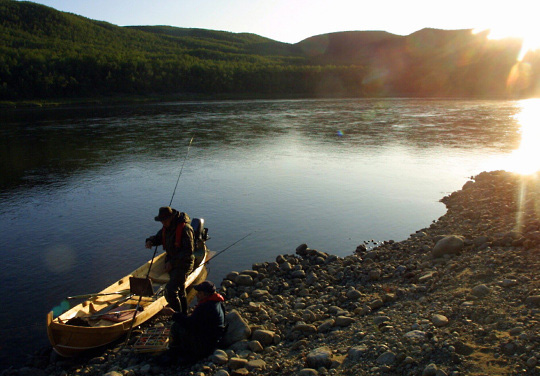
The midnight sun enables anglers to fish round the clock during high summer on the River Teno in Finnish Lapland.Photo: Pekka Sakki/Lehtikuva

I am thrilled to have the mountaintop all to myself at midnight. The only sounds are the plaintive calls of arctic birds, and a brisk wind that has fortunately kept any bloodthirsty mosquitoes off my scent.

Cynics might claim there’s nothing special about the midnight sun, and that daylight is daylight no matter what time your clock shows. But there really does seem to be something unusual about Lapland’s late-night light.

Sunset-watchers are often frustrated by the briefness of the event’s colourful climax, but the midnight sun naturally prolongs the ecstatic highlight of the whole sundown experience.

Getting the most out of life

On a midsummer night’s walk, your body might feel confused at first, having expected to wind down as usual. But the sun’s warming rays and vitamin D soon add a spring to your step, enabling you to remain active during the small hours you would normally waste in slothful slumber. Hiking in the midnight sun is a great experience for anyone who likes to squeeze as much from life as possible.

The further north of the Arctic Circle you go into Lapland, the longer you can enjoy the midnight sun. In Utsjoki, Finnish Lapland’s northernmost village, it shines from May 16 to July 27.

There’s only one midnight sun

Popular local postcards feature time-lapse images of the sun at various stages along its path, dipping down to a level just above the horizon at midnight before rising again. After receiving such a card, a mystified friend demanded the scientific explanation behind this baffling Finnish phenomenon of “the midnight suns!”

By Fran Weaver

Finland for the birds

Keen birdwatchers from around Europe are increasingly flying into Finland to spot rare and exotic birds and then shoot them – with their cameras.

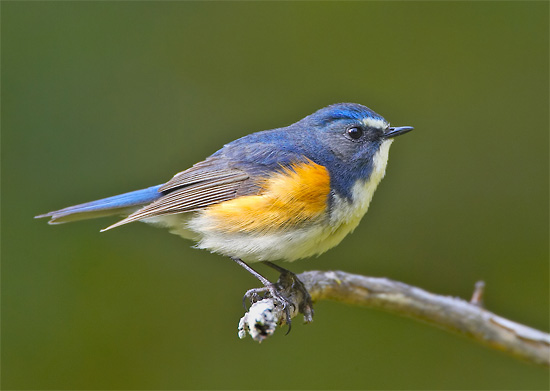
On a misty morning on Iivaara Hill, south of Kuusamo, Finnature guide Antti Peuna picks out a twitter from the chorus of birdsong echoing through the ancient forests. He has recognised the song of the red-flanked bluetail, a beautiful bird of the Siberian taiga found here at the westernmost edge of its range. We stalk and eventually spot the elusive songster, perched on top of a slender spruce tree.

On the way back to Kuusamo, Peuna pulls up by the roadside, opens the window, and plays a CD recording of a male rustic bunting – a rare northern species. Sure enough, a small black, white and brown bird soon appears to challenge its invisible rival. A short walk away we stop to scratch a tree trunk, and a curious Tengmalm’s owl pops its head out of its nest-hole to see who’s about.

Early birds

Finland has become a leading destination for birdwatching tourism, as the most accessible place to find such exotic species. Expert local guides are willing and able to help visitors track down the birds on their personal wish lists. Guests are typically fetched from their hotels at 3 a.m. to make the most of the early hours when birds are most active.

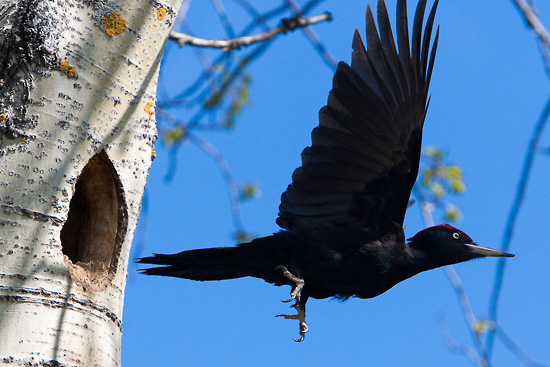
© Jari Peltomäki / Finnature The rare red-flanked bluetail is one of the many exotic species that brings birding tourists to Kuusamo in NE Finland. Photo: Olli Lamminsalo Striking black woodpeckers are a familiar sight in Finland's forests.

The rare red-flanked bluetail is one of the many exotic species that brings birding tourists to Kuusamo in northeastern Finland.© Jari Peltomäki / Finnature

© Jari Peltomäki / Finnature The rare red-flanked bluetail is one of the many exotic species that brings birding tourists to Kuusamo in NE Finland. Photo: Olli Lamminsalo Striking black woodpeckers are a familiar sight in Finland's forests.

Striking black woodpeckers are a familiar sight in Finland’s forests.Photo: Olli Lamminsalo

“We came to Kuusamo and Oulu with 16 target species and have managed to see all of them with the help of the excellent Finnature guides, so it’s been a perfect trip,” says British birdwatcher Craig Fulcher. “The highlight was seeing my first hawk owl, but we were also pleased to see Siberian jays, Siberian tits, woodpeckers and all four Finnish forest grouse species. Altogether it’s been a very enjoyable way to see this lovely country and meet local people.”

Several thousand visitors a year flock to Kuusamo for its feathered attractions, including rare woodpeckers, grouses and owls. “Kuusamo has 80 to 90 percent of Finland’s key species for birding tourists, as here the ranges of arctic birds and birds of the eastern taiga overlap with those of southerly species,” explains birdwatching guide Olli Lamminsalo.

Annual bird-spotting events

4361-birds3_b-jpg

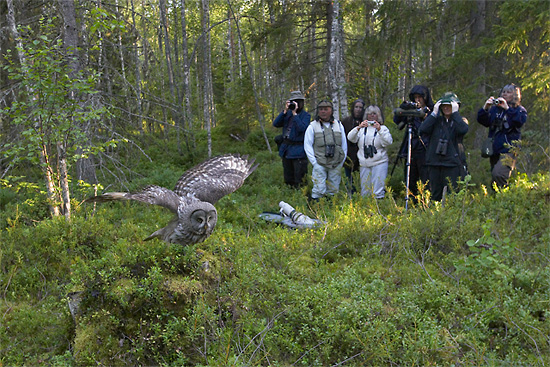
Birdwatchers from around Europe regularly flock to Finland to enjoy encounters with exotic birds such as great grey owls.© Jari Peltomäki / Finnature

Finland’s bird-loving visitors mainly fly in from Britain, Italy, Germany and Spain. “Many come just to find species they’ve never seen before, but with the increasing popularity of digital photography more people are coming to take nature photos,” says Lamminsalo, who also designs hides for nature photographers.

The highlight of the year for many Finnish birdwatchers is the Kuusamo Bird Marathon. On two days in early June, more than 120 keen birders tour the fields, forests and fells of Kuusamo aiming to spot as many species as possible in 24 hours. In the parallel car-free “Eco-race” teams must use bicycles and canoes to reach the haunts of rare birds.

The national organisation BirdLife Finland also regularly runs birdwatching events. In the “Battle of the Towers” on in early May, more than 300 teams occupy birdwatching towers around the country at dawn, trying to spy as many birds as possible by lunchtime. The winning team, from Kristiinankaupunki, identified an impressive 107 species in just eight hours.

By Fran Weaver, June 2010, updated June 2014