Helsinki brings on the brunch

Brunch, that happy marriage of breakfast and lunch, has been receiving lots of attention in Finland lately. We set out to find the best brunch locations in Helsinki, from the traditional to the edgy.

This unhurried meal has long been a much loved part of weekend mornings around the world, and the Finns also appreciate the originally American phenomenon.


to view full map, more restaurants and links

During the 2000s, Finland really caught on to the idea of a breakfast stretching into afternoon, with an ever-increasing number cafés and restaurants adding brunch to their menus. Dozens of places attract a full house on weekend mornings.

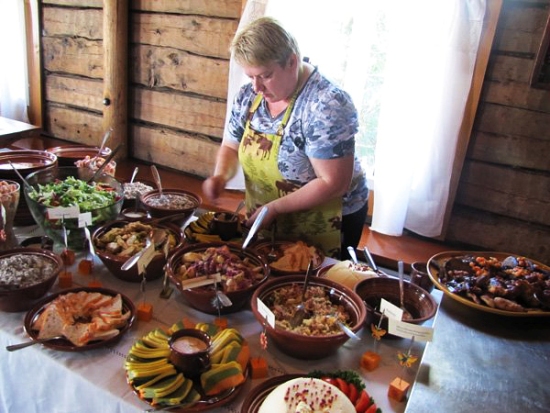
Brunch in Helsinki represents a real fusion of foreign and local. Among the croissants, jams, cakes and omelets that form the core of a good brunch, Finnish rye bread, Karelian pies and porridge proudly represent Finnish culinary culture. Different places focus on different morning goodies; some are known for their continental-style breakfast while others boast a wide selection of cakes.

Luxury tastes and classy settings

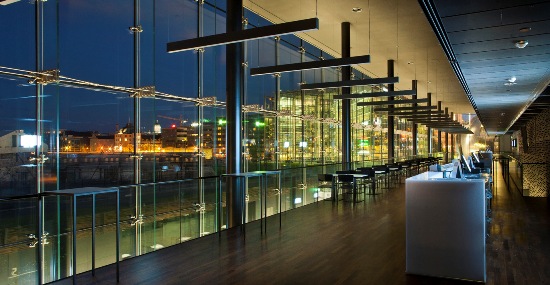
French restaurant Sunn: one of the best views in town.

French restaurant Sunn: one of the best views in town.Photo: Amanda Soila

Helsinki offers a wealth of different brunch venues. Among the most popular are classic cafés serving luxurious breakfasts in historical settings.

Café Engel, Café Ekberg, Fazer and Primula all enjoy unquestionable status, with roots extending far back in the capital’s history. These brunches attract people from all walks of life who want to enjoy an unhurried breakfast in style, whether with friends or family or in the solitary company of a good book or newspaper.

Brunch represents something permanent and enjoyable in our ever-changing world. The license to enjoy a leisurely dining experience in an age when time is money forms at least part of the reason why everybody seems to love this hybrid meal.

Brunch with an edge

Dylan, with its retro colours, myriad salads and homemade Karelian pies, has gained a reputation as one of town’s best brunches.

Dylan, with its retro colours, myriad salads and homemade Karelian pies, has gained a reputation as one of town’s best brunches.Photo: Amanda Soila

Great brunches aren’t limited to the fancy cafés of the downtown area. If you’re looking for a bohemian atmosphere, vegan food, chill-out music and retro colours, the up-and-coming neighbourhoods are Kallio and Punavuori. They resemble the restaurant culture of eastern Berlin and are popular among students and young families.

Kallio in particular is a new mecca for alternative diners looking for breakfast with an edge. Café Villipuutarha (which means “wild garden”), only a couple years old, has gained a firm reputation as one of the best brunch locations. Its luxurious breakfasts with fresh smoothies are enjoyed in a room resembling a mixture of vintage shop and English tearoom.

At Siltanen, brunch extends into the late afternoon, with a DJ playing relaxing Sunday music. Then there is Dylan, with its retro colours, myriad salads, home-made Karelian pies and piles of fruit and cakes. Its reputation as one of town’s best brunches has travelled far and wide, and the place is invariably packed.

See our map above for links and more restaurants. Did we leave out your favourite? Post your own on our Facebook page!

By Amanda Soila, August 2011, updated June 2013

Guardians of the Finnish language

We visit the Finnish Language Office, the academic authority Finns contact for linguistic advice, to find out how words like pankki (bank) and sormitietokone (“finger-data-machine,” meaning “tablet computer”) become part of the Finnish language.

In an office overlooking Helsinki’s Kaisaniemi Park, a group of expert linguists are having a heated debate over coffee, about whether the short forms of Finnish political party names should be written with a capital letter. Another focus of the discussion is a whiteboard containing a list of phrases that have attracted their attention in the media.

This coffee room is a nerve centre of the Institute for the Languages of Finland, a national centre for linguistic studies of Finnish, Swedish, Sámi languages, as well as Finnish Romany and Finnish Sign Language. Anyone wanting professional advice on how to use Finnish correctly can call the hotline of the institute’s Language Planning Department, better known to Finns as Kielitoimisto (the Language Office).

Tai chi is a word recently imported to Finland from Asia.

Tai chi is a word recently imported to Finland from Asia.Photo: AP / Lehtikuva

Linguistic expert Riitta Eronen holds a position that does not exist in many countries, as part of a team of academics who advise people how they should use their own language. “It’s actually a myth that we decide whether a new word is correct Finnish as such, since we invariably find words through users who have already adopted them,” she says. “But we do recommend how new words can be adapted and used logically in Finnish so that everyone will understand them.”

Global influences on modern Finnish

Eronen believes that Finnish must adopt new words from other cultures to thrive in today’s globalised world: “We don’t follow any old-fashioned idea of trying to keep Finnish ‘pure’ by keeping out external influences. This would leave the language artificially isolated.”

She explains that surprisingly few words originating from the ancestral Fenno-Ugric language remain in modern Finnish. Throughout Finland’s chequered history, words have been absorbed from the languages of rulers or dominant cultures, including Nordic, Germanic, Baltic and Slavic languages, and today English – though a wave of recent Asian imports such including manga, tsunami and tai chi is also discernible. “It’s amazing how multicultural young Finnish speakers are today, especially in urban areas, speaking creatively by adopting and adapting words from different sources,” says Eronen.

Twisted loanwords

Smoothies were meant to be called pehmelö, but the word failed to catch on.

Smoothies were meant to be called pehmelö, but the word failed to catch on.Photo: Dorota i Bogdan Bialy/Stockfood/Lehtikuva

Words borrowed from other languages are often altered to make them easier for Finnish speakers to pronounce. Harmonious vowels may be added to the end of loanwords – most often “i.” Consonants are often doubled, as in hattu, meaning hat. Finnish seldom uses the letters b, c, d, f and g; many loanwords use the nearest Finnish equivalents p; k or s; t; v; and k, respectively. Such processes take Finnish speakers from “bank” to pankki, in three easy stages.

By applying such logic backwards, you may be able to work out what the following initially unfathomable loanwords mean, even if you speak no Finnish (answers at the end of the article):

1. bussi 2. kahvi 3. kulta 4. lankku 5. matto 6. tohtori 7. pihvi 8. pallo 9. kuraattori 10. hevimusiikki

Familiar words may also be given inscrutable Finnish spellings and endings, such as liisaus (leasing), brändätä (to brand a product) and downshiftata. To confuse things further, Finnish speakers faced with tongue-twisting consonant clusters like “str-” may simply leave out the first letters. Ranta, meaning “beach,” is derived from a Swedish word that also exists in English: strand.

Failed inventions and Finn-glish

Sometimes morphed words like telefooni/telehvooni and kompuutteri fail to catch on, and Finns instead come up with their own words like puhelin (speaking-device) and tietokone (knowledge-machine). The Language Office is often asked to approve words that have been devised logically or creatively, or chosen through competitions. Recent examples include kännykkä (mobile phone), pehmelö (smoothie-drink) and sormitietokone (finger-computer).

“Sauna” is, without a doubt, the most famous Finnish word, and has made its way around the world. In our humble opinion, the best saunas are still found along the seashores and lakesides of Finland.

“Sauna” is, without a doubt, the most famous Finnish word, and has made its way around the world. In our humble opinion, the best saunas are still found along the seashores and lakesides of Finland.Photo: Johanna Vuonokari/Lehtikuva

As new words and expressions become established, they are added by the Language Office to the New Dictionary of Modern Finnish. This “official” dictionary contains almost 100,000 entries and is updated regularly. “Ultimately, however, the language is not shaped by us here in the office, but by everyone out there who is creatively using it,” adds Eronen.

Linguistic integration is of course a two-way process. Several words originating in Finnish and Sámi are in use in English today, including – most famously – sauna, but also rapakivi (a granitic rock type), aapa (a kind of arctic bog), tundra and the ironic expression “Molotov cocktail” devised by Finnish soldiers for their Soviet enemies during the Winter War of 1939–40.

Answers to loanword quiz above: 1. bus 2. coffee 3. gold 4. plank 5. mat 6. doctor 7. beef (meaning “steak”) 8. ball 9. curator 10. heavy music

By Fran Weaver and Carina Chela, August 2011

Rock in a hard place at Pyhä Unplugged

In a unique outdoor festival, top Finnish rock and pop artists play acoustic music in a spectacular natural amphitheatre 100 kilometres north of the Arctic Circle.

Mato Valtonen, former lead singer of the legendary Finnish rock band Leningrad Cowboys, took a trip to Pyhä in Finnish Lapland in the 1990s. A musician friend invited him to take a walk to a local beauty spot, Aittakuru Gorge.

“My friend took his guitar down into the gorge and told me to sit up on the high slopes overlooking it and listen as he played – and the sound was absolutely amazing!” says Valtonen. “The gorge forms a perfect natural amphitheatre, and the jagged rocks on the surrounding scree slopes create acoustics that are as good as any high-tech recording studio.”

Valtonen instantly realised the gorge would be an ideal venue for an “unplugged” music festival. He spread the word among his connections in the music industry, and the Pyhä Unplugged festival has been held every summer since 1998 on a specially built stage. “When they first come here, artists are often moved to tears by the sheer beauty of the place and its acoustics,” he says. “Though this is a low-budget festival, top artists really enjoy participating – also because they get a chance to work together with other artists in an informal atmosphere.”

Reaching to the festival stage requires a small hike – no problem unless you’re a roadie carrying unwieldy musical instruments.

Reaching to the festival stage requires a small hike – no problem unless you’re a roadie carrying unwieldy musical instruments.Photo: Pera Hussi/Lapland Memories

Valtonen emphasises that everyone who has performed in Pyhä’s gorgeous arena has been keen to come back to “Finland’s nicest music festival” again – though a few roadies may be reluctant to return, since carrying cumbersome instruments along the trails to the stage can be a Herculean task.

The festival has become one of the cultural highlights of the summer in the Land of the Midnight Sun, without losing its friendly feel. The informal atmosphere enables music lovers to mix with artists, particularly during the late-night indoor sessions in Hotel Pyhätunturi.

“There’s something so special about the place that it feels almost supernatural,” says Valtonen. “One summer opera singer Maria Palo was performing ‘Singing in the Rain,’ and though the day was sunny with blue skies all around, a large cloud suddenly appeared from nowhere and dropped torrents of rain on everyone in the gorge. With all those huge rocks on the steep slopes around the gorge we’ve banned performances of anything by the Rolling Stones!” he laughs.

Artists lined up for the 2011 festival include Lenni-Kalle Taipale, Juha Tapio, Paleface, Mariska & Pahat Sudet, Johanna Rusanen, Dave Lindholm, Tuure Kilpeläinen, Edu Kettunen and many more.

By Fran Weaver, July 2011

Readers flock to New Finnish Grammar

The newly released English edition of an Italian novel set in Finland is now selling like hot cinnamon rolls.

Imagine my surprise: Top of the Guardian newspaper’s online bestseller list was a book called New Finnish Grammar. Surely some mistake? How could so many readers be queuing up to discover the perplexing intricacies of the Finnish language? Finland may be attracting plenty of delighted visitors, but how many of them take the trouble to learn more than the basics: kiitos (thank you) and olut (beer)?

Wartime view of Helsinki: New Finnish Grammar mentions the Soviet bombings of the Finnish capital, which created scenes such as this one in the neighbourhood of Hermanni.

Wartime view of Helsinki: New Finnish Grammar mentions the Soviet bombings of the Finnish capital, which created scenes such as this one in the neighbourhood of Hermanni.Photo: Osvald Hedenström/SA-Kuva/Lehtikuva

Upon closer examination, it became clear that New Finnish Grammar is in fact a novel, originally written in Italian by Diego Marani and first published in 2000. UK publisher Dedalus released an English version in 2011. Unlike most foreign literature that makes more than a passing reference to the country, the book attracted little attention when its Finnish edition appeared in 2003. The English version, on the other hand, appears to be jumping off the bookshop shelves and acquiring something of a cult status.

The novel tells of a man found on the quayside in the Italian port of Trieste in the early autumn of 1943. This unidentified character has no memory of previous life or language, but carries a single clue in the from of the nametag on his jacket – Sampo Karjalainen, the Finnish origin of which is recognised by a well-meaning ship’s doctor who has Finnish roots himself.

In the belief that the man’s best chance of rediscovering his identity lies in the north, passage is arranged to Helsinki where an army chaplain named Olof Koskela gradually fills the blank sheet of Sampo’s memory with vodka-fuelled accounts from the Finnish national epic Kalevala. Meanwhile, Sampo is distracted by the affection of a nurse, whose fraught letters from the Karelian front are increasingly resigned to his inability, emotional as much as linguistic, to reply.

Authentic setting

3443-cover_550-jpg

Cover design by Marie Lane

The three Italian literary prizes acquired by Marani for this novel are deserved if only for the authentic descriptions of a Helsinki tensed for and battered by war with Russia (the conflict in question being the so-called Continuation War of 1941–1944). From the alternating excitement and boredom of the foreign press corps in the Kämp Hotel to the bloodstained weary troops arriving by train from the front, the trauma of a city at war is convincingly portrayed.

Marani also deserves kudos for his evident understanding of the Finnish language and his knowledge of the complex Kalevala’s dramatis personae. Marani’s interest in language is not surprising in view of his roles as senior EU linguist and inventor of Europanto, a kind of Europe-only Esperanto, but his empathy with Finnish culture is more than academic.

New Finnish Grammar offers much more than a thoroughly researched wartime mystery. In a compact narrative that stops just short of 190 pages, it manages to examine the nature of memory, the connection between language and identity, and the relationship between identity, commitment and love, while interpreting Finland’s ancient myths, through Olof Koskela’s descriptions, as deeply philosophical and contemporary.

Sampo’s name itself is no coincidence: Sampo is the mystical artefact at the heart of the Kalevala, an elusive magic grail, while Karjalainen is the adjective meaning “of Karelia,” referring to the eastern region of Finland, much of which was lost to the Soviet Union at the end of the Continuation War.

“Bright and elusive”

At the same time, rarely can the Finnish language itself have been described so appreciatively by a non-Finn. “Finnish syntax is thorny but delicate: Instead of starting from the centre of things, it surrounds and envelops them from without,” expounds Olof Koskela in one of his tutorials. “As a result, the Finnish sentence is like a cocoon, impenetrable, closed in upon itself; here meaning ripens slowly and then, when ripe, flies off, bright and elusive.”

The last word should go to the fine translation by Judith Landry. It’s a pity that the publisher made the decision, in a book focusing on language, to do away with the Finnish letters “ä” and “ö” in the English version. [Editor’s note: After reading this article, Dedalus Books contacted us to explain that the English text they originally received did not include the Finnish letters for some reason. This oversight may be corrected in the next edition.] But this is a book worth reading for anyone familiar with Finland – and anyone who’s not.

By Tim Bird, August 2011

Setting the world aright at the “ladies’ sauna”

For some prominent Finnish women, regular meetings of a sauna club are a source of strength.

On a beautiful but cool spring evening, three women sit together, sharing experiences and discussing current affairs. They are all movers and shakers of Finnish society: Sirkka Hämäläinen, former Governor of the Bank of Finland and member of the European Central Bank’s Executive Board, now a member of the boards of many corporations and organisations; Raija-Sinikka Rantala, with an impressive career as a theatre director, administrator and teacher as well as Helena Hiilivirta, director of the soon-to-be-completed Helsinki Music Centre. They are doing what they and their network, known as the “ladies’ sauna”, have done for more than 20 years.

Peer support and relaxation

The story began in 1987, when Sirkka Hämäläinen held various top-level posts at Finland’s central bank.

“I needed support and people I could talk to,” she recalls. “It seemed as if my whole life revolved around the economy and my own work; and I longed for perspectives from other areas of society.”

So she and a few friends set up a network which began to spend several evenings together each spring and autumn. The programme usually consisted of a presentation on a current event, socialising and sauna bathing together – as groups of Finnish male colleagues have always done.

“When we started these get-togethers, the Bank of Finland building’s sauna did not have any women’s bathing gear. Sirkka started to equip it properly,” recalls Raija-Sinikka Rantala.

The circle of women began to expand as others who had been invited to make presentations were invited to join the group.

“I joined in 1994. It was lovely to be able to relax in good company after a working day,” says Helena Hiilivirta.

In recent years, the “ladies’ sauna” has gathered about 20 women from the top echelons of finance, art, science, the church and other sectors of society. Only one man has ever served as a presenter. Another time, when the evening’s programme included practicing firing a handgun, a man was along to provide guidance, along with a woman director.

Women taking over Europe

In the sauna.

In the sauna.Photo: Sanna Liimatainen

The “ladies’ sauna” has also directed its resources into international arenas. In the 1990s, the group arranged public events abroad, first at Villa Lante, the Finnish cultural centre in Rome, then at the Finnish Institute in Athens and finally in Frankfurt during the first Finnish EU presidency term. These forums focused on Finland’s society, culture, art, security policy and economy.

“The audience didn’t find out that all the speakers were women until they arrived at the venue. You should have seen their faces!” Hämäläinen recalls with a smile.

Over the years, there have gradually been fewer sauna evenings, but the members keep in touch.

“There have been suspicions that we are some kind of secret society, as one after another member of our circle have risen to various administrative positions,” she says. “But in fact this has been a result of each one’s personal characteristics.”

Women must be encouraged into leadership

By international standards, Finland boasts many women in leading positions in society. What factors lie behind women’s leadership and how have these women themselves risen to the top of their fields?

“I’d stress the significance of my own superiors,” says Hämäläinen. “Their support was a crucial factor in my rise to directorial positions.”

When she applied to become head of the Finance Ministry’s Economics Department and realised that the government would not back her unanimously for the post, she withdrew her application.

“My boss at the Bank of Finland at the time, Seppo Lindblom, said that if I didn’t have the nerve to compete for that job, then I should never complain that women in Finland don’t make it into leadership positions,” Hämäläinen recalls. She reapplied and was chosen for the job.

Carrying responsibility – and power

These women agree that those who take on more responsibility naturally gain more responsible jobs. As they see it, women have a tendency to take care of their responsibilities more precisely and punctually than men. Yet they are also more afraid than men to take risks and to fail.

“Nowadays women lead many theatres in Finland, because as organisations they are so much work to run. Men prefer to do more pleasant work,” claims Raija-Sinikka Rantala.

Of course these women, too, have encountered prejudice.

“I remember when I was applying for the job of intendent of the Lahti Symphony Orchestra. I was under 30, I had red hair and I was wearing some kind of colourful jumper,” says Hiilivirta with a laugh. “The interviewer asked me how I imagined I could make it in a managerial position when I hadn’t served in the army” – as most Finnish men have, due to mandatory conscription.

“Many men seem to think that women should always be sunny and pleasant. When I took over as Governor of the Bank of Finland during a crisis, a high-ranking officer asked me why I was always so serious on television and never smiled – I’d just been interviewed in a situation when I had to predict a sharp increase in unemployment,” says Hämäläinen. “I asked him if he would smile if he had to announce on television that Finland had been attacked!”

Combining family and demanding work

Unlike men, women leaders are always asked how they manage to balance a challenging job with family life. Each of these women has a family.

“It wasn’t easy when I had a small child at home,” says Rantala. “I remember how tight my time was when I used to rush home to fix dinner and then off to the theatre for evening rehearsals.”

“Support from one’s family is terribly important,” adds Hiilivirta. “My husband grew up with the idea of a mother having a strong role outside of the home. So my rise to leadership positions was not hard for him.”

In their own upbringing, each of these women received a strong message that a woman should have a career of her own and never be financially dependent on a man.

Motherhood is the best leadership training

“Practical matters can always be arranged, but it’s more important to influence women’s own attitudes,” says Hämäläinen. “Women should be encouraged to take risks and responsibility. And when you’re in a leadership position, you have to accept the fact that you will make mistakes and that you will face criticism. And you need healthy self-confidence to withstand that.”

As she sees it, the best leadership training is not found in the military, but rather in a mother’s role.

“It’s much more difficult to manage your own child who is going through the ‘terrible twos’ than subordinates in the army, who are required to obey. A parent is always trying to help their children to blossom, to bring out the best in them – just as a good manager does,” she observes.

These women have watched with satisfaction as more and more women gain a chance to fulfil their potential in society’s leading positions. On the other hand, they are concerned about short-sighted operations driven by the latest quarterly reports, and the attendant rise of short-term contracts.

“After all, the individual and his or her welfare is the point of all economic activity,” notes Hämäläinen. “Over the long run, taking care of people is the best way to support economic health and competitiveness.”

By Salla Korpela, July 2009

Finnish mythical creatures still lurk

Here’s our field guide to the fascinating mythical creatures that might still be lurking out there in Finland’s vast forests, or in the dark depths of a remote lake.

Every country’s mythology has its own cast of strange creatures, monsters and legendary human figures. Finland is no exception, and mythical creatures remained very much part of Finnish folklore until the country’s rapid urbanisation during the 20th century.

Many fabulous Finnish figures appear in the runic poems of the Kalevala – the national folk epic compiled in the 19th century by Elias Lönnrot. Finnish kids today are still familiar with the sanitised versions of such characters featured in modern children’s books and TV programmes. In the old days, many of these potentially dangerous creatures were very useful to parents of over-active children! More recently, author Johanna Sinisalo won the coveted Finlandia Prize in 2000 with a book about a troll, published in the US as Troll: A Love Story and in the UK as Not before Sundown.

And now let’s meet the mythical, often untranslatable creatures that have yet to be disproven. They are notoriously camera shy, and our photographers are also afraid to take the job (although they refuse to admit it), so we bring you illustrations instead. Maybe our guide will inspire you to go on a creature-spotting expedition – tread carefully.

Peikko

An illustration of a long-haired and bearded troll dressed in green overalls sitting in the forest.

Appearance: Ranges in size from small to enormous. Hairy, with large nose and ears.

Habitat: Dark forests and rocky ridges

Behaviour: Slow, stupid and lazy. May turn into rocky landscape features for long periods, even centuries. Some individuals are aggressive and may kidnap children who stray too far from home. Children today fear the invisible Hammaspeikko, who secretively makes holes in their teeth. Another invisible subspecies, the Känkkäränkkä, still sometimes makes children fight, sulk or do other things that displease their parents.

Relatives in other mythologies: Scandinavian trolls, giants, goblins

Iku-Turso, or Tursas

An illustration of a purple octopus with long sharp teeth floating in the water.

Appearance: Seriously scary. This gargantuan creature from the deep resembles a giant, fierce octopus, with long tentacles and suckers. May also sprout dragon-like wings.

Habitat: Baltic Sea and large lakes

Behaviour: Solitary. Dangerously aggressive if disturbed.

Relatives in other mythologies: kraken, sea serpent, Loch Ness monster

Keiju

An illustration of a blonde and freckled fairy in a pink dress sitting among red flowers.

Appearance: Beautiful creature like a small human, but with wings like those of a dragonfly or butterfly.

Habitat: Ponds deep in the forest, and misty meadows

Behaviour: Usually avoids people, but friendly if encountered accidentally. Loves to dance and socialise. Lives in a parallel ideal world of peace and harmony.

Relatives in other mythologies: fairies, sprites

Menninkäinen

An illustration of a smiling imp with dark curly hair and moustache standing next to some amanita mushrooms.

Appearance: Small, human-like. Large head with pointed features. Often wears a pointed hat.

Habitat: Lives underground in remote forests, but may approach human settlements out of curiosity.

Behaviour: Nocturnal* and often timid. Usually friendly if approached carefully, but may trick children by leading them astray if they wander too far into the forest! Playful and likes to dance. Intelligent, and enjoys riddles. Likes to seek out shiny objects.

Relatives in other mythologies: gnomes, goblins, leprechauns, imps

* A well-loved Finnish romantic song from the 1940s, “Päivänsäde ja menninkäinen,” describes a chance meeting between a darkness-loving menninkäinen and a sunbeam.

Näkki

An illustration of a lady with greenish skin, algae hair and a green dress sitting on rocks.

Appearance: May appear friendly and alluring at first sight, but eventually reveals true appearance: horribly hairy and/or scaly

Habitat: Murky pools, especially under bridges, sometimes found in springs or wells.

Behaviour: May try to tempt children to come near the water, and then pull them in to drown them (a very useful spirit for nervous parents of accident-prone kids). Can also drown children who swim into deep water.

Relatives in other mythologies: water spirit, siren, vodyanoy (found in Russia)

Hiisi

An illustration of a grinning goblin with messy hair and sharp teeth squatting in a cave.

Appearance: Big and bad

Habitat: Caves and gorges in wild, rocky landscapes

Behaviour: May attack unwary travellers in remote areas. Generally avoids human habitation, but may steal valuable objects from houses. Throws rocks around, creating boulder fields and cairns. Also carves out strange holes in rocky outcrops (hiidenkirnut) thought by humans to be used by a hiisi to churn milk.

Relatives in other mythologies: trolls, giants, goblins

Tonttu

An illustration of a thoughtful-looking elf in a red dress and beanie.

Appearance: Small, child-like. Most easily seen around Christmastime, often wearing a red tunic and a pointed red hat topped with a sleigh bell. Keeps a close eye on children before Christmas, and will report any misbehaviour to Santa Claus, with sorry consequences for kids expecting presents.

Habitat: Closely associated with human habitation, often a specific building such as a farmhouse, stable or sauna. Children must always behave respectfully in the sauna to avoid upsetting the Saunatonttu.

Behaviour: Usually invisible or discrete. Generally good-natured. Trusted by humans as the guardian spirits of their homes and buildings. Must be respected and provided with food (fond of porridge and soup).

Relatives in other mythologies: elves, pixies, leprechauns

Special thanks to Reeli Karimäki, University of Helsinki Dept. of Folklore Studies

By Fran Weaver

Great design and great dining in Fiskars

The industrial village of Fiskars, now home to a flourishing community of artists and craftspeople, offers a delightful destination just over an hour away from Helsinki.

The nation’s oldest company, also named Fiskars, was established there in 1649 and later produced its iconic scissors with orange plastic handles. This often-copied ergonomic classic comes from the village where the Finnish metal industry was born.

The iconic Functional Form scissors may be Fiskars’ best-known design item.

The iconic Functional Form scissors may be Fiskars’ best-known design item.Photo courtesy of Fiskars Group

The journey from Helsinki to Fiskars is a voyage back to the roots of Finland’s high-tech industries and affluence. During the trip, which takes just over an hour, you pass the headquarters of the country’s biggest technology companies, bedroom communities and eventually come to an area of deciduous forest. Here, nestled in a lush valley, is one of the key sites of Finland’s cultural and industrial history. Fiskars was established as an ironworks in the mid-1600s.

For history buffs, a good place to begin is the Fiskars Museum, which provides a concise, lively overview of the area’s past. The small museum is located within a complex of 19th-century buildings by the upper rapids of the Fiskars River.

This free-flowing stream and abundant forest resources attracted early industrialists to set up one of Finland’s first blast furnaces here. In the early years, ore was shipped in from Sweden (which then ruled Finland) to the nearby port of Pohjankuru, and most of the finished iron products were sent back to Sweden via the same route.

Later the forge’s craftsmen developed ploughs and other farm equipment tailor-made for the stony Finnish soil. These in turn played a key role in advancing the country’s agricultural economy.

Jewellery straight from the smithy

In the jewellery shops, you can see unique, contemporary silver jewellery and even meet the artisan at work.

In the jewellery shops, you can see unique, contemporary silver jewellery and even meet the artisan at work.Photo: Ilkka Ärrälä/Fiskars

Those with an eye for art and handicrafts should head along the nearby branch of the Fiskars River towards its lower rapids. Over the past two decades, dozens of artists and craftspeople have settled in the village to live and work. Rows of former industrial buildings have been converted into galleries, workshops, studios, restaurants, shops and cafés.

Key places to stop along the way include the Clock Tower building and the old Copper Smithy. Here you can see local artists’ work along with invitational exhibitions featuring top international names.

Those looking for unusual souvenirs or gifts will find a wealth of local offerings. The Onoma cooperative’s shop in the Clock Tower building and the Kopper design shop in the Copper Smithy sell textiles, ceramics, glass, wooden items and jewellery. In summer, these stores are open longer and have broader selections. Don’t miss the jewellery shops, where you can see unique, contemporary silver jewellery and even meet the artisans at work. If the weight of your purchases is not an issue, the craftspeople at the Forge sell useful and decorative wrought-iron items that evoke centuries of tradition. A selection of the Fiskars Corporation’s current product range is available at the Fiskars Shop.

Local culinary craft

At the Kuparipaja restaurant, you can sit on a terrace overlooking the rapids and enjoy a drink.

At the Kuparipaja restaurant, you can sit on a terrace overlooking the rapids and enjoy a drink.Photo: Olli Pekka Rönn/Fiskars

Those with more time and a bigger appetite can choose between two high-quality restaurants. Fiskars Wärdshus has been in business since 1836, making it one of Finland’s oldest operating restaurants. It bases its menu on seasonal raw materials and the Nordic cuisine heritage. The Raasepori Menu features culinary delights from small-scale local producers.

The Wärdshus, which accommodated horse-carriage drivers in olden times, still has 15 well-appointed hotel rooms. To soak in the traditional atmosphere of the ironworks village, be sure to ask for a room in the old part of the building.

Across the road at the Kuparipaja restaurant, you can sit on a terrace overlooking the rapids and enjoy a drink. While the building is traditional, the restaurant has a modern interior design. Its menu includes many alternatives for vegetarians and vegans.

There are also a couple of attractive bed-and-breakfast spots in the village. Most of the shops, restaurants and accommodations are also open in the winter, particularly during the Christmas season.

On the trip back to Helsinki, it’s worth making a slight detour to 18th-century Mustio Manor, one of Finland’s most elegant mansions. Its museum and park illustrate the site’s past, which involves many colourful figures from Finnish history. The manor has an upscale restaurant and hotel, which offer romantic hideaways. Mustio lies some 25 kilometres from Fiskars on the way to Helsinki.

How to reach Fiskars

Industrial buildings are converted into galleries, studios, shops and cafés. This granary now houses exhibition space.

Industrial buildings are converted into galleries, studios, shops and cafés. This granary now houses exhibition space.Photo: Pentti Hokkanen/Fiskars

Hop a coastal train to Karjaa from either Helsinki or Turku. Trains run about once an hour and the trip takes just under an hour from either city. The simplest way to make the 15-kilometre trip from Karjaa to Fiskars is by taxi. On summer weekends there are also several buses daily.

If you want to get a feel for the Finnish roads and landscapes, hire a car and set the navigator for Raasepori municipality, address: Peltorivi 1. This will lead you to Fiskars’ Market Square. The distance from the capital is about 90 kilometres, half of it on motorways. By bicycle, the 100-kilometre route from Helsinki to Fiskars follows the old King’s Road, which connected the eastern and western parts of the ancient Kingdom of Sweden. In Fiskars, the main sights are all concentrated within easy walking distance of each other.

By Salla Korpela, July 2011