Show me the way to the next pikkujoulu (Finnish pre-Christmas party)

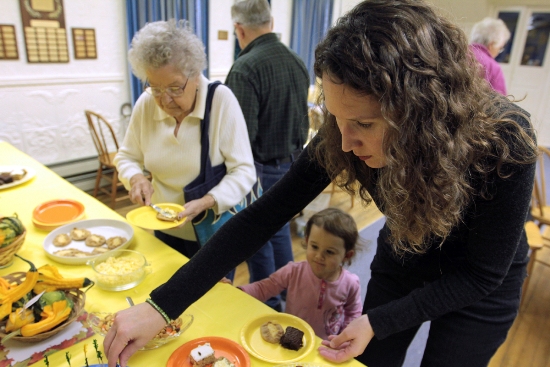
During the weeks preceding Christmas, Finland seems overrun by party fever. This phenomenon is called the pikkujoulu (pre-Christmas party) season.

Years ago, when I walked into a December party, a smiling, young woman greeted me by putting a warm drink in my hand. It resembled glühwein, a mild winter concoction I sometimes had when living in Germany. The drink was so refreshing that I took several more. The rest of the night turned out rather blurry because that “harmless” drink they called glögi was spiked with vodka. A friend called me the next morning, and when told him I had a terrible headache, he laughed knowingly and said, “Welcome to the pikkujoulu season!”

The roots of the Finnish pre-Christmas party go back to celebrations of Advent during the 1800s. In the 1920s and ’30s students turned these celebrations into parties, and after the Second World War, the pre-Christmas party started catching on with the general population. Nowadays, almost every company, business, organisation and club holds its own pikkujoulu. The word means “little Christmas,” implying a head start on the holiday season. The simplest form may include non-spiked mulled wine, gingerbread cookies and sandwiches, and last only a couple of hours. The most extravagant pikkujoulu might take place on a cruise to Sweden with cabins, meals, drinks and sightseeing all included. However, the average party is somewhere in between, depending on the budget.

Eat, drink and be merry

3497-bird-champagne2-550px-jpg

The Christmas season forms a time to celebrate with friends, family, coworkers and customers.Photo: Tim Bird

A typical pikkujoulu will include an abundance of Christmas food. I’ve been to a party with a whole roasted pig and a couple of huge, smoked salmons in the middle of the room waiting for hungry revellers. A grand buffet seems to be the preferred pre-Christmas fare, but for the more upscale celebrations, nothing less than a fancy sit-down meal will do.

As for entertainment, there will always be festive speeches, which are often followed by jokes or humorous sketches, and then some mock awards will be given out. After that, song books are passed out and happy Christmas hits are sung in Finnish, English or Swedish. Christmas karaoke has become quite popular, and any performer will garner hardy applause, no matter how terrible they sound. Then there could be a band, a stand-up comedian, a magician or a funny play. Of course every decent pikkujoulu must have a Santa Claus to give out little gag gifts.

For some attendees who seem to have an endless thirst, one of the main attractions of these parties is the alcoholic beverages. After enough liquid courage has been consumed, unsociable people suddenly become friendly, shy people tell off-colour jokes, cautious people may offer the boss some unsolicited advice, or someone may confess his or her romantic feelings for an unsuspecting coworker. All this behaviour will be forgotten the next day – or at least it won’t be talked about.

Important economic consequences

3497-bird-deco-550px-jpg

Businesses and organisations often hold their pre-Christmas parties in fancy restaurants or hotels.Photo: Tim Bird

With so many of these parties taking place during the Advent season, it has become a vital time for the hospitality business. Restaurants, hotels, resorts, clubs and other venues compete for pikkujoulu custom. Some put together attractive party packages well in advance, others offer discounts for large groups. Taxis and private limousines also enjoy greatly increased revenue, as do hairdressers, fashion shops and perhaps pharmacies (on the day after).

These days, Finns are not satisfied to attend just one pikkujoulu. Many will go to several or even a dozen different parties: some to socialise with colleagues, others to celebrate with friends and still others to network. The best advice, especially if you’re attending multiple events, is to count your drinks, watch your calories and avoid doing anything you’ll regret the next day.

By Russell Snyder

Finntown’s slice of the Big Apple

More than a century ago, working-class Finnish immigrants brought their culture into two New York City neighbourhoods. We talk to a couple who lived in New York’s Finntown in the 1950s.

In the late 1800s, Finns found their place in the world’s most famous collective of expatriates: New York. Driven to the US by job opportunities and the image of America as a cornucopia of wealth, they established working-class communities in Harlem and Brooklyn’s Sunset Park.

Finns constructed co-op buildings, opened Finnish-speaking businesses and established community centres, churches, newspapers and political groups. By the 1920s, New York was home to roughly 20,000 people who identified themselves as having Finnish heritage. Now the number has dwindled to 3,500.

A home in Harlem

4166-img_9436b-550px-jpg

The street sign on the corner of 40th Street and 8th Avenue in Brooklyn reads “Finlandia Street.”Photo: Laura Palotie

The first of New York’s two Finntowns was in East Harlem, where a stretch of 125th Street between Fifth Avenue and Harlem River was dotted with Finnish businesses during the first half of the 20th century. There were jewellery shops, clothing stores and restaurants as well as a bakery and a beauty parlour.

Several Finnish clubs and associations were established; the most notable was Fifth Avenue Hall on the corner of 127th Street and Fifth Avenue. Starting in 1917, it formed the headquarters of a local Finnish Socialist party, but many without political affiliation used its billiards room, library, restaurant and dance hall. Expats mingled here on weekends, and romances sparked; many met their future partners at community gatherings.

Among these couples were Anja and Mauno Laurila, who both moved to the US in the 1950s and met at a party organised by a mutual friend in Harlem. By the time Anja moved to New York, Fifth Avenue Hall had already closed, immigration was slowing down and Sunset Park had taken over as New York’s remaining Finntown; when the couple got married in 1958, they too relocated to Brooklyn.

In 2011, aided by the last remaining funds of Brooklyn-based Imatra Foundation, the couple chronicled Harlem’s Finnish history in a book entitled Memories of Finnish Harlem: 1888–1955.

Compiled from interviews with about ten former inhabitants of Finnish Harlem, the 48-page book forms a portrait of a self-sustaining community that assisted new arrivals in finding employment, was active in entrepreneurship and sustained a lively social scene with athletics, theatre activities and a church.

Finnish men worked in construction, in the military or on merchant ships, while women often found a career niche as housekeepers at wealthy local families. Anja, for example, worked for John D. Rockefeller, Jr.

Almost no visible traces of Harlem’s Finnish past remain, but many of the buildings that housed shops and community centres are still standing.

Brooklyn sunset

4166-img_9425b-550px-jpg

The building named Alku Toinen (Beginning II) dates back to 1916 and forms an emblem of immigration history.Photo: Laura Palotie

More obvious, if small, signs of a Finnish past are found in Brooklyn, where Finns built about 25 cooperative (resident-owned) housing complexes. The first Finnish-built co-ops in Sunset Park, named Alku I (Beginning I) and Alku Toinen (Beginning II), date back to 1916 and are the oldest nonprofit co-ops in New York. The entrance of Alku Toinen on 43rd Street has become an emblem of immigration history, mentioned in local newspapers.

The street sign on the corner of 40th Street and 8th Avenue reads “Finlandia Street,” but no Finnish businesses or organisations remain in the neighbourhood.

According to Mika Roinila, a US-based geography professor who specialises in Finnish migration, Finnish cultural communities in New York have dwindled because of a cultural tendency for assimilation.

“There are a lot more Polish and Russian Americans than Finnish Americans, and they are able to hold on to their identities better,” he says. “However, there are also a lot more Americans with German ancestry, but you don’t see a lot of German neighbourhoods out there. They have assimilated, like the Finns.”

These days, many Finns who come to the US participate in high-tech fields rather than blue-collar jobs. According to sociologists, white working-class communities are more likely than middle-class communities to retain connections to their cultural roots. Roinila adds that in many Finnish immigrant families, parents encouraged their American-born children to speak English from a young age in order to assimilate better.

“These days it’s very difficult to get young people involved, and us older Finns are starting to get tired,” says Anja Laurila. “The big difference is that young people have their own lives and little interest in being involved. Part of the reason is that in America you have to work very hard and the commutes are long, and those things eat into your personal time.”
 

By Laura Palotie, November 2011

Ahtisaari Day spotlights negotiation

The first annual national Ahtisaari Day, named after Nobel Peace laureate and former Finnish President Martti Ahtisaari, is held on November 16, 2011.

Ahtisaari Day, initiated by the Ministry for Foreign Affairs of Finland to highlight the country’s role in international peace mediation, will be held in a different Finnish city each year. Taking place in Oulu in 2011, the event forms a unique opportunity to hear Ahtisaari’s insights into peace mediation and participate in an open discussion on current societal challenges and conflict solving.

The special day aims to increase awareness about peace mediation throughout society and encourage Finns to recognise the usefulness of a Finnish style of communication, emphasising negotiation and mediation. For Ahtisaari, visits to two Oulu schools precede the afternoon discussion at Oulu University.

Connecting with peace mediation

3821-cmi0582-_550-jpg

At the CMI tenth anniversary event, former President Ahtisaari, current President Tarja Halonen and the other dignitaries danced in the name of peace.Photo: Tuomo Manninen/graalfoto

In spring 2011, the Ahtisaari Day concept kicked off when big names such as Kofi Annan gathered in Helsinki for a seminar that marked the tenth anniversary of Crisis Management Initiative (CMI), the nongovernmental organisation Ahtisaari founded for peace mediation. The date for the first national Ahtisaari Day was set for November, the month that includes the name day for Martti in the Finnish calendar.

Under the auspices of CMI, Ahtisaari and his colleagues participate in conflict resolution all over the world. “When the announcement was made [that Ahtisaari had won the 2008 Nobel Peace Prize], we began receiving 30 requests a day for my time, from Finland and abroad,” says the former president.

CMI carefully reviews each request. “It’s totally impossible to say yes to everything, because there’s hardly any conflict area where somebody is not knocking on CMI’s door,” he says. His reputation, meanwhile, helps open doors for CMI: “Because of my background, I think that in many cases we can count on support which other organisations don’t necessarily have. It’s easier for us to talk to governments – and it’s not only me; my colleagues have established those relationships.”

Final handshake, new beginning

3821-kabul-022-_550-jpg

On a trip for a project called “Dialogue on possibilities for conflict resolution in Afghanistan,” several CMI representatives had the chance to see local kite flying traditions during a free moment in Kabul, Afghanistan Photo: Meeri-Maria Jaarva

In interviews, Ahtisaari often refers to the peace process he oversaw in 2005 in the Indonesian province of Aceh, halting some 30 years of hostilities between the Free Aceh Movement and the Indonesian government. He notes that, before the solution, “If the government and the people hadn’t both wanted to make peace, nobody could have facilitated the process.”

The deal itself was achieved in record time – six months – but CMI continues to participate in follow-up work to this day. The final handshake is actually more of a beginning than an end: “You have to try to create the framework for a new society,” Ahtisaari says, “which would make it possible to avoid all the atrocities that have taken place over the years – a totally new setting.”

Just a few of the other areas where Ahtisaari has been active include the former Yugoslavia in the 1990s and 2000s, and Namibia, for which he was UN commissioner and then UN special representative from the late 1970s until 1990. In 1989 and ’90 he headed the UN operation when the country achieved independence.

The Karelian experience’s legacy

3821-c6-_550-jpg

Emmanuel Jal, a South Sudanese rapper who used to be a child soldier, chats with Ahtisaari prior to performing at CMI’s tenth anniversary. Photo: Cornelis van Voorthuizen/photocornelis.com

“In negotiations, it has been rather easy to sense what people are actually thinking,” says Ahtisaari. He attributes this to his background: Vyborg, where he was born in 1937, is located in eastern Karelia. Much of the region became part of the Soviet Union during the Second World War and remains Russian today. “It was a disaster because 400,000 of us had to flee Karelia to the rest of Finland.”

Ahtisaari’s family, like many others, found refuge with relatives and host families. He thinks of himself as an “eternally displaced person,” and feels “a lot of sympathy for those who have gone through a similar experience.”

“You develop a sort of sixth sense,” he says. “I’ve been very lucky – I only had to move within my own country, and that’s much easier than having to leave your country.”

Finland’s Karelian experience, as well as the Finns’ direct and open approach to problem solving and surmounting challenges, help shape the Finnish style of conflict resolution, and will surely form part of the discussion for many Ahtisaari Days to come.

By Peter Marten, November 2011

Young Finns know their science

An OECD report entitled Top of the Class compares 15-year-old students from all over the world and concludes that teens in Finland and New Zealand are the leaders in science.

One out of every five young people in Finland and New Zealand makes top grades in science subjects. By comparison, in the countries with the poorest results in the study, only every 20th student achieved top science grades.

However, Finns spent less time than the OECD average on studying science subjects and significantly less time than students in other countries that performed well in the study. The report, which was published in the spring of 2009, shows that girls and boys had very similar levels of achievement. The report analysis is based on material from the 2006 Programme for International Student Assessment (PISA).

One particularly encouraging result was the fact that social differences between young people in Finland, as in Japan and Austria, do not appear to have much influence on their performance in science studies. More than one in three young Finns from disadvantaged social backgrounds performed well in school. Social differences are very visible in schools in many other OECD countries.

Need to maintain motivation

Angel Gurria, Secretary-General of OECD.

Angel Gurria, Secretary-General of OECD.© OECD

The OECD study also measured the young people’s interest in science. It became clear that interest in these subject areas is not at a top level, even for those who are good at it: 40 percent of top performers are not interested in a science-related career and 45 percent are not interested in continuing their studies in this area after finishing school.

This phenomenon also exists in Finland, although it is more moderate than in OECD countries on average. This may be due to the fact that in Finland girls perform at a consistently high level in all subject areas, including science, meaning that there are many of them in the top performer group. However, science is not a favourite choice of women when it comes to higher education.

The study showed that approximately half of young people do not know what kind of career prospects are opened up by a strong grasp of science.

OECD secretary general Angel Gurría pointed out that this may pose a problem in the society of the future, which will be very dependent on technology expertise. Schools should focus on making science studies pleasant and enjoyable for students, and young people should be aware of the career prospects that science provides.

Science skills bring success

Finland’s economic success on world markets in recent decades has occurred in the field of high technology, which is closely related to science, and young people clearly take this into consideration when choosing what to study. For example, all of Finland’s technical universities had more applicants than they could accept in 2008, with the technical university at Otaniemi receiving four applications for every open study position.
 

By Salla Korpela, June 2009

Genuine Finnish wine, made in France

What happens when a Finn buys a vineyard in Bordeaux and breaks with the regional winemaking traditions? You get acclaimed wines with an exquisite soul and character.

To find the only Finnish-owned vineyard in France, start in the southwest, about 40 kilometres south of the city of Bordeaux and 2.5 kilometres from the little town of Beguey. At the top of the plateau lies the Château Carsin vineyard, owned by Juha Berglund and his sister Liisa.

The long road that Berglund chose was one worth taking. Today he is the only internationally known Finnish wine producer; his high-quality wines are sold around the world. Berglund took a bold plunge: He came to Bordeaux in 1990 not knowing the language or local customs, and with almost no experience in wine making.

“I was supposed to become a violinist, but in life a lot of things happen by accident,” says Berglund. “I have been lucky to be able to do something I love.”

Love affair with wine

2587-berglund-_550-jpg

With customers around the world, Juha Berglund is the only internationally known Finnish wine producer Photo: Amanda Soila

Berglund’s love affair with wine began for “purely snobbish reasons.” When Berglund’s student friend came back from a trip to Paris and was boasting about how much he knew about wine, Berglund decided to “beat him in wine knowledge.”

He began blind-tasting wines and guessing their identity. After enough sniffs, swirls and sips, in 1987 Berglund opened Decanter, a shop in the centre of Helsinki specialising in wine products and gadgets.

A few years later he started publishing Viini, a prestigious wine magazine, now an independent company and the main organiser of Finland’s wine trade fair. He also co-authors Viinistä viiniin (From wine to wine), a yearly wine guide, with his colleague Antti Rintahuumo.

For about 25,000 euros per hectare, Berglund bought land for his dream. “I wanted to start experimenting on wines and playing around with barrels, so I suggested to two of my sisters that we buy a vineyard in France, preferably Bordeaux. Eventually we found a farm with 14 hectares and nearby, in the village of Rions, we found eight more hectares. In other words, our first vintage in 1990 was the product of 22 hectares of vineyard,” Berglund proudly explains.

A road less travelled

2587-talo-sateenvarjon-alla-_550-jpg

Somewhere under the rainbow: Juha Berglund and his sister Liisa own and operate Château Carsin. Photo: Château Carsin

At the moment, the Bordeaux region yields roughly 7,000 bottles per hectare. On average, one hectare of vineyard generates a turnover of 20,000 to 50,000 euros.

For Berglund, the initial emphasis was not on the grapes but on the added value, which came from modern vinification processes in the cellar. When Berglund purchased Château Carsin, he also decided to take a different road from the other Bordelaise wine producers, who are known for their emphasis on tradition.

“We predicted that the new world would come, and we were right!” For the 1991 vintage Berglund ordered a modern winery using the winemaking techniques of visionary Australian winemaker Brian Croser.

Going biodynamic

2587-allal_cmyk-_550-jpg

In 2003 Berglund started experimenting with biodynamic agriculture, and today the vineyard is 100 percent biodynamic. Photo: Château Carsin

In 2003 Berglund started experimenting on a couple of hectares with biodynamic agriculture, a form of ecological, organic farming. “Even if I don’t understand the whole philosophy of biodynamic methods, the results are very good,” says Berglund. “We use biodynamic methods: we work at certain hours according to the calendar, and we don’t use any pesticides or herbicides. And today we are 100 percent biodynamic!”

He no longer wants to make a “standardised product.” Today Château Carsin wines are “much higher in quality but they also fetch higher prices.” They do not advertise that their wines form a product of biodynamic viticulture because “it is more important to make good wines than to announce the methods used.”

At the moment, there are almost 500 biodynamic wine producers worldwide, a number of them high-profile commercial growers.

Berglund explains how he wants to sell a story with his wine: “When one tastes wine, one expects not only a taste but also a story, a mental experience. We also look for an image, a label, a colour, an aroma. We always talk about wines as people. We call them complex, nervous, fat, thin, open, young. When you drink a wine you drink the spirit of the wine.”

He says he wants to “get closer to the roots of the wine” while in search of its personality and character. When the only true Finnish wine producer is asked what he is looking for in his wine, Berglund’s answer is blunt. “We are looking for a wine that has more attack, a wine that has more balls.”

By Carina Chela, October 2011

Postal lifeline for remote Finnish isles

We meet letter carrier Johan Simberg to find out how his daily deliveries represent a vital connection with the outside world for islanders in the Finnish archipelago.

On a hazy morning Simberg welcomes me onto a small motorboat by the harbourside at Korpoström Archipelago Centre, two hours southwest of Turku along an island-hopping route of roads, bridges and ferries. I’m joining him on his round, delivering letters, newspapers and bills to dozens of families living in this beautiful part of Finland’s labyrinthine southwestern archipelago.

4171-img_1876_2-_550-jpg

Almost every home subscribes to a Swedish-language newspaper. Photo: Fran Weaver

“I deliver the post five times weekly all year round,” explains Simberg. “To make this possible in all conditions I need many different kinds of transportation, including a hydrocopter, a snowmobile, an all-terrain-vehicle, a kick-sledge, skis and ice-skates!”

Some islands are only inhabited during the summer, but even in winter the Finnish postal service pledges to provide daily deliveries wherever people live. Today, with the sun shining over the myriad green islands dotting the blue Baltic, Simberg’s round feels like a pleasure cruise. But when blizzards blow or temperatures plummet below minus 20 degrees Celsius (four below zero Fahrenheit), taking the post to the islands’ year-round inhabitants becomes a heroic one-man struggle against the elements.

Crucial connections

Small postboxes are conveniently nailed to the wooden jetties by every island home, but as we approach, the locals invariably stroll down to the shore to greet Simberg. “I might be the only person they see for weeks,” he says. “I often find myself providing social services as well as news and post.”

4171-img_1886-2-_550-jpg

On remote islands the arrival of the post is a social event, and Simberg is often invited for coffee and a chat. Photo: Fran Weaver

Thanks to his reputation as a willing handyman, Simberg is often asked by islanders to help with repair work – or to deliver extra goods ranging from groceries to fridges or even hot tubs. The archipelago postman’s daily visits are particularly vital for the islands’ older residents. Once Simberg had to urgently ferry an ailing islander to the mainland and call an ambulance to meet her.

“I feel privileged to be part of the islanders’ lives and provide this connection to the outside world – though my round can take a long time in the summer when everyone wants to offer coffee and have a chat!” he says.

Resilient island communities

In an age when public services are increasingly privatised and expected to make profits, Simberg hopes the post will continue to reach isolated communities: “The islanders strongly defend their right to healthcare, schools and the post, and archipelago people are good fighters!”

4171-img_1878-2-_550-jpg

Summer or winter, the Finnish postal service provides daily deliveries wherever people live. Photo: Fran Weaver

Almost every home receives the local Swedish-language newspaper. Though 90 percent of local residents are Swedish-speaking Finns, recently Finnish-speakers have increasingly been acquiring holiday homes in the islands. Some natives regret that this is changing local cultural life, but Simberg welcomes the newcomers: “Without the holiday-makers the islands could become depopulated as young locals move to the mainland to study and work.”

In his previous life on the mainland, Simberg, 61, was a well-known actor who appeared in many theatre, film and TV productions. Today he clearly enjoys the slower pace of life in this scenic archipelago, encountering wild geese, seals and eagles on his daily round: “In my job every day is different. I’m lucky that it fits in with my other main livelihood, building wooden boats.”

After seven years plying these waters 300 days a year, usually alone, Simberg credibly claims to know every single rock, but he remains safety-conscious even in fair weather: “I always wear my life-vest, and use a dead man’s grip that will stop the boat if I fall out. I’ve sometimes lost engines, oars, propellers, and rudders – but never the post!” he says, grinning.

By Fran Weaver, October 2011

Capital shopping with a social conscience

The heart of Helsinki boasts a high density of shops all within walking distance of one another. A broad range of Finnish and international eco-friendly brands is on offer, whether you’re in the market for design, clothing or giftware.

Consumers today are increasingly environmentally aware; they want to ensure that their prospective purchases have been ethically and ecologically made. Buying local, a movement that started with food, has spread to other industries, as has the idea of investing in quality rather than disposable mass-manufactured goods. The latter is a concept that took root in Finland more than half a century ago.

The Finnish capital (population half a million, 1.3 million in the greater Helsinki area) offers a great selection of boutiques and shops with a decidedly green approach. As many are concentrated in clusters in the downtown core, you can easily make a walking tour.

End-of-season sales take place in the January–February and July–August periods, after two of the most important holidays on the Finnish calendar: Christmas and Midsummer.

From Finland with style

Made in Finland: IvanaHelsinki was the first-ever Finnish name in the prestigious Paris Fashion Week.

Made in Finland: IvanaHelsinki was the first-ever Finnish name in the prestigious Paris Fashion Week.Photo: Tuomas Peltomaa

In the past decade, Helsinki has landed on the global shopping map for style-conscious and sustainability-conscious travellers. Many home-grown talents have made their mark internationally.

Paris-based designer Anna Ruohonen received an ecological award from the Finnish edition of Elle magazine for her custom-order clothing for men and women, and Paola Suhonen’s IvanaHelsinki, an ethically made-in-Finland label, was the first-ever Finnish name to be invited to the prestigious Paris Fashion Week.

Globe Hope, now with two stores in Helsinki (Mannerheimintie 22–24 and Aleksanterinkatu 28) is one of the city’s best examples of consumer sustainability. Everything in the shop has been made from material headed for the garbage dump: Computer keyboards are retuned as key chains, old zippers as attractive brooches and vinyl records as fruit bowls.

Globe Hope is one of Finland’s premier eco brands, which reworks old hospital textiles, uniforms and vintage materials into clothing, bags, shoes and accessories.

Just off of Fredrikinkatu, OVVN (Iso Roobertinkatu 17–19) showcases clothing and accessories by hip young Finnish designers including Miia Halmesmaa and Hankala. Many of the items are made from recycled fabrics and are handmade, one-off pieces.

On nearby Uudenmaankatu you’ll find IvanaHelsinki (Uudenmaankatu 15) the clothing and accessories label started by one of Finland’s best-known designers, Paola Suhonen, and her sister Pirjo long before sustainability became a buzzword. Their philosophy is based on operating ethically and causing the least possible harm to the environment.

Green luxury

There’s an argument to be made for investing in high-quality goods, items that are considered to be luxurious because of their cost and craftsmanship. Well-made items last longer; in the long run they can be less expensive. For example, one pair of well-fitting quality shoes that last can be less expensive than several pairs of cheap, ill-fitting shoes.

The youthful shops that line Erottajankatu include My o My (Erottajankatu 9 courtyard), which has a clever interior design and carries clothing by Alexander McQueen, Tsumori Chisato, Vanessa Bruno and Pedro Garcia, as well as giftware and accessories.

Beam (Erottajankatu 15–17) stocks APC, Acne, Helmut Lang and Marc by Marc Jacobs, while Urban a* (Erottajankatu 1–3) carries many quality Scandinavian brands, such as Malene Birger, Bruuns Bazaar and Stylesnob, and their own line of handmade jewellery at reasonable prices.

In addition to a shop, Design Forum Finland is also home to a gallery featuring items such as Kirsti Taiviola’s Aarre table lamp.

In addition to a shop, Design Forum Finland is also home to a gallery featuring items such as Kirsti Taiviola’s Aarre table lamp.Photo: Liisa Valonen/Design Forum Finland

Also on Erottajakatu, which is part of the city’s official Design District, you’ll find Design Forum Finland (Erottajankatu 7). DFF carries a wide range of the newest in design, from giftware to items such as notebooks, lamps and jewellery.

Down the street and around the corner, there’s a concentration of shops that reflect Finland’s strong design heritage along the Esplanade, Helsinki’s most picturesque and touristy boulevard.

Well before environmentalism became an international trend, architect and designer Alvar Aalto (1898–1976) – Finland’s Frank Lloyd Wright – and his wife Aino were among the cofounders of Artek (Eteläesplanadi 18) in 1935. They designed furniture and houseware based on the idea of functionality and timeless aesthetics. Many of the couple’s designs are still in production today.

These days everything that Artek undertakes has a strong green approach. British design whiz Tom Dixon, Artek’s creative director, has been involved in numerous projects including a sustainable line of bamboo furniture (called Bambu) and 2nd Cycle, whereby Artek re-collected and reissued old Artek pieces. Celebrated Finnish industrial designer Harri Koskinen recently created a series of durable water-resistant bags out of old sails for the SavetheC organisation to encourage boaters to recycle.

Throw away – no way

Across the street at another Finnish design classic, glass and cookware manufacturer Iittala (Pohjoisesplanadi 25) supports a veritably green idea with their “Against throwawayism” slogan. Invest in a well-made design classic such as a set of drinking glasses that will bring you daily enjoyment, last almost forever, and retain its value rather than buying cheap, poor quality drinking glasses that need to be replaced every year or two.

On the same side of the Esplanade is Marimekko (Pohjoisesplanadi 33). Marimekko, founded in 1951 and one of Finland’s biggest international design hits, has long held the philosophy that high quality, longevity and a strong design ideology are integral to its home textiles, clothing and accessories.

And finally, for shoppers who want a one-stop solution, Stockmann (Aleksanterinkatu 52), known affectionately as the Harrods of Helsinki, features eight floors of department store shopping under one roof, including many of the brands mentioned above, such as Tiia Vanhatapio, Iittala and Marimekko.

Sensible custom-ers

Left Foot Company (Eteläesplanadi 8) custom-makes men’s footwear based on a foot scan. The style, materials and colour of the shoe are chosen by the customer and the information is sent to the factory. The process eliminates unnecessary mass production. The same idea is key to the elegant clothing created by designer Anna Ruohonen (Punavuorenkatu 1) for men and women. From a selection of styles, customers can choose clothing that is then custom-made for them within about three weeks.

Addresses:

Anna Ruohonen concept store, Punavuorenkatu 1
Artek, Eteläesplanadi 18
Beam , Erottajankatu 15–17
Design Forum Finland, Erottajankat 7
Edel City, Fredrinkinkatu 33
Globe Hope Mannerheimintie 22–24, Aleksanterinkatu 28
Iittala, Pohjoisesplanadi 25 and other locations
IvanaHelsinki, Uudenmaankatu 15
Left Shoe Company, Kluuvikatu 1
Marimekko, Pohjoisesplanadi 33, Urho Kekkosen katu 1 and other locations
My o My, Erottajankatu 9 courtyard, Aleksanterinkatu 36
OVVN, Iso Roobertinkatu 17–19
Stockmann (link in Finnish), Aleksanterinkatu 52
Urban a*, Erottajankatu 1–3

By Katja Pantzar, updated November 2013

French Connection, Finnish style

This band exudes beauty, glamour and that touch of confidence found in people who are doing something they really like. They are The Dø, and they’re sweeping Europe with their captivating indie pop.

Dan Levy and Olivia Bouyssou Merilahti form an attractive couple on and off stage. They look as if they have walked out of a script for a romantic comedy set in the streets of Paris. They radiate beauty, glamour and confidence, not to mention success. In their case, music is their passion – they are the duo called The Dø, whose first album A Mouthful (2008) reached the top of the sales charts in France, an unusual achievement considering that they sing almost exclusively in English.

“We devote most of our time to music!” says Merilahti, when she is asked about other interests. “It’s our life,” adds Levy. “On holiday we’re always composing or listening to music, or reading books.”

With captivating indie pop that is also winning them a mass following in Finland (Merilahti’s mother is Finnish and her father French), the band is facing the challenge of keeping up their standards on their second album, Both Ways Open Jaws, out this year.

“The pressure comes more from the record companies, which are usually afraid of not selling so many after the success of the first album,” says Levy. “For us it’s not so difficult. You’ve already got the experience from the first album. We wanted to be completely free while working on the second one and we’ve managed it. We’re very pleased with the result.”

Constantly reinventing

3636-79bd-_550-jpg

Passionate about music: Merilahti and Levy grab their listeners.Photo: Gregg Brehin

The couple decided to form a band after working together on the soundtrack of the film Empire of the Wolves. It was musical love at first sight. “I think we learn a lot from each other,” says Merilahti. “We complement one another very well. For example, Dan didn’t know much about pop or soul music and I’ve learned things about other styles, like jazz.”

The two are not afraid of experimenting and rediscovering themselves. A good example of this is the re-release of their second album in October 2011, with six new added tracks recorded during the summer accompanied by other musicians after they learned from their live experiences.

As Merilahti puts it, “The two of us are used to working alone on our music. We form a good team and we like those dynamics but, as an exception, it has been a fantastic experience working with other musicians.”

Finland, perfect silence

3636-18-_550-jpg

Although The Dø has ties to Finland and France, Merilahti and Levy sing most of their songs in English. Photo: Gregg Brehin

Inevitably, Finland and its culture and nature also affect the duo’s work. For Merilahti particularly, with the band based in France for most of the year, visits to Finland are particularly emotional: “Let’s say that on one hand I don’t feel completely at home, but on the other hand, I am at home. It’s an important part of my identity. My mother was always very careful to see that I knew Finland and spoke the language, and I am close to my family.”

Levy praises Finland’s peaceful virtues: “In one way or another, while composing or while playing at concerts and festivals, we’re always surrounded by noise. Sometimes we need silence and we’ve found perfect silence here, in Finland. We come often – the countryside is fantastic. We love spending time at the country house Olivia’s family has near Uusikaupunki. We’ve seriously thought that it might be an ideal environment for recording our next album.”

And, between relaxed sauna sessions and swimming in the lakes in the Finnish forests, the band keeps going. A forthcoming tour will take them to Europe, America and Australia over the next year. Bon voyage!

By Antonio Díaz, October 2011