Finnish games fly higher and higher

Finnish mobile games have taken the world by storm, and there’s no end in sight for the growth of the local games industry, which is set to bypass the one-billion-euro benchmark in total turnover before 2020.

The national bird of Finland may be the whooper swan, but around the world a very different sort of Finnish fowl has become famous. The Angry Bird, created by Finnish developer Rovio Entertainment, has become one of the most internationally recognisable video game icons of the 21st century. The phenomenal success of Rovio’s franchise is far from a fluke however, as Finland hosts one of the most active and rapidly expanding video game industries in the world.

The amount of Finnish games companies has exploded in the last two years. Of the 150 companies active in the field in late 2012, as many as 40 percent are startups established in the last two years, according to figures released by Neogames, the Centre of Game Business, Research and Development. The total projected turnover of the industry in 2012 is 250 million euros, almost three times as much as three years earlier. If growth continues at the current rate, the projected total turnover for 2020 is a staggering 1.49 billion euros.

Pressure on the midfield
|||Photo: Bugbear

Developing large-scale titles “demands a very specific set of professionals and resources,” says Bugbear’s Joonas Laakso. Photo: Bugbear

The heart of the Finnish game industry is Helsinki and its environs, which are home to some 50 companies. Here are the developers of the largest games made in Finland, such as Remedy – famous for the international brands Max Payne and Alan Wake – and Bugbear, which recently completed the development of Ridge Racer: Unbounded for Playstation 3, Xbox 360 and PC.

According to Bugbear producer Joonas Laakso, the new Ridge Racer is the second-largest development project ever undertaken in Finland, involving 100 developers in Finland and other countries and lasting almost two years. Projects of this scale are rare for a reason, explains Laakso.

“The development of large-scale triple-A titles demands a very specific set of professionals and resources,” says Laakso. “Even for a studio of our mid-range size, it can be difficult to find capable people from within Finland.”

According to Laakso, developers of Bugbear’s size are feeling the squeeze from larger studios in the global market. “Major franchises such as Assassin’s Creed and Call of Duty are dominating both release schedules and marketing,” says Laakso. “The situation may change with the coming of a new generation of games consoles.”

Attack of the apps
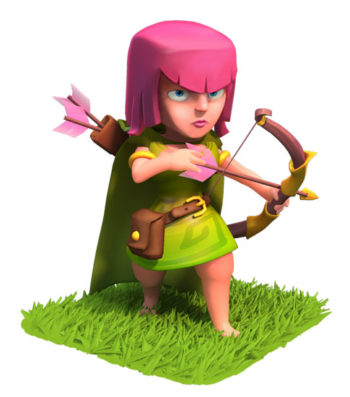
|||© Supercell

This archer contributes to the melee in Clash of Clans. © Supercell

The engine of the Finnish games industry is found in the mobile games sector, as a clear majority of companies specialise in mobile platforms. The reasons for this are clear, according to the Funding Agency for Technology and Innovation (known by its Finnish abbreviation, Tekes).

“The cost of building a mobile game is often only a tenth of the budget of a triple-A production,” says Kari Korhonen, head of Skene, the Tekes programme aimed at supporting the games industry. “It’s been easier for small developers to invest in mobile development.”

A rising star is Helsinki-based Supercell Games, a 70-employee firm whose game Clash of Clans has ranked first of top grossing apps in Apple’s iOS Store in 77 countries. The financial success of the game is based on a free-to-play model, where revenue is generated from in-game microtransactions by the players.

“Our team wanted to create a strategy game that would be easy to pick up and play and attract wide range of players around the world,” says team leader Lasse Louhento. “We are really surprised about how popular the game has become and how passionate our fans are about it.”

App rep
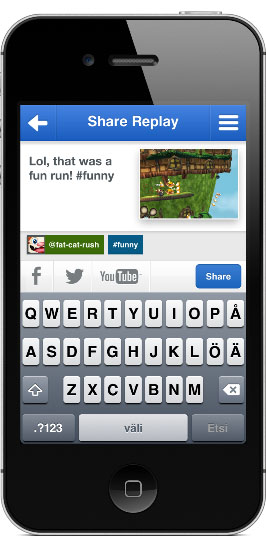
|||Photo: Applifier

One of the functions of Applifier’s Everyplay service allows you to share replays of your games on social media.Photo: Applifier

Another upcoming firm in the field is Finnish startup Applifier, which aims to connect game developers for Facebook and mobile platforms to their audiences.

Olli Sinerma, producer of Applifier’s mobile game discovery service Everyplay, believes the reason for the rise of Finnish mobile developers is the spread of digital distribution services such as the App Store.

“Finland has a long standing in the global game industry, but the digital distribution revolution made it easier for us to get to the global market, something which was very difficult back in the old days of ‘bricks and mortar’ game shops,” says Sinerma.

He also names further reasons for Finnish success in the mobile market: a tech-savvy population, mobile know-how inspired by Nokia and a high level of national education.

Institutions change slowly

|||© Bugbear

Big action: Bugbear’s new Ridge Racer: Unbounded forms the second-largest development project ever undertaken in Finland. © Bugbear

The growth of games as a medium has slowly garnered academic interest. According to Professor Frans Mäyrä, head of the University of Tampere Game Research Lab, a new gamer generation of researchers brought a boom of activity to the field in the early 2000s, but it did not last.

“After a few years people realised that institutions still change rather slowly and that there were still only a few paid academic positions available in game studies,” explains Mäyrä. “Finland is one of the countries at the forefront of this development, yet there is clearly need for more permanent funding and positions in this field.”

Universities have not been the only institutions slow to pick up on the significance of games, says Mäyrä. “The government has been slow to react to the possibilities of games,” says Mäyrä, “and several countries have gained a competitive advantage through systematic subsidies and other benefits to game companies.”

The future of Finnish games, Mäyrä believes, lies in the ongoing shift towards digital distribution and free-to-play models:

“The rise of mobile games and the growth of entire ecosystems where gaming experiences go beyond device boundaries are also trends that are going to change the landscape of gaming and game development in the future.”

By Lassi Lapintie, January 2013
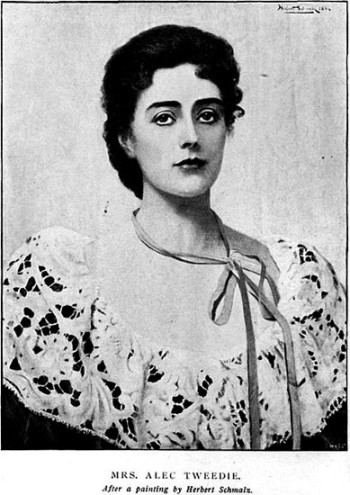
Travelling Finland with a Victorian view

Nowadays almost everyone knows something about Finland: Finnish games (Angry Birds, Clash of Clans), ice hockey players (Mikael Granlund, Teemu Selänne), design brands (Marimekko, Iittala) and high-tech companies (Nokia, F-Secure). However, back in the late 1800s, things were quite different.

Tourism in Finland was very rare indeed, until British author Ethel Brilliana Tweedie visited the country with her sister. She wrote about their experiences in 1897 in a book called Through Finland in Carts, with a revised edition in 1913.

When preparing for her northern adventure, Tweedie was not even able to obtain a suitable guidebook or map of Finland. She did hear plenty of inaccurate rumours about the country, including that it was inhabited by barbarians, that polar bears roamed the streets and that people got around in the summer on sledges pulled by reindeer.

The sisters arrived by steamship in the port of Helsingfors – that’s the name of Helsinki in Swedish, which is also an official language in Finland. They found it a charming little town, but were surprised by the heat. They were also impressed that Helsinki was so advanced in using electricity, telephones and bicycles compared to London at that time. They roamed the city and made lots of observations. One of the restaurants Tweedie called delightful, Kapellet, is still popular today, and is now known as Kappeli.

Finland now and then

4376-finland-in-carts_ethel_brilliana_tweedie_painting-by-herbert-schmalz_550px-jpg

Ethel Brilliana Tweedie got the tourism ball rolling in Finland with her 1897 book Through Finland in Carts.Photo: Gutenberg Project/TM

Some things have certainly changed. Modern Finns have a reputation for being on time, but Tweedie stated, “No Finn ever hurried himself for anybody or anything.”

On the positive side, she said, “they read much and think deeply,” and “both rich and poor are wonderfully well educated.” She also described them as hospitable, generous, honest and kind. Furthermore, women’s rights in Finland, she observed, were more advanced compared to other countries.

The sisters voyaged by boat to Wiborg (now Vyborg, located in the slice of eastern Finland that was ceded to the Soviet Union during the Second World War) to stay at a country mansion where they discovered the Finnish smorgåsbord and brännvinn (local schnapps).

Also in the area that now forms part of Russia, they travelled to the original Valamo, located on an island in Lake Ladoga, to see the simple and ascetic life of the Orthodox monks. They attended the Sortavala Festival, in the village of the same name, to learn about Finnish music, especially folk music. They were intrigued by the Finnish national instrument, the kantele. At the same festival they attended a play written by famous playwright Minna Canth, who now has a street named after her in the Helsinki neighbourhood of Töölö.

An outside view of Finnish culture

4376-finlandincarts_painting_lehtikuva_s_gustafsson_550px-jpg

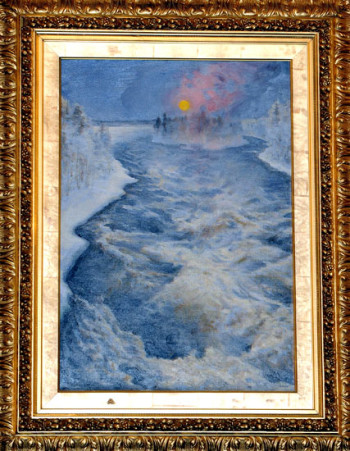
Akseli Gallen-Kallela, Finland’s most famous artist, painted this winter view of the magnificent Imatra Rapids around the same time that Ethel Brilliana Tweedie wrote about them for British readers. Photo: Sari Gustafsson/Lehtikuva

As for the concept of Finnishness, Tweedie devotes a chapter to the significance and intricacies of the sauna, describing her own experiences with Finnish bathing rituals. Another chapter is dedicated to the national epic, Kalevala. Tweedie not only recounts its history, meaning and societal value, but also quotes several translated sections of the work.

Perhaps the most entertaining component of the book is the sisters’ journey through the Finnish countryside in uncomfortable, horse-drawn carts. They stayed in peasant lodging, farmhouses, manor houses and even spent nights in Olavinlinna, a castle that is now the home of the renowned Savonlinna Opera Festival. They encountered the wildness of Midsummer’s Eve, viewed the unique beauty of Punkaharju, learned about forestry and tar making, admired the magnificent power of the Imatra Rapids and descended other frightening rapids in a tar transport boat.

Throughout the journey, they met friendly people who were fascinated by these strange foreign ladies. They sampled the local food – not always enjoyable – endured extremely long hours of primitive travel, encountered strange customs, and yet seemed to keep a good sense of humour throughout the journey.

Through Finland in Carts does not represent a flawless study of Finnish life at the turn of the century, but rather one writer’s discoveries in a strange, little-known land. An appendix goes into great detail describing Finnish politics at the time.

So, if you’d like to escape the pressures of modern life for a while, get hold of this book (online booksellers list several modern reprints, and Project Gutenberg and the National Library of Finland offer digital versions for free) and return to a simpler, quainter Finland.

By Russell Snyder, February 2013

Sledding Helsinki’s city slopes in style

Winter in Helsinki sets the stage for a favourite pastime: sledding. Here’s how to get the most out of your journey down the urban slopes.

Helsinki inhabitants often spend much of their winters shaking their heads at forecasts of slush and sleet, but sometimes their hometown is cast into a tourist-brochure winter. During snowy spells, newspapers run photos of locals skiing next to trams in the city centre.

Seemingly endless heaps of snow may become a source of stress during morning commutes, but they also turn the city into a downy, almost surreal playground on weekends: Dog-walkers, cross-country skiers and ice-fishing enthusiasts take to the sea when it is frozen, and many others visit the city’s parks, whose snow-covered hills serve as perfect sledding slopes.

Shrovetide tradition

4136-11554976-500px-jpg

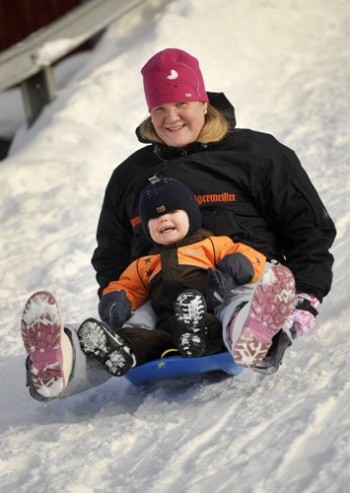
Keep your feet off the ground as you slide on the slope. Photo: Vesa Moilanen/Lehtikuva

The hills of parks such as Kaivopuisto, Central Park, Sinebrychoff Park and Kaisaniemi Park become speckled with sleds ranging from red to neon green. You can see everything from steerable Stigas to small, round, one-person sleds that are little more than small sheets of plastic with single handles (known as liukurit, sliders, in Finnish).

Shrovetide (Laskiainen in Finnish), a holiday signifying the start of Lent in the Christian tradition, is connected with Shrove Tuesday, which – curiously enough – is devoted to sledding in Finland. And while many of us might deem sliding down a hill on a plastic tray an activity best practiced by children, the traditional sledding event is open to all.

Practical tips

Whether you’re a first-timer or you’re making a long-awaited return to the city slopes, here are a few things to keep in mind.

Wear the right clothes: Even if your pea coat is able to withstand a few trips down the hill, your jeans won’t. Dress for sledding like you would dress for the ski slopes, prepared to have snow push its way into your gloves and up your legs.

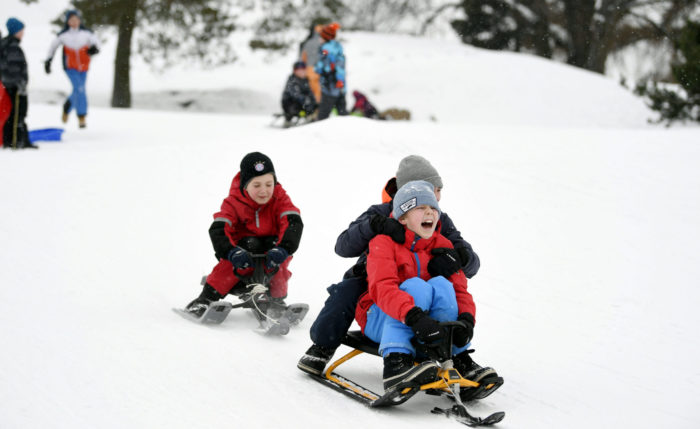
Several kids sled down a snowy hill.

It may not be an Olympic luge competition, but sledding will still give you an adrenaline rush.Photo: Antti Aimo-Koivisto/Lehtikuva

Test out different models: A bulky, square-shaped plastic sled (ahkio) offers a steadier experience than a liukuri, which requires the user to hold his or her legs up in order to avoid a violent spray of snow in the face. A steerable Stiga sled, meanwhile, offers a larger degree of control (it even has brakes), but isn’t built for an adult frame and can easily tip over.

Practice your technique: Although sledding is pretty self-explanatory, maintaining balance at high speeds can be more difficult than it looks. Don’t let your feet dangle; keep them inside the sled or lifted off the ground. Cramming two passengers into one sled can actually ease the process, evening the weight of the sled and grounding it.

Prepare to get wet and tired: It may seem obvious, but for every breezy ride down the hill, there is also the mandatory climb up in deep, slippery snow. Also, keep in mind the first rule of sliding etiquette, if only to not look foolish in front of the kids: Go off to the side before climbing back up the hill, rather than ascending through the middle where you are in danger from sleds travelling at high speeds.

Treat yourself: Since sledding tends to result in soggy clothes and physical weariness, you’ll appreciate a close proximity to a café where you can warm up afterwards. Sinebrychoff Park is near the restaurants and coffee houses of the Boulevard, while the slopes at Kaivopuisto are only a stone’s throw away from seaside Café Ursula. And after a few treks up the hill, a laskiaispulla (a Shrovetide pastry filled with marzipan or jam, with whipped cream for good measure) will hardly feel like a vice.

By Laura Palotie, updated February 2019

On the other side of the Arctic

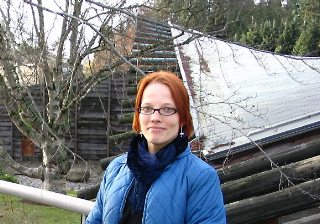
Rauna Kuokkanen, a Sámi from the Finnish area of Lapland, is a professor of political science at the University of Toronto in Canada. She’s been active for many years in advocating Sámi rights.

Sorry, no larger picture available
Rauna Kuokkanen talks about Sámi rights in an international context.

What do the Sámi have in common with indigenous peoples of North America?

The cultures, histories and socioeconomic circumstances of indigenous peoples around the world are not the same, but there are a lot of similarities. In general they share a set of perceptions of the world, relating to cultural and social practices and discourses that are driven by an intimate relationship with the natural environment. They also share experiences of being colonised and marginalised by dominant societies: loss of political and economic autonomy, assimilation policies, cultural and social displacement, and dispossession.

How do you relate what you know from Canada to the Sámi?

In Canada, “duty to consult” developed from the recognition that if the government can override aboriginal rights (for example land rights) until they are confirmed by a treaty or a court, the rights may already have been given away and exploited, or transferred to private parties.

Since the 1970s, indigenous peoples around the world have been sharing experiences and best practices related to getting their rights recognised, restoring their autonomies and implementing self-governance structures. I’m convinced that the Sámi have a lot to learn from indigenous peoples in North America, New Zealand and elsewhere.

One of the few times the Sámi have enjoyed success in the Finnish courts was when Utsjoki municipality in northern Finland abandoned its plan for a plant that would bottle water from the sacred Sámi spring of Suttesája (Sulaoja in Finnish) about six years ago.

What does “decolonisation” of Sámi society mean?

One thing it refers to is the creation of institutions and services that better reflect Sámi values within education, healthcare, social services and politics. If possible, they can be grounded on principles derived from Sámi institutions that may have existed previously, usually informal ones.

This is not a “return to the past”. It’s about finding ways to employ “traditional” principles and values when establishing present-day institutions. In some areas, such as Sámi education and social services, this is already happening.

What’s at the top of your concerns about relations between Finland and the Sámi?

Finnish human rights policy has been characterised by double standards for the past two decades. Despite maintaining an international image as a defender of human rights, Finland has been deploying delay tactics and unfounded promises since at least 1990 when the Committee on Sámi Issues submitted a proposal for the Sámi Act to the government.

The Finnish Constitution has recognised the Sámi as an indigenous people and confirmed the Sámi linguistic and cultural rights. Finland was one of 142 countries to adopt the 2007 UN Declaration on the Rights of Indigenous Peoples. When will this translate into political will and legal measures?

What improvements have you seen in the situation of Sámi people in recent years?

Norway has been most progressive and active in recognising and promoting Sámi rights since the 1980s. For instance, the Finnmark Act of 2005 recognises Sámi land and water rights and ensures comanagement of resources.

When I was going to school in Utsjoki, the Sámi identity and language were still stigmatised. Thanks to the long-term efforts of Sámi cultural workers, writers, politicians and others, young parents realised that it’s up to them to ensure the survival of the Sámi language by speaking it to their children. The status of the Northern Sámi language, spoken in northern Finland, Norway and Sweden, is stronger than it used to be – though still not secure.

By Peter Marten, February 2009, updated February 2013

Taste the wilderness in Finnish wild food

Wild foods form a growing export sector for Finland, and often figure in the country’s entries into world cooking championships such as the Bocuse d’Or. Chef Sami Tallberg urges people to fearlessly season their everyday lives with the tastes of the wild.

On a brisk, breezy subzero day at Helsinki’s Market Square, wild food chef Sami Tallberg admires a big burbot from the Porvoo Archipelago.

He points to its frosty innards and says: “Who needs foie gras? You can make great paté in the same way from this fat liver.”

As Finland’s best-known champion of wild food, Tallberg has been urging people to taste off-the-beaten-track foods from nature. In books, TV shows and world travels with government ministers, he’s been sharing his enthusiasm for nature’s powerful superfoods. Rich in flavours, nutrition and colour, these free foods rate highly in any ecological or ethical comparison.

Carbon foodprint

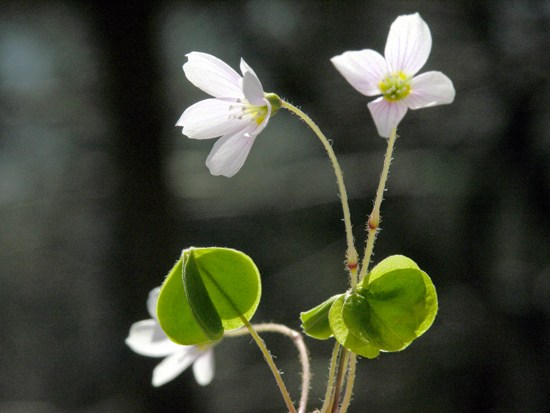
Wood sorrel is one edible plant that can be foraged in the forests of Finland.

Wood sorrel is one edible plant that can be foraged in the forests of Finland.Photo: Jouko Lehmuskallio/NatureGate

“Whenever possible, I use sustainably harvested wild foods and always try to use as many parts of the plant or animal as possible,” says Tallberg. “If there’s something that’s not available domestically, like shellfish, I prefer to use Nordic stuff to limit the carbon ‘foodprint.’ I’m a bit idealistic about this.”

Tallberg was bitten by the wild-food bug in the early 2000s while working at a restaurant in London:

“One day this forager, Miles Irving, came in to offer us some sea kale, which is kind of like broccoli, an extremely delicious and noble plant. He kept bringing me other plants and herbs. They were challenging – I didn’t know what to do with them at first. He asked me and some other chefs for ideas for his book, and took me foraging in Kent. I began to realise the possibilities of things like wild fennel and watercress. It really broadened my spectrum.”

After returning to Finland five years ago, Tallberg began tasting plants, mushrooms, berries, mosses and lichens in the forest. Soon he was replacing parsley with ground elder and Italian arugula with wild yellow rocketcress, and inventing uses for nettles and spruce shoots.

Wild food gospel

2612-dsc_0017_sami-tallberg__kirja_wildfood-550-px-jpg

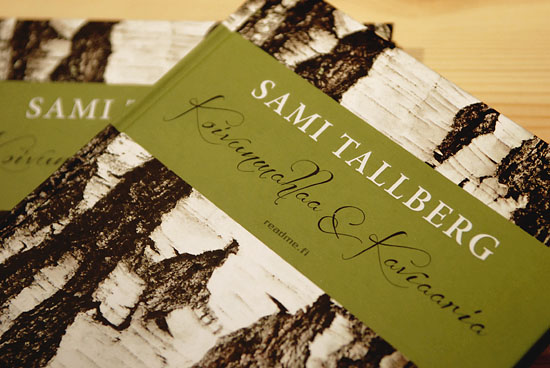
Sami Tallberg has written or contributed to a number of books about wild food, including “Koivunmahlaa & Kaviaaria” (Birch Sap and Caviar). Photo: Sinimaaria Kangas

Tallberg stresses the importance of carefully identifying everything, recommending the NatureGate website and app, which include clear photos of Finnish species with their names in eight languages. This is especially important with mushrooms, of course.

Teaming up with hunters and fishermen, he began exploring elk, venison, fowl and fish: “Sea pike is so beautiful, clean and versatile. Most people prefer small ones, but the big ones taste great and are easier to bone. You can eat them raw as sashimi or as ceviche with vinegar.”

Tallberg has spread the gospel of wild food at Helsinki’s prestigious Carelia and Kämp restaurants and in his books: the bilingual Wild Herb Cookbook and Koivunmahlaa & Kaviaaria (Birch Sap and Caviar). He also supplied recipes for another book, Mäti (Roe). In spring 2013 he was on Finland’s Top Chef TV show judging wild food dishes.

Growing into a movement

2612-dsc_0017_sami-tallberg_wildfood_ruokapurkki_550px-jpg

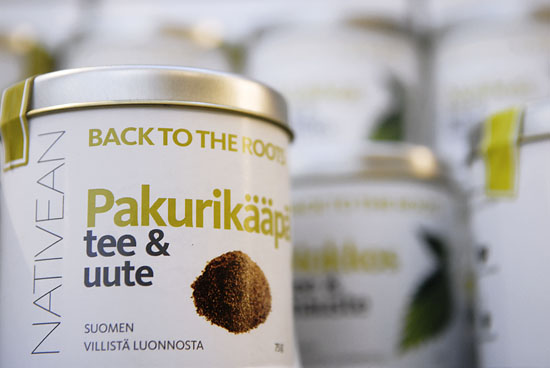
What about wild food pharmacy? The chaga mushroom can be dried, ground and used to brew a tea that some believe has medicinal properties. Photo: Sinimaaria Kangas

At Finnish markets, you can buy boletus mushrooms, which are popular with Italians, who import them or come to Finland on mushroom-picking trips. Meanwhile wild lingonberries and blueberries – which help prevent cardiovascular disease and yield other health benefits – have proven a hit with visitors from Japan and China. In summer and autumn, traditional Finnish markets sell a wealth of berries and mushrooms, with fish available all year round.

Finnish wild foods have been boosted by high-profile events such as the Cook it Raw gathering of top chefs, held in Lapland in 2010, and by active support from Alexander Stubb, who was Minister for Foreign Trade between 2011 to 2014 and took Tallberg along to showcase wild food in countries all over the world.

“We hope [promotional efforts] will help advance the growing interest in Finnish wild food, sparked by our four distinct seasons that offer very special growing conditions,” says Sari Mattila, executive director of the Foundation for the Promotion of Finnish Food Culture.

She was part of the team behind chef Mika Palonen, who represented Finland with a Finnish wild food theme at the world chefs’ competition Bocuse d’Or in January 2013 in France. Palonen conjures up dishes featuring deep-fried lichen, lingonberries, juniper, boletus mushrooms – and some wild rose petals donated by Tallberg.

“It’s great to see this spreading,” says Tallberg. “It’s becoming a national movement.”

By Wif Stenger, January 2013, updated April 2019

Two happy designers and many Angry Birds

What happens when you fall in love with Finnish design and cannot live without it? You might just end up working in Finland’s cutting-edge mobile game industry.

When Wensi Zhai got hold of her first book about Finland, she was an undergraduate student at China Central Academy of Fine Art. At that moment she knew exactly where she wanted to go.

“The book impressed me,” explains Zhai. After reading the book, she began hunting for possibilities to move to Finland. “The pictures showed designs that I felt attracted to. I wanted to know more about Finnish design, and about the country’s lifestyle and natural environment. When I like something I can be blind to other things.”

Zhai’s friend and colleague, Miguel Moreno from Spain, tells a different story that is nonetheless familiar. Moreno’s first visits to Finland involved “a blonde lady with green eyes,” but he soon fell in love with the minimalistic shapes of Finnish design and art, too.

“I can’t understand how designers like Eero Aarnio or architects like Alvar Aalto or Eero Saarinen aren’t better known outside of Finland,” says Moreno. He soon started sending CVs to Finland and eventually closed the doors of his animation company in Barcelona.

Working with piggies and birdies

|||Photo: © Rovio

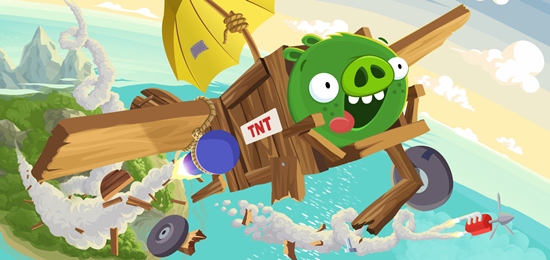
Pigs will get up to mischief. The game Bad Piggies developed as an offshoot of Angry Birds. Photo: © Rovio

Zhai achieved her goal in 2008 when she was accepted as an exchange student at Helsinki University of Art and Design, currently part of Aalto University. Today both Zhai and Moreno work at Rovio Entertainment, the Finnish mobile game developer and entertainment company responsible for Angry Birds and Bad Piggies. Zhai holds the position of junior graphic designer and Moreno works as lead character designer.

“Finland is an ideal country for professionals, especially within the fields of new technology and image,” explains Moreno, who started working at Rovio before the birds hit the big time and the company became a feathery franchise. “It’s a country for enterprising.”

As a company, Rovio is known for its high employee satisfaction, which they endorse by offering their employees freedom to be innovative. “The fact that I’m offered the possibility to work in different fields – from designing new characters to marketing and also creating ideas for new games – is fantastic,” Moreno says. “And on top of that, I get paid for it!”

For Zhai, the key is the working environment and the fact that in Finland “designers are really well respected by both clients and colleagues, and design in general is of a very high quality.” In a field where the designer has to “please the client,” respect plays a vital role. Currently Zhai is designing a book for Rovio.

Inspired by people

|||Photo: © Rovio

Movie-themed games are sometimes shunned by gamers, but if you’re playing the wildly popular Angry Birds Star Wars, may the Birds be with you. Photo: © Rovio

Zhai explains how important design is for her and where she gets her inspiration: “In Finland design is embedded in almost every object – a coffee cup in a cafeteria, a lamp in a restaurant. I can see this and it inspires me. Because of this I feel I can be more creative, outside the office as well as at work.”

In some Finnish brands, Zhai says, colour design “is not only colourful but at the same time very calm.” Marimekko has kept its Finnishness while also attracting international followers. “That’s good design.”

She is also inspired by the Finns themselves: “In Finland there is a sense of reliability. Most people are quite serious about their work and about responsibility. I like the straightforwardness of Finns – it makes work easier.”

The equally enthusiastic Moreno relies on the inspiration he gets from his colleagues: “At Rovio I have the luxury of working with fantastic artists and that nurtures me every day!

What else is expected in a company infused with talented animation and game designers, all excited about what they are doing? Even their movie-related games – a genre sometimes shunned by gamers – continue the success story, as seen by the way Angry Birds Star Wars has taken off.

With pigs and birds popping up at an astonishing speed, it’ll be interesting to see what Rovio’s employee count totals a year into the future. The company is on its way to becoming a real empire, and recently announced its first 3D feature film, to be released in summer 2016. It will be produced by John Cohen, whose previous productions include Despicable Me.

All we’ve got to say is: May the Birds be with you.

By Carina Chela, December 2012

All-time top 12 Finnish design products

Here is our own Top 12 list of Finnish design innovations that have contributed to the world’s wellbeing – physical, mental or spiritual – by making daily life easier and more enjoyable.

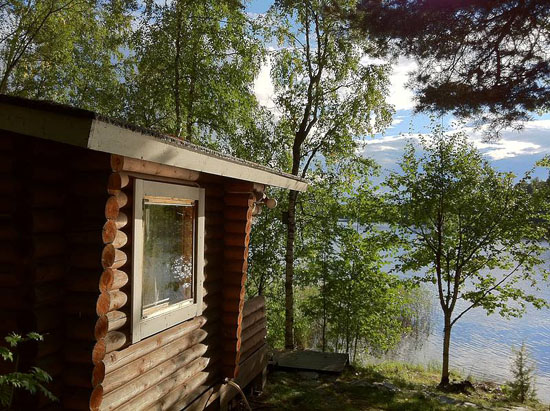
1. Sauna

A small wooden sauna cabin by a lake.

Photo: VisitFinland

Forget expensive spa and fitness club memberships. The Finnish sauna is the quintessential temple of physical and mental relaxation. Here, you can cleanse body and soul by sweating away stress and impurities, emerging revitalised from the soothing hot steam. There are city versions for apartment dwellers and hotel guests, but a lakeside or seaside sauna flanked by Finnish forest offers the best experience of all.

2. Dish-drying cupboard

A woman placing dishes to a dish-drying cupboard.

Photo: Kaisa Siren/Lehtikuva

Developed by Maiju Gebhard for the Finnish Association of Work Efficiency in the mid-1940s to eliminate manual drying of dishes, the dish-drying cupboard makes sense on so many practical levels. Placed above the kitchen sink, this space saver represents the perfect example of form following function, not to mention sustainability for today’s environment – no oil, electricity or batteries needed.

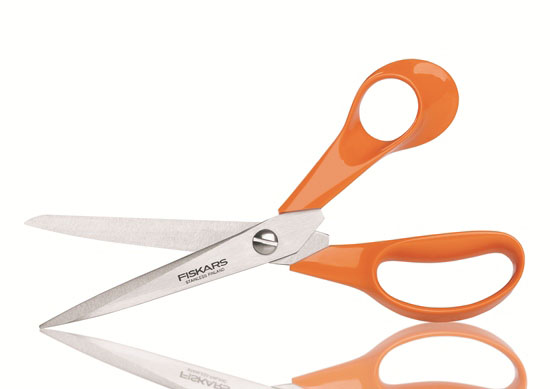
3. Fiskars orange-handled scissors

A pair of orange Fiskars scissors.

Photo: Fiskars

Trademarked in 1967 and on the cutting edge ever since, Fiskars scissors have registered sales of more than one billion to date. Many Finnish families have a pair that’s been around for more than 40 years – and they still work like magic.

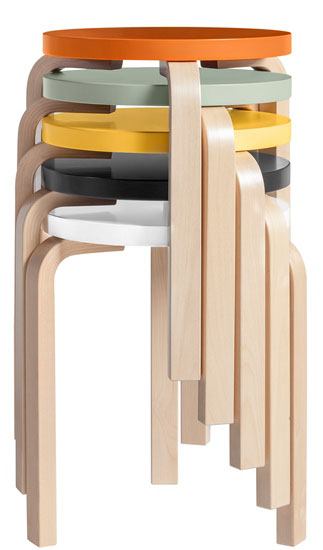
4. Artek Stool 60 by Alvar Aalto

Stacked three-legged stools in different colours.

Photo: Tuomas Uusheimo/Artek 

Designed in 1933, the three-legged modern classic has been copied endlessly since its debut. You can dress it up, dress it down, stack a set in the corner of a room to save space or use one as a coffee table, bookstand or nightstand.

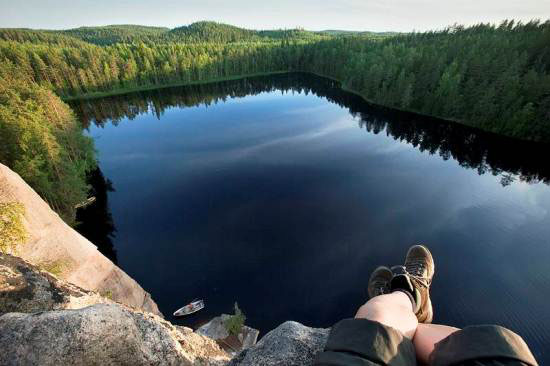
5. Clean water

A person's feet dangling from a cliff by a clear blue lake.

Photo: Tea Karvinen/VisitFinland

Where else in the world are the lakes so clean that you can take a drink of water while you swim? Or drink it straight from the tap, unfiltered, just because it’s so delicious? Finland boasts close to 200,000 lakes. Those that had been polluted were cleaned up by a concerted effort starting in the 1960s, and today the country is a world leader in R&D on water use and purification. Even here, design is at work.

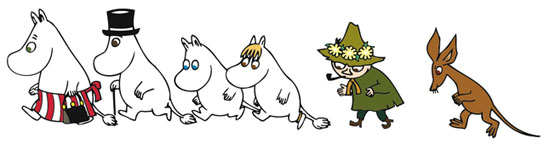
6. The Moomins

An illustration of the Moomin family; all characters are looking downwards like they are searching for something.

Photo: Moomin Characters Ltd

First appearing in the 1940s, author and illustrator Tove Jansson’s loveable yet refreshingly real Moomin characters attract fans of all ages. They’ve shown up in children’s books, comic strips, animations and spin-offs ranging from stuffed toys to lunchboxes. The Moomins continue to retain their sense of quality appeal despite their global best-selling status.

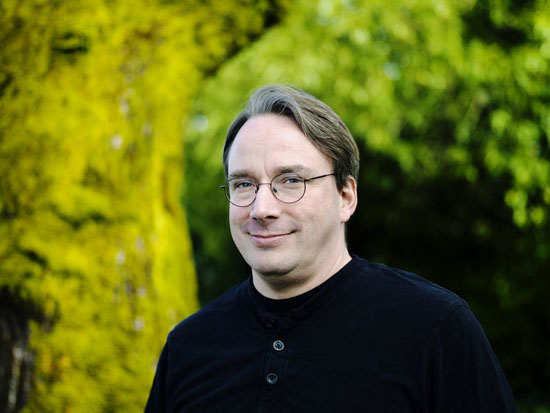
7. Linux

Portrait of a smiling Linus Torvalds.

Photo: Aki-Pekka Sinikoski/TAF

The world’s leading free and open source operating system was developed by Linus Torvalds back in 1991 – well before people realised that collaborating and sharing things for free would be the future.

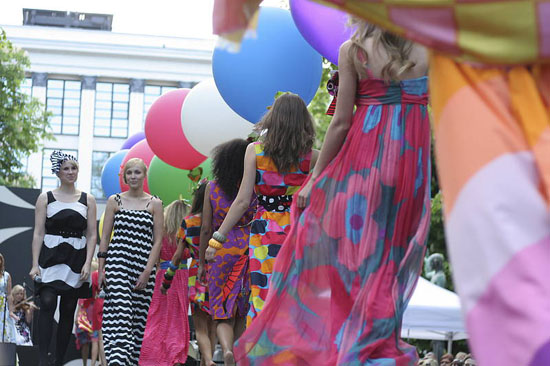
8. Marimekko

Models on a runway showing Marimekko's dresses and holding big colourful balloons.

Photo: VisitFinland

For many, the word Marimekko is synonymous with design. Their bright colourful prints represented a fresh, new way of dressing and decorating when they debuted in 1951, and they still do today. Marimekko continues to open stores around the world and form partnerships with other international brands.

9. Graphic Paper

A bunch of different products, such as chocolate bars, a paper bag with images of cows, a wine bottle and bananas.

Photo: UPM

Finland is a world leader in graphic paper. There’s a good chance that the glossy magazine or brochure that you’re reading, the labelling on your product or the carton that forms its package (for example, Veuve Cliquot Champagne or Red Bull energy drink) came from a Finnish company that uses sustainable forestry and production practices.

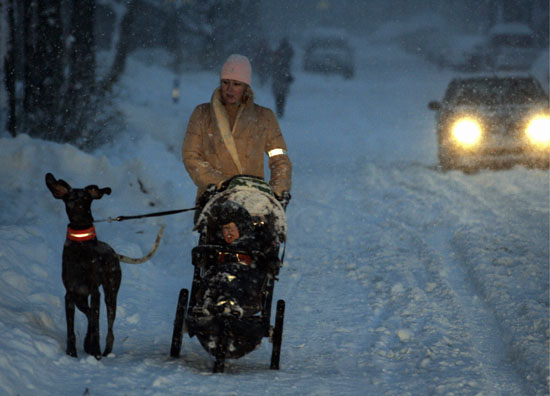
10. Pedestrian reflectors

A woman walking outside by a dark road with a stroller and a dog, all wearing reflectors.

Photo: Jussi Nukari/Lehtikuva

In 1955 Arvi Lehti purchased a plastic injection moulding machine to produce items including reflectors for horse carts and carriages so that they would be visible and safe in the dark. Later, he hit upon the idea of making personal reflectors for pedestrians. Today, pedestrian reflectors are award-winning design items that enjoy great popularity, especially in dark, Nordic winter conditions. They can be worn as armbands or attached to jackets, backpacks or baby carriages – there are even reflective dog collars.

11. Angry Birds

An illustration of the Angry Birds on a comet in space.

© Rovio 

Rovio Entertainment’s Angry Birds video game franchise is one of the biggest mobile app success stories in the world; with more than one billion downloads across all platforms, and has given many hours of playing pleasure to kids of all ages. (By the way, the game Clash of Clans, a game by Supercell, another Finnish company, may well be the one to overtake Angry Birds.)

12. Nokia mobile phones

A person using a Nokia smartphone.

Photo: Vesa Moilanen/Lehtikuva

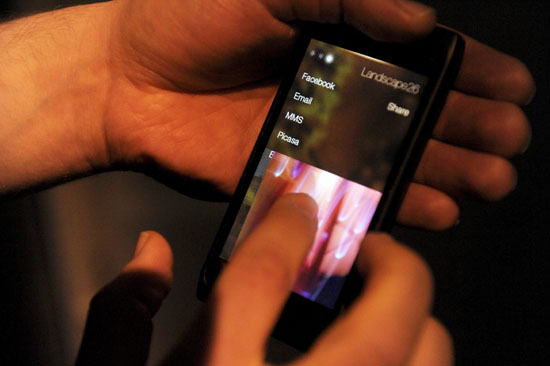
Despite Nokia’s recent difficulties, not so long ago Nokia mobile phones were innovative and ground-breaking and the company was at the forefront with devices such as the Communicator series (1996–2007), one of the first palmtop computers. Nokia helped put Finland on the international map, and now its former employees are founding numerous innovative startups, including Jolla, a new competitor on the mobile device market (see photo).

By Katja Pantzar, December 2012, updated March 2026

Forests are rich in recreational value

Would there be wealth in Finland without forests? Part two of our three-part series continues our survey of the forest industry and its future, this time from a different perspective: We look at the sustainability and non-industrial value of forests.

Despite tough competition and increased efficiency, environmental concerns are of ever-increasing importance to the forest industry. Modern consumers are concerned about the origins and manufacturing methods of the goods they use.

2381-oulankajoki-and-bird-550px-jpg

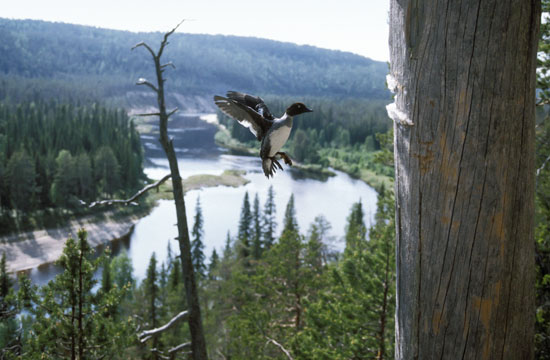
Finland’s Forest Act is crucial to safeguarding the biodiversity of the forest environment. Photo: Hannu Hautala/VisitFinland

In Finland, the forest industry only uses raw materials from “certified resources” – forests where sustainability has been taken into consideration.

The certification of the origin and supply chain of wood is becoming increasingly essential as the industry becomes ever more global. More than 95 percent of Finland’s commercially utilised forests are certified, which means practically all forests outside government-ordained conservation areas. By comparison, less than 10 percent of the world’s forests are certified.

Finnish companies want to follow certification rules in their projects abroad, as well, whether they occur in Latin America, China or elsewhere.

Forests mean more than just profit

2381-mushrooms-picking-550px-jpg

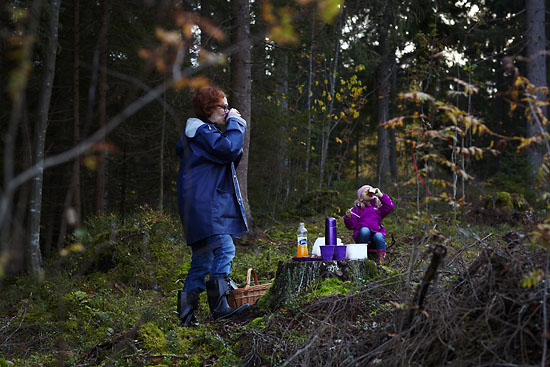
The legal concept of “every person’s right” means that people can hike and pick berries and mushrooms almost anywhere in Finland, no matter who owns the forest land. Photo: Riku Pihlanto/VisitFinland

Modern forestry aims to combine three elements: economic, ecological and recreational.

Although almost 90 percent of Finland’s forest land is zoned for potential commercial use, ecological and societal viewpoints are not neglected. Forests also have aesthetic value.

Two-thirds of Finnish forests are owned by private citizens. They naturally want to take good care of their personal property and utilise it in many ways besides growing trees to serve the forest industry. They want to hike, pick berries, hunt, ski, go camping and participate in other forms of recreation. The forests are dotted with lakes (Finland has 188,000 of them) where people can swim, fish, go boating and, in the winter, ice-skate.

Finland’s Forest Act prescribes how and where felling may be carried out. This law is crucial in safeguarding the biodiversity of the forest environment. There also is a voluntary Forest Biodiversity Programme, known by its Finnish abbreviation, METSO.

This programme allows private forest owners to protect valuable wilderness from felling and receive compensation payment that covers the timber value of the area.

By Vesa Kytöoja, January 2013