Forests support innovative bioeconomy

Right now the forest industry is experiencing a hectic period of fostering new products and business models, with a focus on biofuels and the development of new, wood-based materials.

Wood construction is also undergoing a renaissance at the moment. Sustainability and climate issues form the common denominator for all new-era wood products.

Finland is engaged in large investment projects with the EU regarding the utilisation of biomass. The country holds a leading position internationally in the research of bioenergy, biofuels and biorefineries. The Finnish forest cluster aims to double the value of forest products and services by 2030, based on 2006 levels.

Bioenergy already makes up an important portion of today’s forest business. About 20 percent of Finland’s energy is generated from wood, while Finland’s forest industry produces 70 percent of the county’s renewable energy. The simplest sources of bioenergy include felling residue such as branches, treetops and small-diameter trees. However, by-products from the wood-processing industry form the main part of bioenergy.

Biofuels to replace fossil fuels
3255-metsajuttu3_arinakari_upm_550px-jpg

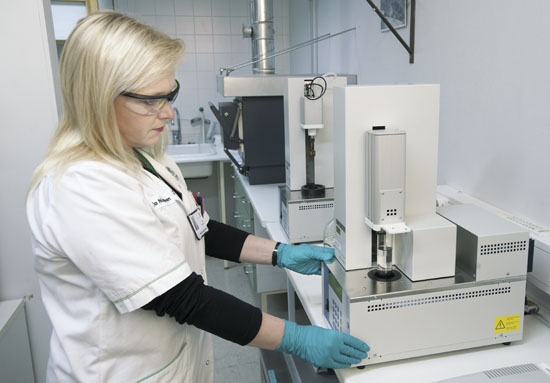
In the lab in Lappeenranta: UPM’s new refinery in eastern Finland will turn oil from pinewood into biodiesel. Photo: Ari Nakari/UPM

The newest dimensions of bioenergy are biofuels – gas, petrol and diesel. UPM is building a large refinery in the eastern Finnish city of Lappeenranta. It will use crude tall oil from pinewood as its raw material, annually producing some 100,000 tonnes of biodiesel for vehicles. Construction commenced in the summer of 2012 and operations begin in 2014.

Metsä Group’s unit Metsä Fibre in the nearby village of Joutseno is already making biogas by gasifying wood chips and refining them into biogas, a product whose composition resembles natural gas. Finnish energy company Fortum will build a bio-oil facility, integrated with their power plant in the eastern Finnish city of Joensuu, aimed at supplying fuel for cargo vessels. The new bioenergy company Green Fuel Nordic finishes two new bioenergy plants in Savonlinna and Iisalmi, also in eastern Finland, in 2013. They both start operations as power plants and will expand production to wood-based biofuels.

Composites and other new innovations

3255-metsajuttu3_onbone_550px-jpg

Supportive environment: Onbone’s medical casts are made from woodchips and biodegradable plastic. Photo: Onbone

New forest industry products include microfibrils, nanocellulose, formable plywood, thermoformable paperboard and biocomposites.

Microfibrils are obtained from cellulose or wood pulp. The fibrils enable durable, light, wood-based material that, like plastic, can be shaped. It can be used for multiple purposes in paper, hardboard, furniture, automobiles, electronics, food, pharmaceutical, cosmetic and construction products. The fibrils can replace materials such as plastic, certain chemicals and aluminium. For instance a wrapping film made of nanofibrilled cellulose can be used in food packaging instead of plastic to keep products fresh.

Composites are combinations of two or several different materials, for example wood and plastic. Woodcast, manufactured by Onbone, is a medical cast made from wood chips and biodegradable plastic. Wood-based casting plaster represents the biggest innovation in the field since the 1970s. Composites can be used also in products as diverse as furniture and car parts, and can also be made of recycled materials that utilise wood-derived fibres extracted from paper. Many of the composites are easily formable into different shapes. They have also proved to be strong and moisture resistant.

Printed intelligence – electronics that can be rapidly and cheaply outputted by a printing machine – forms an innovation that is already in widespread use. Stora Enso has developed an application especially for pharmaceutical packages, combining the product info with the patient’s medical information.

NFC (near field communication) is based on a close-proximity radio-frequency identification technique and used in smartphones, toys and games. It allows information sharing between different components and objects. UPM and its cooperation partners have already opened 12 online stores utilising this innovation.

Wood construction boom

3255-metsajuttu3_upm_550px-jpg

Wood is being utilised on a completely new scale in both apartment houses and public buildings. Photo: UPM

Since the Second World War, the major house construction materials in Europe have been stone and concrete. In recent years, environmental awareness has increased the attention given to building materials. At the EU level, it has become clear that building with wood is significantly more environmental friendly than using concrete. So the aim is to reduce concrete construction and increase the use of wood whenever possible.

This trend opens new markets for Finnish sawmill products, wood and house-construction elements. House packages, in which customers select from various floorplans and a house is constructed using preassembled elements, have been well established for years, and quantities seem set to increase further in the coming decades.

In Finland and all over Scandinavia, fire safety regulations have been revised in recent years, allowing wood to be utilised on a completely new scale in both apartment houses and public buildings.

Activating the potential of wood construction on a European scale would have a great effect on reducing climate change. In Finland some 40 percent of new buildings are made of wood. In Europe as a whole, wood represents only about 4 percent of construction.

With new technologies and methods developing continuously, the possibilities and uses for wood and wood products are unlimited, and will keep the wheels of the Finnish forest industry rolling into the future.

By Vesa Kytöoja, March 2013
Finland launched my music career

“I would probably never have achieved all this professionally without a summer job in Finland back in the 1970s,” says French American Kevin Kleinmann, who has enjoyed a triumphant career in the classical music industry and arts management.

It all started with the Helsinki Festival in 1975. A summer job there gave Kleinmann exceptionally valuable work experience in PR and media relations, as well as introducing him to the classical music business. It also turned into a seven-year stay in Helsinki.

Those years offered a cornucopia of connections to top artists, both Finnish and foreign, and led him into the recording business and the creation of a totally new label, Finlandia Records. This, in turn, opened the gates to the international music industry.

Since leaving Helsinki, Kleinmann has held senior positions at CBS Records (Sony Classics), Philips Classics, PolyGram Classique France and PolyGram/Universal Music International. He now works as adviser to the classical board of Universal Music International and as professor of arts management and cultural policy at the Sorbonne in Paris.

Young American in Finland

3601-kleinmann-550px_001-jpg

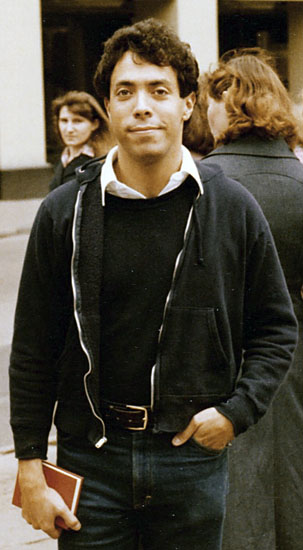
Young Kevin Kleinmann first travelled to Helsinki in 1975 from Germany on the MS Finlandia, and later created Finlandia Records. Photo courtesy of K. Kleinmann

As a young American music student, Kleinmann arrived in Hamburg, Germany to study violin and musicology. He rented a tiny room in the house of the great German pianist Christoph Eschenbach. Kleinmann was enlisted to collect the mail and take phone messages for Eschenbach.

“Legendary director and founder of the Helsinki Festival Seppo Nummi often had reason to contact my landlord, so we chatted on the phone,” says Kleinmann. “I found him a very fascinating person and told him of my interest in working at a music festival to learn the business. His immediate answer was, “You should come and work in Helsinki as an office assistant. ”

“I took the next ship to Helsinki. I initially planned to stay for only three months, but that adventure ended up being extended by seven years.”

“In those amazing years, the 1970s, I found Finland truly exotic,” Kleinmann recalls. “It was fresh and unspoiled, with an original spirit. As a foreigner I was treated like an exotic bird and I loved that!”

“I was determined to learn Finnish, and took courses at Helsinki University. I became a translator for the Helsinki Festival and many others. I was struck by the creative energy that you could sense everywhere back then.”

Creating a record label

“Finland was a nation boiling over with creative individuals, still forging its national identity. So many great composers actively working and appreciated by the Finnish general public; excellent young aspiring architects; glass-art designers like Timo Sarpeneva, Oiva Toikka and Kaj Franck; textile artists like Armi Ratia, Maija Isola and Markku Piri; and writers like Arto Paasilinna.”

3601-kevin-kleinmann_parisapt3136didier-delmas_550px-jpg

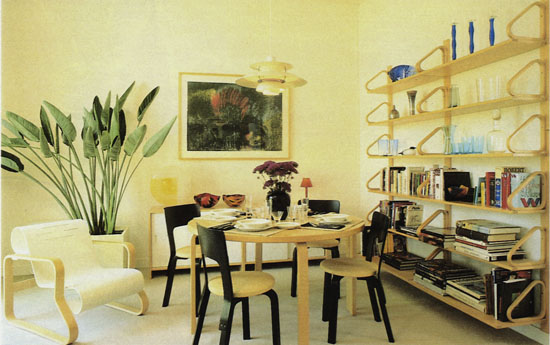
Finnophile: Kleinmann’s Paris flat is full of Finnish design items, including Iittala glassware, Artek’s Alvar Aalto furniture and more. Photo: Didier Delmas

“I quickly realised that I liked it in Finland,” says Kleinmann. “All the possibilities I was given to do and create, at my age, would have been impossible anywhere else at that time. For me it was an El Dorado, with treasures that hadn’t yet been exhausted and a rich culture that was still unknown to so many outside of its borders.”

“That’s where my idea came from to create a new record label devoted principally to Finnish music. I presented my idea to the Finnlevy label’s managing director, John Eric Westö, and chairman, Roger Lindberg, powerful music figures of the time. I started to develop an export network for Finlandia Records throughout the world.”

A French American who lived in Finland promoting its music made foreign audiences curious. The international press wrote stories about the foreign champion of Finnish classical music who had created a record label at the tender age of 22.

Music powerhouse

Kleinmann believes that Finland is, without a doubt, a music powerhouse. “Finland has more world-class musicians and composers per capita than any other country in the world. That is not only my opinion, but is something that is acknowledged and respected throughout the entire music world. We call it ‘the Finnish music miracle.’

“Many people have asked me to explain this. I always answer that creativity of all kinds can only come from an environment that combines education in the necessary skills with a creative force that is encouraged and nurtured by the society. Finland made the wise decision, more than half a century ago, to make music education a priority and the world can now see and hear the marvelous results.”

By Vesa Kytöoja, March 2013
Finnish apps find your way in the world

We look at two Finnish companies that specialise in location-based services, but in very different ways. One gets you a taxi from here to there, while the other helps you figure out where to go once you get there.

Imagine you’re in a foreign country. You waited an hour at the airport for a taxi, had trouble communicating with the driver, were charged double what you expected, couldn’t pay with a credit card and were refused a receipt.

If this sounds familiar, you’re in luck: A young Finnish company is taking the hassle out of getting a cab.

“We have had a phenomenal start,” says Janne Stude, Cabforce’s director for partnerships. “We launched in January 2012 with eight cities. Since then, our coverage has expanded to cover 50 cities and we have signed up many strategic partnerships in the travel industry.”

|||Photo: Mikko Stig/Lehtikuva

Home turf: Helsinki cabs line up at a downtown taxi stand on a sunny summer day. Photo: Mikko Stig/Lehtikuva

Cabforce allows travellers to prebook taxis, minibuses and limos in major European cities. Customers pay online with a credit card, and the price is all-inclusive, even including tips. A client may even have his flight monitored, so that the pick-up time at the airport is automatically adjusted if the flight is early or late. Customers can access the service online or via a mobile app.

“We’ve seen our strategy is working,” Stude says, “and we know we can make this work not only on a large scale, but on a truly huge scale.” The company recently opened a new office in the UK and began a partnership with First Great Western, the nation’s largest railway company. They’re already thinking about further expansion.

“We’re obviously talking about the global travel industry,’ Stude concludes. “With the technology we’ve developed, we’re now ready to integrate into the three dominant global distribution systems.” When it comes to service coverage, they’ve already moved beyond Europe to include New York.

Where to go once you’re there

If you’re in Finland and you just used Cabforce to get from point A to point B, and are now wondering what there is to do in the vicinity of point B, another Finnish company steps up.

|||Photo: Adfore

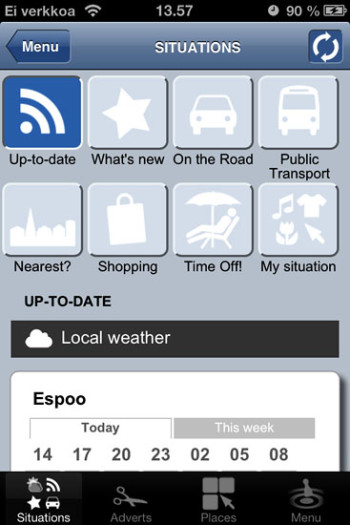
If you’ve arrived at point B and are wondering what shops and activities there are in the vicinity, Adfore’s Tassa app helps out. Photo: Adfore

“Tassa.fi is a state-of-the-art mobile solution for finding relevant and reliable local information in Finland,” says Markus Tallgren, CEO of Adfore Technologies. “Users can easily find the latest weather forecasts and the nearest gas stations, ATM machines and grocery stores. The information is of high quality: for example, the grocery store information is updated on a daily basis.”

Adfore was founded in 2009 as a spin-off from the VTT Technical Research Centre of Finland. Their Tassa service (tässä means “here” in Finnish) is available via a website and a mobile app. It works by determining a user’s exact location and surroundings. Depending upon what the user wants, she can find restaurants; theatres; the nearest public transportation stops complete with timetable info; the locations and opening hours of nearby stores; and even info about what those stores have on sale.

“The nearest places search is very popular,” Tallgren says. “Traffic information and bus stop timetables are also used a lot.”

The service is free to users; Adfore generates revenue from advertisements based upon search results, such as daily offers from nearby grocery stores. Tassa is available in Finnish, English and Russian, and the company plans to offer more services aimed at tourists in Finland.

“On the technology side, we’re about to publish new services related to near field communication (NFC) technology,” says Tallgren. “It will be cool: Just touch an NFC tag and your phone does amazing things.”

By David J. Cord, March 2013

Paola Suhonen designs art in fashion

Finnish designer and filmmaker Paola Suhonen, the founder of Ivana Helsinki, says she designs art, not fashion.

When the Ivana Helsinki show opened at the prestigious New York Fashion Week in 2010, it was a significant moment for Finland on the international catwalk. As frocked brunette models with updos sauntered down the runway, singer Arja Saijonmaa’s version of the melancholy “Partisan Waltz” played in the background.

Characterised by bold prints with a nostalgic ’60s and ’70s mood, Ivana Helsinki was created by sisters Paola and Pirjo Suhonen and has gone where no other Finnish fashion label has. In 2007 it became the first Scandinavian fashion label to be invited to the prestigious Paris Fashion Week, and it formed the first Finnish brand to be included in New York Fashion Week. Fans include Danish photographer and former model Helena Christensen, American actress and singer Juliette Lewis and British journalist and model Peaches Geldof.

Yet Paola Suhonen, 38, maintains that she is not a fashion designer. “Ivana Helsinki has always been more about art than fashion,” she says. “We’ve always created our own narrative and not followed the seasonal dictates of look books.”

Storylines

2686-paolasuhonen_03_s_alatalo_550px-jpg

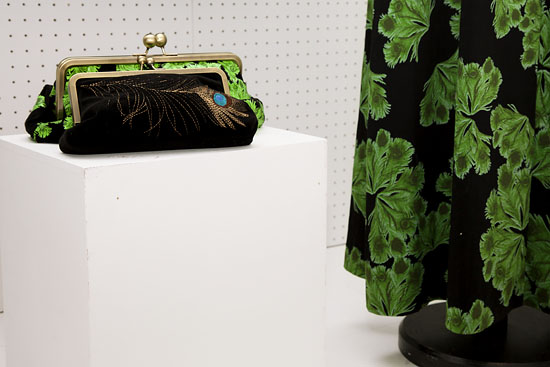
The Velvet Lake collection reflects the “perfectly still moment before the surface of the lake freezes.” Photo Susanna Alatalo

When the sisters started the environmentally and socially responsible line of clothing and accessories fifteen years ago, it was woven around the tale of a fictitious Ivan J. Pavlovski who owned a match factory tucked away in the northern woods of Scandinavia.

The year was 1998 – well before brands had adopted storytelling as a means of conveying ideas, and before eco-awareness had become an expected value. From the beginning, all Ivana Helsinki clothing and accessories have been made in Europe; these days sewn clothes are manufactured in Portugal, Lithuania and Turkey, while all knits are made in Finland. Today, Ivana Helsinki is sold in more than 20 countries and has flagship stores on Elizabeth Avenue in New York’s NoLita neighbourhood and on Uudenmaankatu in Helsinki

“Story has always been an essential element: Ivana Helsinki is the biography of my life,” says Suhonen, who recently graduated as a cinematographer from the American Film Institute in Los Angeles and has also studied at the New York Film Academy.

Through a lens

2686-paolasuhonen_04_s_alatalo_550px-jpg

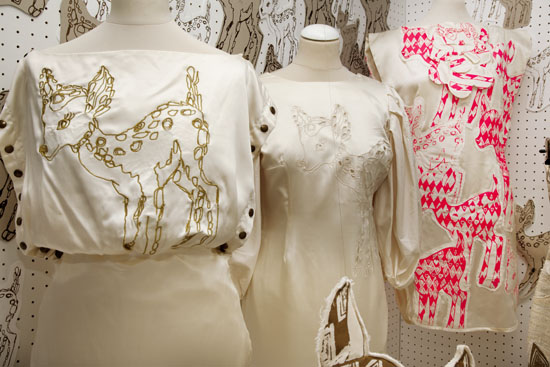
Adventure formed the theme of Ivana Helsinki’s Camping collection in 2002, with a classic tent print. Photo: Susanna Alatalo

Following five years in the US, Suhonen moved back to Helsinki at the end of 2012.

“After I graduated, I had to decide what was next,” she says. “I had apartments in New York and L.A. and I was travelling all the time between those two cities and Helsinki. The lifestyle really wasn’t me – although I had many homes I didn’t feel I had a home in the spiritual sense of the word. When I considered my options, Helsinki kept coming up as the top choice.”

Suhonen, who has created patterns, concepts and products for companies including Google, Topshop, Swarovski, Coca-Cola, Canon, Amnesty International and well-known Finnish brands such as Artek and Pirkka, has also directed music videos. She completed a movie, Love Contemporary, about American adult entertainer Nina Hartley, and worked as cinematographer on Usagi-san (Mr Rabbit), a moving documentary about an elderly Japanese immigrant living in Los Angeles struggling to care for a wife who has Alzheimer’s disease. The film has received positive reviews.

Suhonen sees the transition from fashion to film as natural. “I’ve always loved film as a material, a way of conveying moods and ideas, and with fabric, which is more tangible, you can do the same.”

Homecoming

2686-paolasuhonen_06_s_alatalo_550px-jpg

The Diamond, Stripes and Revolver collection by Ivana Helsinki made Finnish fashion history with its inclusion in Paris Fashion Week in 2007. Photo: Susanna Alatalo

A retrospective show at the Design Museum, Ivana Helsinki 15 Coming Home, showcases her work. “It’s the first time in history that all of our work from 15 years – 30 collections – is in one space,” she says.

Her official name is Paola Anneli Ivana Suhonen – she changed her middle name to Ivana following the founding of the company, in a nod to her roots. “Ivan was my grandfather’s name, but the rest about Ivan and the match factory is all made up, though my father did own a jeans factory when we were growing up.”

Storytelling also runs in the family. “My mom’s grandmother was Russian, a storyteller during tsarist times,” says Suhonen, who now lives and works in the Arabianranta neighbourhood of Helsinki, not far from where she attended art school in the ’90s.

And after living abroad for half a decade, she says that her return to the Finnish capital is invigorating: “I feel like a tourist, in a good way.”

By Katja Pantzar, February 2013

Your top 10 Finnish bands

In a survey on our Facebook page, we asked readers to tell us about their favourite Finnish bands. Here are the top 10, compiled from the thousands of answers that poured in.

Since the letkajenkka dance craze in the 1950s (yes, really, Google it – we dare you), Finland has turned out the occasional popular artist who captured the imagination of the world, but over the last dozen years or so, more and more bands have managed to break through internationally in their own genres.

With so many Finnish bands out there, playing to packed rooms of ravers, metalheads, indie kids and fans in countless other scenes, let’s look at who topped our survey:

1. HIM

The members of HIM standing in a row against a white background.

Photo: Joonas Brandt

Playing its own brand of “love metal,” HIM is a rock band in the classic mould. Singer and songwriter Ville Valo has a decadent sort of charisma, while the band behind him churns out memorable riff after memorable riff. Their image consists of a romantic mixture of red velvet drapes and film noir charm, and the songs deftly explore that murky, fog-shrouded area where love and death meet. Active for over 20 years, they became global stars when their fifth album, Dark Light, was released in 2005. At this writing they’re working on their eighth album, Tears on Tape.

2. Nightwish

The members of Nightwish posing in black clothes against a burgundy velvet background.

Photo: Ville Juurikkala

Hailing from the bucolic small town of Kitee close to the Russian border, Nightwish has become the North Star of symphonic metal, one that many others in the genre can’t help but steer by. Their international career started with Wishmaster back in 1999. The band has several world tours under its belt, with sold-out arenas dotting the globe. Mastermind Tuomas Holopainen has always been a fan of movie soundtracks and their newest album, Imaginaerum, inspired a movie of the same name, made by the band in cooperation with director Stobe Harju.

3. The Rasmus

Members of The Rasmus pictured half in shade and half in the sunlight against a white background.

Photo: Hiroshi Manaka

These guys started out as teenage funk rockers bursting with energy, then evolved into a stylish rock band with just the right amount of darkness to give their pop-perfect songs an alluring edge. Back in 2004 there weren’t many places in the world you could go without hearing “In the Shadows” on the radio at some point in the day. Dead Letters, the album that single was taken from, formed a worldwide smash. The band is especially popular in Asia and Europe – one of its members now lives in Singapore and another in Italy – not bad for a bunch of teenagers who just got together to play some funky jams all those years ago.

4. Huoratron

A black-and-white image of Huoratron with his mouth wide open.

Photo: Vilhelm Sjöström

Aku Raski, a.k.a. Huoratron, is a one-man seismic event and a form of rhythmic absolution. He plays an aggressive brand of dance music that tends to inspire communal vibes, stage invasions, intense dancing and joy. Huoratron is a musical battering ram to bring down the walls of apathy. In addition to releasing a couple of hot EPs and a full-length on US-based Last Gang Records, Huoratron has created remixes for global artists like M.I.A. In summer 2013 Huoratron’s pounding beats and squelchy synths hit the legendary Coachella Festival in the US.

5. Apocalyptica

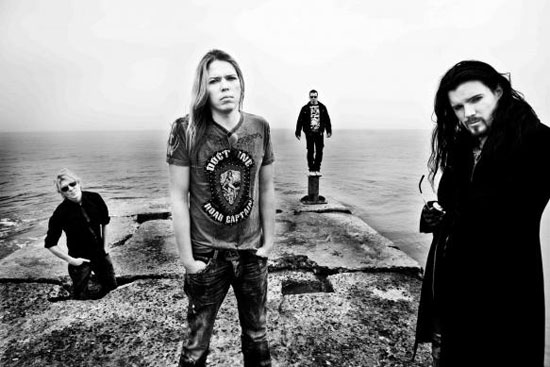
A black-and-white picture of the members of Apocalyptica standing on cliffs by water.

Photo: Ralf Strathmann

The band consists of three classically trained cellists whose first brush with fame came when they arranged Metallica songs for their cellos. Since then they’ve developed into a world-class, modern, hard-rock band, albeit one without guitars. The distorted wall of cellos more than makes up for it, and the stellar cast of visiting singers and musicians puts every Apocalyptica album over the top and into the charts. They’ve teamed up with Dave Lombardo of Slayer, Gavin Rossdale of Bush, Till Lindemann of Rammstein and Joseph Duplantier of Gojira, among many others.

6. Sunrise Avenue

The members of Sunrise Avenue posing in a staircase.

Photo: Anna Äärelä

This Espoo-based band has won over millions of people with its melodic pop rock. In recent years it has become one of the most-played groups on German radio. The band’s songwriter and singer possesses a deft touch with larger-than-life ballads, in addition to radio-friendly pop rock. Songs like “Hollywood Hills,” “Fairytale Gone Bad” and “Heal Me” capably pluck the heartstrings of the multitudes. Sunrise Avenue is definitely at its best in an arena environment. Their newest album, Out of Style, is released in 70 countries.

7. Children of Bodom

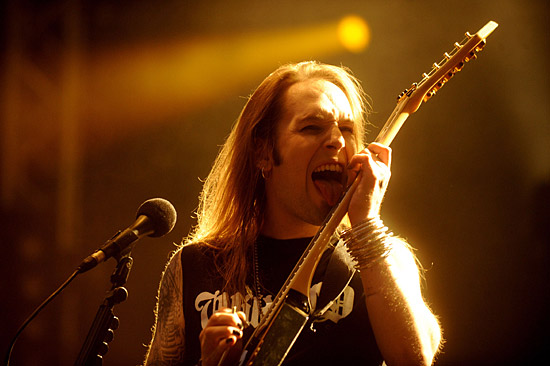
Alexi Laiho pictured licking the neck of his guitar.

Photo: Antti Aimo-Koivisto/Lehtikuva

With singer, songwriter and guitar hero Alexi Laiho at the helm, Children of Bodom defies easy categorisation. Drawing from a number of metal genres as well as punk, the band has been labelled as everything from melodic death metal to power metal. It’s all that and more. Laiho is considered one of the world’s foremost guitar heroes at the moment and even has a signature model with ESP Guitars. Children of Bodom has ranked as an international phenomenon from the very beginning, and has produced a number of stone-cold metal classics, including “Hatebreeder,” “Hate Crew Deathroll” and “Are You Dead Yet?”

8. French Films

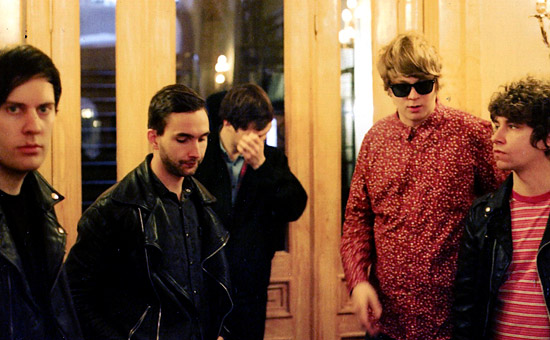
The members of French Films posing in a stairway.

Photo: Lari Laakkonen

These indie rock road warriors play a sunny sort of rock influenced by British indie and post-punk, as well as American surf music. French Films loves the road and spends a lot of time touring Europe, where their sweaty, exuberant shows have won them a steady following. Their records have been setting the blogosphere alight since the release of their first single, “The Golden Sea,” in 2010. They released their acclaimed debut album Imaginary Future in 2011 another is in the works. Thanks to their relentless touring, they won the European Border Breakers Award for 2013.

9. Pertti Kurikan Nimipäivät (PKN)

Members of Pertti Kurikan Nimipäivät sitting in a dimly -lit backstage room with walls covered with band posters.

Photo: J-P Passi/Kovasikajuttu © Mouka Filmi

Pertti Kurikan Nimipäivät (Pertti Kurikka’s Name Day) consists of four middle-aged men who are mentally disabled. Their songs, harkening back to the classic punk sound of 1977, tell stories about their lives. Started as a part of a cultural outreach program in 2009, the band went on to take Finland by storm. It also forms the subject of a critically praised documentary film, The Punk Syndrome. Recently they’ve toured in continental Europe and been booked – both band and film – to appear at the South by Southwest Festival in Austin, Texas. Fans in the UK started a collection to bring Pertti Kurikan Nimipäivät and The Punk Syndrome to Britain.

10. Sonata Arctica

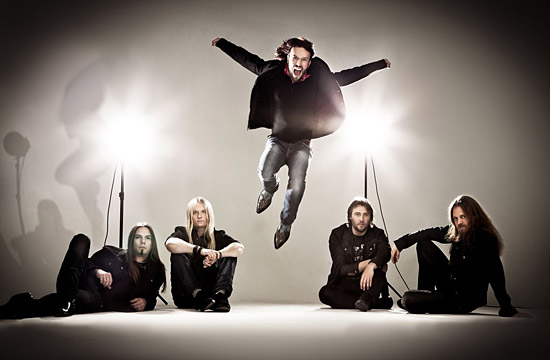
The members of Sonata Arctica posing against a white background; the other members are sitting or lying on the ground whilst frontman Tony Kakko is jumping in the air.

Photo: Terhi Ylimäinen

Take the bombast of Nightwish and marry it to the theatricality of Queen. Add some arctic madness and you get Sonata Arctica. This is a band that does nothing halfway. They’re considered power metal, but this misses out on the fundamental strangeness and originality at their core. The band plays a soaring, lyrical, symphonic take on classic European metal, but as album names like Stones Grow Her Name indicate, there’s something a little mystical about them. Perhaps the Northern Lights sprinkled down some dust on the band. Hailing from Kemi, near the Arctic Circle, they enjoy a solid fan base in continental Europe and Japan.

By Arttu Tolonen, March 2013

Finnish blood runs in Nordic crime novels

Brutal murders and bloody crime scenes aren’t what Finland is famous for – except in the world of fiction. With Nordic crime novels surging in popularity internationally, Finland’s contribution to the genre is unique.

The murder was particularly vicious. The victim had enemies in high places. The detective in charge of the case possesses a plethora of personal problems and is facing pressure from his superiors to solve the crime – or to leave it unsolved. This scenario might sound familiar, but don’t be fooled into thinking it’s just another crime story.

Over the past decade, crime novels set in the Nordic region have become bestsellers and given rise to blockbuster movies. Nordic crime fiction has attained such status that the decision to include it was easy for the organisers of Nordic Cool, a four-week festival of the arts with participants from all the Nordic countries, held in February and March 2013 at Washington’s Kennedy Center.

Worldview: noir

3414-nordicnoir_james-thompson_550px-jpg

American author James Thompson’s crime fiction takes place in Finland, his home of many years. Photo courtesy of J. Thompson

American author James Thompson created his writing career in Finland, where he has lived for more than 15 years. He has a sizeable following in both Finnish and English; his newest novel, Helsinki Blood, is released in March 2013.

Thompson cautions that there is a difference between crime fiction and noir fiction. “Noir embraces a darker, sometimes even dystopian worldview,” he says. “In noir, the world may be in balance at the beginning of the story, but the balance is grim. The crime usually gets solved, but the world isn’t left a better place as a result, and the protagonist isn’t changed, at least not for the better.”

“Good does not always win in the end,” explains Tapani Bagge, whose book Punainen varjo (Red Shadow) is also published in March. “It is more hard-boiled. Also, many characters die at the end.”

Critics, authors and readers alike have tried to pinpoint the cause of the genres’ popularity. Some suggest that the root cause lies in how global readers view the Nordic welfare state model.

Yet there are simpler explanations: Both Bagge and Thompson think it comes down to the quality of the literature. The success of Stieg Larsson’s Millennium series sent publishers scrambling to find more Nordic authors, Thompson points out.

Finnish variety

Leena Lehtolainen says of the main character in her newest crime novel: “She does not always follow the law, but she knows her own moral values.”

Leena Lehtolainen says of the main character in her newest crime novel: “She does not always follow the law, but she knows her own moral values.”Photo: Tomas Whitehouse

Leena Lehtolainen, whose book Her Enemy is released in English in spring 2013, explains her view: “I think the reader wants to feel that both she and the heroine are not powerless, that something can be done about the bad guys, that things can be changed, even though the price can be high,” she says. “The book can be dark, but there is an occasional ray of light in the main character, who does not always follow the law, but knows her own moral values.”

While any crime literature coming out of the Nordic region may share certain characteristics, the three writers say books from Finland are different.

“We have our common history and a long border with Russia, and it impossible to forget it,” says Lehtolainen. “The Eastern Finns have a temperament closer to the Russians than to the Swedes. We are part of the Nordic countries, but we used to be part of Russia, so we and our books are a link between the two worlds.”

“Finland is an eccentric and quirky country,” Thompson says. “Culturally, Finland is unique and exotic, unlike any other. Stories set in Finland can take you to new realms and expose the world to you in a way you never before envisioned.”

“We have more humour, and a certain Finnish craziness,” Bagge notes. “You will find more books from the criminal’s point of view, and not just from the detective’s. Also, Finns aren’t talkative. So in our books the dialogue is realistic, simple and particularly important.”

Dark and snowy night

3414-nordicnoir_jarkkosipila_lk_vesamoilanen_550px-jpg

Jarkko Sipilä represents Finland at a gathering of Scandinavian crime fiction authors during Nordic Cool 2013 in Washington. Photo: Vesa Moilanen/Lehtikuva

All three authors agree the Finnish seasons are extremely important to their fiction. Lehtolainen says seasons are more than a backdrop, and weather conditions have a special meaning. Also, Finns behave differently in different seasons: “Darkness makes us melancholic,” she says.

“For me, when writing a tale set in Finnish winter, environment is so important that it’s almost a character,” Thompson says. “Winter affects every aspect of life. We gear our lives around it. Winter is a part of us, an antagonist and source of conflict. In ways, it shapes us.”

“Long, dark periods bring dark ideas,” Bagge says pragmatically. “In winter, you can hide bodies under icy lakes, or under snow drifts in the forest.”

“And the spring thaw turns up many or most of the people reported missing during the winter,” adds Thompson.

By David J. Cord, February 2013

Experience as fashion, times ten

A shop doesn’t have to look like a shop, and Helsinki10 doesn’t. It stocks designer-label clothing and even designer chewing gum in a unique environment where shopping is about experience and discovery.

Take a walk down most any street in downtown Helsinki and you’ll see them: the hipsters, the ”groovers,” the dedicated followers of fashion.

Yes they look different but the same, modern and retro, irreverent but snazzy – perhaps for a very good reason. A good number of them have probably visited “lifestyle store” Helsinki10.

It could be easy to mistake the establishment – located amidst the cozy galleries, coffee shops and shops tucked in along Eerikinkatu in the Finnish capital – for something other than a clothing shop. Its arched entrance looks like a regal gateway to an old bank with marble floors and pillars, but the interior is a cabaret of designs, ideas and sounds.

The space, all 450 square metres of it, is filled with treasures such as exotic jeans, designer shirts and dresses, jackets, shoes, jewellery, accessories, CDs, LPs, coffee table books and even an assortment of designer chewing gum. A little chalkboard outside offers only “take away coffee” – not some brand-name sales pitch – as an invitation to come inside.

Because that’s what co-owner Anssi Heiskanen wants you to do.

Fashion paired with discovery

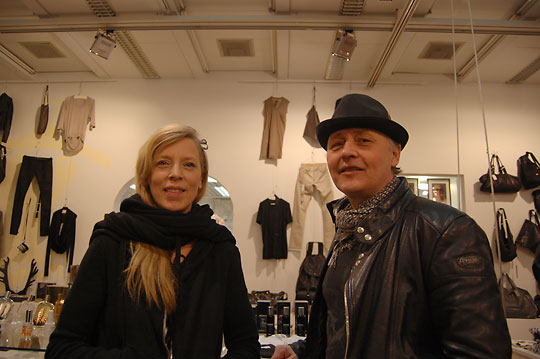
Eeva Vuolasvirta (left) and Anssi Heiskanen created Helsinki10 after a trip to to Japan opened their minds to new aspects of retailing.

Eeva Vuolasvirta (left) and Anssi Heiskanen created Helsinki10 after a trip to to Japan opened their minds to new aspects of retailing.Photo: Mark B. Odom

Heiskanen, a veteran of the design and clothing business for the past few decades who also started the street-apparel shops Union Five in the 1990s, wanted to begin something new.

After an eye-opening visit to Tokyo in 2000 together with business partner Eeva Vuolasvirta, the head buyer at Helsinki10, Heiskanen says they realised there’s more to retail shopping than inventory, sales and receipts.

“In Japan, we saw that a shop didn’t have to look like a shop,” Heiskanen explains. Spaces could be more organic and unique. The items for sale might consist of only a few special pieces.

The revelation turned their minds to new ways of doing business. One of the manifestations of this “new” vision in Helsinki was this shop without storefront windows or gaudy signs.

The reasoning was that the fashions – paired with the experience of discovery – would sell themselves, like they do in the real world.

Personal style important

Finnish style and fashion editor Claudia Cifu says that fashion in Helsinki and the world is not dictated by what’s on the runway, but by a mixture of cultures, designs and ideas. The internet hasn’t hurt the trend, either.

“I like the fact that higher-end fashion seems to take more and more influences from underground culture and music and from different ethnic cultures,” Cifu says from New York while working on a magazine photo shoot.

“I also like that people who know fashion give more importance to personal style than designer names,” she says. “It’s all about how you work it.”

Helsinki10, Cifu believes, has taken that mindset to the streets.

“They brought Helsinki a totally new concept behind a clothing store,” she says. “Even if you can’t afford to buy something there, young people can actually see and touch some runway pieces. Before you could have this experience only if you travelled abroad, or looked at photos in magazines, or on the internet.”

Missing puzzle piece

“I would call this fashion for people in their 20s to 40s,” Cifu continues. “This generation was kind of forgotten before. You could get ladylike clothing from higher-end boutiques, and Benetton, Sisley or Guess type of clothing for young ‘fashion forward’ people. But there was definitely a piece of the puzzle missing before.”

Prior to Helsinki10’s debut in 2006, Finns had to travel abroad to shop for exotic designer labels like Eley Kishimoto, Ann DeMeulemeester, Bernhard Willhem and Vivienne Westwood.

Helsinki10 also stocks Finnish designs, which are hot around the world right now. “Marimekko and Ivana Helsinki are very exotic and hyped over here in New York,” Cifu says. “It’s the Scandinavian simplicity in designs and handcraft look that attract the fashion people here.

“Because music and fashion go many times hand in hand,” she adds, “fashion people are very attracted to the Finnish Goth and heavy metal looks. They’re a bit odd, but everything that’s a bit odd, in the end fashion people embrace it, and it becomes cool.”
 

By Mark B. Odom, September 2009, updated January 2011

Cool Finnish tango sways audiences

For more than a century, Finns have been creating their own idiosyncratic tango music. The supergroup Tango-orkesteri Unto serves up a fluid blend of classic and contemporary, folksy and intellectual.

Finland’s first tango was performed on February 7, 1913 at the Apollo Theatre on Helsinki’s Esplanade, in a building that now houses the Ministry of Justice. The tango has since become an integral Finnish institution.

A century-or-so later, that tradition is most elegantly personified by Tango-orkesteri Unto. The ensemble is composed of six seasoned professionals from different fields of music, each with a list of credits as long as the Esplanade.

Romantic range of expression

3581-unto_flyygeli_550px-jpg

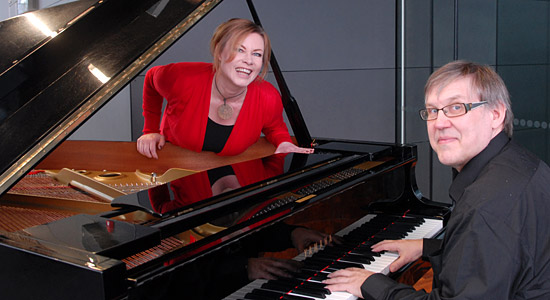
Vocalist Pirjo Aittomäki (left), pianist and arranger Timo Alakotila and four other musicians help make Tango-orkesteri Unto one of the most versatile tango groups around. Photo: Sinimaaria Kangas

“I remember our first concert, at Expo ’98 in Lisbon,” says vivacious vocalist Pirjo Aittomäki over coffee at the Helsinki Music Centre café. “Afterwards a Portuguese guy came up to me and said that this was the most romantic music he’d ever heard.”

Since then, the band has wowed audiences all over Europe. The British label ARC Music has released three albums by the group. Now Unto has new territory in its sights: making a name for themselves in America.

The New World is familiar to the ensemble’s soft-spoken pianist and arranger, Timo Alakotila, a teacher at the Sibelius Academy. He has toured the US with folk bands JPP and Troka, which also included Unto’s violinist Mauno Järvelä and accordionist Johanna Juhola respectively. Just a couple of weeks before Unto’s debut, a nervous Troka appeared on Garrison Keillor’s legendary Minnesota-based radio show A Prairie Home Companion.

Aittomäki, meanwhile, has toured the world with British choral-pop band Adiemus and starred in musicals such as Les Misérables. With this background, she knows how to belt a song out of the ballpark when needed – or how to turn it into an intimate, suspended moment.

That range of expression plays an essential role in the breadth of material Unto tackles, including classics from the golden age of Finnish tango and originals that bring that tradition firmly into the 21st century.

Timeless tunes

3581-unto_unto_550px-jpg

Tango-orkesteri Unto takes its name from Unto Mononen, a composer active during the golden age of Finnish tango in the mid-1900s. Photo: Lehtikuva

The golden age of Finnish tango in the 1940s to ’60s was dominated by composers Toivo Kärki and Unto Mononen, who lent the band its name.

“Since the beginning, we’ve done traditional tangos but made them sound modern,” says Alakotila. “A great song can stand up to being interpreted in different styles and generations. Mononen and Kärki both wrote timeless melodies that are at the level of the classic Argentinean tangos – at least! You can really hear the passion and the melancholy.”

The way they play this music is elegant, mature and acoustic – far from the slick commercial style popular at the Seinäjoki Tango Festival and on Baltic cruise ships.

The band’s songs are also more literary, often featuring Finnish modernist poems as lyrics.

“I don’t consider it as being arty, though,” says Aittomäki, “because these poems are very down-to-earth. But they’re something more. I don’t want to say deeper, but poetry uses different words than standard pop lyrics.”

Dancing allowed

3581-unto_jalat_550px-jpg

At a Tango-orkesteri Unto concert, you may find yourself swaying, tapping your toes or even dancing. Photo: Riku Isohella/Lehtikuva

Unto offers the sound of six virtuoso musicians at the top of their game, among the cream of Finland’s musicians from many genres.

What makes them swing then? A secret ingredient? It may have more to do with the absence of something: drums.

“That makes us very flexible with the rhythm,” says Aittomäki. “It’s more passionate than the traditional Finnish way of playing tango, which is very straight, a bit more stiff.”

Rather than drums, Unto relies on syncopated rhythms set by bassist Hannu Rantanen (of world-music band Värttinä) and guitarist and mandolinist Petri Hakala, veteran of countless groups drawing on Finnish, Irish and American folk.

“People rarely dance at our concerts, although of course it’s not forbidden!” says Alakotila. “It’s more concert material.”

Still, while this music makes you think and dream, you may well also find yourself swaying and tapping your toes.

By Wif Stenger, February 2013, updated July 2013 and and August 2015