Taking a stand with style

Tackling social taboos and running a successful business seldom go hand in hand. Satu Viskari proves that they can as CEO of Mentalwear, purveyor of in-your-face T-shirts.

Mental illnesses such as schizophrenia shouldn’t be taken lightly. But it would be even worse to brush the problem aside. Satu Viskari and her company, Mentalwear, raise awareness of social taboos surrounding mental health by printing T-shirts with catchy slogans on touchy topics.

Mentalwear merges these elements into a successful business, with some of the profits going to mental health care organisations. This year Mentalwear is collaborating closely with the Finnish Association for Mental Health (Mielenterveysseura).

Crazy; it won’t work. That’s what Satu Viskari’s boss thought of the original idea back in 1998 when she came up with the idea of printing “I hear voices” and “Psycho Killer” on T-shirts for a jumble sale organised by the private clinic where she was employed as a mental health worker. The young crowd at a Helsinki venue where Viskari wore one of her shirts thought otherwise, and a business started to emerge. Ten years on, her company Mentalwear is renowned in Finland for making T-shirts with texts such as “Deadline”, “Maniac light” and “Downloading schizophrenia”.

Healthy people are mere copies

Coincidence? A sign urges caution during roadwork outside the shop, but also draws attention to the T-shirts within.

Coincidence? A sign urges caution during roadwork outside the shop, but also draws attention to the T-shirts within.Photo: Jens Alderin

Has mental illness become cool in Finland? No. The idea is to raise awareness of real problems.

“A big watershed for us was an awareness campaign initiated by Finnish TV channel SubTV in 2004 in cooperation with Mentalwear. It created a lot of publicity and helped to raise a substantial sum of money for mental healthcare.” “Getting celebrities to at least ‘wear a problem’ was a big gesture towards gaining recognition for patients,” says Viskari. “They appreciated that. Although as one of my ex-patients put it, healthy people are mere copies.”

Serious matters

Don’t the shirts provoke negative reactions? Especially in a country that has been deeply shaken by two school massacres in recent years and linked to the persistent Nordic myth of high suicide rates and widespread mental health problems? After all, these are serious matters that are all too seldom properly understood.

“We get very little negative feedback, if any,” says Viskari, whose own mother died as a result of depression. “Patients, their families and mental health care workers were actually the first key cluster of clients.

No ordinary job
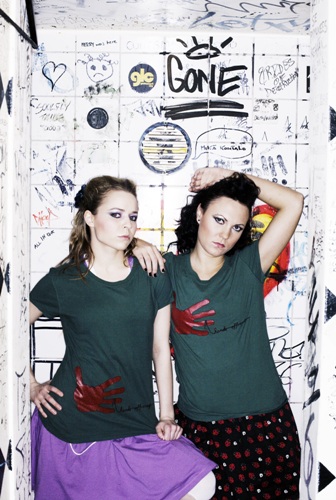
Finnish pop band PMMP participated in a campaign against sexual harassment, donning Mentalwear that reads “Hands off, creep!"

Finnish pop band PMMP participated in a campaign against sexual harassment, donning Mentalwear that reads “Hands off, creep!”Photo: Mentalwear

Working for Mentalwear isn’t your ordinary customer service work, either. Viskari recounts the story of a recent client who was planning her suicide and wanted to buy a “Deadline” shirt. It’s a chilling thought, but luckily many of the salespeople at the shop in central Helsinki have worked previously as mental health nurses, just like Viskari. The young woman received help – her action should be seen as a last cry for help rather than a cold, calculated act.

Viskari did consider withdrawing a T-shirt with the text “F**king waves”, written in Finnish, after the tsunami incident in Thailand. She decided not to when she received a letter from a tsunami victim’s mother who liked the shirt because it channelled her anger.

The positive feedback might seem to indicate that few true taboos exist about mental health. The truth is not that clear. Viskari discloses that a problem with humour is that some customers seem to miss the issue and interpret the slogan as a pure laugh.

Celebrities mostly still avoid talking about painful personal experiences. The fear of being stigmatized is still real. Campaigning for a problem and suffering from one are still distinguishable issues. Finnish model and mother Elina Nurmi, 23, formed an exception by recently giving interviews discussing her bipolar disorder and hypomania. The response on internet discussion boards has been very mixed, to say the least.

Action to follow words
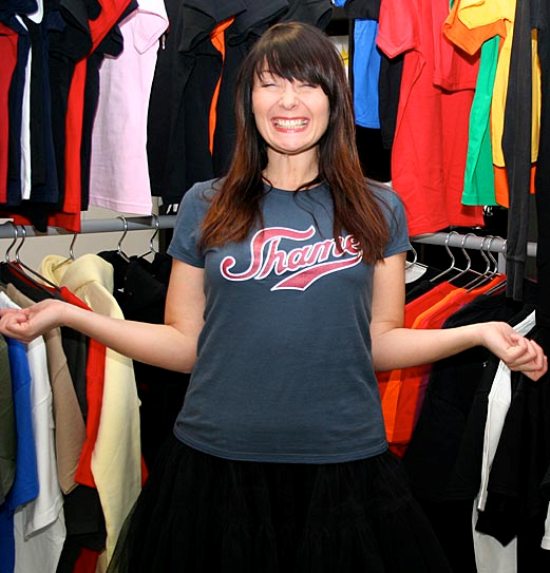
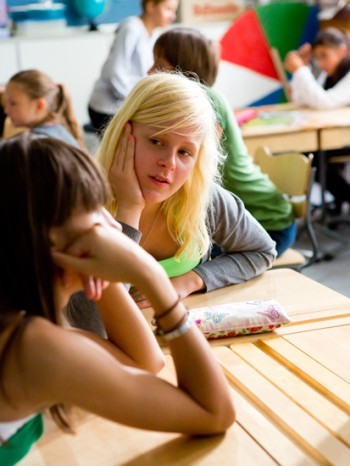
Shame: Do the expression and the T-shirt match?

Shame: Do the expression and the T-shirt match?Photo: Mentalwear

Raising the issue of mental health and bringing it to the forefront is one thing. Taking action is another. Viskari commends the excellent quality of mental health care in
Finland but stresses that there is still much to be done about the high threshold for receiving treatment and seeing to the needs of young people.

The concept of Mentalwear comes down to something most welfare state supporters should be proud of. It’s a private business venture that both supports and criticises Finnish society and the healthcare system. It is also about society adjusting to the problem, which in turn would make it easier for people with problems to readjust to society. Hopefully that dialogue will continue, and not just on T-shirts.
 

By Jens Alderin, June 2009
Organic forms rule in Finnish jewellery

Finnish jewellers are making waves all over the world, from Canada to Japan. High-end craftsmanship, intriguing organic forms and an incomparable wow factor separate Finnish artisans from the pack.

“The basis of influence for jewellery can come from any part of one’s life,” says Marisanna Multamaa, a Tampere-based jewellery designer. “Organic forms are a natural draw for many people.” Multamaa studied at the Institute of Design in Lahti.

Eero Hintsanen of the label Chao & Eero also studied there, in a different year. He notes that many of his counterparts in the field respect the Lahti programme, which has become a cornerstone of the goldsmith and jewellery industry in Finland.

Born in history

|||Photo: Pia Grochowski

Tampere-based artisan Marisanna Multamaa’s designs have been worn by former Finnish President Tarja Halonen. Photo: Pia Grochowski

For Multamaa, the choice to become a jewellery designer is based on several factors. Her background reflects the long history of the trade in Finland. “There has been a tradition of smiths in my family since the 1800s,” she says. “I’ve always been an artistic person. When making new works, I feel that I’m in my element.”

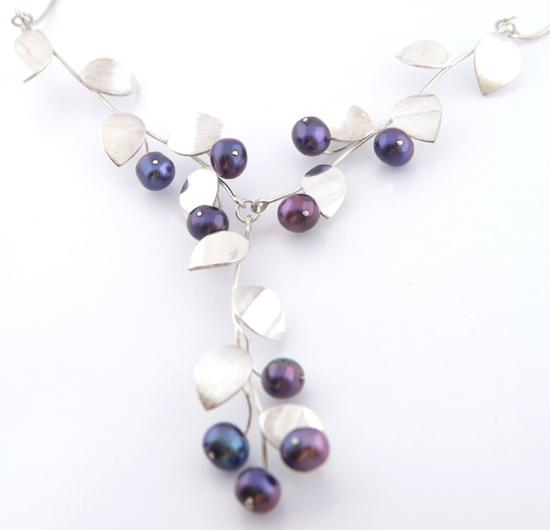
She opened her shop in 2006, and has been in demand ever since. Her most renowned design is the Mustikka (meaning “blueberry” in Finnish) jewellery sets. Former Finnish President Tarja Halonen, who may be her most famous fan, wore Multamaa’s Mustikka necklace on a number of outings.

Like many jewellery designers from Finland, Multamaa handcrafts all her creations from start to finish. It’s a time-consuming process: A Mustikka necklace requires a full day’s work.

The quality of handcrafted jewellery forms a distinguishing factor on the Finnish scene. Chao & Eero’s emphasis on handcrafted quality pieces have earned much respect in Finland and abroad. “There is a lot of value in traditional craft that can’t be replaced,” Eero Hintsanen says. “The challenge is to market it right.”

Chao & Eero first got into Japanese market through a company in the Kansai area selling Nordic design products. As the company’s confidence grew, it decided to open a shop for Chao & Eero in Kyoto, and obtained exclusive rights for distribution in Japan.

Send the repairman home

Called Melumo Putiikki, the shop has two stories. The upstairs is devoted to Chao & Eero, the downstairs to bags and accessories. In order to serve their customers, they have sent staff to Chao & Eero’s studio in Lahti to learn about the stories behind the collections and see how everything is made. In this age of mass-produced products manufactured in questionable conditions, Japanese customers appreciate knowing exactly how and where Chao & Eero’s jewellery is created.

2669-mustikka_riipus-550-jpg

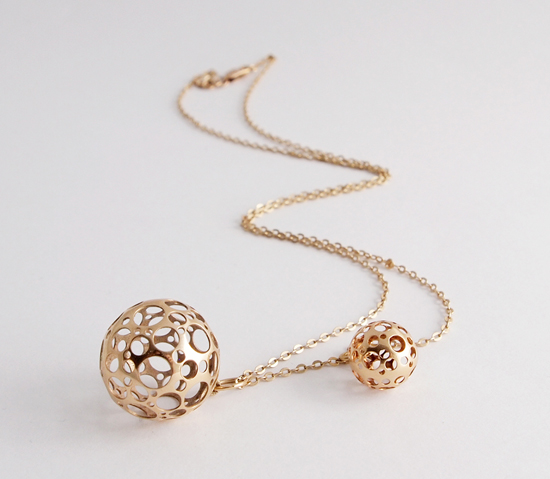
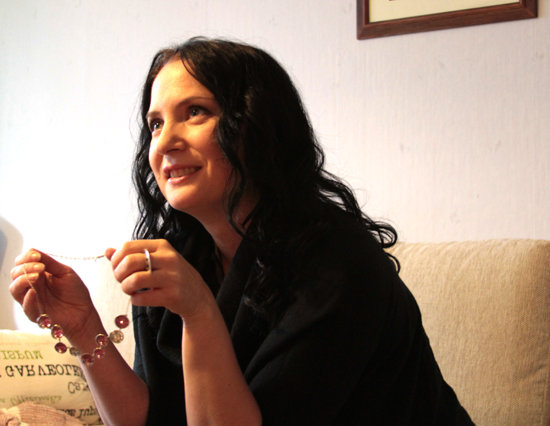
Time and dedication is what makes the quality of Finnish jewellery so known. A necklace like this is handcrafted by the artist herself. Photo courtesy of Design Marisanna Multamaa

“Good quality is your responsibility,” says Hintsanen. He and his wife Chao-Hsien Kuo believe that while new technologies such as 3D printing are being mentioned as the next big thing in the field, they cannot replace the quality, dedication and perfection in a handcrafted piece.

Rather than opening a shop in Finland, they set up an online store and work at their studio in Lahti. Chao hails from Taiwan, but she has lived all over the world. The couple see themselves as born global, and their customer base reflects this. While their jewellery is very Finnish, they don’t focus solely on Finnish customers.

Chao is a city girl who is inspired by nature; Hintsanen is a country boy who is interested in graphic and urban designs. He notes that she has a good eye for observing little details in nature, which become the basis for pieces of jewellery. The name of a piece may provide a clue about the original inspiration, but the design may be very abstract.

Going global

2669-courtesy-hopea-ladybird-viitali_550-jpg

Cosima Friesen, owner of Hopea, sells vintage pieces such as this one by renowned Finnish designer Liisa Vitali. Photo courtesy of Hopea

“I think people naturally have an eye for organic forms in jewellery,” says Cosima Friesen, who curates and sells vintage Nordic jewellery for her online store Hopea (the word means “silver” in Finnish), based in Calgary, Canada.

While studying in Toronto, Friesen came across vintage jewellery from the 1960s and ’70s, which triggered her curiosity. In 2011 she started Hopea, an online shop for vintage Nordic jewellery. It’s been gaining much praise and attention, and was recently featured in Canada’s premier fashion magazine Flare. While many of Friesen’s customers are Nordic design connoisseurs, she also has many who are just attracted to the shapes.

“In Finnish design, they have really made an aesthetic commonality in natural shapes,” says Friesen. “I often hear it’s organic, it’s unusual, it has that wow factor –more so than other Nordic designers.”

By Pia Grochowski, December 2013

A busy season for giving

Christmas is the busiest time of the year for charities. We visit two highly appreciated Finnish organisations; one helps the homeless and the other gives gifts to people who are far from home.

Every Christmas since 1967 a special party has been held for homeless, impoverished and lonely people in Helsinki by a unique charity established by Veikko Hursti. This multitalented artist drifted into alcoholism and delinquency before experiencing a spiritual awakening that led him to dedicate the rest of his life to charitable work, aided by his wife Lahja (whose name happens to mean “gift” in Finnish).

Veikko Hursti died in 2005, but his son Heikki carries on his work. The guests will enjoy a musical programme and a traditional Finnish Christmas dinner with ham and all the trimmings, before receiving gift packages containing food and clothes.

Charity close to home

“We get help from some companies who provide food, and free use of the sports hall from the city, but otherwise we are absolutely dependent on private donors for funds,” says Hursti. “But thanks to my parents’ dedication, our work is well known and trusted in Finland, and we get lots of generous donations and help from volunteers.”

The charity’s other annual events include a leftovers party in the sports hall on December 26 and an outdoor concert and soup kitchen in Helsinki’s Hakaniemi Square on Independence Day (December 6), run as a counterpoint to the President’s glamorous televised ball on the same evening.

Hursti’s charity also distributes food and clothes twice weekly in Helsinki. “Recently these handouts have been attracting up to 1,000 people, which shows how many people are struggling in today’s worrying times,” he says.

Socks for seafarers

A stock of stockings: The Seamen’s Mission distributes home-knitted woolen socks and other Christmas gifts to sailors who are far from home.

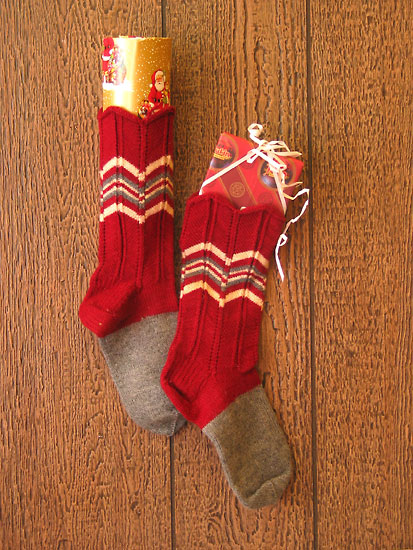
A stock of stockings: The Seamen’s Mission distributes home-knitted woolen socks and other Christmas gifts to sailors who are far from home.Photo: Marko Toljamo

Another greatly valued Christmas charity is organised by the Finnish Seamen’s Mission to provide gifts for Finnish seafarers working far from home at Christmastime, and for foreign sailors marooned in Finnish ports.

“This collection has been going on since the 1870s, when ladies’ sewing circles from Finnish parishes started to knit socks, scarves, gloves and woolly hats for ‘unknown seafarers’,” explains pastor Jaakko Laasio. “The tradition is still going strong. This year we’ll send out nearly 1,500 Christmas packages to sailors in Finland and abroad. Most of the packages still come from these active parish sewing circles.”

Packages today might include chocolates and Christmas candles, as well as ever-popular winter woollies. “The gifts are not expensive,” says Laasio. “The idea is to make a gesture to share the Christmas feeling. Seafarers really value such gifts, and many thank donors by sending them postcards from exotic ports.”

The Seamen’s Mission runs chapels in eight Finnish ports, where presents are delivered to ships just before Christmas, and special ecumenical Christmas services are held.

Overseas outposts for homesick Finns

Loads of gifts: Pastor Juha Rintamäki of the Seamen’s Mission takes a turn carrying gifts up the gangplank.

Loads of gifts: Pastor Juha Rintamäki of the Seamen’s Mission takes a turn carrying gifts up the gangplank.Photo: Marko Toljamo

Gifts destined for foreign ports are shipped in November from Helsinki’s Vuosaari Harbour to the Seamen’s Mission’s seven overseas outposts in Hamburg, London, Antwerp, Rotterdam, Piraeus, Lübeck and Brussels.

Pastor Heikki Rantanen emphasises that the Seamen’s Mission also serves exiled Finnish landlubbers who might feel homesick as Christmas approaches. “In our overseas bases we organise popular Christmas bazaars with Finnish food and design items, as well as carol singing evenings and Lutheran Christmas services,” he explains. “These events are intended for tourists, au pairs, lorry drivers and emigrants such as EU employees in Brussels, as well as sailors – and they also attract many local people interested in Finnish Christmas traditions. For many Finns abroad, coming to the Finnish Church is not only a spiritual experience, but part of their identity.”

When darkness falls over Finland in late December, Rantanen has the enviable task of taking the Christmas message to communities of exiled Finns in sunny Southeast Asia.

By Fran Weaver

’Twas the night before PISA in Finland

Guess what? Kids in Finland are no more enthusiastic about homework than children anywhere else in the world. However, Finland has something that most other countries lack – it’s just hard to define what that something is.

The Programme for International Student Assessment (PISA), conducted every three years, evaluates education systems worldwide by testing the skills and knowledge of 15-year-old students.

The testing always assesses reading, science and mathematics, but spotlights one of them each time. Since the programme started in 2000, Finland has made a name for itself, achieving results that place it at or close to the top in all categories every time.

The country has seen an influx of educators from all over the world coming to observe, study and try to understand the secret of Finland’s success.

An education export organisation called Future Learning Finland has sprung up to facilitate transfer of knowledge to countries that see potential benefits in various Finnish practices and would like to localise them.

The run-up to each PISA announcement also sees some speculation about how Finland stacks up against the other elite-tier countries in the survey, the number of which has continued expanding since its inception in 2000.

Yet in Finland speculation is not as rampant as you might think.

The secrets to Finnish educational success

|||Photo: Riitta Supperi/Team Finland

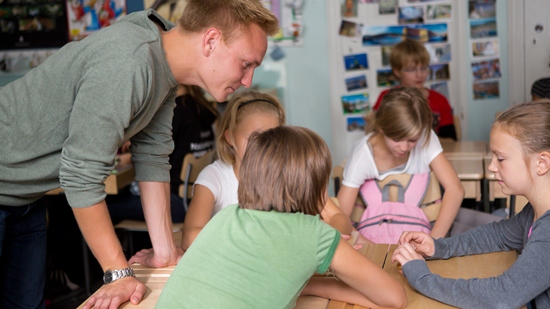
One Finnish success factor is the system’s reliance on in-class evaluations by teachers instead of standardised testing. Photo: Riitta Supperi/Team Finland

In any case, there is not much point in constant conjecture about gold, silver and bronze – we’re talking about PISA, not the Olympics.

It’s far more fruitful to seek insight into what actually brought Finland to the top in the first place. With Finland’s excellent PISA rankings over the years, debate has blossomed. The success factors remain the same from PISA to PISA, and in Finland’s case they form part of a process that began decades ago when the country decided to invest in education.

Political, economic and social momentum coincided in Finland in the late 1960s to guarantee every child a nine-year education at comprehensive school. “A good education was seen as an essential human right,” says Erkki Aho, former director of the Finnish National Board of Education, in 100 Social Innovations from Finland, a collection of Finnish milestones (SKS, 2013). Education in Finland is also free, from preschool through university.

Aho also notes that teacher education was reformed at the same time the school system was redesigned. Since then, teachers have had to obtain a master’s degree in order to qualify. Competition for places in teacher-training programmes is tough, and the profession is highly respected.

More secrets revealed

|||Photo: Riitta Supperi/Team Finland

All-inclusive system: Schools from all areas of Finland achieve similar, good results. Photo: Riitta Supperi/Team Finland

Pasi Sahlberg, director of the Centre for International Mobility and Cooperation, has become a sort of travelling ambassador for the Finnish education system. In his book Finnish Lessons (Teachers College Press, 2011), he speaks of “equity of outcomes,” meaning “a socially fair and inclusive education system that is based on equality of educational opportunities.”

This refers to more than just free education. The practice of dividing students into different tracks based on ability was abolished in the 1980s, Sahlberg notes. With all students in an age group studying mathematics, languages and other subjects in the same classes, “the achievement gap between low and high achievers began to decrease.”

He also points out that Finland does not use frequent standardised testing, while many countries that do employ it have seen PISA scores sink over the years. The Finnish system focuses on in-class assessment and end-of-semester evaluation by teachers, as well as external assessment of a 10 percent sample of certain age groups.

PISA, Sahlberg says, has reflected “clear evidence of more equitable learning outcomes.” Finland has a smaller achievement gap within individual classes, but it has also shown “the smallest performance variations between schools,” starting with PISA 2000 and continuing through subsequent surveys. Schools from all areas of the country achieve similar, good results, indicating that education mitigates, at least to some degree, social “disadvantages.”

Finland’s  PISA results continue to show minimal gaps between the strongest and weakest students, between genders, between different schools and between various regions.

This all-inclusiveness may be part of the key to understanding Finland’s success.

By Peter Marten, November 2013, updated 2014 and 2015

Finnish company adds the sparkle to Christmas

It has been established without doubt that the only true home of Santa Claus is in Finland, in spite of the scandalous counterclaims of certain Nordic neighbours. So it’s appropriate that the only manufacturer of Christmas decorations in the Nordic region is a Finnish family company.

It is even more fitting that the company, K.A. Weiste Ltd, should have its head office and main factory in the Helsinki suburb of Pukinmäki (Goat Hill), since the Finnish name for Santa Claus is Joulupukki (literally: Christmas goat).

Weiste is very much a family affair, with five siblings still involved in company matters, representing the third generation since schoolteacher Kalle Aimo Weiste got the Christmas tree ball rolling in 1924. Those family members still have homes in the vicinity of the Pukinmäki factory, presiding over a business that has weathered wars and economic downturns for all those years.

Christmas legend

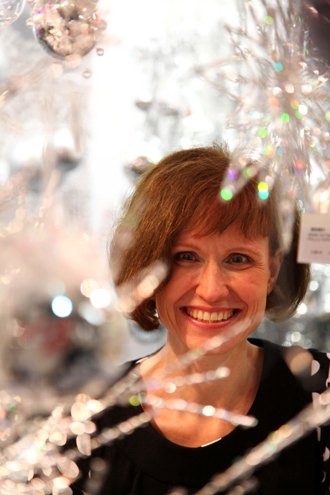
The sparkle of a Christmas showroom: Helena Friman is already planning next year’s Weiste catalogue.

The sparkle of a Christmas showroom: Helena Friman is already planning next year’s Weiste catalogue.Photo: Tim Bird

She may have the telltale glint of tinsel on her cheek and the sparkle of a Christmas showroom in her eye, but product manager Helena Friman claims that seasonal decorations are a business like any other. But isn’t it like having Christmas every day? “These are products, this isn’t really Christmas itself,” she says. “And we feel the stress of Christmas long before anyone else.”

It’s mid-November and the first significant snow is gathering on the trees outside the showroom window. A Weiste truck with “Christmas legend” inscribed across it is being loaded with decorative deliveries. The hard graft for this Christmas is winding down; now Friman is anticipating preparations for next year’s season, with the production of a catalogue illustrating 800 individual varieties of baubles, stars and packs of tinsel, as well as participation in trade fairs.

“We make our tinsel here in Pukinmäki, and we are one of the biggest tinsel producers in Europe,” she says, adding that the company has two other facilities, in Hanko and Veikkola.

Leading by design

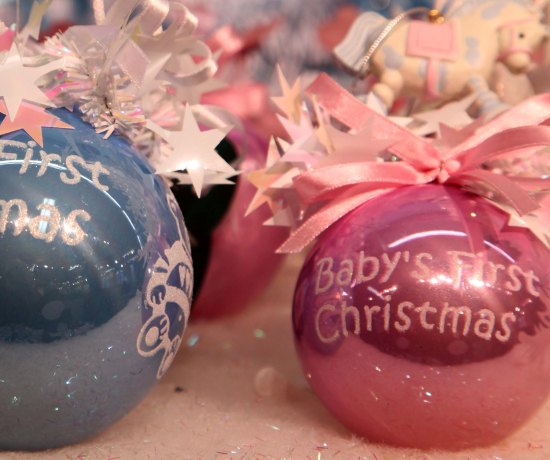
Baby’s First Christmas: These are some of Weiste’s most popular baubles.

Baby’s First Christmas: These are some of Weiste’s most popular baubles.Photo: Tim Bird

Flagship products include silver stars for the top of the Christmas tree and the very successful “Baby’s First Christmas” coloured bauble sets. Weiste is well known in the domestic market but 80 percent of its production is destined for export, with France and the UK accounting for the majority and other important customers in Russia and Norway.

“The Chinese and other Asian producers are much bigger than us, but we know we are an important producer because the others follow us closely,” says Friman. “If we produce something new, we see that the others will follow. We have concentrated on certain items and on good quality with unique design. Our tree baubles are shatterproof, for example.”

Such attention to detail should banish forever those familiar little Christmas disasters, resulting in tiny shards of coloured glass at the bottom of the tree. But increased durability doesn’t prevent people from buying more Christmas decorations every year. Even the wonderful world of tinsel sways with changing trends and fashions.

Snowflakes, reindeer and flowers

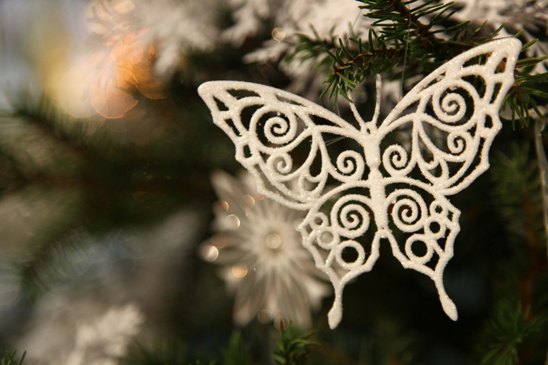
A filigree butterfly graces a Christmas tree.

A filigree butterfly graces a Christmas tree.Photo: Tim Bird

“Of course, there are always Christmas tree baubles, but the preferences for colours change,” Friman notes. “Even so, the most popular colours are the traditional ones – silver, gold, red, snow white. There is also a bigger market for table decorations, not only tree decorations. We play around with snowflakes, reindeer and flowers, for example, and patterns and shapes of tinsel. My own favourite is a filigree butterfly.”

Weiste’s resourcefulness saw it through the war years, when it produced braid and other items for the Finnish army. In any case, as Friman points out, it can be reasonably sure of one thing: recessions my come and go, but “Christmas will always come, every year.”

By Tim Bird

Home in time for Christmas in Finland

After more than a decade abroad, a Finnish journalist concludes that Finland must be the home of not only Santa Claus, but also of Christmas spirit.

Living in the US from 1998 until 2009, my time spent at home in Finland was split into two romantic extremes: The glimmering, airy summer and the candlelit, clove-scented Christmastime.

Because of school and university schedules, I rarely had the opportunity to return to Finland during other times of the year. And while my work schedule led me to forego a few summer trips home after my parents returned to Finland in 2002, the thought of staying in North America for Christmas never crossed my mind.

Celebration of light

For the Finns, this glowing holiday represents a midwinter oasis.

For the Finns, this glowing holiday represents a midwinter oasis.Photo: Vesa Greis/Kuvaliiteri

The holidays of one’s childhood are usually difficult to live down, but after experiencing the preholiday bustle of several American cities, I’m convinced that Finland shouldn’t only take credit for being Santa Claus’s country of residence. I dare to say that the entire notion of Christmas spirit, addressed in countless Hollywood films and Christmas cards, should be attributed to this sparsely populated corner of the world.

It’s not that our population throws glitzier holiday parties than the rest of the world or has a deeper connection to the religious roots of Christmas, but that, simply enough, our unforgiving climate lends added meaning to this celebration of light. To Finns, this glowing holiday has historically served as a figurative oasis in the middle of the frostiest, darkest time of the year, and we consequently approach it with distinctive humility.

Now, “humility” has nothing to do with abandoning the commercialism of Christmas. In my experience, Americans complain about Christmas decorations appearing in department stores in October just as much as Finns do, and our claim to Santa Claus also means that our focus on Christmas gifts is just as steadfast as that of American consumers.

However, unlike in the US, Christmas in Finland isn’t just another date in a series of holidays, each with its own decorations and cooking traditions. As the Finnish autumn, void of the ubiquitous Thanksgiving festivities of the US, turns into December, red candles and elves cut from construction paper begin to slowly appear in apartment windows and many of us catch a trace of the month-long anticipation we felt as children.

Candles keep cold at bay

Christmas lights and candles ward off the dark of winter.

Christmas lights and candles ward off the dark of winter.Photo: Ismo Pekkarinen/Kuvaliiteri

Christmas in the US can feel like a rushed afterthought to Halloween and Thanksgiving – by the time families start plopping plastic snowmen on their lawns and coffee shops plug in their holiday playlists, Americans are already exhausted by the thought of yet another holiday.

The Finnish Christmas season builds gradually, like a row of Advent candles on a windowsill, from December 1 to Independence Day (December 6), Lucia Day (December 13) and Christmas Eve. And like one of our distinctively melancholy holiday songs contemplating subzero Nordic temperatures, the fragile nature of human life and our quest for inner peace, many of us begin feeling humble in the face of a harsh winter and grateful for the gentle, tangible glow of candles, however temporary.

In my childhood, some of the most important Christmas rituals fittingly stemmed from the idea of waiting for the holiday. In early December my mother and I gently unwrapped a family of elves made out of straw and paper mâché from a designated storage box (“They hibernate for the year,” she always said). Each Sunday morning my brother and I rushed to the breakfast table in our eagerness to be the one to light the next Advent candle. At school we rehearsed performances for both Independence Day and end-of-semester celebrations.

Peace is declared

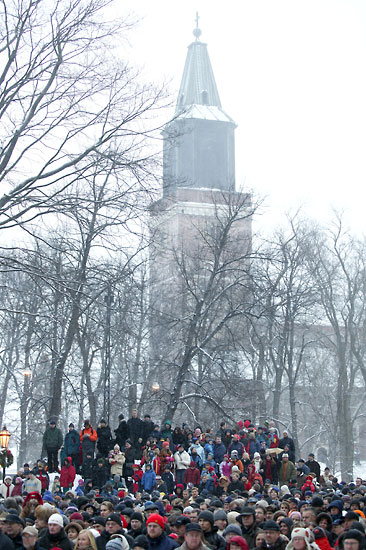
Thousands of people show up to hear the traditional Christmas Peace declaration in Turku on Christmas Eve.

Thousands of people show up to hear the traditional Christmas Peace declaration in Turku on Christmas Eve.Photo: Esko Keski-Oja/City of Turku

When Finland was still inhabited mainly by peasant farmers, Christmas often marked the only day of the year when families could enjoy an abundant feast. Times have certainly changed, and these days very few in this country have to go hungry or live under the threat of war. Still, one reminder of our humble, uncertain roots still brings out the masses on December 24: the annual declaration of “Christmas Peace” in the city of Turku.

The tradition can be traced back to the Middle Ages, and continues to be held at the town’s Old Great Square. For as long as I can remember, my mother has made the live broadcast of this event required viewing for the entire family, and despite occasional protests, my brother and I have joined her in front of the TV each year.

“A general Christmas peace is declared, encouraging everyone to observe this celebration with appropriate devotion and otherwise behave quietly and peacefully,” reads the chief secretary of the city of Turku from a roll of parchment.

Year after year, I watch thousands of couples, families, toddlers and grandparents look on quietly as the chief secretary reads these words. Wearing wool caps and coats or ski jackets, their exhalations become visible in the frozen air as they proceed to sing the Finnish national anthem.

At least in my book, there isn’t a more appropriate day than this to feel patriotic – or to be thankful that there is such a thing as Christmas.

By Laura Palotie

Classic Christmas merges with modern flavours

Christmas - Ylaornamentti

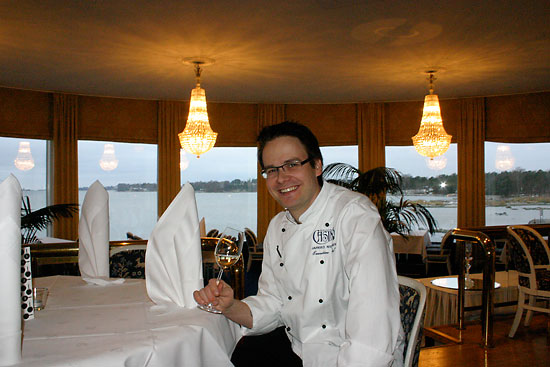
Executive chef Jarkko Nieminen at Kulosaaren Casino carries the restaurant’s Christmas buffet tradition into the future with new options and strong traditions.

For many Helsinkians, a holiday lunch or dinner in Kulosaaren Casino’s spacious seaside dining room is an annual tradition. Each December, the 94-year-old restaurant features a traditional, plentiful Christmas buffet that includes staples like ham, beetroot salad and a varied selection of fish.

As the restaurant’s executive chef, Jarkko Nieminen is responsible for ensuring that the buffet both retains its culinary sophistication and continues to please those with more conservative taste buds. While trends in dining change, Kulosaaren Casino is also synonymous with tradition.

“I have enormous respect for the history and customs of this place,” Nieminen says. “I love classic food and strong, distinct flavours, but I also try my best to merge them with today’s eating habits and styles. We’ve received a lot of positive feedback on the buffet over the years, so I’ve aimed to continue with that same style but add new things here and there.”

Modern touch

"I have enormous respect for the history and customs of this place," Jarkko Nieminen says.

“I have enormous respect for the history and customs of this place,” Jarkko Nieminen says.Photo: Markus Nieminen

Nieminen says he incorporates modern touches into his buffet selections by seasoning traditional dishes like pâtés in new ways and creating new varieties of sauce and gravy. And during a time when more and more consumers are focusing on sustainability or opting for a vegetarian diet, he is happy to modify his menu accordingly.

“This year I’ve narrowed our fish selection a bit and brought more vegetables into the menu,” he says. “We’re going to feature a beet terrine, for example, that will provide more options for a vegetarian customer.”

“Relatively few of our usual customers are vegetarians, but vegetarian food is still part of today’s food culture and will continue to be so in the future. Today’s restaurants simply have to offer vegetarian options.”

More kick

Nieminen possesses a fondness for tradition – at his family’s Christmas table, he is the guardian of his grandfather’s top-secret Baltic herring recipe. However, he also encourages Finns to add more kick to the traditionally subdued flavours of their Christmas food.

“Finns like the taste of salt and grease, and don’t often use spices that could bring more depth to the flavours; we could easily experiment more with spices,” he says. “Middle Eastern spices like cardamom and nutmeg that we already associate with Christmas could be used in larger quantities, and exotic fruits like mangos and melons are also an excellent fit for the Christmas table.”

Nieminen’s creative vegetarian options

Bavaroise

  • 250 g peeled Jerusalem artichokes
  • 1 dl cream
  • 1 dl milk
  • 2 g agar powder
  • 300 g unripened cheese
  • salt, black pepper, cloves

Bring the cream and milk, along with a pinch of cloves, to a boil. Add the artichokes and boil until cooked. Puree into an even mixture and add the cheese and agar powder. Season with salt and black pepper. Pour the puree into dishes and place them in a cold place to set.

Roasted beets

  • 500 g beets, peeled and cut
  • 1 dl olive oil
  • 1 tbsp honey
  • 1 sliced garlic clove
  • cinnamon, thyme, rosemary, salt, white pepper

Mix all the ingredients together and spread them out in a casserole pan so that the beets gather plenty of flavour. Bake the beets in 200 degrees until cooked.

Blue cheese mousse

  • 1.5 dl blue cheese
  • 1.5 dl cream
  • 2 dl crème fraîche
  • salt, black pepper

Heat the cream in a pot and add the cheese. Let this cheese-and cream mixture cool overnight. Whip the crème fraîche into a froth and blend it with the cream and cheese mixture. To garnish, sprinkle with blue cheese and chives.

Yellow foot mushroom risotto

  • 250 g fried yellow foot mushrooms
  • 0.5 dl olive oil
  • 2 shallots, cut into cubes
  • 1 blackroot (also known as salsify), peeled and cut into pieces
  • 2 dl rice
  • 4–5 dl vegetable stock
  • 1 tbsp lemon juice
  • 3 tbsp grated parmesan
  • 1 tbsp mascarpone
  • salt, pepper

Glaze the shallots in olive oil. Add the mushrooms, blackroot and rice. Let heat for about three minutes. Add vegetable broth gradually and boil until the rice is cooked. Add lemon juice, parmesan and mascarpone. Season with salt and pepper. Garnish with fresh herbs.

By Laura Palotie

Christmas - Ylaornamentti

Free-range duck and tangy ice cream

With chef Marko Palovaara at the helm, Restaurant Nokka fuses organic Finnish ingredients into distinctive Christmas gourmet.

Restaurant Nokka, located in a former industrial building in the seaside neighbourhood of Katajanokka in Helsinki, draws culinary inspiration from Finland’s earthy flavours. The restaurant collaborates one-on-one with growers and fishermen around the country, and aims to ensure that even its selection of vegetables, whenever possible, comes from local sources.

In preparing Nokka’s Christmas menu, executive chef Marko Palovaara has experimented with textures and spices to add complexity to well-known recipes. At the centre of the menu, for example, is a locally grown free-range duck served with a honey-almond glaze. It’s a dish Palovaara calls “Nokka’s Christmas spectacle”.

“Our palette of flavours is very Finnish, but I still aim to bring something new into it,” Palovaara says, sitting in his restaurant during the quiet hours between lunch and dinner. “If we advertise something as rosolli [Scandinavian beet salad], it’s not necessarily made of vegetables cut into cubes and mixed with herring. Our beet salad is a mixture of pickled potato and apple with a beetroot cream, and we’ve flavoured the herring in our own way, using things like cloves.”

Ice cream in winter

Having grown up in Kolari, a town located in Finnish Lapland, Palovaara says that warm porridge in the morning and reindeer meat alongside ham at the dinner table were part of his family’s Christmas tradition – food, he adds, was a much more crucial component of the holiday than presents. Palovaara recalls one Christmas during his years as a culinary student when he decided to make spontaneous use of the minus 35 degree temperature outside to make lingonberry ice cream.

“We didn’t have an ice cream maker, so I stuck a steel bowl into the snow and came outside every 15 minutes or so to mix it,” he says with a smile. “It turned out really tasty, and quickly.”

Culinary roots

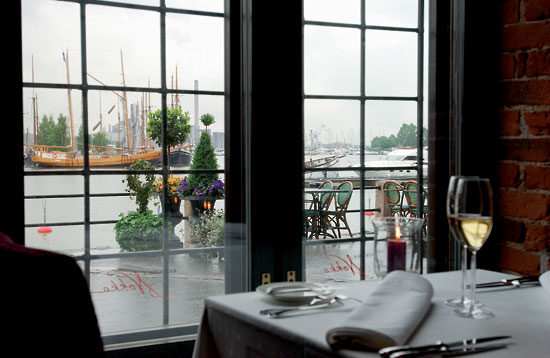
Lack of pretentiousness: The seaside setting forms the perfect place to enjoy Nokka’s palette of Finnish flavours.

Lack of pretentiousness: The seaside setting forms the perfect place to enjoy Nokka’s palette of Finnish flavours.© Royal Restaurants

To Palovaara, Finnish Christmas food is made unique by its lack of pretentiousness, its use of simple flavours like potato, rutabaga and beetroot, and its connection to the country’s history.

“It’s wonderful that we use so many root vegetables in our Christmas food,” he says. “It’s a custom that comes from a time when Finns lived on relatively little and harvested vegetables in the fall to use throughout the winter. Of course we eat ham, which is greasy, but other than that we eat simple, healthy food during the holidays.”

“The only thing I’d change about our customs is maybe incorporate shellfish in the menu, lobster and things like that, the way Norwegians and Swedes do,” he says.

Palovaara’s duck suggestions

Mousse of duck liver paté with fig compote

(serves 6–8 people)

  • 2 shallots
  • 1 clove of garlic
  • 2dl port wine
  • 1dl cognac
  • thyme
  • black pepper
  • 500g domestic duck liver
  • salt
  • 200g butter (room temperature)

Peel and finely chop the shallots and the garlic. Glaze the livers in a pan with onions and allow them to stew until done. Do not throw away the broth. Grind the cooked livers in a food processor and flavour them with a splash of the broth in which you glazed them. Let the liver cool. Whip butter into the mixture and season it with salt and black pepper.

Fig compote

  • 8 fresh figs
  • 1dl white wine
  • 150g jam sugar

Bring the white wine to a boil and add the jam sugar. Add the insides of the figs and let stew until the mixture thickens a bit.

Roasted duck breast, red cabbage and cardamom sauce

(6–8 people)

  • 4 duck breast pieces
  • salt and white pepper

Make cuts into the fat of the duck and fry in a pan until crispy – begin while the pan is still cold. Roast the breast pieces in 180 degrees in the oven for about seven minutes and glaze them with honey and muesli. In order for the flavours to be absorbed, cover and let sit for 15 minutes before cutting. Cut the breast pieces into slices.

  • Leg of duck
  • Salt and pepper
  • Duck fat

Simmer the legs in duck fat until done. Remove the bones and reshape the legs.

Muesli

  • 1 part dried fruit
  • 2 parts roasted peanuts
  • 1 part golden raisins

Roast the nuts in the oven. Mix the ingredients together and sprinkle them on top of the meat, glazed with honey.

Cardamom sauce

  • Duck bones (roast in a pot)
  • 2 onions
  • 4 shallots
  • 100g celery
  • 1 fennel
  • 2 apples
  • 1dl red wine vinegar
  • 3dl red wine
  • 1l water
  • ½dl sugar
  • cardamom
  • white pepper, salt, thyme
  • bay leaf
  • butter

Peel and chop the vegetables and the apples. Roast them in a splash of olive oil for a moment. Add the vinegar and reduce until almost dry. Add the red wine and allow it to boil until half of it has evaporated. Add the duck stock, sugar, cardamom, white pepper, thyme and bay leaf. Let boil for about an hour. Strain the sauce and season with salt and a piece of cold butter.

Red cabbage

  • 1/2 ground red cabbage
  • 2 sour apple
  • piece of lard
  • 1 onion
  • 1/2dl red wine vinegar
  • 1/2dl red wine
  • 1dl syrup
  • water
  • butter
  • salt and black pepper
  • 1 bag of seasoning (cinnamon, clove, allspice, sea salt)

Grind the red cabbage with a knife. In a pot, glaze the cabbage in duck fat. Add a sliced apple and a ground onion, and let simmer for a short while. Finally, add the vinegar, the red wine and a bag of seasoning, and let stew for about an hour.

By Laura Palotie