[Editor’s note: This article was published in 2008 and some of the information it contains is outdated.]
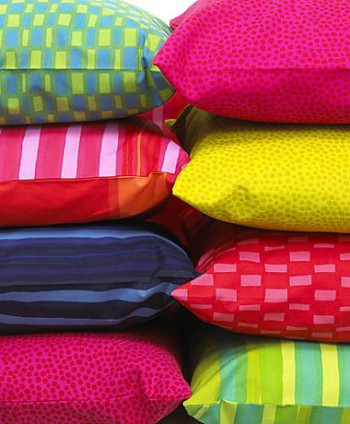
Marimekko Corporation is a leading Finnish textile and clothing design company that was established in 1951.Photo: Marimekko
In a little over ten years, the structure of Finnish industry has changed more than most Finns yet realize. By the end of the 1990s, an economy that had relied for centuries on the country’s vast forests suddenly found that its most important sector, in terms of both value added and exports, was electronics.
We used to say, “Finland lives on its forests”, but today we would have to add “..and on Nokia”. And it lives very well. But Finland is already undergoing a further transformation, into a service-dominated society.
At the same time as technology and services have come to the fore, globalization has played its part in the decline of various industries that used to be important. These mainly relied on the home market, though some also did well as exporters. Rising incomes have been another contributing factor, with the result that, for instance, it is no longer profitable to make clothing in Finland, apart from a few top brands such as Luhta and Marimekko.
Naturally, the range of a small country’s products is always limited – though during the war we even managed to produce petrol from peat. With the growing importance of bioenergy today we might find ourselves returning to this.
In any case, Nokia and the companies associated with it are now the jewels in the crown of Finnish industry. Nevertheless, even this network of companies has been constantly changing. Relatively simple operations such as the manufacture of mobile phone cases and chargers have already been transferred abroad. Finland is instead left to focus on product development and on making the more demanding handsets and many of the components for them. Although the ‘China effect’ has been frequently mentioned, the amount of manufacturing transferred from Finland to Asia has in fact been rather small.
The management and R&D units of Nokia and its ‘satellites’ also remain firmly based in Finland. Attracting much-needed experts from other countries to live and work here is not easy though – there’s the long dark autumn, the impenetrable language and higher taxes. But this is partly counterbalanced by Finland’s reputation as a safe and prosperous country where foreigners, too, can enjoy living and working. English is widely spoken, and for much of the year Finland is a country full of light and natural beauty.
Long history of electrical engineering
The electrical engineering industry’s roots in Finland go back to the late 19th century, when Gottfried Strömberg built his first generators and electric motors. The company he founded is now an integral and profitable part of the Asea Brown Boveri Group. Other Finnish companies – such as Instru, Vaisala and Neles (now part of Metso) – have succeeded in areas such as industrial automation and medical and meteorological technology.
Electrical engineering also covers lift and crane production, where Kone Plc and its offspring KCI Konecranes are global leaders. Kone was founded in 1910 as a section of Strömberg, and under the ownership and management of the Herlin family it has grown into one of the three biggest lift producers in the world. Just how is admittedly something of a mystery, as Finland itself does not even have any skyscrapers. Crucial to Kone’s success has been its emphasis on advanced technology (e.g. the first lifts to have no motor room) and its rock-solid ownership base.
Wood processing today is high tech
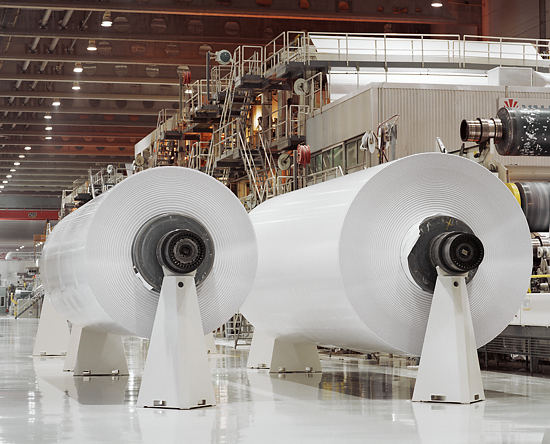
Finland has three major international forest corporations. In the picture jumbo rolls at Stora-Enso Mill in Oulu, Finland.Photo: Stora-Enso
Wood processing, to produce a wide range of products from planks to pulp and paper, remains another major sector of industry in Finland. Here, too, advanced technology plays an increasingly significant role. Today, the highly paid and trained employees at paper mills tend to sit at computers in a control room, and it is only when some mechanical fault occurs – such as when the hurtling paper web breaks – that technicians rush down to the shop floor and engage ‘hands on’ with the huge machines.
In today’s pulp mills in Finland, both raw materials and power are used so efficiently that the raw wood fibre is fully utilized in a ‘closed circuit’, and even the waste liquor is burned to produce electricity. In fact, a pulp mill is a kind of power plant, because it generates more electricity than it consumes. As opposed to chemical separation of wood fibres, however, the mechanical separation process required in making papers such as newsprint consumes enormous amounts of energy. Finland also produces many different speciality papers (e.g. Ahlstrom) and paper products.
Production units in the forest industry have grown constantly in size, leading to increasing concentration of ownership. Finland has three major international forest corporations – Stora Enso, UPM and M-Real – each with Finnish top management. Stora Enso was created as a merger between a large Finnish and a large Swedish company, while UPM has grown through the merging and acquisition of many other Finnish forest industry companies over the years. M-Real’s main shareholders are forest owners, of whom there are several hundred thousand, as Finland’s forests are mainly privately owned by farmers and their descendants. All three of these major corporations have large mills and subsidiaries abroad, too.
Growth in the forest industry’s markets since 2000 has fallen short of expectations, however, and this has led to global overcapacity. The use of low-priced tropical wood fibre has also caused problems for the forest industry, although the tough fibre grown in northern latitudes remains the most durable material for papermaking. The major forest corporations have had to reorganize their business, and this has included closure of even fairly modern mills, and in Finland too. This has hit local communities hard, especially where the mill has been the town’s main employer for a century or more. Stora Enso has even sold off – at a loss – its recently acquired mills in North America.
While Finland has numerous independent sawmilling companies, the big papermakers also have their own highly automated sawmill units. Nothing is wasted in the overall process: high-quality logs are sawn into timber, and the waste is used to make pulp or chipboard. Another important field of production is plywood manufacture, mainly using birch. In addition, Finland has a wide range of companies serving the forest industry in sectors such as forest machinery manufacture and the provision of consultancy services (e.g. the global consulting firm Jaakko Pöyry).
Wood processing also supplies materials for the packaging industry, which includes one of the world’s largest packaging companies, Huhtamäki (e.g. disposable tableware, in which plastic is also a raw material). Wood is of course the most important raw material in furniture, the biggest manufacturer in Finland being Isku and the most famous perhaps Artek, which markets furniture designed by Alvar Aalto.
World’s leading paper machine producer
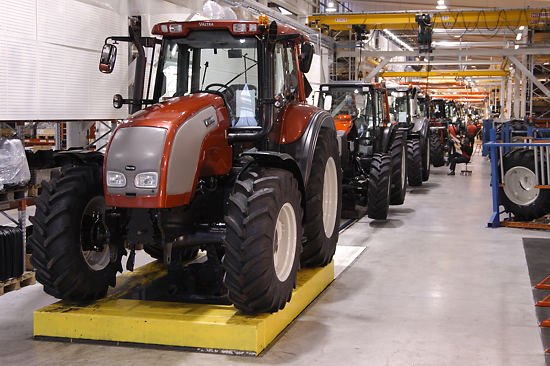
Valtra tractors assembly line in Suolahti plant.Photo: Valtra/Lauri Jokela
The metal and engineering industry has a long history in Finland, but its great breakthrough did not come until the mid 1940s, with the equipment and armaments needed during wartime and the consequent reparations that Finland had to make to the Soviet Union as part of the peace settlement. Since then, a key focus has been on the design and manufacture of wood-processing machinery. Metso, formed from various companies (e.g. Valmet and Tampella), is the world’s leading producer of paper machines, which today are huge and technologically complex units. The market for paper machines suffers considerable ups and downs, a fact inevitably reflected in profits. Other engineering companies produce sawmill and other machinery.
The engineering company Wärtsilä, established in 1834, is today one of the world’s leading producers of large diesel engines. Assa Abloy, a global leader in the manufacture of locks and locking systems, started off as part of Wärtsilä (the Abloy lock was a Finnish invention). Other well-known names include Cargotec, a leading supplier of cargo-handling equipment (e.g. Hiab, Multilift), Valtra tractors, the Pasi armoured personnel carriers so often seen in peacekeeping operations, and the heavy-duty Sisu trucks manufactured for a range of special uses. Passenger cars are made in Finland under licence.
Luxury cruise ships and ice-breakers
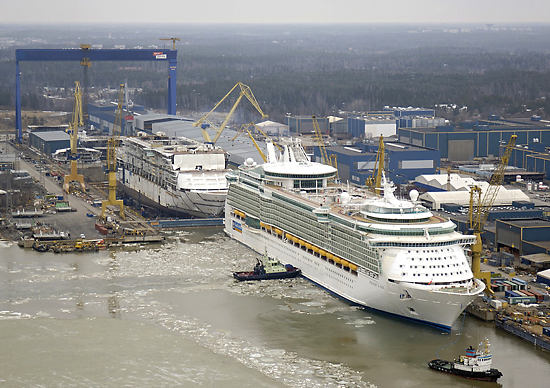
The Aker Yards shipyards in Finland are situated in Turku, Helsinki and Rauma. The yard in Turku, with a land area of 144 hectares, is one of the biggest and most modern shipyards in Europe.Photo: Aker Yards
The war reparations that Finland had to pay the Soviet Union from the mid 1940s can also be thanked for the subsequent growth of shipyards. Starting from that period they became famous as builders of ice-breakers, vessels needed by Finland’s ports every winter to clear shipping lanes through the sea ice. Nowadays luxury cruise liners are the mainstay of shipyards. These yards were gradually transferred to the ownership of the Norwegian Aker Yards, starting in the 1990s, and Aker Yards has itself been recently taken over by a South Korean company. Finnish shipyards have managed to remain open for business despite the fierce international competition in this sector, aggravated though it is by the public subsidies paid in many countries despite every effort made by the Finnish Government to fight the practice.
Finland has also been a leading producer of oil-drilling platforms. Naturally enough, a country with a lengthy coastline, an extensive archipelago and 200,000 lakes is also known for its sailing boats and other pleasure craft (e.g. Nautor’s Swan yachts).
International names in metal products include Fiskars, founded in 1649, and its famous scissors, and Tamglass (part of the global Glaston Group), a leading manufacturer of glassmaking machinery. Sports equipment is also made in Finland using not only metal but also plastic and wood. However, many other consumer goods, such as home appliances, are now mostly made in countries where costs are lower.
Metallurgy, too, has long traditions in Finland. Now an international stainless steel company, the once state-owned Outokumpu is known the world over for developing the flash smelting process for copper production. Many of Finland’s large mines have closed down, so most raw materials now have to be imported. For this reason, companies now tend to focus on high added-value processing of metals, such as copper pipe manufacturing. Recent years have nevertheless seen a resurgence of interest in ore prospecting. Finland has an abundance of minerals, even uranium ore (though this has not yet been mined).
The most important ore deposit mined today is in Kemi, in northern Finland, where chrome is produced for Outokumpu’s stainless steel grades. Outokumpu’s copper business is now part of the Swedish mining and smelting giant Boliden. Rautaruukki (now known under its marketing name, Ruukki) makes a wide range of products, including sheet steel.
From tar to forest industry chemicals
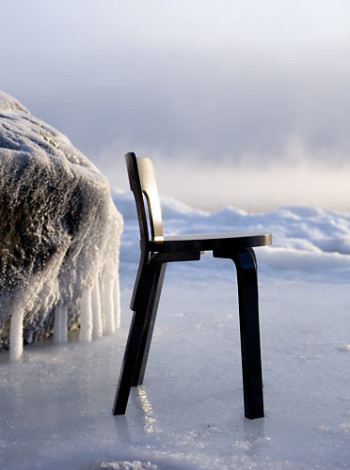
Artek markets furniture, lamps and textiles designed by the famous architect and designer Alvar Aalto.Photo: Artek
The chemical industry’s roots could be said to go back to tar-making, a process in which Finland was one of the world’s leaders in the 17th century, a time when it was still part of the Kingdom of Sweden. The development of the British Empire, for example, was largely reliant on a fleet of seaworthy sailing ships, whose hulls and ropes were protected with Finnish tar. Today, Finland’s chemical industry is based to a large extent on Kemira’s fertilizers and explosives and Neste’s oil refining. Both companies were originally set up for reasons of national security, to safeguard the functioning of society in times of crisis.
Kemira today is an international group that focuses primarily on chemicals for the forest industry and water treatment. Neste was combined in 1997 with the state-owned power company Imatran Voima to form the Fortum Group. However, the hoped-for synergy did not materialize and Fortum’s oil refining operations have been returned to Neste, whose strengths lie in its expertise in refining Russian crude oil and in the production of environmentally friendly oil products. Petrochemical production is currently owned by Borealis.
In pharmaceuticals, the leading company Orion also invests heavily in product development, and the German company Bayer Schering’s Finnish subsidiary (formerly Leiras) is one of the world’s leading developers and producers of birth control products.
A further, though perhaps less obvious, representative of the Finnish chemical industry is Nokian Tyres, known for its Hakkapeliitta winter tyres. Nokian Tyres was actually part of Nokia Corporation prior to 1988.
Finnish design: important for image
Artek markets furniture, lamps and textiles designed by the famous architect and designer Alvar Aalto.Photo: Artek
Although Finnish design has never been of major economic importance, the sector does nevertheless employ a relatively large number of people and it has been very significant for the country’s image. Manufacture of ceramics, glass and cutlery is now concentrated in the Iittala company, which also owns the brand names Arabia and Hackman.
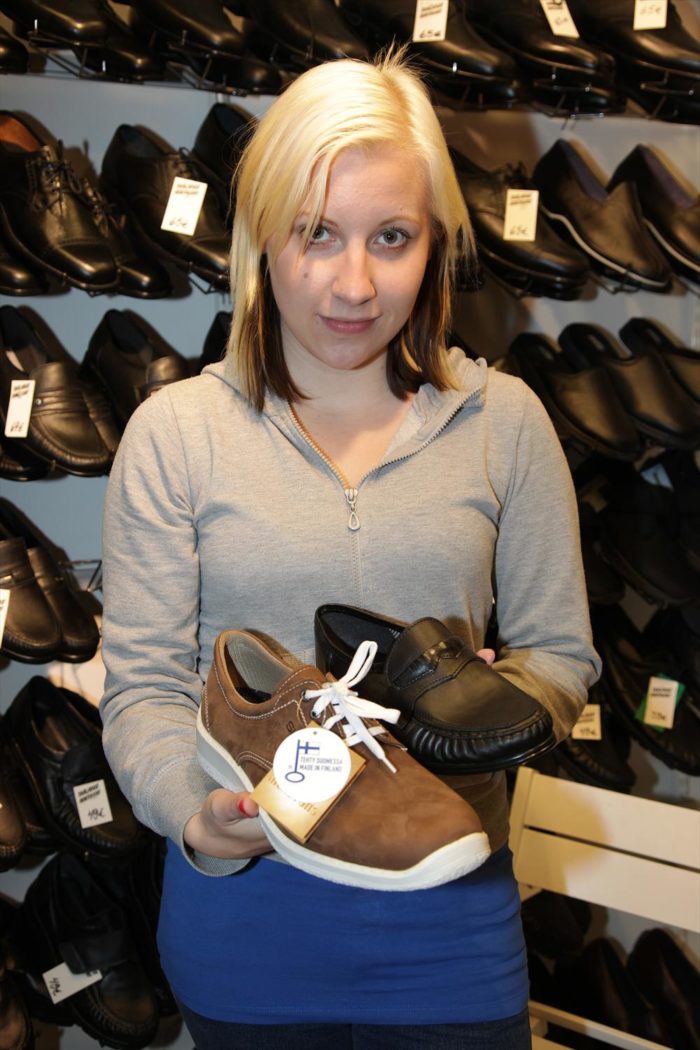
Besides Fiskars and the furniture makers already mentioned, other well-known design companies include fashion-wear producers Luhta and Marimekko and a number of footwear manufacturers. The last-mentioned are still largely under family ownership.
Luhta, owned by the Luhtanen family, is known especially for its winter sports wear, while Marimekko, established in 1951 by the vivacious Armi Ratia, became known in the ‘60s for the modern look of its clothing (favoured by Jacqueline Kennedy, among others). After a difficult interim period, Marimekko was acquired in 1991 by Kirsti Paakkanen, who led it to flourish once again – not least with the aid of classic designs. Ownership has recently changed hands, with a young former banker, Mika Ihamuotila, now at the helm – at the same time he switched from a business dark suit to jeans and a velvet jacket, without a tie.
Design is an important factor in many other products too, among them lifts and mobile phones. However, Finland’s once significant ‘heavy industry’ of cotton, wool and other textile manufacturing has almost ceased.
Sectors in transformation
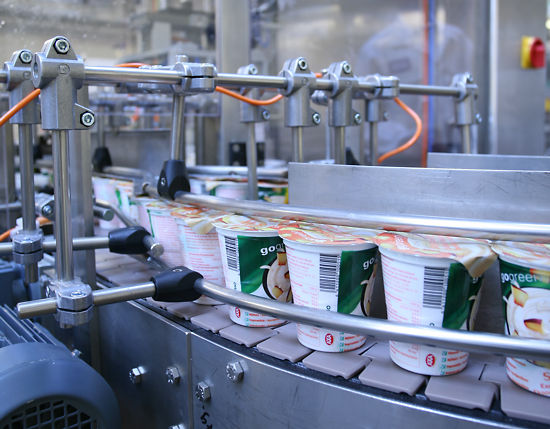
The Raisio Group develops, produces and markets food and functional food ingredients, feeds and malts.Photo: Raisio
The food industry has also gone through some major changes, largely because joining the EU in 1995 meant abolishing protectionist import licences required for many basic foodstuffs. Nevertheless, Finns still tend to opt for what they see as untainted Finnish foods, partly because of the numerous scares connected with food products in other countries. The structure of the food industry had become very inflexible during the pre-EU days, however, and even today, procurement and processing of foodstuffs remains largely in the hands of producer cooperatives, as in many other countries.
Today’s food industry in Finland includes the major dairy chain Valio, several large meat-processing companies, the diversified but troubled Raisio Group, three brewers (the two largest owned by international chains), a couple of large coffee processors (e.g. Paulig), bakery chains (e.g. Fazer and Vaasan & Vaasan) and a couple of confectioners, together with various other largish enterprises and a huge number of small ones. Mergers and acquisitions in the sector look likely to continue.
There were major changes in the construction sector, too, in the 1990s. The cement industry, formerly a cartel, was merged into an international group, while the plastic piping manufacturer Uponor itself opted to go international. In interior fittings, key names include Sanitec, an important producer of bathroom ceramics, and Oras, which makes a wide range of innovative tap systems. Some large building firms have passed into Swedish hands (NCC, Skanska), while big companies remaining in Finnish ownership include YIT, SRV and Lemminkäinen. Despite the considerable concentration of ownership in the construction sector, there are still numerous small local companies.
Printing companies have mostly merged with publishing houses, where ownership has become heavily consolidated since the early ’80s. The major printing houses are consequently owned by SanomaWSOY, Alma Media, Otava-Kuvalehdet and Turun Sanomat (Hansaprint). Largely because of the rare language, publishing and printing always used to be closely guarded and in Finnish hands, but times have changed. Now, for example, the biggest corporation, SanomaWSOY, has internationalized its magazine and book publishing considerably through corporate acquisitions abroad.
Huge amounts of energy needed
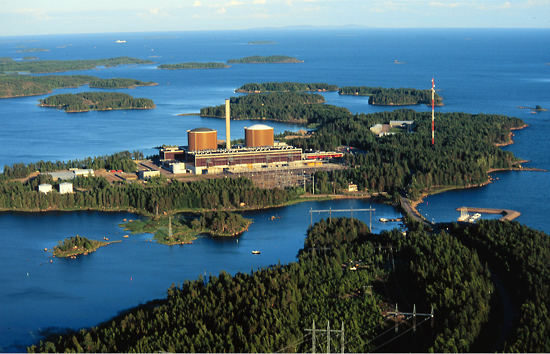
Nuclear power plant in Loviisa. Unit 1 was operational in 1977 and Unit 2 in 1981.Photo: Fortum
Finland needs a lot of electricity, for its forest industry and for homes during the fairly long winter. Finland’s energy production is divided as follows: 24% oil, 21% wood fuel, 16% nuclear power, 14% coal and 11% natural gas. Peat, hydropower and wind power are negligible by comparison, as are electricity imports. One half of all the energy consumed in Finland goes to industry, one quarter to heating buildings and one fifth to transport.
Power generation used to be divided among the formerly 100% state-owned Imatran Voima (now Fortum), municipal power plants and private companies (especially in the forest industry). Today, the picture is changing. Fortum is now a listed company and has acquired businesses in other Nordic countries and also in Russia. Many municipal power companies, on the other hand, have been sold off, for instance to Swedish and German electricity corporations, and industrial owners have also sold some of their power plants. A variety of partners are currently involved in constructing Finland’s fifth nuclear power unit and are among the owners of the power transmission network.
Though Finland has a lot of lakes and rivers, it is also fairly flat, and most of the viable hydropower had already been harnessed before the end of the 1960s. Nuclear power plays an important role in basic power generation in Finland. In addition, considerable low-cost electricity is produced as a by-product by both the forest industry and district heating plants, although during consumption peaks in particular, coal-fired power plants also have to be used. Electricity is also imported from other Nordic countries and Russia. Another fuel is peat from the country’s extensive peatlands.
Bioenergy and nuclear power
Today’s energy debate is underlined by a concern for climate change, which is why the Government is advocating renewable energy sources, particularly bioenergy. In addition to burning wood processing waste, there are plans to obtain fuel for vehicles in the forests and fields of Finland; but how this should be done is the subject of heated arguments. There are, of course, many underlying interests.
For all its ardour, the debate on biopetrol, biodiesel or wind power only concerns a tiny portion of Finland’s energy balance sheet. Building new nuclear power plants or increasing the use of natural gas, on the other hand, are high-impact issues. Energy conservation has been a part of the Finnish environmental debate ever since the oil crisis of the 1970s, and indeed Finnish industry has become considerably more energy-efficient.
The EU too leans heavily towards bioenergy. Finland is already a bioenergy superpower: as the overall aim for the EU is to increase the percentage of renewable energy from the present 5.4% to 12% between 1997 and 2010, Finland already uses 22% to 25% renewable energy, depending on the year. However, even the star pupil must perform better. How much better — that is a topic subject to considerable wrangling in Brussels.
Critics have questioned the feasibility of bioenergy projects in a northern country with a short growing season. We need wood primarily for wood processing. We do not have the strong, steady winds of the oceanfront.
Because of the problems inherent in other energy options conducive to combating climate change, nuclear power has gained new importance. Suspicions towards its increased use have become diluted in all political parties. Although the Greens are officially opposed to building new nuclear power plants, the party has decided to remain in the Government even if — or when — the Government proposes just that. It should be noted, however, that there are divisions within all parties on this matter.
Currently, the Franco-German consortium formed by Areva and Siemens is building Finland’s fifth nuclear power plant at Olkiluoto on the western coast. A sixth and even a seventh nuclear power plant have been mooted by the established energy company Teollisuuden Voima and by the upstart Fennovoima. Both are companies formed of a coalition of industrial and municipal partners; Fennovoima also includes the German energy company EON. Many communities are competing to become the location of one of these new power plants, although there is local opposition too, of course.
An eventful history behind Nokia’s triumphal advance
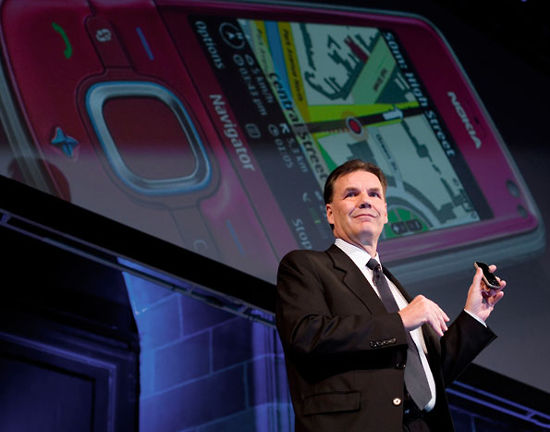
Olli-Pekka Kallasvuo, President and CEO of Nokia at the Mobile World Congress 2008.Photo: Nokia
Nokia’s rise to prominence was the outcome of both farsightedness and some happy coincidences. The original company was a pioneer right from the start, because it founded Finland’s first wood pulp mill, in 1865. It soon added papermaking to its range, and in the 1920s Finland’s leading cable and rubber factories joined the concern. In the ’50s, future Nokia president Björn Westerlund, at that time head of the Cable Works, wisely foresaw that the growth prospects of some of these sectors would be limited. As a result, he decided to set up an electronics division at the company’s Cable Works.
What followed was a long period of trial and error, and Nokia electronics made a loss for it first 15 years. Indeed, it was jokingly referred to as the company’s ‘cancer ward’ or, less disparagingly, its ‘university’. But all the experimentation gradually built up substantial expertise and a corps of talented experts. Orders from the government and technology subsidies also helped, of course.
In the late ’70s, Nokia and television manufacturer Salora combined forces to develop mobile phones, and in the ’80s Salora was incorporated into Nokia. As an indication of the progress made by the late 1980s, Soviet leader Mikhail Gorbachev was famously pictured using the latest handheld Nokia mobile phone to contact the Kremlin while on a visit to Helsinki in 1987. At that time, the phones weighed in at around one kilo. As Nokia grew in the ’80s, it also took a number of costly wrong turns, among them the purchase of SEL, a major German television manufacturer. This was subsequently sold off, as was Nokia’s own computer production, which was sold to ICL.
In the early 1990s Nokia was in a state of deep crisis, but the new CEO, Jorma Ollila, decided to concentrate on mobile phones and telephone networks and to sell off everything else. The Group’s consequent rise to the top was given an extra boost by the fact that the telecoms market in Finland, albeit small, was deregulated at an early stage. As a result, the world’s first-ever GSM phone call was made in Finland back in 1991.
The mobile phone market began to expand very rapidly worldwide in the mid ’90s. Nokia shot to the top, becoming the world leader and opening factories around the globe, though it first had to deal with a difficult logistical crisis in 1995, which it solved by creating efficient new operating systems. These helped the company to remain very profitable through into the 21st century.
Although a little late in catching up with certain post-2000 design trends, Nokia has since consolidated its position as the world’s leading mobile phone corporation. It has weathered the price competition for mass-market inexpensive phones, while also excelling in product development and design for more expensive models.
Nokia is now focusing on the added-value content of its phones too, and its recent acquisitions include a leading US mapping service provider. It won’t be long before Nokia phones can be used to find your way anywhere in the world. In the mobile networks business, Nokia has joined forces with Siemens. The Corporation also has a new CEO, Olli-Pekka Kallasvuo, following Jorma Ollila’s departure to chair the board of directors at both Nokia and Shell.
Several other Finnish companies were to grow to international significance in Nokia’s wake, including the contract manufacturer Elcoteq. As competition has intensified, Nokia’s partners have nevertheless found themselves reorganizing their operations quite drastically.
Two men who led Nokia to greatness
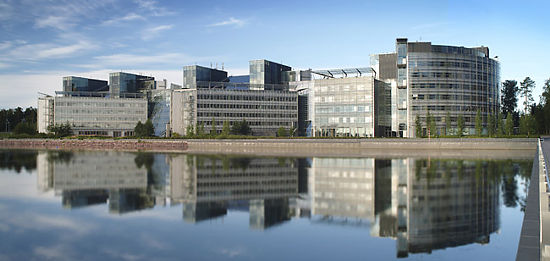
The Nokia head office in Espoo.Photo: Nokia
Finns are aware that the Nokia success story is built on a solid industrial background and history that go back to the 19th century. But how was the giant leap from the backwoods of Finland to the bright international stage of communications possible? Well, it took two men with willpower, foresight and patience, plus a passion for innovation in electricity and electronics.
Westerlund, first group CEO
Some sixty years ago one of the two iconic figures dreamed, indeed believed, that electronics would have a great future. He was the innovator who laid the foundations of the modern Nokia. He was Björn Westerlund, first CEO of the Nokia group.
Björn Westerlund, the architect of modern-day Nokia, was born on December 27, 1912 in Hannover, the son of a Finnish engineering student and a German shopkeeper’s daughter. Björn’s father, who would later be one of the family owners of Nokia, had him sent to Finland at the age of eight, when the First World War had made life in Germany very difficult. Later, Björn brought his mother over to Finland from amidst the ruins of post-Second World War Germany.
Westerlund graduated in engineering and began his career at the Finnish Cable Works. He served in the Second World War, rising to the rank of major. Having been appointed president of the Cable Works in 1956, Westerlund set up an electronics department within the company. Right from the start, he saw that the company’s future would include high technology. The electronics department was initially led by a well-known mathematician, Olli Lehto, who was related to Westerlund.
The Finnish Cable Works, the Finnish Rubber Works and the old Nokia paper mill, all under the same ownership since the 1920s, were merged by Westerlund in 1967 to form the new Nokia Corporation, of which Westerlund became the first president. The Corporation was instantly one of the largest companies in Finland. At the same time, the electronics department was turned into a separate division.
Besides creating Nokia, Westerlund was a key figure behind Finnish industry’s construction of a nuclear power station in the 1970s for its joint needs. Considerable political skill was needed for this, as well as good connections with the Finnish President, Urho Kekkonen. In the 1960s, Westerlund served for a short time as Minister of Trade and Industry, and went on to be the first Chairman of the Confederation of Finnish Industries.
Westerlund retired in 1977. His successor, Kari Kairamo, oversaw a powerful expansionary phase at Nokia; his acquisition of a string of European companies led him to be referred to as “the man who bought Europe”. By the early 1990s, however, the new CEO, Jorma Ollila, was faced with the task of drastically reorganizing Nokia’s operations. At the core of the new company was Westerlund’s electronics business, albeit in a much different form. A dizzying climb to success then followed, and Nokia has not looked back since.
Ollila’s vision
In the 1970s computers emerged as the flagship products of Nokia Electronics and in the next decade work began on the first generation of car phones. But on the whole things were not going well and by the early 1990s Nokia was in a state of crisis. It was then that Jorma Ollila, who had been invited to take up the position of CEO, decided to concentrate all the company’s efforts on mobile phones, for which the GSM system had just been adopted.
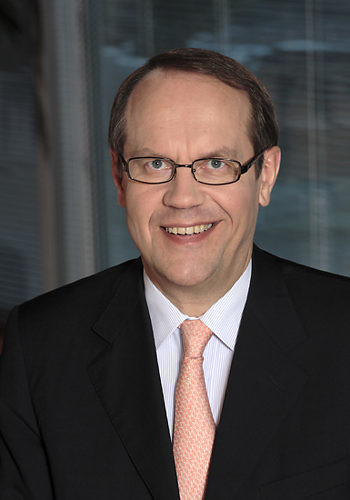
Jorma Ollila, Chairman of the Board of Directors at Nokia and Shell.Photo: Nokia
Jorma Ollila, the man who led Nokia to greatness, was born in Seinäjoki on August 15, 1950, the son of an engineer. The town is in the western Ostrobothnia region of Finland, a region whose people are known for their enterprise and persistence. In the 19th century Ostrobothnians were also known for getting into fights, giving the region a Wild West reputation. Ostrobothnia was also the source of many Finnish emigrants looking for a better life in America.
After a rare opportunity to attend school in the United Kingdom (Atlantic College), Ollila returned to Finland and went on to graduate as a Master of Political Science and a Master of Science (Eng.). In addition, he has a Master of Science degree from the London School of Economics and Political Science. Student politics also attracted Ollila, and he made his contributions under Centre Party colours. He also served as Chairman of the National Union of University Students in Finland in 1973/74.
Having excelled as a student, Ollila went on to progress rapidly in his career, first at Citibank in London and then in Finland, after which he joined the management echelon at Nokia in 1985. In 1990 he was given front-line responsibility, being appointed to head the Nokia Mobile Phones division. Here, too, he excelled.
At the end of the ’80s, the Nokia Corporation was suffering a crisis of such severity that even its sale to Swedish rival Ericsson was contemplated. The management and key shareholders (banks and insurance companies) could not agree on the way forward. In the end, changes in management were made, with Ollila appointed CEO in 1992. This saw the start of a major reorganization, in which it was decided that Nokia would concentrate on mobile telephony and telecommunications networks and would sell off all its other business. Shareholding in the company and the company’s operations themselves were extended internationally.
Nokia quickly became a global player in the ‘90s, led by Ollila’s Finnish ‘dream team’. Entering the new millennium, this group handed over the baton to a new and confident group of Nokia top management – this time not only from Finland but also other parts of the world. Since 2006, Ollila’s work at Nokia has concentrated solely on his role of Board Chairman, and he performs the same role at Royal Dutch Shell.
Ollila has expressed his views openly on political issues and is currently chairing a think tank, the ‘Finnish Business and Policy Forum’, which is financed by the Finnish business community. He was even asked to put himself forward as a candidate in the Finnish presidential election in 2006. Although he declined, he did not reject out of hand the notion that he could stand in, say, 2012.
Ownership and industrial policy
As recently as the 1980s, industry was almost entirely Finnish-owned, and legislation laid down strict limits on foreign ownership. For a long period about 20 per cent of all industry was state-owned. Other important owners were Finnish banks and insurance companies, which were also vital sources of credit, for Finland used to suffer from a chronic shortage of capital. The real interest rate was often also non-existent or even negative, and investment was further encouraged through the taxation system. Privately owned companies’ roots often extended way back to the 19th century, to Finland’s first capitalist entrepreneurs.
Today, all this has changed. EU membership in 1995 removed the restrictions on foreign ownership, and Nokia, for instance, is nearly 90 per cent foreign-owned, especially by American pension foundations. Finnish banks and insurance companies have given up many of their industrial holdings as part of a process in which some merged into Nordic financial groups (Nordea, Danske Bank). Capital can also be easily obtained nowadays for profitable investment projects, releasing industry from its dependence on the banks. The corporate tax system today correspondingly offers less support for making investments but at the same time more support for corporate solvency.
The State has sold a large part of its industrial holdings. Nevertheless, the importance of Finnish private ownership is today being re-emphasized, and for this reason inheritance tax is being reduced.
The Government’s industrial policy used to centre round equitable regional development and state ownership. In the ‘80s, the focus shifted to support for technology and R&D, with the result that Finland has put relatively more money into R&D than most other Western countries – and to good effect. The success of the electronics industry and other high-tech sectors provides clear evidence, though there have been some disappointments, for instance in sectors based on the biosciences. But perhaps their day will come; after all, it took decades before electronics made its breakthrough.
Finland’s industrial sectors (2005)
|
Personnel |
Value added
EUR million |
% |
Electronics and the electrical
industry |
60,927 |
7,187 |
21.6 |
| Machinery and transport |
78,625 |
4,774 |
14.4 |
Forest industry
vehicles |
57,890 |
4,357 |
13.1 |
| Chemical industry |
35,958 |
3,615 |
10.9 |
| Power and water supply |
15,511 |
2,930 |
8.8 |
| Metal products |
41,722 |
2,260 |
6.8 |
| Food industry |
36,256 |
2,127 |
6.4 |
| Metallurgy and mining |
20,637 |
1,978 |
5.9 |
| Publishing and printing |
27,597 |
1,694 |
5.1 |
| Non-metallic mineral products |
15,160 |
1,163 |
3.5 |
| Textiles |
11,127 |
512 |
1.5 |
| Furniture |
9,906 |
451 |
1.4 |
| Other industry |
3,700 |
234 |
0.6 |
| Industry as a whole |
415,016 |
33,279 |
100 |
Source: Statistics Finland |
Finland’s biggest companies in 2006
| Name |
Sector |
Turnover
EUR billion |
| 1. Nokia |
Electronics |
41.1 |
| 2. Stora Enso |
Forest industry |
14.6 |
| 3. Neste Oil |
Oil |
12.7 |
| 4. UPM |
Forest industry |
10.0 |
| 5. Metsäliitto (inc. M-Real) |
Forest industry |
9.2 |
| 6. Kesko |
Wholesale-retail chain |
8.7 |
| 7. Sampo |
Finance and investment |
7.1 |
| 8. SOK |
Wholesale-retail chain |
6.8 |
| 9. Outokumpu |
Metallurgy |
6.1 |
| 10. Tamro |
Pharmaceutical wholesaling |
5.5 |
Source: Talouselämä 20/2007 (500 largest Finnish companies) |
By Jyrki Vesikansa, May 2008
The writer (born 1941) is a Licentiate in Philosophy and an experienced journalist who has written some dozen books on Finnish companies and the history of Finnish industry in general. Legacy of a Baker’s Boy (1995, on Huhtamäki Plc) and The Story of Perlos (2003) have appeared in English.