Growing peacebuilders in Finnish schools

Ahtisaari Day, named after Finnish Nobel Peace Prize laureate Martti Ahtisaari (1937–2023), is held in Finland every year on or near November 10. Conflict resolution represents one of Finnish society’s key strengths. Kids start learning it in comprehensive school through peer mediation training, which forms a special focus on Ahtisaari Day.

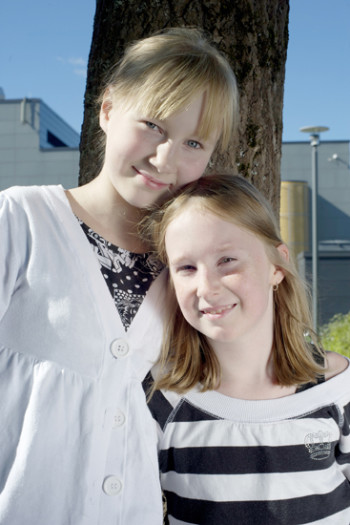
“It would be nice to mediate quarrels between others and to have harmony and peace in our school,” says sixth-year pupil Iina. Together with her classmate Oona, she has come to peer mediation training arranged at Vanttila School in Espoo. This morning they learn the first important thing about mediation: When one person is speaking, the others have a responsibility to listen.

Over 400 educational institutes – daycare centres, comprehensive schools and upper secondary schools – already have peer mediators trained by the Finnish Forum for Mediation. What’s more, similar activities have been piloted abroad – in Uganda, for instance.

The training emphasises cooperating and striving for an outcome based on mutual understanding. Effort is made to resolve the situation that has led to the conflict, so that the parties themselves take an active part in the solution.

How to remain neutral
2779-verso4_pusupiispanen_550px-jpg

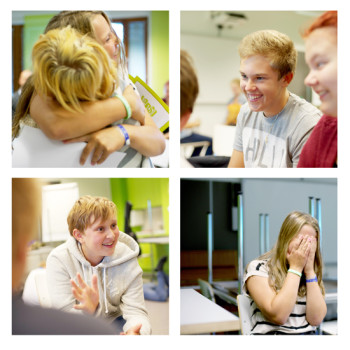
Mediation instruction involves drama practice with a whole spectrum of emotions, from altercation to reconciliation.Photo: Laura Rautjoki

What conflicts do schools have to deal with? The blackboard starts to fill with a list ranging from scowling or hiding a classmate’s cap to pushing and even rougher physical violence. The realities of school life come to light, and everyone seems to have stories to share: someone broke a snow castle built by another pupil, someone was shoving in the lunch queue and someone was excluded from games.

Pupils who have completed the peer mediation training work in pairs to solve conflicts between their schoolmates. Once a consensus has been reached, the parties sign a pledge that the conflict will not be repeated. The mediators and the parties to the dispute meet again in a couple of weeks to ensure that the agreement has held.

The idea of settling disputes between schoolchildren seems simple, but it’s not always easy. How can the mediator remain neutral while solving the disputes of others?

Helping people move ahead
2779-verso7_pusupiispanen_550px-jpg

Iina and Oona attended peer mediation training in order to help maintain the atmosphere at school.Photo: Laura Rautjoki

“Some people have asked me why I don’t just mind my own business,” says ninth-year student Minea, who has now served as a mediator for three years. “I tell them that we mediators are here to make this school a nicer place.”

According to Minea and her classmate Susanna, patience is one of the most important qualities of a good mediator. There’s no reason to get upset, even if a dispute cannot be settled right away.

“I think a good mediator also helps the parties to move ahead and may even ask them for ideas about how the matter could be solved,” Susanna says.

At the end of the mediation training, the pupils of Vanttila School in Espoo, just west of Helsinki, get a diploma for their competence as mediators. The pupils get together to mull over the day’s lessons. The instructors repeat once more to the new mediators that they must maintain confidentiality and remain neutral, and that they may not distribute punishment.

With a twinkle in their eyes, the instructors refer to the students as future Nobel Peace Prize winners. The world will continue to need competent peace negotiators to solve complicated conflicts.

Ahtisaari Day highlights mediation skills at school

Ahtisaari Day takes place every autumn on or near November 10, which is the name day for Martti in the Finnish calendar. Former Finnish President Martti Ahtisaari, who won the Nobel Peace Prize in 2008, made a habit of visiting several schools each year to meet students and give awards to mediators selected from the school community by their peers.

The prize recognises pupils, groups or even school staff members who have acted in a manner that promotes peaceful resolution of disputes. Often the award winners are newly trained peer mediators – students who work for peace at school.

By Liisa Poussa, November 2013, updated November 2016 and October 2023
Iraqi-born artist feels at home in Helsinki

Baghdad-born Adel Abidin, who was chosen Artist of the Year at Helsinki’s Flow Festival in 2014, has been making art in Finland for more than a decade. His mixed background lets him provide viewers – and festival-goers – with new answers to classic questions of gender roles and migration.

Adel Abidin moved to Finland in 2001 with the woman who is now his ex-wife, and graduated from the Academy of Fine Arts in Helsinki in 2005. Since then he has worked as a visual artist both in Finland and abroad. For example, he represented Finland in the 2007 Venice Biennial with his multimedia installation Abidin Travels, which promoted a fake travel agency selling exotic trips to war-ridden Baghdad.

A pleasure to be an artist in Finland

4507-abidin_marilyn_2014-07-30_flow-artist-of-the-year-550px-jpg

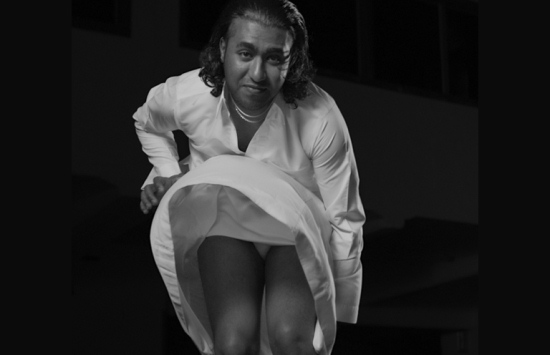
Abidin’s Marilyn Monroe pose, from an installation at Flow Fest.Photo: Adel Abidin

At Flow Festival, Abidin exhibited three mixed-media installations dealing with human rights, discrimination and gender issues.

Abidin is based in Helsinki and considers it his home. “My studio is here, although my family lives in Amman,” he says. “I have lots of shows abroad and I’m always going back and forth. So it’s kind of convenient.”

He finds it rather easy being an artist in Finland. Abidin says that Finland has had a huge impact on his career: “Look at the grant system and the funding. They support culture. They support the young generation. When you have a good project they give you funding – they even push you forward.”

“Finland is a very interesting place to be, and although it was all unplanned, I like it here,” he says. “The people I work with are very professional. Of course I don’t like winter, but there is no ideal place on this earth.”

Classic themes not yet resolved

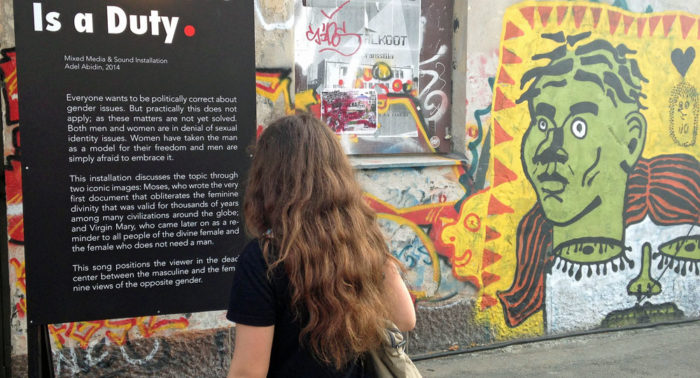
“Love for you is a duty,” an installation in collaboration with singer Astrid Swan, makes festival-goers think about women’s roles in society.

“Love for you is a duty,” an installation in collaboration with singer Astrid Swan, makes festival-goers think about women’s roles in society.Photo: Anna Ruohonen

The themes of Abidin’s work stem from society: “Everything that happens in a society will affect us. We think we are separated, but the world is actually a really tiny place.”

Abidin deals with many classic themes, which he laces with sarcasm and paradox: gender matters, wars, love, discrimination, manipulation, authority. “We suffer from them, or we might benefit from them. So I think it’s very interesting to deal with them using my contemporary language. By mixing the two cultural backgrounds I have, the Western and the Middle Eastern, I end up with the third culture, a third answer.”

Abidin works with videos, video installations, photography, sound installations, sculpture and other media. “Each concept decides what kind of medium it needs to be presented with,” he explains. “I don’t force the medium on a concept.”

Flow pieces

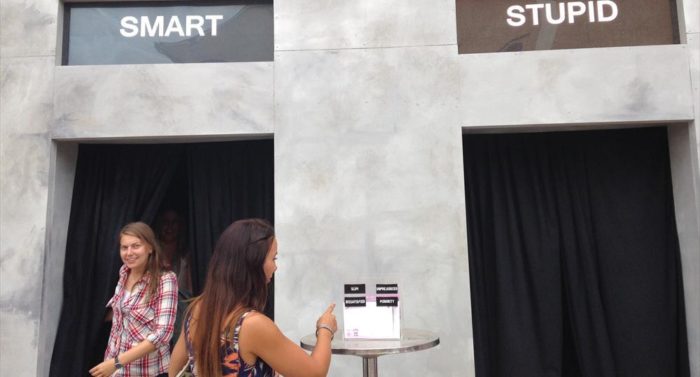
Which side are you on? Abidin’s labels entice curious viewers to explore an installation.

Which side are you on? Abidin’s labels entice curious viewers to explore an installation.Photo: Anna Ruohonen

The pieces shown at Flow Festival were made especially for the festival. “I’ve never been to Flow Festival before; I’m not a big fan of festivals, so this was a great opportunity to do something for a new audience. When you show a piece in a museum, people who go and visit your piece are set in their brain to see art. But when you show a piece at a festival people are not set for it”, Abidin says.

The festival pieces are related to the classic concepts Abidin works with, but he says he lightened them up considering the atmosphere of the festival. One of the Flow pieces was a song, co-written in collaboration with Finnish singer Astrid Swan.

This was a new method for Abidin, who believes that the beauty of doing art lies in challenging oneself: “Before this festival I’d never written lyrics before – I’m bad at music. However the piece turned out exactly as I planned.”

By Anna Ruohonen, October 2014

Night visions fill Helsinki cinemas

Helsinki’s Night Visions International Film Festival forms one of the world’s leading events for action, fantasy, science fiction and cult cinema. Held biannually, it attracts some of the biggest personalities in genre film.

Finland has made a name for itself with a variety of film events, including Love & Anarchy, Espoo Ciné and the Midnight Sun Film Festival, held in Finnish Lapland. Night Visions deserves to be mentioned among these top names. Guests have included directors Dario Argento, Paul Verhoeven and Lloyd Kaufman, actor Christopher Lee, and director and actor John Waters.

The festival was born in the spring of 1997, starting out as a single night of back-to-back programming from dusk to dawn. For audiences starved for big-screen genre films, Night Visions shone a welcome spotlight on less likely favourites from both Finland and abroad.

“We were young and crazy enough to think that this was a good idea, even though we didn’t have any financial backing,” recalls festival director Mikko Aromaa, who founded Night Visions with a handful of other self-proclaimed “film geeks.” “It seemed completely logical that we could finance all of this with box office revenues only.”

Applause growing louder

“Nuntius” is written and directed by Jori Hulkkonen and Jimi Tenor, highly acclaimed members of the Finnish music scene.

It immediately became apparent that Aromaa and his friends were not alone. By the autumn of 1998 the festival had outgrown the small cinema where it started, and shifted its base to Finland’s oldest cinema house, Maxim.

Subsequent years saw attendance numbers growing gradually, before the decision was made in 2008 to go full throttle and expand the festival.

“We are now the second-biggest film festival in Helsinki that focuses on fiction films,” says Aromaa. “Nobody would have believed that if you had told them ten years ago.”

Currently around 65 features are included in the line-up each year, with a total number of admissions in the vicinity of 14,500 for its spring and autumn editions. Along with the growth of the audience, the cinematic offerings have expanded, with the programme now incorporating some mainstream elements as well.

“We’re the Flow Festival of film,” Aromaa explains, tipping his hat to Helsinki’s renowned music festival. “We try to be on the edge, introducing cool things to the audience, but still hold on to the backbone of the festival, the genre stuff.”

True to its humble roots, Night Visions remains noncompetitive. However, the movie-goers get to vote for the Night Visions Audience Award.

Local input

David Cronenberg’s “Maps to the Stars,” at Night Visions autumn 2014, contains money, dreams, fame, envy, angst, yearning and haunting.

Thanks to Night Visions, the local genre-film scene has enjoyed a subsequent boost in profile.

“The festival is important for Finnish genre films because, in addition to great programming, it always brings some of the more forgotten, awesome films back to the limelight,” says Timo Vuorensola, director of 2011’s homegrown cult favourite Iron Sky. “Night Visions is the best film festival experience I’ve ever been to. It’s the right size, has the reputation to get good guests and is always interesting and surprising, programming-wise.”

And so, whether it’s sharing a drink with Dutch director Paul Verhoeven, spending a week in Helsinki with cult actor Udo Kier or enjoying the company of the revered John Waters, festival director Aromaa clearly loves what he’s doing.

It’s also clear that he has a grander vision for Night Visions.

“There are still a lot of possibilities to make it even greater,” he says. “It is still a hobby to me, but it is close to becoming a profession. It’s a labour of love that has become very significant to people other than myself.”

By James O’Sullivan, October 2014

Finnish author explores limits and truth

With her first novel, The Limit, Riikka Pulkkinen showed that she belongs to the upper echelons of young Finnish authors. Her following novels, True and The Book of Strangers, confirmed her success.

Pulkkinen’s second bestseller, True, was translated into many languages, including English, in 2012. Her thrilling debut novel, The Limit, published in English in 2013 and recently made into a TV miniseries in Finland, deals with fundamental themes of literature and ancient tragedy: fate versus free choice; law versus inner ethical principles; death and love.

“On the day Anja Aropalo decided to die, the weather was as sweet and dense as a web of sugar,” the novel begins. The 53-year-old, childless literature professor uses pills to write the words “misery”, “life”, “burden” and “love” and then swallows the words. But the suicide does not succeed.

Tunnel of oblivion

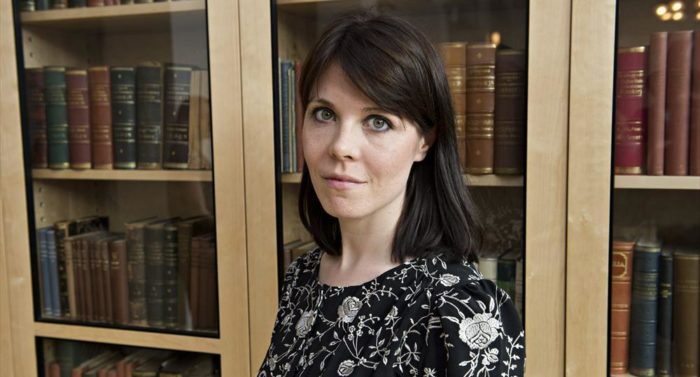
Riikka Pulkkinen’s debut novel has been made into a TV miniseries in Finland.

Riikka Pulkkinen’s debut novel has been made into a TV miniseries in Finland.Photo: Mikko Stig/Lehtikuva

The book is about suicide, death fantasies and euthanasia. It also examines the conflicts that result from Anja’s niece Mary becoming a woman while Anja is coming to grips with aging.

Anja’s husband, an architect who finds himself “at the mouth of the tunnel of oblivion,” asks his wife to kill him as soon as Alzheimer’s disease takes full control of him.

“Anja looked into her husband’s eyes and realised that two worlds had distanced themselves from each other,” Pulkkinen writes. Anja has to choose between love, loyalty to her husband, her own ambivalent feelings and the law that prohibits euthanasia.

Meanwhile her self-mutilating, rebellious, 16-year-old niece Mary, finding herself trapped in a destructive love affair with her married teacher Julian, believes that “thinking about death is a game.”

Drawing the line

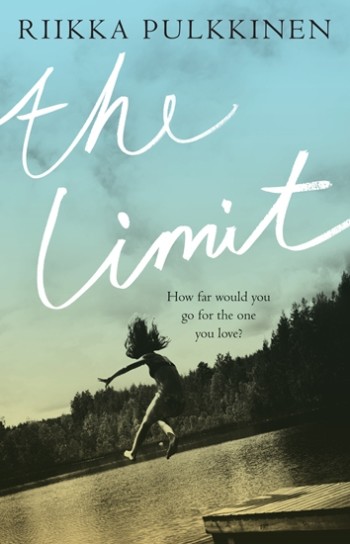
3400-thelimit_300dpi-550px-jpg

The fates of women and girls play a central role in Pulkkinen’s novels.Cover: Scribe Publications

“Love and desire, where is the borderline?” the teacher asks his class. The book’s title in Finnish, Raja, translates as “border” or “limit.” The book talks about outer limits and borderline situations, which differ depending on a person’s age.

“On one hand, the novel is about the request: ‘Kill me!’” says Pulkkinen, a sensitive author and columnist, born in 1980 in the northern Finnish city of Oulu. “Mary asks the teacher Julian to do it and Anja’s husband begs Anja to do it.

“On the other hand, there is still the commandment, ‘Thou shalt not kill!’ The theme of the novel emerges from these contradictory requests and demands. How can you kill one and at the same time save the other?”

Pulkkinen wanted to examine the clash of laws, requests and desire in the context of life, death and love. “Through this, a tragedy or metatragedy developed, a form I also wanted to explore.”

Being a stranger

3400-riikka_pulkkinen_3-550px-jpg

Pulkkinen describes herself as a person who worries a little too much.Photo: Jouni Harala/Otava

Pulkkinen, a former athlete who describes herself as a person who worries a little too much, is interested in “questions about life and existence, to which I am looking for fundamental answers in my prose.”

Her novel Vieras (The Book of Strangers), published in Finnish in 2012, deals with otherness, migrants, culture, religion and body image in Finnish society. Finland was homogenous for a long time, in contrast to the melting pot of New York, which also features in the novel.

“A person can set foot in a new land,” the book says. “The land will receive her. Yet she remains a stranger as she is a stranger unto herself, as long as she carries within her that voiceless unknown that bears no name.”

Again, the fates of women and girls play a central role. According to Pulkkinen, the Finnish model of a woman has always been that of a victim and was based on stories of struggles against society.

“But Finnish society has become more egalitarian than its cultural image of women,” says Pulkkinen, who has a young daughter. “Women authors always used to write at night, and the rest of the time they took care of their children, home and possibly a day job. It is good that nowadays Finnish women can hand over their children to a kindergarten teacher, go work on a novel in a café, and then even go for a manicure.” Pulkkinen smiles.

By Rebecca Libermann, October 2014

Expat experts explore Finnish forestry

Every year the eastern Finnish city of Joensuu welcomes new students and workers eager to get first-hand experience in the forest industry. Some of them end up staying much longer than they planned.

When she decided to leave her native Germany to work in Joensuu, forest cartographer Katja Gunia had a clear plan. She would stay one year in Finland, then move on. That was in 2004. A decade later, she’s still there.

“I discovered the Finnish way of life – close to nature and a nice work atmosphere,” recalls Gunia, the mother of two young children. “It was great! When my employers offered me a new contract, I took it.”

A nature enthusiast, she especially enjoys the Finns’ relationship to their forests. “They belong together,” she says. “Finns are used to spending time in the forests. They go there for a walk after work or to pick berries. It’s part of their everyday life, but at the same time it’s very special. For me, Joensuu is a haven.”

Finnish forestry capital

2375-dsc_0955c-jpg

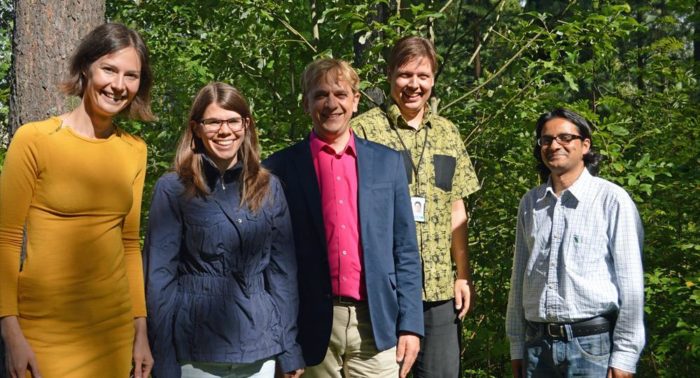
From left: Katja Gunia (Germany), Blanca Sanz (Spain), Alain Minguet (Belgium), Jarno Hämäläinen (Finland) and Basanta Raj Gautam (Nepal) enjoy sharing forestry knowledge in Joensuu, eastern Finland.Photo: Pauline Curtet

With more than 70 percent of its surface covered by forests, Finland is – by far – the most densely forested country in Europe.

Surrounded by thousands of acres of woods, Joensuu, with its 75,000 inhabitants, is at the centre of the Finnish forest industry. It hosts dozens of companies and research centres whose activities are related to forestry. They employ thousands of people, including many foreigners.

“In a way, this is the place to be,” says Blanca Sanz, a young Spanish woman who spent a summer in Joensuu doing an internship in forest ecology. “Before arriving, I had heard a lot about how great Finnish forests were. Yet I was very surprised when I got here. The amount of forest was incredible! I had never seen that in Spain.”

“Surprised” is also the word that Augustine Moses Gbagir, a PhD student from Nigeria, uses to describe his arrival in Finland: “Five years ago I came on a scholarship. When I stepped out of the plane, I thought, Oh my God, it is so cold. And it was only August.” He laughs at the thought.

Fortunately, Gbagir got used to the snowy winters and enjoys his work in Joensuu: “Finnish forests are very different from the forests I knew. For instance, the species of trees and animals are not the same. It gave me the opportunity to learn a lot of new things, try new technologies and, maybe one day, apply them in my own country.”

Valuable Finnish forest experience

2375-photo_-upm-jpg

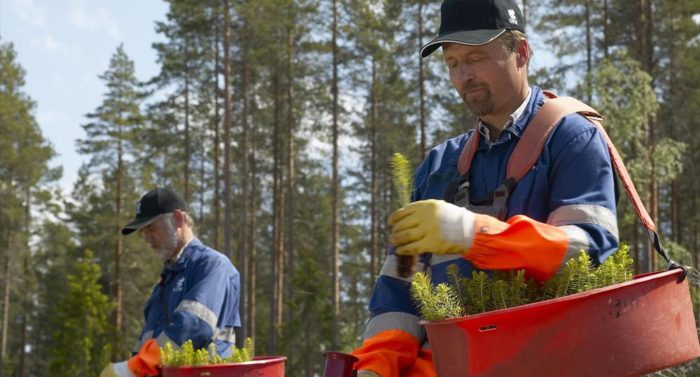
Workers for the Finnish forestry company UPM with baskets of tree seedlings are replanting an area of forest.Photo: UPM

Nepalese Basanta Raj Gautam, forest sustainability manager, has lived in Joensuu since 2006. He also wants to use his Finnish experience to help fight deforestation in his homeland.

“Here,” he says, “forests are well managed. It’s more profitable for locals to grow trees than to cut them. That’s a good model and it should be applied in Nepal.”

Basanta, who has a young son, likes his life and work in Finland, but his plans for the future are not completely clear. “I keep saying that I won’t spend my whole life here. I’d like to go back to Nepal, yet I never do.”

The foreign forest-lovers in Joensuu also represent a major asset for Finnish companies specialising in forestry. “My company has a lot of international partnerships, in Nepal or in Senegal, for instance,” says Jarno Hämäläinen, a manager at Arbonaut, a Joensuu-based forest management firm.

“If part of our staff didn’t come from abroad, we wouldn’t be able to innovate. I can’t imagine working without my foreign colleagues. Where would the fun be?”

By Pauline Curtet, October 2014

Asia and Europe meet creatively in Finland

The Europe-Asia Roundtable Sessions (EARS) in Helsinki (September 4–7, 2014) draws together creative-industry professionals from countries such as Finland, China, Japan, Korea, Serbia, Indonesia and Sweden to focus on the latest trends on music, design, media and the performing arts. The aim is to discover business opportunities, share best practices and meet inspiring people and ideas.

“In the global world of today, it’s evident that the West needs the East and the East needs the West,” says Erik Söderblom, director of the Helsinki Festival. “At first glance, big differences exist between the East and the West: in philosophy, customs, languages, writing – almost everything seems different. What EARS offers is an informal platform for opening up dialogue, relaxed meetings and safe steps in foreign territory. It’s a place for finding out that people are the same everywhere, after all.”

A tailor-made event

Erik Söderblom, director of the Helsinki Festival, says, “It’s evident that the West needs the East and the East needs the West.”Photo: Sasa Tkalcan/Helsinki Festival

EARS 2014 represents the seventh time the event has been held. The previous two were held in Beijing and Shanghai in November and December 2013. The four-day event in Helsinki contains keynote speeches, roundtable discussions, networking sessions and tailor-made company visits. In addition to experiencing historically and culturally rich meeting venues such as City Hall and Cable Factory (a former industrial building that now houses studios and exhibition and performance spaces), the participants even have the opportunity to enjoy a traditional Finnish sauna.

The speakers include organisers of influential music festivals and spectacular shows such as Paul Dankmeyer from Java Jazz Festival; Lihui Shen from Modern Sky Entertainment (the leading festival organiser and music entertainment company in China); David He from Taihe Live (organiser of NBA China Games and music concerts of Justin Bieber), Cheung Fai from Franco Dragone Entertainment Group (spectacular shows); and Erik Söderblom from Helsinki Festival, to name a few.

Also attending are key media figures such as Pelle Lidell from Universal Music Publishing; Nozomi Daikuhara from Nippon Television Music Corporation; Jinhui Meng from VICE China; and Liang Yin from LeTV (one of the most popular online video platforms and one of the largest film and TV production companies).

Exceptional mix of people

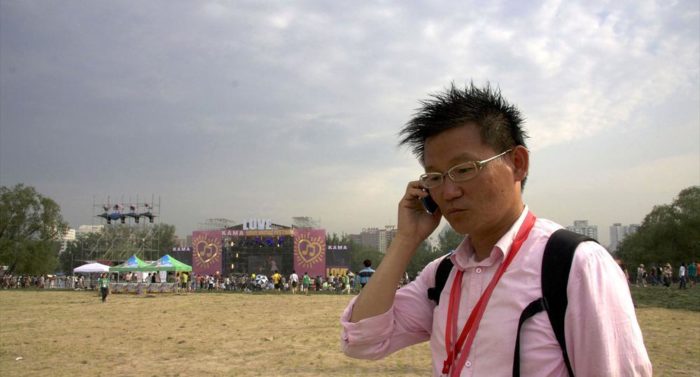
Cheung Fai of Franco Dragone Entertainment, shown here at the Kama Love cross-genre music fest in Beijing, says “the atmosphere of sharing” helps make EARS a success.|||Photo: Franco Dragone Entertainment

Cheung Fai of Franco Dragone Entertainment, shown here at the Kama Love cross-genre music fest in Beijing, says “the atmosphere of sharing” helps make EARS a success.Photo: Franco Dragone Entertainment

You may wonder what these top-notch professionals from the Chinese creative industry expect. What inspires them to come all the way from China to Finland to participate?

Cheung Fai of Franco Dragone Entertainment says that “the exceptional mix of people, the open format and the atmosphere of sharing” make EARS an exciting event. Mutual exchange provides the best way to learn and grow, and the cultural sector is no exception.

“EARS creates an excellent opportunity for getting more information on the culture, art, business and tourism of Finland,” says Jinhui Meng, head of VICE China, the country’s leading youth media company. Its content covers music, travel, sports, technology, art and fashion.

Seeking international insights

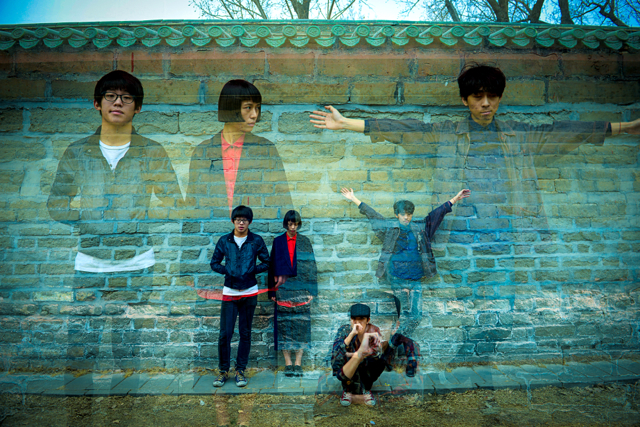
Beijing band Chui Wan, appearing at the Niubi Fest, plays experimental psychedelic rock. Their name comes from Daoist philosopher Zhuangzi’s “Qi Wu Lun,” a mystical work on nature and human life.|||Photo courtesy of Chui Wan

Beijing band Chui Wan, appearing at the Niubi Fest, plays experimental psychedelic rock. Their name comes from Daoist philosopher Zhuangzi’s “Qi Wu Lun,” a mystical work on nature and human life.Photo courtesy of Chui Wan

Meng believes EARS will enable professionals from different areas to establish a new network: “I would like to get into touch with more Finnish organisations in the relevant fields. It’s very exciting that possibilities can be explored at a fun and effective event. I look forward to building future cooperation that helps Chinese youngsters get to know Finland better.”

You may have heard of Modern Sky Music Festival and Strawberry Music Festival. Modern Sky Entertainment organises these major events as well as a number of Finnish heavy metal concerts in China. The main interests of Yue Shen, who does business development at Modern Sky, lie in exploring how international music events are organised and furthering cooperation with the Finns.

He is also looking for insights on how to work with international brands and for designs and ideas related to the music industry. “We have a lot to learn from such a unique and mature music market as Finland,” he says.

Fancy some Asian alternative music? Now you’ve got a chance without having to travel all the way to Asia. The Niubi Festival (niubi is Chinese slang meaning “awesome”), an EARS partner event, is held on the first weekend of September 2014 and presents some of the most exciting alternative bands, such as Chui Wan from China, Bo Ningen from Japan and The Trees and The Wild from Indonesia, as well as Finnish bands Siinai, Death Hawks and Mr. Peter Hayden.

By Wei Zhou, August 2014

Finnish writer’s youth fiction wins fans

Young Finnish author Salla Simukka’s youth fiction is winning over fans worldwide. Her Snow White trilogy projects the excitement of a thriller and the wonder of a fairy tale.

Simukka’s own story almost sounds like a fairy tale. Apart from the long-standing fame of Tove Jansson and her Moomin characters, Finnish children’s and youth literature was not enjoying visibility on the international level. Then some clever publisher came up with the idea of investing more in this literary genre, and lo and behold, interest abroad gradually rose. Simukka became the princess in this story.

“She was the puzzle piece that didn’t have its own place but could suddenly fill in almost any hole you needed it to. She wasn’t like the others. She was exactly like the others.” This is how the loner Lumikki, whose name is also the Finnish name for Snow White, describes herself in As Red as Blood, the first volume of a new youth thriller trilogy by Simukka.

Part of it could also apply to the writer herself, who says, “I am sociable and at the same time a recluse. I need lots of solitude.”

The numerous books of the award-winning author, translator and literary critic (born in 1981) enjoy great popularity in Finland. Her novels Jäljellä (Without a Trace) and Toisaalla (Elsewhere), both of which are set in the near future, brought her the Topelius Prize for children’s and youth literature in January 2013.

Young people read if books speak their language

Simukka’s books, which include elements of fairy tales and thrillers, are described as “captivating.”

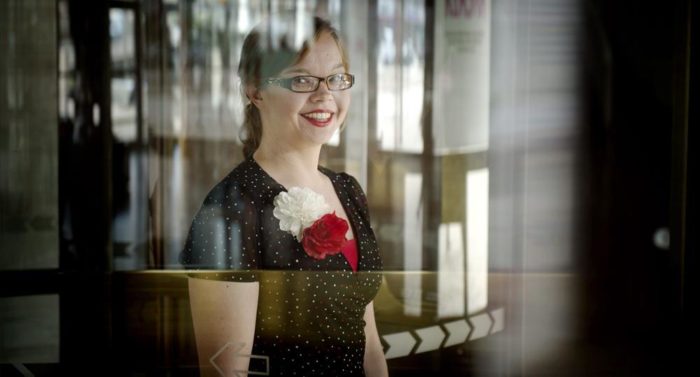
Simukka’s books, which include elements of fairy tales and thrillers, are described as “captivating.”Photo: Antti Aimo-Koivisto/Lehtikuva

The vivid, extremely exciting Lumikki trilogy is being released simultaneously in more than 40 countries – a sensational achievement by any measure. The books brought Simukka the Finnish Ministry of Culture’s Finland Prize in December 2013 in recognition of her significant artistic achievement.

According to Simukka, people commonly assume that young people as a group have homogenous reading habits. She insists that this is not true.

“The best way to ensure that young people will continue reading is to offer them a wide range of high-quality, interesting and exciting literature.” And that’s what Simukka does.

“We’re all aware that young readers read significantly less than before, but Simukka is captivating,” says Iris Schwank, director of the Finnish Literature Exchange (FILI), an institution that promotes awareness of Finnish literature abroad. “She is popular and attracts new readers. Her protagonist is a bold girl who questions everything, but in a humorous way.”

Fairy-tale thriller

3405-covereng-jpg

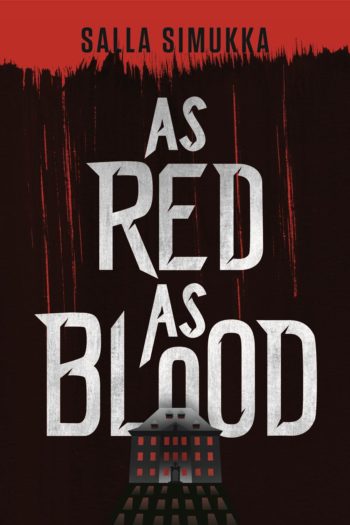
Simukka’s books appear in English, German and several dozen other languages.Cover art: Skyscape

As Red as Blood shows readers a young Russian woman found dead in a pool of her own blood. A bunch of blood-stained money and Lumikki’s inadvertent involvement in the drug trade soon enter the picture. It’s a murder mystery, but it also deals with youth archetypes and even a touch of the collective unconscious.

“There once was a girl who learned to fear,” forms one of the key sentences of the book for Simukka. This sentence alone shows that the book contains many fairy-tale elements on levels of language, narrative and symbolism, although it reads like a thriller.

Simukka debuted as a 21-year-old with Kun enkelit katsovat muualle (When Angels Look Away), a romantic story between two girls. She calls herself a very visual person: “My writing process often begins with the title and usually with some powerful images, from which I’ll let the story evolve.”

In the first book of the trilogy, she conjures up the picture of red blood seeping into fresh snow. The winter itself also plays a large role, both symbolically and visually. “I love art and try to write so that the reader can clearly picture the events,” says Simukka.

Blood, snow and ebony

“I love art and try to write so that the reader can clearly picture the events,” says Simukka.

“I love art and try to write so that the reader can clearly picture the events,” says Simukka.Photo: Lars Kastila

Simukka was born in the southern Finnish industrial city of Tampere, where her heroine Lumikki attends a school of performing arts. Simukka’s books, whether dystopias or fairy-tale thrillers, often handle the everyday problems of adolescents.

The slightly moralistic Snow White trilogy follows the maturation of the withdrawn, sarcastic 17-year-old Lumikki, whose childhood included bullying and other trauma, and shows how she overcomes her fears and eventually builds up her self-confidence.

The idea for the trilogy came to Simukka while she was browsing in a Frankfurt bookstore in the spring of 2011. She now presents the finished product in the very same city at the Frankfurt Book Fair 2014.

“At the store I suddenly thought it would be interesting to write thrillers for young adults,” she says. “And once I had thought up the title As Red as Blood, which I found fitting for a crime novel, it was clear that As White as Snow, and As Black as Ebony had to follow.”

The remaining two parts of the trilogy, released in Finnish in 2013 and 2014, with English versions slated for 2015, reveal an unholy cult and Lumikki’s alleged half-sister in Prague, not to mention a dangerous stalker, a first love and revelations of the past.

By Rebecca Libermann, September 2014

Finnish literature surges to the front

In October 2014, Finland enjoys guest-of-honour status at the Frankfurt Book Fair, the largest event of its kind in the world, with traditions going back 500 years. Never before has Finland experienced so many worldwide releases of so many original Finnish authors as it has today.

With its extensive areas of inspiring, pristine nature, its varied history and its vast numbers of readers, this high-tech country is virtually predestined to produce great authors. For Finnish literature, which is still relatively young, the Frankfurt Book Fair represents a big international breakthrough.

Katja Tukiainen’s comics include “very powerful pictures and stories about girls,” says Maria Antas of the Finnish Literature Exchange. (Click picture to see uncropped version.)

Katja Tukiainen’s comics include “very powerful pictures and stories about girls,” says Maria Antas of the Finnish Literature Exchange. Illustration: Katja Tukiainen 2010

The five-day event offers a unique showcase of international literature: From October 8 to 12, around 10,000 journalists, 7,500 exhibitors and 270,000 visitors from more than 100 countries visit the German banking capital, and Finland forms the focus of attention under the theme “Finland. Cool.”

Finnish literature is characterized by its great diversity, ranging from children’s literature, crime novels, comics and fantasy all the way to belles lettres and poetry. “We have so many voices, so many expressions, so many topics that you can hardly list them all,” says Iris Schwanck, director of the Finnish Literature Exchange (FILI), an institution that promotes awareness of Finnish literature abroad.

The younger generation: political, urban, global

Johanna Holmström, a Swedish-speaking Finn, deals with questions of women’s rights and religion in her book “Asphalt Angel”.

Johanna Holmström, a Swedish-speaking Finn, deals with questions of women’s rights and religion in her book “Asphalt Angel”.Photo: Riikka Hurri

Around 60 Finnish authors appear at the book fair. “Writing is equal to existing,” says Estonian Finnish author Sofi Oksanen, who is unsurpassable as a chronicler of Estonian history. “If you record things, you capture time.” The internationally acclaimed, award-winning writer, known for her novel Purge (2010), is one of the most memorable and most outspoken voices of Finland.

With the third book of her series When the Doves Disappeared coming out in English 2015, she belongs to the younger Finnish literary generation’s sociocritical handling of the Second World War in both Finland and Estonia. Her peers include Katja Kettu, one of Finland’s emerging powerful and eloquent writers, and Kjell Westö, who is immensely popular in Finland as a chronicler of Helsinki and its society.

“Nowadays, the topics are often very political, even when seen from a personal microperspective,” explains Maria Antas, head of literature programme at FILI. “A decade ago we had lots of books telling sad family stories.”

Overall, Finland’s recent literature has become more global, more urban and to some extent, more satirical. It puts people and the challenges that they face in today’s world in the spotlight. “In quite many books, there are characters from Muslim cultures,” says Antas. “This is a brand new phenomenon in Finland.” For instance Johanna Holmström’s novel Asfaltsänglar (Asphalt Angels) shows, as Holmström says, that “every woman, whether Western or non-Western, wears a price tag.” The author writes in Swedish, one of Finland’s official languages.

Finland’s crime potential and Finnish Weird

Author, screenwriter and comic book writer Johanna Sinisalo coined the genre name Finnish Weird.

Author, screenwriter and comic book writer Johanna Sinisalo coined the genre name Finnish Weird.Photo: Timo Jaakonaho/Lehtikuva

Ninety new crime novels are published in Finland each year. In contrast to other Scandinavian crime fiction, Finnish crime fiction is more factual, earthy and also humorous.

Best-selling authors of detective and police stories include Leena Lehtolainen, Matti Rönkä and Pekka Hiltunen. Ilkka Remes and Taavi Soininvaara are masters of the political and psychological thriller. Emerging stars include Kati Hiekkapelto and Antti Tuomainen, while Risto Isomäki, a scientist and environmental activist, shines with his eco-thrillers and science fiction.

Science fiction also plays a role in a uniquely Finnish literary genre called Finnish Weird, a whimsical, satirical and futuristic mix of science fiction, fantasy and satire, Nordic mythology and also sometimes horror, full of bizarre characters and plot lines. Johanna Sinisalo, an internationally successful author, screenwriter and comic book writer, created the label Finnish Weird in 2010.

Overall, about 200 Finnish books are published abroad in 40 to 50 languages each year, translated from Finland’s two national languages Finnish and Swedish.

Tove Jansson and the Finnish comics scene

Tove Jansson and the Finnish comics scene, Moomin Characters™

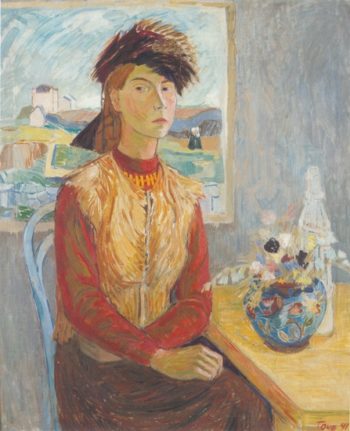
Self-portrait with fur hat (1941): Tove Jansson had a multifaceted career as a painter and illustrator, as well as an author of books for children and adults.© Moomin Characters™

In 2014 Finland celebrated the centenary of the birth of Tove Jansson, the writer and illustrator who created the wildly successful Moomin characters. She was also an icon of the Finnish gay and lesbian movement, a trailblazer for Finland’s extensive female comics scene and more.

“She was a multitalented workaholic, very much alive,” says the renowned art historian and essayist Tuula Karjalainen, whose wonderfully vivid biography Tove Jansson: Work and Love appears in 12 languages in 2014. “She had tremendous will power. Her great passions were the arts, people, life and love.” Jansson and her books form one of the focal points for Finland at the Frankfurt Book Fair.

Thanks in part to Jansson, Finland’s comics scene is thriving for both children and adults. It contains room for experimental projects, and is even supported by the state. It’s also “very heavily dominated by women,” says Antas.

“On a global scale this is amazing. In most countries, it’s a very male-dominated art form and literary genre. In Finland there are many educational opportunities in the field of comics. In addition to Jansson, Katja Tukiainen also serves as an inspiration to others. She has very powerful pictures and stories about girls.”

Finnish comics strip artists enjoy a great following, especially in France.

By Rebecca Libermann, September 2014