Finnish film director enters the big time

Director Jalmari Helander’s new film, Big Game, drops a Hollywood superstar into the middle of the Finnish forest.

How many people have an uncle who offers them the opportunity to act in a film alongside a Hollywood legend? Well, that small group now includes at least one Finn: 14-year-old Onni Tommila, whose mother’s brother, director Jalmari Helander, cast him for a prime role in Big Game (releases March 19, 2015 in Finland, May 8 in the UK and June 26 in the US).

Armed with a bow and arrows, Tommila’s character, Oskari, finds himself tasked with a rescue mission after Air Force One is attacked in the skies over Finland and the US President, played by Samuel L. Jackson, escapes to the forest below. Bad guys, double crosses, action scenes and catchphrases abound as the unlikely duo hightail it to safety.

Adventure and humour

Watch the trailer for “Big Game.”

Helander’s previous film, the award-winning Rare Exports, featured a raw, irreverent take on the institution of Santa Claus. Big Game’s warm sense of humour and adventuresome proceedings have attracted glowing reviews. Critics have praised Tommila’s performance, and the Guardian described the film as “a sparky romp that recalls the children’s action movies of the 1980s.”

Helander couldn’t agree more. “It’s like my childhood dream in a way, what happens in the movie and the kind of adventure that follows,” he says with a smile, before pointing out another significant influence from the same era: “I spent a lot of time in the forest shooting arrows after seeing the Rambo movies.”

Helander’s evergreen enthusiasm for creating cinematic moments continued to grow over the years, leaving no room for alternative career options. He had to become a filmmaker, no matter what. “I never actually had a Plan B,” he says. “I always had this one thing on my mind. Everything I have done is to achieve this.”

Rare qualities
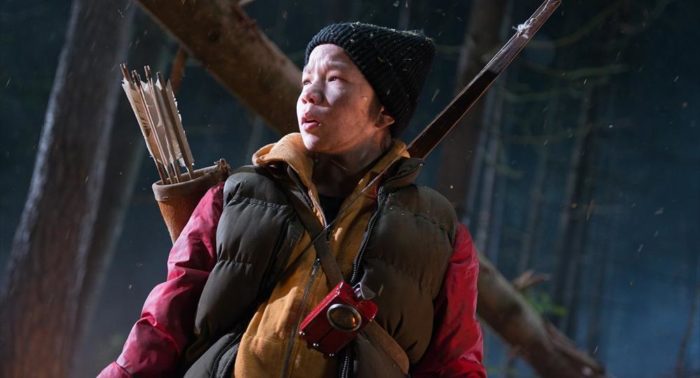
Oskari (Onni Tommila) comes to the rescue of the American commander-in-chief.

Oskari (Onni Tommila) comes to the rescue of the American commander-in-chief.Photo: Stephanie Kulbach

In person, Helander exhibits a quiet confidence. Maintaining constant eye contact as he talks, his manner is steady and focussed – much in the same way he has cultivated his passion for cinema into a successful career. His debut feature-length movie, Rare Exports, formed a significant milestone and was more than an overnight success.

Arriving on screens just in time for Christmas 2010, the horror-fantasy-thriller evolved from a duo of short films based around the same concept. Famed American critic Roger Ebert praised Helander’s alternative Santa Claus myth, proclaiming it as “a rather brilliant lump of coal for your stocking hung by the fireside with care.” Many others agreed.

The snowballing success of Rare Exports led to greater international exposure and let Helander achieve something rare in Finnish cinema: It attracted the interest of A-list Hollywood actors.

Opening doors for Finnish film

Meanwhile, back home in America, the officials played by Victor Garber, Felicity Huffman, Jim Broadbent and Ted Levine are dumbfounded by the disappearance of the President.

Meanwhile, back home in America, the officials played by Victor Garber, Felicity Huffman, Jim Broadbent and Ted Levine are dumbfounded by the disappearance of the President.Photo: Stephanie Kulbach

The 8.5-million-euro budget of Big Game is the largest in Finnish film history. In another victory for superlatives, it has also secured the widest distribution deal ever for a Finnish film in the US.

“It’s been a long road to get here, to be able to do Big Game, which is a totally different Finnish film than anyone has ever done,” Helander says. “There were a lot of people along the way saying that it isn’t possible, but here I am.”

So, having been given a seal of approval from Tinseltown, does the film represent a new era for Finnish cinema? “I hope so,” Helander says. “I think it’s really good for people to see that it’s also possible to do something that is not the usual way of doing things. It might open doors for other filmmakers from Finland to be able to create something different.”

When conversation switches to his own future plans, Helander’s eyes light up. He alludes to plans for writing “a bigger adventure,” but declines to elaborate further. Whatever adventure ends up on the silver screen next, Helander will have no shortage of cinematic inspiration to draw from in the meantime.

By James O’Sullivan, March 2015
Inside the 2015 Finnish parliamentary election

What should you expect to see during and after the 2015 Finnish parliamentary election? Unto Hämäläinen, a political reporter at Finland’s largest daily, Helsingin Sanomat, makes it all easy to figure out.

Finnish parliamentary election takes place on April 19, 2015. Right after that, the parties commence negotiations to form a coalition government, which can probably get down to business as early as May. A new Parliament is elected every four years, and according to established practice, the government coalition sticks together for the whole four-year term. Traditions notwithstanding, changes took place in the government in 2010, a year before the previous election, as well as in 2014, but in both cases the new government continued to follow the same programme until the end of the term. In the run-up to the 2015 election, the government of Prime Minister Alexander Stubb of the moderate conservative National Coalition Party consists of two large parties (the National Coalition and the Social Democrats) and two small parties (the Swedish People’s Party and the Christian Democrats). These four parties possess an exceptionally narrow majority: 102 members of the 200-member Parliament.

Seeking cooperation

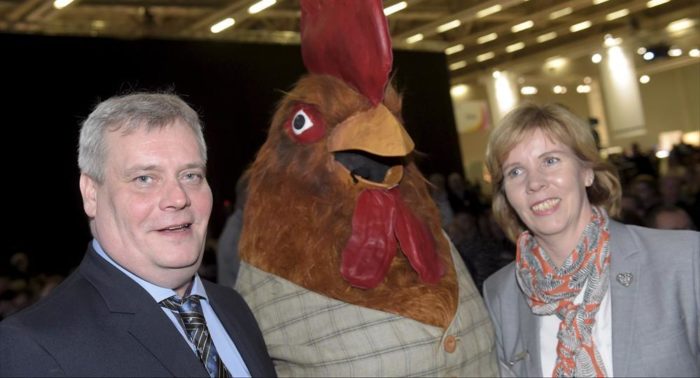
Social Democratic Party chair Antti Rinne (left) and Minister of Justice Anna-Maja Henriksson (right, Swedish People’s Party) posed recently at an education trade fair with a giant chicken (centre, political affiliation unknown).

Social Democratic Party chair Antti Rinne (left) and Minister of Justice Anna-Maja Henriksson (right, Swedish People’s Party) posed recently at an education trade fair with a giant chicken (centre, political affiliation unknown).Photo: Vesa Moilanen/Lehtikuva

It seems clear that cooperation between the National Coalition and the Social Democrats cannot continue in the new government. Relations between the two parties have been on the rocks, especially during the year preceding the election. Social Democratic party chair Antti Rinne, also Minister of Finance prior to the 2015 election, has said publicly that he considers it unlikely that the two parties could work together in the post-election government. A poll by Finnish national broadcasting company Yle found that both parties have lost some support. Based on that survey, the big winner in 2015 is shaping up to be the conservative Centre Party, which is projected to receive 56 places in the Parliament, 21 more than previously. After losing 16 places in 2011, the Centre spent 2011 to 2015 as part of the opposition. The Centre Party’s companion in the opposition was the populist “Finns” Party, which won 39 seats in 2011, a jump of 34 that made it the biggest winner on the day. Despite posting an exceptionally good result, the “Finns” remained an opposition party because of their strong disagreement with the EU’s support of Greece and Portugal. As far as 2015 is concerned, the “Finns” and their chair Timo Soini have announced that the party would be ready for the responsibility of being part of the government coalition. Their chances are good if the party can maintain the support it enjoyed during the previous election. The polls say that the “Finns” have lost just a little bit of ground.

Politics makes strange bedfellows

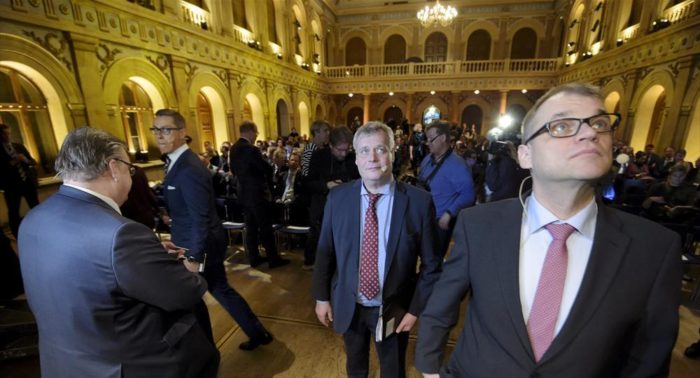
In January 2015, party leaders Timo Soini (left, “Finns” Party), Alexander Stubb (National Coalition), Antti Rinne (Social Democrats) and Juha Sipilä (Centre Party) gathered for a panel discussion held by the Federation of Finnish Industries.

In January 2015, party leaders Timo Soini (left, “Finns” Party), Alexander Stubb (National Coalition), Antti Rinne (Social Democrats) and Juha Sipilä (Centre Party) gathered for a panel discussion held by the Federation of Finnish Industries.Photo: Markku Ulander/Lehtikuva

It’s probable that Finland will see a government made up of three large parties, totalling about 120 seats. If the opinion polls are right, Finland’s next prime minister may be Juha Sipilä of the Centre Party, a fresh face on the Finnish political scene. Sipilä was first elected to Parliament in 2011 and became party chair a year later. The 54-year-old previously worked as a managing director and entrepreneur in the IT business. The Centre would have to choose two partners out of the other three parties that have large followings – the “Finns” Party, the Social Democrats and the National Coalition. One of the three will find itself in the opposition. Some of the smaller parties can top off the government, as has been the practice in Finland for decades. For example, the Swedish People’s Party has been in the government for 36 years, although it only has ten members of Parliament. The foremost challenge for the new government will be the economy. According to the Ministry of Finance, the Finnish national economy is in an “extremely difficult situation.” Very slow growth is predicted for the 2015–2019 term. Finnish exports are likely to suffer in coming years as a result of Russia’s weak economic situation. The Bank of Finland estimates a 4.4 percent decline in the Russian gross domestic product during 2015 if oil prices don’t change. Professor Pekka Sutela of Lappeenranta University of Technology in eastern Finland is a Finnish expert on the Russian economy. He estimates that Finnish exports to Russia could fall by half. In recent years, Russia has accounted for 8 percent of Finland’s total exports.

An unsurprising need for budget cuts

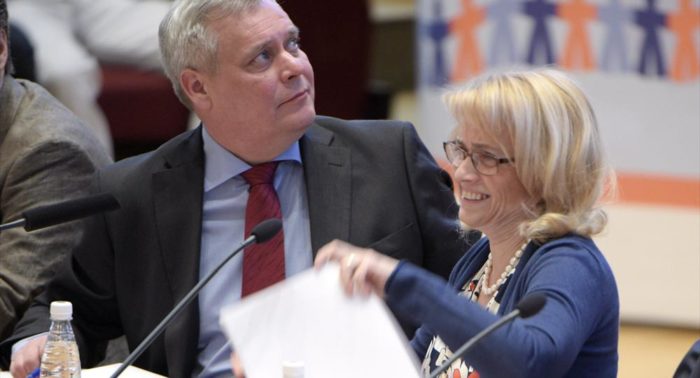
Christian Democratic Party chair Päivi Räsänen (right) and her Social Democratic counterpart Antti Rinne take their seats before a multiparty debate at Helsinki University in March 2015.

Christian Democratic Party chair Päivi Räsänen (right) and her Social Democratic counterpart Antti Rinne take their seats before a multiparty debate at Helsinki University in March 2015.Photo: Martti Kainulainen/Lehtikuva

Weak economic growth would mean the Finnish public economy remaining at a deficit for the whole of the next parliamentary term. The Finnish state would continue to accumulate debt. It’s estimated that, by 2019, state debt could rise to 124 billion euros, equal to 53 percent of the gross domestic product. Going into the election, the budget deficit stood at a little less than 100 billion euros. The new government must achieve big public-economy spending cutbacks. Education, social programmes and healthcare form the largest expenditures in the Finnish state budget. All the major parties have announced that they are ready to make several billion euros’ worth of cuts to budget expenditures. The National Coalition Party has proposed tax cuts in addition to the budget cuts. This idea is supported by the Federation of Finnish Industries as well. The Centre, the Social Democrats and the “Finns” don’t support big tax cuts, and are prepared to keep tax rates unchanged. It’s probable that the new government will make decisions about budget cuts right at the beginning of the term, but that they will be carried out towards the end of the term in 2018 and 2019. Many experts on the economy have recommended building such a delay into the way budget cuts take effect, so that domestic demand will not drop off.

To Nato or not to Nato?

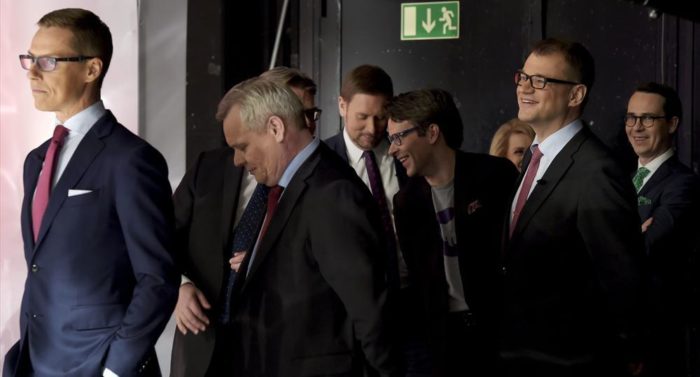
A gaggle of Finnish party leaders from eight different parties awaits the TV spotlight backstage.

A gaggle of Finnish party leaders from eight different parties awaits the TV spotlight backstage.Photo: Markku Ulander/Lehtikuva

Only one sector can be sure that it won’t experience cuts. The parties all believe that defence spending will increase significantly in the next few years. “Our security policy operating environment has changed,” said Prime Minister Alexander Stubb in a speech on March 24, 2015. “We must remain vigilant.” Finland has started negotiations with Sweden about defence cooperation. The aim is not to construct a military alliance, but rather to seek synergies and develop peace-time cooperation. When the new government writes its government programme, it is set to include a mention of cooperation with Nato. Since 1994, Finland has been in Nato’s Partnership for Peace, and aims to continue active cooperation with Nato. However, Finland won’t be pursuing Nato membership, at least not anytime soon. Out of the larger parties, the Centre, the Social Democrats and the “Finns” do not support membership, while the National Coalition does. Among the smaller parties, the Left Alliance, the Greens and the Christian Democrats are against membership, but the Swedish People’s Party is for it.

By Unto Hämäläinen, April 2015

Three iconic Finns remain relevant at 150

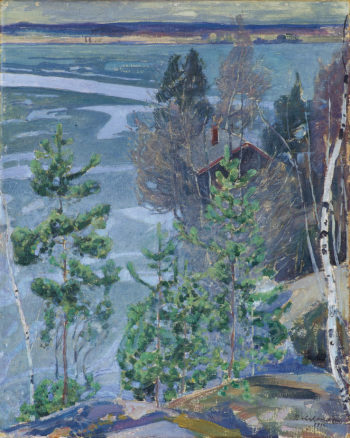
4502-pekkahalonen_saunaranta1916_pekkahalosenseura-jpg

Photo: Halosenniemi/Tuusula Museum

Artists Pekka Halonen and Akseli Gallen-Kallela and composer Jean Sibelius, all born in 1865, helped form the Finnish national identity. When Gallen-Kallela and Halonen recently reappeared on Facebook and started posting their thoughts, modern readers began to interact with the painters as if they were still alive.

For Finland, 2015 marks the 150th anniversary of the births of two famous artists (Akseli Gallen-Kallela and Pekka Halonen) and the country’s most famous composer (Jean Sibelius). All three had houses near Helsinki and belonged the same circle of friends during a critical time in the formation of the Finnish national identity, helping set the scene for Finland’s eventual independence, achieved in 1917. The legacies of this trio of cultural figures still resonate profoundly in Finland today. The three friends fuelled one another’s creativity as they expanded the frontier of Finland’s rapidly evolving artistic scene. Both Sibelius and Halonen joined many of their creative peers residing near Lake Tuusula, about 30 kilometres north of Helsinki. Surrounded by nature, they took their inspiration in the colours of their environment. Halonen would become renowned for his beautiful winter landscapes, and Sibelius transformed the visual splendour into majestic soundscapes. His compositions also formed a source of inspiration for Gallen-Kallela’s paintings.

Post history

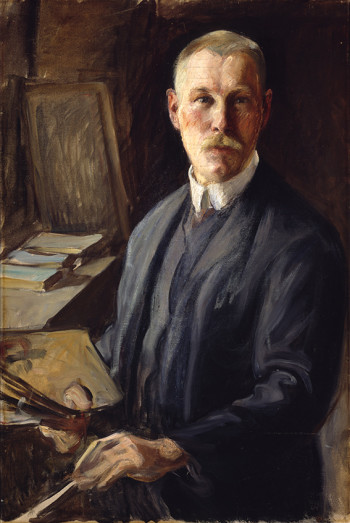
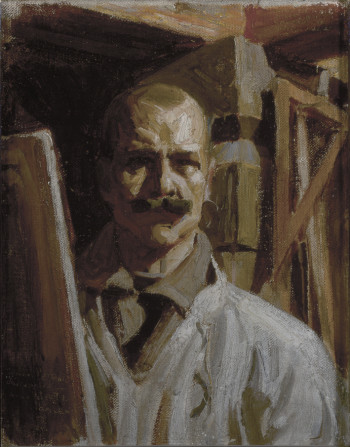
Pekka Halonen, shown here in a self-portrait, has “reappeared” and is posting on Facebook, as is his colleague Akseli Gallen-Kallela. (Click on picture to see uncropped version.)

Pekka Halonen, shown here in a self-portrait, has “reappeared” and is posting on Facebook, as is his colleague Akseli Gallen-Kallela. (Click on picture to see uncropped version.)Photo: Halosenniemi

The trio’s shared inspiration extended to their wider social network. Here they explored integral themes and issues that played a significant role in the formation of the national identity, as Finland’s independence beckoned in the early 20th century. “Outside of art they were culturally influential people,” says Satu Rantala from the Gallen-Kallela Museum, located just outside Helsinki. “They were right there in the middle of society.” The social network they maintained in those days has now inspired an innovative way to celebrate the two visual artists in particular. Profiles for Gallen-Kallela and Halonen have been created on Facebook, utilising the modern era’s fascination with social media. Visitors to the pages are transported back to 1915. As the calendar year unfurls, fresh posts mark historical events in the artists’ lives during that year and seek to illustrate the richness of each man’s character. “We’ve used archival material such as their receipts and remnants of their personal lives, like menus,” says Rantala, who is responsible for the project. “We have letters and photographs, and we know what exhibitions they had during that year. We also really like to connect their lives to what happened in society at that time.”

Artistic response

Akseli Gallen-Kallela painted this self-portrait for the Uffizi Gallery of Florence, Italy in 1916. (Click on picture to see uncropped version.)

Akseli Gallen-Kallela painted this self-portrait for the Uffizi Gallery of Florence, Italy in 1916. (Click on picture to see uncropped version.)Photo: Douglas Sivén/Gallen-Kallela Museum

As the year progresses, aside from accumulating a growing number of “likes,” the project is generating an interesting response from visitors: many are interacting with the artists as if they were still alive. “People want to make a connection,” Rantala says. “They have come out with various information that they have, such as a nice story, or they may have known someone from [the artist’s] family.” One man posted greetings directly to Halonen, who turns out to have been his great-grandfather. Another reader mentioned that she had had the pleasure of meeting Halonen’s daughter in the 1960s. Other comments are directed specifically at the content of the posts. One woman wished Gallen-Kallela success with his “forthcoming” exhibition at the Panama–Pacific International Exposition in San Francisco. Others commented when there was a flood at his residence. Interestingly, Gallen-Kallela’s page has also been able to dispel the myth that he was less enthused about his contemporary female artists, providing archival proof to the contrary. The project also charts many of the artists’ international travels, offering insight into historical context connected to numerous other countries in addition to Finland. Given the artists’ global profile, interest is also expected from Facebook visitors abroad. To meet this audience, many postings made by the two artists are also translated in English, sometimes directly following the Finnish text in the same post. The Facebook pages demystify the two artists, reinvigorating their legacies for today’s audience.

“People suddenly feel very familiar with Gallen-Kallela,” says Tuija Wahlroos, director of the Gallen-Kallela Museum. “It seems that people have not forgotten him. They’ve been waiting for the right way to approach him.”

3 x 150 reasons to celebrate

Perhaps the best way to truly get to know these three pioneering Finns and celebrate their contributions is to visit their former homes, which now stand as museums, just outside Helsinki. A comprehensive range of exhibitions and events is staged throughout the year:

Pekka Halonen’s home, Halosenniemi
Akseli Gallen-Kallela’s home, Tarvaspää
Jean Sibelius’s home, Ainola

By James O’Sullivan, March 2015

Finnish universities among global elite

Times Higher Education lists seven Finnish universities as world-class centres of educational excellence. We visit Lappeenranta University of Technology, which joins Helsinki University and Aalto University in the global top 300.

The Times Higher Education (THE) World University Rankings for 2014–2015 rate world-class universities according to a comprehensive set of performance indicators reflecting the quality of their teaching, research, funding and international outlook.

Many people weren’t expecting to see Lappeenranta University of Technology (LUT) up in the global premier league, bracketed among the top 276 to 300 of the world’s 17,000 universities. LUT is a smallish university with just 4,800 students, located in the eastern Finnish town of Lappeenranta (population 72,000).

“It was a pleasant surprise to find ourselves among the top 300 the first time we’ve been ranked by THE,” says LUT rector Anneli Pauli. “We feel this is the deserved result of our decision to focus on key strategic areas, and of our successes in enhancing our collaboration with industry to effectively combine scientific excellence with industrial and social relevance in our research and teaching.”

Green thinking

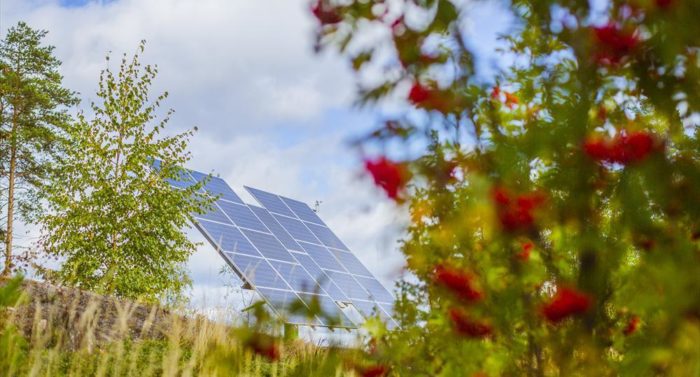
LUT focuses on sustainable technologies. Shown here is one of the on-campus solar panels.

LUT focuses on sustainable technologies. Shown here is one of the on-campus solar panels.Photo: Teemu Leinonen/LUT

LUT particularly focuses on sustainable technologies designed to address global environmental challenges including climate change and the availability of clean water and energy. “We study the technical and business aspects of entire energy systems, from renewable energy sources and ways to build up a circular bioeconomy to issues such as nuclear safety and energy efficiency in mechanical engineering,” says Pauli.

LUT’s energy expertise is clearly reflected in the university’s award-winning Green Campus, which features innovations including specially designed low-maintenance solar panels. “We’re trying to live as we preach, and our Green Campus serves to facilitate the larger-scale testing and demonstration of our green innovations as a vital step up from the lab towards commercialisation,” Pauli says.

She emphasises that cooperation between different academic disciplines within LUT and with industry and other universities in Finland and abroad also constitute key elements of the university’s ethos and success.

Expertise about Russia

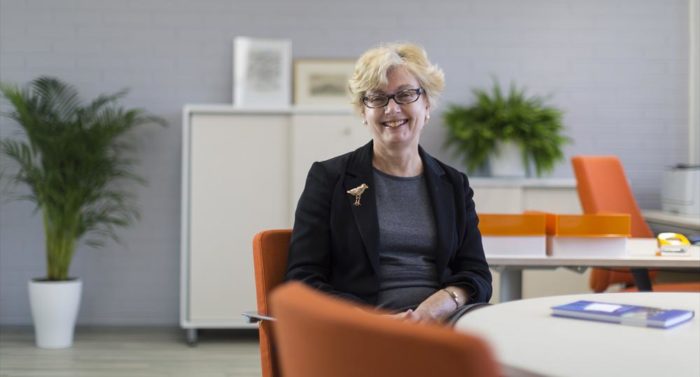
“It was a pleasant surprise to find ourselves among the top 300 the first time we’ve been ranked by THE,” says LUT rector Anneli Pauli.

“It was a pleasant surprise to find ourselves among the top 300 the first time we’ve been ranked by THE,” says LUT rector Anneli Pauli.Photo: Teemu Leinonen/LUT

THE’s rankings particularly give LUT a high rating for collaboration with industry, as well as high scores on citations and international outlook.

A third of LUT’s students come from outside Finland, with the highest numbers coming from nearby Russia. LUT has also purposefully established itself as a unique hub for academic and business relations with Russia.

“We have a wealth of expertise on economic and commercial opportunities in Russia,” says Pauli, “as well as close cooperation with elite Russian institutes including the Technical University of St Petersburg, which is just 90 minutes away [from Lappeenranta] by train.”

Finland’s magnificent seven        			 				Photo: Jussi Jäppinen/Jyväskylä University 			 				 			 				Jyväskylä University in central Finland makes it into THE’s top 400. 		 		 			Helsinki University is Finland’s largest and highest-rated institute of higher education, ranking 103 on THE’s global list, with particularly high ratings for citations. Aalto University, also based in Helsinki, is ranked in the 251–275 bracket. One of the newest universities in the world, Aalto has rapidly raised its global profile since being created in 2010 by a merger of Helsinki School of Economics, Helsinki University of Technology and Helsinki University of Art and Design. 		 			In 2014 Aalto University’s Executive MBA programme rose in the annual Financial Times ratings to a global ranking of 83 and top ranking in the Nordic region. Aalto’s EMBA programme is also taught at partner universities in Singapore, Poland, South Korea, Taiwan, China, Indonesia and Iran. 		 			Helsinki’s four universities, including the Metropolia and Haaga-Helia universities of applied sciences, have a total of more than 80,000 students. This makes the capital a youthful centre for student life as well as a leading European higher education hub. 		 			The universities of Tampere, Jyväskylä, Turku and Eastern Finland all also made the Times Higher Education global top 400.

Jyväskylä University in central Finland makes it into THE’s top 400.Photo: Jussi Jäppinen/Jyväskylä University

Finland’s magnificent seven

Helsinki University is Finland’s largest and highest-rated institute of higher education, ranking 103 on THE’s global list, with particularly high ratings for citations. Aalto University, also based in Helsinki, is ranked in the 251–275 bracket. One of the newest universities in the world, Aalto has rapidly raised its global profile since being created in 2010 by a merger of Helsinki School of Economics, Helsinki University of Technology and Helsinki University of Art and Design.

In 2014 Aalto University’s Executive MBA programme rose in the annual Financial Times ratings to a global ranking of 83 and top ranking in the Nordic region. Aalto’s EMBA programme is also taught at partner universities in Singapore, Poland, South Korea, Taiwan, China, Indonesia and Iran.

Helsinki’s four universities, including the Metropolia and Haaga-Helia universities of applied sciences, have a total of more than 80,000 students. This makes the capital a youthful centre for student life as well as a leading European higher education hub.

The universities of Tampere, Jyväskylä, Turku and Eastern Finland all also made the Times Higher Education global top 400.

By Fran Weaver, January 2015

PKN’s Finnish punk roars into Eurovision

This year’s Finnish entry for the Eurovision Song Contest is unique in several ways – and has already created a media stir around the globe.

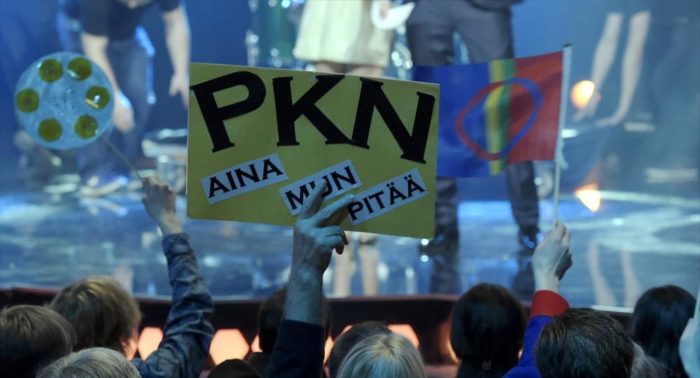
For 60 years, the Eurovision Song Contest (ESC), an event that attracts up to 200 million viewers these days, has celebrated bubblegum pop and syrupy ballads. The exception came in 2006, when Finnish monster-metal band Lordi – the first hard-rockers to enter the contest – won by the biggest vote margin ever. This year’s Finnish entry, ranked number two out of 40 entries by the betting agencies at the time of writing, is set to shatter even more boundaries. “Aina mun pitää” (roughly “I Always Gotta”), by the four-man group Pertti Kurikan Nimipäivät (Pertti Kurikka’s Name Day or, more conveniently, PKN), won the Finnish qualifying contest, earning the right to represent the country in Vienna in late May.

Expressing frustration with society

Watch the trailer for The Punk Syndrome, a documentary about PKN’s adventures.

Not only is PKN the first punk band to compete – and not only do they have the shortest entry ever – they also all have learning disabilities or other disabilities, including autism. The band got its start at a special-needs training centre in Helsinki in 2009. Since then, PKN has toured Europe and the US and gained a worldwide reputation through the explosive, warts-and-all 2012 documentary film The Punk Syndrome, which won a shelf-full of awards. The film shows the men using punk to express their frustrations with societal systems. Vocalist Kari Aalto roars out lyrics like “I don’t wanna live in an institution/I need respect and dignity in life” and “I hate Parliament/I hate this world.” Guitarist Pertti Kurikka sometimes has difficulty speaking, but he blazes on the guitar and creates blunt, sometimes disturbing lyrics, poems and illustrations. Some of these have been published internationally and featured on websites such as rock and pop culture site The Quietus. The members insist they won’t change their style for Eurovision. So it will be rather surreal to see four scruffy middle-aged men in leather jackets blasting out ’70s-style punk amid the disco-ball glitter of ESC.

Media picks up on PKN’s true punk spirit

PKN sounds like a jackhammer compared to the fluffy world of Eurovision.

PKN sounds like a jackhammer compared to the fluffy world of Eurovision.Photo: Sony Music

News that a group from so far outside the pop mainstream will be jackhammering into the fluffy world of ESC has piqued media interest. Well before PKN clinched the Finnish championship, US punk pioneers Dead Kennedys recommended a story on the group to their 1.5 million Facebook friends. The article, on the website Death and Taxes, praised PKN, though it incorrectly described them as “a band whose members all have Down Syndrome.” Readers’ comments hailed them as embodying the true original anyone-can-do-it, anti-authoritarian spirit of punk. 3News New Zealand called them “the first pure punk act to compete at the Eurovision Song Contest” while the Toronto Star said “I think we can all agree to root for Finland.” “They really do rock,” the popular US site Buzzfeed chimed in. A Fox News station in Birmingham, Alabama, enthused about PKN’s “frenetic song, only one minute 25 seconds in length”. According to the Romanian newspaper Adevărul, “this unique choice could change forever the way people with disabilities are seen in showbiz.”

All the way to Parliament

Even the Finnish Parliament seems to hear the reverberations of PKN’s win in the Finnish Eurovision qualifying contest.

Even the Finnish Parliament seems to hear the reverberations of PKN’s win in the Finnish Eurovision qualifying contest.Photo: Markku Ulander/Lehtikuva

Meanwhile, Britain’s Independent misleadingly dominated its story with the theme that PKN aimed at Eurovision “in a bid to raise awareness.” In a BBC interview, bassist Sami Helle downplayed that angle. “It’s not our first objective to change attitudes,” he said. “Our first objective is to go over there and have a good show and have the music first. Because music is the big thing for us.” However Helle, who says he wants to go into politics, recently visited Parliament to talk with MPs about the UN Convention on the Rights of Persons with Disabilities – on the day it was provisionally approved by the legislature, after a seven-year delay. “I’ve never felt equal in this country, and this is an important day for me,” he said. “We’ve waited for this day.”

By Wif Stenger, March 2015

Demystifying Finnish dairy food

A visit to the dairy section of a Finnish supermarket can initially be an overwhelming experience, with a range of products that may seem unfamiliar at first glance. We shed some light on the Finnish dairy industry so that you don’t need to cry over unspilt milk.

The Finns love milk. In fact, Finland’s passion for dairy can be traced back to 2500 BC, according to recent research by the Universities of Bristol and Helsinki. Did you know that Finns consume one of the highest amounts of milk per capita in the world?

“The consumption of milk per person is about 130 litres per year,” affirms Anni Lehtonen, a licensed dietician from the Dairy Nutrition Council. “This means 3.55 decilitres per person, every day.”

This love of milk begins at an early age. “Finns get used to drinking and eating dairy products during childhood,” Lehtonen explains. “Dairy products are a huge part of Finnish food culture and agriculture.”

Dairy in their bones

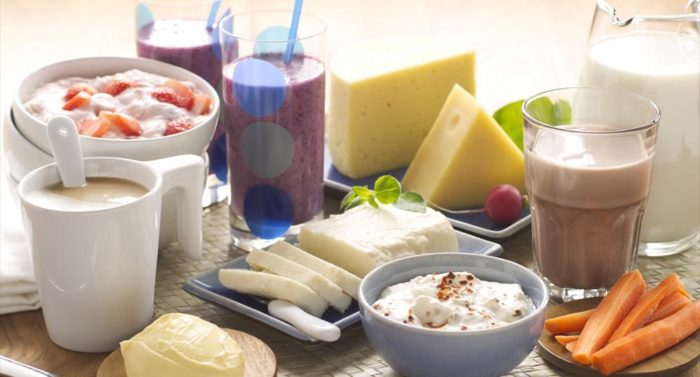
A display of different dairy products: yoghurt, smoothies, milk coffee, cheese and butter.

Finns consume about 130 litres of milk per capita per year.Photo: Finnish Dairy Nutrition Council

Lehtonen is the Dairy Nutrition Council’s current Milk Ambassador, visiting schools and workplaces to inform people about “healthy food choices, lifestyle and, of course, milk nutrition,” she says.

Active promotion of dairy products may go some way to explaining why they hold a prominent place in Finnish households. But what else is on offer?

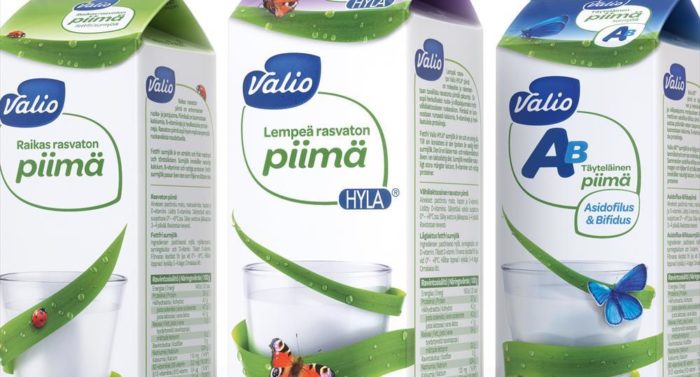
Finns are also partial to enjoying a glass of piimä, which is close to what English speakers call buttermilk, with their meals. In fact, this and similar products add another 25 litres per person to the annual total consumption per person of liquid dairy here.

“We have many different dairy products in Finland,” Lehtonen says. “Sour milk products like piimä are ‘the most Finnish’. These also include curd milk [viili], homemade-style cheese [kotijuusto] and bread cheese [leipäjuusto, which actually isn’t bread at all] from Lapland.”

In addition, a wide variety of yogurts, cheese and ice creams can be found in Finnish homes, as well as quark [rahka], a fermented milk product familiar to many Europeans. Finland is also a leader in devoting research, production and shelf-space to low-lactose or lactose-free variations of milk and many other dairy products.

For vegans and others with specific health or ideological concerns, stores also offer milk lookalikes made from soybeans, oats, almonds, rice, hazelnuts and even buckwheat.

A taste for research

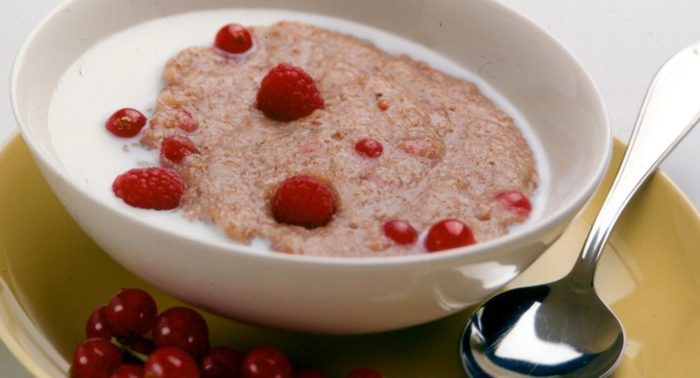
A bowl of milk, oatmeal and berries.

Three Finnish classics – milk, oatmeal and berries – taste good together.Photo: Sanna Peurakoski/Finnish Dairy Nutrition Council

We are always told milk is good for you, but extensive research in Finland contributes to actively fortifying this idea. Valio, the company with the biggest dairy-product market share locally, is 100-percent owned by Finnish farmers, and is also at the forefront of research and development.

People have a propensity to seek out functional foods these days, and Valio has developed a range of dairy products that boast positive health effects for the consumer. The leading innovation has been to integrate the probiotic Lactobacillus rhamnosus GG into dairy products. The world’s most documented probiotic, this bacterium survives in the human gastrointestinal tract, protecting the body against infections and imbalances. The products are sold under the trademarks LGG and Gefilus.

Gefilus made its first appearance on the market way back in 1990. A range of Valio LGG Gefilus products is now sold in more than 50 countries around the world.

“One of the reasons Valio is successful is that it is able to develop and apply technologies to meet consumers’ shifting needs,” says Ross Crittenden, the company’s senior vice president of research and development. “Examples include separations technologies which allow Valio to produce high-protein dairy products to meet emerging nutrition and consumer demands, and Zero Lactose products that solve a requirement for lactose-intolerant consumers without compromising on taste.”

Finnish dairy achievements are enabled by “a high-quality hygiene system and legislation pertaining to dairy products – from the farm to the table,” Lehtonen says.

Cartons of buttermilk.

We’re willing to bet that no other country has as many varieties of buttermilk (piimä) as Finland. Photo: Valio 

Get to know dairy in FinlandHere’s a handful of items found on many Finnish shopping lists:

Piimä
Finnish sour milk, similar to buttermilk.

Viili
Versatile curd milk that can be enjoyed as a dessert or a savoury accompaniment.

Rahka
Fermented milk product, similar to firm yoghurt, used in desserts.

Lactose-free products
Finland has pioneered a range of products that cater to people who are lactose intolerant.

Leipäjuusto
This “Finnish squeaky cheese” from Lapland is delicious served warm, accompanied by a dollop of cloudberry jam.

By James O’Sullivan, March 2015
Alternative Kalevala in the making

The Finnish national epic Kalevala, compiled by Elias Lönnrot in the 19th century and celebrated on Kalevala Day (February 28), contains decidedly Christian aspects. What if someone wrote another version, drawing on bear cults and shamanism found in Finnish folklore?

Lönnrot only used a purposefully selected fraction of the material in folk poetry archives. Other folklorists could use such material to compile quite different stories that might reflect ancient beliefs more accurately.

Juha Pentikäinen, professor of northern ethnography at the University of Lapland and Institute of Northern Culture in Tornio, northern Finland, aims to compile an alternative Kalevala in the form of a shamanic epic based on an ancient bear cult.

“The Kalevala as we know it today is really Elias Lönnrot’s epic, and it reflects his world view as a devout Christian keen to depict the Finns as a civilised people with monotheistic beliefs, as part of the contemporary nation building process,” says Pentikäinen. Lönnrot himself admitted that he could have used the same sources to compile seven different but equally valid Kalevala versions.

Pentikäinen recognises the artistic and historical value of Lönnrot’s Kalevala. But he feels that the revered writer took liberties by adding material of his own, reshaping ancient stories, and giving his epic a linear structure similar to the Bible, when in reality the world view of the ancient Finnish and Karelian rune-singers was cyclical and based on shamanic beliefs. “For this reason I feel there’s a need for a new, different epic closer to the world view of the original singers, with no artificial religious or nationalistic elements,” he says.

Bear epic

3398-p1080613-550px-jpg

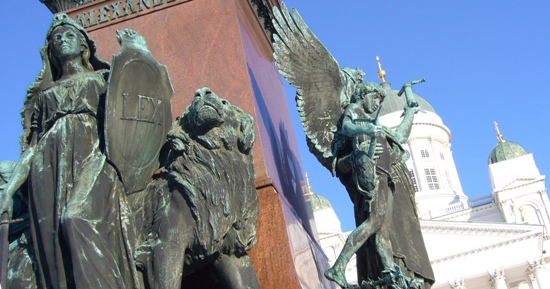
The 1894 monument to Tsar Alexander II on Helsinki’s Senate Square includes a woman often interpreted as Finland personified (left). Look closely and you’ll see she’s wearing a bearskin hood. Photo: Peter Marten

Pentikäinen is already planning to compile his “alternative Kalevala” using original narratives neglected by Lönnrot, especially poems reflecting bear cults once widespread among northern peoples before the Christian era. “There is plenty of runic material in the archives to create a bear epic that will be truer to tradition than the Kalevala,” he explains.

His story will encompass the celestial creation of the bear, its manifestation in the northern sky as the bear constellations, the sacred animal’s natural birth and annual cycle on earth, the ritual death and burial of a bear killed by hunters, and a mythical wedding before the bear returns to the skies.

He envisages his epic as being shorter and hopefully more exciting and more accessible than the version of the Kalevala that schoolchildren across Finland must read today. However, he has resolved to remain faithful to original poetic wordings and use the same trochaic meter that gives the Kalevala its characteristic rhythm.

Shamanic fires stoke imagination

3398-swd-20080711-175134_01_1214-550px-jpg

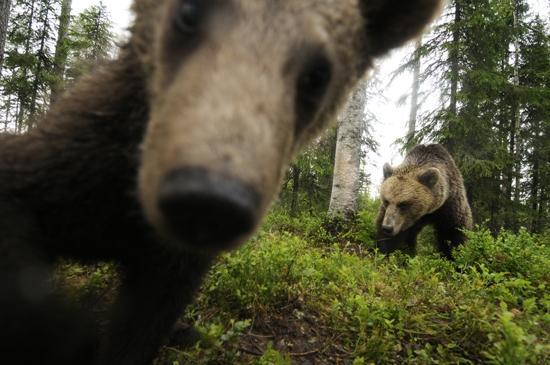
Finnish contains many words denoting bears, terms the superstitious formerly utilised to avoid calling the animal by its name. Photo: Visit Finland

Pentikäinen has travelled widely in Russian Karelia, Lapland and Siberia, visiting ethnic groups related to the Finns, and meeting shamans and singers who have preserved ancient traditions. “The best way to learn about the deep roots of Finnish folk culture is to sit around the fires of shamans in Siberia and listen as they sing the mythological epics of their peoples,” he says.

The role of the bear in arctic mythologies represents a long-time interest for Pentikäinen. His intriguing book Golden King of the Forest (Etnika, 2007) spotlights the bear’s unique place in northern folklore and imagery. Bear cults are reflected in superstitions that persist to this day in Finland, and in the many place names that include words denoting bears, such as kontio, otso, otava, ohto, kouvo or the modern Finnish word for “bear,” formerly taboo: karhu.

Although Pentikäinen has faced considerable opposition among scholars reluctant to see Finnish folk poetry interpreted in the context of shamanism, more open-minded readers will eagerly await the publication of his alternative Kalevala as a new window into ancient Finnish and Karelian beliefs.

By Fran Weaver, February 2012, updated 2015

Finland’s Northern Lights viewfinder

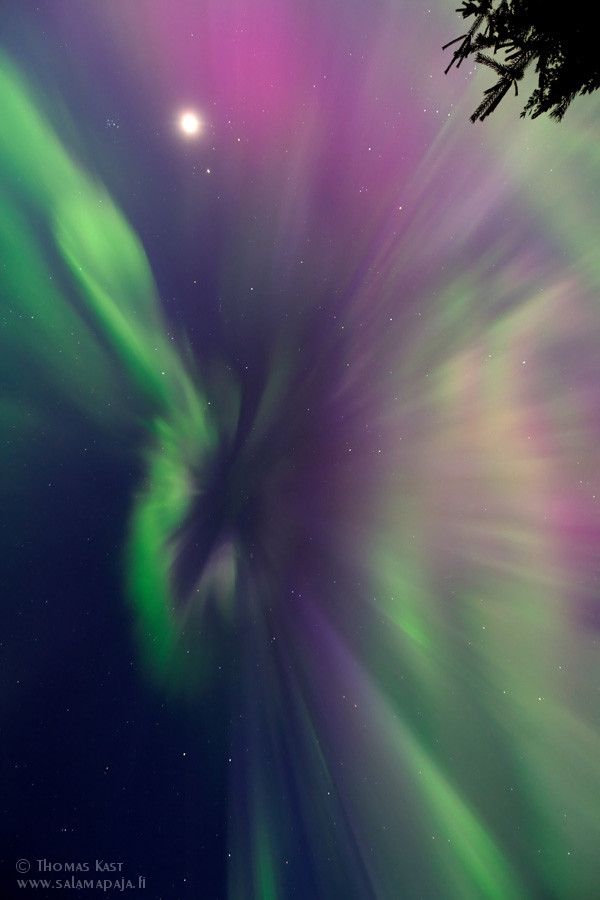
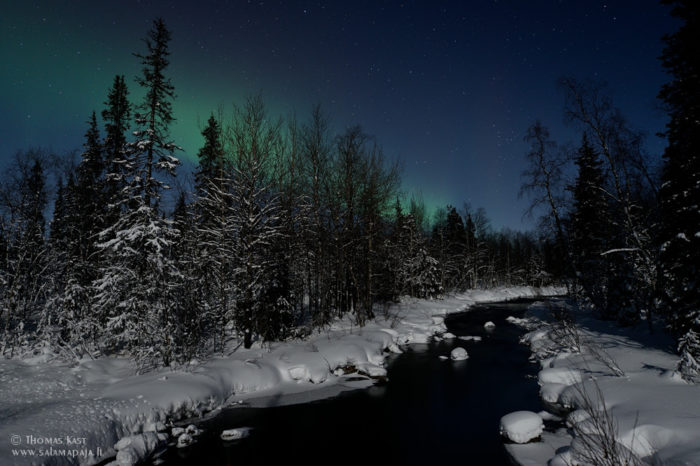
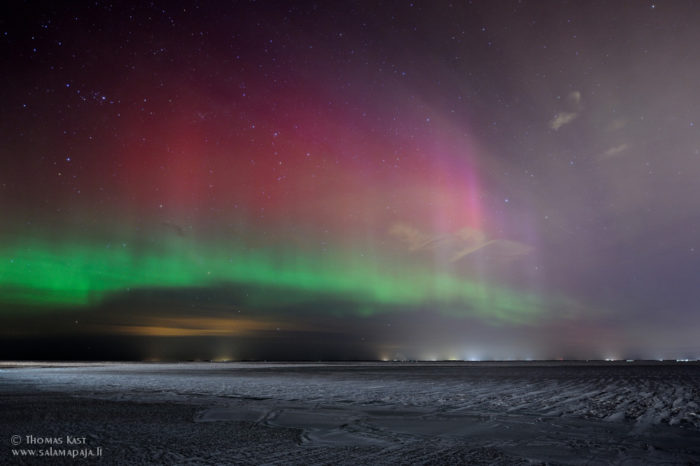
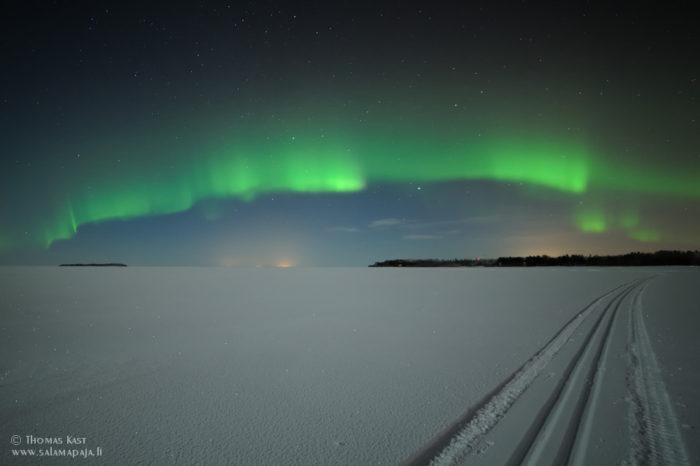
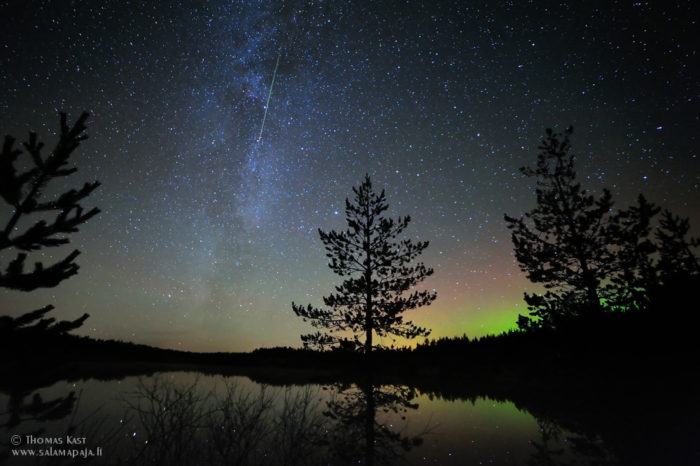
Thomas Kast is freezing. Blackness surrounds him. It’s three o’clock in the morning. He’s standing in a snowy forest glade in the middle of nowhere, waiting for the Northern Lights, also known as aurora borealis. You can see the resulting photos in our slideshow below.

Kast is exhausted. The thermometer shows 18 degrees below zero Celsius (zero degrees Fahrenheit). His eyes scour the night sky. His camera is displaying early signs of freezing up. For hours he’s been standing in the cold, hoping to experience a moment of magic: the appearance of the Northern Lights.

Originally from near Karlsruhe, Germany, Kast has lived in Finland since 2000 and works for a major mobile network company based in Oulu, a university town of 190,000 people about 200 kilometres south of the Arctic Circle. He came to Finland for career reasons and wound up staying after he met the love of his life. After his family, the Northern Lights form his other great passion.

A camera, a tripod, spare batteries, a torch and a flask of tea: That’s about all he needs when he sets out into the night – apart from three or four layers of clothing and warm boots, of course.

“The worst thing is the cold fingers,” Kast says. It’s impossible to operate the camera’s small buttons wearing thick thermal gloves.

Mesmerising journeys

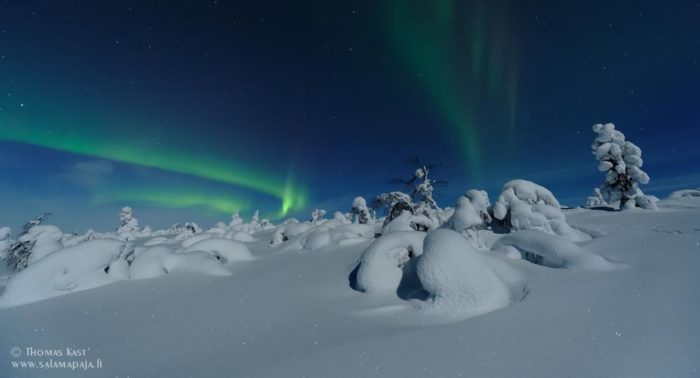
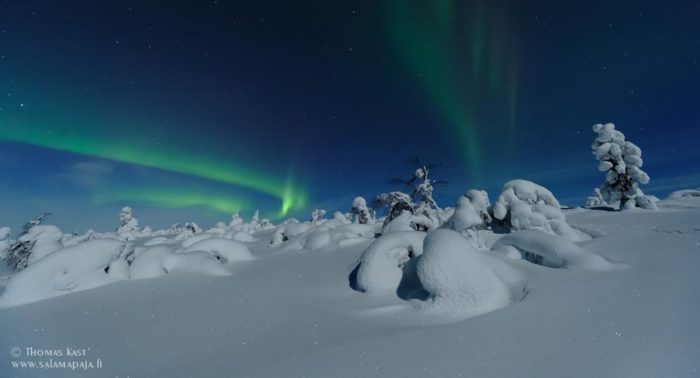
Aurora borealis in the dark sky over a snowy landscape.

Kast logs hundreds of kilometres each year seeking out the aurora borealis all over northern Finland.Photo: Thomas Kast/Salamapaja

Before he heads out, the Northern Lights obsessive pores endlessly over various websites giving predictions of where to catch the aurora borealis. A blur of tables, graphs and figures demands to be deciphered and correlated. Geomagnetic fields, wind speeds, the surface activity of the sun and many other factors influence his decision. And you need patience and, if possible, absolute darkness. Even streetlights can hinder visibility.

“And then the weather has to play along,” he says. “Recently, unbelievably strong auroras were being predicted, but what good is that if the sky here in Oulu is covered with clouds? Then there’s no chance of seeing the lights.”

Sometimes Kast journeys for hundreds of kilometres just to enjoy cloud-free skies somewhere in northern Finland – just to capture the mesmerising Northern Lights. More than 60 freezing nights resulted in hundreds, maybe even thousands of photographs, from which Kast created a time-lapse video entitled Aurora: Queen of the night.

Long exposure time

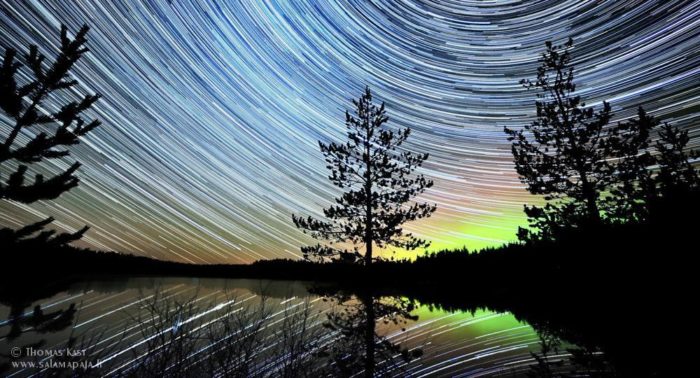
A photo showing the nightly movement of the stars as strokes on the sky.

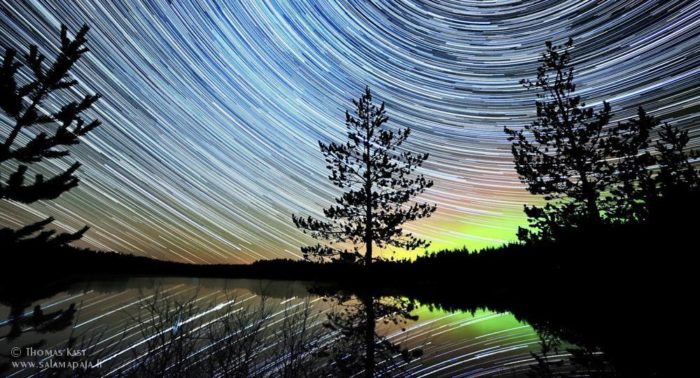
With the green, yellow and orange Northern Lights visible on the horizon, Kast shows the nightly movement of the stars by combining a sequence of 200 photos into one.Photo: Thomas Kast/Salamapaja

The Northern Lights don’t lend themselves to being filmed. A still photo with a long exposure time is required to capture them, so Kast made a time-lapse video instead. “In this respect, the human eye is far superior to technology,” he says.

What began as a hobby now takes up an increasing amount of space in his life. He blogs about it, offers aurora borealis trips for tourists and has published a calendar of his photos.

Oulu’s Tietomaa Science Centre bought Kast’s four-minute film and shows it on a screen eight metres long and four metres high (26 by 13 feet). “The film is a long-held dream come true”, says Sampo Puoskari, Tietomaa’s liaison coordinator.

“For several years we’ve wanted to set up a special exhibition about the Northern Lights in our region. That’s important to us. The video has finally made that possible. We set up a special space in the centre’s 45-metre (148-foot) tower.”

Speechless

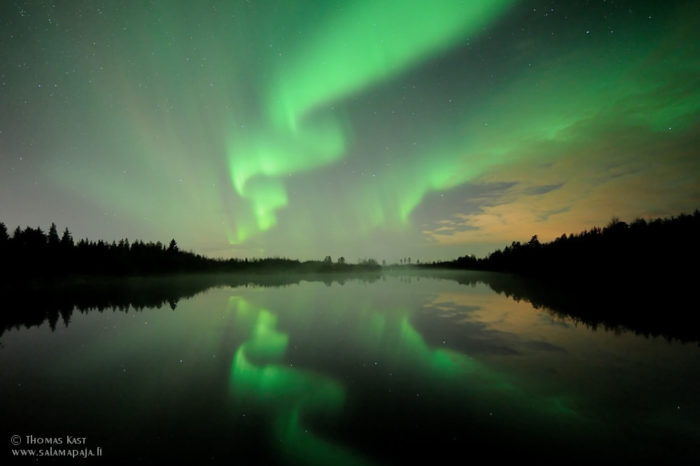
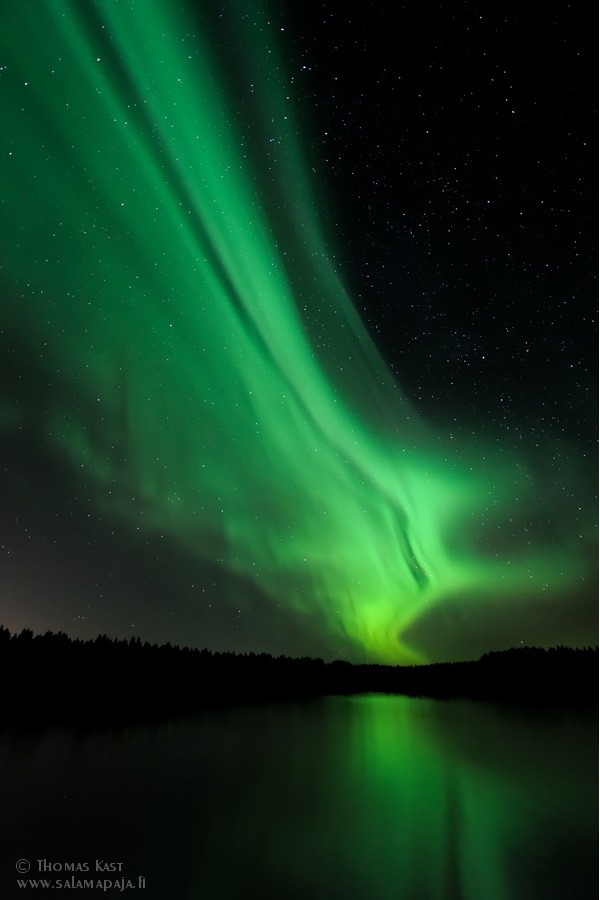
Green, spiral-shaped aurora borealis over a lake.

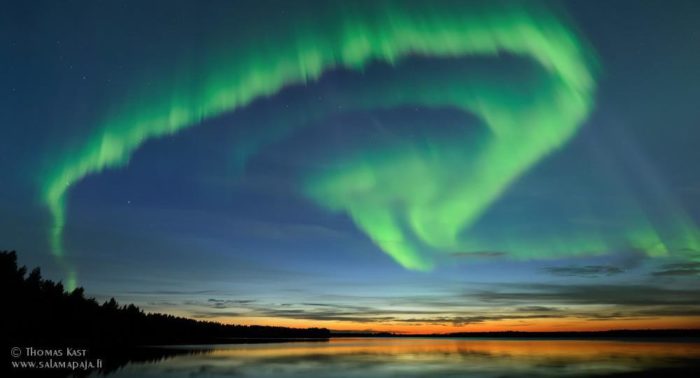
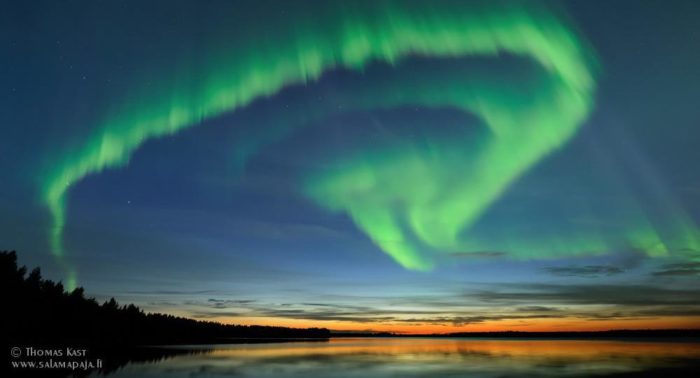
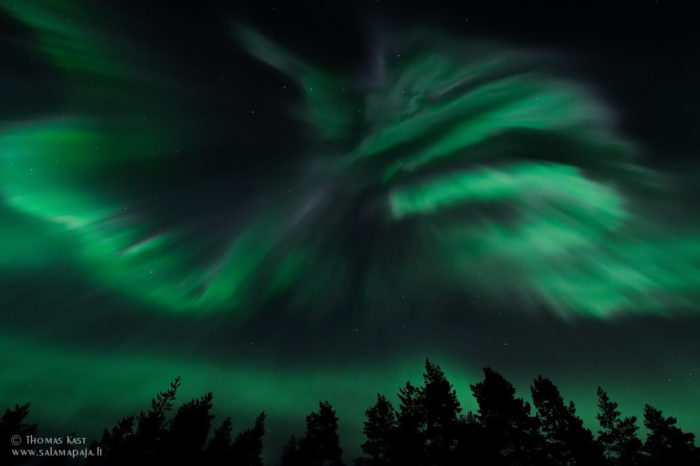
Kast says that displays of the Northern Lights can still leave him at a loss for words.Photo: Thomas Kast/Salamapaja

Kast stands before the huge screen in the otherwise pitch-black space and gazes, entranced, at his time-lapse sequences. His eyes shine.

“It’s really amazing to see your own pictures this big,” he says. “I hope that I manage to share some of my fascination with the Northern Lights through this film, that people become inspired to see the phenomenon for themselves.”

He still finds it magical when he sees the aurora borealis dancing in the night sky with his own eyes. The cold and exhaustion are forgotten. “Sometimes it’s so magnificent that I’m rendered speechless with awe,” he says.

There’s no way he’ll ever get bored with it. “It’s different every time. It’s mesmerising every time.”

This is why people chase the Northern Lights

Photos: Thomas Kast/Salamapaja

By Tarja Prüss