Finnish arts education inspires action all over the Arctic

“If we don’t take care of the environment and involve children in looking after it, there won’t be a future for them to inherit,” says David Yoken.

He’s a senior lecturer at the Arts Academy at the Turku University of Applied Sciences in southwestern Finland. The university leads the Green Actions project, which Yoken initiated, with the goal of using arts education to inspire children to be aware of climate change and the challenges it poses.

As a composer and musician with experience of bringing together interdisciplinary and artistic elements at the academy, Yoken’s aim is to draw on the talents of his own students to benefit younger school pupils, in Finland and further afield. In keeping with Finland’s role as chair of the Arctic Council until 2019, Green Actions embraces educators and students across the whole Nordic and Arctic region, including the Finnish Lapland community of Ivalo; northern Norway; Sweden; Denmark; Iceland; Greenland and Alaska.

The action’s in the art
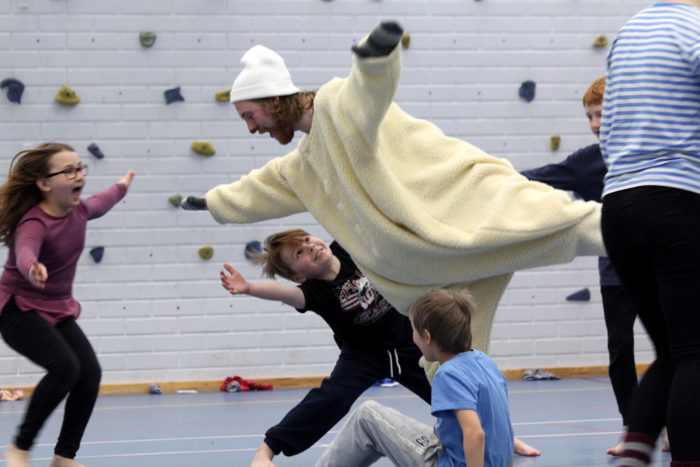
Getting into art: In this educational game, the kids are trying to save a polar bear played by Evgeny Kostyukov from the Arts Academy.Photo: Antti Hartikainen/Turku University of Applied Sciences

“One of the things I did early on in my 25 years at the Academy was to find outside funding support for projects,” says Yoken, who is also on the board of the Fulbright Finland Foundation. “I started working through Nordplus, the Nordic Council of Ministers’ learning programme. In 2007 or 2008 it dawned on me that I get to work with these young, remarkable and talented Finnish musicians and dancers every day, and this inspired me to secure a budget for Moving In Moving On [MIMO], a project for at-risk youth.”

The results of MIMO, which was funded by the EU’s Central Baltic Programme and concluded in 2013, confirmed that art-based methods in combination with professional working methods in healthcare and youth work could increase youth wellbeing. Yoken’s ongoing concern is that participants in projects like MIMO should be able to keep using the tools they acquire in the programme after the project is complete – and that the target group should also continue to benefit.

One of Green Actions’ earliest manifestations took the form of three-day workshops in April 2017 for pupils in second grade at the Pääskyvuori Primary School in Turku, designated as a laboratory for creative pedagogical development. The ad hoc workshops, tutored by Arts Academy students of dance education and visual arts, included games – a polar bear balancing on shrinking ice, for example – and activities such as comic book creation and a garbage orchestra with instruments made from discarded objects.

“It was a really mind-opening experience to see the pupils at Pääskyvuori Primary School wake up to the situation of climate change through the arts,” says dance education student Emma Keitilä. “Those art-related workshops actually gave the pupils new ideas to stop global warming and save the polar bears.”

Art with heart
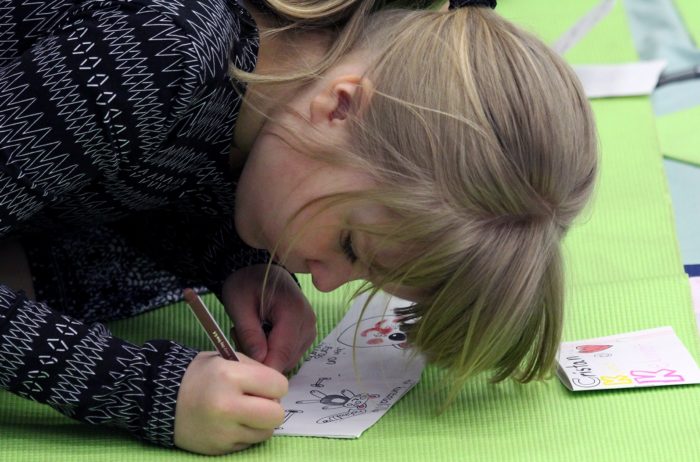
A student at Pääskyvuori Primary School is absorbed in creating an idea book, one of her class’s Green Actions activities.Photo: Antti Hartikainen/Turku University of Applied Sciences

Another instance of Green Actions in action is the involvement of Ivalo High School in Finnish Lapland, where English and Swedish teacher Ulla Keskitalo, music teacher Katri Kittilä and arts teacher Rodney Francett have planned and carried out Green Actions activities together with their students.

The idea of older students mentoring younger ones is important to Green Actions, and in this case 16-year-old high school arts and music students worked with 53 elementary school pupils who are about four years younger.

“The pupils were divided into two groups: one for music and one for arts,” says Keskitalo. “In music, they were given some nature-related words in English to make their own lyrics and their own music with the help of the older students. Different instruments were used. The comments I heard were really positive – the group worked well and the participants enjoyed themselves.

“In arts, one big group was divided into smaller groups, which then worked with natural materials such as small willow branches, grass and pinecones to make pieces of art.”

Green Actions seeks to include and utilise local knowledge wherever the projects happen. “Local and traditional knowledge and journalism are a core focus in Green Actions,” says Yoken.

“I am inviting a colleague, Inga Hansen, a Greenlandic journalist, to present at our Green Actions workshop and seminar days at the Arts Academy at the end of February 2018. Inga is doing graduate research studies in Kautokeino, Norway at the Sámi University of Applied Sciences graduate programme in Indigenous Journalism. [The university] is a Green Actions partner.”

By Tim Bird, October 2017
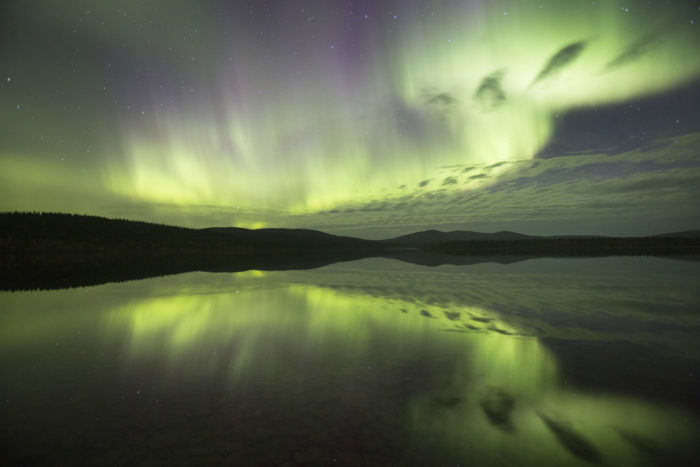
Picture this: All 40 Finnish national parks

Entitled simply The National Parks of Finland, Karvinen’s epic overview of the country’s best-loved natural assets is based on seven years crisscrossing the length and breadth of Finland. She spent more than 700 days exploring and photographing the country’s 40 national parks, travelling by foot, ski, skate, snowshoe, canoe, kayak, rowboat and even helicopter. You can see some of the resulting pictures in our slideshow, below.

Karvinen, whose first name, Tea, is pronounced as two syllables, unlike the English word “tea,” grew up in Helsinki. Despite her city upbringing, she has felt the call of the wild and the call of the far north ever since she was a child. Today she lives in Finnish Lapland, a short distance from the Arctic Circle. In the 1990s she studied photojournalism at the University of Alaska.

In 2001, while working at a ski resort in the US, she got hooked on skeleton sledding, which involves hurtling down an icy track headfirst on a small open toboggan. She went on to represent Finland at the international level for nine years.

“Then about ten years ago, when I was sitting out all night alone in a bear-watching shelter in northeast Finland with plenty of time to think, I decided to focus my life on nature photography,” she says. “This eventually led to my project of photographing all of Finland’s national parks.”

The wildest places (slideshow)

While compiling material for her book, Karvinen met and interviewed more than 150 people who know the parks well, including national park rangers, scientists and local residents with colourful stories to tell. But she also loves to explore the wilds alone.

“I find this the best way to connect more deeply with nature, and give my full attention to observation and photography,” she says. “Perhaps I’m a bit of a social hermit, since though I like good company, I often need to be alone. Even in the wildest places, I never feel lonely or unsafe.”

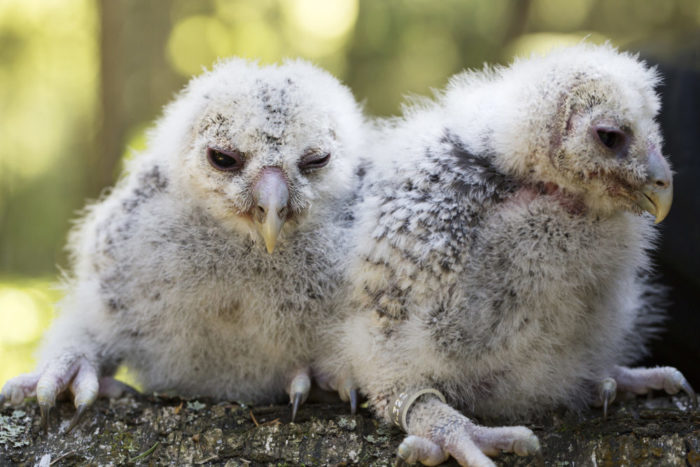
She has nevertheless endured some narrow scrapes during her trips. In Teijo National Park she sank up to her thighs in a bog while shooting rare marsh flowers. In Koli, a huge snow-covered spruce tree suddenly came crashing to the ground just a couple of metres from where she was capturing a snowy scene, fortunately leaving her unharmed. And in Sipoonkorpi, a huge, aggressive mother Ural owl attacked her ornithologist interviewee while he was putting ID rings on two fledgling owlets, whose photo appears in the book.

Karvinen is reluctant to name her favourite park, but she loves the variety of Finland’s national parks: the wild open arctic fells of the far north; the vast, ancient inland forests; the countless windswept rocky islands of the Baltic archipelagos. “It’s worth visiting them at different times of year,” she says. “I especially love early summer, when everything is fresh and green; autumn when the forests are full of colour and the aurora borealis starts to shine in the northern night sky; and midwinter when the scenery is covered with a blanket of pure white snow.”

Exploring the real Finland

Point your kayak across the lake at Päijänne National Park; it’s a beautiful day to be outdoors in southern Finland.Photo: Tea Karvinen

She hopes her book will inspire readers to get out into Finland’s national parks and other natural places. “Getting close to nature is good for your physical and mental wellbeing,” she says. “If nature becomes important in people’s lives, this will also encourage them to cherish and preserve our precious natural places.”

Karvinen feels that Finland’s impressive network of national parks includes plenty of wonderful places for foreign visitors to discover. Though people from other cultures often find large forests scary, she emphasises that there’s nothing to fear if you take care: “For newcomers it’s best to follow trails, or go with a local guide, or a good map, compass and GPS, if you want to get off the beaten track and discover ‘the real Finland,’ away from the cities.”

By Fran Weaver, September 2017

Crunch or cringe? Finnish companies cultivate insect cuisine

For many people, the ick factor has nothing to do with it. They consider eating insects an environmentally conscious choice.

Producing one kilogramme (2.2 pounds) of beef requires 22,000 litres (5,800 gallons) of water, including the water used to grow the fodder, according to the UN Food and Agriculture Organisation of the UN. Cattle require plenty of space, too.

As the world population grows exponentially, demand for beef and other meat is also rapidly increasing. Livestock farming is causing a strain on the environment.

With a protein content of up to 25 percent, crickets are comparable to beef – and much more environmentally friendly, requiring very little water, food and space. Other edible insects include grasshoppers, termites, mealworms, maggots and various kinds of caterpillars and beetles.

A quick checklist in favour of farming insects, sometimes referred to as “microlivestock,” looks something like this: they’re high in vitamins and minerals, can feed on biowaste, produce remarkably less greenhouse gas emissions, use little water and space, and have a faster breeding and growth cycle.

Free your mind and the bugs will follow

At Entocube, Perttu Karjalainen’s crickets live in little boxes. There’s no mooing, neighing or bleating, but the microlivestock does chirp and emit a steady munching noise as it eats.Photo: Hernan Patiño

On the day we visit an insect tasting event called “Bugs love beer” in the city of Tampere, the tasty dishes win people over: the cherry tomatoes with Indian harissa topped with mealworms and sprouts are delicious, as are the insect “meatballs” made from lentils, carrots, onions and cricket flour. The diners wash down the microlivestock with microbrewery beer.

“When I hold one of these events, I answer guests’ questions and explain the environmental and economic benefits,” says chef Topi Kairenius. “And then, of course, they get to taste for themselves how delicious these dishes can be.”

Well known in Finland for his insect cuisine, he actively promotes entomophagy in the media and at well-attended tasting events. His mission is to change the perception of insect eating.

Eating insects, or entomophagy (from the Greek word for insect, entomo), has been practiced for millennia in many parts of the world.

With a name based on the same root word, the Finnish company Entocube farms crickets in the Helsinki region, sells cricket-based culinary products and even supplies growing units (actually they look like cabinets) to would-be cricket farmers. CEO Perttu Karjalainen says that the press in Finland actively covers this new industry.

“The media and public characters like the Madventures guys [Finnish daredevil TV personalities] are critical in presenting insects as interesting and tasty,” he says. “Insect eating has become trendy, and this trend is likely to grow as Finns become more and more environmentally conscious.”

International insect economy

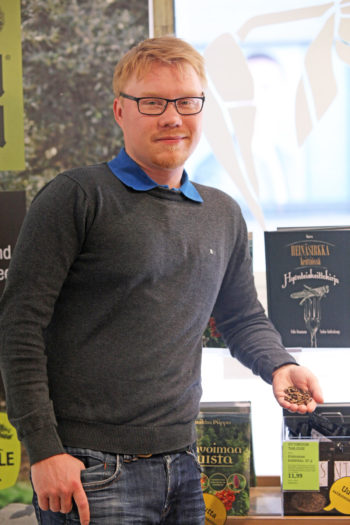
Santtu Vekkeli, the founder of Nordic Insect Economy, holds out a handful of dried, edible crickets. On the right a copy of The Insect Cookbook is visible.Photo: Hernan Patiño

An online survey conducted in 2016 by the University of Turku asked Finns for their opinions about eating insects. Seventy percent of the participants expressed interest in insect foods, compared to lower results in many other European countries. Less than 40 percent of Swedes were in favour, and the figure was 25 percent in Germany.

The university participated in a two-year project called “Insects in the food chain,” investigating different aspects of entomophagy in Finland.

Jaakko Korpela, a project leader at the university’s Functional Foods Forum, explains that “the aim is to encourage new know-how through cooperation between companies and researchers, and to place Finland at the forefront of a new international insect economy field.” Insects as animal feed for fish or chicken forms one of the topics of discussion.

Santtu Vekkeli founded Nordic Insect Economy in 2014 to address insect food security, processing, and the broader insect economy, including ethical, environmental and social aspects. “We are involved with our own pilot farms in Europe, USA and Asia,” he says, “and with other large-scale production units in all climate zones.” The company website describes him as “the first entrepreneur in insect food in Finland,” and he invents most of the tools and machines needed for the business, which is located in the southeastern Finnish city of Kouvola.

Insects à la carte

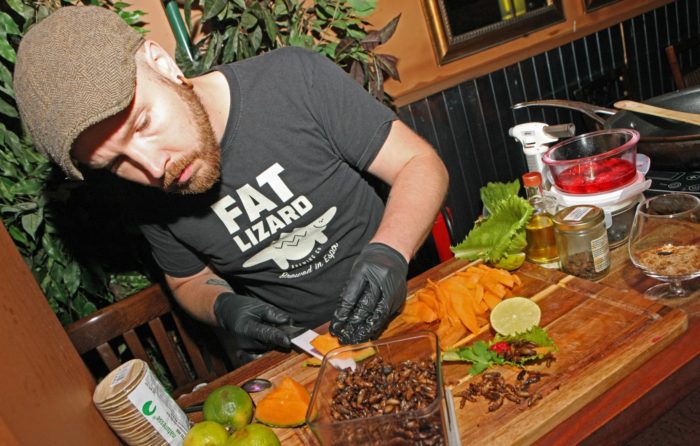
Topi Kairenius considers it his mission is to change people’s perception of insect eating. At a tasting event, he prepares hors-d’oeuvres consisting of lettuce leaves garnished with berries, fried crickets and slices of melon.Photo: Hernan Patiño

We’re not sure which term sounds more appetising – “entomophagy” or “eating insects.” In any case, edible insects are at turning point in Finland and the EU.

“The new Novel Food Regulation will replace the current regulation and will be fully implemented starting January 1, 2018 in all EU member states including Finland,” says Leena Mannonen from the Department for Food and Health of the Ministry of Agriculture and Forestry. “The new ruling clearly covers all insect products.”

Unclear text in the old regulation allowed a handful of EU countries, including Denmark, to make their own interpretation and begin marketing insect products several years ago. Finland joined their ranks when the ministry suddenly announced in September 2017 that they will allow the production and marketing of food made from insects. This also means that the products are subject to regulation and to food safety requirements.

Some major food manufacturers in Finland, such as chocolatier and bakery Fazer, have expressed interest in the insect economy. Flour made from ground insects, for instance, can be used in a variety of ways – bread, cookies, “meatballs” and pizzas, to name a few – making it more approachable for consumers.

Insect recipes by ento chef Topi Kairenius

Chocolate-coated locusts

dried locusts
200 g (7 oz) plain chocolate
100 g (3.5 oz) raspberries
1 tsp vanilla sugar
mint leaves

1. Melt the chocolate in a saucepan or fondue dish. If using a saucepan, first heat two decilitres (a bit less than one cup) of liquid, such as cream, before adding the chocolate.
2. Puree the raspberries in a blender. Add vanilla sugar and continue mixing.
3. Fry the locusts for half a minute in oil in a pan. Remove and place on paper towels to drain excess oil. Pierce with toothpicks and dip in melted chocolate sauce.
4. You can sprinkle a bit of salt on them to produce a fantastic salty-sweet contrast. Let the chocolate solidify, then apply some raspberry mixture. Mint leaves can be shredded over the raspberry sauce or served on a separate plate.

Cricket crackers

1.5 dl (2/3 cup) cricket flour
1.5 dl (2/3 cup)wheat flour
2 tsp sugar
2 tsp salt
4 tbsp virgin olive oil
1 dl (a bit less than 1/2 cup) lukewarm water
sesame, fennel or flax seeds

1. Mix the dry ingredients (except the seeds) thoroughly. Add water and oil.
2. Knead the dough until you get the air bubbles out, then form it into two thick squares, approx. 15 x 15 cm (6 x 6 inches).
3. Roll the squares out into thin sheets, as you would for gingerbread. At this stage, you can season the dough by sprinkling sesame, fennel or flax seeds on top.
4. Slice the dough into pieces of whatever size you prefer (up to 50 pieces on one oven tray). A pizza cutter works well for this.
5. Using a fork, poke small holes in each piece to prevent bubbles from forming.
6. Bake in the middle of the oven on a tray at 225 degrees Celsius (430 Fahrenheit) until edges begin to turn brown (10 to 15 minutes depending on the thickness of the dough).

Insect “meatballs”

100 g (3.5 oz) kidney beans
50 g (1.75 oz) bread crumbs
20 g (0.7 oz) cricket flour
0.5 dl (1/4 cup) soy sauce
1 tsp salt
2 eggs
1 dl cream or substitute
1/2 tsp cayenne pepper
black pepper
3 tsp barbecue seasoning

1. Mix bread crumbs, cricket flour, salt and spices.
2. In another bowl, mix beans, soy sauce, eggs and cream.
3. Then combine all the ingredients. If the dough is too wet, you can add breadcrumbs and the same amount of cricket flour and spices.
4. When the dough is sufficiently solid, form it into small balls and fry in oil in a pan.

By Hernan Patiño, October 2017

Aleksis Kivi paves the way for Finnish lit

Born Alexis Stenvall in Palojoki, a village 33 kilometres (20 miles) north of Helsinki, Kivi was the son of a tailor. He was one of the few boys from his area to pass the university entrance exams in the mid-1800s, and the only commoner; the others who achieved that level were all from upper-class families.

While much of his education took place in Swedish, he is recognised for his literary works in Finnish, and used the pen name Aleksis Kivi, a Finnish version of his birth name. (The spelling and origin of “Alexis Stenvall” are linguistically Swedish.)

Kivi wrote poems, stories and especially plays, but is best known for the novel Seven Brothers, which was published in 1870. It has been described as the first novel in Finnish and Finland’s national novel, just as Kivi is often called the first professional Finnish-language writer and Finland’s national author. It seems natural that his birthday is also Finnish Literature Day.

Despite the great acclaim his work later received, Kivi never attained enough income for luxuries such as travelling abroad. During his lifetime, he had both adherents and detractors. One of his foremost supporters was professor Fredrik Cygnaeus, who is also said to have encouraged Kivi to choose to write in Finnish.

By ThisisFINLAND staff, source: Nurmijärvi Municipality Cultural Services website on Aleksis Kivi

How to speak Finnish, according to the new Blade Runner

You know that feeling when you’re abroad and you hear somebody speaking your language? Your ears perk up; you automatically turn your head. That feeling just hit the big screen for Finnish speakers.

In Blade Runner 2049 (premiere October 6, 2017), we find ourselves 30 years beyond the original Blade Runner movie, which was set in 2019. (It premiered in 1982.) In the dark, dystopian Los Angeles of the future, many languages are spoken – and apparently Finnish is among them.

In this world, “blade runner” is the name for an officer who hunts down stray replicants, androids that are practically indistinguishable from humans. Ryan Gosling plays a blade runner known as K.

Finnish actor Krista Kosonen appears in a scene beside Gosling, Mackenzie Davis and Elarica Johnson. The three women are “street girls,” and Kosonen’s character gives her friends a warning about K in Finnish. As noted in the newspaper Iltasanomat, she says, “Tää jätkä on blade runner. Se on v***n vaarallinen. Annetaan sen olla.”

That’s right. These five seconds of Finnish-language film fame include a famously foul swearword. Kosonen says (our translation), “This guy’s a blade runner. He’s f***ing dangerous. Let’s leave him be.”

More Finnish than Finnish

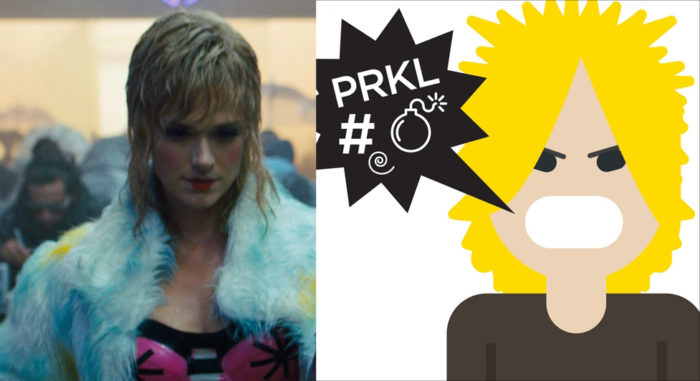
We would argue that there’s a certain resemblance between Finnish actor Krista Kosonen’s character in “Blade Runner 2049” and ThisisFINLAND’s own Perkele emoji.Photo: Alcon Entertainment; emoji: ThisisFINLAND.fi

We won’t give away what happens next, but we did happen to notice that Kosonen’s character looks a lot like our very own Perkele emoji, which is one of Finland’s official national emojis.

It’s based on another Finnish swearword, but hey (or should we say hei), the sentiment is similar. It wouldn’t surprise us if these expressions actually did live until 2049 and beyond.

By Peter Marten, October 2017

In Finland, the world’s largest parent-teacher meeting and other education ideas

On November 8, 2017 at 6 pm, every school in Finland is holding a parent-teacher meeting where parents receive information on the school world and get the opportunity to ask questions and have a voice in how things are done.

Since parents have an important role in the transformation of the school, the world’s largest parent-teacher meeting will cover the challenges the changing schools are facing and present various inspiring operating models.

This meeting is a part of the HundrED project, which aims to discover educational innovations from around the world and share them with others. It’s part of the celebration of Finland’s 100th birthday, which actually takes place on December 6, 2017.

“To celebrate Finland’s 100 years of independence, we came up with the idea of involving Finland in a project that is extensive and useful on an international scale, and focuses on the future of education,” says Saku Tuominen, the project’s producer.

The nonprofit HundrED project is based on cooperation between a range of partner organisations on three sub-projects, each of which aims to find 100 innovations. The world’s largest parent-teacher meeting is part of the 100 Finland project, which details 100 projects or experiments from Finland in order to share them. A select twenty-five of them are being trialed in schools across the country. The second project, 100 Global, seeks innovations from around the world, and the third project consists of interviews with 100 experts in different fields of education from various continents.

“We wanted to find people who are passionate about the direction in which schools are heading,” Tuominen says. “An enormous number of top experts are participating. The interviews will be shared with the world on video and in written format.”

By Hannele Tavi, ThisisFINLAND Magazine 2017

Finnish punctuality: hot or not?

Punctuality is a thing in Finland. Depending on your personality, your perception of this Finnish trait can find expression in a range of reactions. We talk to several people who have first-hand experience.

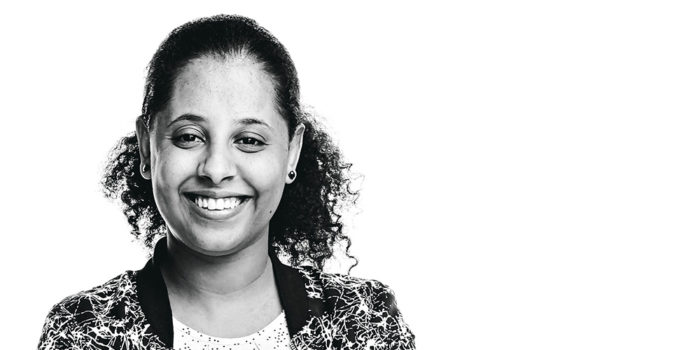
Helen Bekele

Originally from Ethiopia, web programmer Photo: Roope Permanto

“Finnish punctuality is hot. It is one of the Finnish customs and traditions I like most. Punctuality gives ample time to prepare, be calm and collected before any intended meeting. It also allows people to manage their time efficiently. I believe social or business meetings are more fruitful when people are punctual. Most importantly, it shows that you values other peoples’ time.”

Justin Goney

Originally from the US, software engineer Photo courtesy of Justin Goney

“Finnish punctuality is like in Goldilocks and the Three Bears: not too hot, not too cold, but just right. In my experience, Finns tend to be very punctual for important things, but they usually fall within the ‘acceptable window of tardiness’ regarding social engagements. It’s refreshing after having lived in a few places where an agreed-upon time is more of a suggestion than anything else.”

Kseniya Kaverina

Originally from Russia, graduate student Photo: Ekaterina Talanina

“It is dangerously contagious. Now I’m almost always on time. I find it cute how Finns are self-conscious about their punctuality and sometimes feel bad about it in front of foreigners. I have a Finnish friend who used to leave after seven minutes if you were late; nowadays she waits for ten minutes. Being punctual is hot.”

Pedro Díaz

Originally from Spain, senior service operations engineer Photo courtesy of Pedro Díaz

“It is cold in a sense that it is almost too perfect. We Spaniards sometimes have ‘issues’ with punctuality, so it is very refreshing to see that if you agree on an appointment, Finns will appear on time.”

Jungsoo Min

Originally from South Korea, interactive media student Photo courtesy of Jungsoo Min

“It is definitely hot. Finnish people just can’t stand bothering other people so they want to be everywhere on time.”

By Hannele Tavi
, ThisisFINLAND Magazine 2017

Real bridge-builder became Finland’s first female government minister

Miina Sillanpää (1866–1952) was born Wilhelmiina Riktig, the seventh child of nine in a poor family in Jokioinen, a village in southern Finland, during a period of famine. At the age of 12, she started working in a cotton mill in the nearby town of Forssa, 120 kilometres (75 miles) northwest of Helsinki. She later found employment as a maid in Porvoo, 50 kilometres (30 miles) east of the capital, and subsequently moved to Helsinki to work as a domestic aide.

She spent much of her life engaged in civil activism and social advocacy.

In 1898 she helped found the Servants’ Association, taking over as director in 1901 – a post she would hold for half a century. She was active in the drive for women’s suffrage in the early 1900s, and after women gained the right to vote and to stand for election, in 1906, she was among the first 19 women to be elected to Parliament, in 1907.

Overcoming cultural resistance

Miina Sillanpää: Will, faith, daring
Video: Miina Sillanpää Society and company

During her 38 years as a member of Parliament, Sillanpää worked tirelessly to promote the social issues that she believed in. She continuously supported measures to improve the position of women in society.

From 1926 to 1927 she served as minister of social affairs, becoming Finland’s first female government minister.

In the 1930s, she helped start an organisation of shelters for single women and their children, overcoming longtime cultural resistance to the idea. She was a determined and effective fighter for improvements to the lives of the disadvantaged and the elderly, motivated by her values of fairness and equality.

In 2016, October 1 was declared a recommended flag-raising day in Miina Sillanpää’s honour. In 2023, it became a full-fledged flag-raising day.

By ThisisFINLAND staff, source: Miina Sillanpää Society