Finland aims to bid farewell to rubbish dumps

Designer clothes made of old sails, dishwashing brushes made from plastic bags, agricultural nutrients from batteries, and chimneys made from slag: In 2017, a record 99 percent of Finland’s municipal waste was put to further use.

Forty-one percent of refuse was recycled as materials, while 58 percent was incinerated for energy. As waste usage has become more efficient, the number of garbage dumps in Finland has dropped significantly. More than 2,000 have been shut down over the years; at the time of writing there are fewer than 350 left.

Finland is still working to boost its material recycling rate. Burning trash for energy is not without problems: it produces ash and slag, which can’t usually be used for anything else. These by-products must be stored and periodically agitated, which consumes electricity.

Nearly all materials can be recycled
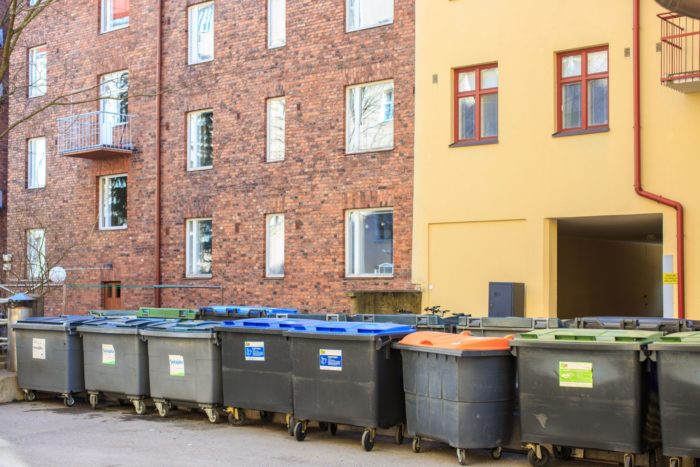
Recycling containers in front of a high-rise building.

In Helsinki, all buildings with at least 20 flats offer collection receptacles for biowaste; paper; cardboard and paperboard; glass; and small metal items; in addition to general rubbish. Many housing associations also collect plastic. Recycling containers are located next to the rubbish bins in each courtyard.Photo: Tero Sivula/Lehtikuva

“Paper collection began in Finland in the 1910s,” says Sirje Stén, an advisor at the Ministry of the Environment. “Rags and old clothes were collected even before that. Clothes were mostly made of cotton, which was used to make paper. Glass and particularly metal are valuable materials, and have been collected in Finland for a long time.”

Biowaste collection in its current form began in Finnish cities in the 1990s, followed by plastic in the 2010s.

Municipalities and cities are responsible for gathering various types of refuse. In Helsinki, for instance, all buildings with at least 20 flats must offer collection receptacles for biowaste; paper; cardboard and paperboard; glass; and small metal items; in addition to general rubbish. Many housing associations also collect plastic.

Batteries and lightbulbs can be returned to any shop that sells them. Other household waste, such as furniture, electrical appliances or renovation scrap, is taken to recycling centres. A collection system for textile waste is under development.

Recycling works when it’s easy
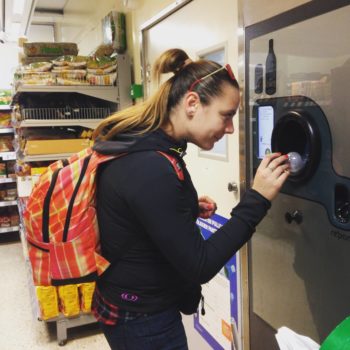
A woman putting bottles in a recycling machine at a grocery store.

Nearly 100 percent of beverage containers with deposits are returned in Finland. The collected plastic, glass and metal becomes new cans and bottles. Photo: Anna Ruohonen

“The most common obstacles to recycling are that it’s considered difficult, the recycling points are far away, and there’s not enough space at home for it,” says Asta Kuosmanen, chief specialist at the Martha Organisation, an NGO that promotes wellbeing and quality of life in the home. So we have to make recycling as simple and rewarding as possible.

Collection points should be as close as possible – preferably in each building’s courtyard. Even a small home can fit compact separate containers for various sorts of waste, so that collecting is hassle-free.

“Advice and communications also have an impact on recycling: consumers must be told about the concrete benefits of recycling and how the material is used,” Kuosmanen says.

“The Finnish bottle deposit system on excellent; we collect almost 100 percent of beverage containers,” says Sirje Stén. They are used to produce new cans and bottles. Other recycled glass is used to make jam jars, glass bottles or fibreglass. Glass is also used in civil engineering projects.

Most paper and paperboard is recycled in Finland. Collected paper is used to manufacture newsprint and paper towels, while paperboard is turned into inserts for rolls of paper towels or cloth.

Circular economy spurs opportunities

Compressed milk cartons stuffed inside another milk carton.

No kitchen is too small for recycling. Cartons can be flattened and compacted so they take up less space.Photo: Mirva Kakko/Otavamedia/Lehtikuva

In a circular economy, production, consumption and services are arranged as sustainably as possible. The aim is to keep items and materials in circulation as long as possible by maintaining, repairing, reshaping and re-using them. One way to minimise the creation of waste is to avoid unnecessary packaging and single-use products.

When waste is produced, it is gathered separately and used as efficiently as possible. This offers business opportunities as companies come up with new ways of exploiting the collected material. In Finland, broken-down tractors that can no longer be fixed are taken apart for spare parts, old roofing material becomes raw material for asphalt, and coffee grounds make a good base for growing mushrooms.

Some Finnish restaurants produce meals out of donated surplus food. Restaurant and shop managers use apps to sell leftover food at discount prices after lunchtime or as their “best before” dates approach. Some groups distribute surplus food for free to those in need, or serve meals made from leftover food for free or at nominal prices. In Helsinki there are also experiments with public refrigerators where anyone can leave unneeded food or take food.

Brand-new second-hand apparel
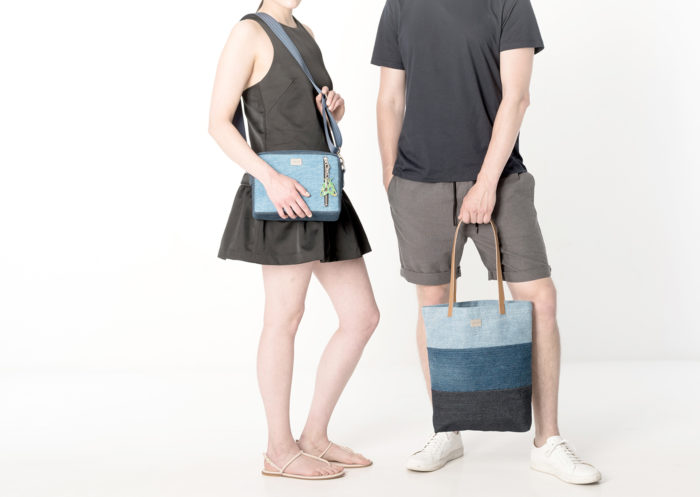
A woman and man showcasing Globe Hope clothes and bags.

Finnish company Globe Hope makes design clothing and accessories from surplus materials.Photo: Globe Hope

Clothing in good condition has traditionally been given away or sold at flea markets or thrift shops. Online services for selling second-hand clothes have sprung up, making it as easy as possible to sell and buy.

Finnish companies are putting unsalable textiles to use: Remake Ecodesign “upcycles” second-hand clothes into mass-produced apparel collections, while Globe Hope makes design clothing and accessories from surplus materials such as old army textiles, sails and advertising materials. Pure Waste converts textile-industry waste into raw material for a new clothing industry and readymade attire.

There are also pilot projects under way, in which new thread and cloth is made from worn-out clothes and other waste fabric. Finland’s goal is that 50 percent of municipal waste will be recycled in 2020 and 55 percent by 2025.

By Anna Ruohonen, June 2019
Bold Finnish fashion designers attract global attention

Young Finnish designers have been winning awards on a regular basis at prestigious events such as France’s Festival de Hyères. In addition to Marimekko, other Finnish brands that are familiar names in international fashion circles include Samu-Jussi Koski’s Samuji, now sold in 16 countries; Tuomas Merikoski’s Paris-based Aalto International; and Heikki Salonen’s Vyner Articles in London.

Tickets to Aalto University’s spring fashion show sell out in a flash. The audience is dotted with reporters from global fashion magazines and scouts for major fashion houses – and they are enthralled!

Martta Louekari is one of those responsible for this phenomenon. She was involved in creating Garden, a centre for Finnish fashion on the second floor of upscale Helsinki shopping centre Kämp Gallery. She has also had a hand in the development of the Fashion in Helsinki event (a week-long programme of screenings, presentations, exhibitions and discussions, including the Aalto University spring show) and several other projects that connect Finnish designers with international opportunities.

In Finland, design has always been democratic. Nearly every home seems to have Fiskars scissors, Iittala drinking glasses and Marimekko curtains. Maybe that’s why the country’s fashion sensibility embraces a wide array of people. Some Finnish brands build their entire identity around equality and egalitarianism – and many conscientious young Finnish consumers favour domestic products, as long as they’re high-quality.

Ambitious visions

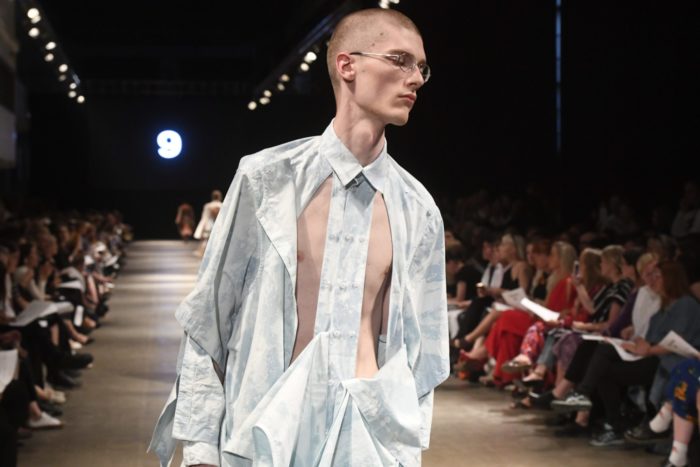
A male model on a catwalk, crowd watching.

For designers, the Aalto University show offers an opportunity to “push your individual creativity and artistic ability as far as you can,” says Martta Louekari.Photo: Heikki Saukkomaa/Lehtikuva

Nordic minimalism remains part of Finnish fashion design, says Louekari, “but so are strong prints, colours and experimentation with materials. Designers here are now more interesting and ambitious; they’re bolder and taking bigger risks than those in, say, Sweden.”

One explanation lies in how brands are built. If you first figure out what the public or a certain customer segment wants and then respond to this demand with tailor-made products, you’re market-driven. In contrast, if a designer starts off with a vision and goals, and then collects a team to carry them out, the process is design-driven. Finland has a long history of design-driven design.

The history of fashion in Finland is relatively short. “That’s also why there isn’t a great amount of baggage or pressure,” says Louekari. “Instead, young designers get to work in peace. Growth is slow and organic, and maybe that suits us better than building fast-fashion brands.”

In the top 3

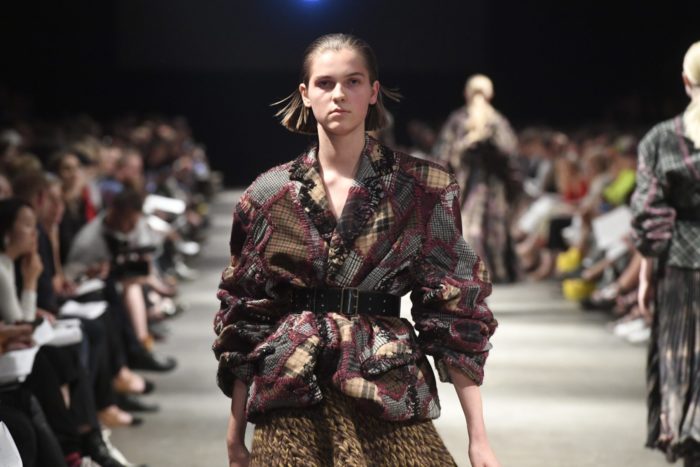
A serious-looking model on a catwalk wearing a plaid jacket.

Aalto University’s spring event always draws a crowd.Photo: Heikki Saukkomaa/Lehtikuva

Finnish fashion is now attracting interest around the world. Perhaps the biggest factor contributing to this phenomenon is Aalto University’s ranking as one of the world’s three best fashion schools. By the same token, young designers who’ve studied there have enjoyed success at competitions, which in turn brings publicity.

“That’s the best manifestation of Finnish fashion,” says Louekari. “There’s no pressure to put together a commercial collection, but rather you can push your individual creativity and artistic ability as far as you can. From a media perspective, that leads to extremely interesting results, and if these collections happen to align with current phenomena and the changing trends of the fashion world, the results are often much more exciting than what the big luxury brands offer.”

There’s now room for new names and brands, but after graduation you also have to be able to convert appeal into business. In other words, an artistic breakthrough should be followed by a collection that people can actually purchase and use.

Organic growth and success can be achieved without intentional brand-building or spending thousands of euros on a marketing plan, but above all it relies on talented individuals who receive solid guidance.

Nowhere else is the same

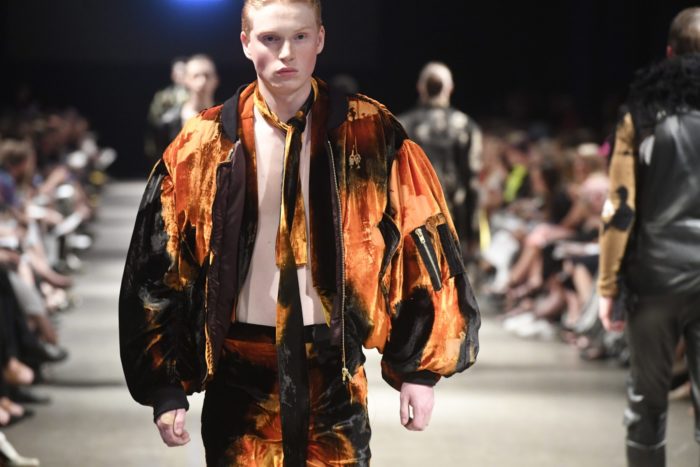
A male model on the catwalk wearing black and orange jacket and trousers.

Student fashion shows are intended to serve as walking portfolios, but also to attract attention and spur new ideas.Photo: Heikki Saukkomaa/Lehtikuva

One of Finland’s biggest names in fashion design is Tuomas Laitinen, senior university lecturer in fashion at Aalto University. Laitinen, who began his studies at Aalto before graduating from London’s prestigious Central Saint Martins art and design school, established his own clothing brand and spent a decade in Paris before returning to Finland to teach.

His reason for returning was clear: nowhere else would have offered him the same freedom to pursue other activities alongside teaching, such as working on his own collection and on the highly regarded SSAW Magazine.

Laitinen says that many people outside Finland, including editors, curators and scouts, have played significant roles in the rise of Finnish fashion.

Strength in open-mindedness

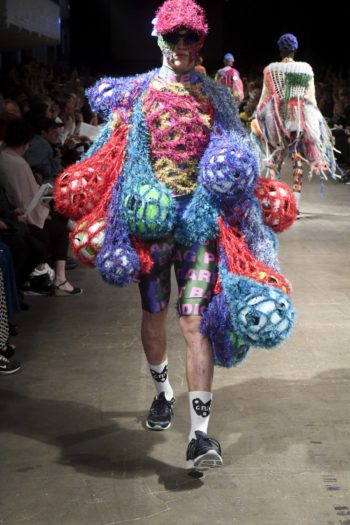
A model on the catwalk wearing colourful crocheted nets with footballs in them.

The 2018 show took place just before the soccer World Cup tournament began in neighbouring Russia, so it’s only natural that the sport found its way onto the catwalk, too.Photo: Heikki Saukkomaa/Lehtikuva

“A whole bunch of people in Paris, London, New York and Milan have been roped in to help,” Laitinen says. “In other words, Finland hasn’t planned this miracle all by itself. Nowadays there are people from the first generation of designers who studied at Aalto working in senior positions at the Paris fashion houses. And a few of our graduates have even become design directors.”

Student fashion shows are intended to serve as walking portfolios, but also to attract attention and spur new ideas. And now young Finnish designers’ open-mindedness is perceived as a great strength.

“Whether we’re talking about the luxury sector or mass producers, Gucci and Top Shop generally want to hire the same people,” says Laitinen. “What they’re looking for is maximum creativity. Everybody knows how to design white T-shirts and black trousers, but the value of our shows is something entirely different.”

Emerging generation

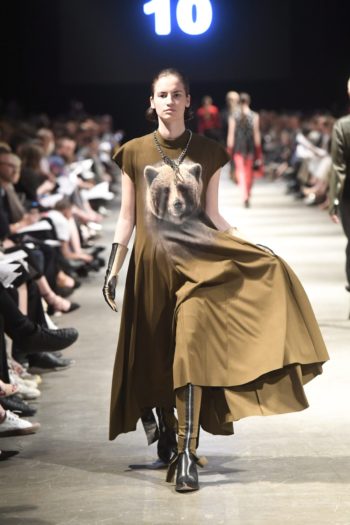
A model on a catwalk wearing a brown dress with an image of a bear.

This outfit formed part of Aalto University’s spring show in 2018.Photo: Heikki Saukkomaa/Lehtikuva

Nowadays Aalto’s annual spring show sells out immediately, and the world’s fashion houses are always there, scouting new designers. Aalto fashion students have one of the world’s highest employment rates, even though some don’t find work until a little later.

Seventy percent of them leave Finland, at least initially. Since there is no longer any significant commercial clothing industry in Finland, there are few alternatives for those who stay there to work. Laitinen doesn’t see this export of expertise as a problem.

“I think it’s really good that they go to learn the laws and practices of the fashion business, gather contacts and grow,” Laitinen says. Many of them return later and impart the benefits of their experience.

“On one hand, Finnish society is very egalitarian, but on the other hand we generally want to do things our own way,” Laitinen says. “We have an emerging generation we can be proud of. They’ve grown up to be multicultural, pluralistic and very broadminded. They dare to take risks, yet they’re still humble and ready to work hard.”

By Suna Vuori, May 2019

Gold goes great with blue and white: Finland parties after world hockey win

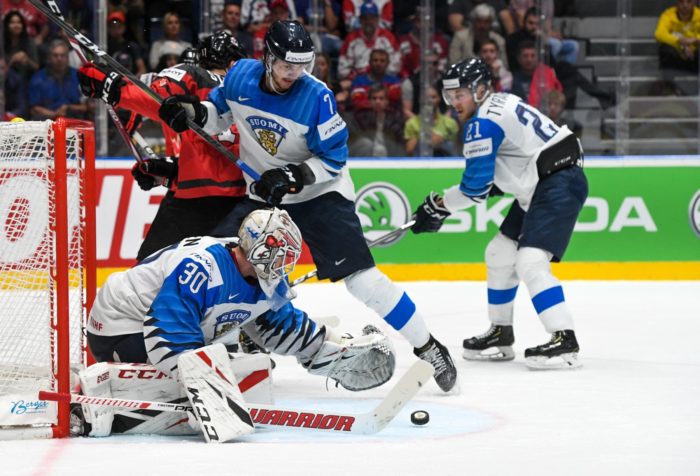
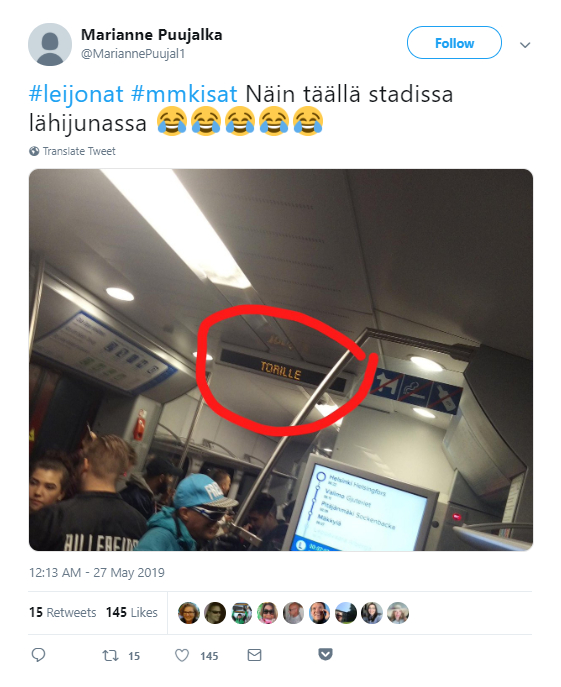
“FIN 3 – CAN 1” read the text on the TV broadcast from Bratislava, Slovakia, where Finland triumphed over Canada in the gold-medal match.

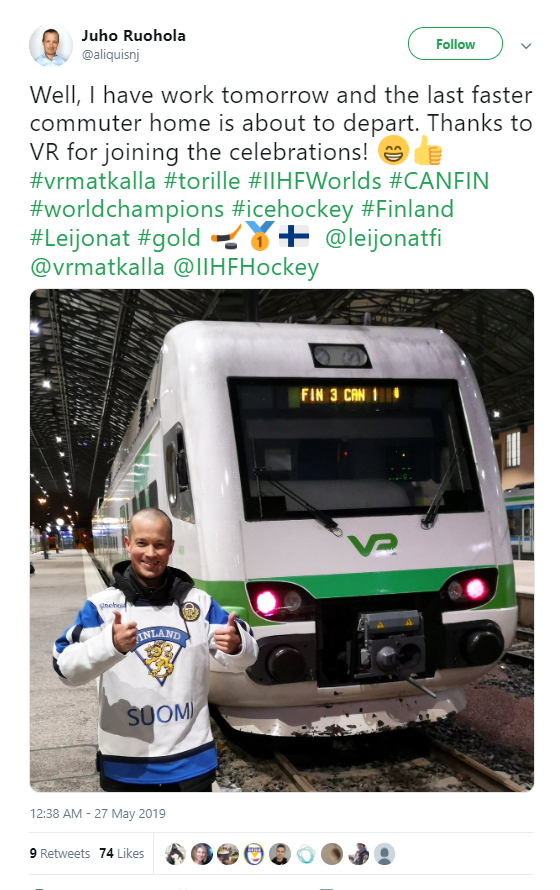
In Helsinki, a proud train driver with a sense of humour programmed the vehicle’s destination screen to show the same text, the game’s final score.

The Finnish highlights of the tournament were numerous. Kevin Lankinen, 24 years old, came seemingly out of nowhere to act as Finland’s main goalie in Slovakia. He had just finished his first season in North America, where he played 19 games for the Rockford IceHogs, the farm team of the NHL’s Chicago Blackhawks.

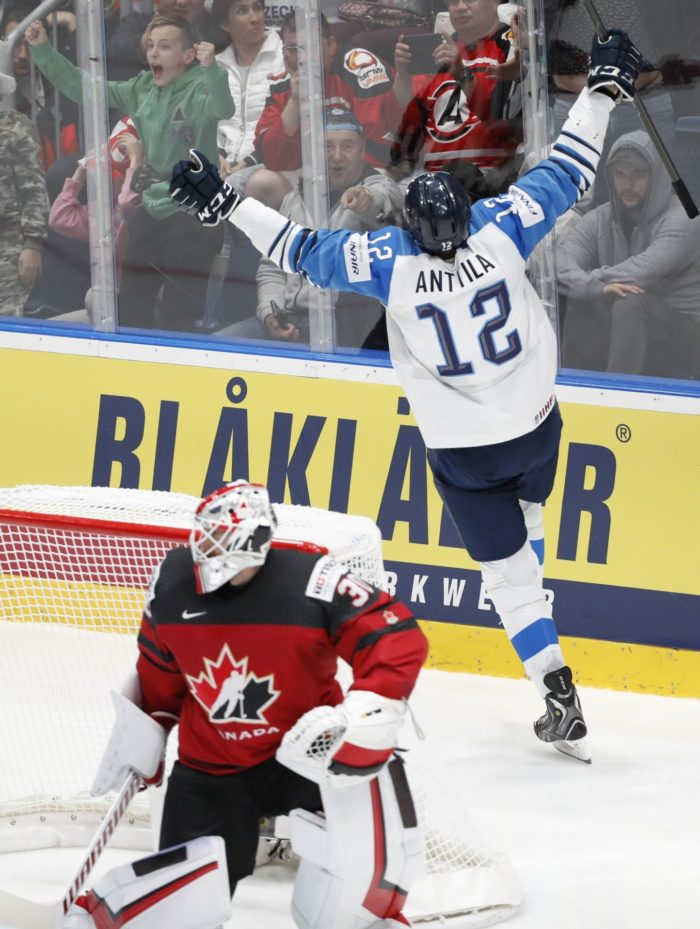
Kaapo Kakko, 18, introduced himself to the world by scoring six times in his first world championship tournament. And Finnish captain Marko Anttila, 34, turned up the volume with goals in the quarterfinal against Sweden, the semifinal against Russia and the final against Canada. What about Anttila’s nickname, Mörkö, which even non-Finnish fans may have noticed by now? That may take some explaining.

(Article continues after slideshow.)

Finnish hockey party time!

Mörkö: No ordinary monster

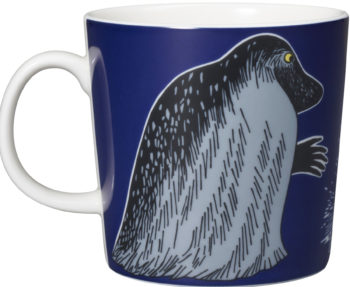
A mug with the image of Groke from Moomin.

National team captain Marko Anttila’s nickname, “Mörkö,” is associated with the Groke, a monstrous character from the Moomintroll books. Finnish design company Arabia makes a series of mugs featuring the Moomin characters.Photo: Fiskars Finland/Tosikuva

The Finnish hockey captain’s nickname plays on his first name, Marko, but mörkö means “monster.” Not only that, but it’s associated with one particular monster, from the series of books and cartoons about the Moomintrolls, created by Swedish-speaking Finnish writer and artist Tove Jansson (1914–2001).

In the stories, the ghost-like Groke, as the English translation calls the monster, inspires fear in the other characters and freezes the ground around her as she goes. So the comparison is not inappropriate for an ice hockey player, although the deeper meaning may have been lost on the Canadians.

Finnish language lesson: “Torilla tavataan”

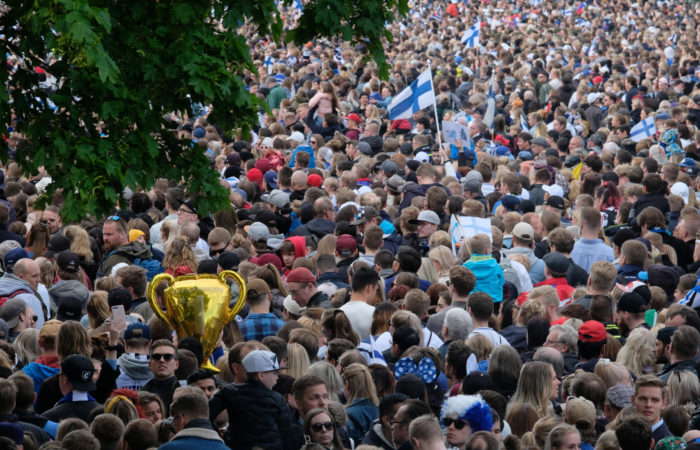
A large crowd of people packed in a park.

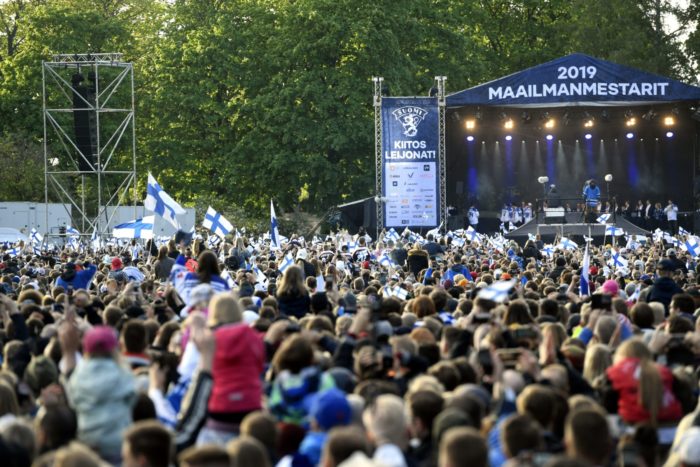
Helsinki’s Kaisaniemi Park sets the scene for a celebratory sea of fans and flags and – a trophy-shaped balloon?Photo: Tim Bird

On one Helsinki commuter train, the staff changed the destination screen to read “Torille.” This means “to the town square,” and refers to the saying Torilla tavataan, “We’ll meet on the town square,” which is really a short way of saying, “Everybody get out into the streets, because we’re going to have a party!”

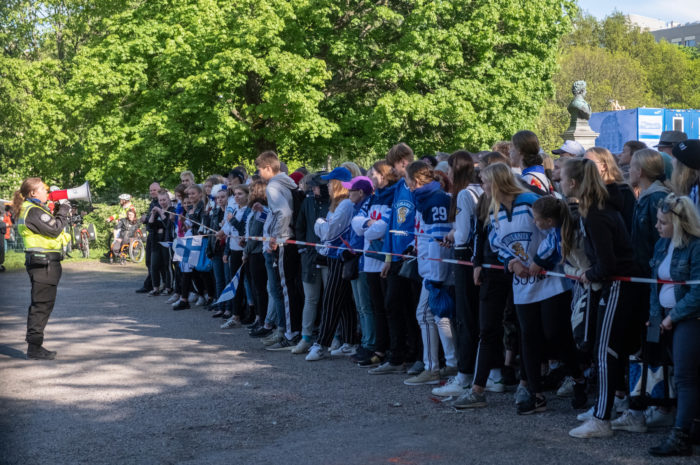
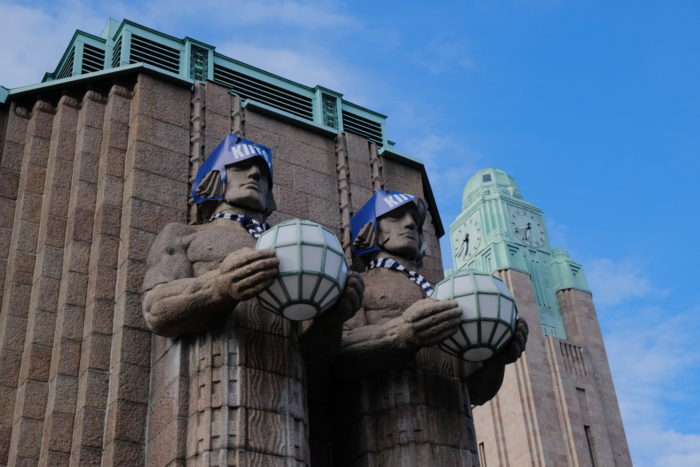
Finland won the World Championship in 2011, beating Sweden 6–1, also in Bratislava, and in 1995, defeating Sweden 4–1 on its home ice in Stockholm. The previous celebrations took place on Helsinki’s Market Square, but in 2019, as the team was in the air on its way home, the news came through that this time the party would be held in Kaisaniemi Park, next to Helsinki Central Railway Station.

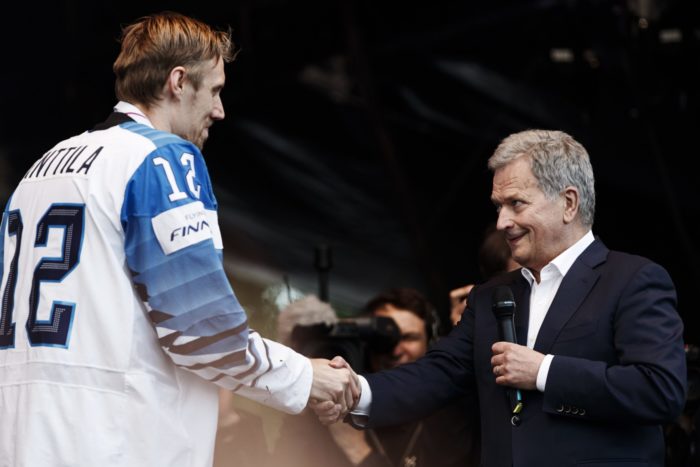
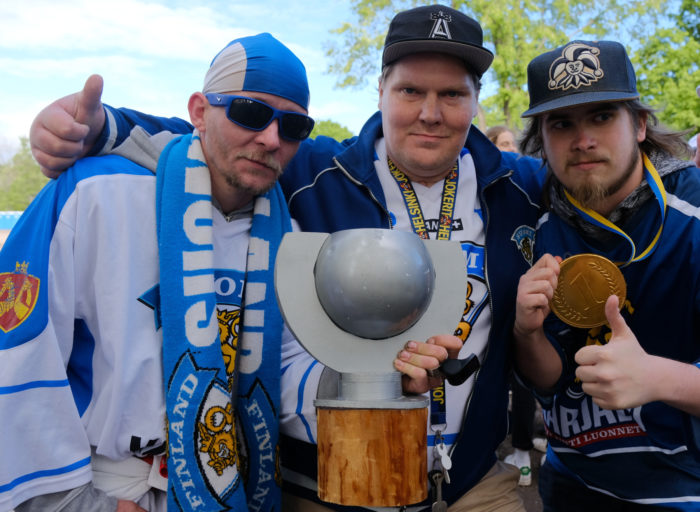
On a stage at one end of the park, President Sauli Niinstö congratulated the team, hoisting the trophy in the air and shaking hands with the players. Pop singer Paula Vesala and other stars performed; Vesala sang “Finlandia,” which never fails to move the audience (composed by Jean Sibelius in 1899, with lyrics written by Veikko Antero Koskenniemi in 1941).

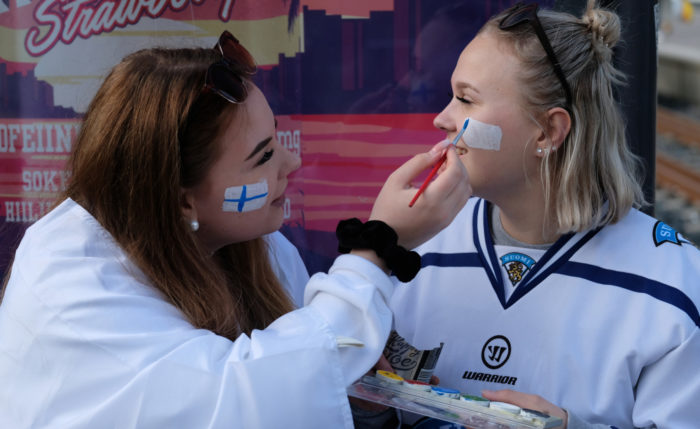
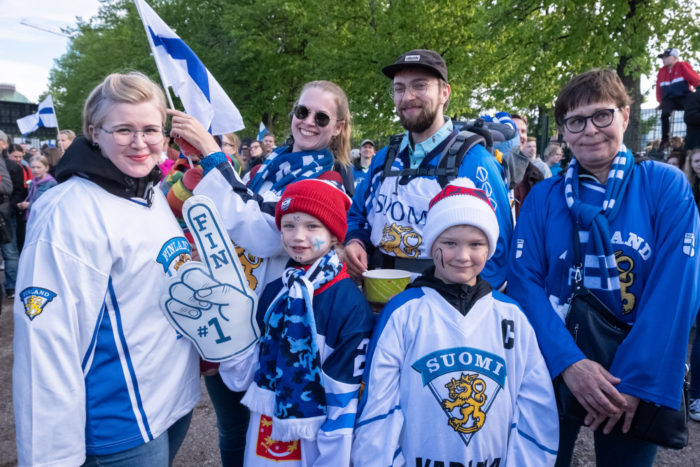
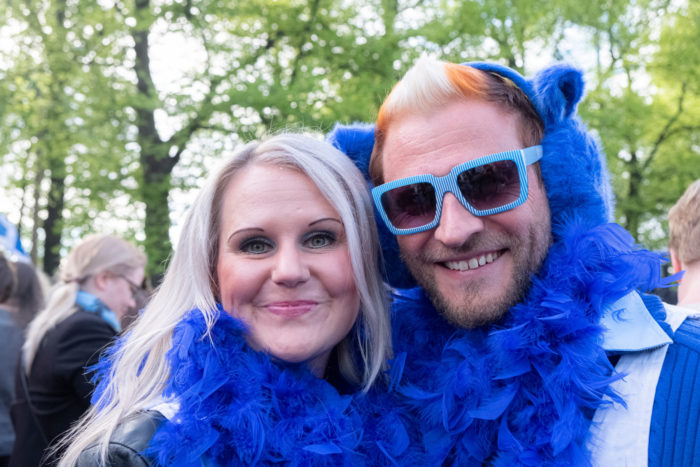
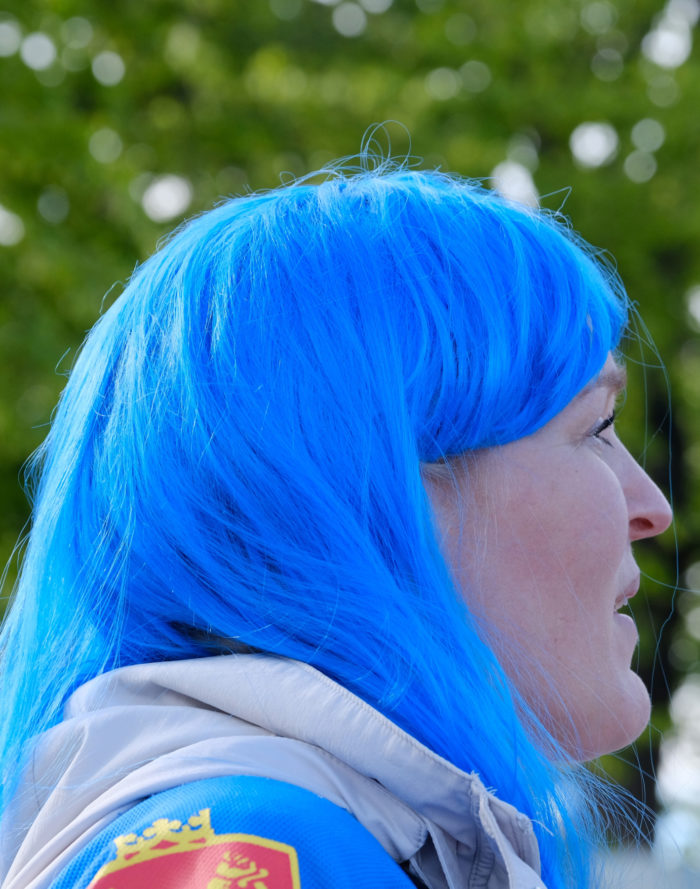
The day before, the Finnish capital had experienced a rainstorm that lasted all afternoon and into the evening. Now, as an estimated 50,000 people converged on Kaisaniemi, most of them dressed in blue and white, the sun was shining.

By Peter Marten, May 2019

Learning Finnish graduation hat tricks

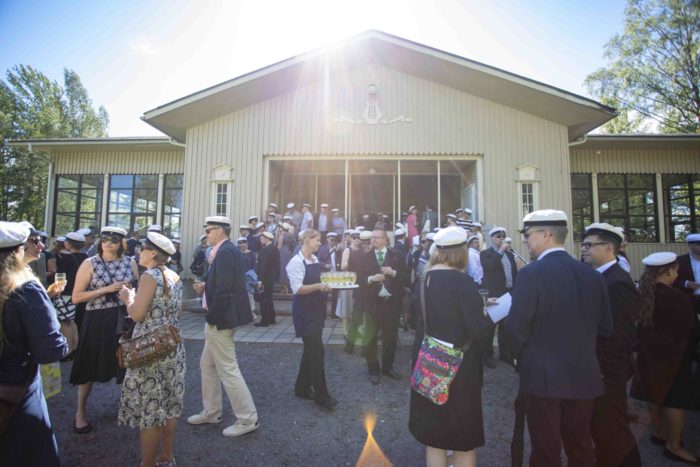
High school graduation takes place when the school year concludes at the end of May or beginning of June. And yet, a month before that, on April 30 and May 1, you’ll notice merrymakers of all ages wearing white caps – and partying to a degree rivalled only by New Year’s Eve.

It’s somehow paradoxical that the Finns wear a kind of uniform at the one time of the year when it’s socially acceptable for them to lose their inhibitions. The May Day holiday, known as Vappu in Finnish, and the evening that precedes it are the closest thing the Finns get to a wild, unfettered carnival.

The weather might not always be appropriate for a festival of spring, but do they don feathers or crazy costumes to match their festive, wild mood? No, they wear nice white student hats.

The resulting sea of bobbing white caps might make you feel a bit puzzled, or even uneducated, once you discover that the hat symbolises the wearer’s status as a high school graduate. The fact that so many people possess them is perfectly logical in view of Finland’s world-beating reputation for education, of course.

And woe betide anyone who dons the cap without due qualification. I know of at least one ungraduated person who attracted some serious disapproval when he jokingly sported his wife’s cap on social media. OK, I confess: It was me.

Symbolic details abound

Students standing outside a school building wearing their graduation caps.

People save their high school graduation caps and bring them out for certain special occasions, such as May Day festivities or university ceremonies (in this case a graduation celebration at the University of Tampere). Photo: Jenni Toivonen/Visit Tampere

These days, the cap rarely comes out of its box at any other time of the year but Vappu and the occasional academic ceremony or official function. However, time was that people would pop them on their heads every day throughout the summer to until the end of September, so they were an optional accessory until the 1950s. Nobody bothers to wash their hats, and this might account for the distinctive yellow hue of the more vintage specimens.

The graduation cap usually bears the emblem of the University of Helsinki, which is Apollo’s lyre, a symbol of the Greek patron god of music, dance and poetry. Originally, and until Finnish independence in 1917, the university entrance exam was equivalent to the national matriculation exam.

The contemporary hat-wearer affixes the insignia of his or her own university. The size of this emblem had a subtle 19th-century political potency that persists to this day, since its size indicates whether the owner is a speaker of Finnish (14 millimetres) or Swedish (22 millimetres); both are official languages in Finland.

To complicate things further, students at technical universities sport a variant with a long black tassel and an emblem specific to each university. Except for students of the University of Oulu, who insist on complicating things even further by wearing emblems that indicate their study programmes. The inside linings of the hat also vary in colour depending on the home region of the person who is wearing it, as well as the Finnish- or Swedish-speaking background of the student.

And you thought a white hat was just a white hat?

Freedom and a bright future

A large crowd of students gathered around Havis Amanda statue, while a crane is lifting a few students over the statue.

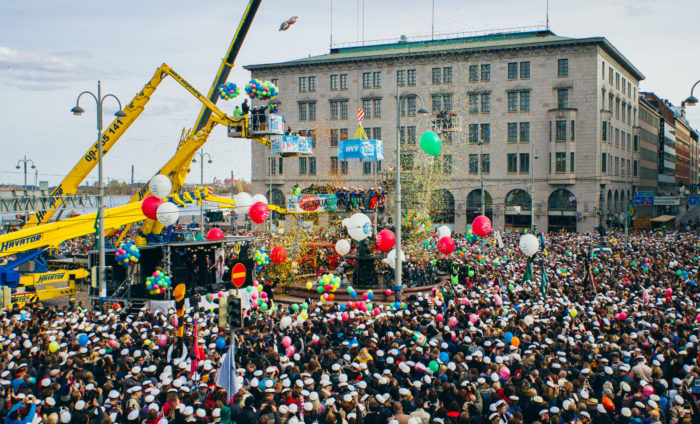
Helped by a crane, students place a graduation cap on the head of Helsinki’s Havis Amanda statue every April 30, amid a sea of thousands of similar hats.Photo: Jussi Hellsten/Helsinki Marketing

The Nordic countries all have similar student-hat traditions. As an emblem of educational status, the Finnish garment is reputed to have specific roots in the period of Russian rule in the mid-1800s. Tsar Nicholas I stipulated that all university students should wear a uniform, but when the tsar died so did the habit of wearing the uniforms – apart from the hat, which in those days was blue. Women weren’t invited to join this millinery club until 1897, when they were admitted to the students’ union.

Perhaps to compensate for this gender-based tardiness, one of Helsinki’s best-known women is now the first to be anointed with this singular headgear item every Vappu. A group of students symbolically wash the Havis Amanda statue near Market Square – spring cleaning – before placing a ritual graduation cap upon her head.

The annual honour, bestowed since 1921, is carried out by a different Helsinki student union each year. Thousands of people turn up to watch the ceremony and cheer.

So what does the white hat signify to the locals? “To me, it means possibilities, freedom, a bright future and an achievement,” says 35-year-old Eveliina Lehtonen, reminiscing about her own matriculation but also pondering the lasting significance of this happiest of hats. “And at Vappu, it still always means spring has come and it’s time to party.”

By Tim Bird, May 2019

Despite progress during Finland’s Arctic Council term, the world still faces a “time of great urgency”

One-third of Finland is located north of the Arctic Circle – the city of Rovaniemi lies just six kilometres (3.7 miles) south of that line.

The Arctic Council ministerial meeting held in Rovaniemi on May 7, 2019 concluded Finland’s two-year term as chair; Iceland takes over from 2019 to 2021. Finland’s tenure was largely successful; the council made considerable progress in the issues Finland had singled out in 2017, focusing on four areas: environmental protection, connectivity, meteorological cooperation and education.

The council includes six Permanent Participant organisations representing indigenous peoples in the Arctic region (the Aleut International Association, the Arctic Athabaskan Council, the Gwich’in Council International, the Inuit Circumpolar Council, the Russian Association of Indigenous Peoples of the North, and the Saami Council).

It also includes the eight Arctic countries (Finland, Canada, Denmark, Iceland, Norway, Russia, Sweden and the US). Attending the meeting with observer status were 13 non-Arctic countries and 25 intergovernmental and nongovernmental organisations.

The foreign ministers of all eight Arctic countries came to Finnish Lapland to attend the Rovaniemi event. This, in itself, represents a significant achievement, as it was only the second time all eight have been present at the biennial ministerial meeting. It also indicates the ever-growing importance of the Arctic region, and of the Arctic Council’s existence.

A viable Arctic

Four people walking on duckboards at a sunset.

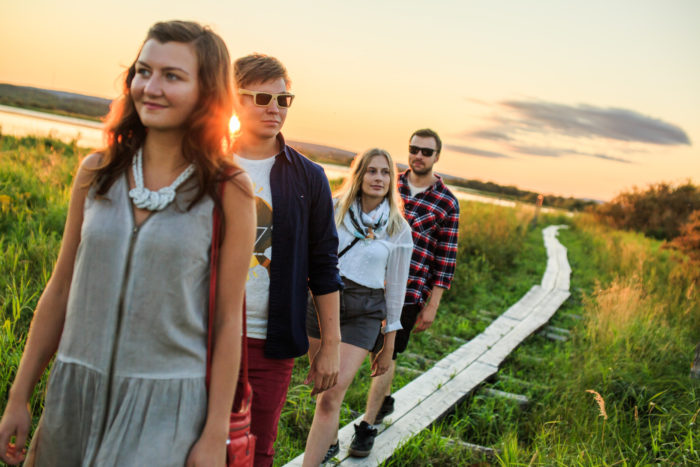
On a summer nature walk by the light of the midnight sun in northern Finland: The fate of the world is intertwined with that of the Arctic. Photo: Visit Rovaniemi/Lapland Material Bank

“Developing a viable Arctic region was essential to Finland,” wrote Timo Koivurova, director of the Arctic Centre at the University of Lapland in Rovaniemi. In an article in the newspaper Kaleva after the ministerial meeting (later republished in English on the Arctic Centre website), he was summarising Finland’s time as chair.

Among the successes, he said, were “investing in teacher training, improving digital communications, deepening meteorological cooperation and developing environmental impact assessments,” important issues for the Arctic Council and the Arctic region.

The fate of the world is intertwined with the future of the Arctic. Finnish President Sauli Niinistö has said numerous times, “If we lose the Arctic, we lose the globe.” He made black carbon one of the focuses of Finland’s period as chair of the Arctic Council, seeking to raise awareness and reduce emissions of that climate pollutant. Finnish efforts put black carbon higher on the agenda and raised awareness of how to control it. Taking over as chair, Iceland is concentrating on the Arctic marine environment, including plastic waste.

Six working groups operate in support of the council’s mandate. Their names form a shorthand list of the council’s focus areas: the Arctic Contaminants Action Programme; the Arctic Monitoring and Assessment Programme; Conservation of Arctic Flora and Fauna; Emergency Prevention, Preparedness and Response; Protection of the Arctic Marine Environment; and the Sustainable Development Working Group.

Current world situation

A crowd of people sitting at tables on three sides of the room, watching a big screen on the fourth side.

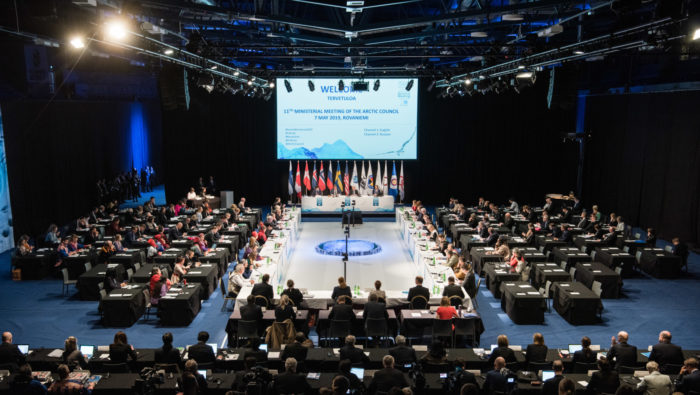
Lappi Arena, where the local ice hockey team plays, was the only venue in Rovaniemi with a wide enough floor space for the layout of the Arctic Council ministerial meeting, with its many delegations, working groups and observer organisations.Photo: Jouni Porsanger/Ministry for Foreign Affairs of Finland

Since its establishment in 1996, the council has stood as a consensus-based forum concentrating on Arctic issues of environment and sustainable development. In order to make progress in those areas, the participants customarily leave political conflicts at the door.

Ministerial meetings have always included a declaration that recognises work already done and sets the agenda for the future. In Rovaniemi, the parties could not agree on the content. Among other things, the US would not accept the words “climate change,” whereas the other participants felt the term was indispensable. Instead of a declaration, the eight Arctic countries ended up signing the Rovaniemi Joint Ministerial Statement – one page of text compared to the 13 pages of the Fairbanks Declaration of 2017.

The spirit of the Arctic Council remains one of constructive cooperation, and this was in evidence in Rovaniemi. Preserving the ideas that the declaration would have contained, Finland released a separate Statement by the Chair containing a full-length text divided into categories called environment and climate; the seas; the people; and strengthening the Arctic Council. The document will help guide the council through the following two years.

It includes the sentence, “A majority of us regarded climate change as a fundamental challenge facing the Arctic and acknowledged the urgent need to take mitigation and adaptation actions and to strengthen resilience.”

As Timo Koivurova of the Arctic Centre put it, “Finland succeeded as well as was possible in the current world situation.”

Happening as we speak

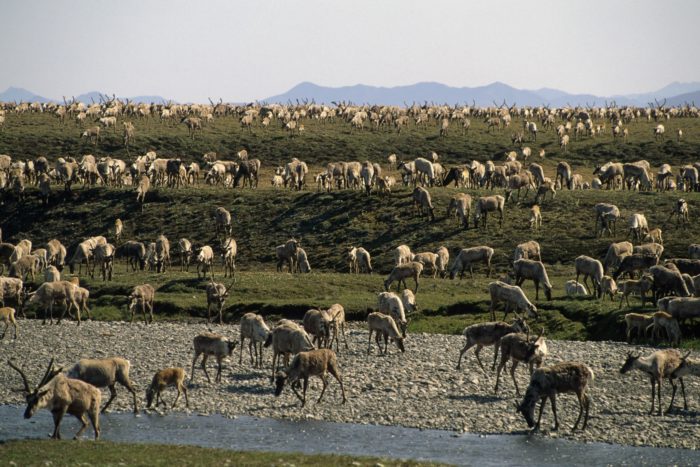
A large herd of caribou on green hills, a small river and a rocky beach up front.

Caribou cross a river in the Arctic National Wildlife Refuge in northeastern Alaska.Photo: Kenneth R. Whitten/Alaska Stock/Lehtikuva

The speeches of the delegates at the ministerial meeting also helped ensure that the world would not lose sight of the council’s goals, despite the absence of a formal declaration. Many of them used pointed language.

James Stotts, Inuit Circumpolar Council president, stated, “It’s time to set the record straight. There is global climate change, and humans are responsible for much of it. That’s the plain truth, and we don’t understand those who would argue otherwise.”

He described the Inuit perspective: “We have it all: melting sea ice, thawing permafrost, stronger and more frequent storms causing erosion of our coastline…The Arctic climate has changed and the Arctic ecosystem is transforming before our very eyes.”

Representing the Gwich’in Council International, Edward Alexander referred to symbolism from the Gwich’in language and worldview to drive home his point: “We must care for each other like our world, like our family,” he said. The governments of today must not choose “to value temporary profit over our relatives and our relationships that have sustained us since time immemorial.”

He specifically called for an end to “all efforts to issue oil and gas licenses in the Arctic National Wildlife Refuge” in northeastern Alaska, in order to preserve the wilderness, the area’s caribou herd and the Gwich’in way of life.

That-Which-Must-Be-Named

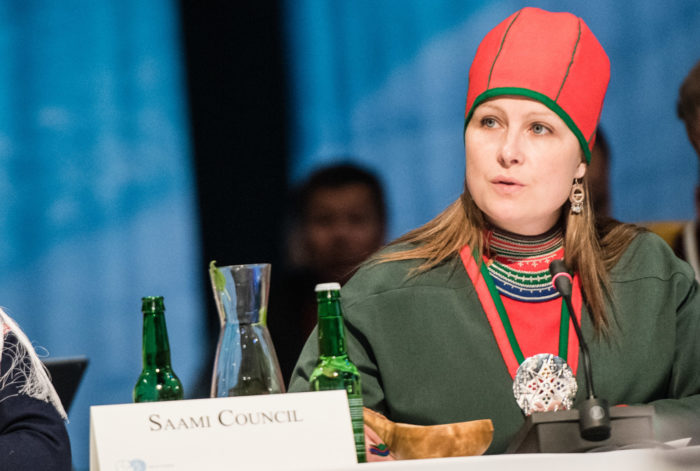
A woman dressed in traditional Sámi clothes sitting by a council table.

Åsa Larsson Blind, Saami Council president, reiterated to the Arctic Council that people should not hesitate to mention climate change.Photo: Jouni Porsanger/Ministry for Foreign Affairs of Finland

Swedish foreign minister Margot Wallström said, “Yes, the scientific findings are robust: The climate crisis in the Arctic is not a future scenario – it is happening as we speak.”

She mentioned Swedish teenage climate activist Greta Thunberg, who started an influential movement by going on strike from school to demand action against climate change. Wallström looked around at the assembled delegates and wondered aloud why they needed teenagers to tell them what had to be done.

Åsa Larsson Blind is president of the Saami Council; the Sámi homelands stretch across northern Finland, Sweden and Norway, as well as the northwestern corner of Russia. She used an example that even a child could comprehend: She referred to Voldemort, the evil wizard of the Harry Potter books, whose name people are afraid to say out loud, calling him “He-Who-Must-Not-Be-Named” instead.

Larsson Blind said, “By mentioning [climate change] by its real name, we can fight it, reduce its impacts – and we do not even need magic.

“This room has the power to agree on ambitious levels of reduction of emissions and set the standard for the rest of the world,” she said, noting that we are “in a time of great urgency.”

By Peter Marten, May 2019

Biohacking journeys into Finnish forests

The word “forest” means many different things to people in Finland: food, shelter, recreation, business and inspiration. Biohackers improve their bodies and minds by “hacking” their own biology. Read on to see if the traditional connections between the Finns and the forest have something to offer modern health enthusiasts.

Biohacking may even include hardcore methods such as inserting technology under the skin like a sci-fi cyborg, or even trying to change your DNA. That seems worlds apart from visions of evergreen forests, where superhuman beings are absent and the population consists of animals so reclusive that people rarely see them. Let’s see where forests and biohacking overlap.

Wild food goes way beyond

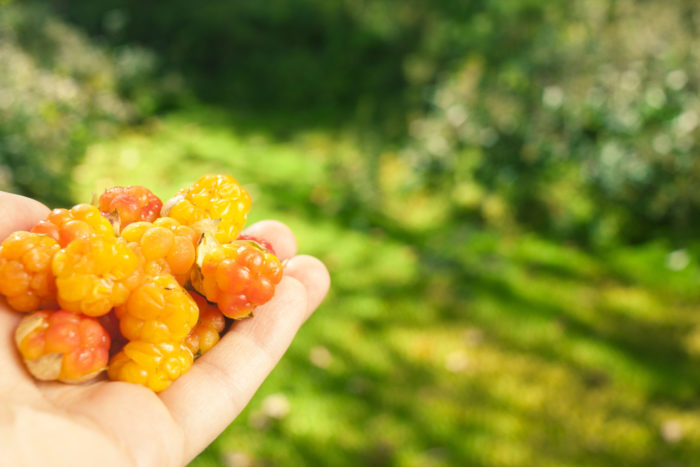
A hand holding a handful of cloudberries.

Plants in the wild have to fight hard for their existence. Nutrients exist in higher concentrations in wild plants than in greenhouse varieties. Photo: Elina Sirparanta / Visit Finland

The Finnish concept of “every person’s right” means everyone has free access to the forest, whether publicly or privately owned, and may also pick berries and mushrooms there.

Award-winning chef, author, forager and biohacker Sami Tallberg specialises in ultraseasonal, local, wild food. He could go on and on about the nutrient-dense raw food available in the wild (and in fact he does, when he hosts workshops).

Plants in the wild have to fight hard for their existence. You might even say they exhibiti sisu, that difficult-to-translate Finnish word meaning courage and perseverance. Nutrients exist in higher concentrations in wild plants than in greenhouse varieties.

“Organic food is good, but wild food goes way beyond that,” says Tallberg. His top three recommendations for nutritious health hacks are dandelion detox; spruce-sprout booster for cleansing the airways; and vitamin- and mineral-rich nettles (don’t eat them raw or the leaves will sting you) for any occasion requiring a little Popeye jolt. And pay attention to this next bit, because you’re unlikely to receive spam about it in your email: Yes, nettles are even said to increase libido.

“For me, as a chef, wild food forms the backbone of my work, but my relationship to the forest is also much more holistic than that,” says Tallberg. “The forest is my art gallery, my supermarket and my sanctuary.

“In my work and in my life, I continue the Finnish tradition of always being in sync with the seasons. The first Finns were hunter-gatherers, and I’m proud to be building the current Finnish culinary scene upon their tradition and wisdom.”

The properties of berries

Chefs are not the only ones touting the health benefits of the Finnish foods – particularly berries. In fact, for 20 years VTT Technical Research Centre of Finland has been researching the antimicrobial properties of berries.

In the latest research, VTT found, in collaboration with Helsinki University Central Hospital, an indication that Rubus berries, such as raspberry and cloudberry, may contain a much-needed cure for fighting skin infections caused by antibiotic-resistant bacteria, most often seen in connection with certain surgeries.

The forest, and especially Finnish berries, have long formed a source of Finnish innovations in medicine, food supplements and cosmetics. Finnish company Aromtech provides supplements made from pure sea-buckthorn berries, which are rich in omega-3, -6, -7 and -9 and natural vitamin A and E. The supplements and topical products derived from sea-buckthorn oil convey a range of benefits.

Another company, Pihqa, relies on the centuries-old Finnish tradition of using natural spruce resin to treat various skin ailments. Applied to a scratch, the resin forms an antibacterial film and expedites the cleansing process.

Feeling alive

You can’t hack your biology with food alone, though. This brings us to a favourite Finnish subject: the sauna.

The oldest scientific research on the health benefits of the sauna dates back to 1765. The most widely acknowledged health benefit of visiting the sauna is a boost in blood circulation. Add a cold-water post-sauna dip, and your veins will surely feel alive.

Alternating hot and cold treatments is not unique to Finland, but in this sense the Finns may be at the top of the spectrum for boosting blood circulation with temperature contrasts. Saunas can be as hot as 100 degrees Celsius, and if you go outside to swim in icy-cold water or roll in the snow, the air temperature may be minus 30 degrees.

You can also hack your mind – with endorphins. Biochemical and psychological studies indicate the same result; whatever the cause, you feel good after a sauna.

Barefoot boost

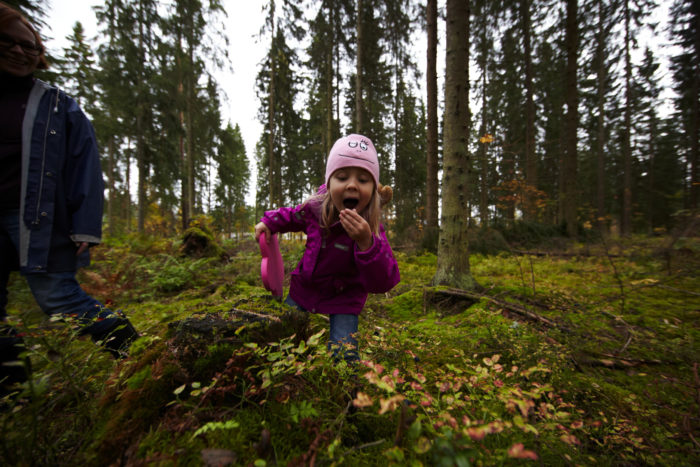
A young girl putting something in her mouth in a forest.

Whenever kids visit a Finnish forest, each gram of soil contains as many as five billion harmless bacteria, which boost children’s natural immune systems in a natural way that protects them from non-communicable diseases.Photo: Riku Pihlanto / Visit Finland

Imagine this: walking barefoot across soft moss. The air is pleasant and has a high oxygen content, thanks to the photosynthesis of the trees all around you. Breathe in, breathe out. Nice, eh?

Well, besides the soft texture of the moss, another factor boosting circulation to your feet is the prickly ends of the pine and spruce needles on the forest floor. You can basically decide which hormone to boost on your forest walk: endorphins (boots on), or adrenaline (boots off).

To a dedicated biohacker, walking barefoot may sound a bit hippy-esque. But the soil you touch makes a difference. Aki Sinkkonen, a Finnish scholar in wildlife biology and nature-based solutions, would like to bring a piece of the Finnish forest to everyone, even in urban areas.

Whenever kids visit a Finnish forest, each gram of soil contains as many as five billion harmless bacteria, which boost children’s natural immune systems in a natural way that protects them from non-communicable diseases. In an urban setting, a sandbox at the local playground contains only 10,000 to 100,000 bacteria per gram, and that’s not enough.

“Finnish forests are an ideal setting to gain healthy exposure to the diverse microbiota because, due to our cold winters, we lack the more dangerous disease-causing pathogens,” Sinkkonen says. And there’s always a forest nearby, usually within walking distance, even in the capital, Helsinki.

Fresh, fresher and freshest air

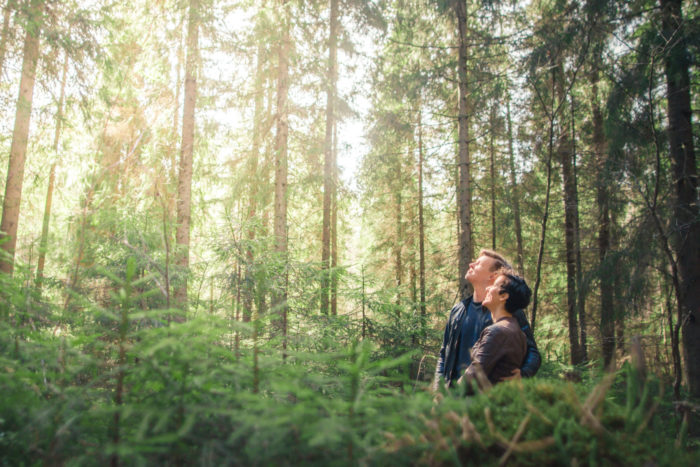
A couple standing in a sunny forest, gazing upwards.

The word “forest” means many different things to people in Finland: food, shelter, recreation, business and inspiration.Photo: Laura Vanzo / Visit Tampere

The further away from the city you are, the more likely you are to come across beard moss, named for the way it looks hanging on tree trunks and branches.

The Finns will tell you that if pollution-sensitive beard moss is growing on old trees, it’s a sign that the air is clean. Finland and the other Nordic countries have the cleanest air in the world, and you know you’ve arrived when you see beard moss.

When you reach that place, your lungs may say kiitos (thank you).

By Virve Ilkka, April 2019

Historic eastern Finnish monastery still offers solitude and creative energy

Heinävesi, a quiet and picturesque municipality near the eastern Finnish city of Joensuu, forms the religious and cultural centre of Finland for Orthodox Christians, who make up about one percent of the total population, according to official statistics of religious affiliation.

Valamo Monastery, the only all-male Orthodox monastery in Finland, has existed in Heinävesi since 1940. That year, because of the Second World War, 200 brothers were evacuated from a centuries-old monastery of the same name on Valamo Island in Lake Ladoga, part of the eastern Finnish territory that was eventually ceded to the Soviet Union.

For the many visitors to the monastery, including Finnish artists and cultural figures and tourists from Russia, Japan and all over Europe, it is a place for prayer, solitude and creativity. A visit to the monastery provides an opportunity for introspection and reflection on the core values of life.

Miraculous journeys

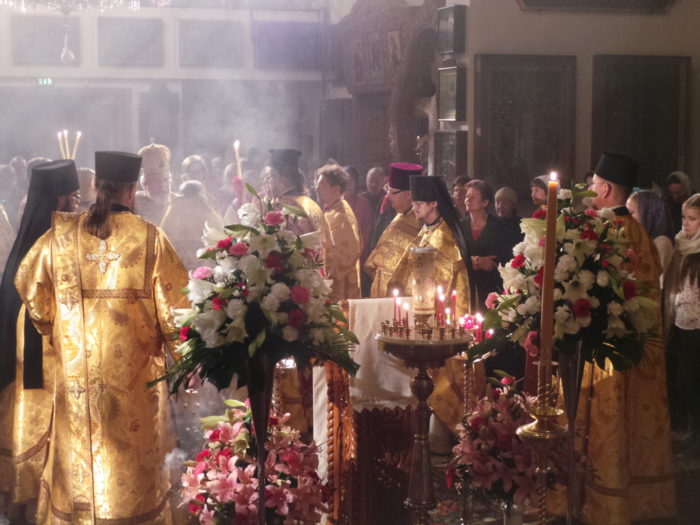
Monks clad in golden robes in the monastery, incense forming smoke over the monks.

At present, about 20 monks live in the monastery on a permanent basis, but more than 110,000 people visit each year.Photo: Pentti Potkonen/Valamo Monastery

“I promised to myself that if I went to Finland I would definitely kiss the miracle-working icon of Our Lady of Valamo,” says Vera Gagarina, 32, from Russia. “That’s why I came here.”

Orthodox Christians believe this icon works miracles, and people visit from all over the world. It was transported from the old Valamo Monastery during the evacuation, along with an ancient icon of Our Lady of Konevets delivered from Mount Athos in 1393; relics; ancient iconostases; numerous items of church plate; thousands of library books and even bells.

The monks were helped to safety across the frozen Lake Ladoga in Finnish army trucks. After reaching Heinävesi, the brotherhood purchased a 19th-century estate called Papinniemi (Priest Peninsula). They made their decision partly because they happened to find a small icon of Saint Sergius and Saint Herman of Valamo in the main building of the estate.

In 1977, to mark the 800th anniversary of the Orthodox Christian Church in Finland, the stone Transfiguration Cathedral was built on the Valamo grounds in Heinävesi. Church services are held there every day. At present, about 20 monks live in the monastery on a permanent basis.

A favourite haven for public figures

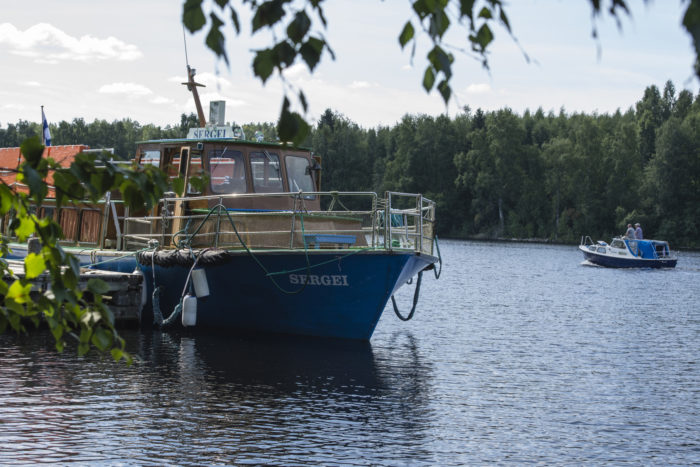
Boat Sergei docked at a pier on a lake.

Valamo Monastery is located in the eastern Finnish lake district. It’s a peaceful area for walks in the woods, swimming, a lakeshore sauna or a boat trip.Photo: Pentti Potkonen/Valamo Monastery

The monastery has been a place of pilgrimage for Finland’s cultural elite since the 1960s.

The most outstanding persons of that time included Orthodox Christian writer and thinker Tito Colliander and his wife, artist Ina Colliander. She focused on Orthodox Christian and icon-painting motifs and in the 1970s she decorated the stone Transfiguration Cathedral with mosaics. Well-known film director Kalle Holmberg and his wife, playwright and scriptwriter Ritva Holmberg, also liked to visit. Famous rebel poet Pentti Saarikoski lies buried in the cemetery of the monastery in accordance with his will. Poetry lovers visit his grave and leave ballpoint pens on it.

“Many well-known actors, painters, musicians, writers and public figures still visit the monastery,” says hieromonk Michael, who lives at the monastery.

Hospitable environment

A woman posing in front of an altar at the monastery.

“I promised to myself that if I went to Finland I would definitely kiss the miracle-working icon of Our Lady of Valamo,” says Vera Gagarina, who is visiting from Russia.Photo courtesy of Vera Gagarina

A small guesthouse is available to artists upon request, continuing the tradition of hospitality begun at the original monastery on Lake Ladoga.

“The nature surrounding Valamo left one of the greatest impressions of my trip,” says Gagarina. “I visited in the middle of the winter and clean, white snow was everywhere – under my feet, on tree branches, on the rooftops and even on my eyelashes. The feeling of absolute solitude was palpable. That’s what I lacked in crowded, noisy Moscow. Peace of mind is what I gained from Valamo.”

By Anna Liukko, April 2019

Finnish parliamentary elections: Record number of women winners

The main issues driving Finland’s 2019 parliamentary election on April 14, 2019 included the previous government coalition’s unsuccessful attempt to pass a long-debated social and healthcare reform; the need for action to mitigate climate change; and immigration policies. A new Parliament is elected every four years.

The Social Democratic Party (SDP) took 17.7 percent of the votes, entitling it to 40 seats in the 200-seat Parliament. This marks the return of the SDP, which had not been the largest party in Parliament since 1999. It also represents a historically narrow victory, as the SDP was followed by the unabashedly populist “Finns” Party with 17.5 percent (39 seats) and the moderate conservative National Coalition Party with 17 percent (38 seats).

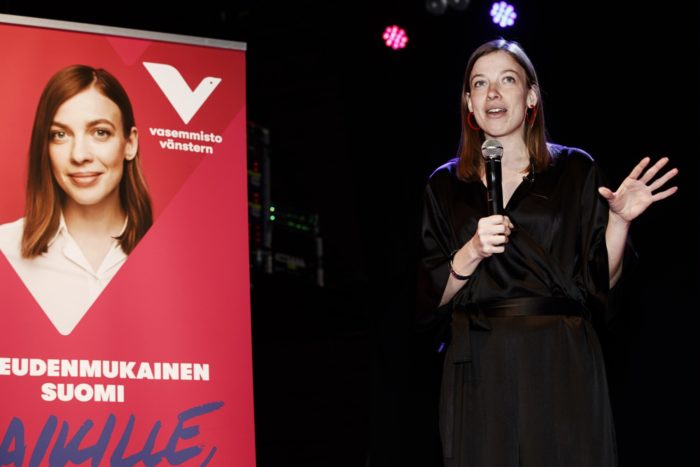
The conservative Centre Party, leader of the previous government coalition, fell precipitously from 49 seats to 31, with 13.8 percent of the vote. The Greens, strong in urban areas, posted a personal best by adding five seats for a total of 20, their largest ever. The Left Alliance added four seats to bring its total to 16. Both the Greens and the Left Alliance had kept climate change at the forefront of their campaigns.

The Swedish People’s Party, whose constituency relies mainly on speakers of Swedish, which is also an official language in Finland, held steady at nine seats. The Christian Democrats, in turn, clung to their five seats. Well-known businessman and MP Harry Harkimo retained his place in Parliament after leaving the National Coalition Party to form a non-party called Movement Now.

Women and youth make progress

Li Andersson giving a speech next to her campaign roll-up.

Li Andersson, already a two-term MP and the leader of the Left Alliance at age 31, addresses the party’s followers as the 2019 election results roll in.Photo: Roni Rekomaa/Lehtikuva
Voter turnout was the highest since 1991, at a respectable 72 percent, almost two percentage points above the 2015 figure. All citizens 18 or over are automatically registered to vote and receive a letter of notification in the post before each election. A total of 4.5 million people are entitled to vote, including about 250,000 Finnish citizens living abroad.

A record number of women won seats: 94, equaling 47 percent of the new Parliament – the previous high point, 85, happened in 2011. Eighty-five percent of Green candidates were female, and only three out the party’s 20 MPs are male. Women hold 22 of the SDP’s 40 seats.

All in all, 83 incoming MPs are new to Parliament. Eight members are under 30 years old, and 48 percent of Parliament is under 45. Iiris Suomela, 24, a Green from the central western city of Tampere, is the youngest MP in the new session.

The weight of a vote

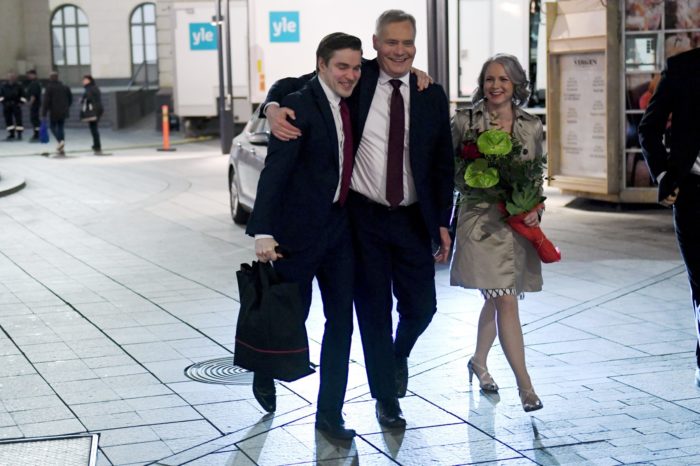
Happy-looking Dimitri Qvintus, Antti Rinne, and Heta Ravolainen-Rinne walking on the street.

From left: Social Democratic Party spokesperson Dimitri Qvintus, party chair Antti Rinne, and Rinne’s wife Heta Ravolainen-Rinne after the April 14, 2019 election.Photo: Antti Aimo-Koivisto/Lehtikuva
The biggest vote-magnet candidates receive tens of thousands of votes, but in some districts, candidates can squeak into Parliament with just over 2,000 votes. This means that every vote carries a value that is both significant and mathematically appropriate. Perhaps this is one reason that people get out and vote, keeping voter participation high.

As the SDP begins negotiations to form a government coalition, Finland’s largest daily, Helsingin Sanomat, suggests that one likely scenario would involve the SDP, the National Coalition Party, the Greens and the Swedish People’s Party. Many other combinations are possible – even ones that don’t include the SDP – but each additional party brought into the coalition complicates the path to finding common ground.

By ThisisFINLAND staff, April 15, 2019