With art, motion and emotion, Finnish researchers explore new language-learning paths

Traditional language learning often emphasises written exercises, overlooking the role of movement and emotions. However, research shows that embodied experiences help anchor new words and structures in the brain.

That’s the idea behind Embodied Language Learning through the Arts (ELLA), a Kone Foundation–funded project about how artistic activities enhance second-language acquisition.

“We need ELLA because language pedagogy has to change,” says Eeva Anttila, professor of dance pedagogy at the Theatre Academy of the University of the Arts Helsinki, who led ELLA. “Learning should be fun, motivational and emotionally supportive.”

What’s art got to do with it?
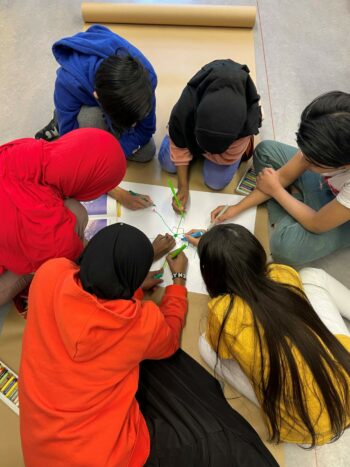
In a photo taken from above, six children are drawing on the same, large piece of paper.

Movement and emotions are deeply connected to cognition, and various activities can contribute to language learning.Photo courtesy of Eeva Anttila

Movement and emotions are deeply connected to cognition. “When learners physically engage with language, they internalise it more deeply,” Anttila says. ELLA promotes a holistic approach, integrating embodiment, artistic expression and language learning, especially in culturally diverse settings.

“Students’ attention spans are short, and the arts help sustain focus long enough for experiences to mature and fulfil their potential. It’s learning by doing – deeper, more impactful.”

ELLA has been introduced in schools, immigrant preparatory classes, high schools, adult education and teacher training. “With ELLA, we aim to fully engage human potential by learning and practising multiple skills simultaneously,” says Anttila. Through activating their senses, emotions and motor skills, learners’ linguistic abilities develop while gaining cultural insights.

One of ELLA’s subprojects, Dans med språk (Swedish for “Dance with language”), introduced spoken-word choreographies in Swedish at a performing arts high school in the central western Finnish city of Tampere. (Swedish is an official language in Finland.)

Open to all, regardless of dance experience or Swedish proficiency, the course is now so popular that it has a waiting list – an impressive feat, as it means significant numbers of Finnish-speaking students are also opting to attend.

Singing your way to fluency
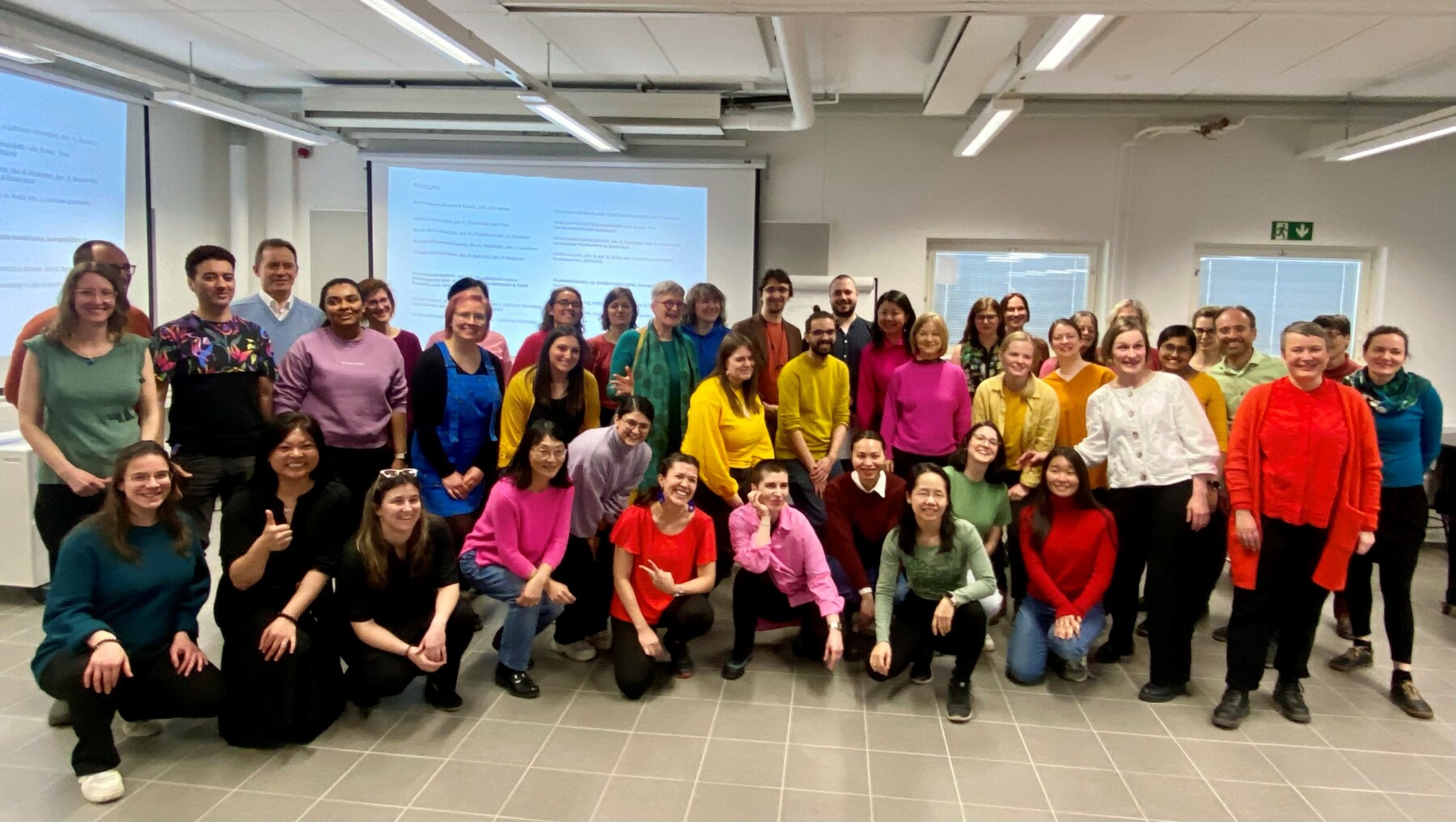
A diverse group of about 40 people pose for a group photo, some standing and some kneeling.

A Learn Finnish by Singing choir: The role singing can play in language learning is a fascinating field that hasn’t been exhaustively studied.Photo courtesy of Johanna Lehtinen-Schnabel

Singing also fast-tracks language learning. An exciting manifestation of ELLA’s philosophy is learning Finnish by singing.

“This is a fascinating transdisciplinary field that has not been studied much,” says Johanna Lehtinen-Schnabel, an ELLA researcher and conductor of the Learn Finnish by Singing choirs in Helsinki and nearby Espoo.

The idea originated from the students of a pilot project in which Lehtinen-Schnabel taught music to adult immigrants. Singing helps learners absorb language production, such as pronunciation, rhythm and intonation, while reducing the fear of making mistakes.

Lehtinen-Schnabel’s doctoral dissertation at the Sibelius Academy of the University of the Arts Helsinki (named after the famous Finnish composer Jean Sibelius), focuses on these language-aware choirs, which embrace genres from pop and rap to folk music, exposing learners to diverse linguistic styles. Incorporating flash mobs, dialects and improvisation, the choirs make language learning an immersive, real-world experience.

“When I sing in the choir, I don’t feel I’m studying,” says choir member Alicia Sevilla. “It’s fun and natural.” She also studies Finnish in a regular course, but credits the choir with improving her fluency and spoken Finnish. Open to all proficiency levels, the choirs require no prior Finnish skills to join.

Unlocking kids’ language skills
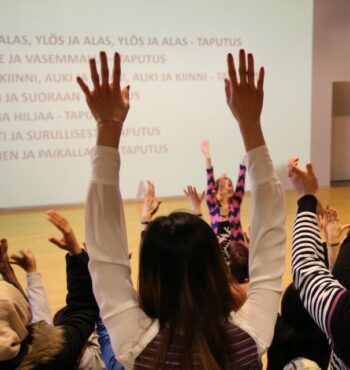
Several rows of students are shown from behind, with their hands raised, mimicking the gesture of a teacher in the front of the room.

It’s fun and natural to study a language by singing.Photo courtesy of Johanna Lehtinen-Schnabel

Research on embodied language learning has largely focused on adults and young children, with significantly less attention given to adolescents. Elias Girod, a dancer and teacher-in-training, hopes to change this. His University of Helsinki master’s thesis examined embodied learning in second-language teaching within ELLA.

“Pairing words with movement enhances neural connections, making information more memorable and deeply embedded,” he says. This aligns with research showing the deep connection between physical activity and cognition.

For Girod, embodied learning covers a wide range of possibilities, including standing up, sitting on the floor, going outside or simply examining how we use our bodies in different environments. “Language learning is more than grammar,” he says. “It’s about interaction and motivation. Art naturally creates both.”

Finland’s national core curriculum (revised in 2014, with another revision in time for the 2025–26 school year) already emphasises functional and cognitive teaching over formal or rigid instruction, but Girod would like to see further improvements. He argues that, for students who recently moved to Finland, “the priority should be making them feel comfortable and connected.”

He advocates for a more experiential approach, where language is learned through movement, interaction and creative expression rather than isolated drills. “Children should also be taken to performances and exhibitions outside of the school,” he adds, noting the importance of cultural experiences in fostering both language skills and a sense of belonging.

As a practical step, he suggests inviting professional artists into schools for workshops and performances.

Rethinking language education
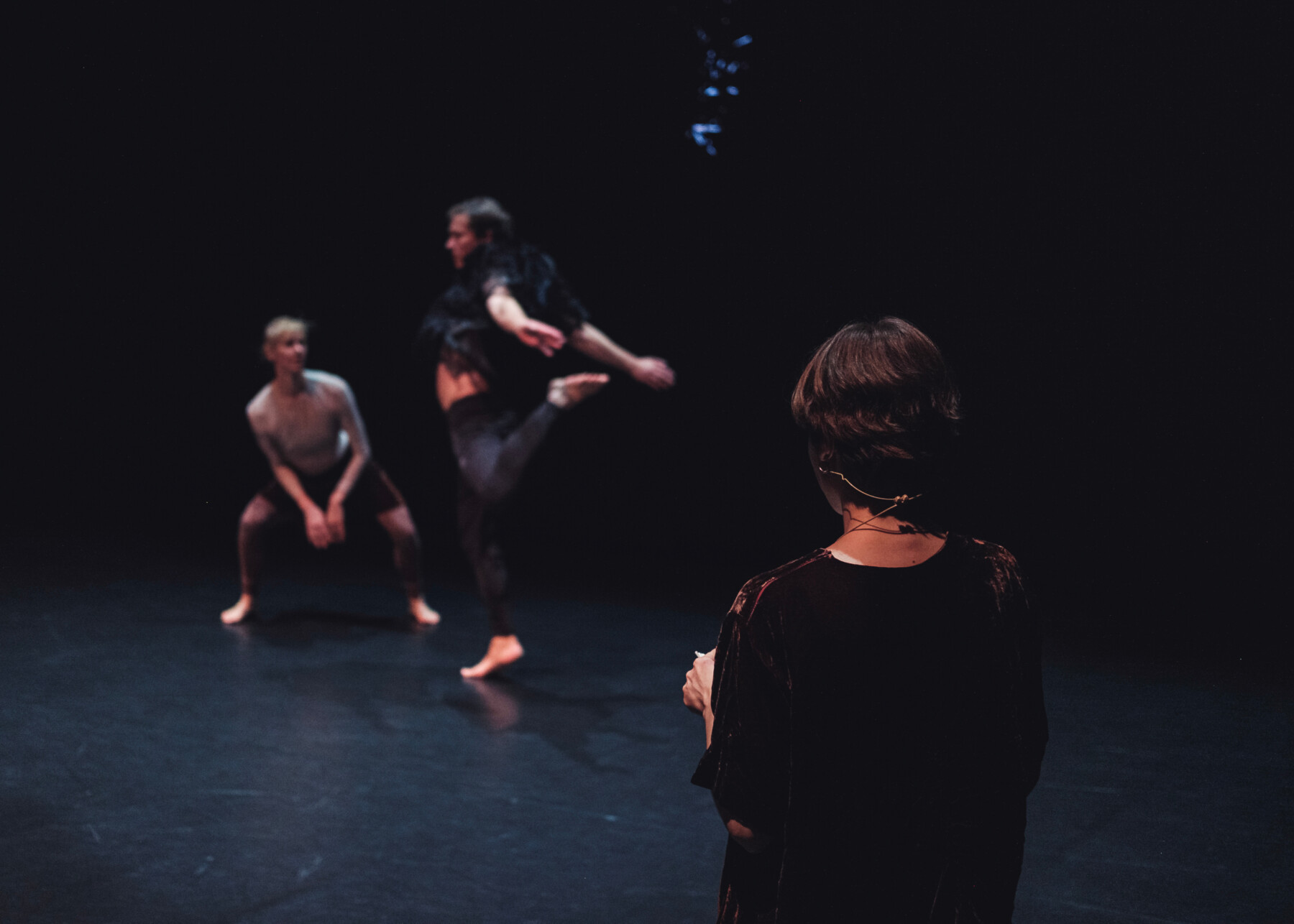
A man and a woman are dancing onstage in the background, while in the foreground a woman reading aloud from a book.

The performance Kunnes avartuu (roughly: “Until expansion”) is a conversation between Veli Lehtovaara’s choreography and poetry written and read aloud by Milka Luhtaniemi (foreground).Photo: Jani Salonen

Girod is critical of the Programme for International Student Assessment (PISA) rankings for measuring only quantifiable subjects and excluding creative subjects. This omission disregards dance, other art forms and the language that enhances them, overlooking their educational value.

ELLA represents a shift in language education, making it dynamic and immersive. Integrating movement, creativity, and human connection fosters linguistic development, confidence, cultural awareness and a sense of belonging.

By Carina Chela, April 2025
How livestreaming helped me learn Finnish – and what you can take from my experience

Every Tuesday evening, I sit before my computer and press “Go Live” on YouTube, armed with a questionable understanding of Finnish grammar and an even more questionable ability to pronounce words with more double vowels than should be legal.

What began as an innocent attempt to practise quickly became something far more potent: a community, a habit and a long-running experiment in the peculiar ways that language works its way into the brain.

Livestreaming, as it turns out, has become an unexpected but effective way to do just that. It forces consistency, invites real-time feedback and ensures that any mistake – no matter how absurd – is instantly witnessed, dissected and, quite possibly, turned into a meme.

But beyond the spectacle, it has taught me some lessons about acquiring a new language. Here are the three most important takeaways.

1. Speak first, panic later

The greatest tragedy of language learning is that we are often too afraid to use the words we have painstakingly acquired. We hoard them like dragons guarding treasure. However, while dragons hoard out of greed, we do so out of embarrassment, too afraid to spend our words lest it be the wrong currency. But here’s the secret: the only way to speak a language is to, well, speak it.

During my streams, I’d set a timer for 15 minutes and solemnly vow to verbalise my thoughts in Finnish before granting myself the mercy of a translation check. Sometimes I was close. Other times, I inadvertently declared war on the very concept of grammar. Once, I confidently translated the name of my home country, the United States (Yhdysvallat), into English as “Switzerland.”

In my defense, I was used to seeing it only as Amerikka or USA (Finnish speakers often use this English abbreviation). In the heat of the moment, my brain panicked and saw a similarity between Yhdysvallat and Itävalta (which is actually Austria, so I was doubly wrong). The viewers in the chat enjoyed that hiccup immensely and have never let me live it down – nor should they.

Because here’s the thing: Nobody expects you to speak Finnish perfectly (least of all Finns themselves). The moment I realised this, my mistakes stopped feeling humiliating and started feeling hilarious. Mistakes aren’t failures; they’re proof that you’re trying. And if you’re lucky, they might even make for excellent comedy.

If you don’t have a livestream audience to hold you accountable, narrate your day in Finnish, record voice notes or talk to your pet. They won’t correct you, but they also won’t judge you (probably).

2. Languages are best learned in company

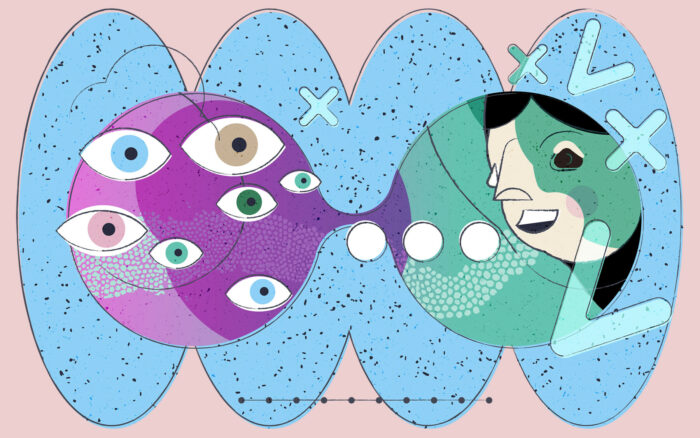
In a colourful illustration, a person’s face on one side is talking to a bunch of eyes on the other side, representing livestream viewers.

The audience is watching: Language learning is also a cultural back-and-forth.Illustration: Jarkko Ojanen

Languages are not equations to be solved, but living, breathing things. And the moment you involve other people, the process becomes livelier, funnier, and infinitely more memorable.

One of the greatest benefits of livestreaming my Finnish practice on YouTube has been the interaction with viewers. They correct my mistakes, challenge me with new words, and occasionally take great delight in my linguistic misadventures. But language learning is also a cultural exchange, and on my stream that’s a two-way street. Just as they steer me through the choppy waters of Finnish like patient raft guides coaching someone who thought the trip would be more “lazy river,” I return the favor with cultural tidbits of my own.

One of my proudest contributions? Convincing (or at least attempting to convince) my Finnish viewers that the best brand of dark Finnish rye bread is undeniably Reissumies, and that it is best enjoyed toasted and topped with peanut butter and blueberry jam.

Some people in the chat were sceptical of the non-Finnish toppings. Others were horrified. But as with all great debates, the conversation itself was half the fun. Learning a language isn’t just about mastering grammar. It’s about the connections we make, the ideas we trade and the laughter that comes from discovering each other’s quirks.

If livestreaming isn’t an option, there are plenty of other ways to make language learning social. Join online forums, attend language meetups or comment on Finnish social media posts. The kindness of strangers (and their occasional amusement) is an underrated learning tool.

3. The trick is not motivation – it’s routine

Motivation is unreliable. It arrives in grand, heroic bursts and disappears the moment things become inconvenient. Routine, however, trudges forward regardless of enthusiasm.

My Tuesday streams became sacred not because I always felt like doing them, but because they were simply what I did on Tuesdays. There were plenty of evenings when I’d drag my feet beforehand, but once I got going, I started having fun. The chat picked up, the commentary flowed, and suddenly it felt silly that I had resisted in the first place.

If you struggle to stay on track, tether your study sessions to something immovable: read Selkouutiset (the news in Easy Finnish) with your morning coffee, listen to a Finnish podcast while commuting or write a diary entry before bed. Language is learned in the small, steady moments – not in grand fits of inspiration.

A few final thoughts

In a colourful illustration, a person speaks and gestures in front of a computer whose screen shows a video play icon and a word in Finnish.

Mistakes aren’t failures; they’re proof that you’re trying. Illustration: Jarkko Ojanen

Despite the mistakes, the awkwardness and the occasional linguistic disaster, through livestreaming I’ve come to realise that Finnish isn’t something I can master by sheer force of logic alone. Too often, I have approached it like a sudoku puzzle, analysing case endings as if they were numbers that must add up just right. But language is not a grid to be solved – it is something lived, spoken and sometimes completely fumbled.

Because Finnish, you see, is not so much learned as it is summoned. It is a language where syllables shift like moonlit waters and endings twist with a logic that sometimes gives even native speakers pause for thought.

What other language could the wise old bard Väinämöinen have used to sing his rival into a swamp, dispel an evil magic plague and coax forgotten wisdom from the belly of a giant, as he does in the Finnish national epic Kalevala? A language of poetry and power, and here I am, trying not to panic when the cashier asks, “Haluatko muuta?” (Would you like anything else?).

So we study. We listen. We speak, however clumsily, trusting that fluency is not built in grand moments of inspiration but in the small, daily rituals of trying, failing and trying again. We embrace the rhythm, the absurdity, the sheer magic of it all – until, one day, we cast a sentence that does not fizzle in midair.

Onnea matkaan! (Good luck on your journey!)

By Tyler Walton, April 2025

Finland’s election day coffee tradition unites all kinds of voters

Finland generally has strong voter participation; it’s no exaggeration to say that many people consider it a civic duty. The first round of the 2024 presidential election, for example, drew 75 percent voter participation (77.3 percent among women and 72.5 for men).

One unofficial aspect of elections doesn’t show up in the statistics, although you could argue that it contributes to voter turnout. To mimic a phrase that has become well known in political campaigning, “It’s the coffee, stupid.”

Combine elections with Finland’s robust coffee-drinking culture and you have the longstanding Finnish tradition of election day coffee. After doing your part by voting, it’s time to stop at a nearby café or a friend’s place for a cup of coffee and perhaps a pastry. If your polling station is in a school building, kids and parents may be operating a popup café to raise money for a class trip.

A coffee-worthy occasion

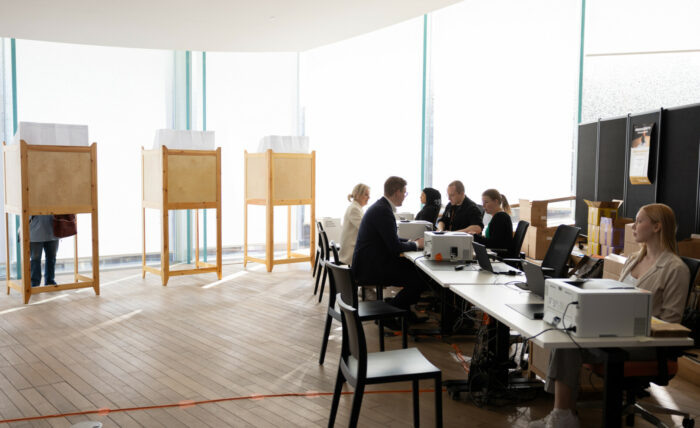
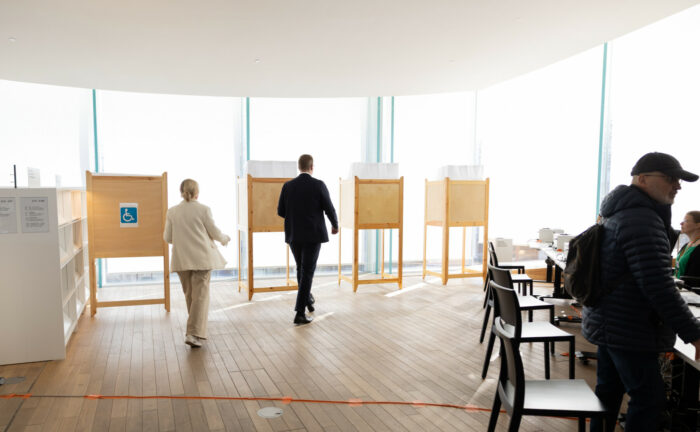
In a large room, people are sitting at a long table, with several voting booths in the background.

Showing your ID and going into a booth to cast your vote is a small but momentous action.Photo: Emilia Kangasluoma

People in Finland drink the most coffee per capita of any country in the world, consuming more than 12 kilograms (26.5 pounds) annually, according to the International Coffee Association. 

However, drinking coffee is not just about the quantity. Whether it’s a coffee break with your colleagues or the symbolic recognition of a significant milestone such as casting your vote, it’s often associated with a social occasion, a feeling of togetherness.

During a recent nationwide election, we ventured out into Helsinki to engage people in conversation about the Finnish phenomenon – yes, phenomenon – of election day coffee. Along the way, we consumed a great deal of caffeine and enjoyed surprisingly wide-ranging discussions about coffee’s place in Finnish hearts, culture and election day traditions.

Voting and coffee go together

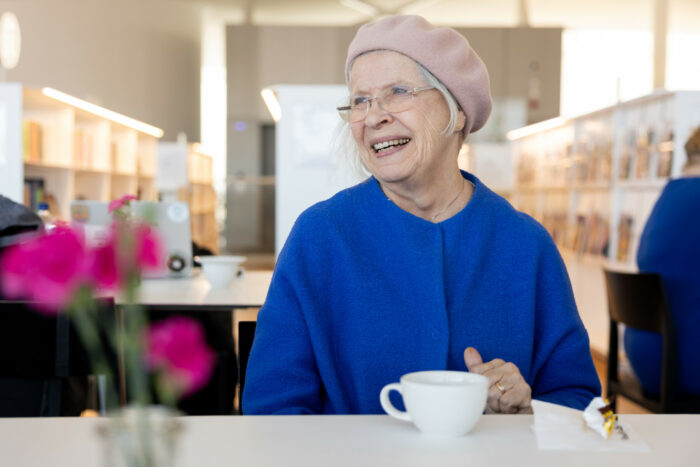
A stylishly dressed older woman sits at a table in front of a cup of coffee and a vase of pink flowers.

Ann-Helen has a voting history that extends back to the 1960s, and she has gone for coffee after almost every vote she has cast.Photo: Emilia Kangasluoma

Ann-Helen has just cast her ballot at an advance voting location in Oodi, Helsinki’s central library, an architectural and cultural landmark popular with Helsinkians and tourists alike. She is a retired psychologist and psychoanalyst, and has a voting history that extends back to the 1960s.

She sits down with a cup of black coffee at Oodi’s third-floor café, where we have a view of the silvery hull of the Kiasma Museum of Contemporary Art, the stately stone pillars of Parliament and the all-glass façade of the Music Centre.

For Ann-Helen, as for many people in Finland, voting and coffee go together. She usually chooses a savoury snack to go with her election day coffee, rather than a sweet desert.

“After the previous presidential election I didn’t go for coffee, and it felt wrong somehow,” she says. “Apart from that time, I’ve always gone for coffee.” She has been a widow for some years now, she tells us. “It was nicer to go together, but I still go – here I am.”

Deciding who to vote for was easy, Ann-Helen says. “I had two candidates in mind, and I thought it over on my way here.” This is the second time she has made use of the option to vote early. “Just to make sure that nothing keeps me from voting,” she says. 

How does it feel to have voted? “It’s a satisfying feeling.” With advance voting under way and election Sunday approaching, she says, “When you run into people you know, you always have to ask them, ‘Have you voted yet?’”

Getting fancy

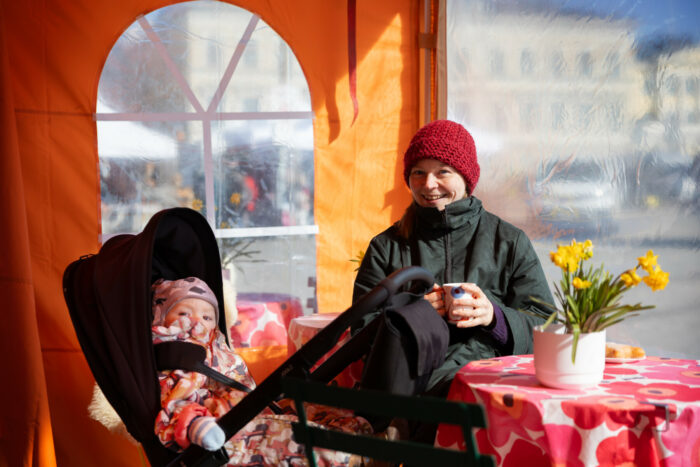
Beside a baby in a stroller, a smiling woman holding a coffee cup sits at a table with a pot of daffodils on it.

Tähti is starting an election day coffee tradition for her family.Photo: Emilia Kangasluoma

On a sunny but brisk spring day, Tähti walks to a seaside café on Market Square after casting her vote at Helsinki City Hall. A chilly breeze is blowing, but a tent-like pavilion keeps patrons, servers and journalists cosy.

One-year-old Nietos looks on from his stroller while his mother savours a cup of coffee and a jam-filled pastry. She breaks off a piece of it for him to chew on.

Tähti is a cellist and a music teacher. She and her family are living in Helsinki for a year while her partner completes his student teaching for his pedagogical studies. After that, they plan to return to the central western city of Tampere.

“It was nice to vote at City Hall because I’d never been inside before,” she says. “Voting there felt fancier than going to the local library, which is where I’ve usually voted.”

She doesn’t come from a family that emphasises election day coffee, but she has decided to adopt the custom. “I know it goes from one generation to the next,” she says. “Now that I have a one-year-old, it’s a good time to start. It’s the first time he has come with me to vote. I can create a tradition for our family.”

More important than ever

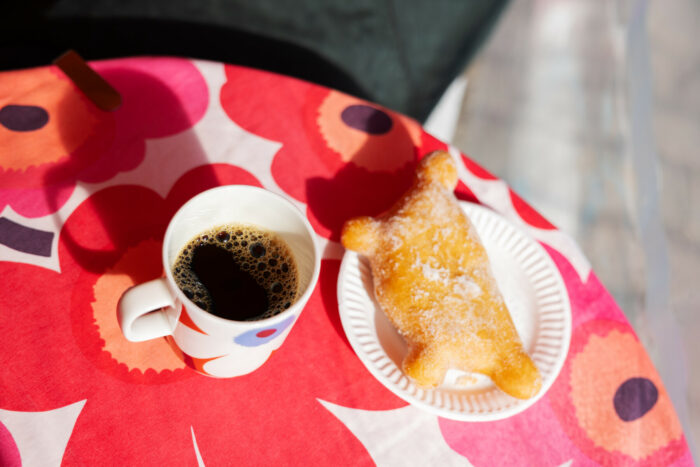
A cup of coffee and an almost rectangular pastry are on a Marimekko floral-pattern tablecloth.

This pastry only vaguely resembles the animal from which it gets its name: possu, or “pig.”Photo: Emilia Kangasluoma

Tähti is attracted to the idea because the ritual of going for coffee “makes casting your vote feel a bit more ceremonious.” It’s funny how coffee and pastries can encourage people to get to the polls.

“Voting seems more important than ever,” says Tähti. “Back when I was studying, I might have thought that one vote couldn’t matter. But for many years now, I’ve voted in every single election.”

She continues, “With the unusual world situation, you really start to see you can’t necessarily assume that democracy is permanent. When I was younger, maybe I took that for granted.” 

Nietos is still chomping away at his piece of dough, craning his neck to see the chirping birds that are hopping around searching for crumbs. 

“Having a child also changes the way you think,” Tähti says. 

Coffee among friends

A woman and a man are sitting in a sunlit café and smiling and holding coffee cups.

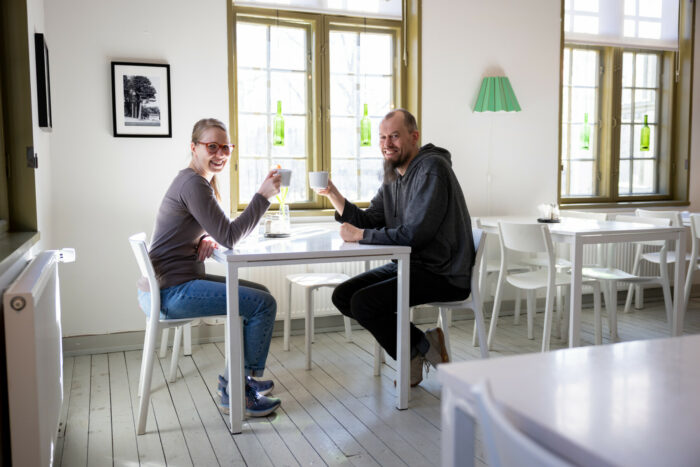
For Saana (left) and Vesa, election day coffee is a way to celebrate voting and encourage others to go, as well. Photo: Emilia Kangasluoma

We meet Saana and Vesa at Café Monami, located in a venerable manor house on the eastern outskirts of the Finnish capital. Both are longtime Helsinki residents but grew up more than 400 kilometres (250 miles) north of Helsinki, near Kaustinen, the home of a large annual folk music festival.

Music became a part of their lives: Saana is a freelance musician, and Vesa, an all-around tech worker, sometimes moonlights as a concert sound technician.

As they make progress on large slices of dangerously delectable cake, they talk about what election day was like in the small towns where they grew up.

As a child, Vesa often accompanied his parents and relatives to the polling station. “There was something exciting about it,” he says. “It was so official.” Coffee was served afterwards.

“I remember noticing how important voting was for people, particularly older people,” says Vesa. Many would put on their best clothes to go to the polling station, and some people still do.

“It was a dignified, earnest occasion,” says Saana. “And then you celebrated by going for coffee. Finnish people have such a strong coffee culture anyway. There’s always a daily coffee break. But on election day, it’s more festive and stately.”

She’s not sure if her father used to have coffee after voting, because he always went in the evening, just before the polling place closed. “That was his tradition,” she says. “He always said that somebody had to go that late, so the election officials wouldn’t feel like they sat there all evening for nothing.”

Talking about talkoot

A cup of coffee and a piece of chocolate cake are arranged on a table.

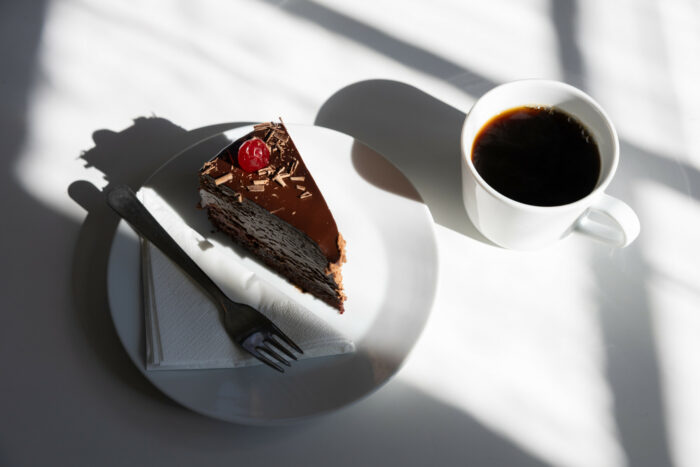
We believe you will agree that there is something sweet about the tradition of election day coffee.Photo: Emilia Kangasluoma

While voting itself is an individual act, it’s also part of a collective effort, of course.

“I always vote,” says Vesa. “It’s nice to keep up the tradition, and it’s important to society, too.”

Saana thinks that it’s self-evident. “You don’t lose anything by voting,” she says. “Why wouldn’t I vote?”

Vesa believes that your attitude about voting, whether negative or positive, will rub off on those around you. “It seems like election day coffee is part of encouraging others to vote,” he says. “It’s a way of expressing, ‘I voted. You go and vote, too.’” 

In other words, coffee – and don’t forget about pastries – gives people a tasty excuse to make a big deal out of voting. He theorises that it may be more fun to post a mouthwatering election day coffee photo on social media than just a message saying “I voted!”

On a symbolic level, the visible, sociable tradition of election day coffee makes it clear that voting  — and governing — is a shared effort, regardless of which party you choose. (The ballot typically includes a dozen or more parties. Usually, eight to ten of them have enough support to win seats in Parliament.) 

The discussion brings to mind the Finnish word talkoot, meaning an event where people get together to chip in and accomplish a large job. Working towards a common goal increases the feeling of community. 

Perhaps unsurprisingly, talkoot always includes a coffee break, too.

By Peter Marten, April 2025

Election time: Finland’s foreign residents cast their votes in county and municipal elections

Free and fair elections, covered by a free and independent press, form a cornerstone of democracy.

Finland holds presidential elections (at six-year intervals), parliamentary elections (four-year intervals), European Parliament elections (five-year intervals) and, last but not least, combined county and municipal elections (four-year intervals).

Foreigners living in Finland can vote in county and municipal elections (held on April 13, 2025). It’s a chance to get involved in the political process as a voter or a candidate, to make their views known and have some influence on the future direction of society.

Hanging out at the library

A man sits on a set of wooden steps while a small girl plays in the foreground.

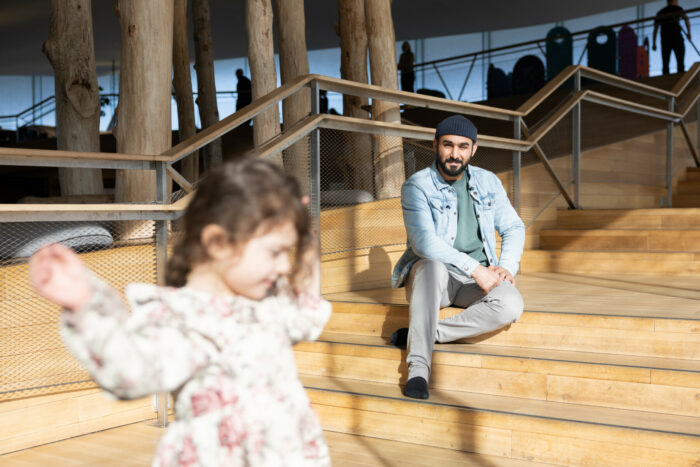
Navid, a longtime resident of Finland originally from Afghanistan, and his daughter have space to play in the kids’ section of Oodi, Helsinki’s central library.Photo: Emilia Kangasluoma

One of the numerous polling places available for advance voting is located on the top floor of Oodi, Helsinki’s central library and one of the city’s architectural landmarks. The children’s section is on the same level, complete with a spacious play area. Dozens of prams are parked in rows nearby, a sign of the location’s popularity among Helsinki families.

Navid, a welder by profession, recently moved to Helsinki from the northern Finnish city of Oulu. Originally from Afghanistan, he has lived in Finland for nine years.

While keeping an eye on his daughter, Aliisa, he tells us “I believe it’s an important thing” to be able to vote. However, he’s not going to cast his vote today at Oodi, he says. The reason becomes obvious as Aliisa grabs his hand and pulls him toward the play area.

Superimportant participation

A man sits in a chair holding a small child, with bookshelves and tables in the background.

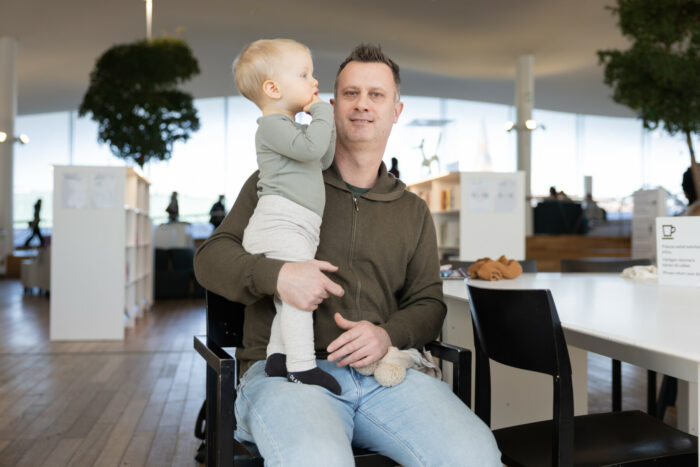
Fabio, an Italian who lives in Finland with his family, values the chance to cast his vote in local elections.Photo: Emilia Kangasluoma

Not far away, Fabio, an Italian who has lived in Finland for 12 years, is sitting with his son, Leonardo.

“It’s superimportant,” says Fabio, when asked what it means to him to be able to participate in the election. “I’m not a citizen, but I’m a resident, so it’s good that I can vote for the mayor of the city I live in.” He adds that it’s “quite nice to be able to vote in advance.”

Leonardo is his third child. “Nowadays, I have a family, so family issues are important to me,” Fabio says. We have caught him on the last day of a three-month parental leave. Soon he will return to his job as a researcher at the Central Bank of Finland and Leonardo will start daycare, joining his two older sisters.

“Waaah,” says Leonardo, as if making a good-natured comment about what his dad just said.

Who gets to vote in which election?

In a spacious room, several people are walking to wooden booths standing beside a desk and bookshelves.

People head for the voting booths at an advance voting location in Oodi, Helsinki’s central library.Photo: Emilia Kangasluoma

How big is the foreign-resident contingent of the Finnish electorate? At the time of writing, more than 411,000 foreign nationals live in Finland, according to Statistics Finland. That comprises 7.3 percent of the total population of 5.6 million, and does not include foreign-born people who have Finnish citizenship. In Helsinki and the surrounding region, foreign nationals make up more than 12 percent of the inhabitants.

Presidential and parliamentary elections require Finnish citizenship, and EU citizens living in Finland can vote in European Parliament elections. In county and municipal elections, however, foreign residents who have been living in Finland for at least two years have the right to vote and run for office.

In most of the country, people vote on the same day for one candidate in their county election and one in their municipal election. Helsinki is a municipality that stands on its own, without a county, so Helsinkians cast votes in only one election.

All eligible voters are automatically registered to vote (the voting age is 18). They receive notification digitally or via snail mail in advance of each election, including the address of their local polling place and a list of locations for advance voting. For the April 2025 county and municipal elections, the 4,270,942 eligible voters included 260,047 foreign nationals, or 6.1 percent of the total.

More info about elections in Finland here.

By Peter Marten, April 2025

Finnish American designer Ervin Latimer creates inclusive fashion

Fashion designer Ervin Latimer seems to fit comfortably between high fashion and mass market. He shows his clothing at prestigious international fashion weeks, and then designs pieces for a Finnish hypermarket chain. He might host a runway show in bright red drag but considers himself pragmatic. His collections have been featured in Vogue but he doesn’t care who wears his designs.

Latimer’s clothes resemble traditional menswear silhouettes such as two-piece suits and button-up shirts, but they are designed to be worn regardless of the wearer’s gender, body shape or identity. Little tweaks make the clothes adjustable to different bodies and occasions.

“I design clothes that represent masculinity,” he says. “They’re not meant for a specific gender, but for people who want to express or perform masculinity.”

This brings us to the main tenet of Latimer’s design philosophy: he is, first and foremost, a values-driven designer. He stands for gender equality and equity, inclusivity, anti-racism and queer culture – all important parts of his identity, too, as the homosexual son of a Finnish mother and an African American father.

“Designers wield a lot of power,” Latimer says. “We share our visions of what we think people and their bodies should look like, and how they can or cannot express themselves. I feel like I am responsible for creating an inclusive and equitable vision.”

He wants people who are curious about their masculine side to look at his clothes and think, oh, I can see myself wearing this. This is for me. He also wants his clothes to be practical for sitting in a bus as well as in a limousine.

A career born out of finding one’s footing

Finnish American fashion designer Ervin Latimer talks about his design ideology (filmed at Paimio Sanatorium, a 1933 architectural masterpiece by Alvar and Aino Aalto).
Video: ThisisFINLAND

Latimer’s brand, Latimmier, was born out of the designer’s search for his place in society, wanting to see himself and his values represented in the world around him. There have always been and still are marginalised groups of people who are not as visible as others, Latimer says. Founding a creative brand was his way of positioning himself in a continuum of lesser-represented creatives in this country – and finding what Finnishness looks like for him.

It was never Latimer’s childhood dream to become a fashion designer. However, from an early age he watched his aunt effortlessly knitting jumpers and her grandmother doing crafts at home. He studied visual arts in high school, where he didn’t feel out of place in the upcycled clothes he’d bought at flea markets.

He worked in retail while studying fashion design at a university of applied sciences, and eventually got his master’s at Aalto University’s reputable fashion design programme. He also cofounded and was the managing editor of Ruskeat Tytöt Media, Finland’s first culture media for Black, Indigenous and people of colour (BIPOC).

Launching with a bang

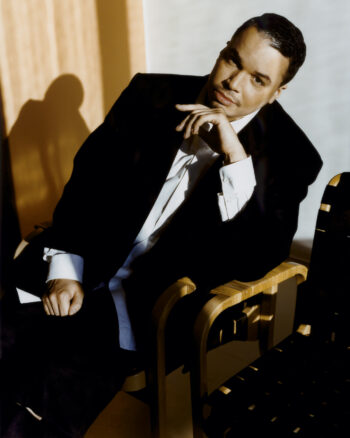
A man in a fashionable suit is sitting in a chair, leaning on one armrest to look into the camera.

Photo: Mikael Niemi

Latimer remembers the first time he was interviewed by Finnish news outlets. Soon after showcasing his grad collection, he had been awarded the title of Finnish Young Designer of the Year, a prize given to promising design students annually since the 1990s.

He put his original twist on the competition’s theme: multifunctionality. He used his newly found platform to highlight issues he wanted to tackle in the industry:

“Usually, a body has to adapt to a piece of clothing. You must be a certain shape or size to fit in a certain piece. But what if it was the other way around? What if a piece of clothing could adapt to a person’s body?”

So he designed clothes that were adjustable, reversible and gender-neutral – aesthetic and meticulously tailored, yet wearable and approachable.

In January 2022, the Latim­mier brand was launched with a bang at Pitti Uomo, the world’s leading menswear event, in Florence, Italy. Latimer took to the stage as his drag queen alter ego Anna Konda to introduce his collection.

The oversized suits with intentional slashes and gaps were designed to play with the concept of masculinity and were worn by models of different genders, body types and sexual identities. Among others, the New York Times covered the show and its roots in drag culture. Ervin Latimer had officially arrived.

Practice what you preach

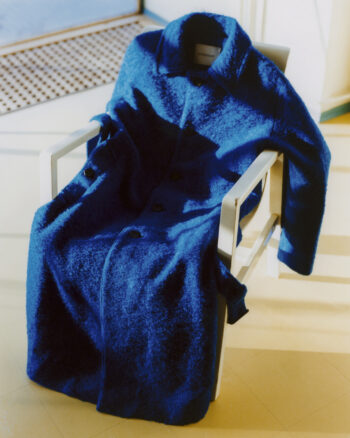
A blue robe is arranged in a chair as if the garment is sitting there.

From the pages of Vogue to a Finnish hypermarket, Ervin Latimer designs clothes that work for almost any body type, gender or occasion. Photo: Mikael Niemi

Outside the spotlight, Latimer has spent a lot of time thinking about how to justify the existence of yet another clothing brand. The world doesn’t need any more textiles, he agrees. What it does need, though, are fair workplaces, sustainable working conditions and fresh air blown into an industry that’s based on exclusivity and restrictiveness. In other words, he uses his skills as a designer to implement positive change in attitudes.

“I’d like to shine a light on what happens behind closed doors in company boards and executive teams,” he says. “Who calls the shots and who profits? Who gets the opportunity to work and why? If the brand imagery is very inclusive, but the company itself isn’t, that’s not sustainable.”

Latimer practices what he preaches. He recently designed a gender-neutral collection for K-Citymarket, a hypermarket chain owned by Finnish retail giant Kesko. It was the first time in its history that the chain sold gender-neutral clothing.

The Freedom collection did what Latimer tends to do: it broke the norm. The clothes have the feel of designer clothes (sharp button-up shirts, luxurious loungewear), but they’re meant for all kinds of bodies. The collection was modelled and photographed by a diverse team, and some of the prints were designed by Finnish Guinean queer artist Gabby Electra. The clothes were made in Europe.

“According to Kesko’s survey, every second Finn occasionally buys clothes at a hypermarket,” says Latimer. “If you want to influence consumer behaviour and attitudes, you have to be where people make their purchases.”

No more burnouts

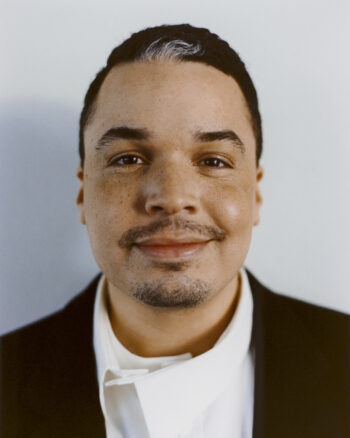
In a close-up portrait, a man in a fashionable shirt and suit smiles slightly at the camera.

Photo: Mikael Niemi

Ervin Latimer is also a vocal advocate for humane working conditions. Having been through burnout, he doesn’t want to overwork himself or anyone else.

“I’m lucky to get to do this work on my terms, but sometimes that blinds me: I forget my boundaries. I’ve learned it the hard way, but I don’t want to make compromises when it comes to resting. At the end of the day, I’m just human,” he says.

The people he employs are fairly compensated. If that’s not possible, he doesn’t hire interns. These things might sound self-evident to a layperson but are not very common in the fashion industry.

“I’ve done internships and junior positions in big fashion houses and seen how ruthless it can be. I have a chance to do things differently. A lot of heritage brands are constantly talking about making a better tomorrow. Why wait until tomorrow, if you can improve now?”

Settling down in the country he calls home

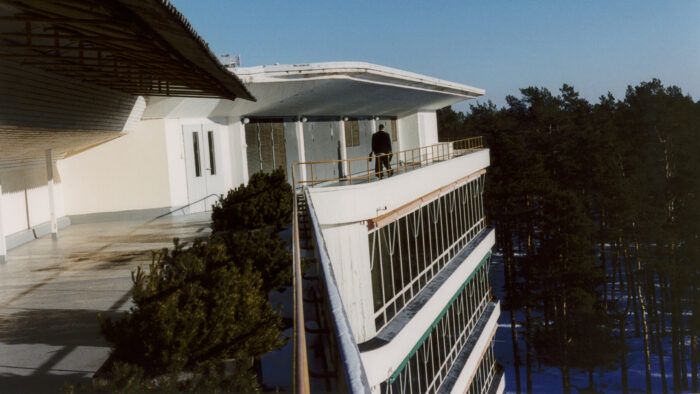
A person walks along a terrace on the top floor of a building, with treetops in the background.

The historical Paimio Sanatorium building: Like Latimer, architects Alvar and Aino Aalto believed great design should be accessible to all.Photo: Mikael Niemi

Latimer isn’t sure whether it is for him to say if he has found his place in the design landscape yet. He’s in his mid-30s, his brand is young, and right now he wishes he could keep doing what he does for a long time – in a way that’s sustainable in more ways than one.

Part of why Latimer likes his home country Finland so much is its infrastructure, which often makes his life easier. He has lived and worked in the US, Italy and other countries, and enjoys their big cities and opportunities. But it’s the little things here that he appreciates the most: reliability and practicality.

“Even on those Fridays when I’m exhausted after a long work week, I can always count on the bus being on time and taking me home.”

By Kristiina Ella Markkanen, ThisisFINLAND Magazine, April 2025

Eight years in a row: Finland remains in first place in World Happiness Report – other Nordics in top 7

Every year on the International Day of Happiness, March 20, the UN Sustainable Development Solutions Network releases the World Happiness Report. In the 2025 edition, Finland once more tops the list of the happiest countries in the world – for the eighth year running.

The other Nordic countries also maintained their places from the previous year: Denmark in second, Iceland third, Sweden fourth and Norway seventh.

The report’s main list, “Country rankings by life evaluations,” compares the answers to one of the more than 100 questions in the Gallup World Poll. The question is: On a scale of zero to ten, where do you place your own life (with zero being the worst possible life and ten being the best possible life)?

These “life evaluations” put the focus on people’s contentedness with life. The report uses an average of the three most recent years to arrive at its list of the happiest countries.

A framework for building happiness

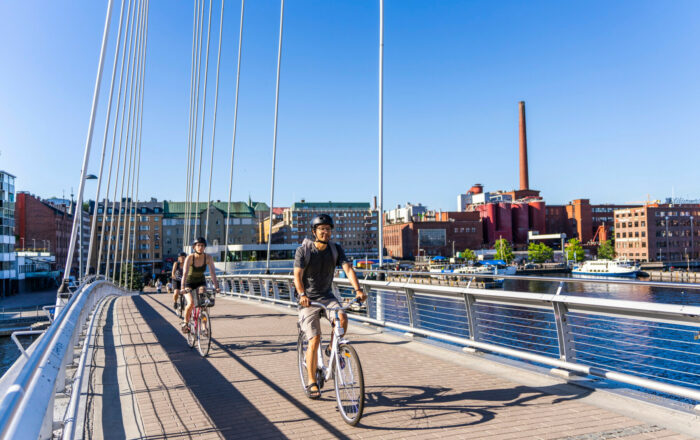
Several cyclists rides across a bridge on a sunny day, with buildings visible in the background.

Cyclists enjoy great weather in Tampere, Finland.Photo: Jukka Salminen/Visit Tampere

When a country possesses a longstanding reputation for happiness, people tend to ask what the recipe is. There is no single answer, of course.

However, Finland has fostered what they call the “infrastructure of happiness.” The country has constructed and maintained the culture and the social institutions that form the basis and framework for individuals and communities to build their happiness.

Nations can take steps to encourage happiness – to help happiness happen. Research shows life satisfaction correlates with a well-functioning society that provides healthcare, social security and labour market access.

ThisisFINLAND has interviewed people – Finns and foreigners – about how they perceive happiness in Finland. In “My happy place in Finland,” four expats explain how living in Finland contributes to their view of happiness. In “We asked people in Finland what makes them happy,” passers-by in Helsinki give a wide range of answers. (Both articles include videos.)

Caring and sharing

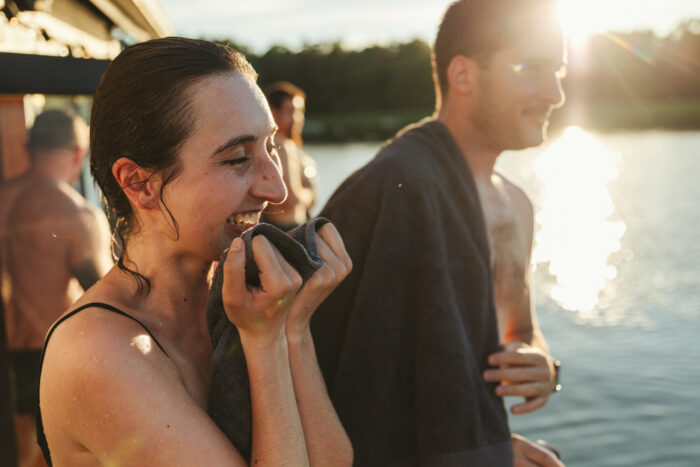
A group of people wearing bathing suits and holding towels are at a waterside location.

Sauna and swimming are great ways to relax in the Finnish capital, according to Helsinki Happiness Hacks, compiled by ThisisFINLAND’s friends over at Visit Finland.Photo: Svante Gullichsen/Visit Finland

The 2025 World Happiness Report is 260 pages long. What else is in it?

Each year, the authors delve into happiness-related topics to paint a broad picture of issues that affect people. The focus in 2025 is “the impact of caring and sharing on people’s happiness.”

How do they measure something like that? They look at people’s answers to questions about the benevolence of others. If you lost your wallet and a stranger or a neighbour or a police officer found it, do you expect they would return it? Finland scores high on the “wallet indicator,” showing that people trust their fellow citizens.

The report states, “All international wallet-dropping experiments have shown Finland and the other Nordic countries to be among the best places to lose your wallet.”

Links to wellbeing

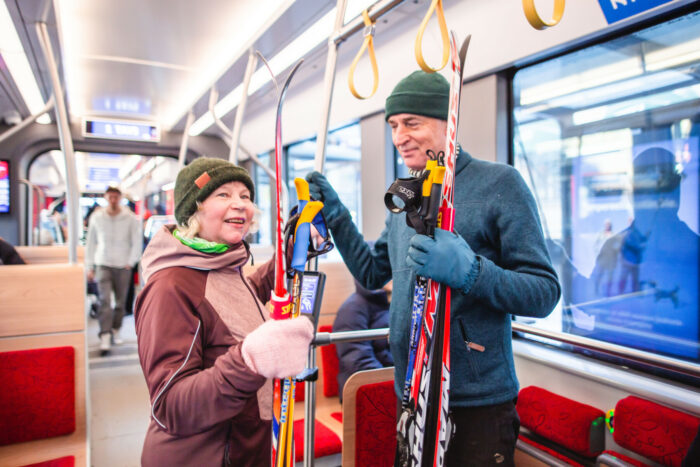
A man and a woman wearing winter hats and sporty clothing and holding skis ride a tram.

When wintering in Tampere, try taking the tram to a forest where you can go cross-country skiing.Photo: Laura Vanzo/Visit Tampere

There’s also data about how often people eat together. (Research shows that “dining alone is not good for your wellbeing,” and that sharing meals with others has a strong link with wellbeing in all regions of the globe.) Family meals remain a strong tradition in Finland: 81 percent of families with children eat together at least once a day.

Giving money to charity, doing volunteer work and helping strangers are also connected with caring behaviour. While Finland does not top those tables, the authors of the report suggest that there are other factors involved.

This brings us back to the Finnish infrastructure of happiness. Finland “has universally available and high-quality health, education and social support systems,” the report notes. Since “inequality of wellbeing is low,” there is “a correspondingly lower need for private charity.”

Finland and its infrastructure of happiness

  • Trust plays a vital role, and in Finland, trust extends beyond personal relationships to public institutions, governance and even strangers.
  • Good governance and a political system that is transparent, accountable and committed to the rule of law.
  • A societal framework combining stability and safety nets, so individuals can make life choices without fear of failure.
  • A strong sense of shared responsibility promotes a fair and just society, central to happiness. Over 90 percent consider paying taxes an important civic duty.
  • Participation and dialogue: active participation and open dialogue between the public and the authorities foster inclusion and empowerment. Freedom of expression promotes transparency and a thriving democracy.
  • Equality and social justice: Finland’s commitment to equality, including gender equality and strong protections for minorities, fosters a socially inclusive environment that contributes to overall happiness.
  • Education and information: Finland’s world-class education system ensures equal access to high-quality learning, empowering individuals to succeed. Strong press freedom and media literacy enable citizens to navigate information critically, creating an informed and engaged society.
  • Connection with nature is a valued part of daily life and wellbeing. The Finns’ access to and immersion in nature promotes calmness and contentment and reduces stress.
  • Simplicity and sauna: Finnish culture is deeply rooted in an appreciation for simplicity, functionality and the significance of life’s small moments. At the heart of this is the sauna, a space where Finns unwind, disconnect from daily pressures and reconnect with themselves and others in a meaningful way.
  • Finnish society is built to support a balanced life, prioritising personal wellbeing alongside professional commitments. Work policies and social structures enable a lifestyle of productivity and personal fulfillment.

By ThisisFINLAND staff, March 2025

Finnish comic artist Kaisa Leka breaks preconceptions about disabilities and being outdoors

“Landing on the island was very difficult because of the wind and the waves. Suddenly, people appeared from the lighthouse with helmets on their heads and brooms in their hands.”

This kayaking trip to the Märket lighthouse, located on a small treeless island on the Finnish-Swedish border, is one of Kaisa Leka’s all-time favourite memories. It has everything she wants in an adventure: beautiful nature, physical activity and a reminder that even though trouble may be inevitable, things usually turn out just fine. The people were volunteers working in the lighthouse, hurrying to the kayakers to guide them to a safer landing spot.

And the helmets and brooms? Protection from terns, seabirds nesting on the remote skerry in the vast Finnish archipelago.

“That was a very exceptional kayaking trip, with a very exceptional welcome, in a very exceptional place. We camped there for three days as the wind picked up again. The volunteers heated the sauna for us so we could wash up,” she recalls her story, smiling.

Adventures on new feet

Finnish comic artist Kaisa Leka tells us about her life and work.
Video: ThisisFINLAND

Kaisa Leka is an award-winning comic artist and an unlikely adventurer who wants to show that the outdoors is for everyone.

She was born with “funny feet,” as she puts it, that caused her increasing pain and difficulties in moving. At 23 years old, she had her feet amputated from below the knees, an experience she has documented in her acclaimed graphic novel I Am Not These Feet.

She began using prosthetic legs. The prosthetics allowed Kaisa to move around more freely. First, she started to do little bike rides. Soon, short rides turned into overnight adventures. And before she knew it, she was cycling lengthwise across Finland from Porvoo in the south to the Arctic Sea in the northernmost part of Norway with her husband, Christoffer. When they reached the vast open spaces of Lapland, Leka suddenly understood the magnitude of her accomplishment.

“I was thinking to myself: This cannot be real. I’ve cycled all the way up here.”

Leka’s adventure resume makes for an impressive read: cycling across the United States, paddling from the White Sea to the Baltic Sea, tackling the mountains of Morocco on a bicycle. Even though many of her adventures are weeks or months long, she consciously aims to appreciate the small outings closer to home in Porvoo.

“Heading outside and cycling for two kilometres on a sunny winter’s day or going to the local outdoor recreation area with snacks can be enough.”

Nature is for everyone

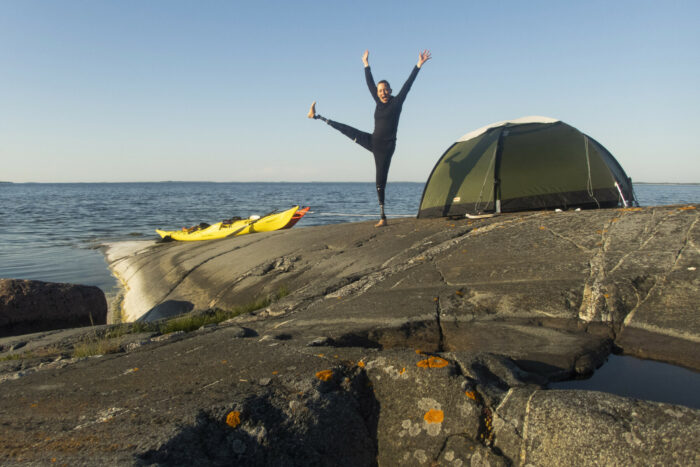
A woman with prosthetic feet is standing on one foot between a tent and two kayaks on a large oceanside rock.

Photo: Christoffer Leka

While Finland is widely known for its forests, lakes and fells, Leka recommends everyone visit the archipelago. She believes a kayak is the best way – and often the most accessible way – to explore the sea and its countless islands and skerries.

“We are all equally small before the sea. When I’m on the water, I feel that my disability does not really impact my mobility.”

Kaisa uses her work, art and social media presence to inspire everyone to go out and explore.

“I want to break the preconceptions people have about disability and what being outdoors as a person with a disability means,” she says.

In recent years, authorities and organisations have built wheelchair-accessible routes, rest areas and toilets in many Finnish national parks and recreational areas. Leka has also been involved in a project that develops more accessible nature services for people on the autism spectrum or with other disabilities.

Leka is a huge fan of Finland’s famous “everyone’s right”, the law that allows everyone to enjoy nature, pick berries and mushrooms, or fish with a rod and line, regardless of who owns the land.

“Everyone’s rights should apply regardless of functional ability or any other factor. Nature is for everyone.”

By Lotta Heikkeri, ThisisFINLAND Magazine, March 2025

Nordic cooperation covers everything from art to economics

The Nordic countries are home to the oldest regional political cooperation in the world. Stretching from the Baltic Sea to the Arctic Sea, it is a geographic and cultural area with a deep history of working together in everything from art to economics.

Nordic Day is celebrated annually on March 23.

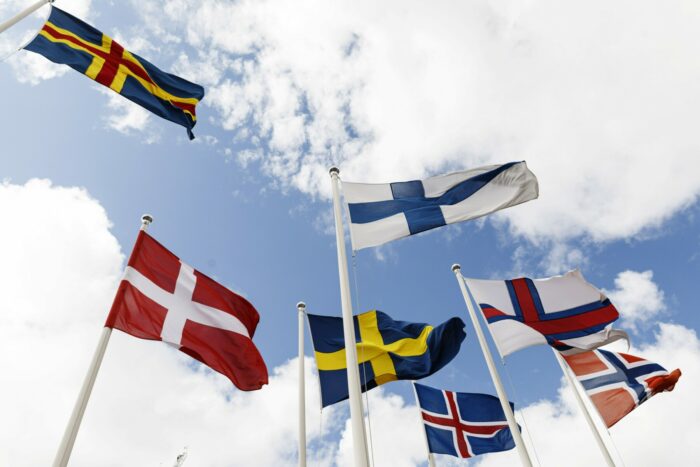
The Nordic region consists of Finland, the Åland Islands (an autonomous archipelago that is part of Finland), Denmark, the Faeroe Islands, Greenland, Iceland, Norway and Sweden. They are tied together by shared histories, languages, ideals and even flag designs. Most of their flags include a similar cross shape that has become known as the Nordic cross.

Sápmi, the far-northern homeland of the Sámi, the only recognised Indigenous People in the EU area, is mainly located in the Nordic region. Sápmi is divided into four parts by the borders of the nation-states Finland, Sweden, Norway and Russia.

Many Nordic identities

Seven national flags, each with a cross-shaped design, wave in the wind against in front of the sky.

The flags of many of the Nordic nations are similar in design. From left: Åland, Denmark, Sweden, Finland, Iceland, Faroe Islands, Norway.Photo: Roni Rekomaa/Lehtikuva

“The Nordic area is not a homogenous region; we have many identities, such as Greenlandic, Finnish or Sámi,” says Gitte Grønfeld Wille, director of Nordic Culture Point in Helsinki. “Still, I would say that we share many Nordic values, like democracy, freedom of speech, equality, openness and respect for the environment.”

Nordic Culture Point works to support and promote Nordic culture. They have two locations in Helsinki, including an artist residence on the island fortress of Suomenlinna and a 12,000-volume library and meeting place downtown.

“One of our most popular activities is the Nordic Language Café,” Wille says. People show up to practice Danish, Icelandic, Sámi or any other language of the Nordic region.

A larger Nordic library is located at Nordic House, a cultural centre in Reykjavík, Iceland, in a building designed by the renowned Finnish architect Alvar Aalto.

Faroese poetry and more

Under a blue sky with scattered clouds, a stone wall divides a grassy hillside overlooking a coastal village and distant island.

The Nordic countries’ dramatic landscapes, such as this view of Vágar and Mykines in the Faroe Islands, may form a source of poetic inspiration.Photo: Olaf Kruger/Image Broker

If you stop by Nordic Culture Point, you might find a children’s group practicing Norwegian, a Faroese poet reading aloud from her newest book, a collection of Sámi paintings, a presentation on Åland’s architecture or a speech by the newest winner of the Nordic Council Literature Prize. They work closely with other organisations, such as Oodi Central Library in Helsinki and institutions in the Baltic states.

“One of our most important tasks is providing funding for Nordic artists,” Wille says. “We have different programmes to establish networks, to stay and work in an artist residence or to travel in the Nordics and Baltics, for example. We put a lot of emphasis on children and youth programmes.”

Nordic Culture Point works under the Nordic Council of Ministers, an intergovernmental forum with roots dating back to the end of the Second World War. One early success of this cooperation was the Nordic Passport Union, which established freedom of movement in the area. In 1962 the Helsinki Treaty was signed, setting the framework for governmental and parliamentary cooperation in the Nordic region.

Productivity and sustainability

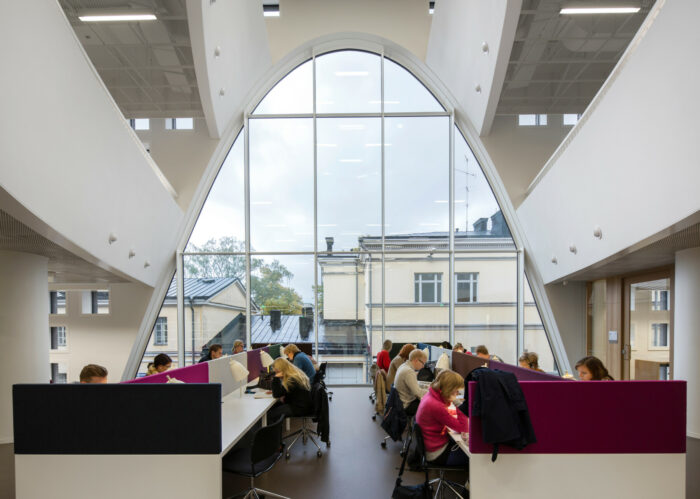
People sit and work at tables with partitions in a bright, modern, open study area with a large arched window.

When the University of Helsinki built its main library, it received a loan from the Nordic Investment Bank.Photo: Mika Huisman/University of Helsinki

Right next door to Nordic Culture Point is the Nordic Investment Bank (NIB), an international financial institution founded in 1975. In 2005, the Baltic states of Estonia, Latvia and Lithuania joined. The Nordic Council of Ministers championed the creation of the NIB, but today it is governed by its own bodies including all eight member countries.

“We are a child of Nordic cooperation,” says Jukka Ahonen, head of communications at NIB. “Our vision is a prosperous and sustainable Nordic-Baltic region. Nordic values are strongly reflected in the organisation, and we try to make the world a better place.”

The NIB finances projects in the Nordics and Baltics that improve productivity and benefit the environment. The bank has about 250 employees, mostly based at their headquarters in Helsinki or in their regional hub in Riga, Latvia. In 2024, the AAA-rated institution loaned about 4.4 billion euros.

Wide-ranging investments

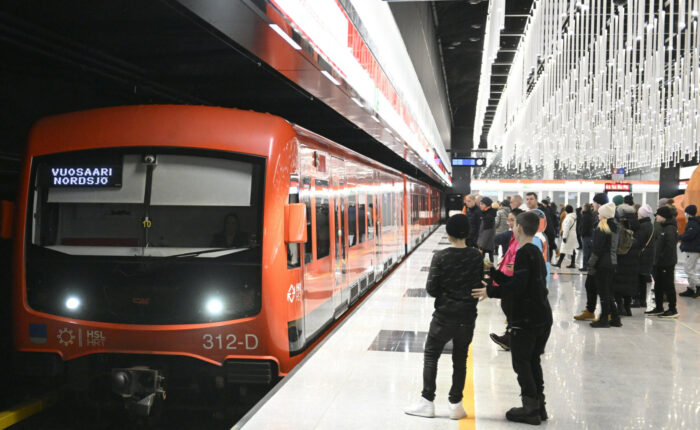
An orange metro train is stopped in a decoratively lit station, with passengers waiting on the platform.

The Nordic Investment Bank helped finance the western line of the Finnish capital’s metro system (shown here is Kivenlahti Station).Photo: Jussi Nukari/Lehtikuva

“We have investments in every member country, and typically do 50 to 60 every year,” Ahonen says. “For example, if you fly into Helsinki-Vantaa Airport and come to our headquarters, you will pass many things we helped fund on the way: the airport, the ring rail, the metro, the tram and even the university library.”

Other recent examples include a wind farm in Lithuania, district heating in Iceland and a low-carbon steel plant in Sweden.

NIB turned 50 years old in 2025. “I believe our member countries are closer than ever,” Ahonen concludes. “Cooperation has clearly intensified in the region, not least due to recent geopolitical developments.”

By David J. Cord, March 2025