Winter paradise between day and night

On a ski trip to Lapland, a Canadian journalist revels in the magically intense hues of darkness and light.

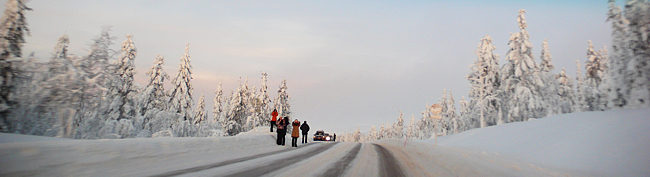
We land at Kittilä Airport at half past noon. Gold lights illuminate the runway against the midnight blue of the land. The sky is thick slate, and it seems the daylight is mainly derived from the reflection of the snow, which is covering everything.

The trees look like magical creatures of Narnia, boughs weighed down and frosted over with hoar. Somehow I was expecting 24-hour darkness, a windowless room. It’s cloudy, but unmistakably daytime.

Indigo sky

It’s midwinter and I’m headed for Äkäslompolo, a village in the shadow of the Ylläs ski resort, on the 69th parallel in Finnish Lapland. At this time of year the sun officially rises here at 10:30 am and sets at 1:30 pm. By the time we arrive at the cabin around 3 pm, the sky is the bluest indigo.

It’s the closest I’ve come to kaamos, the Finnish word for the dark days of winter, and I’m not quite sure how I’ll react. If you go just a bit further north, the sun doesn’t show itself above the horizon for a couple months during winter.

Having grown up in Canada, and with six years’ experience of Helsinki winters, I consider myself better equipped than most of deal with Lapland’s lack of sun. Others are less prepared. “You keep thinking the sun is going to come up, but it just doesn’t,” says Edward Ananian-Cooper, a visitor from Adelaide, Australia.

Sparkling landscape

4375-lapland2_b-jpg

Photo: Carey Toane

Between the jetlag and the darkness, sleep is like a shoe two sizes too big that slips on and off my foot. I wake up at 3 am, unable to sleep again till 6. Then I wake up again in the light and realise it must be at least 11 already. In a panic as if late for work, it occurs to me that I have just two or three hours of sunlight.

We decide to get ourselves oriented and set out for the gondola on the other side of the mountain. As we drive the sun suddenly breaks from the clouds, revealing a robin’s-egg-blue sky and a landscape of sparkling snow. It’s so beautiful we have to join the other cars pulled over at a lookout point. This brief display sends everyone running for the nearest ski hill or track, husky or snowmobile tour. It’s a winter paradise.

At 6 pm, the low-lying clouds reflect the lights of the town in an uncanny imitation of a typical southern sunset.

Frozen tracks

The roads are lined with thin reflective orange posts, driven down into the ditches in September so that when the time came the snow ploughs could find the road. The banks on either side measure above my knee, but are otherwise nearly impossible to differentiate from the clean white of the road.

The markers also extend out onto the frozen lake, where cross-country ski tracks and snowmobile trails stretch out in every direction, marking the safest thoroughfares. Above, I can make out the Big Dipper and Orion’s Belt. Across the open expanse of the lake I can hear the bells from the local church, a modern building looming over one of the only surviving early wooden houses in the village.

One day I call my family back home in Canada. It’s about 35 degrees colder in sunny Alberta than it is here, and I can’t help but laugh.

4375-lapland3_b-jpg

Photo: Carey Toane

By Carey Toane, January 2009

Environmental protection in Finland

Finland provides many good examples of how to protect the natural environment. Wide-ranging and detailed environmental data and high levels of technological skill form the basis of Finland’s effective environmental protection policies. As one of the world’s wealthiest industrialised countries Finland is also able to afford vital environmental investments. Finland’s low population density and comparatively unspoilt natural environment also facilitate nature conservation.

The fruits of successful environmental policies are clearly visible around the country. Many polluted lakes and rivers have been cleaned up. Air quality has improved greatly around industrial locations. An extensive network of protected areas has been built up to safeguard biodiversity. Forests – Finland’s most valuable natural resources – are managed more sensitively than in the past, and the overall annual growth rate clearly exceeds the total timber harvest.

Emissions from large industrial facilities have particularly been curbed significantly. There has also been progress in controlling emissions from agriculture, transport and homes, although these trends have not been as favourable as for industry. There is still a need to reduce airborne emissions of carbon dioxide, noise and particles from traffic, as well as waterborne nutrient emissions generated by farms and by scattered settlements not connected to sewerage systems.

Efforts to halt the ongoing decline in biodiversity have also been insufficient in spite of progress in the conservation of certain threatened species. The struggle to combat climate change must also be continued more resolutely both in Finland and globally. But the successful reduction of acidification problems shows that well-planned strategic environmental policies can achieve their goals.

Sensitive northern environments

The main aim of environmental protection is to anticipate risks and prevent damage before any harm is done. It is especially vital to be aware of critical ecological thresholds in cold northern environments, where nature can be slow to recover from any damage.

The vegetation of Finnish Lapland is especially sensitive to disturbances such as logging and overgrazing by domesticated reindeer. Fortunately these threats have been reduced through the protection of large areas of forest and restrictions on the number of reindeer. Increasing tourism in Lapland can likewise burden the environment, but it can also encourage environmental protection, since most tourists are attracted to Lapland by the region’s unspoilt natural settings.
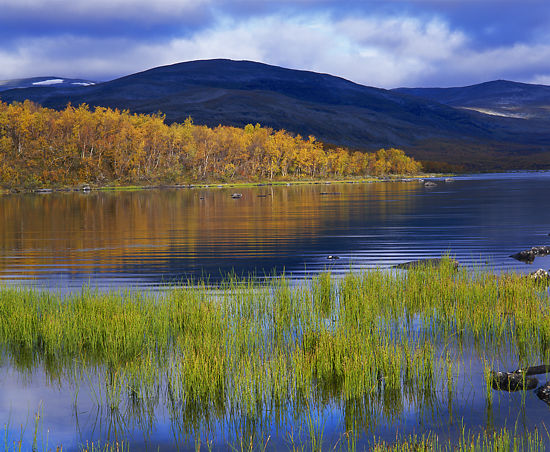
A view across a lake with forests and fells in the background.

Tourism in Lappland can burden the environment but it can also encourage environmental protection, since tourists are attracted to Lapland by the unspoilt nature.Photo: Finnish Tourist Board/Pekka Luukkola
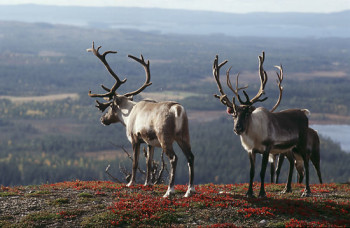
Reindeer standing on a fell.

Photo: Finnish Tourist Board

It is much harder and more expensive to repair any damage done to the environment than to prevent harm in the first place. In the worst cases damage may even be irreparable. Arctic climatic conditions may inhibit the natural regeneration of logged forests in northern Lapland. On the other hand, the predicted warming of the climate could completely wipe out species and whole ecosystems adapted to cold conditions.

Climate change and the consequent reduction in snow and ice cover could prove to be fateful for animals such as the Saimaa ringed seal, since these rare lake seals raise their young in winter dens dug in compact snowdrifts on the frozen waters of the Saimaa lake system in eastern Finland. Thanks to the efforts of conservationists, seal numbers have risen slowly since the 1980s, but there are still fewer than 300 seals, and their population increase seems to be slowing. Saimaa ringed seals used to face problems including persecution by fishermen and contamination with mercury and other toxic chemicals. Controls over fishing have thankfully reduced the numbers of young seals killed in fishing nets or traps, but seals are increasingly suffering due to the disturbance of their habitat by snowmobile traffic in the winter, and the construction of lakeside holiday homes.
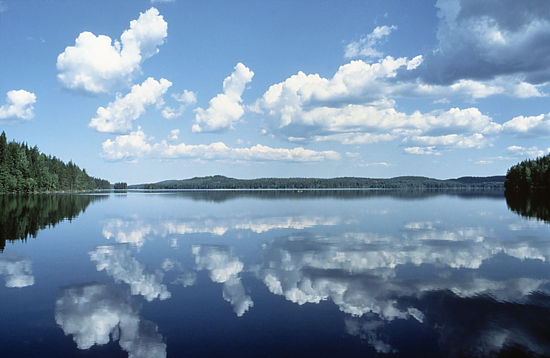
A clear lake reflecting the clouds on the sky.

Across 80% of Finland’s lacustrine area the water is rated excellent or good. Water near industrial sites has improved but Finland’s inland waters are shallow and vulnerable and thus still need care.Photo: Finnish Tourist Board

Many environmental problems can be lessened if sufficient time and money can be found to address them. But it could take decades to resolve the problem of eutrophication in Finland’s inland waters and the Baltic Sea, for instance. Over time some waters could recover from the presence of excess nutrients through natural processes, if further inputs of phosphorus and nitrogen could be kept down to acceptable levels. But there are at least 1,500 lakes around Finland where more active ecological restoration measures such as selective fishing, oxygenation or the removal of aquatic vegetation would be needed to combat eutrophication effectively. Such measures have already been applied in almost a thousand lakes.

Eutrophication is an example of a gradual environmental change that can suddenly attract the attention of the public when a certain threshold is exceeded. In Finland eutrophication first became the focus of extensive debate in the summer of 1997, when massive algal blooms occurred widely in the Gulf of Finland. Blue-green algae occur naturally in Finnish waters, but such massive blooms are a clearly visible consequence of decades of excessive nutrient loads.

Water quality is classified as excellent or good across 80% of the total area of Finland’s lakes. Waters near industrial facilities have particularly become cleaner in recent years. But Finland’s small and shallow bodies of water are sensitive to pollution, and environmental protection must still be further enhanced.

Finnish track record

Finland has been rated among the world’s leading countries in many international comparisons of environmental protection standards, such as the Global Economic Forum’s regularly compiled Environmental Sustainability Index. Finland’s strengths include highly effective environmental administration and legislation, and the ways environmental protection is considered in all sectors of society.

But not all comparisons are so flattering. Signs of the need for improvement include Finland’s large ecological footprint, high levels of material and energy consumption, and excessive greenhouse gas emissions.

The WWF assesses the environmental impacts of societies or individuals through indicators known as ecological footprints, which show how much biologically productive space would be needed to meet our levels of consumption and deal with the wastes and emissions we generate. A recent comparative study revealed Finland’s natural resource consumption rates per capita to be the third highest in the world.
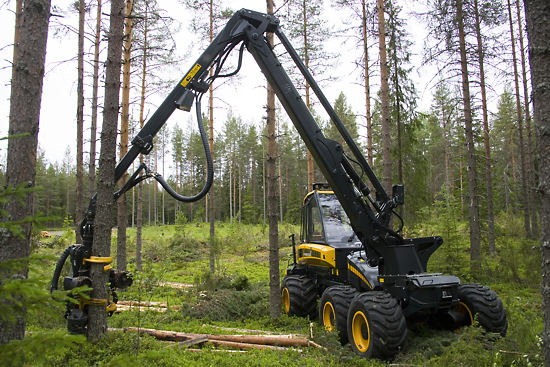
A forestry machine at work in a forest.

Finland is Europe’s most forested country, with more than 70% of the land covered with forests. About 17,000 km2 of forest is strictly protected. Finland’s forest resources are increasing as the natural growth of forests more than compensates for the amounts of timber logged.Photo: Ponsse

According to the WWF, the average Finnish citizen has an ecological footprint of about 7.6 global hectares. This footprint is more than three times larger than the global average. Finland does have more than 12 global hectares of biologically productive areas per head of population, however, which is much higher figure than the national consumption rate. This figure is so high due to Finland’s extensive areas of sparsely populated forest.

The environmental loads produced by Finns are also large in absolute terms. When all the natural resources used in Finland are added up to give the country’s Total Material Requirement (TMR), it becomes evident that each person consumes an average of about 100 tonnes of resources every year. This figure includes the hidden material flows that lie behind the production of all goods and services. These figures are high due to Finland’s high standard of living, large-scale intensive metal and forest industries, and the high demand for energy due to the cold climate and long distances.

Enhancing the efficiency of the use of materials is one of the main goals of today’s environmental policies. The concept of eco-efficiency is used to promote such improvements, with the idea being to produce more commodities and well-being using the same amounts of resources. Initiatives designed to increase eco-efficiency include a wide-ranging national programme to promote sustainable consumption and production launched in 2005. This programme includes more than 70 measures designed to save energy and natural resources. Such goals can only be reached through the active involvement of all sectors of society.

The Baltic Sea – permanently ill?

Some experts fear that the state of the Baltic Sea has deteriorated so much that it might never be able to revert to its natural condition. The Baltic is a shallow sea, and has only a slow exchange of water with the open seas. In its catchment area live 5.2 million Finns and some 80 million other people and much of the pollution from their homes, workplaces, farms and ships ends up in the sea. Symptoms of the Baltic’s serious ecological problems include mass algal blooms, declining fish stocks and extensive lifeless areas on the sea bed.

The depletion of vital oxygen from large areas of the seafloor is a consequence of the high inputs of nutrients entering the Baltic. Oxygen is used up when algae and other organic matter sink to the sea bed and decompose. In the absence of oxygen, large quantities of phosphorus can be released from seafloor sediments into the water. This internal nutrient loading can prolong the eutrophication process even where new inputs of nutrients from the land are kept under control.

The bottom waters of the Baltic are only replaced effectively when an occasional major pulse of heavy salty water from the North Sea flows in along the sea bed through the Danish Straits. In recent decades such pulses have been increasingly rare. It is not yet known whether this is a natural variation, or the impact of climate change on sea currents.
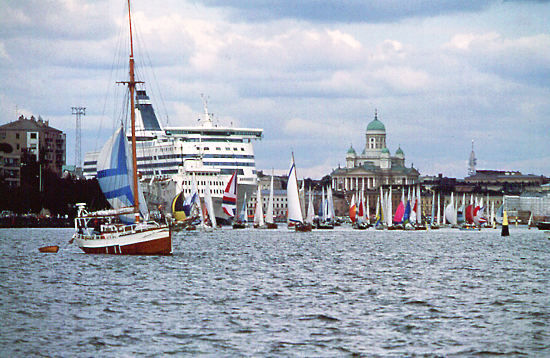
Helsinki seen from the sea; sailboats in the water and Helsinki Cathedral in the background.

The waters of the Gulf of Finland near Helsinki are much cleaner than they used to be, thanks to successful environmental protection work. But to improve the state of the whole Gulf, measures need to be taken in Russia and Estonia as well as Finland.Photo: Martti Lintunen

Nutrient emissions from Finland’s coastal towns and fish farms into the Baltic have declined significantly. Finland has also contributed to improvements in wastewater treatment in the Russian city of St Petersburg, which represents the largest single source of nutrient loads entering the Gulf of Finland. Cleaning up St Petersburg’s wastewater is the fastest way to improve the state of the Gulf.

The condition of the Baltic Sea has long worried citizens and politicians from all the countries around its shores. One of the first ever international environmental agreements, the Helsinki Convention on the protection of the Baltic marine environment was signed by the coastal states in 1974. The Helsinki Commission (HELCOM) was set up to co-ordinate both the implementation of the convention and related improvements in environmental protection around the Baltic Sea.

Thanks to national and international actions, the amounts of toxic chemicals entering the Baltic Sea have been radically reduced. Many of the coastal states have also curbed nutrient inputs. More than half of the worst pollution sources around the Baltic have already been successfully addressed, enabling them to be removed from HELCOM’s Hot Spots List. Only one of the originally listed ten Finnish hot spots remains: farmland in southwest Finland bordering the Archipelago Sea.

Green and spacious cities

By international standards Finland’s cities are small and blessed with many green areas. Most have only grown recently and are still developing rapidly. Until the mid 20th century Finland was still largely a rural society. Large-scale industrialisation only commenced after the Second World War. The new demand for an industrial labour force and the mechanisation of agriculture led to rapid urbanisation, especially from the 1960s onwards. Migration trends in recent years have involved the movement of people from smaller towns to a handful of larger urban centres.

This migration and rapid construction have resulted in more spatially scattered suburban communities, especially on the fringes of larger cities. This trend is problematic in environmental terms, as it leads to increases in traffic, energy consumption and the use of natural resources. It is difficult to organise effective public transportation systems where homes, services and workplaces are scattered over large areas. Planners nowadays endeavour to locate new buildings in existing built-up areas near the necessary infrastructure. Well-planned urban developments can still leave enough room for green areas and nature.

Air pollution and other environmental problems associated with cities around the world are comparatively slight in Finland’s urban centres. The most serious health problems concern particle emissions and noise. More than 800,000 Finns live in surroundings where they are subjected to noise levels of more than 55 decibels. Road traffic is the main source of this acoustic pollution , which can be difficult to reduce since residential areas are necessarily located near road links.

Airborne particle emissions reduce urban air quality in Finland particularly in the springtime, when the dry air can contain high concentrations of particles eroded from roads by the studded winter tyres of vehicles and the grit spread on roads through the winter to prevent skidding. This problem is serious enough to provoke widespread public concern. Particles emitted from domestic heating systems are also a health risk, especially in areas where many homes are heated with firewood.

Climate change and energy

Global climate change is expected to have extremely dramatic effects in Finland. Finnish experts have estimated that mean annual temperatures could rise by 2–7oC by 2080, while annual precipitation could increase by 5–40%. The winters could become largely snow-free in southern Finland, whilst in the north more snow may fall than previously.
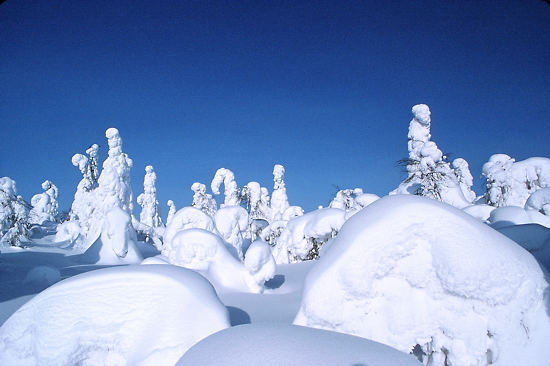
Snow-covered trees.

Climate change could mean largely snow-free winters in southern Finland, whilst in the north more snow may fall than previously.Photo: Finnish Tourist Board/Hannu Hautala

Finland’s contributions to global greenhouse gas emissions are small in absolute terms, but very high when measured per capita. It is proving to be very difficult to reduce emissions to their 1990 level, which has been set as Finland’s target under the UN Kyoto Protocol. Emission levels in recent years have clearly exceeded this target, except during a couple of years with exceptional conditions.

Finland’s northerly location increases the demand for energy and natural resources, but the cold climate has also forced people to make sure that they produce and use energy efficiently, and insulate their homes well. Finland is one of the world’s leading countries in co-generation, the production of combined heat and power (CHP), by which the same power plant produces both electricity for the local grid, and heat to warm buildings and run industrial processes, a system known as district heating. This makes good use of heat energy that would be wasted in facilities only generating electricity.

Renewable energy sources account for about a quarter of all the energy used in Finland – a very high proportion by international standards. A large part of this renewable energy is produced from residuals generated in the pulp and paper industry, including bio-sludge and wood chips. Almost half of the wood used in Finland is burnt to produce energy.
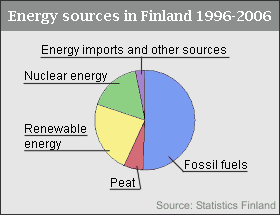
Pie chart of energy sources in Finland 1996-2006.

Chart of energy sources in Finland 1996-2006.

About 50 per cent of Finland’s energy is produced by burning oil, gas or coal. Nuclear power accounts for 16% of the country’s energy, and peat about 5%. The share of nuclear energy will rise in a few years when Finland’s fifth nuclear reactor comes into operation.

Finland’s energy policies aim to significantly increase the use of renewable energy sources. So far wind power, solar power and geothermal or ground source heat are only exploited on a very small scale, but the number of Finnish buildings warmed using ground source heat is increasing rapidly. The greatest challenge for Finland is to find ways to save energy more effectively.

Threat of acidification receding

Measures taken to combat acidification represent one of the most significant successes in the field of environmental protection. Purposeful policies followed at national and international level have had the desired effects. Finland’s soils are naturally vulnerable to acidification, since they only contain low concentrations of calcium to buffer the acidifying effects of sulphur and nitrogen compounds deposited in the soils from airborne pollution. Farmland soils in Finland have to be regularly limed due to their natural acidity.

Thanks to various international environmental agreements and the development of cleaner fuels and emission cleaning technologies, acidifying emissions have declined steeply around Europe. And the collapse of the Soviet Union reduced airborne acidifying emissions from beyond Finland’s eastern border. Finland’s own atmospheric sulphur and nitrogen emissions are today just 25% and 60% of their levels in 1990.
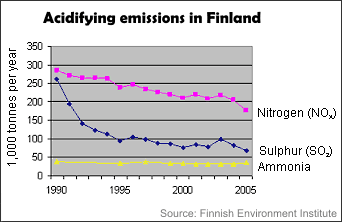
Chart of acidifying emissions in Finland 1990-2005.

Chart of acidifying emissions in Finland.

Acidification is harmful to many plants, but especially aquatic species. The forests and inland waters of northern Finland are particularly vulnerable, since their buffering capacity is naturally weak. Habitats in southern Finland are generally more resistant to acidification.

The harmful impacts of acidifying compounds can be expressed in terms of critical loads, which are the highest concentrations of impurities that an ecosystem can withstand without significant damage. If this critical load is exceeded, the entire functioning of an ecosystem can be endangered. According to such indicators the threat of acidification generally seems to be receding in Finland.

Toxic chemicals

Unnatural concentrations of toxic chemicals in the environment have given rise to public concern, but their levels in Finland do not currently represent a serious health risk. Emissions of the most hazardous substances have been significantly reduced. Annual atmospheric emissions of lead, for instance, have declined from more than 1,000 tonnes in the early 1980s to just 20 tonnes today. Finland does not suffer from large quantities of airborne toxic pollution originating from other countries.

Finland’s winters are too cold for many crop pests to survive, so farmers do not need to use as many pesticides as their counterparts further south. But in such harsh conditions even small quantities of hazardous substances can be fateful for sensitive ecosystems and the cold climate can slow the natural degradation of toxic substances.

Only a few chemicals have been studied in enough detail for comprehensive evaluations of their environmental impacts to be possible. The EU’s REACH Regulation system (for the Registration, Evaluation and Authorisation of Chemicals) aims to improve the management of risks related to chemicals. A key element of this system will be a database maintained by the new European Chemicals Agency, located in Helsinki. The database will include a register of all substances manufactured or imported by EU countries in quantities of more than one tonne. It has been estimated that the system will cover some 30,000 chemicals.

It is important to have comprehensive information about the properties of different chemicals, to ensure that action is taken to prevent releases of the more harmful chemicals into the natural environment. Preventive measures are vital, since many hazardous substances persist in the environment indefinitely, or only degrade slowly. Chemicals contaminating soils can still cause problems decades after the pollution occurs. In Finland there are estimated to be approximately 20,000 sites potentially suffering from soil contamination. Efforts to remediate such sites intensified in the late 1990s, and more recently clean-up work has been initiated at several hundred sites annually.

Biodiversity in Finland

Finland’s biodiversity is exceptionally well documented, thanks to high quality research and the work of many keen amateur naturalists. On the other hand, Finland’s natural habitats contain fewer species than other habitats such as tropical rainforests. It is estimated that some 42,000 species occur naturally in the wild in Finland but in spite of the dedicated work of researchers, sufficient information is only available for the conservation statuses of about 15,000 of these species to be evaluated. About a tenth of these evaluated species have been classified as threatened. Some 200 species have provenly become extinct in Finland.

Finland and the other EU countries officially aim to halt the ongoing decline in biodiversity by 2010, but this goal is unlikely to be achieved. The number of threatened species in Finland is expected to grow by about 10% by 2010.

Most of Finland’s threatened species are associated with forest and farmland habitats. Forest species are threatened by logging and the shortage of decaying wood in commercially managed forests, and by the fragmentation of the remaining natural forests. Meanwhile, due to the intensification of agriculture, small-scale ecologically diverse habitats created by traditional farming practices have almost disappeared from the Finnish countryside. The spread of building developments along shorelines also reduces biodiversity.
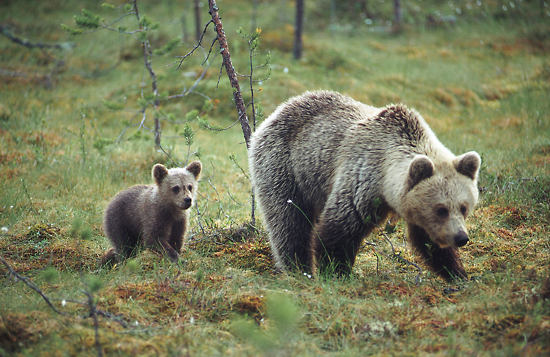
A bear and its cub roaming in the forest.

The number of Finland’s large carnivores, bear, lynx, wolf and wolverine, has increased in recent years.Photo: Finnish Tourist Board/Eero Kemilä
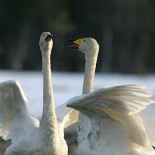
Two whooper swans with their wings spread.

Finland’s national bird, the whooper swan, has also become more widespread since the end of the 1950s.Photo: Finnish Tourist Board

Finland has achieved notable nature conservation successes in recent years, particularly in the cases of some larger animals and birds that were formerly hunted or harassed. Finland’s national bird, the whooper swan, for instance, has become much more widespread in recent decades.

The growing numbers of Finland’s four large carnivores – bear, lynx, wolf and wolverine – have provoked widespread public debate. These predators are feared in rural areas, even though exceptional permits have always been readily granted for the hunting of individual animals considered to be dangerous. There has been less controversy about increasing numbers of golden and white-tailed eagles.

Invasive species are one of the greatest threats to biodiversity around the world. The rapid spread of exotic species can seriously disrupt native ecosystems. So far only a few such species have created problems in Finland. The cold climate offers some protection, as many invaders fail to survive the northern winter. Biodiversity in Finland could be faced by many more problems with invasive species if the climate becomes warmer.

Jari Lyytimäki, M.Sc., researcher, Finnish Environment Institute, July 2007, updated July 2014
Programme for International Student Assessment (PISA)

Finnish schoolchildren have been ranked best in the world as measured by combined learning results in science, mathematics and literacy.

This was the conclusion of the periodical extensive comparative study of learning among children and adolescents under the Programme for International Student Assessment (PISA) conducted in 30 member states of the OECD and 27 other countries in 2006. The 2006 PISA study emphasized science, in which Finnish fifteen-year-olds scored the highest by a wide margin ahead of — Japan, Hong Kong and Korea. Finland’s score of 563 points was also the highest total ever recorded in a PISA study. In reading comprehension, Finland ranked second after Korea, and in mathematics Finland also ranked second, losing out to China by only one point. The Finnish scores in these areas were 50 to 60 points higher than the OECD average, which is about 500.

Published in December 2007, the PISA study involved 389,750 randomly chosen 15-year-old pupils in 57 countries. The Finnish sample consisted of 4,714 students at 155 schools, of which 144 were Finnish-speaking and 11 Swedish-speaking.

The study demonstrates that the particular strength of the Finnish school system is that it guarantees equal learning opportunities for all regardless of social background. Tuition is free for everyone, and there is little variance in performance among schools. The PISA study also shows that learning differences among pupils in Finland are not as great as in many other countries and that the percentage of pupils with poor learning capacity is very low. An adequate level of competence (level 2 out of 6) or higher was achieved by 95.9% of the participating Finnish pupils in science, by 95.2% in literacy and by 94.1% in mathematics. Almost half of the participating Finnish pupils reached level 4 or higher in all these areas.

Top results cost-effectively

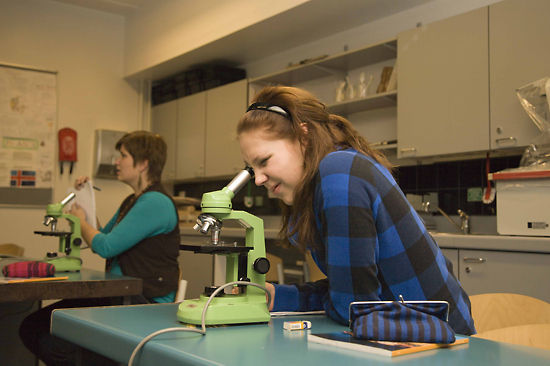
In the 2006 PISA tests Finnish youngsters came top in science.

In the 2006 PISA tests Finnish youngsters came top in science.Photo: Anna Dammert

There are other factors, too, that explain the high performance of Finnish pupils. Security and motivation are fostered among the youngest schoolchildren by having the same teacher to take them through the first grades and by not measuring their performance by numbers. Compulsory school education begins at the age of seven, and until then children are free to enjoy a childhood at play. Instead of promoting comparison among pupils, an important objective of the Finnish school system is to support and guide pupils with special needs. Very few pupils are required to repeat a school year. Special attention has been paid to making the school environment pleasant and motivating. Teachers are a key factor, and Finnish teachers have high academic qualifications. Teacher-pupil relationships are open and cordial in Finnish schools. The costs of this school system are close to the European average, as is the number of lessons; the system can thus be considered highly cost-effective.

Earlier PISA studies were conducted in 2000, when the focus was on reading, and in 2003, with emphasis on mathematics. Finland is the top country when the rankings of all PISA studies are combined. The country’s success in the PISA process has generated considerable international interest, and other international studies have produced similar findings. The Finnish school system has been described in numerous international seminars, and thousands of visitors, notably teachers and politicians, from all over Europe and further afield have visited Finland to see schools at work.

By Salla Korpela, December 2007

Runeberg’s values live on in Saarijärvi

Celebrations to mark the birthday of national poet J.L. Runeberg possess special meaning in the hometown of one of his best-known creations. What wisdom would Runeberg’s Paavo of Saarijärvi offer if he could see Finland today?

The small town of Saarijärvi, not far from Jyväskylä in central Finland, has a special reason for celebrating Runeberg Day on February 5, the birthday of Finnish national poet Johann Ludvig Runeberg (1804–1877). The village has a literary link with one of his best-known works, entitled Bonden Paavo (Paavo the Peasant) in the original Swedish.

In Finnish the poem is called Saarijärven Paavo, (Paavo of Saarijärvi). Paavo was a fictional rustic peasant who responded to his life of abject poverty with heroic stoicism, a lyrical impersonation of sisu, the self-perceived Finnish quality of gritty persistence.

Paavo has acquired an iconic status in his literary hometown, and the celebration of his virtues is not restricted to Runeberg Day. The result of an annual election of the Paavo of Saarijärvi, chosen in closely guarded secrecy by the Saarijärvi Society, is announced on the morning of Midsummer Day.

Showing Paavo spirit

The announcement is made in front of the village’s bronze statue of Paavo. A wooden Paavo model is presented to the new recipient, and national composer Jean Sibelius’s hymn “We Praise Thee Our Creator” is performed before the entourage heads to church.

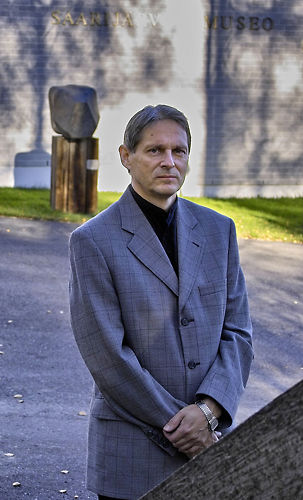
“The selection of the Paavo demonstrates Saarijärvi’s significance as a source of Finnishness, or what people think of as Finnish character,” says Kari Kotilainen, director of the Saarijärvi Museum and the youngest Paavo ever, 45 when selected in 2002.

Museum director Kari Kotilainen speculates that Paavo of Saarijärvi would question the values of modern society.Photo: Matti Raivola/Saarijärvi Museum

“The announcement gets plenty of media attention and there is a big crowd present,” says Kotilainen. The spirit of Runeberg’s original Paavo is the main general criterion for selection, and the recipient must have shown, in his respective field, the tenacity and sense of endurance of the poetic idol.

Source of wonder

As Finland gets sucked into the economic woes affecting the rest of the world, it would be interesting to know what poetic Paavo would make of 21st-century poverty and the ensuing hardships.

“If the fictional 19th-century Paavo had fallen asleep and woken up today, the almost complete disappearance of the significance of nature in ordinary working life would be a source of wonder to him,” says Kotilainen. Clearly, Paavo would wonder what all the fuss is about as he compared the social safety nets of modern Finland with his own contemporary hand-to-mouth daily struggle for survival.

In some respects, however, there has been continuity. “Up here in the north, communities have always been able to create a tolerable safety network, and the help of a neighbour would have been asked for in Paavo’s day.”

Love, sorrow and fate

“But Paavo would surely wonder how it can be possible that, in such an affluent country as modern Finland, so many people choose to live alone, and why some people still turn to suicide or violent crime,” continues Kotilainen.

“When daily bread is pretty much guaranteed for all of us, what is wrong? To Paavo, religion gave belief in the future. Now the churches are only full at Christmas or christenings. Paavo would ask, ‘Don’t people believe in anything?'”

For this contemporary Paavo, the traditional values expressed by Runeberg’s character have not lost their potency. In Saarijärvi the qualities of sisu, of dealing head-on with basic hardships, and of faith in the future are at least nominally maintained.

“Runeberg’s themes are always topical,” insists Kotilainen. “Love, sorrow, individual fate, love for one’s neighbour, community class differences, the description of nature – to us Runeberg is a cornerstone of national literature in the same way as Homer is to the Greeks.”

By Tim Bird, January 2009

Sámi fly their flag in Helsinki

More of Finland’s indigenous Sámi people live in the Helsinki area than in any single locality in their arctic homeland, but they face challenges in maintaining their language, culture and identity.

Like many Sámi living in the Finnish capital, Pirita Näkkäläjärvi, 30, left Lapland in her teens to study. Today she works as a globetrotting mergers and acquisitions specialist based at Nokia’s headquarters just outside Helsinki. Whenever possible, she heads north to attend Sámi festivals and spend time with her family, who raise reindeer and run a chain of souvenir shops in Inari, Ivalo and Levi.

Näkkäläjärvi feels no ambiguity about her dual identity. “I’m Sámi first, but also proud to be a Finnish citizen,” she explains.

When Näkkäläjärvi started to feel detached from her roots after a couple of years down south, she founded the youth section of the City-Sámit association. “For 20 years City-Sámit has helped Sámi in Helsinki to remain connected to our culture,” says Näkkäläjärvi. “I really look forward to our gatherings and the chance to speak my own language.”

Sámi National Day

One annual highlight is Sámi National Day, February 6, when the city Sámi gather in their colourful costumes to fly the equally colourful Sámi flag outside Helsinki University, and proudly sing the Sámi anthem.

“Last February I was delighted to see that our flag was also flying outside Helsinki City Hall,” remembers Näkkäläjärvi. “It’s good to get media recognition for Sámi issues at least once a year – and my colleagues at Nokia often come and congratulate me after noticing the occasion in their Finnish calendars.”

Music from yoik to rap

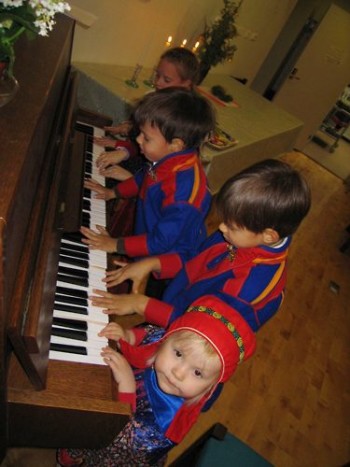
Children try the piano at a City-Sámit Christmas party.

Children try the piano at a City-Sámit Christmas party.Photo: Outi Pieski

About 1,000 of Finland’s approximately 8,000 Sámi live in the Helsinki area. Many regularly show up at cultural events organised or attended by City-Sámit, such as concerts by visiting Sámi rapper Amoc or the heavy metal Tiina Sanila Band. The Helsinki-based folk group Angelit also spotlights Sámi culture in the south with a unique fusion of modern pop and haunting Sámi yoik-singing.

“It really takes an effort to hold on to your culture and language if you live outside the Sámi homeland region – especially for parents wanting to pass on their identity to the next generation,” says Näkkäläjärvi. “We’ve successfully campaigned to get a Sámi children’s TV program shown, but it’s been hard to keep a Sámi-language kindergarten going.”

Unresolved issues

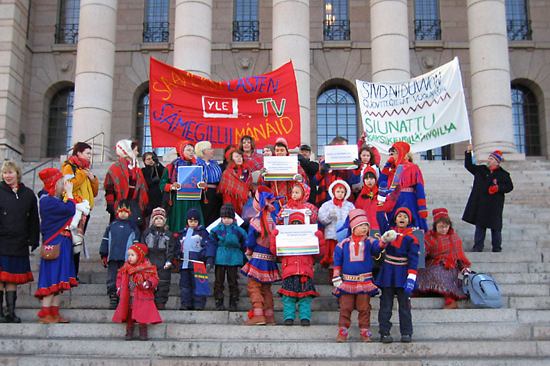
In 2005 Sámi demonstrated in front of the Parliament, for Sámi-language kids' TV shows.

In 2005 Sámi demonstrated in front of the Parliament, for Sámi-language kids’ TV shows.Photo: Outi Pieski

Sámi culture has only been kept alive in Finland’s deep south thanks to the efforts of volunteers. Näkkäläjärvi would like the Inari-based Sámi Parliament of Finland to provide more support for Sámi exiles. “I am afraid that the Sámi living in the south will assimilate and turn into Finns if nothing is done by the authorities,” she says. “Our small nation cannot afford to lose anyone!”

Näkkäläjärvi also supports the Sámi Parliament’s campaign for land rights in the Sámi homeland region, where forestry and mining interests often conflict with traditional reindeer herding. Finland has repeatedly been criticised by organisations including the United Nations for not fully recognising the Sámi’s rights as an indigenous people. Näkkäläjärvi hopes that such conflicts can be resolved peacefully, stressing that there should be enough room in Lapland for everyone.

“The Sámi in Finland are not badly off compared to indigenous minorities in other countries, as we have the same standards of living, health and education as Finns,” she explains, “but we still face typical problems like land rights, losing young people to the cities and a struggle to maintain our language and culture.”

Europe’s last indigenous people

The Sámi today number in the neighbourhood of 100,000, spread across four countries: Norway (approximately 70,000), Sweden (20,000), Finland (8,000) and Russia (2,000).

By Fran Weaver, February 2009

Albert Edelfelt, master of plein air

From promising young Finnish painter to European celebrity, Albert Edelfelt was Finland’s first cosmopolitan art icon. His work was admired by, among many others, Vincent van Gogh. Declining a professorship at the Imperial Academy of Arts in St. Petersburg, Edelfelt’s greatest passions were the Parisian lifestyle and summers spent in his native country.

Childhood and study years

Albert Edelfelt was born in 1854 into an aristocratic Swedish-speaking family. Despite this background, his childhood was financially strained. The father of the family died when Albert was only fifteen, leaving large debts behind. Nevertheless, Albert’s mother supported his artistic interest and ambitions throughout his formative years as a painter.

Though Edelfelt received art tutoring while studying languages and history at the Imperial University in Helsinki, he found art teaching in Finland backward. There were few art collections and the country lacked an inspiring artistic culture. He eventually gave up university and enrolled in the Antwerp Academy of Art in 1873. After studying historical painting for six months, he moved to Paris to continue his learning process.

From the outset, Edelfelt was certain that Paris was the right place for him to develop as a painter. The city’s museums and galleries provided endless possibilities to view paintings. The presence of like-minded artists and an ever-expanding circle of friends enabled him to have rousing discussions on art.

He was inspired by his contemporaries but was also strongly influenced by past masters such as Velazquez and Goya. Edelfelt travelled back to Finland in 1875 with a strong resolve to return to Paris as soon as possible.

Portraits, Paris, and plein air

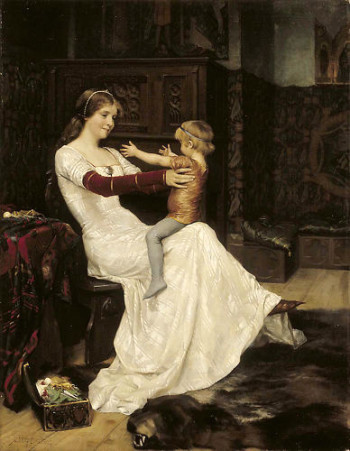
The initial purpose of Edelfelt’s studies abroad was to become a history painter. Indeed, his first work to gain public recognition in Paris was Queen Bianca, a portrait depicting mediaeval times.

Queen Bianca (1877).

Queen Bianca (1877).Photo: FNG

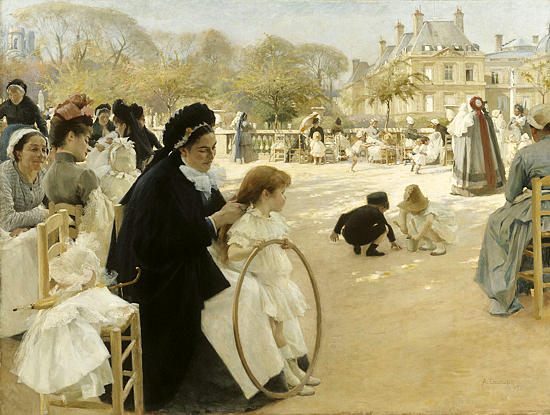
The Luxembourg Gardens, Paris (1887).

The Luxembourg Gardens, Paris (1887).Photo: FNG

However, in France Edelfelt soon realised that plein air painting, illustrating contemporary reality rather than historical scenes, was what dominated the capital’s art world.

However, although Edelfelt lived in Paris for over fifteen years, he only painted one large outdoor work there – The Luxembourg Gardens. The inspiration for his other, comparable works came from Finnish subjects.

In the late 19th century, Paris epitomised all the attractions contemporary life had to offer. Besides art, Paris was also the capital city of consumption, technology, pleasure, and sensuality. While living there, Edelfelt painted numerous portraits of beautiful Parisian women, a few of whom were also objects of his affection.

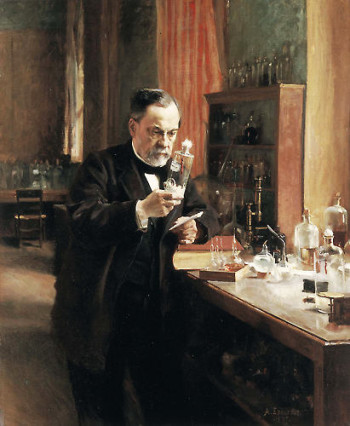
Portrait of Louis Pasteur (1885).

Portrait of Louis Pasteur (1885).Photo: FNG

Most importantly, the city provided an opportunity to sell his paintings. The rich and powerful of Paris formed a clientele impossible to attain in Finland.

About half of Edelfelt’s works are portraits. Besides painting often unnamed female models, he also did several commissioned portraits. The most famous of these is the Portrait of Louis Pasteur. Edelfelt was fascinated by the scientific accomplishments of Pasteur and he spent several months studying his work and laboratory settings.

When the painting was finally finished, its popularity elevated Edelfelt to a celebrated position as one of the most proficient portraitists in Europe. Some years before this van Gogh had expressed his admiration of Edelfelt’s talent to show humane feelings in his works.

Russia

Queen Bianca became Edelfelt’s first work to appear in a public exhibition in Russia. At that time, Finland was an autonomous Grand Duchy of Russia and the painting was included in the Russian section at the 1878 World Exhibition in Paris.

The painter had close and confidential ties to the Russian court for years and was even granted sittings with Tsar Nicholas II in the Winter Palace. He was also commissioned to paint a number of portraits of the children of the Imperial Family.

Edelfelt was appointed a Full Member of the Imperial Academy of Arts in 1895. A year later, he was approached by Ilya Repin who offered him a professorship at the Academy. Feeling that St. Petersburg lacked the vibrant artistic life offered by Paris, he declined the offer.

The late 19th century saw growing concern in Finland over Russia’s policy of Russification. This played a significant role in the rise of nationalist and patriotic sentiments among Finns. Even though a goodwill ambassador between the two countries, Edelfelt never totally excluded himself from all this, and he did indeed contribute to the pro-Finland movement with illustrations and paintings on the 1808-9 Russo-Swedish War.

Last years

Part of "Final Study for the Inauguration of the Academy in Turku 1640" (1902).

Part of “Final Study for the Inauguration of the Academy in Turku 1640” (1902).Photo: FNG

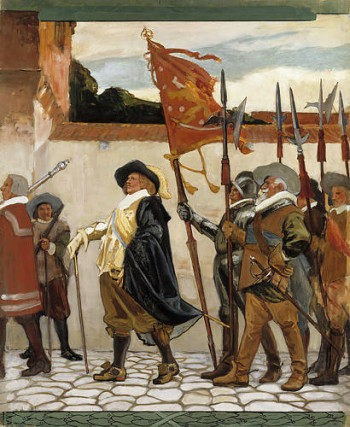
After his initial years of history painting, Edelfelt did not go truly back to this genre until the Inauguration of the Academy of Turku. This large scale work – depicting the founding of the Academy (later the University) in Turku in 1640 – was to be placed to the Great Hall of the University of Helsinki.

After meticulous preparation, Edelfelt began the actual work of painting in September 1904 and presented the finished work to the University in January 1905. The painting is widely regarded as the apex of his work, reflecting his roles as artist, cultural diplomat, and historian. Albert Edelfelt died in August 1905.

By Otto Utti, November 2004

Lovable, instructive canines

History, classical literature and folklore: You might not expect the videogame generation to be interested in such things. Think again. Writer and illustrator Mauri Kunnas has succeeded in winning a place for historical and literary characters in Finnish children’s imagination.

“Juhani, Tuomas, Aapo, Simeoni, Timo, Lauri and Eero!” says six-year-old Eeva, listing the main characters in Seven Brothers, Finland’s greatest literary classic written by Aleksis Kivi.

Eeva, like most other Finnish children of school age and younger, also knows the mythical characters of the national epic Kalevala, and the stories and national icons that date back to the birth of the nation in the 19th century, from the poet J. L. Runeberg to Elias Lönnrot.

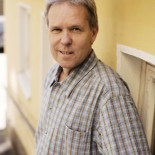
Mauri Kunnas.

Mauri Kunnas.Photo: Otava

Finnish children’s knowledge of history is not down to the excellent Finnish education system per se. It is the work of the writer and illustrator Mauri Kunnas. You would be hard pushed to find a child’s bedroom in Finland that does not contain a Mauri Kunnas book. For example, 240,000 copies of The Seven Dog Brothers had been printed in Finland by 2007. This is an incredible figure when you take into account the fact that there are just under five million Finnish-speaking people living in Finland and the birth rate is just under 60,000 a year. Kunnas has written around 40 books and 5.5 million copies of them have been printed. His books are also loved outside Finland. They have been translated into 23 languages, from English, Chinese and Russian to Hungarian, Thai and Lithuanian.

Was granny born in the days of Doghill?

Kunnas started his career as a children’s author in 1979 with The Book of Finnish Elves. It was an immediate success, as was Santa Claus, which was published a year later and has so far been translated into 21 languages for a total of more than a million copies.

Kunnas writes about Santa Claus, elves and other imaginary characters in his later books but he has also taken it upon himself to tell children about history and old ways of life using illustrated characters. His Doghill books describe life in Finland in the 1800s.

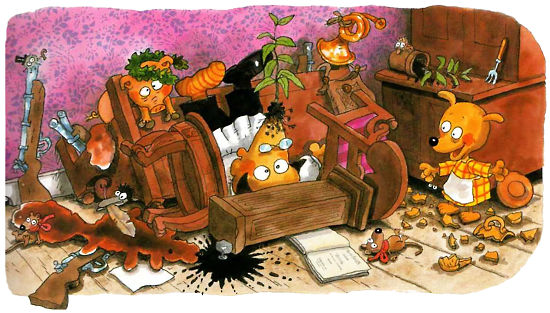
In Doghill Martha and Runeberg (2005) the kids from Doghill go to meet national poet J.L. Runeberg.

In Doghill Martha and Runeberg (2005) the kids from Doghill go to meet national poet J.L. Runeberg.© Otava

Little Martha’s pet pig runs into the study of the sleeping poet and makes a complete mess of the place. When Runeberg wakes up to find a flower on his nose he is struck with inspiration for a new hymn.

Little Martha’s pet pig runs into the study of the sleeping poet and makes a complete mess of the place. When Runeberg wakes up to find a flower on his nose he is struck with inspiration for a new hymn.© Otava

Dogs who closely resemble humans live on Doghill Farm. The everyday tasks, customs and traditions that fill these canine characters’ year are presented in a way that appeals to present-day children. The kids who live in Doghill also go to town to experience life there: the unusual things on sale in the shops, the fancy sweets on sale at the bakery, handicraft workshops and other wonders of town life. They take a peek inside the Vice Consul’s sumptuous reception room and the cramped rented room of the man who carries planks for a living. Even though these tales about the residents of Doghill are entertaining products of the author’s imagination, the descriptions of life in these historical times are completely authentic and based on careful research.

Eeva, like many other Finnish children, received her first contact with history through the Doghill books. The illustrations help show her what life was like before cars, mobile phones, computers and jeans. Doghill has also become a timepiece of history. When historical events are discussed, Eeva asks,”Was that during the time of Doghill or before?” or, “When granny was a girl were things the way they are in Doghill?”

Finland’s answer to Disney

Mauri Kunnas has also taken on more challenging subjects, presenting children with ancient Finnish literature and telling them about significant historical figures. To help him out he has used his familiar canine characters and generous helpings of witty humour. The Kalevala became The Canine Kalevela in 1992. The mythical characters were interpreted in a new light: steadfast, old Väinämöinen became a small but persistent dog, the Pohjola region is ruled by wolves, and carefree Lemminkäinen is related to cats. The adaptation of the Kalevala tales includes ancient folklore but Kunnas has also, in some places, turned some of the stories on their head and made them more suitable for children. In the original version Väinämöinen threatens to take Aino as his wife against her will but Aino drowns herself to avoid such a fate. In The Canine Kalevala Aino wants an unwilling Väinämöinen to be her husband, but he swims away to escape her.

The Seven Dog Brothers, an adaptation of the masterpiece by Aleksis Kivi (1834-1872), was published in 2002. When the original came out in 1870 The Seven Brothers became the cornerstone of Finnish literature; it was the first full novel to be published in Finnish and was a profound portrayal of the Finnish people. The Seven Brothers has retained its status and is still part of the literature taught at schools. Before children even start school, Kunnas’s delightfully illustrated book provides an excellent route into the world of the brothers.

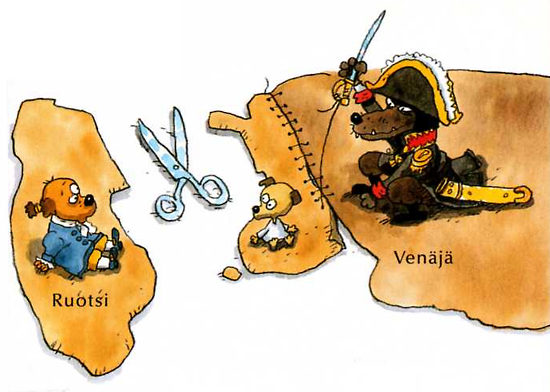
Children also learn that in 1809 Finland, in the middle, was ceded by Sweden (Ruotsi) to Russia (Venäjä).

Children also learn that in 1809 Finland, in the middle, was ceded by Sweden (Ruotsi) to Russia (Venäjä).© Otava

Mauri Kunnas has also written an entertaining books about cars (Fun on Wheels), about space (The Out-of-this-World Space Book), about how a newspaper is made (Front-page Story), about things that happens at night (The Night-time Book) and many more. His latest book on history, The Vikings are Coming, describes these wild seafarers and their flaxen-haired maidens.

In Finland Kunnas and his works are as much of an institution as Disney is all over the world. There is a book club in Finland that sells only Kunnas’s books and all kinds of merchandise based on his characters. Favourites include stuffed animals, playing cards, mobile phone accessories, pyjamas and drinking mugs. Kunnas’s books have been adapted for the stage, animations and a full-length animated feature film, Santa Claus and the Magic Drum. Two children’s operas based on his books have premiered at the renowned Savonlinna Opera Festival: The Canine Kalevala with music by by Jaakko Kuusisto and One Spooky Night with music by Jukka Linkola.

When Christmas approaches, Eeva starts thinking about what she would like from Santa Claus. She already has one wish, Mauri Kunnas’s latest book. Santa Claus won’t disappoint her — or the tens of thousands of other kids who have wished for the same gift.

By Salla Korpela, July 2007

The Finnish flag

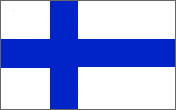
The Finnish flag was made official in a law enacted on May 29, 1918, less than six months after Finland had achieved independence. Zacharias Topelius had described its symbolic colours as “the blue of our lakes and the white snow of our winters” in a poem first published in 1863.

The flag features a blue cross on a white background. It takes two forms: the national (civil) flag and the state flag.

The national flag

The Finnish flag.

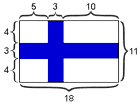
The national flag is rectangular in shape and its dimensions are: height l l units of measurement and width 18 units; width of cross 3 units; colour PMS294C; height of white fields 4 units, length of fields at the hoist 5 units and of fields at the fly 10 units. Every Finnish citizen enjoys the right to fly the national flag. With certain exceptions, the national flag is flown by Finnish vessels as their national ensign.

Dimensions of the Finnish flag.

Dimensions.

The state flag

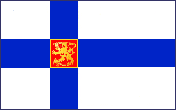
State flag: the Finnish flag with the coat of arms of Finland inset in the square formed by the intersecting arms of the cross.

The state flag is either rectangular or three-pointed. The coat of arms of Finland is inset in the square formed by the intersecting arms of the cross. The square has a yellow border, the width of which is one-fortieth of the width of the cross. State departments and establishments fly the rectangular state flag. The Defence Forces use the three-pointed version of the flag, which is one unit of measurement longer than the national flag or the rectangular state flag. The President of the Republic uses a three-pointed version of the state flag, in the canton of which a blue and yellow Cross of Freedom is featured.

Finnish official flag-raising days in 2025

February 3 Alvar and Aino Aalto day, Day of Finnish Architecture and Design | a recommended flag day
February 5 Runeberg Day
(in honour of national poet J.L. Runeberg)
February 6 Sámi National Day | a recommended flag day
February 28 Kalevala Day, Finnish Culture Day
(in honour of the national epic Kalevala)
March 19 Minna Canth Day, Equality Day
(in honour of writer and social activist Minna Canth)
April 8 International Romani Day | a recommended flag day
April 9 Finnish Language Day, Mikael Agricola Day (in honour of linguist and theologian Mikael Agricola, who is credited with creating the first written Finnish literature)
April 13 County and municipal elections
April 27 National War Veterans’ Day
May 1 May Day, Labour Day
May 9 Europe Day
May 11 Mothers’ Day
May 12 Snellman Day, Finnish Heritage Day
(in honour of statesman J.V. Snellman)
May 18 Remembrance Day
June 4 Flag Day of the Defence Forces
June 21 Midsummer Day, Day of the Finnish Flag
July 6 Eino Leino Day, Day of Summer and Poetry
(in honour of poet Eino Leino)
August 9 Tove Jansson Day, Finnish Art Day | recommended flag day (in honour of author and artist Tove Jansson)
August 30 Finland’s Nature Day
October 1 Miina Sillanpää Day, Civic Participation Day (in honour of journalist, social advocate and MP Miina Sillanpää, Finland’s first female government minister)
October 10 Aleksis Kivi Day, Finnish Literature Day
(in honour of author Aleksis Kivi)
October 24 United Nations Day
November 6 Finnish Swedish Heritage Day (Svenska dagen)
November 9 Fathers’ Day
November 20 Day of Children’s Rights
December 6 Independence Day
December 8 Jean Sibelius Day, Finnish Music Day
(in honour of composer Jean Sibelius)

Updated January 2025