Glass on wings – Oiva Toikka

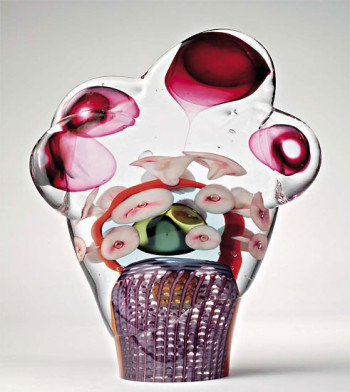
Best known for his glass art, Oiva Toikka possesses a playful spirit that shows in his work. His is the most colourful and original personality among the masters of Finnish design.

Oiva Toikka stands apart from the group who had created the “Golden Age” of Finnish design in the post-war years. Timo Sarpaneva, Tapio Wirkkala and Kaj Franck – the acknowledged arbiters of modernism – sought clarity in forms that were as timeless, organic and “cool” as Scandinavian nature, their main source of inspiration.

Toikka, on the other hand, took his inspiration from folk art, antiquity and distant cultures. He longed for colour and excitement, finding modernism and his seniors’ “good taste” constraining. He started experimenting with different methods, and was delighted by results that were often “mindlessly fascinating”.

Breaking free

As a student in the ceramics department of the Helsinki Institute of Industrial Arts, Toikka had already tried to break free from the constraints of functionalism governing ceramic tableware, pots and vases. He was interested in the sculptural possibilities that clay had to offer. His objects were often decorated with stylised and humorous figures of humans and animals, reflecting his keen interest in peasant culture. Other pieces from that period resemble prehistoric relics or Greek and Roman antiquities.

When Toikka moved to glass, experimentation with colour soon became the dominant feature of his art. He did not want to be known as a designer, but preferred to be called “an artist who also designs”. Yet he designed the Dewdrop and Flora ranges of glass tableware, which became commercial successes. In the 1960s the Nuutajärvi glassworks had in production 18 series and objects designed by Toikka, including tableware, glasses, carafes, vases, candlesticks and bowls.

Art to captivate the eye

2649-toikka2_b-jpg

When Toikka moved to glass, experimenting with colour soon became the dominant feature of his art.Photo: Iittala

Toikka was espousing a new vision of glass art in Finland and abroad. As the “cool good taste” of the Scandinavian Modern was losing its appeal, Toikka the artist was able to gain the upper hand over Toikka the designer. Flower power had already left its mark on the Flora range of tableware. American pop art was the next influence on Toikka’s glass sculptures and objects.

He combined forms that were cheekily irreverent with sickly sweet colours, as in the Lollipop and Pom Pom series. Once the joking was over, further experimentation resulted in large glass sculptures and installations whose harmony of shapes and colours captivates the eye.

Well-travelled visual vocabulary

Glass is the ideal material for Toikka’s art. It has inspired him to seek new forms and technical solutions through constant experimentation. Yet his success is based on seamless cooperation between the artist and the master glassblower. With demand for glass sculptures and unique objects growing fast in the 1970s, Toikka could give freer rein to his artistic impulses.

He had travelled in West Africa and Latin America, widening his horizons and extending his visual vocabulary. He had been born on a farm in Karelia, near Viipuri in eastern Finland (now part of Russia). The area’s rich, vibrant folklore and art had inspired him even as a schoolboy.

Thirty years later, age-old Mexican glass-making technique and peasant culture provided new sources of inspiration. Toikka’s fantastic forms and rich colours made his work grow ever more distinct from its Scandinavian background.

In 1971, Toikka signed his first glass bird and sent it flying from Nuutajärvi. On the wings of the hugely popular Birds collection, Toikka has became a living legend. However, unfettered flights of imagination have always dominated his work. His art simply spread its wings and soared into freedom.

Flights of fancy: Toikka’s career in brief

  • Born 1931 near Viipuri, eastern Karelia
  • 1956–59 Arabia, ceramic artist and designer
  • 1963–  Designer and glass artist at Nuutajärvi-Iittala
  • 1989 Professor, h.c.
  • 1990–93 Professor, Stockholm University of Industrial Arts
  • 1996– Visiting professor, University of Sunderland, UK
  • Stage and costume designs for Finnish National Theatre, Finnish National Opera and Helsinki Municipal Theatre
  • Solo exhibitions in Finland, Sweden, Denmark, Netherlands, UK and USA; group and touring exhibitions in more than 30 other countries
  • Works in leading museums and collections, including Museum of Modern Art (New York), Victoria and Albert Museum (London), Museum für Kunst und Gewerbe (Frankfurt and Hamburg), National Museum (Stockholm)

By Erkki Toivanen
Updated for thisisFINLAND in September 2009
Originally published in “Breakthroughs – 90 Success Stories from Finland”, 2007

Seeking the real Finnish sauna

The Finnish Sauna Society carries a reputation as the devoted nurturer and maintainer of the sauna tradition that Finns hold so dear. We look inside this exclusive yet modest club just outside Helsinki.

The Finnish Sauna Society acts as the self-appointed steward of Finland’s cherished sauna culture, promoting all aspects of sauna heritage for Finns and foreigners. If Finland can be said to have an official sauna, then the society’s meticulously maintained sauna complex is it.

Located just west of Helsinki alongside a secluded bay on the island of Lauttasaari, the premises contain three traditional smoke saunas (more about these later), two more conventional saunas with wood-fired stoves and an electric “city sauna”. The building also houses an exhaustive collection of sauna-related literature, including research into the health benefits of saunas and details of technical innovations in sauna design.

To visit, you normally need a personal invitation from a member, but special sessions for small groups are sometimes arranged. “We wouldn’t like for foreign visitors interested in Finnish saunas to leave the country thinking that the hotel’s electric sauna was the real thing!” laughs Hilkka Heimonen, the society’s former executive director.

Around 3,800 people hold membership, but the Sauna Society remains quite exclusive, as newcomers have to be recommended by two long-term members. The schedule is divided into different days for women and men; women form almost a third of the members.

Healthy Finnish pastime

4116-saunaseura4_b-jpg

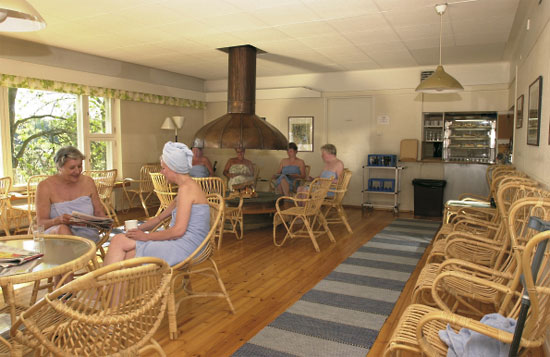
Members relax in the Sauna Society’s café-lounge.Photo: Seppo Pukkila/Sauna Society

Archaeological evidence indicates that sitting stoically in a piping-hot room has formed a central part of Finnish culture for thousands of years. As if to prove that sauna has Finnish roots, “sauna” is the only Finnish word widely borrowed by other languages. Today this country of 5.5 million boasts about three million saunas.

Heimonen describes a “real Finnish sauna” as a well-ventilated room with wooden walls, heated to 80–95 degrees Celsius by a wood-fired stove, with somewhere to wash nearby – and preferably a scenic lake in view. Optional extras include a bundle of leafy birch twigs, with which brave bathers slap against their skin to improve circulation.

The Sauna Society emphasises that saunas don’t endanger your health. “The fact that almost all Finns have saunas regularly should reassure people,” says Heimonen.

“You shouldn’t have a sauna if you have a cold or fever, and people with weak hearts shouldn’t go straight from a hot sauna into a cold lake, but recent research shows that saunas are actually beneficial for some heart problems,” Heimonen adds.

Centre of the action

4116-saunaseura3_b-jpg

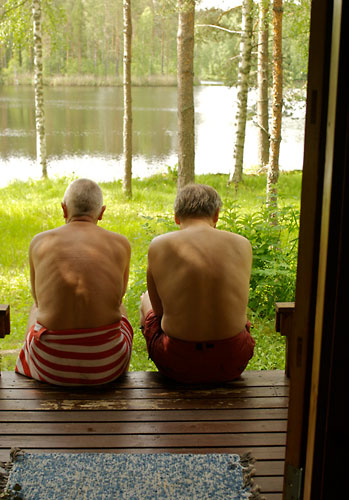
The perfect Finnish sauna experience includes a scenic waterside setting.Photo: Seppo Pukkila/Sauna Society

“Saunas used to be at the centre of every aspect of people’s lives in Finland,” says Heimonen. “For earlier generations they were the only place to wash. They were also used to smoke fish and meat, wash clothes, and dry linen.” Life used to begin and end with a sauna: It was the cleanest place for women to give birth, and the bodies of the deceased were also washed there.

“Today people see saunas as a place to relax, both physically and mentally,” Heimonen says.

Almost everyone in Finland has access to a sauna. In rural areas most homes still have saunas with wood-fired stoves. Apartment blocks typically have electric saunas where families have their own scheduled hours. Neighbours get a chance to gossip at weekly communal male or female saunas. Being together in the altogether can encourage otherwise reticent souls to expose their innermost selves as well as their naked exteriors.

Heimonen notes that in spite of their doubtful reputation in some of the world’s seedier cities, saunas have no sexual connotation in Finland. Finns of all ages fail to see why so many people immediately associate saunas or simple nudity with sex.

Why does the Sauna Society maintain so many saunas? People like different temperatures. The hottest reaches an infernal 130 degrees Celsius.

Afterwards I chill out with a dip in the cool waters of the tree-fringed bay and a drink in the society’s café-lounge. It’s hard to believe that this peaceful place lies just a few miles outside Helsinki.

Return of the smoke sauna

For many purists, the only true sauna is a smoke sauna, deep-heated for several hours using sooty smoke. Before use, it must then be ventilated and cleaned to ensure that no one is smothered by fumes or smeared with soot. Everyone in Finland seems to agree that smoke saunas have softer and somehow more soothing vapours.

Smoke saunas, preferred by many purists, are hard to maintain and almost disappeared in the late 1900s, but now they’re all the rage again.

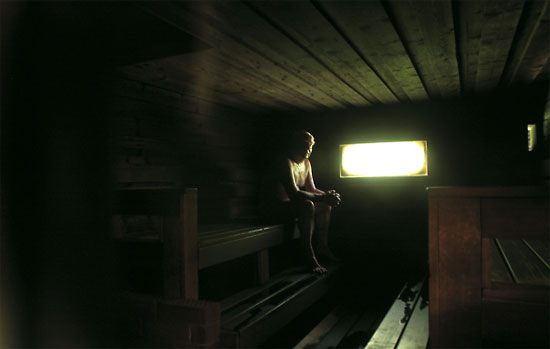
Smoke saunas, preferred by many purists, are hard to maintain and almost disappeared in the late 1900s, but now they’re all the rage again.Photo: Seppo Pukkila/Sauna Society

The Sauna Society’s official sauna stoker, Seppo Pukkila, has just stripped off when I meet him, as he’s gasping for a sauna himself, having just finished the arduous task of preparing all the saunas for the two o’clock opening time.

In the middle of his endeavours, one of the sauna walls had almost burst into flame. Luckily he noticed a tell-tale wisp of smoke and could hose down the smouldering log joint in time. “The joints of the wooden buildings that house smoke saunas can easily combust spontaneously as the vapours rush through tiny cracks, so you have to keep a very close eye on them,” he explains.

Mainly because they are so laborious to heat, smoke saunas almost disappeared towards the end of the 20th century, but now they are all the rage again. They form a popular part of many tour and conference programmes.

By Fran Weaver, September 2009; updated September 2022

Festive summer feelings last forever

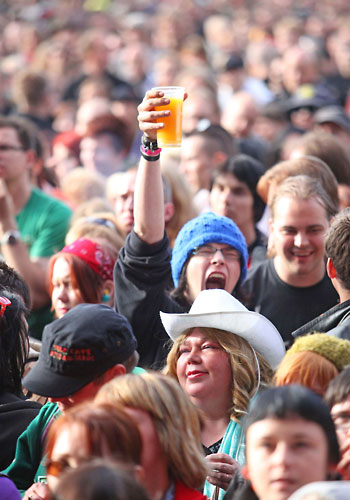
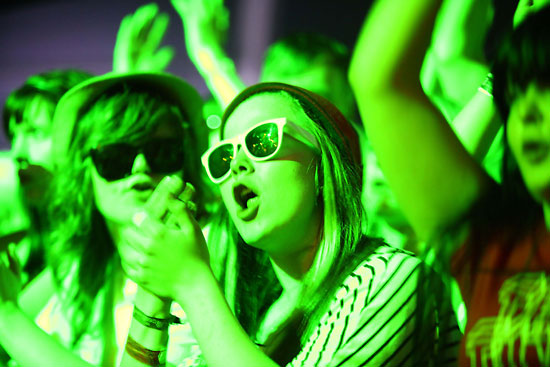
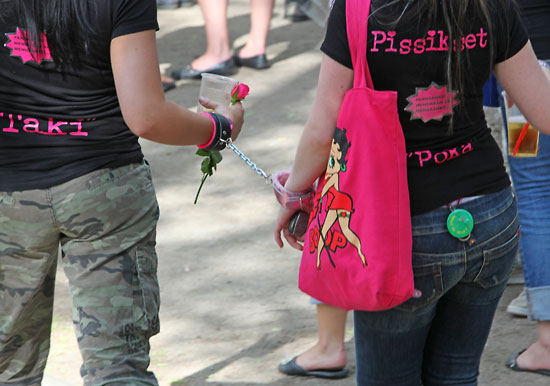
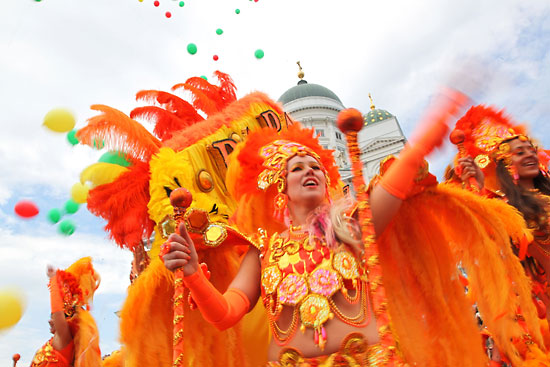
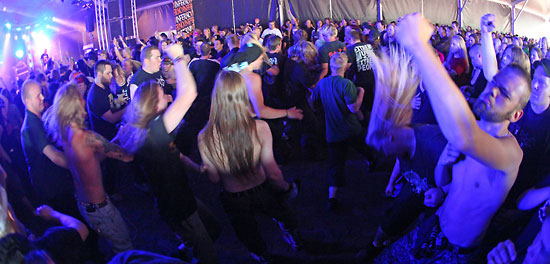
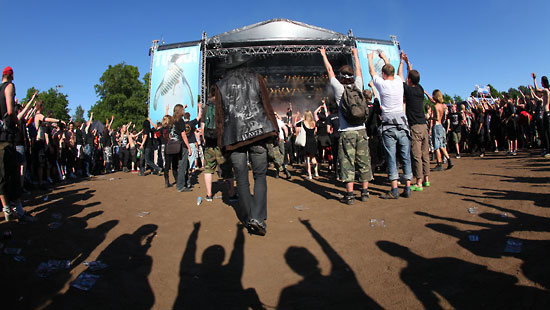
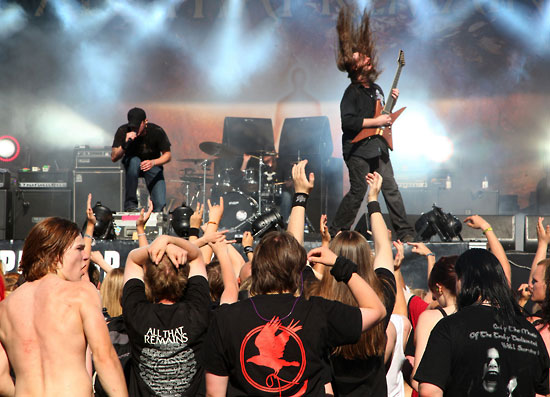
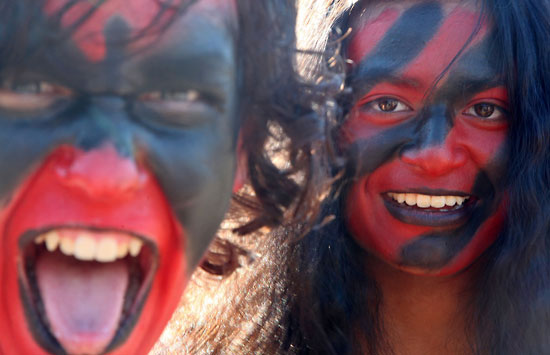
It’s time to allot ourselves 14 photos and a couple hundred words to capture the Finnish summer festival spirit – the people and the atmosphere.

Raise your hand if you know a gardener. If you do, then you can imagine the way Finns anticipate their summer festival season.

Just as gardeners will sit half the winter and plot what they’re going to plant in the spring, Finnish arts enthusiasts will huddle inside while snow still covers the ground and map out which festivals to hit come summer. You can almost taste the fresh vegetables. You can almost hear the music drifting through the warm air.

So it shouldn’t seem surprising that we also want to preserve the summer festival spirit and continue savouring it all year round. Just as a gardener stows some of the harvest away, we’ve assembled a slideshow to help us remember and convey the faces and feelings of the festivals.


Photos by Tim Bird, June–August 2009
Text by Peter Marten, updated March 2010

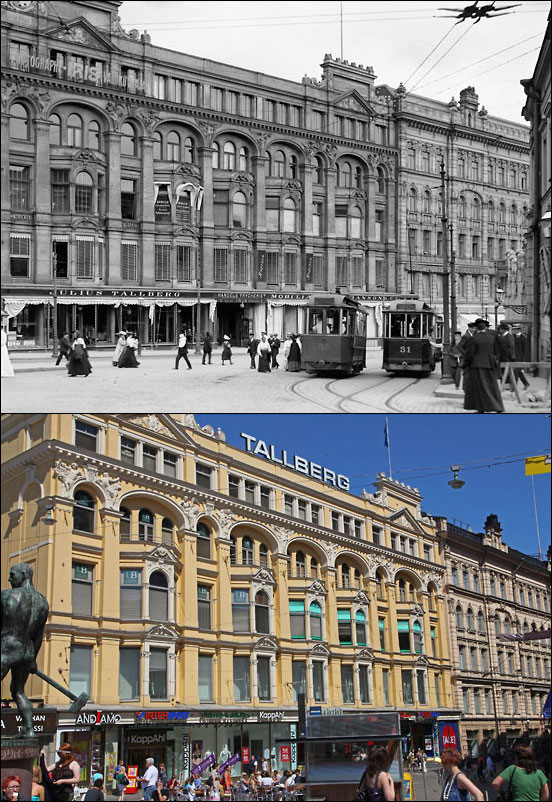
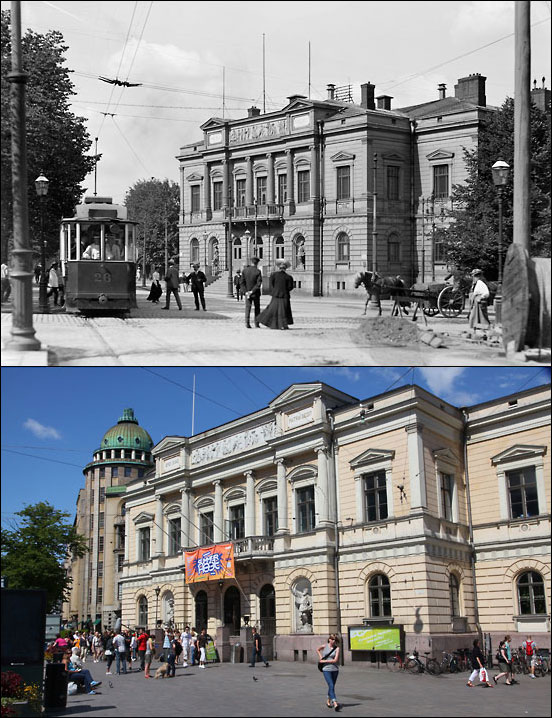
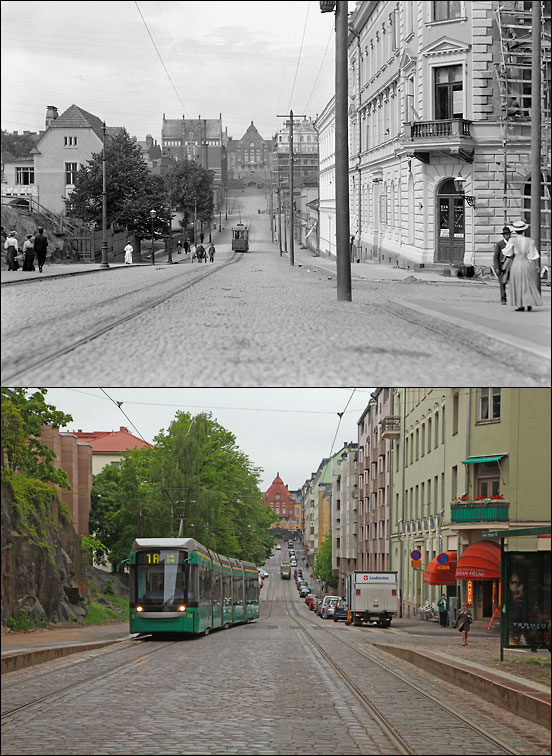
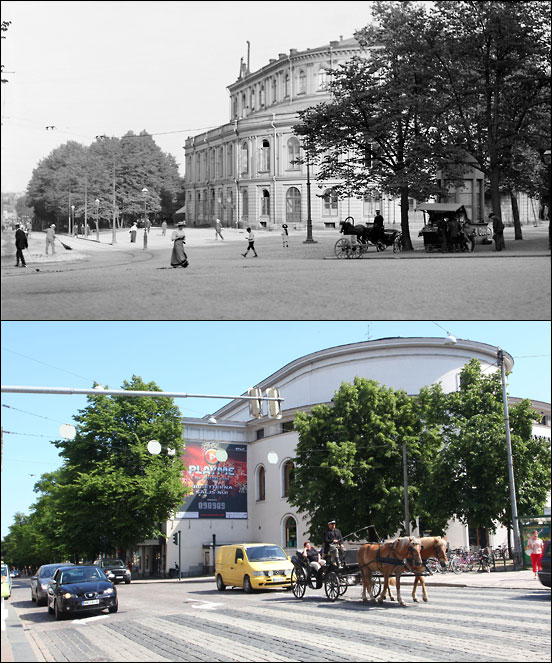
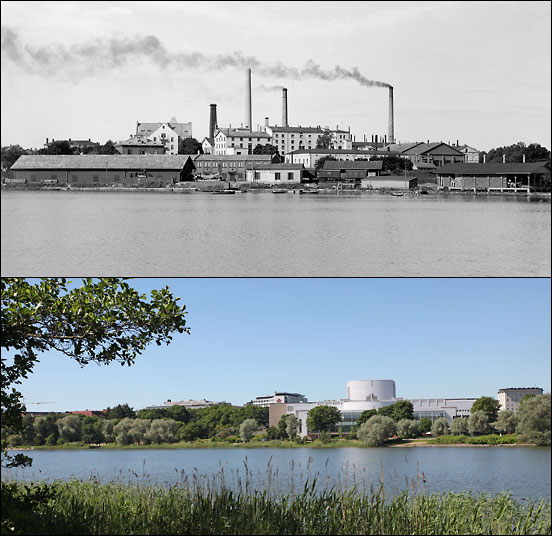
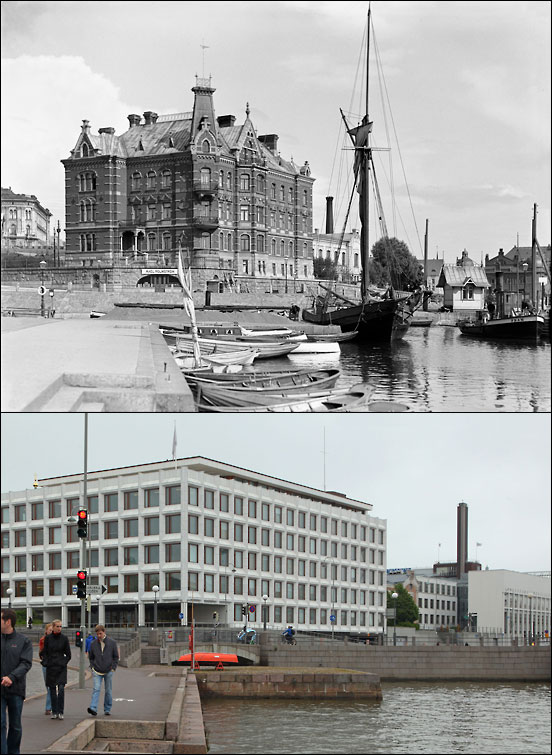
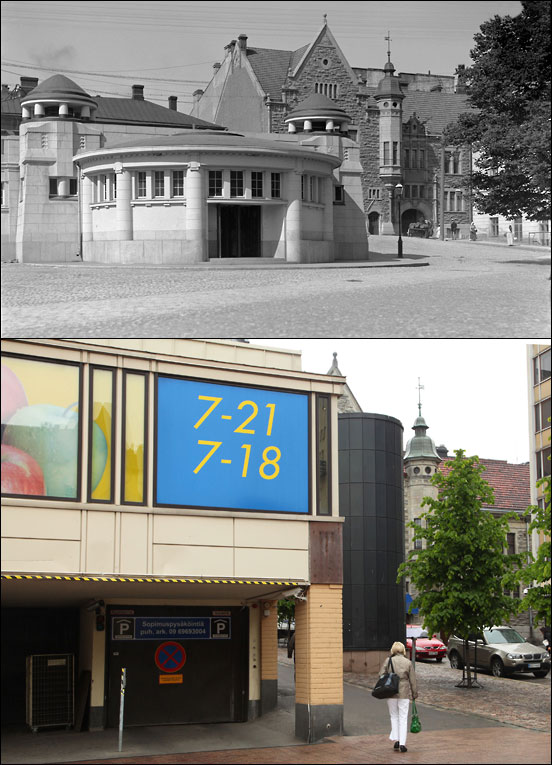
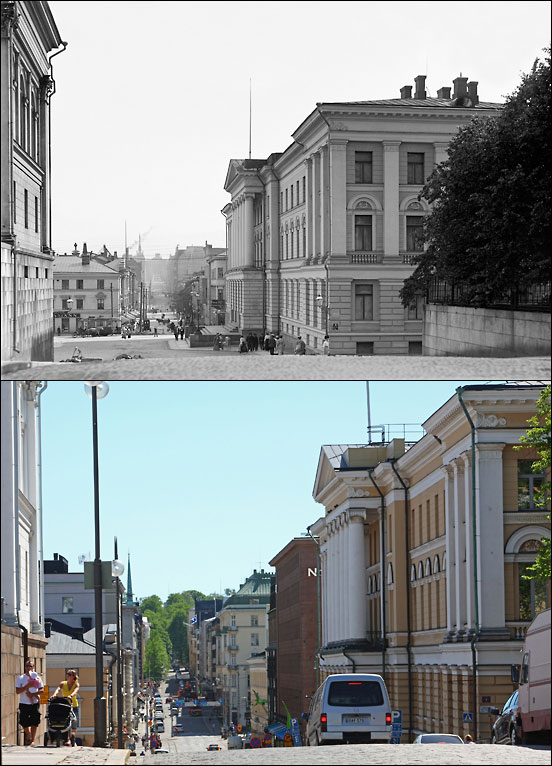
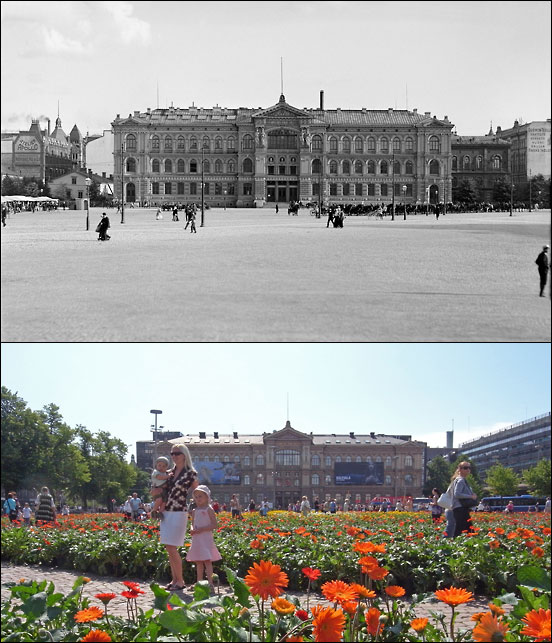
A photographic leap through time in the Finnish capital

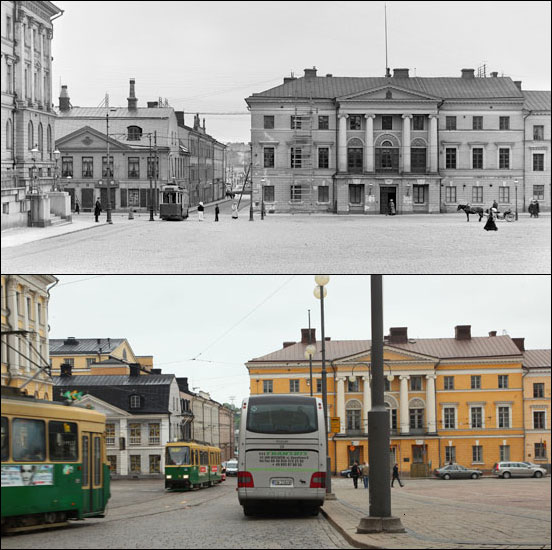
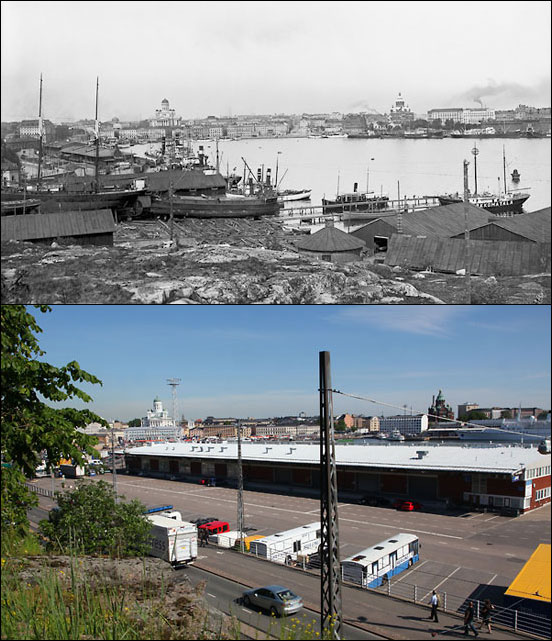
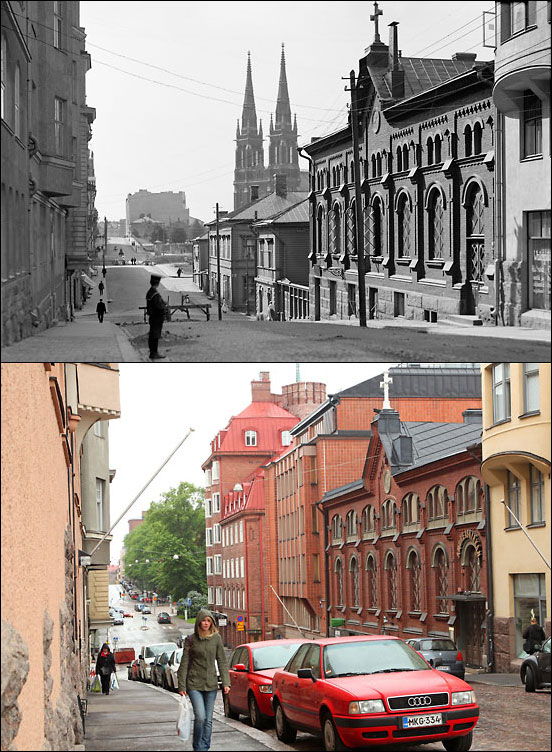
Renowned photographer I.K. Inha documented the Finnish capital more than 100 years ago with glass-negative exposures. We discover new ways to see Helsinki by juxtaposing his pictures with digital photos taken today from the same angles.

In 1910, WSOY published Helsingin opas (A guide to Helsinki). The book contained 60 pictures of the Finnish capital by Into Konrad Inha (1865–1930), a photographer more famous for travelling the countryside to capture landscapes on film during a period that was significant in the development of the Finnish national identity.

In 2009, WSOY printed a book of Inha’s Helsinki photos, including about 130 pictures that had not been used in 1910, called Helsinki – Valon kaupunki (Helsinki: City of light). ThisisFINLAND obtained permission to put some of these pictures online, and photojournalist Tim Bird revisited the locations to show you what they look like today. The comparisons are striking – some because of how different the locations look, but others because of how little has changed.

“After 20 years in Helsinki, there aren’t many parts of the city I haven’t seen, but it was nice to rediscover some neighbourhoods,” Bird says. “There were nice surprises as well as negative ones.” The result is a fascinating experience – part documentary, part art and part nostalgia – that takes viewers through a cross-section of modern and historic Helsinki.

Photos by I.K. Inha, 1908–09 (WSOY archives), and Tim Bird, July 2009
Text by Peter Marten, updated April 2020

Maritime culture thrives in Kotka

First a man with a passion discovered a rare wooden boat. Now the beautifully restored vessel forms the centre of attention in Kotka’s old harbour area.

The story begins in 1930s England, where renowned naval architect Charles E. Nicholson designed and built a 12mR-class racing boat on commission from Bermudan Marion “Betty” Carstairs (1900–93). This large yacht, more than 21 metres long, was eventually christened the Blue Marlin. Between 1958 and 1987, 12mR was the standard class for yachts competing in the world’s best-known sailing race, the America’s Cup.

Carstairs, who lived a colourful life filled with fast boats and automobiles, did not take possession of the boat she had ordered. Instead it ended up in the Mediterranean, in the ownership of an Italian family.

The boat aged and began to fall into disrepair, eventually sitting disused in a harbour for several years. A Finnish banker, sailor and wooden boat aficionado, Henrik Andersin, found and bought the vessel, which was carefully transported from Slovenia to Finland in 2006. He began to investigate options for restoring a boat the size of the Blue Marlin.

Old boat moves into new home

4365-maritime2_b-jpg

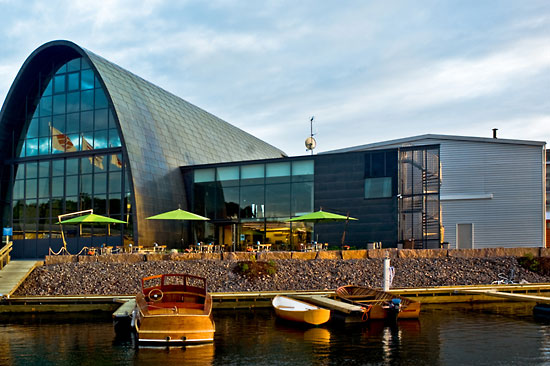
Revitalising cultural life in Kotka’s harbour: The Finnish Wooden Boat Centre is at the centre of the action.Photo: Leo Skogström

The port city of Kotka, on the Gulf of Finland about 130 kilometres east of Helsinki, boasts a lively boatbuilding tradition and numerous master craftsmen. However, the cooperative running the Kotka Wooden Boat Centre was becoming less active. Andersin bought its property in the old harbour area.

The building was not big enough for the Blue Marlin restoration project, so Andersin commissioned a new structure for the site from Lahdelma & Mahlamäki Architects. A boatyard purpose-built for making and restoring wooden boats was inaugurated in May 2008. Its impressive curved-roof design is reminiscent of a boat’s hull and its all-glass front and back walls reflect the expanses of the sky and sea.

In its new home, the Blue Marlin is being restored to its original 1938 condition. Most of the interior, which had survived the decades in good condition, has now been removed and carefully preserved for future use. Virtually all of the rest of the boat is being meticulously rebuilt according to the original plans. The work will take an estimated three years in total. Andersin aims for the reborn Blue Marlin to take part in a 12mR race tentatively scheduled to happen in Helsinki in 2011 – with eyes on a prize, of course.

Nurturing wooden boat heritage

Andersin has a broader vision as well. The Finnish Wooden Boat Centre works to preserve and advance wooden boat culture while offering the public a chance to explore it. The main building welcomes visitors with exhibition and meeting space as well as a café. The structure of the boatyard affords the public a close-up view of the Blue Marlin restoration and other boatbuilding work. Altogether the centre is home to three wooden boatyards and three other nautical firms as well as storage places for boats. The centre hosts training sessions, as well as concerts and other cultural events. Visiting boats can dock overnight at the guest marina.

In May 2009, the Finnish Wooden Boat Centre received a building and environmental award from the Arts Council of Southeastern Finland, for its work in nurturing the wooden boat tradition and in revitalising cultural life in Kotka’s harbour and city centre.

Coastal living through the ages

Located on the same street as the Finnish Wooden Boat Centre and designed by the same architects, the Maritime Centre Vellamo forms a multifaceted museum and information centre that celebrates maritime culture.

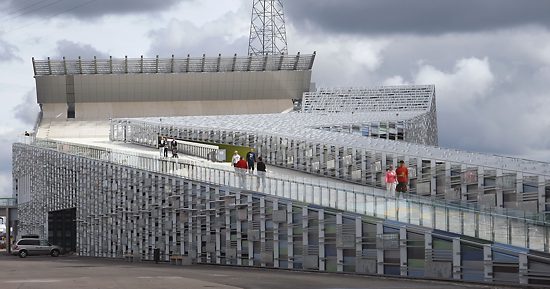
The wave-shaped Maritime Centre Vellamo and its exhibitions will catch your eye and capture your imagination.

The wave-shaped Maritime Centre Vellamo and its exhibitions will catch your eye and capture your imagination.Photo: Maritime Centre Vellamo

The building is stunning, both inside and out. Its exterior is made up of sheet metal cassettes painted in various shades and silk-screened fibreglass, which is illuminated at night. Seen from the sea, it shimmers like the horizon at sunset. Once inside the unusual, wave-shaped building, a visitor can step into a different world, a different time, and easily lose his or her sense of direction – as is often the case at a good museum.

The Maritime Centre Vellamo includes the Maritime Museum of Finland, the Museum of Kymenlaakso, the Coast Guard Museum, boat exhibitions, an information centre and a restaurant. The exhibitions focus on the relationship of the Gulf of Finland’s coastal residents to the sea: sailing, boatbuilding, trade, fishing and other aspects of maritime culture, including traditional celebrations and pastimes at sea and in port.

The museums are designed to offer experiences. Visitors can taste the atmosphere of ship galleys through the decades, tie knots or carry out underwater surveillance. The shows also captivate children’s imagination.

By Salla Korpela, July 2009

The miracle of summer makes winter a distant memory

Short but intense, the bright, warm, lush Finnish summer arrives every year like a miracle after the long period of darkness and cold.

Summer is a natural phenomenon, yet it is also a state of mind: The world is again full of possibilities, joys and pleasures. The change is dramatic. Mother Nature, who so recently lay dormant and frozen under a blanket of snow, bursts into wild blossom as summer arrives.

The onset of summer is also reflected in people. They can finally cast off their heavy winter clothes. Shoulders long hunched together against icy winds can finally relax; steps become lighter and faces brighter. The Finns make the most of their summer.

Into the wild

The awakening of nature in the north is an impressive show: tens of thousands of migratory birds arrive from southerly countries to nest, trees fill with leaves almost overnight and everything is abuzz with life. Unlike countries where the hot sun beats down for many months in a row and dries vegetation to a crisp, Finland usually remains green all summer.

In the cities, the silence of the summer streets often surprises visitors. It is particularly quiet from Midsummer in late June until early August. That’s when most Finns enjoy their four to six weeks of summer holiday in the peace of the countryside, preferably by a lake or seashore. Recharging batteries in the sun and near water is a prerequisite for surviving the long, dark winter.

Summer cabins, shoreline saunas

4117-summer3_b-jpg

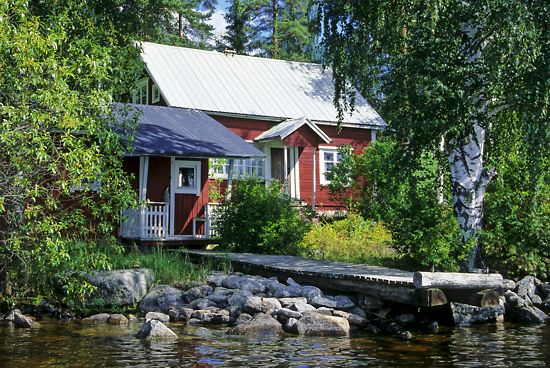
A photo of a Finnish dream. A traditional summer cottage and sauna on a lakeshore.© Finnish Tourist Board/Keijo Penttinen

Where do the Finns spend their summer holidays, then? At summer cottages, of course! There are half a million summer homes in Finland, or roughly one for every five households. Many are shared by extended families, while others rent cabins or stay with friends.

A vacation home offers a place to relax, enjoy nature and sports, and spend time with loved ones – to stare at the calm water, savour the aromas of the forest, think deep thoughts and live a simpler life. Most Finns like their summer paradises to be as quiet as possible and as far from neighbours as possible.

Nearly everyone has a sauna, usually heated in the evening. There you can bathe at your leisure, cooling off intermittently on the porch or in the water. For many, this is a great joy: the world quiets down, mind and body are at peace and all is well.

Daylight at night

4117-summer4_b-jpg

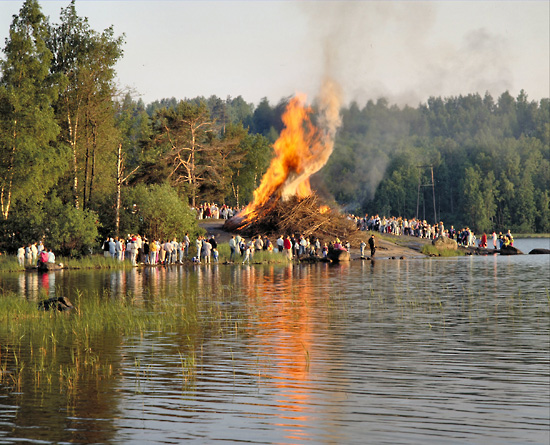
Bonfires are lit across Finland on Midsummer Eve.© Finnish Tourist Board/Matti Kolho

The high point of the summer is the Midsummer holiday, around the summer solstice. While not the warmest time, this is when the sun is at its highest and shines the longest. In most of the country, the sun does not set at all, or just drops briefly below the horizon before rising again in the wee hours.

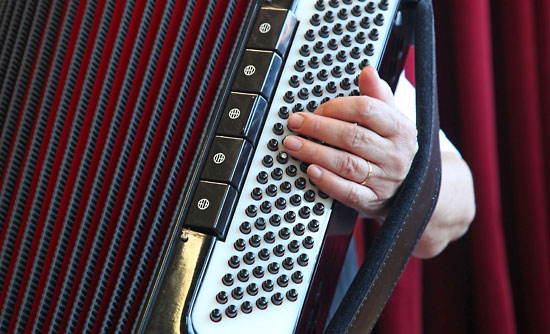
The Finns celebrate Midsummer with gatherings out in the countryside or at sea. Flags fly around the clock, saunas are heated up, houses are decorated with aromatic birch branches and large bonfires are lit on the shoreline. The accordion plays poignant tunes as couples dance late into the night.

Summer treats

Around Midsummer, the first harvests of the year appear at markets and shops: new potatoes and strawberries.

The northern sun makes strawberries redder, sweeter and more aromatic than further south. And nothing beats fresh local potatoes, which seem to melt in your mouth.

Summer meals are typically built around new potatoes. The tiny, tender tubers are steamed or boiled with dill and served piping hot with butter alongside pickled herring, fresh fish or grilled meat and a salad. For dessert, strawberries are served alone or with sugar and cream or ice cream – what a treat!

Onto the water

4117-summer6_b-jpg

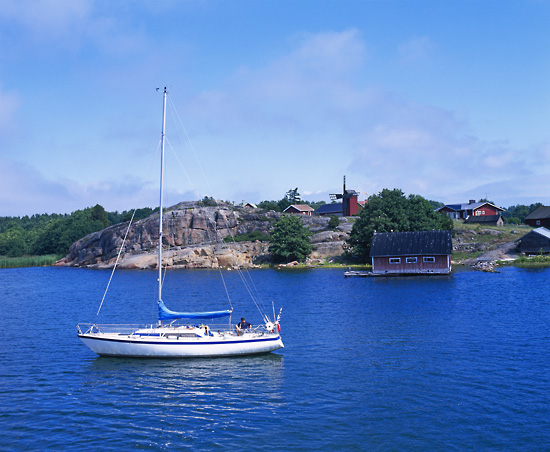
While landlubbers head for their cottages, seafarers cruise to the beautiful archipelago.© Finnish Tourist Board/Pekka Luukkola

Summer is the time to relish the water, whether swimming, boating or fishing.

Finnish children learn to swim early and family members compete as to who is the first to “throw off their winter fur” by making that first dive into the lake or sea. Those who do so before Midsummer are a hardy bunch, as the water temperature rarely reaches 20 degrees Celsius in June.

There are plenty of opportunities to enjoy the water, as Finland boasts nearly 190,000 lakes, 180,000 islands and a mainland shoreline of more than 6,000 kilometres. One in three Finnish families owns some kind of boat – at least a rowboat that can be used to set nets for pike and perch.

Summer celebrations

4117-summer7_b-jpg

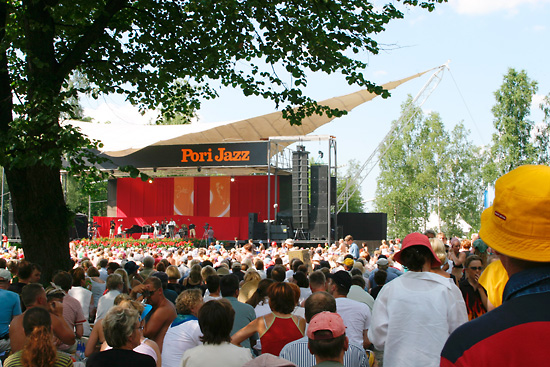
Pori Jazz is one of the crown jewels of the Finnish summer festivals.© Finnish Tourist Board/Matti Kolho

When summer comes, culture and art also move out to the countryside. July in particular is the time for the great summer festivals, with Savonlinna Opera, Pori Jazz and Kuhmo Chamber Music among the most internationally renowned events. Also on offer are visual art, theatre, rock concerts, literary gatherings, traditional celebrations, religious gatherings and village events around the country – something in every municipality.

The season culminates with the Helsinki Festival in late August and early September. Tourists and Helsinkians returning from holidays to the capital are treated to a wide array of international orchestras, circuses, theatre and dance performances and much more. In late August, as the nights get darker yet remain warm, the whole city celebrates the Night of the Arts, with a myriad of events spilling into the streets until dawn.

Harvest time

4117-summer8_b-jpg

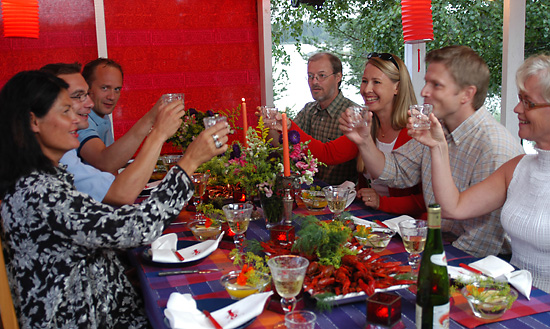
Crayfish parties are all about getting together, a few schnapps, toasts and singing.© Finnish Tourist Board

The northern harvest begins to ripen in late July. Many families spend vacation days picking and conserving wild raspberries, blueberries, lingonberries and cloudberries. After the late summer rains come forest mushrooms – boletes, chanterelles and dozens of other edible species.

The king of the late summer culinary season is the crayfish, which can be caught starting on July 21. Families, groups of friends and companies arrange light-hearted crayfish parties, centred around impressive piles of the glowing-red crustaceans. Digging the flesh out of the small shells is a somewhat complicated and messy ritual, but this exotic delight rewards the effort. The crayfish are washed down with cold schnapps and songs.

May we propose a toast: To the joys of summer in Finland!

By Salla Korpela, updated July 2010

Defensive victory led the way to peace

On June 6, 2004, the whole world — tout le monde, as the French would say — watched entranced as the landing of American and British soldiers on the shores of Normandy amidst a hail of German bullets was relived on TV.

Presidents Bush, Chirac and Putin and Prime Minister Blair joined in celebrating that heroic opening of a huge effort that culminated 11 months later in the defeat of Germany — or the liberation of Germany, as Chancellor Schröder put it.

But where was the Red Army? After all, Stalin had promised President Roosevelt and Prime Minister Churchill that the Soviet Union would mount a massed attack immediately after the Normandy landings. Three days later, on June 9, the Red Army did launch an attack, but not towards Berlin; instead, it was aimed at Viipuri through a sector 15 km wide on the western shore of the Karelian Isthmus.

This operation was no sideshow. The artillery bombardment, the prelude to the main offensive, was so massive that it was heard all the way to Helsinki. There were 300 to 400 artillery pieces per kilometre of front line in the attack sector, and the vanguard of the attack force outnumbered the Finnish front-line forces on the Karelian Isthmus by two to one. Over 600 tanks were mobilized, and air support was provided by some 1,000 aircraft.

This offensive was an unexpected devastating blow that punched a hole in the Isthmus front and caused widespread panic. Even though intelligence on the appearance of new Soviet divisions and artillery and armoured units on the Isthmus had trickled through to Army Headquarters in Mikkeli, the Finnish High Command failed to conclude that this was in preparation for an attack on Finland. The received wisdom was that the Soviet troops were bivouacked, recuperating in preparation for a massive push towards Germany. It was thus, as Mannerheim put it, “Strange, to say the least, that the Russians should attack us”.

In the West, the outlook was much the same. Defeating and occupying Germany was an objective that took precedence over all others. It was considered self-evident that as the Allies advanced towards Germany, the countries occupied by the Germans would be liberated. That was, after all, what the war was all about.

Finland’s separate position

The Soviet command — or shall we say Stalin — had a different conception. While bringing Germany to its knees was of course Stalin’s main objective too, he was also determined to ensure that his neighbours allied with or occupied by Germany would come under the sphere of influence of the Soviet Union, constituting a ‘buffer zone’. Once the Red Army had expelled German forces from the Baltic States, Poland, Hungary, Romania and Bulgaria, these countries could be brought under Soviet control on the sly. Finland, however, did not lie on the direct route to Berlin. It was on the sidelines, and beyond it lay a neutral state, Sweden.

Finland considered itself a case apart from all other countries at war. We considered that we were fighting a separate war against the Soviet Union, a war justified by Finland being the victim of aggression in the Winter War of 1939-40. The morally acceptable purpose of the Continuation War, which began in 1941, was to seek retribution for the wrongs that Finland had suffered. This separate war was to lead to a separate peace which would restore the territories that Finland had lost in the Winter War.

A separate peace with Finland was discussed at the summit meeting of the three major powers in Teheran on December 1, 1943. Roosevelt spoke in favour of Finland, and so did Churchill, even though Britain had declared war on Finland in December 1941. Stalin admitted that “a people that had fought so valiantly for its independence deserves consideration”. He presented his terms for peace: restoration of the borders of the 1940 treaty; annexing Petsamo to the Soviet Union; a “50 per cent restitution” for the damage caused by the Finns; the expulsion of Germans from Finland; and demobilization of the army. Roosevelt and Churchill did not comment. For them, the important thing was for Finland to remain an independent and democratic society.

Finland’s political leadership had realized as early as the winter of 1942-43, around the time of the Battle of Stalingrad, that Germany would lose the war and that Finland would have to get out of it as soon as possible. The Government headed by Edwin Linkomies was dubbed the ‘peace cabinet’. National Romantic aspirations of annexing Eastern Karelia and its Finnic peoples to Finland were quietly dropped. Paasikivi conveniently forgot the radio speech he had written in October 1941 where, quoting Dostoevsky, he surmised that Leningrad, the “window on Europe” opened by Tsar Peter the Great, would close as the Germans occupied it and that Russia’s political focus would shift towards the east and south, further from Europe. And no one brought up the fact that, in July 1941, Mannerheim had sworn that his sword would never be sheathed until Viena and Aunus (as the Northern and the Southern part of Russion Carelia were respectively called in Finnish) were free…

But when Paasikivi returned from Moscow with Molotov’s peace terms in March 1944, the Government and the majority of Parliament were aghast. The terms were considered draconian. However, the true reason for this was never spoken aloud. It was feared that Germany would punish Finland as it had only recently punished Hungary. German forces still held the whole of continental Europe. There were 200,000 German alpine troops in northern Finland, and the south side of the Gulf of Finland was under German control. The Germans could easily have “driven a wedge between the supporters of the Government’s peace policy and the people who vehemently opposed it”, wrote Linkomies in his memoir, Vaikea aika (A difficult time).

But Paasikivi’s position, whereby Finland should accept the Soviet terms despite their severity, found support among the opposition in Parliament. It became a political watershed used after the war to divide politicians into supporters of the ‘right’ and ‘wrong’ foreign policy.

Trapped between two superpowers

Instead of German punishment, Finland met with Soviet punishment. What was the true objective of the Red Army offensive? Was it to occupy Finland or merely lend weight to Molotov’s terms? The answer was to depend on the outcome of the campaign.

The defence forces on the Isthmus recovered from the unexpected crushing blow. No more than one week after the beginning of the attack, Mannerheim exclaimed with relief: “The Finns are fighting again!” Most of the soldiers who had fled in panic were sent back to the front (although 46 court-martialled deserters were executed, and 11 were shot without trial). On June 16, transfer of troops from Eastern Karelia to the Isthmus front was begun. The defences were strengthened, but the attack did not yet grind to a halt, and on June 20 Soviet forces captured Viipuri.

As the battle escalated, the political climate was heating up too. It is difficult for us in the age of the Internet to understand the morass of unclear and conflicting messages and rumours in which the ministers and generals and their aides became embroiled.

Suddenly, on June 22, the German Foreign Minister Joachim von Ribbentrop arrived in Helsinki, uninvited and unannounced, to demand that Finland commit itself unequivocally to Germany’s side. On the very next day, a message from Moscow came via Stockholm — a demand for surrender!
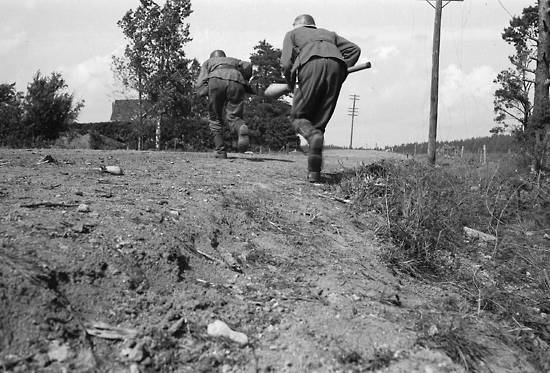
Finnish troops under fire cross a road in Ihantala.

Finnish troops under fire cross a road in Ihantala.Photo: SA-kuva

Finland was now caught in a vice between two superpowers. Surrender, it was feared, would lead to Soviet occupation, while commitment to Germany to the bitter end would spell utter disaster. Now panic broke loose in political circles.

President Risto Ryti and Finance Minister Väinö Tanner tended towards surrender, while Mannerheim and Prime Minister Linkomies considered Germany’s military aid essential in repelling the Red Army offensive. The Government was split, although the majority of MPs favoured surrender. The only solution was for the President to take a personal stand. This was executed as a brilliant diversion.

Ryti sent a letter to Hitler, stating that he committed himself to continuing the war on Germany’s side to the very end. What he did not tell Hitler was that he would resign as soon as the situation demanded, at which point Finland’s commitment to Germany would be rendered null and void.

Hitler swallowed the bluff, considering the word of Finland’s “leader” a sufficient guarantee. So did the U.S. Government, who expelled the Finnish ambassador. So did the Swedes, who declared that Finland was now irrevocably doomed. So did the peace-favouring opposition in Finland — Paasikivi, Kekkonen, Wuori and Fagerholm — who began to set up a refugee government in Stockholm.

Stalin, however, appears to have called the bluff. This is the only explanation for why the Soviet ambassador in Stockholm, Madame Kollontay, sent the would-be refugee government back home, informing them that the Soviet Union would be talking terms of peace with the Finnish Government.

The political leaders of Finland, like many other leaders over the centuries, had taken a page from Machiavelli:

“…it did not appear he should avoid any procedure in order to save the country, for as the life of Rome depended on the life of that army, it appeared to him it should be saved in whatever way, and that the country is well defended in whatever way it is defended, either with ignominy or with glory; for by saving that army, Rome would in time wipe out that ignominy; but by not saving it, even though they should die most gloriously, Rome and its liberty would be lost.”

Ryti sacrificed himself in taking upon himself the “ignominy” to which the Western world considered Finland had stooped in relying on Hitler’s Germany to halt the Soviet offensive.

Hitler’s gamble

It has afterwards been observed that the bulk of the German aid had already been received before the Ribbentrop agreement. Panzerfaust and Panzerschreck anti-tank weapons had been ferried from Germany in April, Battle Unit Kuhlmey with its 70 aircraft had begun its campaign on June 17, and the first units of a German infantry division were on their way to Finland through Estonia before Ryti ever sent his letter to Hitler.

This division is considered to have played a major part in the defensive engagements at the Bay of Viipuri in July, while the assault gun brigade sent by the Germans had a negligible effect. The most spectacular contribution was made by the Stuka dive-bombers of Battle Unit Kuhlmey. In the battle of Tali-Ihantala, for instance, the German aircraft accounted for 63% of the bombs dropped on Soviet positions. Kuhlmey also shot down 151 Soviet aircraft. If no agreement with Germany had been entered into, Battle Unit Kuhlmey would probably have been withdrawn from Finland, and the infantry division would also have been recalled.

However, calling on Germany for help must be understood in a wider context. At Midsummer 1944, no one could possibly have known when and how the Soviet offensive might be halted. Continued help from Germany was considered vital. And continued it was; between the end of June and the beginning of September, Germany supplied Finland with a total of 28,860 tonnes of materiel, more than in any previous war year apart from the very beginning of the Continuation War.

But regardless of the quantity or nature of this military aid, what really decided Finland’s fate was Hitler’s great gamble, which shook the whole of Europe. In August-September 1939, Hitler turned his back on the east, and as a consequence the Soviet Union attacked Finland with intent to occupy; twelve months later, Hitler began to prepare his assault on the Soviet Union, and as a consequence Finland sought to regain the territories lost in the Winter War. At that point, “the whole world” believed that Germany would occupy the Soviet Union in a matter of months. If only we had known…

Defensive victories

Once the tables had been turned and the Soviet forces had the upper hand, no amount of German help could ever have saved Finland had not the patriotic fighting spirit of our forces continued to grow from strength to strength, notwithstanding the artillery bombardments, air raids and infantry and armour assaults of the Red Army, which surpassed anything previously seen. As the attention of the rest of Europe was focused on the advance of the Western Allies from the French coast to Germany, Finland’s struggle to remain independent went largely unnoticed, even in our neighbouring Sweden. The only thing that was remembered was that Finland had been on the wrong side. Finland was labelled as having fought “a losing war”.

When Prime Minister Göran Persson of Sweden visited Finland in summer 2002, his opposite number Paavo Lipponen took him to the Hämeenlinna Artillery Museum to watch a video on the battle of Tali-Ihantala. The half-hour documentary made a deep impression on Persson. He said on leaving the museum that only now did he realize what Sweden owed Finland.
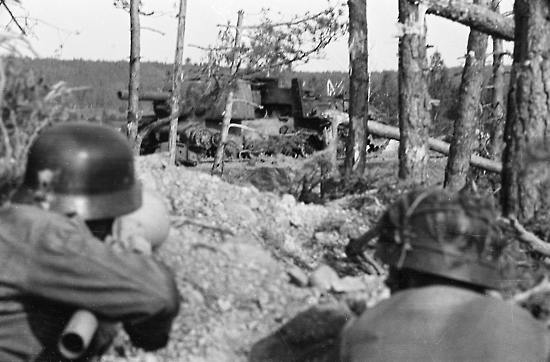
In the background, a Russian KV2 assault vehicle destroyed by Finnish anti-tank fire (foreground) at a crossroads between Ihantala and Karisalmi.

In the background, a Russian KV2 assault vehicle destroyed by Finnish anti-tank fire (foreground) at a crossroads between Ihantala and Karisalmi.Photo: SA-kuva

In addition to the defensive victory gained at Tali-Ihantala, the front line held fast at Kivisilta and Tienhaara to the north of the Bay of Viipuri and at Vuosalmi on the shores of the Vuoksi River. Further defensive victories were achieved at the Bay of Viipuri and on the northeast side of Lake Ladoga, and in Ilomantsi the Soviet contingent was besieged.

On July 12, the Soviet troops received an order to stop advancing and dig in. Soon Finnish scouts noticed trains with empty trucks advancing towards Viipuri to take troops away from the Finnish front. They were needed for the great push towards Berlin.

The defensive victory achieved by the Finnish Defence Forces showed once again that when a superpower, with its manifold objectives and commitments, is faced with a small nation fighting for its survival, the odds cannot be assessed simply on a one-on-one basis. For the second time in five years, Finland had succeeded in putting up such resistance that the price of occupying the country would have been so high as to damage other, more important interests of the Soviet Union; in 1940, continuing the war against Finland could have drawn the Soviet Union into a world war from which it had decided to abstain; and in summer 1944, the Soviet divisions in Finland were getting sidetracked from the decisive battles in the main theatre of war.

The ignominy of the alliance with Germany was expunged when Ryti resigned and Field Marshal Mannerheim was elected President on August 5. At that moment, the Army was still capable of defence, numbering 528,000 men. There were not enough Soviet forces on the Finnish front for a renewed assault. The Marshal-cum-President could calmly wait for the right moment to sue for peace. Daily he inspected intelligence reports on troop movements to the south of the Gulf of Finland to make sure that Germany would no longer be capable of retaliatory action against Finland.

The way to peace

Mannerheim’s initiative was patiently awaited in Moscow. Obviously Stalin trusted the Marshal; more than six months earlier, he had declared to the Swedish Foreign Minister that Mannerheim would not be touched.
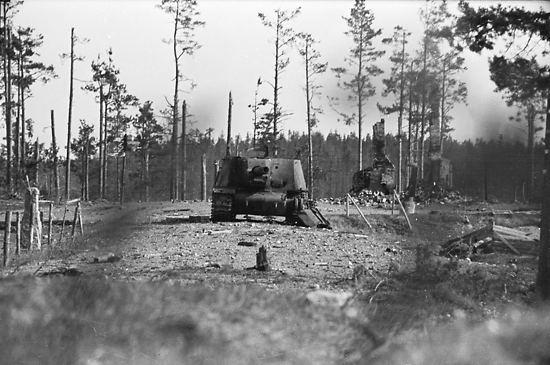
A Russian tank in position in front of a burned-out rural post office (background).

A Russian tank in position in front of a burned-out rural post office (background).Photo: SA-kuva

Meanwhile, negotiations on the terms of peace to be presented to Finland were still going on in Moscow. On July 21, Marshal Kliment Voroshilov proposed to Stalin that the Finnish border be pushed back west, so as to bring the Kaukopää mills belonging to Enso in Imatra and the Kaukas mills in Lauritsala to the Soviet side. This would have resulted in an extra refugee population of 250,000. Voroshilov further proposed that the Soviet Union should establish military bases in both Porkkala and Hanko and that Soviet troops should occupy Helsinki, Åland, Turku, Vaasa, Oulu and Tornio until the war against Germany was over. He proposed the sum of 800 million dollars in war reparations. Stalin, however, dismissed Voroshilov’s proposals.

No one in Finland knew anything about this, of course; it was not until the Soviet Union collapsed that Russian archives have become available to scholars.

The archives have yielded a more extensive version than previously known of the draft treaty presented by Molotov to Paasikivi in March 1944. It contained several demands that Paasikivi was never informed of, for instance the ceding of several naval bases to the Soviet Union and the ‘rectification’ of the border of 1940 so that the Saimaa Canal, the upper reaches of the Vuoksi River and the shore of Lake Saimaa would come under Soviet control. But Stalin ignored this too.

Finally, on August 24, Mannerheim sent Hitler a letter declaring that Finland was withdrawing from the war. Germany is such a mighty nation, Mannerheim wrote, that it shall live on even if it loses the war. Finland, however, is such a small nation that it could be evicted from its dwelling place and destroyed.

He could well have quoted J.V. Snellman, who wrote: “Only uncivilized tribes have been observed to fight unto their very destruction.” This, indeed, is what Hitler did.

Hostilities at the front ended on September 5, and negotiations on the truce agreement began. The terms of peace presented to the Finnish delegation included the ones that Stalin had presented to Roosevelt and Churchill in Teheran: the 1940 border, the annexation of Petsamo, the expulsion of German troops and demobilization. But there was a further condition that had not been mentioned in Teheran, the leasing of the Porkkala naval base to the Soviet Union.

The war lost

“Why was Finland never occupied?” asked Yugoslavian dictator Tito in April 1945. Stalin replied, “We took the Americans much too much into account.” Finland was, of course, not the only issue whose treatment by the Russians was influenced by Soviet relations with the United States. Stalin respected the wishes of the Americans because the Soviet Union was dependent on the military and economic support it received from the USA.

Stalin’s personal relations with Roosevelt were very close at the time. The American President treated the Communist Soviet dictator with remarkable tolerance. The bloodthirsty tyrant morphed into good old Uncle Joe. Relations between the two countries took a turn for the worse after Roosevelt’s death; his successor Harry Truman was suspicious of the Bolshevik leader.

“This war is not like earlier wars,” Stalin said to Tito. “Any power that occupies a land brings its own political system there too. Everyone will extend their political influence as far as their armies can go.” In the direction of Finland the Red Army could go as far as the 1940 border, but no further. In 1974, Molotov said in an interview: “We were wise not to annexe Finland. It would have been a running sore… The people there are stubborn, very stubborn.”

Actually, we were more than flexible. When the focus of power was in Berlin, we turned a blind eye to Nazi atrocities. When Moscow gained supremacy, we ignored Stalin’s brutality. We did everything we could to appease our mighty neighbour. No one even mentioned a ‘defensive victory’. (The very concept did not appear until 1956, in a book published by General Oesch.) The official position was that we had lost the war. Ryti, Linkomies, Tanner, Ramsay and many others were condemned as war criminals and put in prison, while Paasikivi, Kekkonen, Fagerholm, Wuori and others formed a Government. Of the people in charge during the Continuation War, only Mannerheim remained untouched, just as Stalin had promised. The Communist Party was made legal, and Soviet society and its workings became a topic that was taboo.

Defence of independence

As the world war continued, more destructively and fiercely than ever, Finland disappeared below the news horizon. Scarcely anyone noticed that Finland became the first wartime combatant to hold a free post-war election, in March 1945. The next such election was held in Britain, in June. Although the Communists were on the ballot for the first time in 16 years, the results of the election showed that the basic structure of Finland’s political system had remained stable.

Of the countries that ended up in the Soviet sphere of influence at the end of the Second World War, Czechoslovakia was the only one with a tradition of democracy. It was in a wholly different position from Finland, though. In the election held in Czechoslovakia in 1946, the Communists gained 40% of the vote, and they had a strong grip on the civil service and the army. The Czechs were, for historical reasons, positively inclined towards the Soviets; after all, the Soviet Union was the only one of the Allies that had declared in 1938 that it would defend Czechoslovakia against Germany. The Communists were internally so strong that they managed to stage a coup in 1948 without the intervention of the Red Army. In the same year, the Communists were excluded from the Government in Finland.

Amidst the upheaval in Europe, Finland was largely ignored. When I met the well-known British writer and columnist Harold Nicholson in Paris at the peace conference in autumn 1946, he asked me in terms of deepest sympathy, “Which occupation was worse for you — the German or the Russian?” A more significant question was posed by President John F. Kennedy in autumn 1961 as he prepared to receive President Kekkonen in Washington, “What most interests us Americans is to know why the Soviet Union allowed Finland to remain independent.”

The answer was simple — a defensive victory! More broadly, Finland’s independence was preserved due to historical reasons, namely its geopolitical location and its position in the sphere of Western democracy.

In retrospect, the Continuation War was indeed a separate war that ended in a separate peace. We never did recover the territories we had lost in the Winter War; the Soviet Union dictated the permanence of the situation that prevailed at the end of the Winter War. But the Continuation War did not lead to the loss of our independence. Apart from Britain, Finland emerged as the only European country that participated in the war but was never occupied. We preserved our democracy, even though its flame burned low now and again. The fighting spirit of the Finns was a convincing display of national unity and vigour.

This article by writer and diplomatist Max Jakobson was translated from the Finnish original, which appeared in the newspaper Helsingin Sanomat on September 3, 2004.

By Max Jakobson, September 2004
Japan: Big in Helsinki

From a mutual love of design to a fondness for karaoke and sushi, the Japanese and Finns share a surprising number of passions.

Tucked away in Helsinki’s posh Ullanlinna neighbourhood is a tiny boutique called Lisn, which specialises in high-quality Japanese incense. It is the only store outside of Japan to sell the Lisn product line of Shoyeido, a traditional and respected incense maker with 300 years of history.

Stepping over the threshold is like taking a trip: In lieu of a welcome mat, a flat round stone separates the noisy bustle of the outside world from the oasis of calm found inside the shop. Here, Japanese and Finnish design meet in the minimalist interior, created by well-known Finnish designer Vertti Kivi. (His surname means “stone,” which seems a fitting touch of symbolism.)

“Lisn started as a personal passion,” says Finnish co-owner Sami Hilvo, who is fluent in Japanese. Hilvo and Brazilian-born partner Paulo Silva both worked in Tokyo for many years.

“When we decided to move to Finland, which is well known for its contemporary design, we thought it would be a good idea to combine a passion and a business opportunity,” says Silva.

Good sense

With 120 different types of incense available, Lisn’s concept is based on the idea that different scents can be used to set different moods ranging from “fresh” to “chic” and “luxurious.” For example, under the category of “natural,” the suggested incense menu is as follows: morning might start off with bergamot, continue with sandalwood in the afternoon, follow with lavender in the evening, and round off with camomile and mint for night.

Lisn Helsinki's Paulo Silva and Sami Hilvo.

Lisn Helsinki’s Paulo Silva and Sami Hilvo.Photo: Katja Pantzar

According to Hilvo and Silva, Lisn’s customers are men and women of all ages with one thing in common: “They have an interest in bringing something new and enjoyable to their lifestyles while sharing precious moments with friends, or having a personal moment of calm and quietness.”

In Japanese, the verb “to hear” is used instead of “to smell” when breathing in a fine fragrance. The name Lisn comes from the sound of the English word “listen.”

The duo recently started working with Hotel GLO, Helsinki’s first lifestyle hotel. Scented Lisn bags complement the amenity boxes of each room. A junior suite in the hotel features a Room of All Senses, for which Lisn provided the scents and audiovisuals, with a piece called “Meeting in the Forest” that was developed together with a Kyoto-based group called Rewall.

Turning Japanese

In addition to the products available at Lisn, Helsinki serves up Japanese culture in other forms. Next door to Hotel GLO is the five-star Hotel Kämp, which turned their popular international brasserie into a high-end Japanese restaurant – complete with a chef from Japan.

Like Lisn, Yume provides a sensual experience. It fuses Japanese and Scandinavian culinary traditions into a menu built around the four seasons. As the seasons change, so do the menu, the wine list, the décor, the flower arrangements and even the restaurant’s website.

Yume fuses together Japanese and Scandinavian culinary traditions.

Yume fuses together Japanese and Scandinavian culinary traditions.© Palace Kämp

Karaoke, a form of entertainment in which amateurs sing along to recorded background music with lyrics displayed on a television monitor, is a Japanese tradition popular with Finns. A karaoke machine can be found in just about every bar and private coach throughout the country.

It should come as no surprise then, that Finland holds the Guinness World record for the largest number of people singing karaoke at one time: 80,000 people gathered together in Helsinki and sang “Hard Rock Hallelujah,” in May 2006 following Finland’s win of the Eurovision Song Contest by monster rockers Lordi. Further testament to the Finns’ love for this Japanese invention is the Karaoke World Championships, which originated in Finland. This event has grown from a small contest involving seven countries to an annual competition with 30 countries participating.

Cultural forms

“The backbone for all things Japanese being so popular could be summed up by one word: consistency,” responds Silva, when asked why the Finns are such fans of all things Japanese.

“Japanese culture, which pays attention to form and detail, has become one of the best products that Japan has to export. It has refined various skills into art forms such as the traditional martial art disciplines of judo and karate, the art of the tea ceremony (chadô), flower arranging (ikebana) and incense (kôdô). More recently the appearance of Japan’s contemporary art forms has been remarkably visible: design, fashion and pop-culture.”

“The marriage between beauty and function is obvious in the design traditions of both Finland and Japan,” says Hilvo. “Something that has been born out of necessity is respectful to its function, clean and calm not only to the eye, but to the soul. Perhaps this also applies to other aspects of life and how we relate to them.”

And as Finns are drawn to Japanese design and culture, the Japanese are interested in Finland.

Not far from Lisn is Kahvila Suomi (“Café Finland”) on Pursimiehenkatu in the Punavuori neighbourhood. The café was the main filming location for last year’s Kamome Diner, the story of a Japanese woman who moves to Helsinki. The film achieved such cult status in Japan that a surge in tourism from Japan to Finland was reported by the main Finnish daily newspaper, Helsingin Sanomat.

Although a shared love of function and aesthetics are among the reasons that Japanese visit Finland, Silva offers another point of view: “The biggest difference between contemporary Japanese and Finnish life is time. Finland and Helsinki still have a feeling of calm and quietness in the lifestyle when compared to Japan’s major cities, such as Tokyo. The growing number of Japanese visitors to Finland may be after exactly this: the calm. I’ve understood that the fast-moving and busy lifestyle of Japan is quite a new thing; the Japanese long for the feeling of calm of yesteryear that they can only find here.”

Designing products for Lisn’s lifestyle concept line

Top Finnish designers including COMPANY (Aamu Song & Johan Olin), Harri Koskinen, Ilkka Suppanen, Lustwear, Naoto Niidome, Pentagon Design and Syrup Helsinki are working on designing products for the Lisn concept. The results will be displayed in three exhibitions in three cities: Helsinki, Kyoto and Tokyo. The Helsinki exhibition will be held at Lisn Helsinki in September. The Tokyo exhibition will be held at the Axis Gallery, which is in the Axis complex, one of the most important design centres in Japan.

Sami and Paulo’s Japanese Helsinki picks

Tokyo Kan, an indispensable shop for getting those very important ingredients for cooking and entertaining.
Address:
Telephone:
Annankatu 24
+358 9 622 5553
Yume, an excellent venue for contemporary Japanese cuisine.
Address:
Telephone:
Kluuvikatu 2
+358 9 5761 11
Tokuyûan (link in Finnish), an amazing example of Finnish and Japanese cultures meeting, is a traditional teahouse on the Suomenlinna fortress island.

Sushi time

The Japanese and the Finnish share a love of raw fish, and the popularity of Asian cuisine has grown here in recent years. Owned and operated by Yoshio Tamura, Gyosai-Sushi Bar (Runeberginkatu 40B/+358 9 241 3440) is officially the city’s smallest restaurant, with five seats, while Norisushi Bar in the Old Market Hall (Eteläranta 1/+358 9 260 0027) makes great sushi in slightly more spacious environs. Nearby, upscale Raku-ya (Eteläranta 4/+358 9 675 449) features a sushi bar in front and a traditional Japanese restaurant in back, complete with private dining booths made of rice paper. At sushi bar Ichiban (Mikonkatu 8/+358 9 672 345/www.ichiban.fi), tucked away on the second floor, you can get a full meal deal with sushi, miso soup, and tea for about ten euros. Ichiban has a second location on the ground floor of the Kamppi shopping centre. When Japan’s Prince and Princess Hitachi visited town, the Japanese embassy ordered dinner from Kabuki (Lapinlahdenkatu 12/+358 9 694 9446), run by Yoshiaki Takayama, and known as a place where local celebs host parties and considered by many to be one of the city’s best sushi spots.

Karaoke time

For karaoke Finnish-style, try Helsinki’s Pataässä (Mariankatu 9/+358 9 626 076) favoured by locals and domestic pop stars alike: Finnish chart-topper Paula Koivuniemi has been known to take over the mike here. A special bonus, all-day and night karaoke on Saturdays and Sundays starting at 9 am. Another Finnish specialty is the Karaoke Taxi (www.karaoketaxi.fi/+358 40 500 6070), which seats up to 12 people and is kitted out with all the karaoke essentials.

By Katja Pantzar, June 2007