Laying claim to Claus: Santa is from Finland

During her time living in America, a Finnish journalist gets philosophical while looking for the true home of Santa.

Less than 48 hours into November, my neighbourhood shopping mall in northern New Jersey replaces the pumpkins and polyester cobwebs of the Halloween season with ubiquitous rows of hanging twinkle lights. In the middle of the mall stands the centrepiece of commercial Christmas: a golden armchair surrounded by plastic pine trees, oversized gift boxes and stuffed reindeer dressed in two-piece suits.

“Mall Santa” occupies this throne and listens to the Christmas wishes of local children. For most, sitting in Mall Santa’s lap for a few fleeting minutes will be the extent of their contact with the personification of modern Christmas.

Scenes like this may give American Christmas its materialistic image, but they also reflect a characteristically mythical aspect of the local Santa. Travelling from the uninhabitable North Pole, as the American story has it, and delivering his gifts under the cover of the night, Claus is hardly a tangible figure in the US.

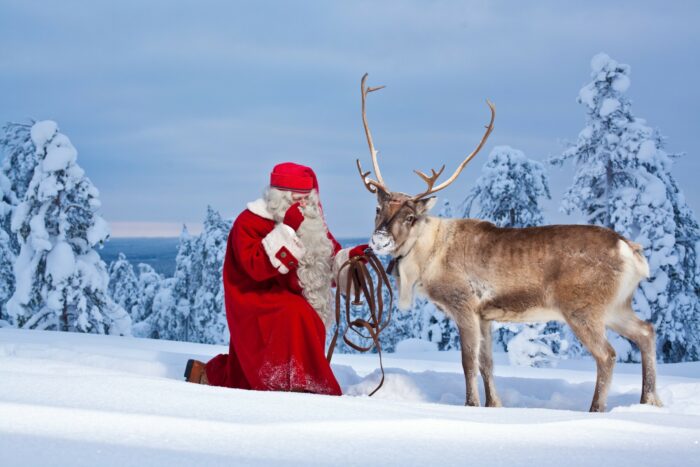
In Finland, however, reindeer are as real as cows or horses, and children don’t just recite their wishes to Santa Claus. He has a real-life address that receives mail and welcomes tourists. Instead of sneaking in through the chimney and leaving cookie crumbs as evidence of his visit, Santa knocks on doors and hands his presents to children in person. The realism of the Finnish Claus allows Finland to stand by its status as a Christmas capital.

No reindeer at the North Pole

Santa Claus and a reindeer in a snowy landscape.

Photo: Visit Rovaniemi

Finland didn’t claim itself as Santa’s country of residence until 1927, when radio personality Markus Rautio declared Korvatunturi, a mountain in the Finnish far north, to be Santa’s home. His official postal address has since moved to Rovaniemi, a city just a couple kilometres from the Arctic Circle, but these days Santa Claus offers a marketable face for Finnish tourism. During a typical winter, hundreds of thousands of European and Asian visitors flock to Finnish Lapland, with total overnight stays in the region surpassing three million.

“As far as Santa Claus living in Finland, we can stand behind a few facts,” says Ilkka Länkinen, founder and CEO of Rovaniemi-based Pro Santa, a company that sends trained Santa Clauses around the world and is home to the Christmas village Joulukka. “Finnish is the only language in the world that has named the month of December after Christmas,” he notes. “Joulukuu literally translates to ‘Christmas month’. And even though Santa might keep an office at the North Pole, he can’t live there, because reindeer can’t survive there. In Lapland, they can make it through the winter.”

“The fact that we have a real Santa Claus workshop and a real Santa Claus whom tourists can meet year-round is important,” says Tommi Lappalainen, CEO of Santa Television, which markets Santa Claus multimedia items and offers a live webcam into Santa’s village in Rovaniemi during December.

Give and receive

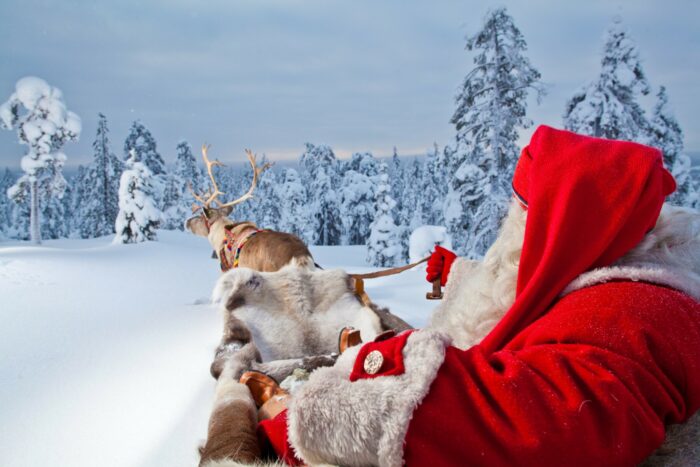
A reindeer pulls Santa Claus in a sleigh in a snowy forest landscape.

Photo: Visit Rovaniemi

In a normal year, guests from Asia and all over Europe take chartered flights to Santa Claus’s digs in Rovaniemi. However, the US holds firmly to its North Pole theory. In a manner of speaking, that may be the ideal location for the American Santa Claus. For a character so strictly rooted in symbolism and magic, the least habitable place on earth is a fitting address.

And the Finnish Claus – the real one who cushions his wooden sleigh with animal skins and steers his living, breathing flock of reindeer through a frozen landscape – may be a different character altogether.

By Laura Palotie

Creator of Santa Claus

Christmas - Ylaornamentti

Mauri Kunnas’s lovingly illustrated Santa Claus books are part of Christmas for countless kids in Finland and around the world. Their joyful stories echo the author’s childhood Christmases in a small Finnish town in the 1950s.

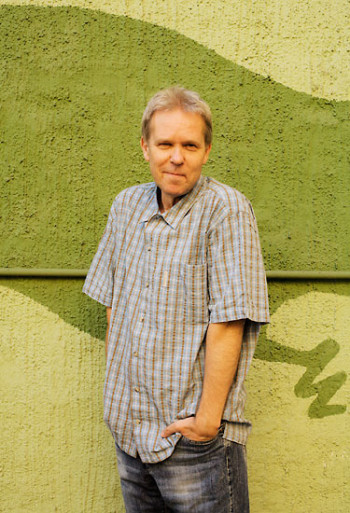
Mauri Kunnas is probably Finland’s most widely read living author, as his children’s picture books, published in Finland by Otava, have sold nearly seven million copies around the world. The original Santa Claus book has been translated into 28 languages.

Many of Kunnas’s most popular books feature Christmas festivities in a timeless snowy setting that is home to a laid-back Santa Claus and hordes of fun-loving little elf children.

“I’ve always loved Christmas,” he explains. “It’s an especially big thing in Finland, where the festival is really much older than Christianity.”

He emphasises that his elf characters have their roots in ancient Nordic folklore. “Even if we don’t always realise it, there’s still something very paganistic about the way we mark this very darkest time of the year in Finland – like the way we go to the cemetery on Christmas Eve to visit the graves of our ancestors.”

Childhood memories

2484-kunnas2_b-jpg

Mauri Kunnas bases many settings in his books on his own childhood home and village.Photo: Ville Juurikkala/Otava

Kunnas grew up in a big wooden house in a small town in southwestern Finland, and he points out that Santa’s home and village in his Christmas books are closely based on scenes from his own childhood. “Here these elves are playing on exactly the same kind of skating rink where I used to play with my friends. And this Santa’s workshop is like my father’s carpentry workshop in our basement – these shelves and wooden toys are just as I remember them!” he says, laughing.

Kunnas’s cheery but slightly doddery Father Christmas is a mixture of the mysterious scruffy wanderer of Finnish folk traditions and the more internationally recognisable Santa. Kunnas points out that the American Santa stereotype is largely derived from 1930s Coca-Cola advertisements illustrated by Haddon Sundblom, whose parents came from Finland and Sweden.

“Christmas hasn’t really changed so much for children since my childhood – though the sacks of presents Santa brings are much bigger today!” he says.

Scary Santa

Although Santa traditionally visits Finnish family homes during the waking hours of Christmas Eve, Kunnas never really met him as a child. “He visited us once when I was small, but all I saw of him was his feet, as I was hiding under the bed in terror,” he remembers.

Kunnas identifies more closely with Little Willie, a tiny, kind-hearted elf who features as the central character in Twelve Gifts for Santa Claus, the author’s own favourite book from his Christmas catalogue.

Joulu

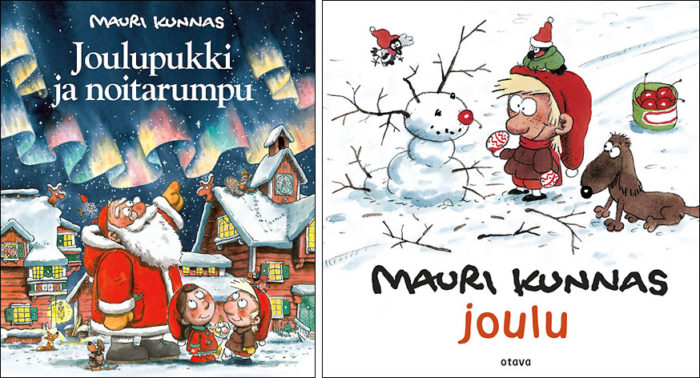
Santa Claus and the Magic Drum (left) is a Kunnas Christmas classic, while Joulu (Christmas) is a brand new book for very young readers.© Otava Publishing

As Christmas approaches again, Santa Claus and Kunnas’s other Christmas stories will be eagerly retrieved from cellars and cupboards in homes around the world. Though there is something quintessentially Finnish about their settings and stories, translated versions have sold like hot Christmas cakes in languages from Chinese to Welsh.

Kunnas insists that he mainly writes and draws for himself, and he seems astonished that his books have proven so popular with children and parents from such different cultures. But these lovingly illustrated stories are so full of fun, warmth and humorous detail that their success comes as no surprise.

History, literature and music

In addition to his Christmas favourites, Kunnas has written and illustrated dozens of fictional and educational children’s books, including imaginative adaptations of historic legends and literary works, featuring dogs and other animals instead of people. His best-selling Canine Kalevala is widely credited with making stories from the Finnish national epic Kalevala familiar to modern Finnish youngsters.

Having just fulfilled a long-held ambition by completing a colourful new version of Robin Hood, Kunnas already has plenty of ideas for future projects – even if planning, writing and painstakingly illustrating a book can take the better part of a year.

One of these ideas is to create a history of Finland for children, based on a journey back up the ancestral family tree of Doghill Martha, a popular character from Kunnas’s Doghill Farm series. Another dream, linked to Kunnas’s fondness for 1960s pop music, is to one day produce a book documenting the rise of a familiar-sounding band – the Beagles.

By Fran Weaver, December 2009

Christmas - Ylaornamentti

Finnish views of the Winter War: Portraying trauma mixed with heroism

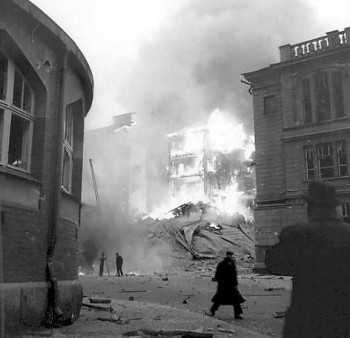
“War in Finland?” Yes. On November 30, 1939, the day after this question appeared as the title of the New York Times editorial, the Soviet Union initiated a massive offensive against Finland.

The battle would last for 105 days, until March 13, 1940, with Finland, much to the surprise of most, remaining independent but ceding about 9 percent of its prewar territory and 20 percent of its industrial capacity to the Soviet Union.

As elsewhere, the outcome of the worldwide conflict shaped the nation. “The Winter War is always topical when speaking about Finnish self-consciousness” says Antero Holmila, a researcher at the University of Jyväskylä with a background in British academia, and the editor of a book entitled Talvisota muiden silmin (The Winter War through the Eyes of Others).

“A nostalgic view of Finland lives through the memory of the war,” says Holmila. “The war effort showed proof of moral values that were, and still are, held in high regard, such as patriotism and working together for a greater cause.” He seems to say that people dissatisfied with today’s diverse society seek the blueprint for a society that supposedly used to exist. But how accurate is that picture?

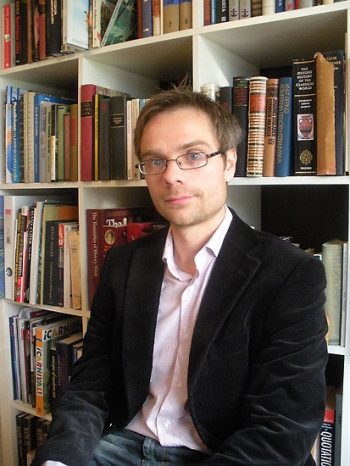
Rising above the national perspective

Historian Antero Holmila pictured in front of a bookcase.

“My first contacts with the Winter War came through skimming picture books, reading fiction and through movies,” says historian Antero Holmila. “Historical literature came much later.”© Atena Publishing

Holmila does not set out to provoke or challenge, but to seek room for more hues of history and nuances to the tale. Since the war is still strongly a part of Finnish culture and society, he wanted to deconstruct and broaden the scope of the traditional view of little heroic Finland. “I wanted to bring the international narrative to the forefront,” he explains. “Deconstructing national myths is not only a trend among historians, but an important direction to take.”

Holmila sees the Winter War as a part of European history and as one piece of the bigger Second World War puzzle. “Remembering our war does not differ much from how the Second World War at large is remembered in Europe. Having a last round of veterans and eyewitness accounts brings an added dimension to this anniversary and a chance to use history for politics. Pointing out the importance of the war is also one way of honouring the veterans,” he says.

Heroic tale or trauma?

A black and white photo showing a collapsed building on fire and people walking on the street in front of it.

First Soviet air raid: On November 30, 1939 Soviet bombers destroyed numerous buildings in Helsinki, killing 91 and injuring more than 200.© SA-Kuva

Holmila points out that the generally accepted view in Finland is that the outbreak of war was others’ doing. The culprits were the architects of the Molotov-Ribbentrop pact, in effect Nazi Germany and the Soviet Union. That view also affects how the entire conflict is discussed and remembered. There is little talk about regret, as there is in Germany, for example.

That does not mean that the memory of war is unproblematic. “I’d personally like to describe it as a trauma portrayed as an act of heroism. Obviously it is both, but with an emphasis on the former.” The war had hidden effects and the traumatic side has only just begun to be discussed. “The controversy surrounding the Huhtiniemi excavation, an alleged mass grave of Finnish deserters, is a recent example of how strongly people still feel about the war.” Silenced incidents continue to have a haunting presence.

“We’ve had a hard time accepting and fitting in suffering and trauma as a part of the success story,” Holmila explains. He also emphasises that it is both difficult and dangerous to generalise when speaking on a collective level: “For some the war, despite all its gruesome aspects, was a truly enjoyable time and a great purpose to live for. For others it was nothing but suffering.”

Appealing unity, exotic surroundings

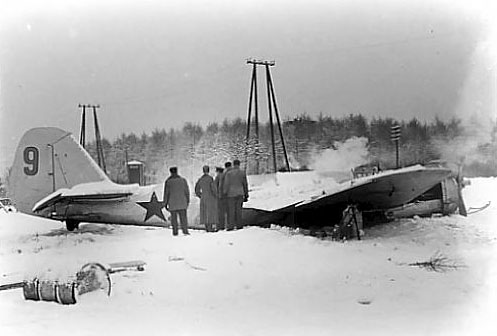
A black and white photo of a group of soldiers inspecting a Soviet bomber.

Inspecting a Soviet bomber, December 1939: The Finnish Air Force and antiaircraft units downed about 600 Soviet aircraft during the Winter War.© SA-Kuva

The Winter War did draw wide international attention. Holmila’s book looks into how foreign press viewed the conflict, with examples covering ten countries and three continents. The articles from Greece, Japan, Hungary and Great Britain show that foreign press emphasised and marvelled at the unity of the Finnish nation.

Holmila again raises a rhetorical finger: “It is important to acknowledge that they did this for their own national and often political purposes.” War loomed over the world and all countries were preparing for it.

Correspondents were also fascinated by the arctic aspect of the war. The snow, the cold climate and soldiers on skis wearing white camouflage formed novel and exotic experiences. This aspect is not far from what appeals foreigners in Finland today. Many correspondents chose to cover battles in Lapland, although the main struggle was fought on the Karelian Isthmus, in the southeastern part of Finland.

Correspondents weren’t sent to Finland immediately after the war broke out. Finland was expected to fall quickly, following the examples of Poland and Czechoslovakia. “The ensuing rush of war correspondents show a genuine interest in the turn of events” says Holmila.

All major publishing houses sent out correspondents, including thirty from Britain alone. The fact that the conflict took place in a time when news agencies had invested in wide networks of war correspondents but other fronts were rather quiet was an added reason for the attention.

Importance of foreign input

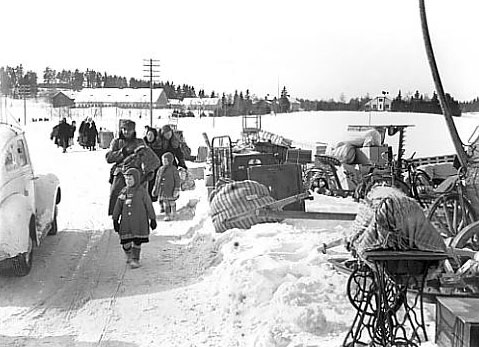
A black and white photo of evacuees from Karelia walking on a snowy road.

Carrying what they can, evacuees from Karelia assemble at the railway station in Elisenvaara on March 18, 1940.© SA-Kuva

The war also engaged some war correspondents strongly on an emotional level. The most prominent example of this is John Langdon-Davies, the prolific British journalist most famous for founding the aid agency Plan International and for his coverage of the Spanish Civil War. “The title of his war memoirs, Finland: The First Total War, is quite telling,” says Holmila. It is also a welcome foreign input into Finnish history.

“Finnish history writing is limited by the fact that it is written by Finns. The language sets such strong barriers. What would have become of the history of Vichy, France if it had been left to Frenchmen to study?” asks Holmila.

“Having foreign input has done the history of great powers a lot of good,” he continues. Luckily some of Finnish history, such as the Winter War, can also be analysed through Russian and Soviet sources.

Eighty-five years on, the Winter War legacy is both close and distant. Most importantly it is complex and interconnected with broader history. The Winter War is yet an example of that war, regardless of outcome, has a colossal cost and long-lasting and often unexpected effects.

Holmila’s suggested introduction to Winter War literature

1. Diplomacy of the Winter War, Max Jakobson (1961)

  • An important cornerstone and a classic. Although written in the 1950s, it still holds its ground.
2. The Soviet Invasion of Finland 19391940, Carl van Dyke (1997)

  • A more detailed account. Provides the Soviet point of view and also covers the operational history of the Red Army.
3. Finland: The First Total War, John Langdon Davies (1940)

  • A vivid, analytical and personal account from the founder of Plan International and one of the most acclaimed war journalists of his time.
By Jens Alderin, November 2009, updated March 2025

Rock begins with J

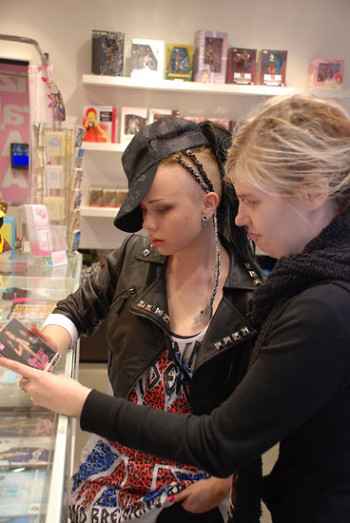
Japanese pop culture is “in” among Finnish young people. Hundreds of fans – most of them teenage girls – queue up every time Helsinki receives a visit from a Japanese rock band.

The line to get into Tavastia Club, one of Helsinki”s best-known music halls, stretches around the block. An assortment of mostly teenage girls waits to be admitted.

Some are dressed in Victorian-inspired Lolita dresses, making the girls look like old-fashioned dolls, with lots of lace and trim. Other girls shun this popular Japanese street fashion, preferring to dye parts or all of their hair bright colours.

When we show up, performing artist Miyavi is ready to stir the waiting crowd. Abingdon Boys School is another act that has appeared recently on the same stage. Japanese rock music, or J-rock, is a huge hit among Finnish youngsters.

“Of course the music interests me, but really what is so appealing is the combination of style and appearance,” explains Hanna Mustapää. The eighteen-year-old has been listening to J-rock for some four years.

J-rockers that perform in what’s called the Visual Kei subgenre are known for their outrageous outfits – men dress like women or wear otherwise fantastical apparel – and for their stage shows, which can easily combine classical music, hard rock and folk.

The lyrics are largely in Japanese, but Mustapää doesn’t mind.

“I look online for translations into English or Finnish,” she says. “Fans that understand Japanese translate the songs on different websites.”

Striking cross-cultural connection

3659-japanpop2_b-jpg

Hanna Mustapää (left) and Katariina Alainen check out Japanese pop music at Blippo, an all-Japanese clothing, music and accessories shop in Helsinki.Photo: Satu Jussila

A nonprofit association named JrockSuomi helps promote the music and arranges concerts in Finland.

“It’s hard to give an exact figure of how many J-rock fans there are,” says Katariina Alainen, JrockSuomi’s vice president. “But a recent academic study indicated that about one-third of Finnish youngsters are currently into some form of Japanese pop culture, be it Manga comics, fashion or music.”

While the connection between Finland and Japan may seem random at first, a cross-culture chord has been struck.

“J-rock is hard to categorise, which is what makes it so interesting,” says Alainen. “We’ve all been fed American culture for so long that we want to try something new. The Japanese do things so differently, which is really inspiring.”

Pokémon is everywhere

“I remember friends telling me something like: ‘My niece is really into this weird Japanese stuff, what’s this all about?'” recalls Katja Valaskivi, a media researcher at the University of Tampere.

Around 2002, Valaskivi began noticing that Japanese pop culture – music, cartoons, fashion and games – was making real headway with Finnish youngsters. Thanks to the internet, the fascination spread. Teenagers told their friends, who told their friends, and so on.

“All kids want to be different, yet they also want to belong,” says Valaskivi. “Japanese pop culture is a perfect way to express both needs.”

This year the adjunct professor published a comprehensive study on the growth of Japanese pop culture in Finland. “Japanese storylines respond to the lives of today’s youth. Rather than have the usual ‘happy endings’, these tales often show that life is complicated.

“Because of the variety of pop culture that young people can choose from, they’re able to pick those things they like, and reject those they don’t. They get hooked on something and show their expertise. This way they feel connected to a bigger group.”
 

By Satu Jussila, November 2009

Admiring beauty and grit in Helsinki

Exploring Helsinki: Places, paths, gardens forms a uniquely honest and imaginative photo album of the capital.

“This book is an invitation to explore and a tale of places where city and nature meet,” writes Julia Donner in Exploring Helsinki. “This is a game where you can imagine the ordinary city around you to be a garden or a forest.” Though the 162-page work includes a prologue and a four-page summary in English, the bulk of the text, bursting with historical context and literary references, is in Finnish.

The photos, of course, are accessible regardless of your Finnish language skills. “The photographer speaks in images,” the prologue points out. The man behind the camera, Taneli Eskola, does just that.

The collection combines city grit and the beauty of nature, often in the same frame: A sapling sprouts from the crack at the base of a wall; snow swirls around pedestrians walking through a park while a caravan of buses drives past; pink spring blossoms contrast with the peeling green paint on a run-down shed.

The photos present details from cityscapes, rather than all-encompassing panoramic views. The subjects and cropping suggest continuing stories and show that nature also has a place in the city. Real textures and unexpected perspectives hold the viewer’s interest far better than glossy postcards.


Photos by Taneli Eskola
Text by Peter Marten, October 2009

Between memory and forgetting

When I Forgot, a novel by Finnish author, journalist and documentary filmmaker Elina Hirvonen, was released in North America to critical acclaim in May 2009. We caught up with her a few months later, as she prepared for literary events in New York, Toronto and Ottawa.

Elina Hirvonen’s book When I Forgot was published in North America and made the cover of the New York Times Book Review in May 2009, sending a palpable buzz through the Finnish literary world. A cover story in such a prominent publication tends to make people take notice, at home and abroad.

Finland’s largest newspaper, Helsingin Sanomat, alerted folks back home to the article. The New York Times Book Review piece and the accompanying visibility were considered a triumph for not only Hirvonen, but all of Finnish literature.

Hirvonen herself was far away at the time, in Zambia.

Only by remembering

3437-hirvonen3_b-jpg

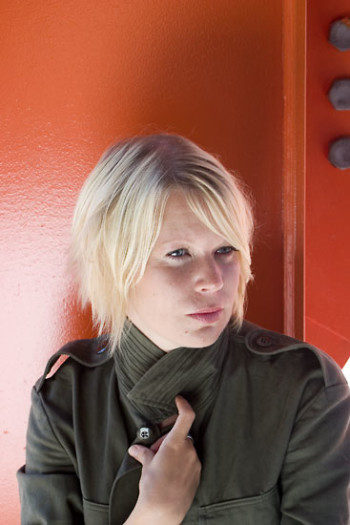
Hirvonen’s book deals with memories, love and war.Photo: Olli Karttunen

Let’s backtrack for a minute. When I Forgot appeared in Finnish in 2005 and was shortlisted for the high-powered Finlandia Prize, a big step for a début novel. The tenderly told story portrays events stretching from the time of the World Trade Center attacks and the war in Iraq back through Vietnam and the Second World War.

The narrator, Helsinki journalist Anna, wants only to “escape from memory.” Her American boyfriend, literature professor Ian, believes that “only by remembering can we understand something about ourselves.” However, there are things she can’t forget, and he has a terrible memory.

Anna’s brother Joona suffers from mental illness and lives in a hospital. She sifts through her sometimes painful past, her relationship to Joona, her understanding of her parents and what she knows of their pasts. She also revisits the start of her relationship with Ian and his stories about his own childhood. Several chronologies interweave as Hirvonen presents the reader with details that form pieces of a jigsaw puzzle.

Love is one element – the expressions it achieves between different combinations of characters. The story also follows the effects of the various wars. Long after they are over, their influences echo through the generations.

Enough distance

Because When I Forgot mentions September 11 and Iraq and includes an American character whose father returned from Vietnam with post-traumatic stress disorder, Hirvonen felt apprehensive about the North American release. “I thought maybe people would feel like these were their experiences and nobody else’s,” she says.

Yet the timing seems right: Enough years have passed to give Americans a certain distance from September 11, and the political landscape looks different today. People can begin to remember.

As Anna goes through her memories, we see how her brother perceives September 11. “When 9/11 happened I was making a documentary film about a guy who suffered from schizophrenia,” says Hirvonen. “That’s one reason it ended up in the book.

“It really got under his skin. He identified with everyone who was in the war.” In the book, Joona escapes from the mental hospital to go to a demonstration against the war in Iraq.

Hirvonen succeeds in putting us in Joona’s confused mind. We understand his logic and wonder whether the “normal” world is really normal.

What’s in a name

3437-hirvonen2_b-jpg

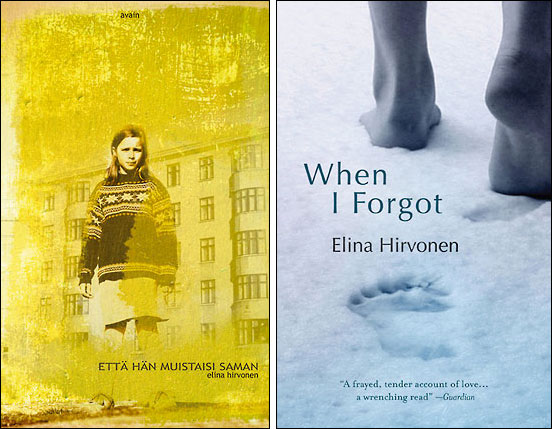
The title of the English version is not a direct translation, but it manages to convey the same effect.© Avain and Tin House Books

The book’s English and Finnish titles are very different, but both manage to convey the same effect. When I Forgot started out as Että hän muistaisi saman, literally “That he would remember the same”. Thinking of a happy, early-childhood Christmas before her family started to collapse, Anna pines, “I hoped that Joona would remember the same.”

“An American friend of mine in Finland came up with When I Forgot,” says Hirvonen. “Even though it’s different, I think it fits the theme of the book.

“It was important for the title to have something about remembering or forgetting, and I wanted it to be a sentence or part of one. I’m always interested in titles like that; they make me want to read and find out where the sentence comes from.”

Reflecting on life in Zambia

When this article went live, Hirvonen was on her way to Ottawa, Toronto and New York to appear at literary events. Before that she’d been in Helsinki for less than two weeks, having just returned from two years in Zambia.

Instead of flying home, she and her husband drove through Africa, then caught a ferry to Europe and wended their way to Finland – a three-month journey. “If you fly from one place to another, completely different place, it’s confusing,” Hirvonen says. “We wanted to have time to reflect on our life in Zambia and on moving back to Finland.”

What did she miss about Finland?

“Friends, of course,” she says. “Streetlights – in Zambia after the sun goes down it’s completely dark and it’s not considered safe to walk around. Fresh fish, rye bread, public transport, walking, forests, cycling, the sea.”

She also names “being able to disappear in a crowd,” explaining that in Zambia foreigners “get all this attention – mostly friendly, but sometimes a bit too much.”

Next book connects Finland and Africa

At the time of writing, Hirvonen was working on her following novel, about a platonic friendship between a Finnish man and a Zambian woman: “The relationship is based on the fact that the man has so many more options in life than the Zambian woman does. He’s trying to help her to have more choices, maybe for selfish reasons, but still.”

The subject matter overlaps with When I Forgot. “The setting’s completely different,” Hirvonen says, “but the themes are similar: losing someone who’s important to you, trying not to feel alone and struggling with that. I still have no idea whether I’ll be able to finish the new book, or when.”

By Peter Marten, October 2009, updated November 2009

Saimaa Canal links two Karelias

Fresh air, forest scenery, sea views, venerable architecture, nostalgia and good company: We embark on a Saimaa Canal cruise over the Russian border to the former Finnish city of Vyborg – no visa required.

Timo Orava from the town of Lappeenranta in eastern Finland has lost count of the times he has visited Russia this year. His passport is crammed with page after page of immigration control stamps, identical but for the date, acquired from petrol-purchasing border hops by car.

Orava is wearing a T-shirt and a pendant that are emblazoned with the patriotic Finnish lion symbol. Clutching a plastic mug of Karjala beer, he’s cruising on the M/S Carelia from Lappeenranta along the Saimaa Canal to the now Russian, once Finnish city of Vyborg (Viipuri in Finnish). His girlfriend Anne Kauranen will head straight for Vyborg’s market hall to stock up on cheap porcelain dolls.

Bordering on nostalgia

4420-canal2_b-jpg

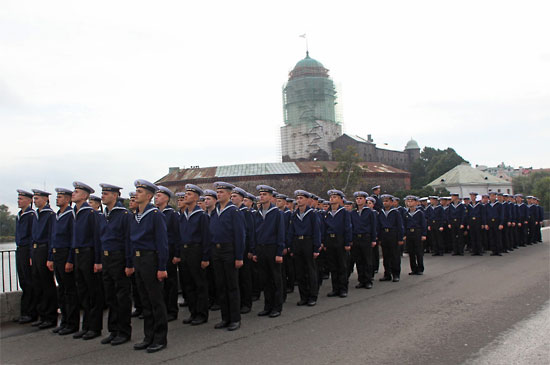
Russian sailors line up in front of the Vyborg Castle, which dates back to the 1200s, getting ready for a parade.Photo: Tim Bird

Vyborg is located in the area of Karelia (Karjala in Finnish, hence the name of the beer) that was ceded to the Soviet Union at the end of the Second World War and kept by Russia since the Soviet disintegration in spite of various Finnish attempts to negotiate its return.

It is regarded with misty-eyed nostalgia by many Finns whose families had to move across the new border when hostilities ceased. ”So sad,” says Anne, peering through the drizzle at the grey urban silhouette and describing the decrepit state of many of the once handsome buildings in what was a bustling and cosmopolitan harbour city.

Visa-free visits by ferry became possible in the spring of 2009 and have increased the number of Finns revisiting the city on summer canal cruises and promoted the canal to tourist attraction status. Options include same-day return and stays of one or two nights in Vyborg.

Canal of Emperors

4420-canal3_b-jpg

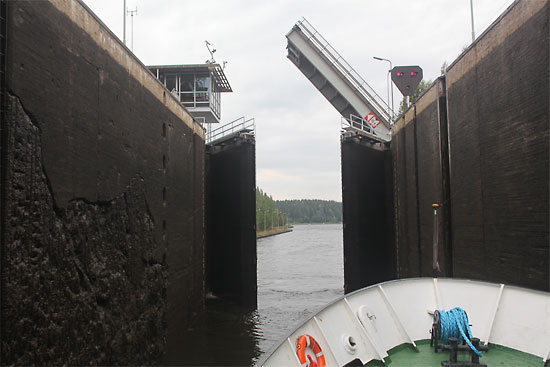
Travellers pass through a total of eight locks, chambers where the water level is raised or lowered to put the boats on the same elevation as the next segment of the canal.Photo: Tim Bird

”I don’t think the canal would be built today, under present circumstances,” says Eero Metsä, the Carelia’s captain, as the boat sits in the Mälkiä lock. Three locks on the Finnish side and five on the Russian side of the border manage the gradual descent of nearly 80 metres between the Saimaa lake system and the Gulf of Finland.

This is the latest, 43-kilometre incarnation of the canal, completed in 1968, but remnants of the original route – a 28-lock ”Canal of Emperors” opened in 1956 – can still be seen along the way.

In Metsä’s view the expense involved in constructing the canal would be prohibitive in the present day. Finland recently signed a new lease deal costing an annual basic rent of 1.22 million euros – up from 300,000 euros – extending the previous lease period by 50 years.

Lake freight traffic from the expansive inland waterways of Saimaa, mainly carrying timber and forest products and reaching annual volumes of two million tonnes, has no other route to the Baltic and beyond. The canal also forms a popular summer passage for leisure boats. But the economic downturn has cut into traffic since the record peaks of 2001, when 100,000 people sailed through.

Close to home

4420-canal4_b-jpg

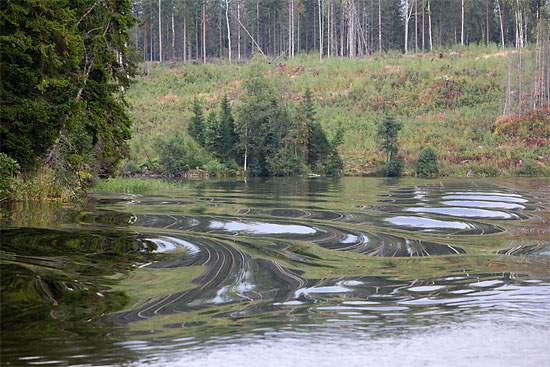
Time for contemplation: The boat sends waves swirling against the forested shore in Karelia, somewhere between Vyborg and Lappeenranta.Photo: Tim Bird

Apart from the M/S Carelia , the Dutch freighter Diamant is the only vessel plying the canal on a brisk day in September. Freight volume may be down, but the M/S Carelia and its tour operator, Saimaa Travel, do a healthy trade. Passengers are mainly from the Lappeenranta and Finnish Karelia area, not least because of the 7:40 am departure. The boat makes the trip to Vyborg and returns the same day, about six hours in each direction.

As well as the visa-free concession for cruise visitors, the recession has added to the appeal of the canal, since many Finns are looking for holiday options close to home.

”We have grandmothers taking their families to old Karelia and people shopping for linen and other cheap stuff in the Vyborg market,” says cruise manager Kirsi-Marja Jukonen. ”Some people have driven along the road that runs part of the way next to the canal and get the idea for a cruise from that. Some cruisers continue from Vyborg to St Petersburg by bus.”

On the return trip the following day, it’s Saturday night and the 150 passengers on board the Carelia are letting their hair down. An ample buffet dinner is followed by plentiful beer and Russian champagne. There are communal renditions of the ”Saimaa Waltz” and ”Do you remember Monrepos?” – the latter a reference to the park outside Vyborg, an icon of Finnish Karelian yearning.

Return Karelia to Finland? In the hearts of these visitors, it has never been anywhere else.

By Tim Bird, October 2009

Medieval castles

In Finnish history, the prehistoric era is generally considered to end and the Middle Ages to begin in the 1150s, when, according to a Swedish chronicle, King Erik of Sweden and English-born Bishop Henry undertook a crusade to the southwestern parts of Finland. The chronicle’s claim that the Bishop ‘baptized’ the Finns has later been modified. Archaeological finds have shown that Christianity had reached the Finns as early as the eleventh century, and the main purpose of the crusade was thus to establish Swedish dominion in Finland and organize a bishopric there.

The first crusade was also part of much wider political and ecclesiastical perspective. Sweden was Roman-Catholic at the time. To the east of Finland lay the Novgorod republic, which was Greek-Orthodox. Finland was a country rich in natural resources in the middle and came to be seen as a desirable territory by both sides from about the twelfth century onwards. The Swedes arranged two more crusades, one in 1239, to Häme in central Finland, and another in 1293, to Karelia (Viborg) in the East. Meanwhile, the people of Novgorod made repeated raids into Finnish territory, burning the city of Turku in southwestern Finland as late as 1318. These conflicts did not end until 1323, with the peace treaty of Pähkinäsaari, which finally established that Finland was part of the kingdom of Sweden. The Swedes had to take up arms to defend the border numerous times during the Middle Ages and the 16th century, especially after the Muscovites took over Novgorod in the 1470s.

Thus the Swedes consolidated their power east of the Åland sea through three crusades. After each crusade, a castle was built to serve both defensive and administrative purposes. Turku Castle was built at the mouth of the Aura River in southwest Finland, by the city of Turku, the foremost town in Finland up to the beginning of the 19th century. Häme Castle in Häme was built after the second crusade. The third crusade led to the building of Viborg Castle, on an island in the Gulf of Finland off the coast of Karelia. These three castles became the centres of three provinces discernible as early as the Iron Age, called Finland, Häme and Karelia. The name ‘Finland’ only meant the settlements in the southwestern parts of the country as late as the early Middle Ages.

Turku Castle
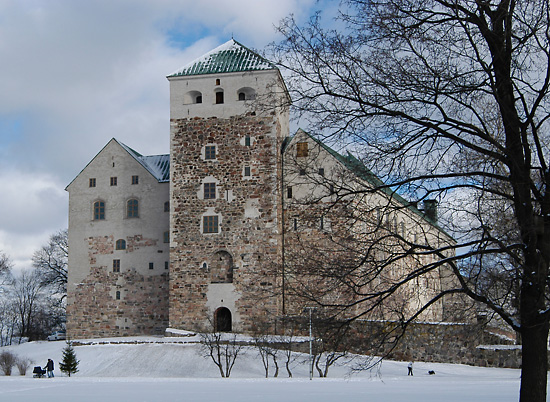
Turku Castle was probably founded in 1280.

Turku Castle was probably founded in 1280.Photo: Finnish Tourist Board

Turku Castle was probably founded in 1280, i.e. at the very time when an old trading site on the Aura River developed into a town, the oldest, and for a long time the biggest, in Finland. Its name was Åbo in Swedish and Turku in Finnish; the latter derives from a Slavonic word meaning ‘market square’. The castle was built on an island in the estuary in the form of a rectangular fortified camp with four gates. The pattern was an ancient one, and can be traced back ultimately to the citadels built by the Romans in antiquity. In Turku, the idea was apparently that the camp should be possible to both fill and evacuate quickly, for instance prior to the third crusade in 1293.

The citadel had probably outlived its usefulness by the beginning of the 14th century, when three gates were walled shut and it was converted into a closed keep. Extensions were successively built using granite from nearby, and by the beginning of the 15th century, it had both a keep and a bailey. The keep, which had over forty rooms, was subject to a rigid hierarchy and only select guests were allowed entry to the ‘Royal Suite’ at the furthest end of the north wing; this consisted of a vaulted hall and an inner chamber. The king of the realm naturally resided in Stockholm most of the time, but the suite in Turku Castle still deserved its name, as no other castle in Finland was so often visited by the monarch. When the first king of the Vasa dynasty resided in Finland for eleven months in 1555-1556, the entire kingdom of Sweden was ruled from his hall in Turku Castle. The importance of the castle is also evident in the fact that it was subject to nine sieges before the end of the 16th century, mainly due to internal strife within the kingdom.

Häme Castle
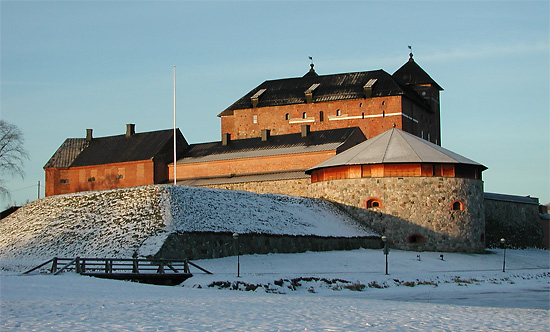
Häme Castle today.

Häme Castle today.Photo: City of Hämeenlinna

Häme Castle (or Tavastehus in Swedish), the other great castle of the realm, was built in the very middle of the Häme wilderness and in the 17th century became surrounded by a town of the same name, Hämeenlinna. Work on building the castle seems to have started in the 1290s in connection with the organization of the three major ‘castle counties’ in Finland under bailiffs subject to the king in Stockholm. The fight against Novgorod was still going on when work started on Häme Castle. At the time, the castle thus formed part of a defense line against the east, although a short time later, after the peace treaty of 1323, it came to be rather far removed from the actual eastern border. It then became a center for the Swedish administration in the central parts of Finland.

Apart from the ground floor, Häme Castle is built entirely of brick, and therefore stands apart from the other castles in Finland, which were built in natural stone until the end of the 15th century. With its square ground plan and almost cubic mass, the castle is very similar to the castles built by the German orders in the Baltic countries and Eastern Prussia during the Middle Ages. The German influence is unmistakable and is likely to extend even to the choice of material, i.e. brick, which was manufactured on the spot by German craftsmen. The interior hierarchy of the rooms was organized so that all the finest rooms were on the first floor. The square castle ward had an external gallery at first-floor level, giving access to all the rooms through ornate brick portals. The gallery has been reconstructed and the portals restored.

Viipuri Castle
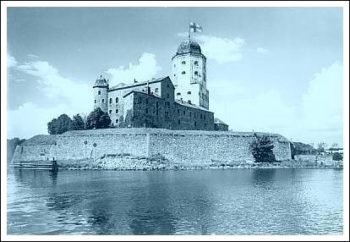
The third major castle, Viborg, was built as the easternmost outpost of the kingdom of Sweden.

The third major castle, Viborg, was built as the easternmost outpost of the kingdom of Sweden.

The third major castle, Viipuri (or Viborg in Swedish), was built as the easternmost outpost of the kingdom of Sweden. It was taken by the Russians in 1710, but was back in Finnish hands in 1812. Since the end of the war in 1944 it has again been on the Russian side of the border. During the Middle Ages it was repeatedly besieged by the Russians, most famously in 1495, under Ivan III of Moscow. The situation of the defenders looked hopeless, but they were saved by the ‘Viborg blast’, a mysterious explosion which scared off the Russians because they saw a St Andrew’s cross in the sky.

The three Finnish ‘castle counties’ were ruled from the castles of Turku, Häme and Viborg, respectively until the 1360s. In 1366, Albrecht of Mecklenburg was elected king, and according to the German model he began to divide up the castle counties into smaller provinces. In some cases, these new, smaller provinces were given separate bailiffs’ residences which have since disappeared; this was the case with the Borgbacken castle mound in Porvoo and Korsholm in Ostrobothnia, near the city of Vaasa which was founded later. Only earthworks remain at these sites, but in two places, stone strongholds were built which still exist, although in ruins. One is Raseborg in western Uusimaa (west of Helsinki), the other Kastelholm in the Åland islands.

Raseborg Castle
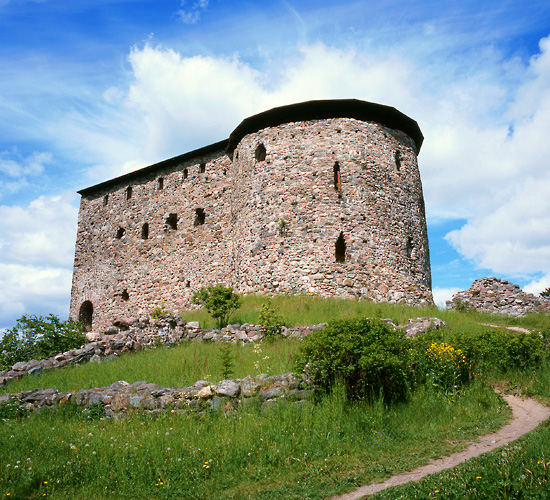
Raseborg in western Uusimaa (west of Helsinki) was probably founded in 1374.

Raseborg in western Uusimaa (west of Helsinki) was probably founded in 1374.Photo: Tero Pajukallio

We now know that Raseborg, which is a big, almost square granite ruin with a round corner tower, was probably founded in 1374. It was the seat of a bailiff who was an administrator for the western half of the south coast of Finland. A factor contributing to the decision to build such a big stronghold was that this was a more convenient place than Turku for handling the important trade with Reval (present-day Tallinn), on the other side of the Gulf of Finland. After Visby on Gotland had been taken by the Danish king, Valdemar Atterdag, in 1361, Reval became the major reloading port on the Hanseatic trading route from Lübeck to Novgorod. The bailiffs of the king’s castles in Finland had large volumes of tax paid in goods such as furs, timber, fish and butter, which were destined for the European market. In return, they received goods which had to be imported into Finland, notably salt, but also grain, spices, fabrics and wine. Raseborg was functional until the 1550s, when King Gustavus Vasa found it was completely outdated as a defense against contemporary firearms. Power and authority was therefore transferred from the castle to the newly founded towns of Tammisaari and Helsinki. Today, Raseborg is a rather spectacular ruin, well worth a visit.

Kastelholm Castle
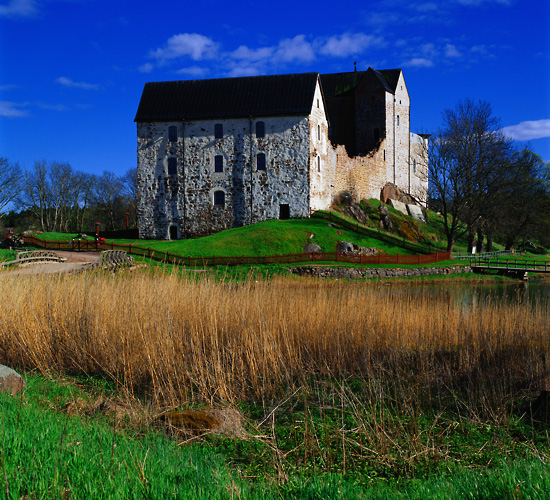
Kastelholm in the Åland islands, where work probably began in 1384.

Kastelholm in the Åland islands, where work probably began in 1384.Photo: Finnish Tourist Board/Jiang Ping

Kastelholm in the Åland islands, where work probably began in 1384, also had the double purpose of administration and defense. Åland was separated from the castle county of Turku and the Åland islanders were reluctantly subjected to a bailiff who ruled over them ‘at close quarters’. The defense function was more complicated, because it involved the defense of more than just the Åland islands themselves. A statement from 1525 describes Kastelholm as “a key to Sweden”, evidence of the importance attributed to Kastelholm as a last maritime outpost in the defense of Stockholm. Such a view was entirely justified in an era when the main thoroughfares were the navigation routes across the seas and through the archipelagos. Kastelholm lost its importance in the 17th century, but the castle still stands, partly ruined, but also with some intact interiors.

The five castles mentioned so far were all built before the advent of firearms. They were thus designed to withstand arrows, spears and siege engines, which were used to fire large rocks. This is evident in their outward appearance. The battlements on top of the castle walls were crucial; they were designed to ensure that no one could enter that way. The situation changed completely when firearms were introduced; the defenses then had to be concentrated in special, projecting towers fitted with gun loopholes. It also had to be possible to ensure that attackers could not breach the walls with their firepower. The first mention of firearms in Finland relates to Viborg castle, in 1429.

Olavinlinna Castle
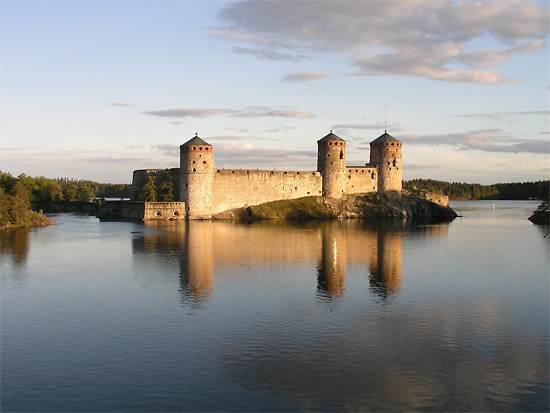
Olavinlinna Castle in Savonlinna.

Olavinlinna Castle in Savonlinna.Photo: Finnish Tourist Board

The first Finnish castle to be built for use in the era of firearms was Olavinlinna (Olofsborg in Swedish) in the wilderness of northern Karelia. The castle lies on an island in a system of lakes and inland waterways, and building work started in 1475 under the Swedes, mainly as a demarcation of the frontier. Novgorod had been taken by the Muscovites led by Grand Duke Ivan III and after he openly declared that he intended to invade Finland next, the Swedes wanted to demonstrate where the border lay in the uninhabited wilderness according to the peace treaty of 1323. The building process was dramatic, as the Russians felt that the castle was being built on the wrong side of the border and therefore did everything in their power to disrupt the work. The barges which brought sand, stone and lime to the building site were, for instance, attacked on numerous occasions. Research in our own time has proved the Russians right, as the castle was built about five kilometers into what was then Russian territory.

The castle, with its round projecting towers, clearly shows that it was built after firearms came into use. At the end of the 15th century, there was no master builder in Finland who was equal to such a task, and the governor, Erik Axelsson Tott, says in a letter dated 1477 that he had “16 good foreign master bricklayers” on the castle island. The building technique used would indicate that they came from Reval (Tallinn), where the town wall was extended in the same style at about the same period.

Olavinlinna was not built in vain. Ivan III put his threat into practice and the castle was besieged in both 1495 and 1496, but withstood the siege both times. More sieges followed during King Gustavus Vasa’s Russian campaign in 1555-1557, when the castle had a garrison of about 200 men.

Kuusisto Castle
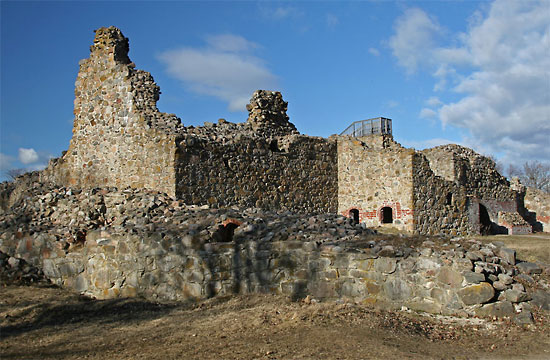
Ruins of Kuusisto castle.

Ruins of Kuusisto castle.Photo: Jouni Heikkinen/Vastavalo

All the castles mentioned so far were erected by the Swedish Crown in order both to defend Finland as part of the Kingdom, and to organize administration and taxation through the bailiffs. However, there was one more fairly big castle which played an important part in the history of the Finnish part of the kingdom of Sweden throughout the Middle Ages. This castle, called Kuusisto (or Kustö in Swedish), lay just southeast of Turku, where building work commissioned by the Bishop in Turku had started in 1317. This bishop was one of a total of seven in the kingdom of Sweden and his bishopric was the second largest, stretching all the way from Viborg in the east to Finnish Lapland in the north. Since the bishop was also a member of the council of the realm, he was not just an ecclesiastic but a political figure as well, and this was one reason why he needed a fortress: he also kept a private army. When the Muscovites besieged Viborg in 1495, Bishop Magnus III was able to contribute one hundred armed knights to its defense.

Kuusisto today is a ruin, because Gustavus Vasa ordered its destruction in 1528 as part of his battle against the Catholic Church after the Reformation. However, it is still possible to see that the castle comprised a keep and three baileys. There are the remains of gun towers, probably built in the 1480s, at the corners. Cannons were necessary to protect the Bishop in his stronghold.

Use of castles from 1500 until today

Firearms gradually became increasingly powerful, and by the beginning of the 16th century, medieval castles were already quite outdated for defense purposes. Only the addition of earthworks could remedy this, and these were therefore built at, for instance, Turku and Hämeenlinna. But since the castles were solidly built, mostly of granite, new uses could still be found for them in the 16th century. This was particularly the case with Turku Castle, where the upper parts were rebuilt in the 1550s as what is now called the Renaissance Suite for Duke John, the son of King Gustavus Vasa, who later became King John III of Sweden. Gustavus Vasa was the king who introduced a hereditary monarchy into Sweden, and he therefore gave his four sons duchies where they could learn how to rule. As Duke of Finland, John lived at Turku Castle for seven years, during the last year with his wife, Polish princess Katarina Jagellonica, whose court, with its strong Italian influence, contributed to giving the Renaissance its first foothold in Finland. The fixtures of the Renaissance apartments were unfortunately destroyed in a fire in 1612.

As of the 17th century, the castles were only considered fit for less exalted tasks; they were turned into barracks, prisons, warehouses, distilleries and grain stores. But in one respect they remained unique; they were so solidly built of natural stone that it was not worth the effort to tear them down. They therefore remained as “phantoms of the past”, as one poet has it. In this, circumstances in Finland differed from those in countries such as Sweden or Denmark. In these countries, softer building materials such as sandstone or limestone had been available and bricks had been cheap. As a consequence, it was almost always possible to demolish outdated structures and replace them with new ones. Therefore, these countries no longer have any ancient granite castles of the type still found in Finland.

In more recent times, since the Second World War, some of Finland’s medieval castles have again been given a new lease of life. They have been rescued from degradation and restored, and have become the setting for new activities. Turku Castle, which was gradually extended over some three hundred years starting in about 1280 into one of the biggest castles in the Nordic countries, is one of the most popular historical attractions in Finland. Thanks to the fact that very little of the castle was ever demolished, the centuries are still there, as it were, layer upon layer, and a visit therefore represents a journey back through Finland’s entire history. Furthermore, the Renaissance Suite from the 1550s has discreetly been adapted for use as official reception rooms for the City of Turku, providing a suitably dignified setting for receptions held in honor of a number of heads of state and other dignitaries. Häme Castle has been restored on much the same principles, and also includes exhibitions halls used by the Finnish National Museum.

Among the restored castles, Olavinlinna in Savonlinna, north of the Saimaa waterways system, has built an international reputation for itself through the city’s opera festival. Every summer since 1969, professional opera of a very high standard has been performed in the bailey for four to five weeks. Although the castle has been restored according to strict contemporary principles for the restoration of historical monuments, it is nevertheless possible to erect a temporary stage and seating for an audience of some 2,000 in the bailey. The repertory has included many great classics such as Mozart’s Magic Flute and Wagner’s Flying Dutchman, and also contemporary Finnish operas, which have had a chance to establish a reputation thanks to the Savonlinna Festival.

In conclusion, it could be said that the medieval castles in Finland have always been treated with respect, and that this is one reason for their continued existence today. The situation is interesting, in that their history could also provide support for an opposite interpretation. But although there were times when the common people living around the castles cursed their rulers and bailiffs, the reputation of the castles still dominantly prompts awed fascination and a certain pride in these magnificent structures, which are such tangible proof of crucial episodes in the history of Finland.

By Carl Jacob Gardberg, state archeologist, April 2002