Finnish made easy: Learn the local lingo

Foreigners moving to Finland often find the Finnish language strange and daunting at first. But with a positive attitude and a sympathetic teacher, even the most tongue-tied newcomer can get to grips with Finnish surprisingly quickly.

We admit it: Finnish can seem intimidating at first sight. Few words look familiar to anyone whose own language is not in the far-flung Finno-Ugric linguistic family.

Even the boldest beginners might feel like giving up when they realise how Finnish words can radically change their shape according to their role in a sentence. Some letters can double, disappear or morph into different letters for reasons that seem obscure to the uninitiated. A simple word like “water” can become unrecognisable when transformed from the basic form vesi to veden, vettä, veteen or umpteen other forms.

Laura Hartikainen, Finnish language studies coordinator at Espoo’s Adult Education Centre, emphasises that learners can soon make themselves understood in everyday situations. She points out that even if Finnish is a very different language for immigrant learners from every country except neighbouring Estonia, it has a logic of its own that is not inherently difficult.

“Finnish pronunciation is very straightforward, for instance,” she explains. “Each letter is pronounced in exactly the same way in every word where it appears.

“For foreigners here, it has to be worth making the effort to learn the language, so as to get deeper into Finnish culture, and understand what’s going on around you,” says Hartikainen, whose students at evening school in Espoo include immigrants from all corners of the world.

Talk the talk
3390-language2_b-jpg

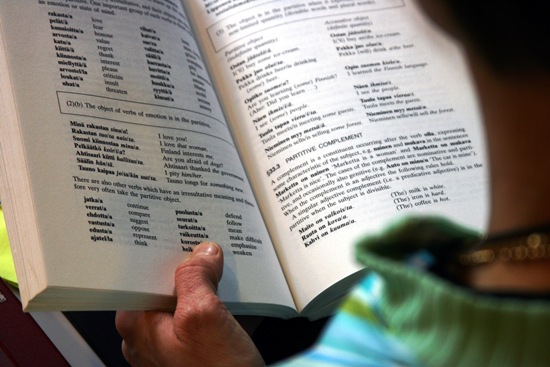
The elusive partitive case is captured and tamed in its own 15-page chapter in “Finnish: An Essential Grammar”.Photo: Laura Waris

“To learn the language well, students must do exercises, which can sometimes seem boring, but we also have fun playing games, working in pairs and practising realistic dialogues,” she says. “Learners mustn’t be nervous about making mistakes, and we encourage them to go out and actively start talking to people in Finnish.”

Hartikainen has some useful tips for students keen to talk the talk. Right from the beginning, she encourages them to practise Finnish through their own interests by joining local clubs and reading Finnish magazines and websites related to their hobbies.

“The clear and simple language used in the Finnish Broadcasting Company’s Selkouutiset [News in Plain Finnish] radio news broadcasts and in Selkokieli [clear language] books available from libraries can also be very helpful for foreigners learning Finnish,” she adds.

Hartikainen gets a kick out of her work every time learners make a breakthrough. Her students have especially enjoyed learning to recognise amusingly twisted loan words like tohtori (doctor) or pihvi (derived from the word “beef” and meaning “steak”).

They also gain satisfaction from learning to hear and pronounce tricky double consonants and elongated vowels. Such skills enable foreigners to distinguish tuuli, tuli, and tulli (wind, fire and customs) – or make the subtle but potentially crucial distinction between Tapaan sinut! (I’ll meet you!) and Tapan sinut! (I’ll kill you!).

By Fran Weaver, April 2010
Take eight: Helsinki cafés

While the famous Café Engel was out of commission, its home on Helsinki’s Senate Square under renovation for more than a year, we compiled our purely subjective list of other capital cafés to visit.

Click here to view the full map

Our selection features cafés all over Helsinki and offers something for everyone.

Do you want a café experience that can include having a sauna or doing your laundry? Go for Tin Tin Tango in Töölö, just north of downtown.

Visiting Alvar Aalto’s house in Munkkiniemi? Delivo’s friendly atmosphere forms the perfect place to refuel in this tree-lined neighbourhood.

Here’s our list (photos and descriptions in the slideshow below; for directions see our map): Bulevardin Kahvisalonki (Boulevard Coffee Salon), Carusel, Delivo, Gran Delicato, Regatta, Succès, Tin Tin Tango and Villipuutarha (Wild Garden).

Did we forget your favourite? Post your own on our Facebook page!

Slideshow: Smell the coffee in Helsinki

By Laura Waris and Peter Marten, April 2010, updated October 2013

Shouting with a Finnish twist

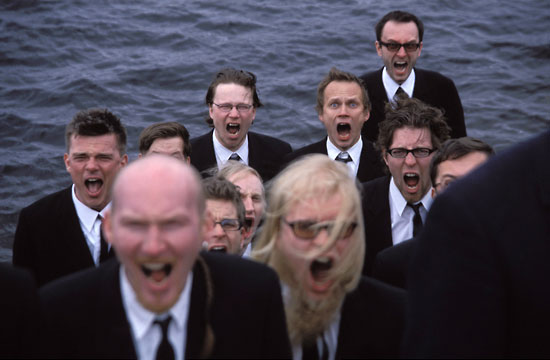
Mieskuoro Huutajat (Shouters Men’s Choir), which began as a “serious joke” at a bar in the northern city of Oulu, has become one of Finland’s most startling – and most enduring – cultural icons.

Since Mieskuoro Huutajat (Shouters Men’s Choir) was founded in 1987, hundreds of men have appeared in its revolving 30-voice line-up, startling audiences around the world. This year, they have bellowed poetry, nursery rhymes and political tracts in Stockholm and Copenhagen. Next up is Australia, where they will shout on the steps of the Sydney Opera House in May as part of the city’s biennale.

You can also try your own hand – or voice – at the exhilarating, witty Huutajat experience if you’re lucky enough to attend one of their workshops. These events have been held as far away as Sweden and Austria. Though the original Huutajat concept is clearly male – described by a Sydney Biennale curator as “a parody of discipline and male power, suffused with a taste for the absurd” – the workshops are open to women as well.

“The last time, about one third of participants were women,” Sirviö tells me at an Oulu café. “Musically it was very inspiring; girls are faster at learning the parts than guys! But conceptually this has been such a strongly male thing. I did a piece for a local opera where more than half of the performers were women. I could teach them the spirit and the structures and the pieces – but when it came to actual techniques of how to build a voice, I just had to give up.”

Banned by both sides

3657-huutajat2_b-jpg

Like many of the original Huutajat choir members, conductor Petri Sirviö came out of the noisy rock scene of the 1980s.Photo: Wif Stenger

Over the decades, Huutajat have also formed part of two operas in Munich and a production of Peer Gynt in Oberhausen. Their European Broadcasting Union concert in 2009 featured electronics and snippets of the Communist Manifesto. They’ve also done dance theatre, videos and the acclaimed documentary Shouting Men.

“The film was banned from a festival in North Korea because we included the Japanese national anthem,” Sirviö says. “In Poland some right-wing politician tried to start a criminal investigation because we performed their national anthem, which he said was a provocation. If the North Koreans and Polish right-wingers don’t like us, I guess we’re right in the middle.

“National anthems are interesting because they often include very strange, mixed emotions – awful lyrics even – but people sing them in very high spirits, and they unite people.”

One of the project’s basic themes is discipline, he says. “But discipline of groups has changed so much in the past two decades. The younger guys are much more reckless than we were. There’s always very strong hidden discipline in every society and pressure toward a uniform dress code or behaviour, but nowadays it’s more hidden.”

Keep it simple – and offbeat

The Shouters belong to a Finnish tradition of musical eccentricity based on using the traditional to create something radical and playful. Others have chosen the accordion (Kimmo Pohjonen), harmonica (Sväng), cello (Apocalyptica), klezmer (Alamaailman Vasarat) and humppa dance music (Eläkeläiset).

3657-huutajat3_b-jpg

Off the deep end: Maybe it’s got something to do with the Finnish temperament.Photo: Jaani Föhr

“Maybe that’s some kind of Nordic minimalism, a way to keep it simple: just cellos or just shouting,” suggests Sirviö. “We love these simple, clear ideas.

“Back when we started, there were no examples of how to become rich and famous doing music, so you were free to do anything.

Now it’s more like a brand; there’s a roadmap of how to do it.” Now 48 with teenaged kids, this former punker has an “establishment” day job at the city cultural office: “Of course there’s a danger in being accepted by the establishment,” he says with a wry smile. “It’s difficult to keep a balance. But in a way we were ‘officially’ accepted at quite an early stage, though we’ve always been quite underground. The whole concept is somehow quite dry and clean, so you can put it anywhere without being that disturbing. Our look is quite traditional.” They sport black suits, white shirts and skinny ties made of rubber tyres.

“About one-third of the guys have been with us since the start – I guess they have life sentences,” says Sirviö. “Some of them are now 50 and are still part of this piece of art. It’ll be interesting to see them start to lose their teeth and turn into a group of angry grandpas! There are now two generations within the choir; someday there will be three.

“The basic concept has remained the same. I love the test of how the world changes around it.”
 

By Wif Stenger, March 2010

On the frontier of human knowledge – Leena Palotie

This past autumn genetics researcher Leena Palotie was awarded the title of academician in Finland for her pioneering, international career. We take a look at the highlights of that career. [Editor’s update: We are sad to note that Leena Palotie passed away on March 11, 2010 after a serious illness. We have not modified the rest of this article, preferring to leave it in the present tense.]

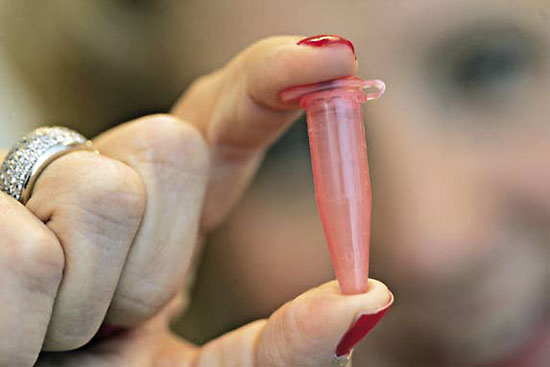
Leena Palotie, professor of medical genetics and molecular medicine at the University of Helsinki and the National Public Health Institute, is a fascinating phenomenon in Finnish science circles. Although she’s one of the top researchers in a field that utilises extensive amounts of sensitive personal information, she is both willing and able to explain her work to the public in an accessible manner.

“Researchers are usually quite careful when they appear in public,” she says. “But I don’t turn down an interview if it has to do with genes. It’s my personal mission. Since society pays for my work, it’s important for people to know more about it. Besides, it’s a lot of fun to talk about these things.”

Palotie, no stranger to publicity, radiates enthusiasm for her work, and joy in its achievements: “I was lucky enough to go to the US in 1978 for my postdoctoral training. The first gene of the human genotype was identified then and there. That wasn’t previously considered possible. The event became a historic turning point in this field.”

Palotie realised that genetic research – particularly disease genes and the human DNA – would be her field. She soon joined a small international research group, the UCLA Human Genetics Genome Center, which held the knowledge of genetic technologies and genotypes.

“I had a chance to be at the frontline of research into a new field from the very beginning. In 2002, when the whole human genome had been identified and was published on the internet, I realised that I had, by chance, joined a fantastic journey into the human being.”

Opportunities for new treatments

“The more the human being’s biological background, or genome, is understood, the better possibilities we have to influence the progress of diseases and to facilitate their treatment,” Palotie says. “I want to find out why some part of a human being begins to operate incorrectly. At what stage can we prevent and influence that process?”

“In the near future, genetic information will increase the precision of diagnosing various diseases. There are, for instance, several different types of depression. If we could use genetic research to recognise which medicine suits which form of depression, the patient wouldn’t need to test various medicines – the right one could be prescribed immediately. That would be a great relief.

"Genetic research differs in a beautiful way from the rest of medicine, in that there are no previous assumptions about the reasons for diseases."

“Genetic research differs in a beautiful way from the rest of medicine, in that there are no previous assumptions about the reasons for diseases.”Photo: Eastpress/Seppo J.J. Sirkka

“In the long run, we’ll be able to produce totally new medicines with genetic research. We must, however, take the time lag into account. It takes almost ten years from a genetic discovery until a new targeted medicine is available.

“Genetic research differs in a beautiful way from the rest of medicine, in that there are no previous assumptions about the reasons for diseases. We don’t need to create a hypothesis based on old information on the changes leading to a heart attack. We can go through our genotype and study what kind of genetic profile creates a risk for a heart attack. We have already discovered totally new mechanisms and metabolic ways with genetics, providing opportunities for developing completely new treatments.

“The next technological leap in the field of genetic research is to be able to find out the genetic risk profiles for various different diseases with one test. I’m convinced that these tests will be used in diagnoses and help with planning treatments for patients.”

Focus on Finnish genes

One of Palotie’s significant realisations was that it was worth researching Finnish genes in particular in a focused way.

“A long time ago, a small number of people moved to this geographic area. They only brought with them a small selection of the genetic forms of humankind – including disease mutations, which then became more concentrated. Since the population has stayed for hundreds of years in the same region – and even as late as in the early 20th century, people still tended to find their spouses within a four-kilometre radius – the same, homogenous genotype remained in Finland to a large extent.”

“Therefore, it’s been technically easier to find disease genes in Finns than, for instance, in the population of London or Los Angeles. The Finnish population is the best-known in the world when it comes to disease genes. And we are also rapidly discovering the genetic profiles of our most important ‘national diseases’.”

Answering new questions

In addition to the clarity of the Finnish population structure, genetic researchers have been aided by the fact that there has been so much reliable information on the Finns collected in archives.

“For a long time, doctors here have kept detailed written accounts of what kinds of diseases their patients have,” Palotie notes.

“In addition, they’ve studied what diseases appear in their patients’ families. A lot of useful information has been recorded in population registries and healthcare files about, for instance, how average height and weight have increased, or how much people have smoked or drunk.

“One of our strengths is our Nordic social system and our good healthcare system. Citizens volunteer to have their information used, since they trust our healthcare system and research. The response to official surveys is usually 75 to 85 percent. A high level of education plays an important role as well. Finns understand what they are being asked.”

So what does Palotie most enjoy about her challenging work? “We’re working on the border of human knowledge. We’re looking for answers to questions that people weren’t able to ask yesterday. It’s incredible to realise that you’ve discovered the cause of a certain disease. Even though no one else knows about it yet, it could be used in diagnostics tomorrow.”

By Juha Numminen
Originally published in “Breakthroughs – 90 Success Stories from Finland”, 2007;
updated December 2009 and March 2010

Getting into snowshoes in southern Finland

Southern Finland’s snowiest winter in years inspires many people to strap on snowshoes and explore places that other winter sports enthusiasts cannot reach.

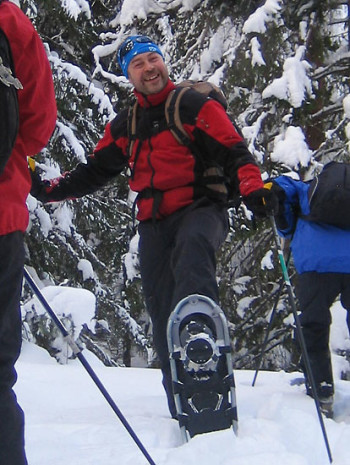
Bemused drivers stare through their windscreens as a long line of snowshoe trekkers trudges across the road leading to Oittaa Recreation Centre, about 20 kilometres northwest of Helsinki. We’re all here to enjoy a sunny afternoon stomping through scenic snow-covered forests, led by local nature guide Jali Gräsbeck.

Gräsbeck is keen to provide detailed instructions about ergonomic techniques, but most of us have instantly got to grips with the cumbersome-looking footwear and are eager to pioneer our own trails through the deep, virgin snow blanketing the forest floor.

“Though it helps to be fairly fit if you want to go a long way, up steep hills or through soft, deep snow, the truth is that anyone who can walk can also snowshoe,” Gräsbeck says. “This is a much easier way for newcomers to Finland to explore the winter forests than learning cross-country skiing techniques.”

We soon learn to space our feet and swing our bodies as we plough purposefully through the snowdrifts. The resultant waddling gait is effective, if not graceful.

Making tracks

4319-snowshoe2_b-jpg

Nature guide Jali Gräsbeck shows us what a modern snowshoe looks like.Photo: Fran Weaver

We don’t have to tramp far from the centre to feel we are in truly unspoilt woodland. The forest birds seem undisturbed by our chatter and laughter. Our intrusive tracks cross the subtler spoor of hares, squirrels and voles, revealing that these silent forests are rich in wildlife, even in midwinter. “Sometimes we find lynx tracks, or the droppings of flying squirrels, which are quite common in this area,” says Gräsbeck.

We slither down a gentle slope into a valley, and then clumsily clump through thick white powder snow to an imposingly steep hillside. Gräsbeck shows us how to dig our toes in and use our poles to support our bold ascent. All of us successfully surmount the precipice, though progress often involves three steps upward and two steps back down.

Townies from southern Finland are increasingly learning that you don’t have to head up to Lapland to try this exotic but easy-to-learn activity. “Snowshoeing is steadily getting more popular, and after a couple of years when we didn’t get much snow down here, this has been a great winter for the sport,” Gräsbeck notes.

“What people like about snowshoeing is that you can go absolutely anywhere, on all kinds of terrain,” he explains. “Everyone feels the call of nature sometimes, and it means a lot to people to find their own new place in the fresh snow, away from it all.”

Oittaa Recreation Centre

Located in a converted barn and run by the Finnish Association for Outdoor Activities, Oittaa Recreation Centre rents out winter gear including skis, sledges and modern lightweight snowshoes. Guided snowshoe safaris are organised most winter weekends, and groups can hire local guides for tailored treks at any time.

After exploring the forests, trekkers can refuel in Oittaa’s café, soak in a hot sauna or visit the nearby lake for a bracing dip in a hole in the ice – or all of the above.

By Fran Weaver, March 2010

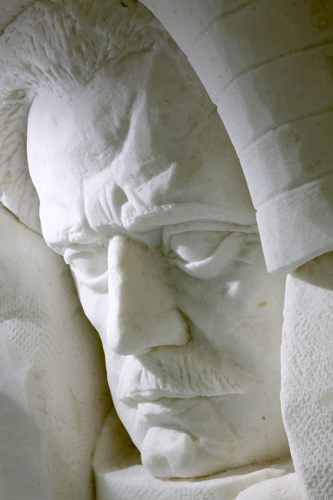
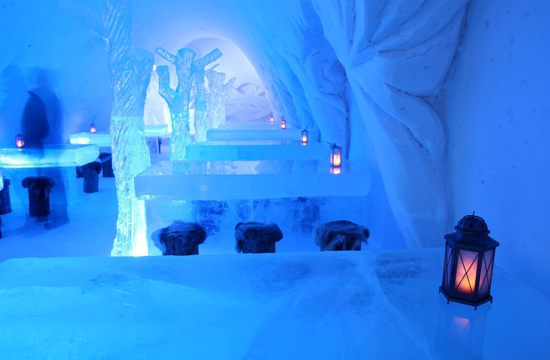
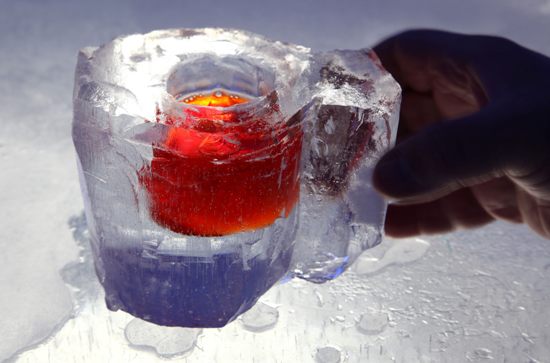
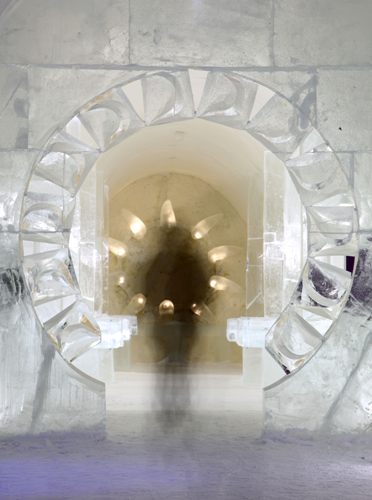
Cool steps inside Kemi Snow Castle

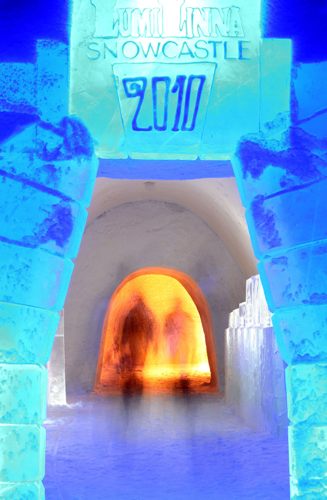
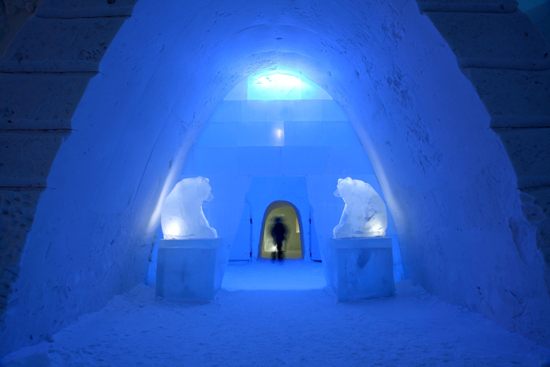
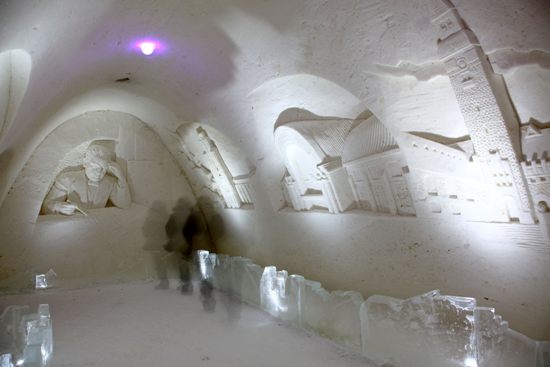
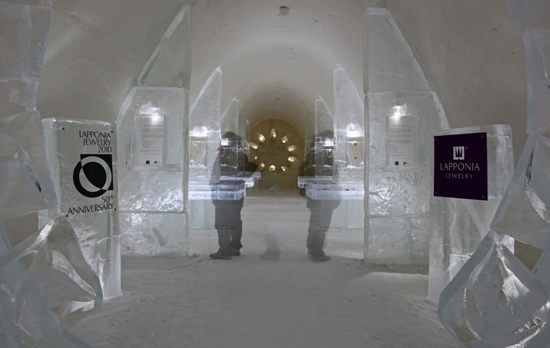
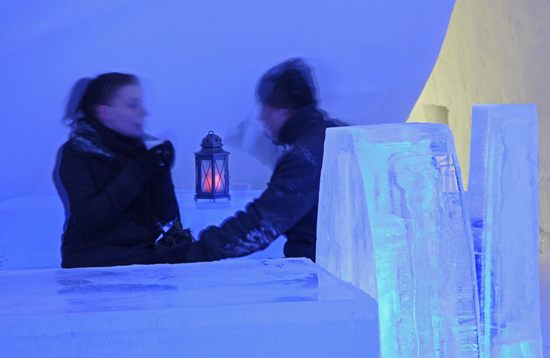
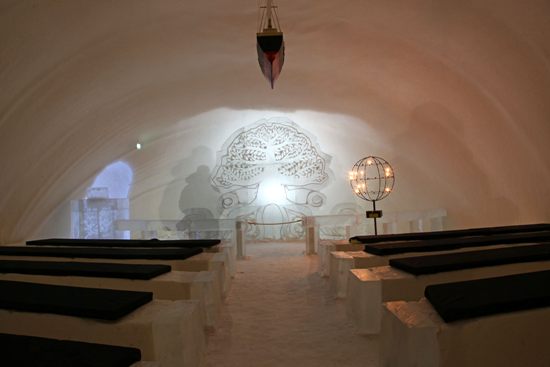
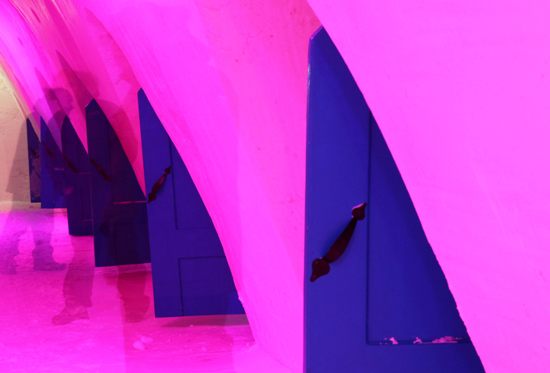
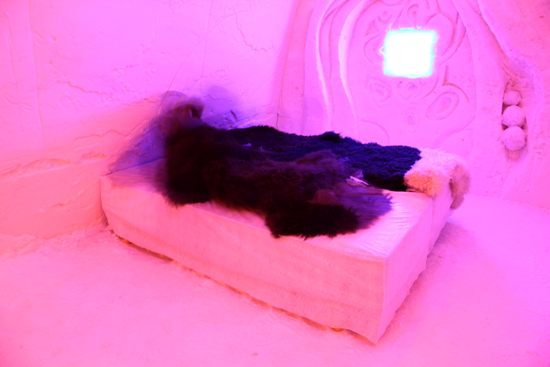
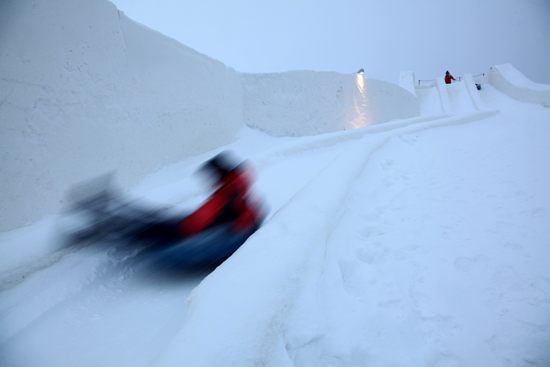
A snow castle rises each winter in Kemi, a northern Finnish town at the top of the Gulf of Bothnia. Our slideshow takes you into the castle’s passages, hotel, bar, chapel, sculpture gallery and more.

Each year the town of Kemi witnesses the construction of a castle made of snow. In an idea that was brought to life for the first time in 1996, the fortress is built on the coast, with a new floor plan and different towers each time. The ice for the furnishings and decorations is pulled from the Gulf of Bothnia, the northernmost area of the Baltic Sea.

What started out as a novelty – why not spend a night sleeping in a hotel made of snow – now forms a tradition, not to mention a huge tourist event, drawing about 100,000 visitors each year. About 1,500 of them stay overnight in the Snow Hotel. This slideshow demonstrates the true meaning of “on ice”, and will preserve the cool atmosphere of the castle long after it melts (usually in mid-April).

Photos by Tim Bird
Text by Peter Marten

Helsinki: A veritable mini-metropolis

Helsinki is lauded for its natural beauty, but these days the Finnish capital is a veritable mini-metropolis. Head for the Esplanade and its environs where you can dine at Michelin-star standards, enjoy a rooftop cocktail, and shop ‘til you drop – all without the crowds, pollution and long travel times that larger cities have.

A stroll down Helsinki’s picturesque Esplanade is like a walk through past and present. The boulevard was once a political dividing line: Finnish-speaking Finns walked on the south side (Eteläesplanadi) and Swedish-speaking Finns on the north side (Pohjoisesplanadi). Today the political divisions are gone, and the bustling boulevard is a microcosm of domestic and international design, culture and cuisine. Lined with a mix of modern Alvar Aalto-designed interiors and exteriors (Artek, the Academic Bookstore, and the upscale restaurant Savoy), its old-world grandeur is juxtaposed with touches of the Finnish minimalist aesthetic.

Exquisitely restored to its 19th century riches, the five-star Hotel Kämp hosts international celebrities ranging from royalty to rock stars such as Mick Jagger when they’re in town. It’s also where Finnish greats such as composer Jean Sibelius, artist Akseli Gallen-Kallela and poet Eino Leino held legendary parties that lasted for days. Here, political history was made: the identity of the emerging Finnish nation was blueprinted and important political issues sealed at its tables in the early 1900s.

4421-hip2_b-jpg

Photo: Katja Pantzar

Adjacent to the hotel, Kämp Galleria houses an array of boutiques. For example, the Moomin Shop sells toys and babywear based on the loveable Moomintroll characters created by Finland’s revered author/illustrator Tove Jansson, while next door, designer Juha Tarsala sells his women’s shoes that are a hit with fashionistas and regular folk alike.

A lively park runs between the south and north side of the Esplanade. During the summer months free jazz concerts are held on its open-air stage while in December a traditional Christmas market takes over. At the north end lies Teatteri, the hip restaurant, bar and nightclub that takes its name from the Swedish Theatre (teatteri) on the other side of the building. At the south end, historic restaurant and café Kappeli offers a more classic take on afternoon coffee or an evening meal on the glass veranda. Try their Sibelius menu which features smoked arctic char with beetroot mousse as a main.

For the seasoned shopper, Scandinavia’s largest department store, Stockmann, boasts everything from fresh ciabatta bread flown in from Spain daily to golf equipment and designer watches under one roof. En route to the south harbour via the Esplanade, there are three Marimekko shops, including the flagship store, where the unique, colourful cotton prints and fashions that bring cheer to homes throughout the world are sold. Also on the Esplanade is Artek, founded by Alvar Aalto, Finland’s Frank Lloyd Wright. The shop sells his timeless furniture along with other designs. Iittala has a large shop on the boulevard, featuring its classic designs for glassware and dishes and highlighting its latest styles, while Della Marga (Chanel sunglasses, anyone?), Longchamp, and Rils offer a mix of Finnish-designed and international clothing, bags, accessories.

4421-hip3_b-jpg

Photo: Katja Pantzar

Café Strindberg is reminiscent of a Parisien café and bistro, with its Burberry-clad clientele and Helsinki who’s who jostling for a table. Nearby, recently renovated Café Esplanad offers more casual fare, but is equally busy with its seemingly never-ending line-up for their scrumptious korvapuusti, a cinnamon bun featuring a unique Finnish touch – cardamum.

Just off the Esplanade is Mecca on Korkeavuorenkatu, the city’s newest it-spot, a chic lounge and restaurant. Mecca’s founders include Hans Välimäki, whose Chez Dominique around the corner on Ludviginkatu is Finland’s only two-Michelin star restaurant and deservedly so: their Menu Surprise is guaranteed to leave a delicious impression long after the last bite.

For après shopping refreshments, head towards the harbour and pop up to the Terrace Bar on the top floor of the Palace Hôtel on Eteläranta. The view rivals that offered decktop on the cruise ships that ply the harbour waters below. As the Terrace Bar is only open during the week, head to the intimate Ateljee Bar atop Hotel Torni (about a five-minute walk from the harbour) for a view that some say stretches to Estonia on a clear day. (Ateljee is open seven days a week.)

Near the Palace Hôtel is the beautifully restored Old Market Hall (110 years old), which offers shelter from the outdoors and everything a market hall could sell from sausage and salmon to fine wines and sushi. Adjacent is the staple of Helsinki tour guides, the Market Square, where vendors hawk their fresh fruits and vegetables, fish and baked goods along with Lappish souvenirs. Ferries for the fortress island of Suomenlinna leave from the cobblestone market’s south end.

Nearby the Havis Amanda statue, a symbol of Helsinki’s status as daughter of the Baltic, a host of fine restaurants offer dining options, including newcomers Sasso (Italian) and the sleek Fish Market, which is at cellar level.

From the corner of the Esplanade and Sofiankatu, you can see the open-air museum street which captures bygone days including those under Russian rule, and catch a glimpse of the Lutheran Cathedral, the work of Carl Ludvig Engel (1778-1840) who shaped much of Helsinki’s neo-classical core.

It’s all in an afternoon’s walk.

Addresses:

By Katja Pantzar, September 2004

Freezing frames at Sámi film fest

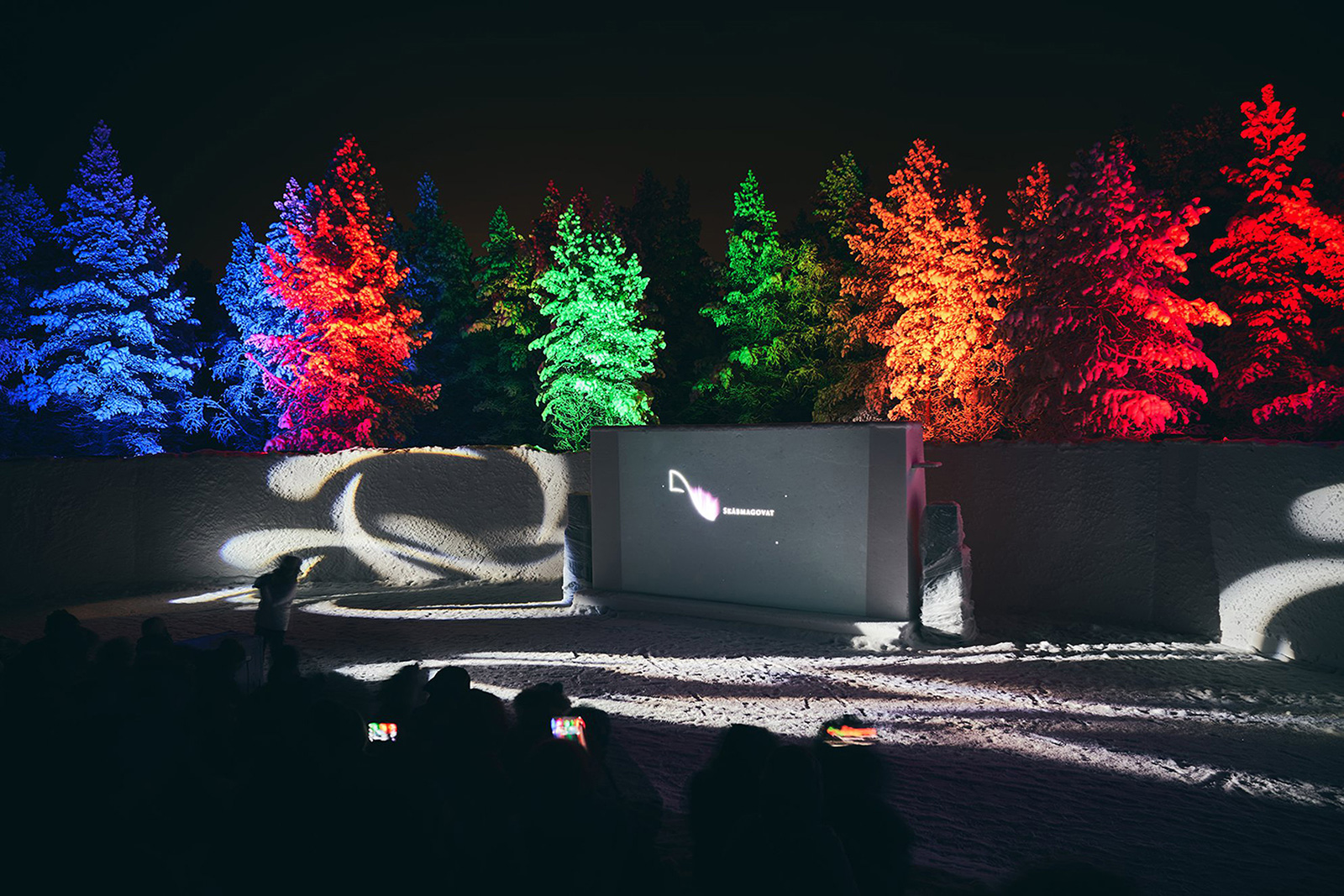
In northern Lapland it’s minus 25 degrees Celsius (minus 13 degrees Fahrenheit) on the last weekend of January, and I’m sitting in a dark forest watching a movie. A crowd of about 150 people is gathered for the open-air screening, a highlight of the annual festival.

Held in the town of Inari, just a few hours’ drive from the Arctic Ocean, the event lasts several days and emphasises films by and about the Sámi. They’re the indigenous people whose homeland stretches across the top of Norway, Sweden and Finland and into Russia.

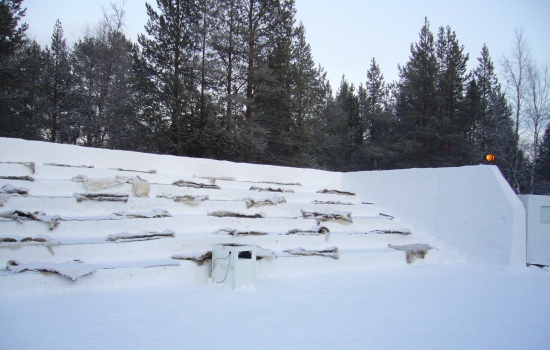
The well-dressed audience – snowsuits are “in” this year – sits in a roofless theatre sculpted entirely out of snow. The cinema seats are blocks of snow covered with reindeer hides. Even the screen is made out of snow.

The moviegoers’ breath is steaming from the cold, and from hot grog imbibed at the pre-show snow bar. Forget those artificially refrigerated “ice bars” in some of the cities further south – this is the real thing.

Also indoors

3099-tf2-10-amphitheatre550-jpg

At 25 degrees below zero, this outdoor cinema offers a unique experience.Photo: Peter Marten

To be fair, and just so you don’t get the wrong idea, most of the festival takes place indoors, in Siida, the beautiful building that houses the Sámi Museum and the Northern Lapland Nature Centre, and in Sajos, a Sámi cultural centre that is also the meeting place for the Sámi Parliament. Skábmagovat was founded in 1999 to bolster Sámi filmmaking and add some variety to the darkest portion of the year; the organisers translate the name from Sámi as “reflections of the endless night”.

In addition to Sámi films, the festival always flies in directors and films from indigenous groups in countries as far away as Australia, Canada and Bolivia. Striking similarities exist in the stories of indigenous people from different parts of the world: They have faced or are facing corresponding identity issues and similar obstacles to preserving language and culture.

Sámi experiences

Let the show begin: Backlit by the colours of the Sámi flag, an outdoor screening gets under way at Skábmagovat. Photo: Skábmagovat

At one previous festival, Ellen-Astri Lundby, a Norwegian of Sámi descent, showed her film Suddenly Sámi, a documentary that follows her travels as she visits relatives to find out more about her identity. When she was growing up in Oslo, Lundby’s mother never mentioned that she was a Sámi. It was revealed much later, eventually causing the daughter to search for her northern roots and ponder why her mother never told her.

This touching story is by no means unusual, having played out in numerous versions across the Sámi territories. Until as recently as several decades ago, the Sámi people experienced prevalent stereotyping and discrimination. The resulting pressure caused damage as a significant number of them distanced themselves from their traditions and language. In many places, children were forbidden from speaking Sámi in school.

Can’t miss it

3099-tf2-10-siida550-jpg

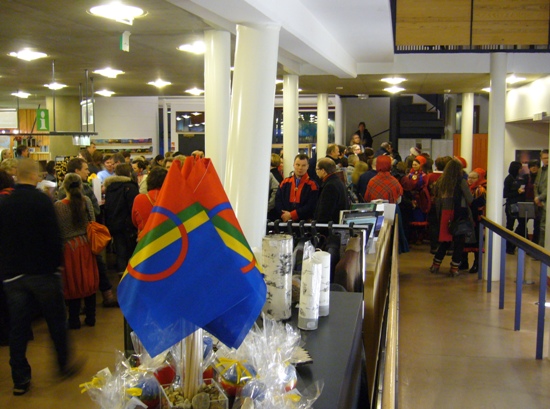
Sámi flags decorate a table in Siida, the centre that houses the Sámi Museum, where moviegoers mingle before a screening at the Skábmagovat Indigenous Peoples’ Film Festival.Photo: Peter Marten

The situation is much different today, although experts say there is still a lot of room for improvement to guarantee Sámi rights within the Nordic countries. Interest in speaking Sámi is increasing in many areas.

In Inari, a town where people who are not yet of retirement age can remember how they were discouraged from speaking Sámi as children, the primary school sports a large bilingual sign announcing its name in Sámi and Finnish.

Look for it the next time you arrive in town to attend the Skábmagovat Indigenous Peoples’ Film Festival. You can’t miss it.

By Peter Marten, February 2010, updated January 2020