US wise guy makes fun of life in Finland

Judging by his new book, How to Marry a Finnish Girl, American Phil Schwarzmann clearly feels he has paid his dues and has permission to tease the Finns after almost a decade in their country.

Subtitled Everything you want to know about Finland that the Finns won’t tell you, Schwarzmann’s tongue-in-cheek list of jibes, dubious advice, grievances and cultural interpretations begins with a warning in the about-the-author blurb: “Don’t take anything he says or writes too seriously.” He has spent his time in Finland working for “a large Finnish mobile phone manufacturer” – and doing stand-up comedy.

And How to Marry a Finnish Girl is entertaining and astute – although also exaggerated and offensive at times, depending on your point of view. The chapters cover getting married (“How to marry a Finnish girl in 10 easy steps”), but also all sorts of other potentially puzzling aspects of Finnish culture, including “Welcome to heaven on earth,” “Why do people get trapped in Finland forever,” “How to build your own house like a real Finnish man,” “Toddlers speak Finnish, why can’t you,” “The coffee and cake trap” and “How to avoid your family’s summer cabin.”

Purely for love

3441-060226_1341-_550-jpg

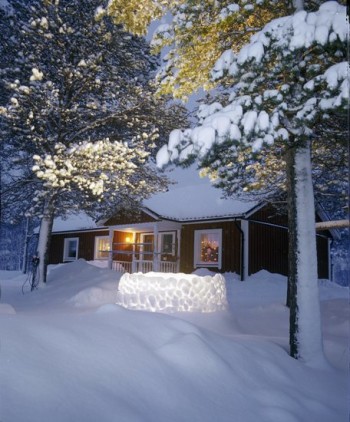
Schwarzmann’s book mentions that Finland is heaven on earth during the summer, but we think winter can be a lot of fun as well. Photo: Niklas Sjöblom/taivasalla.net

“I came to Finland purely for love,” Schwarzmann said at a recent event to promote the new book, so you’d guess he possesses some wisdom about marrying a Finn. But he has never been married – although he and his girlfriend are still together, if you’re wondering.

“Finns can make fun of themselves,” he noted. “Not every country can do that.” This book is his opportunity to make fun of the Finns just before he skips out, leaving Finland bound for Silicon Valley, California. “If you’ve lived somewhere long enough to write a book about it, it’s probably too long,” he admitted.

How to Marry a Finnish Girl catalogues various aspects of life in Finland: How about a test to determine whether you should live in Espoo (Finland’s second-largest city, “more of a sprawling suburb” outside Helsinki)? Or a month-by-month guide to surviving the seasons? The top ten reasons why you should move to Finland (and the top ten reasons why you shouldn’t)? A drinking guide to Finnish national holidays? The do’s and don’ts of dating in Finland?

As amusing as the book is to those who already live in Finland or were born there, it does not represent a guidebook for first-time visitors. The humour can only sink in after you’ve been in Finland a while. And chances are that even if you leave, you’ll find yourself there again someday.

“I’m scared of going to the US,” Schwarzmann said to the audience, this time apparently more serious than joking. “I know I’ll be back in Finland soon and I’m already looking forward to coming back.”

By Peter Marten, October 2011

Finland leads the world in prosperity

It isn’t quite the same adrenaline rush as when Finnish “monster metal” band Lordi won the Eurovision Song Contest by a landslide way back in ’06. But still, there’s a reason to rock ‘n’ roll: Finland has been declared the world’s most prosperous nation.

The 2009 Legatum Prosperity Index (LPI), published by London-based thinktank Legatum, puts Finland in first place overall; the previous year it came in third. [Editor’s update: In addition, the Economist magazine’s Economist Intelligence Unit places Helsinki at number six on its 2010 Liveability Index of the world’s most liveable cities. It’s one of only two European cities in the top ten, which is dominated by Canada (Vancouver took the gold) and Australia.]

The LPI ranks countries in nine different subindexes: economic fundamentals; entrepreneurship and innovation; democratic institutions; education; health; safety and security; governance; personal freedom; and social capital.

Out of 104 countries, 90 percent of the global population, Finland was the only one to make the top ten in every category. It placed second in governance and in safety and security, and came third in education. Switzerland was second in the overall rankings, followed by Finland’s Nordic neighbours – Sweden, Denmark and Norway. Also in the top ten were Australia and New Zealand, Canada and the US, and the Netherlands.

The LPI’s creators explain that they utilise ”a holistic definition of prosperity” that includes both ”material wealth” and ”measures of happiness and quality of life”. They note that ”the most prosperous nations in the world are not necessarily those that have only a high GDP, but are those that also have happy, healthy, and free citizens”.

Keys to happiness

In other words, ”happiness is opportunity, good health, relationships and the freedom to choose who you want to be”, they say. For everyone out there who has been wondering how to achieve happiness, the equation is that simple.

Legatum points out that while many of the highly ranked nations have long histories of prosperity, ”several others that not long ago were afflicted with poverty, oppression, and unhappiness” are relatively high on the list. ”History is not destiny,” as the report puts it.

It’s an honour to achieve first place in the LPI and an affirmation that Finland is doing something – many things – right. ”Prosperous countries are strong across the board,” says the report, meaning that all the subindexes are interlinked. In order to build and maintain prosperity and reach the top, countries cannot ignore any of these ”foundations of prosperity”.

Links:

By Peter Marten, October 2009, updated February 2010

Cancer treatment in Finland getting personal

Finnish doctors are taking creative, patient-oriented approaches to defeating a growing public health problem.

“I sometimes say that I’m the most indebted doctor in Finland,” says Timo Joensuu, sitting in the conference room of the two-year-old Docrates cancer hospital in Helsinki. Built on a seaside property with help from corporate investors, contributions from friends and loans taken out by Joensuu himself, the hospital has established itself as a model for patient-oriented cancer treatment.

The concept for Docrates, whose name is a hybrid of the words “doctor” and “Socrates,” arose from Joensuu’s frustration with a patient care model in which doctors stay at an authoritative distance and patients often have to wait for weeks or months before beginning treatment. In diseases such as pancreatic cancer a two-month delay can be critical, and with slower-moving cancers waiting for weeks can result in added distress.

At Docrates, treatments often begin within 24 hours from diagnosis and doctors and nurses answer calls from patients around the clock. A built-in health centre offers services including exercise and nutrition programs, makeup coaching, massages and acupuncture. Hospital rooms look out over the ocean, and Docrates’s sunny lobby, void of the smell of disinfectants, is decorated with colourful designer chairs.

3297-10_aula_b_www-_550-jpg

Docrates’s sunny lobby, void of the smell of disinfectants, is decorated with colourful designer chairs. Photo: Docrates

“Socrates believed that people could grasp the truth by thinking for themselves, and we practice the same way of thinking with our patients,” says Joensuu. “We offer personal support and make sure that they are informed. We can never fully predict which treatment is best for each patient, and a doctor-patient relationship is crucial in finding that out.”

About 24,000 people in Finland are diagnosed annually with cancer. As its prevalence continues to grow, its individualistic nature becomes all the more obvious; cancer appears in countless types and subcategories, each of which responds to a different cocktail of treatments and medications. Due to its inherent mysteries, cancer also leaves behind a trail of uncertainty in communities of patients and survivors. In recent years, forward-thinking Finnish institutions such as Docrates have begun to employ a personalised approach to both patient care and the development of new treatments. The emerging trend of personalised medicine can further brighten Finland’s position on the global scientific map.

A rich resource

One of Joensuu’s motivations for building a new hospital was his realisation that the public sector did not yet have enough resources to optimise cancer treatment for each individual patient. He collected his first million euros from independent investors, colleagues and friends, and the hospital’s construction was paid for by the life insurance division of Nordea Bank. Docrates is still entirely in Finnish ownership; its largest owner is Lääkärikeskus, a large chain of private medical centres in Finland.

“In building Docrates we’ve already proven that we can attract tens of millions of euros into cancer research and treatment. In short, we can provide a giant additional resource for this particular field of medicine,” Joensuu says. “Everyone is worried about where the resources for cancer treatment will come from, and a private hospital like this one is a huge opportunity.”

3297-06_hoito_c_www-_550-jpg

At Docrates in Helsinki, treatment is more personalised and patient-oriented than at many other cancer hospitals. Photo: Docrates

Joensuu currently works from about six in the morning to eight in the evening, and continues to answer patient calls around the clock. Six full-time doctors currently work at Docrates, which has so far treated patients from about 25 countries. The clinic has become known internationally by offering the latest treatment options and equipment in one facility. It has, for example, a cyclotron particle accelerator, a GMP laboratory for handling radioactive substances and state-of the art radiation and imaging equipment.

“We’re not missing anything, so we can optimise treatment in a way that takes into account all different scenarios on the patient’s part,” Joensuu says.

“Our doctors seem to come back from each conference with three or four new treatments,” says Docrates nurse Jenni Keinänen. “Although I can’t say that one should never give up hope, there is quite a bit of it; even if we aren’t able to cure the cancer, we can increase our patients’ quality of life.”

Decoding treatments

Beyond patient care, a different kind of effort to personalise the treatment of cancers is underway at the Institute for Molecular Medicine Finland (FIMM), run by the University of Helsinki. The institute has begun to make use of Finland’s strong track record in biobanking and genetics to develop ways to determine the best treatments for cancer, cardiovascular diseases and other illnesses.

Most recently, professor Olli Kallioniemi’s research group has begun to apply molecular-level information to the treatment of leukemia. These personalised treatment methods have already been employed in a handful of patients, and clinical trials on individualised leukemia care are expected to begin in 2012 in collaboration with hematologists at the Helsinki University Hospital.

3297-16_linac_a_www-_550-jpg

Nurses help prepare a patient for a form of radiation treatment. Photo: Docrates

“In the future, public health will make even greater use of genetics – if you have, say, a cardiovascular disease, your doctor would look at your genetic profile in addition to traditional risk factors. Cancer, though, is a completely different ballgame,” says Kallioniemi. “Cancers are very individual to begin with; they are entities with their own molecular profiles that mutate and evolve. However, we can look at genetic profiles to see how a patient will respond to a particular cancer treatment.”

One of the largest challenges in taking cancer treatments in a new direction is convincing decision-makers to veer from long-standing treatment regimens.

“Instituting a new treatment method requires a lot of work because existing strategies have such a long-standing foundation,” says Kallioniemi. His group began doing work with advanced leukemia patients because the field has already been employing immunology and genetic testing in diagnostics and treatment selection for years. The clinical trial will be conducted in patients with advanced, treatment-refractory cancers, as introducing alternative treatments as the first line of therapy can be risky. After personalised medicine has been shown to be effective, it can be introduced to patients suffering from less advanced cancers.

“Of course we have to move gradually, and as we gather more information on a molecular level, we learn to interpret it better and use it to select the best treatments for each individual patient,” Kallioniemi adds. “We don’t yet have a simple answer to how we can employ our approach to the population at large because our health care system it’s not yet ready for individualised medicine. But this is the direction in which cancer treatment is headed.”

By Laura Palotie, October 2011

Choosing your future

So you’re interested in studying in Finland? Good choice! Foreign students at Finnish universities highly recommend the experience.

Deciding your field of study can be daunting. The stakes are even higher if you decide to obtain your degree abroad. The risks can seem big, but the adventure and the rewards can be great as well. Studying is highly valued in Finland, and that’s a perfect starting point.

Safe and laidback

Finland forms an attractive place to study for many reasons. Students value the high quality of life, the stable yet dynamic economy, the good living accommodations and the safe, laidback atmosphere. And let’s not forget the strong connection to nature that Finns treasure.

Francisco Socal from Porto Alegre, Brazil, who interned as a computer engineer in Oulu, northern Finland, praises the ease and safety of getting around, and the bicycle-friendliness of the cities. Luis Alfredo Chavez Cabrera from Mexico had narrowed down his options to Argentina, Chile and Finland, and ended up in the North after reading an article that rated Finland as an excellent European growth economy.

Flexibility, independence and responsibility

Studying should be about acquiring skills for life and a solid building block for a future career. What do foreign students think of the quality of their studies in Finland?

Fatih Tokan from Turkey knew little of Finnish culture or people when he arrived as an exchange student, but fell in love with the range of choice at his uni. “It is easy and really student-oriented – you can choose from tons of different faculties and take courses from other universities, which is really great,” he says. No surprise, then, that he carried on to complete his degree in Helsinki after his exchange.

One important thing to keep in mind when comparing different options is the difference between the “regular” universities, business schools and the universities of applied science. Rabindra Nepal, from Nepal, who studied at the Arcada University of Applied Sciences, recounts that courses there are “very work-life–oriented.”

Not that studies at the University of Helsinki, Finland’s largest uni, aren’t job-oriented, but the focus is more theoretical and the schedules even more flexible. Danish political science student Sören Berg Rasmussen points out, “I think it’s important for people thinking about coming to study here that it will require a lot of independence”.

Affordable education

When they hear the word "university", many Finns think of the University of Helsinki's main building, designed by Carl Ludwig Engel and completed in 1832.

When they hear the word “university”, many Finns think of the University of Helsinki’s main building, designed by Carl Ludwig Engel and completed in 1832.Photo: Ida Pimenoff/Helsinki University

One of the best things about education in Finland is that it is cheap. Students enrolled in a full-time degree programme pay no tuition fees. The average cost of living in Finland is high, though comparable to the rest of Europe.

Minimum living expenses for a single student range from 600 to 800 euros a month depending on cost of accommodation, healthcare and other expenses. A foreign student who has lived in Finland for at least two years for some other purpose than studying and has permanent resident status may apply for student financial aid.

The essence of the culture

Adapting to new surroundings and a different culture is surely the biggest challenge to enjoying life in a new environment. Anil Palikhe from Kathmandu, Nepal knows that all Finns are not as shy as the stereotypes would lead you to believe. Nevertheless his initial reaction was that Finns seem to “hide like turtles”. Andrew Nestingen from the United States doesn’t see much difference in behaviour and maintains that people are exactly as quiet on a bus in Seattle as they are in Helsinki.

Everyone agrees that you can get by perfectly well in Finland speaking English. However, if you really want soak up the essence of Finnish culture, learning some of the local lingo is recommended. Then at least you’ll be able to evaluate whether Frédéric from France, who volunteered at an afternoon club for children in Turku, is right when summing up Finnish people as the hobbits from JRR Tolkien’s Lord of The Rings. You know, those carefree inhabitants of Middle Earth who live peaceful, stress-free lives in cosy houses.

All-round experience

This is just a first glance of the possibilities. Compare your options carefully and read up on them thoroughly. To make sure Finland stays on your map, see the list of key links below for more detailed information.

thisisFINLAND’s own Study page 
 

By Jens Alderin, July 2009

Hanging out at the new harbour

At Helsinki’s state-of-the-art Vuosaari Harbour, opened in November 2008, a rep from one of the main operators takes us on a behind-the-scenes tour. Watch out for 12-metre spiders.

Our guided tour of the new Vuosaari Harbour outside of Helsinki is led by project manager Paavo Mäntylä from Finnsteve, the largest stevedoring (loading and unloading) company in the harbour. He has seen many harbours in the course of his career, having worked on ships and quays ever since he was still at school. The inauguration of a brand-new harbour in November 2008 was a milestone for him.

“The first day of the new harbour was a memorable one,” says Mäntylä. “We were thrown in at the deep end, since the previous day Helsinki had received its worst snowstorm in 40 years. We had to clear 70 hectares of 50-centimetre-deep snow. It was a huge effort, but we did it.”

Spiders with wheels

We drive off towards the Finnsteve loading and storage area – for safety reasons we’re not allowed to proceed on foot. As soon as we pass through the electronic access control gates we can see why. A pedestrian would be minuscule compared to the 12-metre gantry cranes, nicknamed “spiders”, and could easily be overlooked and crushed by their gigantic wheels.

The stringent safety regulations are also in place because the supervision and security systems of the new harbour are compliant with the International Ship and Port Facility Security Code (ISPS) and the Customs-Trade Partnership against Terrorism Cost/Benefit Survey (C-TPAT), which regulate how access to and movement within the security area must be monitored. All vehicles entering the area are recorded and their access permits verified.

“The harbour fulfils the requirements placed on security arrangements at the port of origin for shipments to the USA,” explains Mäntylä.

Fifteen-minute turnaround

We face a field full of stacked containers and lines of waiting lorries. Soon a crane resembling a stick insect approaches a lorry, picks up the container it is hauling and deposits it at a predetermined location. The entire logistics process is guided over wireless networks. Assuming that the documentation is in order, a lorry driver can make a 15-minute turnaround at the harbour.

“The harbour works so well because the processes are so well planned and goods and vehicles move smoothly,” says Mäntylä. “Although the area is large, its storage capacity is nevertheless limited compared with the volume of goods that can be handled.”

State-of-the-art lifting

The quayside is shaped in the form of two large artificial headlands framing a harbour basin. The larger of these is held entirely by Finnsteve. The company’s quays can accommodate four container ships and ten ro-ro ships at a time. For every container ship berth there is a state-of-the-art container crane that can lift two containers at once, allowing the processing of 25 to 35 containers per hour. That crane, 68 metres tall at its full height, places its burden on the ground where it is picked up by a gantry crane and taken to await further transport and processing. Unloading and loading a large container ship or ro-ro ship takes from 12 to 16 hours. The harbour can process ships around the clock if necessary.

The pride of the ro-ro berths are the two twin-level ramps that allow large vessels to be loaded and unloaded on two decks at once.

Heavy work in good conditions

Goods are packed swiftly at a terminal where containers are placed on the outside with their open ends pointing in. A rail line extends to the inside of the terminal hall so that trains can bring their goods – forestry products, for example – directly to the terminal to be loaded into containers and shipped away. The premises are spacious and practical.

“The facilities here are worlds away from what we had in Länsisatama and Sompasaari [former harbours closer to downtown Helsinki],” says Mäntylä. “We have excellent staff facilities and services, including a canteen, a gym and health care. And, of course, there are four saunas where you can wash up after your working day.”
 

By Salla Korpela, September 2009

Back to nature begins early

The chance to get your hands dirty is also a chance to learn. That’s part of the philosophy at a “forest daycare” on the edge of Helsinki, encouraging skills and values that stem from the Finnish love of nature.

Finland is famous for its classroom performance; the Programme for International Student Assessment (PISA) have repeatedly ranked Finnish children as top performers in school. But not all learning happens in the classroom. We visit an unusual daycare in the Helsinki neighbourhood of Vanha Kaupunki (Old City).

As its name suggests, Vanha Kaupunki is the oldest quarter of Helsinki, where the original settlement of fishermens’ cabins huddled along the shore and around a wooden church on a bluff overlooking the rapids.

The area where the daycare is located is also home to a former power station (centre, now a museum), as well as modern buildings and a nature preserve.

The area where the daycare is located is also home to a former power station (centre, now a museum), as well as modern buildings and a nature preserve.Photo: Anthony Shaw

Nowadays the area is home to hundreds of flats in new blocks and in reconditioned industrial buildings, all of which meet stringent specifications for energy saving. Behind them lies Viikki Nature Reserve, especially favoured by migrating birds and their spotters in April and May, and a riot of burnished, reedy colour in the autumn. The neighbourhood also features a scattering of venerable wood-clad houses, looking rather plain compared to the stylish glass and stainless steel of the new architecture behind.

One wooden building stands out, with a towering maple tree shading a yard that rings with eager young voices.

This is Mörrintupa (Wood-elf’s Cottage), the daily retreat for 28 local children where they can – and indeed must – while away their daytime hours outdoors in their “forest daycare.” Starting early every morning, come wind come snow (and it surely will in winter), the house and yard form the daytime home for two groups, with all activities based outside in the yard or the local forest.

At home in nature

Saima, Iris, Minttu, Silvia and Grethe gather at the edge of the yard. The daycare is a stone’s throw from the Viikki Nature Reserve.

Saima, Iris, Minttu, Silvia and Grethe gather at the edge of the yard. The daycare is a stone’s throw from the Viikki Nature Reserve.Photo: Anthony Shaw

It was Swede Gösta Frohm who pioneered the educational role of learning through direct first-hand contact with nature in the “rain or shine” preschools. In Vanha Kaupunki and nearby, Taiga Child, a private company, runs three kindergartens with support from Suomen Latu, a nationwide association for recreational sports and outdoor activities. The concept, known as “at home in nature,” is embraced by young urban families who want their children to retain the strong contact with their natural environment that the parents themselves experienced as kids.

For the children the first priority is play, which of course comes easily to everyone in the wild. Daily walks to the local forest, the river or the nature reserve are filled with games and opportunities for play. But there are also duties and routines to be followed, which can be tougher on the children in this outdoor location.

Despite ongoing urbanisation, there are still a lot of trees in this rapidly changing corner of the city, 3.5 kilometres from the heart of Helsinki. The reed beds lining the eastern shore of the bay run for many kilometres through the nature reserve. Just over the fence from the daycare, fishermen cast for salmon and trout in the river rapids. And in autumn the colours are splendid, furbishing endless materials for these children make the most of their artistic value – just like their grandparents did.

By Anthony Shaw, October 2011

Farmer becomes maritime man of steel

With his roots firmly in the countryside of southwestern Finland, Hans Langh branched out into international shipping and steel cargo transportation. His success story is based on curiosity and innate problem-solving ability – he has no formal technical training.

The Langh family has been farming at Alaskartano, near the small town of Piikkiö, for generations. Hans Langh’s grandfather dabbled in making agricultural equipment, and when he passed away, his grain dryer project was completed by his grandson. Hans Langh Cleaning Services started in 1973, emulating a Herculean task in removing muck from byres, chicken factories and piggeries using his first patent: a combination high-pressure water hose and vacuum did the job better than rival methods.

“By the mid-1970s we were doing the same in ships’ engine rooms, wastewater tanks and the like, and then in 1983 I became a shipowner,” says Langh, explaining how he drifted into shipping. Langh Ship was enlarged in 1989 when three newbuildings came into service, then transporting paper and pulp for Finnish firms. “But for the last 20 years, Langh Ship has carried stainless and carbon steel for Finnish producers Rautaruukki and Outokumpu. We now have about 30 patents for our steel transport innovations, with the last ten years seeing proactive R&D cooperation.”

Stabilising the onboard situation

Plying the seas: Many of Langh Ship's vessels are named after female family members – in this case Hans Langh's mother, Hjördis.

Plying the seas: Many of Langh Ship’s vessels are named after female family members – in this case Hans Langh’s mother, Hjördis.Photo: Langh Ship Ltd

Shipping steel coils and plate doesn’t sound challenging – but the field was ripe for innovations to prevent damage to cargo and ships and ensure personnel safety. “There was so much damage when heavy steel was transported,” Langh says. “Steel plates on the bottom of the ship were stacked, and separated by wood planks in between.”

His original idea was to place coils (weighing 26 tonnes) in Cradle Tween Decks cassettes, higher up than normal in a ship – a previously forbidden practice. This was augmented by the Cradle Cassette at the bottom of a ship’s hold. From these simple creations stemmed a catalogue of products tailored to transport steel more efficiently.

The cassettes yielded impressive results. Without getting into complicated technical jargon, we can say that the ships’ stability improved greatly, while loading time was cut in half and labour reduced to a single operator. “In the ten years they’ve been in use [there are over 500 leased worldwide], there’s never been a single damaged cargo,” states Langh proudly.

A flow of inventions

In the Cradle Tween Decks system, coils of steel are loaded into "cassettes" for a comfortable ocean voyage.

In the Cradle Tween Decks system, coils of steel are loaded into “cassettes” for a comfortable ocean voyage.Photo: Langh Ship Ltd

The latest invention is the Hard Open Top Cradle Container (HOTCC) and its duplex version. The HOTCC carries up to 40 tonnes of large steel coils, which can be loaded either directly aboard ship, or in advance on shore and then transported via road, rail or water. The duplex (a stainless steel composite mix) holds an extra ten tonnes of payload, has a longer working life and needs no painting.

In addition to the removable cover, the HOTCC design incorporates doors at both ends, enabling delivery of other freight on the return voyage, such as scrap metal for recycling, while the duplex can carry foodstuffs or difficult bulk cargoes securely.

Hans Langh has garnered recognition over the past few years. He was appointed Maritime Counsellor in 2008, and received an honorary doctorate from Turku School of Economics earlier this year – his sole qualification apart from two years at agricultural college.

Are there more inventions on the way? “You can’t only develop – ideas must also be marketed – but I still have plenty on my mind,” says Langh.
 

By John Pagni, September 2010

Alpine land without Alps

Levi Fell ski resort in Finnish Lapland rose rapidly to become one of the country’s biggest tourist centres. Local experts have played a key role in this fairytale development.

Experience teaches lessons, but it can also be a shackle. At Levi, many things were different from other places in Lapland. The most important of these was land ownership: Levi was not controlled by Metsähallitus, Finland’s Natural Heritage Service. Also, the core of the winter tourism business infrastructure – the downhill ski slopes and lifts – remained in local hands. The ski lift company has been the engine driving Levi’s growth, and there have been bitter battles over its ownership. In the late 1990s, the local municipality of Kittilä gained majority ownership, which has remained stable ever since. Now, in any case, there is certainty that the work in Levi and Kittilä is solely targeted at developing the resort.


Taking the helm at the Levi lifts company, now called Levi Ski Resort Ltd, was Jouni Palosaari, a young building engineer from Kittilä. A tireless background champion of Levi, municipal director Aarne Nikka, wrote in his memoirs in 2003 that the company’s decision to hire Palosaari was “one of the most important in its history”.

In fact, Palosaari did not have to start from scratch, although from the current perspective the 3,500 hotel beds available at the resort in 1988 seems paltry.

An active policy of land acquisition was the basis for development – and all sellers were paid equally well. Good plans were made, but many of them were undermined by the recession of the early 1990s. Financing almost dried up completely, as ski lifts were declared to be impossible investments. The leaders at Levi did not give up:

Jouni Palosaari's perseverance contributed to making Levi what is today.

Jouni Palosaari’s perseverance contributed to making Levi what is today.© Breakthroughs

“We decided that if there are already enough ski lifts in Finland, then they are in the wrong places,” says Palosaari.

Levi has had reason to be grateful for the stubbornness of Palosaari and his partners.

The harsh truth of the recession years was that the death of one business was often the salvation of another, and this was equally true in the downhill ski industry.

“Three ski resorts, Muurla, Juupavaara and Kivesvaara, were going bankrupt, so I bought all of their equipment.”

Thus Levi got the country’s newest lifts for next to nothing. Therefore, it was better positioned than its competitors to invest in other areas when construction costs were low.

The strongest part of Levi’s marketing has been to attract major competitions, which is the hardest-fought battle in downhill sports. Success – “in an Alpine country with no Alps” – is quite a trick in itself.

“The factors that were blocking us from landing major events were darkness, cold and distance. We had to turn these to our advantage. The international ski federation FIS requires 90 lux of light on the slopes, while television requires 800. We built 900 lux worth of lighting on our competitive slopes. Now we can offer conditions that suit prime-time viewing hours in central Europe.

“Even the cold has turned in our favour. In February 2004, we had an amazing atmosphere at the opening ceremony of the women’s World Cup event. The next morning, the thermometer showed a reading of -36 degrees Celsius. I thought everything would be ruined. But the Slovenian team was enthusiastically posing for pictures next to a thermometer. No-one complained, and during the day the temperature rose to zero. Some central European resorts had had to cancel competitions that winter because of mild weather, so we were praised for offering real winter conditions.

“When we applied to host the opening event of the World Cup season in November 2006, we were able to demonstrate that is actually closer in some ways. Whereas in continental Europe you have to drive over winding mountain roads, we have an airport right at the foot of the slopes.”


In marketing events, organisers have found it good to emphasise the contrasts: on one hand Lapland and winter in seemingly primitive conditions, while on the other hand journalists are offered “Nokialandia” information technology services that far surpass those at other venues.

As proof that this combination works, the FIS has recently decided that Levi will host the opening event of the World Cup Slalom season annually until at least the year 2012. The television exposure that such events provide is massive. Its value in terms of marketing not only Levi, but all of northern Finland’s winter tourism industry, as well as to the sport itself, cannot be overestimated.

Originally published in “Breakthroughs – 90 Success Stories from Finland”, 2007

By Pentti Jussila, March 2009