The key to the nation’s success

A great deal of international attention has been attracted by the repeated success of Finnish 15-year-old pupils and their level of ability as measured in the PISA (Programme for International Student Assessment) studies organised by the OECD (Organisation for Economic Cooperation and Development).

A student giving thumbs-up behind a textbook.

Thumbs up for education: This Finnish language and literature textbook is named after famous author Aleksis Kivi (1834–1872).Photo: Lehtikuva

Free, equal education for all

One of the Finnish education system’s major strengths is its ability to guarantee the same educational opportunities for everyone, regardless of social or economic background. Instead of competition and comparison, comprehensive school focuses on support and guidance for the students as individuals.

Teachers are highly trained; teaching at all levels of education requires a master’s degree, including extensive studies in educational science and in school subjects. The teaching profession is held in high regard.

A smiling student writing on a paper.

Finnish schools encourage pupils to be independent when thinking, studying and doing research.Photo: Ministry of Education and Culture/L.Takala

Young pupils have the same teacher for all or most of the subjects, which supports them emotionally and provides a sense of security. The same teacher also makes sure the class atmosphere remains free of discrimination and harassment. Graded evaluation of learning performance usually starts only once students reach the fifth year. Relations between the students and teachers are friendly and relaxed, and motivation is based on encouragement rather than punishment.

After comprehensive school, all students have the opportunity to focus their attention on general and professional education according to their inclinations. People can continue to study in various forms throughout their lives. Twenty-five percent of all Finns hold a degree from a university or polytechnic; the figure is 36 percent for the 25–34 age group.

Education is free from preschool through university. Using tax revenues to finance education ensures high quality and equal opportunities for all.

PISA: Finnish youth at the forefront

Finland’s rankings

2012

2009

2006

2003

Reading literacy
OECD countries 3 2 2 1
All participants 6 3 2 1
Mathematical literacy
OECD countries 6 2 1 1
All participants 12 6 2 2
Scientific literacy
OECD countries 2 1 1 1
All participants 5 2 1 1
Problem solving
OECD countries 4 2
All participants 9 2

Finland ranks at or near the top in all the PISA studies, organised every three years since the year 2000 by OECD. PISA measures the competence of 15-year-old pupils in mathematics, science and reading literacy. It is particularly noteworthy that among Finnish schoolchildren the difference between top-scorers and low-scorers is small, and that ability levels are strong in all types of schools.

“Education is security for a small nation”*

* J.V. Snellman (1806–1881), a philosopher, scholar, journalist and politician
who played a unique, important role in forming the Finnish national identity

Smiling schoolchildren playing in a jungle gym.

Finnish children start school the autumn of the calendar year that they turn seven. This gives them a longer time to play, use their imaginations and develop secure attachment before attending school.Photo: Amanda Soila

In the modern world, a well-educated, skilful population forms the key to a country’s success.The rise of Finnish society to the ranks of the world’s richest countries in the second half of the 1900s stemmed largely from the population’s demand for public education and the country’s investment in it.

As early as the 1800s, major decisions sowed the seeds for the continuing success of the education system. Finland decided on education for the entire nation. In this way, the country avoided social inequality between an educated elite and an uneducated lower class. The population’s desire to learn has also contributed to a general faith in education. People are expected to stay informed about a wide range of issues and societal concerns.

Solving global problems through education

Finding solutions to the challenges facing society – climate change, global economic fluctuations, an ageing population, risks connected with modern technology, pandemics and mass migration – calls for lifestyle changes and new kinds of activism. In Finland and everywhere else in the world, a growing flood of information and the movement of people are now creating new challenges for traditional education. No matter how strong an education system is, it needs constant development and renewal to maintain its success. The better educated a nation is, the better it will be equipped to face the complex challenges of today’s world.

Education forms the cornerstone of democracy and modern society

“The high level of the Finnish school system is backed by a clear national ethos that says the people are the nation’s most important resource and they have a right to a quality education,” says the director of general education Jorma Kauppinen of the Finnish National Board of Education.

A thoughtful-looking student with pencil in hand looking at papers in front of him.

School days in Finland are shorter than in most OECD countries, but the time spent at school is used effectively.Photo: Ministry of Education and Culture/Liisa Takala

Between 11 and 12 percent of the Finnish state and municipal budget is spent on education. This pays for free preschool, basic education, upper-secondary school, vocational training, higher education and continuing and post-graduate studies, and partially funds liberal adult education. This, in turn, forms the backbone of lifelong learning, available to everyone who lives in Finland.

“The establishment of the primary school system was linked to the awakening of a strong national consciousness,” Kauppinen says. “The nation needed literate, educated citizens and a literary culture.”

The majority of Finnish municipalities had primary schools by the early 1900s. The Compulsory School Attendance Act came into force in 1921, requiring all children to complete at least six years of primary school.

A major turning point came about in the 1970s, when primary and secondary schools were replaced by mainly municipal nine-year comprehensive schools compulsory school attendance was lengthened to nine years. The comprehensive school reform aimed to guarantee equal and free basic education for all children, regardless of the family’s place of residence and socio-economic status.

Play and nurture prepare kids for school

School starts comparatively late in Finland, at the age of seven. According to Finnish educational practice, children need time and space to grow and develop. Learning utilises a sensitive period in children’s lives and encourages their thinking and creativity. During the early school years, families receive verbal feedback on the child’s schoolwork.

In early childhood years, children enjoy the care and nurture of their parents. Kids also participate in group activities at daycare: play, sports and outdoor activities. Parents of young children are ensured long periods of maternity and parental leave. Families can also choose between municipal and private daycare centres, or opt for small group daycare in a child carer’s home.

Six-year-old children have access to free preschool education, either at a school or at their daycare. Nearly all six-year-olds participate in preschool.

If necessary, a child may start school a year earlier or later after an evaluation assesses their school readiness.

Local schools and trust create high-quality schooling

Finland contains approximately 3,000 comprehensive schools with a total of 550,000 students. In practice, the municipalities are responsible for organising the teaching. In one of its most significant findings, the PISA study concluded that out of all the participants, Finland has the smallest differences between schools.

“This result stems from the local-schools principle, highly educated teachers and a culture of trust,” summarises Mr. Kauppinen.

The local-schools principle means that almost all children and young adults attend the school closest to their homes, pre-empting divisions according to family social status. Since schools maintain a reliably high standard, parents are generally satisfied with their local schools, and elite private schools have not emerged alongside local comprehensive schools. Subject to licensing, private schools exist to some extent, but they also receive state funding and follow the national curriculum, and are obliged to include pupils from the local district.

Municipalities fund school transport for children who live too far away to walk or to use public transport.

Teachers select their teaching methods

Teacher training includes both pedagogical skills and in-depth knowledge of curricular subjects. Although the curriculum and the learning objectives are decided at the national level, teachers can choose their methods freely in the classroom.

A teacher helping two schoolchildren with their studies.

Students receive support and guidance in small groups as necessary.Photo: Amanda Soila

“Power is delegated to municipalities, schools and ultimately individual teachers, with all levels of educational administration interacting and sharing notes,” explains Kauppinen. “This culture of trust produces teachers who are independent experts.” On one hand, they are familiar with their own students’ needs and opportunities, and on the other hand, they respect national curricular objectives.

High-quality teaching materials hold great importance. Large investments support the production of school books and other learning materials in Finnish as well as Swedish, Finland’s other official language. Materials are increasingly available in electronic form and online.

Kauppinen believes that the future challenge for schools will be in developing cooperation between home and school, and in advancing dialogue between schools and the surrounding society.

Teacher education ensures quality teaching

All comprehensive school teachers with a permanent full-time post hold a university degree.

In primary school (grades 1–6), teachers usually teach all subjects. They hold a master’s degree in education with an emphasis on pedagogical skills. In both lower secondary school and upper-secondary school, subject-specific teaching is provided by teachers who have completed a master’s degree in their respective fields and have completed studies in educational science.

Daycare and preschool teachers are also university graduates.

Teacher education is a very popular field, and enjoys high esteem in spite of the relatively modest level of pay. There are five times as many applicants for teacher education as there are places.

Education for all stages of life 

A group of laughing pupils sitting on a fence outside.

Young pupils spend recess playing outside, rain or shine.Photo: Amanda Soila

Finns are offered free education throughout their lives, from nursery school to the highest academic degrees.

Young Finns complete their compulsory education in comprehensive secondary school. Their compulsory education ends when they have either completed the entire 9-year basic education curriculum or, at the latest, by the age of 16 years old.

After comprehensive school, half of all pupils go on to upper-secondary school – approximately 60 percent of the girls and approximately 42 percent of the boys. Upper-secondary school studies last two to four years, culminating in the matriculation examination.

The other half of the same age group goes into vocational studies. Approximately 5 percent of those who complete comprehensive school do not continue studying. The goal, however, is that everyone completes at least upper-secondary education, i.e. the matriculation examination or a basic vocational qualification.

After upper-secondary school, students can decide whether they will go on to higher education at a university or polytechnic. The selection process takes into account the matriculation examination results and upper-secondary grades, and most departments also require an entrance examination. Students may also apply to university or polytechnic institutes if they have completed a three-year professional degree or the equivalent, so they may seek higher education even after vocational school. The system aims to prevent dead ends in all areas of education, including vocational education, so that it is always possible to progress to higher studies.

Those who have graduated and worked in a profession can access further vocational training or study an entirely new profession. In many fields, studies can be completed as on-the-job training under an apprenticeship scheme. People who have practised a profession may also prove their skills by taking a competence examination.

Central and local government broadly support basic education directed at creative hobbies and arts for children and youth, as well as liberal adult education that offers all-round education and classes based on hobbies and social interests.

Positive interaction supports human growth and development

Two students studying on computers in a computer lab.

School days start at 8:30 am and end no later than 3:30 pm.
Photo: Ministry of Education and Culture/Liisa Takala

An ordinary school day at Meilahti Comprehensive School in western Helsinki is about to begin. Pupils hurry to their lockers and classrooms. There are merry greetings as pupils pass by each other; some of the greetings are also directed towards the principal, Riitta Erkinjuntti, whose door onto the main hall is open.

“Teachers and pupils are always welcome to come and see me when the door is open, and it is nearly always open,” says Erkinjuntti.

The school atmosphere is relaxed and tolerant, as it is in most Finnish schools. The pupils relate to each other respectfully but casually. Students call teachers by their first names and classes are taught in a very conversational manner.

Portrait of principal Riitta Erkinjuntti.

Principal Riitta Erkinjuntti of the Meilahti Comprehensive SchoolPhoto: Amanda Soila

“Teaching is based on support, participation and interaction. The pupils work hard, but are not forced to do so by demands, intimidation or pressure,” says Erkinjuntti.

Her school has about 350 pupils in secondary school, classes 7 to 9. The pupils are from 13 to 16 years old. In addition to regular secondary school classes, the school also has art and music programmes. A bilingual Chinese-Finnish study group also exists, as well as a language immersion class where Finnish-speaking pupils study part of the day in Swedish, effortlessly learning the country’s second official language. There are special preparatory classes for immigrants and training classes for pupils with mild mental disabilities. Children in the special classes may come from outside the local school area.

“For pupils, it is good that they encounter all kinds of learners in their school environment, representing different cultures and different sorts of young people,” says Erkinjuntti. Many other Finnish schools use the same approach.

School days start at 8:30 am and end no later than 3:30 pm. The secondary school curriculum includes a lot of mathematics, Finnish, at least two foreign languages, humanities, natural sciences and art, as well as two hours of physical education every week.

Special support for pupils with learning difficulties

According to international assessments, one of the special strengths of Finnish schools is the way the schools support students who are struggling with learning difficulties or need other support. You cannot get through Finnish school without developing basic skills in reading, maths and other areas. Every child and young person has the right to a quality education, regardless of his or her personal conditions or limitations.

Pupils are entitled to special assistance as soon as the need arises. Common forms of support include remedial teaching in small groups, individual counselling and teaching pupils in accordance with individual conditions, even when they are studying in the same class as others. Most schools have special teachers and nearly all have visiting teaching assistants to help with needy pupils. If a child is found to have a wide-ranging, permanent learning difficulty, a personal learning plan is formulated for the pupil. Pupils with mild to moderate learning difficulties study in the same schools and classrooms as everyone else, but the schools receive additional resources in these cases.

Pupils with mental disabilities and children with severe sensory or physical disabilities or special health or mental health problems study in special classes or schools, and for some of them compulsory education lasts 11 years.

Children of immigrants receive many kinds of support at school. Those who do not speak Finnish or Swedish well are offered preparatory education in small groups where they get to learn the Finnish language with an adapted syllabus. In major cities, children from immigrant backgrounds have access to language lessons in their own mother tongue.

Artistic subjects help develop personality

The enthusiasm of the students and teachers at Meilahti Comprehensive is enhanced by cooperation with various organisations, including art institutes, sports clubs and the local church. A variety of projects help the school keep up with developments in computer technology and other areas. Meilahti produces good learning results, and has been selected once as a PISA school.

“Our school system makes it possible for schools to avoid constantly competing against each other,” says Erkinjuntti. “We focus on supporting pupils based on their own unique situation.”

Arts and practical subjects are particularly important in this respect.

Smiling pupils sitting at their desks.

Student wellbeing and interaction between students are two areas that receive special attention.Photo: Ministry of Education and Culture/Liisa Takala

“Subjects where you can express yourself support a balanced, growing personality. Gifted students have the opportunity to go deeper into these subjects in special classes. This helps improve motivation and provides an additional challenge.”

Principal Erkinjuntti believes that the success of Finnish schools is largely due to the values and human image of the school community. A young person can acquire knowledge and skills more readily when she or he feels accepted, respected and trusted. Bullying and other issues harmful to wellbeing are addressed without delay.

In Erkinjuntti’s experience, some of the most significant challenges connected with childhood education are parents’ lack of time and young adults’ need for more attention from the grown-ups in their lives. In modern society children often have to grow up too fast. They have to become independent and resilient early on.

Another challenge is the flood of information. “We live in a world of unlimited information, and this also affects schools,” says Erkinjuntti. “How will the schools of the future determine what to focus on? Where do you draw the line?”

Ensuring student wellbeing

Each school has a student welfare unit and school health services. Student welfare has to do with the school’s responsibility for social, mental and physical wellbeing. The school may act if pupils shirk school, are chronically late, become marginalised from the class community, use drugs or alcohol, or suffer from an unstable family situation. In these cases, the adults in the school have a right and a duty to work towards a solution together with the parents, and, if necessary, to turn to municipal healthcare, child welfare or social services for advice.

Schoolchildren receive regular health and dental check-ups and, if necessary, are sent for further examination to the municipal health services. School health services are free of charge.

“The best thing is the active and supportive atmosphere”

Smiling girls clad in blue overalls painting by a table.

Oona Niemelä (centre) checking graphic prints with her classmates.Photo: Amanda Soila

Ninth-grader Oona Niemelä’s day at school

Fifteen-year-old Oona Niemelä wakes up before seven and eats breakfast with her family. Then she takes a half-hour bus ride to school. She studies in the ninth grade at Meilahti Comprehensive School with an emphasis on visual arts.

Meilahti is not the closest school to Oona’s home, but she applied there specifically for the visual arts programme.

“For the entry test, I had to do a pencil drawing and a watercolour painting,” Oona says. “I was nervous, but luckily I passed.” In her opinion, the best thing about Meilahti Comprehensive is a positive environment that encourages students to stay active. You do not have to be worried about being bullied at school.

Oona’s favourite subjects are the visual arts and languages. She likes physics and religion less.

“Homework takes about an hour and half a day, but before tests I study longer. I don’t usually need my parents’ help to do my homework.”

Oona’s school days last five to seven hours. Each morning and afternoon includes a 15-minute recess, and halfway through the day there is a half-hour lunch break. During the breaks, she mingles with her friends; in good weather they are outside in the schoolyard.

After school, Oona keeps busy with her hobbies. She takes piano lessons at a music school and goes horseback riding once a week. Oona gets to her hobbies independently on public transport, just as most young people do in Helsinki.

Evenings include homework and piano practice. Oona also spends time chatting with friends online, talking on the phone and watching television. With so many activities during the week, she hangs out with her friends mostly on weekends.

The lights go out in Oona’s room at about 10:00 pm.

After comprehensive school, Oona is planning to go to upper-secondary school. She would like to attend Sibelius High School, where they offer a special music programme.

“I’m not really planning a career in the arts, but I think it would be nice to get more into music and art, just for my own sake,” Oona says.

More info

The Finnish educational system

An infographic picturing the levels of Finnish education system.

Source: Ministry of Education and Culture

Standardised educational objectives

The government decides on the general objectives and the division of hours between comprehensive and upper-secondary school subjects. This is based on the national curriculum, which is decided on by the Finnish National Board of Education under the Ministry of Education and Culture. Education providers, most of which are the municipalities, then develop their own curricula and school-specific plans based on this foundation. In this way, all pupils across the country receive the same subjects at the same level and quality. At the same time, the system also allows for local emphasis and enhancement.

Students’ learning outcomes in comprehensive school are monitored by national assessments, involving a random sampling of about 5 percent. Additionally, those responsible for organising the teaching are required to perform evaluations on a regular basis.

Upper-secondary school studies culminate in the national matriculation examination, assessed by the National Matriculation Examinations Board.

A focused-looking teacher helping a pupil with his studies.

Photo: Amanda Soila

Curriculum includes free lunch

by Minna Kantén

Every child in a Finnish daycare centre, elementary or secondary school or vocational college is provided with a hot, healthy lunch including salad, milk and bread.

The free lunch served at school forms a component of the official curriculum. The idea is that a meal break at school refreshes the children and helps them through the remainder of the day. At the same time it is a lesson in health, nutrition and customs.

In some pioneering schools, the students are offered climate-friendly meals such as vegetarian and organic lunches.

Schoolchildren’s favourite lunch menus

  • Lasagne
  • Minced-meat-and-macaroni casserole
  • Spinach pancakes
  • Meatballs
  • Minced-meat sauce
  • Fish fingers
  • Minced meat and mashed potato casserole
  • Barley porridge
Pupils standing in line taking food from the cafeteria counter.

Photo: A. Soila

By Salla Korpela

Published May 2012, updated July 2014

Finnish Lapland welcomes new Sámi centre

In the lakeside village of Inari in Finnish Lapland, Finland’s indigenous Sámi people celebrate as a new, distinctive landmark joins the landscape: Sajos, a Sámi cultural and political centre.

This striking building has been created partly to provide a permanent home for Sámediggi (Sámi Parliament), which represents Finland’s Sámi in national and international forums, and resolves issues concerning Sámi languages, culture and rights. The territory of the Sámi, Europe’s only indigenous people, also stretches through northern Norway and Sweden and into a corner of Russia.

Sajos (which means “base camp” in Sámi) also houses the new Sámi Cultural Centre, encompassing a 430-seat auditorium that can be used as a theatre or concert hall; meeting rooms for local associations; classrooms for adult education; a Sámi social services centre; the Sámi archives; a library; and a shop specialising in Sámi books and handicrafts.

“The opening of Sajos represents a great new opportunity for us Sámi, providing an ideal venue for all kinds of cultural events,” says Sámi singer Anna Näkkäläjärvi, whose band Ánnámáret Ensemble performed at the building’s official opening ceremony on April 3, 2012. The event was timed to coincide with the inauguration by Finland’s President Sauli Niinistö of the newly elected 21-member Sámi Parliament, which will serve for four years.

Näkkäläjärvi manages the Sámi Music Centre, which is also based at Sajos. Like other Sámi musicians, Ánnámáret Ensemble are proud of their roots and the haunting sounds of traditional Sámi singing styles, but not afraid to mix in influences from other musical cultures. “It’s important to do this to keep our own culture truly alive,” explains Näkkäläjärvi.

Meeting under a single roof

The Northern Lights, also known as Aurora Borealis, sway above Sajos, the new Sámi cultural and political centre in Inari, Finnish Lapland. Video: Andy Keen

“This is the first time that Finland’s Sámi have really had our own house where we can gather under one roof,” says Sajos’s manager Marja Männistö.

“It felt wonderful when we had 450 Sámi children singing together here in March for a children’s arts event – and I’m really looking forward to the music festival of indigenous peoples, Ijahis idja (Nightless Night) which we host in August, welcoming guest performers from other indigenous peoples as well as Sámi musicians.” It is hoped that Sajos will also reactivate a Sámi theatre tradition that has recently suffered due to the lack of a suitable arena.

“We’re also producing school books here in all three of the distinct Sámi languages spoken in Finland,” adds Männistö, who is a member of the Skolt Sámi – a minority within a minority. Skolt Sámi is today spoken by only about 300 people in Finnish Lapland, while Inari Sámi has some 300 speakers and about 2,000 people speak Northern Sámi. The municipality of Inari uniquely has four official languages – the three Sámi languages and Finnish.

Forms from nature and Sámi traditions

4032-9072-550px-jpg

Anna Näkkäläjärvi sings with her band Ánnámáret Ensemble at the Sajos opening festivities.Photo: Tea Karvinen

Sajos is a truly eye-catching work of architecture, clearly influenced by northern natural scenery. The building’s curved walls are made of local pine, birch and spruce.

The floor-plan resembles a traditional four-pointed Sámi four-winds cap, and the shapes of internal spaces echo other traditional Sámi objects, structures and motifs.The Parliament chamber resembles a giant oval shamanistic drum. It has separate cabins for interpreters who translate between the different Sámi languages during parliamentary sessions.

The 15-million-euro cultural and political centre has been built with funding from the Finnish State and the European Regional Development Fund.

Männistö also enjoys the view from her new base across the River Juvduu to another attraction in Inari: Siida, the Sámi Museum and Nature Centre, whose exhibitions give colourful and atmospheric insights into life in Finland’s far north.

“Siida features our history and our natural surroundings, and we’re delighted that Sajos now gives us a fantastic centre for contemporary Sámi culture, too,” says Männistö.

By Fran Weaver, April 2012

Finnish Church aims to be down-to-earth

Irja Askola, bishop of Helsinki and Finland’s first female bishop, opens the Evangelical Lutheran Church’s doors to dialogue with everyone in the surrounding community.

The way Finns feel about the Church is changing faster than ever, as is the Church’s position in the community. A generation ago, 90 percent of the Finnish population held membership in the Evangelical Lutheran Church, whereas now the number has shrunk to about 75 percent and is falling by about one percentage point annually. Ties between Church and State have also decreased.

“Church membership no longer forms a social norm,” says Irja Askola, bishop of Helsinki. “Nowadays it’s more of a personal choice. Nor does the Church wield unquestioned authority anymore. This gives rise to a challenge – the institution must become a living community – and that’s a good development.”

While the role of the Church as an institution has weakened, its social role has grown. This becomes apparent in the reinforcement and expansion of diaconical work. For instance, the Church represents one of the most important providers of family counselling, and plays a central role in professional crisis work.

Building bridges

4155-church1-550px-jpg

A typical interior of a Finnish Evangelical Lutheran church (Joensuu, eastern Finland).Photo: Jorma Pesonen

The Church gets involved in societal issues. “Our job is not to express opinions about the political questions of the day, but rather to get decision-makers to notice the plight of the weakest members of society,” says Askola.

“We build bridges in the midst of disagreements, and help construct a civilised, safe society. We convey the message that every person has inherent value, even if he or she is unproductive or unsuccessful or has done wrong.”

One topic of conversation in modern Finnish society is that of immigration and xenophobic statements. Askola says that for the Church, multiculturalism doesn’t raise any eyebrows.

“Ecumenically, Finland is a model country, and our dialogue has grown to encompass interfaith aspects. I encourage everyone to approach foreign cultures and religions with an open heart, healthy curiosity and genuine hospitality.”

Askola has suggested that Lutheran parishes could rent facilities, with the exception of the churches themselves, to local Islamic groups and others for events.

“It’s important for the leaders of various religions to get the message out there about what we all have in common: We honour God’s creations in the world and everything that is holy.”

The Church’s First Lady

4155-church2_b-jpg

With its hewn bedrock granite interior, Temppeliaukio church in Helsinki forms both a place of worship and a tourist attraction.Photo: Matti Tirri/Helsinki Picture Bank

Askola was consecrated Finland’s first female bishop in the autumn of 2010. Her election was a sign of change in itself. Female priests were first allowed in the Church of Finland in 1986 after a long, drawn-out struggle, and the position of bishop was opened to women five years later.

Forty percent of all priests are currently women, and female priests are accepted by all except a small – though loud and tenacious – minority.

“I think that the rise of women within the Church has made the Church a topic of increased conversation,” says Askola. “The fact that there is a female bishop has made people curious and given the Church visibility in all kinds of media. It helps make spiritual questions a part of everyday life.”

Talking about relationships

In recent years the Church has had to grapple with the issue of sexual minorities. In 2002 Finland passed a law allowing same-sex couples to officially register their relationships. The conversation flared up again in the autumn of 2010 on primetime television, when a talkshow guest who was against homosexual relationships based her rigid beliefs on the Bible. In the following weeks a fervent public conversation raged and tens of thousands of people renounced their church memberships.

“This event showed the Church the power of the media and of social media, and we learned a lot,” says Askola. The bishop, who is known for her liberal views, believes that despite the loss of members, the conversation made the topic more natural, even commonplace.

Church leaders have since decided that priests were allowed to pray with and on behalf of same-sex couples in registered relationships. Askola said that she would like to welcome more same-sex couples for Church blessings, although she would not force any pastor to do so.

A bill legalising same-sex marriage passed the Finnish Parliament in late 2014 and was signed by the President early in 2015.

Religion in Finland

  • Freedom of religion is guaranteed under the Finnish Constitution.
  • Major religious groups: Evangelical Lutheran 75.2%, Orthodox approximately 1%, Pentecostal approx. 1%, Muslim approx. 1%. (Approx. 22% do not belong to any religious community.)
  • For historical reasons, the Evangelical Lutheran Church and the Orthodox Church hold special status. They have the right to collect taxes from their members and fulfil certain societal functions for them, such as record-keeping and burial arrangements.
  • In school, children attend non-confessional religious studies that correspond to the family’s denomination. Children from non-religious families go to a course entitled Ethics.

By Salla Korpela, April 2012, updated 2015

Aku Louhimies: The illusionist of truth

Film director Aku Louhimies shows a grimy view of Finland. It’s not everyone’s cup of tea – but he tells thisisFINLAND that his newest work, Naked Harbour, is more about hope than despair.

The name Aku Louhimies seems to pop up everywhere these days. He’s one of Finland’s most controversial directors, mostly because of his dark depiction of the Finnish society.

Entitled simply Vuosaari in Finnish, after the eastern Helsinki suburb where the film takes place, Naked Harbour premiered in Finland in February 2012. It follows closely in the footsteps of his award-winning Frozen Land (2005), which the Financial Times referred to as “one of the grimmest and [most] brutally honest portrayals of modern Finland to have hit the screens.”

The director notes that when Naked Harbour was released, the Finnish ambassador to Norway said, “It portrays all the things about Finland that I would not want to show the rest of the world.” Louhimies laughs at the statement and denies that he only portrays Finland in a bad light, yet he frowns at the idea of acting as an ambassador for his country:

“I can’t be seen as responsible for my country’s image abroad. I’m driven to portray life as I see it – especially feelings and human relations. Whereas [fellow Finnish director] Aki Kaurismäki’s films are like fairytales, mine are as realistic as possible. I like to call it the illusion of truth.”

Helsinki boy in love with Hollywood

3092-mikko_kouki_550x234-jpg

“Naked Harbour” is a film about love, and about longing to be accepted as you are. Mikko Kouki (left) plays Pertti, a disillusioned single father.Photo: First Floor Productions

Louhimies has a long history of learning to create truthful illusions for people to watch on the big screen. From a very young age he knew he wanted to be a film director; he was fascinated by America and an ardent Charlie Chaplin fan (City Lights forms his favourite).

Louhimies studied film at Helsinki University of Art and Design and at UCLA in the US. In addition to his seven feature-length films, he has directed several critically acclaimed documentaries and his many TV series have been some of the most watched in the Finnish television history.

The director’s first features were light-hearted, romantic takes on Helsinki in the summer. But it was only after making more sinister, set-in-the-winter, uncomfortable-to-watch kind of films that he started to gain proper international praise in the art-house scene. “They love Finnish melancholia,” says Louhimies, but adds that he’s not going to limit himself to any one style.

Urban love stories

3092-teinitytto_550x367-jpg

Crossing the line: Milla (Amanda Pilke) claims she’ll do anything to become famous.Photo: First Floor Productions

Naked Harbour is a film of “urban love stories that happen to take place in an Eastern Helsinki suburb called Vuosaari,” says Louhimies as he ponders the true meaning of the film. “I love making documentaries, but some issues, such as isolation, racism and sexual abuse, can become too unbearable to show in a real setting. When these stories are written and acted in a fictional form, they become easier to handle, easier to perceive.”

The movie certainly does have a documentary streak to it. Harshly filmed in claustrophobic settings, much of the action takes place indoors – in a hospital, a gym, saunas of all kinds, flats filled with expensive design items or grubby working-class trappings. We follow the lives of young families and lovers, and their shortcomings – unable to reach one another though connected by the same thirst for love and acceptance.

The future face of Finland

3092-lumimaisema_550x234-jpg

“Naked Harbour” takes place in the Eastern Helsinki suburb of Vuosaari.Photo: First Floor Productions

Writing and planning Naked Harbour took Louhimies and his fellow script-writers Niina Repo and Mikko Kouki (who also acts in it) several years. Although the film shows the flip side of a Western welfare state in all its despair and hopelessness – a society of one-parent families and lonely children – there is hope in the end. After building up a whirlwind of tension, the film dissipates into feelings of forgiveness and new chances – although only in the very last minutes.

In this regard, the location of the film can be seen as having something to do with the positive ending. Louhimies calls Vuosaari “the future face of Finland, with endless opportunities. After all, it’s a place where more cultures, ethnicities and social layers mix than anywhere else in Finland.”

Louhimies also takes a very positive view on the non-hierarchical structure of the Finnish society: “Almost all the scenes in Naked Harbour could work whichever way round – a father obsessed with losing weight and imposing it on his teenage son could just as well been a mother. Or the single mother dying from cancer could have been a lonely father. We didn’t specify the ethnic backgrounds of the characters either – that came through the casting.”

Lapland and beyond

3092-pari_suutelee_550x234-jpg

Iiris (Laura Birn) and Make (Deogracias Masomi) love and hate with a passion.Photo: First Floor Productions

When asked about positive aspects, Louhimies gets very inspired by the idea of a film promoting Finland: “Yes. It could be an action thriller that takes place all over Finland – some sort of spy chase story from Lapland to the archipelago, showing the beauty of the Finnish seasons, nature, the lakes, the sea.

“But even then the story would be the most important thing – a story is the most powerful way to make an impression on someone. I would never want to make just a travel video. If I made a good story showing the best part of Finland, that would be promotion enough.”

“I can feel that greater renown for Finnish films is just around the corner,” Louhimies says. “Sweden and Denmark have paved the way for us, as has Aki Kaurismäki, of course.”

For Louhimies, a personal world breakthrough could take the form of a Hollywood remake of Frozen Land set somewhere like Detroit or Los Angeles. Or it might be an action-packed science thriller based on Risto Isomäki’s doomsday graphic novel The Sands of Sarasvati (Tammi, 2008). Or maybe it will turn out to be another art-house film with snow, saunas and elements of melancholia. Time will tell.

By Anna Leikkari, March 2012

The crow and his friends

Finland from top to toe: This slideshow offers nature photos ranging from the picturesque peaks of the Finnish Far North to south-coast crows with a Helsinki sense of humour.

The Finns are fond of saying that in Finland you are never far from nature, even in the capital. This proved true one day during a lunch stop at Wellamo, a small restaurant tucked into a corner of the peninsular Helsinki neighbourhood of Katajanokka.

Wellamo is not far from the water and a shoreline park. In this case, though, “nature” meant nature photos, hung on the restaurant walls for an exhibition called The crow and his friends – Nature photos both urban and other.

It was the show’s opening day and photographer Jukka Wuolijoki happened to be on hand to describe the stories behind the pictures. Click open the slideshow below to find out more, especially if you don’t live within easy reach of Wellamo – or Helsinki or Finnish Lapland – or if you’re reading this after the exhibition ends on March 18, 2012.

Crows and scenery

Photos by Jukka Wuolijoki
Text by Peter Marten, March 2012

Finnish music godfather up for a Grammy

Lost for half a century, the first opera by Finland’s leading contemporary composer is rediscovered and nominated for a Grammy award. In an exclusive interview with thisisFINLAND, Einojuhani Rautavaara recalls a work considered so inflammatory that it was suppressed during the Cold War.

Rautavaara, born in 1928 and still actively composing, began writing the music and lyrics for his first opera, Kaivos (The Mine) in Switzerland in 1957. He found his inspiration in an ill-fated miners’ strike that had taken place in Soviet-dominated Hungary.

In Finland – then walking a tightrope between East and West – the subject matter was considered politically dangerous. A toned-down concert version was broadcast on Finnish television in 1963.

Then the piece was virtually forgotten until a summer evening in 2008, when conductor Hannu Lintu visited Rautavaara.

The story of a damn good opera

3624-kaivos_03-ari-ijas-550px-jpg

Hannu Lintu conducts the Tampere Philharmonic, bringing the long-forgotten “Kaivos” to life.Photo: Ari Ijäs

“He mentioned Kaivos and I was like, ‘Sorry, what are you talking about?’” recalls Lintu. “I’d never heard of it. So he started to tell the story of the opera. Hearing that some of the music ended up in his string pieces, I knew it must be damn good.” The two went over it, Rautavaara making some slight revisions, and the tragic work premiered in Tampere in late 2010 with the composer in attendance.

“That performance made me hope that this 50-year-old work would at last find its way onto an opera stage as well,” says Rautavaara. “It was very frustrating that it was not staged back in the ’60s. That’s the reason why I stopped writing operas until the 1980s.”

Rautavaara went on to compose four more acclaimed operas. He is also popular for more accessible pieces such as Cantus Arcticus, which incorporates birdsongs he recorded in northern Finland.

The premiere recording of Kaivos (Ondine Records) spotlights veteran baritone Jorma Hynninen, soprano Johanna Rusanen-Kartano and Estonian tenor Mati Turi, backed by the Tampere Philharmonic. The challenging 75-minute work includes elements of avant-garde serialism, romanticism, folk music and even jazz, which plays on a radio in one scene.

Missing link

3624-rautavaara2011_ari_korkala-fimic-550px-jpg

Einojuhani Rautavaara sits at the piano that occupies a prominent place in his living room.Photo: Ari Korkala/FIMIC

How did the opera sound to the composer after all these years? “I was surprised to hear that it really was possible to create eloquent, touching music based on 12-tone technique,” he recalls. Also known as dodecaphony, this rigid technique was in vogue in the mid-20th century as part of the serialism movement.

Rautavaara later abandoned these strict methods in favour of a more melodic, mystical style epitomised by Angel of Light, his seventh symphony. “I realised that serialism, brought to its logical extreme – as I did in my Fourth Symphony in 1962 – produced music which no longer expressed my intuition. Rather, it became more or less mechanical. Even now, though, I often use my own variation of 12-tone technique.”

Lintu believes the work marks a crucial turning point in Rautavaara’s career. “It’s a key work because he changed his style during the composition of this piece,” says Lintu. “The music is actually quite scary and frightening at the beginning, because it’s so strictly dodecaphonic. Towards the end, he goes in a more romantic direction. On the final pages of this opera, we can actually hear the Rautavaara whom we know.”

“Something happened to his compositional style during this piece – perhaps something in the text or the story had something to do with his change of style,” says Lintu, hinting at a parallel between the doomed miners’ rejection of totalitarianism and Rautavaara’s rebellion against Central European musical authoritarianism.

“We’ve found the piece where he switched from very strict modernism to the more romantic direction. It’s an important opera – a missing link in his career.”

Generosity in music

3624-ejr-093-sakariviika-550px-jpg

In good spirits: Rautavaara hopes that a full-scale opera production of “Kaivos” may be staged some day.Photo: Sakari Viika

In 1955, the 90-year-old Jean Sibelius chose Rautavaara as the winner of a Sibelius scholarship to study in the US. The budding composer studied for two years at Juilliard in New York and took a summer course taught by Aaron Copland. After studies in Switzerland and Germany, Rautavaara earned a degree from Helsinki’s Sibelius Academy – where he later taught composition for decades.

“Rautavaara is an important figure for all of us,” says Lintu. “He has helped young composers, as he himself was helped by Sibelius. He has been very generous. We can always visit him to talk about music. He’s Godfather Number One in Finnish musical life!”

Rautavaara remains busy, now composing a quintet for New York’s Chamber Music Society. Meanwhile, the Grammies are handed out in Los Angeles on February 12, 2012. [Editor’s note: On the big day, Kaivos did not end up winning the Grammy.]

“The nomination is a great honour,” adds Rautavaara. “It gives me faith in the future of Kaivos.”

By Wif Stenger, January 2012

Your honeymoon with the Finnish language

So you’re still thirsting to unlock more mysteries of the Finnish language and understand how the Finnish brain works? Check out these three dictionaries – the next level is always just a page turn away.

Alright, so you know the Finnish nicknames for red wine (punkku), white wine (valkkari) and that liquorice-flavoured vodka stuff (salmiakkikossu), and your array of weather-related expressions grows larger with each passing season. But you sense that there must be more than that to speaking Finnish, and indeed, more than that to life in Finland.

Happily, there is. This article will help you enrich your vocabulary and get on the path from intermediate to advanced with three little dictionaries. You’ll understand more of what’s going on around you, and you’ll be able to say what you mean – and mean what you say.

A sense of rhythm

3367-tf1-12-finnish-leningradcowboys-550px-jpg

“Rytmitaju” (sense of rhythm) is exemplified by the Finnish cult band Leningrad Cowboys, who released a new album at the end of 2011.Photo: Dirk Behlau

Finnish Dictionary for the Language Learner (published by Finnlibri) offers Finnish-English wordlists under 150 different subject headings covering a broad range of situations, concepts and ideas. In the “Music” section you’ll gain rytmitaju (a sense of rhythm), and you’ll finally figure out all those S-words: sovittaa (arrange), sanoittaa (write lyrics), soittaa (play), säestää (accompany) and säveltää (compose).

Each section unfurls in alphabetical order, and this can yield a strange effect: “Family occasions” starts with avioero (divorce) and ends with vihkiäiset (marriage ceremony). However, somewhere in between you’ll also find häämatka (honeymoon) and kastetilaisuus (christening ceremony).

The strength of this dictionary lies in its format. Rather than looking up individual words, readers can review whole topics at a glance. How about “Feelings and moods,” “Location and direction” or “Hiding, losing and finding”? Get into “Society” and “School and education” – or skip straight to “Reptiles, lizards and amphibians.”

Going native

The unilingual Suomen sanakirja opiskelijoille ja ulkomaalaisille (Finnish Dictionary for Students and Foreign Learners, Gummerus) embodies another learning strategy. There comes a time when you need to branch out from bilingual dictionaries and go native.

Reading definitions of Finnish words in Finnish can increase your learning exponentially, if you take the plunge. With every entry, you pick up synonyms, and example sentences show you how the term is used. Viulu (violin) means nelikielinen jousisoitin, joka soitettaessa tuetaan leuan alle, “a four-stringed, bowed instrument supported under the jaw while playing.” At the same time you learn that Saat maksaa viulut, literally “You pay for the violins,” means “You cover the cost.”

As the title indicates, if you use this dictionary, you’re approaching the level of native Finnish-speaking students. An earlier edition was named Nykysuomen keskeinen sanasto (Essential vocabulary of modern Finnish) – another sign that you’re on the right track.

The unbearable lightness of speaking

3367-13703210-550px-jpg

Duck! Finnish hockey star Teemu Selänne of the NHL team Anaheim Ducks finishes a “lämäri” (slapshot).Photo: Phillip MacCallum/AFP/Lehtikuva

Remember that sunny day long ago, when you came out of your first Finnish course ready to test your new-found knowledge? Chances are that you quickly realised spoken Finnish differs from the written Finnish in your lesson book. Something as simple as minä, meaning “I,” regularly changes to , or mie or mää in certain regions.

That’s just the beginning – Finnish contains just as many slang expressions as any other language, and has also borrowed words from English, Swedish and Russian. Oikeeta suomee: Suomen puhekielen sanakirja (Dictionary of Spoken Finnish, Gummerus) appears on the horizon to rescue you from Finnish-language oblivion. Its 7,000 entries show you how people really speak – this is where the secrets are revealed – and each one contains an English translation of the main word for good measure.

Opening at random, we find pearls such as lafka (store, enterprise), laiha lohtu (cold comfort), laiskamato (“lazy worm,” lazy person), lande (countryside), lälly (lame, dull), lämäri (slapshot) and lörpötellä (talk rubbish). The example sentences are even written in colloquial Finnish – picture an English dictionary full of “gonna” and “wanna.”

Learning Finnish can seem like a big job, but it’s perfectly doable. Let’s give the last word on the subject to the Oikeeta suomee dictionary. Under lunki (cool, calm, easy), you’ll find this: Ajattele sitä asiaa vaan ihan lunkisti äläkä hermoile. “Just consider things calmly – and take it easy!”

By Peter Marten, January 2012

Art apart: Top 8 Helsinki-area home museums

Sometimes you need to go beyond the big museums to find the real treasures. Step into the home of a renowned musician, architect, artist or national hero.

In and around the Finnish capital, the homes of historically prominent artists, architects and other cultural figures offer scenic settings and insight into artists’ lives. Here are our top choices.

Gallen-Kallela Museum

4358-tarvaspaa-_550-jpg

Photo: Amanda Soila

A visit to Tarvaspää, the castle-like home and studio of Akseli Gallen-Kallela (1865–1931), one of Finland’s foremost painters and graphic artists, becomes a trip to the very roots of the National Romantic style and the Finnish cultural awakening. Located on a hill overlooking a bay outside Helsinki, the house faces a beautiful forest-flanked sea view like something out of a Gallen-Kallela painting.

Gallen-Kallela himself designed the house, drawing on the Finnish National Romantic style and castles on the Continent. Stairs lead from a spacious atelier filled with natural light to a tower with views over woods and water. Some of the rooms have been preserved in their original state, and it’s easy to imagine Gallen-Kallela in his heyday entertaining groups of painters, writers and politicians.

Gallen Kallela Museum
Cafe Tarvaspää
On the map

Didrichsen Art Museum

4358-didrichsen-_550-jpg

Photo: Amanda Soila

Founded by Danish businessman Gunnar Didrichsen (1903–1992) and his wife Marie-Louise (1913–1988), the Didrichsen Art Museum hosts one of the most fascinating private collections of modern art in Finland, including Finnish artists as well as Picasso, Kandinsky, Léger, Miró, Moore, Giacometti and Arp.

Situated just outside Helsinki on the island of Kuusisaari, Villa Didrichsen was designed by architect Viljo Revell to harmonise with the surrounding landscape and offers a magnificent view of the water. The garden is filled with sculpture – the biggest Henry Moore collection in the Nordic countries is casually divided between the yard and the living room. The museum also hosts Finland’s only collections of pre-Columbian and oriental art.

Didrichsen Art Museum
On the map

Gyllenberg Art Museum

4358-gyllenberg-_550-jpg

Photo: Amanda Soila

Just up the road from the Didrichsen, the Gyllenberg Art Museum contains one of the country’s most extensive private art collections, an impressive selection of Finnish and foreign works.

The former home of banker and art collector Ane Gyllenberg (1891–1977) and his wife Signe, Villa Gyllenberg is situated on Kuusisaari just west of Helsinki. Part of the family’s home has been preserved, with the furniture and paintings as they were during the Signe and Ane’s lifetime. The dining room is decorated with 16th- and 17th-century masterpieces by Titian, Tintoretto and others, while the sitting room is mainly dedicated to Finnish artists of the Golden Era.

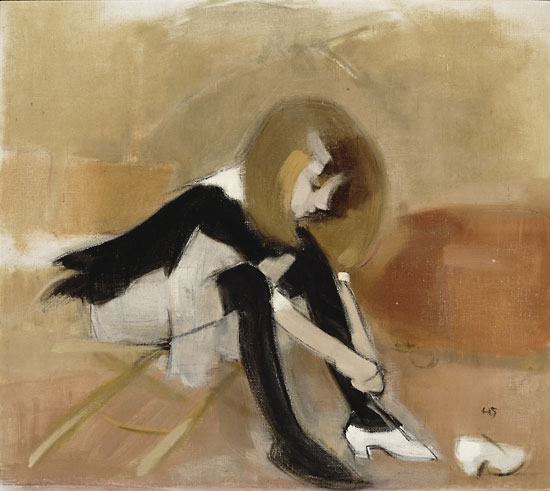
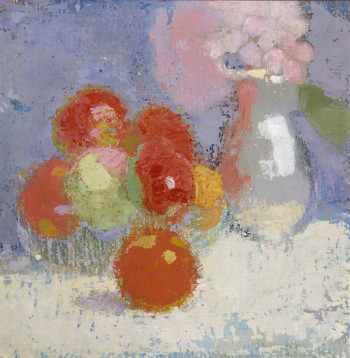
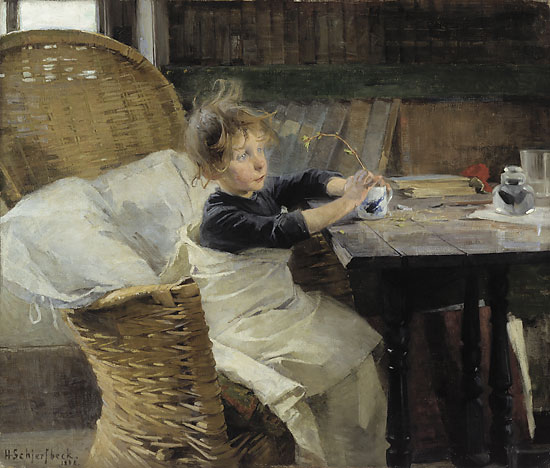
The new extension, added in 1955, contains gallery space and one of the largest Helene Schjerfbeck collections in private ownership. Occasional Sunday concerts are also held there. The upper floor, where the couple’s bedroom and Ane’s study were located, now hosts special exhibitions.

Gyllenberg Art Museum
On the map

Aalto House

4358-alvar-aalto-_550-jpg

Photo: Amanda Soila

The former home and studio of internationally renowned architect and designer Alvar Aalto (1898–1976) offers a treat for anyone interested in his functionalist style or a chance to peek into the life of Finland’s most famous architect. Designed by Aalto himself and built in 1936, Aalto House forms a unique architectural jewel that very few people had the chance to see when he and his family still lived.

The building, located in the Helsinki neighbourhood of Munkkiniemi, opened to the public in 2002 and experiences a constant stream of Finnish and foreign visitors.

The light-bathed atelier and the decor are almost unchanged. The distinct shapes and colours of Aalto vases, lamps and chairs are everywhere, highlighting the cosmopolitan atmosphere.

Aalto House
On the map

Halosenniemi Museum

4358-halosenniemi-3jpg-_550-jpg

Photo: Halosenniemi

The wilderness studio and home of Finnish painter Pekka Halonen (1865–1933) showcases the life and work of this beloved artist of the Golden Era.

Halonen was a master portrayer of Finnish landscapes and people, and looking at the countryside around Lake Tuusula it’s easy to see the source of ideas and inspiration that helped him develop his distinctive style. Halonen himself designed the humble yet graceful timber house that came to be known as Halosenniemi (Halonen Point). Inside, the house is spacious and light, with Halonen’s paintings prominently displayed.

Halosenniemi Museum hosts various theme exhibitions showcasing Halonen’s art side by side with the work of his contemporaries and that of later generations of artists.

The beautiful route along Lake Tuusula used to be a real creative hub, where a number of Halonen’s contemporaries also maintained homes or studios; many of which are open to the public today. The most famous is undoubtedly Ainola, the home of composer Jean Sibelius, situated only a stone’s throw away.

Halosenniemi Museum
On the map

Ainola

4358-ainola_550-jpg

Photo: Ainola

The humble Ainola, home of the great Finnish composer Jean Sibelius (1865–1957) and his family, took many of his famous guests from abroad by surprise – they probably expected a castle. But the quiet house on the scenic shores of Lake Tuusula in Järvenpää gave the composer the peace and quiet he needed for his creative pursuits, far from the diversions of the city, while other artistic families living nearby provided a lively social circle.

Lars Sonck designed the timber-built National Romantic building, where Sibelius composed some of his most important works.

Ainola (open May–Sept)
On the map

Hvitträsk

4358-ruokasali_markku-haverinen-_550-jpg

Photo: Markku Haverinen/Hvitträsk

A grand villa in the National Romantic style, Hvitträsk is the birthplace of many of Helsinki’s architectural treasures. At this location in Kirkkonummi near the Finnish capital, the celebrated trio of architects Herman Gesellius (1874–1916), Armas Lindgren (1874–1929) and Eliel Saarinen (1873–1950) drew up plans for Helsinki Railway Station, the National Museum of Finland and other projects.

Built between 1901 and 1903 out of logs and natural stone, the main building served as both an architectural office and a home. Guests included such esteemed figures as composer Jean Sibelius, artist Akseli Gallen-Kallela and Russian writer Maxim Gorky. Hvitträsk also became the boyhood home of world-famous architect Eero Saarinen, Eliel’s son, who went on to a stellar career, primarily in the US.

Part of Hvitträsk now operates as a museum, preserved in its original National Romantic style with ornamental wall paintings, colourful rugs and carved wooden furniture.

Hvitträsk (closed Jan–Feb)
On the map

Mannerheim Museum

4358-mannerheim-_550-jpg

Photo: Amanda Soila

The former home of Carl Gustaf Emil Mannerheim (1867–1951), who served as military leader and President of Finland, now operates as a museum. It depicts his career and showcases his European and Asian travels and collections of art from significant Finnish painters. Situated in the Kaivopuisto district of Helsinki, the house offers a remarkable sea view.

With the exception of a few rooms converted for exhibition purposes, the home has been preserved in its original state. After the grandeur of the downstairs dining room, sitting room and library and the welcoming cosiness of the guestrooms, the bedroom is surprisingly spartan. It is the room of a soldier, containing only necessities, the view from the window the only visible luxury.

Guided tours of the museum are available in seven languages, providing insight into Mannerheim’s life and Finland’s history.

Mannerheim Museum
On the map

By Amanda Soila