Enhancing energy efforts in Finnish towns

Five pioneering Finnish municipalities have achieved remarkable reductions in greenhouse gas emissions through a five-year project that will now be expanded.

The Carbon Neutral Municipalities (Canemu) Project was launched in 2008, targeting ambitious emission cuts to be achieved through collaboration between local authorities, businesses, researchers and citizens.

The five localities – Kuhmoinen, Mynämäki, Padasjoki, Parikkala and Uusikaupunki – are committed to cut their emissions by 80 percent by 2030, well ahead of Finland’s national and EU targets. “This target is ambitious, but we think it’s quite possible, though many measures will need to be carried out,” says professor Jyri Seppälä of the Finnish Environment Institute, who is coordinating the project.

“We reckon that measures taken by the project’s five forerunner municipalities have already reduced their emissions by more than 10 percent since 2007,” says Seppälä.

Local commitment and creativity
2912-solar-panel_petteri-mantysaari_vastavalo_fi_314855_550px-jpg

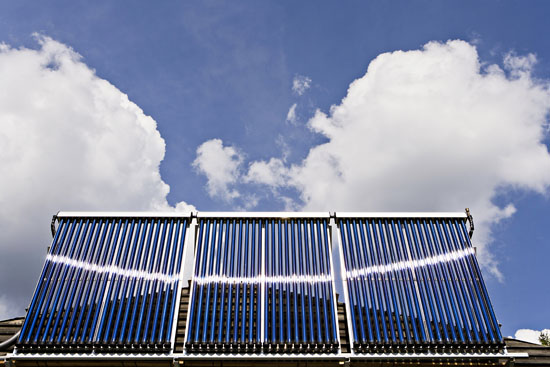
In Canemu municipalities, new holiday homes and homes outside built-up areas are to be fitted with more solar collectors.Photo: Ari Andersin/Vastavalo

Several actions have involved switching local heating schemes from oil to fossil-free biofuels like woodchips. In agricultural areas, woodchips are also increasingly used to heat energy-hungry greenhouses and grain-drying silos. Publicity campaigns have meanwhile helped residents find many ways to reduce emissions from their homes. “We’ve found that households can curb their emissions by 20 percent or more by following such advice,” says Seppälä.

Public funding has been provided to kick-start many of the project’s emission inventories, studies and measures designed to cost-effectively enhance energy efficiency and the use of renewable energy sources. But Seppälä emphasises that local commitment and creativity are crucial.

Initial estimates suggest that the largest Canemu town, Uusikaupunki on the west coast, may have already curbed its emissions by as much as 20 percent. In one imaginative scheme, local firm Sybimar set up an integrated system combining waste-to-energy, greenhouse cultivation, fish farming and the production of biodiesel fuel. Within this closed system wastes, energy and nutrients are all recycled so as to minimise total material use and emissions.

Snowball effect
2912-wood-chips_pekkasakki_lk_550px-jpg

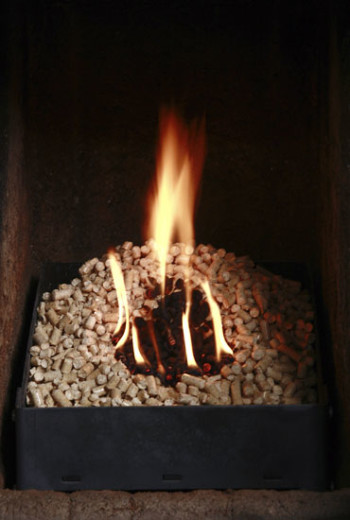
Burning small, pellet-shaped woodchips puts a smaller burden on the environment than using fossil fuels.Photo: Pekka Sakki/Lehtikuva

Seppälä is pleased that other Finnish municipalities have quickly cottoned on to the five pioneer towns’ achievements. “We’re really seeing a snowball effect now!” he says. Five new municipalities have just signed up to join Canemu’s next phase, including Lohja, Raasepori, Hanko and Siuntio – four neighbours with a combined population of almost 100,000 just west of Helsinki. “This will provide a fine showcase for Finnish cleantech expertise,” says Seppälä.

Municipal measures designed to curb local emissions in the transport, building, farming and food sectors are also likely to snowball. New holiday homes and homes outside built-up areas will be fitted with more solar collectors and air- or ground-source heat pumps. The local authorities will promote remote working (telecommuting), and find ways to save energy and reduce waste in municipal kitchens that cater for schools and hospitals. Wind parks are planned in several locations. Projected electrified rail links will also reduce emissions.

“It’s vital to remember that most emission-saving schemes also make sense economically,” adds Seppälä. “No miraculous new technologies are needed – there just has to be the will to see climate-friendly actions through.”

Opportunities from problems
2912-wind-power_ari-andersin_vastavalo_fi_121238_550px-jpg

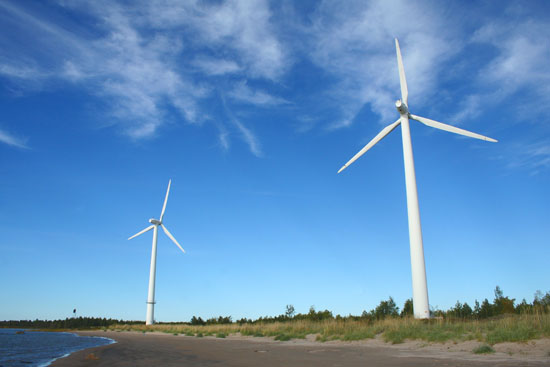
We may soon see more windmills like these, which are located on the Finnish west coast.Photo: Jukka Palm/Vastavalo

Finland’s environment minister Ville Niinistö praises the Canemu Project as an exemplary form of cooperation between the local authorities, private enterprise and citizens.

“This model for reducing emissions should be adopted elsewhere, too, since municipalities and their residents make choices every day that can help us build a green economy,” he says.

Niinistö also emphasises the positive social and economic impacts of such climate-friendly actions: “Through this project municipalities are creating jobs for the future while reducing their emissions.”

“We’re also now expanding the project’s networking forum and open databank to spread good, practical, climate-friendly ideas within Finland and later internationally,” adds Seppälä. “It helps to take a positive approach, seeing the need to mitigate climate change as an opportunity rather than a problem.”

By Fran Weaver, April 2013
Finnish education expertise goes global

A group of organisations in Finland is taking steps to make the country’s much-praised educational expertise into an exportable, global commodity.

The Finns have long prided themselves on their educational expertise, and their well-publicised, stellar results in the Programme for International Student Assessment (PISA) have increased the Finnish educational system’s reputation abroad. A venture called Future Learning Finland (FLF) seeks to export homegrown educational expertise and practices in such a way that the benefits can be utilised in other countries.

Future Learning Finland is coordinated by Finpro, a trade and investment development organisation, and supported by the Ministry of Education and Culture, the Ministry of Employment and Economy and the Ministry for Foreign Affairs. Its 74 members include universities, vocational schools, foundations and associations. Companies are also involved, particularly from educational and ICT fields, and EduCluster Finland, an organisation specialised in creating educational excellence, has a significant role.

Physical and virtual learning

2831-future-learning-_susanna-alatalo_550px-jpg

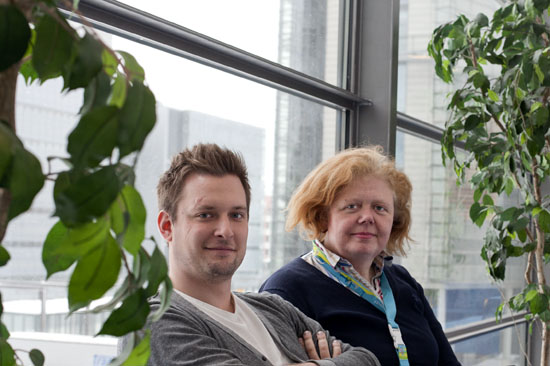
Education ambassadors: Project manager Niko Lindholm (left) and project director Eeva Nuutinen of Finpro are involved in exporting educational expertise.Photo: Susanna Alatalo

“Future Learning Finland was born when a Finnish education export strategy was laid out in 2010,” says Eeva Nuutinen, project director at Finpro. “Finland had done well in PISA, and the objective was to figure out how to commercialise this success. It became evident how much of Finland’s expertise has a lot of market potential.”

“Three years ago education export as an industry did not exist in Finland. It has been established along with this programme.” Nuutinen points out that while education export is mostly associated with degree sales, this does not apply to Finland, so it has had to take a different approach to education export.

So what is this expertise, and more importantly, how can it be exported to other countries? Teacher training, and especially vocational education development, form important aspects, along with ICT and public and private degrees. “We don’t exactly export degrees, but we build and tailor educational entities according to different needs,” says Nuutinen. “Educational consulting also takes place. The educational level and needs of a country or region are evaluated, along with how they could be developed.” Physical and virtual learning environments both enter the picture.

Rapidly transforming societies

2831-future-learning_team-finland_riitta-supperi_550px-jpg

ICT forms one sector that Future Learning Finland seeks to reach when promoting Finnish educational expertise.Photo: Riitta Supperi/Team Finland

FLF is involved in events including forums, seminars and roadshows. They’re important for identifying and reaching certain segments, such as ICT. Local media helps increase visibility. The traffic is two-way: there are delegations visiting Finland as well as Finnish export promotion trips.

Nuutinen describes Saudi Arabia as the most important market region for FLF at the moment. A massive reform taking place there comprises significant investments in education. Finland can have a role to play in sharing expertise in education, but also in educational infrastructure. “They want whole schools, for example,” says Nuutinen. “We have architect agencies in Finland that plan schools and construction companies [to build them]. FLF also has member companies that can provide proper furniture and equipment.”

In addition to the Persian Gulf, Russia, China and possibly Hong Kong are among the regions that interest Finnish education professionals. In February 2013, the annual International Exhibition and Forum for Education (IEFE) took place in Saudi Arabia. It is described by Finpro project manager Niko Lindholm as highly significant in terms of Finnish educational promotion on a large scale. A number of commercial deals were sealed, and Finland enjoyed a highly visible role at the event.

“When the Saudi Arabians began researching where to seek educational expertise as they began their reform, Finland, Singapore and South Korea turned out to be societies that have most rapidly transformed from manufacturing societies into information societies,” Lindholm says.

One of the many FLF member companies that took part in IEFE is 10monkeys.com, an e-company in the field of mathematics. Managing director Katri Björklund describes the event as highly successful on their behalf, as they sealed a deal of with a local agent in Saudi Arabia. “As a small company it was great to have the support an organisation like Future Learning Finland, and to have credibility on our side,” Björklund says.

FLF is set up for three years, after which an evaluation determines whether it continues. “We are in the process of reviewing what Finnish education will look like in 2018,” Nuutinen says. “The industry will hardly have run its course [by then], even if this programme has.” It seems fitting that Future Learning Finland has picked as its motto, “We see brilliant futures.”

By Annika Rautakoura, April 2013

American Finns stretch music traditions

Minnesota-based music duo Kaivama digs up traditional Finnish tunes and puts a fresh spin on them, winning over new fans while exploring Finnish American heritage and building intercontinental connections.

In a bright living room in Minneapolis, Minnesota, the sound of a violin climbs up and down the notes of a buoyant melody. A steady harmonium – an old-fashioned pump organ – breathes out the chords of a dance tune.

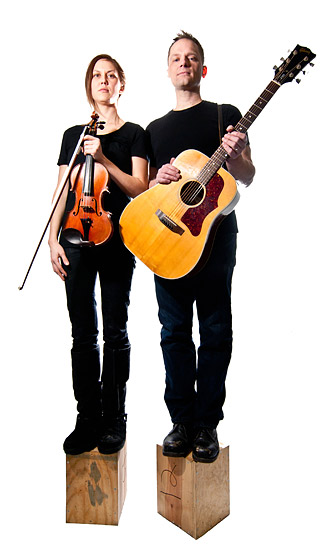
The two musicians are Sara Pajunen and Jonathan Rundman. They started Kaivama, a progressive Finnish American folk band, in 2010. With backgrounds in classical and rock, the duo’s fresh take on traditional music has won them fans both young and old, among Finns and non-Finns alike. A concert tour of Finland is in the works for the future.

“The project is very unique because it’s not only a musical project but an exploration of heritage,” says Pajunen, a 32-year-old fiddle player.

Both Pajunen and Rundman, 41, who plays mandolin, guitar and keyboards, are 75 percent Finnish. They grew up in mining communities with large Finnish populations in the north-central US.

Aggression and ambient beauty

Video: Greta KaulFinnish American duo Kaivama (Sara Pajunen and Jonathan Rundman) show off the tune “Temporary” (“Väliaikainen”). They sing the first verse in Finnish, then continue in English.

Kaivama’s name comes from the Finnish verb kaivaa, meaning “to dig,” suggestive of the duo’s desire to uncover and explore their heritage. They got their start in the summer of 2010, when Pajunen was invited to play a festival and asked Rundman, whom she’d met at a Finnish Christmas carol service, to collaborate.

Their fiddle-heavy tunes – some traditional, others original – are based on Finnish folk music, whose lilting, upbeat schottisches, polskas and mazurkas were popular dances in the late 19th and early 20th centuries. The band began touring across the US, releasing their first album, Kaivama, in 2011.

Though Pajunen and Rundman bring different musical backgrounds to Kaivama, both grew up surrounded by their Finnish heritage. “Finnish American life is just normal in that part of the world,” Rundman says. “My whole high school was filled with Finnish kids and people who could speak Finnish.”

Pajunen, a classically trained violinist who studied in Minneapolis and at the Helsinki Conservatory, was immersed in the Finnish folk tradition from an early age. Rundman had heard Finnish classical and church music, but says that, like most of Kaivama’s audiences, his interest in Finland’s folk tradition is newly sparked. As a rock musician, he finds Finnish music’s rhythmic shifts and driving undertones familiar.

“There’s aggression, and then there’s this sort of pastoral, ambient atmospheric beauty that exists simultaneously,” he says. “The minute I heard Finnish folk music, it was clear to me that this was crossover music. You don’t have to be Finnish to like what Kaivama does.”

Intercontinental bridges

3549-kaivamaboxes_550px-jpg

Listeners on both sides of the Atlantic get caught up in Kaivama’s blend of Finnish and American sounds.Photo courtesy of Kaivama

Kaivama has established firm connections in Finland without ever performing together there. Through family and friends, early demo songs were played on Lira, the Finnish Broadcasting Company’s radio show for traditional music, before the band even played their first concert.

Shortly after the duo formed, Pajunen visited Finland to study with renowned folk fiddler Arto Järvelä. Järvelä expressed interest in collaborating with Kaivama, and in 2011 and 2012, the three musicians toured the US together.

“That really was a boost, because it was super fun and we learned a lot of new material,” Rundman remembers – enough new material to release an album, Arto Järvelä & Kaivama, in 2012.

Järvelä, who comes from a family of famous fiddlers, brings his own musical background to the smörgåsbord, including a direct link back to the roots of the music in the Old World.

“Having Arto play with us brings the real Finnish tradition to what we’re doing,” Pajunen says. “We meld together, and we change a little bit and he changes a little bit, just like any collaboration. He’s the real deal.”

Planning ahead

Pajunen and Rundman are adding a vocal component to Kaivama, singing in both Finnish and English. As for the future, Pajunen hopes to see Kaivama’s debut in Finland soon.

“The Finns might be quite interested in what we do, because [they] have always been interested in the ‘lost Finns,’” Pajunen says, referring to those whose ancestors left Finland long ago for a new life in the US.

By Greta Kaul, April 2013

Finnish National Theatre transcends the language barrier

Performances in the Finnish National Theatre’s iconic building are opening up to non-Finnish speakers as surtitles in English and Russian enter the scene.

Ever since its completion in 1902, the neoromantic Finnish National Theatre (FNT), which stands proudly on Helsinki’s Railway Square, has formed a city landmark and a treasured national monument.

“The rise of the Finnish National Theatre was very much part of the golden age of the Finnish national romantic cultural movement, which promoted the Finnish language and ultimately contributed to Finland’s independence in 1917,” says dramaturge Eva Buchwald, who is responsible for the Finnish National Theatre’s international relations. “For its centenary in 2002, the theatre’s interiors were restored to preserve the look and feel of the turn of the last century.”

However, until now tourists and foreign residents of Helsinki have only rarely visited this atmospheric venue. “We’ve started using surtitles to tap into tourist audiences and meet rising demand from members of Helsinki’s growing English- and Russian-speaking communities, who would be keen to come and see both Finnish and international works,” says Buchwald.

Finnish playwriting boom

|||Photo: Tuomo Manninen

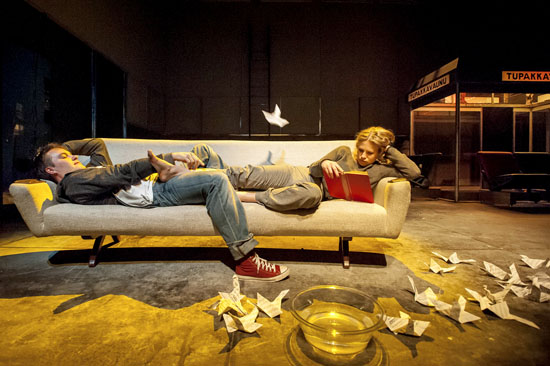
American playwright Sarah Ruhl adds a modern twist to the classical drama of Orpheus in “Eurydice.” Photo: Tuomo Manninen

Buchwald believes that surtitles at Finnish National Theatre will also help promote the export of Finnish plays. “Finnish playwriting is going through a boom, with many strong plays,” she says, “but we need to make our productions more accessible to visitors from international festivals and venues.”

Theatre director Mika Myllyaho is looking for ways to build stronger international links by bringing in touring companies and by taking Finnish plays abroad. There is especially great international interest in the forthcoming dramatisation of Sofi Oksanen’s latest book, When the Doves Disappeared, which runs at the Finnish National Theatre with surtitles from autumn 2013. Oksanen’s previous novel Purge, which started out as a play and was also made into a film, won multiple awards and became one of Finland’s most translated books.

Modern twists on a classical tale

|||Photo: Leena Karppinen

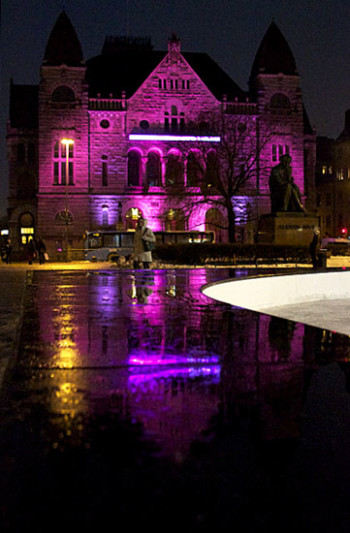
The iconic National Theatre building was in a New Year’s light show. Photo: Leena Karppinen

Eurydice forms the Finnish National Theatre’s first surtitled performance. This popular play by one of America’s leading contemporary playwrights, Sarah Ruhl, gives a modern twist to classical drama by retelling the Greek myth of Orpheus’s journey into the underworld – from his wife’s viewpoint.

“We’re proud that our production has a great, international team with Russian-American director Yana Ross, who is very well known in Europe; young American designer Zane Pihlstrom creating costumes and set; and Lithuanian composer Antanas Jasenka creating the soundscapes,” says Buchwald, as well as a strong Finnish cast.

With so much surreal, surprising and sensual action happening on the stage, non-Finnish-speakers watching Eurydice may have trouble keeping one eye on the bilingual surtitles beamed up on the back of the set. But Buchwald trusts that word of this innovation will get around, bringing more diverse audiences into this grand old Finnish institution.

Puppets, circuses, dance and jazz

Finnish contemporary circus company WHS is one act that non-Finns can enjoy without any translation.

Finnish contemporary circus company WHS is one act that non-Finns can enjoy without any translation.Photo: Tom Hakala

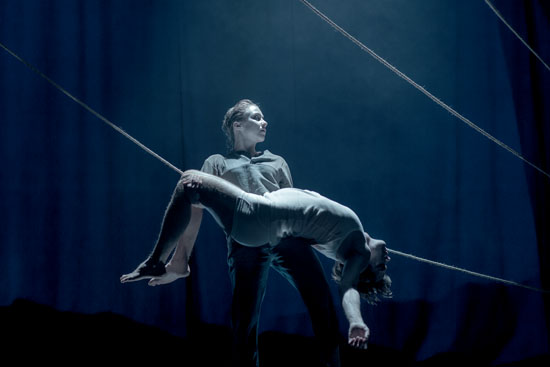
The theatre is also increasingly using its various stage venues to present less verbal artistic performances with appeal to non-Finnish audiences, including puppet theatre shows, Tero Saarinen’s internationally renowned choreography performances (May 2013) and shows by Finnish contemporary circus company WHS (May 2013).

The Finnish National Theatre’s backstage Club Scene venue has meanwhile been revamped to provide an intimate setting for arty events from poetry, photography and drama to jazz and song.

By Fran Weaver, March 2013

Diving for Baltic Sea secrets in Finland

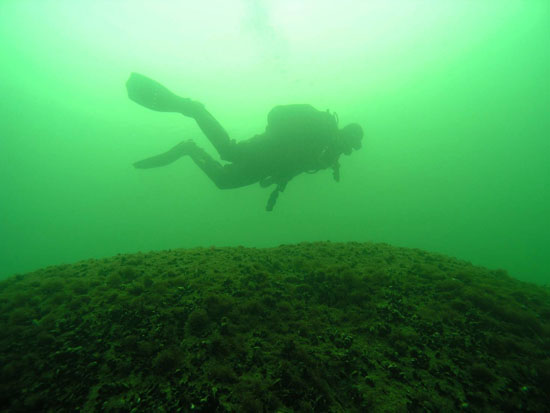
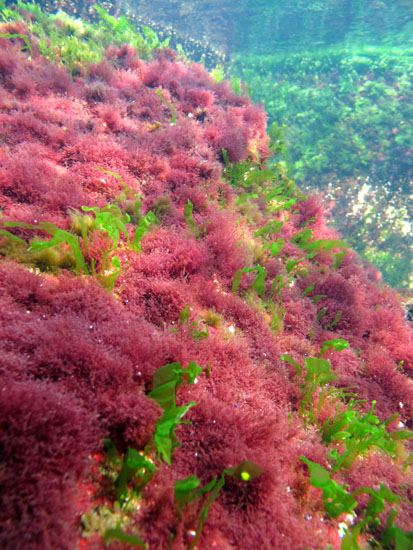
Finnish divers and marine biologists are making exciting new discoveries during the first-ever detailed underwater survey of Finnish marine waters in the Baltic Sea (slideshow below).

The Baltic forms one of the world’s most polluted seas. The Finnish Inventory Programme for the Underwater Marine Environment, a ten-year programme known by its Finnish abbreviation, VELMU, aims to survey marine waters off Finland’s long and intricate coastline all the way from the Gulf of Finland through the beautiful island-dotted Archipelago Sea to the Bothnian Bay in the north.

Excess nutrients from agricultural fertilisers and other sources form the Baltic Sea’s largest problem, but hazardous chemicals can also be found. It is a shallow sea with a slow rate of water replacement via its one entrance to the Atlantic, the strait between Denmark and Sweden. Accurate information about marine life and seabed conditions in the Baltic Sea is urgently needed to ensure that its natural treasures can be protected.

“At the moment big gaps still exist in our maps of the ecology and geology of the Finnish waters of the Baltic,” says marine biologist Essi Keskinen, an experienced diver who is currently working on VELMU for Metsähallitus Natural Heritage Services.

2942-03-velmu_slideshow_lantinensuomenlahti_tvorminne_zoarces-viviparusmats-westerbom550px-jpg

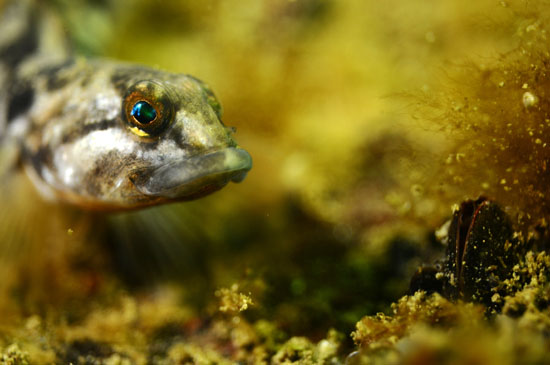
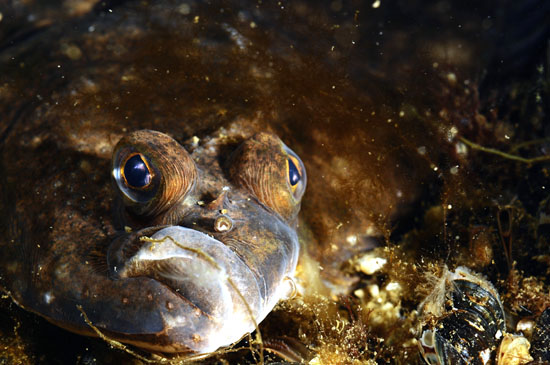
An eelpout seems to make eye contact with the camera. Photo: Mats Westerbom/Metsähallitus

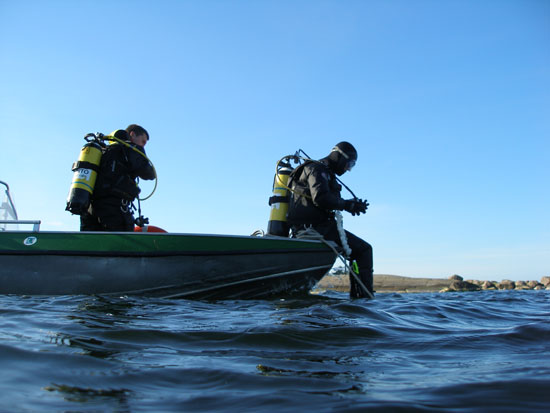
“Diving for long periods in the Baltic can be hard physical work, especially with lots of heavy breathing gear and sampling equipment,” she says. “When we start diving in the spring after the sea-ice melts, the water temperature’s just two degrees Celsius. But I really love doing fieldwork at sea with other enthusiastic biologists and students. We usually make a base on a remote island where we might camp out for a week while diving in nearby waters.”

Submarine surprises

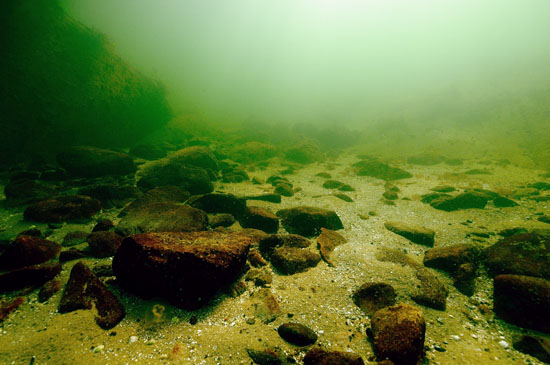
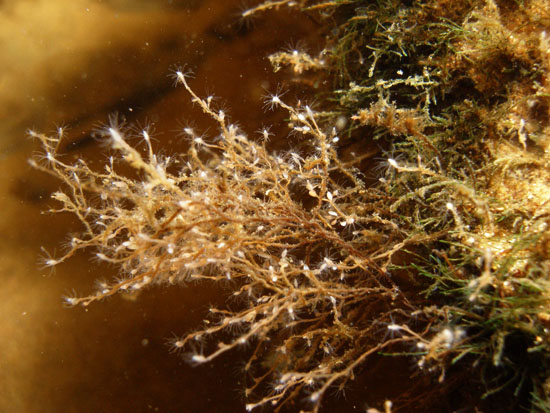
Beneath the waves the divers use pencils and plastic paper pads to note information on water depth, marine life and the ecological and geological features of the sea bed, which might be rocky, sandy, muddy, or covered with lush seaweed growth.

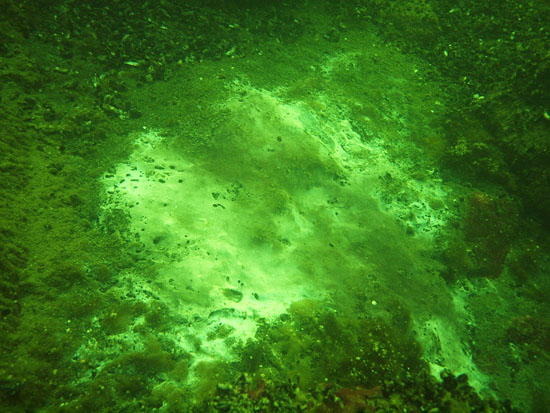
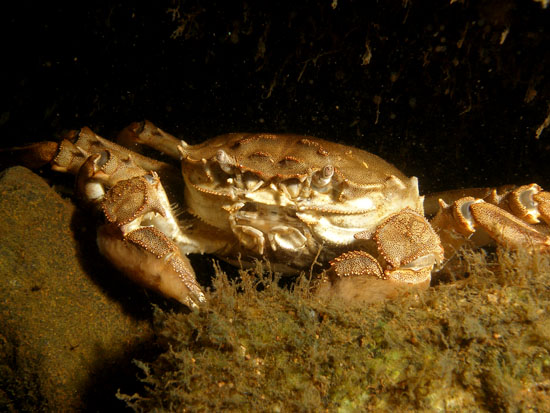
“We note marine plants, algae and any fish or smaller sea creatures that we see – as well as any pollution we might notice,” Keskinen says. “Unfortunately we find all kinds of rubbish underwater, from vodka bottles to car batteries, and even fridges. But it’s always exciting to explore new waters, and sometimes we find very beautiful underwater ecosystems with clear water and many colourful marine plants.”

Positive sea change under way

2942-07-velmu_slideshow_lantinensuomenlahti_hanko_diversitymats-westerbom_550px-jpg

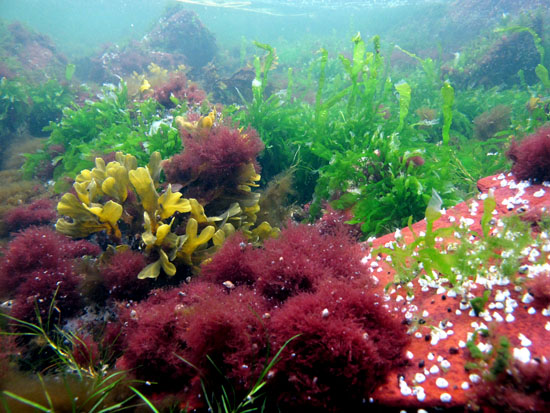
Although some parts of the Baltic can be clouded with algae, there are also areas of clear water and colourful plants.Photo: Mats Westerbom/Metsähallitus

Finland’s marine waters cover more than 50,000 square kilometres, and are up to 100 metres deep. “We can dive down to about 30 metres, but there isn’t much vegetation below ten or 20 metres because so little light penetrates,” says Keskinen. “Though we make wide use of drop videos and aerial surveys, we can’t possibly survey everywhere, so we use modelling to extrapolate data for areas we can’t visit.”

The inventory’s findings have resulted in detailed ecological maps of marine habitats in all Finnish waters. This information can be used to designate areas for conservation, or to control fishing, dredging and the locations of marine infrastructure such as pipelines and wind turbines.

The shallow and sensitive waters of the Baltic Sea have long suffered from pollution. But Keskinen, who has been diving in the Baltic for more than 20 years, is optimistic about the sea’s future prospects: “The situation’s still not good, but I think we’re past the worst of it,” she says. “In the late 1990s and early 2000s, some waters were like a thick porridge of blue-green algae. Measures like the new sewage treatment plants in St Petersburg and a ban on sewage releases from big passenger cruisers are slowly beginning to work.”

Below the surface of the Baltic

By Fran Weaver, April 2013, updated July 2015

In Finland, metal music rocks churches

Finnish heavy metal pioneers such as Nightwish, Apocalyptica and HIM, known worldwide, proved to be inspiring. Since 2006, a priest has regularly organised metal mass – mass for metal music fans – in churches around Finland.

It’s eight o’clock on a cold Saturday night in the southwestern Finnish city of Turku. Several hundred people enter Archangel Michael’s Church to attend a special kind of mass. In this service, a heavy metal band – complete with singer, bassist, drummer, keyboardist and two guitarists – performs the religious hymns.

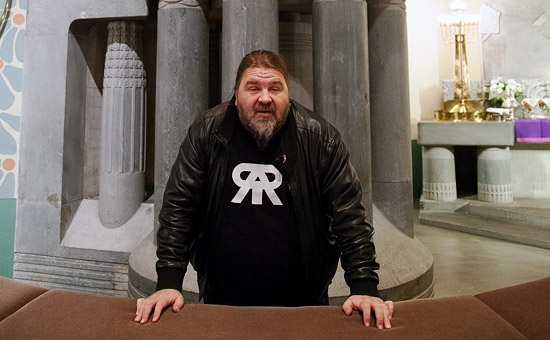
“We didn’t change the lyrics of the hymns,” says Haka Kekäläinen, the 50-year-old priest presiding over the mass. “We only changed the musical arrangements to fit the rhythms of metal music.” He looks exactly like a metalhead: dark hair down to his shoulders, a long beard and – when he isn’t wearing his priestly robes – a leather coat.

This pastor, who belongs to the Evangelical Lutheran Church of Finland, succeeds in combining his passion for God and his taste for metal music by holding “metal masses” at regular intervals.

People of all ages appear in the audience at the Turku church, but surprisingly few are metalheads. “At one of our masses, I noticed that the youngest spectator was two months old,” Kekäläinen says. “The oldest one was 87. We attract a lot of people who are not believers. We show them that it is possible to have fun in church.”

Adventure far from over

3599-metal_mass-1444_550px-jpg

The man behind metal mass: Pastor Haka Kekäläinen combines his love of God with his enthusiasm for heavy metal.Photo: Tim Bird

Mika Mäkinen, a 30-something man with his blond hair in a ponytail, admits he only goes to the metal mass. “This is my ninth time,” he says.

Another man and his spouse, both in their 50s, attend every metal mass held in Turku. “We never listen to metal music. But here, we like the unique and fantastic atmosphere,” they confide.

The first metal mass took place in 2006, in Helsinki’s Temppeliaukio Church. About 1,300 people flocked to the event. “They couldn’t all fit in the church,” remembers Kekäläinen. Since then, the band, whose members are not all believers, has played in 95 metal masses throughout Finland and recorded an album. Its 8,000 copies sold out quickly.

To Kekäläinen, a special relationship exists between metal music and religious hymns. Pointing at his hymnal, he smiles and says, “You know, it contains some very cruel words. It fits with metal music.”

Within the Lutheran Church, the initiative has provoked very little criticism, which is probably due to the popularity of metal music in Finland. The country possesses a large mainstream metal music audience and has given rise to numerous world-famous bands.

The musicians of the metal mass band are not as famous, but they have received invitations to festivals in Sweden, Belgium, Switzerland and Austria. For Kekäläinen, the adventure is far from over. He announces, “In 2014, we want to launch a weekly metal mass in Helsinki. We will probably also record a new album.”

By Pauline Curtet, March 2013

Meals get real at Helsinki preschools

If the City of Helsinki has its way, then 50 percent of the food served in its preschools and daycares will be organic by 2015. We check in on the project.

It’s eight in the morning at Kannel Daycare in northern Helsinki and the children are lining up for a nutritious breakfast that includes some organic ingredients. Bread, cold cuts, fruit, milk and porridge are on the menu; today the porridge – the all-important mainstay of Finnish children’s breakfast – is organic. The meal forms part of a City of Helsinki initiative, introduced in 2011, that maintains an ambitious target of ensuring that 50 percent of the food served in city preschools and daycares is organic by 2015.

The project aims to improve public health by encouraging sustainable consumption habits at an early age and creating awareness among children about the source of their food. The teachers make a point of discussing this with the kids. “We always go through the menu with them before breakfast and lunch. If it includes organic macaroni or organic milk, they are aware of that,” says Outi Anttonen-Abdalla, a preschool teacher at Kannel.

From farm to fork

4127-kannel_piirros_550px-jpg

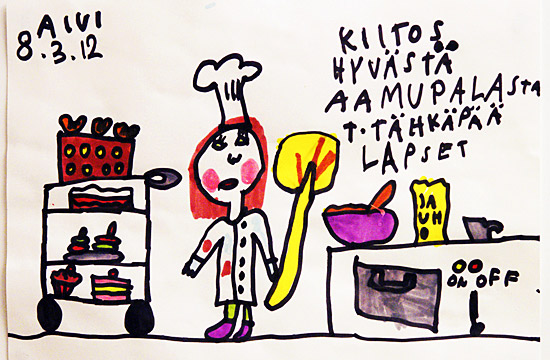
A child at Kannel Daycare drew this picture to thank the cook for a good breakfast.Photo: Leena Karppinen

As people become increasingly conscious about the environment and observe various food-sourcing scandals in Europe, most parents are concerned about the nutrition of their kids’ meals.

Tuuli Rossi, mother of a six-year-old, considers organic and local food the safest bet: “It is usually produced on a smaller scale, probably on a farm close to your home, unlike packaged food, which passes through five or six middlemen before it reaches you. You don’t know what could be in it, and eating organic is one way to prevent that.” The popular sentiment is to find the shortest route from farm to fork. This becomes a matter of finding the right balance between supply and demand.

In the past two years, Helsinki City Council granted 400,000 euros to preschools to include organic ingredients in their meals. Today the meals include 12 to 15 percent organic ingredients, a proportion that is expected to rise further. But shortage of organic raw materials, inadequate supply chain linkages and rising costs are slowing down the organic food consumption’s pace of growth.

Organic farming taking large steps

4127-lautanen_550px-jpg

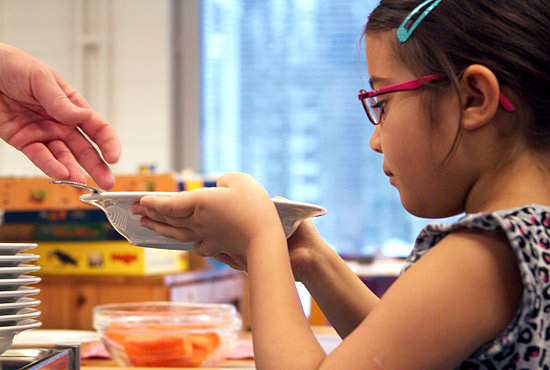
The teachers go through the menu with the kids to increase awareness about the source of their food.Photo: Leena Karppinen

While organic grains, wheat, oats, porridges and pastas are available in abundance, meat, poultry, dairy products, seasonal vegetables and fruits are not. Also, the small package sizes that are available can make organic catering a difficult proposition. “We need large packages of organic ingredients, as we provide food to daycare units with 100 kids or more,” says Aulikki Johansson, director of catering services at Palmia, a company that serves more than 300 daycares and preschools in Helsinki.

According to Finnish food safety agency Evira, 365 new farms were registered in the organic production control system last year, a massive jump from the previous three years. Organic farming currently accounts for nine percent of the total cultivated area in Finland, and the government intends to push that number to 20 percent by 2020, in a project nicknamed Organic 20/2020.

This bodes well for the City of Helsinki and its targets – and also for the children in the Finnish capital’s preschools and daycares.

By Asha Gopalkrishnan, March 2013

Spanish nurses bridge the gap in Finland

A number of Spanish nurses, affected by their country’s financial woes, are choosing to apply for positions at Finnish healthcare services. They’re settling in well and are proving adept at bridging the language gap.

“The problem is not the language,” explains Irene Trigo, a qualified nurse from Haro, Spain. “If you really want to communicate with someone, you do!” In autumn 2012, she moved to Finland from her town in the Rioja region, known for its fine red wine.

Her colleague Ander Velado, also a qualified nurse, arrived with her and doesn’t think Finnish is such a difficult language. His mother tongue is Basque, spoken in the northern region of Spain.

“The Basque language also has declensions, like Finnish does,” says Velado. “So in that way, Finnish grammar is actually quite familiar to me.” Northern Spain was the focus for recruiting nurses, since it and Finland share significant aspects related to cultural adjustment: bilingualism and cold winter weather, though the latter is not on the same scale as in Finland.

Big step

|||Photo courtesy of A. Velado and I. Trigo

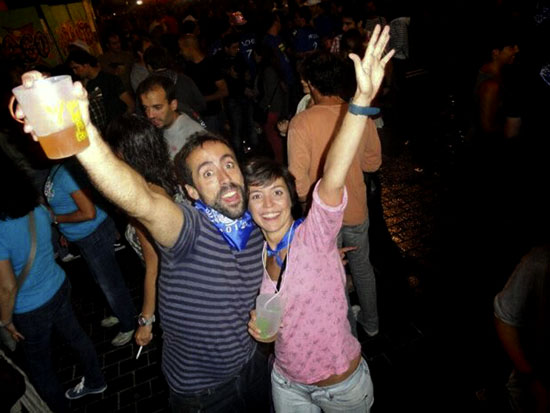
Nurses Ander Velado (left) and Irene Trigo were in a celebratory mood after receiving job offers from Finland. Photo courtesy of A. Velado and I. Trigo

After a long period of unemployment and temporary contracts, Trigo and Velado sent their job applications to Finland, which is experiencing a shortage of qualified nursing staff. They were two of the lucky ones – out of about 2,000 applicants, only around 60 were accepted.

Before their arrival to Finland they underwent a four-month crash course in Finnish language and culture. “I was studying Finnish 12 hours a week,” says Trigo. “It was quite intense. But the truth is that I didn’t use to know anything about Finland, except that it always achieves high scores in the PISA tests [the global Programme for International Student Assessment].”

The decision about how to travel to Finland was taken after a couple of beers. “One night at a bar in Bilbao, Irene told me that she was planning to go to Finland by car, and I just said ‘I’ll join you!’” Three thousand kilometres and two ferries later, they were in Finland.

“The trip was special,” Velado says. “We had four days to think about this big step we were taking. Going to an unknown country makes you think. We felt happy and a bit nervous at the same time.”

Getting settled

|||Photo courtesy of A. Velado and I. Trigo

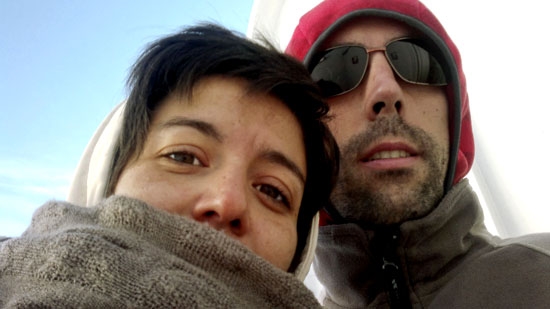
Trigo (left) and Velado are clearly enjoying life in Finland. Photo courtesy of A. Velado and I. Trigo

Trigo was assigned to work as an auxiliary nurse in an old people’s home in the community of Honkajoki. “Since the very beginning, I was excited about coming to Finland,” Trigo says. “Now I have my own apartment and a job that I enjoy! It’s great!”

Velado was assigned to the city of Pori, about 60 kilometres from Honkajoki, where he is also working with the elderly. “We are scattered around the country, but I try to keep in contact with the others that live nearby,” Velado explains.

Initially, all the Spanish nurses are working as auxiliary nurses until they are able to master the language. “We try to speak Finnish to the patients, and if we can’t manage we ask one of the employees for help,” Trigo says. “Both staff and patients are always willing to help – to start with they are shy, but in the end they are very friendly. Obviously we cannot work as nurses yet. I guess it’ll take a year or so.”

Velado, Trigo and their colleagues continue studying Finnish every week. The idea behind the recruitment of Spanish nurses is to try to ease the shortage of nurses in Finland, especially within elderly care. At the same time it may help alleviate Spain’s pervasive unemployment problem.

Velado explains that with Spain’s current economic crisis, Finland offers better living conditions, and that salaries for both qualified nurses and auxiliary nurses are higher than in Spain. However, no matter where you come from or where you travel, it always seems like some things are better back home. “I definitely prefer Mediterranean food to Finnish food,” Velado says.

By Carina Chela, February 2013