Photographer speaks fluent Finglish

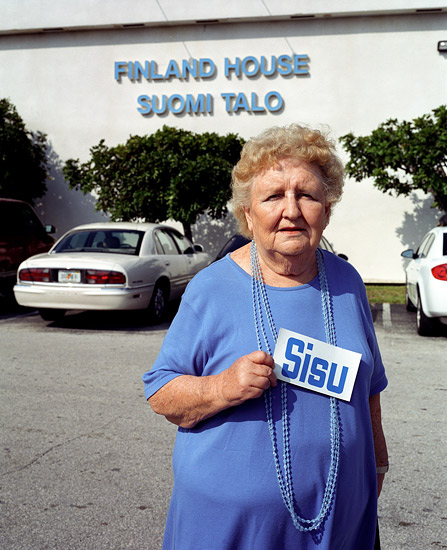
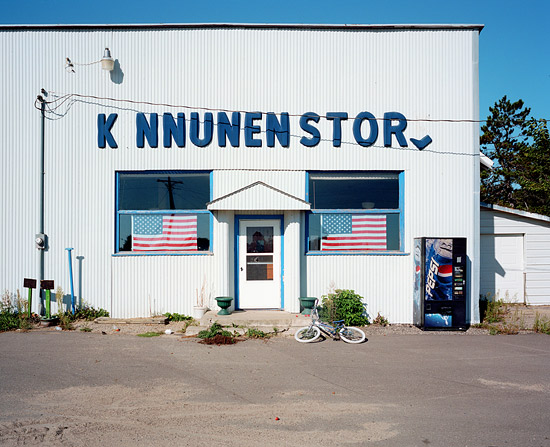
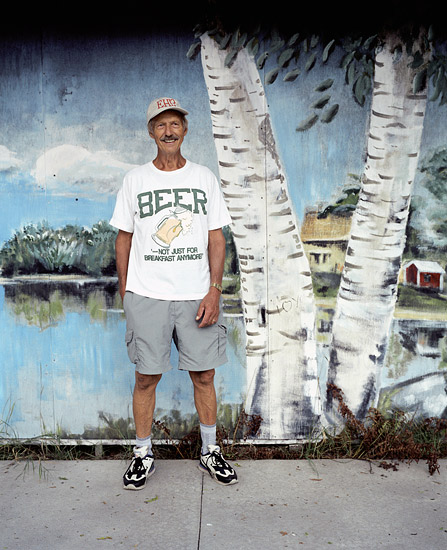
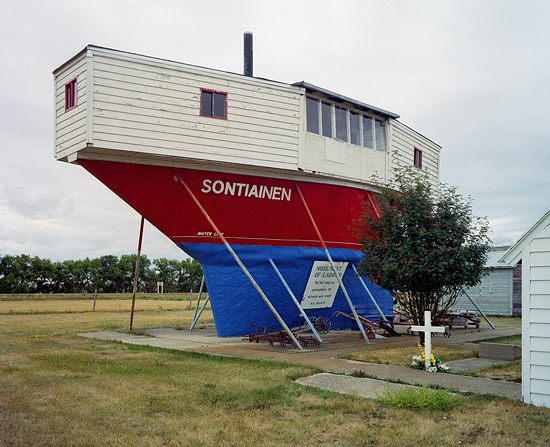
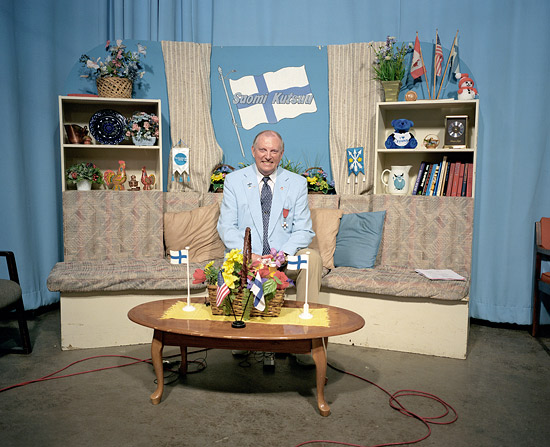
Photographer Vesa Oja drove thousands of miles to take pictures of Finnish Americans and Finnish Canadians. The results went on display at the Finnish Museum of Photography in an exhibition that ended in July 2013, but luckily you can still catch them in the slideshow and video below.

In the late 1800s and early 1900s, hundreds of thousands of Finns crossed the Atlantic in search of opportunity. Today their nearly 800,000 descendants live all over North America. Some of them still speak Finnish, some can talk Finglish (Finnish with English words mixed in) and some know key terms like sisu, an untranslatable Finnish word that refers to a special combination of courage and perseverance.

Finnish heritage appears in many forms: Finnish flags, national costumes and ornaments decorate houses, and from time to time the aroma of freshly baked pulla (cinnamon buns) or karjalanpiirakka (Karelian pies) fills the air as new generations learn to make traditional Finnish pastries. Photographer Vesa Oja’s uncle Eino moved from Riihimäki, Finland to Canada in 1928. Years later Oja followed in his footsteps, visiting North America in 2004 and many times since then.

Watch Vesa Oja describe his work in this trailer for Jenni Stammeier’s short film, which traces the photographer’s steps in North America.

He has driven tens of thousands of kilometres and photographed hundreds of Finnish Americans and Finnish Canadians, portraying the dreams, utopias and homesickness of immigrants and their descendants. He has become familiar with the Great Lakes region, FinnFest, neighbourhoods nicknamed Finntowns and villages with Finnish names such as Kaleva (after the Finnish national epic Kalevala), Toivola (meaning “Place of Hope”) and Onnela (“Place of Happiness”).

Finglish – Portraits from Finnish North America

Photos by Vesa Oja
Text by Leena Karppinen, updated March 2014

Free to explore Finland’s great outdoors

Everyone has the right to roam Finland’s forests and countryside freely, no matter who owns the land, thanks to a legal concept, unique to the Nordic countries, known as every person’s right.

Every person’s right enables Finns and foreigners alike to explore Finland’s famous forests, fells and lakes – and also freely collect natural products like tasty wild berries and mushrooms, even where they grow in privately owned forests.

“The legal concept [of every person’s right] has developed over many generations,” explains legal expert Anne Rautiainen from the Outdoors Association of Finland. “It’s not enshrined in any single law, though its scope is well defined in many pieces of legislation on different issues.

“The fundamental idea behind [every person’s right] is to enable everyone to freely enjoy outdoor activities that have always been popular in Finland, like walking and skiing in the forest, boating, swimming, and picking mushrooms and berries.”

With rights come responsibilities

2943-everymans-right_08_visitfinland_550px-jpg

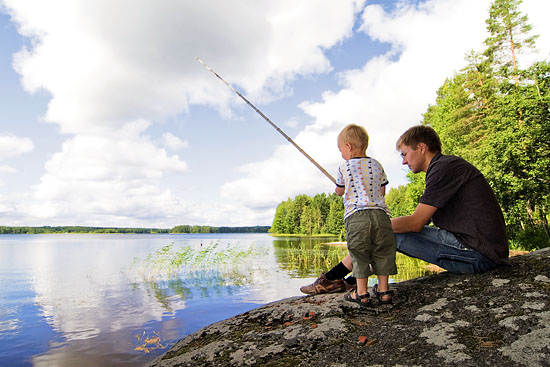
You don’t need a permit to fish with a simple hook and line in Finnish waters, although a permit is required for other kinds of fishing.Photo: Visit Finland

Every person’s right “gives everyone access to about 90 percent of the land, making Finland a truly free country,” says Ville Niinistö, who was environment minister at the time of writing. “We must cherish this fine Finnish legal tradition, but of course we also have to behave responsibly when using these rights. It’s important for everyone to learn how they work, including new generations of urban children, as well as immigrants and tourists who may not be used to such rights.”

Places where rights of access are limited include the gardens of private homes, fields where crops are growing, some nature reserves, industrial areas, military areas and a narrow zone along the Finnish-Russian frontier. Every person’s right does not allow the use of motor vehicles off road. It only covers fishing with a simple rod and line (to fish with nets, traps or a reel and lure, you need permits). For some activities, such as hunting or lighting campfires, the landowners’ permission is always required.

Grey areas

2943-everymans-right_06_visitfinland_550px-jpg

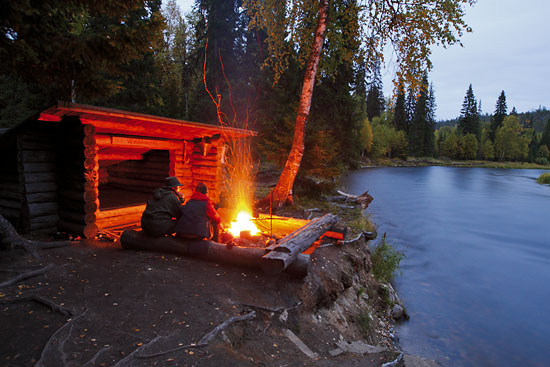
A campfire warms hikers on the banks of Kitkajoki, a river near Kuusamo in northeastern Finland.Photo: Visit Finland

On some issues, the legal definitions related to every person’s right are purposefully unclear. Hikers can freely camp out “temporarily” in unprotected natural areas. On someone else’s land you may not cause “unreasonable disturbance” or “significant damage.”

Anne Rautiainen explains that this is to allow for common sense and flexibility in the application of the rules. “Considering how near you may go to someone’s home, for instance, no specific distance is defined, because circumstances differ in remote or more built-up areas,” she says. “This usually works well in practice, since Finnish people generally have a good instinctive sense of what will disturb someone else.”

Rautiainen recently led a team of experts commissioned to compile a weighty official handbook explaining the scope of every person’s right in exhaustive detail. “We hope this new handbook will clarify issues and prevent possible conflicts,” she says. “But compiling it was much more complicated than we’d expected. We had to consult many lawyers; national and local authorities; and organisations including nature conservationists and landowners’ interest groups.”

Unique Nordic cultural heritage

2943-everymans-right_04_visitfinland_550px-jpg

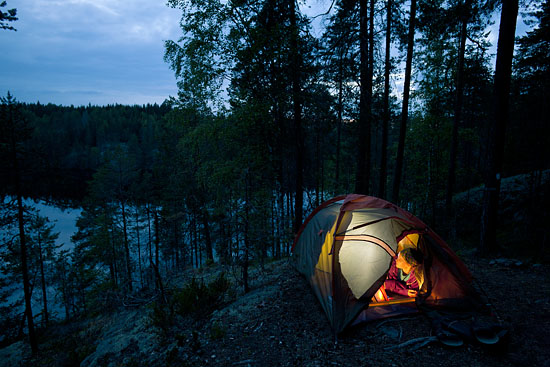
Summer nights: Hikers can freely pitch their tents in unprotected natural areas across Finland.Photo: Elina Sirparanta/Visit Finland

The thinking behind every person’s right means that, across Finland, outdoor recreational activities are essentially allowed wherever they are not specifically prohibited – whereas in most countries they are prohibited wherever they are not explicitly allowed.

Finland’s every person’s right and similar rights enjoyed in Norway and Sweden are so unique globally that they have been suggested for inclusion in Unesco’s World Intangible Cultural Heritage List. This eclectic list includes such cultural treasures as Finnish sauna culture, French cuisine, Argentinean tango and traditional Persian carpet-weaving.

“Here in Finland we sometimes take [every person’s right] for granted,” says Rautiainen. “This international publicity could increase our appreciation of these freedoms. It could also help tourists realise what wonderful opportunities they have here to get off the beaten track into the wild and freely enjoy our beautiful natural scenery.”

By Fran Weaver, June 2013, updated April 2021

The best things in Helsinki are absolutely free

Travelling on a shoestring budget? Want to see everything there is to see in Helsinki? Here are some tips to check out.

Helsinki is full of free performances, from concerts and stand-up comedy to theatres and clubs. Almost all museums offer free entry at certain times on certain weekdays. Churches are always available to admire both inside and out without spending a cent. You will not want to miss the Lutheran Cathedral, located on Senate Square.

(Temppeliaukio Church, in the district of Töölö, is another favourite, but since this article was originally published, it has introduced an admission charge of four euros per person. That hasn’t stopped people from visiting, though. It’s called the rock church – you’ll see why when you get there.)

Relaxed atmosphere

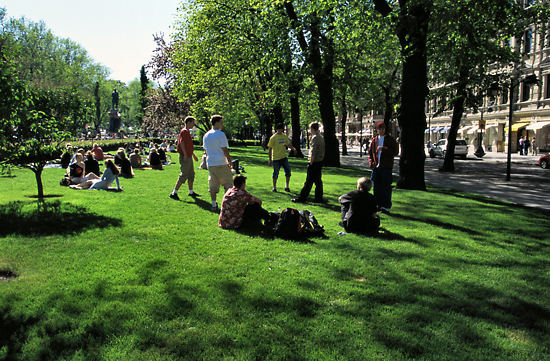
People picnicking on the lawn in Helsinki Esplanade park.

Helsinkians in their native environment, hanging out in Esplanade Park.Photo: Jiang Ping/FTB

The best thing about the city is its friendly and relaxed atmosphere. Its parks are excellent for eating a picnic lunch and listening to music. The Esplanade, in the very centre of the city, is favoured by tourists and locals alike, and the Esplanade bandstand at the eastern end of the park features every imaginable kind of concert and performance on a daily basis during the summer months. Alppi Park, right next to Linnanmäki Amusement Park, is also a recommended venue for music, dance and theatre at weekends. Linnanmäki, on the other hand, is a great locale for snapping a few photos of the Helsinki skyline, as admission to the park and its 53-metre (174-foot) Panoraama viewing tower are free. Linnanmäki also has some free rides for kids.

Suomenlinna, a Unesco World Heritage Site located on a group of islands off Helsinki, forms one of the largest sea fortresses in the world. Take the ferry to this wonderful medley of seascapes, terraces and restaurants. (OK, you got us – the ferry to Suomenlinna is not free. But if you catch the Helsinki Region Transport ferry, you can get there for the price of a bus ticket.) Wander along twisting cobblestone paths and venture into the tunnels under the fortress walls.

Seurasaari Open-Air Museum also provides a great setting for an evening stroll through history. This small island is filled with idyllic Finnish buildings covering historical periods from the end of 1600s to the 20th century.

Or fancy wandering in the famous Finnish woods? Helsinki’s Central Park is the place to go to if you want to enjoy the peace and fresh air of a forest.

Different sides of the city

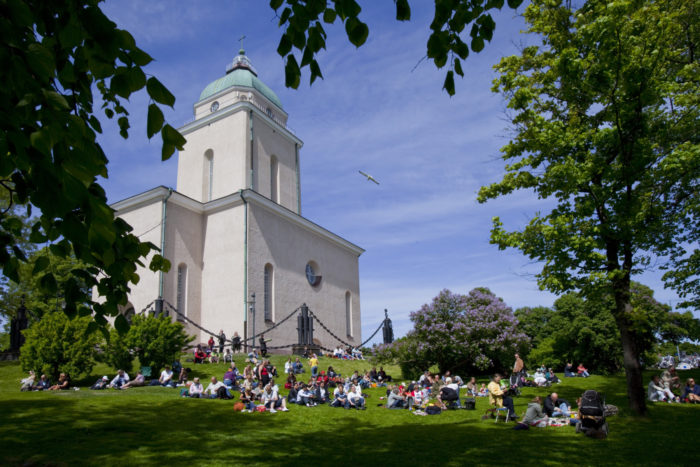
People picnicking on the lawn in front of Helsinki’s Suomenlinna Church and its tower.

Suomenlinna, an island fortress off the coast of Helsinki and a Unesco World Heritage Site, is home to a church with a tower that doubles as a lighthouse.Photo: Visit Finland

Helsinki boasts a wealth of nightlife. Most clubs require an entrance fee, but there are places with free entry too, especially on weekday nights. Pubs generally do not have entry fees.

You might also consider a moonlight swim at Hietaniemi Beach – or perhaps a sunlight swim would be a more appropriate term, since it never really gets dark at night during summer in Finland.

Helsinki is a beautiful city with influences from several different cultures. Cultural history and architecture buffs will find it worthwhile to look around neighbourhoods with very different characters. Kallio is a favourite with artists and students. The lovely villas by the sea around the waterside park Kaivopuisto are also worth a visit, as are the walking paths around Töölö Bay. Every tourist coach makes a mandatory stop at Sibelius Park, where visitors can admire the sprawling metallic monument dedicated to Finland’s most famous composer.

On top of all this, Helsinki has a reputation as a prestigious design city. Doing some window-shopping around the Helsinki Design District is a great way to spend an afternoon. There is plenty to do without spending money.

Note: Some of the destinations are more easily accessible by public transportation, which costs a couple of euros. 

Note: Museums and other locations may have restrictions because of the coronavirus situation. The info here is up to date as of June 2020, when museums began to open, and we will try to keep it current. Please check the museum’s own webpages, too. 

 Free entry hours at museums in Helsinki

Helsinki Art Museum (HAM) always offers some free-of-charge exhibitions.
Most museums open their doors for free on Night of the Arts Next Night of the Arts is in August 2021
Free at certain times
Finnish Museum of Natural History 10:00 am–5:00 pm (on the first Friday of every other month)
*Free Fridays currently suspended due to coronavirus (as of June 2020)
Kiasma Museum of Contemporary Art 11:00 am–6:00 pm (on the first Friday of the month)
Museum of Finnish Architecture 11:00 am–6:00 pm (on the first Friday of the month)
National Museum of Finland 4:00–6:00 pm (every Friday)
Museum of Technology 11:00 am – 7:00 pm (every Thursday)
Finnish Museum of Photography 5:00–8:00 pm  (on the last Wednesday of the month)
*Museum closed due to coronavirus situation (as of June 2020)
Sinebrychoff Art Museum 5:00-8:00 pm (on the first Wednesday of the month)
*Free Wednesdays suspended for the summer 2020
Always free
Helsinki City Museum Monday–Friday 11:00 am–7:00 pm
Saturday–Sunday 11:00 am–5:00 pm
Tram Museum Monday–Sunday 11:00 am–5:00 pm
Burgher’s House Museum Wednesday–Sunday 11:00 am–5:00 pm
*Museum closed due to coronavirus situation (as of June 2020)
Päivälehti Museum (the history of journalism and printing techniques) Monday–Sunday 11:00 am–5:00 pm
 Bank of Finland Museum Tuesday–Friday 11:00 am–5:00 pm
Saturday–Sunday 11:00 am–4:00 pm
*Museum closed for the summer 2020
House Museum of Paul and Fanny Sinebrychoff Tuesday–Friday 11:00 am–6:00 pm
Saturday–Sunday 10:00 am–5:00 pm
*Most museums offer free entry to under 18-year-olds

By Jemina Juuti, updated June 2020

Finland’s superwoman of glass art

One of Finland’s most unique and successful glass artists, Anu Penttinen lives in a tiny, picturesque village, but she finds inspiration in street maps, man-made environments, cityscapes and urban details – not the usual ingredients of Finnish glass design.

Penttinen has exhibited her eye-catching glass art throughout the world, including the US, Japan, Germany, Italy, New Zealand, Great Britain and Australia. She also has her own shop, Nounou, in the downtown Helsinki neighbourhood of Punavuori, but lives in Nuutajärvi, a village located 150 kilometres (93 miles) northwest of the capital and known for its glassworks and glass artists.

“I like the process of glassblowing,” she says. “It is immediate, and you have to make quick decisions. I like how the hot glass behaves – it has its own personality. However, it’s not an easy material at all, and that’s why it keeps me interested.”

Lively colours and strong patterns play
2684-anu_penttinen_550px-jpg

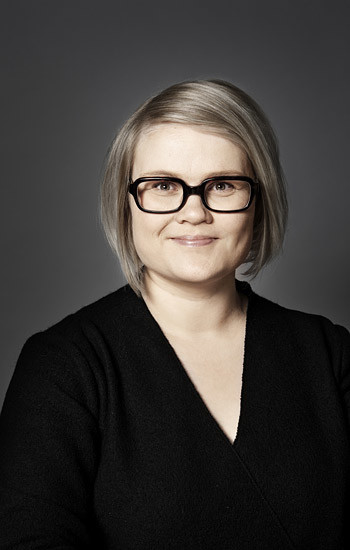
“Glass is more like a lifestyle than just a job,” says Anu Penttinen.Photo by Timo Junttila/Iittala

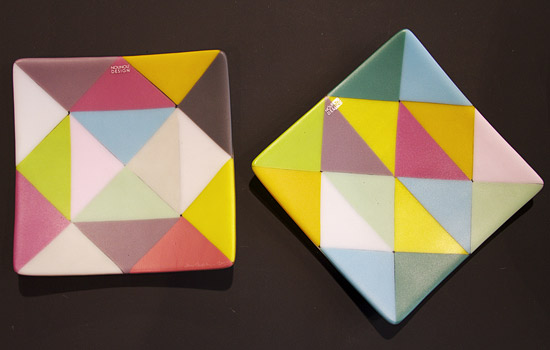
The most important element of her design nowadays is colour. For about a decade, she used only black and white. Then she started to integrate more colour. “It’s really challenging,” she says. “But at the same time, it’s interesting to come up with colour combinations that work well with the patterns that I use. It is never just one or the other – it’s colour with pattern.”

Penttinen works with glassblowing, kiln-forming and cold-working techniques, creating a wide selection of glass objects, from small boxes to lamps, glass birds and unique pieces of art. She is exploring the relatively new roll-up technique, where sheets of glass are fused, rolled to form a cylinder and then blown into a shape.

“It is an interesting technique, and the most important one for me at the moment, because I can do things now that weren’t possible before,” she explains.

Finland made its entry onto the international stage of glass design in the mid-1930s and has since soared from one success to another with such dominating figures as Alvar Aalto, Tapio Wirkkala, Kaj Franck, Nanny Still, Timo Sarpaneva and Oiva Toikka, to name just a few. For the designers of the present generation it has not been easy to get out from under their predecessors’ shadow, but glass artists such as Harry Koskinen, Markku Salo, Hans-Christian Berg and Anu Penttinen are now household names in Finland and abroad.

Making a living from glass
2684-penttinen_lautaset_leena_55-jpg

The combination of colour and pattern play the key role in Penttinen’s design today.Photo: Leena Karppinen

“Nowadays, it’s increasingly common for the glass artists to make their own work,” says Penttinen. “In the old days, none of the glass artists in Finland actually knew how to blow glass. And then again, there are many industrial glass designers today who don’t know how to use glass.

“Nowadays if you actually want to make a living from glass, and you make your own pieces with your own two hands, it is quite difficult to get it out there, to get the recognition. It is quite a new idea for people that you can actually make your own glass objects because in the old days they were just made in the factory.”

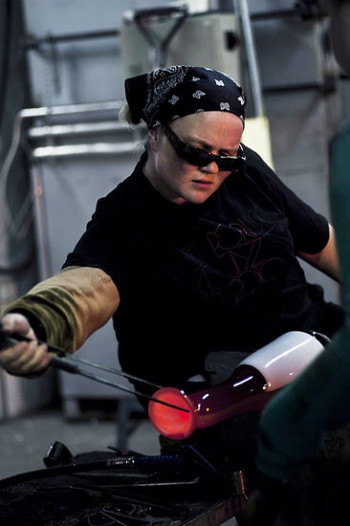
Glassblowing, a physically demanding process with its hot kilns and toxic chemicals, used to be a male domain. But no more.

220 years of Nuutajärvi
2684-anu-penttinen_550px-jpg

The younger generation of glass artists do their own glassblowing, coaxing the material into divulging its secrets.Photo courtesy of Anu Penttinen

Penttinen was born in Helsinki but has been living for years in Nuutajärvi, a village that she describes as “a quiet place with a long history of glass making.”

“Nuutajärvi means a lot to me,” she says. “It’s a very good place to work and live, because glass is more like a lifestyle than just a job,” says Penttinen, who lives in the former home of Kaj Franck, one of the leading figures of Finnish design.

“There’s a special flair in the village, and that also means something to others who use the same material as I do, and think the way that I do.”

The town, the like-minded people there, and the surrounding nature serve primarily as resting points, rather than sources of inspiration. “It’s not as if I ever bring nature into my work, because my work is mainly inspired by big cities and details in the cityscape. But the environment here just makes it easier to be a glass artist.”

Nuutajärvi is populated by some of the finest glassblowers in the country. There are also artists, as well as students of glass design and glassblowing. About ten independent glass artists live and work here in their own studios and hot shops. The glassworks, which belong to the design label Iittala, celebrates its 220-year jubilee in 2013 – but Iittala is moving glass-art production to its main factory in 2014.

However, Penttinen emphasises, “This doesn’t mean that the village is closing down. It could be even something positive. It does not affect the village or the tourism. We artists have our own workshops and studios here. The designers here all have close ties to Iittala, and that will continue, just that production will move to another place.”

By Rebecca Libermann, May 2013
Finnish Nature Centre offers walk on the wild side

The Finnish Nature Centre Haltia, on the fringes of beautiful Nuuksio National Park, showcases modern ecological wooden construction techniques as well as Finland’s natural treasures.

Opened in summer 2013, the Finnish Nature Centre Haltia provides an attractive window into wild Finland just 25 kilometres (15 miles) from downtown Helsinki. The centre’s main exhibition features superb images of wildlife, landscapes and natural phenomena from around the country – and especially from Finland’s 37 national parks.

Haltia managing director Timo Kukko explains that the centre seeks to awaken visitors’ interest in nature by presenting the kinds of sights, sounds and feelings they can enjoy in Finland’s great outdoors. The exhibition uses modern experiential audiovisual techniques instead of dusty stuffed animals or dry lists of facts.

Haltia has become a major attraction for nature-loving tourists visiting the Finnish capital. “The exhibits have been planned to provide them with a memorable introduction to our natural treasures,” says Kukko.

Green building in a green setting

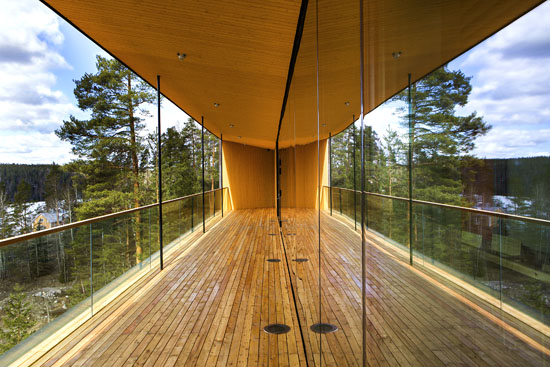
2959-luontokeskushaltian-terassi_paavo-lehtonen_550px-jpg

A balcony of the ecologically constructed Haltia Finnish Nature Centre offers a view of the surrounding forest and a lake.Photo: Paavo Lehtonen/Haltia

As befits a building that showcases nature and is located in a splendid setting on a rocky slope overlooking a lake, Haltia utilises the ecological benefits of innovative timber construction techniques. “Solar panels, ground-source heat, waste-heat reclamation systems and modern energy-saving technologies make the building 75 percent energy-self-sufficient,” says Kukko.

Haltia is the first major public building in Finland to be constructed completely from cross-laminated timber elements. These robust elements are largely clad with Finnish spruce wood – dark brown on the exterior but light inside, just like a tree. Strategically sited windows and balconies offer enticing views of the lake and the surrounding pinewoods and birch groves from the centre’s exhibition rooms, restaurant, meeting spaces and nature classrooms.

The roof of the building is literally green, covered with plants that will soak up carbon, sunlight and rainwater. Swallows are already preparing to nest in Haltia’s wooden observation tower – as if to show that nature approves of its own celebratory monument.

Sitting duck design

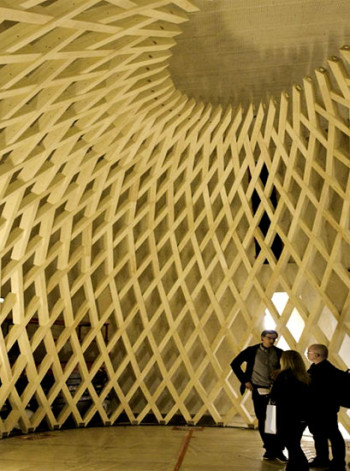
2959-haltia_sotkan-muna_aura-piha_metsahallitus_550px-jpg

A wooden structure shaped like an egg, shown here during construction, houses unique artwork in one of Haltia’s exhibition spaces.Photo: Aura Piha/Metsähallitus

The oval shape of the building and its top-heavy viewing tower make it resemble a duck sitting on her nest and looking towards the lake. “One theme we wanted for the combined design of the building and its main exhibition is a link to Finnish mythology,” says architect Rainer Mahlamäki. “People have always loved stories, and we want to retell the creation myth from our national folk epic Kalevala, where the whole universe hatches from the egg of a goldeneye duck.”

In one corner of the main exhibition space stands a huge, wooden, latticed structure shaped like an egg. This giant egg houses a unique artwork, The Game of Life, created by Finnish artist Osmo Rauhala, in which two swans play chess surrounded by ever-changing kaleidoscopic images reflected in mobile mirrors.

Another permanent exhibition at Haltia features wild attractions within easy reach of Helsinki, aiming to encourage city-dwellers and Helsinki’s foreign visitors to get out and explore. The centre’s staff can provide plenty of tips about what to see and do, both in the immediate surroundings and across the country.

After absorbing Haltia’s exhibitions, adventurous visitors can head straight down to the lakeshore to rent rowboats or canoes, or follow tempting trails leading towards the deep green forests and secluded lakes of nearby Nuuksio National Park. The park is home to woodland wildlife, from owls, woodpeckers and hawks to mighty moose, elusive lynxes and the rare flying squirrel.

By Fran Weaver, May 2013, updated April 2020

Crowdfunding with a Finnish sensibility

As the popularity of crowdfunding takes off around the globe, the Finns are bringing their own unique, innovative worldview to it.

Within 24 hours of announcing their business plans, the creators of Mesenaatti.me had 1,700 “likes” on Facebook. That first night, 40 people formally contacted them, asking to become clients. If wanted an indication of the public’s appetite for a crowdfunding platform in Finland, they just received good news.

“We all thought the response was great,” says Pauliina Seppälä of Mesenaatti.me. “We expected it, because the concept is so wonderful and liberating.”

Crowdfunding refers to the collective effort of individuals who pool their money to support projects or individuals. It is used for a huge variety of goals, and has helped to fund artists, scientists, charities and small businesses. Those who fund a campaign are compensated through rewards that are unique to that project.

Although crowdfunding can be used for practically any fundraising purpose, it is often applied to projects with altruistic ideals. The founders of Mesenaatti.me explicitly draw attention to this.

“We want to make sure we benefit the Finnish culture, society and economy,” explains Seppälä. “We don’t take on projects that do not somehow add to the common good, like a new innovation or work of art.”

Openness wins people over

2413-crowdfunding_lk_kimmo-mantyla_550px-jpg

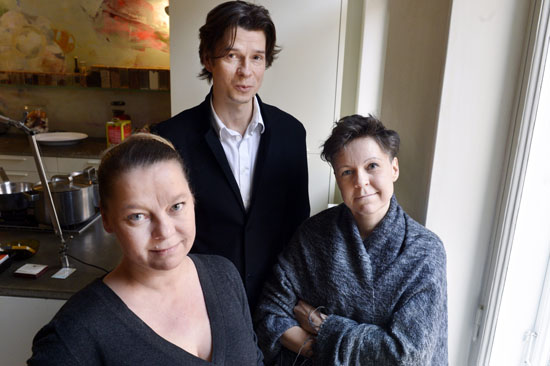
Pauliina Seppälä (right) of crowdfunding platform Mesenaatti.me, with colleagues Marko Tanninen (centre) and Tanja Jänicke, says their projects add to the common good.Photo: Kimmo Mäntylä/Lehtikuva

One of the pilot projects on Mesenaatti.me was Huili, the first ecological lifestyle magazine in Finland. The young magazine was having difficulty raising money through traditional means, so they turned to crowdfunding.

“I’m very happy!” says Huili’s editor, Riikka Suominen. “We received more than 8,500 euros, which made it possible to publish our next issue.”

Suominen says openness was one key to their successful campaign. They clearly stated how much money they needed to publish their next issue and exactly how the funds would be used. She also made a lucid value proposition, so funders would know precisely what they were getting in return.

“I’m optimistic that crowdfunding will increase diversity in art projects, high-quality journalism and local businesses,” says Suominen. “It looks like people are interested in investing small amounts in stimulating projects that would otherwise have difficulty finding investors.”

Crowdfunding community building blocks

2413-crowdfunding_visit-finland_550px-jpg

The community-oriented Brickstarter lets people interact with officials on crowdfunding projects, such as new skate parks or communal gardens.Photo: Elina Sirparanta/Visit Finland

Seppälä draws attention to the fact that the crowdfunding concept is similar to the Finnish social system.

“Our social system already funds culture, social projects and also innovations, so it is already a sort of crowdfunding system, where people put money together to fund important things,” she says.

In fact, some organisations are taking this idea a step further, developing similar platforms to be used explicitly for public projects. The Finnish Innovation Fund Sitra has worked on a system that they will make available to the public by open-sourcing their intellectual property rights.

“Brickstarter is a provocation, to show local government that effective citizen engagement through digital platforms is very possible – and there is huge demand,” says Sitra’s Bryan Boyer. “It would enable people to articulate and advance sustainable ideas about their community. Brickstarter forms a platform to turn possibilities into proposals into projects.”

Brickstarter has a name similar to the American crowdfunding site Kickstarter, but as its name implies, it would be more about building community-oriented projects. People in a neighbourhood might petition their city for a skate park. Others might want to turn a vacant lot into a communal garden. As such, it would be an innovative hybrid platform: crowdsourcing ideas, interacting with city officials and crowdfunding projects.

The first application of the Brickstarter method will take place in the city of Kotka, which is partnering with Oxford Research for implementation. The first two projects are building a wind farm and rehabilitating an old harbour area. For the latter, the city is calling for ideas and proposals from the public for grassroots projects.

“What has been really cool to notice is the commitment and enthusiasm from the highest city administrators,” says Oxford Research’s Jouni Eho. “It will be interesting to see the feedback from the citizens when the mayor pitches to the citizens on a Youtube clip about participation in the city strategy process.”

By David J. Cord, May 2013
Carnival crowd greets hockey heroes

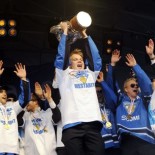
The victorious world-champion Finnish hockey team returned to a roaring, cheering, singing crowd of 100,000 fans (including our photographer) who packed Helsinki’s Market Square on May 16, 2011. Relive the evening with our slideshow below.

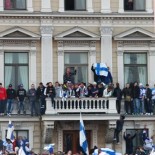
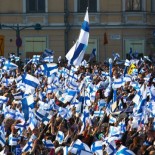
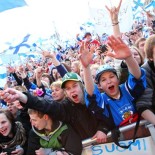
The Finnish Lions, who crushed Sweden 6–1 in the final game of the 2011 Ice Hockey World Championship in Bratislava, Slovakia on May 15, returned to Finland to join the celebrations that were already in progress on the streets of Helsinki. The jubilant, flag-waving crowd, dressed in blue and white, gathered on Market Square, climbing on balconies, lamp poles, windowsills and anything else they could find to get a glimpse of their heroes. Men, women and children sporting the Finnish colours joined a celebration that brought the whole nation together.

The impromptu festival culminated as the team took the stage one by one. Mikael Granlund, a 19-year-old stickhandling magician and the crowd’s favourite, was greeted with a roar that rose above everything else. The team was joined by celebrated singer and actor Sakari Kuosmanen, who led the assembled fans in a chorus of the “Finlandia” hymn by Jean Sibelius.

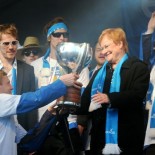
As the celebration reached its peak, President Tarja Halonen, wrapped in a blue and white scarf, stepped out to congratulate the players. Fireworks went off in the May twilight to complete the ultimate homecoming fest.

A sea of blue and white

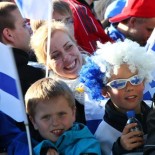
Many fans painted their faces the colours of the Finnish flag to celebrate the ice hockey victory.

The most enthusiastic viewers climbed lamp poles trying to get a glimpse of the champions.

Blue and white were the must-have make-up choices.

The crowd was creative in trying to get a good view, and balconies and windowsills filled with fans.

A sea of Finnish flags spread over Market Square.

These young supporters get a front-row view.

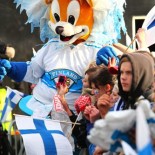
The team mascot parties with the fans.

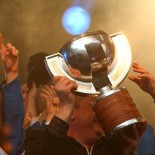
Mikael Granlund lifts the trophy as the rest of the team cheers. (Photo: Mikko Stig/Lehtikuva/Str)

Excited fans greet the players.

Everybody wants to see the trophy.

Team Finland captain Mikko Koivu hands the trophy to Finnish President Tarja Halonen. (Photo: Jussi Nukari/Lehtikuva)

The crowd filled all of Market Square and the surrounding neighbourhood, and fireworks crowned the evening. (Photo: Vesa Moilanen/Lehtikuva)

Photos by Tim Bird and Lehtikuva, May 2011
Text by Amanda Soila

The unbearable beauty of Finnish grammar

You’re pretty good at Finnish, but do you know it inside out? Dive fearlessly into declensions and traverse verb conjugations valiantly, and you’ll emerge with newfound confidence. One classic grammar book and two newer volumes help pave your way.

When speaking, you can effortlessly substitute the informal for sinä (you) and use onks instead of onko (meaning “is it?”). All well and good, but to reach the essence of the Finnish language you have to know your endings. You’ve probably built up a great deal of passive knowledge – now you just have to solidify it.

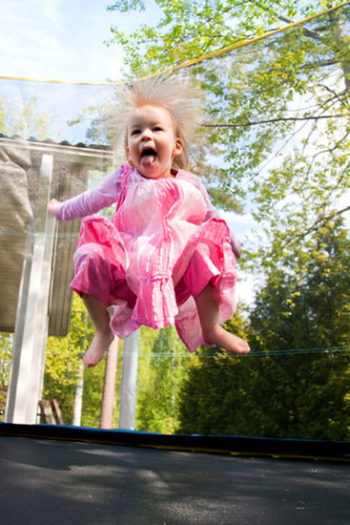
An excited-looking child in a pink dress jumping on a trampoline.

Trampoline grammar: It seems extremely unlikely that this Finnish person will ever have use for the negative participle of the verb “hypellä” (to jump around). Photo: Rodeo

Verbs show how streamlined Finnish is: The future tense doesn’t exist – Finns just use the present tense, none of that future indicative you struggled with in French class. However, Finnish verbs do contain certain twists and turns, so a conjugation table is in order. Guide to Finnish Verbs: 120 Finnish verbs fully conjugated (Finnlibri) offers help.

Strangely, part of the fun is reading all the forms you’ll probably never have any occasion to utter. Even Finnish speakers might have a difficult time using some of them in a sentence: When are you going to need the negative form of the agent participle of the verb hypellä (to jump around) – hyppelemätön (roughly “not having been jumped around”)? How about the first-person plural imperative present negative form of kammata (to comb) – Älkäämme kammatko (Let us not comb)?

Still, it’s reassuring to know it’s all there, in case you someday have to express en liene ymmärtänyt (I may possibly not have understood) or en liene saartanut (I may possibly not have blockaded) or en liene kylpenyt (I may possibly not have bathed).

Cracking the case

Finnish noun and adjective endings represent at least 15 different grammatical cases. It’s a great party trick to be able to recite them all – and it’s extremely rare to meet a Finn who can: nominative, accusative, genitive, partitive, inessive, elative, illative, adessive, ablative, allative, essive, translative, abessive, comitative and instructive.

Despite the large number of cases, Finnish is actually a lot simpler than German or Russian in this respect. Both Russian (six cases) and German (four cases) utilise three grammatical genders, each with its own set of endings, compounding the amount of memorisation. Also, adjectives may use different endings than the nouns they modify, exponentially confusing things. Finnish has no grammatical genders, and adjectives always take the same endings as their associated nouns.

Guide to Finnish Declension (Finnlibri), a slim volume of diagrams, tables and listings, groups Finnish nouns and adjectives into 42 different patterns (words ending in a double vowel, words ending in “a” or “ä,” and so on). To check a declension, just scan the table of contents for a word that is similar to the one you’re looking for. Does it end in “-nen” like ihminen (person), “-tus” like ajatus (thought) or “-tön” like työtön (unemployed)?

Strength in classic logic

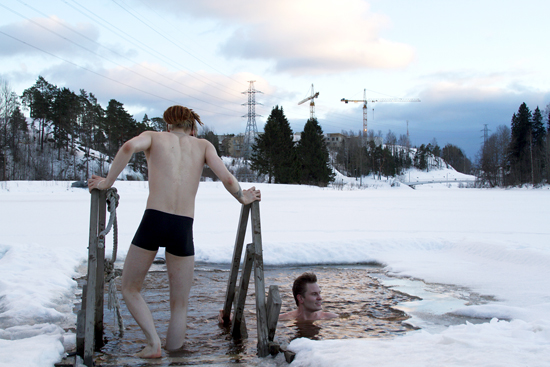
Two men ice swimming; the other one just getting ready to descend to the hole in the ice.

Dive into declensions: “Uiminen on hauskaa!” (Swimming is fun!) Here we see the Finnish language’s partitive complement in action.Photo: Leena Karppinen

In Guide to Finnish Declension and Guide to Finnish Verbs, you’ll run into accounts of consonant gradation, spelling changes that may alter the stem of a word before endings can be added. Kaunis (beautiful) doubles the “i” and drops the “s” in order to add “-lle” and become kauniille (for the beautiful one).

Consonant gradation forms a sticking point for many non-native Finnish speakers, but rest assured that it’s all very logical and learnable. If three-year-old Finnish kids can master it, so can you. The clearest explanation we know of can be found in Fred Karlsson’s classic Finnish: An Essential Grammar (Routledge), first published in 1983 and still going strong. One of our favourite reference books, it reveals the secrets behind consonant gradation and many other mysteries.

It systematically covers the language from history to grammar to colloquial speech, categorising and illuminating as it goes. Frequent example sentences show how points of grammar play out in practical usage:

Uiminen on hauskaa (Swimming is fun) demonstrates a partitive complement in action. Onko sinulla hattu päässä? means “Do you have a hat on your head?” and not “in the head.” If you come to Helsinki yhtenä päivänä viikossa, you’re there one day a week.

We’ll leave you with a typical Finnish view about a favourite beverage, handily expressed using the past participle passive of juoda (to drink): Monet ihmiset ajattelevat paremmin juotuaan kahvia (Many people think better when they have had some coffee). That may turn out to be good advice when you’re expanding your knowledge of Finnish declensions and conjugations.

By Peter Marten, April 2013