Finnish snowboarder plays it cool

Instead of just aiming for gold, snowboard champ Enni Rukajärvi has her mind set on enjoying snowboarding and continuing to improve along the way – and savouring the experience of getting to travel the world. [Editor’s note: After this article was published, Rukajärvi won the silver medal in the Slopestyle event at the Sochi Olympics, on February 9, 2014.]

Snowboarding today forms one of Finland’s most popular winter sports. Many ski resorts offer a long training season and great facilities for snowboarders. Successful athletes are also doing their part to boost the snowboarding craze. Finland is home to many snowboarding world champions, and recent Olympics have seen Finnish medalists in the men’s half-pipe event (Markku Koski took bronze in 2006 and Peetu Piiroinen won silver in 2010).

However, top-class snowboarding in Finland is not dominated by men. One of the brightest stars of the current team is Enni Rukajärvi, a 23-year-old from the northeastern Finnish town of Kuusamo. She won gold medals in the slopestyle event in both the world championships and the X Games in 2011 and also placed first in the final results of the World Snowboard Tour in 2010.

Finland has room for snowboarders
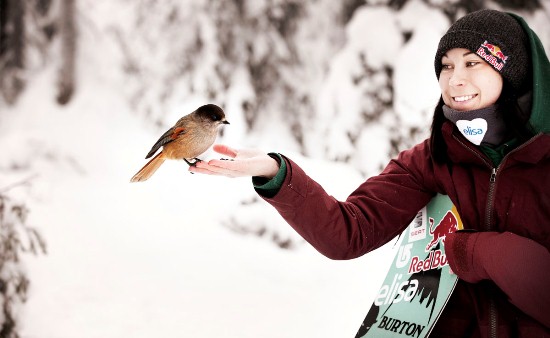
Enni Rukajärvi has some unusual fans.

Enni Rukajärvi has some unusual fans.Photo: Harri Tarvainen

Rukajärvi has lots of good things to say about her home country as a snowboarding location: “Although the number of venues is not so large, in Finland it’s nice to have a lot of space to yourself on the hills and not have to wait so long for your turn.” Her home resort, Ruka, is also her favourite location in Finland.

Regarding the Finnish summer, Rukajärvi says that there are several ways to practise after the snow melts: “There is actually a ski tunnel with a half-pipe that is open all year round at Vuokatti Sports Centre in Sotkamo. It’s also possible to practise jumping from water ramps, although that’s more useful for skiers and not as practical for snowboarders.”

She adds that a lot of preparation can be done in the gym during the off-season so that every muscle is ready for the strain of the competition season.

When she’s not on the hill, Rukajärvi says that she spends “too much time” on her computer, watching videos and keeping in touch with friends. Luckily, she also has time to do other sports besides snowboarding. “And every time I go to a new location, it’s nice to go around and see the sights.”

Women’s snowboarding needs more attention
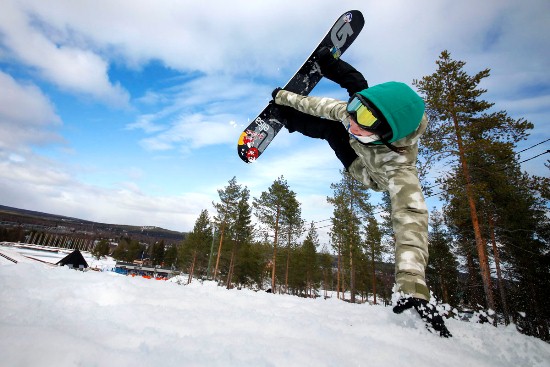
Rukajärvi shows off for the camera.

Rukajärvi shows off for the camera.Photo: Harri Tarvainen

Despite great expectations for the current season, her eyes are primarily set on other things than medals: “The main things for me are to be able to ride as much as possible and improve my versatility as a snowboarder.”

She says that triumph on a personal level is more important than the competition as a whole. She is not entirely happy with women’s position in snowboarding: “There is a growing interest in women’s snowboarding, but it’s still men who grab most of the attention.”

Since snowboarding is often considered an extreme sport, you might think that all snowboarders are completely fearless. However, this is not the case for Rukajärvi. “Going for a big jump for the first time or performing in bad weather conditions is sometimes a bit scary,” she says.

Asked if she has any routines when preparing for a descent, she responds, “At the top of the hill, I always tighten the straps just before hitting the slope.”

By Kasperi Teittinen, December 2013
Say your first words in Sámi

The Sámi languages are spoken by the indigenous Sámi people, whose homeland stretches across northern Finland, Sweden and Norway and part of northwestern Russia.

The Sámi language family once included at least ten distinct variants, of which at least six still survive. Linguistically, they occupy a branch of the same language tree as Finnish, Estonian and (more remotely) Hungarian, but the similarities are seldom obvious, as you’ll see below.

Northern Sámi, the most widely spoken of the three quite different Sámi languages used in Finland, has more than 2,500 speakers in Finland, and many more in Norway and Sweden; while the other two Sámi languages spoken in Finland – Skolt Sámi and Inari Sámi – only have a few hundred speakers each. These languages almost died out during the 20th century, but they are now enjoying a revival thanks to dedicated teachers and support from educational and cultural authorities.

Beginning Sámi phrases

Northern Sámi Finnish English
Bures! Hei! Hello!
Oaidnaleapmai! Näkemiin! Goodbye!
Giitu! (pronounced “Kiihtu”) Kiitos! Thank you!
Ándagassii! Anteeksi! Sorry!
Mun ráhkistan du! Minä rakastan sinua! I love you!
Okta, guokte, golbma, njeallje… Yksi, kaksi, kolme, neljä… One, two, three, four…
Muohta Lumi Snow
Boazu Poro Reindeer
Guovssahasat Revontulet Northern Lights
Juovllastállu Joulupukki Santa Claus

By Fran Weaver, February 2014, updated December 2019

Sámi languages making gains in Finland

New initiatives provide a welcome boost for the ongoing revival of the languages of northern Finland’s indigenous Sámi people, who celebrate their national day each year on February 6. We visit Helsinki’s first Sámi daycare and also look at how Sámi-language TV programming is expanding.

The Sámi homeland stretches across northern Finland, Sweden and Norway and a corner of Russia. Today many Finnish citizens with Sámi roots live in other parts of Finland. A new kindergarten called Máttabiegga Giellabeassi (South Wind Language Nest) recently opened in the Deep South – that is to say, Helsinki – where young children can now be immersed in the Sámi language.

“We joke that Helsinki is the biggest Sámi village in Finland, since about 1,000 Sámi live in the Helsinki area, having come here to work or study,” says Ida-Maria Helander, one of two kindergarten teachers at Máttabieggam, which opened at the end of 2013. “People are very pleased with this new opportunity for their children to learn their ancestral language – and they’ve also been impressed by the nice furnishings and materials we have here.”

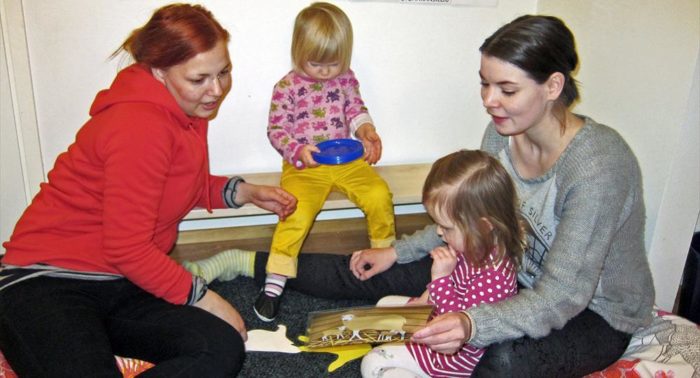
Máttabiegga is built on a model for the revivalist teaching of minority indigenous languages called a “language nest,” first devised in New Zealand for children of families with Maori roots. “We speak only Sámi to the kids, playing games, singing songs and teaching them new words, though they may answer in Finnish or Sámi as they prefer,” explains Sivi Jomppanen, Máttabiegga’s other teacher.

“We try to teach them about Sámi culture too. In Sámi families children are expected to join in more often in what the adults are doing, and our kids help us a lot with things like baking and tidying up toys.”

Cosy nest for fledgling Sámi speakers

Kindergarten teachers Ida-Maria Helander (left) and Sivi Jomppanen speak only Sámi with the kids.

Kindergarten teachers Ida-Maria Helander (left) and Sivi Jomppanen speak only Sámi with the kids.Photo: Fran Weaver

Máttabiegga is housed in a comfortable converted apartment. At the time of our visit in January 2014, it already provides daycare and language immersion to four children between the ages of one and four. Helander and Jomppanen expect all of the kindergarten’s eight full-day places and two half-day slots to be filled by the end of 2014. When accepting new children, the daycare aims to prioritise kids who have Sámi family ties.

The language nest was established using funds from the Finnish Cultural Foundation and is run with funding from the Ministry of Education channelled through Finland’s Sámi Parliament and the City-Sámit organisation, which brings together Sámi living in the Helsinki area.

“We’re excited about the future, since Máttabiegga has been such a success,” says Helander. “We hope similar Sámi-language nests will soon be set up in other cities like Rovaniemi and Oulu.”

Two-year-old Áile seems happy in her Sámi surroundings, pointing at pictures of animals and telling us their names in Sámi: bussá (cat), beana (dog) and boazu (reindeer). For ten phrases in Sámi, Finnish and English, see our article Say your first words in Sámi.

Sámi communities welcome new TV programming

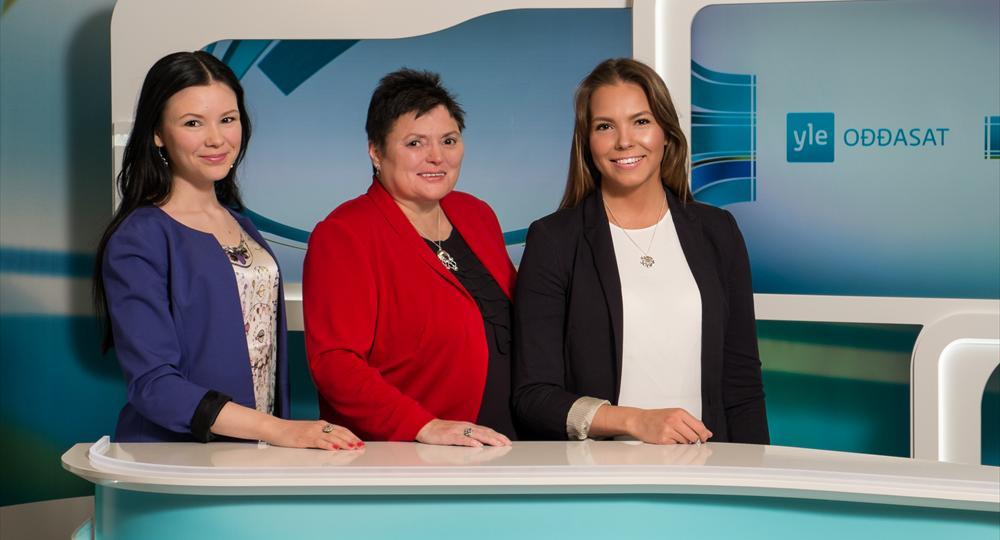
Aletta Lakkala (left), Kaisa Aikio ja Rosa-Máren Magga form part of the Sámi-language news team at Finnish Broadcasting Company Yle.

Aletta Lakkala (left), Kaisa Aikio ja Rosa-Máren Magga form part of the Sámi-language news team at Finnish Broadcasting Company Yle.Photo: Vesa Toppari/Yle

The Sámi language service of Finnish Broadcasting Company Yle, known as Yle Sápmi, recently received two awards from prominent Sámi organisations for their improved programming.

Since December 2013, Yle Sápmi has broadcast a five-minute news bulletin Yle Ođđasat (Yle News) nationwide weekdays at 3:10 pm. It covers issues affecting Sámi in Finland and complements the existing 15-minute weekday evening Sámi-language news broadcasts produced jointly by public service broadcasters from Norway, Sweden and Finland.

The 2013 Sámi Language Achievement Award was subsequently granted to Yle Sápmi by the Sámi Language Council. “We’re very pleased that our own community has recognised our efforts to renew and expand our programming and make our own TV news,” says Pirita Näkkäläjärvi, head of Yle Sápmi.

The family of Sámi languages once included ten distinct variants, of which at least six still survive. Yle Sápmi additionally broadcasts about eight hours of radio programming each weekday – mainly in the most widely spoken Northern Sámi language, but with items increasingly also produced in the minority Inari Sámi and Skolt Sámi languages, which are also spoken in Finland but have just 300–400 speakers each. The Skolt Sámi cultural association Saa’mi Nue’tt consequently named Yle Sápmi the 2013 Skolt Sámi of the Year.

Näkkäläjärvi explains that by promoting these minority-within-a-minority languages, Yle Sápmi aims to break down barriers by helping speakers of Finland’s different Sámi languages to understand each other better, rather than having to communicate using Finnish.

“We’re also hoping to expand our programming for children,” says Näkkäläjärvi. “We have a fine new studio for the popular children’s TV programme Unna Junná – broadcast nationwide on Yle Channel Five – which has played a vital role by making Sámi children more visible. And we’ve already given more time to our popular and creative radio programme for young people – Sohkaršohkka (Sugar Shock).”

By Fran Weaver, February 2014

Finnish ecovillage runs on future energy

An innovative ten-house ecovillage in Kempele, northern Finland, self-sufficiently produces its own electricity with no connection to the national power grid.

 Timo Korva, a Finn in his thirties, is a man with high standards. When he decided to build his own house all by himself in 2010, he knew what he wanted. “It had to look the way I imagined it, while saving as much energy as possible,” says the father of two, standing in his well-kept yard. “Sometimes this can be an issue, because building an ecological house can involve a lot of regulations. But in Kempele, that wasn’t the case. The rules were very easy to follow, and there weren’t many of them.” Nine other families also decided to build their houses in Kempele, a town located only 15 kilometres from the northern Finnish city of Oulu, in a neighbourhood established in 2010. In their quest for energy efficiency, they became the European pioneers of a unique experiment: saving energy while living off-grid, disconnected from the general electric network.

Powerful advantages

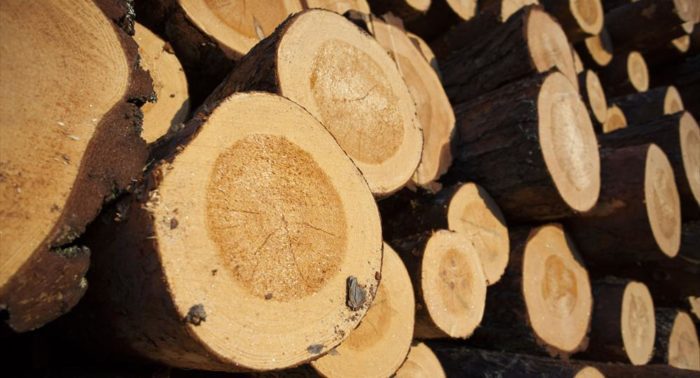
As Finland’s forestry industry processes timber, the by-product wood chips can be used by power plants such as the one in Kempele’s ecovillage.

As Finland’s forestry industry processes timber, the by-product wood chips can be used by power plants such as the one in Kempele’s ecovillage.Photo: Tuomas Marttila/Lehtikuva

“So this is how it works,” says managing director Jarno Haapakoski of Volter, the company that built the small power plant that provides the village with energy. The enthusiastic engineer proudly shows off the facility at the edge of the neighbourhood. “We buy woodchips, which are easily available here in Finland, thanks to the forest industry.” The power plant first converts the wood chips to wood gas, which is then burned to provide electricity. The thermal energy produced by the generator is used to heat water, which warms the houses as it passes through pipes in the floors. The energy created suffices to provide the ten houses with heat and electricity all year round. A windmill stands ready to supply extra power in case the power plant falls short. The ecovillage concept represents a remarkable achievement in an area where winter temperatures can reach minus 40 degrees. According to Korva, living off-grid benefits the community and has no drawbacks. “I had rules to follow, but they were easy to comply with,” he says. “For instance, I installed special kinds of light bulbs and had to buy thicker windows, but I would most probably have done that anyway. And more importantly, I’ve saved money while still living in a comfortable house.” To avoid wasting energy, the ecovillage inhabitants had to change the way the sauna worked, since it can consume a great deal of electricity. “We had to install a wood-burning sauna stove instead of an electric one,” explains Korva. “But that’s OK, because the wood stove is of better quality.”

Energy-saving sense of unity

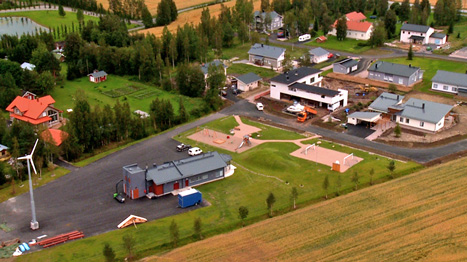
In this Kempele neighbourhood, shown when houses were still under construction, everyone takes part in energy decisions. The power plant is the red and grey building to the left of the playing fields.

In this Kempele neighbourhood, shown when houses were still under construction, everyone takes part in energy decisions. The power plant is the red and grey building to the left of the playing fields.Photo: Volter

If the starting price for this kind of a power plant is 150,000 euros, it quickly becomes profitable, especially when people decide to pool their resources and rent one. “The village created a cooperative,” says Haapakoski. “This is the first unit we installed, so we had a special arrangement: They rent the power plant from us, we take care of it, and after two years they decide whether to continue with it. I don’t see any reason why they wouldn’t.” Volter has already sold five other units in Finland. “I feel like this common goal of saving energy created a sense of unity among the inhabitants of this village,” Haapakoski says. To strengthen the sense of community, Volter built a small playground between the houses and the company’s office. A few curious kids, playing outside in a sunny afternoon, run to meet the visitors. They wonder why somebody came from far away to visit their houses. “Our main office is just next door, as this was the first project we had,” says Haapakoski. “The inhabitants can come to talk to us, to complain or to ask questions about the plant. But they don’t come so often, because things are working well.”  

By Pauline Curtet, January 2014

Sounding exactly as Sibelius intended

Finnish conductor Osmo Vänskä helped the Minnesota Orchestra achieve world-class status with acclaimed recordings of Beethoven’s complete symphonies. Their newest recording, Sibelius’s Symphonies nos. 1 and 4, won a Grammy in January 2014.

[Editor’s update: Six months after this article first appeared, a dispute began between the Minnesota Orchestra’s musicians and its management, leading to a lock-out. Vänskä chose to resign from his post as musical director in October 2013 after the parties reached a standstill. The labour dispute was resolved in January 2014, less than two weeks before the Grammys, but not before planned recording projects and concert tours had been put on hold.

Vänskä has reportedly indicated that he might return to Minnesota if invited. Read on to hear about the magic touch that he brings to orchestras under his direction – and that helped the Minnesota Orchestra’s Sibelius win the Grammy.]

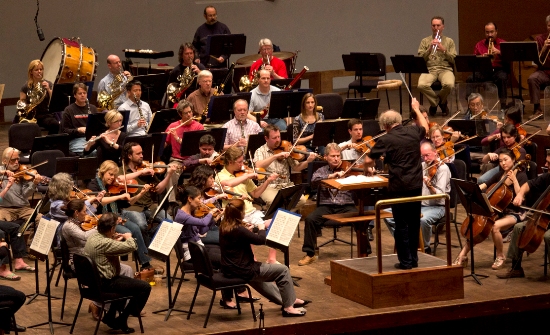
Two days before a performance in downtown Minneapolis, the Minnesota Orchestra is preparing to begin rehearsal. The violins are practicing their runs for Symphony no. 4 by the famous Jean Sibelius, Finland’s most renowned composer. A percussionist is fine-tuning the timpani, his ear to the drum head.

When Osmo Vänskä steps to the podium, the hall instantly falls silent.

The musicians are expecting a demanding afternoon – Vänska is especially picky with Sibelius, and will stop a rehearsal for as long as it takes to fix the tiniest of flaws. With close attention to detail and an unmatched knowledge of the scores, the Finnish conductor has distinguished the Minnesota Orchestra as one of America’s best.

Since he took over as music director in 2003, the group has vastly increased its average audience size and earned international praise and a Grammy nomination for its recordings of Beethoven’s symphonies. A recently completed fundraising drive raked in an unprecedented 100 million dollars.

“I don’t know how my musical taste or my musical heart or my musical brain is built,” Vänskä says, “but obviously some composers speak to me a little bit more than others.” He’s referring to his affinity for the works of Ludwig van Beethoven and Jean Sibelius.

Demanding excellence

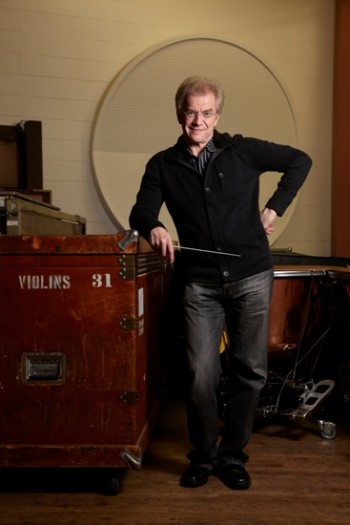
“My job is to put things together,” says Minnesota Orchestra music director Osmo Vänskä.

“My job is to put things together,” says Minnesota Orchestra music director Osmo Vänskä.Photo: Todd Buchanan

In true Finnish fashion, Vänskä is direct. He knows what he wants from the orchestra – and he won’t waste time catering to musicians’ egos.

“I’m not their therapist,” Vänskä says. “I don’t need to think about how their mind is offended or pleased. My job is to put things together.”

And put things together he has, leading the orchestra into a golden era. The Times of London called the ensemble “a new superstar band,” and in 2006 the New York Times dubbed it the most important orchestra in America.

“He’s extraordinarily demanding,” says Richard Marshall, the orchestra’s co-principal violist. “And by that I mean he’ll sit there and work on a phrase forever and ever, even if there is a lot of the music and repertoire left that needs to be rehearsed.”

Vänskä says his goal is to get musicians to unlearn what they know about music they’ve played thousands of times. Many musicians have adapted their own style over myriad performances with previous orchestras or other conductors.

The goal, Vänskä says, is to play exactly what the composer intended, and he has toiled to understand what Sibelius intended. With permission from Sibelius’s descendants, Vänskä gained exclusive access to early versions and unfinished and unpublished scores, and used them to present a final product that many say is at the same time cleaner and rawer than under any other conductor.

“It’s the best Sibelius that I’ve ever done,” Marshall says.

The orchestra’s plans originally included recording the complete symphonies of Sibelius in advance of the composer’s 150th birthday in 2015.

Minnesota sauna for the soul

"Some composers speak to me a little bit more than others,” says Osmo Vänskä.

“Some composers speak to me a little bit more than others,” says Osmo Vänskä.Photo: Robert Downs

When Vänskä moved to Minneapolis in 2003, he immediately displayed his Finnish roots by installing a sauna in his downtown apartment. “I don’t want to live without sauna,” he says. “It’s good for my soul.”

He found the transition from Finland to Minnesota quite easy: “Minnesota is very much like Finland or Sweden. A lot of forests, a lot of lakes, four seasons, and there are a lot of areas where we don’t see buildings and it’s the real nature. I think those things are very much connected to the Nordic countries.”

Vänska spent more than 20 years with the Lahti Symphony Orchestra in southern Finland, transforming it from a mid-level group to a world-renowned ensemble famous for its recordings of Sibelius. That success led to jobs as conductor of the BBC Scottish Symphony Orchestra and later the Minnesota Orchestra.

He’s quick to dismiss the immediate Finnish connection people make between him and Sibelius: “It’s not a national thing, because what do we say about Beethoven, if that’s the case?”

By Robert Downs, April 2012, updated January 2014

Design fills the fabric of Finnish life

Almost everyone in Finland uses design items every day, from bed linens and furniture to coffee mugs and candleholders. Finnish design is practical, and it’s not elitist – it’s for everyone.

One of the most cited anecdotes about Marimekko, a mainstay of Finnish design, is the story of how its massively popular Unikko (“poppy”) print was born: In the early 1960s, Marimekko founder and visionary Armi Ratia announced that the textile and clothing design house – in an effort to be bold and modern – would not do floral prints, because flowers were so much more beautiful in real life. In protest, legendary designer Maija Isola created the peppy poppy pattern. It went on to become one of the world’s most iconic prints.

Unikko, which appears on everything from umbrellas to dresses to dishware, celebrated its 50th anniversary in 2014. It continues to enjoy a strong presence along with other daily design essentials.

Quintessentially Finnish

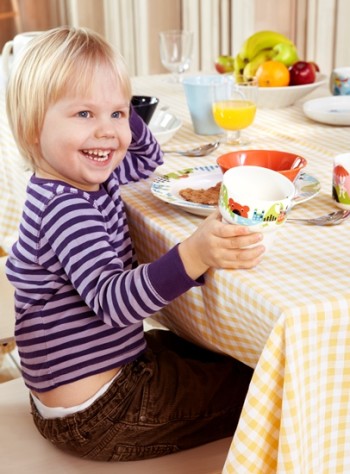
Ceramic kitchenware by Arabia (actually from Finland despite the brand name) makes setting the table a colourful job.

Ceramic kitchenware by Arabia (actually from Finland despite the brand name) makes setting the table a colourful job.Photo: Arabia

At the Mikkonen-Young household in Helsinki, a range of Finnish design items is visible, including an Artek kitchen table, Arabia plates, Iittala drinking glasses, Fiskars scissors and knives, Muurame children’s furniture and Iittala Kivi votives.

And of course a set of well-loved, blue Unikko patterned sheets.

“The pattern is so quintessentially Finnish for me – the flowers, the vivid colours – that I almost have a smile on my face when I pull them out of the cupboard,” says Brett Young, a Canadian Finn who grew up in Toronto. He and his wife, Leena Mikkonen-Young, have two primary-school-age girls.

Young says that the family has chosen their design items for a variety of reasons:

“First off, they are extremely well made and have lasted us many years. For example, the Muurame bed was first used by our eldest, and now her younger sister is using it. Then there is the style and design – the Kivi candleholders are great for dark winter nights, and the Artek table is a classic that Leena has known since she was a child.”

“These characteristics have combined to give us strong faith in the brands, and in Finnish brands in general,” says Young, who first encountered Nordic design in his former hometown. “There was a place in Toronto called The Finnish Shop, where I saw some great kitchenware design by companies that had the most amazing names: Iittala? Two i’s to start a name? This fed my interest in Finland, which was already growing.”

Design democracy

Can you spot the Fiskars scissors and knife, the Iittala glasses and the Arabia cups and bowls on this kitchen counter?

Can you spot the Fiskars scissors and knife, the Iittala glasses and the Arabia cups and bowls on this kitchen counter?Photo: Arabia

When Young arrived in Finland in 1998, he was already familiar with brands such as Marimekko and Nokia. In fact, after a four-year stint as the Helsinki bureau chief for international news agency Reuters, he went on to work for Nokia in corporate communications.

“My first mobile phone was a Nokia (the 6110), and I remember that when covering the Finnish EU presidency in 1999, journalists got a nifty Marimekko bag,” he says. “As a business journalist, the story behind Marimekko’s rise, fall and rise was also fascinating.” He’s referring to the company’s ups and downs over the years. These have included near-bankruptcy in the early 1990s and a remarkable recovery leading to its current international expansion, with 108 stores around the world.

With Marimekko, and with Finnish design in general, one of the most enduring elements remains a sense of democracy. Annamari Vänskä, a University of Stockholm researcher and adjunct professor who specialises in visual culture, fashion and visual art, recently summed up Finnish design neatly in the main Finnish daily newspaper, Helsingin Sanomat:

“Finns are used to having well-designed mugs, cutlery, plates and furniture. It’s almost standard; nowhere else in the world is design such a part of daily life and something that’s for everyone – not just for the elite, as design is in many parts of the world.”

By Katja Pantzar, January 2014

Exercise benefits everyone in Finland

Finnish municipalities are enjoying success in their efforts to encourage people to improve their health by exercising. They’re also making physical activity accessible for people of all ages, regardless of possible disabilities.

Finland is known as a top contender in various sports, but non-competitive exercise to improve general wellbeing is also recognised as important. The effects of exercise and a healthy lifestyle have been widely studied, and the Finnish public sector takes this into consideration.

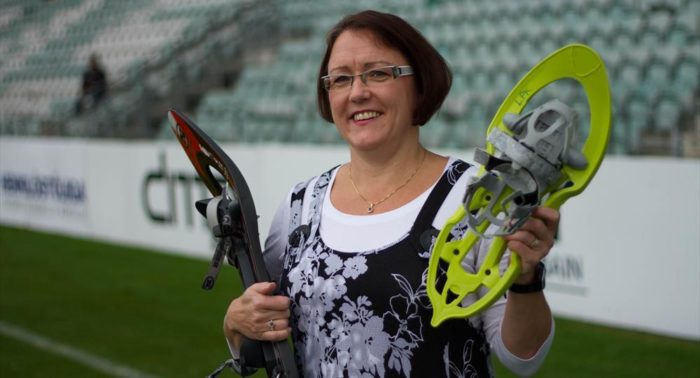
Don’t feel like skiing? How about trying snowshoes? Minna Lainio-Peltola helps get more people in Turku interested in exercise.

Don’t feel like skiing? How about trying snowshoes? Minna Lainio-Peltola helps get more people in Turku interested in exercise.Photo: Julia Koivulanaho

A recent publication by the Ministry of Social Affairs and Health suggests that in addition to increasing physical activity, the converse is also true: you should avoid sitting for long periods in your everyday routine. The public sector, especially the municipalities, have a significant mission in arranging possibilities for a healthier life and encouraging people to exercise in a way that suits them best.

Minna Lainio-Peltola, head of the physical activities unit in the southwestern Finnish city of Turku, says that municipal sports services play an important role in national health work:

“Sports clubs and businesses focus mostly on those who are already active in sports, so it is the duty of the municipalities to promote and improve facilities for those who are less active.” While the municipalities previously simply maintained sports facilities, they now they offer planned activities for everyone from small children to the elderly.

More people in better shape

Trailside exercise machines inspire joggers and walkers to try their hand.

Trailside exercise machines inspire joggers and walkers to try their hand.Photo: Julia Koivulanaho

Turku sports services collaborate with kindergartens and schools, aiming to include as much exercise as possible, even during school holidays.

Lainio-Peltola says that the needs of families are taken into account: “For instance, we have a very popular indoor sport playground event called Sports Wonderland for Kids, which is held in several suburbs with large numbers of families.”

Information about sports services in Turku appears in a magazine published three times a year, but according to Lainio-Peltola, the most effective way of informing is via other city organisations:

“Besides schools and kindergartens, social and health services are a good way to reach people. Local health centres even held a contest to see who could get the most people to join our sports groups” says Lainio-Peltola. Positive feedback has been expressed, not only by the participants but also by the instructors, who are happy to be teaching motivated beginners.

The practical results of getting active have also been studied in Turku: whereas in 1993 only 31 percent of the city’s adult population were sufficiently physically active, by 2010 the number had increased to 47 percent.

Intercity cooperation

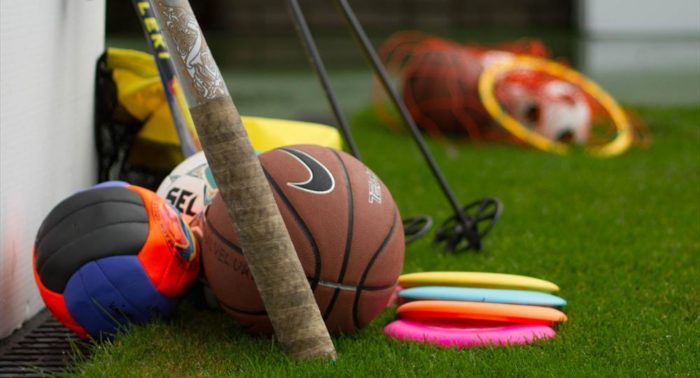
Range of options: You’ve played soccer and volleyball, but have you tried frisbee golf?

Range of options: You’ve played soccer and volleyball, but have you tried frisbee golf?Photo: Julia Koivulanaho

Municipal facilities give everyone in Finland a chance to exercise, says Lainio-Peltola: “There are jogging and hiking paths everywhere, not to mention swim centres.”

Cities and municipalities collaborate to improve the services, share new ideas and discuss best practices – Turku is in contact with Oulu, a northern city, and Heinola, a town in central southern Finland.

Neighbouring municipalities and dedicated organisations also work together to provide opportunities for applied exercise – programmes for people with disabilities, long-term illnesses or other limitations.

“This is very important so that everyone can enjoy sports, especially children who have disabilities,” says Lainio-Peltola. She is also pleased with the improved offerings for senior citizens in Turku: “Previously we had many fit seniors in our service groups. Now sports organisations have arranged their own groups for them and our services can be dedicated to those with weaker abilities.”

By Kasperi Teittinen, January 2014

Aalto’s foreign lecturers learn Finnish

Aalto University offers free Finnish language and culture classes to its foreign professors and other international faculty members to help them settle into life in Finland.

As Finnish universities such as Aalto University seek to boost their international reputation, such as through attracting world class researchers from other countries, they are also increasingly looking at ways to help their overseas staff better integrate into Finnish society.

Anne Petroff manages competence development at Aalto, which was created in 2010 by merging Helsinki School of Economics, Helsinki University of Technology and the University of Art and Design Helsinki. She says the university makes free courses in Finnish language and culture available to foreign faculty members, to facilitate their smooth integration into Finnish society.

“We offer a lot of support to our international faculty, and especially to our new international professors,” she says. “We hope all our international researchers and teachers and their family members will enjoy their stay here. Our aim is to help them settle in smoothly.”.

Although Aalto University is adopting English as its third official language alongside Finnish and Swedish, learning Finnish still has its advantages. Each semester the university arranges free basic Finnish courses for its international faculty. Spouses are invited to participate in the classes as well.

Fun learning a new language

Assistant professor Manuel Bagues took a Finnish course suggested by Aalto. The verdict? “It’s fun to learn a new language!”

Assistant professor Manuel Bagues took a Finnish course suggested by Aalto. The verdict? “It’s fun to learn a new language!”Photo: Anni Hanén

To take up his new role as assistant professor in Aalto’s Department of Economics, Manuel Bagues and his wife moved from Spain to Helsinki. “The Finnish language course was great,” he says. “It’s fun to learn a new language. Finnish is particularly interesting because it is so different from any other language I am familiar with. “It is definitely a challenging language in terms of grammar and vocabulary, but it is relatively easy in terms of phonetics.” .

Elena Trencheva arrived in Helsinki from Bulgaria to take on her new role as postdoctoral researcher in costume design in the Department of Film, Television and Scenography. “The language course is a really good start for learning Finnish and to a certain extent for understanding the Finnish culture and way of life as well,” she says. “The introductory Finnish language course reduced to almost a minimum my fear that Finnish is a hard language to learn.”

The university’s overall staff integration program includes a staff and family programme, providing information and activities that help make settling into life in Finland a lot easier. One of these initiatives, called Aalto Family Friend, enables foreign staff and their families to get to know a Finnish host family by visiting the Finnish family’s home for a meal.

Another internationalisation initiative is AaltoClub, which aims to promote the informal networking of the university’s Finnish and international staff members and their families. AaltoClub organises activities such as a walk through the Helsinki city centre, a trip to a local nature reserve and a visit to the Parliament.

Both personally and professionally

Elena Trencheva from Bulgaria calls the language course “a really good start for understanding the Finnish culture and way of life.”

Elena Trencheva from Bulgaria calls the language course “a really good start for understanding the Finnish culture and way of life.”Photo courtesy of Elena Trencheva

“I appreciate the university organising integration support programs like these,” said Manuel Bagues. “It makes it easier to meet new people.”

Nonappa, a postdoctoral researcher in the Department of Applied Physics, hails from Bangalore, India. Since arriving at Aalto University, he has participated in the Finnish language course for international staff. He has also taken part in a Parliament visit, a winter ski trip to Finnish Lapland and a national park excursion.

“The university-run events have been very fruitful and helpful both personally and professionally,” he states. “These events are a perfect platform not only to learn about Finnish culture, but also to get to know the international community.”

Mats Fridlund is a Swede who moved to Finland to begin an appointment as professor of the history of industrialisation in Aalto University’s Department of Engineering Design and Production. “The language course was very valuable for me,” he says. “It allowed me to get an introduction to the basics of Finnish language and culture.”

Trencheva believes Finland offers many advantages to international staff compared to other European countries. “It is one of the best countries to live in, especially in terms of education, social security and comfort. And the nature is beautiful!”

By Mark Badham, January 2014