Sounds of silence resound in Helsinki

A pedestrian hurrying through the bustle of downtown Helsinki suddenly feels drawn to a round, wooden structure on Simonkatu. Inside the building, a contemplative calm reigns. Welcome to the Chapel of Silence.

The parishes of Helsinki are running the Chapel of Silence together with the Social Services Department. It was completed in time to form a highly visible part of Helsinki’s year as World Design Capital in 2012.

Seven church representatives and four social workers contribute to caring for the spiritual needs of anyone who ventures into the chapel.

Anatomy and soul
2659-construction-550px-jpg

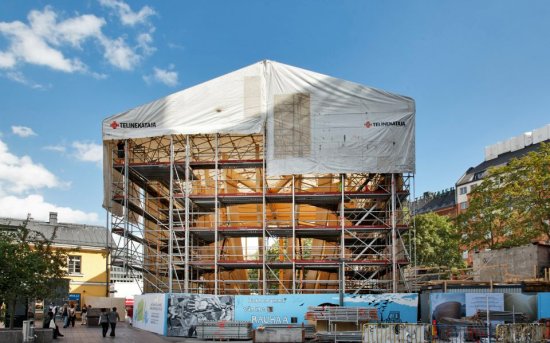
The skeleton of the Chapel of Silence took shape in 2011.Photo: Chapel of Silence

In 2008, architecture studio K2S won a competition held by the City Planning Department to construct the chapel in Kamppi; work commenced in 2011. “The architectural vision is based on the theme of calmness,” says head architect Mikko Summanen.

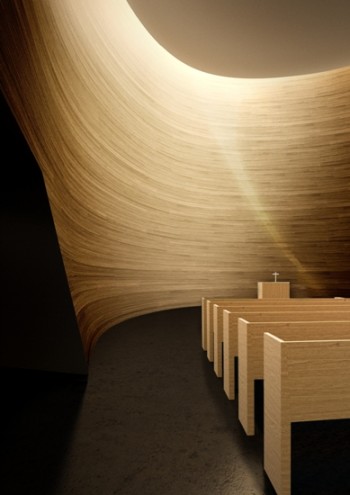
“We didn’t want the outside world to intrude inside the chapel. Visitors can concentrate on what is essential. The atmosphere is important. It’s governed by form and material – fir and black alder – and by light, which create the sacral ambience together.

Beauty opens the soul to religious and spiritual experiences. “I hope that the chapel will sensitise people to see beauty and kindness”, says pastor Tarja Jalli, executive director of the Chapel of Silence. “What’s more, I hope that people will start taking responsibility on the conservation and increase of the beauty of life.”

The wood of the chapel stands out from the stone, metal and glass of a hotel and a shopping centre nearby. “The exterior architecture of the chapel is consciously designed to form a great contrast with the surrounding buildings,” explains Summanen. “It has to possess a strong identity to hold its own in this large-scale, commercial, urban landscape. The shape and material of the building communicate different values.”

Yet the activity of the chapel doesn’t clash with the life of the surrounding area. “The chapel forms part of the big community of the neighbourhood of Kamppi,” says Jalli. It forms a link that “completes the comprehensive interpersonal encounters and services for people.” In other words, if chapel visitors leave feeling better or more peaceful, it makes a contribution to the overall atmosphere of the neighbourhood.

Service design for life values
2659-sisaperspektiivi_small-550px-jpg

Inner sanctuary: The chapel offers quiet refuge.Photo: © K2S Architects Ltd

Churches are soothing places where connecting with the core of our being feels natural. This is not only a matter of what religion you follow, if any, but also of mental and emotional hygiene. At some time, everyone needs a break from the hurly-burly of everyday life.

The Chapel of Silence offers a sanctuary for listening to the voice of your soul – or for just contemplating the beauty of the building’s interior, which holds pews that can seat up to 70 people.

“We have tried to create an intimate yet sublime atmosphere,” Summanen says. “But the way each visitor experiences the space and the atmosphere is very personal.”

Since the Chapel of Silence began to take shape beside Narinkka Square, its stunning wooden presence has attracted the attention of the thousands of people who pass it daily. What the chapel really offers the public is a beautifully designed service to improve spiritual wellbeing.

While the world outside has become increasingly focused on material values, people can find human and divine warmth and stillness inside the chapel – a moment to stop and listen to something that may be no louder than a whisper.

By Laila Escartín-Sorjonen, March 2012, updated April 2014
A life that began in Finland

Finland, Sweden, Russia, Canada. Fisticuffs, war, excitement, near-death experiences, long journeys. No, we’re not talking about ice hockey. We’re reading the memoir of a Finnish Canadian.

Rauni Ollikainen’s self-published, cleverly titled book Finnish Beginnings opens with screaming. As she is born in a Helsinki hospital, bombs are falling outside, part of the Second World War. She spends her first hours alive in an underground shelter.

Told from a little girl’s perspective informed by the insight and hindsight of an adult, Ollikainen’s story forms an exciting and touching story that overlaps with major events in Finnish history. It also makes you want to know what happened next, after the book finishes – more about that below.

She draws readers in with details of everyday life in post-war Finland, and opens a first-person window on the gritty immigrant experience. Ollikainen, her parents and her two sisters left Finland for a new start in British Columbia, Canada when she was eight years old.

Why did they leave? Whom did they leave behind? How did they adjust to their new country? These questions remain captivating more than six decades later, and they also make for a great story.

Memories of memories

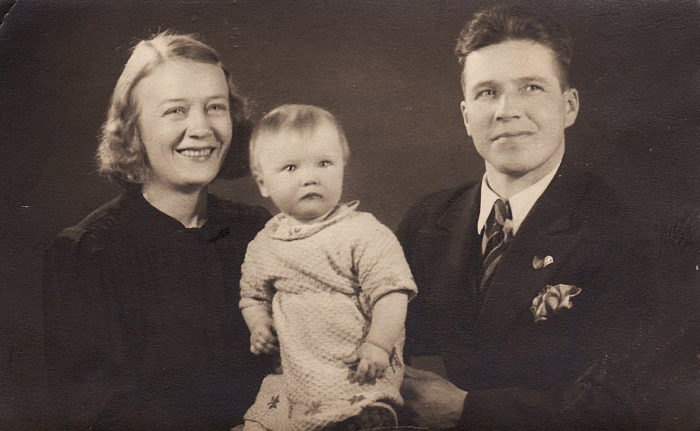
Rauni Ollikainen’s parents Taimi (left) and Sulo show off their first-born daughter Pirkko.

Rauni Ollikainen’s parents Taimi (left) and Sulo show off their first-born daughter Pirkko.Photo courtesy of Rauni Ollikainen

“Sometimes memories are just memories of memories,” Ollikainen says early in the book. Some of her first memories come from a voyage to Sweden at the age of 18 months. Nearly 70,000 Finnish kids lived with host families in Sweden to escape the dangers of war. Ollikainen returned two years later to a family and a language she barely recognised.

Her family lived in a two-room Helsinki apartment with her grandmother. When she was five they moved to a house in the country. Several years later they emigrated.

Before that, she and her younger sister each had a brush with death. (We won’t spoil the story, though.) Ollikainen also overheard the grown-ups discussing life and politics often enough to be able to fill in the reasons that led her family and many others to emigrate.

No more war

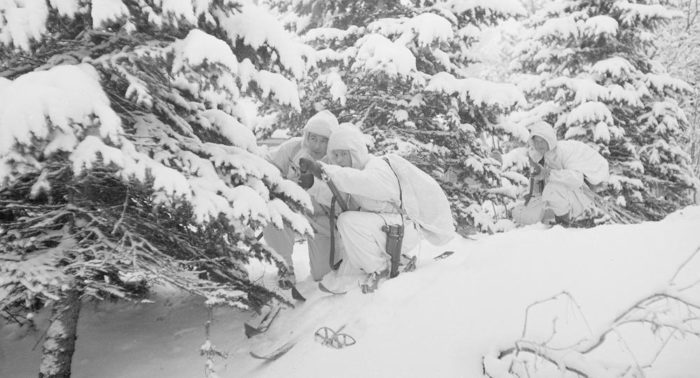
Winter camouflage: Finnish ski troops such as these fought on the eastern front during the Winter War.

Winter camouflage: Finnish ski troops such as these fought on the eastern front during the Winter War.Photo: SA-kuva

During her childhood, war remained fresh in people’s minds – the Second World War (which Finnish historians divide into the Winter War of 1939–40, the Continuation War of 1941–44 and the Lapland War of 1944–45) and the short but brutal Finnish Civil War of 1918, just months after Finland’s declaration of independence from Russia.

She remembers her father’s Winter War stories. He didn’t hate Russians, but he hated Stalin and he hated having to kill people, Ollikainen writes. “Couldn’t you just make a deal with every Russian you came across and tell them that you wouldn’t kill them if they wouldn’t kill you?” she asked her dad as a little girl.

“It doesn’t work that way,” he answered. He added, “Maybe little girls should run the world.”

For a reader living in modern Finland, Ollikainen’s accounts of war and Finnish politics seem to draw upon various versions of Finnish history: the history-book version that tries for an impartial account; the version she observed and heard about as a small child; and other, possibly nostalgia-laden, versions from oral and written sources.

From Finland to Vancouver Island

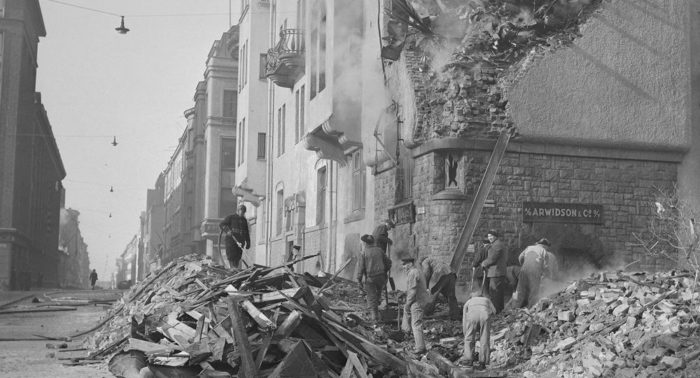
Helsinkians clean up rubble after a bomb attack during the Second World War. Memories of war played a role in the Ollikainens’ decision to emigrate.

Helsinkians clean up rubble after a bomb attack during the Second World War. Memories of war played a role in the Ollikainens’ decision to emigrate.Photo: SA-kuva

Post-war Finland was wary of new conflicts in Russian-Finnish relations. Ollikainen’s parents decided to move to Canada, where they would never have to experience war again.

In detailing the bittersweet period before they left, she shows how various friends and relatives encouraged or discouraged her parents’ heartrending decision. Her grandmother chose to stay in Finland.

The family ends up on the west coast of Canada. Triumphs and setbacks follow: Ollikainen helps her father find his first job in Canada when she overhears some Finns talking about needing another worker to participate in building a dam up north.

They eventually establish themselves in their new country and discover vibrant Finnish communities in Vancouver and on Vancouver Island.

What happens next?

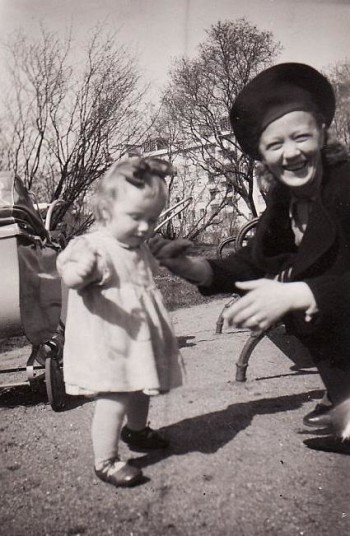
Rauni’s mother Taimi holds her hand as she takes some of her first steps in a Helsinki park. Photo courtesy of Rauni Ollikainen

The book ends when Rauni Ollikainen is a teenager. After such an absorbing story, we immediately wanted to know what happens next. So we contacted her and asked.

“So many people ask me if I’m going to write a volume two,” Ollikainen says. “It’s a possibility.”

What happened to her parents? “My mother passed away 15 years after we moved to Canada,” she says, “and my father remarried, to a Finnish woman from Finland, and moved back.”

Did Ollikainen ever live in Finland again? Yes, about 25 years after leaving: “I lived and worked in Finland for almost a year.” Her son was 12 at the time. “His Finnish schoolmates were so proud that they had a real Canadian on their hockey team. As an adult, he is still interested in all things Finnish.”

Can she still speak Finnish? “[When I went back to Finland,] I stumbled a bit at first, but was surprised how quickly it came back. Of course, now that many Finns are joining my Finnish Beginnings Facebook page, I am having conversations in Finnish with Finns from Finland and all over the US and Canada. ”

“I’ve had many Finnish Canadians contact me, people who knew my parents and Finns who have heard about my memoir. As far as my grandkids and nieces and nephews – some are interested, some are not. But the book will be in the family, so when they are older, they might get interested in their roots and their Finnish heritage.”

By Peter Marten, March 2014

Watching Rudolph run in Finnish Lapland

This is not a sport for the faint-hearted: Racing along on skis, pulled by semi-wild reindeer galloping at more than 50 kilometres per hour over a frozen lake in Finnish Lapland.

The winter reindeer racing season in Finnish Lapland culminates in the King of Reindeer race event held in Inari, 350 kilometres north of the Arctic Circle, at the beginning of April, when Lapland’s forests and lakes are still covered with a thick blanket of snow and ice.

“This annual event is one of the highlights of the year for reindeer herders from all over Lapland, and for the village of Inari,” says Anne Ollila, head of the Finnish Reindeer Herders’ Association. “More than 1,000 people come to watch the races every year, since they are the final big competition of the three-month reindeer racing season.”

Almost 200 reindeer are brought to Inari to run in three competitions for animals with different levels of racing experience: a general category for beginners; a “hot” category; and the King of Reindeer category, run over two days.

A warm social event in a frozen location

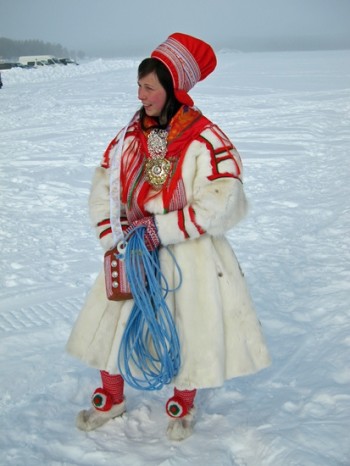
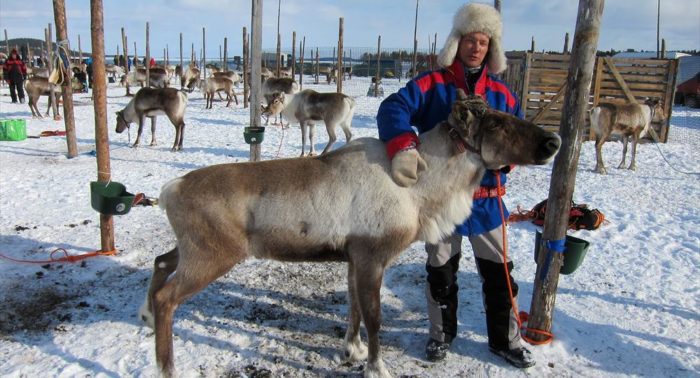
Elen Anne Sara is wearing her traditional Sámi costume and carrying a blue rope to use in the lasso-throwing competition.

Elen Anne Sara is wearing her traditional Sámi costume and carrying a blue rope to use in the lasso-throwing competition.Photo: Fran Weaver

The races take place on courses of one to two kilometres marked on the frozen, snow-covered surface of Lake Inari, and results are timed to the hundredth of a second. Reindeer owners trot with their animals on the lake before the race to warm them up, then coax them into starting gates.

Clad in streamlined ski suits and helmets, the jockeys stand on skis behind the reindeer. These reindeer have actual reins, and the jockeys hold on tight to keep the animals from veering off course. High-speed falls are not unusual. At the finish line they let go of the reins, allowing the exhausted reindeer to rejoin the others in a paddock.

Side events include lasso-throwing contests and 220-metre reindeer sprint races. Beside the racecourse, locals gather to gossip at stalls selling tools, furs, hot coffee and tasty reindeer meat stew.

Ollila explains that, most importantly, the races give reindeer-herding folk from around this vast, sparsely populated region a chance to get together socially. “There isn’t any official betting on the races, but I can’t say what goes on in the bars,” she says. Inari’s two bars certainly do a roaring trade during the event, and lively debate arises about the merits of the four-legged, two-antlered athletes.

Many of the reindeer owners are indigenous Sámi people, and some competitors come over the border from Norway.

Crazy reindeer

Ari Niittyvuopio gives his reindeer, Dat Lea, a pep talk in the paddock before the race.

Ari Niittyvuopio gives his reindeer, Dat Lea, a pep talk in the paddock before the race.Photo: Fran Weaver

At the races I meet Ari Niittyvuopio from Karigasniemi, who owns two-time champion reindeer Dat Lea (the name means “That’s it!” in Sámi). I ask him what makes a good racing reindeer. “The reindeer we use in races are five-to-ten-year-old males,” he explains. “When we watch our reindeer on the mountains, we notice which ones look big and muscular. I think the darker reindeer are tougher, and a good racing reindeer should also be just a bit crazy!”

Dressed in colourful, traditional Sámi costumes, sisters Elen Anne Sara and Magreta Sara have come from their remote farmstead home to participate in the women’s lassoing competition – and to cheer on one of the family’s reindeer, Isomus, in the big race.

“I shouldn’t have worn my costume, because it cramped my lassoing style,” says Elen Anne with a smile. She learned to lasso reindeer as a child, and still helps her family during reindeer roundups, taking a break from her main job producing Sámi-language schoolbooks.

Though Isomus has the second-fastest time from the first day of the King series, he loses his nerve during his final two-kilometre run and only finishes 13th overall. His cheering fans are not too dismayed. “The main thing is that the races are fun,” says Elen Anne. “It’s always a pleasure to come to Inari and see everyone.”

By Fran Weaver, March 2014

Finnish design makes new waves abroad

We talk to a couple of the numerous Finnish designers who are currently making a name for themselves around the world.

Long-standing, emblematic Finnish design names such as Marimekko, Aalto and Aarnio span many decades, but new individuals are also coming to the fore and gaining an international following. Several of Finland’s most successful designers make their homes abroad, and are showing the relevance of Finnish design in diverse cultural contexts.

Illustrator, graphic designer and art director Lotta Nieminen, who first got acquainted with the US during a semester on exchange at the Rhode Island School of Design, has been working in Brooklyn, New York for several years. Currently working at Studiomates, a collaborative workspace for designers, illustrators, writers and developers, Nieminen considers it essential to be around people, despite the individual character of her work.

With a current client list that includes work for the New York Times, Volkswagen and Hermès, Nieminen has established herself within a global scope of opportunities. She embraces cross-disciplinary working methods and has graphic and illustration projects “going on at the same time.”

A larger growing experience

Lotta Nieminen makes her home in Brooklyn, New York.

Lotta Nieminen makes her home in Brooklyn, New York.Photo courtesy of Lotta Nieminen

A graduate of Helsinki’s Aalto University of Art and Design, she finds that graphic design offers the amalgam of what she “had always been interested in doing,” yet she only realised it when she became acquainted with the university’s department somewhat by accident.

Despite some rebellion against the artistic roots in her family background, her threats of becoming a lawyer or doctor gave way a repertoire that currently includes website design, photography, layout and even a children’s book that has been published in ten countries.

Nieminen does not perceive her work as purely Finnish, but as “the outcome of a larger growing experience, more than just cultural heritage,” she says. “I like to draw from it, but I am also constantly inspired by other aesthetics outside it. I feel like my conception of Nordic design has changed, looking at it from the outside, rather than as the insider I was [while living in Finland].”

What unifies and distinguishes Nordic design in Nieminen’s eyes involves a categorical melancholy and a directness that she says “goes hand in hand with the general mentality of the Finns. With only a short history of design, it’s easier to reinvent the wheel. I think this is also what makes Finnish design interesting.”

Seeing trees and forests

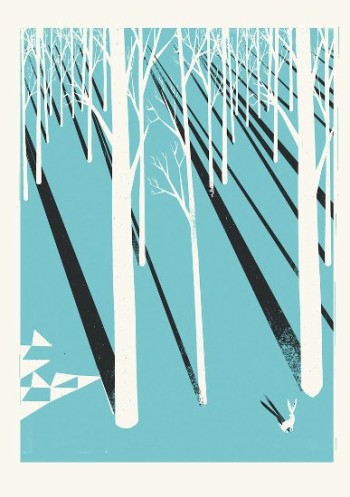
What’s Finnish about Pietari Posti’s work? “The prominence of nature, trees and forests,” he says.

What’s Finnish about Pietari Posti’s work? “The prominence of nature, trees and forests,” he says.Illustration: Pietari Posti

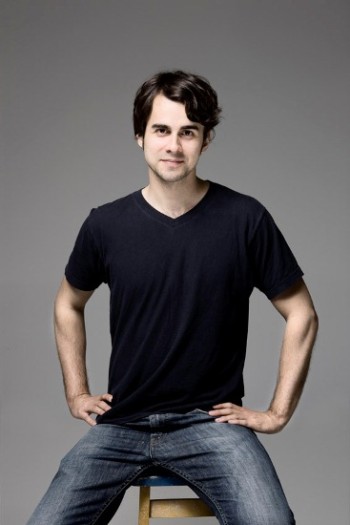
Pietari Posti, a prolific Finnish graphic designer and illustrator, works in Barcelona, Spain. Posti graduated from the Lahti Institute of Art and Design, after which he began his career abroad.

His CV includes magazine illustrations; book covers for publishers in Finland and other countries; and cups and bowls for Iittala. Posti, in similarity to Nieminen, considers his work to derive from a range of cultural influences, mostly outside his native country.

“Most of my influences, whether comics from my adolescent days or graphic design, derive from abroad,” says Posti.

“Yet I’ve always admired Tove Jansson [the writer and artist who created the Moomin books] and her ability to create a world of fantasy that provides so much.”

He praises Finnish industrial design for its minimalist elements. “The prominence of nature, trees and forests forms a recurring ingredient in my work,” he says. “Perhaps this is something that I have incorporated from my Finnish upbringing.”

Nothing is difficult

When Pietari Posti starts a project, sketching the first lines on paper or onscreen usually gets things flowing.

When Pietari Posti starts a project, sketching the first lines on paper or onscreen usually gets things flowing.Photo courtesy of Pietari Posti

It pleases Posti to witness the eminence of Finnish designers abroad: “I do follow modern graphic design to an extent, and I have to say it has been a delight to observe that Finnish designers and illustrators are well represented and recognised around the world.” Among them we could mention London-based designer and illustrator Klaus Haapaniemi; Paris-based graphic designers Anna Ahonen and Katariina Lamberg; shoe designer Minna Parikka; and clothing and accessory designer Paola Suhonen.

Reflecting the eclectic nature of design, Nieminen and Posti prefer different processes for capturing inspiration and working. The most essential tool for coordinating work with clients appears to be email. The rest may involve cultural activities, exhibitions or laidback free time to balance and complement various projects.

The simplest things can inspire a designer, such as colour combinations for Niemienen. She may get an idea from “a dark green sock next to a pale pink box, or a red jacket over a magenta collar shirt.”

Posti may struggle to get things started, he says, but sketching the first lines on paper or onscreen usually gets things flowing: “Nothing is difficult, really. Or at least I won’t admit that it is.”

By Annika Rautakoura, March 2014

Winter lifeline spans Helsinki Harbour

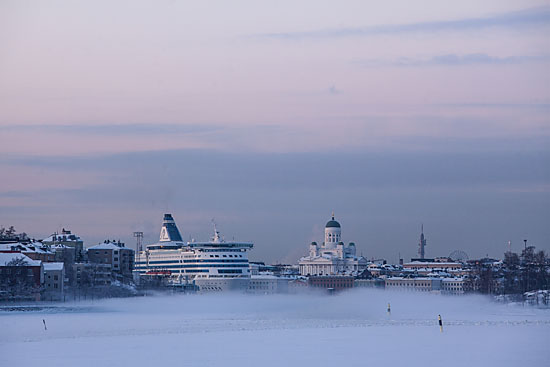
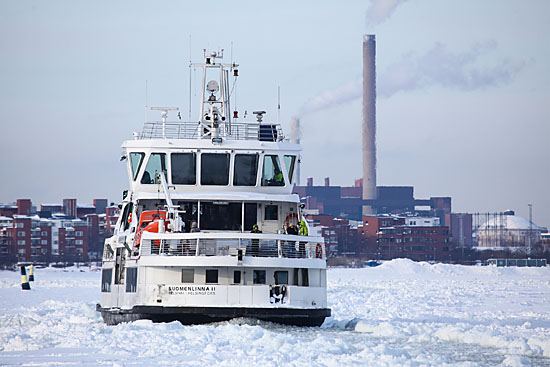
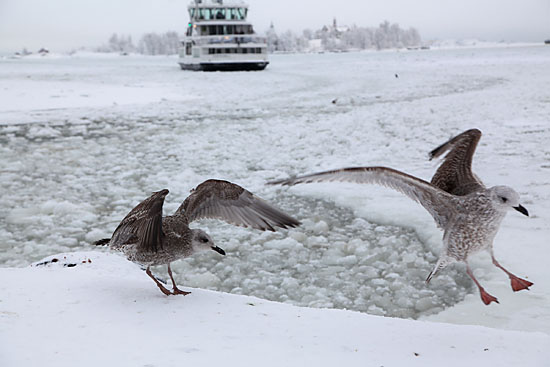
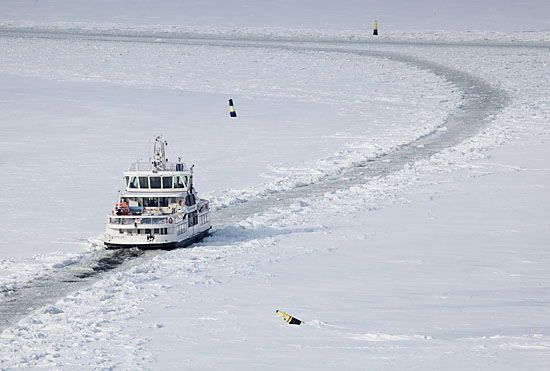
A community of some 800 people inhabits Suomenlinna, the group of historic islands in the entrance to Helsinki’s South Harbour. Ferry service forms a vital link to the mainland for them – not least when the harbour freezes over in winter.

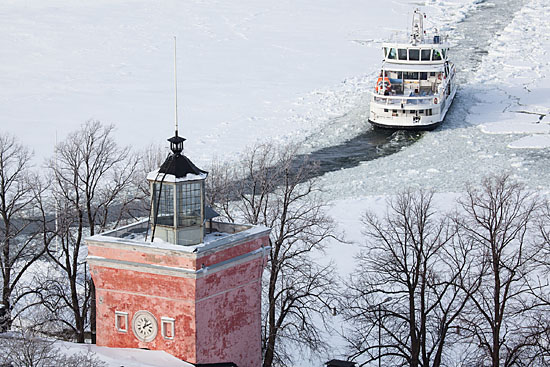
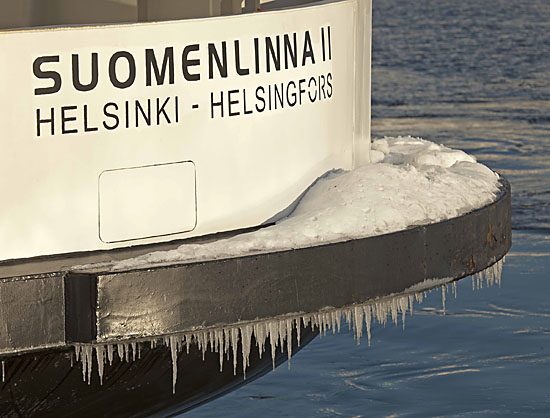
Incredibly, there used to be a winter bus service running across the ice between Kaivopuisto – the park at the southern tip of Helsinki – and Suomenlinna’s small archipelago, but a change in sea traffic lanes put paid to that. These days public transport takes the form of a ferry that shuttles from Market Square on 365 days of the year. The quick voyage is like a miniature Arctic exploration, a dazzling, spectacular adventure, as the ice groans around the flat deck of the ferry.

To Suomenlinna through a frozen sea

Photos and text by Tim Bird

Finns defend data-security frontiers

It was a nightmare scenario: A Finnish hospital accidently sold an old computer containing the records of more than 3,000 patients. But that mistake in 1997 led two Finns – Janne Tervo and Kim Väisänen – to realise that people and companies needed a way to secure their data.

They and other Finnish researchers, educators and businesspeople continue to develop novel solutions for today’s data-security issues.

Tervo and Väisänen founded a company called Blancco. Headquartered in the eastern Finnish city of Joensuu, close to the Russian border, the company now has 15 offices around the world. Its speciality is data erasure, so individuals and companies can securely clean information from computers and mobile devices. Its customers include the European Commission, NATO and numerous financial institutions.

Memory is long

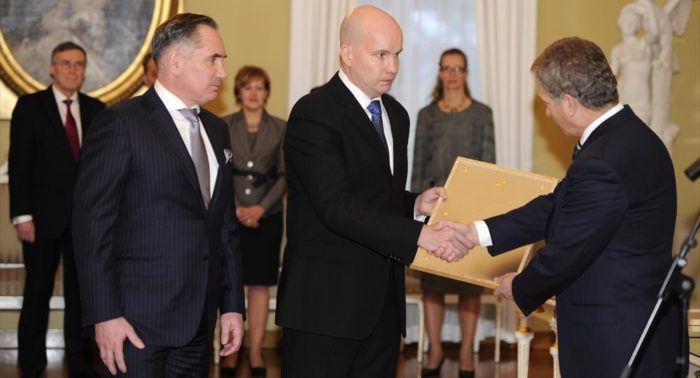
Finnish President Sauli Niinistö (right) recognised Blancco’s achievements with an Internationalisation Award in 2013. CEO Kim Väisänen (centre) and chairman of the board Michael Röchner took part in the ceremony.

Finnish President Sauli Niinistö (right) recognised Blancco’s achievements with an Internationalisation Award in 2013. CEO Kim Väisänen (centre) and chairman of the board Michael Röchner took part in the ceremony.Photo: Martti Kainulainen/Lehtikuva

“The majority of companies ignore the importance of data erasure,” laments Väisänen, who serves as CEO. “It would be fair to claim that when it comes to data erasure, ignorance is bliss. We in Blancco are like missionaries for educating the importance of data destruction.”

The simple fact is that most people don’t realise how data is stored and erased. Even if you think it has been erased, it might be recoverable.

“Everything you have saved to your device will be there for eternity unless the necessary steps are taken,” Väisänen explains. “With modern technology, it would be fair to claim that its memory is long and unforgiving.”

As technology changes and we store data differently – such as on mobile devices or in the cloud – Blancco has had to adapt nimbly to the changing environment. They now offer Blancco Mobile, which cleans smartphones. The company has also come up with innovative solutions to tough problems, such as the selective erasure of data.

“For example, credit card numbers are erased from databases after charging,” says Väisänen. “This is done to increase security against illegal use and to prevent greater damages if the credit card handler is hacked.”

Väisänen praises many governments for understanding the importance of data security and imposing fines for breaches. Yet while this is a “top-down” approach, there is also a “bottom-up” way to increase security: through educational institutions.

Hard and soft security

Many different kinds of data-security issues exist: Thinking of filing a patent? Internet searches can give away what you’re working on.

Many different kinds of data-security issues exist: Thinking of filing a patent? Internet searches can give away what you’re working on.Photo: creativity103/flickr, cc by 2.0

Samuli Pekkola of Tampere University of Technology in southern central Finland says that students are very keen to learn these things, but they may not necessarily realise how their data can be tracked or lost.

“Internet searches for patent information can reveal the topic someone is working on, so the database owner may easily reconstruct and guess the topic, and even some technical details,” Pekkola says. “There is a danger a service can be shut down at any moment, or that network traffic can be monitored all along the route from the end terminal – be it a PC, tablet or mobile phone – to the server.”

Finnish institutions study the data-security and privacy issues from two different approaches, Pekkola says.

“We have quite a strong background on ‘hard’ technical issues. [Finnish] companies like F-Secure, Stonesoft and SSH have been great examples of commercialising their findings. But we also have a lot of research on management, education and the ‘soft’ issues of data security.”

Tampere University of Technology continues the strong Finnish tradition of close partnerships between companies and universities to study both styles.

“Our students conduct information security reviews for companies,” he says. “This is beneficial to all parties: The students learn the topic, the companies gain reviews and instructions on how to solve problems, and our researchers gain the data about the state of the art of information security management.

“There are an awful lot of examples of someone’s personal information being misused – unauthorised purchasing, identity theft, blackmail and financial crimes. We try to teach students to understand the topic thoroughly, not just from the technical angle.”

By David J. Cord, February 2014

Living as a Finn in Finland

Finland celebrates Equality Day every year on March 19 in honour of writer, social activist and women’s rights advocate Minna Canth (1844–1897). We look at one of many modern-day Finnish success stories where Canth’s legacy remains visible.

Nasima Razmyar was born in Kabul, the capital of Afghanistan, in 1984. Her father worked as a diplomat, and the family followed him to Moscow. During the unrest in Afghanistan in 1992, the family came to Finland as refugees. In Finland, Razmyar has pursued her dreams with great determination.

Razmyar started school in Finland at the age of eight. She was nervous about the first day. In Finland, children are entitled to lessons in their native language. Razmyar did not know any Finnish, and she was afraid that no one would play with her. Her fear turned out to be unfounded: she made new friends immediately. No words were needed – children can communicate in many other ways.

Razmyar had always admired her father, and she dreamed about a job in politics. Instead of party games, her father used to organise news quizzes for the children. She and her little brother learned to keep up with international politics. They were interested in events in Afghanistan and Finland, their new home country.

Passing the good deeds on

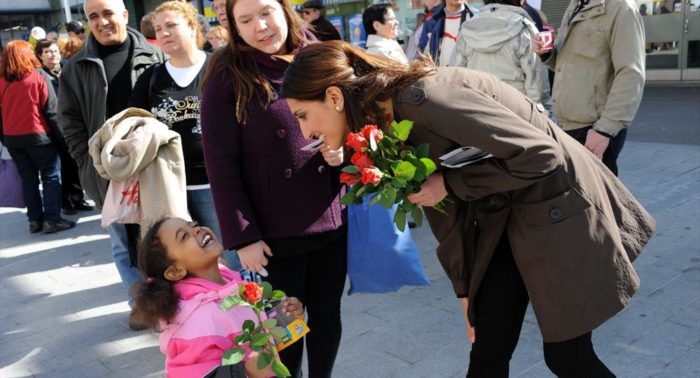
Outside a Helsinki shopping centre, Nasima Razmyar chats with people during the parliamentary election campaign of 2011.

Outside a Helsinki shopping centre, Nasima Razmyar chats with people during the parliamentary election campaign of 2011.Photo: Sari Gustafsson/Lehtikuva

Active and outgoing by nature, Razmyar engaged in peer support and student association activities while at school. Collaboration, a practical approach to problems and a positive outlook on life have continued to guide her choices.

“The people of Finland helped my family when we needed it the most,” says Razmyar. “I want to pass their good deeds on.”

Her language skills and international background have become valuable resources. In addition to Dari, her native language, she speaks Finnish, Swedish, English and Russian. She soon found herself helping immigrants, women, children and young people through various organisations, where she also held leadership positions.

She completed training to serve as a support person for immigrant women who have experienced violence, and took a mental health first-aid course organised by the Finnish Central Association for Mental Health. In addition, she studied political science and graduated as a community pedagogue from the HUMAK University of Applied Sciences in Helsinki.

Finland offers opportunities for success

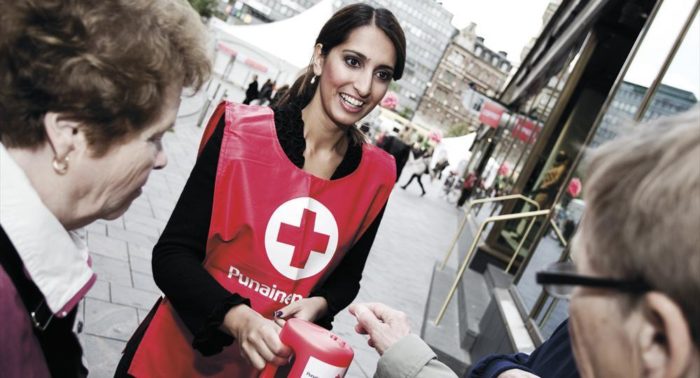
Razmyar participates as a collector in a recent Red Cross Hunger Day fundraising event.

Razmyar participates as a collector in a recent Red Cross Hunger Day fundraising event.Photo: Niklas Meltio/Red Cross Finland

Razmyar served as project manager for Monika, the Multicultural Women’s Association in Finland, in establishing the Multicultural Women’s House. In 2010, she was selected as Refugee Woman of the Year for her work to promote equality and diversity, which had also gained national publicity. In the same year, she was elected as a city councillor in Helsinki. In 2011, she was elected as a deputy Member of Parliament and has since worked as a political assistant and communications secretary in the Finnish Parliament. Razmyar’s dream is to represent Finland in the European Parliament one day.

She would love to represent the country that gave her a home and an opportunity to pursue the education of her choice. As a young woman, it might have been difficult for her to achieve the same elsewhere. She has worked hard to achieve her goals, but her persistence has paid off, as women in Finland have walked the path before her.

Razmyar has come to terms with her celebrity, even though she sometimes feels burdened by it. “I have wanted to give a face to immigrants,” she says. “We cannot choose our origin or the colour of our skin, but we should be able to choose our goals.”

In her work, Razmyar focuses on promoting equality; social justice; and employee and consumer rights.

The northern conditions in Finland may feel challenging at times, but Razmyar cannot imagine anything more beautiful than summers and winters in Finland. She also met the love of her life in Finland – which makes her feel that her path did not lead to Finland completely by chance.

By Aino Krohn, March 2014

Finnish innovations enrich auto industry

It’s so common that it may have happened to you. You’re driving your car, come around a turn and hit a patch of ice. You were being careful, but there was no way to know that slick spot was there. Until now.

Detection systems for slick roads form one of the innovative solutions that Finland is contributing to the automotive industry. Others include wooden cars and interactive dashboard displays.

VTT Technical Research Centre of Finland has developed a novel slipperiness detection system for vehicles – it warns nearby drivers of road conditions. VTT took advantage of Finland’s unique convergence of technical prowess and climatic conditions to come up with their innovation.

“The idea came when we were analysing information from some other projects,” says Kimmo Erkkilä of VTT. “That led to thinking about how this data could be used to detect slipperiness or lack of grip in general.”

Modern vehicles already collect information related to driving conditions, such as tyre spin for traction control. In VTT’s slipperiness detection system, a vehicle notices a slick spot and warns the driver. In real time, that data is also sent to a server and shared with other drivers in the area who can see the slick spot on their GPS maps. Additionally, the system can even alert road authorities so they know a particular patch of road needs attention.

“Our project team consists of specialists in vehicles, ICT and traffic,” Erkkilä says. “VTT has quite a wide range of technical research, which helps us to combine the needed knowledge easily – even if research areas are not that closely related.”

Cars made of wood

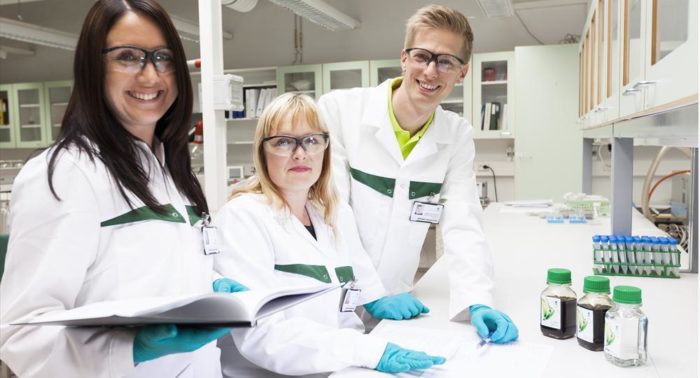
Blue gloves, green fuel: UPM’s Biofore Concept Car with parts made from wood-based materials, runs on BioVerno, UPM’s novel, wood-based, renewable diesel fuel (jar at far right).

Blue gloves, green fuel: UPM’s Biofore Concept Car with parts made from wood-based materials, runs on BioVerno, UPM’s novel, wood-based, renewable diesel fuel (jar at far right).Photo: UPM

Finland has a strong tradition of partnerships and interdisciplinary projects that leverage national advantages. Sometimes this leads in unexpected directions, like developing a wooden car.

The forestry company UPM teamed up with Metropolia University and Tekes, the Finnish Funding Agency for Technology and Innovation, to create the Biofore Concept Car for unveiling at the Geneva International Motor Show in March 2014).

“Renewable materials have smaller carbon footprints and are more sustainable versus their fossil-based counterparts,” explains Juuso Konttinen UPM’s vice president of new businesses and development. “They are also not as heavy as metal. A lighter car means less fuel consumption, fewer emissions and a smaller lifecycle carbon footprint.”

The car isn’t completely wooden, but many components have been replaced by wood-based materials such as plywood and tree pulp. The vehicle is roadworthy and street legal, and demonstrates that biomaterial can be used to improve environmental performance without sacrificing quality or safety.

Additionally, the modern diesel engine runs on UPM’s novel, wood-based, renewable diesel fuel. Even the design of the car comes from nature – its shape was inspired by the pinecone.

“Finland has a long history with wood-based materials and related science which gives an excellent foundation for developing new wood-based biomaterials,” Konttinen says. “The materials are a real sustainable alternative already today.”

Interactive dashboards

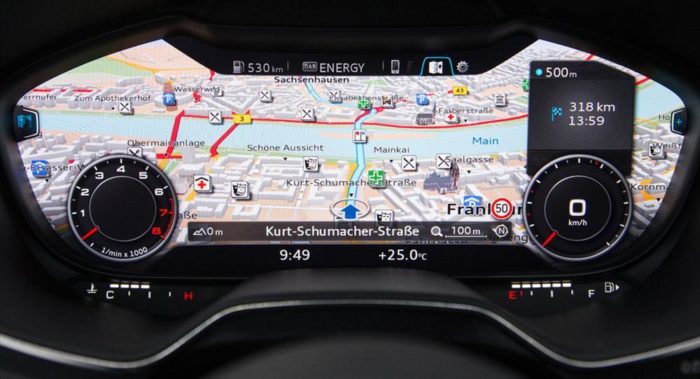
Audi is premiering the world’s first user-programmable instrument cluster with real-time 3D graphics, created using Finnish firm Rightware’s toolkit.

Audi is premiering the world’s first user-programmable instrument cluster with real-time 3D graphics, created using Finnish firm Rightware’s toolkit.Photo: Audi

Some of Finland’s pioneering ideas for the automotive industry are ready to be commercialised, but others are already in the market. The new Audi TT has the world’s first user-programmable instrument cluster with real-time 3D graphics, created with tools provided by the Finnish firm Rightware.

“Starting with our first commercial customer Audi we have rolled out the solution with several European premium car manufacturers,” says Rightware CEO Jonas Geust. “We have recently expanded geographically to Asia, Japan and the US.”

Drivers of the new Audi TT will enjoy images on their instrument panels which look like real materials – chrome gauges with dynamic lighting and shadows, for instance – thanks to the Finnish firm’s software expertise. Rightware has developed the Kanzi design toolkit to create such user interfaces.

“We expect the cost of the digital clusters will come down, and therefore we expect significant growth in demand,” continues Geust. “The digital clusters and in-vehicle infotainment systems will have more attractive user interfaces, which increase functionality but simultaneously reduce driver distraction.”

Now if a car maker adopts UPM’s wooden materials, VTT’s slipperiness detection system and Righware’s solutions to create a dashboard user interface, all these Finnish automobile innovations could find a home in one vehicle.

By David J. Cord, March 2014