Do Finnish androids dream of electric dumpsters?

From communicating with garbage cans to tracking rally cars, Finnish companies are finding unique approaches to the Internet of Things.

It’s Monday morning and the trash cans are talking. It was a long weekend and the bins say a lot of waste has been generated. They say more than that, too. They report their internal temperatures and even predict when they will be completely full.

Not all garbage bins are equal. In a quiet retirement community, a can may take a week to fill up, but another in a big block of flats may overflow daily. This is a goldmine of information if you want to run a city’s waste services efficiently, and this is where the Finnish company Enevo is finding its niche.

“Typically our customers operate on fixed schedule-based routes, which means the haulers visit the same bins on a particular day regardless if the bins need servicing or not,” says Pirkka Palomäki, Enevo’s chief operating officer. “We offer a full solution from sensors to navigation in the trucks. We also learn from history and provide a forecast, kind of like a weather forecast of waste.”

The company is generating press around the world for their ingenious solution to an old problem. Global investors have also been interested, and Enevo has received funding from Silicon Valley venture capitalists, Finnish Industry Investment and Nokia chairman Risto Siilasmaa.

More than trash talk
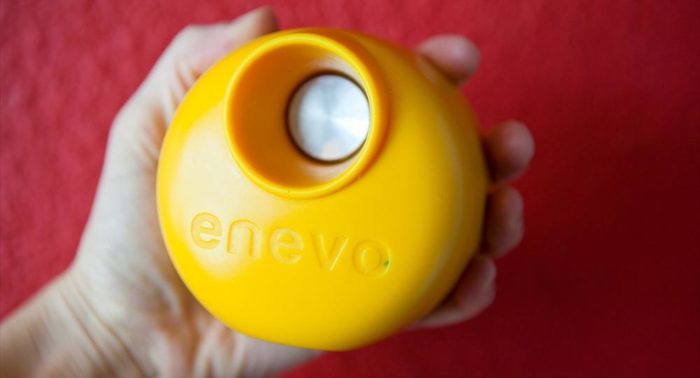
Placed inside containers, this type of sensor lets Enevo monitor garbage bins to help plot efficient collection route and schedules.

Placed inside containers, this type of sensor lets Enevo monitor garbage bins to help plot efficient collection route and schedules.Photo: Eeva Anundi/Enevo

Enevo’s service is an example of the Internet of Things (IoT), the network of physical objects that are embedded with electronics and connected to the internet. The big IoT evolution lies not only in sensors that collect data or transmitters that send it, but also in how that information is used.

It’s relatively simple to imagine a trash bin that measures how full it is. But imagine a city with thousands of bins filling up at different rates, dozens of garbage trucks and millions of potential collection routes. Enevo tells its customers the most efficient way to empty the bins.

“The core of our data analytics is making the most out of savings, meaning fewer trucks on the road, less CO2 emissions and significant savings in the operation,” says Palomäki.

With a little imagination, you can see their solution being used for all sorts of deliveries and collections, but Palomäki says right now they are focused on waste management. “There are obviously many applications that we can address later on,” he says. “At this stage it is important that we stay focussed and provide the best solution.”

Things get online
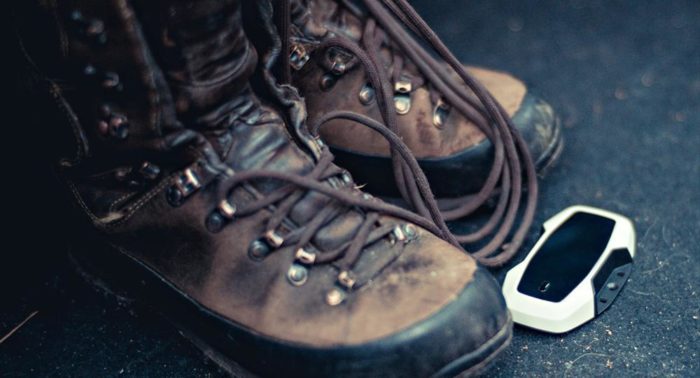
Thingsee One allows users, wherever they may wander, to invent applications that expand the Internet of Things

Thingsee One allows users, wherever they may wander, to invent applications that expand the Internet of ThingsPhoto: Thingsee

While Enevo concentrates on a single aspect of the IoT, another Finnish company is taking the opposite approach. Based in the northern city of Oulu, Thingsee creates the hardware and mobile application, and how it is used is up to you. The device includes a GPS locator, gyroscope and magnetometer. Sensors register light, pressure, temperature and humidity.

“I have seen some pretty cool innovations,” says cofounder Ville Ylläsjärvi. “One was an off-road application for a car. To call it ‘interesting’ is too mild a word.”

With the Thingsee One device, a rally car can send data to its support team about acceleration, speed, location or even its tilt. Other ideas Ylläsjärvi has seen include an alert when the mailman arrives and a tracker for a hobbyist’s balloon.

The whole project is built upon openness and flexibility, he says. People interested in development can create software on the open-source platform. The device can be used by a technical novice in a hobby project or by professional developers who want to test an idea. Its versatility is not just for curious individuals. One of the largest potential markets is companies building their own IoT offerings.

“We are contacted daily by companies wanting to build new services,” Ylläsjärvi says. “It’s the world’s first smart developer device.”

By David J. Cord, April 2015
Exploring the Finnish affinity for coffee

 Who would have guessed? The Finns are among the biggest coffee drinkers in the world, and have been for decades. Every Finn has his or her own reasons for loving coffee.

When she starts talking about coffee, Erja Korhonen is almost unstoppable. A television scriptwriter, she admits that she can’t start her day without drinking two big mugs, prepared in a typical Finnish way with a bit of milk and no sugar. “I like the way I feel after drinking it,” says Korhonen, who also says she is quite picky about her coffee.

Finnish coffee is often made from light-roasted beans and tastes a bit acidic. Yet tastes have expanded, and nowadays Finnish producers and the country’s booming café culture cater to all preferences, offering a spectrum from light to dark.

Twelve kilograms a year

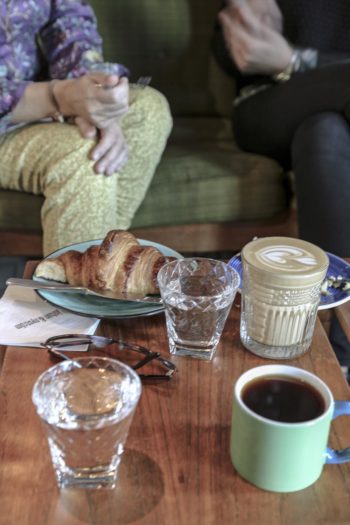
A coffee table set with cups of coffee, glasses of water and a croissant.

Café culture is booming in Finland. (This table lives at Johan & Nyström in Helsinki.)Photo: Joanna Nylund

According to the International Coffee Association, each Finn consumes 12 kilograms of coffee per year. This makes Finland the second-largest country in the world for per capita coffee consumption. If it was calculated differently, it might even take first place: Luxembourg currently holds the lead, not because of the coffee habits of its inhabitants, but because of cross-border trade with its neighbours.

The love story between Finns and their kahvi has lasted for more than a century. Finnish novels, paintings and essays from the early 20th century all show how important the drink had already become.

Even nowadays, Finns often like to tell anecdotes about their forebears’ relationship to coffee. Maria Oiva, another Finnish coffee lover, smiles when she talks about her grandfather. “He was a theatre director in Helsinki,” she says. “When he was working, his cup of coffee always had to be full. One day, he had some health problems. The doctor asked him how many cups of coffee he drank every day. He had no idea! So he started to count. He reached 35 cups a day. That’s huge!”

When she tells the story to her Finnish friends, Maria says they are very surprised at first. “But then they think for a while and say, ‘Well, yes, maybe that could happen to us, too.’”

Hot beverage breaks the ice

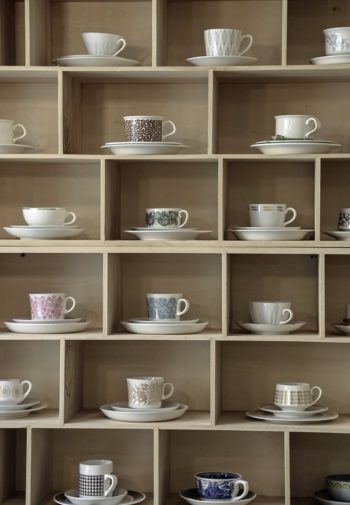
Different coffee cups on rectangular shelves.

Pick a cup, any cup: Tools for coffee drinking are on display at Andante, a café in Helsinki.Photo: Joanna Nylund

Lasse Vidman, an award-winning Finnish barista, says their passion for the hot beverage is hard to explain. “Part of the reason could be that we live in a cold country, so we need to drink warm, sustaining beverages,” he says.

He also suggests another, more sentimental reason: “Coffee is also linked with our best memories. For instance, when I was a child, I loved to go ice-fishing in the winter, with a thermos full of good, hot coffee in my bag. I am also sure that every Finn remembers where he or she was when he had his or her first taste of coffee.”

Coffee also forms an important part of social interaction in Finland. Korhonen has noticed it at her workplace. “Coffee breaks the ice,” she says. “During the coffee break, my colleagues and I talk about other things than work. We get to know each other. And all this thanks to coffee. Can you believe it?”

By Pauline Curtet, June 2015

New Finnish government tests the waters

Political reporter Unto Hämäläinen of Finland’s largest daily, Helsingin Sanomat, predicts what the country’s new government coalition may or may not accomplish.

Finland’s main political parties started to discuss the formation of a new government immediately after the parliamentary elections on April 19. The new tripartite government finally named on May 29 has been formed by the three parties from the centre and right wing of the political spectrum who gained the most seats in the election: the conservative Centre Party, the populist “Finns” Party, and the moderate conservative National Coalition Party.

The Centre Party and the National Coalition Party are long established parties who have often been in government. The “Finns,” contrastingly, are entering a governing coalition for the first time. The government will enjoy a strong majority, with its parties holding 124 of the 200 seats in Finland’s parliament.

Game of thrones

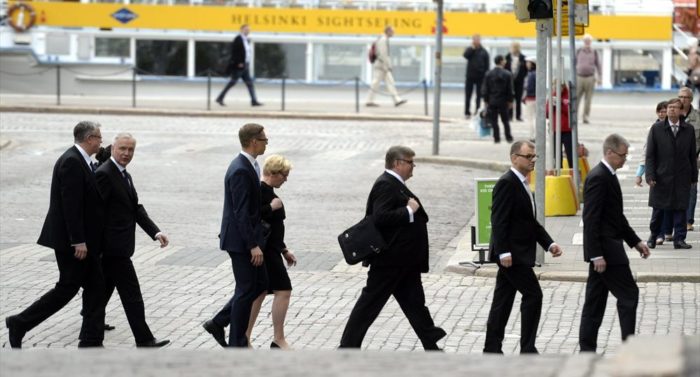
The new cabinet members pass a Helsinki sightseeing boat on their way to a press conference.

The new cabinet members pass a Helsinki sightseeing boat on their way to a press conference.Photo: Antti Aimo-Koivisto/Lehtikuva

The new prime minister is the Centre Party’s chairman, Juha Sipilä, a first-timer in government. Sipilä, 54, first became a member of parliament in 2011, and was chosen to lead his party a year later. Before entering politics he set up a successful business and went on to serve as CEO at a major IT company.

The Centre Party were the big winners of the election, increasing their share of parliamentary seats from 35 to 49. The party had been in opposition since losing 16 seats in a dramatic election defeat in 2011.

The Centre Party’s main partners in opposition for the last four years were the “Finns,” who had increased their share of the vote more than any other party back in 2011, when they won 39 seats compared to just 5 in the previous parliament in an exceptional performance that rewrote Finnish electoral history. The “Finns” nevertheless chose to remain in opposition in 2011, after vehemently opposing the provision of support to Greece and Portugal by Finland and the other Eurogroup countries.

The “Finns” maintained their popularity in this spring’s election, winning 38 seats. Timo Soini, who has led the party for the last 18 years, is Finland’s new minister for foreign affairs.

The third party in the new government, the National Coalition Party, had been the largest party in the previous parliament and government. But this spring they suffered a bitter defeat, losing seven seats and ending up with 37. In spite of this setback, the party will remain in the new government, with party leader Alexander Stubb demoted from prime minister to minister of finance.

Treading a fine line

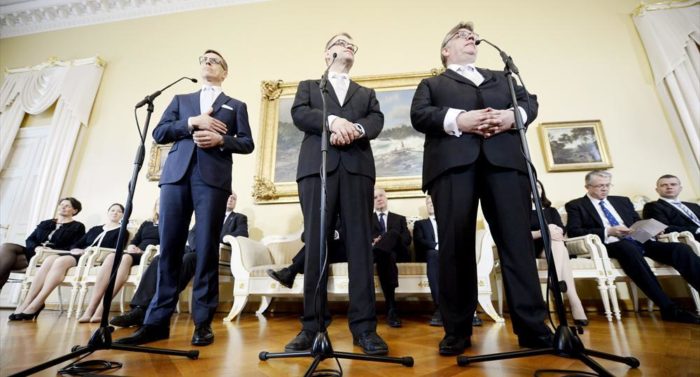
Prime Minister Juha Sipilä (middle) announces the formation of his new cabinet, flanked by Minister for Foreign Affairs Timo Soini (right) and Minister of Finance Alexander Stubb.

Prime Minister Juha Sipilä (middle) announces the formation of his new cabinet, flanked by Minister for Foreign Affairs Timo Soini (right) and Minister of Finance Alexander Stubb.Photo: Antti Aimo-Koivisto/Lehtikuva

Mr Sipilä’s government aims to emphasise continuity in its foreign and security policies. Finland will remain officially non-aligned, but wishes to hang on to the option to apply for NATO membership at a later date. Military cooperation with Sweden will be enhanced.

Finland still aims to maintain good relations with neighbouring Russia, in spite of continuing approval for EU economic sanctions against Russia. Experts reckon that the crisis in Ukraine has weakened security in the Baltic Sea region. It is expected that this situation will be evaluated in more depth during the new government’s time in office. Its programme stipulates that: “The Government will prepare a Report on Finnish Security and Defence Policy and, in connection with its preparation, assess the effects of Finland’s possible NATO membership. In addition, it will prepare a defence report defining defence policy guidelines for the maintenance, development and exercise of defence capability.”

The new government programme also includes three highly significant statements related to EU policy:

1) The European Union must focus on the most essential issues; it is not necessary to deepen integration in all policy areas.

2) The Government is opposed to increasing Finland’s liabilities in handling the euro crisis.

3) The EU is an important security community for Finland. Finland supports the strengthening of the EU’s Common Security and Defence Policy and the reform of the Union’s Security Strategy.

Significant savings scheduled

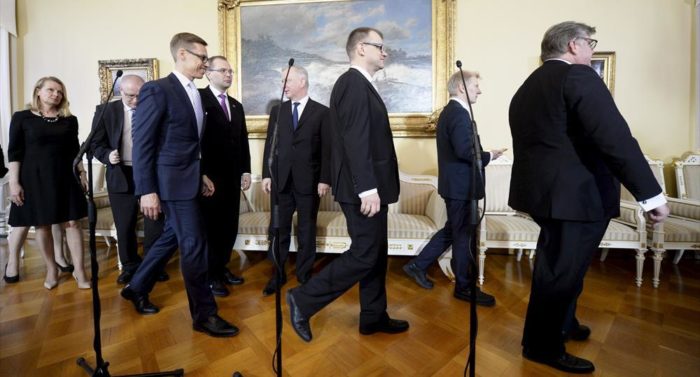
A flock of 14 newly minted ministers arrange themselves to prepare for a smiling group photo.

A flock of 14 newly minted ministers arrange themselves to prepare for a smiling group photo.Photo: Antti Aimo-Koivisto/Lehtikuva

In the middle of the negotiations to form the new government, Finland received bad news from the EU Commission, whose forecasts indicate that Finland’s economy is likely to grow next year by just one percent, while the growth rate in the Eurozone as a whole is expected to be 1.9%. Investments are meanwhile declining in Finland for the fourth year running.

The Commission believes that Finland will no longer be able to comply with the debt and the deficit criterion of the Stability and Growth Pact. The budget deficit is expected to exceed the 3% threshold, while national debt may soon exceed 60% of gross national product.

The new government aims to shake up public sector finances with a heavy hand. Savings amounting to four billion euros have already been lined up, with cuts coming in all parts of the public sector except defence. Significant savings are particularly envisaged in social and health services, education and business subsidies.

On top of these savings the government is threatening to make cuts of a further 1.5 billion euros if the trade unions do not agree to sign up to a new social contract this summer. The government hopes to persuade the unions to agree to longer working hours without pay rises, which in practice means reduced pay rates.

According to a government estimate, Finland’s competitiveness has weakened by 10–15% compared to major competing countries, making Finnish products less attractive in markets around the world.

The unions have accused the government of blackmail – and their views have been backed by the “red-green” opposition bloc in parliament, which includes the Social Democrats, the Left Alliance and the Greens.

A long summer ahead

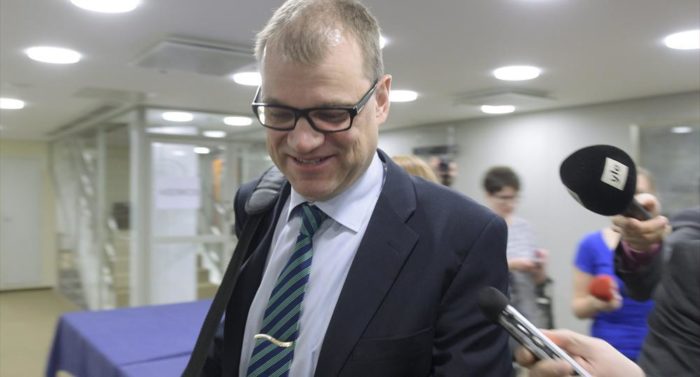
Allowing himself a wry smile, fledgling Prime Minister Juha Sipilä sidesteps a few reporters.

Allowing himself a wry smile, fledgling Prime Minister Juha Sipilä sidesteps a few reporters.Photo: Martti Kainulainen/Lehtikuva

During the government-shaping negotiations the Social Democrats’ chairman Antti Rinne, who had been minister of finance in the previous government, accused Juha Sipilä’s government of endangering social stability by threatening to target families, students, pensioners and the unemployed with hefty cuts if the unions do not agree to lower pay or longer hours.

The Greens’ chairman Ville Niinistö, who served as minister of the environment in the last government, and Left Alliance chairman Paavo Arhinmäki, former minister of culture and sport, criticised the parties in the new government for failing to meet promises made during their election campaigns. Before the election all of the parties pledged they would not cut spending on education. But such cuts now lie ahead.

Finland’s economic woes have also attracted the attention of academics. The American Nobel-laureate economist Paul Krugman recently wrote two blog posts assessing the Finnish economy, published in the New York Times at the end of May and in early June.

Krugman puts the main blame for Finland’s poor economic performance on the euro’s position as a shared currency. The euro has become a straightjacket that stops Finland from restoring its competitiveness by devaluing its own currency. Krugman recalls how during the slump of the early 1990s Finland devalued the mark and managed to rapidly enhance competitiveness. But because Finland no longer has its own currency, the only way to restore competitiveness today is through internal devaluation achieved by reducing pay rates, he forecasts.

The new government will most likely endure a rough ride through its first summer in office. The goal is to have a new social contract signed by August 21. At the time of writing, in early June, it feels as if building such an agreement will be very difficult.

By Unto Hämäläinen, June 2015

Finnish punk music is alive and kicking

While Finnish metal bands have a huge following abroad, punk rock has also produced its own fair share of international cult acts over the last several decades. Finland even sent punk band Pertti Kurikan Nimipäivät (PKN) to the Eurovision Song Contest in 2015. We check out the surprisingly colourful story of Finnish punk.

Language is the most obvious thing that sets Finnish punk apart. The majority of the bands have always sung in Finnish. Rhythmically, Finnish is well suited to punk’s often aggressive style. The music is often extremely melodic, too – a little more so than in other European punk scenes. The raw immediacy in much of the punk music originating in Finland has made local groups, especially hardcore bands, popular in similar scenes as far away as South America. Finnish punk was born around 1977 and its first golden age lasted until roughly 1984. Now it’s fast approaching middle age – and experiencing a new and slightly unexpected success.

Protest and moral panic

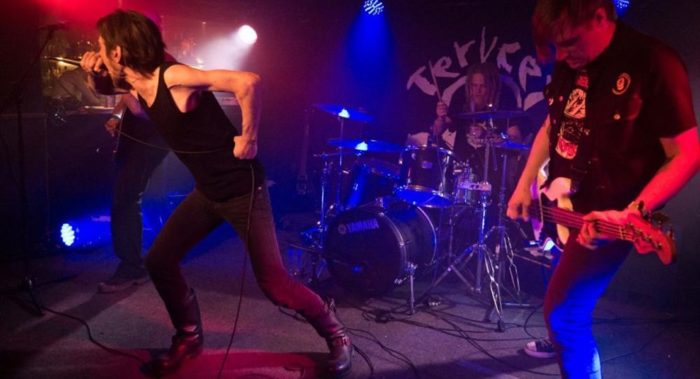
Hardcore band Terveet Kädet started in Finnish Lapland in 1980 and still tour the concert circuit.

Hardcore band Terveet Kädet started in Finnish Lapland in 1980 and still tour the concert circuit.Photo: Terveet Kädet

The Sex Pistols had an impact on the early stages of punk in Finland, as they did in so many countries. The UK band was supposed to play Helsinki on January 18, 1978, but an incendiary article about them in the country’s largest newspaper, Helsingin Sanomat, together with the perceived degeneracy of punk, inspired a variety of youth organisations and others to launch a protest. The band was denied work permits by the Minister of Interior himself and had to cancel the appearance. This moral panic provided punks in Finland with a common enemy and plenty of publicity, but the seeds for the movement had been planted earlier. The first punk record was released in 1977: I Really Hate Ya by Briard, a band consisting of Pete Malmi and Andy McCoy. The latter went on to find fame as the primary songwriter and guitar hero of Hanoi Rocks. Other bands that made it into the studio over the next few years included “godfather of Finnish punk” Pelle Miljoona, punk pranksters Eppu Normaali, Sehr Schnell, Sensuuri and Widows, one of a very small number of first-wave Finnish punk bands to sing in English. This period showed great stylistic variance. Se was the most musically varied from the get-go, with lyrics tending towards the romantic and the poetic. They were post-punk when punk was just starting out. DIY pioneers Ypö-Viis combine the Buzzcocks’ pop smarts with a much rougher sound. Sensuuri has a similarly deft melodic touch.

A punk band in every Finnish town

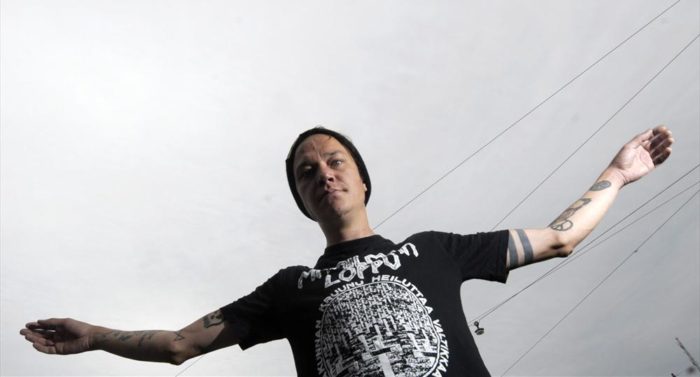
Teemu Bergman leads the group Pää Kii and is involved in numerous other punk projects.

Teemu Bergman leads the group Pää Kii and is involved in numerous other punk projects.Photo: Vesa Moilanen/Lehtikuva

The greatest band of the first wave was probably Ratsia, which started out clearly influenced by London punkers, but became increasingly epic as the 1970s edged into the ’80s. In the end they sounded like a punk band cruising down some mythical Thunder Road in a Springsteen dream. The early punk scene was incredibly rich and vibrant, with a punk band or two in almost every rural town. The next time Finland saw anything like this was in the 2000s with rap, which also became a primarily Finnish-language genre. By 1980 punk was turning towards hardcore – an altogether more aggressive and less melodic beast. Finnish hardcore bands were heavy and extreme, and many of them are still popular all over the world today. Terveet Kädet from Tornio, Lapland is still active and has influenced countless bands, from Brazil’s Sepultura on down. Rattus managed to carve out a totally unique, slightly metallic sonic signature and is also still recording and playing. Kohu-63 had a promising international career cut short when one of the members ended up in jail. Kaaos is one of the most legendary bands of the early ’80s hardcore scene. Svart Records, based in the southwestern Finnish city of Turku, can make money rereleasing the genre’s classics on vinyl over 30 years later and selling them to an international audience.

Eurovision and beyond

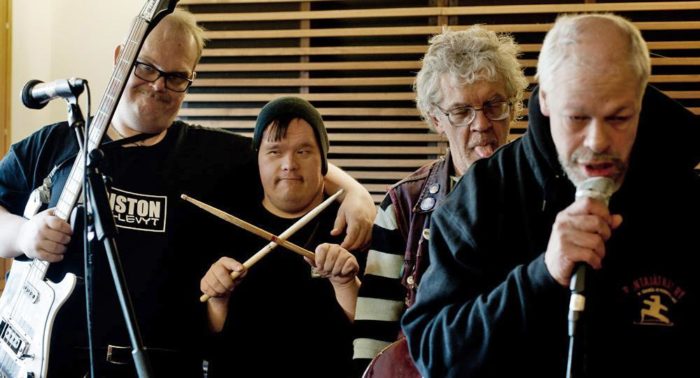
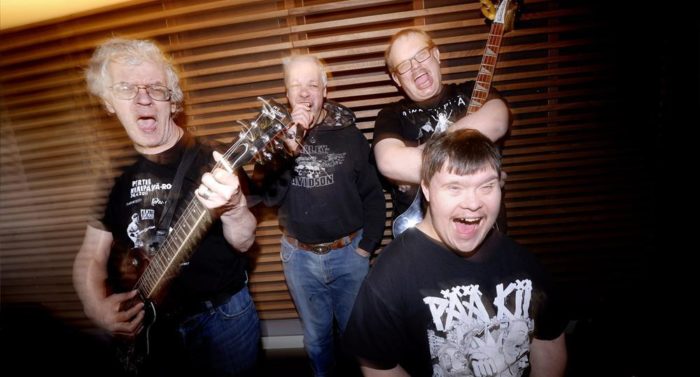
Pertti Kurikan Nimipäivät (PKN), a punk band whose members all have learning disabilities or other disabilities, won the honour of representing Finland at the 2015 Eurovision Song Contest.

Pertti Kurikan Nimipäivät (PKN), a punk band whose members all have learning disabilities or other disabilities, won the honour of representing Finland at the 2015 Eurovision Song Contest.Photo: Susanna Alatalo

The accepted truth about post-1985 punk rock is that it’s a little off. Especially the 1990s are generally considered a dire period. This view is ripe for reappraisal. The new rise of Finnish punk, which started around 2005, encompasses many styles. Hook-ridden songwriting comes courtesy of numerous projects helmed by compulsive songwriter Teemu Bergman (including Pää Kii, Heartburns and Kytänsoittajat), as well as Lähtevät Kaukojunat and The Splits. The latter group records on US label Dirtnap Records. Hardcore is still going strong, too, with bands like Perikato and Maailmanloppu. Finland’s 2015 Eurovision representatives, PKN, have been spreading the word for years. There are also underground heroes such as Seksihullut, Kivesveto Go Go, Nyrkkitappelu, The Achtungs, Maakuntaradio, Valehtelijat and countless others. Finnish punk is still in rude health, and looks set to stay that way for a long time.

By Arttu Tolonen, April 2015

An artist’s mark on the story of Finland

As Finland celebrated the 150th anniversary of Akseli Gallen-Kallela’s birth, we took a closer look at a great artist whose influence on Finnish society spans everything from pre-independence political paintings to modern-day tattoos.

One of the most renowned pieces of art to emerge from Finland is The Defence of the Sampo, by Akseli Gallen-Kallela (April 26, 1865–March 7, 1931). This vivid depiction of a pivotal scene from the Finnish national epic Kalevala is even more striking when you see it up close. Some people take this notion quite literally: One Finnish man has a replica of the painting tattooed across his back, a type of canvas that was considerably underutilised during Gallen-Kallela’s lifetime. “People now feel his art is so important that they want to put it on their skin forever,” says Tuija Wahlroos, director of the Gallen-Kallela Museum. “There is always a reason why they chose his work and what it means to them.”

Kalevala and beyond

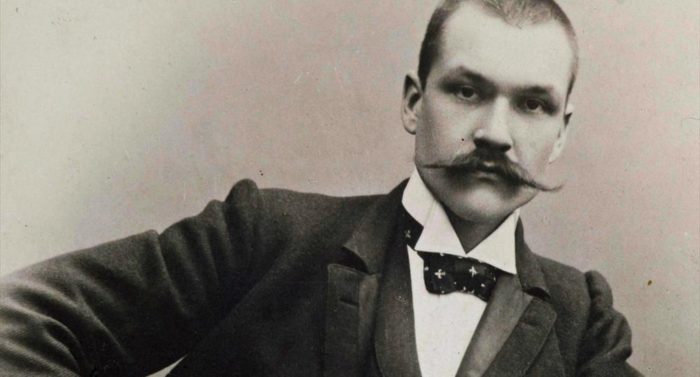
Not as stern as he looked: Gallen-Kallela shows off his hipster moustache in this 1890 studio portrait

Not as stern as he looked: Gallen-Kallela shows off his hipster moustache in this 1890 studio portrait.Photo: Daniel Nyblin/Gallen-Kallela Museum

Such motives and motifs are revealed on July 4, 2015 at the museum, located in the artist’s former home just outside of Helsinki. In an event that seeks to expand people’s picture of the artist, photographs of people showing off tattoos inspired by Gallen-Kallela’s work will be accompanied by commentary. “His images are so well adapted to tattoos,” Wahlroos says. “They are very clear-lined and strong in many ways. This shows interestingly how Gallen-Kallela’s art transfers. I told this to a colleague who lives in the UK and he was so jealous that we have this kind of thing here.” Gallen-Kallela was greatly inspired by the Kalevala. He planned a richly illustrated version nicknamed the Great Kalevala, and completed illustrations for five of the 50 Kalevala “runes” before his death. The ceiling frescoes in the entry hall of the National Museum in Helsinki form another example of his passion for the national epic. Nonetheless, the Kalevala was just one of many interests for an artist whose legacy remains hugely influential in the Finnish art world. Gallen-Kallela was adept in artistic fields, including architecture, and championed graphic design in Finland. He also created the first example of modern Finnish design at the Paris World Fair in 1900 with Liekki (Flame), a rug artwork woven using the traditional ryijy technique.

Work ethic and family life

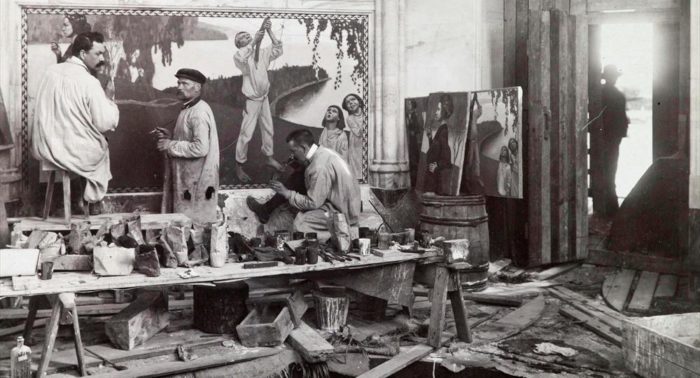
In this 1902 photo, Akseli Gallen-Kallela (left) and assistants are painting the fresco “Spring” in the Jusélius Mausoleum in the west-coast town of Pori.

In this 1902 photo, Akseli Gallen-Kallela (left) and assistants are painting the fresco “Spring” in the Jusélius Mausoleum in the west-coast town of Pori.Photo: Gallen-Kallela Museum

Photographs suggest that the artist was a stern gentleman, surrounded by privilege – a misperception that Wahlroos is keen to dispel. “The picture of Gallen-Kallela has become too stuffy,” she explains. “In his time he was hardworking and lived a not-so-luxurious life that was rich in many other ways. He was normal father and had the same kinds of problems as everyone else.” History has also painted Gallen-Kallela as a frequent socialiser. Parties with the likes of famed composer Jean Sibelius (also born in 1865) have become folklore. While the artist certainly enjoyed socialising on occasion, such gatherings took place in the midst of great artistic productivity. “He had a very high work ethic,” Wahlroos says. “If you think about his vast life’s work, thousands of paintings and other artworks, it is obvious he couldn’t have done all this if he was frequenting bars or restaurants all the time. On the contrary, he enjoyed family life.”

Independent spirit

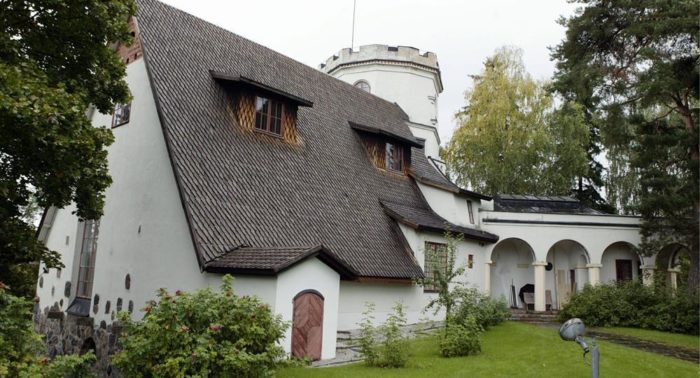
The artist built a studio and house, complete with a castle-like tower, by the sea at Tarvaspää, just outside Helsinki. It is now the Gallen-Kallela Museum.

The artist built a studio and house, complete with a castle-like tower, by the sea at Tarvaspää, just outside Helsinki. It is now the Gallen-Kallela Museum.Photo: Helinä Kuusela/Lehtikuva

Testament to his diverse interests, many of these artworks and personal items are on display at the Gallen-Kallela museum. His 1906 painting The Royal Ship of Free Finland, on loan from the Reitz Foundation, depicts the most pressing cultural issue of the era: Finnish independence. Like many of his contemporaries, Gallen-Kallela commented on the brewing discontent with Russian rule through his work. His societal impact became even more prominent after independence was achieved in 1917; he was named as General C.G.E. Mannerheim’s adjutant in 1919. Over the course of a year he created numerous symbols of independence, including a proposed design (eventually rejected) for the Finnish flag. Perhaps his most notable work was designing the medals that make up the Order of the White Rose of Finland, a system still in use today for honouring military and civilian merit. The artist’s spirit lives on, both in Finland and abroad. “Gallen-Kallela had a wide international network,” Wahlroos says. “In our archive we have the letters he received, from more than 2,000 people all over the world.”

By James O’Sullivan, April 2015

Finnish author writes memories of the future

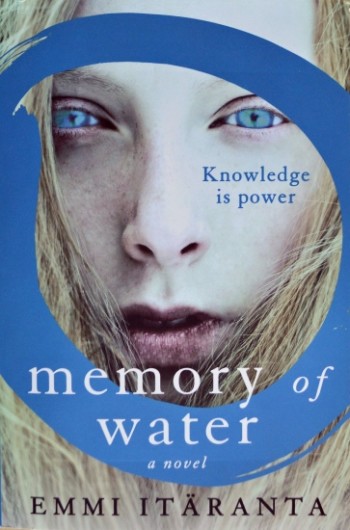
Emmi Itäranta’s novel Memory of Water is unusually successful in many ways. With elements of science fiction and mystery, the story takes place in the future but comments sharply on present environmental and political issues.

In a rare feat, the author herself translated the book. Actually, she wrote it simultaneously in English and Finnish, switching between versions. The US version appeared with a first print run of 50,000 – an impressive vote of confidence in a country known to have a narrow market for translated literature. Memory of Water has made the shortlist for prestigious sci-fi prizes named after influential writers on both sides of the Atlantic: the Arthur C. Clarke Award in the UK and the Philip K. Dick Award in the US.

A primitive future

It’s not entirely correct to call “Memory of Water” translated literature; Itäranta wrote it in both English and Finnish.

It’s not entirely correct to call “Memory of Water” translated literature; Itäranta wrote it in both English and Finnish.Photo: Heini Lehväslaiho/Teos

The novel presents a world that is simultaneously futuristic and primitive. The author transports us to a very changed version of our earth that is still within the realm of reality, or even probability. Itäranta’s future world lets her comment on our current events, including environmental threats and trampled human rights.

In the book, the Finnish coastline has changed, leaving much of today’s Finland under water. Drinkable water is scarce and heavily rationed by a brutally repressive military dictatorship.

In a moving passage early on, Itäranta’s teenage main character Noria envisions the past – our present. She gazes over a former landfill site – a “plastic grave” – and tries to understand how people in our time thought and felt, just as Itäranta, in creating Noria’s story, tries to picture the conditions and feelings of the future:

“Their past-world bleeds into our present-world,” Noria narrates. “Did the present-world, the world that is, ever bleed into theirs, the world that was? I imagine one of them standing by the river that is now a dry scar in our landscape….Something that has not yet been is bleeding into her thoughts.”

Noria wonders if the people of the past cared at all about the effect of their actions on the world. Did they try to change their behaviour and make a difference, or were they indifferent?

Parallel visions

3396-17194184499_76caea4910_odeppujensen-ccbyncsa-550px-jpg

The coverline on one version of “Memory of Water” reads “Knowledge is power;” on another version it says “Some secrets demand betrayal.”Photo: eppujensen/flickr cc by-nc-sa; cover: HarperCollins

It’s not entirely correct to call Memory of Water translated literature. Itäranta, who was born and raised in Tampere, Finland and has lived in England since 2007, wrote the Finnish and English versions in parallel. “I started writing this book while doing a creative writing degree at the University of Kent, so obviously I had to do it in English,” she says.

“Once I had written one or two chapters, I realised that it would be really useful to get some feedback from my Finnish writing group. We meet once a month online. So I wrote those early chapters in Finnish, too. As I was doing that, I began to realise that working in both languages actually helped me polish the writing, because I had to look at it so closely.”

Soon she developed a routine. “Most of the time I ended up writing the first draft of each chapter in Finnish, then I would translate it into English and edit it, making some changes as I translated, then update the Finnish version of the chapter.”

Two things set her method apart from a conventional translation: It goes in both directions between the two languages, and the author herself writes both versions. “Each chapter actually took shape through those two languages,” Itäranta says.

Making your own choices

3396-99-teos-550px-jpg

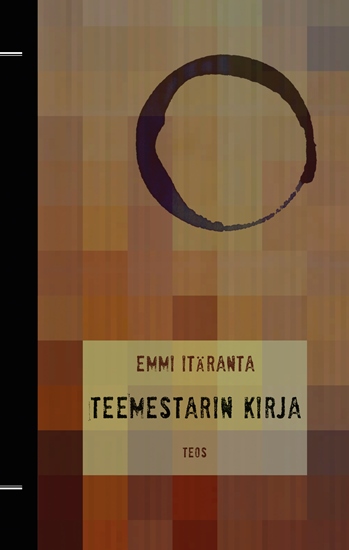
The cover of the Finnish hardcover edition looks very different. There is also a separate title in Finnish: “Teemestarin kirja” (The Tea Master’s Book).Cover design: Ville Tiihonen/Teos

The teenager Noria is a tea master’s daughter, and will soon take the test to become a tea master herself. The tea ceremony tradition, transplanted to Finnish territory generations before the story begins, forms a powerful symbol in a world where water is limited.

The title Memory of Water invites interpretation: the society in the book has only a collective memory – if that – of plentiful, clean water as Finland knows it today, but the water in the story can also be said to carry and reveal its own memories and reminders.

Water also offers a vehicle for commenting on dictatorial politics and environmental inaction. The novel’s description of military dictatorship seems to pass judgement on the conveyor belt of dictators that we see in the news today. “It was intentional,” says Itäranta. “I thought, What would the political consequences be if drinking water was such a valuable, scarce resource? Dictatorships control resources as a tool of power to control people.”

“I think that as a species we have a built-in capacity for self-destructive behaviour, but also a built-in capacity to improve things, to make a change,” she says.

All this is framed by the events of Noria’s life. “The story is really about coming of age and learning to make your own choices rather than taking for granted what your parents have told you or what society tells you,” the author says.

“Sometimes you have to make a choice that may not help you, but you know it’s the right thing to do.”

By Peter Marten, May 2015

Finnish band PKN storms punk’s final frontier

We talk with the members of Finnish punk band Pertti Kurikan Nimipäivät (PKN) about how it feels to represent Finland in the 2015 Eurovision Song Contest in Vienna, Austria (May 19–23).

Since its inception in the 1970s, punk rock has managed to infiltrate, in one form or another, just about every cultural nook and cranny in existence, from children’s music to New York’s Metropolitan Museum of Art. One arena that has resisted its irreverent charms is the Eurovision Song Contest. Every other genre under the sun, from Balkan rap to Eurodance opera, has had its day, but the event’s fundamentally kitschy nature and wholehearted embrace of cargo-cult-like conceptions of glamour has served as an effective bulwark against punk rock, a genre that sets great store in streetwise ideas of authenticity. Until 2015, punk and Eurovision had never crossed paths, but that all changed when Finland chose its representative on February 28, 2015. Every country holds a national selection process ahead of the main Eurovision event.

Big-time spotlight

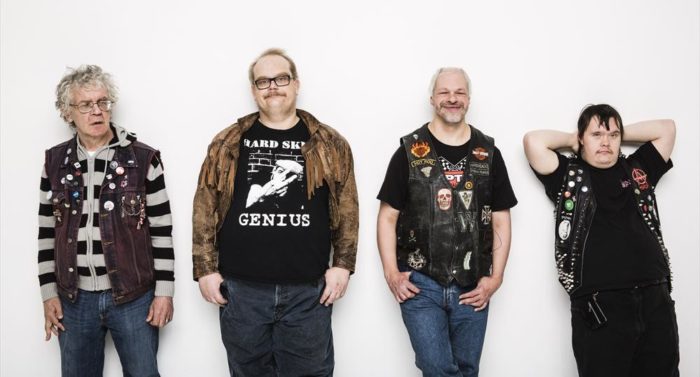
Eurovision emissaries: PKN includes Pertti Kurikka (guitar, left), Sami Helle (bass), Kari Aalto (vocals) and Toni Välitalo (drums).

Eurovision emissaries: PKN includes Pertti Kurikka (guitar, left), Sami Helle (bass), Kari Aalto (vocals) and Toni Välitalo (drums).Photo: Sony Music

Pertti Kurikan Nimipäivät (PKN) is the first punk band at Eurovision. Its members are the first Eurovision performers with learning disabilities. Their song “Aina mun pitää” (roughly “I Always Gotta”) is also, at one minute and 25 seconds, the shortest Eurovision entry ever. At this point, the middle-aged foursome is used to international attention. The Punk Syndrome, a documentary about the band, became an international cult hit a couple years ago, and they’ve already toured continental Europe and the UK. However, the amount of attention that Eurovision has brought the band is something else. When we talk to them at the very end of a long day of interviews, singer Kari Aalto, who is usually very talkative, is obviously tired. He steps out for a smoke as we start the conversation. This time it’s up to bass player Sami Helle to do most of the talking. Promotional duties have kept the guys from familiarising themselves with their competition in Vienna. “I haven’t had time to do anything,” Helle says. “If there’s time, I’d like to check out some of the other acts and see who our toughest competition is, because we are so different – in a good way. I think England, Holland and probably Spain will be difficult to beat. They’re all good at football, too.” I ask the guys about their personal Eurovision memories. “I’ve looked at this whole thing and come to the conclusion that it’s too commercial now,” says Helle. “It used to be about the music, but these days there’s just too much stuff on stage.”

Pumping it up

Compared to the rest of the Eurovision acts, PKN’s music is “different – in a good way,” says bassist Sami Helle (back right).

Compared to the rest of the Eurovision acts, PKN’s music is “different – in a good way,” says bassist Sami Helle (back right).Photo: Antti Aimo-Koivisto/Lehtikuva

The others agree that the emphasis has, over the years, shifted away from music. Helle and guitarist Pertti Kurikka share a favourite Eurovision song of all time: “Pump Pump” by Fredi, Finland’s entry in 1976. “One of the greatest things about being at the concerts for the contest was the opportunity to meet one of my idols, Fredi,” Helle says. “Yeah, Fredi is great,” Kurikka chimes in. “I had that record as a child, the one with ‘Pump Pump’ on it. I met him, too. He was back there.” When asked about his favourite from years gone by, drummer Toni Välitalo names PKN’s own tune, “Aina mun pitää.” “But that’s not from years gone by, Toni!” Helle yells. “Don’t you have any older favourites?” Välitalo professes a liking for “Hard Rock Hallelujah” by Lordi, the Finnish monster-metal act that won Eurovision in 2006. For Välitalo, at least, that formed part of the inspiration to enter the contest. Kalle Pajamaa and Teuvo Merkkiniemi, who have both worked with band for quite a while, first floated the idea. “And then, since this guy’s a bit of a Eurovision nut,” Helle says, pointing at Kurikka, “we got sucked into the whole thing, even though I was a little put off at first. But as long as we can go in music-first and let the song get our message across, I’m happy.”

Smoke machines allowed

Pertti Kurikka, who plays guitar and has also lent his name to the band, appears unfazed by his celebrity status.

Pertti Kurikka, who plays guitar and has also lent his name to the band, appears unfazed by his celebrity status.Photo: Susanna Alatalo

So no dancers or explosions for PKN? “Oh, in your dreams!” Sami exclaims. “No way! We had a smoke machine at UMK [the Finnish Eurovision qualification contest], though, and I hope we can get two or three for Eurovision. I want lots of smoke! Then people won’t see us at all!” I ask Välitalo if he enjoyed the Eurovision selection process. “We played well,” he says. “And then we won. Winning felt really good.” Helle says he hasn’t quite wrapped his head around the reality of their situation. “It’s so hard to comprehend that I’m going to a contest that has run for 60 years, to represent my own country,” he says. “It’s an anniversary year and we’re representing Finland. And Finland is competing for the 49th time. So if we win, some other Finnish band gets to be the 50th Finnish representative, at the [2016] finals held in Helsinki!” (Eurovision is always held in the country that won the previous year’s contest.) People have asked the band if they’re going to “pull a Lordi,” referring to the Finnish band that won the whole thing in 2006. “No!” is the answer. “We’re going to do a PKN!” This is a band that does things on its own terms. The interview winds up. Kari Aalto, the singer, has stepped back in for a photo opportunity, but he’s weary. He says that he’s partial to “Hard Rock Hallelujah.” And that he wants to go drinking in Kallio – a Helsinki neighbourhood with a rough-and-tumble reputation that suits a punk rocker.

By Arttu Tolonen, May 2015

After Finnish election, anything can happen

In the 2015 Finnish parliamentary election, the Centre Party and the Greens staged comebacks to increase their numbers of MPs, and were the only parties to do so. There’s still plenty of room for speculation about the composition of the upcoming government.

With all the votes counted, the main result is exactly as predicted: The conservative Centre Party, which in 2011 had suffered a huge loss and been relegated to the opposition, rose to the surface again, jumping from 35 seats in the 200-person Parliament back to 49, just two MPs shy of its pre-2011 total. Meanwhile the populist “Finns” Party treaded water, losing one seat and keeping 38 to claim second place just ahead of the moderate conservative National Coalition Party, which lost seven and was left with 37. The Social Democrats are still in the game with 34 MPs, but this represents a drop of eight seats and continues a downward trend for them. The Greens bounced back to reclaim the five seats they lost in 2011, for a total of 15, and became the only other party besides the Centre to increase their representation. The Left Alliance came up short with a loss of two seats but held on to 12, while the Christian Democrats were taken down a notch, dropping from seven to six. The Swedish People’s Party, which gains its support mainly from speakers of Finland’s other official language, holds steady at nine MPs, as it has for the past several terms.

Solving the government puzzle

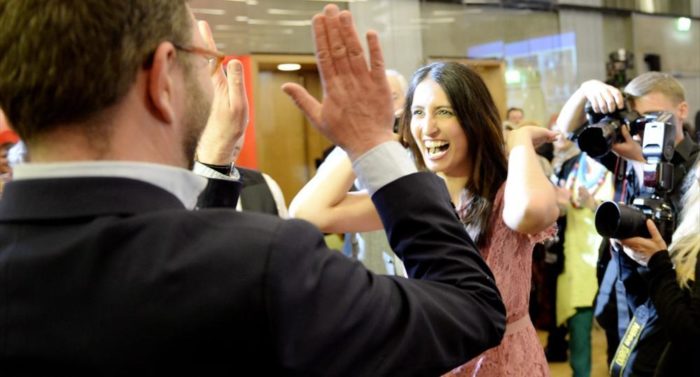
Nasima Razmyar celebrates with Social Democratic Party colleagues upon learning that she has been voted into Parliament.

Nasima Razmyar celebrates with Social Democratic Party colleagues upon learning that she has been voted into Parliament.Photo: Antti Aimo-Koivisto/Lehtikuva

Four years ago, the “Finns” Party refused to consider joining the government because of a campaign promise not to support a bailout package for Greece. In the run-up to this year’s election, they were careful to suggest no such conditions. In fact, they openly dropped hints that they were ready for possible participation in the next government. Anything can still happen, and the pundits can have fun speculating until at least early May, but the Centre’s Juha Sipilä will surely become Prime Minister. It’s quite likely that he will form a government coalition consisting of the “Finns” Party and either the Social Democrats or the National Coalition. Either combination puts the total over 120, the amount considered necessary for an effective coalition. All this makes it unlikely that we will see a repeat of 2011, when it took a couple months – unheard of in Finland – to put together a patchwork government composed of six different parties, including the Social Democrats and led by the National Coalition. In a subplot of the election story, it remains to be seen whether the Swedish People’s Party will continue to form part of the government – it has been a member of the ruling coalition for the past 36 years. None of the other parties may be written off, either.

Progress continues nonetheless

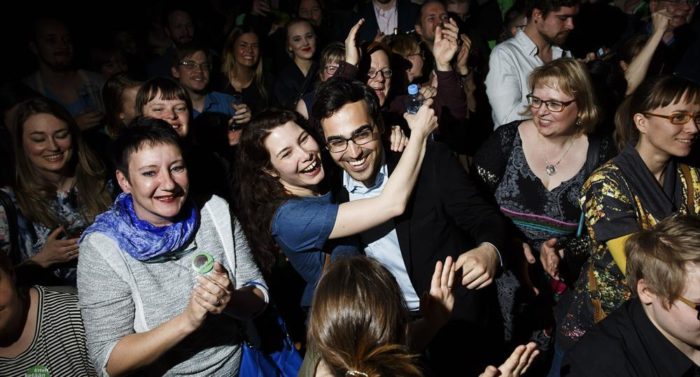
Emma Kari hugs Ozan Yanar (both Greens) as results come in showing that they have both won seats in Parliament. The Greens and the Centre were the only parties to increase their numbers of MPs this time.

Emma Kari hugs Ozan Yanar (both Greens) as results come in showing that they have both won seats in Parliament. The Greens and the Centre were the only parties to increase their numbers of MPs this time.Photo: Roni Rekomaa/Lehtikuva/STR

There may be a more telling trend here for those who look – one that is perhaps more meaningful to young voters than the posturing of various party heavyweights while a government coalition attempts to coalesce. Slowly the face of Finnish politics is changing, as is the face of Finland, although to find this change you need to look beyond the Centre and the “Finns” Party. After gaining its first black member of parliament in 2011 (actor Jani Toivola, who has been re-elected for the Greens), Finland now has its first two modern-day immigrant MPs: Nasima Razmyar (Social Democrats), who was born in Afghanistan and moved to Finland at the age of eight, and Ozan Yanar (Greens), who was born in Turkey and moved to Finland at the age of 14. (Their precursors were an Estonian-born Finn in the mid-1940s and a Swedish-born MP who just finished a term representing the semi-autonomous Åland Islands.) It’s also worth noting that in the Helsinki election district the National Coalition took first place and the Greens added voters to achieve a strong second, trailed by the Social Democrats, the “Finns” Party and the rest. The Finnish capital also garnered the highest voter turnout out of all 13 districts, with 74.9 percent of those eligible casting their votes. Nationally voter turnout reached 70.1 percent, respectable but still 0.4 percentage points less than in 2011. The average age of the MPs fell slightly to 47.3, and there are now 34 MPs under the age of 35. The youngest is 24, while the oldest is 74. Although the number of women in Parliament decreased by three, many young women won seats, including Razmyar, Li Andersson (Left Alliance) and Susanna Koski (National Coalition Party).

By Peter Marten, April 2015