Two Finnish artists walk and talk with the animals

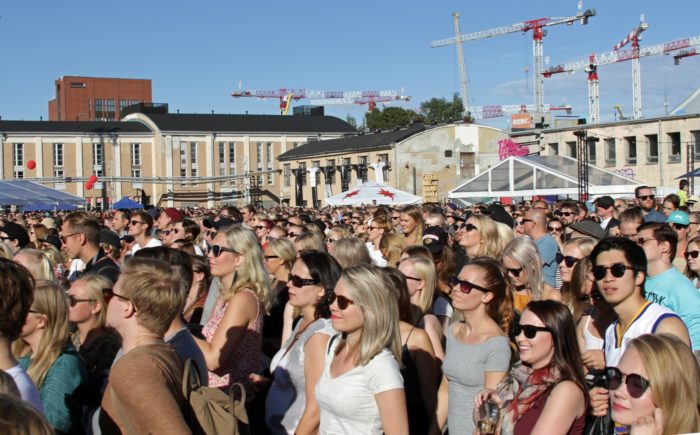
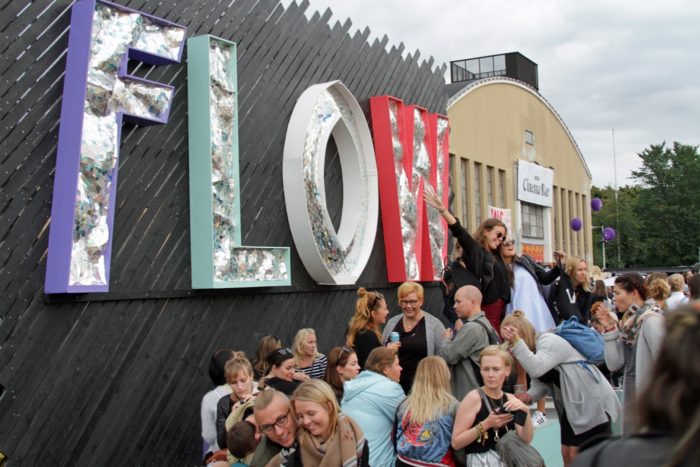
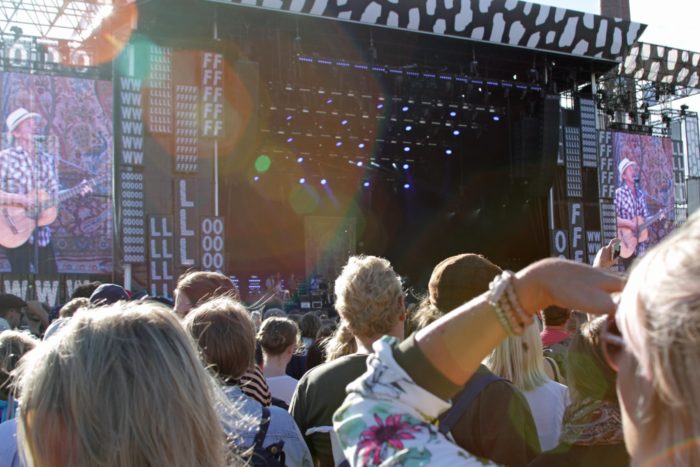
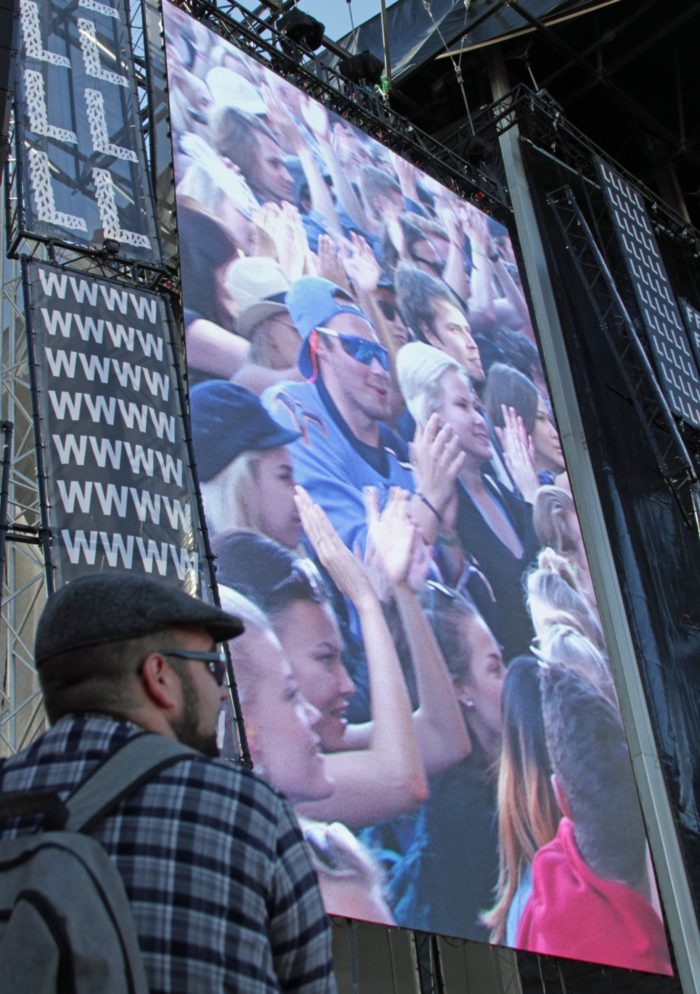
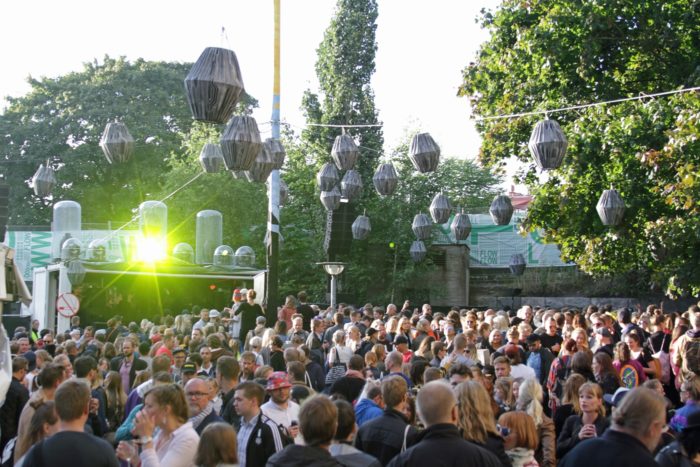
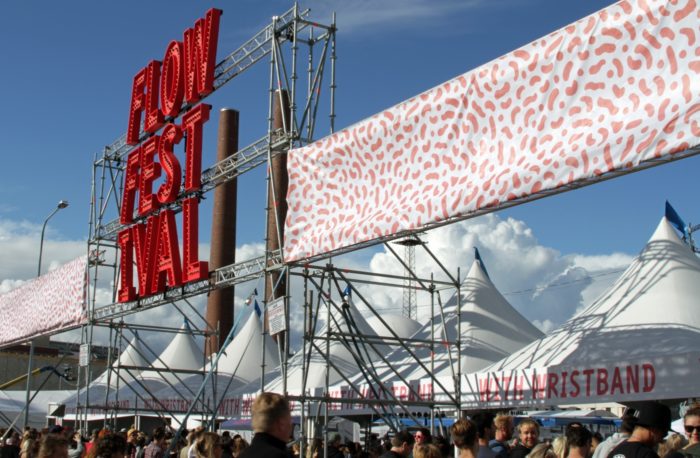
Flow Festival, a three-day music, food, and art extravaganza held every August in Helsinki, begins slowly but quickly picks up speed. The 2016 edition maxed out at 25,000 people each day (see slideshow below).

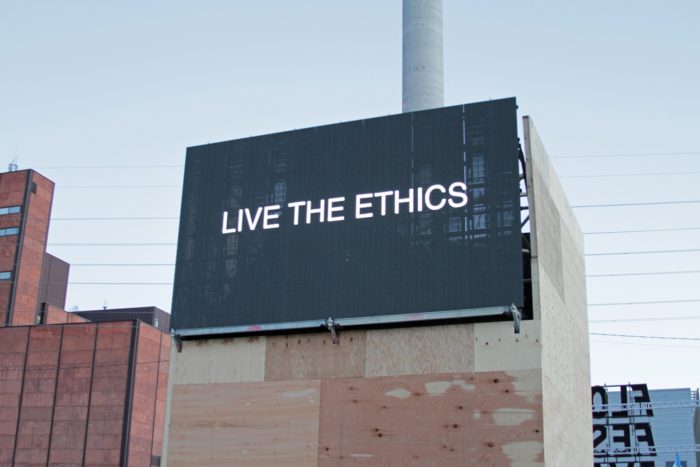
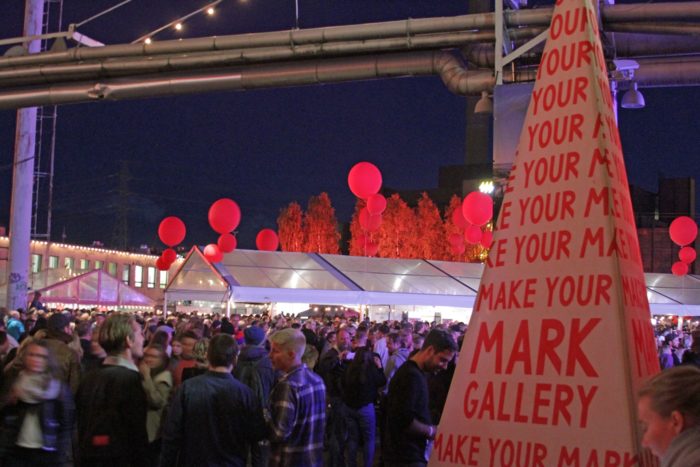
Everyone who enters Flow passes a squat, square tower that stands just inside the gates. It’s about six metres (20 feet) tall and covered in sheets of plywood. On the side facing the entrance, and on the opposite side overlooking the festival grounds, a screen takes up the top third of the tower. Various all-caps messages appear as part of a six-minute video loop of animated words and pictures. “BEING IS” flashes up, followed by, “MORE THAN HUMAN.” “OBEY YOUR HEART,” pulsates in white on a red screen. “REVOLUTION THROUGH INCLUSION” comes up one word at a time on a yellow background, then the screen switches to purple to display the message “REALIZE THE DREAM.”

Pixels in the summer dusk
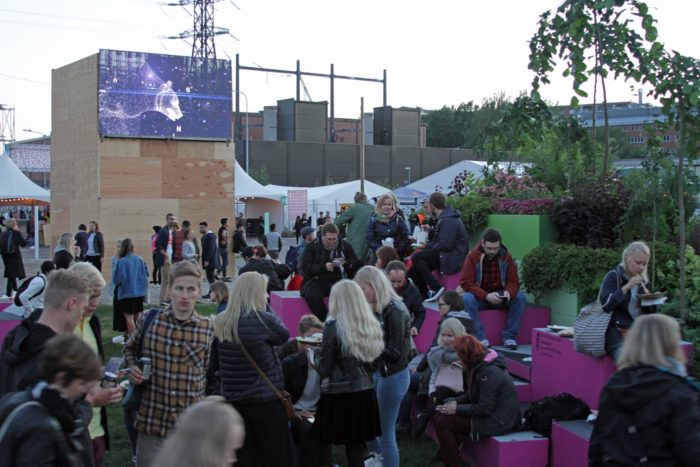
Flow-goers relax and embrace their empathy in a mini-oasis while various festival bass lines thump in the background.

Flow-goers relax and embrace their empathy in a mini-oasis while various festival bass lines thump in the background.Photo: Peter Marten

Fish made out of pixels swim in from the bottom of the picture and exit through the top. A black feline shape runs in place in the middle of a white screen while the word “RELEASE” flashes. The cat dissolves into a swarm of particles and tiny letters until the screen turns black. The next words to appear are “THE HOPE.”

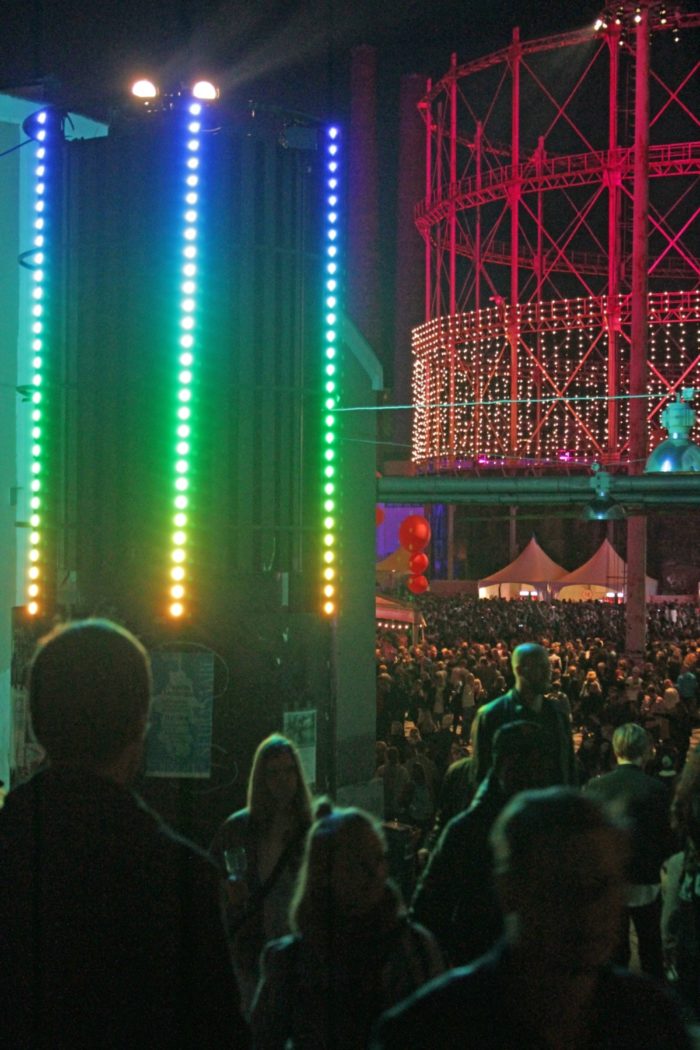
“Release the hope,” “Realize the dream,” “Obey your heart” – the outdoor video installation throwing illuminated messages at festival-goers is a collaborative effort by artist Terike Haapoja and author Laura Gustafsson, Flow’s Visual Artists of the Year. People walk past or stop to watch; some splay out in a nearby makeshift garden, where turf has been rolled out to form a lawn. Potted trees and plants placed on stacks of boxes make the area into one of several enchanted oases that contrast with the post-industrial silhouette of the former gasworks a couple hundred metres away.

Getting human attention

The banners that make up “Is the sky painted” decorated a passageway at Flow Festival.

The banners that make up “Is the sky painted” decorated a passageway at Flow Festival.Photo: Peter Marten

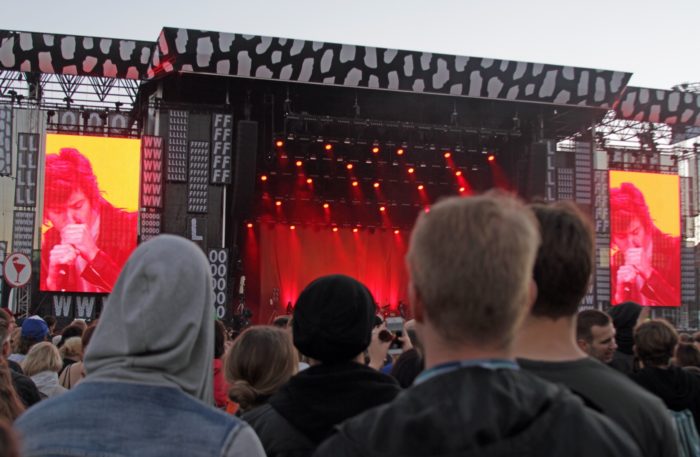
The festival mood intensifies as dusk turns slowly to deeper dusk – it’s still summer and the northern days are still long. Thumping bass lines and waves of applause float through the air from four different outdoor stages. In the video, colours that seemed faint in the afternoon sun become richer and sharper as night falls. More details emerge; the lines in the art seem finer. The installation is also within the view of many of the spectators watching the show on the main stage.

One of the messages that pop up on the screen, emerging from a storm of letters, reads “EMBRACE YOUR EMPATHY.” That is also the name of this piece, which, similarly to Haapoja and Gustafsson’s previous work together, calls attention to animal rights by encouraging human viewers to understand the perspective of animals. A cleverly designed exhibition at Helsinki’s Cable Factory in 2013, bearing the title The Museum of the History of Cattle, documented history from the bovine point of view.

“LIVE THE ETHICS,” appears on the screen of Embrace your empathy right after “OBEY YOUR HEART.” Coincidentally, the video tower is not far away from a stand selling oat milk under the slogan “Wow, no cow,” and half a dozen of Flow’s thirty-something food booths are completely vegan.

Painting the sky with words

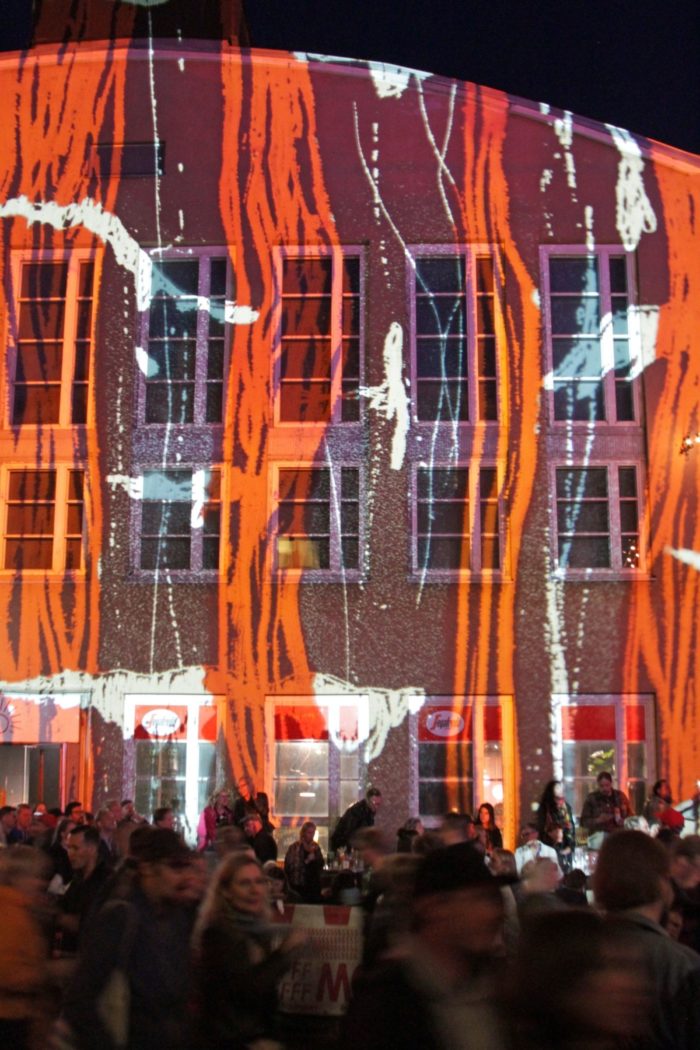
Words are not enough, but words and modified national flags flutter in “Is the sky painted.”

Words are not enough, but words and modified national flags flutter in “Is the sky painted.”Photo: Peter Marten

Right beside a row of vegan vendors, another artwork by Haapoja and Gustafsson adorns a passageway leading to the outdoor club-music venue Backyard. Entitled Is the sky painted, it features lilac-coloured banners hanging from the ceiling, each one showing a message or a version of a national flag. “REVOLUTION THROUGH INCLUSION” says the banner at the front of the tunnel, echoing the video at the other end of the festival grounds. Farther in hangs a purple version of the Canadian flag, with a moose where the maple leaf would normally be. In front of the flag, a banner reads “WORDS ARE NOT ENOUGH;” the one behind it says, “QUESTION YOUR CATEGORIES.”

Is the sky painted and Embrace your empathy offer a taste of a bigger exhibition by the same artists: The Museum of Nonhumanity, open September 2 to 29, 2016 at Tiivistämö, one of the former industrial buildings in Suvilahti, the same area that Flow fills with sound, art, food, and fans every summer.

More photos from Flow
By Peter Marten, August 2016
Inventive Finnish tech improving healthcare

Treating depression isn’t as simple as setting a broken leg. Traditionally treatment for depression has included medication and therapy; a Finnish company has developed another method.

“Depression is globally a significant and poorly treated problem,” says Tuomas Neuvonen, CEO of Sooma. “We are very happy to be able to offer new solutions to people who need them.”

Sooma develops medical devices for the treatment of neurological and psychiatric disorders. The technology is a noninvasive method which uses very weak electrical currents to stimulate the brain.

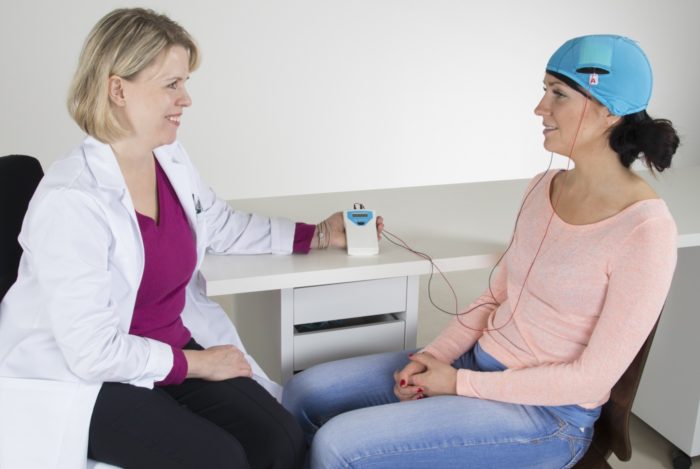
“The device is portable and easy to use,” Neuvonen continues. “With the help of a cap and a pair of electrodes, the device passes a minimal current through the scalp and stimulates determinate brain regions. As a result of repeated stimulation sessions the patient experiences a reduction in the symptoms of depression.”

Typically the patient receives 15 to 20 daily sessions during a course of therapy. Each session lasts about 30 minutes.

Brain-stimulating collaboration

Finnish hospitals and doctors are well read and open-minded to collaboration with startups.

Finnish hospitals and doctors are well read and open-minded to collaboration with startups.Photo courtesy of Sooma

Sooma was founded in 2013 when the founders realised the creation of a brain stimulation device could make therapies more accessible. It took several years to create the project and apply for funding.

“Now we are in the early phase of getting the product out on the market,” Neuvonen says.

The company’s main customers are psychiatrists and neurologists in the private and public healthcare sectors. Most of Sooma’s clients are in the EU, but Neuvonen sees other special benefits of being based in Finland.

“Finnish hospitals and medical doctors are open-minded towards collaboration with the industry,” he says. “Finnish doctors have access to the latest scientific publications and are up to date with the latest studies in their fields. The good national infrastructure and support in the health system are pivotal in connecting startups with the healthcare sector.”

Eye-opening imaging

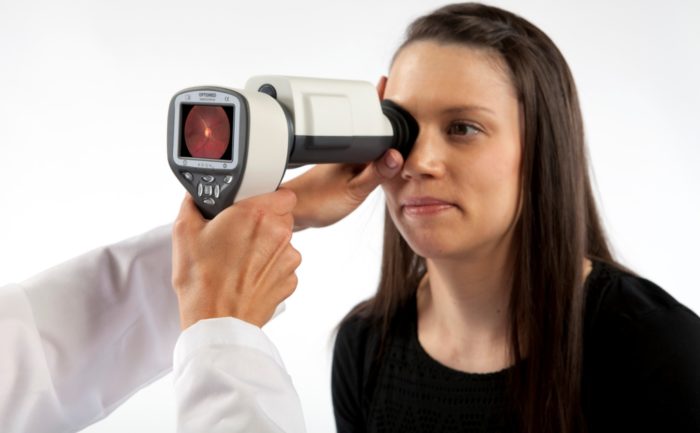
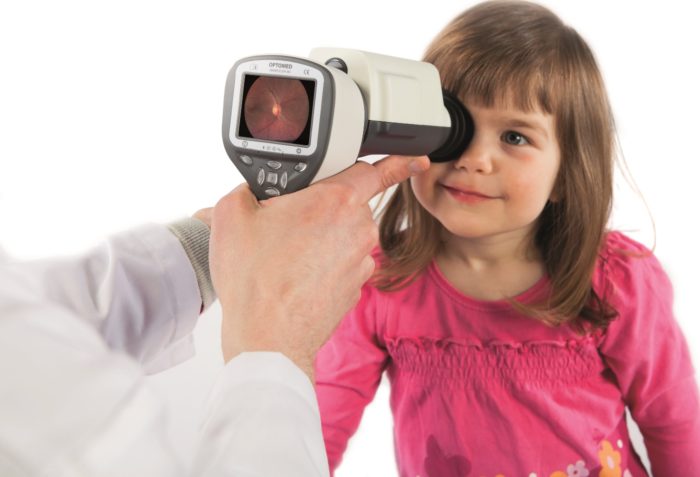
Seeing-eye camera: Optomed makes hand-held cameras for helping detect retinal diseases.

Seeing-eye camera: Optomed makes hand-held cameras for helping detect retinal diseases.Photo courtesy of Optomed

“The healthtech sector is maybe – in my eyes – the most promising industry in Finland,” says Seppo Kopsala, CEO of Optomed. “It needs very similar engineering skills to what was needed to make world-class mobile phones and other electronics. But medtech is more stable and has better profit margins. Also, small companies can make world-class products and become very successful in their market segments.”

His own company, Optomed, is a case in point. They create fundus cameras, or low-power microscopes with attached cameras which are used to take retinal images. Moreover, Optomed’s device is the only hand-held fundus camera which fulfils stringent international standards for resolution. Their device has one other benefit too, which is particularly important: it is the lowest-cost camera of its kind.

“There is a huge, unmet need in the market,” says Kopsala. “Every year millions of people go blind. Ninety percent of this blindness is in developing countries, and 80 percent could be avoided. One of the leading and fastest-growing causes for blindness is diabetic retinopathy. Our camera is the most effective and provides the best value for doing these diabetic screenings. The same camera can simultaneously detect many other retinal diseases as well.”

Billion-euro market

Optomed sells its products in 30 countries around the world.

Optomed sells its products in 30 countries around the world.Photo courtesy of Optomed

Creating such a device was no simple matter. It took Kopsala and his cofounder Markku Broas eight years, 15 million euros in R&D, and four product generations.

“We are funded by venture capitalists in Finland, the UK, Germany, China, and Switzerland,” he says. “Over 80 percent of our equity funding has come from outside of Finland.”

Optomed sells its own branded product in 30 countries around the world, but they also sell to imaging powerhouses Carl Zeiss, Bosch, and Volk. While the USA, China, EU and India are the largest markets, they are actively expanding in Southeast Asia, the Middle East, and Africa. In 2015 the company had about six million euros in revenue, a quarter of which came from China.

“Our company revenue has been growing 50 to 100 percent every year since 2013, and similar growth is expected to continue,” Kopsala says. “We really have a billion-euro market opportunity waiting for us.”

By David J. Cord, August 2016

Find your way at Flow Fest 2016: Our Top 9 Finnish acts

Flow Festival, a celebration of urban music and art, is now a teenager. The 13th edition, happening from August 12 to 14, 2016, presents the sort of eclectic blend of up-and-coming and established artists that has made the festival famous far and wide. Played on 11 different stages, the musical offerings include indie, jazz, hip-hop, rock, electronic, experimental, and other genres that you can hardly put a name on. An art and design component, curated in collaboration with the University of the Arts Helsinki, shows one-off commissions, installations, and artworks all over the festival grounds, both indoors and out.

The festival also hosts Flow Talks – discussions with international urban influencers, free to all Friday ticket holders. And as hipsters age inevitably into adults, Flow welcomes children to Family Sunday, a program of interactive performances and workshops for kids and families (1 pm–6 pm).

Don’t forget about food: Flow is always a feast as well as a fest. True to form, this year’s festival has 39 cuisine vendors – yes, we use the word “cuisine” consciously – including seven all-vegan outlets.

But here, without further ado, are our top Finnish music picks for this year.

Raappana & New Riddim Crew

raappana_2_1400 px

Photo courtesy of Flow Festival

We bet you didn’t know that Finland has a thriving reggae scene! Raappana, who comes from the town of Lahti, an hour north of the capital, plays cheerful tunes that make him one of the best-known Finns in the genre. He recorded most of his newest album, Ennen aamunkoittoo (Before the break of day), in Jamaica with local musicians. At Flow, Raappana performs with the New Riddim Crew, a collection of top Finnish musicians.
Friday August 12 @ Main Stage, 5:15 pm

Jaakko Eino Kalevi

Photo courtesy of Flow Festival

To say that Berlin-based Jaakko Eino Kalevi is original would be an understatement. He has played everything from reggae to melancholic rock, and his newest album includes elements of electronic psychedelia, folk, and twangy, electronic pop. Jaakko Eino Kalevi has been touring Europe and his concerts can be downright hypnotic, so you probably don’t want to miss his return to Finland.
Friday August 12 @ Red Arena, 6:15 pm

Elias Gould

eliasgould_photo_andreikipahti1400px

Photo: Andrei Kipahti/Flow Festival

Actor and singer-songwriter Elias Gould performs soulful guitar-based indie rock. He’s like the reincarnation of Finnish summer in August: beautiful yet already nostalgic, knowing that summer may soon turn into autumn.
Friday August 12 @ Factory, 8:15 pm

Ronya

Ronya-new-2.1400px

Photo courtesy of Flow Festival

This sweet singer-songwriter’s concert is the perfect way to start your Saturday afternoon. A Swedish-speaking Finn (Finland is officially bilingual), Ronya has released two albums and is often compared to the Swedish star with whom she shares four letters of her name: Robyn.
Saturday August 13 @ Black Tent, 4:00 pm

Ricky-Tick Big Band & Julkinen Sana feat. Agit-Cirk

RTBB-JS_c_Ville_Juurikkala-6577-2_1400px

Photo: Ville Juurikkala/Flow Festival

Take three of the most original Finnish rap musicians – Paleface, Tommy Lindgren, and Redrama – and put them together with the 17-person Ricky-Tick Big Band, and you get a unique fusion of jazz and hip-hop that’s bound to bring a smile to your face. Just to up the ante, they’re performing with contemporary circus troupe Agit-Cirk.
Saturday August 13 @ Main Stage, 5:00 pm

Lil Tony

LilTony_1400px

Photo courtesy of Flow Festival

Helsinki nightlife wouldn’t be the same without this man. DJ Lil Tony, a.k.a. Toni Rantanen, has been playing Helsinki clubs for over two decades and toured Europe, Japan, and the US. He founded the much applauded clubs Kuudes Linja, Kaiku and Ääniwalli, all located pretty close to the Flow Festival grounds. Lil Tony plays mostly – but not only – house and techno.
Saturday August 13 @ Backyard, 9:00 pm

J. Karjalainen

Photo: Juha Reunanen/Flow Festival

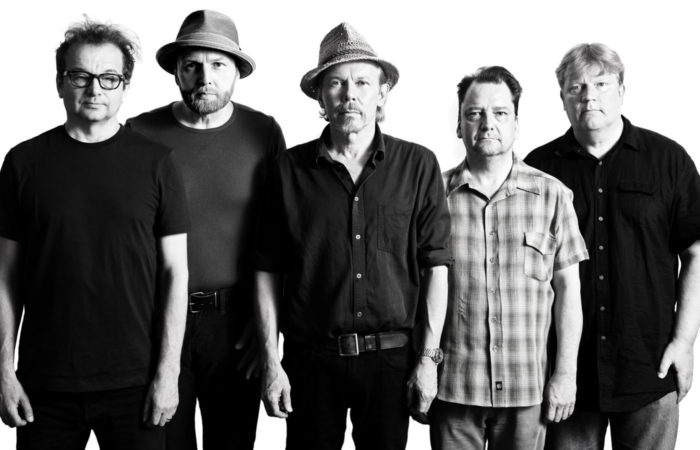
A somewhat surprising addition to Flow, J. Karjalainen (at centre in photo, flanked by his band members) is a singer-songwriter and rock artist with decades of experience. His discography stretches from his 1981 debut album to a new one released just last year. He’s had different bands over the years, but his comforting sound always shines through – and we, along with countless Finnish fans, love him for that.
Sunday August 14 @ Main Stage, 5:15 pm

Villa Nah

VILLANAH_1400px

Photo courtesy of Flow Festival

Synth-pop duo Villa Nah is back after a five-year break – and they sound fresher than ever. They provide the perfect tunes for chilling on the third day of the festival while sipping a smoothie, when you don’t want to party that hard anymore, but don’t want to the party to be over yet, either.
Sunday August 14 @ Backyard, 7:00 pm

Nicole Willis & Jimi Tenor & Tony Allen

nicole_hat_yellow_bkg004_20150306_1714631317_933px

Photo courtesy of Flow Festival

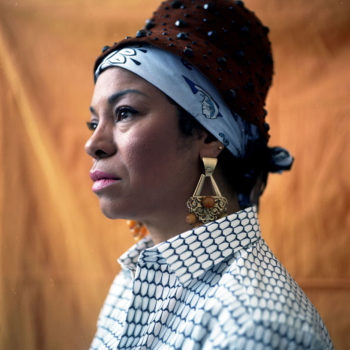
A unique performance and a great finale for the festival: soulful, Brooklyn-born, Finland-based singer Nicole Willis joins Finnish jazz musician and composer Jimi Tenor, and Nigeria’s legendary king of drums, Tony Allen.
Sunday August 14 @ Bright Balloon 360° Stage, 11:00 pm

By Anna Ruohonen, August 2016
Enabling active ageing in Finland

Active older people are highly visible in Finland at all kinds of social and cultural events, and also in the great outdoors – often whizzing speedily by on skis or bicycles. The over-60 set already makes up 27 percent of the Finnish population, and their numbers are rising rapidly as the post-war baby-boom generation reaches retirement age. Finnish authorities are well aware that the future cost of caring for the country’s burgeoning ageing population represents a significant challenge. However, keeping older people physically active and socially involved can help offer a solution.

“Here in Finland our population is ageing faster than anywhere else in the world except Japan,” explains Eeva Päivärinta, a social and health services specialist from the Finnish Innovation Fund Sitra, where a recently completed two-year programme has focused on the need for services targeting senior citizens. “By 2030 it will be beyond the capacity of our economy to provide fully serviced old people’s homes in line with our traditional elderly care model, so we urgently need to find ways to offer effective online and home-based healthcare and other services for old people living at home.”

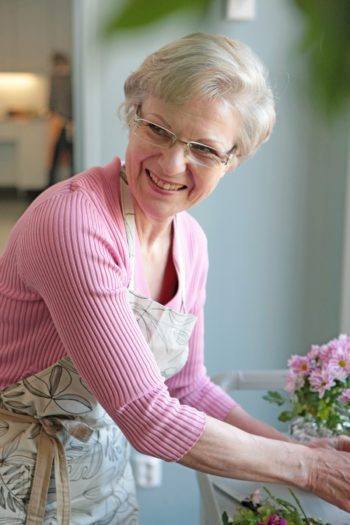
Gardening, whether on a windowsill, on a balcony, or in a yard, is a hobby that keeps mind and body active.Photo: Hernan Patiño

Average life expectancy for a 60-year-old in Finland is currently 84. Päivärinta emphasises that this longevity should be seen as a gift, though this will only be true if people can enjoy good quality of life in their twilight years. “It’s most important to listen to what old people themselves say they want. Our research shows that in addition to a safety net of residential care places for the neediest, they would greatly appreciate support enabling them to live in their own homes as long as possible.”

Service networks for home-based seniors

Finland ranked 14th in the 2015 Global Age Watch, an index that tracks the wellbeing of older people. The Finns scored particularly well on income security and enabling environments. According to Päivärinta, the innovatively funded national pension and social security scheme ensures that no pensioners need endure poverty, while the local authorities provide accessible facilities and discounts that make it easy for older people to use public transport, exercise in swimming pools, gyms, and parks, and visit museums, libraries, and theatres.

“Old people are often also active in Finland’s many local residents’ and pensioners’ associations, enjoying social events and trips – and they’re increasingly getting involved in voluntary schemes where they can meet and help other pensioners or schoolkids,” she adds.

vis

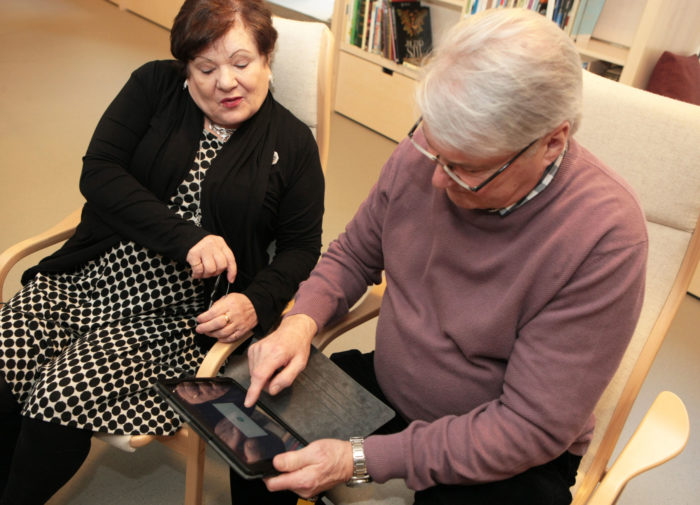
The Kotisatama cohousing project in Helsinki’s Kalasatama district is not a regular old-people’s home, but a new kind of self-service housing scheme. Residents Maj-Len Törnqvist and Frank Roehr check out the housework rota and forthcoming events on the housing community’s website.Photo: Hernan Patiño

Municipally subsidised service centres open to all elderly local residents provide a network of meeting places and facilities in Finland’s villages, towns, and suburbs. Some of these buildings also include conventional fully serviced older people’s apartments.

But Päivärinta still sees a need for new services to help people at home. “In Tampere we have piloted the Palvelutori [Service Market] staffed service-point scheme,” she says. It gives pensioners a central place to find out about all the different kinds of practical help and advice they can get through the health and social services systems and other initiatives. “Many useful services exist, and it’s often just a question of connecting people to them. The scheme has been very popular, and is already being expanded in Tampere and other towns.” In Turku a parallel online service scheme is being piloted in a Sitra-funded project.

Innovative self-service cohousing

The Finnish housing market must likewise adapt to the greying of the population by providing accessible homes that also meet retired residents’ social needs. Trial schemes where older people are housed together with students have proven helpful to both the youngsters and the oldsters.

Cohousing schemes, where apartment-owners share common facilities and can socialise in communal spaces, are an attractive option for many older people. In 2015 the association Aktiiviset Seniorit (Active Seniors) opened its second cohousing project, called Kotisatama (Home Port), in Helsinki’s rapidly growing Kalasatama district.

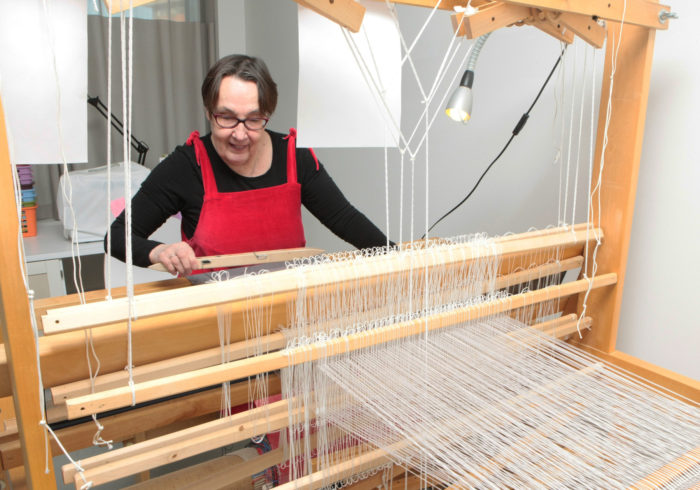
Kotisatama resident Mari Raunio working the loom in the handicrafts room open to everyone. In the building there is also a small gym, a library and games room, a laundry, a pétanque pitch, a roof garden, and two saunas.Photo: Hernan Patiño

“Kotisatama is not a normal old people’s home, but a new kind of self-service housing scheme,” explains resident Marjut Helminen. “In addition to looking after our own flats, we residents are grouped in housework teams who take turns cleaning our communal spaces and cooking the meals we can choose to enjoy together every weekday evening. This way of living appeals to people who want to keep control over their own lives, but who also enjoy a sense of community and activities organised together with their neighbours.”

Planning for an active retirement

In addition to 63 pleasant apartments, the totally wheelchair-accessible Kotisatama building has well-equipped shared facilities including a handicrafts and DIY workshop, a small gym, a library and games room, a laundry, a pétanque pitch, a roof garden, and two saunas. In the entrance hall beside Kotisatama’s spacious communal dining room and kitchen, an electronic notice-board shows news about activities, events, and housework shifts.

“Everyone makes the most of all these facilities, and we have lots of groups for people who share interests from singing, cinema, literature, and IT skills to card games, chess, bowling, and pilates,” says Helminen – who is certainly an active senior herself, as a keen canoeist who has also just published her first novel. Many of Kotisatama’s residents cycle regularly, and some even enjoy winter bathing in a hole in the ice of a nearby ocean bay.

Everything at Kotisatama has been meticulously planned in advance through the Aktiiviset Seniorit association by the residents themselves, who have an average age of 67 and an age range of 54–80. “Aktiiviset Seniorit has already started to plan its third cohousing scheme, and there’s plenty of interest from future residents,” says Helminen. “There would definitely be a need for many more cohousing schemes like ours – also for rented apartments.”

“It’s been wonderful to move into a ready-made community of neighbours, like a big family, where you can be on your own if you want, but also always have people to be with,” says Kotisatama resident Maj-Len Törnqvist. “In the future I don’t want to feel like a burden to my children – and they’re also very happy for me that I’ve found this kind of home.”

By Fran Weaver, August 2016

Finnish festivals driven by volunteer power

During the week before the festival begins, Joensuu’s Laulurinne arena beside Lake Pyhäselkä is a hive of activity, with hundreds of workers beavering away building concert stages and preparing facilities for tens of thousands of festival-goers. Many of these keen workers are unpaid volunteers.

More than 2,000 festival volunteers help to run Ilosaarirock each year. These willing hands are highly recognisable throughout the event in the distinctive t-shirts provided for all helpers. And when the show is over many of them stay behind to help pack everything up and clean up any mess.

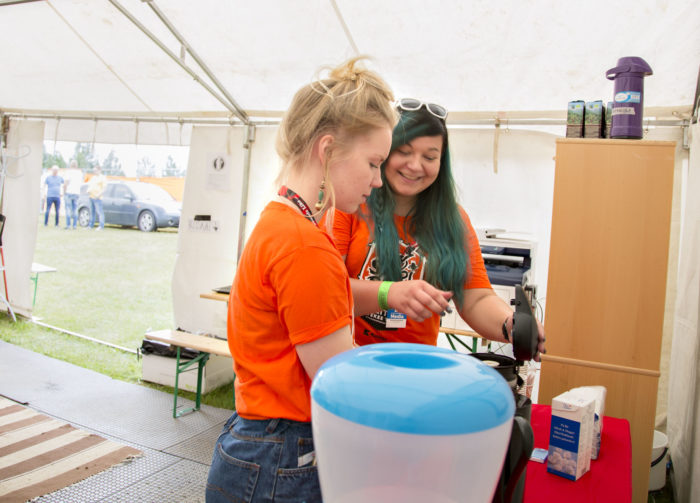
Two volunteers at Ilosaarirock retreat to a break room inside a tent for a well-deserved cup of coffee.

Two volunteers at Ilosaarirock retreat to a break room inside a tent for a well-deserved cup of coffee. Photo: Tiina Haring/Keksi

The Finnish language has a word for “volunteer” (vapaaehtoinen), but there is also a special word talkoot for an event where neighbours, villagers or colleagues get together to help accomplish a large job. This might involve cleaning the grounds around an apartment building, making improvements to a local schoolyard, or even making a music festival possible. Ilosaarirock and dozens of other festivals around the country rely on the living tradition of talkoot to ensure that everything runs smoothly.

Help where help is needed

Festival-goers encounter their first volunteers as soon as they arrive at the gateway to the venue. Volunteers are entrusted with responsible tasks including checking the wristbands given to ticket-holders to allow them into the festival, and searching visitors’ pockets and bags for forbidden objects such as knives or alcoholic drinks.

Ilosaarirock strives to be a green festival, so volunteers also help festival-goers to put different kinds of rubbish in the right recycling and waste containers.

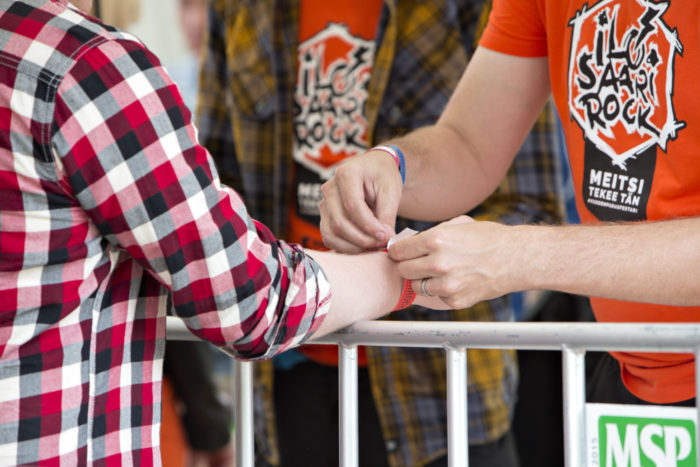
A volunteer in an orange shirt fastens an Ilosaarirock admission wristband on a plaid-clad festival-goer’s arm.

A volunteer in an orange shirt fastens an Ilosaarirock admission wristband on a plaid-clad festival-goer’s arm.Photo: Tiina Haring/Keksi

Ilosaarirock has been organised since 1971, making it Finland’s second oldest rock festival. The performers come from many other genres as well as mainstream rock. The bill includes Finnish stars including pop singer Antti Tuisku and hip-hop artist Cheek, while many top Finnish metal bands like Stam1na, Viikate and Apocalyptica are Ilosaarirock regulars.

The festival has also attracted international superstars over the years, including Alice in Chains, who topped the bill in 2014, and Faith No More in 2010. It’s quite likely that festival volunteers have been assigned to find food for hungry rock stars like Faith No More singer Mike Patton.

An annual highlight of the summer

Many volunteers come back to work at Ilosaarirock year after year. Ada Eronen, 19, who is studying to become a Finnish language teacher, is helping out at the festival for the fifth time. This year she will serve drinks, though she has earlier also helped with cleaning duties. “This has become a summer tradition for me,” she says. “It’s fun working here, as there’s such a great crowd of people.”

Andy Johansen, 35, from Denmark, has come to lend a hand at Ilosaarirock for the first time, helping with cleaning and recycling. His regular job involves social work in Helsinki, but his current parental leave has given him time off to do some voluntary work. Though he won’t be paid for his efforts, Johansen feels this kind of voluntary work is well compensated considering benefits such as free entry to the festival, accommodation and food. “You can also get free coffee and tea, as long as you remember to bring your own mug,” he laughs.

Ada Eronen has likewise been motivated to help out by perks like the free festival wristband, but she also feels that volunteering gives her good work experience. “I’ve got an official bartending licence, but to get it you only need to study the theory – while here I can test out what I’ve learnt in practice,” she says. “It also helps you learn how to get along with new people.”

By Jarkko Böhm, August 2016

Wild and wonderful Finnish foods

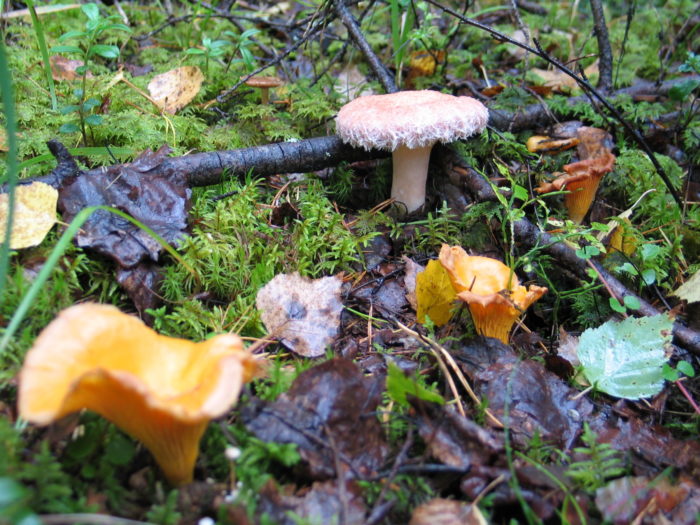
“Wild food is local, organic, seasonal, healthy and free. It includes plants, berries, mushrooms, honey, sap, fish and game. It’s the best kind of Finnish food, and it’s accessible even in Helsinki”, says chef Sami Tallberg, a wild-food expert and enthusiast.

He’s a wild-food ambassador for the ELO Foundation, which promotes Finnish food culture. Tallberg takes groups of food lovers into their local natural environment and teaches them how to gather their own food.

There are more than 75 edible and tasty wild plants in Finland, and with many regional differences in that variety.Photo: Ministry of Agriculture and Forestry/ Archive

“The best time to go is in the morning, when the plants are at their best for picking,” he says. “By roaming through the forests we also keep our bond with nature alive. Plus, it’s good for your health to exercise in fresh air and eat food that consists of wild plants, berries and mushrooms. It’s a great activity for the whole family.”

For tourists, a foraging course is a wonderful chance to see the richness of Finland’s nature.

“For many, it’s unbelievable to find food growing in the wild so near to the city centre, for instance, in Central Park in Helsinki,” Tallberg says. “This closeness to the forest is really unique to the Nordic countries. After two hours, the tourists just want to stay in the forest! It’s astonishing to see how many plant species you actually can eat.

“Every season has its own delicacies. It’s possible to find edible plants from April until October. You can also dry and freeze plants and berries for the winter.”

Every person’s rights

You may: You must not:
walk, ski and cycle freely, except near people’s homes or in fields and gardens disturb people or damage property, disturb animals and birds
pick wild berries, mushrooms and flowers as long as they are not protected species cut down or damage trees, leave litter, light open campfires
fish with a rod and line collect moss, lichen or wood on other people’s property
set up a camp temporarily, at a reasonable distance from homes let your pets off their leash, fish or hunt without the relevant permits

Download a booklet about Every person’s rights.

By Päivi Brink, ThisisFINLAND Magazine 2016

The root of Finnish rye bread

Finns have long been avid consumers of rye bread. Such is their enthusiasm for this culinary staple that they even take it with them on trips abroad.

In the summertime Finns head to their summer cottages on the mass in the weekends and during summer holidays. As a result, rural communities around the country often double in size during the warmer months, with this temporary migration giving a considerable boost to the local economies.

There is one product in particular that these city slickers enthusiastically seek out during their temporary stays that can’t be found on store shelves elsewhere.

“People are really eager to eat the local rye breads,” explains Johanna Mäkelä, professor of food culture at the University of Helsinki. “I would suspect that some of these local bakeries are surviving just by baking in the summer.”

Historic flavour

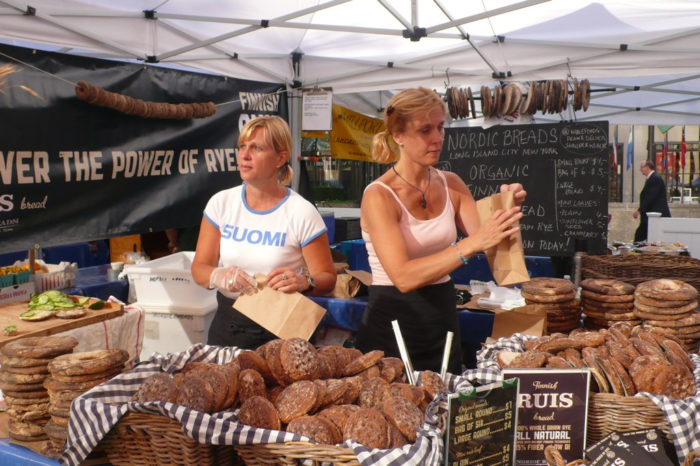
Two vendors at a market stall with piles of rye bread on sale.

Finns have kept rye bread in their hearts and on their tables for thousands of years. It is part of their cultural identity. Nordic Breads maintains a successful stand at a New York City market.Photo: Finnish Ruis Bread

Such enthusiasm is unsurprising. First cultivated in Finland over 2,000 years ago, rye grain’s adaptability to various soil types, coupled with its ability to ripen over the short northern summer, has long seen it a staple of the local cuisine.

“Finnish rye bread is a story of a poor country, as there were so few ingredients that were always available,” Mäkelä explains. “Water, leaven, salt and rye flour – that’s still the basic recipe. Sometimes you can also add yeast.”

Whether it’s the round limppu (loaf) originating from the eastern parts of the country, or the west’s flat disc with a hole in the middle, known as reikäleipä, Finnish full-flavoured rye bread is noticeably lighter than varieties from Germany and the Baltic Region. It is also considerably less sweet than Swedish rye bread, and is commonly enjoyed as a sandwich, dipped in soup or simply by itself, topped with a layer of butter.

Whichever way you look at it, and whatever shape it comes in, the bond that Finns share with rye bread cannot be overstated.

“If people come from a different part of Finland and move to Helsinki, they often long for the kind of bread they have eaten in their childhood,” Mäkelä explains. “Also, if you ask almost any Finn going abroad to meet expats, there are two things they would take with them: rye bread and Fazer blue-label chocolate.”

This coveted bread is even on sale at Helsinki Airport to meet demand. Here travellers can pick up a last-minute gift for their friends and family, or ensure they have enough in stock when spending time outside of the country.

Feeling the effects

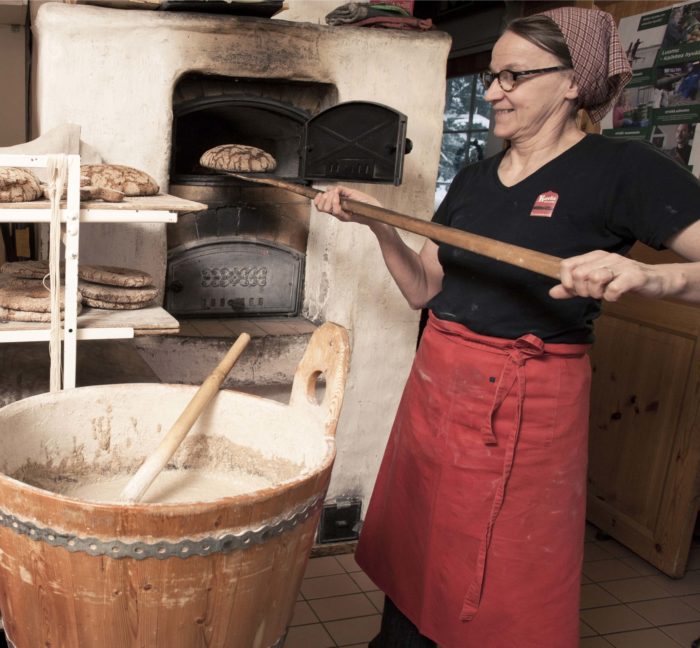
A woman taking a rye bread out of a big baking oven.

Traditionally rye bread was baked in a big baking oven made from the household’s own leaven, which was passed down through the generations. Photo: Elina Sirparanta

Rye bread’s ubiquity over the years has seen it become deeply engrained in Finnish culture. Aside from being referenced in the national epic Kalevala, it also features prominently in paintings and proverbs from earlier ages.

Farmers once took heed that consuming rye gives one power in the wrists if hard work is required, and the grain was said to provide energising fuel for draught horses. These days, such beliefs have been replaced by scientific evidence underlining various health benefits.

“Rye has a very high fibre content,” explains Kaisa Poutanen, Research Professor from VTT Technical Research Centre of Finland. “Even though it’s concentrated in the outer layers of the kernels, the dietary fibre is also found in the inner parts of the grain.”

This abundant fibre directly aids the intestinal health of consumers. Not to be outdone, the grain also helps to protect from diabetes.

“When we eat rye bread, we need less insulin to control blood glucose,” Poutanen continues. “Also, cardiovascular disease is very much connected to diabetes. So, if you protect against one, you protect against the other.”

Last, but certainly not least, the satiating effect of rye bread is widely recognised as being integral for weight management.

With research continuing to uncover new health benefits, and the number of varieties on offer growing steadily, it’s safe to say that store shelves around the country will be well stocked with the national bread for many years to come.

“We Finns use rye bread to sustain ourselves and our bodies, but it is also part of our cultural identities,” Mäkelä observes. “We are keeping it in our hearts, but on the other hand we are also keeping it on our tables.”

“It’s a living tradition.”

Rise of the leaven

The special leaven, sourdough, used when preparing Finnish rye bread is known as leivän juuri in Finnish, or ‘the root of the bread’.

“Many households still have their own leaven, which they inherited from previous generations,” explains VTT’s Kaisa Poutanen. “Where I live in Kuopio, a lady has leaven which is over 50 years old that she got from her mother-in-law. She is still baking with it, every week.”

The trick to preserving leaven is to ensure that some of the bread mix is left over when baking, which can then either be dried or frozen. Next time around all that needs doing is add a little water and the bacteria start to live again. And the cycle continues, ensuring flavoursome bread time and time again.

By James O’Sullivan, July 2016

The truth about Finnish schools

Adopting new methods for learning and teaching could knock Finland off the top of the international Pisa rankings for education systems, but this is of little interest to Finns. The most important goal is teach youngsters the skills they will need in future.

Claim 1: Students will no longer study in their classes at all. Teaching will be “phenomenon-based”, meaning that teachers will work “experimentally” with schoolchildren outside the conventional school setting.

Response:
Yes and no.

“The phenomenon-based approach is just one way to learn. It’s important that varied pedagogical methods are used. Teachers become enablers, helping each child find their own way to learn,” says Anneli Rautiainen, head of the Basic Education Unit of the National Board of Education.

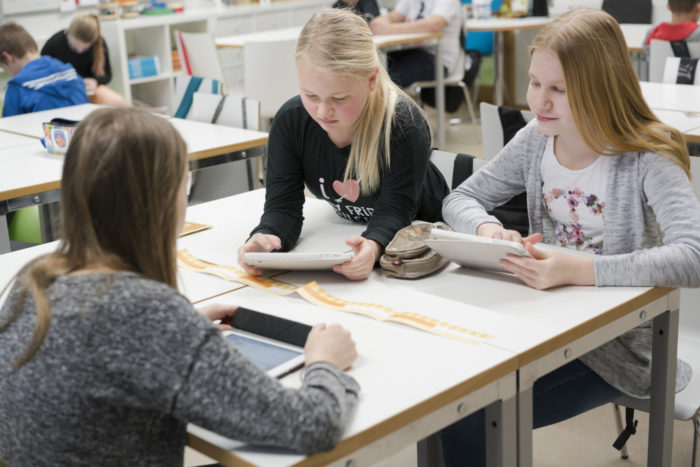
Three girls studying tablets in a classroom.

Finland’s new curriculum means that schoolchildren will no longer need to sit down quietly in classrooms, since they will instead be able to choose where and how they study. In future there will not necessarily be any traditional enclosed classrooms. Photo: Riku Isohella/ Velhot Photography Oy

Claim 2: Classrooms will be abandoned and replaced by open marketplaces where children will “buy” the subjects and courses they feel are suitable for them.

Response:
Yes and no.

“Teaching will no longer happen just inside four walls, but it will depend on how schools want to realise this. Pedagogical practices will change so that children no longer need to sit down quietly in one place, but can instead choose where and how they study. New schools have already been built free of corridors. In future there will not necessarily be any enclosed classrooms. Learning will happen everywhere,” explains Rautiainen.

Claim 3: Schoolchildren will make “bad” choices that will affect them into adulthood – for instance if they opt for more mathematics instead of a language course, or vice versa.

Response:
No.

“Unlike in other countries such as Britain and the US, we don’t feel in Finland that there are important subjects and less important subjects. All subjects play an equally important role. The goal is to give youngsters a broadly-based education, and not to make them learn single subjects well,” says the Finnish educational expert Pasi Sahlberg, who is currently a visiting professor at Harvard Graduate School of Education.

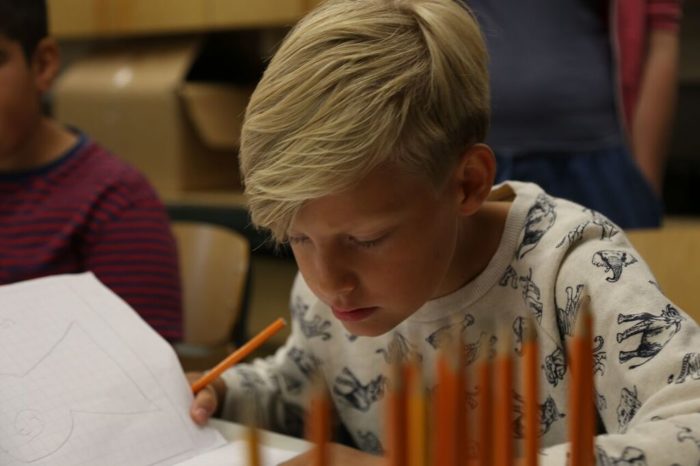
A concentrated-looking boy studying his notebook; a row of pencils set upright in front of him.

School days are shorter in Finland than in most other countries, so additional homework will continue to be set.Photo: Mohammad Alfaraj

Claim 4: Pupils will themselves decide which level of achievement they want to aim for, and they will be set assignments enabling them to achieve such grades. There is a risk that students capable of high grades will only aim for low grades, so they can have an easy time.

Response:
No.

“Learning goals and the criteria for good ability levels are defined in the curriculum. Teachers will talk to pupils about the goals they want to set themselves. One problem has previously been that pupils have not always known why they were given a certain grade. When they are actively involved in such discussions their motivation will grow,” explains Anneli Rautiainen.

Claim 5: Schoolchildren will no longer be divided into conventional groups of learners, but will instead hang out in their own cliques according to their interests.

Response:
No.

“Teachers will always be responsible for pupils. Learning groups will be formed so as to ensure the goals set in the curriculum can be reached. We hope that schools will group pupils varyingly, according to what and how they are learning. Some pupils may like to talk while they are learning, while others will want to be quiet,” says Anneli Rautiainen.

Claim 6: The brightest students will no longer fare so well, because cramming will be neglected.

Response:
Yes and no.

“If students earlier got top grades only by cramming, then this claim might prove true. Sometimes it is worth learning things by heart, like multiplication tables. But rather than parrot fashion learning the new curriculum emphasises skills that will be needed in future, such as learning how to learn, critical thinking, interactive skills and the ability to use technology. The world is changing, and schools and learning must change with it,” explains Anneli Rautiainen.

Schoolkids studying and dabbling in a light classroom with big windows.

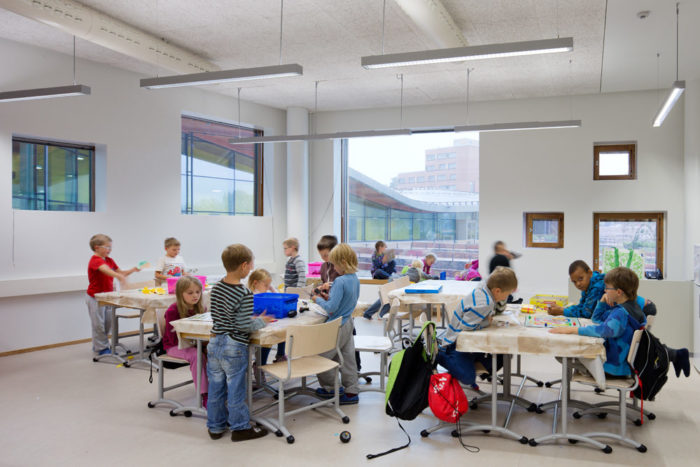
In Finnish schools all subjects are seen as equally important in giving students a broadly-based education.Photo: Andreas Meichsner/Verstas

Claim 7: All provenly effective teaching methods will be abandoned, and schoolchildren will end up just messing around.

Response:
No.

“Many people around the world seem to think Finland is a socialist country, where some bigwig in Helsinki decides what everyone must do. One big difference between Finland and other countries is that here the teachers, schools and local authorities can by and large decide themselves what should be taught and how,” says Pasi Sahlberg.

Claim 8: Homework will not be set at all.

Response:
No.

“In Finland school hours are quite short, so we think it’s good for pupils to go through things at home a little,” says Anneli Rautiainen.

Teacher checking a students paper; other students studying in the background.

The teaching profession is seen as highly desirable among Finnish youngsters, and there is tough competition for places in teacher training courses. Under the new curriculum teachers will become enablers who no longer spoon-feed facts to their students, but instead help them to learn and understand. Photo: Amanda Soila

Claim 9: There will be no more tests and exams.

Response:
No.

“Evaluation will become continuous, guiding and supportive. Grades will not be based on test results alone. Tests are part of learning, but not the heart of it. You can also demonstrate your ability by realising projects or through oral presentations. If you fail in a test, you can try again later, and learn things in between,” says Anneli Rautiainen.

Claim 10: Teachers will have to be super-adapters, able to teach from this autumn onwards using completely different methods, and dealing with new subjects like coding.

Response:
No.

“The new curriculum does challenge teachers to change their pedagogical methods. And this will also take time. The greatest challenge is the change in their role. Teachers will no longer be information providers, and pupils will no longer be passive listeners. We want schools to become communities where everyone learns from each other – including adults learning from children. Technological skills and coding will be taught together with other subjects. To support teachers there will be people like digital tutors, for instance,” explains Anneli Rautiainen.

Jackets hanging from a rack; a pile of children's shoes on the floor.

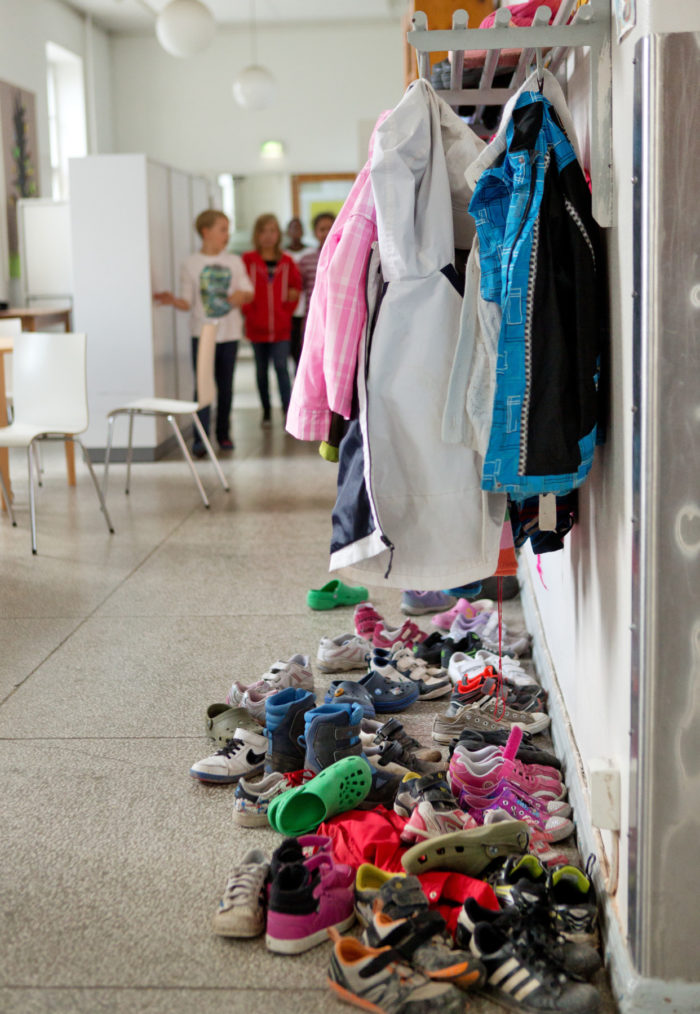
In Finland almost all youngsters (99.7%) complete the syllabus of basic education and graduate from comprehensive school.Photo: Riitta Supperi/Keksi/Finland Promotion Board

Claim 11: Learning difficulties will not be found, because pupils will be responsible for their own achievements.

Response:
No.

“We have extremely highly trained teachers, and a setup that’s well prepared to support students. Though students will be more active, this doesn’t mean that they’ll take over all responsibility for learning. On the contrary, it will be more important than ever for teachers to be close to their pupils,” Anneli Rautiainen says.

Claim 12: The new curriculum will consign Finland’s excellent results in the international Pisa ratings for education systems to the dustbin of history.

Response:
Maybe, but so what?

“The significance of the Pisa rankings in Finnish thinking is quite negligible. They are seen as a kind of blood pressure check, enabling us to occasionally consider which way we are heading, but they are not a permanent focus. Decisions related to education are not taken with the Pisa ratings in mind.  Instead the essential factor is the information that children and young people will need in the future,” says Pasi Sahlberg.

By Ninni Lehtniemi, July 2016

9 facts about Finland’s 9-year basic education

1. Compulsory schooling starts from the school year during which children turn seven, and ends when they have either completed the entire nine-year basic education curriculum or, at the latest, after the school year when they turn 17. All children are also entitled to one year of preschool education.

2. Tuition, school books, learning materials and equipment are all provided free of charge for the nine-year basic education.

3. All pupils are also provided with a free school meal every school day.

4. School days must not be longer than five lessons for children in first and second grade classes, and seven lessons for older schoolchildren. Each lesson is 45 minutes.

5. There are no nationwide examinations or grading tests.

6. There are a total of 190 school days in a Finnish school year. School year starts in the middle of August and ends in May. Finnish kids have about 10 weeks of summer holiday as well as holidays in autumn, Christmas break and winter usually in February.

7. In Finland almost all youngsters (99.7%) complete the syllabus of basic education and graduate from comprehensive school.

8. Teacher training courses are popular and difficult to qualify for. In 2014 only 9% of applicants sitting the entrance exam for Helsinki University’s training for class teachers were admitted.

9. Teachers working with children in grades 1–6 must be qualified to a level of at least Master of Education. Teachers working with grades 7–9 must have a Master’s degree in their subject, as well as high level qualifications in education.